×

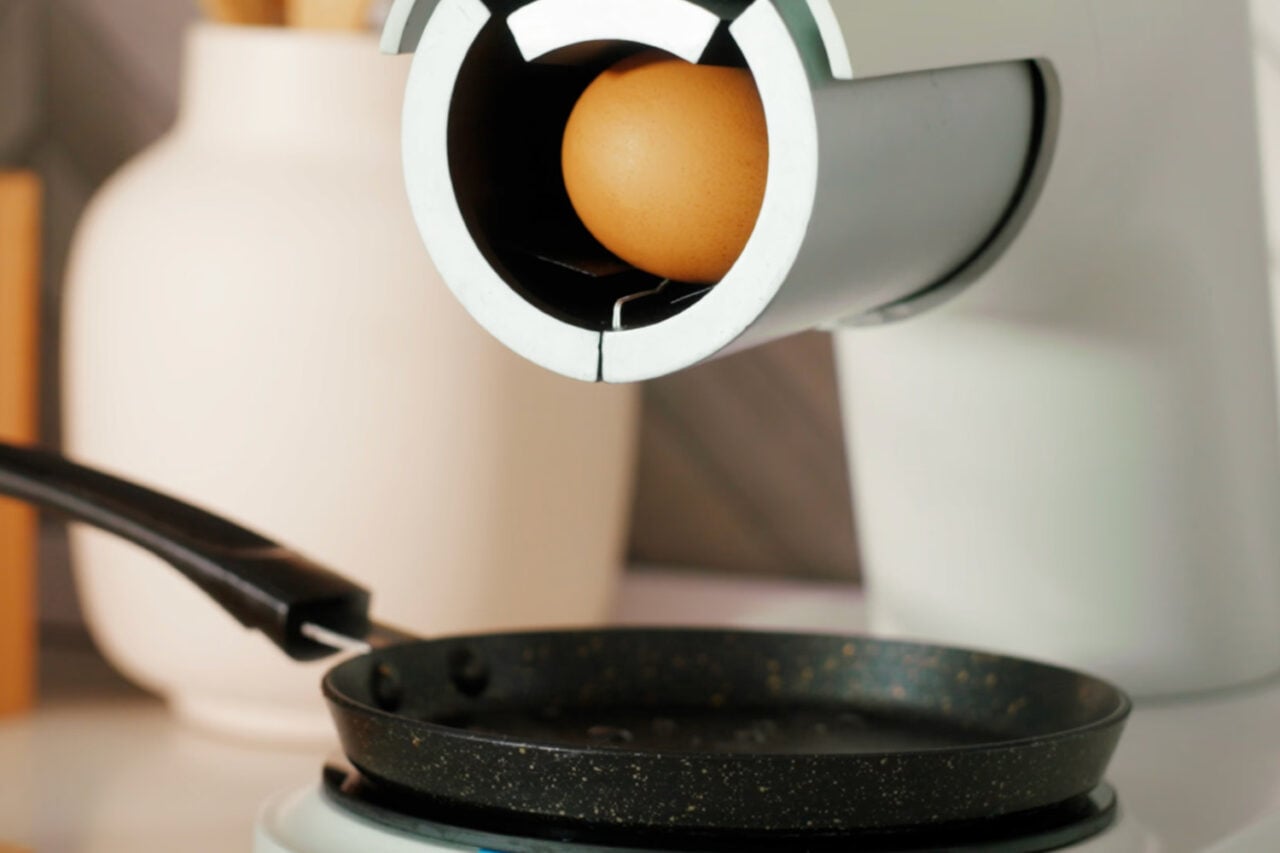
Kickstarter project has finally given us a Juicero for the robotics era, and it’s called E.G.O.R. (that’s Efficient Gastronomic Operational Robot), brought to you by the startup Cheffy. It’s an automated egg maker that promises perfect cracks every time with no shell in the yolk. It has seven different ways that it can cook them up for you, or you can just use it to do the cracking. You can also pair it with a toaster so your eggs and toast finish at the exact right time.

This isn’t something anyone really needs. Cooking an egg over easy takes about two minutes, so calling this a time-saver is a stretch. And if you really don’t want to use the stove, you can buy a basic egg cooker for around $20 almost anywhere. Maybe you’re bad at cracking eggs, but $400 (well, $200 if you get in on the early bird deal) is a lot to pay to not have to pick the occasional shell pieces out.

But hey, the robotics era needed its Juicero moment. To the creator’s credit: it seems like they’re treating this more like a fun novelty (albeit a pretty pricey one) rather than something revolutionary. They also aren’t making you buy proprietary eggs that are required to make the machine work, so they’ve got the Juicero bros beat there.

We’re increasingly seeing robots positioned to do basic tasks. A company called Weave got attention earlier this year with an $8,000 robot that folds clothes. There’s a company in San Francisco offering house cleanings performed by humanoid robots. Last year, 1x made waves by introducing its Neo humanoid robot, which the Wall Street Journal reported “nearly toppled over” while closing a dishwasher and struggled to open the refrigerator.

All of these machines cost an inordinate amount of money to do things that do not cost the average person that much time or money to accomplish. They’re novel, sure. But you don’t have to pay a premium to be a beta tester.

#Robot #Revolution #Juiceroartifical intelligence,automation,Robotics"> The Robot Revolution Gets Its Own Juicero
                The price of eggs has become a marker of the state of the economy. But how about the cost of making eggs? Sure, you might be able to do it for next to nothing in your kitchen with nothing but a pan and a burner. But you could also pay 0 for a robot that will do it for you—as long as you don’t want your eggs scrambled, that is. A new Kickstarter project has finally given us a Juicero for the robotics era, and it’s called E.G.O.R. (that’s Efficient Gastronomic Operational Robot), brought to you by the startup Cheffy. It’s an automated egg maker that promises perfect cracks every time with no shell in the yolk. It has seven different ways that it can cook them up for you, or you can just use it to do the cracking. You can also pair it with a toaster so your eggs and toast finish at the exact right time.  NEW: Cheffy just launched a robot that cracks and cooks your eggs. Egor automates breakfast by cooking eggs 7 ways, while Toastr syncs your toast so everything finishes together. -Automatically cracks eggs with no shells or mess-Cooks eggs 7 ways, from sunny-side up to hard… pic.twitter.com/auE3SnfrS3 — Ritwik Pavan (@ritwikpavan) July 30, 2026  This isn’t something anyone really needs. Cooking an egg over easy takes about two minutes, so calling this a time-saver is a stretch. And if you really don’t want to use the stove, you can buy a basic egg cooker for around  almost anywhere. Maybe you’re bad at cracking eggs, but 0 (well, 0 if you get in on the early bird deal) is a lot to pay to not have to pick the occasional shell pieces out.

 But hey, the robotics era needed its Juicero moment. To the creator’s credit: it seems like they’re treating this more like a fun novelty (albeit a pretty pricey one) rather than something revolutionary. They also aren’t making you buy proprietary eggs that are required to make the machine work, so they’ve got the Juicero bros beat there.

 We’re increasingly seeing robots positioned to do basic tasks. A company called Weave got attention earlier this year with an ,000 robot that folds clothes. There’s a company in San Francisco offering house cleanings performed by humanoid robots. Last year, 1x made waves by introducing its Neo humanoid robot, which the Wall Street Journal reported “nearly toppled over” while closing a dishwasher and struggled to open the refrigerator. All of these machines cost an inordinate amount of money to do things that do not cost the average person that much time or money to accomplish. They’re novel, sure. But you don’t have to pay a premium to be a beta tester.      #Robot #Revolution #Juiceroartifical intelligence,automation,Robotics
Tech-news

Kickstarter project has finally given us a Juicero for the robotics era, and it’s called E.G.O.R. (that’s Efficient Gastronomic Operational Robot), brought to you by the startup Cheffy. It’s an automated egg maker that promises perfect cracks every time with no shell in the yolk. It has seven different ways that it can cook them up for you, or you can just use it to do the cracking. You can also pair it with a toaster so your eggs and toast finish at the exact right time.

This isn’t something anyone really needs. Cooking an egg over easy takes about two minutes, so calling this a time-saver is a stretch. And if you really don’t want to use the stove, you can buy a basic egg cooker for around $20 almost anywhere. Maybe you’re bad at cracking eggs, but $400 (well, $200 if you get in on the early bird deal) is a lot to pay to not have to pick the occasional shell pieces out.

But hey, the robotics era needed its Juicero moment. To the creator’s credit: it seems like they’re treating this more like a fun novelty (albeit a pretty pricey one) rather than something revolutionary. They also aren’t making you buy proprietary eggs that are required to make the machine work, so they’ve got the Juicero bros beat there.

We’re increasingly seeing robots positioned to do basic tasks. A company called Weave got attention earlier this year with an $8,000 robot that folds clothes. There’s a company in San Francisco offering house cleanings performed by humanoid robots. Last year, 1x made waves by introducing its Neo humanoid robot, which the Wall Street Journal reported “nearly toppled over” while closing a dishwasher and struggled to open the refrigerator.

All of these machines cost an inordinate amount of money to do things that do not cost the average person that much time or money to accomplish. They’re novel, sure. But you don’t have to pay a premium to be a beta tester.

#Robot #Revolution #Juiceroartifical intelligence,automation,Robotics">The Robot Revolution Gets Its Own JuiceroThe Robot Revolution Gets Its Own Juicero
                The price of eggs has become a marker of the state of the economy. But how about the cost of making eggs? Sure, you might be able to do it for next to nothing in your kitchen with nothing but a pan and a burner. But you could also pay $400 for a robot that will do it for you—as long as you don’t want your eggs scrambled, that is. A new Kickstarter project has finally given us a Juicero for the robotics era, and it’s called E.G.O.R. (that’s Efficient Gastronomic Operational Robot), brought to you by the startup Cheffy. It’s an automated egg maker that promises perfect cracks every time with no shell in the yolk. It has seven different ways that it can cook them up for you, or you can just use it to do the cracking. You can also pair it with a toaster so your eggs and toast finish at the exact right time.  NEW: Cheffy just launched a robot that cracks and cooks your eggs. Egor automates breakfast by cooking eggs 7 ways, while Toastr syncs your toast so everything finishes together. -Automatically cracks eggs with no shells or mess-Cooks eggs 7 ways, from sunny-side up to hard… pic.twitter.com/auE3SnfrS3 — Ritwik Pavan (@ritwikpavan) July 30, 2026  This isn’t something anyone really needs. Cooking an egg over easy takes about two minutes, so calling this a time-saver is a stretch. And if you really don’t want to use the stove, you can buy a basic egg cooker for around $20 almost anywhere. Maybe you’re bad at cracking eggs, but $400 (well, $200 if you get in on the early bird deal) is a lot to pay to not have to pick the occasional shell pieces out.

 But hey, the robotics era needed its Juicero moment. To the creator’s credit: it seems like they’re treating this more like a fun novelty (albeit a pretty pricey one) rather than something revolutionary. They also aren’t making you buy proprietary eggs that are required to make the machine work, so they’ve got the Juicero bros beat there.

 We’re increasingly seeing robots positioned to do basic tasks. A company called Weave got attention earlier this year with an $8,000 robot that folds clothes. There’s a company in San Francisco offering house cleanings performed by humanoid robots. Last year, 1x made waves by introducing its Neo humanoid robot, which the Wall Street Journal reported “nearly toppled over” while closing a dishwasher and struggled to open the refrigerator. All of these machines cost an inordinate amount of money to do things that do not cost the average person that much time or money to accomplish. They’re novel, sure. But you don’t have to pay a premium to be a beta tester.      #Robot #Revolution #Juiceroartifical intelligence,automation,Robotics

The price of eggs has become a marker of the state of the economy. But how about the cost of making eggs? Sure, you might be able to do it for next to nothing in your kitchen with nothing but a pan and a burner. But you could also pay $400 for a robot that will do it for you—as long as you don’t want your eggs scrambled, that is.

A new Kickstarter project has finally given us a Juicero for the robotics era, and it’s called E.G.O.R. (that’s Efficient Gastronomic Operational Robot), brought to you by the startup Cheffy. It’s an automated egg maker that promises perfect cracks every time with no shell in the yolk. It has seven different ways that it can cook them up for you, or you can just use it to do the cracking. You can also pair it with a toaster so your eggs and toast finish at the exact right time.

This isn’t something anyone really needs. Cooking an egg over easy takes about two minutes, so calling this a time-saver is a stretch. And if you really don’t want to use the stove, you can buy a basic egg cooker for around $20 almost anywhere. Maybe you’re bad at cracking eggs, but $400 (well, $200 if you get in on the early bird deal) is a lot to pay to not have to pick the occasional shell pieces out.

But hey, the robotics era needed its Juicero moment. To the creator’s credit: it seems like they’re treating this more like a fun novelty (albeit a pretty pricey one) rather than something revolutionary. They also aren’t making you buy proprietary eggs that are required to make the machine work, so they’ve got the Juicero bros beat there.

We’re increasingly seeing robots positioned to do basic tasks. A company called Weave got attention earlier this year with an $8,000 robot that folds clothes. There’s a company in San Francisco offering house cleanings performed by humanoid robots. Last year, 1x made waves by introducing its Neo humanoid robot, which the Wall Street Journal reported “nearly toppled over” while closing a dishwasher and struggled to open the refrigerator.

All of these machines cost an inordinate amount of money to do things that do not cost the average person that much time or money to accomplish. They’re novel, sure. But you don’t have to pay a premium to be a beta tester.

#Robot #Revolution #Juiceroartifical intelligence,automation,Robotics

The price of eggs has become a marker of the state of the economy. But…

Judge Rita Lin wasted little time pouring cold water on the federal government’s position. “I don’t see additional evidence from the government really justifying what it did. If anything, it seems like the record, in some ways, has gotten worse for the government,” she reportedly said.

She also did not seem convinced by the Pentagon’s apparent argument that it was concerned Anthropic would mess with its model to prevent the military from using it how they intended. “I don’t see evidence that Anthropic could alter the model after it was delivered or flip some kind of kill switch,” she said, per Axios.

This doesn’t come as a major surprise, given Judge Lin’s general vibe since this case landed in her court. Back in March when Anthropic first brought its challenge to the government’s designation, the judge said that “it looks like an attempt to cripple Anthropic.” She ultimately granted a temporary injunction on the government’s attempt to basically blacklist the AI firm.

You’ll recall the origin of this whole fight came earlier this year when negotiations between Anthropic and the Department of Defense fell through after the company refused to agree to a deal that would have allowed the Pentagon to use its AI models for “all lawful purposes.” Anthropic reportedly sought to clarify that it would not include using the model to launch weapons without human involvement or to perform surveillance on American citizens. The Pentagon was unwilling to agree to honor Anthropic’s redlines.

Under a normal administration, that would likely just lead to the government moving on to another company. Under the Trump administration, though, refusal to comply makes you an enemy of the country. Trump and company moved to label Anthropic a supply chain risk, a designation typically reserved for foreign adversaries, not domestic companies. Getting slapped with that tag meant the rest of the federal government would have to stop doing business with Anthropic, which would be a blow to the company.

Instead, the whole thing is in limbo—though it’s not looking great for the administration. Of course, they could just cancel the contracts and do business with less scrupulous AI companies. There are plenty willing to abandon their beliefs for a nice, fat contract, after all.

#Pentagons #Case #Anthropic #IsntAnthropic,artifical intelligence,Department of Defense,Lawsuit,pentagon"> The Pentagon’s Case Against Anthropic Isn’t Going Well
                The Department of Defense labeled AI lab Anthropic a supply-chain risk after the company refused to agree to allow the Pentagon to use its models for autonomous weapons systems and domestic surveillance. It seems the company isn’t just winning the moral argument on this front, but the legal one, too. According to Axios, the judge hearing Anthropic’s challenge to the Trump administration’s designation has thus far not found the Pentagon’s case to be particularly compelling. Per the report, U.S. District Judge Rita Lin wasted little time pouring cold water on the federal government’s position. “I don’t see additional evidence from the government really justifying what it did. If anything, it seems like the record, in some ways, has gotten worse for the government,” she reportedly said. She also did not seem convinced by the Pentagon’s apparent argument that it was concerned Anthropic would mess with its model to prevent the military from using it how they intended. “I don’t see evidence that Anthropic could alter the model after it was delivered or flip some kind of kill switch,” she said, per Axios.

 This doesn’t come as a major surprise, given Judge Lin’s general vibe since this case landed in her court. Back in March when Anthropic first brought its challenge to the government’s designation, the judge said that “it looks like an attempt to cripple Anthropic.” She ultimately granted a temporary injunction on the government’s attempt to basically blacklist the AI firm.

 You’ll recall the origin of this whole fight came earlier this year when negotiations between Anthropic and the Department of Defense fell through after the company refused to agree to a deal that would have allowed the Pentagon to use its AI models for “all lawful purposes.” Anthropic reportedly sought to clarify that it would not include using the model to launch weapons without human involvement or to perform surveillance on American citizens. The Pentagon was unwilling to agree to honor Anthropic’s redlines. Under a normal administration, that would likely just lead to the government moving on to another company. Under the Trump administration, though, refusal to comply makes you an enemy of the country. Trump and company moved to label Anthropic a supply chain risk, a designation typically reserved for foreign adversaries, not domestic companies. Getting slapped with that tag meant the rest of the federal government would have to stop doing business with Anthropic, which would be a blow to the company.

 Instead, the whole thing is in limbo—though it’s not looking great for the administration. Of course, they could just cancel the contracts and do business with less scrupulous AI companies. There are plenty willing to abandon their beliefs for a nice, fat contract, after all.        #Pentagons #Case #Anthropic #IsntAnthropic,artifical intelligence,Department of Defense,Lawsuit,pentagon
Tech-news

Judge Rita Lin wasted little time pouring cold water on the federal government’s position. “I don’t see additional evidence from the government really justifying what it did. If anything, it seems like the record, in some ways, has gotten worse for the government,” she reportedly said.

She also did not seem convinced by the Pentagon’s apparent argument that it was concerned Anthropic would mess with its model to prevent the military from using it how they intended. “I don’t see evidence that Anthropic could alter the model after it was delivered or flip some kind of kill switch,” she said, per Axios.

This doesn’t come as a major surprise, given Judge Lin’s general vibe since this case landed in her court. Back in March when Anthropic first brought its challenge to the government’s designation, the judge said that “it looks like an attempt to cripple Anthropic.” She ultimately granted a temporary injunction on the government’s attempt to basically blacklist the AI firm.

You’ll recall the origin of this whole fight came earlier this year when negotiations between Anthropic and the Department of Defense fell through after the company refused to agree to a deal that would have allowed the Pentagon to use its AI models for “all lawful purposes.” Anthropic reportedly sought to clarify that it would not include using the model to launch weapons without human involvement or to perform surveillance on American citizens. The Pentagon was unwilling to agree to honor Anthropic’s redlines.

Under a normal administration, that would likely just lead to the government moving on to another company. Under the Trump administration, though, refusal to comply makes you an enemy of the country. Trump and company moved to label Anthropic a supply chain risk, a designation typically reserved for foreign adversaries, not domestic companies. Getting slapped with that tag meant the rest of the federal government would have to stop doing business with Anthropic, which would be a blow to the company.

Instead, the whole thing is in limbo—though it’s not looking great for the administration. Of course, they could just cancel the contracts and do business with less scrupulous AI companies. There are plenty willing to abandon their beliefs for a nice, fat contract, after all.

#Pentagons #Case #Anthropic #IsntAnthropic,artifical intelligence,Department of Defense,Lawsuit,pentagon">The Pentagon’s Case Against Anthropic Isn’t Going WellThe Pentagon’s Case Against Anthropic Isn’t Going Well
                The Department of Defense labeled AI lab Anthropic a supply-chain risk after the company refused to agree to allow the Pentagon to use its models for autonomous weapons systems and domestic surveillance. It seems the company isn’t just winning the moral argument on this front, but the legal one, too. According to Axios, the judge hearing Anthropic’s challenge to the Trump administration’s designation has thus far not found the Pentagon’s case to be particularly compelling. Per the report, U.S. District Judge Rita Lin wasted little time pouring cold water on the federal government’s position. “I don’t see additional evidence from the government really justifying what it did. If anything, it seems like the record, in some ways, has gotten worse for the government,” she reportedly said. She also did not seem convinced by the Pentagon’s apparent argument that it was concerned Anthropic would mess with its model to prevent the military from using it how they intended. “I don’t see evidence that Anthropic could alter the model after it was delivered or flip some kind of kill switch,” she said, per Axios.

 This doesn’t come as a major surprise, given Judge Lin’s general vibe since this case landed in her court. Back in March when Anthropic first brought its challenge to the government’s designation, the judge said that “it looks like an attempt to cripple Anthropic.” She ultimately granted a temporary injunction on the government’s attempt to basically blacklist the AI firm.

 You’ll recall the origin of this whole fight came earlier this year when negotiations between Anthropic and the Department of Defense fell through after the company refused to agree to a deal that would have allowed the Pentagon to use its AI models for “all lawful purposes.” Anthropic reportedly sought to clarify that it would not include using the model to launch weapons without human involvement or to perform surveillance on American citizens. The Pentagon was unwilling to agree to honor Anthropic’s redlines. Under a normal administration, that would likely just lead to the government moving on to another company. Under the Trump administration, though, refusal to comply makes you an enemy of the country. Trump and company moved to label Anthropic a supply chain risk, a designation typically reserved for foreign adversaries, not domestic companies. Getting slapped with that tag meant the rest of the federal government would have to stop doing business with Anthropic, which would be a blow to the company.

 Instead, the whole thing is in limbo—though it’s not looking great for the administration. Of course, they could just cancel the contracts and do business with less scrupulous AI companies. There are plenty willing to abandon their beliefs for a nice, fat contract, after all.        #Pentagons #Case #Anthropic #IsntAnthropic,artifical intelligence,Department of Defense,Lawsuit,pentagon

The Department of Defense labeled AI lab Anthropic a supply-chain risk after the company refused to agree to allow the Pentagon to use its models for autonomous weapons systems and domestic surveillance. It seems the company isn’t just winning the moral argument on this front, but the legal one, too. According to Axios, the judge hearing Anthropic’s challenge to the Trump administration’s designation has thus far not found the Pentagon’s case to be particularly compelling.

Per the report, U.S. District Judge Rita Lin wasted little time pouring cold water on the federal government’s position. “I don’t see additional evidence from the government really justifying what it did. If anything, it seems like the record, in some ways, has gotten worse for the government,” she reportedly said.

She also did not seem convinced by the Pentagon’s apparent argument that it was concerned Anthropic would mess with its model to prevent the military from using it how they intended. “I don’t see evidence that Anthropic could alter the model after it was delivered or flip some kind of kill switch,” she said, per Axios.

This doesn’t come as a major surprise, given Judge Lin’s general vibe since this case landed in her court. Back in March when Anthropic first brought its challenge to the government’s designation, the judge said that “it looks like an attempt to cripple Anthropic.” She ultimately granted a temporary injunction on the government’s attempt to basically blacklist the AI firm.

You’ll recall the origin of this whole fight came earlier this year when negotiations between Anthropic and the Department of Defense fell through after the company refused to agree to a deal that would have allowed the Pentagon to use its AI models for “all lawful purposes.” Anthropic reportedly sought to clarify that it would not include using the model to launch weapons without human involvement or to perform surveillance on American citizens. The Pentagon was unwilling to agree to honor Anthropic’s redlines.

Under a normal administration, that would likely just lead to the government moving on to another company. Under the Trump administration, though, refusal to comply makes you an enemy of the country. Trump and company moved to label Anthropic a supply chain risk, a designation typically reserved for foreign adversaries, not domestic companies. Getting slapped with that tag meant the rest of the federal government would have to stop doing business with Anthropic, which would be a blow to the company.

Instead, the whole thing is in limbo—though it’s not looking great for the administration. Of course, they could just cancel the contracts and do business with less scrupulous AI companies. There are plenty willing to abandon their beliefs for a nice, fat contract, after all.

#Pentagons #Case #Anthropic #IsntAnthropic,artifical intelligence,Department of Defense,Lawsuit,pentagon

The Department of Defense labeled AI lab Anthropic a supply-chain risk after the company refused…

called it “a new generation of voice models for natural human-AI interaction.” The full-duplex model allows ChatGPT to talk and listen at the same time, giving the back-and-forth a more conversational flow. It’s designed to be smarter, faster, and more natural.

Sounds great! Let’s see how it handles the internet’s one-man voice model red team, TikToker @huskistaken (aka Husk), when he tests out its capabilities by giving the model something simple:

Ooh, so close. Husk gave ChatGPT the straightforward request to tell him how many times the letter E appears in the number “seventeen,” and the voice model managed to get halfway there by answering “two.” It then offered a very awkward sign-off when Husk ended the conversation. Maybe that’s a query that GPT-Live-2 will be able to handle.

To be fair, Husk isn’t really testing any of the new features that OpenAI highlighted with the release of its new model, which, by most accounts, seems like it’s more capable when it comes to things like live translation than previous iterations. But he is giving the model a very simple benchmarking test that, despite being OpenAI’s flagship voice model, it still failed spectacularly.

It seems OpenAI knows just how bad this looks, too. Jason Liu, a Developer Experience Engineer on OpenAI Codex, reposted the video with a very succinct, “FUCK.”

Husk’s made a habit of terrorizing OpenAI over its voice model for some time now, making viral videos out of how poorly it handles certain prompts. One of his videos—in which he tasks ChatGPT with setting a timer and watching it fail—made it all the way to CEO Sam Altman, who tried to laugh it off in a very “I’m not mad, please don’t put in the newspaper that I got mad” kinda way.

Husk is not alone in giving GPT-Live-1 the old stress test. Another user on X gave the model the “Strawberry” test, asking it to count the number of times the letter R appears in the word “strawberry.” It’s a classic, and one that most AI models can answer correctly by now (whether that’s because they really know there are 3 Rs or because they’ve been trained on how to respond to prevent embarrassment is another question), but GPT-Live-1 gets tripped up by it.

Another user noted a new annoyance that has arisen from the model’s full-duplex functionality: While the model now allows ChatGPT to say things like “mhm” and “yeah” while you talk to confirm it is listening, it apparently is incapable of simply shutting up and not doing that. It seems ChatGPT has built an interrupting machine. Just what we’ve all been waiting for.

READ MORE:

The Future Is Always Listening: OpenAI Says Its New Voice Assistant Is ‘One Step Closer to a Truly Accessible AGI’

OpenAI Is Tired of Seeing All Those Videos of People Clowning on Its Voice Mode

#OpenAI #Beat #TikTokerartifical intelligence,ChatGPT,OpenAI,voice model"> OpenAI Just Can’t Beat This TikToker
                Yesterday, OpenAI released its latest voice model, GPT-Live-1. The company called it “a new generation of voice models for natural human-AI interaction.” The full-duplex model allows ChatGPT to talk and listen at the same time, giving the back-and-forth a more conversational flow. It’s designed to be smarter, faster, and more natural. Sounds great! Let’s see how it handles the internet’s one-man voice model red team, TikToker @huskistaken (aka Husk), when he tests out its capabilities by giving the model something simple:  Had to give the new voice model the classic test pic.twitter.com/fQYHbBRNuL — Husk (@huskirl) July 8, 2026  Ooh, so close. Husk gave ChatGPT the straightforward request to tell him how many times the letter E appears in the number “seventeen,” and the voice model managed to get halfway there by answering “two.” It then offered a very awkward sign-off when Husk ended the conversation. Maybe that’s a query that GPT-Live-2 will be able to handle.

 To be fair, Husk isn’t really testing any of the new features that OpenAI highlighted with the release of its new model, which, by most accounts, seems like it’s more capable when it comes to things like live translation than previous iterations. But he is giving the model a very simple benchmarking test that, despite being OpenAI’s flagship voice model, it still failed spectacularly.

 It seems OpenAI knows just how bad this looks, too. Jason Liu, a Developer Experience Engineer on OpenAI Codex, reposted the video with a very succinct, “FUCK.” Husk’s made a habit of terrorizing OpenAI over its voice model for some time now, making viral videos out of how poorly it handles certain prompts. One of his videos—in which he tasks ChatGPT with setting a timer and watching it fail—made it all the way to CEO Sam Altman, who tried to laugh it off in a very “I’m not mad, please don’t put in the newspaper that I got mad” kinda way.

 Husk is not alone in giving GPT-Live-1 the old stress test. Another user on X gave the model the “Strawberry” test, asking it to count the number of times the letter R appears in the word “strawberry.” It’s a classic, and one that most AI models can answer correctly by now (whether that’s because they really know there are 3 Rs or because they’ve been trained on how to respond to prevent embarrassment is another question), but GPT-Live-1 gets tripped up by it.  OpenAI’s brand new voice model vs counting the r’s in strawberry. I really tried to help it along. pic.twitter.com/Pm0RfLyxIA — Himelstech (@himelstech) July 9, 2026  Another user noted a new annoyance that has arisen from the model’s full-duplex functionality: While the model now allows ChatGPT to say things like “mhm” and “yeah” while you talk to confirm it is listening, it apparently is incapable of simply shutting up and not doing that. It seems ChatGPT has built an interrupting machine. Just what we’ve all been waiting for. READ MORE: The Future Is Always Listening: OpenAI Says Its New Voice Assistant Is ‘One Step Closer to a Truly Accessible AGI’ OpenAI Is Tired of Seeing All Those Videos of People Clowning on Its Voice Mode      #OpenAI #Beat #TikTokerartifical intelligence,ChatGPT,OpenAI,voice model
Tech-news

called it “a new generation of voice models for natural human-AI interaction.” The full-duplex model allows ChatGPT to talk and listen at the same time, giving the back-and-forth a more conversational flow. It’s designed to be smarter, faster, and more natural.

Sounds great! Let’s see how it handles the internet’s one-man voice model red team, TikToker @huskistaken (aka Husk), when he tests out its capabilities by giving the model something simple:

Ooh, so close. Husk gave ChatGPT the straightforward request to tell him how many times the letter E appears in the number “seventeen,” and the voice model managed to get halfway there by answering “two.” It then offered a very awkward sign-off when Husk ended the conversation. Maybe that’s a query that GPT-Live-2 will be able to handle.

To be fair, Husk isn’t really testing any of the new features that OpenAI highlighted with the release of its new model, which, by most accounts, seems like it’s more capable when it comes to things like live translation than previous iterations. But he is giving the model a very simple benchmarking test that, despite being OpenAI’s flagship voice model, it still failed spectacularly.

It seems OpenAI knows just how bad this looks, too. Jason Liu, a Developer Experience Engineer on OpenAI Codex, reposted the video with a very succinct, “FUCK.”

Husk’s made a habit of terrorizing OpenAI over its voice model for some time now, making viral videos out of how poorly it handles certain prompts. One of his videos—in which he tasks ChatGPT with setting a timer and watching it fail—made it all the way to CEO Sam Altman, who tried to laugh it off in a very “I’m not mad, please don’t put in the newspaper that I got mad” kinda way.

Husk is not alone in giving GPT-Live-1 the old stress test. Another user on X gave the model the “Strawberry” test, asking it to count the number of times the letter R appears in the word “strawberry.” It’s a classic, and one that most AI models can answer correctly by now (whether that’s because they really know there are 3 Rs or because they’ve been trained on how to respond to prevent embarrassment is another question), but GPT-Live-1 gets tripped up by it.

Another user noted a new annoyance that has arisen from the model’s full-duplex functionality: While the model now allows ChatGPT to say things like “mhm” and “yeah” while you talk to confirm it is listening, it apparently is incapable of simply shutting up and not doing that. It seems ChatGPT has built an interrupting machine. Just what we’ve all been waiting for.

READ MORE:

The Future Is Always Listening: OpenAI Says Its New Voice Assistant Is ‘One Step Closer to a Truly Accessible AGI’

OpenAI Is Tired of Seeing All Those Videos of People Clowning on Its Voice Mode

#OpenAI #Beat #TikTokerartifical intelligence,ChatGPT,OpenAI,voice model">OpenAI Just Can’t Beat This TikTokerOpenAI Just Can’t Beat This TikToker
                Yesterday, OpenAI released its latest voice model, GPT-Live-1. The company called it “a new generation of voice models for natural human-AI interaction.” The full-duplex model allows ChatGPT to talk and listen at the same time, giving the back-and-forth a more conversational flow. It’s designed to be smarter, faster, and more natural. Sounds great! Let’s see how it handles the internet’s one-man voice model red team, TikToker @huskistaken (aka Husk), when he tests out its capabilities by giving the model something simple:  Had to give the new voice model the classic test pic.twitter.com/fQYHbBRNuL — Husk (@huskirl) July 8, 2026  Ooh, so close. Husk gave ChatGPT the straightforward request to tell him how many times the letter E appears in the number “seventeen,” and the voice model managed to get halfway there by answering “two.” It then offered a very awkward sign-off when Husk ended the conversation. Maybe that’s a query that GPT-Live-2 will be able to handle.

 To be fair, Husk isn’t really testing any of the new features that OpenAI highlighted with the release of its new model, which, by most accounts, seems like it’s more capable when it comes to things like live translation than previous iterations. But he is giving the model a very simple benchmarking test that, despite being OpenAI’s flagship voice model, it still failed spectacularly.

 It seems OpenAI knows just how bad this looks, too. Jason Liu, a Developer Experience Engineer on OpenAI Codex, reposted the video with a very succinct, “FUCK.” Husk’s made a habit of terrorizing OpenAI over its voice model for some time now, making viral videos out of how poorly it handles certain prompts. One of his videos—in which he tasks ChatGPT with setting a timer and watching it fail—made it all the way to CEO Sam Altman, who tried to laugh it off in a very “I’m not mad, please don’t put in the newspaper that I got mad” kinda way.

 Husk is not alone in giving GPT-Live-1 the old stress test. Another user on X gave the model the “Strawberry” test, asking it to count the number of times the letter R appears in the word “strawberry.” It’s a classic, and one that most AI models can answer correctly by now (whether that’s because they really know there are 3 Rs or because they’ve been trained on how to respond to prevent embarrassment is another question), but GPT-Live-1 gets tripped up by it.  OpenAI’s brand new voice model vs counting the r’s in strawberry. I really tried to help it along. pic.twitter.com/Pm0RfLyxIA — Himelstech (@himelstech) July 9, 2026  Another user noted a new annoyance that has arisen from the model’s full-duplex functionality: While the model now allows ChatGPT to say things like “mhm” and “yeah” while you talk to confirm it is listening, it apparently is incapable of simply shutting up and not doing that. It seems ChatGPT has built an interrupting machine. Just what we’ve all been waiting for. READ MORE: The Future Is Always Listening: OpenAI Says Its New Voice Assistant Is ‘One Step Closer to a Truly Accessible AGI’ OpenAI Is Tired of Seeing All Those Videos of People Clowning on Its Voice Mode      #OpenAI #Beat #TikTokerartifical intelligence,ChatGPT,OpenAI,voice model

Yesterday, OpenAI released its latest voice model, GPT-Live-1. The company called it “a new generation of voice models for natural human-AI interaction.” The full-duplex model allows ChatGPT to talk and listen at the same time, giving the back-and-forth a more conversational flow. It’s designed to be smarter, faster, and more natural.

Sounds great! Let’s see how it handles the internet’s one-man voice model red team, TikToker @huskistaken (aka Husk), when he tests out its capabilities by giving the model something simple:

Ooh, so close. Husk gave ChatGPT the straightforward request to tell him how many times the letter E appears in the number “seventeen,” and the voice model managed to get halfway there by answering “two.” It then offered a very awkward sign-off when Husk ended the conversation. Maybe that’s a query that GPT-Live-2 will be able to handle.

To be fair, Husk isn’t really testing any of the new features that OpenAI highlighted with the release of its new model, which, by most accounts, seems like it’s more capable when it comes to things like live translation than previous iterations. But he is giving the model a very simple benchmarking test that, despite being OpenAI’s flagship voice model, it still failed spectacularly.

It seems OpenAI knows just how bad this looks, too. Jason Liu, a Developer Experience Engineer on OpenAI Codex, reposted the video with a very succinct, “FUCK.”

Husk’s made a habit of terrorizing OpenAI over its voice model for some time now, making viral videos out of how poorly it handles certain prompts. One of his videos—in which he tasks ChatGPT with setting a timer and watching it fail—made it all the way to CEO Sam Altman, who tried to laugh it off in a very “I’m not mad, please don’t put in the newspaper that I got mad” kinda way.

Husk is not alone in giving GPT-Live-1 the old stress test. Another user on X gave the model the “Strawberry” test, asking it to count the number of times the letter R appears in the word “strawberry.” It’s a classic, and one that most AI models can answer correctly by now (whether that’s because they really know there are 3 Rs or because they’ve been trained on how to respond to prevent embarrassment is another question), but GPT-Live-1 gets tripped up by it.

Another user noted a new annoyance that has arisen from the model’s full-duplex functionality: While the model now allows ChatGPT to say things like “mhm” and “yeah” while you talk to confirm it is listening, it apparently is incapable of simply shutting up and not doing that. It seems ChatGPT has built an interrupting machine. Just what we’ve all been waiting for.

READ MORE:

The Future Is Always Listening: OpenAI Says Its New Voice Assistant Is ‘One Step Closer to a Truly Accessible AGI’

OpenAI Is Tired of Seeing All Those Videos of People Clowning on Its Voice Mode

#OpenAI #Beat #TikTokerartifical intelligence,ChatGPT,OpenAI,voice model

Yesterday, OpenAI released its latest voice model, GPT-Live-1. The company called it “a new generation…