
SpaceX shares slide on the heels of first quarterly report
The stock was down more than 13 percent as investors were spooked by the company’s…
The stock was down more than 13 percent as investors were spooked by the company’s…
The recall is the latest development in a series of reports of autonomous vehicles impeding…
Choosing the right school is about more than achieving outstanding examination results. It is about…
Indonesia court finds former education minister guilty of abuse of authority and of causing state…
Published on 24/06/2026 - 18:09 GMT+2•Updated 18:11 The International Monetary Fund (IMF) and China's official…
[The content of this article has been produced by our advertising partner.]Hong Kong’s construction industry…
Zee will broadcast the 2026 and 2030 World Cups and the 2027 Women’s World Cup…
The world’s third-largest oil importer announced increased fuel prices and austerity measures due to the…
Published On 19 Apr 2026
Australia and Japan have signed contracts for the first three of 11 warships set to be delivered to the Australian navy under a landmark $7bn defence deal, as the two close US allies in the Asia Pacific region deepen defence cooperation.
Australia’s Defence Minister Richard Marles and Japanese Defence Minister Koizumi Shinjiro made the announcement in Melbourne on Saturday at the signing ceremony for the Mogami-class warships.
The “Mogami Memorandum” pledges to deepen military ties, including through “closer industrial cooperation” in defence.
Japan’s Mitsubishi Heavy Industries will build three of the stealth frigates in southern Nagasaki Prefecture, while Australia’s Austal will build eight in Western Australia.
The first of the Japanese-built warships is scheduled to be delivered in 2029 and enter service in 2030.
“Our surface fleet is more important than at any time in decades,” Marles said in a statement.
“These general-purpose frigates will help secure our maritime trade routes and northern approaches as part of a larger and more lethal surface combatant fleet.”
Shinjiro said closer defence coordination was becoming more important as Australia and Japan faced an “increasingly severe security environment”.
Australia’s government last year announced that it had chosen Mitsubishi Heavy Industries to build its fleet of next-generation warships, following a bidding war between the Tokyo-based firm and Germany’s Thyssenkrupp.
Australia has committed to a record $305bn in military spending over the next decade, as part of a widespread defence overhaul aimed at boosting the country’s naval power to levels not seen since World War II.
Under the plans, Canberra’s defence spending is set to rise to 3 percent of gross domestic product (GDP) by 3033, from about 2 percent now.
Australia and Japan, two of the United States’ closest allies, have ramped up military cooperation in recent years amid shared concerns about shifts in the regional security environment, particularly China’s rising influence. Tokyo and Canberra are also members of the Quad security bloc led by the US.

Defence deal is latest example of deepening ties between Canberra and Tokyo amid shared concerns over China’s rise.
Published On 19 Apr 2026
Australia and Japan have signed contracts for the first three of 11 warships set to be delivered to the Australian navy under a landmark $7bn defence deal, as the two close US allies in the Asia Pacific region deepen defence cooperation.
Australia’s Defence Minister Richard Marles and Japanese Defence Minister Koizumi Shinjiro made the announcement in Melbourne on Saturday at the signing ceremony for the Mogami-class warships.
The “Mogami Memorandum” pledges to deepen military ties, including through “closer industrial cooperation” in defence.
Japan’s Mitsubishi Heavy Industries will build three of the stealth frigates in southern Nagasaki Prefecture, while Australia’s Austal will build eight in Western Australia.
The first of the Japanese-built warships is scheduled to be delivered in 2029 and enter service in 2030.
“Our surface fleet is more important than at any time in decades,” Marles said in a statement.
“These general-purpose frigates will help secure our maritime trade routes and northern approaches as part of a larger and more lethal surface combatant fleet.”
Shinjiro said closer defence coordination was becoming more important as Australia and Japan faced an “increasingly severe security environment”.
Australia’s government last year announced that it had chosen Mitsubishi Heavy Industries to build its fleet of next-generation warships, following a bidding war between the Tokyo-based firm and Germany’s Thyssenkrupp.
Australia has committed to a record $305bn in military spending over the next decade, as part of a widespread defence overhaul aimed at boosting the country’s naval power to levels not seen since World War II.
Under the plans, Canberra’s defence spending is set to rise to 3 percent of gross domestic product (GDP) by 3033, from about 2 percent now.
Australia and Japan, two of the United States’ closest allies, have ramped up military cooperation in recent years amid shared concerns about shifts in the regional security environment, particularly China’s rising influence. Tokyo and Canberra are also members of the Quad security bloc led by the US.
Defence deal is latest example of deepening ties between Canberra and Tokyo amid shared concerns over China’s rise.
Published On 19 Apr 2026
Australia and Japan have signed contracts for the first three of 11 warships set to be delivered to the Australian navy under a landmark $7bn defence deal, as the two close US allies in the Asia Pacific region deepen defence cooperation.
Australia’s Defence Minister Richard Marles and Japanese Defence Minister Koizumi Shinjiro made the announcement in Melbourne on Saturday at the signing ceremony for the Mogami-class warships.
The “Mogami Memorandum” pledges to deepen military ties, including through “closer industrial cooperation” in defence.
Japan’s Mitsubishi Heavy Industries will build three of the stealth frigates in southern Nagasaki Prefecture, while Australia’s Austal will build eight in Western Australia.
The first of the Japanese-built warships is scheduled to be delivered in 2029 and enter service in 2030.
“Our surface fleet is more important than at any time in decades,” Marles said in a statement.
“These general-purpose frigates will help secure our maritime trade routes and northern approaches as part of a larger and more lethal surface combatant fleet.”
Shinjiro said closer defence coordination was becoming more important as Australia and Japan faced an “increasingly severe security environment”.
Australia’s government last year announced that it had chosen Mitsubishi Heavy Industries to build its fleet of next-generation warships, following a bidding war between the Tokyo-based firm and Germany’s Thyssenkrupp.
Australia has committed to a record $305bn in military spending over the next decade, as part of a widespread defence overhaul aimed at boosting the country’s naval power to levels not seen since World War II.
Under the plans, Canberra’s defence spending is set to rise to 3 percent of gross domestic product (GDP) by 3033, from about 2 percent now.
Australia and Japan, two of the United States’ closest allies, have ramped up military cooperation in recent years amid shared concerns about shifts in the regional security environment, particularly China’s rising influence. Tokyo and Canberra are also members of the Quad security bloc led by the US.
Defence deal is latest example of deepening ties between Canberra and Tokyo amid shared concerns…
Eventually, there will be no need for a safety officer or any human behind the wheel at all – mirroring the autonomous vehicles (AVs) already operating in cities such as Beijing, Shenzhen, San Francisco and Los Angeles.
For now, Singapore is in the early stages of rolling out AVs, specifically robotaxis, to the public.
Jeffrey Siow, the acting transport minister, said last September that the country aimed to have around 100 to 150 of these vehicles on the road by the end of this year.
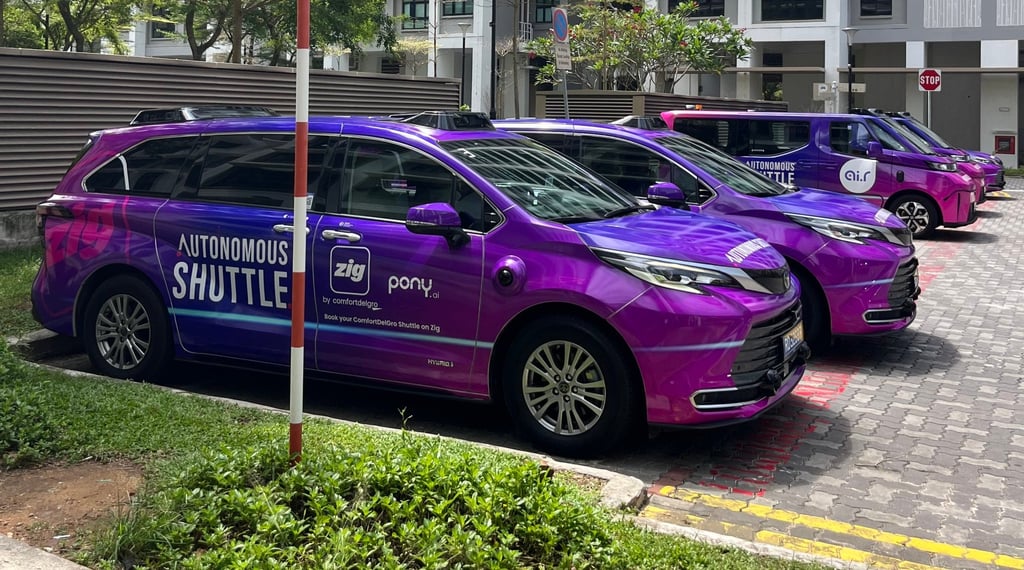
Major ride-hailing companies Grab and ComfortDelGro were given the green light to collaborate with leading Chinese AV manufacturers WeRide and Pony.ai, respectively, to test and deploy shuttle taxi services on public roads in Punggol.
Chinese AV companies are industry leaders, experts say, and are keen to show that their vehicles can operate in international markets – despite profitability concerns, as most are still in the start-up phase and rely heavily on investments.

Eventually, there will be no need for a safety officer or any human behind the wheel at all – mirroring the autonomous vehicles (AVs) already operating in cities such as Beijing, Shenzhen, San Francisco and Los Angeles.
For now, Singapore is in the early stages of rolling out AVs, specifically robotaxis, to the public.
Jeffrey Siow, the acting transport minister, said last September that the country aimed to have around 100 to 150 of these vehicles on the road by the end of this year.
Major ride-hailing companies Grab and ComfortDelGro were given the green light to collaborate with leading Chinese AV manufacturers WeRide and Pony.ai, respectively, to test and deploy shuttle taxi services on public roads in Punggol.
Chinese AV companies are industry leaders, experts say, and are keen to show that their vehicles can operate in international markets – despite profitability concerns, as most are still in the start-up phase and rely heavily on investments.
Eventually, there will be no need for a safety officer or any human behind the wheel at all – mirroring the autonomous vehicles (AVs) already operating in cities such as Beijing, Shenzhen, San Francisco and Los Angeles.
For now, Singapore is in the early stages of rolling out AVs, specifically robotaxis, to the public.
Jeffrey Siow, the acting transport minister, said last September that the country aimed to have around 100 to 150 of these vehicles on the road by the end of this year.
Major ride-hailing companies Grab and ComfortDelGro were given the green light to collaborate with leading Chinese AV manufacturers WeRide and Pony.ai, respectively, to test and deploy shuttle taxi services on public roads in Punggol.
Chinese AV companies are industry leaders, experts say, and are keen to show that their vehicles can operate in international markets – despite profitability concerns, as most are still in the start-up phase and rely heavily on investments.
In a quiet street in northern Singapore, a car plies the road like any other…


.png?itok=t3itQ0wI&ssl=1 "Construction stands to get an AI boost")


