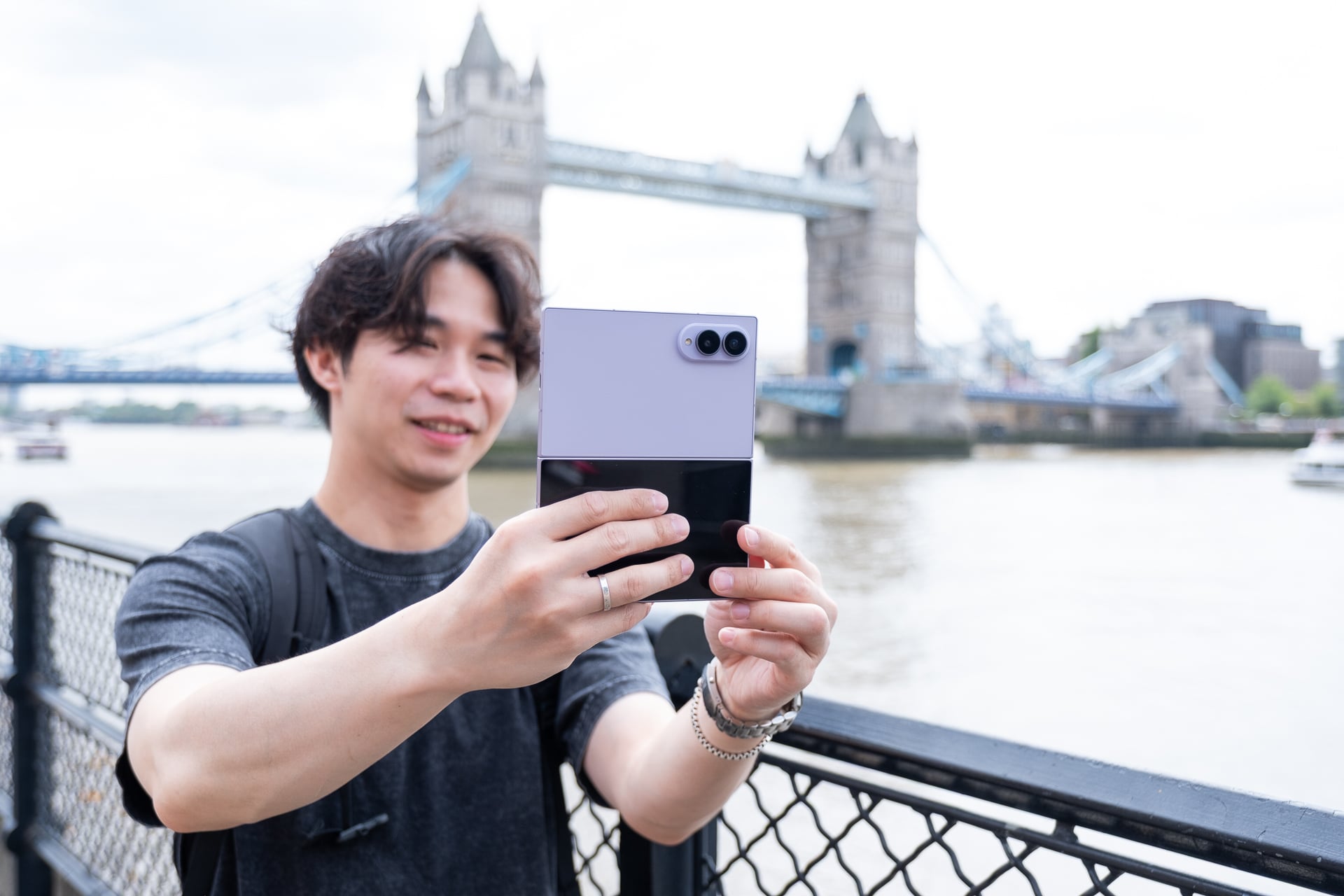
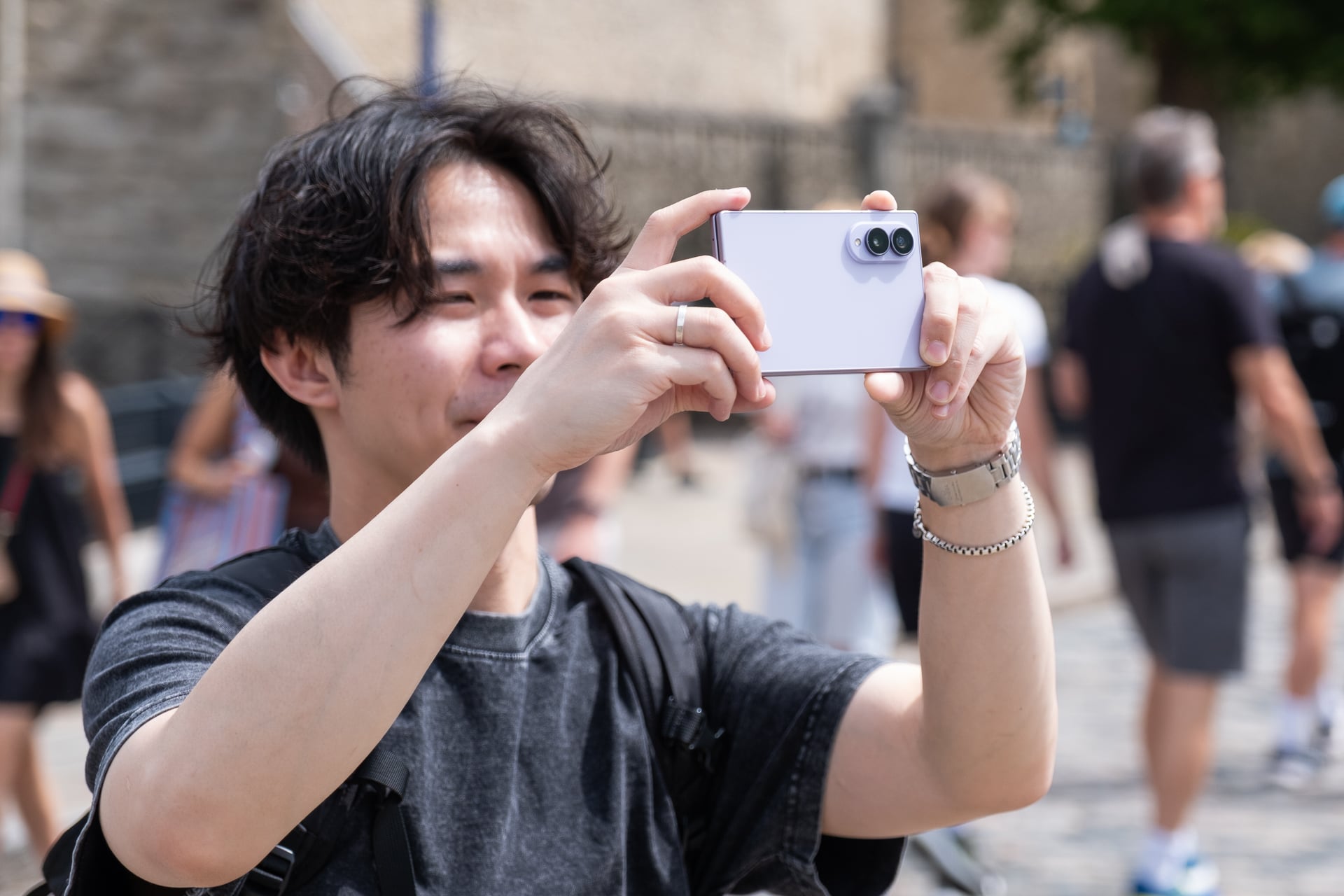
Samsung’s Galaxy Z Fold 8 is the best phone (not just foldable) I’ve ever used for consuming content—watching videos, playing mobile games, reading, and yes, even doomscrolling social media—thanks to its 7.6-inch inner screen.
The book-style foldable phone’s novel shape when closed may look strange at first, but I promise you that its shorter and wider footprint (when closed) quickly feels normal after a few days. The whole point of this form factor is to unfold it for its larger tablet-sized screen, and I can assure you that you’ll be doing that often because the experience encourages it more.
More importantly, the Z Fold 8 has fewer of the compromises that held back Samsung’s previous foldable phones. The device is lighter and easier to unfold, the battery is bigger and lasts all day, and Samsung has greatly reduced the crease on the inner screen.
Some apps still might not display correctly on both screens, but even so, I’m declaring the Z Fold 8 a home run. I can’t stop using it.
Samsung Galaxy Z Fold 8
The Galaxy Z Fold 8 is Samsung’s best version of a book-style foldable phone yet, even with its premium price.
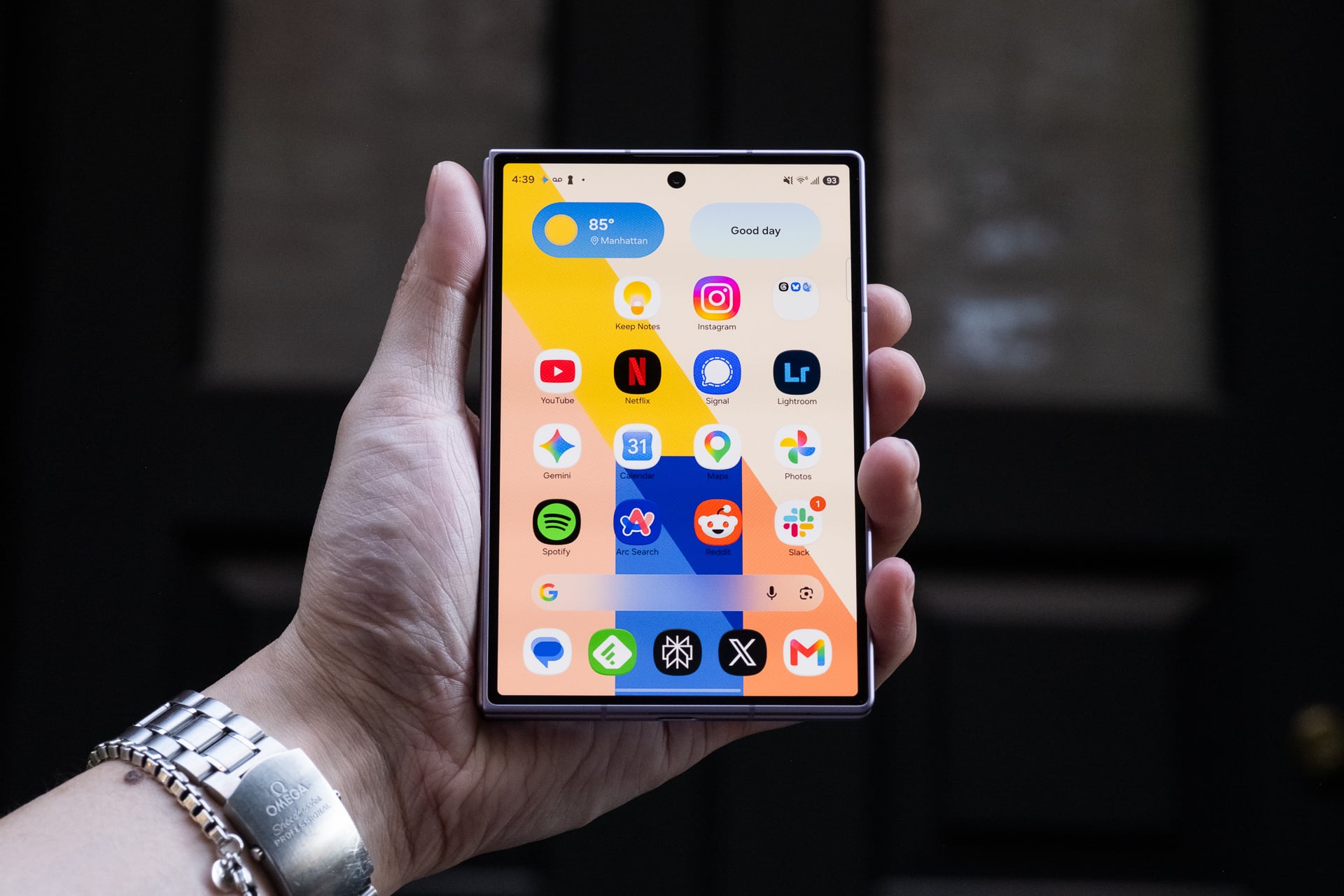
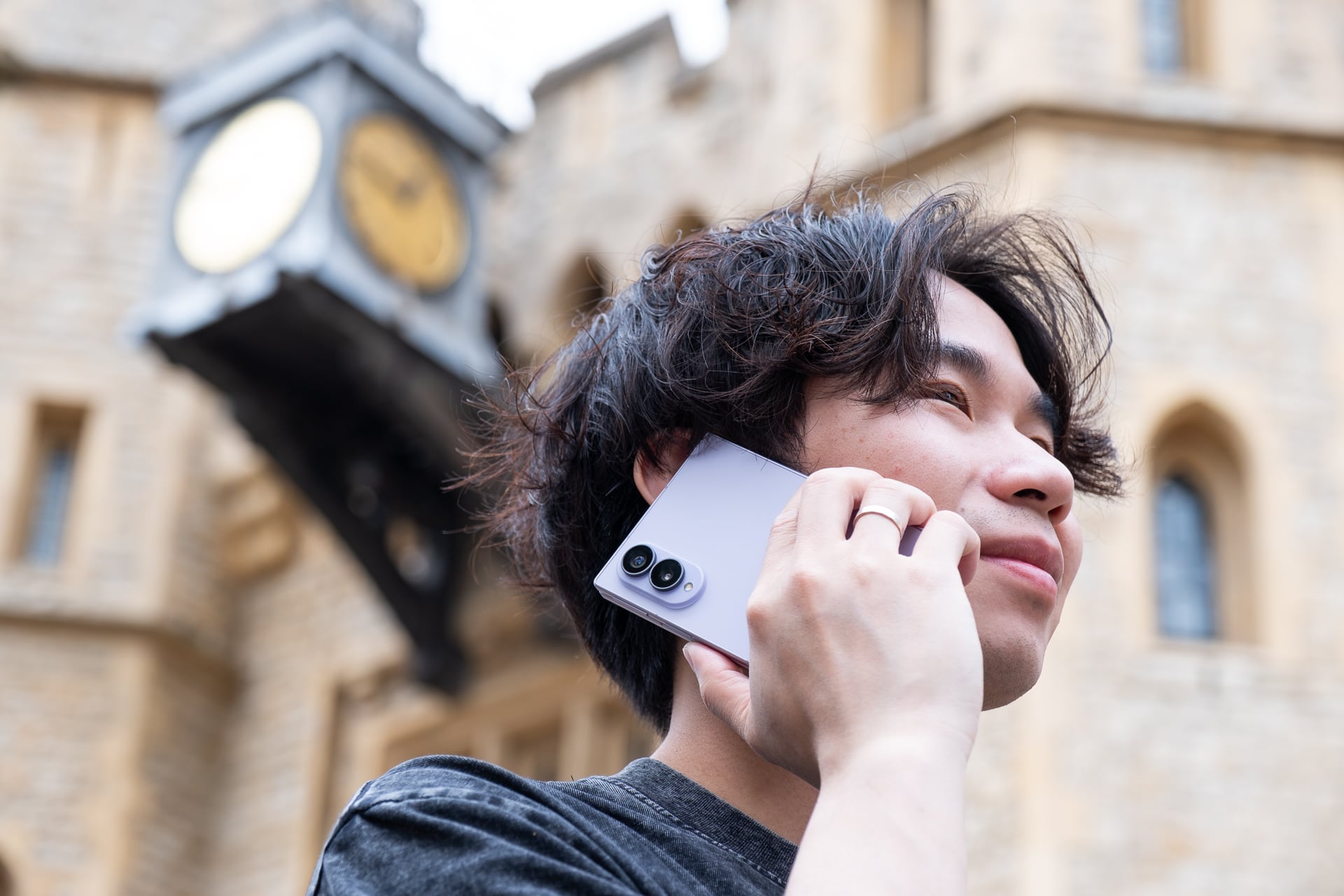
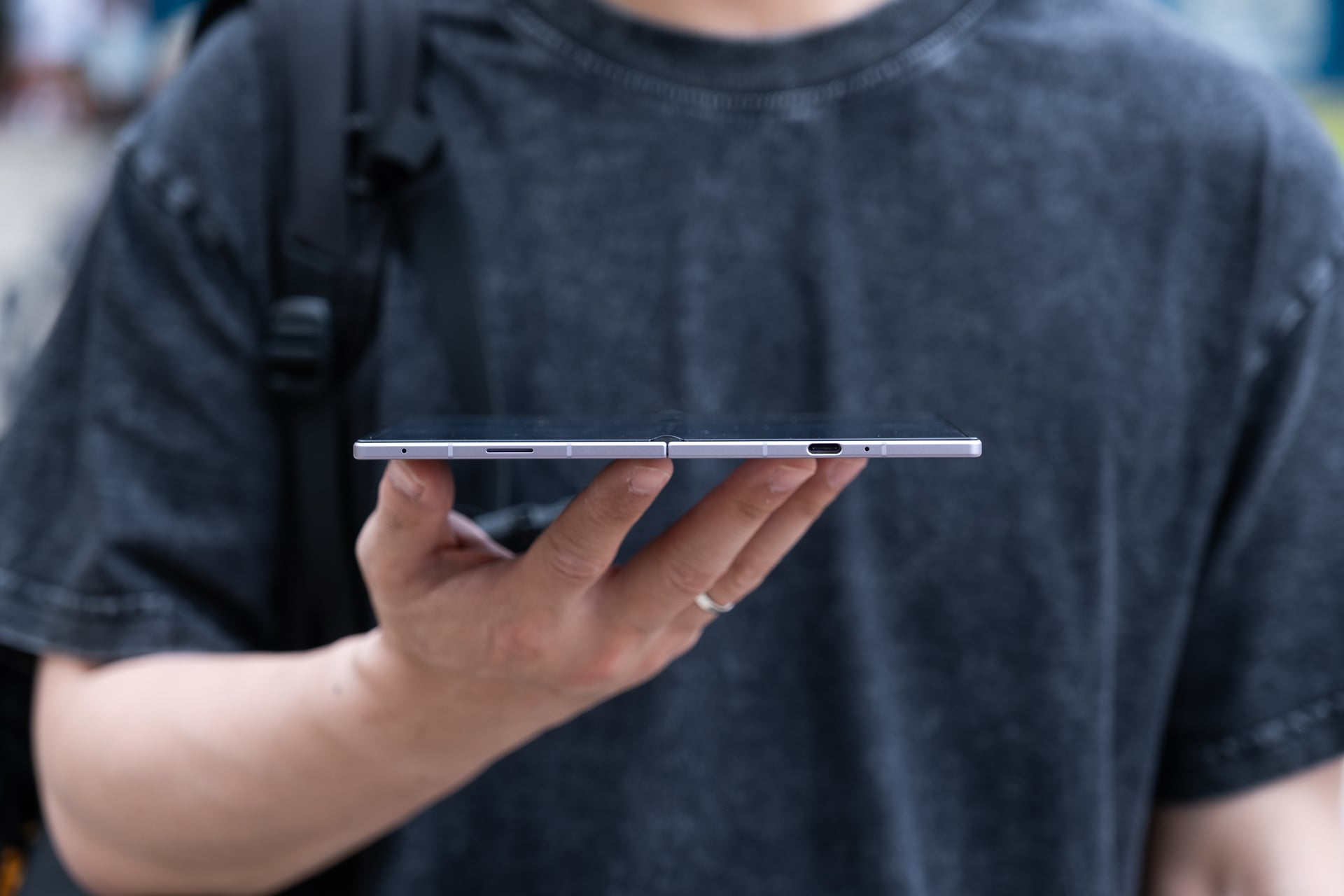
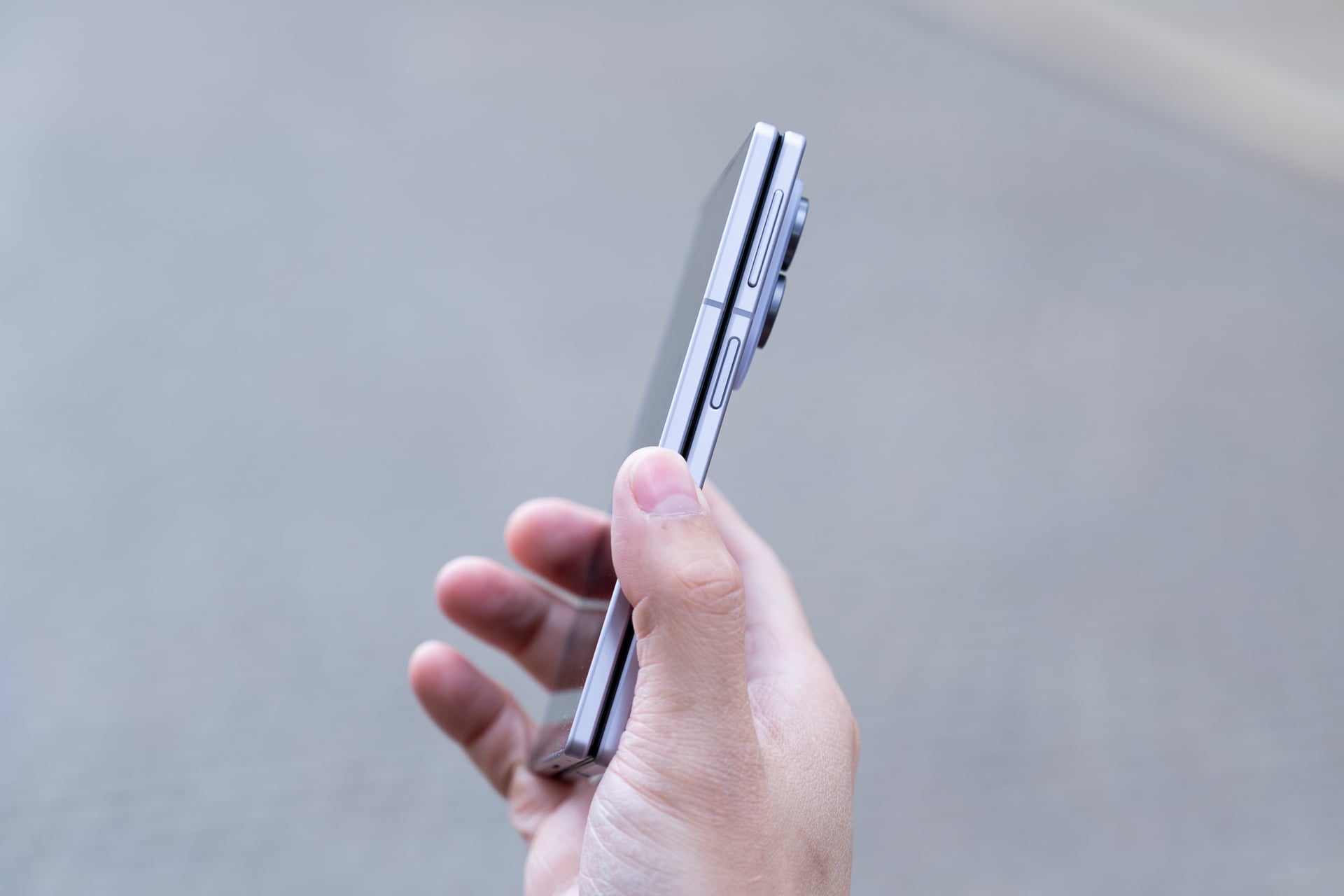
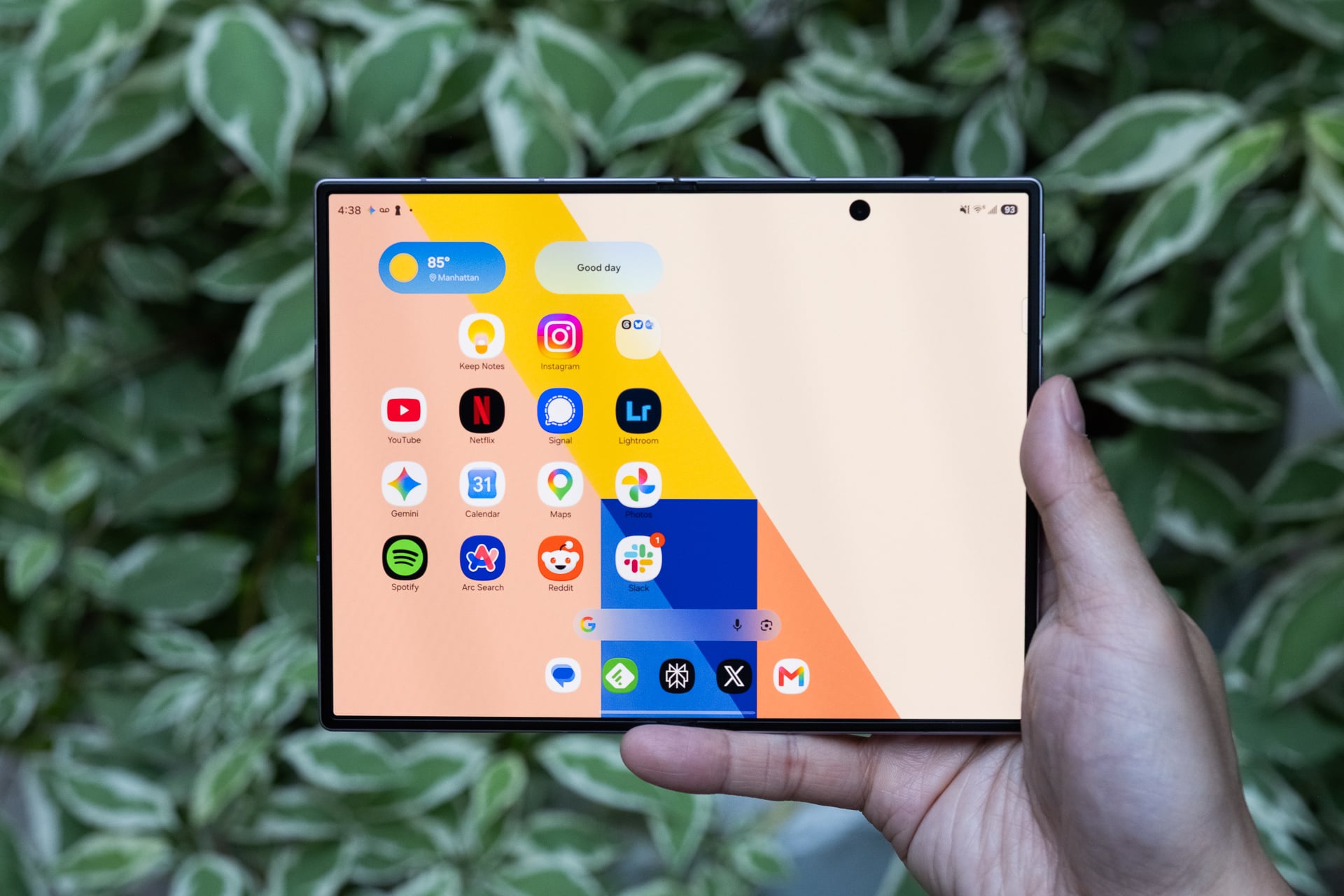
The best size comparisons for the Z Fold 8 are a passport or a B7-sized notebook. The foldable measures 4.88 x 3.24 inches when it’s closed. It’s a few hairs thicker than the Z Fold 8 Ultra, but because of the squatter dimensions and lighter weight, the Z Fold 8 doesn’t feel unwieldy. I’m mostly able to reach corner to corner on the 5.5-inch AMOLED cover screen, something I haven’t been able to do on any “regular” (read: 6 to 6.9-inch) bar-style phone in years.
It also fits in my front pants pockets better than expected; I had concerns that the width might be too wide. I guess if you’re already used to the width of an iPhone 17 Pro Max or a Galaxy S26 Ultra, the Z Fold 8’s only slightly wider.
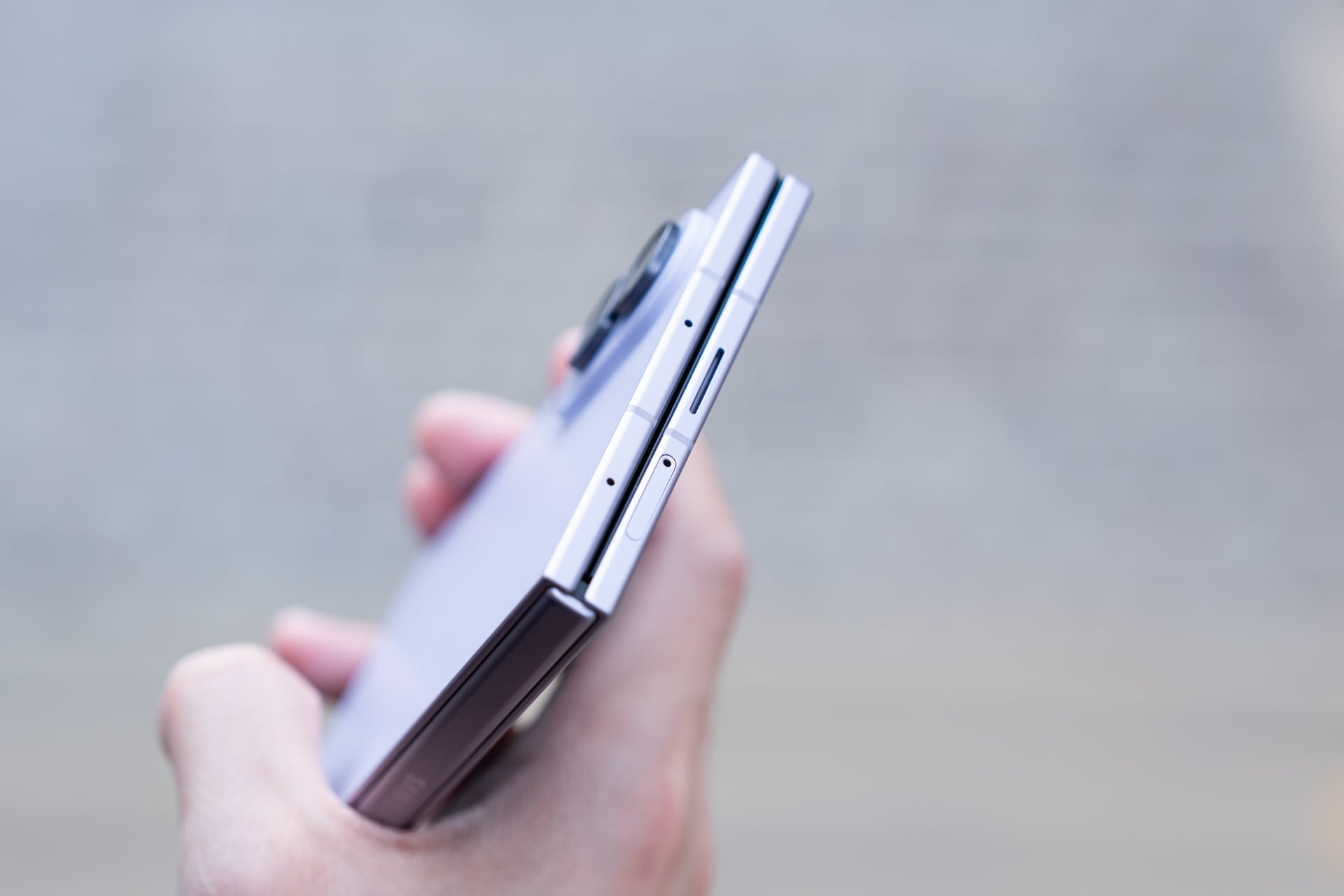
I’m able to reach the power button/fingerprint reader easily with my right thumb. Lefties might struggle since they can’t use their thumb and will have to register their index finger, which might be a little stretch to press the button, like it is for me. The volume rocker is a little high for me; I prefer its lower position on the Z Fold 7/Z Fold 8 Ultra. Typing with two hands on the cover screen is a much easier affair than on narrower phones; I made fewer typos compared to my iPhone. One-handed typing will depend on whether your hand is large enough and your thumb can stretch across the keyboard.
The 10:16 aspect ratio of the cover screen is also not as cramped as it seems. You lose vertical space compared to most regular phones and taller foldables like the Z Fold 8 Ultra, which means apps will show less and you’ll need to scroll more, but that’s mostly a non-issue if you open the phone and rotate it to vertical orientation. I never found myself bothered that I couldn’t see enough on the cover screen. If anything, I appreciated the shorter screen more because I didn’t feel compelled to pull it out as much unless I wanted to unfold it.
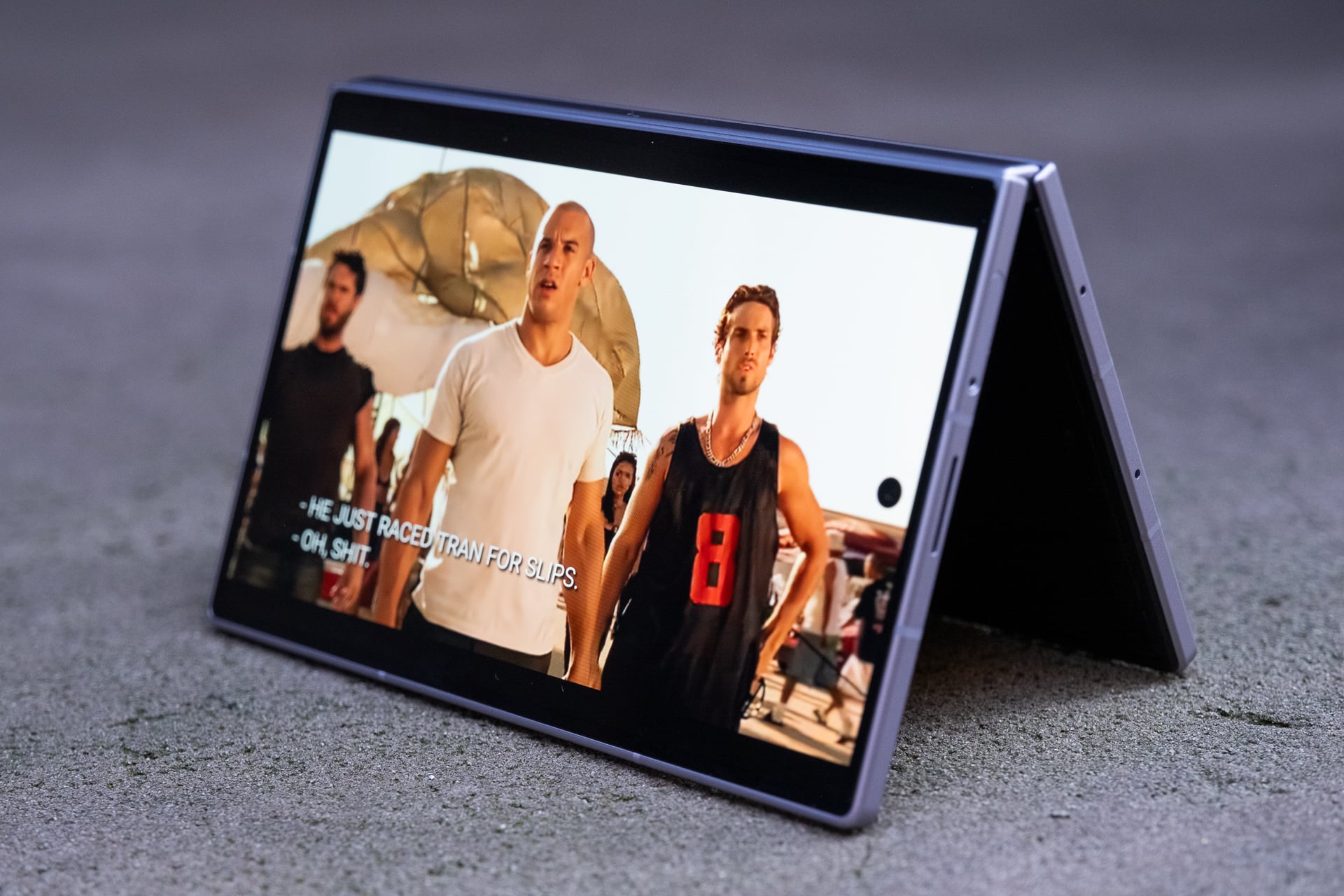
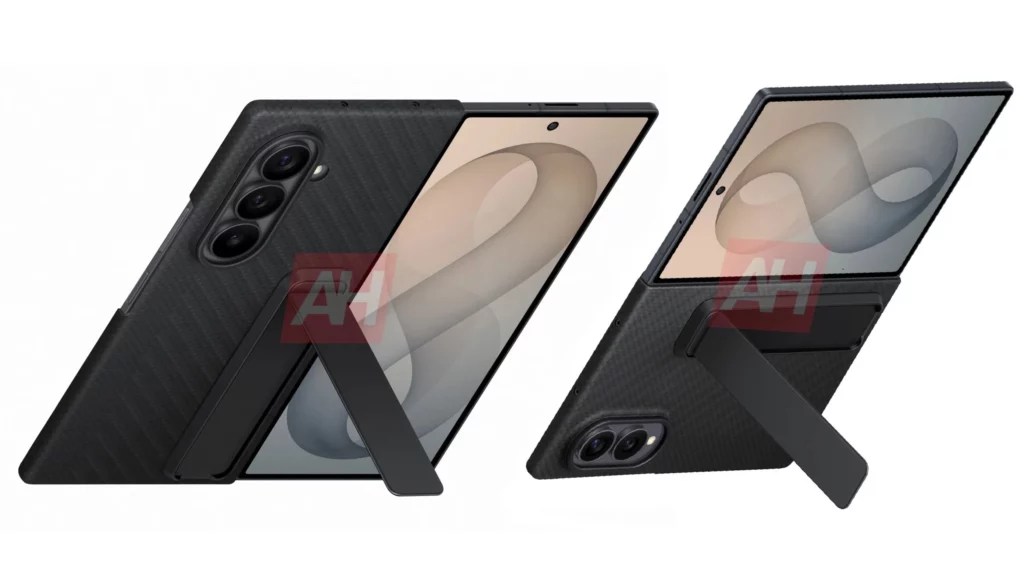
Like on the Z Fold 8 Ultra, you can use the Z Fold 8 in “tent” mode. This is great for propping up the device on a plane tray table or if you’re just too lazy to hold it up while in bed. I fly a lot for work, so tent mode is something I find very useful. A Z Fold 8 Ultra feature that you won’t find on the Z Fold 8 is “Flex mode.” On the Z Fold 8 Ultra, you can snap the screen so that it resembles a baby laptop, and some apps, like YouTube, will display the video above the crease and controls below it. I never found much utility for Flex mode on the previous Z Folds and I don’t miss it on the Z Fold 8. If that’s something you care about, get the Z Fold 8 Ultra instead.
Out of all the book-style foldable phones I’ve tested over the past seven years, the Z Fold 8 is the only one that I have unfolded more times than I have not. With each generation of Z Fold, Samsung made the dimensions more like a regular bar-style phone. I heaped praise on the Z Fold 7 for finally ditching the previous skinny, remote-like shape. And even though I considered the Z Fold 7 my favorite Android phone of 2025, I realized that I only used its inner screen maybe less than 50% of the time I pulled it out. With the cover screen being normal-sized, there just wasn’t as much of a need to unfold it for the 8-inch screen.
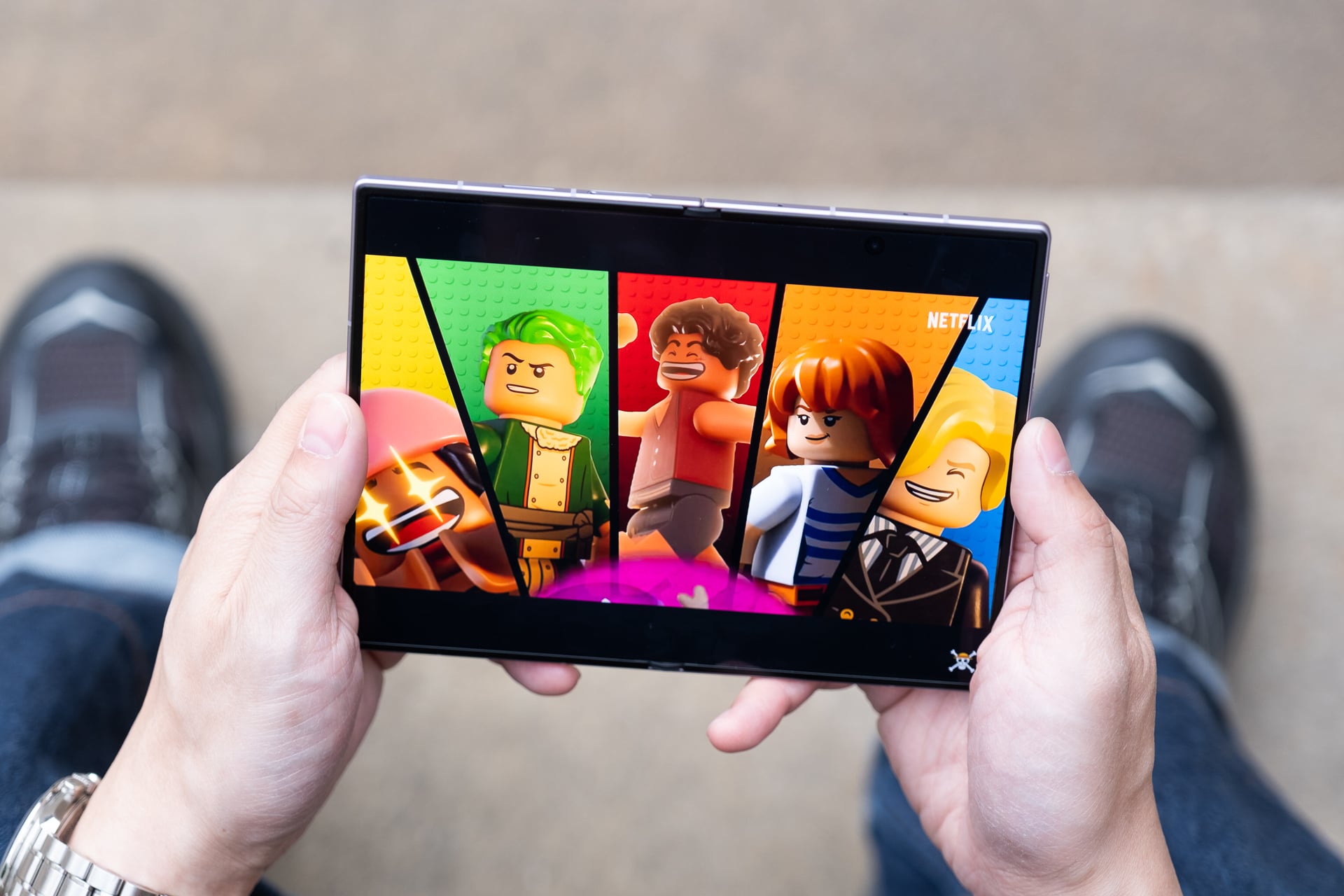
That hasn’t been the case with the Z Fold 8. Because of the shorter cover screen, I almost always unfold it to use the larger display. Maybe that’s because the Flex Titanium technology helps the hinge spring open better or the beveled aluminum frame makes it easier to unfold without needing fingernails, or both. Whatever the reasons are, it’s easier to see and feel the benefits of the larger size of the inner screen’s 4:3 aspect ratio for most content than on a more square-ish folding screen like the Z Fold 8 Ultra’s. To get roughly the same diagonal screen for widescreen videos on the Z Fold 8 Ultra, you need to rotate it, which is an extra step. It’s a tiny bit of friction that makes the task of quickly unfolding and getting more screen real estate less convenient. When you’re unfolding the phone dozens of times a day, that one extra step adds up.
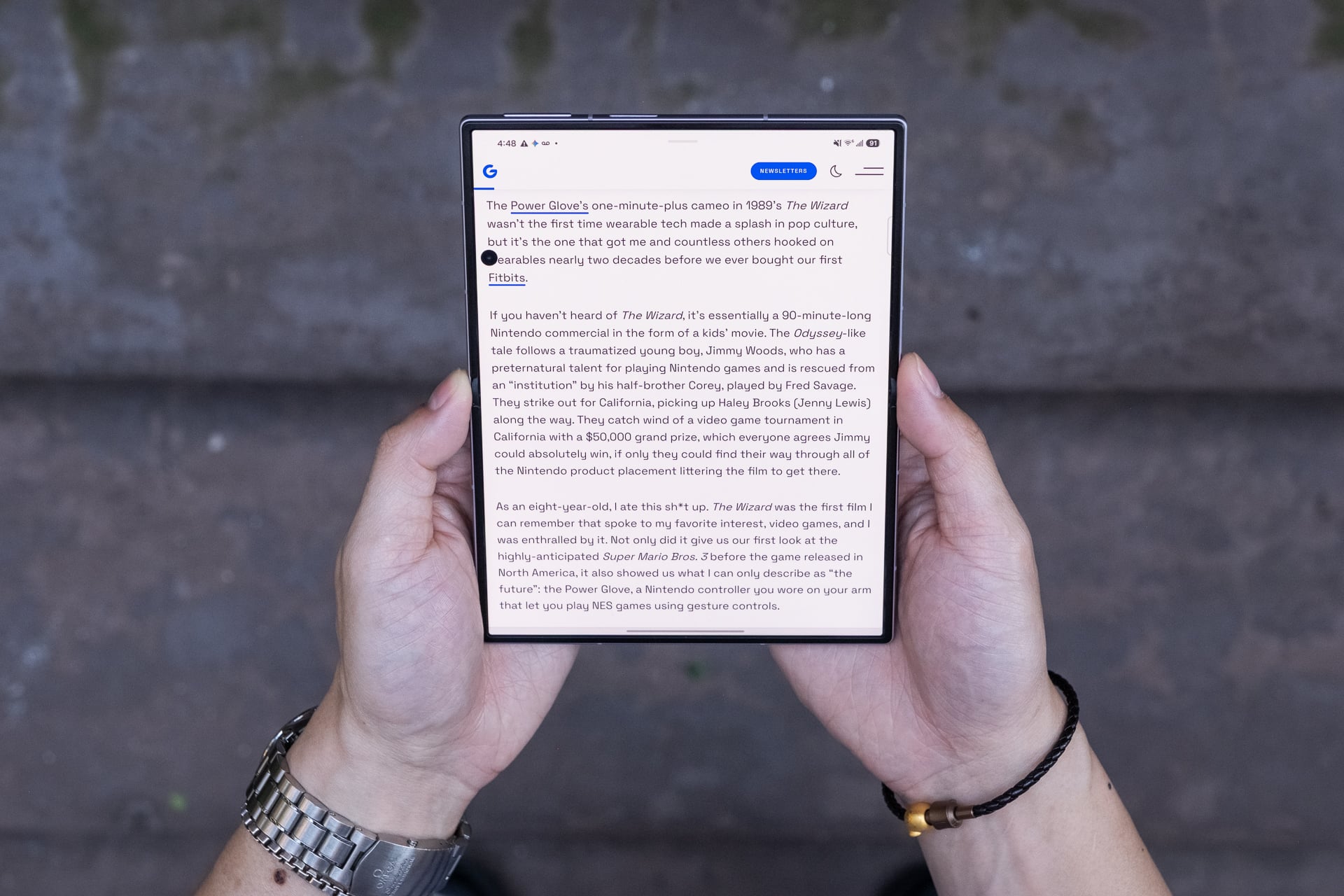
After two weeks of using the Z Fold 8 and Z Fold 8 Ultra, I’ve concluded that if you watch more videos and game more than you read, the Z Fold 8 is the better foldable since you won’t need to rotate it so much. If you do more reading and split-screen multitasking, the Z Fold 8 Ultra is more suitable since you’ll get more vertical display on both the cover and inner screens without rotating, and you’ll do less scrolling.
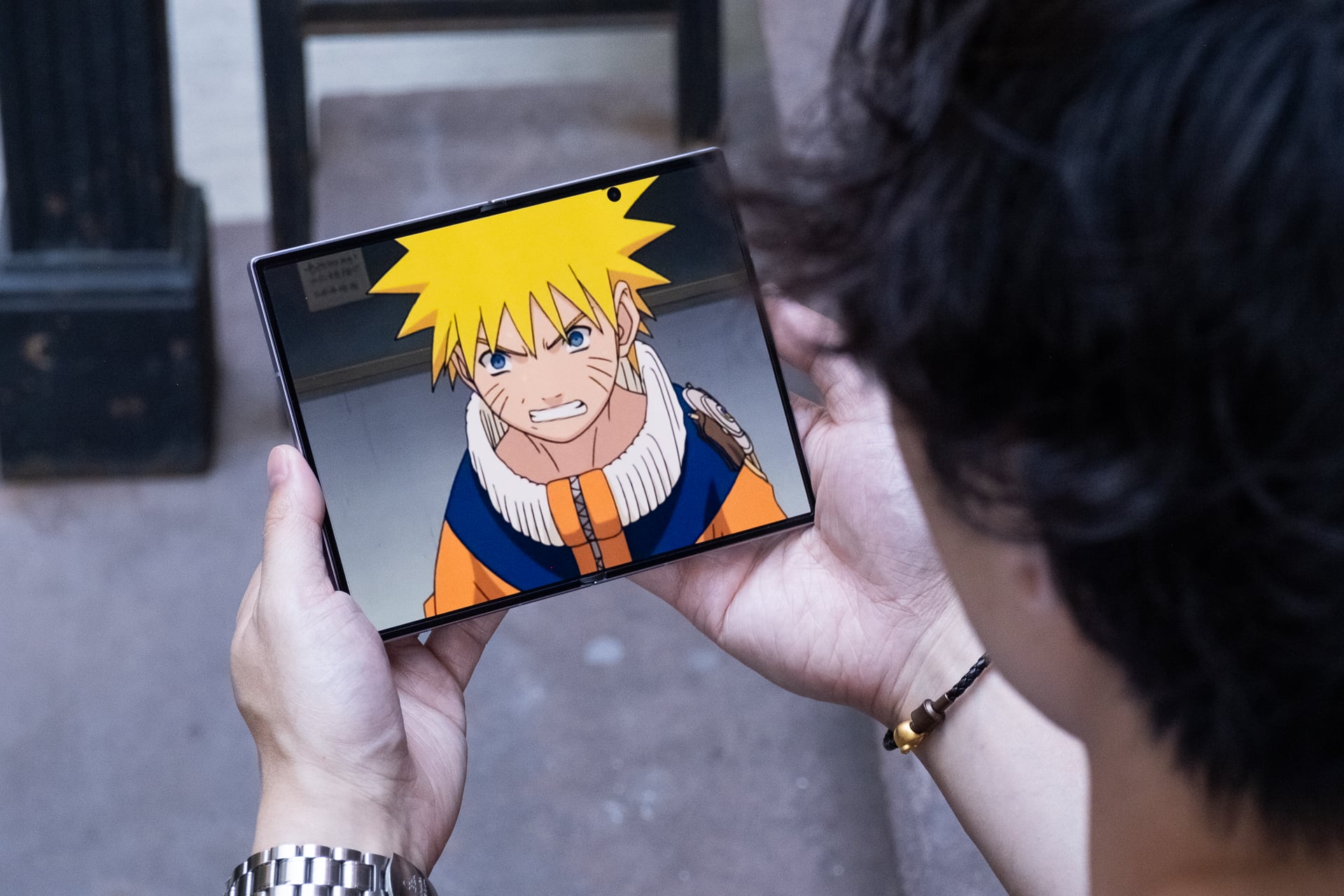
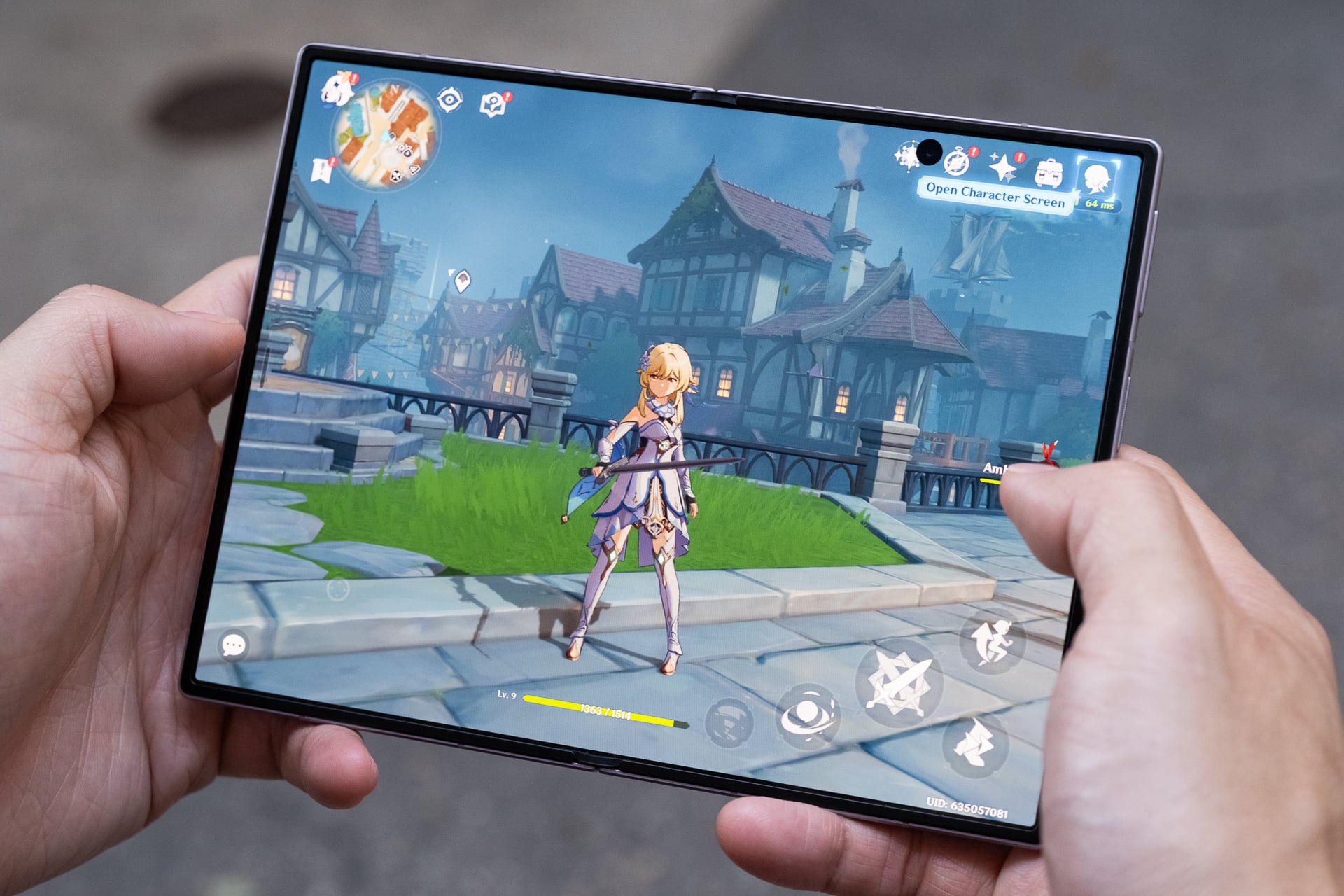
I consume a ridiculous amount of content on a daily basis, so I find the 4:3 aspect ratio more versatile for my needs. In just two weeks, I watched, gamed, and read more on the Z Fold 8 than I have on any new phone I’ve ever tested. Videos look incredible on the 7.6-inch inner screen; 16:9 videos have minimal letterboxing (black bars) above and below them, and old content like many original anime series in 4:3 aspect ratio fill up the entire screen. I’ve never felt more informed and entertained from my phone.
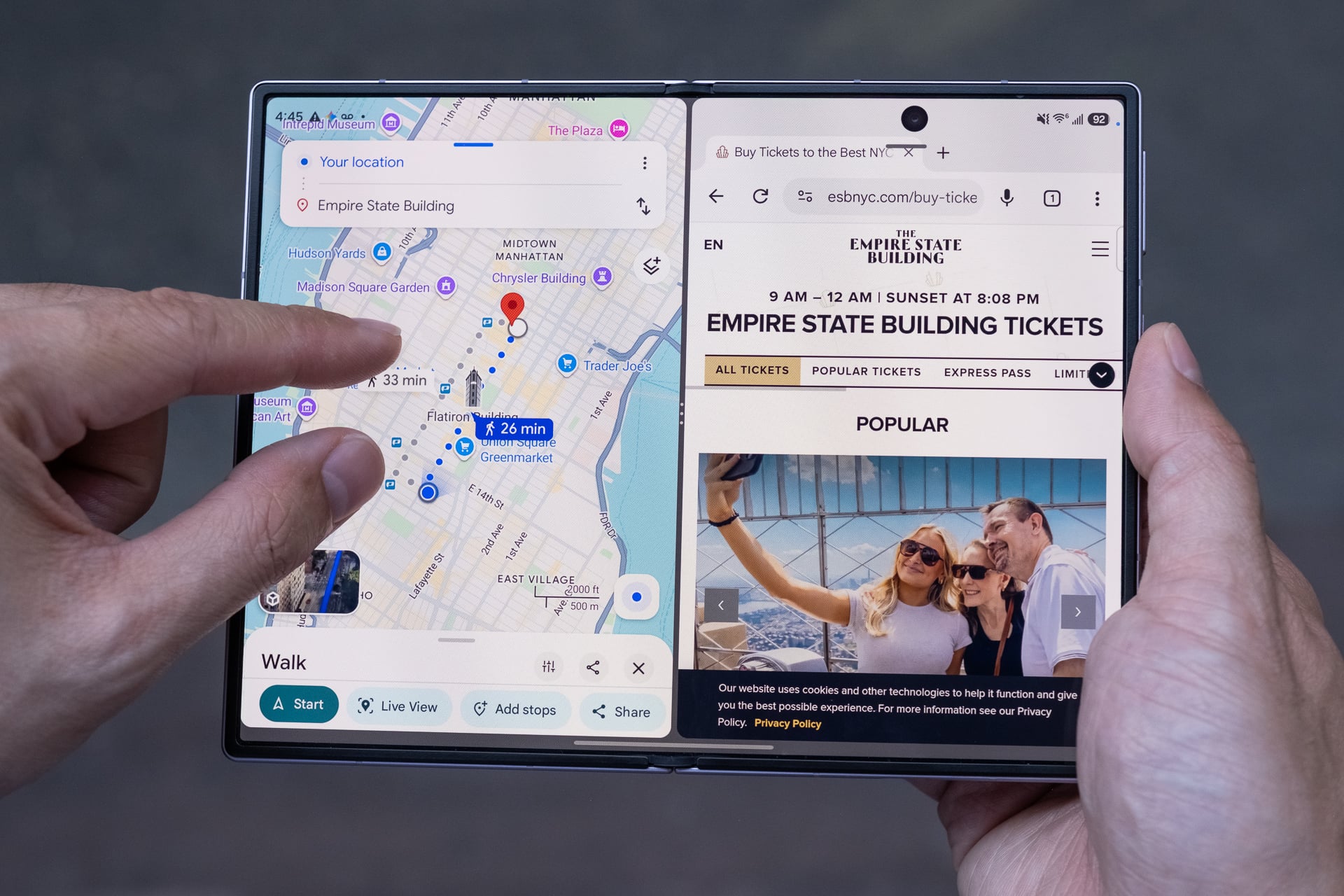
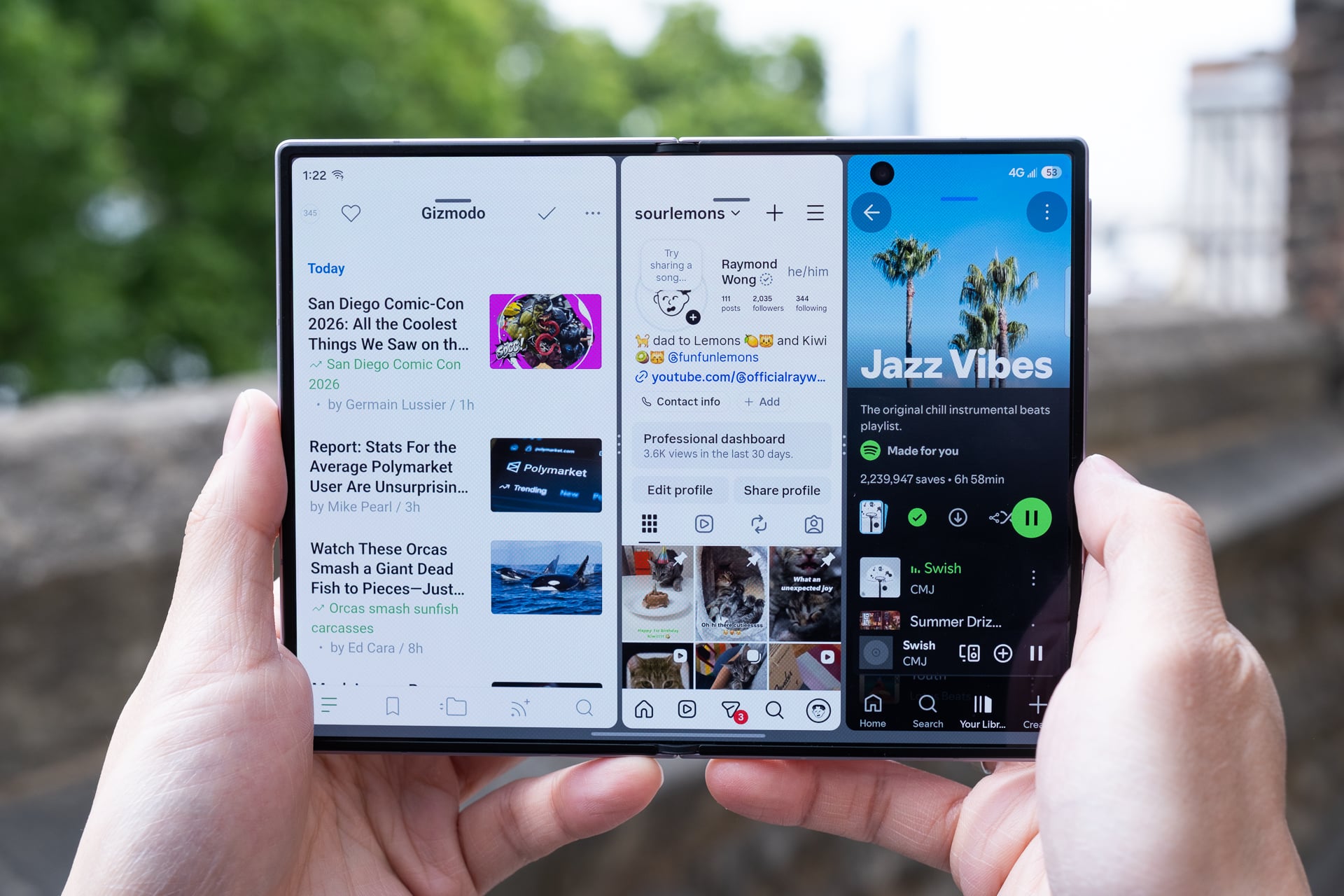
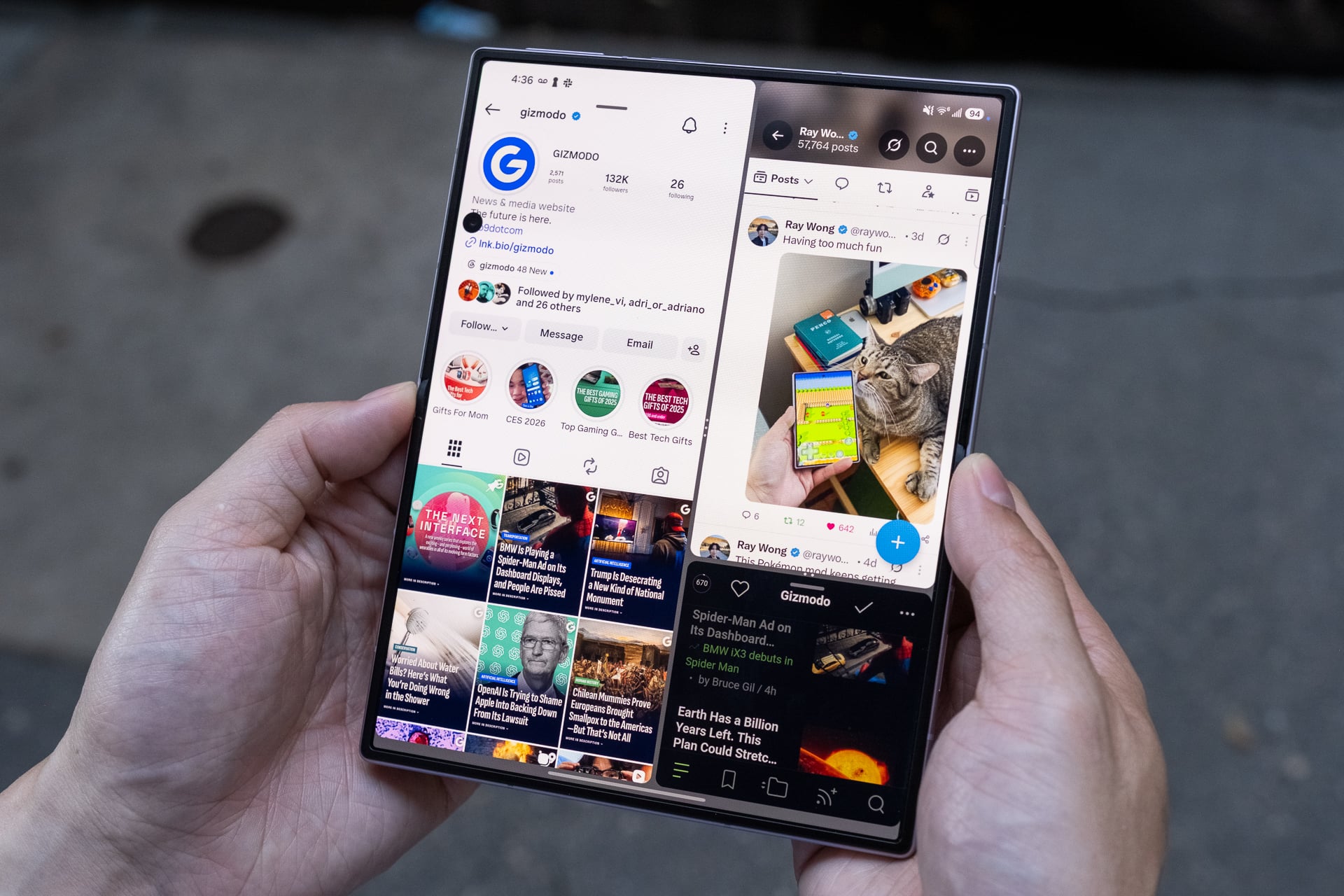
As with the Z Fold 8 Ultra, the Z Fold 8 lets you run three apps in split-screen layouts or four (with a pop-up) on the inner screen. I wouldn’t recommend running more than two apps side by side in landscape orientation. Three apps side by side make each app window very skinny, and one app on one side and two stacked on the other half feel squished. Split-screen apps in vertical orientation just look too long to be useful in most cases. In some split-screen layouts, Samsung’s One UI 9 does let you tap between split-screen apps to have it fill more or most of the screen, but it’s not a function that’s easy to discover.
Performance from the Qualcomm Snapdragon 8 Elite Gen 5 for Galaxy chip is snappy and the 12GB of RAM on my 256GB review unit (you’ll get 16GB if you buy the 1TB model) never chugged when I threw Gemini and Galaxy AI tasks at it. The only thing that occasionally bugs me is that the Z Fold 8 gets toasty even when I’m not doing anything power-hungry. I suspect the super-thin design doesn’t leave much room for adequate thermals; there’s no vapor chamber for cooling like there is on the Galaxy S26 Ultra and iPhone 17 Pro.
The inner screen has been a joy to use, especially on my 1-hour subway commute to and from work. And instead of reaching for my iPad mini in bed, the Z Fold 8 now fills the role instead. It’s great only having to charge one device.
On the topic of charging, the Z Fold 8’s battery is rock solid, lasting me a full day even with heavy use of the inner screen. That’s not surprising since Samsung added a small percentage of silicon carbon into the 4,800mAh battery, which allows for the larger cell while maintaining a slim size. The 45W fast wired charging, with a compatible charger sold separately (of course), was more than quick enough to give me a recharge (around 0% to 65% in 30 minutes) whenever I was low on power. The Z Fold 8 also supports fast wireless charging at 20W, but I used it less compared to other phones like the iPhone 17 Pro or Pixel 10 Pro because Samsung still refuses to include built-in magnetic charging rings. You, again, need to buy a case with magnets to align the phone effortlessly with a Qi2 charger.
The only blemish, literally, on the larger screen experience is the 10-megapixel hole-punch camera on the inner screen. It can obscure essential parts of a menu, buttons, or text depending on what you’re looking at. For example, in Asphalt Legends, I couldn’t see a menu button that the hole punch covered. The hole punch is most noticeable when reading long blocks of text or black and white manga. It makes more sense to put the camera in the corner since it can’t fit in a bezel like on a regular tablet.
Other than that, I might nitpick the placement of the two stereo speakers. They’re located on the top and bottom of the cover screen, which makes them left-side oriented when the Z Fold 8 is unfolded. The speakers get loud enough, but because they’re both on the left in tablet mode, it almost sounds mono coming from one side. To be clear, these are stereo speakers. I get why Samsung might have designed it like this: the speakers fire out of the left and right in tent mode. Maybe put one speaker on each side for a balanced sound when it’s unfolded?
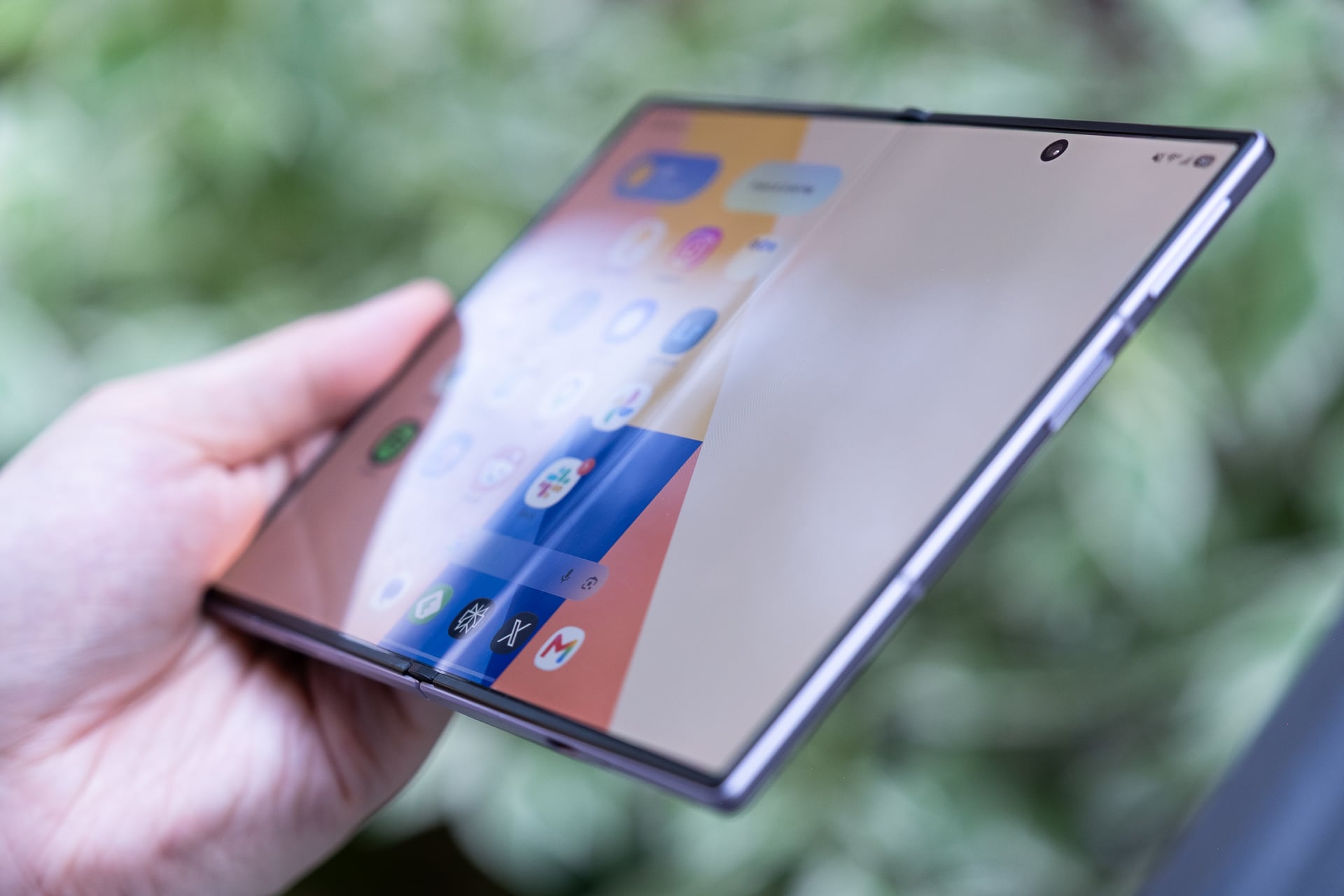
As for the crease… It’s less visible for sure, but hasn’t been completely eliminated. Fresh out of the box, the inner screen is pristine and crease-free. Two weeks in, the crease has deepened with hundreds of folds and I can see it when the screen is off, but it doesn’t warp as much as it did on past Samsung foldables. I almost never notice it when I’m watching videos, gaming, or reading. Besides the reinforced titanium alloy film on top of the screen and the titanium plate underneath it to ensure it stays flatter to the touch over time, Samsung also added an anti-reflective layer to reduce glare, and it really does help. I’ve said it before and I’ll say it again: the crease may never be fully eliminated from folding screens. The best we can hope for may just be making it less visible.
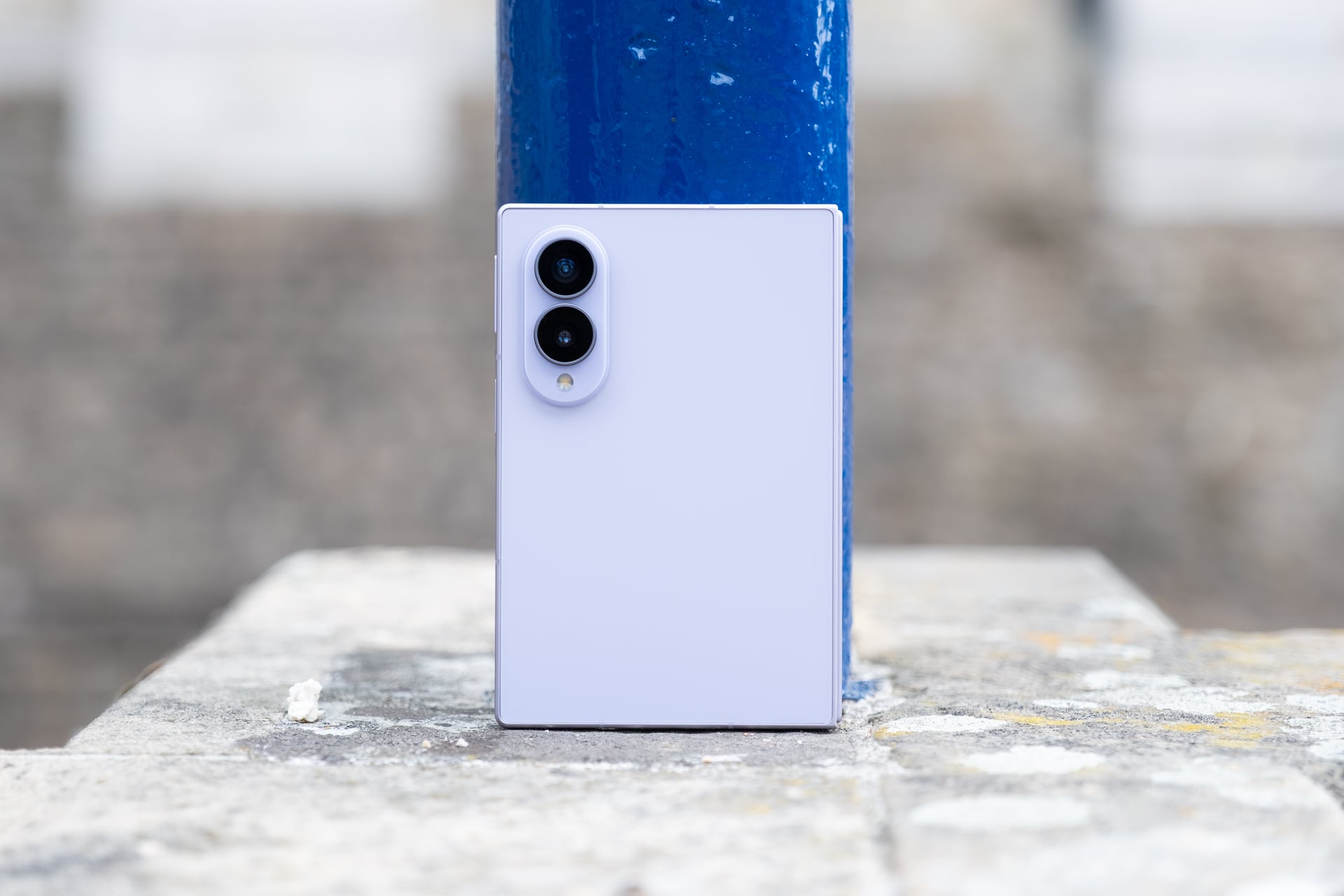
Depending on what you consider the Z Fold 8, either as the sequel to the Z Fold 7 or as a new class of foldables, the cameras will impress or disappoint. If viewed as a Z Fold 7 successor, the 50-megapixel main camera may feel like a downgrade from the previous 200-megapixel shooter. The 50-megapixel ultrawide on the Z Fold 8 will, however, be an upgrade from the Z Fold 7’s 12-megapixel one. You may also be upset it doesn’t have a telephoto lens.
If you want triple rear cameras and more resolution for the main camera, Samsung sells the Z Fold 8 Ultra. I have no complaints with the dual 50-megapixel rear cameras and dual 10-megapixel hole-punch cameras on the Z Fold 8. I don’t think most people will care there’s no telephoto. You still get a 2x zoom that crops in on the 50-megapixel sensor and looks nearly optical-quality to me. This is similar to the virtual 2x “telephoto” that you’ll find on other phones and all recent iPhones that have larger main sensors. The 4x and 10x zooms on the Z Fold 8 are digital, though, and the fuzzier image quality shows.
For everyday photos and videos, the Z Fold 8 cameras are good enough. Image quality looks vibrant and not overly saturated like it used to on Samsung phones and I think the HDR looks less processed compared to iPhone photos. Low-light shots look solid, too. If you’re the type of person who doesn’t want to spend too much or any time editing your photos, the Z Fold 8 photos are more than fine to post directly to social media.
The Z Fold 8 is loaded with a bunch of AI editing features, like “Photo Assist,” which lets you describe an edit with text; “My FanCam,” which lets you motion-track a subject in a video and then crop it for different aspect ratios for posting to social media; and a “Scan” feature that can clean up photos of documents (i.e. sharpen text, flatten and fix the geometry, and remove folded corners or fingers). These can be useful, but there already are apps that exist that do these things. I suppose it’s nice they’re free and built-in.
I also don’t hate any of the new video recording features, like the dual recording mode that lets you record from both the front and rear cameras simultaneously in various layouts (side by side, split top and bottom, and picture in picture) and super steady recording with horizon lock, which keeps the horizon line straight. Again, none are particularly special, but it’s nice that they’re there when you might need them.
It didn’t take long for me to fall in love with the Galaxy Z Fold 8. That’s just not something that happens often anymore. But fall in love with Samsung’s new foldable—I did. The Z Fold 8 is proof that great hardware still matters—and matters more than simply shoving in more AI features.
I like it more than the Z Fold 7 and the Z Fold 8 Ultra, mainly because its 4:3 inner screen makes consuming content a better and more fun experience than swiping on a long bar. One UI 9 is a very polished Android experience, and a feature like Quick Share, which lets you AirDrop files to Apple devices, is a game-changer. Anything that makes an Android phone work with Apple devices is a big plus to me.
There are still some minor things that people will find fault with, like the fact that Samsung has stuck with an IP48 rating for dust and water resistance instead of bumping that up higher to IP68 like Google did with the Pixel 10 Pro Fold or that Samsung didn’t bring back S Pen support. Neither omission makes the Z Fold 8 feel insufficient in my book. I’m not exposing the Z Fold 8 to harsh conditions and I have no attachment to a stylus.
Look, I get it: the Z Fold 8 is still expensive starting at $1,900. I don’t foresee the price of it coming down anytime soon. Samsung’s stuck to around $2,000 for its book-style foldables since the original Galaxy Fold. If you can justify the value of a larger screen experience, the Z Fold 8 is amazing in almost every aspect.
Samsung’s Galaxy Z Fold 8 is the best phone (not just foldable) I’ve ever used for consuming content—watching videos, playing mobile games, reading, and yes, even doomscrolling social media—thanks to its 7.6-inch inner screen.
The book-style foldable phone’s novel shape when closed may look strange at first, but I promise you that its shorter and wider footprint (when closed) quickly feels normal after a few days. The whole point of this form factor is to unfold it for its larger tablet-sized screen, and I can assure you that you’ll be doing that often because the experience encourages it more.
More importantly, the Z Fold 8 has fewer of the compromises that held back Samsung’s previous foldable phones. The device is lighter and easier to unfold, the battery is bigger and lasts all day, and Samsung has greatly reduced the crease on the inner screen.
Some apps still might not display correctly on both screens, but even so, I’m declaring the Z Fold 8 a home run. I can’t stop using it.
Samsung Galaxy Z Fold 8
The Galaxy Z Fold 8 is Samsung’s best version of a book-style foldable phone yet, even with its premium price.
The best size comparisons for the Z Fold 8 are a passport or a B7-sized notebook. The foldable measures 4.88 x 3.24 inches when it’s closed. It’s a few hairs thicker than the Z Fold 8 Ultra, but because of the squatter dimensions and lighter weight, the Z Fold 8 doesn’t feel unwieldy. I’m mostly able to reach corner to corner on the 5.5-inch AMOLED cover screen, something I haven’t been able to do on any “regular” (read: 6 to 6.9-inch) bar-style phone in years.
It also fits in my front pants pockets better than expected; I had concerns that the width might be too wide. I guess if you’re already used to the width of an iPhone 17 Pro Max or a Galaxy S26 Ultra, the Z Fold 8’s only slightly wider.
I’m able to reach the power button/fingerprint reader easily with my right thumb. Lefties might struggle since they can’t use their thumb and will have to register their index finger, which might be a little stretch to press the button, like it is for me. The volume rocker is a little high for me; I prefer its lower position on the Z Fold 7/Z Fold 8 Ultra. Typing with two hands on the cover screen is a much easier affair than on narrower phones; I made fewer typos compared to my iPhone. One-handed typing will depend on whether your hand is large enough and your thumb can stretch across the keyboard.
The 10:16 aspect ratio of the cover screen is also not as cramped as it seems. You lose vertical space compared to most regular phones and taller foldables like the Z Fold 8 Ultra, which means apps will show less and you’ll need to scroll more, but that’s mostly a non-issue if you open the phone and rotate it to vertical orientation. I never found myself bothered that I couldn’t see enough on the cover screen. If anything, I appreciated the shorter screen more because I didn’t feel compelled to pull it out as much unless I wanted to unfold it.
Like on the Z Fold 8 Ultra, you can use the Z Fold 8 in “tent” mode. This is great for propping up the device on a plane tray table or if you’re just too lazy to hold it up while in bed. I fly a lot for work, so tent mode is something I find very useful. A Z Fold 8 Ultra feature that you won’t find on the Z Fold 8 is “Flex mode.” On the Z Fold 8 Ultra, you can snap the screen so that it resembles a baby laptop, and some apps, like YouTube, will display the video above the crease and controls below it. I never found much utility for Flex mode on the previous Z Folds and I don’t miss it on the Z Fold 8. If that’s something you care about, get the Z Fold 8 Ultra instead.
Out of all the book-style foldable phones I’ve tested over the past seven years, the Z Fold 8 is the only one that I have unfolded more times than I have not. With each generation of Z Fold, Samsung made the dimensions more like a regular bar-style phone. I heaped praise on the Z Fold 7 for finally ditching the previous skinny, remote-like shape. And even though I considered the Z Fold 7 my favorite Android phone of 2025, I realized that I only used its inner screen maybe less than 50% of the time I pulled it out. With the cover screen being normal-sized, there just wasn’t as much of a need to unfold it for the 8-inch screen.
That hasn’t been the case with the Z Fold 8. Because of the shorter cover screen, I almost always unfold it to use the larger display. Maybe that’s because the Flex Titanium technology helps the hinge spring open better or the beveled aluminum frame makes it easier to unfold without needing fingernails, or both. Whatever the reasons are, it’s easier to see and feel the benefits of the larger size of the inner screen’s 4:3 aspect ratio for most content than on a more square-ish folding screen like the Z Fold 8 Ultra’s. To get roughly the same diagonal screen for widescreen videos on the Z Fold 8 Ultra, you need to rotate it, which is an extra step. It’s a tiny bit of friction that makes the task of quickly unfolding and getting more screen real estate less convenient. When you’re unfolding the phone dozens of times a day, that one extra step adds up.
After two weeks of using the Z Fold 8 and Z Fold 8 Ultra, I’ve concluded that if you watch more videos and game more than you read, the Z Fold 8 is the better foldable since you won’t need to rotate it so much. If you do more reading and split-screen multitasking, the Z Fold 8 Ultra is more suitable since you’ll get more vertical display on both the cover and inner screens without rotating, and you’ll do less scrolling.
I consume a ridiculous amount of content on a daily basis, so I find the 4:3 aspect ratio more versatile for my needs. In just two weeks, I watched, gamed, and read more on the Z Fold 8 than I have on any new phone I’ve ever tested. Videos look incredible on the 7.6-inch inner screen; 16:9 videos have minimal letterboxing (black bars) above and below them, and old content like many original anime series in 4:3 aspect ratio fill up the entire screen. I’ve never felt more informed and entertained from my phone.
As with the Z Fold 8 Ultra, the Z Fold 8 lets you run three apps in split-screen layouts or four (with a pop-up) on the inner screen. I wouldn’t recommend running more than two apps side by side in landscape orientation. Three apps side by side make each app window very skinny, and one app on one side and two stacked on the other half feel squished. Split-screen apps in vertical orientation just look too long to be useful in most cases. In some split-screen layouts, Samsung’s One UI 9 does let you tap between split-screen apps to have it fill more or most of the screen, but it’s not a function that’s easy to discover.
Performance from the Qualcomm Snapdragon 8 Elite Gen 5 for Galaxy chip is snappy and the 12GB of RAM on my 256GB review unit (you’ll get 16GB if you buy the 1TB model) never chugged when I threw Gemini and Galaxy AI tasks at it. The only thing that occasionally bugs me is that the Z Fold 8 gets toasty even when I’m not doing anything power-hungry. I suspect the super-thin design doesn’t leave much room for adequate thermals; there’s no vapor chamber for cooling like there is on the Galaxy S26 Ultra and iPhone 17 Pro.
The inner screen has been a joy to use, especially on my 1-hour subway commute to and from work. And instead of reaching for my iPad mini in bed, the Z Fold 8 now fills the role instead. It’s great only having to charge one device.
On the topic of charging, the Z Fold 8’s battery is rock solid, lasting me a full day even with heavy use of the inner screen. That’s not surprising since Samsung added a small percentage of silicon carbon into the 4,800mAh battery, which allows for the larger cell while maintaining a slim size. The 45W fast wired charging, with a compatible charger sold separately (of course), was more than quick enough to give me a recharge (around 0% to 65% in 30 minutes) whenever I was low on power. The Z Fold 8 also supports fast wireless charging at 20W, but I used it less compared to other phones like the iPhone 17 Pro or Pixel 10 Pro because Samsung still refuses to include built-in magnetic charging rings. You, again, need to buy a case with magnets to align the phone effortlessly with a Qi2 charger.
The only blemish, literally, on the larger screen experience is the 10-megapixel hole-punch camera on the inner screen. It can obscure essential parts of a menu, buttons, or text depending on what you’re looking at. For example, in Asphalt Legends, I couldn’t see a menu button that the hole punch covered. The hole punch is most noticeable when reading long blocks of text or black and white manga. It makes more sense to put the camera in the corner since it can’t fit in a bezel like on a regular tablet.
Other than that, I might nitpick the placement of the two stereo speakers. They’re located on the top and bottom of the cover screen, which makes them left-side oriented when the Z Fold 8 is unfolded. The speakers get loud enough, but because they’re both on the left in tablet mode, it almost sounds mono coming from one side. To be clear, these are stereo speakers. I get why Samsung might have designed it like this: the speakers fire out of the left and right in tent mode. Maybe put one speaker on each side for a balanced sound when it’s unfolded?
As for the crease… It’s less visible for sure, but hasn’t been completely eliminated. Fresh out of the box, the inner screen is pristine and crease-free. Two weeks in, the crease has deepened with hundreds of folds and I can see it when the screen is off, but it doesn’t warp as much as it did on past Samsung foldables. I almost never notice it when I’m watching videos, gaming, or reading. Besides the reinforced titanium alloy film on top of the screen and the titanium plate underneath it to ensure it stays flatter to the touch over time, Samsung also added an anti-reflective layer to reduce glare, and it really does help. I’ve said it before and I’ll say it again: the crease may never be fully eliminated from folding screens. The best we can hope for may just be making it less visible.
Depending on what you consider the Z Fold 8, either as the sequel to the Z Fold 7 or as a new class of foldables, the cameras will impress or disappoint. If viewed as a Z Fold 7 successor, the 50-megapixel main camera may feel like a downgrade from the previous 200-megapixel shooter. The 50-megapixel ultrawide on the Z Fold 8 will, however, be an upgrade from the Z Fold 7’s 12-megapixel one. You may also be upset it doesn’t have a telephoto lens.
If you want triple rear cameras and more resolution for the main camera, Samsung sells the Z Fold 8 Ultra. I have no complaints with the dual 50-megapixel rear cameras and dual 10-megapixel hole-punch cameras on the Z Fold 8. I don’t think most people will care there’s no telephoto. You still get a 2x zoom that crops in on the 50-megapixel sensor and looks nearly optical-quality to me. This is similar to the virtual 2x “telephoto” that you’ll find on other phones and all recent iPhones that have larger main sensors. The 4x and 10x zooms on the Z Fold 8 are digital, though, and the fuzzier image quality shows.
For everyday photos and videos, the Z Fold 8 cameras are good enough. Image quality looks vibrant and not overly saturated like it used to on Samsung phones and I think the HDR looks less processed compared to iPhone photos. Low-light shots look solid, too. If you’re the type of person who doesn’t want to spend too much or any time editing your photos, the Z Fold 8 photos are more than fine to post directly to social media.
The Z Fold 8 is loaded with a bunch of AI editing features, like “Photo Assist,” which lets you describe an edit with text; “My FanCam,” which lets you motion-track a subject in a video and then crop it for different aspect ratios for posting to social media; and a “Scan” feature that can clean up photos of documents (i.e. sharpen text, flatten and fix the geometry, and remove folded corners or fingers). These can be useful, but there already are apps that exist that do these things. I suppose it’s nice they’re free and built-in.
I also don’t hate any of the new video recording features, like the dual recording mode that lets you record from both the front and rear cameras simultaneously in various layouts (side by side, split top and bottom, and picture in picture) and super steady recording with horizon lock, which keeps the horizon line straight. Again, none are particularly special, but it’s nice that they’re there when you might need them.
It didn’t take long for me to fall in love with the Galaxy Z Fold 8. That’s just not something that happens often anymore. But fall in love with Samsung’s new foldable—I did. The Z Fold 8 is proof that great hardware still matters—and matters more than simply shoving in more AI features.
I like it more than the Z Fold 7 and the Z Fold 8 Ultra, mainly because its 4:3 inner screen makes consuming content a better and more fun experience than swiping on a long bar. One UI 9 is a very polished Android experience, and a feature like Quick Share, which lets you AirDrop files to Apple devices, is a game-changer. Anything that makes an Android phone work with Apple devices is a big plus to me.
There are still some minor things that people will find fault with, like the fact that Samsung has stuck with an IP48 rating for dust and water resistance instead of bumping that up higher to IP68 like Google did with the Pixel 10 Pro Fold or that Samsung didn’t bring back S Pen support. Neither omission makes the Z Fold 8 feel insufficient in my book. I’m not exposing the Z Fold 8 to harsh conditions and I have no attachment to a stylus.
Look, I get it: the Z Fold 8 is still expensive starting at $1,900. I don’t foresee the price of it coming down anytime soon. Samsung’s stuck to around $2,000 for its book-style foldables since the original Galaxy Fold. If you can justify the value of a larger screen experience, the Z Fold 8 is amazing in almost every aspect.
#Samsung #Galaxy #Fold #Review #Fun #Phone #AgesAndroid,foldables,mobile,Reviews,Samsung,Smartphones">Samsung Galaxy Z Fold 8 Review: The Most Fun Phone in Ages
Samsung’s Galaxy Z Fold 8 is the best phone (not just foldable) I’ve ever used for consuming content—watching videos, playing mobile games, reading, and yes, even doomscrolling social media—thanks to its 7.6-inch inner screen.
The book-style foldable phone’s novel shape when closed may look strange at first, but I promise you that its shorter and wider footprint (when closed) quickly feels normal after a few days. The whole point of this form factor is to unfold it for its larger tablet-sized screen, and I can assure you that you’ll be doing that often because the experience encourages it more.
More importantly, the Z Fold 8 has fewer of the compromises that held back Samsung’s previous foldable phones. The device is lighter and easier to unfold, the battery is bigger and lasts all day, and Samsung has greatly reduced the crease on the inner screen.
Some apps still might not display correctly on both screens, but even so, I’m declaring the Z Fold 8 a home run. I can’t stop using it.
Samsung Galaxy Z Fold 8
The Galaxy Z Fold 8 is Samsung’s best version of a book-style foldable phone yet, even with its premium price.
The best size comparisons for the Z Fold 8 are a passport or a B7-sized notebook. The foldable measures 4.88 x 3.24 inches when it’s closed. It’s a few hairs thicker than the Z Fold 8 Ultra, but because of the squatter dimensions and lighter weight, the Z Fold 8 doesn’t feel unwieldy. I’m mostly able to reach corner to corner on the 5.5-inch AMOLED cover screen, something I haven’t been able to do on any “regular” (read: 6 to 6.9-inch) bar-style phone in years.
It also fits in my front pants pockets better than expected; I had concerns that the width might be too wide. I guess if you’re already used to the width of an iPhone 17 Pro Max or a Galaxy S26 Ultra, the Z Fold 8’s only slightly wider.
I’m able to reach the power button/fingerprint reader easily with my right thumb. Lefties might struggle since they can’t use their thumb and will have to register their index finger, which might be a little stretch to press the button, like it is for me. The volume rocker is a little high for me; I prefer its lower position on the Z Fold 7/Z Fold 8 Ultra. Typing with two hands on the cover screen is a much easier affair than on narrower phones; I made fewer typos compared to my iPhone. One-handed typing will depend on whether your hand is large enough and your thumb can stretch across the keyboard.
The 10:16 aspect ratio of the cover screen is also not as cramped as it seems. You lose vertical space compared to most regular phones and taller foldables like the Z Fold 8 Ultra, which means apps will show less and you’ll need to scroll more, but that’s mostly a non-issue if you open the phone and rotate it to vertical orientation. I never found myself bothered that I couldn’t see enough on the cover screen. If anything, I appreciated the shorter screen more because I didn’t feel compelled to pull it out as much unless I wanted to unfold it.
Like on the Z Fold 8 Ultra, you can use the Z Fold 8 in “tent” mode. This is great for propping up the device on a plane tray table or if you’re just too lazy to hold it up while in bed. I fly a lot for work, so tent mode is something I find very useful. A Z Fold 8 Ultra feature that you won’t find on the Z Fold 8 is “Flex mode.” On the Z Fold 8 Ultra, you can snap the screen so that it resembles a baby laptop, and some apps, like YouTube, will display the video above the crease and controls below it. I never found much utility for Flex mode on the previous Z Folds and I don’t miss it on the Z Fold 8. If that’s something you care about, get the Z Fold 8 Ultra instead.
Out of all the book-style foldable phones I’ve tested over the past seven years, the Z Fold 8 is the only one that I have unfolded more times than I have not. With each generation of Z Fold, Samsung made the dimensions more like a regular bar-style phone. I heaped praise on the Z Fold 7 for finally ditching the previous skinny, remote-like shape. And even though I considered the Z Fold 7 my favorite Android phone of 2025, I realized that I only used its inner screen maybe less than 50% of the time I pulled it out. With the cover screen being normal-sized, there just wasn’t as much of a need to unfold it for the 8-inch screen.
That hasn’t been the case with the Z Fold 8. Because of the shorter cover screen, I almost always unfold it to use the larger display. Maybe that’s because the Flex Titanium technology helps the hinge spring open better or the beveled aluminum frame makes it easier to unfold without needing fingernails, or both. Whatever the reasons are, it’s easier to see and feel the benefits of the larger size of the inner screen’s 4:3 aspect ratio for most content than on a more square-ish folding screen like the Z Fold 8 Ultra’s. To get roughly the same diagonal screen for widescreen videos on the Z Fold 8 Ultra, you need to rotate it, which is an extra step. It’s a tiny bit of friction that makes the task of quickly unfolding and getting more screen real estate less convenient. When you’re unfolding the phone dozens of times a day, that one extra step adds up.
After two weeks of using the Z Fold 8 and Z Fold 8 Ultra, I’ve concluded that if you watch more videos and game more than you read, the Z Fold 8 is the better foldable since you won’t need to rotate it so much. If you do more reading and split-screen multitasking, the Z Fold 8 Ultra is more suitable since you’ll get more vertical display on both the cover and inner screens without rotating, and you’ll do less scrolling.
I consume a ridiculous amount of content on a daily basis, so I find the 4:3 aspect ratio more versatile for my needs. In just two weeks, I watched, gamed, and read more on the Z Fold 8 than I have on any new phone I’ve ever tested. Videos look incredible on the 7.6-inch inner screen; 16:9 videos have minimal letterboxing (black bars) above and below them, and old content like many original anime series in 4:3 aspect ratio fill up the entire screen. I’ve never felt more informed and entertained from my phone.
As with the Z Fold 8 Ultra, the Z Fold 8 lets you run three apps in split-screen layouts or four (with a pop-up) on the inner screen. I wouldn’t recommend running more than two apps side by side in landscape orientation. Three apps side by side make each app window very skinny, and one app on one side and two stacked on the other half feel squished. Split-screen apps in vertical orientation just look too long to be useful in most cases. In some split-screen layouts, Samsung’s One UI 9 does let you tap between split-screen apps to have it fill more or most of the screen, but it’s not a function that’s easy to discover.
Performance from the Qualcomm Snapdragon 8 Elite Gen 5 for Galaxy chip is snappy and the 12GB of RAM on my 256GB review unit (you’ll get 16GB if you buy the 1TB model) never chugged when I threw Gemini and Galaxy AI tasks at it. The only thing that occasionally bugs me is that the Z Fold 8 gets toasty even when I’m not doing anything power-hungry. I suspect the super-thin design doesn’t leave much room for adequate thermals; there’s no vapor chamber for cooling like there is on the Galaxy S26 Ultra and iPhone 17 Pro.
The inner screen has been a joy to use, especially on my 1-hour subway commute to and from work. And instead of reaching for my iPad mini in bed, the Z Fold 8 now fills the role instead. It’s great only having to charge one device.
On the topic of charging, the Z Fold 8’s battery is rock solid, lasting me a full day even with heavy use of the inner screen. That’s not surprising since Samsung added a small percentage of silicon carbon into the 4,800mAh battery, which allows for the larger cell while maintaining a slim size. The 45W fast wired charging, with a compatible charger sold separately (of course), was more than quick enough to give me a recharge (around 0% to 65% in 30 minutes) whenever I was low on power. The Z Fold 8 also supports fast wireless charging at 20W, but I used it less compared to other phones like the iPhone 17 Pro or Pixel 10 Pro because Samsung still refuses to include built-in magnetic charging rings. You, again, need to buy a case with magnets to align the phone effortlessly with a Qi2 charger.
The only blemish, literally, on the larger screen experience is the 10-megapixel hole-punch camera on the inner screen. It can obscure essential parts of a menu, buttons, or text depending on what you’re looking at. For example, in Asphalt Legends, I couldn’t see a menu button that the hole punch covered. The hole punch is most noticeable when reading long blocks of text or black and white manga. It makes more sense to put the camera in the corner since it can’t fit in a bezel like on a regular tablet.
Other than that, I might nitpick the placement of the two stereo speakers. They’re located on the top and bottom of the cover screen, which makes them left-side oriented when the Z Fold 8 is unfolded. The speakers get loud enough, but because they’re both on the left in tablet mode, it almost sounds mono coming from one side. To be clear, these are stereo speakers. I get why Samsung might have designed it like this: the speakers fire out of the left and right in tent mode. Maybe put one speaker on each side for a balanced sound when it’s unfolded?
As for the crease… It’s less visible for sure, but hasn’t been completely eliminated. Fresh out of the box, the inner screen is pristine and crease-free. Two weeks in, the crease has deepened with hundreds of folds and I can see it when the screen is off, but it doesn’t warp as much as it did on past Samsung foldables. I almost never notice it when I’m watching videos, gaming, or reading. Besides the reinforced titanium alloy film on top of the screen and the titanium plate underneath it to ensure it stays flatter to the touch over time, Samsung also added an anti-reflective layer to reduce glare, and it really does help. I’ve said it before and I’ll say it again: the crease may never be fully eliminated from folding screens. The best we can hope for may just be making it less visible.
Depending on what you consider the Z Fold 8, either as the sequel to the Z Fold 7 or as a new class of foldables, the cameras will impress or disappoint. If viewed as a Z Fold 7 successor, the 50-megapixel main camera may feel like a downgrade from the previous 200-megapixel shooter. The 50-megapixel ultrawide on the Z Fold 8 will, however, be an upgrade from the Z Fold 7’s 12-megapixel one. You may also be upset it doesn’t have a telephoto lens.
If you want triple rear cameras and more resolution for the main camera, Samsung sells the Z Fold 8 Ultra. I have no complaints with the dual 50-megapixel rear cameras and dual 10-megapixel hole-punch cameras on the Z Fold 8. I don’t think most people will care there’s no telephoto. You still get a 2x zoom that crops in on the 50-megapixel sensor and looks nearly optical-quality to me. This is similar to the virtual 2x “telephoto” that you’ll find on other phones and all recent iPhones that have larger main sensors. The 4x and 10x zooms on the Z Fold 8 are digital, though, and the fuzzier image quality shows.
For everyday photos and videos, the Z Fold 8 cameras are good enough. Image quality looks vibrant and not overly saturated like it used to on Samsung phones and I think the HDR looks less processed compared to iPhone photos. Low-light shots look solid, too. If you’re the type of person who doesn’t want to spend too much or any time editing your photos, the Z Fold 8 photos are more than fine to post directly to social media.
The Z Fold 8 is loaded with a bunch of AI editing features, like “Photo Assist,” which lets you describe an edit with text; “My FanCam,” which lets you motion-track a subject in a video and then crop it for different aspect ratios for posting to social media; and a “Scan” feature that can clean up photos of documents (i.e. sharpen text, flatten and fix the geometry, and remove folded corners or fingers). These can be useful, but there already are apps that exist that do these things. I suppose it’s nice they’re free and built-in.
I also don’t hate any of the new video recording features, like the dual recording mode that lets you record from both the front and rear cameras simultaneously in various layouts (side by side, split top and bottom, and picture in picture) and super steady recording with horizon lock, which keeps the horizon line straight. Again, none are particularly special, but it’s nice that they’re there when you might need them.
It didn’t take long for me to fall in love with the Galaxy Z Fold 8. That’s just not something that happens often anymore. But fall in love with Samsung’s new foldable—I did. The Z Fold 8 is proof that great hardware still matters—and matters more than simply shoving in more AI features.
I like it more than the Z Fold 7 and the Z Fold 8 Ultra, mainly because its 4:3 inner screen makes consuming content a better and more fun experience than swiping on a long bar. One UI 9 is a very polished Android experience, and a feature like Quick Share, which lets you AirDrop files to Apple devices, is a game-changer. Anything that makes an Android phone work with Apple devices is a big plus to me.
There are still some minor things that people will find fault with, like the fact that Samsung has stuck with an IP48 rating for dust and water resistance instead of bumping that up higher to IP68 like Google did with the Pixel 10 Pro Fold or that Samsung didn’t bring back S Pen support. Neither omission makes the Z Fold 8 feel insufficient in my book. I’m not exposing the Z Fold 8 to harsh conditions and I have no attachment to a stylus.
Look, I get it: the Z Fold 8 is still expensive starting at $1,900. I don’t foresee the price of it coming down anytime soon. Samsung’s stuck to around $2,000 for its book-style foldables since the original Galaxy Fold. If you can justify the value of a larger screen experience, the Z Fold 8 is amazing in almost every aspect.
Samsung’s press release didn’t mention which titles will have support initially, or how many there are, other than including a press image showing off Amazon’s series Ride or Die. The news also comes just after Disney Plus in Europe briefly lost Dolby Vision support due to a patent dispute.
It has similar features to Dolby Vision 2, but without Samsung paying Dolby’s fee for the stamp, and also promises to add “Intelligent Motion Smoothing” that can adjust scene by scene. Hisense, Philips, and TCL have said their new TVs will support Dolby Vision 2, while Peacock and Canal+ are on board for content, but it’s not available for use yet and will likely require a software update for supported TVs when it does start to roll out.
Both formats are promising to make use of motion smoothing when it can benefit the viewing experience on fast-moving action like sports, while also backing off from adding the unsettling “soap opera” effect to film and TV content, but we’ll have to see it in action to know how well it works. The HDR10Plus Advanced FAQ explains more about how its metadata tags can cover both genres (Movie, Sports, Animation, News, or General) and specific details like lighting, motion, or perspective to inform how your TV processes what’s going on.
Samsung’s press release didn’t mention which titles will have support initially, or how many there are, other than including a press image showing off Amazon’s series Ride or Die. The news also comes just after Disney Plus in Europe briefly lost Dolby Vision support due to a patent dispute.
It has similar features to Dolby Vision 2, but without Samsung paying Dolby’s fee for the stamp, and also promises to add “Intelligent Motion Smoothing” that can adjust scene by scene. Hisense, Philips, and TCL have said their new TVs will support Dolby Vision 2, while Peacock and Canal+ are on board for content, but it’s not available for use yet and will likely require a software update for supported TVs when it does start to roll out.
Both formats are promising to make use of motion smoothing when it can benefit the viewing experience on fast-moving action like sports, while also backing off from adding the unsettling “soap opera” effect to film and TV content, but we’ll have to see it in action to know how well it works. The HDR10Plus Advanced FAQ explains more about how its metadata tags can cover both genres (Movie, Sports, Animation, News, or General) and specific details like lighting, motion, or perspective to inform how your TV processes what’s going on.
#Samsungs #HDR10 #Advanced #launching #month #Prime #VideoGadgets,News,Samsung,Streaming,Tech,TVs">Samsung’s HDR10 Plus Advanced is launching this month on Prime Video
After previewing HDR10 Plus Advanced late last year, Samsung’s not-Dolby Vision 2 spec will launch globally on Amazon’s Prime Video this month. The first TVs announced with support are Samsung’s 2026 lineup, which will be able to make use of the extra metadata to deliver more precise HDR that is optimized for what you’re watching, and tone mapping that can adjust for specific areas of the screen instead of applying one setting to the whole frame.
Samsung’s press release didn’t mention which titles will have support initially, or how many there are, other than including a press image showing off Amazon’s series Ride or Die. The news also comes just after Disney Plus in Europe briefly lost Dolby Vision support due to a patent dispute.
It has similar features to Dolby Vision 2, but without Samsung paying Dolby’s fee for the stamp, and also promises to add “Intelligent Motion Smoothing” that can adjust scene by scene. Hisense, Philips, and TCL have said their new TVs will support Dolby Vision 2, while Peacock and Canal+ are on board for content, but it’s not available for use yet and will likely require a software update for supported TVs when it does start to roll out.
Both formats are promising to make use of motion smoothing when it can benefit the viewing experience on fast-moving action like sports, while also backing off from adding the unsettling “soap opera” effect to film and TV content, but we’ll have to see it in action to know how well it works. The HDR10Plus Advanced FAQ explains more about how its metadata tags can cover both genres (Movie, Sports, Animation, News, or General) and specific details like lighting, motion, or perspective to inform how your TV processes what’s going on.
The security research by Norwegian cybersecurity company Mnemonic describes a perfect storm of problems that allows low-quality apps to proliferate across Samsung’s app store, containing code that puts users at risk of having their internet connections tapped by a rogue app.
Many of these apps are barebone shells, made from only a few lines of code, and are designed solely to load content from another website, such as a game. While such smart TV apps load content from another server, any review of these apps sees only the few lines of code within, and not necessarily the content itself.
“What was reviewed is not necessarily what is running,” wrote Harrison Sand, an offensive security consultant at Mnemonic.
After TechCrunch contacted Samsung with a request for comment about the research, the electronics giant said in an emailed statement that it was banning apps that share their users’ internet connections, and will remove apps that contain the functionality.
“We have already restricted new app registrations that incorporate such proxy functionalities on our Smart TV platform,” said a Samsung spokesperson. “We are currently implementing strict platform-wide developer policies explicitly banning residential proxy SDKs, and we are working to identify and remove all apps currently available in our store that contain these components.”
The move comes after LG said last month that it would ban apps that contain resproxy software after recent reporting found that around 42% of apps on the company’s app store enlisted a smart TV into a proxy network.
Inside a residential proxy network
The research also offers a rare look inside a residential proxy network.
Resproxy code can also be found in regular consumer phone apps, as well as other consumer electronics, like digital frames and Android streaming boxes, which then share that device’s internet connection.
Any time a resproxy app or device connects to the internet, an outsider can also pay to use it.
Resproxies are not inherently illegal. Some are used for evading censorship by routing internet traffic through ordinary looking residential homes. AI companies, for example, increasingly rely on resproxies to scrape data from multiple places on the internet in one go to train their AI models.
But cybersecurity companies say resproxies have gained a reputation for allowing hackers and spies to carry out cyberattacks and data breaches while hiding their malicious activity.
Cybersecurity companies find resproxies challenging to tackle because the network traffic looks like it’s coming from an ordinary household, rather than a malicious hacker located overseas, as they might expect.
Moreover, the network traffic that flows through a user’s device over resproxies is generally encrypted, which is generally impossible to unscramble and inspect.
By rooting a Samsung smart TV’s software, Mnemonic’s Sand gained deep access to the television’s internals and analyzed all of the network traffic that flowed in and out of the TV. This included any app that was sharing the smart TV’s internet connection with someone else.
He found the Pac-Man game contained resproxy code from Bright Data, an Israel-based company that provides proxy networks touting access to millions of residential networks around the world. The company also has a marketplace for selling access to scraped data sets. These datasets are derived from a network of enlisted smart TVs as exit nodes, which are used to download large amounts of public data from the web from multiple sources at once, often to circumvent systems designed to prevent scraping.
Sand found that Bright Data’s resproxy code loaded when opening the Pac-Man game, but noted that this did not automatically turn the Samsung smart TV into an exit node. Sand said the resproxy code is dormant until the user accepts a consent screen, which immediately activates the resproxy code to run in the background until the user deletes the app.
Aside from the user themselves consenting to enlisting their device into a resproxy, Sand warned that a “simple code change on a web server” could instantly activate hundreds of millions of smart TVs into a potentially malicious botnet.
With access to the network data flowing through his smart TV, Sand could see that much of it appeared to suggest the resproxy network was used for large-scale scraping of LinkedIn profiles, and for collecting AI training data. Sand said he only saw a tiny percentage of what was routed over Bright Data’s network.
Bright Data did not respond to a request for comment.
When you purchase through links in our articles, we may earn a small commission. This doesn’t affect our editorial independence.
The security research by Norwegian cybersecurity company Mnemonic describes a perfect storm of problems that allows low-quality apps to proliferate across Samsung’s app store, containing code that puts users at risk of having their internet connections tapped by a rogue app.
Many of these apps are barebone shells, made from only a few lines of code, and are designed solely to load content from another website, such as a game. While such smart TV apps load content from another server, any review of these apps sees only the few lines of code within, and not necessarily the content itself.
“What was reviewed is not necessarily what is running,” wrote Harrison Sand, an offensive security consultant at Mnemonic.
After TechCrunch contacted Samsung with a request for comment about the research, the electronics giant said in an emailed statement that it was banning apps that share their users’ internet connections, and will remove apps that contain the functionality.
“We have already restricted new app registrations that incorporate such proxy functionalities on our Smart TV platform,” said a Samsung spokesperson. “We are currently implementing strict platform-wide developer policies explicitly banning residential proxy SDKs, and we are working to identify and remove all apps currently available in our store that contain these components.”
The move comes after LG said last month that it would ban apps that contain resproxy software after recent reporting found that around 42% of apps on the company’s app store enlisted a smart TV into a proxy network.
Inside a residential proxy network
The research also offers a rare look inside a residential proxy network.
Resproxy code can also be found in regular consumer phone apps, as well as other consumer electronics, like digital frames and Android streaming boxes, which then share that device’s internet connection.
Any time a resproxy app or device connects to the internet, an outsider can also pay to use it.
Resproxies are not inherently illegal. Some are used for evading censorship by routing internet traffic through ordinary looking residential homes. AI companies, for example, increasingly rely on resproxies to scrape data from multiple places on the internet in one go to train their AI models.
But cybersecurity companies say resproxies have gained a reputation for allowing hackers and spies to carry out cyberattacks and data breaches while hiding their malicious activity.
Cybersecurity companies find resproxies challenging to tackle because the network traffic looks like it’s coming from an ordinary household, rather than a malicious hacker located overseas, as they might expect.
Moreover, the network traffic that flows through a user’s device over resproxies is generally encrypted, which is generally impossible to unscramble and inspect.
By rooting a Samsung smart TV’s software, Mnemonic’s Sand gained deep access to the television’s internals and analyzed all of the network traffic that flowed in and out of the TV. This included any app that was sharing the smart TV’s internet connection with someone else.
He found the Pac-Man game contained resproxy code from Bright Data, an Israel-based company that provides proxy networks touting access to millions of residential networks around the world. The company also has a marketplace for selling access to scraped data sets. These datasets are derived from a network of enlisted smart TVs as exit nodes, which are used to download large amounts of public data from the web from multiple sources at once, often to circumvent systems designed to prevent scraping.
Sand found that Bright Data’s resproxy code loaded when opening the Pac-Man game, but noted that this did not automatically turn the Samsung smart TV into an exit node. Sand said the resproxy code is dormant until the user accepts a consent screen, which immediately activates the resproxy code to run in the background until the user deletes the app.
Aside from the user themselves consenting to enlisting their device into a resproxy, Sand warned that a “simple code change on a web server” could instantly activate hundreds of millions of smart TVs into a potentially malicious botnet.
With access to the network data flowing through his smart TV, Sand could see that much of it appeared to suggest the resproxy network was used for large-scale scraping of LinkedIn profiles, and for collecting AI training data. Sand said he only saw a tiny percentage of what was routed over Bright Data’s network.
Bright Data did not respond to a request for comment.
When you purchase through links in our articles, we may earn a small commission. This doesn’t affect our editorial independence.
#Samsung #bans #smart #apps #share #users #internet #connections #strangers #TechCrunchcyberattacks,cybersecurity,Exclusive,privacy,residential proxy networks,Samsung">Samsung bans smart TV apps that share users’ internet connections with strangers | TechCrunch
Several popular Samsung smart TV apps contain code that share the owner’s internet connection with strangers, potentially putting millions of Samsung smart TVs at risk of hijacking, according to new security research published on Monday.
Some of these apps claim to have been installed on hundreds of millions of smart TVs in people’s homes, per the app developers.
At least one of the smart TV apps was a simple Pac-Man game that Samsung had endorsed and prominently featured in its “Editor’s Choice” section on customers’ TV screens.
These apps contain software that funnels outsiders’ web traffic through ordinary home and office internet connections, known as residential proxy networks (or “resproxies”), which are increasingly being linked to cybercrime. When opened, apps with resproxy code can turn the smart TV into an always-on tunnel for outsiders to funnel their web traffic through, known as an exit node — even when the app is no longer open.
The security research by Norwegian cybersecurity company Mnemonic describes a perfect storm of problems that allows low-quality apps to proliferate across Samsung’s app store, containing code that puts users at risk of having their internet connections tapped by a rogue app.
Many of these apps are barebone shells, made from only a few lines of code, and are designed solely to load content from another website, such as a game. While such smart TV apps load content from another server, any review of these apps sees only the few lines of code within, and not necessarily the content itself.
“What was reviewed is not necessarily what is running,” wrote Harrison Sand, an offensive security consultant at Mnemonic.
After TechCrunch contacted Samsung with a request for comment about the research, the electronics giant said in an emailed statement that it was banning apps that share their users’ internet connections, and will remove apps that contain the functionality.
“We have already restricted new app registrations that incorporate such proxy functionalities on our Smart TV platform,” said a Samsung spokesperson. “We are currently implementing strict platform-wide developer policies explicitly banning residential proxy SDKs, and we are working to identify and remove all apps currently available in our store that contain these components.”
The move comes after LG said last month that it would ban apps that contain resproxy software after recent reporting found that around 42% of apps on the company’s app store enlisted a smart TV into a proxy network.
Inside a residential proxy network
The research also offers a rare look inside a residential proxy network.
Resproxy code can also be found in regular consumer phone apps, as well as other consumer electronics, like digital frames and Android streaming boxes, which then share that device’s internet connection.
Any time a resproxy app or device connects to the internet, an outsider can also pay to use it.
Resproxies are not inherently illegal. Some are used for evading censorship by routing internet traffic through ordinary looking residential homes. AI companies, for example, increasingly rely on resproxies to scrape data from multiple places on the internet in one go to train their AI models.
But cybersecurity companies say resproxies have gained a reputation for allowing hackers and spies to carry out cyberattacks and data breaches while hiding their malicious activity.
Cybersecurity companies find resproxies challenging to tackle because the network traffic looks like it’s coming from an ordinary household, rather than a malicious hacker located overseas, as they might expect.
Moreover, the network traffic that flows through a user’s device over resproxies is generally encrypted, which is generally impossible to unscramble and inspect.
By rooting a Samsung smart TV’s software, Mnemonic’s Sand gained deep access to the television’s internals and analyzed all of the network traffic that flowed in and out of the TV. This included any app that was sharing the smart TV’s internet connection with someone else.
He found the Pac-Man game contained resproxy code from Bright Data, an Israel-based company that provides proxy networks touting access to millions of residential networks around the world. The company also has a marketplace for selling access to scraped data sets. These datasets are derived from a network of enlisted smart TVs as exit nodes, which are used to download large amounts of public data from the web from multiple sources at once, often to circumvent systems designed to prevent scraping.
Sand found that Bright Data’s resproxy code loaded when opening the Pac-Man game, but noted that this did not automatically turn the Samsung smart TV into an exit node. Sand said the resproxy code is dormant until the user accepts a consent screen, which immediately activates the resproxy code to run in the background until the user deletes the app.
Aside from the user themselves consenting to enlisting their device into a resproxy, Sand warned that a “simple code change on a web server” could instantly activate hundreds of millions of smart TVs into a potentially malicious botnet.
With access to the network data flowing through his smart TV, Sand could see that much of it appeared to suggest the resproxy network was used for large-scale scraping of LinkedIn profiles, and for collecting AI training data. Sand said he only saw a tiny percentage of what was routed over Bright Data’s network.
Bright Data did not respond to a request for comment.
When you purchase through links in our articles, we may earn a small commission. This doesn’t affect our editorial independence.
Several popular Samsung smart TV apps contain code that share the owner’s internet connection with…
Galaxy Store, which provides apps created especially for the Galaxy smartphones. These apps can make your smartphone work faster, let you use additional camera options, and give you more customization options for your device. In this article, we look at five essential apps every Samsung user should know about and why they’re worth trying.
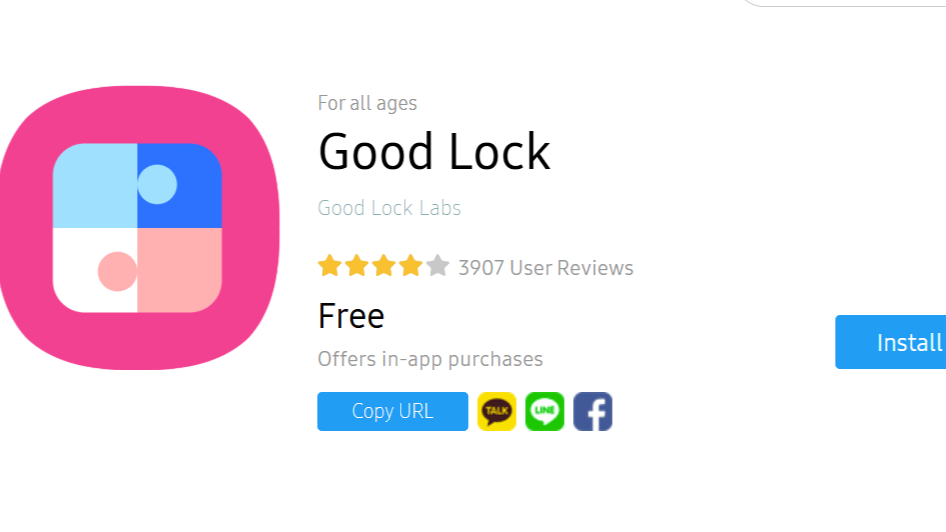
1. Good Lock
Good Lock is Samsung’s own customization app for Galaxy smartphones. With Good Lock, users get access to various settings that aren’t available in the default One UI interface. Rather than installing a third-party launcher to change your smartphone, Good Lock lets you personalize various aspects of your Galaxy device through official Samsung applications. Here are some of the most helpful modules from Good Lock:
Home Up: The Home Up module provides additional settings for the home screen. In particular, it allows users to resize folders, choose new layouts, use stickers, and activate looping for home screens.
Camera Assistant: With the Camera Assistant module, users can control extra features of the Samsung camera app. These include activating a 2x zoom shortcut, changing shutter button actions, and accessing such Samsung camera features as Single Take and Dual Recording.
One Hand Operation+: This module makes large Galaxy phones easier to use with one hand. Users can create custom swipe gestures, open an app switcher, and access quick tools with simple movements.
QuickStar: QuickStar lets users personalize the Quick Settings panel. It also allows them to hide selected status bar icons, change the panel’s appearance, and adjust the button layout.
Routines+: This is an expanded version of Samsung’s Modes and Routines feature. Users can create more automations and touch macros for daily tasks.
MultiStar: The MultiStar module provides more efficient usage of split-screen mode. Also, it enables additional cover screen features on Galaxy Z Flip models.
2. Good Guardians
Good Guardians is another helpful Samsung app that can be downloaded from the Galaxy Store. Similar to Good Lock, it comes with a number of downloadable modules. However, while Good Lock enhances customization options, Good Guardians helps enhance your phone’s performance and optimize its battery usage. These are some of the most helpful Good Guardians modules:
Battery Tracker: This module shows which apps have used the most battery over the last 24 hours or seven days. It also displays battery usage percentages and screen time for each app.
Battery Guardian: It provides users with a number of options to increase battery life, such as enabling power-saving mode at bedtime, optimizing display, and minimizing network usage for chosen apps.
Galaxy App Booster: This feature boosts app performance at just one click. According to Samsung, it should be run once a week and after any software update.
Thermal Guardian: The feature allows you to check your smartphone’s temperature and tells you why the phone heated up. Moreover, it monitors CPU utilization and lists apps that use maximum resources.
Memory Guardian: This tool clears unused RAM with one tap, helping free memory and improve overall performance.
Media File Guardian: It allows you to control media files stored on your phone, including files created by banking, shopping, and social media apps.
3. Expert RAW
For Galaxy smartphone users who want professional-grade control options for their camera, Samsung provides Expert RAW. Though it can be used with the Camera app, it is not automatically downloaded from the start. The user will need to install it either from the Galaxy Store or the More tab of the Camera app.
The app targets photography enthusiasts who want greater control over their camera settings. With this application, users can change settings such as ISO, shutter speed, focusing, exposure, and more before capturing images. Images can be captured using the app in two different file formats: JPEG and RAW. Certain Galaxy flagships offer functions such as astrophotography and multiple-exposure images. Expert RAW is available only on selected Galaxy flagship models, so it may not appear on every Samsung phone.
4. Galaxy Enhance-X
Galaxy Enhance-X is Samsung’s AI-powered editing app designed for Galaxy devices. It makes image and video editing easy regardless of your level of expertise. Its one-click improvement capability ensures you don’t need advanced knowledge to edit your images.
Along with AI enhancement, the app includes tools to eliminate shadows and reflections, enhance facial features, crop photos, and adjust brightness. Users can also restore vintage photos and even create GIFs. Video editing functions encompass cutting videos, muting the sound, and applying various video effects.
Other options include plugins such as FilmStyle, Cinematic Glow, SkyGuide, and SpeedShuffle, which offer additional editing options. But please keep in mind that the available features may differ depending on the Galaxy model.
5. Edge Panel Apps
Samsung’s Edge Panel gives Galaxy users quick access to apps and useful tools from the side of the screen. The feature already includes shortcuts for apps, contacts, weather, reminders, clipboard, and other utilities. Galaxy phones include several built-in panel options, but users can expand them with additional downloads.
The Galaxy Store offers additional Edge Panels that add more functionality. The Galaxy Store offers additional Edge Panels that add more functionality. Samsung provides panels such as the Calculator Panel, Calendar Panel, Edge QuickNotes, and Direct Call Panel. The Calculator Panel lets users perform quick calculations without opening the Calculator app. The Calendar Panel displays a scrollable calendar, while Edge QuickNotes makes it easy to view or create notes. With the Direct Call Panel, you can make a call from your contact list with just one tap. Third-party Edge Panels are also available on Samsung through the Galaxy Store. These panels offer additional options that let users perform daily tasks without opening apps.
Galaxy Store, which provides apps created especially for the Galaxy smartphones. These apps can make your smartphone work faster, let you use additional camera options, and give you more customization options for your device. In this article, we look at five essential apps every Samsung user should know about and why they’re worth trying.
1. Good Lock
Good Lock is Samsung’s own customization app for Galaxy smartphones. With Good Lock, users get access to various settings that aren’t available in the default One UI interface. Rather than installing a third-party launcher to change your smartphone, Good Lock lets you personalize various aspects of your Galaxy device through official Samsung applications. Here are some of the most helpful modules from Good Lock:
Home Up: The Home Up module provides additional settings for the home screen. In particular, it allows users to resize folders, choose new layouts, use stickers, and activate looping for home screens.
Camera Assistant: With the Camera Assistant module, users can control extra features of the Samsung camera app. These include activating a 2x zoom shortcut, changing shutter button actions, and accessing such Samsung camera features as Single Take and Dual Recording.
One Hand Operation+: This module makes large Galaxy phones easier to use with one hand. Users can create custom swipe gestures, open an app switcher, and access quick tools with simple movements.
QuickStar: QuickStar lets users personalize the Quick Settings panel. It also allows them to hide selected status bar icons, change the panel’s appearance, and adjust the button layout.
Routines+: This is an expanded version of Samsung’s Modes and Routines feature. Users can create more automations and touch macros for daily tasks.
MultiStar: The MultiStar module provides more efficient usage of split-screen mode. Also, it enables additional cover screen features on Galaxy Z Flip models.
2. Good Guardians
Good Guardians is another helpful Samsung app that can be downloaded from the Galaxy Store. Similar to Good Lock, it comes with a number of downloadable modules. However, while Good Lock enhances customization options, Good Guardians helps enhance your phone’s performance and optimize its battery usage. These are some of the most helpful Good Guardians modules:
Battery Tracker: This module shows which apps have used the most battery over the last 24 hours or seven days. It also displays battery usage percentages and screen time for each app.
Battery Guardian: It provides users with a number of options to increase battery life, such as enabling power-saving mode at bedtime, optimizing display, and minimizing network usage for chosen apps.
Galaxy App Booster: This feature boosts app performance at just one click. According to Samsung, it should be run once a week and after any software update.
Thermal Guardian: The feature allows you to check your smartphone’s temperature and tells you why the phone heated up. Moreover, it monitors CPU utilization and lists apps that use maximum resources.
Memory Guardian: This tool clears unused RAM with one tap, helping free memory and improve overall performance.
Media File Guardian: It allows you to control media files stored on your phone, including files created by banking, shopping, and social media apps.
3. Expert RAW
For Galaxy smartphone users who want professional-grade control options for their camera, Samsung provides Expert RAW. Though it can be used with the Camera app, it is not automatically downloaded from the start. The user will need to install it either from the Galaxy Store or the More tab of the Camera app.
The app targets photography enthusiasts who want greater control over their camera settings. With this application, users can change settings such as ISO, shutter speed, focusing, exposure, and more before capturing images. Images can be captured using the app in two different file formats: JPEG and RAW. Certain Galaxy flagships offer functions such as astrophotography and multiple-exposure images. Expert RAW is available only on selected Galaxy flagship models, so it may not appear on every Samsung phone.
4. Galaxy Enhance-X
Galaxy Enhance-X is Samsung’s AI-powered editing app designed for Galaxy devices. It makes image and video editing easy regardless of your level of expertise. Its one-click improvement capability ensures you don’t need advanced knowledge to edit your images.
Along with AI enhancement, the app includes tools to eliminate shadows and reflections, enhance facial features, crop photos, and adjust brightness. Users can also restore vintage photos and even create GIFs. Video editing functions encompass cutting videos, muting the sound, and applying various video effects.
Other options include plugins such as FilmStyle, Cinematic Glow, SkyGuide, and SpeedShuffle, which offer additional editing options. But please keep in mind that the available features may differ depending on the Galaxy model.
5. Edge Panel Apps
Samsung’s Edge Panel gives Galaxy users quick access to apps and useful tools from the side of the screen. The feature already includes shortcuts for apps, contacts, weather, reminders, clipboard, and other utilities. Galaxy phones include several built-in panel options, but users can expand them with additional downloads.
The Galaxy Store offers additional Edge Panels that add more functionality. The Galaxy Store offers additional Edge Panels that add more functionality. Samsung provides panels such as the Calculator Panel, Calendar Panel, Edge QuickNotes, and Direct Call Panel. The Calculator Panel lets users perform quick calculations without opening the Calculator app. The Calendar Panel displays a scrollable calendar, while Edge QuickNotes makes it easy to view or create notes. With the Direct Call Panel, you can make a call from your contact list with just one tap. Third-party Edge Panels are also available on Samsung through the Galaxy Store. These panels offer additional options that let users perform daily tasks without opening apps.
#Essential #Apps #Samsung #UserSamsung">5 Essential Apps Every Samsung User Should Know About
Most Samsung Galaxy users download apps from the Google Play Store, but that’s not the only place to find useful apps. Samsung has its own store, called Galaxy Store, which provides apps created especially for the Galaxy smartphones. These apps can make your smartphone work faster, let you use additional camera options, and give you more customization options for your device. In this article, we look at five essential apps every Samsung user should know about and why they’re worth trying.
1. Good Lock
Good Lock is Samsung’s own customization app for Galaxy smartphones. With Good Lock, users get access to various settings that aren’t available in the default One UI interface. Rather than installing a third-party launcher to change your smartphone, Good Lock lets you personalize various aspects of your Galaxy device through official Samsung applications. Here are some of the most helpful modules from Good Lock:
Home Up: The Home Up module provides additional settings for the home screen. In particular, it allows users to resize folders, choose new layouts, use stickers, and activate looping for home screens.
Camera Assistant: With the Camera Assistant module, users can control extra features of the Samsung camera app. These include activating a 2x zoom shortcut, changing shutter button actions, and accessing such Samsung camera features as Single Take and Dual Recording.
One Hand Operation+: This module makes large Galaxy phones easier to use with one hand. Users can create custom swipe gestures, open an app switcher, and access quick tools with simple movements.
QuickStar: QuickStar lets users personalize the Quick Settings panel. It also allows them to hide selected status bar icons, change the panel’s appearance, and adjust the button layout.
Routines+: This is an expanded version of Samsung’s Modes and Routines feature. Users can create more automations and touch macros for daily tasks.
MultiStar: The MultiStar module provides more efficient usage of split-screen mode. Also, it enables additional cover screen features on Galaxy Z Flip models.
2. Good Guardians
Good Guardians is another helpful Samsung app that can be downloaded from the Galaxy Store. Similar to Good Lock, it comes with a number of downloadable modules. However, while Good Lock enhances customization options, Good Guardians helps enhance your phone’s performance and optimize its battery usage. These are some of the most helpful Good Guardians modules:
Battery Tracker: This module shows which apps have used the most battery over the last 24 hours or seven days. It also displays battery usage percentages and screen time for each app.
Battery Guardian: It provides users with a number of options to increase battery life, such as enabling power-saving mode at bedtime, optimizing display, and minimizing network usage for chosen apps.
Galaxy App Booster: This feature boosts app performance at just one click. According to Samsung, it should be run once a week and after any software update.
Thermal Guardian: The feature allows you to check your smartphone’s temperature and tells you why the phone heated up. Moreover, it monitors CPU utilization and lists apps that use maximum resources.
Memory Guardian: This tool clears unused RAM with one tap, helping free memory and improve overall performance.
Media File Guardian: It allows you to control media files stored on your phone, including files created by banking, shopping, and social media apps.
3. Expert RAW
For Galaxy smartphone users who want professional-grade control options for their camera, Samsung provides Expert RAW. Though it can be used with the Camera app, it is not automatically downloaded from the start. The user will need to install it either from the Galaxy Store or the More tab of the Camera app.
The app targets photography enthusiasts who want greater control over their camera settings. With this application, users can change settings such as ISO, shutter speed, focusing, exposure, and more before capturing images. Images can be captured using the app in two different file formats: JPEG and RAW. Certain Galaxy flagships offer functions such as astrophotography and multiple-exposure images. Expert RAW is available only on selected Galaxy flagship models, so it may not appear on every Samsung phone.
4. Galaxy Enhance-X
Galaxy Enhance-X is Samsung’s AI-powered editing app designed for Galaxy devices. It makes image and video editing easy regardless of your level of expertise. Its one-click improvement capability ensures you don’t need advanced knowledge to edit your images.
Along with AI enhancement, the app includes tools to eliminate shadows and reflections, enhance facial features, crop photos, and adjust brightness. Users can also restore vintage photos and even create GIFs. Video editing functions encompass cutting videos, muting the sound, and applying various video effects.
Other options include plugins such as FilmStyle, Cinematic Glow, SkyGuide, and SpeedShuffle, which offer additional editing options. But please keep in mind that the available features may differ depending on the Galaxy model.
5. Edge Panel Apps
Samsung’s Edge Panel gives Galaxy users quick access to apps and useful tools from the side of the screen. The feature already includes shortcuts for apps, contacts, weather, reminders, clipboard, and other utilities. Galaxy phones include several built-in panel options, but users can expand them with additional downloads.
The Galaxy Store offers additional Edge Panels that add more functionality. The Galaxy Store offers additional Edge Panels that add more functionality. Samsung provides panels such as the Calculator Panel, Calendar Panel, Edge QuickNotes, and Direct Call Panel. The Calculator Panel lets users perform quick calculations without opening the Calculator app. The Calendar Panel displays a scrollable calendar, while Edge QuickNotes makes it easy to view or create notes. With the Direct Call Panel, you can make a call from your contact list with just one tap. Third-party Edge Panels are also available on Samsung through the Galaxy Store. These panels offer additional options that let users perform daily tasks without opening apps.
#Essential #Apps #Samsung #UserSamsung
Most Samsung Galaxy users download apps from the Google Play Store, but that’s not the…
launch of five new devices at its Galaxy Unpacked 2026 event in London. Three foldable handsets were unveiled, along with the Galaxy Watch 9 and Galaxy Watch Ultra 2, in addition to the Galaxy Z Fold 8 and Galaxy Z Fold 8 Ultra. The newest additions feature improved technology, slimmer form factors, Galaxy AI, and health monitoring capabilities. Preorders for the new products have already been opened in various markets, and they will be available starting from early August.
Samsung Galaxy Z Fold 8
The new Samsung Galaxy Z Fold 8 is built with people who prefer a larger foldable device in mind. For that reason, it comes with a passport-like design, which makes the device relatively shorter but gives a wider cover screen. This type of device enables easy completion of daily activities without unfolding it. The device has a 5.5-inch cover screen and a 7.6-inch foldable OLED screen. Both displays support an adaptive refresh rate from 1Hz to 120Hz.
The company uses a new Flex Titanium display structure to strengthen the folding screen. Samsung has redesigned the hinge for better performance and a less noticeable crease. It is powered by the Snapdragon 8 Elite Gen 5 chip. The device features up to 16 GB of RAM and 1 TB of internal memory. It includes a 50 MP primary sensor, a 50 MP ultra-wide lens, and a pair of 10 MP selfie shooters.
A 4,800mAh silicon-carbon battery keeps the phone running and supports 45W fast charging. The Galaxy Z Fold 8 ships with Android 17 and One UI 9. It also includes Galaxy AI tools such as Now Nudge, Gemini Intelligence, and Gemini Notebook. Buyers also get six months of Google AI Pro at no extra cost. The phone starts at $1,899.99 and is available in Lavender, Cream, Graphite, and an online-only Pistachio finish.
Samsung Galaxy Z Fold 8 Ultra
The latest addition to the line-up of the company’s top-selling foldable model is the Galaxy Z Fold 8 Ultra. The new smartphone replaces the Galaxy Z Fold 7 and offers a slimmer form factor. Its thickness measures 4.1 mm when unfolded, and 8.9 mm when folded. Samsung has also introduced a toughened Flex Titanium frame along with the improved hinge, which increases the strength of the display and minimizes the crease effect. The Fold 8 Ultra has a 6.5-inch outer screen and an 8-inch folding screen with a 120Hz adaptive refresh rate.
The Galaxy Z Fold 8 Ultra runs on the Snapdragon 8 Elite Gen 5 processor. It comes with up to 16GB of RAM and up to 1TB of storage. Samsung also upgrades the camera system. The phone includes a 200MP main camera, a 50MP ultra-wide camera, and a 10MP telephoto camera. It also has two 10MP selfie cameras, one on each display.
The Fold 8 Ultra includes a 5,000mAh silicon-carbon battery with 45W wired charging support. It runs Android 17 with One UI 9 and includes Galaxy AI features like Now Nudge, Gemini Intelligence, and Gemini Notebook. Samsung offers the phone in Violet Shadow, Cream, Graphite, and an online-only Green Shadow color. The device starts at $2,099.99, while preorder buyers can take advantage of Samsung credit and trade-in deals.
Samsung Galaxy Z Flip 8
The Galaxy Z Flip 8 is the latest folding clamshell from Samsung. The company retains its classic design, but now makes the device slimmer and even more advanced. The features of the new Galaxy Z Flip 8 include the 6.9-inch foldable display and the 4.1-inch FlexWindow cover display.
Galaxy Z Flip 8 comes with the Snapdragon 8 Elite Gen 5 processor in America. Overseas versions have the Samsung Exynos 2600 chipset. This model features 12GB RAM along with up to 512GB of internal memory. It has a camera system that comprises 50MP main, 12MP ultra-wide, and 10MP selfie cameras.
The phone runs Android 17 with One UI 9. Samsung includes Galaxy AI features that work directly on the FlexWindow display. Personalized Now Brief updates and Gemini Intelligence help users complete tasks more quickly. The Galaxy Z Flip 8 also packs a 4,300mAh battery with 25W wired charging. It is available in Pink, Cream, Graphite, and an online-only Mint finish. It starts at $1,199.99, and preorder buyers can take advantage of Samsung credit and trade-in deals.
Samsung Galaxy Watch Ultra 2
The Galaxy Watch Ultra 2 is Samsung’s newest premium smartwatch. The watch features LTE connectivity as standard across all models. Samsung also redesigned the titanium body to make it thinner than before. The wearable includes a 47mm display with a peak brightness of 5,000 nits. It is powered by the Snapdragon Wear Elite platform and includes 2GB RAM and 64GB storage. Samsung equips the watch with a larger 800mAh battery. The company says it can deliver up to 60 hours of battery life with the Always-On Display enabled.
Samsung adds several new health and fitness features to the watch. These include Heart Health Score, Daily Cardio Load, Trail Run mode, and Nutrition Alert. The watch also provides hydration guidance during workouts. Samsung plans to release a Diving app later this year. The Galaxy Watch Ultra 2 has an IP69K rating and comes in Titanium Gray and Titanium Silver. It starts at $699.99, while preorder buyers can receive Samsung credit and trade-in savings.
Samsung Galaxy Watch 9
Samsung has launched the Galaxy Watch 9 as its more affordable smartwatch. The watch comes in 40mm and 44mm sizes. Buyers can choose between Bluetooth and LTE models. The 40mm version is available in Cream and Graphite, and the 44mm model comes in Silver and Graphite. Samsung powers the watch with the Snapdragon Wear Elite processor. It includes 2GB RAM and 32GB storage. The display offers up to 3,000 nits of peak brightness. The 40mm model packs a 390mAh battery, while the 44mm version includes a 445mAh battery. Samsung claims up to 30 hours of battery life with the Always-On Display turned on.
The Galaxy Watch 9 introduces new health and fitness features. Users get Heart Health Score, Daily Cardio Load, Sleep Apnea detection, and Vitals tracking during sleep. The watch also warns users about unsafe environmental noise levels. Samsung gives the smartwatch MIL-STD-810H and IP68 ratings for durability. Pricing starts at $379.99, with LTE models priced $50 higher. Samsung also offers a 60-day Strava trial and a two-month iFIT membership for new buyers.
launch of five new devices at its Galaxy Unpacked 2026 event in London. Three foldable handsets were unveiled, along with the Galaxy Watch 9 and Galaxy Watch Ultra 2, in addition to the Galaxy Z Fold 8 and Galaxy Z Fold 8 Ultra. The newest additions feature improved technology, slimmer form factors, Galaxy AI, and health monitoring capabilities. Preorders for the new products have already been opened in various markets, and they will be available starting from early August.
Samsung Galaxy Z Fold 8
The new Samsung Galaxy Z Fold 8 is built with people who prefer a larger foldable device in mind. For that reason, it comes with a passport-like design, which makes the device relatively shorter but gives a wider cover screen. This type of device enables easy completion of daily activities without unfolding it. The device has a 5.5-inch cover screen and a 7.6-inch foldable OLED screen. Both displays support an adaptive refresh rate from 1Hz to 120Hz.
The company uses a new Flex Titanium display structure to strengthen the folding screen. Samsung has redesigned the hinge for better performance and a less noticeable crease. It is powered by the Snapdragon 8 Elite Gen 5 chip. The device features up to 16 GB of RAM and 1 TB of internal memory. It includes a 50 MP primary sensor, a 50 MP ultra-wide lens, and a pair of 10 MP selfie shooters.
A 4,800mAh silicon-carbon battery keeps the phone running and supports 45W fast charging. The Galaxy Z Fold 8 ships with Android 17 and One UI 9. It also includes Galaxy AI tools such as Now Nudge, Gemini Intelligence, and Gemini Notebook. Buyers also get six months of Google AI Pro at no extra cost. The phone starts at $1,899.99 and is available in Lavender, Cream, Graphite, and an online-only Pistachio finish.
Samsung Galaxy Z Fold 8 Ultra
The latest addition to the line-up of the company’s top-selling foldable model is the Galaxy Z Fold 8 Ultra. The new smartphone replaces the Galaxy Z Fold 7 and offers a slimmer form factor. Its thickness measures 4.1 mm when unfolded, and 8.9 mm when folded. Samsung has also introduced a toughened Flex Titanium frame along with the improved hinge, which increases the strength of the display and minimizes the crease effect. The Fold 8 Ultra has a 6.5-inch outer screen and an 8-inch folding screen with a 120Hz adaptive refresh rate.
The Galaxy Z Fold 8 Ultra runs on the Snapdragon 8 Elite Gen 5 processor. It comes with up to 16GB of RAM and up to 1TB of storage. Samsung also upgrades the camera system. The phone includes a 200MP main camera, a 50MP ultra-wide camera, and a 10MP telephoto camera. It also has two 10MP selfie cameras, one on each display.
The Fold 8 Ultra includes a 5,000mAh silicon-carbon battery with 45W wired charging support. It runs Android 17 with One UI 9 and includes Galaxy AI features like Now Nudge, Gemini Intelligence, and Gemini Notebook. Samsung offers the phone in Violet Shadow, Cream, Graphite, and an online-only Green Shadow color. The device starts at $2,099.99, while preorder buyers can take advantage of Samsung credit and trade-in deals.
Samsung Galaxy Z Flip 8
The Galaxy Z Flip 8 is the latest folding clamshell from Samsung. The company retains its classic design, but now makes the device slimmer and even more advanced. The features of the new Galaxy Z Flip 8 include the 6.9-inch foldable display and the 4.1-inch FlexWindow cover display.
Galaxy Z Flip 8 comes with the Snapdragon 8 Elite Gen 5 processor in America. Overseas versions have the Samsung Exynos 2600 chipset. This model features 12GB RAM along with up to 512GB of internal memory. It has a camera system that comprises 50MP main, 12MP ultra-wide, and 10MP selfie cameras.
The phone runs Android 17 with One UI 9. Samsung includes Galaxy AI features that work directly on the FlexWindow display. Personalized Now Brief updates and Gemini Intelligence help users complete tasks more quickly. The Galaxy Z Flip 8 also packs a 4,300mAh battery with 25W wired charging. It is available in Pink, Cream, Graphite, and an online-only Mint finish. It starts at $1,199.99, and preorder buyers can take advantage of Samsung credit and trade-in deals.
Samsung Galaxy Watch Ultra 2
The Galaxy Watch Ultra 2 is Samsung’s newest premium smartwatch. The watch features LTE connectivity as standard across all models. Samsung also redesigned the titanium body to make it thinner than before. The wearable includes a 47mm display with a peak brightness of 5,000 nits. It is powered by the Snapdragon Wear Elite platform and includes 2GB RAM and 64GB storage. Samsung equips the watch with a larger 800mAh battery. The company says it can deliver up to 60 hours of battery life with the Always-On Display enabled.
Samsung adds several new health and fitness features to the watch. These include Heart Health Score, Daily Cardio Load, Trail Run mode, and Nutrition Alert. The watch also provides hydration guidance during workouts. Samsung plans to release a Diving app later this year. The Galaxy Watch Ultra 2 has an IP69K rating and comes in Titanium Gray and Titanium Silver. It starts at $699.99, while preorder buyers can receive Samsung credit and trade-in savings.
Samsung Galaxy Watch 9
Samsung has launched the Galaxy Watch 9 as its more affordable smartwatch. The watch comes in 40mm and 44mm sizes. Buyers can choose between Bluetooth and LTE models. The 40mm version is available in Cream and Graphite, and the 44mm model comes in Silver and Graphite. Samsung powers the watch with the Snapdragon Wear Elite processor. It includes 2GB RAM and 32GB storage. The display offers up to 3,000 nits of peak brightness. The 40mm model packs a 390mAh battery, while the 44mm version includes a 445mAh battery. Samsung claims up to 30 hours of battery life with the Always-On Display turned on.
The Galaxy Watch 9 introduces new health and fitness features. Users get Heart Health Score, Daily Cardio Load, Sleep Apnea detection, and Vitals tracking during sleep. The watch also warns users about unsafe environmental noise levels. Samsung gives the smartwatch MIL-STD-810H and IP68 ratings for durability. Pricing starts at $379.99, with LTE models priced $50 higher. Samsung also offers a 60-day Strava trial and a two-month iFIT membership for new buyers.
#Biggest #Samsung #Launches #Galaxy #Unpacked #JulySamsung">5 Biggest Samsung Launches from Galaxy Unpacked July 2026
Samsung has expanded its Galaxy lineup with the launch of five new devices at its Galaxy Unpacked 2026 event in London. Three foldable handsets were unveiled, along with the Galaxy Watch 9 and Galaxy Watch Ultra 2, in addition to the Galaxy Z Fold 8 and Galaxy Z Fold 8 Ultra. The newest additions feature improved technology, slimmer form factors, Galaxy AI, and health monitoring capabilities. Preorders for the new products have already been opened in various markets, and they will be available starting from early August.
Samsung Galaxy Z Fold 8
The new Samsung Galaxy Z Fold 8 is built with people who prefer a larger foldable device in mind. For that reason, it comes with a passport-like design, which makes the device relatively shorter but gives a wider cover screen. This type of device enables easy completion of daily activities without unfolding it. The device has a 5.5-inch cover screen and a 7.6-inch foldable OLED screen. Both displays support an adaptive refresh rate from 1Hz to 120Hz.
The company uses a new Flex Titanium display structure to strengthen the folding screen. Samsung has redesigned the hinge for better performance and a less noticeable crease. It is powered by the Snapdragon 8 Elite Gen 5 chip. The device features up to 16 GB of RAM and 1 TB of internal memory. It includes a 50 MP primary sensor, a 50 MP ultra-wide lens, and a pair of 10 MP selfie shooters.
A 4,800mAh silicon-carbon battery keeps the phone running and supports 45W fast charging. The Galaxy Z Fold 8 ships with Android 17 and One UI 9. It also includes Galaxy AI tools such as Now Nudge, Gemini Intelligence, and Gemini Notebook. Buyers also get six months of Google AI Pro at no extra cost. The phone starts at $1,899.99 and is available in Lavender, Cream, Graphite, and an online-only Pistachio finish.
Samsung Galaxy Z Fold 8 Ultra
The latest addition to the line-up of the company’s top-selling foldable model is the Galaxy Z Fold 8 Ultra. The new smartphone replaces the Galaxy Z Fold 7 and offers a slimmer form factor. Its thickness measures 4.1 mm when unfolded, and 8.9 mm when folded. Samsung has also introduced a toughened Flex Titanium frame along with the improved hinge, which increases the strength of the display and minimizes the crease effect. The Fold 8 Ultra has a 6.5-inch outer screen and an 8-inch folding screen with a 120Hz adaptive refresh rate.
The Galaxy Z Fold 8 Ultra runs on the Snapdragon 8 Elite Gen 5 processor. It comes with up to 16GB of RAM and up to 1TB of storage. Samsung also upgrades the camera system. The phone includes a 200MP main camera, a 50MP ultra-wide camera, and a 10MP telephoto camera. It also has two 10MP selfie cameras, one on each display.
The Fold 8 Ultra includes a 5,000mAh silicon-carbon battery with 45W wired charging support. It runs Android 17 with One UI 9 and includes Galaxy AI features like Now Nudge, Gemini Intelligence, and Gemini Notebook. Samsung offers the phone in Violet Shadow, Cream, Graphite, and an online-only Green Shadow color. The device starts at $2,099.99, while preorder buyers can take advantage of Samsung credit and trade-in deals.
Samsung Galaxy Z Flip 8
The Galaxy Z Flip 8 is the latest folding clamshell from Samsung. The company retains its classic design, but now makes the device slimmer and even more advanced. The features of the new Galaxy Z Flip 8 include the 6.9-inch foldable display and the 4.1-inch FlexWindow cover display.
Galaxy Z Flip 8 comes with the Snapdragon 8 Elite Gen 5 processor in America. Overseas versions have the Samsung Exynos 2600 chipset. This model features 12GB RAM along with up to 512GB of internal memory. It has a camera system that comprises 50MP main, 12MP ultra-wide, and 10MP selfie cameras.
The phone runs Android 17 with One UI 9. Samsung includes Galaxy AI features that work directly on the FlexWindow display. Personalized Now Brief updates and Gemini Intelligence help users complete tasks more quickly. The Galaxy Z Flip 8 also packs a 4,300mAh battery with 25W wired charging. It is available in Pink, Cream, Graphite, and an online-only Mint finish. It starts at $1,199.99, and preorder buyers can take advantage of Samsung credit and trade-in deals.
Samsung Galaxy Watch Ultra 2
The Galaxy Watch Ultra 2 is Samsung’s newest premium smartwatch. The watch features LTE connectivity as standard across all models. Samsung also redesigned the titanium body to make it thinner than before. The wearable includes a 47mm display with a peak brightness of 5,000 nits. It is powered by the Snapdragon Wear Elite platform and includes 2GB RAM and 64GB storage. Samsung equips the watch with a larger 800mAh battery. The company says it can deliver up to 60 hours of battery life with the Always-On Display enabled.
Samsung adds several new health and fitness features to the watch. These include Heart Health Score, Daily Cardio Load, Trail Run mode, and Nutrition Alert. The watch also provides hydration guidance during workouts. Samsung plans to release a Diving app later this year. The Galaxy Watch Ultra 2 has an IP69K rating and comes in Titanium Gray and Titanium Silver. It starts at $699.99, while preorder buyers can receive Samsung credit and trade-in savings.
Samsung Galaxy Watch 9
Samsung has launched the Galaxy Watch 9 as its more affordable smartwatch. The watch comes in 40mm and 44mm sizes. Buyers can choose between Bluetooth and LTE models. The 40mm version is available in Cream and Graphite, and the 44mm model comes in Silver and Graphite. Samsung powers the watch with the Snapdragon Wear Elite processor. It includes 2GB RAM and 32GB storage. The display offers up to 3,000 nits of peak brightness. The 40mm model packs a 390mAh battery, while the 44mm version includes a 445mAh battery. Samsung claims up to 30 hours of battery life with the Always-On Display turned on.
The Galaxy Watch 9 introduces new health and fitness features. Users get Heart Health Score, Daily Cardio Load, Sleep Apnea detection, and Vitals tracking during sleep. The watch also warns users about unsafe environmental noise levels. Samsung gives the smartwatch MIL-STD-810H and IP68 ratings for durability. Pricing starts at $379.99, with LTE models priced $50 higher. Samsung also offers a 60-day Strava trial and a two-month iFIT membership for new buyers.
The highlight of Galaxy Unpacked was the Galaxy Z Fold 8, which got a major redesign from last year’s Z Fold 7. The new design is shorter and wider, with a 7.6-inch inside display and a 5.5-inch outside display. It’s a tad thicker at 4.5mm unfolded and 9.7mm folded, compared to 4.2mm and 8.9mm, respectively, for the Z Fold 7.
The new Fold also features an updated hinge design with Samsung’s new Flex Titanium display tech. It doesn’t completely eliminate the crease on the inside display, but it does make it significantly less noticeable than the crease on Samsung’s previous foldables. The new Z Fold 8 Ultra and Z Flip 8 also got the Flex Titanium display upgrade.
The Z Fold 8 runs on a Qualcomm Snapdragon 8 Elite Gen 5 for Galaxy with up to 16GB of RAM and 1TB of storage. The camera setup is a step down from the Z Fold 7 — the Z Fold 8 has two main cameras instead of three, a 50MP wide and a 50MP ultra wide. The cover screen camera and inside camera are both 10MP like the Z Fold 7, though.
The Z Fold 8 starts at $1,899 and comes in four colors: lavender, graphite, cream, and pistachio (for online orders only).
Photo: Dominic Preston / The Verge
While the standard Z Fold 8 got a revamped design, the new Galaxy Z Fold 8 Ultra inherited the design from last year’s Z Fold 7. Samsung’s new top-tier foldable is powered by a Qualcomm Snapdragon 8 Elite Gen 5 for Galaxy with up to 16GB of RAM and 1TB of storage.
The Ultra features a larger 5,000mAh battery, compared to the 4,400mAh battery in the Z Fold 7. The phone also supports 45W wired charging and 20W wireless charging, an improvement over the Z Fold 7’s 25W wired / 15W wireless charging. The camera setup is similar to the Z Fold 7 with a 200MP wide / 50MP ultra wide / 10MP telephoto main camera and 10MP selfie cameras on the inside and cover displays.
The Z Fold 8 Ultra starts at $2,099 and comes in four colors: graphite, cream, violet shadow, and green shadow (for online orders only).
Photo: David Imel / The Verge
Samsung announced the Galaxy Z Flip 8 with some spec bumps, but no major design changes. It now runs on a Qualcomm Snapdragon 8 Elite Gen 5 processor, an upgrade from the Exynos 2500 chip that powered the previous Z Flip 7. It also includes 12GB of RAM with options for 256GB or 512GB of storage (but still no 1TB option).
Like last year’s model, it has a 6.9-inch inside display and a 4.1-inch cover display, with a 4,300mAh battery. While it looks the same overall, the cover display is a bit more versatile now thanks to a few new gestures and access to an app drawer. It’s also slightly thinner at 13.1mm folded and 6.1mm unfolded. Unfortunately, it’s also $100 more expensive than the Flip 7, starting at $1,199. The phone comes in four colors: pink, graphite, cream, and mint (for online orders only).
Photo: Dominic Preston / The Verge
The Galaxy Watch got a refresh at Galaxy Unpacked with a new processor, Qualcomm’s Snapdragon Wear Elite. It once again comes in two sizes, 44mm and 40mm. The larger 44mm model has a 1.47-inch display and a 445mAh battery, while the 40mm version includes a slightly smaller 1.34-inch display and a 390mAh battery. Samsung says both sizes can last up to 30 hours per charge with the always-on display turned on. Both also include 2GB of RAM and 32GB of storage.
In addition to spec improvements, the highlight of this year’s Galaxy Watch refresh are four new preventative health metrics: Vitals, Heart Health Score, Daily Cardio Load, and Fitness Index. All four will also be available on the new Galaxy Watch Ultra 2, and may help Samsung’s smartwatches compete with Apple’s wearables.
Unfortunately, the Galaxy Watch 9 got a $30 price bump from last year, so it now starts at $379. The 44mm version comes in graphite and silver while the 40mm one is available in graphite and cream.
The new Galaxy Watch Ultra 2 packs an impressive battery
Photo: Dominic Preston / The Verge
Samsung announced the Galaxy Watch Ultra 2, not to be confused with the second-generation version of the original Galaxy Watch Ultra from last year. The new Ultra includes a significantly larger battery at a whopping 800mAh, up from 590mAh in last year’s Ultra, which somehow fits into a case that’s 12 percent thinner than the previous model. Samsung says it can last up to 60 hours per charge with the always-on display turned on. The updated Ultra is also getting the same new preventative health metrics as the base Galaxy Watch.
The Galaxy Watch Ultra 2 runs on a Qualcomm Snapdragon Wear Elite with 2GB of RAM and 64GB of storage. Like the previous version, it’s available in just one size, 47mm, with a 1.52-inch display. The Galaxy Watch Ultra 2 also got a $50 price hike, bringing it up to $699, with two color options, titanium silver and titanium gray.
Google also made an appearance at this year’s Galaxy Unpacked with a couple of new frames for the upcoming smartglasses it’s making in collaboration with Samsung. It unveiled new designs from Gentle Monster and Warby Parker, following two earlier designs from both brands announced in May at Google I/O. The first pairs of Google’s smartglasses are expected to launch later this year.
Follow topics and authors from this story to see more like this in your personalized homepage feed and to receive email updates.
The highlight of Galaxy Unpacked was the Galaxy Z Fold 8, which got a major redesign from last year’s Z Fold 7. The new design is shorter and wider, with a 7.6-inch inside display and a 5.5-inch outside display. It’s a tad thicker at 4.5mm unfolded and 9.7mm folded, compared to 4.2mm and 8.9mm, respectively, for the Z Fold 7.
The new Fold also features an updated hinge design with Samsung’s new Flex Titanium display tech. It doesn’t completely eliminate the crease on the inside display, but it does make it significantly less noticeable than the crease on Samsung’s previous foldables. The new Z Fold 8 Ultra and Z Flip 8 also got the Flex Titanium display upgrade.
The Z Fold 8 runs on a Qualcomm Snapdragon 8 Elite Gen 5 for Galaxy with up to 16GB of RAM and 1TB of storage. The camera setup is a step down from the Z Fold 7 — the Z Fold 8 has two main cameras instead of three, a 50MP wide and a 50MP ultra wide. The cover screen camera and inside camera are both 10MP like the Z Fold 7, though.
The Z Fold 8 starts at $1,899 and comes in four colors: lavender, graphite, cream, and pistachio (for online orders only).
Photo: Dominic Preston / The Verge
While the standard Z Fold 8 got a revamped design, the new Galaxy Z Fold 8 Ultra inherited the design from last year’s Z Fold 7. Samsung’s new top-tier foldable is powered by a Qualcomm Snapdragon 8 Elite Gen 5 for Galaxy with up to 16GB of RAM and 1TB of storage.
The Ultra features a larger 5,000mAh battery, compared to the 4,400mAh battery in the Z Fold 7. The phone also supports 45W wired charging and 20W wireless charging, an improvement over the Z Fold 7’s 25W wired / 15W wireless charging. The camera setup is similar to the Z Fold 7 with a 200MP wide / 50MP ultra wide / 10MP telephoto main camera and 10MP selfie cameras on the inside and cover displays.
The Z Fold 8 Ultra starts at $2,099 and comes in four colors: graphite, cream, violet shadow, and green shadow (for online orders only).
Photo: David Imel / The Verge
Samsung announced the Galaxy Z Flip 8 with some spec bumps, but no major design changes. It now runs on a Qualcomm Snapdragon 8 Elite Gen 5 processor, an upgrade from the Exynos 2500 chip that powered the previous Z Flip 7. It also includes 12GB of RAM with options for 256GB or 512GB of storage (but still no 1TB option).
Like last year’s model, it has a 6.9-inch inside display and a 4.1-inch cover display, with a 4,300mAh battery. While it looks the same overall, the cover display is a bit more versatile now thanks to a few new gestures and access to an app drawer. It’s also slightly thinner at 13.1mm folded and 6.1mm unfolded. Unfortunately, it’s also $100 more expensive than the Flip 7, starting at $1,199. The phone comes in four colors: pink, graphite, cream, and mint (for online orders only).
Photo: Dominic Preston / The Verge
The Galaxy Watch got a refresh at Galaxy Unpacked with a new processor, Qualcomm’s Snapdragon Wear Elite. It once again comes in two sizes, 44mm and 40mm. The larger 44mm model has a 1.47-inch display and a 445mAh battery, while the 40mm version includes a slightly smaller 1.34-inch display and a 390mAh battery. Samsung says both sizes can last up to 30 hours per charge with the always-on display turned on. Both also include 2GB of RAM and 32GB of storage.
In addition to spec improvements, the highlight of this year’s Galaxy Watch refresh are four new preventative health metrics: Vitals, Heart Health Score, Daily Cardio Load, and Fitness Index. All four will also be available on the new Galaxy Watch Ultra 2, and may help Samsung’s smartwatches compete with Apple’s wearables.
Unfortunately, the Galaxy Watch 9 got a $30 price bump from last year, so it now starts at $379. The 44mm version comes in graphite and silver while the 40mm one is available in graphite and cream.
The new Galaxy Watch Ultra 2 packs an impressive battery
Photo: Dominic Preston / The Verge
Samsung announced the Galaxy Watch Ultra 2, not to be confused with the second-generation version of the original Galaxy Watch Ultra from last year. The new Ultra includes a significantly larger battery at a whopping 800mAh, up from 590mAh in last year’s Ultra, which somehow fits into a case that’s 12 percent thinner than the previous model. Samsung says it can last up to 60 hours per charge with the always-on display turned on. The updated Ultra is also getting the same new preventative health metrics as the base Galaxy Watch.
The Galaxy Watch Ultra 2 runs on a Qualcomm Snapdragon Wear Elite with 2GB of RAM and 64GB of storage. Like the previous version, it’s available in just one size, 47mm, with a 1.52-inch display. The Galaxy Watch Ultra 2 also got a $50 price hike, bringing it up to $699, with two color options, titanium silver and titanium gray.
Google also made an appearance at this year’s Galaxy Unpacked with a couple of new frames for the upcoming smartglasses it’s making in collaboration with Samsung. It unveiled new designs from Gentle Monster and Warby Parker, following two earlier designs from both brands announced in May at Google I/O. The first pairs of Google’s smartglasses are expected to launch later this year.
Follow topics and authors from this story to see more like this in your personalized homepage feed and to receive email updates.
Samsung’s annual summer event kicked off on Wednesday morning with the company unveiling a new lineup of watches and foldables. Following weeks of rumors and leaks, Samsung announced the Galaxy Z Fold 8 with a completely new design that’s shorter and wider than last year’s Fold, a new “Ultra” Fold, an updated Flip model, and refreshed versions of the Galaxy smartwatches.
If you weren’t able to watch the event yourself, you can catch up with all of this year’s biggest Galaxy Unpacked announcements below.
Photo: David Imel / The Verge
The highlight of Galaxy Unpacked was the Galaxy Z Fold 8, which got a major redesign from last year’s Z Fold 7. The new design is shorter and wider, with a 7.6-inch inside display and a 5.5-inch outside display. It’s a tad thicker at 4.5mm unfolded and 9.7mm folded, compared to 4.2mm and 8.9mm, respectively, for the Z Fold 7.
The new Fold also features an updated hinge design with Samsung’s new Flex Titanium display tech. It doesn’t completely eliminate the crease on the inside display, but it does make it significantly less noticeable than the crease on Samsung’s previous foldables. The new Z Fold 8 Ultra and Z Flip 8 also got the Flex Titanium display upgrade.
The Z Fold 8 runs on a Qualcomm Snapdragon 8 Elite Gen 5 for Galaxy with up to 16GB of RAM and 1TB of storage. The camera setup is a step down from the Z Fold 7 — the Z Fold 8 has two main cameras instead of three, a 50MP wide and a 50MP ultra wide. The cover screen camera and inside camera are both 10MP like the Z Fold 7, though.
The Z Fold 8 starts at $1,899 and comes in four colors: lavender, graphite, cream, and pistachio (for online orders only).
Photo: Dominic Preston / The Verge
While the standard Z Fold 8 got a revamped design, the new Galaxy Z Fold 8 Ultra inherited the design from last year’s Z Fold 7. Samsung’s new top-tier foldable is powered by a Qualcomm Snapdragon 8 Elite Gen 5 for Galaxy with up to 16GB of RAM and 1TB of storage.
The Ultra features a larger 5,000mAh battery, compared to the 4,400mAh battery in the Z Fold 7. The phone also supports 45W wired charging and 20W wireless charging, an improvement over the Z Fold 7’s 25W wired / 15W wireless charging. The camera setup is similar to the Z Fold 7 with a 200MP wide / 50MP ultra wide / 10MP telephoto main camera and 10MP selfie cameras on the inside and cover displays.
The Z Fold 8 Ultra starts at $2,099 and comes in four colors: graphite, cream, violet shadow, and green shadow (for online orders only).
Photo: David Imel / The Verge
Samsung announced the Galaxy Z Flip 8 with some spec bumps, but no major design changes. It now runs on a Qualcomm Snapdragon 8 Elite Gen 5 processor, an upgrade from the Exynos 2500 chip that powered the previous Z Flip 7. It also includes 12GB of RAM with options for 256GB or 512GB of storage (but still no 1TB option).
Like last year’s model, it has a 6.9-inch inside display and a 4.1-inch cover display, with a 4,300mAh battery. While it looks the same overall, the cover display is a bit more versatile now thanks to a few new gestures and access to an app drawer. It’s also slightly thinner at 13.1mm folded and 6.1mm unfolded. Unfortunately, it’s also $100 more expensive than the Flip 7, starting at $1,199. The phone comes in four colors: pink, graphite, cream, and mint (for online orders only).
Photo: Dominic Preston / The Verge
The Galaxy Watch got a refresh at Galaxy Unpacked with a new processor, Qualcomm’s Snapdragon Wear Elite. It once again comes in two sizes, 44mm and 40mm. The larger 44mm model has a 1.47-inch display and a 445mAh battery, while the 40mm version includes a slightly smaller 1.34-inch display and a 390mAh battery. Samsung says both sizes can last up to 30 hours per charge with the always-on display turned on. Both also include 2GB of RAM and 32GB of storage.
In addition to spec improvements, the highlight of this year’s Galaxy Watch refresh are four new preventative health metrics: Vitals, Heart Health Score, Daily Cardio Load, and Fitness Index. All four will also be available on the new Galaxy Watch Ultra 2, and may help Samsung’s smartwatches compete with Apple’s wearables.
Unfortunately, the Galaxy Watch 9 got a $30 price bump from last year, so it now starts at $379. The 44mm version comes in graphite and silver while the 40mm one is available in graphite and cream.
The new Galaxy Watch Ultra 2 packs an impressive battery
Photo: Dominic Preston / The Verge
Samsung announced the Galaxy Watch Ultra 2, not to be confused with the second-generation version of the original Galaxy Watch Ultra from last year. The new Ultra includes a significantly larger battery at a whopping 800mAh, up from 590mAh in last year’s Ultra, which somehow fits into a case that’s 12 percent thinner than the previous model. Samsung says it can last up to 60 hours per charge with the always-on display turned on. The updated Ultra is also getting the same new preventative health metrics as the base Galaxy Watch.
The Galaxy Watch Ultra 2 runs on a Qualcomm Snapdragon Wear Elite with 2GB of RAM and 64GB of storage. Like the previous version, it’s available in just one size, 47mm, with a 1.52-inch display. The Galaxy Watch Ultra 2 also got a $50 price hike, bringing it up to $699, with two color options, titanium silver and titanium gray.
Google also made an appearance at this year’s Galaxy Unpacked with a couple of new frames for the upcoming smartglasses it’s making in collaboration with Samsung. It unveiled new designs from Gentle Monster and Warby Parker, following two earlier designs from both brands announced in May at Google I/O. The first pairs of Google’s smartglasses are expected to launch later this year.
Follow topics and authors from this story to see more like this in your personalized homepage feed and to receive email updates.
As its name suggests, the Flex Titanium display uses a combination of two titanium-based components to improve strength, flexibility, and slimness. A titanium-alloy film provides structural support from underneath the OLED panel, providing “20 times greater mechanical stiffness” compared to polymer film, and measures about one-third the thickness of an average human hair.
A titanium plate located under the film enables tighter bonding with the display module, improving stability when unfolded while “retaining the flexibility needed to accommodate repeated folding,” according to Samsung. This new display tech will also consume less power and produce “ultra-vivid” display visual resolution.
“Together, these advancements enable a strong foldable display that maximizes content immersion on a seamless screen and reduces crease visibility — all while keeping it slim,” Samsung said in its announcement. “By balancing strength, flexibility and structural stability, Samsung continues to set the bar for foldable displays.”
Further details about the display will be available at Samsung’s Galaxy Unpacked event on July 22nd where Samsung’s latest foldables are expected to be showcased.
As its name suggests, the Flex Titanium display uses a combination of two titanium-based components to improve strength, flexibility, and slimness. A titanium-alloy film provides structural support from underneath the OLED panel, providing “20 times greater mechanical stiffness” compared to polymer film, and measures about one-third the thickness of an average human hair.
A titanium plate located under the film enables tighter bonding with the display module, improving stability when unfolded while “retaining the flexibility needed to accommodate repeated folding,” according to Samsung. This new display tech will also consume less power and produce “ultra-vivid” display visual resolution.
“Together, these advancements enable a strong foldable display that maximizes content immersion on a seamless screen and reduces crease visibility — all while keeping it slim,” Samsung said in its announcement. “By balancing strength, flexibility and structural stability, Samsung continues to set the bar for foldable displays.”
Further details about the display will be available at Samsung’s Galaxy Unpacked event on July 22nd where Samsung’s latest foldables are expected to be showcased.
#Samsungs #foldable #display #harder #crease #damageFoldable Phones,Mobile,News,Samsung,Tech">Samsung’s new foldable display is harder to crease and damage
Samsung has unveiled a new flexible display technology for foldable phones that’s designed to be slimmer, more durable, and less prone to creasing. The Flex Titanium tech is the culmination of everything that the company has learned over seven generations of foldables, according to Samsung, and will debut with the upcoming Galaxy Z Fold 8 and Galaxy Z Fold 8 Ultra. And since Samsung Display is a long-time Apple supplier, this improved display might even appear in the rumored iPhone foldable expected later this year.
As its name suggests, the Flex Titanium display uses a combination of two titanium-based components to improve strength, flexibility, and slimness. A titanium-alloy film provides structural support from underneath the OLED panel, providing “20 times greater mechanical stiffness” compared to polymer film, and measures about one-third the thickness of an average human hair.
A titanium plate located under the film enables tighter bonding with the display module, improving stability when unfolded while “retaining the flexibility needed to accommodate repeated folding,” according to Samsung. This new display tech will also consume less power and produce “ultra-vivid” display visual resolution.
“Together, these advancements enable a strong foldable display that maximizes content immersion on a seamless screen and reduces crease visibility — all while keeping it slim,” Samsung said in its announcement. “By balancing strength, flexibility and structural stability, Samsung continues to set the bar for foldable displays.”
Further details about the display will be available at Samsung’s Galaxy Unpacked event on July 22nd where Samsung’s latest foldables are expected to be showcased.
Samsung has unveiled a new flexible display technology for foldable phones that’s designed to be…
Samsung has announced that its next Galaxy Unpacked launch event will be held on July 22nd, with the tagline: “A new shape unfolds.”
It’s long been rumored that Samsung is about to expand its foldable phone line to a third format, with a shorter and wider version of its big book-style foldables, to match Huawei’s Pura X Max and Apple’s expected foldable iPhone. Today’s announcement adds to that impression, showing a tall ticket with the stub torn off, leaving it shorter than before.
Alongside the wider foldable, Samsung is expected to announce updated versions of its existing Flip and Fold phones, with the latter potentially rebranded to the Z Fold 8 Ultra to differentiate it from the new form factor. New Galaxy Watches are likely too, with potential updates to both the mainline Galaxy Watch and the more premium Ultra model.
Galaxy Unpacked will be held in London, UK, kicking off at 9am ET on July 22nd.
Samsung has announced that its next Galaxy Unpacked launch event will be held on July 22nd, with the tagline: “A new shape unfolds.”
It’s long been rumored that Samsung is about to expand its foldable phone line to a third format, with a shorter and wider version of its big book-style foldables, to match Huawei’s Pura X Max and Apple’s expected foldable iPhone. Today’s announcement adds to that impression, showing a tall ticket with the stub torn off, leaving it shorter than before.
Alongside the wider foldable, Samsung is expected to announce updated versions of its existing Flip and Fold phones, with the latter potentially rebranded to the Z Fold 8 Ultra to differentiate it from the new form factor. New Galaxy Watches are likely too, with potential updates to both the mainline Galaxy Watch and the more premium Ultra model.
Galaxy Unpacked will be held in London, UK, kicking off at 9am ET on July 22nd.
#Samsung #launch #wide #foldable #July #22ndFoldable Phones,Gadgets,Mobile,News,Phones,Samsung,Tech,Wearable">Samsung will launch its new wide foldable on July 22nd
Samsung has announced that its next Galaxy Unpacked launch event will be held on July 22nd, with the tagline: “A new shape unfolds.”
It’s long been rumored that Samsung is about to expand its foldable phone line to a third format, with a shorter and wider version of its big book-style foldables, to match Huawei’s Pura X Max and Apple’s expected foldable iPhone. Today’s announcement adds to that impression, showing a tall ticket with the stub torn off, leaving it shorter than before.
Alongside the wider foldable, Samsung is expected to announce updated versions of its existing Flip and Fold phones, with the latter potentially rebranded to the Z Fold 8 Ultra to differentiate it from the new form factor. New Galaxy Watches are likely too, with potential updates to both the mainline Galaxy Watch and the more premium Ultra model.
Galaxy Unpacked will be held in London, UK, kicking off at 9am ET on July 22nd.
Samsung has announced that its next Galaxy Unpacked launch event will be held on July…
Samsung has begun teasing its upcoming foldable phones, which are scheduled to launch in July. With the theme “New Shape, New Joy,” Samsung has launched its teaser campaign hinting at the Galaxy Z Fold 8 redesign. Meanwhile, leaked images of official cases have offered an early glimpse of the phone’s design, giving a better idea of what Samsung may announce in the coming weeks. Unlike in earlier years, Samsung is building curiosity around the device before fully announcing the launch event.
The latest teaser images suggest Samsung is giving its next foldable a fresh design. The company repeatedly uses phrases like “new shape” and “cuts to what matters.” Another teaser shows purple, pink, and gold shades that could match the upcoming phone’s color options. Samsung also briefly reveals a wallpaper featuring the number “8,” hinting at the Galaxy Z Fold 8.
Leaked Images Reveal Galaxy Z Fold 8 and Other Foldables
Image: Android Headlines
New leaked images have provided an early look at Samsung’s upcoming foldable phones. The leaks include official protective cases for the Galaxy Z Fold 8, Galaxy Z Fold 8 Ultra, and Galaxy Z Flip 8. Some images also show the phones inside the cases, making their designs easier to understand. This gives a clearer view of the new designs teased by Samsung.
The latest leaks also highlight the key design changes across Samsung’s upcoming foldable lineup. The Galaxy Z Fold 8 appears wider than earlier Fold models. It includes a dual-rear-camera setup and a punch-hole selfie camera. The Galaxy Z Fold 8 Ultra retains a taller design and a triple-camera rear setup. The Galaxy Z Flip 8 maintains its classic flip-style design with dual cameras.
Case Options and Color Choices
Samsung seems ready to offer multiple official case options with its new foldable lineup. The collection includes kickstand cases, aramid-fiber-style finishes, and solid-color covers. Buyers may choose from purple, white, and dark gray. The company could also introduce cartoon-style cases for users who want a unique look.
Expected Launch Timeline
The date of release is still being kept secret. But the latest news indicates the devices could launch on July 22. The company is likely to release teaser information before making an official announcement. These updates should reveal more about the upcoming devices.
Samsung has begun teasing its upcoming foldable phones, which are scheduled to launch in July. With the theme “New Shape, New Joy,” Samsung has launched its teaser campaign hinting at the Galaxy Z Fold 8 redesign. Meanwhile, leaked images of official cases have offered an early glimpse of the phone’s design, giving a better idea of what Samsung may announce in the coming weeks. Unlike in earlier years, Samsung is building curiosity around the device before fully announcing the launch event.
The latest teaser images suggest Samsung is giving its next foldable a fresh design. The company repeatedly uses phrases like “new shape” and “cuts to what matters.” Another teaser shows purple, pink, and gold shades that could match the upcoming phone’s color options. Samsung also briefly reveals a wallpaper featuring the number “8,” hinting at the Galaxy Z Fold 8.
Leaked Images Reveal Galaxy Z Fold 8 and Other Foldables
Image: Android Headlines
New leaked images have provided an early look at Samsung’s upcoming foldable phones. The leaks include official protective cases for the Galaxy Z Fold 8, Galaxy Z Fold 8 Ultra, and Galaxy Z Flip 8. Some images also show the phones inside the cases, making their designs easier to understand. This gives a clearer view of the new designs teased by Samsung.
The latest leaks also highlight the key design changes across Samsung’s upcoming foldable lineup. The Galaxy Z Fold 8 appears wider than earlier Fold models. It includes a dual-rear-camera setup and a punch-hole selfie camera. The Galaxy Z Fold 8 Ultra retains a taller design and a triple-camera rear setup. The Galaxy Z Flip 8 maintains its classic flip-style design with dual cameras.
Case Options and Color Choices
Samsung seems ready to offer multiple official case options with its new foldable lineup. The collection includes kickstand cases, aramid-fiber-style finishes, and solid-color covers. Buyers may choose from purple, white, and dark gray. The company could also introduce cartoon-style cases for users who want a unique look.
Expected Launch Timeline
The date of release is still being kept secret. But the latest news indicates the devices could launch on July 22. The company is likely to release teaser information before making an official announcement. These updates should reveal more about the upcoming devices.
#Samsung #Galaxy #Fold #Revealed #Leaks #Official #TeasersSamsung">Samsung Galaxy Z Fold 8 Revealed in Leaks as Official Teasers Begin
Samsung has begun teasing its upcoming foldable phones, which are scheduled to launch in July. With the theme “New Shape, New Joy,” Samsung has launched its teaser campaign hinting at the Galaxy Z Fold 8 redesign. Meanwhile, leaked images of official cases have offered an early glimpse of the phone’s design, giving a better idea of what Samsung may announce in the coming weeks. Unlike in earlier years, Samsung is building curiosity around the device before fully announcing the launch event.
The latest teaser images suggest Samsung is giving its next foldable a fresh design. The company repeatedly uses phrases like “new shape” and “cuts to what matters.” Another teaser shows purple, pink, and gold shades that could match the upcoming phone’s color options. Samsung also briefly reveals a wallpaper featuring the number “8,” hinting at the Galaxy Z Fold 8.
Leaked Images Reveal Galaxy Z Fold 8 and Other Foldables
Image: Android Headlines
New leaked images have provided an early look at Samsung’s upcoming foldable phones. The leaks include official protective cases for the Galaxy Z Fold 8, Galaxy Z Fold 8 Ultra, and Galaxy Z Flip 8. Some images also show the phones inside the cases, making their designs easier to understand. This gives a clearer view of the new designs teased by Samsung.
The latest leaks also highlight the key design changes across Samsung’s upcoming foldable lineup. The Galaxy Z Fold 8 appears wider than earlier Fold models. It includes a dual-rear-camera setup and a punch-hole selfie camera. The Galaxy Z Fold 8 Ultra retains a taller design and a triple-camera rear setup. The Galaxy Z Flip 8 maintains its classic flip-style design with dual cameras.
Case Options and Color Choices
Samsung seems ready to offer multiple official case options with its new foldable lineup. The collection includes kickstand cases, aramid-fiber-style finishes, and solid-color covers. Buyers may choose from purple, white, and dark gray. The company could also introduce cartoon-style cases for users who want a unique look.
Expected Launch Timeline
The date of release is still being kept secret. But the latest news indicates the devices could launch on July 22. The company is likely to release teaser information before making an official announcement. These updates should reveal more about the upcoming devices.