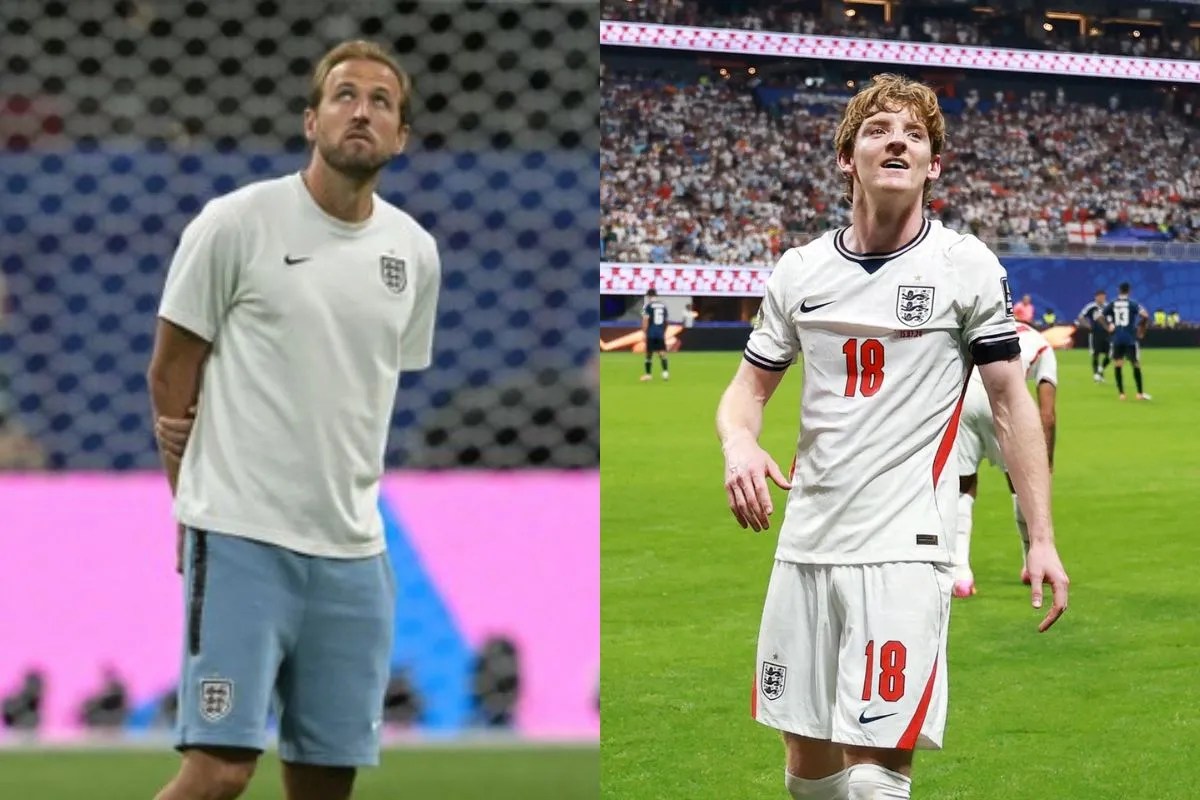
FIFA World Cup 2026 के सेमीफाइनल में किस गलती की वजह से हारी इंग्लैंड, कोच ने बताई कहां हुई चूक
इंग्लैंड के कोच ने कहा कि उस समय उन्हें नहीं लगा कि सब्स्टिट्यूशन से मैच…
इंग्लैंड के कोच ने कहा कि उस समय उन्हें नहीं लगा कि सब्स्टिट्यूशन से मैच…
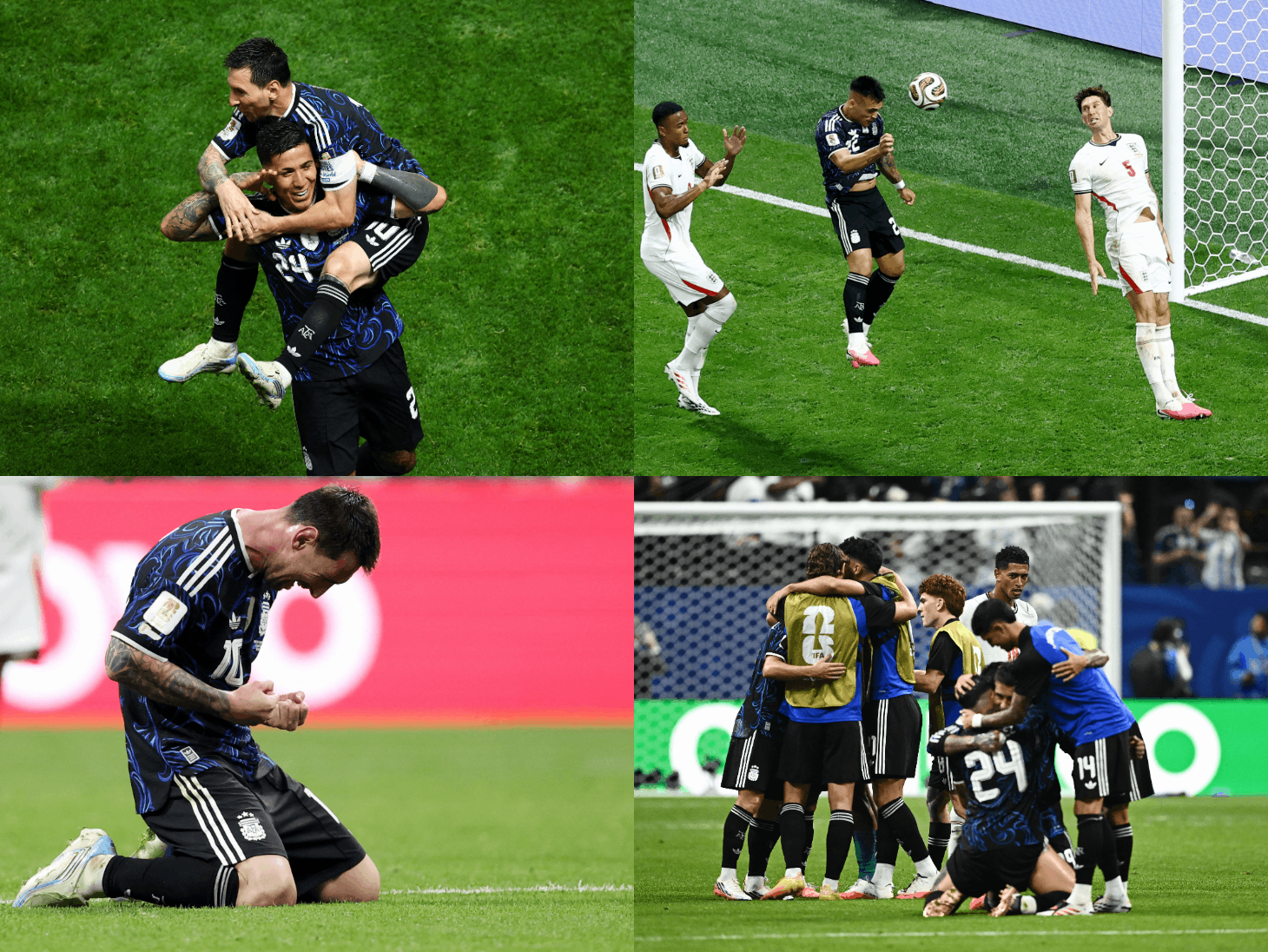
By breakfast, the World Cup semifinal had already begun. Hotel lobbies, elevators and street corners around downtown had become meeting points for two of football’s most passionate travelling nations. Argentinians, draped in sky blue and white, cradled their morning mate long before the first beer found its way into their hands. England supporters, wrapped in the white of the Three Lions, preferred to begin the day at the nearest pub, where breakfast arrived mostly in liquid form.
They exchanged smiles, songs and the occasional jab, but beneath the banter was the unmistakable tension that only England against Argentina can summon. This was never just another World Cup semifinal. It was a rivalry that had travelled from Antonio Rattín to Diego Maradona, from David Beckham to Lionel Messi, and was now in Atlanta for the latest battle.
Match Report –Argentina beats England to reach final
Argentina appeared to understand the emotional assignment from the opening whistle. There was an extra spring in every stride and greater force in every collision. Its players clattered into challenges, chased lost causes and celebrated tackles.
More than four decades have passed since the Falklands War, but in Argentina, the islands remain Las Malvinas, part of a national wound that has never completely healed. The 1982 conflict lasted from April 2 to June 14 and ended with Argentina’s surrender. Six hundred and forty-nine Argentine servicemen, 255 British personnel and three civilians were killed.
The dispute has endured across politics, public memory and football. For many Argentinians, an encounter with England cannot be separated entirely from the young men who left for the South Atlantic and never returned.
Maradona understood that instinctively. Four years after the war, he scored twice against England at the Azteca, first with the Hand of God and then with perhaps the greatest goal the World Cup has ever witnessed. Maradona would later describe the victory as revenge. For Argentina, those four minutes in 1986 are more than sporting history. They became part of the country’s mythology.

Maradona gave Argentina one of football’s defining moments. Messi ensured the story would continue, not as a replay but as another chapter. | Photo Credit: REUTERS

Maradona gave Argentina one of football’s defining moments. Messi ensured the story would continue, not as a replay but as another chapter. | Photo Credit: REUTERS
Maradona’s image has appeared across stadiums in the United States, along with those of Messi, the heir who eventually delivered the trophy Diego had once lifted. His name has been sung from Dallas to Atlanta, invoked not as a distant memory but as a continuing presence.
After Argentina’s dramatic victory over Egypt in the round of 16, the players sang and danced in their dressing room to La Cuarta Estrella (The Fourth Star), the anthem that has followed the team through its title defence.
“I’m Argentine from the cradle to the grave,
For Malvinas, for Diego, for Leo’s last one,
Argentina, I want to see you become champions again.”
The words place the Malvinas, Maradona and Messi within the same national story, where sacrifice, memory and football are intertwined.
On Wednesday, Argentina played as though it all still mattered.
And when the victory was finally secured, there was a connection between the past and present. Giovani Lo Celso and Nicolas Otamendi unfurled a banner reading: “ Las Malvinas son Argentinas”, or “The Malvinas (Falkland Islands) are Argentine.”
It was neither an incidental gesture nor an improvised celebration. It was a message delivered after England was defeated again.
Long after the final whistle, Argentina’s players and supporters remained united in celebration. The team stood facing the sky-blue-and-white end, singing and dancing with those who had followed it across cities, time zones and thousands of miles. Players drifted towards the tunnel only to return, lured back by another chorus from the stands.
For Argentina, England has never been just another opponent. Forty-four years after the Falklands War and four decades after Maradona transformed this rivalry forever, another generation had carried that history into another World Cup final.
Published on Jul 16, 2026

By breakfast, the World Cup semifinal had already begun. Hotel lobbies, elevators and street corners around downtown had become meeting points for two of football’s most passionate travelling nations. Argentinians, draped in sky blue and white, cradled their morning mate long before the first beer found its way into their hands. England supporters, wrapped in the white of the Three Lions, preferred to begin the day at the nearest pub, where breakfast arrived mostly in liquid form.
They exchanged smiles, songs and the occasional jab, but beneath the banter was the unmistakable tension that only England against Argentina can summon. This was never just another World Cup semifinal. It was a rivalry that had travelled from Antonio Rattín to Diego Maradona, from David Beckham to Lionel Messi, and was now in Atlanta for the latest battle.
Match Report –Argentina beats England to reach final
Argentina appeared to understand the emotional assignment from the opening whistle. There was an extra spring in every stride and greater force in every collision. Its players clattered into challenges, chased lost causes and celebrated tackles.
More than four decades have passed since the Falklands War, but in Argentina, the islands remain Las Malvinas, part of a national wound that has never completely healed. The 1982 conflict lasted from April 2 to June 14 and ended with Argentina’s surrender. Six hundred and forty-nine Argentine servicemen, 255 British personnel and three civilians were killed.
The dispute has endured across politics, public memory and football. For many Argentinians, an encounter with England cannot be separated entirely from the young men who left for the South Atlantic and never returned.
Maradona understood that instinctively. Four years after the war, he scored twice against England at the Azteca, first with the Hand of God and then with perhaps the greatest goal the World Cup has ever witnessed. Maradona would later describe the victory as revenge. For Argentina, those four minutes in 1986 are more than sporting history. They became part of the country’s mythology.
Maradona gave Argentina one of football’s defining moments. Messi ensured the story would continue, not as a replay but as another chapter. | Photo Credit: REUTERS
Maradona gave Argentina one of football’s defining moments. Messi ensured the story would continue, not as a replay but as another chapter. | Photo Credit: REUTERS
Maradona’s image has appeared across stadiums in the United States, along with those of Messi, the heir who eventually delivered the trophy Diego had once lifted. His name has been sung from Dallas to Atlanta, invoked not as a distant memory but as a continuing presence.
After Argentina’s dramatic victory over Egypt in the round of 16, the players sang and danced in their dressing room to La Cuarta Estrella (The Fourth Star), the anthem that has followed the team through its title defence.
“I’m Argentine from the cradle to the grave,
For Malvinas, for Diego, for Leo’s last one,
Argentina, I want to see you become champions again.”
The words place the Malvinas, Maradona and Messi within the same national story, where sacrifice, memory and football are intertwined.
On Wednesday, Argentina played as though it all still mattered.
And when the victory was finally secured, there was a connection between the past and present. Giovani Lo Celso and Nicolas Otamendi unfurled a banner reading: “ Las Malvinas son Argentinas”, or “The Malvinas (Falkland Islands) are Argentine.”
It was neither an incidental gesture nor an improvised celebration. It was a message delivered after England was defeated again.
Long after the final whistle, Argentina’s players and supporters remained united in celebration. The team stood facing the sky-blue-and-white end, singing and dancing with those who had followed it across cities, time zones and thousands of miles. Players drifted towards the tunnel only to return, lured back by another chorus from the stands.
For Argentina, England has never been just another opponent. Forty-four years after the Falklands War and four decades after Maradona transformed this rivalry forever, another generation had carried that history into another World Cup final.
Published on Jul 16, 2026
By breakfast, the World Cup semifinal had already begun. Hotel lobbies, elevators and street corners around downtown had become meeting points for two of football’s most passionate travelling nations. Argentinians, draped in sky blue and white, cradled their morning mate long before the first beer found its way into their hands. England supporters, wrapped in the white of the Three Lions, preferred to begin the day at the nearest pub, where breakfast arrived mostly in liquid form.
They exchanged smiles, songs and the occasional jab, but beneath the banter was the unmistakable tension that only England against Argentina can summon. This was never just another World Cup semifinal. It was a rivalry that had travelled from Antonio Rattín to Diego Maradona, from David Beckham to Lionel Messi, and was now in Atlanta for the latest battle.
Match Report –Argentina beats England to reach final
Argentina appeared to understand the emotional assignment from the opening whistle. There was an extra spring in every stride and greater force in every collision. Its players clattered into challenges, chased lost causes and celebrated tackles.
More than four decades have passed since the Falklands War, but in Argentina, the islands remain Las Malvinas, part of a national wound that has never completely healed. The 1982 conflict lasted from April 2 to June 14 and ended with Argentina’s surrender. Six hundred and forty-nine Argentine servicemen, 255 British personnel and three civilians were killed.
The dispute has endured across politics, public memory and football. For many Argentinians, an encounter with England cannot be separated entirely from the young men who left for the South Atlantic and never returned.
Maradona understood that instinctively. Four years after the war, he scored twice against England at the Azteca, first with the Hand of God and then with perhaps the greatest goal the World Cup has ever witnessed. Maradona would later describe the victory as revenge. For Argentina, those four minutes in 1986 are more than sporting history. They became part of the country’s mythology.
Maradona gave Argentina one of football’s defining moments. Messi ensured the story would continue, not as a replay but as another chapter. | Photo Credit: REUTERS
Maradona gave Argentina one of football’s defining moments. Messi ensured the story would continue, not as a replay but as another chapter. | Photo Credit: REUTERS
Maradona’s image has appeared across stadiums in the United States, along with those of Messi, the heir who eventually delivered the trophy Diego had once lifted. His name has been sung from Dallas to Atlanta, invoked not as a distant memory but as a continuing presence.
After Argentina’s dramatic victory over Egypt in the round of 16, the players sang and danced in their dressing room to La Cuarta Estrella (The Fourth Star), the anthem that has followed the team through its title defence.
“I’m Argentine from the cradle to the grave,
For Malvinas, for Diego, for Leo’s last one,
Argentina, I want to see you become champions again.”
The words place the Malvinas, Maradona and Messi within the same national story, where sacrifice, memory and football are intertwined.
On Wednesday, Argentina played as though it all still mattered.
And when the victory was finally secured, there was a connection between the past and present. Giovani Lo Celso and Nicolas Otamendi unfurled a banner reading: “ Las Malvinas son Argentinas”, or “The Malvinas (Falkland Islands) are Argentine.”
It was neither an incidental gesture nor an improvised celebration. It was a message delivered after England was defeated again.
Long after the final whistle, Argentina’s players and supporters remained united in celebration. The team stood facing the sky-blue-and-white end, singing and dancing with those who had followed it across cities, time zones and thousands of miles. Players drifted towards the tunnel only to return, lured back by another chorus from the stands.
For Argentina, England has never been just another opponent. Forty-four years after the Falklands War and four decades after Maradona transformed this rivalry forever, another generation had carried that history into another World Cup final.
Published on Jul 16, 2026
By breakfast, the World Cup semifinal had already begun. Hotel lobbies, elevators and street corners…
Hindi NewsSportsArgentina Vs England World Cup Semifinal | Messi Vs Kane Atlanta Matchअटलांटा14 मिनट पहलेकॉपी…

Lamine Yamal thinks France should be afraid of Spain, with the European giants headed to a World Cup semifinal showdown on Tuesday.
“I believe if France has to fear anyone, it should be us, in my opinion,” the teenage sensation told broadcast reporters after Spain beat Belgium 2-1 on Friday to secure its first semifinal berth since 2010. “We were the ones who knocked them out before.”
Spain beat France in the 2024 European Championship semifinals and again in the Nations League last year. Yamal became the youngest player to score in the continental competition.
The powerhouses meet again at the home stadium of the Dallas Cowboys next week for a spot in the final.
“We don’t fear anyone,” said Yamal, who was named the man of the match against Belgium. “It’s clear that we are two great teams, world-class national teams, and for me, they are one of the best. We’ll see what happens.”
Spain advanced on a winning goal by substitute Mikel Merino in the 88th minute of the quarterfinals at SoFi Stadium. La Roja conceded its only goal of the entire World Cup late in the first half against Belgium, while France has piled up 16 goals in its six World Cup matches.
France has made the past two World Cup finals, winning it all in 2018. Spain has made only one World Cup final in its history, but the current team is unbeaten in 37 consecutive competitive matches since March 2023 — a stretch that also includes a loss on penalties to Portugal in the Nations League final last year.
Spain coach Luis de la Fuente has been asked by the international media about this potential showdown with France throughout the tournament but particularly since the start of the knockout rounds two weeks ago. He has been uniformly complimentary of Les Bleus while echoing his own players’ confidence.
READ: Colombian football federation condemns death threats against midfielder Jaminton Campaz
“Let me be clear: We are not finished,” de la Fuente said. “We are pleased to be in the semifinals, but we want more. We are capable of winning this game, and not just now, but I would have said this a few weeks ago as well.”
Yamal, who turns 19 on Monday, has only one goal and no assists while putting 10 shots on target in his first World Cup, but his playmaking and activity down the right side of Spain’s attack have been noticeable in almost every match. He started the sequence that led to Spain’s first goal against Belgium in a two-man game with Pedro Porro, eventually leading to Fabián Ruiz’s rebound goal off Dani Olmo’s shot.
Yamal said his modest statistics don’t bother him, noting that he also scored only one goal (with four assists) while Spain won the European Championship two years ago.
Although Spain needed a late goal from Merino to win for the second straight match, Yamal believes his team is ready for the challenge of arguably the World Cup’s most dominant team so far. Yamal cited Spain’s acumen in ball possession – a stat it has repeatedly dominated during this World Cup – as a way to take France out of its preferred style of play.
“I think we were much better (than Belgium),” Yamal said. “It seems like we’re playing very beautiful football, but in reality, there isn’t a team that plays against us on equal footing. Everyone drops back, and that makes it more difficult. Nobody has gone toe-to-toe with us. But in the end, we secured the win.”
Published on Jul 11, 2026
Lamine Yamal thinks France should be afraid of Spain, with the European giants headed to a World Cup semifinal showdown on Tuesday.
“I believe if France has to fear anyone, it should be us, in my opinion,” the teenage sensation told broadcast reporters after Spain beat Belgium 2-1 on Friday to secure its first semifinal berth since 2010. “We were the ones who knocked them out before.”
Spain beat France in the 2024 European Championship semifinals and again in the Nations League last year. Yamal became the youngest player to score in the continental competition.
The powerhouses meet again at the home stadium of the Dallas Cowboys next week for a spot in the final.
“We don’t fear anyone,” said Yamal, who was named the man of the match against Belgium. “It’s clear that we are two great teams, world-class national teams, and for me, they are one of the best. We’ll see what happens.”
Spain advanced on a winning goal by substitute Mikel Merino in the 88th minute of the quarterfinals at SoFi Stadium. La Roja conceded its only goal of the entire World Cup late in the first half against Belgium, while France has piled up 16 goals in its six World Cup matches.
France has made the past two World Cup finals, winning it all in 2018. Spain has made only one World Cup final in its history, but the current team is unbeaten in 37 consecutive competitive matches since March 2023 — a stretch that also includes a loss on penalties to Portugal in the Nations League final last year.
Spain coach Luis de la Fuente has been asked by the international media about this potential showdown with France throughout the tournament but particularly since the start of the knockout rounds two weeks ago. He has been uniformly complimentary of Les Bleus while echoing his own players’ confidence.
READ: Colombian football federation condemns death threats against midfielder Jaminton Campaz
“Let me be clear: We are not finished,” de la Fuente said. “We are pleased to be in the semifinals, but we want more. We are capable of winning this game, and not just now, but I would have said this a few weeks ago as well.”
Yamal, who turns 19 on Monday, has only one goal and no assists while putting 10 shots on target in his first World Cup, but his playmaking and activity down the right side of Spain’s attack have been noticeable in almost every match. He started the sequence that led to Spain’s first goal against Belgium in a two-man game with Pedro Porro, eventually leading to Fabián Ruiz’s rebound goal off Dani Olmo’s shot.
Yamal said his modest statistics don’t bother him, noting that he also scored only one goal (with four assists) while Spain won the European Championship two years ago.
Although Spain needed a late goal from Merino to win for the second straight match, Yamal believes his team is ready for the challenge of arguably the World Cup’s most dominant team so far. Yamal cited Spain’s acumen in ball possession – a stat it has repeatedly dominated during this World Cup – as a way to take France out of its preferred style of play.
“I think we were much better (than Belgium),” Yamal said. “It seems like we’re playing very beautiful football, but in reality, there isn’t a team that plays against us on equal footing. Everyone drops back, and that makes it more difficult. Nobody has gone toe-to-toe with us. But in the end, we secured the win.”
Published on Jul 11, 2026
Lamine Yamal thinks France should be afraid of Spain, with the European giants headed to…