
Bad Bunny could have stepped onto the world’s largest stage draped in the most exclusive couture—another Prada, another Schiaparelli, another Maison Margiela piece like he’s worn countless times before. Instead, at the 2026 Super Bowl Halftime Show, he chose something different: an outfit most people could recognize and, importantly, access themselves. In a concert filled with powerful cultural storytelling, that choice carried meaning beyond aesthetics.
Headlining as the first artist to perform a Super Bowl halftime show entirely in Spanish, Bad Bunny delivered a performance that was electric, heartfelt, and deeply symbolic. The show itself celebrated his heritage, featuring Puerto Rican cultural touches and a cast of collaborators that reflected community and unity. But beyond music and staging, his fashion choice quietly highlighted one of the night’s most interesting themes—that art, culture, and identity are for everyone, not just a select few.
Why Choose the Accessible Over the Exclusive?
Shop similar pieces here
Most performers at an event like the Super Bowl work with luxury brands. After all, when you have the resources of a global superstar, it’s easy to dress in looks that only a tiny fraction of the audience could ever afford. Bad Bunny has done that before; just days earlier at the Grammys, he wore a custom Schiaparelli tuxedo crafted for the occasion.
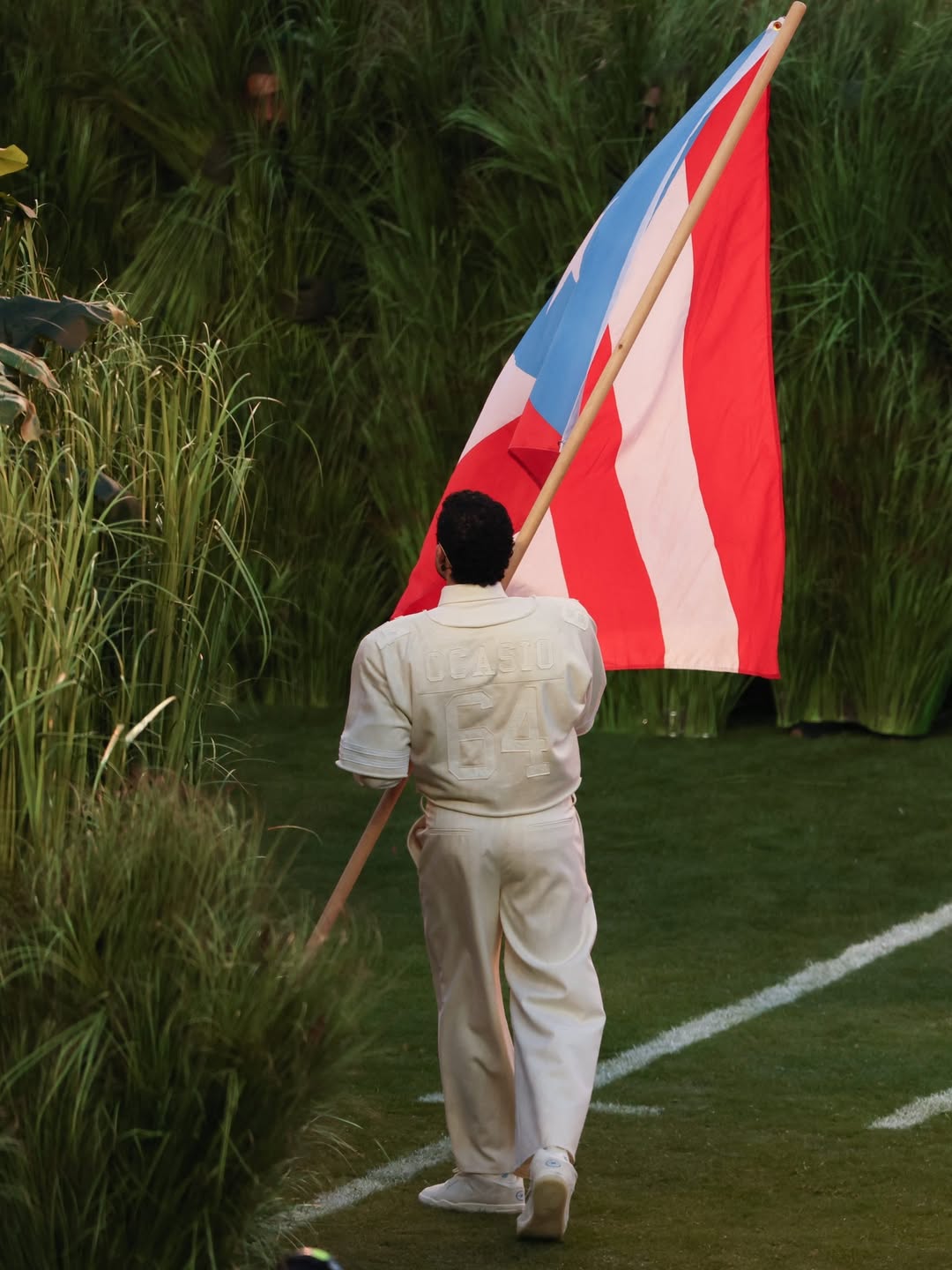
Yet for the halftime show, he surprised many by wearing a custom outfit designed by Zara, a Spanish-based brand known for its wide reach and relative affordability. The cream tones, athletic silhouette, and understated tailoring were a stark departure from the typical couture one expects at the Super Bowl. His look included a jersey with the name “Ocasio”—a nod to his own last name—and the number 64, which carried personal meaning tied to family and heritage. Particularly, his uncle wore number 64 when he played football.
To be clear, this wasn’t simply a casual wardrobe choice. The outfit was custom-made, styled by longtime collaborators Storm Pablo and Marvin Douglas Linares, and built to perform under the lights of one of the world’s most-watched stages. Yet the decision to work with a brand like Zara—one that is globally accessible— was intentional. It played into a message of inclusivity that has been a throughline in Bad Bunny’s career.
The Look: Where Athletic Energy Meets Avant-Garde Fashion
Shop similar pieces here
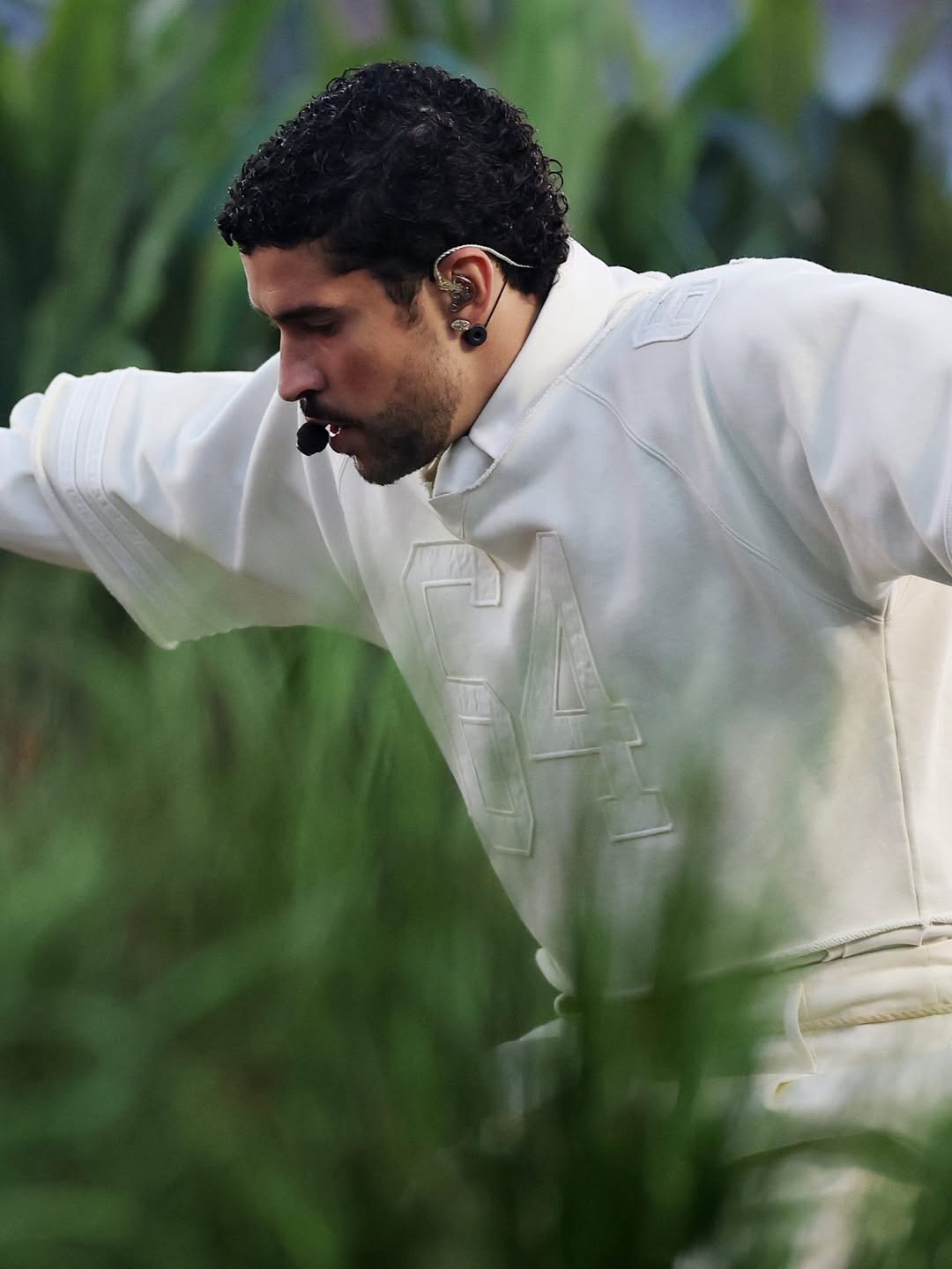
Bad Bunny’s look leans into futuristic minimalism with a sporty, performance-ready edge. The artist is dressed head-to-toe in an all-white ensemble that blends athletic gear with avant-garde styling. The oversized jersey-style top, stamped boldly with the number 64, pays homage to classic sports uniforms, while the layered long-sleeve base and structured gloves elevate it to something more theatrical and stage-ready.
The monochrome palette keeps everything sleek and intentional—no distractions, just silhouette and texture doing the talking. Cinched details at the waist add shape to an otherwise loose, boxy fit, balancing comfort with visual structure. Accessories like the performance headset and in-ear monitors reinforce the live-show energy. They make the outfit feel purpose-built for a massive stadium moment rather than just a fashion statement.
The Accessories
The look was styled with a gold Royal Oak Audemars Piguet and his newly released BadBo 1.0 sneakers by Adidas, which retails for $160.
Fashion as a Statement of Belonging
Shop similar pieces here
Fashion at its best does more than decorate; it communicates. And in this instance, Bad Bunny’s choice spoke to belonging, representation, and visibility. By wearing a look connected to a brand with global reach, he intentionally aligned himself not only with fans who might one day wear similar clothes but also with people who have rarely seen their own experience reflected on such a stage.
At a time when fashion on major platforms often feels distant and aspirational, this moment felt inclusive. It said that style, culture, and identity shouldn’t be gated behind luxury price tags. It reminded audiences that fashion can belong to everyone — and that what you wear doesn’t have to place you on the outside of something grand.
Moreover, Bad Bunny’s fashion history reflects a broader commitment to expression without limitation. In past interviews, he’s spoken openly about dressing in ways that felt authentic to him, even before fame gave him the platform to do so. From wearing women ‘s-inspired clothing early in his career to embracing a fluid mix of streetwear and high fashion, his style has always been deeply personal, not merely performative.
10 Popular Bad Bunny Songs We Want To Hear At The Super Bowl Halftime Show

Source link
#Bad #Bunny #Wore #Accessible #Fashion #Worlds #Biggest #StageHeres #Matters


Post Comment