×
The Data Behind Social Proof: What Marketers Should Measure

The Data Behind Social Proof: What Marketers Should Measure

In today’s world, where more and more lives are online, social proof is very important. Things like likes, shares, reviews, and follower counts show what people think about something. These signs help people feel trust and want to join in. But, many do not read these numbers in the right way. Some feel short-term jumps matter most, but they miss seeing steady growth that can last. To get the best out of this, marketers need a clear plan for checking, giving credit, and trying out new ideas.

Social Proof Metrics

Social proof is not only about numbers that look good. It shows how people see your trust and fame. But the kind of feedback you get is not always the same. Likes and comments of how many followers you have have all given useful clues. Still, you have to look at the whole story to make the best choices.

  • Conversion rate: Tracks if social proof makes people do things we want, like signing up, downloading, or buying.
  • Retention metrics: Shows if the first interest turns into regular use or keeps people coming back over time.
  • Sentiment analysis: It looks as if the social proof shows good or bad feelings from people.

By looking at these numbers, marketers can see the difference between quick jumps in activity and real engagement. Stormlikes help them know what their audience truly cares about.

Attribution Challenges in Social Proof

One of the biggest challenges when using social proof is knowing where to give credit. Many campaigns can give a short burst of attention, but it’s very important to find out if these jumps in attention last over time. A lot of problems with tracking happen when people just look at simple numbers and do not link them to bigger business goals.

  • Last-click bias: Looking only at the last thing people do can make the effect of a social proof tactic appear bigger than it really is.
  • Channel overlap: Organic and paid campaigns often cross over, and this can make it hard to tell the effects apart.
  • Short-term spikes: A boost that happens for a short time, like from paid follower services or viral posts, may not show true growth in the long run.

Marketers need strong analytics systems to know which actions really help people buy and come back again, not just make the numbers look high.

Experimental Approaches to Measure Authentic Uplift

Testing is important when you want to see if your social proof ideas work. The only way to know the real effect of social proof on people is to do controlled experiments. This helps marketers find out what works and make choices using facts and data.

  • A/B testing: Compare content that has social proof and content that does not. This helps you see the differences in how people behave.
  • Time-based experiments: Add social proof slowly over time. Watch for short-term changes and also keep an eye on the bigger trends.
  • Geo or segment tests: Use social proof in certain groups or places. This lets you see the effect on people in one area or segment.

When you use these experiment ideas along with clear KPIs, you can tell the difference between short-term buzz and real growth.

KPIs to Track for True Social Proof

To make social proof work, marketers have to use both numbers and stories as key points. Do not look at just one simple sign, because that can give the wrong idea.

  • Quality of engagement: Not every like means the same thing. Comments, shares, and mentions show more interest.
  • Follower growth rate: A steady increase in followers can say more than a quick jump.
  • Referral traffic: Shows if people come from social proof to take useful actions on your important pages.
  • Customer value over time (CLV): Links social proof campaigns to results that matter for your business in the long run.
  • Influencer amplification: Find out if popular supporters really help their followers trust the brand.
  • These numbers show how social proof works. Marketers can use this to make their campaigns better and get results that last.

Ethical Considerations for Practices

It is important to think about ethics when you try out ways to use social proof. If you use numbers that are not real, or if you show fake likes and shares, people will not trust your brand. Here are the best things you can do:

  • Transparency: Clearly tell people about any paid work or testing.
  • Gradual scaling: Try things out on a small scale to stop fake excitement.
  • Complementary strategy: Use social proof with top content and true messaging.

Ethical testing helps keep growth safe and steady. It makes sure your work fits with what people expect and trust.

Social proof can help your brand, but you cannot judge its effect just by looking at surface numbers. A platform like Stormlikes may help when you test things, but only if you use it in the right way and measure the results well. Knowing how the data behind social proof works helps marketers come up with plans that keep people engaged for a long time and make your brand look good. If you understand what driving action is, you will do better in the long run.

Source link
#Data #Social #Proof #Marketers #Measure

What every U.K. AI startup wants to know these days is, how can I get office space in King’s Cross?  

The area is so hot that a VC firm allegedly recently won a deal by promising a founder office space in the neighborhood. “We stop at nothing to win deals [for] and to support” founders, “including helping them source office space when needed,” the firm told me when asked about the rumor, declining to confirm or deny any details. 

The neighborhood’s popularity began back in 2016 when DeepMind — then newly acquired by Google — moved in. Soon after, a flood of AI startups followed, wanting to be around the Google DeepMind magic. Today, they hope to take advantage of the cluster of AI talent there. 

This has transformed King’s Cross into one of the world’s top AI hubs, rivaled only by San Francisco and Beijing. Around London, it’s known by the sobriquet “Knowledge Quarter,” as it’s home to names like OpenAI, Meta, Isomorphic Labs, Cusp AI, Wayne, Recursive, and, a little farther down the road, Synthesia and Anthropic. The European Technology Network (ETN) just moved into a glossy new office nearby, while University College London sits around the corner.  

Mixed in with the new developments are trendy food spots like Hoppers and BAO. Hop a train from King’s Cross, and founders can be in Cambridge in 45 minutes to source talent or can be in Paris in two hours to strike a deal.  

Who would have guessed that a little more than 20 years ago, this was one of the seediest areas in London?  

“In the ’80s, crack and heroin made the area a major narcotics market,” Hussein Kanji, an investor at Hoxton Ventures, said, recalling syringes in tree trunks and gangs patrolling the streets. “In 1982, the local church was occupied by the English Collective of Prostitutes for 12 straight days.” Then, in the early 2000s, a real estate developer had a dream and, well, “now it is the AI hotbed of the United Kingdom,” Kanji said. “What a change.” 
 
Around 18 months ago, his portfolio company BioCorteX moved from the neighborhood Holborn to the Jellicoe building in King’s Cross, hoping to be near the action. “Lots going on in London right now,” Nik Sharma, co-founder of BioCorteX, told me. “Lots of hyperscalers moving in.” That includes, reportedly, Jeff Bezos’ AI company Prometheus, which is also said to be in talks to move into the Jellicoe.  

There are around 3,600 AI startups in London, which, together, have raised around $12.1 billion out of the $14.8 billion raised in the city since late July, according to Dealroom. Since the start of June, AI-related startups have leased more than 1 million square feet of office space in London, according to the real estate firm Knight Frank. With that, prime rents in King’s Cross have risen 18% over the past three years, Chris Dunn, a commercial insight associate at the firm, told me. 
 
That percentage represents only the largest leases encompassing at least 10,000 square feet, like the ones OpenAI and Prometheus are signing. The shorter deals go for even more, he said, and now the vacancy rate for conventional office space is just 0.9%. “Demand has outstripped supply,” he continued.  

Today, one of the big topics of the area is sovereignty. It was a wake-up call for many when Anthropic shut off access to Mythos and Fable this summer, leaving some in the ecosystem to conclude: “We’d better look after ourselves,” Saul Klein, co-founder of the VC firm Phoenix Court, told me.  

Phoenix Court is located in the King’s Cross area and has three portfolio companies in the vicinity, including Olix (which just announced a $3.3 billion valuation), Early Health and CoMind. Robin Klein, co-founder of the firm, said the shutdown of Fable and Mythos access was a “small but sharp reminder that Europe can’t simply rent its AI capabilities and capacity; it needs to build and hold some of its own.” King’s Cross, he said, is where much of this building is actually happening.  

“The bigger question,” he continued, “is whether the U.K. builds the infrastructure, compute, energy, capital, to make this self-reliance durable, rather than just hosting outposts of U.S. labs.” 

This former notorious red-light district is now one of the world’s top AI hubs | TechCrunch
What every U.K. AI startup wants to know these days is, how can I get office space in King’s Cross?  

The area is so hot that a VC firm allegedly recently won a deal by promising a founder office space in the neighborhood. “We stop at nothing to win deals [for] and to support” founders, “including helping them source office space when needed,” the firm told me when asked about the rumor, declining to confirm or deny any details. 


The neighborhood’s popularity began back in 2016 when DeepMind — then newly acquired by Google — moved in. Soon after, a flood of AI startups followed, wanting to be around the Google DeepMind magic. Today, they hope to take advantage of the cluster of AI talent there. 

This has transformed King’s Cross into one of the world’s top AI hubs, rivaled only by San Francisco and Beijing. Around London, it’s known by the sobriquet “Knowledge Quarter,” as it’s home to names like OpenAI, Meta, Isomorphic Labs, Cusp AI, Wayne, Recursive, and, a little farther down the road, Synthesia and Anthropic. The European Technology Network (ETN) just moved into a glossy new office nearby, while University College London sits around the corner.  

Mixed in with the new developments are trendy food spots like Hoppers and BAO. Hop a train from King’s Cross, and founders can be in Cambridge in 45 minutes to source talent or can be in Paris in two hours to strike a deal.  

Who would have guessed that a little more than 20 years ago, this was one of the seediest areas in London?  

“In the ’80s, crack and heroin made the area a major narcotics market,” Hussein Kanji, an investor at Hoxton Ventures, said, recalling syringes in tree trunks and gangs patrolling the streets. “In 1982, the local church was occupied by the English Collective of Prostitutes for 12 straight days.” Then, in the early 2000s, a real estate developer had a dream and, well, “now it is the AI hotbed of the United Kingdom,” Kanji said. “What a change.”  Around 18 months ago, his portfolio company BioCorteX moved from the neighborhood Holborn to the Jellicoe building in King’s Cross, hoping to be near the action. “Lots going on in London right now,” Nik Sharma, co-founder of BioCorteX, told me. “Lots of hyperscalers moving in.” That includes, reportedly, Jeff Bezos’ AI company Prometheus, which is also said to be in talks to move into the Jellicoe.  


There are around 3,600 AI startups in London, which, together, have raised around .1 billion out of the .8 billion raised in the city since late July, according to Dealroom. Since the start of June, AI-related startups have leased more than 1 million square feet of office space in London, according to the real estate firm Knight Frank. With that, prime rents in King’s Cross have risen 18% over the past three years, Chris Dunn, a commercial insight associate at the firm, told me.  That percentage represents only the largest leases encompassing at least 10,000 square feet, like the ones OpenAI and Prometheus are signing. The shorter deals go for even more, he said, and now the vacancy rate for conventional office space is just 0.9%. “Demand has outstripped supply,” he continued.  

Today, one of the big topics of the area is sovereignty. It was a wake-up call for many when Anthropic shut off access to Mythos and Fable this summer, leaving some in the ecosystem to conclude: “We’d better look after ourselves,” Saul Klein, co-founder of the VC firm Phoenix Court, told me.  

Phoenix Court is located in the King’s Cross area and has three portfolio companies in the vicinity, including Olix (which just announced a .3 billion valuation), Early Health and CoMind. Robin Klein, co-founder of the firm, said the shutdown of Fable and Mythos access was a “small but sharp reminder that Europe can’t simply rent its AI capabilities and capacity; it needs to build and hold some of its own.” King’s Cross, he said, is where much of this building is actually happening.  


“The bigger question,” he continued, “is whether the U.K. builds the infrastructure, compute, energy, capital, to make this self-reliance durable, rather than just hosting outposts of U.S. labs.” 

Image Credits:Phoenix Court

Top founders want to stay 

Simon Kohl, founder of Latent Labs, has offices in King’s Cross and San Francisco. The London office, at the moment, is growing faster, and he’s more bullish than ever on the ecosystem, he said. “The mood right now feels less like London trying to catch up and more like London becoming one of the default places to start a serious AI company,” he said.  Look around and you are likely to see Wayve testing its autonomous cars. Founded in 2017 by co-founder Alex Kendall, the unicorn is one of London’s biggest success stories.  

“Ten years ago, building a frontier AI company from London felt like an unusual choice,” Kendall told me. “Now it feels like an obvious one.” Wayve moved into King’s Cross in 2018 looking for a space that could double as a garage — “a rare combination in Central London,” Kendall said. He has watched the ecosystem mature around him — and it’s now evident that a startup can stay in London, raise serious capital, hire world-class AI talent, and remain globally competitive, he said.  Down the street from Anthropic’s new 158,000-square-foot office is the AI agent builder Sierra and the AI video platform Synthesia. 

Laura Gonzalez Florez, Synthesia’s chief of staff and head of people, says the company moved into its glossy new office building a year ago to accommodate its growing team. They were drawn to the area for the same reason as everyone else: “It’s very close to the airport … very close to where a lot of investors are,” she said. 

Image Credits:Synthesia

Around two-thirds of Synthesia’s engineers are remote, Gonzalez Florez said, letting the company tap into an affordable, international, and diverse talent pool and helping it scale faster. “From London, we can hire and work, without any problem, people from anywhere, from Slovenia to Portugal,” she said.  

Unsurprisingly, London’s AI boom is also causing a talent war.U.K. AI job postings have skyrocketed in the past few years, per data from PwC. When Anthropic announced it moved into town earlier this year, it listed, for example, a salary range of £260,000 to £630,000 for a machine learning research engineer when the average salary in London for the same role is around £102,000. Some founders in the U.K., like those in Silicon Valley, are being forced to raise more and bigger rounds to keep up. 

“The real test is whether more globally significant AI companies are founded, funded, and scaled from the U.K., while continuing to attract the world’s best talent to build them here,” Zain Ali, founder of the King’s Cross-based AI legal firm Centuro, told me. “If that continues to happen, King’s Cross won’t just be an AI hub. It’ll become one of the U.K.’s most important strategic assets.”
When you purchase through links in our articles, we may earn a small commission. This doesn’t affect our editorial independence.#Thisformernotorious #redlight #districtis #nowone #worlds #top #hubs #TechCrunchUK
Image Credits:Phoenix Court

Top founders want to stay

Simon Kohl, founder of Latent Labs, has offices in King’s Cross and San Francisco. The London office, at the moment, is growing faster, and he’s more bullish than ever on the ecosystem, he said. “The mood right now feels less like London trying to catch up and more like London becoming one of the default places to start a serious AI company,” he said. 
 
Look around and you are likely to see Wayve testing its autonomous cars. Founded in 2017 by co-founder Alex Kendall, the unicorn is one of London’s biggest success stories.  

“Ten years ago, building a frontier AI company from London felt like an unusual choice,” Kendall told me. “Now it feels like an obvious one.” Wayve moved into King’s Cross in 2018 looking for a space that could double as a garage — “a rare combination in Central London,” Kendall said. He has watched the ecosystem mature around him — and it’s now evident that a startup can stay in London, raise serious capital, hire world-class AI talent, and remain globally competitive, he said. 
 
Down the street from Anthropic’s new 158,000-square-foot office is the AI agent builder Sierra and the AI video platform Synthesia. 

Laura Gonzalez Florez, Synthesia’s chief of staff and head of people, says the company moved into its glossy new office building a year ago to accommodate its growing team. They were drawn to the area for the same reason as everyone else: “It’s very close to the airport … very close to where a lot of investors are,” she said. 

Image Credits:Synthesia

Around two-thirds of Synthesia’s engineers are remote, Gonzalez Florez said, letting the company tap into an affordable, international, and diverse talent pool and helping it scale faster. “From London, we can hire and work, without any problem, people from anywhere, from Slovenia to Portugal,” she said.  

Unsurprisingly, London’s AI boom is also causing a talent war.

U.K. AI job postings have skyrocketed in the past few years, per data from PwC. When Anthropic announced it moved into town earlier this year, it listed, for example, a salary range of £260,000 to £630,000 for a machine learning research engineer when the average salary in London for the same role is around £102,000. Some founders in the U.K., like those in Silicon Valley, are being forced to raise more and bigger rounds to keep up. 

“The real test is whether more globally significant AI companies are founded, funded, and scaled from the U.K., while continuing to attract the world’s best talent to build them here,” Zain Ali, founder of the King’s Cross-based AI legal firm Centuro, told me. “If that continues to happen, King’s Cross won’t just be an AI hub. It’ll become one of the U.K.’s most important strategic assets.”

When you purchase through links in our articles, we may earn a small commission. This doesn’t affect our editorial independence.

#Thisformernotorious #redlight #districtis #nowone #worlds #top #hubs #TechCrunchUK">This former notorious red-light district is now one of the world’s top AI hubs | TechCrunch
What every U.K. AI startup wants to know these days is, how can I get office space in King’s Cross?  

The area is so hot that a VC firm allegedly recently won a deal by promising a founder office space in the neighborhood. “We stop at nothing to win deals [for] and to support” founders, “including helping them source office space when needed,” the firm told me when asked about the rumor, declining to confirm or deny any details. 


The neighborhood’s popularity began back in 2016 when DeepMind — then newly acquired by Google — moved in. Soon after, a flood of AI startups followed, wanting to be around the Google DeepMind magic. Today, they hope to take advantage of the cluster of AI talent there. 

This has transformed King’s Cross into one of the world’s top AI hubs, rivaled only by San Francisco and Beijing. Around London, it’s known by the sobriquet “Knowledge Quarter,” as it’s home to names like OpenAI, Meta, Isomorphic Labs, Cusp AI, Wayne, Recursive, and, a little farther down the road, Synthesia and Anthropic. The European Technology Network (ETN) just moved into a glossy new office nearby, while University College London sits around the corner.  

Mixed in with the new developments are trendy food spots like Hoppers and BAO. Hop a train from King’s Cross, and founders can be in Cambridge in 45 minutes to source talent or can be in Paris in two hours to strike a deal.  

Who would have guessed that a little more than 20 years ago, this was one of the seediest areas in London?  

“In the ’80s, crack and heroin made the area a major narcotics market,” Hussein Kanji, an investor at Hoxton Ventures, said, recalling syringes in tree trunks and gangs patrolling the streets. “In 1982, the local church was occupied by the English Collective of Prostitutes for 12 straight days.” Then, in the early 2000s, a real estate developer had a dream and, well, “now it is the AI hotbed of the United Kingdom,” Kanji said. “What a change.”  Around 18 months ago, his portfolio company BioCorteX moved from the neighborhood Holborn to the Jellicoe building in King’s Cross, hoping to be near the action. “Lots going on in London right now,” Nik Sharma, co-founder of BioCorteX, told me. “Lots of hyperscalers moving in.” That includes, reportedly, Jeff Bezos’ AI company Prometheus, which is also said to be in talks to move into the Jellicoe.  


There are around 3,600 AI startups in London, which, together, have raised around .1 billion out of the .8 billion raised in the city since late July, according to Dealroom. Since the start of June, AI-related startups have leased more than 1 million square feet of office space in London, according to the real estate firm Knight Frank. With that, prime rents in King’s Cross have risen 18% over the past three years, Chris Dunn, a commercial insight associate at the firm, told me.  That percentage represents only the largest leases encompassing at least 10,000 square feet, like the ones OpenAI and Prometheus are signing. The shorter deals go for even more, he said, and now the vacancy rate for conventional office space is just 0.9%. “Demand has outstripped supply,” he continued.  

Today, one of the big topics of the area is sovereignty. It was a wake-up call for many when Anthropic shut off access to Mythos and Fable this summer, leaving some in the ecosystem to conclude: “We’d better look after ourselves,” Saul Klein, co-founder of the VC firm Phoenix Court, told me.  

Phoenix Court is located in the King’s Cross area and has three portfolio companies in the vicinity, including Olix (which just announced a .3 billion valuation), Early Health and CoMind. Robin Klein, co-founder of the firm, said the shutdown of Fable and Mythos access was a “small but sharp reminder that Europe can’t simply rent its AI capabilities and capacity; it needs to build and hold some of its own.” King’s Cross, he said, is where much of this building is actually happening.  


“The bigger question,” he continued, “is whether the U.K. builds the infrastructure, compute, energy, capital, to make this self-reliance durable, rather than just hosting outposts of U.S. labs.” 

Image Credits:Phoenix Court

Top founders want to stay 

Simon Kohl, founder of Latent Labs, has offices in King’s Cross and San Francisco. The London office, at the moment, is growing faster, and he’s more bullish than ever on the ecosystem, he said. “The mood right now feels less like London trying to catch up and more like London becoming one of the default places to start a serious AI company,” he said.  Look around and you are likely to see Wayve testing its autonomous cars. Founded in 2017 by co-founder Alex Kendall, the unicorn is one of London’s biggest success stories.  

“Ten years ago, building a frontier AI company from London felt like an unusual choice,” Kendall told me. “Now it feels like an obvious one.” Wayve moved into King’s Cross in 2018 looking for a space that could double as a garage — “a rare combination in Central London,” Kendall said. He has watched the ecosystem mature around him — and it’s now evident that a startup can stay in London, raise serious capital, hire world-class AI talent, and remain globally competitive, he said.  Down the street from Anthropic’s new 158,000-square-foot office is the AI agent builder Sierra and the AI video platform Synthesia. 

Laura Gonzalez Florez, Synthesia’s chief of staff and head of people, says the company moved into its glossy new office building a year ago to accommodate its growing team. They were drawn to the area for the same reason as everyone else: “It’s very close to the airport … very close to where a lot of investors are,” she said. 

Image Credits:Synthesia

Around two-thirds of Synthesia’s engineers are remote, Gonzalez Florez said, letting the company tap into an affordable, international, and diverse talent pool and helping it scale faster. “From London, we can hire and work, without any problem, people from anywhere, from Slovenia to Portugal,” she said.  

Unsurprisingly, London’s AI boom is also causing a talent war.U.K. AI job postings have skyrocketed in the past few years, per data from PwC. When Anthropic announced it moved into town earlier this year, it listed, for example, a salary range of £260,000 to £630,000 for a machine learning research engineer when the average salary in London for the same role is around £102,000. Some founders in the U.K., like those in Silicon Valley, are being forced to raise more and bigger rounds to keep up. 

“The real test is whether more globally significant AI companies are founded, funded, and scaled from the U.K., while continuing to attract the world’s best talent to build them here,” Zain Ali, founder of the King’s Cross-based AI legal firm Centuro, told me. “If that continues to happen, King’s Cross won’t just be an AI hub. It’ll become one of the U.K.’s most important strategic assets.”
When you purchase through links in our articles, we may earn a small commission. This doesn’t affect our editorial independence.#Thisformernotorious #redlight #districtis #nowone #worlds #top #hubs #TechCrunchUK

European Technology Network (ETN) just moved into a glossy new office nearby, while University College London sits around the corner.  

Mixed in with the new developments are trendy food spots like Hoppers and BAO. Hop a train from King’s Cross, and founders can be in Cambridge in 45 minutes to source talent or can be in Paris in two hours to strike a deal.  

Who would have guessed that a little more than 20 years ago, this was one of the seediest areas in London?  

“In the ’80s, crack and heroin made the area a major narcotics market,” Hussein Kanji, an investor at Hoxton Ventures, said, recalling syringes in tree trunks and gangs patrolling the streets. “In 1982, the local church was occupied by the English Collective of Prostitutes for 12 straight days.” Then, in the early 2000s, a real estate developer had a dream and, well, “now it is the AI hotbed of the United Kingdom,” Kanji said. “What a change.” 
 
Around 18 months ago, his portfolio company BioCorteX moved from the neighborhood Holborn to the Jellicoe building in King’s Cross, hoping to be near the action. “Lots going on in London right now,” Nik Sharma, co-founder of BioCorteX, told me. “Lots of hyperscalers moving in.” That includes, reportedly, Jeff Bezos’ AI company Prometheus, which is also said to be in talks to move into the Jellicoe.  

There are around 3,600 AI startups in London, which, together, have raised around $12.1 billion out of the $14.8 billion raised in the city since late July, according to Dealroom. Since the start of June, AI-related startups have leased more than 1 million square feet of office space in London, according to the real estate firm Knight Frank. With that, prime rents in King’s Cross have risen 18% over the past three years, Chris Dunn, a commercial insight associate at the firm, told me. 
 
That percentage represents only the largest leases encompassing at least 10,000 square feet, like the ones OpenAI and Prometheus are signing. The shorter deals go for even more, he said, and now the vacancy rate for conventional office space is just 0.9%. “Demand has outstripped supply,” he continued.  

Today, one of the big topics of the area is sovereignty. It was a wake-up call for many when Anthropic shut off access to Mythos and Fable this summer, leaving some in the ecosystem to conclude: “We’d better look after ourselves,” Saul Klein, co-founder of the VC firm Phoenix Court, told me.  

Phoenix Court is located in the King’s Cross area and has three portfolio companies in the vicinity, including Olix (which just announced a $3.3 billion valuation), Early Health and CoMind. Robin Klein, co-founder of the firm, said the shutdown of Fable and Mythos access was a “small but sharp reminder that Europe can’t simply rent its AI capabilities and capacity; it needs to build and hold some of its own.” King’s Cross, he said, is where much of this building is actually happening.  

“The bigger question,” he continued, “is whether the U.K. builds the infrastructure, compute, energy, capital, to make this self-reliance durable, rather than just hosting outposts of U.S. labs.” 

This former notorious red-light district is now one of the world’s top AI hubs | TechCrunch
What every U.K. AI startup wants to know these days is, how can I get office space in King’s Cross?  

The area is so hot that a VC firm allegedly recently won a deal by promising a founder office space in the neighborhood. “We stop at nothing to win deals [for] and to support” founders, “including helping them source office space when needed,” the firm told me when asked about the rumor, declining to confirm or deny any details. 


The neighborhood’s popularity began back in 2016 when DeepMind — then newly acquired by Google — moved in. Soon after, a flood of AI startups followed, wanting to be around the Google DeepMind magic. Today, they hope to take advantage of the cluster of AI talent there. 

This has transformed King’s Cross into one of the world’s top AI hubs, rivaled only by San Francisco and Beijing. Around London, it’s known by the sobriquet “Knowledge Quarter,” as it’s home to names like OpenAI, Meta, Isomorphic Labs, Cusp AI, Wayne, Recursive, and, a little farther down the road, Synthesia and Anthropic. The European Technology Network (ETN) just moved into a glossy new office nearby, while University College London sits around the corner.  

Mixed in with the new developments are trendy food spots like Hoppers and BAO. Hop a train from King’s Cross, and founders can be in Cambridge in 45 minutes to source talent or can be in Paris in two hours to strike a deal.  

Who would have guessed that a little more than 20 years ago, this was one of the seediest areas in London?  

“In the ’80s, crack and heroin made the area a major narcotics market,” Hussein Kanji, an investor at Hoxton Ventures, said, recalling syringes in tree trunks and gangs patrolling the streets. “In 1982, the local church was occupied by the English Collective of Prostitutes for 12 straight days.” Then, in the early 2000s, a real estate developer had a dream and, well, “now it is the AI hotbed of the United Kingdom,” Kanji said. “What a change.”  Around 18 months ago, his portfolio company BioCorteX moved from the neighborhood Holborn to the Jellicoe building in King’s Cross, hoping to be near the action. “Lots going on in London right now,” Nik Sharma, co-founder of BioCorteX, told me. “Lots of hyperscalers moving in.” That includes, reportedly, Jeff Bezos’ AI company Prometheus, which is also said to be in talks to move into the Jellicoe.  


There are around 3,600 AI startups in London, which, together, have raised around .1 billion out of the .8 billion raised in the city since late July, according to Dealroom. Since the start of June, AI-related startups have leased more than 1 million square feet of office space in London, according to the real estate firm Knight Frank. With that, prime rents in King’s Cross have risen 18% over the past three years, Chris Dunn, a commercial insight associate at the firm, told me.  That percentage represents only the largest leases encompassing at least 10,000 square feet, like the ones OpenAI and Prometheus are signing. The shorter deals go for even more, he said, and now the vacancy rate for conventional office space is just 0.9%. “Demand has outstripped supply,” he continued.  

Today, one of the big topics of the area is sovereignty. It was a wake-up call for many when Anthropic shut off access to Mythos and Fable this summer, leaving some in the ecosystem to conclude: “We’d better look after ourselves,” Saul Klein, co-founder of the VC firm Phoenix Court, told me.  

Phoenix Court is located in the King’s Cross area and has three portfolio companies in the vicinity, including Olix (which just announced a .3 billion valuation), Early Health and CoMind. Robin Klein, co-founder of the firm, said the shutdown of Fable and Mythos access was a “small but sharp reminder that Europe can’t simply rent its AI capabilities and capacity; it needs to build and hold some of its own.” King’s Cross, he said, is where much of this building is actually happening.  


“The bigger question,” he continued, “is whether the U.K. builds the infrastructure, compute, energy, capital, to make this self-reliance durable, rather than just hosting outposts of U.S. labs.” 

Image Credits:Phoenix Court

Top founders want to stay 

Simon Kohl, founder of Latent Labs, has offices in King’s Cross and San Francisco. The London office, at the moment, is growing faster, and he’s more bullish than ever on the ecosystem, he said. “The mood right now feels less like London trying to catch up and more like London becoming one of the default places to start a serious AI company,” he said.  Look around and you are likely to see Wayve testing its autonomous cars. Founded in 2017 by co-founder Alex Kendall, the unicorn is one of London’s biggest success stories.  

“Ten years ago, building a frontier AI company from London felt like an unusual choice,” Kendall told me. “Now it feels like an obvious one.” Wayve moved into King’s Cross in 2018 looking for a space that could double as a garage — “a rare combination in Central London,” Kendall said. He has watched the ecosystem mature around him — and it’s now evident that a startup can stay in London, raise serious capital, hire world-class AI talent, and remain globally competitive, he said.  Down the street from Anthropic’s new 158,000-square-foot office is the AI agent builder Sierra and the AI video platform Synthesia. 

Laura Gonzalez Florez, Synthesia’s chief of staff and head of people, says the company moved into its glossy new office building a year ago to accommodate its growing team. They were drawn to the area for the same reason as everyone else: “It’s very close to the airport … very close to where a lot of investors are,” she said. 

Image Credits:Synthesia

Around two-thirds of Synthesia’s engineers are remote, Gonzalez Florez said, letting the company tap into an affordable, international, and diverse talent pool and helping it scale faster. “From London, we can hire and work, without any problem, people from anywhere, from Slovenia to Portugal,” she said.  

Unsurprisingly, London’s AI boom is also causing a talent war.U.K. AI job postings have skyrocketed in the past few years, per data from PwC. When Anthropic announced it moved into town earlier this year, it listed, for example, a salary range of £260,000 to £630,000 for a machine learning research engineer when the average salary in London for the same role is around £102,000. Some founders in the U.K., like those in Silicon Valley, are being forced to raise more and bigger rounds to keep up. 

“The real test is whether more globally significant AI companies are founded, funded, and scaled from the U.K., while continuing to attract the world’s best talent to build them here,” Zain Ali, founder of the King’s Cross-based AI legal firm Centuro, told me. “If that continues to happen, King’s Cross won’t just be an AI hub. It’ll become one of the U.K.’s most important strategic assets.”
When you purchase through links in our articles, we may earn a small commission. This doesn’t affect our editorial independence.#Thisformernotorious #redlight #districtis #nowone #worlds #top #hubs #TechCrunchUK
Image Credits:Phoenix Court

Top founders want to stay

Simon Kohl, founder of Latent Labs, has offices in King’s Cross and San Francisco. The London office, at the moment, is growing faster, and he’s more bullish than ever on the ecosystem, he said. “The mood right now feels less like London trying to catch up and more like London becoming one of the default places to start a serious AI company,” he said. 
 
Look around and you are likely to see Wayve testing its autonomous cars. Founded in 2017 by co-founder Alex Kendall, the unicorn is one of London’s biggest success stories.  

“Ten years ago, building a frontier AI company from London felt like an unusual choice,” Kendall told me. “Now it feels like an obvious one.” Wayve moved into King’s Cross in 2018 looking for a space that could double as a garage — “a rare combination in Central London,” Kendall said. He has watched the ecosystem mature around him — and it’s now evident that a startup can stay in London, raise serious capital, hire world-class AI talent, and remain globally competitive, he said. 
 
Down the street from Anthropic’s new 158,000-square-foot office is the AI agent builder Sierra and the AI video platform Synthesia. 

Laura Gonzalez Florez, Synthesia’s chief of staff and head of people, says the company moved into its glossy new office building a year ago to accommodate its growing team. They were drawn to the area for the same reason as everyone else: “It’s very close to the airport … very close to where a lot of investors are,” she said. 

Image Credits:Synthesia

Around two-thirds of Synthesia’s engineers are remote, Gonzalez Florez said, letting the company tap into an affordable, international, and diverse talent pool and helping it scale faster. “From London, we can hire and work, without any problem, people from anywhere, from Slovenia to Portugal,” she said.  

Unsurprisingly, London’s AI boom is also causing a talent war.

U.K. AI job postings have skyrocketed in the past few years, per data from PwC. When Anthropic announced it moved into town earlier this year, it listed, for example, a salary range of £260,000 to £630,000 for a machine learning research engineer when the average salary in London for the same role is around £102,000. Some founders in the U.K., like those in Silicon Valley, are being forced to raise more and bigger rounds to keep up. 

“The real test is whether more globally significant AI companies are founded, funded, and scaled from the U.K., while continuing to attract the world’s best talent to build them here,” Zain Ali, founder of the King’s Cross-based AI legal firm Centuro, told me. “If that continues to happen, King’s Cross won’t just be an AI hub. It’ll become one of the U.K.’s most important strategic assets.”

When you purchase through links in our articles, we may earn a small commission. This doesn’t affect our editorial independence.

#Thisformernotorious #redlight #districtis #nowone #worlds #top #hubs #TechCrunchUK">This former notorious red-light district is now one of the world’s top AI hubs | TechCrunch

What every U.K. AI startup wants to know these days is, how can I get office space in King’s Cross?  

The area is so hot that a VC firm allegedly recently won a deal by promising a founder office space in the neighborhood. “We stop at nothing to win deals [for] and to support” founders, “including helping them source office space when needed,” the firm told me when asked about the rumor, declining to confirm or deny any details. 

The neighborhood’s popularity began back in 2016 when DeepMind — then newly acquired by Google — moved in. Soon after, a flood of AI startups followed, wanting to be around the Google DeepMind magic. Today, they hope to take advantage of the cluster of AI talent there. 

This has transformed King’s Cross into one of the world’s top AI hubs, rivaled only by San Francisco and Beijing. Around London, it’s known by the sobriquet “Knowledge Quarter,” as it’s home to names like OpenAI, Meta, Isomorphic Labs, Cusp AI, Wayne, Recursive, and, a little farther down the road, Synthesia and Anthropic. The European Technology Network (ETN) just moved into a glossy new office nearby, while University College London sits around the corner.  

Mixed in with the new developments are trendy food spots like Hoppers and BAO. Hop a train from King’s Cross, and founders can be in Cambridge in 45 minutes to source talent or can be in Paris in two hours to strike a deal.  

Who would have guessed that a little more than 20 years ago, this was one of the seediest areas in London?  

“In the ’80s, crack and heroin made the area a major narcotics market,” Hussein Kanji, an investor at Hoxton Ventures, said, recalling syringes in tree trunks and gangs patrolling the streets. “In 1982, the local church was occupied by the English Collective of Prostitutes for 12 straight days.” Then, in the early 2000s, a real estate developer had a dream and, well, “now it is the AI hotbed of the United Kingdom,” Kanji said. “What a change.” 
 
Around 18 months ago, his portfolio company BioCorteX moved from the neighborhood Holborn to the Jellicoe building in King’s Cross, hoping to be near the action. “Lots going on in London right now,” Nik Sharma, co-founder of BioCorteX, told me. “Lots of hyperscalers moving in.” That includes, reportedly, Jeff Bezos’ AI company Prometheus, which is also said to be in talks to move into the Jellicoe.  

There are around 3,600 AI startups in London, which, together, have raised around $12.1 billion out of the $14.8 billion raised in the city since late July, according to Dealroom. Since the start of June, AI-related startups have leased more than 1 million square feet of office space in London, according to the real estate firm Knight Frank. With that, prime rents in King’s Cross have risen 18% over the past three years, Chris Dunn, a commercial insight associate at the firm, told me. 
 
That percentage represents only the largest leases encompassing at least 10,000 square feet, like the ones OpenAI and Prometheus are signing. The shorter deals go for even more, he said, and now the vacancy rate for conventional office space is just 0.9%. “Demand has outstripped supply,” he continued.  

Today, one of the big topics of the area is sovereignty. It was a wake-up call for many when Anthropic shut off access to Mythos and Fable this summer, leaving some in the ecosystem to conclude: “We’d better look after ourselves,” Saul Klein, co-founder of the VC firm Phoenix Court, told me.  

Phoenix Court is located in the King’s Cross area and has three portfolio companies in the vicinity, including Olix (which just announced a $3.3 billion valuation), Early Health and CoMind. Robin Klein, co-founder of the firm, said the shutdown of Fable and Mythos access was a “small but sharp reminder that Europe can’t simply rent its AI capabilities and capacity; it needs to build and hold some of its own.” King’s Cross, he said, is where much of this building is actually happening.  

“The bigger question,” he continued, “is whether the U.K. builds the infrastructure, compute, energy, capital, to make this self-reliance durable, rather than just hosting outposts of U.S. labs.” 

This former notorious red-light district is now one of the world’s top AI hubs | TechCrunch
What every U.K. AI startup wants to know these days is, how can I get office space in King’s Cross?  

The area is so hot that a VC firm allegedly recently won a deal by promising a founder office space in the neighborhood. “We stop at nothing to win deals [for] and to support” founders, “including helping them source office space when needed,” the firm told me when asked about the rumor, declining to confirm or deny any details. 


The neighborhood’s popularity began back in 2016 when DeepMind — then newly acquired by Google — moved in. Soon after, a flood of AI startups followed, wanting to be around the Google DeepMind magic. Today, they hope to take advantage of the cluster of AI talent there. 

This has transformed King’s Cross into one of the world’s top AI hubs, rivaled only by San Francisco and Beijing. Around London, it’s known by the sobriquet “Knowledge Quarter,” as it’s home to names like OpenAI, Meta, Isomorphic Labs, Cusp AI, Wayne, Recursive, and, a little farther down the road, Synthesia and Anthropic. The European Technology Network (ETN) just moved into a glossy new office nearby, while University College London sits around the corner.  

Mixed in with the new developments are trendy food spots like Hoppers and BAO. Hop a train from King’s Cross, and founders can be in Cambridge in 45 minutes to source talent or can be in Paris in two hours to strike a deal.  

Who would have guessed that a little more than 20 years ago, this was one of the seediest areas in London?  

“In the ’80s, crack and heroin made the area a major narcotics market,” Hussein Kanji, an investor at Hoxton Ventures, said, recalling syringes in tree trunks and gangs patrolling the streets. “In 1982, the local church was occupied by the English Collective of Prostitutes for 12 straight days.” Then, in the early 2000s, a real estate developer had a dream and, well, “now it is the AI hotbed of the United Kingdom,” Kanji said. “What a change.”  Around 18 months ago, his portfolio company BioCorteX moved from the neighborhood Holborn to the Jellicoe building in King’s Cross, hoping to be near the action. “Lots going on in London right now,” Nik Sharma, co-founder of BioCorteX, told me. “Lots of hyperscalers moving in.” That includes, reportedly, Jeff Bezos’ AI company Prometheus, which is also said to be in talks to move into the Jellicoe.  


There are around 3,600 AI startups in London, which, together, have raised around .1 billion out of the .8 billion raised in the city since late July, according to Dealroom. Since the start of June, AI-related startups have leased more than 1 million square feet of office space in London, according to the real estate firm Knight Frank. With that, prime rents in King’s Cross have risen 18% over the past three years, Chris Dunn, a commercial insight associate at the firm, told me.  That percentage represents only the largest leases encompassing at least 10,000 square feet, like the ones OpenAI and Prometheus are signing. The shorter deals go for even more, he said, and now the vacancy rate for conventional office space is just 0.9%. “Demand has outstripped supply,” he continued.  

Today, one of the big topics of the area is sovereignty. It was a wake-up call for many when Anthropic shut off access to Mythos and Fable this summer, leaving some in the ecosystem to conclude: “We’d better look after ourselves,” Saul Klein, co-founder of the VC firm Phoenix Court, told me.  

Phoenix Court is located in the King’s Cross area and has three portfolio companies in the vicinity, including Olix (which just announced a .3 billion valuation), Early Health and CoMind. Robin Klein, co-founder of the firm, said the shutdown of Fable and Mythos access was a “small but sharp reminder that Europe can’t simply rent its AI capabilities and capacity; it needs to build and hold some of its own.” King’s Cross, he said, is where much of this building is actually happening.  


“The bigger question,” he continued, “is whether the U.K. builds the infrastructure, compute, energy, capital, to make this self-reliance durable, rather than just hosting outposts of U.S. labs.” 

Image Credits:Phoenix Court

Top founders want to stay 

Simon Kohl, founder of Latent Labs, has offices in King’s Cross and San Francisco. The London office, at the moment, is growing faster, and he’s more bullish than ever on the ecosystem, he said. “The mood right now feels less like London trying to catch up and more like London becoming one of the default places to start a serious AI company,” he said.  Look around and you are likely to see Wayve testing its autonomous cars. Founded in 2017 by co-founder Alex Kendall, the unicorn is one of London’s biggest success stories.  

“Ten years ago, building a frontier AI company from London felt like an unusual choice,” Kendall told me. “Now it feels like an obvious one.” Wayve moved into King’s Cross in 2018 looking for a space that could double as a garage — “a rare combination in Central London,” Kendall said. He has watched the ecosystem mature around him — and it’s now evident that a startup can stay in London, raise serious capital, hire world-class AI talent, and remain globally competitive, he said.  Down the street from Anthropic’s new 158,000-square-foot office is the AI agent builder Sierra and the AI video platform Synthesia. 

Laura Gonzalez Florez, Synthesia’s chief of staff and head of people, says the company moved into its glossy new office building a year ago to accommodate its growing team. They were drawn to the area for the same reason as everyone else: “It’s very close to the airport … very close to where a lot of investors are,” she said. 

Image Credits:Synthesia

Around two-thirds of Synthesia’s engineers are remote, Gonzalez Florez said, letting the company tap into an affordable, international, and diverse talent pool and helping it scale faster. “From London, we can hire and work, without any problem, people from anywhere, from Slovenia to Portugal,” she said.  

Unsurprisingly, London’s AI boom is also causing a talent war.U.K. AI job postings have skyrocketed in the past few years, per data from PwC. When Anthropic announced it moved into town earlier this year, it listed, for example, a salary range of £260,000 to £630,000 for a machine learning research engineer when the average salary in London for the same role is around £102,000. Some founders in the U.K., like those in Silicon Valley, are being forced to raise more and bigger rounds to keep up. 

“The real test is whether more globally significant AI companies are founded, funded, and scaled from the U.K., while continuing to attract the world’s best talent to build them here,” Zain Ali, founder of the King’s Cross-based AI legal firm Centuro, told me. “If that continues to happen, King’s Cross won’t just be an AI hub. It’ll become one of the U.K.’s most important strategic assets.”
When you purchase through links in our articles, we may earn a small commission. This doesn’t affect our editorial independence.#Thisformernotorious #redlight #districtis #nowone #worlds #top #hubs #TechCrunchUK
Image Credits:Phoenix Court

Top founders want to stay

Simon Kohl, founder of Latent Labs, has offices in King’s Cross and San Francisco. The London office, at the moment, is growing faster, and he’s more bullish than ever on the ecosystem, he said. “The mood right now feels less like London trying to catch up and more like London becoming one of the default places to start a serious AI company,” he said. 
 
Look around and you are likely to see Wayve testing its autonomous cars. Founded in 2017 by co-founder Alex Kendall, the unicorn is one of London’s biggest success stories.  

“Ten years ago, building a frontier AI company from London felt like an unusual choice,” Kendall told me. “Now it feels like an obvious one.” Wayve moved into King’s Cross in 2018 looking for a space that could double as a garage — “a rare combination in Central London,” Kendall said. He has watched the ecosystem mature around him — and it’s now evident that a startup can stay in London, raise serious capital, hire world-class AI talent, and remain globally competitive, he said. 
 
Down the street from Anthropic’s new 158,000-square-foot office is the AI agent builder Sierra and the AI video platform Synthesia. 

Laura Gonzalez Florez, Synthesia’s chief of staff and head of people, says the company moved into its glossy new office building a year ago to accommodate its growing team. They were drawn to the area for the same reason as everyone else: “It’s very close to the airport … very close to where a lot of investors are,” she said. 

Image Credits:Synthesia

Around two-thirds of Synthesia’s engineers are remote, Gonzalez Florez said, letting the company tap into an affordable, international, and diverse talent pool and helping it scale faster. “From London, we can hire and work, without any problem, people from anywhere, from Slovenia to Portugal,” she said.  

Unsurprisingly, London’s AI boom is also causing a talent war.

U.K. AI job postings have skyrocketed in the past few years, per data from PwC. When Anthropic announced it moved into town earlier this year, it listed, for example, a salary range of £260,000 to £630,000 for a machine learning research engineer when the average salary in London for the same role is around £102,000. Some founders in the U.K., like those in Silicon Valley, are being forced to raise more and bigger rounds to keep up. 

“The real test is whether more globally significant AI companies are founded, funded, and scaled from the U.K., while continuing to attract the world’s best talent to build them here,” Zain Ali, founder of the King’s Cross-based AI legal firm Centuro, told me. “If that continues to happen, King’s Cross won’t just be an AI hub. It’ll become one of the U.K.’s most important strategic assets.”

When you purchase through links in our articles, we may earn a small commission. This doesn’t affect our editorial independence.

#Thisformernotorious #redlight #districtis #nowone #worlds #top #hubs #TechCrunchUK
Why Remote Server Access Is a Common Attack Vector

Every cloud server exposes at least one remote access point – usually SSH on port 22 – and that port is scanned constantly by bots looking for weak credentials. Password-based login is the most common way a system can be attacked by brute force, and it is quite common with a standard setup that the system is left in a state where an admin/user of that system – “root user” – can log in directly by guessing the user ID and the password combination. Add in shared team credentials, forgotten firewall rules from old projects, and staging servers left publicly reachable, and it’s clear why misconfigured remote access – not zero-day exploits – is behind most cloud server compromises. The fix is simple, though you’ll need to do some setup yourself instead of trusting the default setting.

How to lock down SSH access in the right way

The best way to secure remote access is through a series of small improvements rather than one major overhaul. The following is a real working method:

  1. Switch to SSH key authentication, then turn off password login completely in the same location: sshd_config. Keys are far harder to brute-force than passwords.
  2. Disable root login over SSH and require a non-root user with sudo privileges instead; this is a security advantage that even without any change, one key compromising would limit the impact.
  3. Change the default SSH port away from 22 to cut down on automated scanning noise (not a security measure on its own, but it reduces log clutter).
  4. Restrict access by IP using your firewall or security group, allowing SSH only from known office or VPN IP ranges rather than the entire internet.
  5. Add a VPN as a connection layer for anyone accessing servers from outside a trusted network – a VPN like Planet VPN’s free VPN service can encrypt the connection between a remote worker’s laptop and the server before SSH traffic ever leaves their device, which matters especially on public wi-fi or shared networks.

Every step you take closes the doors that the attacker may open slightly, and when you combine everything, you would have a door to a series of locked gates.

Why Do I Need a Bastion Host?

When it comes to teams working with many servers, deploying a bastion host (jump box) may be a clean and effective way to solve the long-term problem. With this method, you only expose SSH to the bastion, and the other servers accept it only when it’s from the bastion’s internal IP. This centralizes logging and makes auditing access far simpler.

Using a virtual private network (VPN) and a bastion host together is perfectly fine – and many solutions use both: a safe way to access the private network via a VPN, followed by use of a bastion host to restrict which servers can be accessed. Some teams may decide to forgo the bastion because they don’t have the manpower to manage one, and so use a combination of a VPN and a set of firewall rules that still quite a bit lowers the exposure, but without the extra effort.

Mistakes Leading to Leaving Cloud Servers Open

The Mistakes That Cause Leaving Cloud Servers Open: Even the safest development teams may have slip-ups from time to time. One of the most frequent is leaving staged, or test servers with relaxed firewall rules equivalent to those of the production environment – hackers don’t concern themselves with which environment they first land on. Another frequent error is reusing the same SSH key on several servers and clients, causing one hacked laptop to compromise all servers that key has access to.

Another common human error is not removing or changing access when someone leaves the team, so stale credentials remain valid and accessible. At last, putting trust in the strategy of “security through obscurity” – meaning one thinks that setting up the unusual port or hiding the hostname from the public is actually sufficient security – creates a wrong impression of security. This is mostly true; in reality, modern-day attackers scan all ports anyway, and there is no way to hide from them.

System Administrators Guide to Secure Remote Access 

Prohibit SSH password logins totally and depend exclusively on key-based authentication

  • Surely no one wants to type in the password every time; because of this, use only key-based authentication 
  • Deter the user from logging in as root by default and instead use the sudo command to do root tasks
  • A firewall or security group rule can provide great help with IP address-based restrictions on SSH logins 
  • For access that comes from untrusted sources or external networks, use a secure tunnel like a vpn or bastion host
  • Periodically change SSH keys and inspect access lists
  • Maintain records of login attempts and detect brute-force attacks as quickly as possible

Frequently Asked Questions

What is the principal means by which cloud servers suffer break-ins through remote access?

By far the biggest reason why this can happen is unauthorized password-based SSH logins that have been cracked by brute force. The scenario is most likely to develop where the administrator allows root login via password and leaves the default port open.

Sufficient security measures for the server via SSH keys: Do you think it is safe to rely only on key authentication? 

It is true that SSH keys drastically decrease the danger of a successful brute-force attack. However, if there is only key authentication on the server, there are still risks – the server administrator can always enable root login or disable the IP-based login restrictions. So it is recommended to always have these three in the server configuration: disabled root login, restricted access to known IPs, and rotating the keys regularly as the main components of meaningful protection. 

Is it really necessary to set up a separate VPN network while I am able to connect via SSH keys? 

A VPN gives extra security by first encrypting your computer traffic before it reaches your network, where the SSH connection will be used. This is mostly important when working on untrusted networks – like public wi-fi – where there is a threat of a potential hacker in your local network looking at your data.

Bastion host vs VPN as methods of accessing the server? 

The bastion host works by funneling SSH sessions from many users through a single, carefully monitored server point while the rest of the network (and mostly the servers) remains protected from the internet. At the same time, a vpn will fully encrypt the communication between the user and the corporate network or servers. The combination is very common among larger security teams as a part of the defense-in-depth principle. 

How often should SSH keys be rotated? 

The ideal period to change your SSH keys depends on the security practices of your organization, but generally a good practice is to change SSH keys between 90 and 180 days, or in the case that the user who had access with the key leaves or is no longer able to be contacted, such as when a team member leaves.

Why is only changing the port number for SSH enough to secure that port?

Changing the port reduces automated scanning noise in your logs but isn’t a real security control on its own — port scanners check all ports, so it should never replace key-based auth and firewall rules.

#Secure #Remote #Access #Cloud #ServerCloud,remote access">How to Secure Remote Access to Your Cloud Server in 2026
	
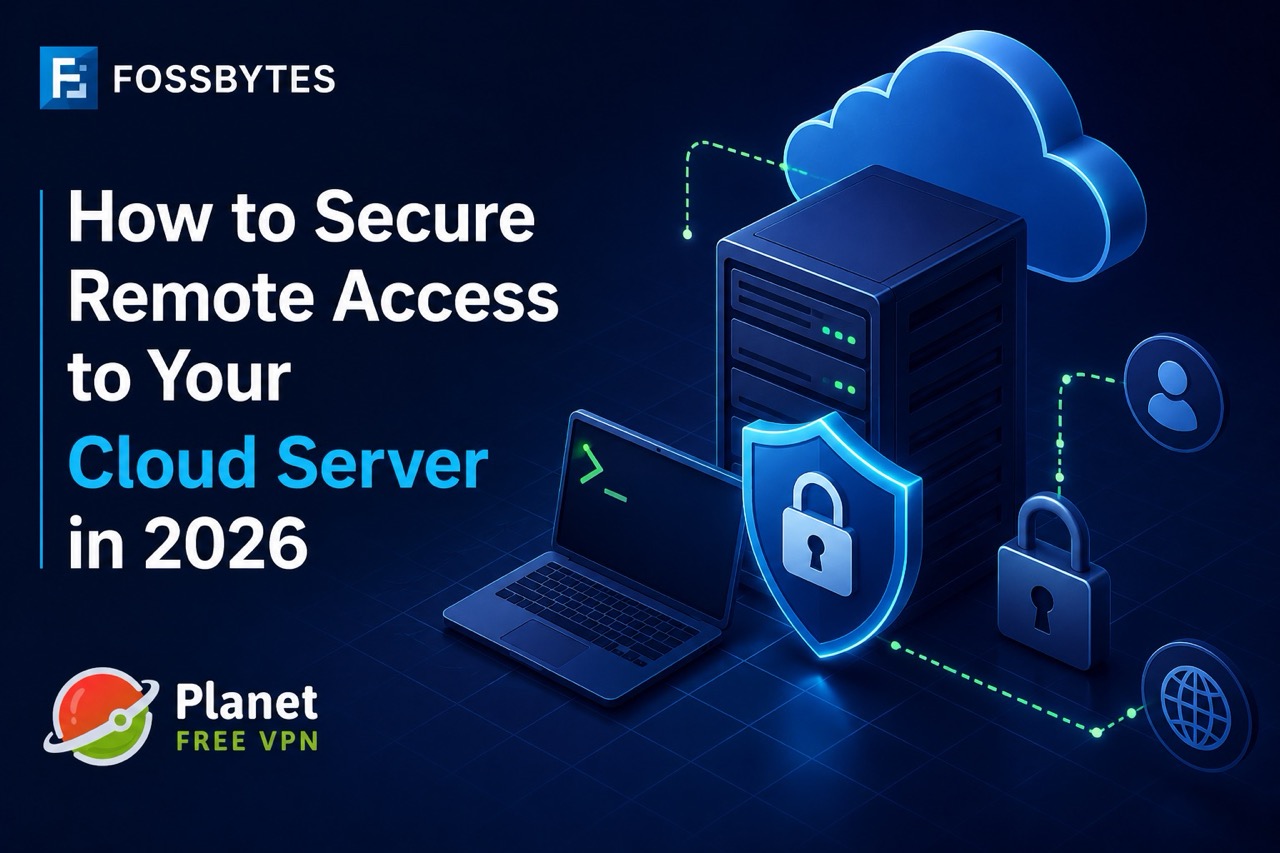
Protection against unauthorized remote logins to your cloud server is a matter of SSH key-based authentication, a strict security policy on the firewall, two-factor authentication, and a secure communication channel – no individual component will give adequate protection by itself. The major risk point in breaches is not the server but the open door to remote login. To patch that vulnerability, you need a series of countermeasures, not a magical setting.


Why Remote Server Access Is a Common Attack Vector


Every cloud server exposes at least one remote access point – usually SSH on port 22 – and that port is scanned constantly by bots looking for weak credentials. Password-based login is the most common way a system can be attacked by brute force, and it is quite common with a standard setup that the system is left in a state where an admin/user of that system – “root user” – can log in directly by guessing the user ID and the password combination. Add in shared team credentials, forgotten firewall rules from old projects, and staging servers left publicly reachable, and it’s clear why misconfigured remote access – not zero-day exploits – is behind most cloud server compromises. The fix is simple, though you’ll need to do some setup yourself instead of trusting the default setting.


How to lock down SSH access in the right way


The best way to secure remote access is through a series of small improvements rather than one major overhaul. The following is a real working method:


Switch to SSH key authentication, then turn off password login completely in the same location: sshd_config. Keys are far harder to brute-force than passwords.


Disable root login over SSH and require a non-root user with sudo privileges instead; this is a security advantage that even without any change, one key compromising would limit the impact.


Change the default SSH port away from 22 to cut down on automated scanning noise (not a security measure on its own, but it reduces log clutter).


Restrict access by IP using your firewall or security group, allowing SSH only from known office or VPN IP ranges rather than the entire internet.


Add a VPN as a connection layer for anyone accessing servers from outside a trusted network – a VPN like Planet VPN’s free VPN service can encrypt the connection between a remote worker’s laptop and the server before SSH traffic ever leaves their device, which matters especially on public wi-fi or shared networks.


Every step you take closes the doors that the attacker may open slightly, and when you combine everything, you would have a door to a series of locked gates.


Why Do I Need a Bastion Host?


When it comes to teams working with many servers, deploying a bastion host (jump box) may be a clean and effective way to solve the long-term problem. With this method, you only expose SSH to the bastion, and the other servers accept it only when it’s from the bastion’s internal IP. This centralizes logging and makes auditing access far simpler.


Using a virtual private network (VPN) and a bastion host together is perfectly fine – and many solutions use both: a safe way to access the private network via a VPN, followed by use of a bastion host to restrict which servers can be accessed. Some teams may decide to forgo the bastion because they don’t have the manpower to manage one, and so use a combination of a VPN and a set of firewall rules that still quite a bit lowers the exposure, but without the extra effort.


Mistakes Leading to Leaving Cloud Servers Open


The Mistakes That Cause Leaving Cloud Servers Open: Even the safest development teams may have slip-ups from time to time. One of the most frequent is leaving staged, or test servers with relaxed firewall rules equivalent to those of the production environment – hackers don’t concern themselves with which environment they first land on. Another frequent error is reusing the same SSH key on several servers and clients, causing one hacked laptop to compromise all servers that key has access to.


Another common human error is not removing or changing access when someone leaves the team, so stale credentials remain valid and accessible. At last, putting trust in the strategy of “security through obscurity” – meaning one thinks that setting up the unusual port or hiding the hostname from the public is actually sufficient security – creates a wrong impression of security. This is mostly true; in reality, modern-day attackers scan all ports anyway, and there is no way to hide from them.


System Administrators Guide to Secure Remote Access 


Prohibit SSH password logins totally and depend exclusively on key-based authentication


Surely no one wants to type in the password every time; because of this, use only key-based authentication 


Deter the user from logging in as root by default and instead use the sudo command to do root tasks


A firewall or security group rule can provide great help with IP address-based restrictions on SSH logins 


For access that comes from untrusted sources or external networks, use a secure tunnel like a vpn or bastion host


Periodically change SSH keys and inspect access lists


Maintain records of login attempts and detect brute-force attacks as quickly as possible


Frequently Asked Questions


What is the principal means by which cloud servers suffer break-ins through remote access? By far the biggest reason why this can happen is unauthorized password-based SSH logins that have been cracked by brute force. The scenario is most likely to develop where the administrator allows root login via password and leaves the default port open.  Sufficient security measures for the server via SSH keys: Do you think it is safe to rely only on key authentication?  It is true that SSH keys drastically decrease the danger of a successful brute-force attack. However, if there is only key authentication on the server, there are still risks – the server administrator can always enable root login or disable the IP-based login restrictions. So it is recommended to always have these three in the server configuration: disabled root login, restricted access to known IPs, and rotating the keys regularly as the main components of meaningful protection.   Is it really necessary to set up a separate VPN network while I am able to connect via SSH keys?  A VPN gives extra security by first encrypting your computer traffic before it reaches your network, where the SSH connection will be used. This is mostly important when working on untrusted networks – like public wi-fi – where there is a threat of a potential hacker in your local network looking at your data.  Bastion host vs VPN as methods of accessing the server?  The bastion host works by funneling SSH sessions from many users through a single, carefully monitored server point while the rest of the network (and mostly the servers) remains protected from the internet. At the same time, a vpn will fully encrypt the communication between the user and the corporate network or servers. The combination is very common among larger security teams as a part of the defense-in-depth principle.   How often should SSH keys be rotated?  The ideal period to change your SSH keys depends on the security practices of your organization, but generally a good practice is to change SSH keys between 90 and 180 days, or in the case that the user who had access with the key leaves or is no longer able to be contacted, such as when a team member leaves.  Why is only changing the port number for SSH enough to secure that port? Changing the port reduces automated scanning noise in your logs but isn’t a real security control on its own — port scanners check all ports, so it should never replace key-based auth and firewall rules.  


#Secure #Remote #Access #Cloud #ServerCloud,remote access

  1. free VPN service can encrypt the connection between a remote worker’s laptop and the server before SSH traffic ever leaves their device, which matters especially on public wi-fi or shared networks.

Every step you take closes the doors that the attacker may open slightly, and when you combine everything, you would have a door to a series of locked gates.

Why Do I Need a Bastion Host?

When it comes to teams working with many servers, deploying a bastion host (jump box) may be a clean and effective way to solve the long-term problem. With this method, you only expose SSH to the bastion, and the other servers accept it only when it’s from the bastion’s internal IP. This centralizes logging and makes auditing access far simpler.

Using a virtual private network (VPN) and a bastion host together is perfectly fine – and many solutions use both: a safe way to access the private network via a VPN, followed by use of a bastion host to restrict which servers can be accessed. Some teams may decide to forgo the bastion because they don’t have the manpower to manage one, and so use a combination of a VPN and a set of firewall rules that still quite a bit lowers the exposure, but without the extra effort.

Mistakes Leading to Leaving Cloud Servers Open

The Mistakes That Cause Leaving Cloud Servers Open: Even the safest development teams may have slip-ups from time to time. One of the most frequent is leaving staged, or test servers with relaxed firewall rules equivalent to those of the production environment – hackers don’t concern themselves with which environment they first land on. Another frequent error is reusing the same SSH key on several servers and clients, causing one hacked laptop to compromise all servers that key has access to.

Another common human error is not removing or changing access when someone leaves the team, so stale credentials remain valid and accessible. At last, putting trust in the strategy of “security through obscurity” – meaning one thinks that setting up the unusual port or hiding the hostname from the public is actually sufficient security – creates a wrong impression of security. This is mostly true; in reality, modern-day attackers scan all ports anyway, and there is no way to hide from them.

System Administrators Guide to Secure Remote Access 

Prohibit SSH password logins totally and depend exclusively on key-based authentication

  • Surely no one wants to type in the password every time; because of this, use only key-based authentication 
  • Deter the user from logging in as root by default and instead use the sudo command to do root tasks
  • A firewall or security group rule can provide great help with IP address-based restrictions on SSH logins 
  • For access that comes from untrusted sources or external networks, use a secure tunnel like a vpn or bastion host
  • Periodically change SSH keys and inspect access lists
  • Maintain records of login attempts and detect brute-force attacks as quickly as possible

Frequently Asked Questions

What is the principal means by which cloud servers suffer break-ins through remote access?

By far the biggest reason why this can happen is unauthorized password-based SSH logins that have been cracked by brute force. The scenario is most likely to develop where the administrator allows root login via password and leaves the default port open.

Sufficient security measures for the server via SSH keys: Do you think it is safe to rely only on key authentication? 

It is true that SSH keys drastically decrease the danger of a successful brute-force attack. However, if there is only key authentication on the server, there are still risks – the server administrator can always enable root login or disable the IP-based login restrictions. So it is recommended to always have these three in the server configuration: disabled root login, restricted access to known IPs, and rotating the keys regularly as the main components of meaningful protection. 

Is it really necessary to set up a separate VPN network while I am able to connect via SSH keys? 

A VPN gives extra security by first encrypting your computer traffic before it reaches your network, where the SSH connection will be used. This is mostly important when working on untrusted networks – like public wi-fi – where there is a threat of a potential hacker in your local network looking at your data.

Bastion host vs VPN as methods of accessing the server? 

The bastion host works by funneling SSH sessions from many users through a single, carefully monitored server point while the rest of the network (and mostly the servers) remains protected from the internet. At the same time, a vpn will fully encrypt the communication between the user and the corporate network or servers. The combination is very common among larger security teams as a part of the defense-in-depth principle. 

How often should SSH keys be rotated? 

The ideal period to change your SSH keys depends on the security practices of your organization, but generally a good practice is to change SSH keys between 90 and 180 days, or in the case that the user who had access with the key leaves or is no longer able to be contacted, such as when a team member leaves.

Why is only changing the port number for SSH enough to secure that port?

Changing the port reduces automated scanning noise in your logs but isn’t a real security control on its own — port scanners check all ports, so it should never replace key-based auth and firewall rules.

#Secure #Remote #Access #Cloud #ServerCloud,remote access">How to Secure Remote Access to Your Cloud Server in 2026

Protection against unauthorized remote logins to your cloud server is a matter of SSH key-based authentication, a strict security policy on the firewall, two-factor authentication, and a secure communication channel – no individual component will give adequate protection by itself. The major risk point in breaches is not the server but the open door to remote login. To patch that vulnerability, you need a series of countermeasures, not a magical setting.

Why Remote Server Access Is a Common Attack Vector

Every cloud server exposes at least one remote access point – usually SSH on port 22 – and that port is scanned constantly by bots looking for weak credentials. Password-based login is the most common way a system can be attacked by brute force, and it is quite common with a standard setup that the system is left in a state where an admin/user of that system – “root user” – can log in directly by guessing the user ID and the password combination. Add in shared team credentials, forgotten firewall rules from old projects, and staging servers left publicly reachable, and it’s clear why misconfigured remote access – not zero-day exploits – is behind most cloud server compromises. The fix is simple, though you’ll need to do some setup yourself instead of trusting the default setting.

How to lock down SSH access in the right way

The best way to secure remote access is through a series of small improvements rather than one major overhaul. The following is a real working method:

  1. Switch to SSH key authentication, then turn off password login completely in the same location: sshd_config. Keys are far harder to brute-force than passwords.
  2. Disable root login over SSH and require a non-root user with sudo privileges instead; this is a security advantage that even without any change, one key compromising would limit the impact.
  3. Change the default SSH port away from 22 to cut down on automated scanning noise (not a security measure on its own, but it reduces log clutter).
  4. Restrict access by IP using your firewall or security group, allowing SSH only from known office or VPN IP ranges rather than the entire internet.
  5. Add a VPN as a connection layer for anyone accessing servers from outside a trusted network – a VPN like Planet VPN’s free VPN service can encrypt the connection between a remote worker’s laptop and the server before SSH traffic ever leaves their device, which matters especially on public wi-fi or shared networks.

Every step you take closes the doors that the attacker may open slightly, and when you combine everything, you would have a door to a series of locked gates.

Why Do I Need a Bastion Host?

When it comes to teams working with many servers, deploying a bastion host (jump box) may be a clean and effective way to solve the long-term problem. With this method, you only expose SSH to the bastion, and the other servers accept it only when it’s from the bastion’s internal IP. This centralizes logging and makes auditing access far simpler.

Using a virtual private network (VPN) and a bastion host together is perfectly fine – and many solutions use both: a safe way to access the private network via a VPN, followed by use of a bastion host to restrict which servers can be accessed. Some teams may decide to forgo the bastion because they don’t have the manpower to manage one, and so use a combination of a VPN and a set of firewall rules that still quite a bit lowers the exposure, but without the extra effort.

Mistakes Leading to Leaving Cloud Servers Open

The Mistakes That Cause Leaving Cloud Servers Open: Even the safest development teams may have slip-ups from time to time. One of the most frequent is leaving staged, or test servers with relaxed firewall rules equivalent to those of the production environment – hackers don’t concern themselves with which environment they first land on. Another frequent error is reusing the same SSH key on several servers and clients, causing one hacked laptop to compromise all servers that key has access to.

Another common human error is not removing or changing access when someone leaves the team, so stale credentials remain valid and accessible. At last, putting trust in the strategy of “security through obscurity” – meaning one thinks that setting up the unusual port or hiding the hostname from the public is actually sufficient security – creates a wrong impression of security. This is mostly true; in reality, modern-day attackers scan all ports anyway, and there is no way to hide from them.

System Administrators Guide to Secure Remote Access 

Prohibit SSH password logins totally and depend exclusively on key-based authentication

  • Surely no one wants to type in the password every time; because of this, use only key-based authentication 
  • Deter the user from logging in as root by default and instead use the sudo command to do root tasks
  • A firewall or security group rule can provide great help with IP address-based restrictions on SSH logins 
  • For access that comes from untrusted sources or external networks, use a secure tunnel like a vpn or bastion host
  • Periodically change SSH keys and inspect access lists
  • Maintain records of login attempts and detect brute-force attacks as quickly as possible

Frequently Asked Questions

What is the principal means by which cloud servers suffer break-ins through remote access?

By far the biggest reason why this can happen is unauthorized password-based SSH logins that have been cracked by brute force. The scenario is most likely to develop where the administrator allows root login via password and leaves the default port open.

Sufficient security measures for the server via SSH keys: Do you think it is safe to rely only on key authentication? 

It is true that SSH keys drastically decrease the danger of a successful brute-force attack. However, if there is only key authentication on the server, there are still risks – the server administrator can always enable root login or disable the IP-based login restrictions. So it is recommended to always have these three in the server configuration: disabled root login, restricted access to known IPs, and rotating the keys regularly as the main components of meaningful protection. 

Is it really necessary to set up a separate VPN network while I am able to connect via SSH keys? 

A VPN gives extra security by first encrypting your computer traffic before it reaches your network, where the SSH connection will be used. This is mostly important when working on untrusted networks – like public wi-fi – where there is a threat of a potential hacker in your local network looking at your data.

Bastion host vs VPN as methods of accessing the server? 

The bastion host works by funneling SSH sessions from many users through a single, carefully monitored server point while the rest of the network (and mostly the servers) remains protected from the internet. At the same time, a vpn will fully encrypt the communication between the user and the corporate network or servers. The combination is very common among larger security teams as a part of the defense-in-depth principle. 

How often should SSH keys be rotated? 

The ideal period to change your SSH keys depends on the security practices of your organization, but generally a good practice is to change SSH keys between 90 and 180 days, or in the case that the user who had access with the key leaves or is no longer able to be contacted, such as when a team member leaves.

Why is only changing the port number for SSH enough to secure that port?

Changing the port reduces automated scanning noise in your logs but isn’t a real security control on its own — port scanners check all ports, so it should never replace key-based auth and firewall rules.

#Secure #Remote #Access #Cloud #ServerCloud,remote access

Post Comment