
For years, the three-button suit occupied a strange corner of menswear: respected in theory, avoided in practice. Somewhere between the polished runways of Milan and the chaotic fashion choices of the early-2000s NBA Draft, the silhouette acquired a reputation that proved difficult to shake. Yet something has shifted.
Men’s suits are in the middle of a quiet but meaningful evolution, and the three-button jacket is increasingly part of the conversation. Whether spotted on recent runways or tucked into the catalogs of contemporary brands, the message is becoming clearer: this once-overlooked cut is having a genuine moment.
To understand why, however, it helps to revisit why the style fell out of favor in the first place, and what it means that men are reaching for it again. Ultimately, this resurgence is not really about buttons at all. Instead, it reflects a broader shift in menswear, one that questions long-standing rules and asks whether the conventions we’ve treated as gospel still serve modern style.
The V-Shape Doctrine and Why It Dominated
For decades, classical tailoring operated under a simple guiding principle: create the illusion of an upside-down triangle. Broad shoulders. A defined waist. The unmistakable V-shaped torso. This silhouette became deeply embedded in Western ideals of masculinity, and two-button jackets emerged as the default because they execute the formula almost effortlessly. The lower button stance elongates the torso, keeps the lapels open, and naturally draws the eye upward and outward, reinforcing that classic taper.
Much of tailoring’s magic lies in its construction. Layers of canvas, meticulous pad stitching, darts, and precise ironwork combine to engineer a shape onto the body that nature does not always provide. As a result, well-made tailoring can make nearly any man appear broader in the shoulders and narrower at the waist. That visual trick explains why the traditional suit has remained so flattering across generations.
The three-button jacket, however, complicates that formula. Because its button stance sits higher, the lapel shortens, and the visual V narrows, creating a more columnar silhouette. For many men, that works against the classical ideal. For years, the conventional wisdom held that three-button suits were best reserved for very tall men, where the additional button could help break up a long torso. For everyone else, the safer route remained the two-button jacket, or at most the “three-roll-two,” where the top button folds back into the lapel and never actually fastens.
The Awkward Years and the NBA Draft Problem
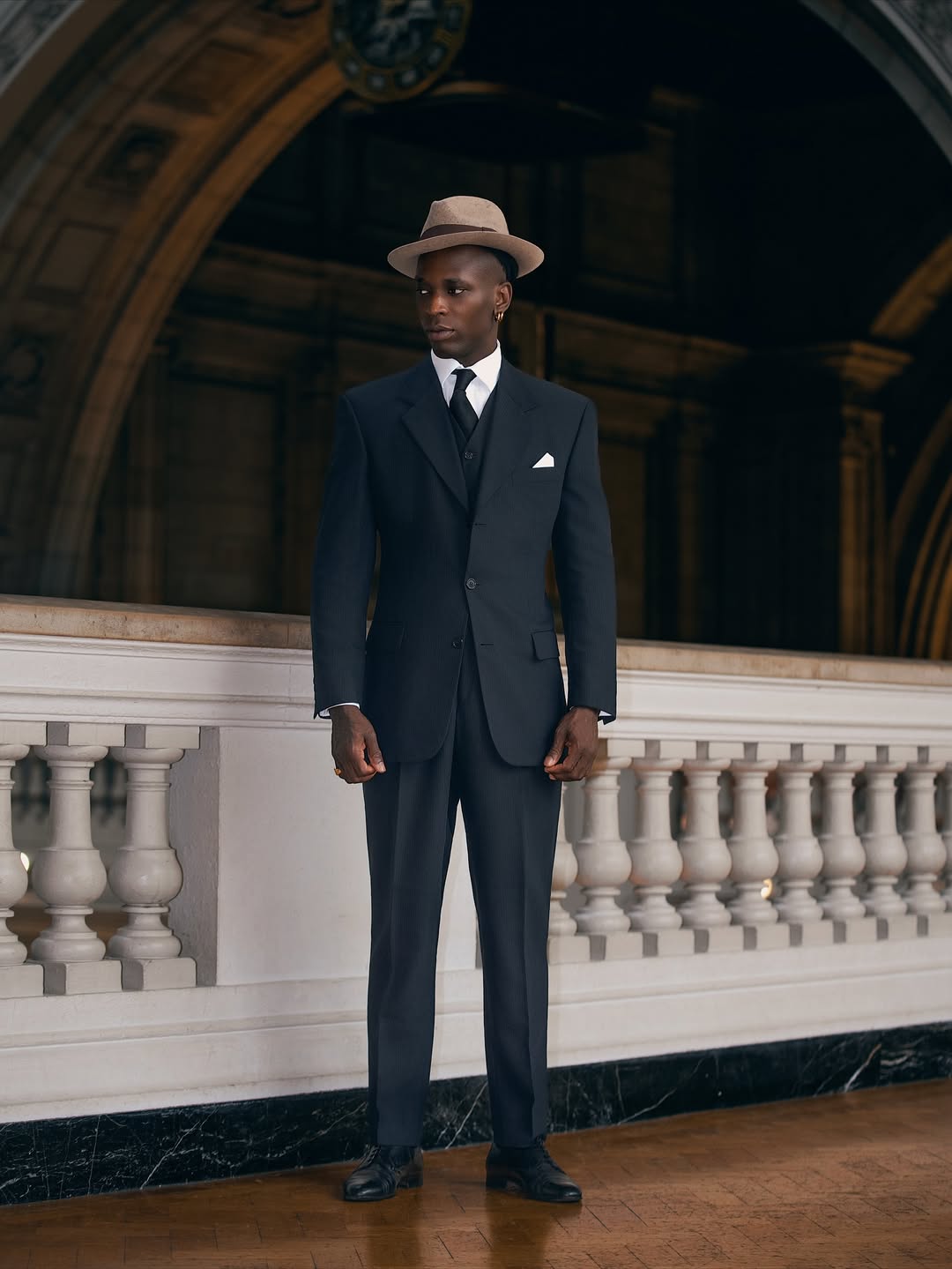
Part of the challenge in rehabilitating the three-button suit comes from the cultural baggage it accumulated during the late 1990s and early 2000s. During that era, the style became synonymous with a particular kind of awkward formality: stiff, boxy, and almost entirely devoid of personality. The NBA Draft, unintentionally, became a visual archive of what could go wrong, oversized three-button suits in aggressive colors worn by young athletes who were still discovering their personal style.
The look left a lasting impression, and not a flattering one. Even as tailoring experienced a renaissance in the 2010s, the three-button silhouette remained largely sidelined. Slim two-button cuts dominated the decade, and although lapel widths fluctuated with trends, the basic formula stayed consistent. Meanwhile, the three-button jacket lingered quietly in the background.
Shop editor’s picks
The Fashion Vanguard That Kept the Flame Alive
Interestingly, while mainstream tailoring kept its distance, several avant-garde designers continued exploring the three-button format. Figures such as Yohji Yamamoto and Thom Browne repeatedly returned to the silhouette, treating its boxy geometry not as a flaw but as a design opportunity.
For them, the three-button jacket offered freedom. It allowed experimentation with proportion, silhouette, and the relationship between jacket and trousers in ways that the V-shape-optimized two-button simply could not.
Independent menswear labels followed a similar path. Brands such as Evan Kinori, Margaret Howell, and James Coward built loyal audiences around a restrained but quietly rebellious approach to tailoring. Rather than emphasizing padded shoulders and aggressive waist suppression, these labels favored softer silhouettes and thoughtful proportions. In that context, the three-button jacket never felt like a problem; it simply felt natural.
When Mainstream Brands Start Paying Attention
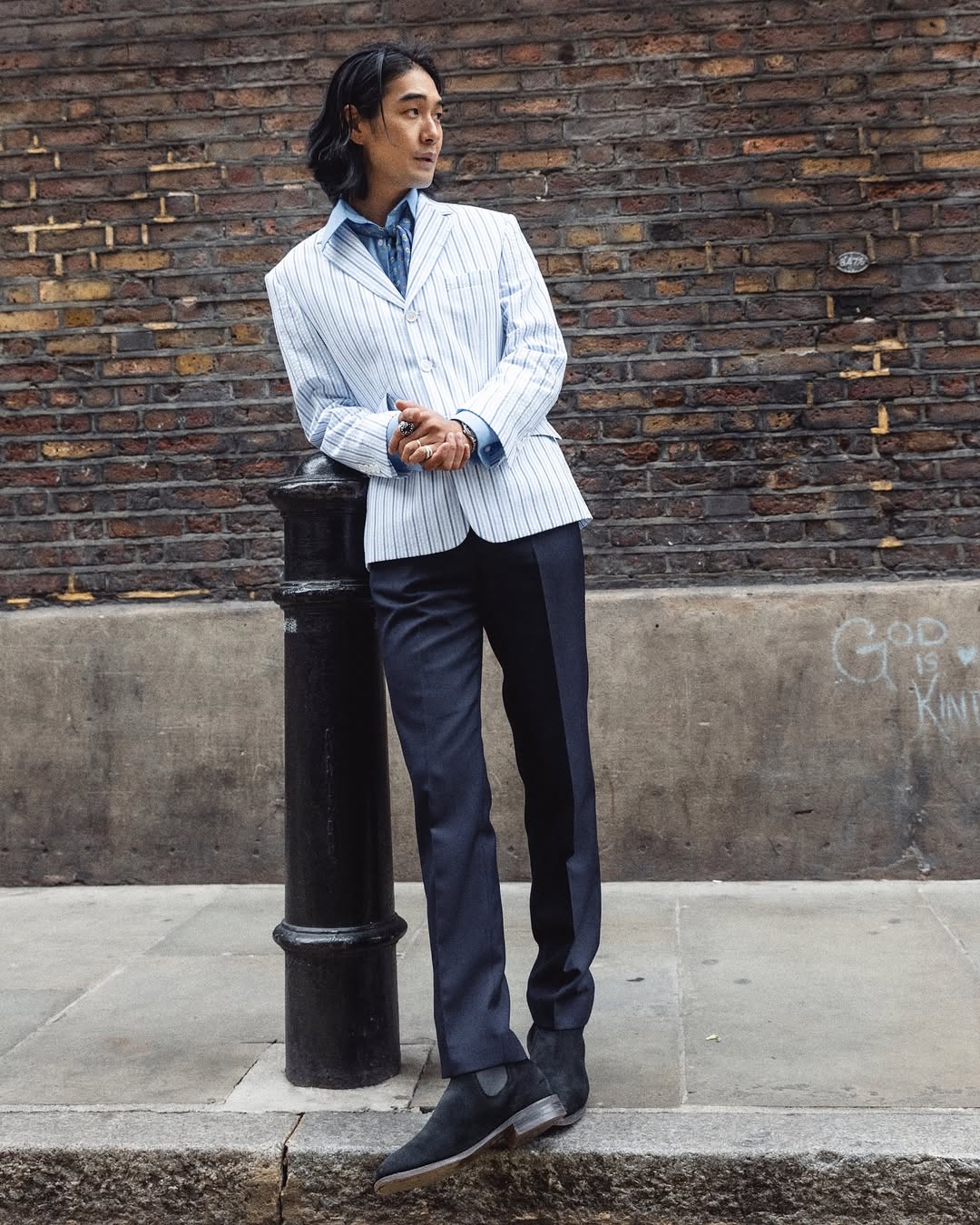
The clearest signal that something cultural is shifting is not when avant-garde designers experiment, it’s when mainstream brands begin moving in the same direction. That moment appears to be arriving. Labels such as Alex Mill and Buck Mason have quietly introduced three-button sport coats into their collections. Notably, the inspiration behind these pieces does not come from traditional tailoring. Instead, the reference points are vintage workwear, antique chore coats, and utilitarian outerwear. That distinction matters.
A chore coat is not meant to project authority or power; it is meant to be functional, durable, and comfortable. Viewed through that lens, the three-button front suddenly makes sense. Rather than competing with the V-shape ideal, it simply operates outside of it. And because these designs are appearing at more accessible price points (ot just luxury boutiques), it suggests that the appetite for alternative tailoring silhouettes extends beyond fashion’s early adopters.
What This Means for How You Dress
The most liberating aspect of the three-button suit’s return may be what it implies for the rest of an outfit. Classical tailoring traditionally arrives with an entire system of rules: the precise break of trousers, the correct tie dimple, the positioning of shirt collars. Each detail ultimately supports the visual V-shape. However, once a jacket no longer prioritizes that silhouette, those rules lose some of their authority.
The V-shaped torso is not a law of physics; it is simply an aesthetic preference that became conventional. Recognizing that opens new possibilities. A three-button sport coat pairs naturally with roomier trousers, echoing the relaxed elegance of 1990s Armani tailoring rather than the rigid formality of the traditional business suit. Proportions become more flexible. The overall look can feel relaxed yet intentional at the same time.
A Resurgence With Boundaries

That said, the three-button suit is not taking over the tailoring world overnight. Runway signals are meaningful—Prada sent several three-button looks down its Fall/Winter 2026 runway, while The Row has quietly championed the silhouette for multiple seasons. Buying directors at major retailers have begun to take notice.
Still, the traditional hard three-button suit remains a challenging proposition for many men. The silhouette requires a degree of confidence and a willingness to step outside the classical tailoring framework. What is truly changing is the cultural permission surrounding it.
Men’s suits no longer have to operate within a single aesthetic system. The two-button suit remains the most versatile and universally flattering option, and it is unlikely to disappear anytime soon. However, the three-button suit has carved out a meaningful space for those who want something different, something that feels less like a uniform and more like a choice.
And that, ultimately, is the real story. It isn’t about buttons. It’s about what men are looking for when they get dressed today: a little more personality, a little less formula, and far more freedom to define their own style.
Shop editor’s favorites
Featured image: @adamoflondon/Instagram
—Read Also
Source link
#Return #ThreeButton #Suit #Menswears #Underdog


Post Comment