![HBO’s DTF St. Louis Was Originally Based On A True Story — Here’s Why The Showrunner Scrapped That Plan [Exclusive] – SlashFilm](https://i0.wp.com/www.slashfilm.com/img/gallery/hbos-dtf-st-louis-was-originally-based-on-a-true-story-heres-why-the-showrunner-scrapped-that-plan-exclusive/intro-1772230363.jpg?ssl=1 "HBO’s DTF St. Louis Was Originally Based On A True Story — Here’s Why The Showrunner Scrapped That Plan [Exclusive] – SlashFilm")
Every now and then, a show comes around that appears to be one thing, turns out to be something else altogether, and completely shocks you in the best way possible. FX’s “Atlanta” might be the gold standard for this in the last decade or so, turning a fairly straightforward premise about a rapper trying to hit the big time into one of the most unforgettable experiences in recent memory. Lee Sung Jin’s Netflix series “Beef” was perhaps the last time anyone came out of nowhere to deliver something similar, where something as mundane as a road rage incident spills out into a much deeper and darker study of the absurdities humans are capable of all too often.
HBO’s “DTF St. Louis” might not seem like it’s cut from a similar cloth, but it may very well be the heir apparent to this extremely specific type of prestige drama. The upcoming series is bound to raise a few eyebrows with its title alone, but that’s exactly how creator, director, and executive producer Steven Conrad (known for writing “The Pursuit of Happyness,” “The Secret Life of Walter Mitty,” and the Prime Video “Patriot” series) gets away with such a bold and subversive tale. “DTF St. Louis” is ostensibly about the trio of local weatherman Clark Forrest (Jason Bateman), his buddy Floyd (David Harbour), and Floyd’s wife Carol (Linda Cardellini) stuck in a love triangle that leads to murder. Both friends are middle-aged, trapped in suburban ennui, and don’t have a particularly great family life. Before we know it, one of them ends up dead … and that’s only the start of the wild journey that follows.
I recently had the chance to interview Conrad over Zoom, where he talked more about how this true story evolved into something much different.
Truth might be stranger than fiction, but creator Steven Conrad took DTF St. Louis down even more interesting paths
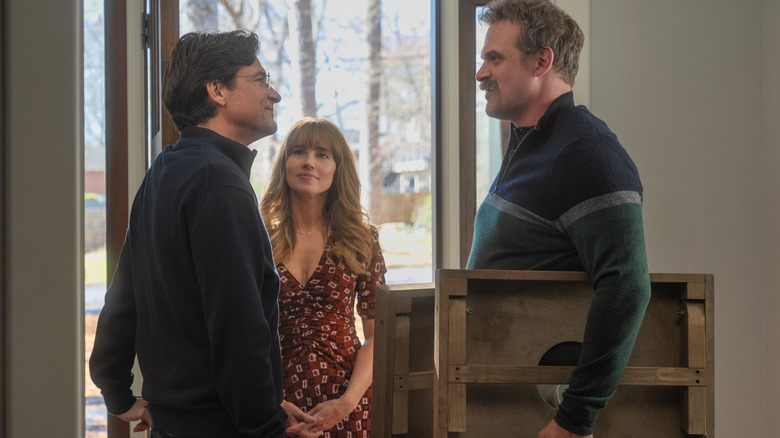
It should come as no surprise that “DTF St. Louis” originated with a real-life murder that defies belief. In 2022, the trades reported that Steven Conrad and David Harbour were collaborating on a production (which, at the time, included Pedro Pascal as one of the leads) based on writer James Lasdun’s 2017 article for The New Yorker titled, “My Dentist’s Murder Trial: Adultery, False Identities, and a Lethal Sedation.” The final version of the show reflects the broadest strokes of this setup: two close friends, a clandestine affair with one’s wife, and a murder that’s almost too neat and tidy to be true. But once “DTF St. Louis” actually got up and running, it was subsequently described as an original project that had undergone somewhat of an adjustment in focus behind the scenes.
When I asked Conrad about this in an interview for /Film, he laid out his exact thought process:
“I wanted to find suspense in a normal setting, and looking to find some story about some middle-aged desperation, David [Harbour] and I had started collaborating and trying to figure out a way to work together. David brought me that specific [New Yorker] article and a couple others, and we just started getting our hands dirty with the story and trying to figure out how do you build a world that can hold an audience steady for seven hours with a dilemma and then another dilemma and then another dilemma?”
What sort of dilemmas does “DTF St. Louis” come up with? Conrad goes on to describe his need to jolt viewers with perfectly-timed “revelations,” “subversion of expectations,” “side roads, double crosses” — in other words, elements not found in the true story.
According to Steven Conrad, DTF St. Louis is about desperate characters in desperate situations
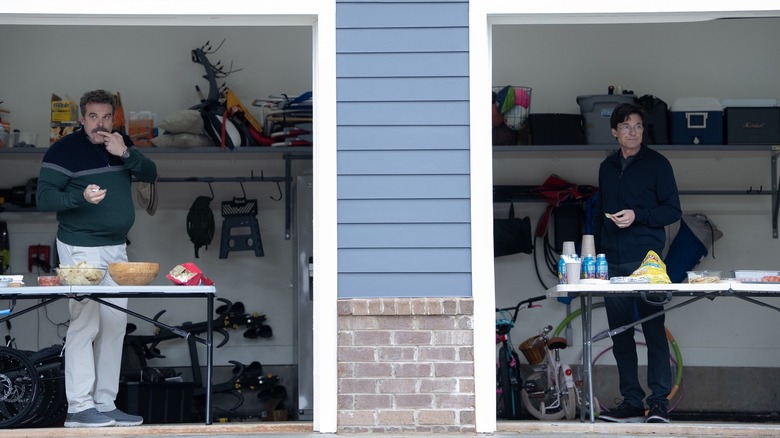
So how does one go about taking the bones of an incredible true story and turning it into an original, narratively compelling idea? According to “DTF St. Louis” mastermind Steven Conrad, you simply put on that writer hat and resort to making up “an awful lot.” Elsewhere in our interview, he revealed that the nature of this story — oftentimes involving “taboo” subjects like sexual liaisons, niche bedroom kinks, and even what counts as pornography and sexualized imagery — meant having to tread lightly. This required a sensitive eye on how certain character actions that take place throughout the season would inevitably be ascribed to their real-life counterparts. As he explained:
“None of us felt comfortable about making up qualities and then attributing them to real people. So we thought we ought to call it, start over, maintain that instance that got us together anyway, which is suspense in a suburban setting, and see what we could do if we just leaned into make-believe.”
As “DTF St. Louis” progresses, those predicaments escalate in ways that viewers won’t be able to anticipate. Desperate people do desperate things, and Conrad leaned into this approach as much as he could. “I wanted to find a setting of real desperation among people’s lives that might seem like they’re peaceful,” he stated about the show’s suburban St. Louis locale. Before our complicated characters know it, they’ve found themselves in impossible situations far from where they started.
Allow to Conrad to succinctly sum it up: “This is Jason Bateman and David Harbour[‘s characters] talking, ‘Let’s just go on this cheat-on-your-wife app, and what’s the worst that could happen?'”
“DTF St. Louis” premieres on HBO and streams on HBO Max on March 1, 2026.
Source link
#HBOs #DTF #Louis #Originally #Based #True #Story #Heres #Showrunner #Scrapped #Plan #Exclusive #SlashFilm


Post Comment