
In a world saturated with fleeting fashion trends and disposable aesthetic shifts, the true mark of a modern style-conscious individual is discernment. Across the menswear landscape of 2026, a clear movement has emerged toward what we at Style Rave call “Intentional Style.” Rather than chasing viral moments or short-lived aesthetics, today’s discerning dresser is curating a wardrobe of pieces designed to last, not just through seasons, but through decades.
Few garments embody this philosophy better than the leather jacket. From the rebellious energy of 1950s biker culture to the polished authority of the modern aviator silhouette, a well-crafted leather jacket is more than an outer layer; it is an identity. Yet for many shoppers, the journey toward finding that perfect heirloom leather jacket can feel overwhelming. With fast-fashion imitations flooding the market, separating craftsmanship from compromise requires a sharper eye. Here’s how to cut through the noise and invest with precision.
Rule 1: Prioritize Material Integrity Over ‘Corrected’ Grains
The single biggest distinction between a fast-fashion jacket and a true investment piece lies in the hide itself. Most leather jackets priced under $200 are made from “genuine leather,” a term that sounds premium but is often misleading. In many cases, it refers to corrected-grain or bonded leather, split hides that are sanded down, coated in synthetic finishes, and embossed with an artificial grain pattern.
While these jackets may look convincing at first, they typically crack or peel within a few seasons because the material lacks structural integrity. Instead, seek out full-grain or top-grain hides. This uppermost layer of the hide contains the densest fibers, making it both stronger and more breathable. More importantly, it develops a unique patina over time. As the leather ages, it gradually absorbs the marks of wear and movement, transforming the jacket into a personal artifact rather than a disposable garment.
Rule 2: Master the Science of Silhouette and Mobility
Fit is another critical indicator of craftsmanship. One of the most common frustrations with poorly constructed jackets is restricted movement. A jacket may fit perfectly across the chest, but if it lifts entirely when you raise your arms, the design is structurally flawed.
High-quality leather jackets solve this problem through technical construction. Consider naval-style G-1 jackets or 1940s-inspired bomber silhouettes, which were originally engineered for military pilots. Many feature a bi-swing action back—a system of articulated pleats positioned behind the shoulders.
This subtle piece of engineering allows the wearer to move freely while maintaining a tailored silhouette across the torso. The result is a jacket that feels relaxed yet refined, perfectly aligned with the effortless luxury that defines modern menswear.
Rule 3: Use the ‘Hardware and Seam’ Test
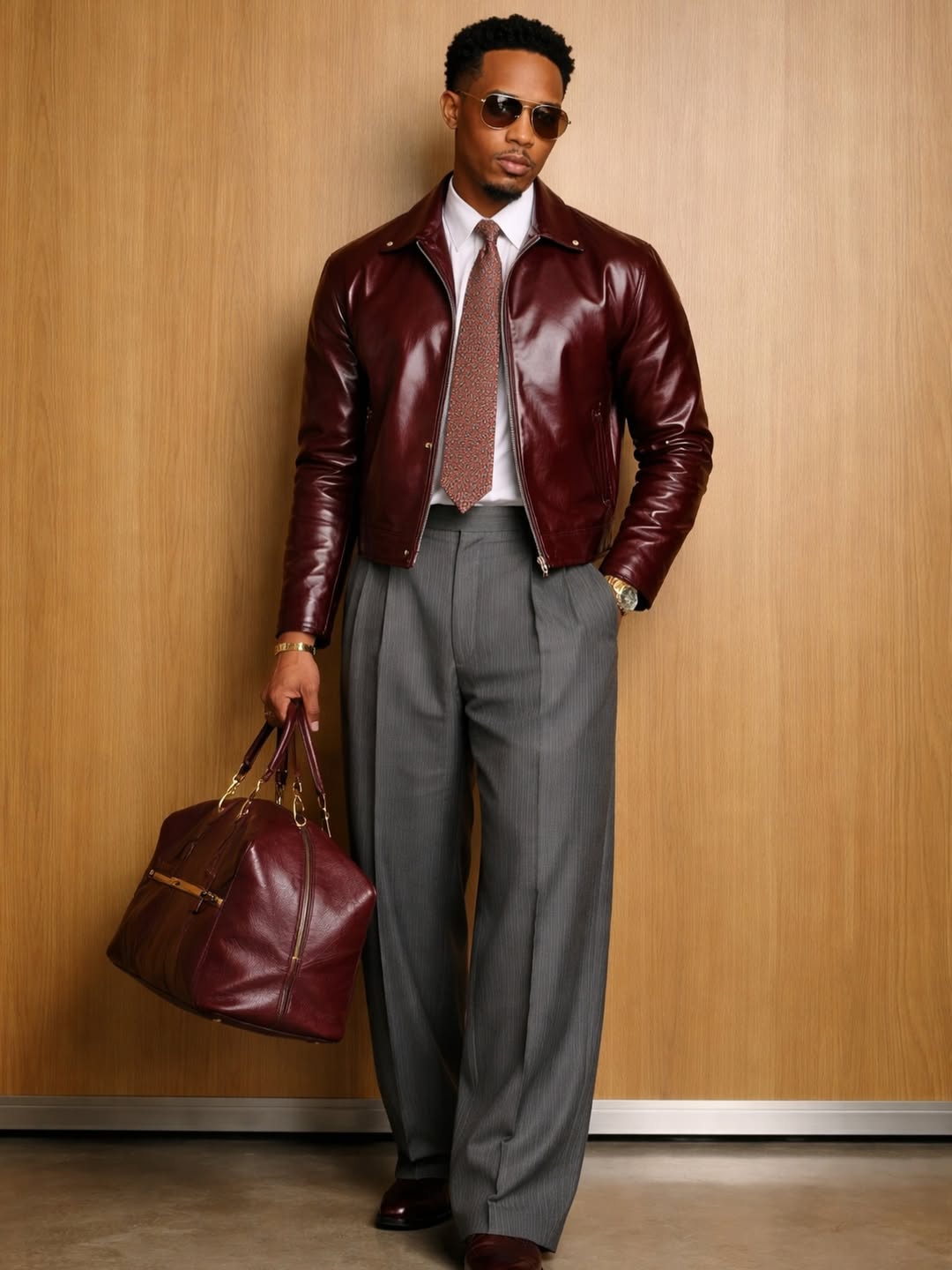
If you want to evaluate the quality of a leather jacket quickly, focus on its weakest links: the hardware and stitching. Manufacturers operating at lower price points often reduce costs by compromising these elements, decisions that dramatically shorten the life of the garment.
- Zippers: Premium jackets typically feature high-gauge metal zippers from manufacturers like YKK, engineered to withstand thousands of open-and-close cycles. Plastic or low-grade aluminum zippers, by contrast, tend to warp or fail after limited use.
- Seams: Equally important is the stitching. Look for double-needle or welted seams, where two parallel rows of reinforced thread secure the garment’s stress points. This construction prevents seam slippage and helps the jacket retain its structure over time.
Rule 4: Understand Transitional Thermal Science
The most valuable jacket in your wardrobe is the one you can wear across multiple seasons, not just during a narrow weather window. This is where the concept of transitional utility becomes essential. In moderate climates, such as the UK or coastal regions of the United States, a heavy shearling-lined jacket may feel excessive for most of the year.
Instead, look for adaptable construction features. Many precision-crafted aviator bombers now include a dual-configuration collar, designed with a detachable genuine shearling trim. During colder months, the shearling collar offers protection against biting winds. When temperatures rise, it can be removed to reveal a sleek leather point collar suitable for spring or early autumn. In effect, the design provides two distinct jackets within a single investment.
Rule 5: The ‘Cost-Per-Wear’ Calculation

For many buyers, the greatest hurdle is psychological: justifying a $500–$800 price tag when a similar-looking jacket is available for $150. However, intentional shoppers evaluate clothing through a cost-per-wear analysis rather than an upfront price comparison.
- The disposable option ($150): Typically lasts two seasons before the finish begins to peel, the zipper sticks, or the lining tears. Cost per season: roughly $75.
- The heirloom option ($600): Constructed from full-grain leather, durable metal hardware, and a high-glide viscose lining. Expected lifespan: 15 years or more, roughly 30 seasons. Cost per season: about $20.
Seen through this lens, the engineering-grade jacket isn’t merely a purchase; it’s a long-term asset that rewards the wearer with longevity, character, and enduring style.
The Bottom Line
When adding a leather jacket to a carefully curated wardrobe, resist the temptation to chase the lowest price. Instead, prioritize material integrity, technical construction, and thoughtful design. Invest once, invest wisely, and enjoy a garment that evolves with you over time. That, ultimately, is the essence of intentional style, and the kind of living we call truly Rave-worthy.
Featured Image: @monsieurcoupet/Instagram
.
—Read also

Source link
#Cardinal #Rules #Choosing #Leather #Jacket #Ages #Beautifully


Post Comment