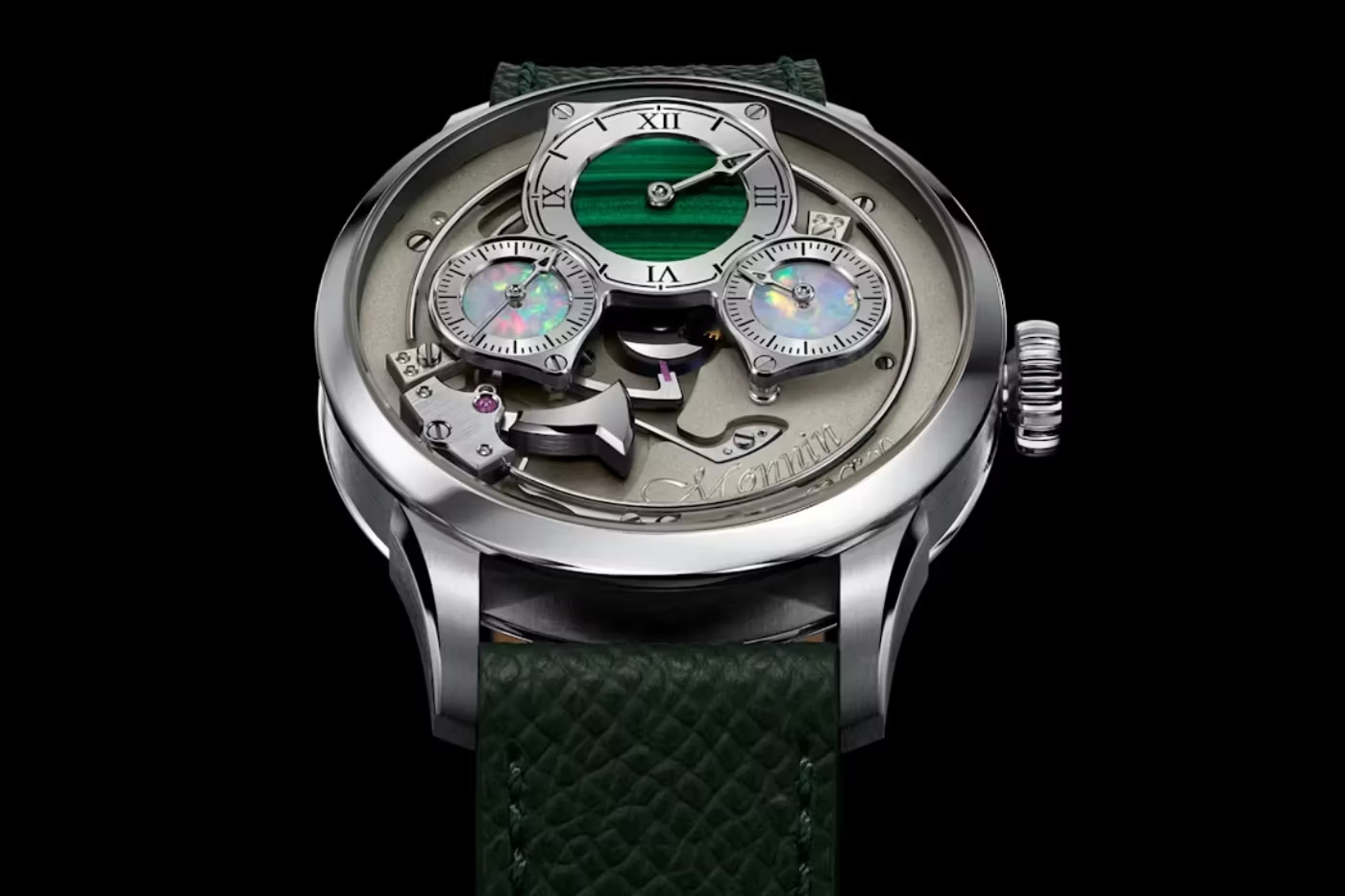
Independent watchmaking has a habit of producing the most interesting stories in the industry. Not the biggest budgets. Not the most famous names. Just two people, a bench, and an idea that refuses to compromise. Alexandre Hazemann and Victor Monnin met at the Lycée Edgar Faure in Morteau, France. They bonded over watches almost immediately. Their School Watch began as a seventh-year graduation project at that same institution. On Monday evening at the Fondation Louis Vuitton in Paris, it became the watch that won the 2026 Louis Vuitton Watch Prize for Independent Creatives.
The prize carries a €150,000 grant and a dedicated one-year mentorship at La Fabrique du Temps Louis Vuitton. It is practical support rather than symbolic recognition. For a duo that has only been operating independently since 2024, it is also the kind of platform that changes trajectories. They beat four exceptional finalists drawn from Japan, China, Switzerland, and beyond. The Louis Vuitton Watch Prize 2026 belongs to them. Here is why that verdict makes sense.
The School Watch and What Makes It Worth Winning
Louis Vuitton Watch Prize 2025-2026. Five standout timepieces have risen to the forefront, marking an exciting milestone for this edition and the Independent Creators behind them. Discover more at https://t.co/UuZ4o9t80B#LVWatchPrize #LaFabriqueDuTemps #LouisVuitton pic.twitter.com/22n7wZWURg
— Louis Vuitton (@LouisVuitton) December 16, 2025
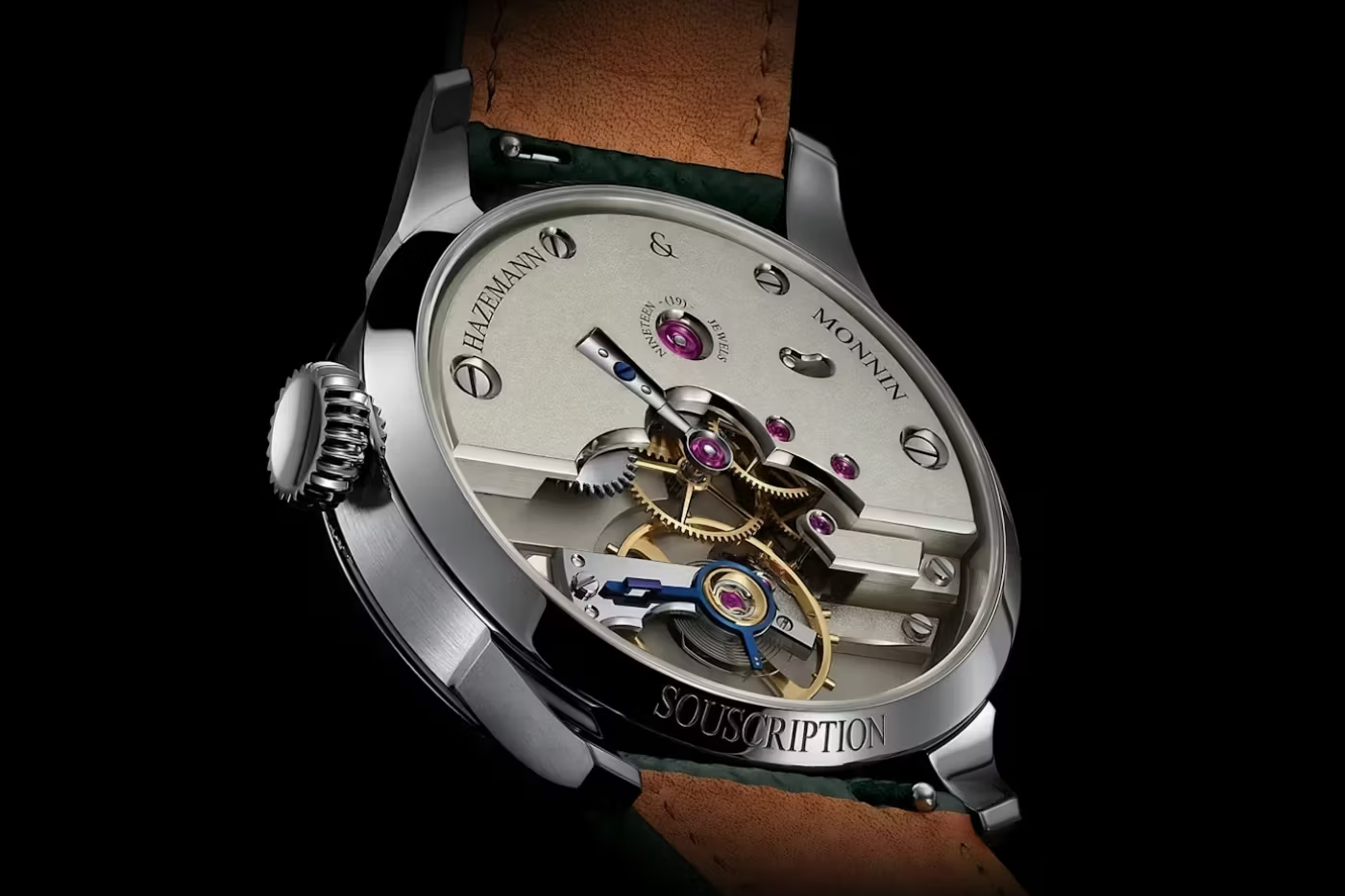
Few watchmaking students would attempt a chiming watch as a school project. Hazemann and Monnin did exactly that. They developed an entirely new movement for it, conceived, manufactured, assembled, and finished in-house without relying on pre-existing architecture. That is not a small thing. Movements built from scratch, without borrowed parts or established frameworks, are rare even among seasoned independents.
The watch features a jumping hour display and an exposed sonnerie au passage mechanism on the dial side. The two complications work in precise synchronisation — the passing strike chimes each hour at the exact moment the jumping hour advances. The result is what the makers describe as a mechanical choreography. Sound and motion, timed together. Rather than dramatising complexity, it celebrates rhythm and precision. A conversation with history rendered in contemporary language.
The watch comes in two versions. One is open-worked, the other features mineral stone dials. Both sit in a 39.5mm stainless steel case. Each piece carries subtle personal distinctions. Hazemann’s version features heat-blued hands and screws. Monnin’s is marked by a striking green malachite centre. Two makers. One watch. Two versions of the same idea.
Where Hazemann and Monnin Come From
The winner of the 2023 @fp_journe Young Talent Competition award (https://t.co/v6JUM0D3G3) pic.twitter.com/xPB4OwCjhV
— timezone.com (@timezone_com) April 4, 2023
The story behind the watch matters as much as the watch itself. Both men come from watchmaking families. Hazemann’s father worked closely with Michel Parmigiani. Monnin’s grandfather and great-grandfather founded Georges Monnin, a company that played a significant role in rescuing Heuer during a difficult period in its history. The craft was not something they came to. It was something they were born into.
Their mentors included Simon Brette, Sylvain Pinaud, and Emmanuel Bouchet, best known for his work at Harry Winston. The two also won the F.P. Journe Young Talent Competition in 2023 with an earlier version of the School Watch. This Louis Vuitton Watch Prize win is not their first piece of recognition. But it is their most significant. They represent the continuity of excellence that gives the independent watchmaking community real cause for optimism.
What the Prize Actually Offers
The Louis Vuitton Watch Prize is worth understanding beyond the headline number. Alongside the €150,000 grant, the mentorship at La Fabrique du Temps covers watchmaking, marketing, industrial strategy, and brand development. That breadth matters. Independent watchmakers rarely struggle for craft. The harder challenges are commercial. Building a sustainable business around technically ambitious work requires a different set of skills entirely.
The prize was created by Jean Arnault, who leads Louis Vuitton’s watchmaking initiatives and has been a committed supporter of independent watchmaking. It sits within a broader LVMH strategy that includes collaborations with independent makers, the acquisition of clock manufacturer L’Epée 1839, and the revival of both Daniel Roth and Gerald Genta. The prize is not a standalone gesture. It is part of a considered long-term investment in what independent watchmaking can become.
What Comes Next for the Duo
Hazemann and Monnin are expected to use the prize resources to expand their atelier in Saint-Aubin-Sauges, Switzerland, and continue developing technically ambitious, narrative-driven timepieces. The School Watch will not be the last word from them. It is more accurately the first sentence of something longer.
In an age where screens and algorithms increasingly mediate time, the Louis Vuitton Watch Prize insists on a different tempo. It celebrates makers who still believe that progress can be measured in gears, springs, and ideas patiently refined by hand. Hazemann and Monnin built their first serious watch as students, paying tribute to the school that shaped them. They are now among the most closely watched independent watchmakers of their generation. The prize committee saw what collectors had already noticed. It just took a ceremony at the Fondation Louis Vuitton to make it official.
Featured image: Hazemann & Monnin
Pharrell Williams’ Louis Vuitton SS26 Collection Is The Future Of Menswear

Source link
#Hazemann #Monnin #Won #Louis #Vuitton #Watch #Prize #School #Project


Post Comment