
The reimagined “Battlestar Galactica” is an excellent TV show, but a perfect one? Unfortunately not. The writers did not plan out answers to the questions they first asked (such as which characters were secret Cylons). For as often as they thought on their feet and produced great TV, they wrote themselves into some corners too, especially as the show neared its end.
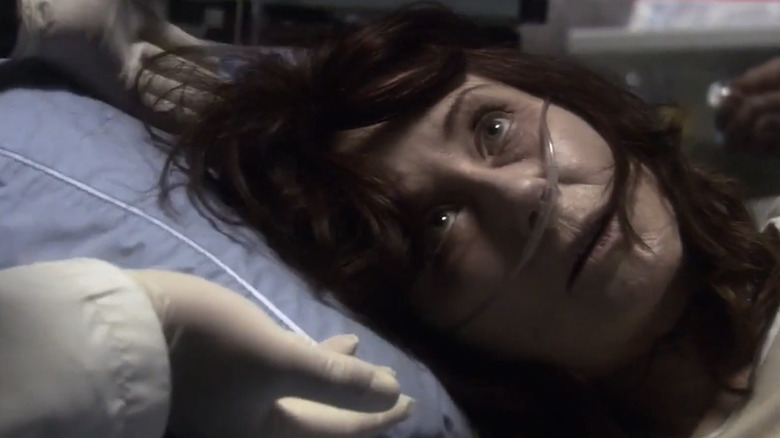
The first signs of trouble came, for me, in the season 2 episode “Epiphanies” (credited to writer Joel Anderson Thompson). In this episode, two ongoing subplots converge. One, President Laura Roslin (Mary McDonnell) has late-stage cancer and is slowly dying. Two, Galactica’s Cylon prisoner Sharon Valerii (Grace Park) is pregnant with the first ever half-human, half-Cylon baby.
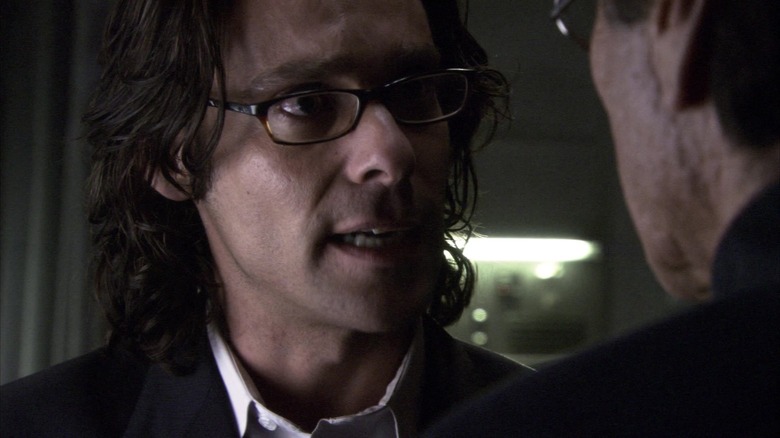
In “Epiphanies,” when it looks like Roslin’s cancer is finally going to kill her, her Vice President Dr. Gaius Baltar (James Callis) discovers a solution. Sharon’s fetal blood has disease-resistant properties, it turns out, so Roslin is injected with a sample of it. In hours, she travels from death’s door to decent health.
Ronald D. Moore, the co-creator of “Battlestar Galactica,” started TV writing on “Star Trek: The Next Generation,” but gradually grew frustrated with complacent writing on “Star Trek.” One of his biggest sticking points? “Technobabble,” or throwing out technological/scientific jargon to explain away the plot. In 2010 Moore said (via Wired): “The technobabble in ‘Trek’ just got completely out of control… It was maddening. The actors hated it. I really tried to sit on the technobabble in ‘Galactica.'”
But while “Battlestar Galactica” rose out of Moore’s frustrations with “Star Trek,” old habits can die hard. Baltar’s Cylon blood cure for Roslin’s cancer is about as technobabble as it gets. Case-in-point, “Star Trek” would later (infamously) use a similar “magic blood” plot in the 2013 film “Star Trek Into Darkness.”
In Epiphanies, Baltar saves President Roslin with technobabble
I’m sympathetic to one part of the bind the “Battlestar Galactica” showrunners were in: Cancer or no, they couldn’t kill off Roslin so soon. She was the story’s heart, and Mary McDonnell was easily one of their best actors. A “Battlestar Galactica” lacking scenes between Roslin and both Admiral Adama (Edward James Olmos) and Baltar is a much lesser show.
Baltar’s exposition dialogue is also at least more elegantly written than the worst of “Trek” technobabble. He explains how Cylon blood is different to Adama (and the audience) in layman’s terms, and the scene adds some tactility by having Baltar illustrate his explanations with a whiteboard and marker. Another way “Battlestar Galactica” steered away from “Star Trek” was by having its characters use pens and paper, and this stays true to that at least.
In a podcast commentary on “Epiphanies,” Moore explained that the original idea is that it was specifically Sharon’s fetal stem cells that would cure Roslin’s cancer. This would “capitalize on current day controversy,” likely referring to President George W. Bush’s 2001 restrictions on embryonic stem cells for medical research. (Getting these cells requires the destruction of a human embryo, so it falls into similar controversies as abortion).
“Battlestar Galactica” never shied away from commenting on the politics of its day. Laura Roslin herself is proof of that. Similar to Jed Bartlet (Martin Sheen) on “The West Wing,” Roslin represents a desire during the Bush years for a competent and liberal president. Roslin is compassionate but decisive, and knows when to put survival ahead of principle. Similar to “24” wish casting a Black U.S. President with the character David Palmer (Dennis Haysbert) years before Barack Obama’s election, Roslin also represents the (still-burning) desire for a woman president, too.
Curing Roslin’s cancer set a bad precedent for Battlestar Galactica
If “Epiphanies” had used the original stem cell idea, this would’ve given it more scientific grounding, because stem cell transplants are a real cancer treatment. However, Ronald D. Moore and co. gradually decided going into the technical details would undermine the episode. One of the key ways “Battlestar Galactica” tried to stay relatively scientifically accurate was by skimping on details of how the sci-fi tech works, a trait that came from Moore’s bad memories of “Star Trek” technobabble.
“I don’t think a large part of the audience cares about all the technical details of why the Cylon baby’s blood is going to help cure the cancer. I think what matters is that it does and where it comes from and how you execute it,” said Moore on the “Epiphanies” recap podcast. Even a more detailed explanation may not have been enough here.
Saying it was stem cells would be less of a generic “magic blood” MacGuffin, but narratively, it would still read as a deus ex machina. (Latin for “God from the machine,” and a term for easy plot solutions that come out of nowhere.) This deus ex machina is at least softened because it wasn’t permanent: Roslin’s cancer only went into remission.
The President spends the last season slowly dying with no fetal Cylon blood to save her this time. The show needed a stopgap to get Roslin to the end, but her fate was sealed at her diagnosis scene in the pilot mini-series. Even so, the last minute twist of the Cylons’ regenerative blood foreshadowed more convoluted twists about them to come. In its need to keep Roslin alive, “Battlestar Galactica” set an example for writers to prepare and not back their stories into corners.
Source link
#Battlestar #Galactica #Episode #Broke #Major #Show #Rule #Wasnt #Worth #SlashFilm


Post Comment