×
CSK vs KKR, IPL 2026: Chennai Super Kings, Kolkata Knight Riders clash looking to jump up from last place  The 2026 Indian Premier League (IPL) has reached the 21-match mark, with each team having played four games. The tournament’s traditional heavyweights find themselves in uncharted territory.The points table tells a bizarre story of shifting power: the teams currently in the top half share only three titles between them, while the bottom half contains a staggering 14 trophies’ worth of experience.On Tuesday, the M.A. Chidambaram Stadium hosts a make-or-break fixture between two of these struggling giants. The home side, Chennai Super Kings (CSK), sits at a precarious ninth place, while the Kolkata Knight Riders (KKR) languish at the bottom with a solitary point from four outings.PowerPlay woesCSK finally halted a gruelling six-match home losing streak with a 23-run win over Delhi Capitals last time out. The victory was fuelled by Sanju Samson’s maiden century in yellow—a long-awaited return on investment for the high-profile trade from Rajasthan Royals—and a sharp bowling performance led by Jamie Overton.However, captain Ruturaj Gaikwad’s form is a glaring liability. With just 56 runs at an average of 14.00 and a strike rate of 103, his ultra-cautious PowerPlay approach has stifled the team’s momentum.ALSO READ | Gujarat Titans vs Chennai Super Kings fixtures swapped owing to municipal electionsPromoting the fearless Ayush Mhatre to open while shifting Gaikwad to the number three spot could provide the spark currently lacking in the first six overs.Furthermore, while Dewald Brevis only contributed a couple of catches in his return, his presence in the middle order offers a higher ceiling for a unit desperate for high-impact players in the absence of MS Dhoni.On the bowling front, the inclusion of West Indian Akeal Hosein has paid dividends. He replaced a struggling Matt Henry and has provided a quick fix for CSK’s PowerPlay bowling. With support from Overton and Anshul Kamboj, the bowling unit seems to have finally taken shape.Searching for solutionsKKR’s problems are equally systemic. While Finn Allen provides a fear factor with a strike rate north of 200, his frequent early exits have forced Ajinkya Rahane and Angkrish Raghuvanshi to rebuild rather than accelerate.The middle-order finishers have also gone cold: Rinku Singh has managed just 72 runs this season, while Rovman Powell has contributed only 39. The KKR spin-bowling attack has picked only five wickets in 24.1 overs bowled, at an economy rate of 9.26.
                                                            | Photo Credit: 
                                RV MOORTHY
                            

                            The KKR spin-bowling attack has picked only five wickets in 24.1 overs bowled, at an economy rate of 9.26.
                                                            | Photo Credit: 
                                RV MOORTHY
                                                    The imbalance is deepened by Cameron Green’s lack of rhythm with the bat. Additionally, the game against Lucknow Super Giants was the first time he bowled this season, and he conceded 28 runs in two overs. KKR ended up on the losing side as Mukul Choudhary pulled off a heist in a last-ball thriller.While Vaibhav Arora and Blessing Muzarabani have shown sparks, the bowling unit has appeared sub-par without consistent spin support. The spinners have returned with just five wickets in 24.1 overs and have conceded at 9.26 runs per over thus far this season.Adding to the visitor’s woes, Varun Chakaravarthy remains a doubt following a finger injury during the Sunrisers Hyderabad game, though he has returned to training.Come Tuesday, the fixture represents more than just two points for the teams. It provides them with a crucial opportunity to stabilise their campaigns and stay relevant in the playoff conversation.Published on Apr 13, 2026  #CSK #KKR #IPL #Chennai #Super #Kings #Kolkata #Knight #Riders #clash #jump #place

CSK vs KKR, IPL 2026: Chennai Super Kings, Kolkata Knight Riders clash looking to jump up from last place

The 2026 Indian Premier League (IPL) has reached the 21-match mark, with each team having played four games. The tournament’s traditional heavyweights find themselves in uncharted territory.

The points table tells a bizarre story of shifting power: the teams currently in the top half share only three titles between them, while the bottom half contains a staggering 14 trophies’ worth of experience.

On Tuesday, the M.A. Chidambaram Stadium hosts a make-or-break fixture between two of these struggling giants. The home side, Chennai Super Kings (CSK), sits at a precarious ninth place, while the Kolkata Knight Riders (KKR) languish at the bottom with a solitary point from four outings.

PowerPlay woes

CSK finally halted a gruelling six-match home losing streak with a 23-run win over Delhi Capitals last time out. The victory was fuelled by Sanju Samson’s maiden century in yellow—a long-awaited return on investment for the high-profile trade from Rajasthan Royals—and a sharp bowling performance led by Jamie Overton.

However, captain Ruturaj Gaikwad’s form is a glaring liability. With just 56 runs at an average of 14.00 and a strike rate of 103, his ultra-cautious PowerPlay approach has stifled the team’s momentum.

ALSO READ | Gujarat Titans vs Chennai Super Kings fixtures swapped owing to municipal elections

Promoting the fearless Ayush Mhatre to open while shifting Gaikwad to the number three spot could provide the spark currently lacking in the first six overs.

Furthermore, while Dewald Brevis only contributed a couple of catches in his return, his presence in the middle order offers a higher ceiling for a unit desperate for high-impact players in the absence of MS Dhoni.

On the bowling front, the inclusion of West Indian Akeal Hosein has paid dividends. He replaced a struggling Matt Henry and has provided a quick fix for CSK’s PowerPlay bowling. With support from Overton and Anshul Kamboj, the bowling unit seems to have finally taken shape.

Searching for solutions

KKR’s problems are equally systemic. While Finn Allen provides a fear factor with a strike rate north of 200, his frequent early exits have forced Ajinkya Rahane and Angkrish Raghuvanshi to rebuild rather than accelerate.

The middle-order finishers have also gone cold: Rinku Singh has managed just 72 runs this season, while Rovman Powell has contributed only 39.
CSK vs KKR, IPL 2026: Chennai Super Kings, Kolkata Knight Riders clash looking to jump up from last place  The 2026 Indian Premier League (IPL) has reached the 21-match mark, with each team having played four games. The tournament’s traditional heavyweights find themselves in uncharted territory.The points table tells a bizarre story of shifting power: the teams currently in the top half share only three titles between them, while the bottom half contains a staggering 14 trophies’ worth of experience.On Tuesday, the M.A. Chidambaram Stadium hosts a make-or-break fixture between two of these struggling giants. The home side, Chennai Super Kings (CSK), sits at a precarious ninth place, while the Kolkata Knight Riders (KKR) languish at the bottom with a solitary point from four outings.PowerPlay woesCSK finally halted a gruelling six-match home losing streak with a 23-run win over Delhi Capitals last time out. The victory was fuelled by Sanju Samson’s maiden century in yellow—a long-awaited return on investment for the high-profile trade from Rajasthan Royals—and a sharp bowling performance led by Jamie Overton.However, captain Ruturaj Gaikwad’s form is a glaring liability. With just 56 runs at an average of 14.00 and a strike rate of 103, his ultra-cautious PowerPlay approach has stifled the team’s momentum.ALSO READ | Gujarat Titans vs Chennai Super Kings fixtures swapped owing to municipal electionsPromoting the fearless Ayush Mhatre to open while shifting Gaikwad to the number three spot could provide the spark currently lacking in the first six overs.Furthermore, while Dewald Brevis only contributed a couple of catches in his return, his presence in the middle order offers a higher ceiling for a unit desperate for high-impact players in the absence of MS Dhoni.On the bowling front, the inclusion of West Indian Akeal Hosein has paid dividends. He replaced a struggling Matt Henry and has provided a quick fix for CSK’s PowerPlay bowling. With support from Overton and Anshul Kamboj, the bowling unit seems to have finally taken shape.Searching for solutionsKKR’s problems are equally systemic. While Finn Allen provides a fear factor with a strike rate north of 200, his frequent early exits have forced Ajinkya Rahane and Angkrish Raghuvanshi to rebuild rather than accelerate.The middle-order finishers have also gone cold: Rinku Singh has managed just 72 runs this season, while Rovman Powell has contributed only 39. The KKR spin-bowling attack has picked only five wickets in 24.1 overs bowled, at an economy rate of 9.26.
                                                            | Photo Credit: 
                                RV MOORTHY
                            

                            The KKR spin-bowling attack has picked only five wickets in 24.1 overs bowled, at an economy rate of 9.26.
                                                            | Photo Credit: 
                                RV MOORTHY
                                                    The imbalance is deepened by Cameron Green’s lack of rhythm with the bat. Additionally, the game against Lucknow Super Giants was the first time he bowled this season, and he conceded 28 runs in two overs. KKR ended up on the losing side as Mukul Choudhary pulled off a heist in a last-ball thriller.While Vaibhav Arora and Blessing Muzarabani have shown sparks, the bowling unit has appeared sub-par without consistent spin support. The spinners have returned with just five wickets in 24.1 overs and have conceded at 9.26 runs per over thus far this season.Adding to the visitor’s woes, Varun Chakaravarthy remains a doubt following a finger injury during the Sunrisers Hyderabad game, though he has returned to training.Come Tuesday, the fixture represents more than just two points for the teams. It provides them with a crucial opportunity to stabilise their campaigns and stay relevant in the playoff conversation.Published on Apr 13, 2026  #CSK #KKR #IPL #Chennai #Super #Kings #Kolkata #Knight #Riders #clash #jump #place

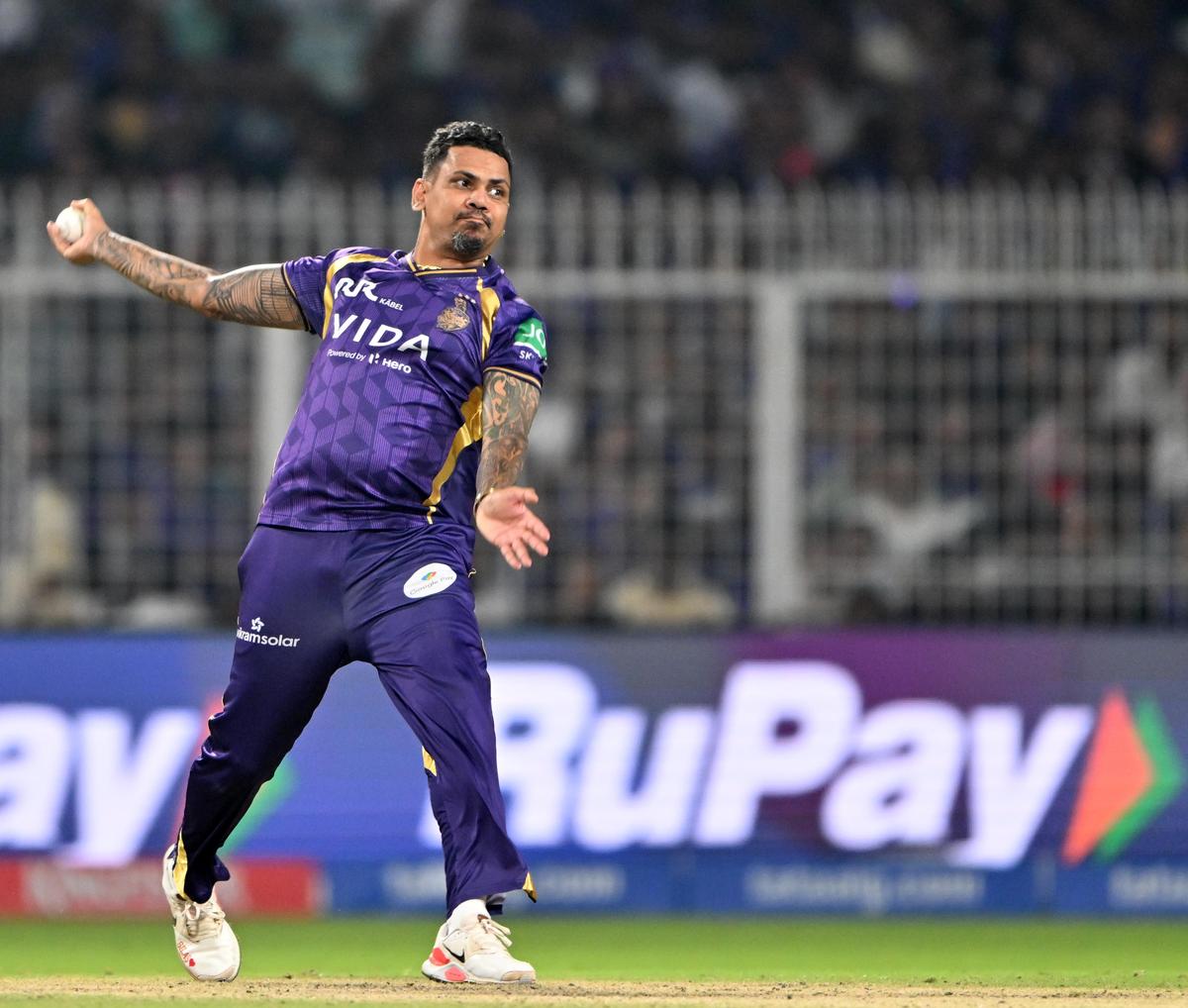
The KKR spin-bowling attack has picked only five wickets in 24.1 overs bowled, at an economy rate of 9.26. | Photo Credit: RV MOORTHY

lightbox-info

The KKR spin-bowling attack has picked only five wickets in 24.1 overs bowled, at an economy rate of 9.26. | Photo Credit: RV MOORTHY

The imbalance is deepened by Cameron Green’s lack of rhythm with the bat. Additionally, the game against Lucknow Super Giants was the first time he bowled this season, and he conceded 28 runs in two overs. KKR ended up on the losing side as Mukul Choudhary pulled off a heist in a last-ball thriller.

While Vaibhav Arora and Blessing Muzarabani have shown sparks, the bowling unit has appeared sub-par without consistent spin support. The spinners have returned with just five wickets in 24.1 overs and have conceded at 9.26 runs per over thus far this season.

Adding to the visitor’s woes, Varun Chakaravarthy remains a doubt following a finger injury during the Sunrisers Hyderabad game, though he has returned to training.

Come Tuesday, the fixture represents more than just two points for the teams. It provides them with a crucial opportunity to stabilise their campaigns and stay relevant in the playoff conversation.

Published on Apr 13, 2026

#CSK #KKR #IPL #Chennai #Super #Kings #Kolkata #Knight #Riders #clash #jump #place

The 2026 Indian Premier League (IPL) has reached the 21-match mark, with each team having played four games. The tournament’s traditional heavyweights find themselves in uncharted territory.

The points table tells a bizarre story of shifting power: the teams currently in the top half share only three titles between them, while the bottom half contains a staggering 14 trophies’ worth of experience.

On Tuesday, the M.A. Chidambaram Stadium hosts a make-or-break fixture between two of these struggling giants. The home side, Chennai Super Kings (CSK), sits at a precarious ninth place, while the Kolkata Knight Riders (KKR) languish at the bottom with a solitary point from four outings.

PowerPlay woes

CSK finally halted a gruelling six-match home losing streak with a 23-run win over Delhi Capitals last time out. The victory was fuelled by Sanju Samson’s maiden century in yellow—a long-awaited return on investment for the high-profile trade from Rajasthan Royals—and a sharp bowling performance led by Jamie Overton.

However, captain Ruturaj Gaikwad’s form is a glaring liability. With just 56 runs at an average of 14.00 and a strike rate of 103, his ultra-cautious PowerPlay approach has stifled the team’s momentum.

ALSO READ | Gujarat Titans vs Chennai Super Kings fixtures swapped owing to municipal elections

Promoting the fearless Ayush Mhatre to open while shifting Gaikwad to the number three spot could provide the spark currently lacking in the first six overs.

Furthermore, while Dewald Brevis only contributed a couple of catches in his return, his presence in the middle order offers a higher ceiling for a unit desperate for high-impact players in the absence of MS Dhoni.

On the bowling front, the inclusion of West Indian Akeal Hosein has paid dividends. He replaced a struggling Matt Henry and has provided a quick fix for CSK’s PowerPlay bowling. With support from Overton and Anshul Kamboj, the bowling unit seems to have finally taken shape.

Searching for solutions

KKR’s problems are equally systemic. While Finn Allen provides a fear factor with a strike rate north of 200, his frequent early exits have forced Ajinkya Rahane and Angkrish Raghuvanshi to rebuild rather than accelerate.

The middle-order finishers have also gone cold: Rinku Singh has managed just 72 runs this season, while Rovman Powell has contributed only 39.

The KKR spin-bowling attack has picked only five wickets in 24.1 overs bowled, at an economy rate of 9.26.
| Photo Credit:
RV MOORTHY

lightbox-info

The KKR spin-bowling attack has picked only five wickets in 24.1 overs bowled, at an economy rate of 9.26.
| Photo Credit:
RV MOORTHY

The imbalance is deepened by Cameron Green’s lack of rhythm with the bat. Additionally, the game against Lucknow Super Giants was the first time he bowled this season, and he conceded 28 runs in two overs. KKR ended up on the losing side as Mukul Choudhary pulled off a heist in a last-ball thriller.

While Vaibhav Arora and Blessing Muzarabani have shown sparks, the bowling unit has appeared sub-par without consistent spin support. The spinners have returned with just five wickets in 24.1 overs and have conceded at 9.26 runs per over thus far this season.

Adding to the visitor’s woes, Varun Chakaravarthy remains a doubt following a finger injury during the Sunrisers Hyderabad game, though he has returned to training.

Come Tuesday, the fixture represents more than just two points for the teams. It provides them with a crucial opportunity to stabilise their campaigns and stay relevant in the playoff conversation.

Published on Apr 13, 2026
Source link
#CSK #KKR #IPL #Chennai #Super #Kings #Kolkata #Knight #Riders #clash #jump #place

Previous post

The Most Sleep-Deprived U.S. Cities, Mapped

Next post

Deadspin | Jacob deGrom brushes off Shohei Ohtani shot, lifts Rangers past Dodgers <div id=""><section id="0" class=" w-full"><div class="xl:container mx-0 !px-4 py-0 pb-4 !mx-0 !px-0"><img src="https://images.deadspin.com/tr:w-900/28715593.jpg" srcset="https://images.deadspin.com/tr:w-900/28715593.jpg" alt="MLB: Texas Rangers at Los Angeles Dodgers" class="w-full" fetchpriority="high" loading="eager"/><span class="text-0.8 leading-tight">Apr 12, 2026; Los Angeles, California, USA; Texas Rangers pitcher Jacob Degrom (48) throws a pitch during the second inning against the Los Angeles Dodgers at Dodger Stadium. Mandatory Credit: Jonathan Hui-Imagn Images<!-- --> <!-- --> </span></div></section><section id="section-1"> <p>Jacob deGrom overcame allowing a leadoff homer to Shohei Ohtani by striking out nine batters, helping the visiting Texas Rangers record a 5-2 victory over the Los Angeles Dodgers on Sunday.</p> </section><section id="section-2"> <p>deGrom (1-0) yielded one run on four hits in six innings before exiting after 93 pitches.</p> </section><section id="section-3"> <p>Evan Carter homered to lead off the third and Josh Smith had an RBI single later in the inning for the Rangers, who notched their fourth win in six games.</p> </section><section id="section-4"> <p>Brandon Nimmo drove in his second run of the day with an RBI single in the eighth, and Ezequiel Duran scored on a wild pitch later that inning.</p> </section><section id="section-5"> <p>Josh Jung had two hits and reached base four times as Texas took advantage of 10 walks to salvage the finale of the three-game series.</p> </section><section id="section-6"> <p>For the second straight day, Ohtani homered to lead off Los Angeles’ half of the first inning. The homer was his fifth of the season and extended his on-base streak to 46 games.</p> </section><br/><section id="section-7"> <p>Kyle Tucker had an RBI single in the seventh inning to cut Texas’ lead to 3-2, but Cole Winn stranded runners on the corners by inducing Andy Pages to pop out to shallow left field.</p> </section> <section id="section-8"> <p>Winn threw a scoreless eighth inning and Jakob Junis did the same in the ninth to secure his third save of the season and hand the Dodgers just their second loss in their last nine games.</p> </section><section id="section-9"> <p>Carter forged a 1-1 tie by sending a first-pitch fastball from Roki Sasaki (0-2) over the wall in right-center field for his second homer of the series.</p> </section><section id="section-10"> <p>Former Dodger Joc Pederson extended the third inning with a two-out single. He promptly advanced to second on a wild pitch and scored on Smith’s single to right field to stake the Rangers to a 2-1 lead.</p> </section><section id="section-11"> <p>Texas tacked on a run in the sixth inning. Jung worked a walk to lead off the inning, advanced to third on a throwing error by reliever Edgardo Henriquez and scored on Nimmo’s groundout.</p> </section><section id="section-12"> <p>Sasaki permitted two runs on five hits in four innings. He fanned six but drove up his pitch count with five walks and exited after 94 pitches.</p> </section><section id="section-13"> <p>–Field Level Media</p> </section></div> #Deadspin #Jacob #deGrom #brushes #Shohei #Ohtani #shot #lifts #Rangers #Dodgers

NBA Summer League is never going to make or break the career of an incoming rookie. A year ago, Cooper Flagg shot 5-of-21 from the floor in his Las Vegas debut, and failed to make my annual list of the most impressive rookies in summer league. It’s important to tell yourself not to overreact to everything you see.

The good news for this year’s rookie class is that most of the top picks absolutely delivered on the hype. AJ Dybantsa, Darryn Peterson, Cameron Boozer, and Caleb Wilson each had flashes of brilliance that showed why the 2026 draft class was so highly regarded. Read my story on six rookies who looked underwhelming in summer league this year, but remember there’s plenty of time for them to turn things around. Jalen Brunson wasn’t very good in summer league, either.

Check out my list of the young veterans already proving to be too good for summer league this year. Now, let’s rank the most impressive rookies in Las Vegas. Apologies to Koa Peat, Labaron Philon, Cam Carr, Chris Cenac, Mikel Brown Jr., Henri Veesar, and Jack Kayil, who were all really good in their own right, but these 11 players stuck out.

11. Hannes Steinbach, F, Charlotte Hornets

Steinbach finally moved into the Hornets’ starting lineup for their fourth summer league game, and immediately showed all the things that made him special. He’s such an effective finisher (67.9% true shooting) in part because he catches everything thrown his way, and can often play through contact on his way to the basket. Steinbach’s elite hands also make him the best rebounder in this draft class, and at this point it’s possible he could be one of the best offensive rebounders in the league as a rookie after posting a comical 18.15% o-board rate in Las Vegas. His defense and three-point shooting remain a work in progress, but Steinbach is great at what he’s good at, and that should give him a foundation for success as he continues to work on his skill set over the years.

10. Bruce Thornton, G, Houston Rockets

Summer league was never going to be a big challenge for an elite college veteran like Thornton, and indeed he looked comfortable and confident from the moment he hit the floor in Vegas. Thornton has a big body for a shorter point guard, and he throws around his weight to open up offensive opportunities for himself and his teammates. He’s become a really good high-volume three-point shooter over the years, and in summer league he made 43 percent from deep on seven attempts per game. He also posted a 2:1 assist-to-turnover ratio, which is par for the course after a college career where he rarely coughed it up. There will be questions about his defense when it’s time for the real season, but Thornton has so much command over the offense and his own scoring ability that he feels like an obvious bet to be the next second-round draft hit.

9. Morez Johnson, F, Dallas Mavericks

Johnson is an absolute hoss as a 250+ pound forward with a 7’3.5 wingspan, and he’s a truly ridiculous athlete for someone with that size. The Mavs’ No. 9 overall pick hit the ground running in Vegas by doing what he does best: finishing efficiently inside, cleaning the defensive glass, and showing a rare combination of quickness and power on defense to give him premium matchup versatility. Johnson still scored a lot of his points on dump-offs and putbacks in Las Vegas, but there were also flashes of freight train drives to the hoop and short mid-range shotmaking that weren’t as prevalent on the college tape. His 69.1% true shooting in two games is about as good as it gets. Johnson’s simple-yet-effective offense set is complemented by a more wide-ranging defensive skill set, where he can protect the rim on the backline or switch onto quicker wings or guards and stick with them for a few seconds on the perimeter. He’s going to be an enforcer next to Cooper Flagg in Dallas from day one, and if his handle and shooting keeps developing, he has the potential to be a lot more than that.

8. Allen Graves, F, Toronto Raptors

Anyone who thought the sixth man from Santa Clara whose draft candidacy was spawned by some young online nerds was going to crash and fail in the league sure looks like they’re going to be proven wrong. Graves did his thing with disruptive defense, impressive rebounding, and a sweet three-point stroke. It seems like Graves couldn’t show the full extent of his offensive game in college, because in Las Vegas he was handling the ball on drives and initiating the pick-and-roll with a level of effectiveness that wasn’t on the Santa Clara tape. Meanwhile, Graves continues to be a monster at forcing takeaways with great hands and an elite nose for the ball. His defense is so aggressive that it’s almost easy to overlook that he shoots such an easy ball from three-point range, knocking down 44% from deep in 16 attempts. I’m already worried I had Graves too low on my board at No. 19, which is exactly where the Raptors picked him. He looks like a steal. Toronto should be feeling really good about this one so far.

7. Yaxel Lendeborg, F, Golden State Warriors

Lendeborg should have been really good in summer league considering he’s already almost 24 years old, an age when most players have graduated out of this setting. Still, it was encouraging to see the former Michigan star dominate in all the ways we’ve come to expect, showing bully-ball drives, sharp connective passing, stout defense, and a sweet three-point stroke. The shooting is the headliner from Lendeborg’s five games in summer league: he hit 56.5% of his threes on the way to immaculate 68% true shooting. He also bumped Cameron Boozer to hell on one drive to the rim, and showed his ability to play through contact on both ends. I like his defensive rebounding and his ball movement, but there were some instances where his lack of agility in the middle of the floor hurt his two-point scoring efficiency. I had Yaxel at No. 5 on my board entering the draft, and he seems like he’s going to be a perfect fit in Golden State, especially if the threes keep dropping. .

6. Darryn Peterson, G, Utah Jazz

Peterson gets off his shot so easily. The No. 2 overall pick glides into stepback jumpers, turns the corner on drives to the rim, and sprints off screens to knock down threes so effortlessly that he just looks like an NBA All-Star. Peterson had some spectacular moments with a driving poster dunk against the Clippers, and some flashes of the defensive playmaking that separates him from other elite offensive guards, but he also still has some fat to trim in his game. Peterson made some puzzling decisions with the ball whether he was settling for floaters or giving it away to the defense. He doesn’t really look like a true point guard (he finished with 26 assists to 24 turnovers through five summer league games), but that should be no big deal for a Jazz team that already has Keyonte George in the backcourt. His skill set still needs some fine-tuning, but Peterson’s talent jumps off the screen, and best of all, he wasn’t slowed down by any of the weird cramping issues that plagued him in college. He’s going to be a highly productive rookie, and a major contributor to what should be a pretty good Utah team this season.

5. Meleek Thomas, G, Cleveland Cavaliers

The long history of John Calipari guards being better in the NBA than in college might have another addition with Meleek Thomas. Thomas had a solid freshman year at Arkansas, but still slipped to the No. 34 overall pick because of concerns about his frame and defensive projection. The sell was always his bucket-getting, and he basically looked unstoppable in his three games in Las Vegas. Thomas scored 85 points in 90 minutes on excellent 65.7% true shooting through three games in summer league, slicing and dicing through opposing defenses at will and splashing shots all over the court. He hit 45.8% of his threes, all of his free throws, and had no problem breaking free from the ball pressure that frustrated other guards. Thomas avoided tunnel vision despite the incredible scoring numbers, and did a good job finding teammates while avoiding mistakes with 13 assists to five turnovers. With elite quickness, a money jumper, and a pretty good feel for the game, Thomas already looks like a second round steal, and someone who should make Cavs fans very excited for his future.

4. AJ Dybantsa, F, Washington Wizards

Dybantsa’s elite slashing and tough shot-making were fully on display in his two-game run in Las Vegas. The No. 1 overall pick is an absolute giant for a wing, but unlike most players his size, he already has the ball on a string. Dybantsa can turn the corner on most defenders, but when he’s shut off, he has plenty of counters to continue probing the defense until he can break free. Dybantsa’s mid-range heavy shot-selection is already drawing some consternation, but it’s hard to get too upset when he still posted blistering 63.8% true shooting despite shooting 1-of-11 from three-point range. That’s just what Dybantsa provides, relentless attacking that will keep hammering holes in the defense until he finally makes a crack. With the caveat that it’s only summer league, Dybantsa’s defense also looked much better than it did at BYU with a 26.6% defensive rebound rate, 5% steal rate, and 5.4% block rate. He’s going to need to be able to play off the ball a little bit more next to Trae Young during the regular season, but for now Dybantsa showed the special skills that made him the first pick in a loaded draft.

3. Caleb Wilson, F, Chicago Bulls

Caleb Wilson answered his biggest question on his very first shot in Las Vegas. Wilson took a pitch from teammate Noa Essengue, drew a switch from the defense, and took one dribble before splashing a three-pointer from the top of the key. Wilson didn’t shoot much in college, which makes sense for a player who used his best-in-class explosiveness to crush 67 dunks in just 24 games. The tape was filled with tough shot-making from mid-range, but those jump shots rarely extended behind the arc. In his summer league debut, Wilson drained seven three-pointers — the same number he made all season at North Carolina. Wilson had five months off since suffering a season-ending broken thumb in his right hand, and he clearly made the most of his time by reportedly getting up 2,000 threes per day. It takes most top prospects years to address the biggest holes in their scouting report, if they ever do it at all. Wilson already proved he’s going to shoot threes as a rookie, and that’s a great sign for his long-term development as a shooter. Read my feature on Wilson’s quest for greatness here.

A study by Owen Phillips showed that three-point rate (percentage of field goal attempts from three) is the “stickiest” stat of summer league — the one that carries over the best to the regular season. Well, Wilson moved his three-point rate from 9.1% at UNC to 47.1% for the Summer Bulls. It feels like a thrilling development for Wilson because so many other aspects of his game are already so strong. Wilson’s defensive playmaking is outstanding, and he amassed an 8.5% block rate in Vegas with a number of impressive stuffs, including a chasedown block for the ages. He hit the offensive glass at a higher rate than Cam Boozer (9.1% offensive rebound rate), and finished well when he was set up by his teammates. His poster thrunk against the Jazz was one of the most athletic plays you will ever see. There were still two big negatives for Wilson: his terrible free throw stroke (6-of-18 from the line) and his bad turnover habit, with his giveaways (21) easily outpacing his assists (7). The assist-to-turnover ratio was a positive on his college stat sheet, but that was mostly on stationary reads, and not live dribbles. Wilson was already a great prospect, but after watching him in Las Vegas, it seems possible he’s leveling up at a terrifying rate.

2. Cameron Boozer, F, Memphis Grizzlies

Cameron Boozer’s game has always been defined by steady production that won’t knock your socks off until his team wins and he finishes with monstrous box score numbers. Boozer did it again in this setting despite being one of the youngest players at summer league in his last few days as an 18-year-old. His scoring efficiency was remarkable by shooting 53.7% on two-pointers, 45% on three-pointers, and 80% on free throws for 65.8% true shooting. He continued to clean the defensive glass (18.7% defensive rebound rate), and he looked pretty quick laterally on that end even if he’s not offering much rim protection. Boozer looked a bit thinner in Vegas compared to the bulkier frame he carried at Duke, and it feels like he’s still learning how to use it. He’s not the most nimble player in the middle of the floor, but it doesn’t really matter because his passing vision is excellent and he almost always makes the right decision on time. Boozer’s top-4 contemporaries had flashier highlights, but his team impact was as great as any player in Vegas. I had Boozer as the top player in the 2026 draft in his own tier, and I think summer league only strengthened that argument.

1. Brayden Burries, G, Milwaukee Bucks

Burries’ upside was up for debate as he entered the 2026 NBA Draft, but he looked like an elite connective piece on both ends of the floor during his run in Las Vegas. He shot the hell out of the ball by hitting 44% of his threes, he hit the glass hard and forced takeaways on defense, and made smart decisions every time the ball touched his hands. Burries’ floor spacing and quick trigger from three helps fill in the gaps in the halfcourt in any lineup, but he also showed an ability to use his scoring to find open passing windows to teammates (12 assists) while suppressing turnovers (only one in three games in Vegas). Burries would be a valuable player even if he was just average defensively, but he looks better than that. His 4.2% steal rate and 3.7% block rate in Vegas are excellent numbers for a guard, and the fact that he’s such a good transition player once he yanks the ball away only makes him more effective. I only had Burries at No. 16 on my final board, so he exceeded my expectations more than any player in Las Vegas. The Bucks don’t have to try to shoehorn him into being a lead creator with Ryan Rollins and Tyler Herro on the roster; instead, he can be the ultimate backcourt sidekick who allows everyone else to be the best version of themselves while maximizing his own efficiency.

#NBAs #rookies #Las #Vegas #Summer #League #ranked">NBA’s 11 best rookies in Las Vegas Summer League, ranked  NBA Summer League is never going to make or break the career of an incoming rookie. A year ago, Cooper Flagg shot 5-of-21 from the floor in his Las Vegas debut, and failed to make my annual list of the most impressive rookies in summer league. It’s important to tell yourself not to overreact to everything you see.The good news for this year’s rookie class is that most of the top picks absolutely delivered on the hype. AJ Dybantsa, Darryn Peterson, Cameron Boozer, and Caleb Wilson each had flashes of brilliance that showed why the 2026 draft class was so highly regarded. Read my story on six rookies who looked underwhelming in summer league this year, but remember there’s plenty of time for them to turn things around. Jalen Brunson wasn’t very good in summer league, either.Check out my list of the young veterans already proving to be too good for summer league this year. Now, let’s rank the most impressive rookies in Las Vegas. Apologies to Koa Peat, Labaron Philon, Cam Carr, Chris Cenac, Mikel Brown Jr., Henri Veesar, and Jack Kayil, who were all really good in their own right, but these 11 players stuck out.11. Hannes Steinbach, F, Charlotte HornetsSteinbach finally moved into the Hornets’ starting lineup for their fourth summer league game, and immediately showed all the things that made him special. He’s such an effective finisher (67.9% true shooting) in part because he catches everything thrown his way, and can often play through contact on his way to the basket. Steinbach’s elite hands also make him the best rebounder in this draft class, and at this point it’s possible he could be one of the best offensive rebounders in the league as a rookie after posting a comical 18.15% o-board rate in Las Vegas. His defense and three-point shooting remain a work in progress, but Steinbach is great at what he’s good at, and that should give him a foundation for success as he continues to work on his skill set over the years.10. Bruce Thornton, G, Houston RocketsSummer league was never going to be a big challenge for an elite college veteran like Thornton, and indeed he looked comfortable and confident from the moment he hit the floor in Vegas. Thornton has a big body for a shorter point guard, and he throws around his weight to open up offensive opportunities for himself and his teammates. He’s become a really good high-volume three-point shooter over the years, and in summer league he made 43 percent from deep on seven attempts per game. He also posted a 2:1 assist-to-turnover ratio, which is par for the course after a college career where he rarely coughed it up. There will be questions about his defense when it’s time for the real season, but Thornton has so much command over the offense and his own scoring ability that he feels like an obvious bet to be the next second-round draft hit.9. Morez Johnson, F, Dallas MavericksJohnson is an absolute hoss as a 250+ pound forward with a 7’3.5 wingspan, and he’s a truly ridiculous athlete for someone with that size. The Mavs’ No. 9 overall pick hit the ground running in Vegas by doing what he does best: finishing efficiently inside, cleaning the defensive glass, and showing a rare combination of quickness and power on defense to give him premium matchup versatility. Johnson still scored a lot of his points on dump-offs and putbacks in Las Vegas, but there were also flashes of freight train drives to the hoop and short mid-range shotmaking that weren’t as prevalent on the college tape. His 69.1% true shooting in two games is about as good as it gets. Johnson’s simple-yet-effective offense set is complemented by a more wide-ranging defensive skill set, where he can protect the rim on the backline or switch onto quicker wings or guards and stick with them for a few seconds on the perimeter. He’s going to be an enforcer next to Cooper Flagg in Dallas from day one, and if his handle and shooting keeps developing, he has the potential to be a lot more than that.8. Allen Graves, F, Toronto RaptorsAnyone who thought the sixth man from Santa Clara whose draft candidacy was spawned by some young online nerds was going to crash and fail in the league sure looks like they’re going to be proven wrong. Graves did his thing with disruptive defense, impressive rebounding, and a sweet three-point stroke. It seems like Graves couldn’t show the full extent of his offensive game in college, because in Las Vegas he was handling the ball on drives and initiating the pick-and-roll with a level of effectiveness that wasn’t on the Santa Clara tape. Meanwhile, Graves continues to be a monster at forcing takeaways with great hands and an elite nose for the ball. His defense is so aggressive that it’s almost easy to overlook that he shoots such an easy ball from three-point range, knocking down 44% from deep in 16 attempts. I’m already worried I had Graves too low on my board at No. 19, which is exactly where the Raptors picked him. He looks like a steal. Toronto should be feeling really good about this one so far.7. Yaxel Lendeborg, F, Golden State WarriorsLendeborg should have been really good in summer league considering he’s already almost 24 years old, an age when most players have graduated out of this setting. Still, it was encouraging to see the former Michigan star dominate in all the ways we’ve come to expect, showing bully-ball drives, sharp connective passing, stout defense, and a sweet three-point stroke. The shooting is the headliner from Lendeborg’s five games in summer league: he hit 56.5% of his threes on the way to immaculate 68% true shooting. He also bumped Cameron Boozer to hell on one drive to the rim, and showed his ability to play through contact on both ends. I like his defensive rebounding and his ball movement, but there were some instances where his lack of agility in the middle of the floor hurt his two-point scoring efficiency. I had Yaxel at No. 5 on my board entering the draft, and he seems like he’s going to be a perfect fit in Golden State, especially if the threes keep dropping. .6. Darryn Peterson, G, Utah JazzPeterson gets off his shot so easily. The No. 2 overall pick glides into stepback jumpers, turns the corner on drives to the rim, and sprints off screens to knock down threes so effortlessly that he just looks like an NBA All-Star. Peterson had some spectacular moments with a driving poster dunk against the Clippers, and some flashes of the defensive playmaking that separates him from other elite offensive guards, but he also still has some fat to trim in his game. Peterson made some puzzling decisions with the ball whether he was settling for floaters or giving it away to the defense. He doesn’t really look like a true point guard (he finished with 26 assists to 24 turnovers through five summer league games), but that should be no big deal for a Jazz team that already has Keyonte George in the backcourt. His skill set still needs some fine-tuning, but Peterson’s talent jumps off the screen, and best of all, he wasn’t slowed down by any of the weird cramping issues that plagued him in college. He’s going to be a highly productive rookie, and a major contributor to what should be a pretty good Utah team this season.5. Meleek Thomas, G, Cleveland CavaliersThe long history of John Calipari guards being better in the NBA than in college might have another addition with Meleek Thomas. Thomas had a solid freshman year at Arkansas, but still slipped to the No. 34 overall pick because of concerns about his frame and defensive projection. The sell was always his bucket-getting, and he basically looked unstoppable in his three games in Las Vegas. Thomas scored 85 points in 90 minutes on excellent 65.7% true shooting through three games in summer league, slicing and dicing through opposing defenses at will and splashing shots all over the court. He hit 45.8% of his threes, all of his free throws, and had no problem breaking free from the ball pressure that frustrated other guards. Thomas avoided tunnel vision despite the incredible scoring numbers, and did a good job finding teammates while avoiding mistakes with 13 assists to five turnovers. With elite quickness, a money jumper, and a pretty good feel for the game, Thomas already looks like a second round steal, and someone who should make Cavs fans very excited for his future.4. AJ Dybantsa, F, Washington WizardsDybantsa’s elite slashing and tough shot-making were fully on display in his two-game run in Las Vegas. The No. 1 overall pick is an absolute giant for a wing, but unlike most players his size, he already has the ball on a string. Dybantsa can turn the corner on most defenders, but when he’s shut off, he has plenty of counters to continue probing the defense until he can break free. Dybantsa’s mid-range heavy shot-selection is already drawing some consternation, but it’s hard to get too upset when he still posted blistering 63.8% true shooting despite shooting 1-of-11 from three-point range. That’s just what Dybantsa provides, relentless attacking that will keep hammering holes in the defense until he finally makes a crack. With the caveat that it’s only summer league, Dybantsa’s defense also looked much better than it did at BYU with a 26.6% defensive rebound rate, 5% steal rate, and 5.4% block rate. He’s going to need to be able to play off the ball a little bit more next to Trae Young during the regular season, but for now Dybantsa showed the special skills that made him the first pick in a loaded draft.3. Caleb Wilson, F, Chicago BullsCaleb Wilson answered his biggest question on his very first shot in Las Vegas. Wilson took a pitch from teammate Noa Essengue, drew a switch from the defense, and took one dribble before splashing a three-pointer from the top of the key. Wilson didn’t shoot much in college, which makes sense for a player who used his best-in-class explosiveness to crush 67 dunks in just 24 games. The tape was filled with tough shot-making from mid-range, but those jump shots rarely extended behind the arc. In his summer league debut, Wilson drained seven three-pointers — the same number he made all season at North Carolina. Wilson had five months off since suffering a season-ending broken thumb in his right hand, and he clearly made the most of his time by reportedly getting up 2,000 threes per day. It takes most top prospects years to address the biggest holes in their scouting report, if they ever do it at all. Wilson already proved he’s going to shoot threes as a rookie, and that’s a great sign for his long-term development as a shooter. Read my feature on Wilson’s quest for greatness here.A study by Owen Phillips showed that three-point rate (percentage of field goal attempts from three) is the “stickiest” stat of summer league — the one that carries over the best to the regular season. Well, Wilson moved his three-point rate from 9.1% at UNC to 47.1% for the Summer Bulls. It feels like a thrilling development for Wilson because so many other aspects of his game are already so strong. Wilson’s defensive playmaking is outstanding, and he amassed an 8.5% block rate in Vegas with a number of impressive stuffs, including a chasedown block for the ages. He hit the offensive glass at a higher rate than Cam Boozer (9.1% offensive rebound rate), and finished well when he was set up by his teammates. His poster thrunk against the Jazz was one of the most athletic plays you will ever see. There were still two big negatives for Wilson: his terrible free throw stroke (6-of-18 from the line) and his bad turnover habit, with his giveaways (21) easily outpacing his assists (7). The assist-to-turnover ratio was a positive on his college stat sheet, but that was mostly on stationary reads, and not live dribbles. Wilson was already a great prospect, but after watching him in Las Vegas, it seems possible he’s leveling up at a terrifying rate.2. Cameron Boozer, F, Memphis GrizzliesCameron Boozer’s game has always been defined by steady production that won’t knock your socks off until his team wins and he finishes with monstrous box score numbers. Boozer did it again in this setting despite being one of the youngest players at summer league in his last few days as an 18-year-old. His scoring efficiency was remarkable by shooting 53.7% on two-pointers, 45% on three-pointers, and 80% on free throws for 65.8% true shooting. He continued to clean the defensive glass (18.7% defensive rebound rate), and he looked pretty quick laterally on that end even if he’s not offering much rim protection. Boozer looked a bit thinner in Vegas compared to the bulkier frame he carried at Duke, and it feels like he’s still learning how to use it. He’s not the most nimble player in the middle of the floor, but it doesn’t really matter because his passing vision is excellent and he almost always makes the right decision on time. Boozer’s top-4 contemporaries had flashier highlights, but his team impact was as great as any player in Vegas. I had Boozer as the top player in the 2026 draft in his own tier, and I think summer league only strengthened that argument.1. Brayden Burries, G, Milwaukee BucksBurries’ upside was up for debate as he entered the 2026 NBA Draft, but he looked like an elite connective piece on both ends of the floor during his run in Las Vegas. He shot the hell out of the ball by hitting 44% of his threes, he hit the glass hard and forced takeaways on defense, and made smart decisions every time the ball touched his hands. Burries’ floor spacing and quick trigger from three helps fill in the gaps in the halfcourt in any lineup, but he also showed an ability to use his scoring to find open passing windows to teammates (12 assists) while suppressing turnovers (only one in three games in Vegas). Burries would be a valuable player even if he was just average defensively, but he looks better than that. His 4.2% steal rate and 3.7% block rate in Vegas are excellent numbers for a guard, and the fact that he’s such a good transition player once he yanks the ball away only makes him more effective. I only had Burries at No. 16 on my final board, so he exceeded my expectations more than any player in Las Vegas. The Bucks don’t have to try to shoehorn him into being a lead creator with Ryan Rollins and Tyler Herro on the roster; instead, he can be the ultimate backcourt sidekick who allows everyone else to be the best version of themselves while maximizing his own efficiency.  #NBAs #rookies #Las #Vegas #Summer #League #ranked

failed to make my annual list of the most impressive rookies in summer league. It’s important to tell yourself not to overreact to everything you see.

The good news for this year’s rookie class is that most of the top picks absolutely delivered on the hype. AJ Dybantsa, Darryn Peterson, Cameron Boozer, and Caleb Wilson each had flashes of brilliance that showed why the 2026 draft class was so highly regarded. Read my story on six rookies who looked underwhelming in summer league this year, but remember there’s plenty of time for them to turn things around. Jalen Brunson wasn’t very good in summer league, either.

Check out my list of the young veterans already proving to be too good for summer league this year. Now, let’s rank the most impressive rookies in Las Vegas. Apologies to Koa Peat, Labaron Philon, Cam Carr, Chris Cenac, Mikel Brown Jr., Henri Veesar, and Jack Kayil, who were all really good in their own right, but these 11 players stuck out.

11. Hannes Steinbach, F, Charlotte Hornets

Steinbach finally moved into the Hornets’ starting lineup for their fourth summer league game, and immediately showed all the things that made him special. He’s such an effective finisher (67.9% true shooting) in part because he catches everything thrown his way, and can often play through contact on his way to the basket. Steinbach’s elite hands also make him the best rebounder in this draft class, and at this point it’s possible he could be one of the best offensive rebounders in the league as a rookie after posting a comical 18.15% o-board rate in Las Vegas. His defense and three-point shooting remain a work in progress, but Steinbach is great at what he’s good at, and that should give him a foundation for success as he continues to work on his skill set over the years.

10. Bruce Thornton, G, Houston Rockets

Summer league was never going to be a big challenge for an elite college veteran like Thornton, and indeed he looked comfortable and confident from the moment he hit the floor in Vegas. Thornton has a big body for a shorter point guard, and he throws around his weight to open up offensive opportunities for himself and his teammates. He’s become a really good high-volume three-point shooter over the years, and in summer league he made 43 percent from deep on seven attempts per game. He also posted a 2:1 assist-to-turnover ratio, which is par for the course after a college career where he rarely coughed it up. There will be questions about his defense when it’s time for the real season, but Thornton has so much command over the offense and his own scoring ability that he feels like an obvious bet to be the next second-round draft hit.

9. Morez Johnson, F, Dallas Mavericks

Johnson is an absolute hoss as a 250+ pound forward with a 7’3.5 wingspan, and he’s a truly ridiculous athlete for someone with that size. The Mavs’ No. 9 overall pick hit the ground running in Vegas by doing what he does best: finishing efficiently inside, cleaning the defensive glass, and showing a rare combination of quickness and power on defense to give him premium matchup versatility. Johnson still scored a lot of his points on dump-offs and putbacks in Las Vegas, but there were also flashes of freight train drives to the hoop and short mid-range shotmaking that weren’t as prevalent on the college tape. His 69.1% true shooting in two games is about as good as it gets. Johnson’s simple-yet-effective offense set is complemented by a more wide-ranging defensive skill set, where he can protect the rim on the backline or switch onto quicker wings or guards and stick with them for a few seconds on the perimeter. He’s going to be an enforcer next to Cooper Flagg in Dallas from day one, and if his handle and shooting keeps developing, he has the potential to be a lot more than that.

8. Allen Graves, F, Toronto Raptors

Anyone who thought the sixth man from Santa Clara whose draft candidacy was spawned by some young online nerds was going to crash and fail in the league sure looks like they’re going to be proven wrong. Graves did his thing with disruptive defense, impressive rebounding, and a sweet three-point stroke. It seems like Graves couldn’t show the full extent of his offensive game in college, because in Las Vegas he was handling the ball on drives and initiating the pick-and-roll with a level of effectiveness that wasn’t on the Santa Clara tape. Meanwhile, Graves continues to be a monster at forcing takeaways with great hands and an elite nose for the ball. His defense is so aggressive that it’s almost easy to overlook that he shoots such an easy ball from three-point range, knocking down 44% from deep in 16 attempts. I’m already worried I had Graves too low on my board at No. 19, which is exactly where the Raptors picked him. He looks like a steal. Toronto should be feeling really good about this one so far.

7. Yaxel Lendeborg, F, Golden State Warriors

Lendeborg should have been really good in summer league considering he’s already almost 24 years old, an age when most players have graduated out of this setting. Still, it was encouraging to see the former Michigan star dominate in all the ways we’ve come to expect, showing bully-ball drives, sharp connective passing, stout defense, and a sweet three-point stroke. The shooting is the headliner from Lendeborg’s five games in summer league: he hit 56.5% of his threes on the way to immaculate 68% true shooting. He also bumped Cameron Boozer to hell on one drive to the rim, and showed his ability to play through contact on both ends. I like his defensive rebounding and his ball movement, but there were some instances where his lack of agility in the middle of the floor hurt his two-point scoring efficiency. I had Yaxel at No. 5 on my board entering the draft, and he seems like he’s going to be a perfect fit in Golden State, especially if the threes keep dropping. .

6. Darryn Peterson, G, Utah Jazz

Peterson gets off his shot so easily. The No. 2 overall pick glides into stepback jumpers, turns the corner on drives to the rim, and sprints off screens to knock down threes so effortlessly that he just looks like an NBA All-Star. Peterson had some spectacular moments with a driving poster dunk against the Clippers, and some flashes of the defensive playmaking that separates him from other elite offensive guards, but he also still has some fat to trim in his game. Peterson made some puzzling decisions with the ball whether he was settling for floaters or giving it away to the defense. He doesn’t really look like a true point guard (he finished with 26 assists to 24 turnovers through five summer league games), but that should be no big deal for a Jazz team that already has Keyonte George in the backcourt. His skill set still needs some fine-tuning, but Peterson’s talent jumps off the screen, and best of all, he wasn’t slowed down by any of the weird cramping issues that plagued him in college. He’s going to be a highly productive rookie, and a major contributor to what should be a pretty good Utah team this season.

5. Meleek Thomas, G, Cleveland Cavaliers

The long history of John Calipari guards being better in the NBA than in college might have another addition with Meleek Thomas. Thomas had a solid freshman year at Arkansas, but still slipped to the No. 34 overall pick because of concerns about his frame and defensive projection. The sell was always his bucket-getting, and he basically looked unstoppable in his three games in Las Vegas. Thomas scored 85 points in 90 minutes on excellent 65.7% true shooting through three games in summer league, slicing and dicing through opposing defenses at will and splashing shots all over the court. He hit 45.8% of his threes, all of his free throws, and had no problem breaking free from the ball pressure that frustrated other guards. Thomas avoided tunnel vision despite the incredible scoring numbers, and did a good job finding teammates while avoiding mistakes with 13 assists to five turnovers. With elite quickness, a money jumper, and a pretty good feel for the game, Thomas already looks like a second round steal, and someone who should make Cavs fans very excited for his future.

4. AJ Dybantsa, F, Washington Wizards

Dybantsa’s elite slashing and tough shot-making were fully on display in his two-game run in Las Vegas. The No. 1 overall pick is an absolute giant for a wing, but unlike most players his size, he already has the ball on a string. Dybantsa can turn the corner on most defenders, but when he’s shut off, he has plenty of counters to continue probing the defense until he can break free. Dybantsa’s mid-range heavy shot-selection is already drawing some consternation, but it’s hard to get too upset when he still posted blistering 63.8% true shooting despite shooting 1-of-11 from three-point range. That’s just what Dybantsa provides, relentless attacking that will keep hammering holes in the defense until he finally makes a crack. With the caveat that it’s only summer league, Dybantsa’s defense also looked much better than it did at BYU with a 26.6% defensive rebound rate, 5% steal rate, and 5.4% block rate. He’s going to need to be able to play off the ball a little bit more next to Trae Young during the regular season, but for now Dybantsa showed the special skills that made him the first pick in a loaded draft.

3. Caleb Wilson, F, Chicago Bulls

Caleb Wilson answered his biggest question on his very first shot in Las Vegas. Wilson took a pitch from teammate Noa Essengue, drew a switch from the defense, and took one dribble before splashing a three-pointer from the top of the key. Wilson didn’t shoot much in college, which makes sense for a player who used his best-in-class explosiveness to crush 67 dunks in just 24 games. The tape was filled with tough shot-making from mid-range, but those jump shots rarely extended behind the arc. In his summer league debut, Wilson drained seven three-pointers — the same number he made all season at North Carolina. Wilson had five months off since suffering a season-ending broken thumb in his right hand, and he clearly made the most of his time by reportedly getting up 2,000 threes per day. It takes most top prospects years to address the biggest holes in their scouting report, if they ever do it at all. Wilson already proved he’s going to shoot threes as a rookie, and that’s a great sign for his long-term development as a shooter. Read my feature on Wilson’s quest for greatness here.

A study by Owen Phillips showed that three-point rate (percentage of field goal attempts from three) is the “stickiest” stat of summer league — the one that carries over the best to the regular season. Well, Wilson moved his three-point rate from 9.1% at UNC to 47.1% for the Summer Bulls. It feels like a thrilling development for Wilson because so many other aspects of his game are already so strong. Wilson’s defensive playmaking is outstanding, and he amassed an 8.5% block rate in Vegas with a number of impressive stuffs, including a chasedown block for the ages. He hit the offensive glass at a higher rate than Cam Boozer (9.1% offensive rebound rate), and finished well when he was set up by his teammates. His poster thrunk against the Jazz was one of the most athletic plays you will ever see. There were still two big negatives for Wilson: his terrible free throw stroke (6-of-18 from the line) and his bad turnover habit, with his giveaways (21) easily outpacing his assists (7). The assist-to-turnover ratio was a positive on his college stat sheet, but that was mostly on stationary reads, and not live dribbles. Wilson was already a great prospect, but after watching him in Las Vegas, it seems possible he’s leveling up at a terrifying rate.

2. Cameron Boozer, F, Memphis Grizzlies

Cameron Boozer’s game has always been defined by steady production that won’t knock your socks off until his team wins and he finishes with monstrous box score numbers. Boozer did it again in this setting despite being one of the youngest players at summer league in his last few days as an 18-year-old. His scoring efficiency was remarkable by shooting 53.7% on two-pointers, 45% on three-pointers, and 80% on free throws for 65.8% true shooting. He continued to clean the defensive glass (18.7% defensive rebound rate), and he looked pretty quick laterally on that end even if he’s not offering much rim protection. Boozer looked a bit thinner in Vegas compared to the bulkier frame he carried at Duke, and it feels like he’s still learning how to use it. He’s not the most nimble player in the middle of the floor, but it doesn’t really matter because his passing vision is excellent and he almost always makes the right decision on time. Boozer’s top-4 contemporaries had flashier highlights, but his team impact was as great as any player in Vegas. I had Boozer as the top player in the 2026 draft in his own tier, and I think summer league only strengthened that argument.

1. Brayden Burries, G, Milwaukee Bucks

Burries’ upside was up for debate as he entered the 2026 NBA Draft, but he looked like an elite connective piece on both ends of the floor during his run in Las Vegas. He shot the hell out of the ball by hitting 44% of his threes, he hit the glass hard and forced takeaways on defense, and made smart decisions every time the ball touched his hands. Burries’ floor spacing and quick trigger from three helps fill in the gaps in the halfcourt in any lineup, but he also showed an ability to use his scoring to find open passing windows to teammates (12 assists) while suppressing turnovers (only one in three games in Vegas). Burries would be a valuable player even if he was just average defensively, but he looks better than that. His 4.2% steal rate and 3.7% block rate in Vegas are excellent numbers for a guard, and the fact that he’s such a good transition player once he yanks the ball away only makes him more effective. I only had Burries at No. 16 on my final board, so he exceeded my expectations more than any player in Las Vegas. The Bucks don’t have to try to shoehorn him into being a lead creator with Ryan Rollins and Tyler Herro on the roster; instead, he can be the ultimate backcourt sidekick who allows everyone else to be the best version of themselves while maximizing his own efficiency.

#NBAs #rookies #Las #Vegas #Summer #League #ranked">NBA’s 11 best rookies in Las Vegas Summer League, ranked

NBA Summer League is never going to make or break the career of an incoming rookie. A year ago, Cooper Flagg shot 5-of-21 from the floor in his Las Vegas debut, and failed to make my annual list of the most impressive rookies in summer league. It’s important to tell yourself not to overreact to everything you see.

The good news for this year’s rookie class is that most of the top picks absolutely delivered on the hype. AJ Dybantsa, Darryn Peterson, Cameron Boozer, and Caleb Wilson each had flashes of brilliance that showed why the 2026 draft class was so highly regarded. Read my story on six rookies who looked underwhelming in summer league this year, but remember there’s plenty of time for them to turn things around. Jalen Brunson wasn’t very good in summer league, either.

Check out my list of the young veterans already proving to be too good for summer league this year. Now, let’s rank the most impressive rookies in Las Vegas. Apologies to Koa Peat, Labaron Philon, Cam Carr, Chris Cenac, Mikel Brown Jr., Henri Veesar, and Jack Kayil, who were all really good in their own right, but these 11 players stuck out.

11. Hannes Steinbach, F, Charlotte Hornets

Steinbach finally moved into the Hornets’ starting lineup for their fourth summer league game, and immediately showed all the things that made him special. He’s such an effective finisher (67.9% true shooting) in part because he catches everything thrown his way, and can often play through contact on his way to the basket. Steinbach’s elite hands also make him the best rebounder in this draft class, and at this point it’s possible he could be one of the best offensive rebounders in the league as a rookie after posting a comical 18.15% o-board rate in Las Vegas. His defense and three-point shooting remain a work in progress, but Steinbach is great at what he’s good at, and that should give him a foundation for success as he continues to work on his skill set over the years.

10. Bruce Thornton, G, Houston Rockets

Summer league was never going to be a big challenge for an elite college veteran like Thornton, and indeed he looked comfortable and confident from the moment he hit the floor in Vegas. Thornton has a big body for a shorter point guard, and he throws around his weight to open up offensive opportunities for himself and his teammates. He’s become a really good high-volume three-point shooter over the years, and in summer league he made 43 percent from deep on seven attempts per game. He also posted a 2:1 assist-to-turnover ratio, which is par for the course after a college career where he rarely coughed it up. There will be questions about his defense when it’s time for the real season, but Thornton has so much command over the offense and his own scoring ability that he feels like an obvious bet to be the next second-round draft hit.

9. Morez Johnson, F, Dallas Mavericks

Johnson is an absolute hoss as a 250+ pound forward with a 7’3.5 wingspan, and he’s a truly ridiculous athlete for someone with that size. The Mavs’ No. 9 overall pick hit the ground running in Vegas by doing what he does best: finishing efficiently inside, cleaning the defensive glass, and showing a rare combination of quickness and power on defense to give him premium matchup versatility. Johnson still scored a lot of his points on dump-offs and putbacks in Las Vegas, but there were also flashes of freight train drives to the hoop and short mid-range shotmaking that weren’t as prevalent on the college tape. His 69.1% true shooting in two games is about as good as it gets. Johnson’s simple-yet-effective offense set is complemented by a more wide-ranging defensive skill set, where he can protect the rim on the backline or switch onto quicker wings or guards and stick with them for a few seconds on the perimeter. He’s going to be an enforcer next to Cooper Flagg in Dallas from day one, and if his handle and shooting keeps developing, he has the potential to be a lot more than that.

8. Allen Graves, F, Toronto Raptors

Anyone who thought the sixth man from Santa Clara whose draft candidacy was spawned by some young online nerds was going to crash and fail in the league sure looks like they’re going to be proven wrong. Graves did his thing with disruptive defense, impressive rebounding, and a sweet three-point stroke. It seems like Graves couldn’t show the full extent of his offensive game in college, because in Las Vegas he was handling the ball on drives and initiating the pick-and-roll with a level of effectiveness that wasn’t on the Santa Clara tape. Meanwhile, Graves continues to be a monster at forcing takeaways with great hands and an elite nose for the ball. His defense is so aggressive that it’s almost easy to overlook that he shoots such an easy ball from three-point range, knocking down 44% from deep in 16 attempts. I’m already worried I had Graves too low on my board at No. 19, which is exactly where the Raptors picked him. He looks like a steal. Toronto should be feeling really good about this one so far.

7. Yaxel Lendeborg, F, Golden State Warriors

Lendeborg should have been really good in summer league considering he’s already almost 24 years old, an age when most players have graduated out of this setting. Still, it was encouraging to see the former Michigan star dominate in all the ways we’ve come to expect, showing bully-ball drives, sharp connective passing, stout defense, and a sweet three-point stroke. The shooting is the headliner from Lendeborg’s five games in summer league: he hit 56.5% of his threes on the way to immaculate 68% true shooting. He also bumped Cameron Boozer to hell on one drive to the rim, and showed his ability to play through contact on both ends. I like his defensive rebounding and his ball movement, but there were some instances where his lack of agility in the middle of the floor hurt his two-point scoring efficiency. I had Yaxel at No. 5 on my board entering the draft, and he seems like he’s going to be a perfect fit in Golden State, especially if the threes keep dropping. .

6. Darryn Peterson, G, Utah Jazz

Peterson gets off his shot so easily. The No. 2 overall pick glides into stepback jumpers, turns the corner on drives to the rim, and sprints off screens to knock down threes so effortlessly that he just looks like an NBA All-Star. Peterson had some spectacular moments with a driving poster dunk against the Clippers, and some flashes of the defensive playmaking that separates him from other elite offensive guards, but he also still has some fat to trim in his game. Peterson made some puzzling decisions with the ball whether he was settling for floaters or giving it away to the defense. He doesn’t really look like a true point guard (he finished with 26 assists to 24 turnovers through five summer league games), but that should be no big deal for a Jazz team that already has Keyonte George in the backcourt. His skill set still needs some fine-tuning, but Peterson’s talent jumps off the screen, and best of all, he wasn’t slowed down by any of the weird cramping issues that plagued him in college. He’s going to be a highly productive rookie, and a major contributor to what should be a pretty good Utah team this season.

5. Meleek Thomas, G, Cleveland Cavaliers

The long history of John Calipari guards being better in the NBA than in college might have another addition with Meleek Thomas. Thomas had a solid freshman year at Arkansas, but still slipped to the No. 34 overall pick because of concerns about his frame and defensive projection. The sell was always his bucket-getting, and he basically looked unstoppable in his three games in Las Vegas. Thomas scored 85 points in 90 minutes on excellent 65.7% true shooting through three games in summer league, slicing and dicing through opposing defenses at will and splashing shots all over the court. He hit 45.8% of his threes, all of his free throws, and had no problem breaking free from the ball pressure that frustrated other guards. Thomas avoided tunnel vision despite the incredible scoring numbers, and did a good job finding teammates while avoiding mistakes with 13 assists to five turnovers. With elite quickness, a money jumper, and a pretty good feel for the game, Thomas already looks like a second round steal, and someone who should make Cavs fans very excited for his future.

4. AJ Dybantsa, F, Washington Wizards

Dybantsa’s elite slashing and tough shot-making were fully on display in his two-game run in Las Vegas. The No. 1 overall pick is an absolute giant for a wing, but unlike most players his size, he already has the ball on a string. Dybantsa can turn the corner on most defenders, but when he’s shut off, he has plenty of counters to continue probing the defense until he can break free. Dybantsa’s mid-range heavy shot-selection is already drawing some consternation, but it’s hard to get too upset when he still posted blistering 63.8% true shooting despite shooting 1-of-11 from three-point range. That’s just what Dybantsa provides, relentless attacking that will keep hammering holes in the defense until he finally makes a crack. With the caveat that it’s only summer league, Dybantsa’s defense also looked much better than it did at BYU with a 26.6% defensive rebound rate, 5% steal rate, and 5.4% block rate. He’s going to need to be able to play off the ball a little bit more next to Trae Young during the regular season, but for now Dybantsa showed the special skills that made him the first pick in a loaded draft.

3. Caleb Wilson, F, Chicago Bulls

Caleb Wilson answered his biggest question on his very first shot in Las Vegas. Wilson took a pitch from teammate Noa Essengue, drew a switch from the defense, and took one dribble before splashing a three-pointer from the top of the key. Wilson didn’t shoot much in college, which makes sense for a player who used his best-in-class explosiveness to crush 67 dunks in just 24 games. The tape was filled with tough shot-making from mid-range, but those jump shots rarely extended behind the arc. In his summer league debut, Wilson drained seven three-pointers — the same number he made all season at North Carolina. Wilson had five months off since suffering a season-ending broken thumb in his right hand, and he clearly made the most of his time by reportedly getting up 2,000 threes per day. It takes most top prospects years to address the biggest holes in their scouting report, if they ever do it at all. Wilson already proved he’s going to shoot threes as a rookie, and that’s a great sign for his long-term development as a shooter. Read my feature on Wilson’s quest for greatness here.

A study by Owen Phillips showed that three-point rate (percentage of field goal attempts from three) is the “stickiest” stat of summer league — the one that carries over the best to the regular season. Well, Wilson moved his three-point rate from 9.1% at UNC to 47.1% for the Summer Bulls. It feels like a thrilling development for Wilson because so many other aspects of his game are already so strong. Wilson’s defensive playmaking is outstanding, and he amassed an 8.5% block rate in Vegas with a number of impressive stuffs, including a chasedown block for the ages. He hit the offensive glass at a higher rate than Cam Boozer (9.1% offensive rebound rate), and finished well when he was set up by his teammates. His poster thrunk against the Jazz was one of the most athletic plays you will ever see. There were still two big negatives for Wilson: his terrible free throw stroke (6-of-18 from the line) and his bad turnover habit, with his giveaways (21) easily outpacing his assists (7). The assist-to-turnover ratio was a positive on his college stat sheet, but that was mostly on stationary reads, and not live dribbles. Wilson was already a great prospect, but after watching him in Las Vegas, it seems possible he’s leveling up at a terrifying rate.

2. Cameron Boozer, F, Memphis Grizzlies

Cameron Boozer’s game has always been defined by steady production that won’t knock your socks off until his team wins and he finishes with monstrous box score numbers. Boozer did it again in this setting despite being one of the youngest players at summer league in his last few days as an 18-year-old. His scoring efficiency was remarkable by shooting 53.7% on two-pointers, 45% on three-pointers, and 80% on free throws for 65.8% true shooting. He continued to clean the defensive glass (18.7% defensive rebound rate), and he looked pretty quick laterally on that end even if he’s not offering much rim protection. Boozer looked a bit thinner in Vegas compared to the bulkier frame he carried at Duke, and it feels like he’s still learning how to use it. He’s not the most nimble player in the middle of the floor, but it doesn’t really matter because his passing vision is excellent and he almost always makes the right decision on time. Boozer’s top-4 contemporaries had flashier highlights, but his team impact was as great as any player in Vegas. I had Boozer as the top player in the 2026 draft in his own tier, and I think summer league only strengthened that argument.

1. Brayden Burries, G, Milwaukee Bucks

Burries’ upside was up for debate as he entered the 2026 NBA Draft, but he looked like an elite connective piece on both ends of the floor during his run in Las Vegas. He shot the hell out of the ball by hitting 44% of his threes, he hit the glass hard and forced takeaways on defense, and made smart decisions every time the ball touched his hands. Burries’ floor spacing and quick trigger from three helps fill in the gaps in the halfcourt in any lineup, but he also showed an ability to use his scoring to find open passing windows to teammates (12 assists) while suppressing turnovers (only one in three games in Vegas). Burries would be a valuable player even if he was just average defensively, but he looks better than that. His 4.2% steal rate and 3.7% block rate in Vegas are excellent numbers for a guard, and the fact that he’s such a good transition player once he yanks the ball away only makes him more effective. I only had Burries at No. 16 on my final board, so he exceeded my expectations more than any player in Las Vegas. The Bucks don’t have to try to shoehorn him into being a lead creator with Ryan Rollins and Tyler Herro on the roster; instead, he can be the ultimate backcourt sidekick who allows everyone else to be the best version of themselves while maximizing his own efficiency.

#NBAs #rookies #Las #Vegas #Summer #League #ranked

Captain Shubman Gill said India failed to field its best combination in the ODI ​series against England because of frequent injuries to players, a ‌concern the team must address before next year’s ​World Cup.

India was without its premier all-rounder ⁠Hardik Pandya, and his replacement Nitish Kumar Reddy also missed the tour of England with a quadriceps injury. Seamer Harshit Rana ‌and all-rounder Washington Sundar also picked up injuries at different stages of the tour while pace ‌spearhead Jasprit Bumrah missed Sunday’s decider, which England ‌won ⁠by 26 runs to seal a 2-1 ⁠series victory.

“If you look at the first squad, we had announced (for the series), from that minimum five players did not play this match,” ​Gill said after the loss at Lord’s.

“If one player is injured, you look at playing another combination, two players are injured you look at playing another combination, but if after ‌every match some player is missing then somewhere ​we are missing a trick.

“If you keep the World Cup as the goal where we ⁠have to play 11 matches in a row, here we have players not being able to finish a two-to-three-match ‌series.

“So there is some limitation where our players are not being able to play continuously, they play one or two matches, they suffer a niggle and then we are forced to play a different combination which we originally did not plan to play … as a ‌group we need improve our fitness.”

England racked up 387-3 against ​India’s depleted attack, while the tourists managed 360-7 in reply.

“Our bowling is a little bit inexperienced,” ⁠Gill said.

“We were put under the pump in this match ⁠and we didn’t respond well. We didn’t start well in the powerplay. We gave away too ‌many loose balls and then were always chasing the game trying to take wickets, create something which ​didn’t happen for us.”

Published on Jul 20, 2026

#Shubman #Gill #World #Cup #play #matches #players #unable #complete #games">Shubman Gill: In World Cup, we will play 11 matches and here players are unable to complete 3 games  Captain Shubman Gill said India failed to field its best combination in the ODI ​series against England because of frequent injuries to players, a ‌concern the team must address before next year’s ​World Cup.India was without its premier all-rounder ⁠Hardik Pandya, and his replacement Nitish Kumar Reddy also missed the tour of England with a quadriceps injury. Seamer Harshit Rana ‌and all-rounder Washington Sundar also picked up injuries at different stages of the tour while pace ‌spearhead Jasprit Bumrah missed Sunday’s decider, which England ‌won ⁠by 26 runs to seal a 2-1 ⁠series victory.“If you look at the first squad, we had announced (for the series), from that minimum five players did not play this match,” ​Gill said after the loss at Lord’s.“If one player is injured, you look at playing another combination, two players are injured you look at playing another combination, but if after ‌every match some player is missing then somewhere ​we are missing a trick.“If you keep the World Cup as the goal where we ⁠have to play 11 matches in a row, here we have players not being able to finish a two-to-three-match ‌series.“So there is some limitation where our players are not being able to play continuously, they play one or two matches, they suffer a niggle and then we are forced to play a different combination which we originally did not plan to play … as a ‌group we need improve our fitness.”England racked up 387-3 against ​India’s depleted attack, while the tourists managed 360-7 in reply.“Our bowling is a little bit inexperienced,” ⁠Gill said.“We were put under the pump in this match ⁠and we didn’t respond well. We didn’t start well in the powerplay. We gave away too ‌many loose balls and then were always chasing the game trying to take wickets, create something which ​didn’t happen for us.”Published on Jul 20, 2026  #Shubman #Gill #World #Cup #play #matches #players #unable #complete #games

Post Comment