×
Samsung Galaxy S25 Edge review: It’s thin, and that’s what counts

Samsung Galaxy S25 Edge review: It’s thin, and that’s what counts

Table of Contents

In the 2000s, a common joke about smartphones was that they kept getting smaller. In the decade that followed, the trend was to make everything progressively bigger, until you were basically keeping a small tablet in your pocket. 

What’s old is new again with the Samsung Galaxy S25 Edge, a new phone whose entire selling point is that it’s smaller than its brethren. What we have here is essentially the same as the Samsung Galaxy S25 series that launched in February, but thinner. I wish there were more interesting things to say about it, but truthfully, there aren’t.

Still, that doesn’t mean the Galaxy S25 Edge is a bad device. Its form factor is, indeed, pretty appealing once it’s in your hands, and the specs on offer are perfectly reasonable for a $1,100 phone. You get a high-end chipset and a big (but flawed) display for that price, but it doesn’t come without compromises, especially to battery life.

SEE ALSO:

Samsung Galaxy S25 Edge vs iPhone 16e: What are the differences?

Samsung Galaxy S25 Edge: Price and specs

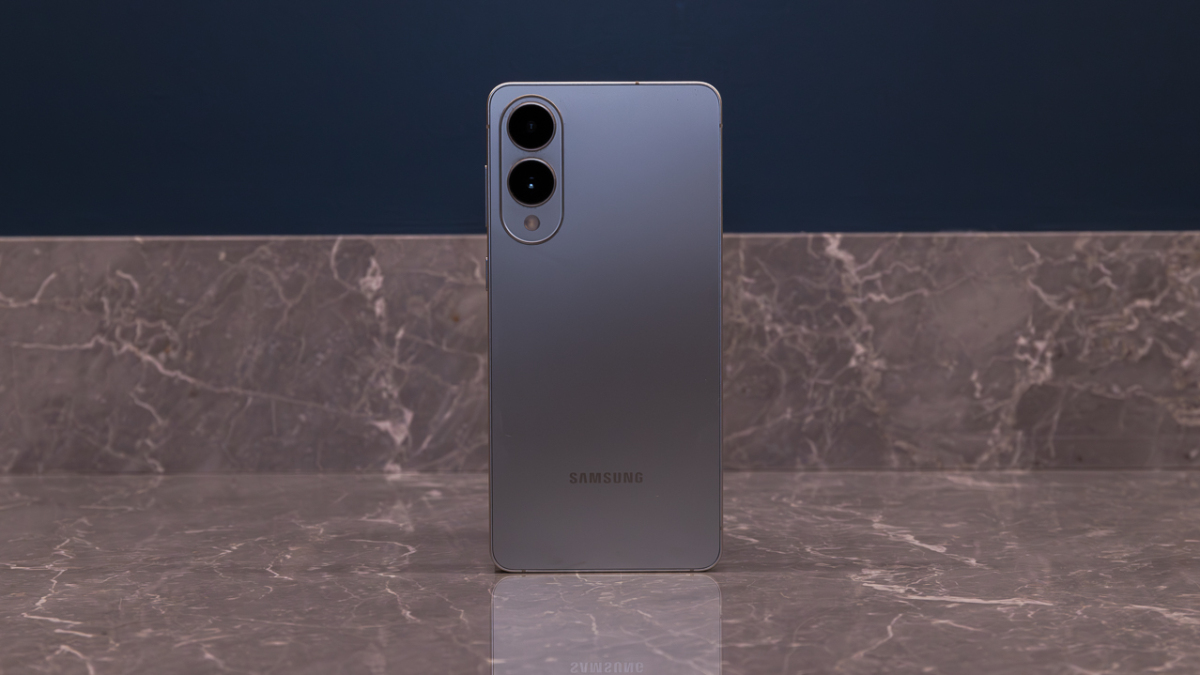
Samsung isn’t lying about how thin it is.
Credit: Joe Maldonado/Mashable

As far as pricing is concerned, the Galaxy S25 Edge’s $1,099.99 starting price is on the higher end of the Samsung flagship spectrum, coming in just below the $1,299.99 starting price for the Galaxy S25 Ultra. That said, the specs inside it are fairly commensurate with the pricetag:

I should note that upgrading to 512GB storage bumps the price up to $1,219.99 (though a gift card deal at Amazon helps a little), putting it right up there with the Galaxy S25 Ultra. That’s the only configuration choice you get, though. 

Like I said, those aren’t bad specs for the price. You get a big, high-res display and the exact same chipset used in Samsung’s most expensive phone, along with a decent amount of RAM. A 1TB storage option might have been nice to have, though that would’ve jacked the price up even more, so I can see why Samsung went without it.

Samsung Galaxy S25 Edge: Design

Samsung Galaxy S25 Edge from the side in my hand

Seriously, it’s tiny.
Credit: Joe Maldonado/Mashable

The physical form factor is the big (and possibly only) draw of the Galaxy S25 Edge. It measures in at just 5.8mm of thickness, a substantial reduction from the 7.2mm of thickness found in the base S25. As someone who uses an iPhone 16 (which is 7.8mm thick) on a daily basis, the difference is very noticeable. 

Put simply, it feels great in the hands. Its 163g weight is basically identical to the base S25, too, but distributed over a taller and wider device, so it feels extremely light given its surface area. My only worry here is that it definitely feels like it could snap in half at any time, though with the new Corning Gorilla Glass Ceramic 2 material used in its construction, that’s probably just a matter of perception and not reality. Of course, I did not try to break it because it’s a very expensive device and Samsung would not have been happy with me.

My only real gripe with the design is that there’s still a pretty sizable camera bump on the upper left corner of the phone’s backside, meant to house its two rear lenses. I’m no engineer, so it’s possible that there just wasn’t a better way to design this, but it’s a little disappointing for a super thin phone to not sit more flatly on my desk than this one does.

Oh, the color options are a bit of a bummer, too. You just get silver, black, and something called “Titanium Icyblue.” We’re big fans of pink smartphones around here, and this would’ve been a great opportunity for Samsung to include one.

Samsung Galaxy S25 Edge: Display

Samsung Galaxy S25 Edge with the display turned on

The display is good, except for one thing…
Credit: Joe Maldonado/Mashable

I had a bit of a confusing experience with the Galaxy S25’s display, which is a quality one by the numbers. It’s a big 6.7-inch panel with a buttery smooth 120Hz refresh rate and a super crisp 3120×1440 resolution, so what could possibly be wrong with it?

Well, its peak brightness of 2,600 nits doesn’t necessarily get the job done in bright sunlight. While walking around my neighborhood in Brooklyn to take photos with the Galaxy S25 Edge’s cameras, I regularly had a bit of a hard time seeing things on the display, even at max brightness. It was slightly bothersome under cloud cover, and got worse once the sun was fully out.

It’s not unusable by any means, but in direct comparison to my iPhone 16 (whose peak brightness of 2,000 nits should be inferior), it’s significantly dimmer in sunlight. I don’t know why this is, but that was my experience with the Galaxy S25 Edge’s display. Be warned.

Samsung Galaxy S25 Edge: Performance

In terms of performance, the good news is that the S25 Edge is more or less identical in this regard to the rest of the Galaxy S25 family. That makes sense, given that all four of those phones have the same Snapdragon 8 Elite for Galaxy chip inside of them. Hardware parity, in this case, has led to performance parity.

Apps load quickly, everything runs smoothly, and I never noticed the phone getting hot while doing too much, despite never using a case for it. If you care about benchmarking statistics, the S25 Edge compares very favorably with the S25 Ultra, the highest-end phone in the S25 line. That phone’s multi-core score in Geekbench 6 was 10,049, while the S25 Edge came in at 10,014.

In other words, you’re getting comparable performance to a true high-end flagship on a phone that’s remarkably thin and light. That’s pretty neat.

Samsung Galaxy S25 Edge: Battery life

samsung galaxy s25 edge on a desk


Credit: Alex Perry/Mashable

Aside from the comparatively dim display, the other major compromise I noticed with the Galaxy S25 Edge came in the form of battery life. This one is admittedly less surprising and more forgivable; batteries take up space, and the whole point of this phone is that it doesn’t take up space. 

Still, using our standard battery testing method of playing an HD video on the display at 50 percent brightness until it died, the Galaxy S25 Edge was able to last for 21 hours and 36 minutes. That’s not miserably bad by any means, but it’s worth considering that the recently released Google Pixel 9a, at $500, was able to go a full 24 hours using the same methodology.

You’ll still be able to get about a full day’s use out of one charge on the S25 Edge, but the fact that it tests worse than at least one recent budget phone isn’t great.

Samsung Galaxy S25 Edge: Cameras

The Galaxy S25 Edge’s rear camera array sits somewhere between a base experience and a flagship experience. Like a base S25, you only get the wide and ultra-wide lenses, with no telephoto option whatsoever as with the S25 Ultra. However, it does match the S25 Ultra in one way: The main wide lens is a 200MP shooter. The disappointing side of this is that the ultra-wide lens is only 12MP, while it was 50MP on the Ultra.

Still, megapixel numbers aside, this phone takes nice photos. Even without a telephoto lens, the maximum 10X zoom produces very clear and crisp images.

A photo of a building taken with the S25 Edge at 1X zoom

No zoom.
Credit: Alex Perry/Mashable

A shot of a building taken at 10X zoom on S25 Edge

10X zoom.
Credit: Alex Perry/Mashable

Shots taken with the regular wide and ultra-wide lenses look vivid and beautiful, too.

A tree lit by bright sunlight as shot by the S25 Edge

It’s been so nice out in Brooklyn lately.
Credit: Alex Perry/Mashable

A 16:9 shot of Maria Hernandez Park in Brooklyn taken by S25 Edge

Best city in the world.
Credit: Alex Perry/Mashable

There’s even a dedicated Macro Focus mode now, which lets you put the camera up real close against tiny objects and capture them in great detail. It works very intuitively, activating on its own as soon as you get the camera close enough to what you’re trying to shoot. I dig it.

Macro shot of a plant taken by S25 Edge

Macro focus is great.
Credit: Alex Perry/Mashable

Lastly, nighttime photography is still pretty good here. It does a nice job of making dark photos look more legible, though there are times when the final product looks a bit like it’s lit with studio lighting. It’s a little unnatural, but that’s a problem plenty of other phones have, too. 

A tree planter at night in Brooklyn without night mode turned on

Left:
No night mode.
Credit: Alex Perry/Mashable

Right:
Night mode.
Credit: Alex Perry/Mashable

Is the Samsung Galaxy S25 Edge worth it?

On its merits, the Samsung Galaxy S25 Edge does exactly what it sets out to do: Provide a flagship-like experience for slightly less money than the most expensive one, at a much more appealing form factor. And if you want a super-thin, flagship-like Galaxy smartphone, this is it.

The physical design of the S25 Edge is, indeed, a selling point if you care a lot about phones being thin and light. I personally don’t find my regular iPhone 16 to be prohibitively bulky, but I can’t lie: Using it after using the S25 Edge makes it feel that way.

Thanks to a high-end chipset, you get comparable performance to Samsung’s best phone, too. Battery life is definitely something you’ll have to compromise on, and in my experience, the display isn’t great in bright sunlight, but this is a solid phone in almost every other way.

samsung galaxy s25 edge phone

Source link
#Samsung #Galaxy #S25 #Edge #review #thin #counts

How to choose a red light face mask: Look at wavelength first

There are some ways to tell that a red light face mask won’t be effective before you buy it and use it for a few months.

Wavelength is the first factor anyone will tell you to consider. You want to find products that emit light within the therapeutic window, or the range of wavelengths that can be effective when treating common skin conditions. There is now an abundance of evidence that specific wavelengths of red light can be effective for:

  • Reduction of fine lines, dark circles, and crow’s feet

  • Improving skin texture

  • Fighting wrinkles

  • Boosting collagen production

  • Reducing inflammation and redness

To be effective, the light coming from the mask must penetrate different layers of your skin. There are optimal wavelengths for each type of light a face mask emits, and any reputable brand will put their mask’s wavelengths front and center in the listing. These carefully chosen ranges are strong enough to penetrate your skin, but gentle enough to avoid over-activating delicate face skin.

Red light does its work in the middle layer (dermis) of your skin, requiring wavelengths between 630 and 633 nm to reach past the top layer. There, red light stimulates cells to produce rejuvenating proteins like collagen and elastin, evening out surface redness, and preventing scarring or post-pimple red spots.

Best red light masks tested: 6 winners, 2 to avoid in 2026
                                                    How to choose a red light face mask: Look at wavelength firstThere are some ways to tell that a red light face mask won’t be effective before you buy it and use it for a few months. Wavelength is the first factor anyone will tell you to consider. You want to find products that emit light within the therapeutic window, or the range of wavelengths that can be effective when treating common skin conditions. There is now an abundance of evidence that specific wavelengths of red light can be effective for:Reduction of fine lines, dark circles, and crow’s feetImproving skin textureFighting wrinklesBoosting collagen productionReducing inflammation and rednessTo be effective, the light coming from the mask must penetrate different layers of your skin. There are optimal wavelengths for each type of light a face mask emits, and any reputable brand will put their mask’s wavelengths front and center in the listing. These carefully chosen ranges are strong enough to penetrate your skin, but gentle enough to avoid over-activating delicate face skin.Red light does its work in the middle layer (dermis) of your skin, requiring wavelengths between 630 and 633 nm to reach past the top layer. There, red light stimulates cells to produce rejuvenating proteins like collagen and elastin, evening out surface redness, and preventing scarring or post-pimple red spots.


                                            The Shark CryoGlow’s Better Aging routine combines red and near-infrared light.
                                                                Credit: Leah Stodart / Mashable


                                            The Shark CryoGlow’s Skin Clearing routine uses a special sequence of red, near-infrared, and blue light.
                                                                Credit: Leah Stodart / Mashable


Most red light masks also use near-infrared red light therapy, which requires longer wavelengths to travel further than regular red light. Near-infrared light between 830 and 850 nm reaches into tissue under the dermis to further stimulate cell turnover, firm skin, and heal deep-seated spots or stubborn dark circles.What about blue light therapy?Blue light is often used to target acne, and some of the best red light masks use a combination of blue and red light therapy.Blue light operates on the top layer (epidermis) of your skin, so its ideal wavelength is shorter than either red light standard. Blue light at 415nm has an antimicrobial effect, ideally killing the bacteria that cause acne before a breakout starts. If hellbent bacterial acne makes it past the blue light phase — or if you’re also dealing with hormonal or cystic acne not caused by bacteria — red light swoops in to neutralize inflammation and speed up the healing process. The thing is, most mainstream LED face masks hit those wavelength marks. So, how do you choose between masks if their wavelength numbers are all the same?The importance of irradianceIrradiance is another major element that determines whether or not a red light mask actually works. While wavelength refers to the length the light can travel, irradiance refers to the amount of light energy that’s actually reaching your skin per session (not just the intensity of light being generated at the bulb). If wavelength numbers are correct but irradiance is low, the mask will still be kind of a dud.


                                            Bulb placement is one of the key factors we considered in our test.
                                                                Credit: Leah Stodart / Mashable


                                            Comfort is another key factor, as consistent use is key to results.
                                                                Credit: Miller Kern / Mashable


Irradiance is officially expressed as milliwatts per square centimeter. The optimal irradiance range for a red light face mask is pretty wide (anywhere between 30 and 100 mW/cm²), though many brands don’t directly provide that number.Most brands do note the length of each session, which is one way to quickly gauge irradiance without getting into calculations. Dr. Mamina Turegano sums it up best on her YouTube account: “Higher irradiance means more effective energy delivery per minute of use.” Longer sessions don’t automatically mean that results will be more powerful — a mask with sessions that last for less than 10 minutes has higher irradiance than a mask with sessions that last for 20 to 30 minutes. Since a mask with lower irradiance needs to sit on your face for longer, you might be less likely to keep up with wearing it. Are bulb count and bulb placement a big deal?The number of bulbs and the placement of bulbs inside the mask can also impact efficacy, especially if you’re expecting results on a specific area of your face. Masks with more bulbs packed evenly across the face will provide more even coverage across every inch of your face than masks with more sporadically-placed bulbs. Some masks also provide more light sources overall by emitting both red and blue light simultaneously from every single bulb, like the Shark CryoGlow. This would be a better option for full-face acne prevention than masks with blue and red LEDs only concentrated in certain spots, like the Dr. Dennis Gross DRx SpectraLite.What red light masks worked for us?Of course, you probably didn’t come here for a science lesson. You want to find the best red light masks Mashable’s testers used and loved.After trying out 11 different products, we ultimately found six that we can recommend. These masks delivered visible results for our product testers.Remember: Consistency is essential for the best results (or any results)with LED face masks. You’ll need to wear your mask consistently for at least 1-2 months.
                        
                    #red #light #masks #tested #winners #avoid

The Shark CryoGlow’s Better Aging routine combines red and near-infrared light. Credit: Leah Stodart / Mashable

Hand holding Shark red light mask featuring blue and black setting on screen

The Shark CryoGlow’s Skin Clearing routine uses a special sequence of red, near-infrared, and blue light. Credit: Leah Stodart / Mashable

Most red light masks also use near-infrared red light therapy, which requires longer wavelengths to travel further than regular red light. Near-infrared light between 830 and 850 nm reaches into tissue under the dermis to further stimulate cell turnover, firm skin, and heal deep-seated spots or stubborn dark circles.

What about blue light therapy?

Blue light is often used to target acne, and some of the best red light masks use a combination of blue and red light therapy.

Blue light operates on the top layer (epidermis) of your skin, so its ideal wavelength is shorter than either red light standard. Blue light at 415nm has an antimicrobial effect, ideally killing the bacteria that cause acne before a breakout starts. If hellbent bacterial acne makes it past the blue light phase — or if you’re also dealing with hormonal or cystic acne not caused by bacteria — red light swoops in to neutralize inflammation and speed up the healing process.

The thing is, most mainstream LED face masks hit those wavelength marks. So, how do you choose between masks if their wavelength numbers are all the same?

The importance of irradiance

Irradiance is another major element that determines whether or not a red light mask actually works. While wavelength refers to the length the light can travel, irradiance refers to the amount of light energy that’s actually reaching your skin per session (not just the intensity of light being generated at the bulb). If wavelength numbers are correct but irradiance is low, the mask will still be kind of a dud.

Inside of Shark CryoGlow face mask lit up pink

Bulb placement is one of the key factors we considered in our test. Credit: Leah Stodart / Mashable

woman wearing therabody led face mask

Comfort is another key factor, as consistent use is key to results. Credit: Miller Kern / Mashable

Irradiance is officially expressed as milliwatts per square centimeter. The optimal irradiance range for a red light face mask is pretty wide (anywhere between 30 and 100 mW/cm²), though many brands don’t directly provide that number.

Most brands do note the length of each session, which is one way to quickly gauge irradiance without getting into calculations. Dr. Mamina Turegano sums it up best on her YouTube account: “Higher irradiance means more effective energy delivery per minute of use.” Longer sessions don’t automatically mean that results will be more powerful — a mask with sessions that last for less than 10 minutes has higher irradiance than a mask with sessions that last for 20 to 30 minutes. Since a mask with lower irradiance needs to sit on your face for longer, you might be less likely to keep up with wearing it.

Are bulb count and bulb placement a big deal?

The number of bulbs and the placement of bulbs inside the mask can also impact efficacy, especially if you’re expecting results on a specific area of your face. Masks with more bulbs packed evenly across the face will provide more even coverage across every inch of your face than masks with more sporadically-placed bulbs.

Some masks also provide more light sources overall by emitting both red and blue light simultaneously from every single bulb, like the Shark CryoGlow. This would be a better option for full-face acne prevention than masks with blue and red LEDs only concentrated in certain spots, like the Dr. Dennis Gross DRx SpectraLite.

What red light masks worked for us?

Of course, you probably didn’t come here for a science lesson. You want to find the best red light masks Mashable’s testers used and loved.

After trying out 11 different products, we ultimately found six that we can recommend. These masks delivered visible results for our product testers.

Remember: Consistency is essential for the best results (or any results)with LED face masks. You’ll need to wear your mask consistently for at least 1-2 months.

#red #light #masks #tested #winners #avoid">Best red light masks tested: 6 winners, 2 to avoid in 2026
                                                    How to choose a red light face mask: Look at wavelength firstThere are some ways to tell that a red light face mask won’t be effective before you buy it and use it for a few months. Wavelength is the first factor anyone will tell you to consider. You want to find products that emit light within the therapeutic window, or the range of wavelengths that can be effective when treating common skin conditions. There is now an abundance of evidence that specific wavelengths of red light can be effective for:Reduction of fine lines, dark circles, and crow’s feetImproving skin textureFighting wrinklesBoosting collagen productionReducing inflammation and rednessTo be effective, the light coming from the mask must penetrate different layers of your skin. There are optimal wavelengths for each type of light a face mask emits, and any reputable brand will put their mask’s wavelengths front and center in the listing. These carefully chosen ranges are strong enough to penetrate your skin, but gentle enough to avoid over-activating delicate face skin.Red light does its work in the middle layer (dermis) of your skin, requiring wavelengths between 630 and 633 nm to reach past the top layer. There, red light stimulates cells to produce rejuvenating proteins like collagen and elastin, evening out surface redness, and preventing scarring or post-pimple red spots.


                                            The Shark CryoGlow’s Better Aging routine combines red and near-infrared light.
                                                                Credit: Leah Stodart / Mashable


                                            The Shark CryoGlow’s Skin Clearing routine uses a special sequence of red, near-infrared, and blue light.
                                                                Credit: Leah Stodart / Mashable


Most red light masks also use near-infrared red light therapy, which requires longer wavelengths to travel further than regular red light. Near-infrared light between 830 and 850 nm reaches into tissue under the dermis to further stimulate cell turnover, firm skin, and heal deep-seated spots or stubborn dark circles.What about blue light therapy?Blue light is often used to target acne, and some of the best red light masks use a combination of blue and red light therapy.Blue light operates on the top layer (epidermis) of your skin, so its ideal wavelength is shorter than either red light standard. Blue light at 415nm has an antimicrobial effect, ideally killing the bacteria that cause acne before a breakout starts. If hellbent bacterial acne makes it past the blue light phase — or if you’re also dealing with hormonal or cystic acne not caused by bacteria — red light swoops in to neutralize inflammation and speed up the healing process. The thing is, most mainstream LED face masks hit those wavelength marks. So, how do you choose between masks if their wavelength numbers are all the same?The importance of irradianceIrradiance is another major element that determines whether or not a red light mask actually works. While wavelength refers to the length the light can travel, irradiance refers to the amount of light energy that’s actually reaching your skin per session (not just the intensity of light being generated at the bulb). If wavelength numbers are correct but irradiance is low, the mask will still be kind of a dud.


                                            Bulb placement is one of the key factors we considered in our test.
                                                                Credit: Leah Stodart / Mashable


                                            Comfort is another key factor, as consistent use is key to results.
                                                                Credit: Miller Kern / Mashable


Irradiance is officially expressed as milliwatts per square centimeter. The optimal irradiance range for a red light face mask is pretty wide (anywhere between 30 and 100 mW/cm²), though many brands don’t directly provide that number.Most brands do note the length of each session, which is one way to quickly gauge irradiance without getting into calculations. Dr. Mamina Turegano sums it up best on her YouTube account: “Higher irradiance means more effective energy delivery per minute of use.” Longer sessions don’t automatically mean that results will be more powerful — a mask with sessions that last for less than 10 minutes has higher irradiance than a mask with sessions that last for 20 to 30 minutes. Since a mask with lower irradiance needs to sit on your face for longer, you might be less likely to keep up with wearing it. Are bulb count and bulb placement a big deal?The number of bulbs and the placement of bulbs inside the mask can also impact efficacy, especially if you’re expecting results on a specific area of your face. Masks with more bulbs packed evenly across the face will provide more even coverage across every inch of your face than masks with more sporadically-placed bulbs. Some masks also provide more light sources overall by emitting both red and blue light simultaneously from every single bulb, like the Shark CryoGlow. This would be a better option for full-face acne prevention than masks with blue and red LEDs only concentrated in certain spots, like the Dr. Dennis Gross DRx SpectraLite.What red light masks worked for us?Of course, you probably didn’t come here for a science lesson. You want to find the best red light masks Mashable’s testers used and loved.After trying out 11 different products, we ultimately found six that we can recommend. These masks delivered visible results for our product testers.Remember: Consistency is essential for the best results (or any results)with LED face masks. You’ll need to wear your mask consistently for at least 1-2 months.
                        
                    #red #light #masks #tested #winners #avoid

abundance of evidence that specific wavelengths of red light can be effective for:

  • Reduction of fine lines, dark circles, and crow’s feet

  • Improving skin texture

  • Fighting wrinkles

  • Boosting collagen production

  • Reducing inflammation and redness

To be effective, the light coming from the mask must penetrate different layers of your skin. There are optimal wavelengths for each type of light a face mask emits, and any reputable brand will put their mask’s wavelengths front and center in the listing. These carefully chosen ranges are strong enough to penetrate your skin, but gentle enough to avoid over-activating delicate face skin.

Red light does its work in the middle layer (dermis) of your skin, requiring wavelengths between 630 and 633 nm to reach past the top layer. There, red light stimulates cells to produce rejuvenating proteins like collagen and elastin, evening out surface redness, and preventing scarring or post-pimple red spots.

Best red light masks tested: 6 winners, 2 to avoid in 2026
                                                    How to choose a red light face mask: Look at wavelength firstThere are some ways to tell that a red light face mask won’t be effective before you buy it and use it for a few months. Wavelength is the first factor anyone will tell you to consider. You want to find products that emit light within the therapeutic window, or the range of wavelengths that can be effective when treating common skin conditions. There is now an abundance of evidence that specific wavelengths of red light can be effective for:Reduction of fine lines, dark circles, and crow’s feetImproving skin textureFighting wrinklesBoosting collagen productionReducing inflammation and rednessTo be effective, the light coming from the mask must penetrate different layers of your skin. There are optimal wavelengths for each type of light a face mask emits, and any reputable brand will put their mask’s wavelengths front and center in the listing. These carefully chosen ranges are strong enough to penetrate your skin, but gentle enough to avoid over-activating delicate face skin.Red light does its work in the middle layer (dermis) of your skin, requiring wavelengths between 630 and 633 nm to reach past the top layer. There, red light stimulates cells to produce rejuvenating proteins like collagen and elastin, evening out surface redness, and preventing scarring or post-pimple red spots.


                                            The Shark CryoGlow’s Better Aging routine combines red and near-infrared light.
                                                                Credit: Leah Stodart / Mashable


                                            The Shark CryoGlow’s Skin Clearing routine uses a special sequence of red, near-infrared, and blue light.
                                                                Credit: Leah Stodart / Mashable


Most red light masks also use near-infrared red light therapy, which requires longer wavelengths to travel further than regular red light. Near-infrared light between 830 and 850 nm reaches into tissue under the dermis to further stimulate cell turnover, firm skin, and heal deep-seated spots or stubborn dark circles.What about blue light therapy?Blue light is often used to target acne, and some of the best red light masks use a combination of blue and red light therapy.Blue light operates on the top layer (epidermis) of your skin, so its ideal wavelength is shorter than either red light standard. Blue light at 415nm has an antimicrobial effect, ideally killing the bacteria that cause acne before a breakout starts. If hellbent bacterial acne makes it past the blue light phase — or if you’re also dealing with hormonal or cystic acne not caused by bacteria — red light swoops in to neutralize inflammation and speed up the healing process. The thing is, most mainstream LED face masks hit those wavelength marks. So, how do you choose between masks if their wavelength numbers are all the same?The importance of irradianceIrradiance is another major element that determines whether or not a red light mask actually works. While wavelength refers to the length the light can travel, irradiance refers to the amount of light energy that’s actually reaching your skin per session (not just the intensity of light being generated at the bulb). If wavelength numbers are correct but irradiance is low, the mask will still be kind of a dud.


                                            Bulb placement is one of the key factors we considered in our test.
                                                                Credit: Leah Stodart / Mashable


                                            Comfort is another key factor, as consistent use is key to results.
                                                                Credit: Miller Kern / Mashable


Irradiance is officially expressed as milliwatts per square centimeter. The optimal irradiance range for a red light face mask is pretty wide (anywhere between 30 and 100 mW/cm²), though many brands don’t directly provide that number.Most brands do note the length of each session, which is one way to quickly gauge irradiance without getting into calculations. Dr. Mamina Turegano sums it up best on her YouTube account: “Higher irradiance means more effective energy delivery per minute of use.” Longer sessions don’t automatically mean that results will be more powerful — a mask with sessions that last for less than 10 minutes has higher irradiance than a mask with sessions that last for 20 to 30 minutes. Since a mask with lower irradiance needs to sit on your face for longer, you might be less likely to keep up with wearing it. Are bulb count and bulb placement a big deal?The number of bulbs and the placement of bulbs inside the mask can also impact efficacy, especially if you’re expecting results on a specific area of your face. Masks with more bulbs packed evenly across the face will provide more even coverage across every inch of your face than masks with more sporadically-placed bulbs. Some masks also provide more light sources overall by emitting both red and blue light simultaneously from every single bulb, like the Shark CryoGlow. This would be a better option for full-face acne prevention than masks with blue and red LEDs only concentrated in certain spots, like the Dr. Dennis Gross DRx SpectraLite.What red light masks worked for us?Of course, you probably didn’t come here for a science lesson. You want to find the best red light masks Mashable’s testers used and loved.After trying out 11 different products, we ultimately found six that we can recommend. These masks delivered visible results for our product testers.Remember: Consistency is essential for the best results (or any results)with LED face masks. You’ll need to wear your mask consistently for at least 1-2 months.
                        
                    #red #light #masks #tested #winners #avoid

The Shark CryoGlow’s Better Aging routine combines red and near-infrared light. Credit: Leah Stodart / Mashable

Hand holding Shark red light mask featuring blue and black setting on screen

The Shark CryoGlow’s Skin Clearing routine uses a special sequence of red, near-infrared, and blue light. Credit: Leah Stodart / Mashable

Most red light masks also use near-infrared red light therapy, which requires longer wavelengths to travel further than regular red light. Near-infrared light between 830 and 850 nm reaches into tissue under the dermis to further stimulate cell turnover, firm skin, and heal deep-seated spots or stubborn dark circles.

What about blue light therapy?

Blue light is often used to target acne, and some of the best red light masks use a combination of blue and red light therapy.

Blue light operates on the top layer (epidermis) of your skin, so its ideal wavelength is shorter than either red light standard. Blue light at 415nm has an antimicrobial effect, ideally killing the bacteria that cause acne before a breakout starts. If hellbent bacterial acne makes it past the blue light phase — or if you’re also dealing with hormonal or cystic acne not caused by bacteria — red light swoops in to neutralize inflammation and speed up the healing process.

The thing is, most mainstream LED face masks hit those wavelength marks. So, how do you choose between masks if their wavelength numbers are all the same?

The importance of irradiance

Irradiance is another major element that determines whether or not a red light mask actually works. While wavelength refers to the length the light can travel, irradiance refers to the amount of light energy that’s actually reaching your skin per session (not just the intensity of light being generated at the bulb). If wavelength numbers are correct but irradiance is low, the mask will still be kind of a dud.

Inside of Shark CryoGlow face mask lit up pink

Bulb placement is one of the key factors we considered in our test. Credit: Leah Stodart / Mashable

woman wearing therabody led face mask

Comfort is another key factor, as consistent use is key to results. Credit: Miller Kern / Mashable

Irradiance is officially expressed as milliwatts per square centimeter. The optimal irradiance range for a red light face mask is pretty wide (anywhere between 30 and 100 mW/cm²), though many brands don’t directly provide that number.

Most brands do note the length of each session, which is one way to quickly gauge irradiance without getting into calculations. Dr. Mamina Turegano sums it up best on her YouTube account: “Higher irradiance means more effective energy delivery per minute of use.” Longer sessions don’t automatically mean that results will be more powerful — a mask with sessions that last for less than 10 minutes has higher irradiance than a mask with sessions that last for 20 to 30 minutes. Since a mask with lower irradiance needs to sit on your face for longer, you might be less likely to keep up with wearing it.

Are bulb count and bulb placement a big deal?

The number of bulbs and the placement of bulbs inside the mask can also impact efficacy, especially if you’re expecting results on a specific area of your face. Masks with more bulbs packed evenly across the face will provide more even coverage across every inch of your face than masks with more sporadically-placed bulbs.

Some masks also provide more light sources overall by emitting both red and blue light simultaneously from every single bulb, like the Shark CryoGlow. This would be a better option for full-face acne prevention than masks with blue and red LEDs only concentrated in certain spots, like the Dr. Dennis Gross DRx SpectraLite.

What red light masks worked for us?

Of course, you probably didn’t come here for a science lesson. You want to find the best red light masks Mashable’s testers used and loved.

After trying out 11 different products, we ultimately found six that we can recommend. These masks delivered visible results for our product testers.

Remember: Consistency is essential for the best results (or any results)with LED face masks. You’ll need to wear your mask consistently for at least 1-2 months.

#red #light #masks #tested #winners #avoid">Best red light masks tested: 6 winners, 2 to avoid in 2026

How to choose a red light face mask: Look at wavelength first

There are some ways to tell that a red light face mask won’t be effective before you buy it and use it for a few months.

Wavelength is the first factor anyone will tell you to consider. You want to find products that emit light within the therapeutic window, or the range of wavelengths that can be effective when treating common skin conditions. There is now an abundance of evidence that specific wavelengths of red light can be effective for:

  • Reduction of fine lines, dark circles, and crow’s feet

  • Improving skin texture

  • Fighting wrinkles

  • Boosting collagen production

  • Reducing inflammation and redness

To be effective, the light coming from the mask must penetrate different layers of your skin. There are optimal wavelengths for each type of light a face mask emits, and any reputable brand will put their mask’s wavelengths front and center in the listing. These carefully chosen ranges are strong enough to penetrate your skin, but gentle enough to avoid over-activating delicate face skin.

Red light does its work in the middle layer (dermis) of your skin, requiring wavelengths between 630 and 633 nm to reach past the top layer. There, red light stimulates cells to produce rejuvenating proteins like collagen and elastin, evening out surface redness, and preventing scarring or post-pimple red spots.

Best red light masks tested: 6 winners, 2 to avoid in 2026
                                                    How to choose a red light face mask: Look at wavelength firstThere are some ways to tell that a red light face mask won’t be effective before you buy it and use it for a few months. Wavelength is the first factor anyone will tell you to consider. You want to find products that emit light within the therapeutic window, or the range of wavelengths that can be effective when treating common skin conditions. There is now an abundance of evidence that specific wavelengths of red light can be effective for:Reduction of fine lines, dark circles, and crow’s feetImproving skin textureFighting wrinklesBoosting collagen productionReducing inflammation and rednessTo be effective, the light coming from the mask must penetrate different layers of your skin. There are optimal wavelengths for each type of light a face mask emits, and any reputable brand will put their mask’s wavelengths front and center in the listing. These carefully chosen ranges are strong enough to penetrate your skin, but gentle enough to avoid over-activating delicate face skin.Red light does its work in the middle layer (dermis) of your skin, requiring wavelengths between 630 and 633 nm to reach past the top layer. There, red light stimulates cells to produce rejuvenating proteins like collagen and elastin, evening out surface redness, and preventing scarring or post-pimple red spots.


                                            The Shark CryoGlow’s Better Aging routine combines red and near-infrared light.
                                                                Credit: Leah Stodart / Mashable


                                            The Shark CryoGlow’s Skin Clearing routine uses a special sequence of red, near-infrared, and blue light.
                                                                Credit: Leah Stodart / Mashable


Most red light masks also use near-infrared red light therapy, which requires longer wavelengths to travel further than regular red light. Near-infrared light between 830 and 850 nm reaches into tissue under the dermis to further stimulate cell turnover, firm skin, and heal deep-seated spots or stubborn dark circles.What about blue light therapy?Blue light is often used to target acne, and some of the best red light masks use a combination of blue and red light therapy.Blue light operates on the top layer (epidermis) of your skin, so its ideal wavelength is shorter than either red light standard. Blue light at 415nm has an antimicrobial effect, ideally killing the bacteria that cause acne before a breakout starts. If hellbent bacterial acne makes it past the blue light phase — or if you’re also dealing with hormonal or cystic acne not caused by bacteria — red light swoops in to neutralize inflammation and speed up the healing process. The thing is, most mainstream LED face masks hit those wavelength marks. So, how do you choose between masks if their wavelength numbers are all the same?The importance of irradianceIrradiance is another major element that determines whether or not a red light mask actually works. While wavelength refers to the length the light can travel, irradiance refers to the amount of light energy that’s actually reaching your skin per session (not just the intensity of light being generated at the bulb). If wavelength numbers are correct but irradiance is low, the mask will still be kind of a dud.


                                            Bulb placement is one of the key factors we considered in our test.
                                                                Credit: Leah Stodart / Mashable


                                            Comfort is another key factor, as consistent use is key to results.
                                                                Credit: Miller Kern / Mashable


Irradiance is officially expressed as milliwatts per square centimeter. The optimal irradiance range for a red light face mask is pretty wide (anywhere between 30 and 100 mW/cm²), though many brands don’t directly provide that number.Most brands do note the length of each session, which is one way to quickly gauge irradiance without getting into calculations. Dr. Mamina Turegano sums it up best on her YouTube account: “Higher irradiance means more effective energy delivery per minute of use.” Longer sessions don’t automatically mean that results will be more powerful — a mask with sessions that last for less than 10 minutes has higher irradiance than a mask with sessions that last for 20 to 30 minutes. Since a mask with lower irradiance needs to sit on your face for longer, you might be less likely to keep up with wearing it. Are bulb count and bulb placement a big deal?The number of bulbs and the placement of bulbs inside the mask can also impact efficacy, especially if you’re expecting results on a specific area of your face. Masks with more bulbs packed evenly across the face will provide more even coverage across every inch of your face than masks with more sporadically-placed bulbs. Some masks also provide more light sources overall by emitting both red and blue light simultaneously from every single bulb, like the Shark CryoGlow. This would be a better option for full-face acne prevention than masks with blue and red LEDs only concentrated in certain spots, like the Dr. Dennis Gross DRx SpectraLite.What red light masks worked for us?Of course, you probably didn’t come here for a science lesson. You want to find the best red light masks Mashable’s testers used and loved.After trying out 11 different products, we ultimately found six that we can recommend. These masks delivered visible results for our product testers.Remember: Consistency is essential for the best results (or any results)with LED face masks. You’ll need to wear your mask consistently for at least 1-2 months.
                        
                    #red #light #masks #tested #winners #avoid

The Shark CryoGlow’s Better Aging routine combines red and near-infrared light. Credit: Leah Stodart / Mashable

Hand holding Shark red light mask featuring blue and black setting on screen

The Shark CryoGlow’s Skin Clearing routine uses a special sequence of red, near-infrared, and blue light. Credit: Leah Stodart / Mashable

Most red light masks also use near-infrared red light therapy, which requires longer wavelengths to travel further than regular red light. Near-infrared light between 830 and 850 nm reaches into tissue under the dermis to further stimulate cell turnover, firm skin, and heal deep-seated spots or stubborn dark circles.

What about blue light therapy?

Blue light is often used to target acne, and some of the best red light masks use a combination of blue and red light therapy.

Blue light operates on the top layer (epidermis) of your skin, so its ideal wavelength is shorter than either red light standard. Blue light at 415nm has an antimicrobial effect, ideally killing the bacteria that cause acne before a breakout starts. If hellbent bacterial acne makes it past the blue light phase — or if you’re also dealing with hormonal or cystic acne not caused by bacteria — red light swoops in to neutralize inflammation and speed up the healing process.

The thing is, most mainstream LED face masks hit those wavelength marks. So, how do you choose between masks if their wavelength numbers are all the same?

The importance of irradiance

Irradiance is another major element that determines whether or not a red light mask actually works. While wavelength refers to the length the light can travel, irradiance refers to the amount of light energy that’s actually reaching your skin per session (not just the intensity of light being generated at the bulb). If wavelength numbers are correct but irradiance is low, the mask will still be kind of a dud.

Inside of Shark CryoGlow face mask lit up pink

Bulb placement is one of the key factors we considered in our test. Credit: Leah Stodart / Mashable

woman wearing therabody led face mask

Comfort is another key factor, as consistent use is key to results. Credit: Miller Kern / Mashable

Irradiance is officially expressed as milliwatts per square centimeter. The optimal irradiance range for a red light face mask is pretty wide (anywhere between 30 and 100 mW/cm²), though many brands don’t directly provide that number.

Most brands do note the length of each session, which is one way to quickly gauge irradiance without getting into calculations. Dr. Mamina Turegano sums it up best on her YouTube account: “Higher irradiance means more effective energy delivery per minute of use.” Longer sessions don’t automatically mean that results will be more powerful — a mask with sessions that last for less than 10 minutes has higher irradiance than a mask with sessions that last for 20 to 30 minutes. Since a mask with lower irradiance needs to sit on your face for longer, you might be less likely to keep up with wearing it.

Are bulb count and bulb placement a big deal?

The number of bulbs and the placement of bulbs inside the mask can also impact efficacy, especially if you’re expecting results on a specific area of your face. Masks with more bulbs packed evenly across the face will provide more even coverage across every inch of your face than masks with more sporadically-placed bulbs.

Some masks also provide more light sources overall by emitting both red and blue light simultaneously from every single bulb, like the Shark CryoGlow. This would be a better option for full-face acne prevention than masks with blue and red LEDs only concentrated in certain spots, like the Dr. Dennis Gross DRx SpectraLite.

What red light masks worked for us?

Of course, you probably didn’t come here for a science lesson. You want to find the best red light masks Mashable’s testers used and loved.

After trying out 11 different products, we ultimately found six that we can recommend. These masks delivered visible results for our product testers.

Remember: Consistency is essential for the best results (or any results)with LED face masks. You’ll need to wear your mask consistently for at least 1-2 months.

#red #light #masks #tested #winners #avoid

Is an e-reader case as dangerous as a Glock 19?

Last month, Louisville, Kentucky-based creator Luke The Maker showed off a bizarre, 3D-printed, pistol-shaped case design for the popular minimalist Xteink X4 e-reader. The X4 lies vertically atop the plastic gun’s slide, with a cutout on the side to access its buttons. Though the frame was digitally modeled after a real gun, this “case” can’t shoot bullets. Squeezing the trigger does nothing at all. He calls his contraption the “Gundle.”

In a post showing off the wacky accessory, Luke (whose last name is Blackford) can be seen flipping through Cormac McCarthy’s Blood Meridian and J.D. Salinger’s The Catcher in the Rye before tossing the gun e-reader case in his car’s center console.

“The perfect e-reader for public reading,” text reads over the clip.

But even though this internet experiment is clearly intended as a joke or commentary, it’s possible future 3D printers won’t see it that way. Lawmakers in multiple states are pushing for laws mandating gun-blocking software on all new printers sold. This still-evolving technology would, in theory, scan every file before it’s physically printed and try to algorithmically determine whether it’s a firearm or firearm part. If the software decides that the thing being printed looks enough like a gun, it stops the printer from completing the job. That is, if it even works. Lawmakers in New York and California are leaving it up to a panel of industry experts to weigh whether the proposed vision is even technically feasible. Despite that cloud of uncertainty, legislation mandating this blocking tech has already become law in New York and passed California’s state assembly.

“I didn’t want it to be so publicly available. I just didn’t want tons of them out there.”

That may sound reasonable enough, but makers and industry experts previously told The Verge that the tech is underdeveloped and risks introducing false positives where non-guns that look gun-like get unnecessarily blocked. Blackford’s e-reader case falls directly in that detection gray area. Blackford says he didn’t explicitly make the Gundle to challenge the proposed laws, but he also didn’t shy away from expressing his opinion about them.

“I’m not for that kind of thing because I’m big into open software,” Blackford says. “It’s just a wild frontier right now, so I definitely don’t trust [gun blueprint scanning tech] now.”

“If people want to 3D print a gun, they’re going to do it,” he adds. “I don’t think it’s up to the people making the slicers to control that kind of thing.”

Those pushing for these mandates, meanwhile, wouldn’t say whether their proposed tech would stop Blackford from making a harmless case. New York Gov. Kathy Hochul’s office didn’t respond to questions about Blackford’s device specifically, or the implications false positives could have for a maker’s ability to freely express themself.

“Governor Hochul is laser-focused on improving public safety and reducing gun violence in New York,” deputy communications director at the Office of Governor Kathy Hochul and spokesperson Jess D’Amelia tells The Verge. “This law relies on the expertise of leading subject matter experts to evaluate and harness emerging technologies while addressing the real and growing threat of ghost guns and illegally manufactured weapons of war. The Governor is confident these measures will make all New York communities safer.”

“The intent of the law is not to block prints like this, but I think this print is a really good example of why that’s hard.”

Cliff Braun, associate director of technology policy and research at the Electronic Frontier Foundation, who has spoken critically of California’s proposal, says it’s unclear whether the proposed system would flag Blackford’s design. While the technology exists, Braun says it’s currently in a “limited form.” Critics say a more cautious detection system that relies on hashes to flag known firearms and parts from a database could be trivially easy to sidestep by simply making small changes to a file’s design. A more expansive approach using AI to analyze a file’s geometry and predict if it’s a gun, by contrast, may be more prone to mistakes. Things that look gun-ish but aren’t, in other words, might get swept up. Lawmakers in both states are leaving it to expert panels to iron out the details of implementation, but the final result, Braun says, will have to grapple with an unavoidable tradeoff between false positives and false negatives.

“The intent of the law is not to block prints like this, but I think this print is a really good example of why that’s hard,” Braun says.

Handguns like the one Blackford modeled his design on are particularly problematic. In 2022, the ATF updated its rules clarifying that the only parts of a firearm that legally require a serial number are those that provide the housing or structure for the weapon’s “primary fire control component.” In AR-15s and other long guns, that’s the receiver. Braun notes that the shapes of receivers are relatively unique and distinguishable, as are machine gun conversion devices. That’s not quite the same with a handgun. There, the part that requires a serial number is the frame. And unlike receivers, frames are visually far more ambiguous. Water hoses, toy guns, and power tools all share somewhat similar shapes.

Dartmouth College associate professor of engineering Solomon Diamond tells The Verge that whether Blackford’s e-reader case gets blocked really depends on the type of technology that particular printer deploys. A more conservative hashing approach would fall flat because Blackford’s device wouldn’t match one of the exact hashes on a database of prohibited files. A different system using computer vision and AI to evaluate where an object likely resembles a gun, however, could flag it by mistake.

“Basing blocking tech on visual resemblance is where the false positive concerns arise because a prop and a real functional firearm resemble one another,” Diamond told The Verge. “The technical challenge here is that depending on training data and algorithms used, setting decision thresholds that have acceptably low false positive rates might have unacceptably high false negative rates and vice versa.”

“Visual resemblance might be fooled by [the] gun-shaped e-reader case,” he added.

Diamond noted a third option, “geometric identification,” could potentially thread the needle. This approach, which is currently being deployed to guide quality control in manufacturing, can be fine-tuned for what Diamond refers to as “exact geometric match,” where a zero false-positive rate is at least theoretically possible. This approach is still relatively new when it comes to 3D print blocking tech.

“Geometric Identification would not be fooled by your gun-shaped e-reader case,” he said.

3D printer manufacturers and the experts setting the standards for how blocking software mandates will work are then left with a complex choice. Requiring systems that are both actually effective at detecting guns and technically feasible to introduce in the near future will necessarily mean some non-guns get caught in the crossfire. Pretty quickly, that starts limiting how makers, hobbyists, and artists can express themselves.

“If you’re going to try and block all of those wonderfully creative humans, you’re going to make it very hard to print props or make social commentary,” Braun said.

Blackford says making the Gundle was relatively straightforward. He first went online and did a simple search for “free gun model,” which turned up the blueprints for the gun shell part of the case. He then uploaded that to Fusion 360, his preferred modeling program, and added the e-reader on top and built the case around it. The Xteink X4 is one of the cheaper e-readers on the market, and though it has limited functionality, its devoted community regularly works to improve it. With the digital design finalized, Blackford sent it off to his Bambu Lab H2D printer. The entire process, from initial idea to printed product, took less than 24 hours.

Even though the device doesn’t shoot, Blackford says he still hasn’t taken it out in public. He’s since published the files on his website, where anyone with a 3D printer can download them and make their own. Blackford admits he did this with some hesitation. The case isn’t a gun, but it looks enough like one that someone brandishing it in the open, or revealing it during a confrontation with law enforcement, could find themselves in a seriously dangerous misunderstanding. He talked things over with his wife before publishing, and ultimately decided to avoid larger marketplaces like Thingiverse or Printables so it wouldn’t spread too widely. This way, he says, people can still find it if they are interested but won’t randomly stumble upon it.

“I didn’t want it to be so publicly available,” Blackford says. “I just didn’t want tons of them out there.”

“If you’re going to try and block all of those wonderfully creative humans, you’re going to make it very hard to print props or make social commentary.”

There’s also some question as to whether walking around with the case would violate already existing federal laws requiring toys or other “look-alike firearms” to have distinctive markings. These so-called “orange tip laws” are why fake guns and airsoft guns have blaze-orange plastic tips attached to their muzzles when they are manufactured and sold. But the e-reader case isn’t really a toy or a fake gun, but an art project.

Regardless, Blackford says if he ever did take it out in public, he’d print a version in a different color to make clear it isn’t imitating a real weapon. That’s not an overreaction. Walking around in public with something that resembles a gun, even if it is functionally useless, can make interactions with police and other gun owners dangerous, or even deadly. In 2014, Cleveland police shot and killed a 12-year-old boy named Tamir Rice after he reached for a toy gun. A 2016 Washington Post report estimated that over the span of two years, police shot and killed 86 people who were holding realistic-looking toy weapons and pellet and airsoft guns.

Supporters of blueprint scanning mandates say it’s necessary to close an enforcement gap that’s giving those with felony convictions and others access to guns when they shouldn’t have them. Various laws prohibiting the manufacture and sale of 3D-printed ghost guns (untraceable firearms without serial numbers) already exist across the country. But people print in the privacy of their own homes, making enforcing those laws nearly impossible. Hochul has called this dynamic the “plastic pipeline” and warns of criminals printing guns on their kitchen tables. Mandating scanning software would shift the responsibility onto printer manufacturers, stopping the illegal guns before they are ever made.

Whether the threat posed by 3D-printed guns actually justifies such a transformative change to how printers work remains up for debate. The guns are certainly getting better in terms of performance. There are also more of them. In 2024, the NYPD said it recovered 109 mostly 3D-printed guns from crime scenes. That’s up from just one recorded three years prior. A separate 2024 report from the gun control advocacy group Everytown found similar results in 20 other cities.

All of that is a drop in the bucket compared to conventional guns collected at crime scenes. In 2025 alone, then-Mayor Eric Adams claimed the NYPD seized more than 5,200 illegal guns. The total number of firearms in the country more broadly has been estimated to outnumber people.

But Blackford says he wasn’t convinced 3D-printed guns pose an especially immediate danger. In his view, they are still primarily made by tinkerers and gun enthusiasts with a passion for the process and plenty of time on their hands. In most cases, he’s convinced, getting a real gun is still much easier than printing one.

3D printing, Blackford says, “is too much of a pain in the ass.”

And if legislation like New York’s or California’s ever reaches Kentucky, Blackford says he’s ready to get creative, either by using VPNs or figuring out some other workaround. He’s likely not alone.

“Some companies are going to be putting those locks in place, but I think open-source software is always going to prevail,” Blackford says.

Follow topics and authors from this story to see more like this in your personalized homepage feed and to receive email updates.
#ereader #case #gunTech">Is this e-reader case a gun?Is an e-reader case as dangerous as a Glock 19?Last month, Louisville, Kentucky-based creator Luke The Maker showed off a bizarre, 3D-printed, pistol-shaped case design for the popular minimalist Xteink X4 e-reader. The X4 lies vertically atop the plastic gun’s slide, with a cutout on the side to access its buttons. Though the frame was digitally modeled after a real gun, this “case” can’t shoot bullets. Squeezing the trigger does nothing at all. He calls his contraption the “Gundle.”In a post showing off the wacky accessory, Luke (whose last name is Blackford) can be seen flipping through Cormac McCarthy’s Blood Meridian and J.D. Salinger’s The Catcher in the Rye before tossing the gun e-reader case in his car’s center console.“The perfect e-reader for public reading,” text reads over the clip.But even though this internet experiment is clearly intended as a joke or commentary, it’s possible future 3D printers won’t see it that way. Lawmakers in multiple states are pushing for laws mandating gun-blocking software on all new printers sold. This still-evolving technology would, in theory, scan every file before it’s physically printed and try to algorithmically determine whether it’s a firearm or firearm part. If the software decides that the thing being printed looks enough like a gun, it stops the printer from completing the job. That is, if it even works. Lawmakers in New York and California are leaving it up to a panel of industry experts to weigh whether the proposed vision is even technically feasible. Despite that cloud of uncertainty, legislation mandating this blocking tech has already become law in New York and passed California’s state assembly.“I didn’t want it to be so publicly available. I just didn’t want tons of them out there.” That may sound reasonable enough, but makers and industry experts previously told The Verge that the tech is underdeveloped and risks introducing false positives where non-guns that look gun-like get unnecessarily blocked. Blackford’s e-reader case falls directly in that detection gray area. Blackford says he didn’t explicitly make the Gundle to challenge the proposed laws, but he also didn’t shy away from expressing his opinion about them.“I’m not for that kind of thing because I’m big into open software,” Blackford says. “It’s just a wild frontier right now, so I definitely don’t trust [gun blueprint scanning tech] now.”“If people want to 3D print a gun, they’re going to do it,” he adds. “I don’t think it’s up to the people making the slicers to control that kind of thing.”Those pushing for these mandates, meanwhile, wouldn’t say whether their proposed tech would stop Blackford from making a harmless case. New York Gov. Kathy Hochul’s office didn’t respond to questions about Blackford’s device specifically, or the implications false positives could have for a maker’s ability to freely express themself.“Governor Hochul is laser-focused on improving public safety and reducing gun violence in New York,” deputy communications director at the Office of Governor Kathy Hochul and spokesperson Jess D’Amelia tells The Verge. “This law relies on the expertise of leading subject matter experts to evaluate and harness emerging technologies while addressing the real and growing threat of ghost guns and illegally manufactured weapons of war. The Governor is confident these measures will make all New York communities safer.”“The intent of the law is not to block prints like this, but I think this print is a really good example of why that’s hard.”Cliff Braun, associate director of technology policy and research at the Electronic Frontier Foundation, who has spoken critically of California’s proposal, says it’s unclear whether the proposed system would flag Blackford’s design. While the technology exists, Braun says it’s currently in a “limited form.” Critics say a more cautious detection system that relies on hashes to flag known firearms and parts from a database could be trivially easy to sidestep by simply making small changes to a file’s design. A more expansive approach using AI to analyze a file’s geometry and predict if it’s a gun, by contrast, may be more prone to mistakes. Things that look gun-ish but aren’t, in other words, might get swept up. Lawmakers in both states are leaving it to expert panels to iron out the details of implementation, but the final result, Braun says, will have to grapple with an unavoidable tradeoff between false positives and false negatives.“The intent of the law is not to block prints like this, but I think this print is a really good example of why that’s hard,” Braun says.Handguns like the one Blackford modeled his design on are particularly problematic. In 2022, the ATF updated its rules clarifying that the only parts of a firearm that legally require a serial number are those that provide the housing or structure for the weapon’s “primary fire control component.” In AR-15s and other long guns, that’s the receiver. Braun notes that the shapes of receivers are relatively unique and distinguishable, as are machine gun conversion devices. That’s not quite the same with a handgun. There, the part that requires a serial number is the frame. And unlike receivers, frames are visually far more ambiguous. Water hoses, toy guns, and power tools all share somewhat similar shapes.Dartmouth College associate professor of engineering Solomon Diamond tells The Verge that whether Blackford’s e-reader case gets blocked really depends on the type of technology that particular printer deploys. A more conservative hashing approach would fall flat because Blackford’s device wouldn’t match one of the exact hashes on a database of prohibited files. A different system using computer vision and AI to evaluate where an object likely resembles a gun, however, could flag it by mistake.“Basing blocking tech on visual resemblance is where the false positive concerns arise because a prop and a real functional firearm resemble one another,” Diamond told The Verge. “The technical challenge here is that depending on training data and algorithms used, setting decision thresholds that have acceptably low false positive rates might have unacceptably high false negative rates and vice versa.”“Visual resemblance might be fooled by [the] gun-shaped e-reader case,” he added.Diamond noted a third option, “geometric identification,” could potentially thread the needle. This approach, which is currently being deployed to guide quality control in manufacturing, can be fine-tuned for what Diamond refers to as “exact geometric match,” where a zero false-positive rate is at least theoretically possible. This approach is still relatively new when it comes to 3D print blocking tech.“Geometric Identification would not be fooled by your gun-shaped e-reader case,” he said.3D printer manufacturers and the experts setting the standards for how blocking software mandates will work are then left with a complex choice. Requiring systems that are both actually effective at detecting guns and technically feasible to introduce in the near future will necessarily mean some non-guns get caught in the crossfire. Pretty quickly, that starts limiting how makers, hobbyists, and artists can express themselves.“If you’re going to try and block all of those wonderfully creative humans, you’re going to make it very hard to print props or make social commentary,” Braun said.Blackford says making the Gundle was relatively straightforward. He first went online and did a simple search for “free gun model,” which turned up the blueprints for the gun shell part of the case. He then uploaded that to Fusion 360, his preferred modeling program, and added the e-reader on top and built the case around it. The Xteink X4 is one of the cheaper e-readers on the market, and though it has limited functionality, its devoted community regularly works to improve it. With the digital design finalized, Blackford sent it off to his Bambu Lab H2D printer. The entire process, from initial idea to printed product, took less than 24 hours.Even though the device doesn’t shoot, Blackford says he still hasn’t taken it out in public. He’s since published the files on his website, where anyone with a 3D printer can download them and make their own. Blackford admits he did this with some hesitation. The case isn’t a gun, but it looks enough like one that someone brandishing it in the open, or revealing it during a confrontation with law enforcement, could find themselves in a seriously dangerous misunderstanding. He talked things over with his wife before publishing, and ultimately decided to avoid larger marketplaces like Thingiverse or Printables so it wouldn’t spread too widely. This way, he says, people can still find it if they are interested but won’t randomly stumble upon it.“I didn’t want it to be so publicly available,” Blackford says. “I just didn’t want tons of them out there.”“If you’re going to try and block all of those wonderfully creative humans, you’re going to make it very hard to print props or make social commentary.”There’s also some question as to whether walking around with the case would violate already existing federal laws requiring toys or other “look-alike firearms” to have distinctive markings. These so-called “orange tip laws” are why fake guns and airsoft guns have blaze-orange plastic tips attached to their muzzles when they are manufactured and sold. But the e-reader case isn’t really a toy or a fake gun, but an art project.Regardless, Blackford says if he ever did take it out in public, he’d print a version in a different color to make clear it isn’t imitating a real weapon. That’s not an overreaction. Walking around in public with something that resembles a gun, even if it is functionally useless, can make interactions with police and other gun owners dangerous, or even deadly. In 2014, Cleveland police shot and killed a 12-year-old boy named Tamir Rice after he reached for a toy gun. A 2016 Washington Post report estimated that over the span of two years, police shot and killed 86 people who were holding realistic-looking toy weapons and pellet and airsoft guns.Supporters of blueprint scanning mandates say it’s necessary to close an enforcement gap that’s giving those with felony convictions and others access to guns when they shouldn’t have them. Various laws prohibiting the manufacture and sale of 3D-printed ghost guns (untraceable firearms without serial numbers) already exist across the country. But people print in the privacy of their own homes, making enforcing those laws nearly impossible. Hochul has called this dynamic the “plastic pipeline” and warns of criminals printing guns on their kitchen tables. Mandating scanning software would shift the responsibility onto printer manufacturers, stopping the illegal guns before they are ever made.Whether the threat posed by 3D-printed guns actually justifies such a transformative change to how printers work remains up for debate. The guns are certainly getting better in terms of performance. There are also more of them. In 2024, the NYPD said it recovered 109 mostly 3D-printed guns from crime scenes. That’s up from just one recorded three years prior. A separate 2024 report from the gun control advocacy group Everytown found similar results in 20 other cities.All of that is a drop in the bucket compared to conventional guns collected at crime scenes. In 2025 alone, then-Mayor Eric Adams claimed the NYPD seized more than 5,200 illegal guns. The total number of firearms in the country more broadly has been estimated to outnumber people.But Blackford says he wasn’t convinced 3D-printed guns pose an especially immediate danger. In his view, they are still primarily made by tinkerers and gun enthusiasts with a passion for the process and plenty of time on their hands. In most cases, he’s convinced, getting a real gun is still much easier than printing one.3D printing, Blackford says, “is too much of a pain in the ass.”And if legislation like New York’s or California’s ever reaches Kentucky, Blackford says he’s ready to get creative, either by using VPNs or figuring out some other workaround. He’s likely not alone.“Some companies are going to be putting those locks in place, but I think open-source software is always going to prevail,” Blackford says.Follow topics and authors from this story to see more like this in your personalized homepage feed and to receive email updates.Mack DeGeurinCloseMack DeGeurinPosts from this author will be added to your daily email digest and your homepage feed.FollowFollowSee All by Mack DeGeurinTechCloseTechPosts from this topic will be added to your daily email digest and your homepage feed.FollowFollowSee All Tech#ereader #case #gunTech

Luke The Maker showed off a bizarre, 3D-printed, pistol-shaped case design for the popular minimalist Xteink X4 e-reader. The X4 lies vertically atop the plastic gun’s slide, with a cutout on the side to access its buttons. Though the frame was digitally modeled after a real gun, this “case” can’t shoot bullets. Squeezing the trigger does nothing at all. He calls his contraption the “Gundle.”

In a post showing off the wacky accessory, Luke (whose last name is Blackford) can be seen flipping through Cormac McCarthy’s Blood Meridian and J.D. Salinger’s The Catcher in the Rye before tossing the gun e-reader case in his car’s center console.

“The perfect e-reader for public reading,” text reads over the clip.

But even though this internet experiment is clearly intended as a joke or commentary, it’s possible future 3D printers won’t see it that way. Lawmakers in multiple states are pushing for laws mandating gun-blocking software on all new printers sold. This still-evolving technology would, in theory, scan every file before it’s physically printed and try to algorithmically determine whether it’s a firearm or firearm part. If the software decides that the thing being printed looks enough like a gun, it stops the printer from completing the job. That is, if it even works. Lawmakers in New York and California are leaving it up to a panel of industry experts to weigh whether the proposed vision is even technically feasible. Despite that cloud of uncertainty, legislation mandating this blocking tech has already become law in New York and passed California’s state assembly.

“I didn’t want it to be so publicly available. I just didn’t want tons of them out there.”

That may sound reasonable enough, but makers and industry experts previously told The Verge that the tech is underdeveloped and risks introducing false positives where non-guns that look gun-like get unnecessarily blocked. Blackford’s e-reader case falls directly in that detection gray area. Blackford says he didn’t explicitly make the Gundle to challenge the proposed laws, but he also didn’t shy away from expressing his opinion about them.

“I’m not for that kind of thing because I’m big into open software,” Blackford says. “It’s just a wild frontier right now, so I definitely don’t trust [gun blueprint scanning tech] now.”

“If people want to 3D print a gun, they’re going to do it,” he adds. “I don’t think it’s up to the people making the slicers to control that kind of thing.”

Those pushing for these mandates, meanwhile, wouldn’t say whether their proposed tech would stop Blackford from making a harmless case. New York Gov. Kathy Hochul’s office didn’t respond to questions about Blackford’s device specifically, or the implications false positives could have for a maker’s ability to freely express themself.

“Governor Hochul is laser-focused on improving public safety and reducing gun violence in New York,” deputy communications director at the Office of Governor Kathy Hochul and spokesperson Jess D’Amelia tells The Verge. “This law relies on the expertise of leading subject matter experts to evaluate and harness emerging technologies while addressing the real and growing threat of ghost guns and illegally manufactured weapons of war. The Governor is confident these measures will make all New York communities safer.”

“The intent of the law is not to block prints like this, but I think this print is a really good example of why that’s hard.”

Cliff Braun, associate director of technology policy and research at the Electronic Frontier Foundation, who has spoken critically of California’s proposal, says it’s unclear whether the proposed system would flag Blackford’s design. While the technology exists, Braun says it’s currently in a “limited form.” Critics say a more cautious detection system that relies on hashes to flag known firearms and parts from a database could be trivially easy to sidestep by simply making small changes to a file’s design. A more expansive approach using AI to analyze a file’s geometry and predict if it’s a gun, by contrast, may be more prone to mistakes. Things that look gun-ish but aren’t, in other words, might get swept up. Lawmakers in both states are leaving it to expert panels to iron out the details of implementation, but the final result, Braun says, will have to grapple with an unavoidable tradeoff between false positives and false negatives.

“The intent of the law is not to block prints like this, but I think this print is a really good example of why that’s hard,” Braun says.

Handguns like the one Blackford modeled his design on are particularly problematic. In 2022, the ATF updated its rules clarifying that the only parts of a firearm that legally require a serial number are those that provide the housing or structure for the weapon’s “primary fire control component.” In AR-15s and other long guns, that’s the receiver. Braun notes that the shapes of receivers are relatively unique and distinguishable, as are machine gun conversion devices. That’s not quite the same with a handgun. There, the part that requires a serial number is the frame. And unlike receivers, frames are visually far more ambiguous. Water hoses, toy guns, and power tools all share somewhat similar shapes.

Dartmouth College associate professor of engineering Solomon Diamond tells The Verge that whether Blackford’s e-reader case gets blocked really depends on the type of technology that particular printer deploys. A more conservative hashing approach would fall flat because Blackford’s device wouldn’t match one of the exact hashes on a database of prohibited files. A different system using computer vision and AI to evaluate where an object likely resembles a gun, however, could flag it by mistake.

“Basing blocking tech on visual resemblance is where the false positive concerns arise because a prop and a real functional firearm resemble one another,” Diamond told The Verge. “The technical challenge here is that depending on training data and algorithms used, setting decision thresholds that have acceptably low false positive rates might have unacceptably high false negative rates and vice versa.”

“Visual resemblance might be fooled by [the] gun-shaped e-reader case,” he added.

Diamond noted a third option, “geometric identification,” could potentially thread the needle. This approach, which is currently being deployed to guide quality control in manufacturing, can be fine-tuned for what Diamond refers to as “exact geometric match,” where a zero false-positive rate is at least theoretically possible. This approach is still relatively new when it comes to 3D print blocking tech.

“Geometric Identification would not be fooled by your gun-shaped e-reader case,” he said.

3D printer manufacturers and the experts setting the standards for how blocking software mandates will work are then left with a complex choice. Requiring systems that are both actually effective at detecting guns and technically feasible to introduce in the near future will necessarily mean some non-guns get caught in the crossfire. Pretty quickly, that starts limiting how makers, hobbyists, and artists can express themselves.

“If you’re going to try and block all of those wonderfully creative humans, you’re going to make it very hard to print props or make social commentary,” Braun said.

Blackford says making the Gundle was relatively straightforward. He first went online and did a simple search for “free gun model,” which turned up the blueprints for the gun shell part of the case. He then uploaded that to Fusion 360, his preferred modeling program, and added the e-reader on top and built the case around it. The Xteink X4 is one of the cheaper e-readers on the market, and though it has limited functionality, its devoted community regularly works to improve it. With the digital design finalized, Blackford sent it off to his Bambu Lab H2D printer. The entire process, from initial idea to printed product, took less than 24 hours.

Even though the device doesn’t shoot, Blackford says he still hasn’t taken it out in public. He’s since published the files on his website, where anyone with a 3D printer can download them and make their own. Blackford admits he did this with some hesitation. The case isn’t a gun, but it looks enough like one that someone brandishing it in the open, or revealing it during a confrontation with law enforcement, could find themselves in a seriously dangerous misunderstanding. He talked things over with his wife before publishing, and ultimately decided to avoid larger marketplaces like Thingiverse or Printables so it wouldn’t spread too widely. This way, he says, people can still find it if they are interested but won’t randomly stumble upon it.

“I didn’t want it to be so publicly available,” Blackford says. “I just didn’t want tons of them out there.”

“If you’re going to try and block all of those wonderfully creative humans, you’re going to make it very hard to print props or make social commentary.”

There’s also some question as to whether walking around with the case would violate already existing federal laws requiring toys or other “look-alike firearms” to have distinctive markings. These so-called “orange tip laws” are why fake guns and airsoft guns have blaze-orange plastic tips attached to their muzzles when they are manufactured and sold. But the e-reader case isn’t really a toy or a fake gun, but an art project.

Regardless, Blackford says if he ever did take it out in public, he’d print a version in a different color to make clear it isn’t imitating a real weapon. That’s not an overreaction. Walking around in public with something that resembles a gun, even if it is functionally useless, can make interactions with police and other gun owners dangerous, or even deadly. In 2014, Cleveland police shot and killed a 12-year-old boy named Tamir Rice after he reached for a toy gun. A 2016 Washington Post report estimated that over the span of two years, police shot and killed 86 people who were holding realistic-looking toy weapons and pellet and airsoft guns.

Supporters of blueprint scanning mandates say it’s necessary to close an enforcement gap that’s giving those with felony convictions and others access to guns when they shouldn’t have them. Various laws prohibiting the manufacture and sale of 3D-printed ghost guns (untraceable firearms without serial numbers) already exist across the country. But people print in the privacy of their own homes, making enforcing those laws nearly impossible. Hochul has called this dynamic the “plastic pipeline” and warns of criminals printing guns on their kitchen tables. Mandating scanning software would shift the responsibility onto printer manufacturers, stopping the illegal guns before they are ever made.

Whether the threat posed by 3D-printed guns actually justifies such a transformative change to how printers work remains up for debate. The guns are certainly getting better in terms of performance. There are also more of them. In 2024, the NYPD said it recovered 109 mostly 3D-printed guns from crime scenes. That’s up from just one recorded three years prior. A separate 2024 report from the gun control advocacy group Everytown found similar results in 20 other cities.

All of that is a drop in the bucket compared to conventional guns collected at crime scenes. In 2025 alone, then-Mayor Eric Adams claimed the NYPD seized more than 5,200 illegal guns. The total number of firearms in the country more broadly has been estimated to outnumber people.

But Blackford says he wasn’t convinced 3D-printed guns pose an especially immediate danger. In his view, they are still primarily made by tinkerers and gun enthusiasts with a passion for the process and plenty of time on their hands. In most cases, he’s convinced, getting a real gun is still much easier than printing one.

3D printing, Blackford says, “is too much of a pain in the ass.”

And if legislation like New York’s or California’s ever reaches Kentucky, Blackford says he’s ready to get creative, either by using VPNs or figuring out some other workaround. He’s likely not alone.

“Some companies are going to be putting those locks in place, but I think open-source software is always going to prevail,” Blackford says.

Follow topics and authors from this story to see more like this in your personalized homepage feed and to receive email updates.

#ereader #case #gunTech">Is this e-reader case a gun?

Is an e-reader case as dangerous as a Glock 19?

Last month, Louisville, Kentucky-based creator Luke The Maker showed off a bizarre, 3D-printed, pistol-shaped case design for the popular minimalist Xteink X4 e-reader. The X4 lies vertically atop the plastic gun’s slide, with a cutout on the side to access its buttons. Though the frame was digitally modeled after a real gun, this “case” can’t shoot bullets. Squeezing the trigger does nothing at all. He calls his contraption the “Gundle.”

In a post showing off the wacky accessory, Luke (whose last name is Blackford) can be seen flipping through Cormac McCarthy’s Blood Meridian and J.D. Salinger’s The Catcher in the Rye before tossing the gun e-reader case in his car’s center console.

“The perfect e-reader for public reading,” text reads over the clip.

But even though this internet experiment is clearly intended as a joke or commentary, it’s possible future 3D printers won’t see it that way. Lawmakers in multiple states are pushing for laws mandating gun-blocking software on all new printers sold. This still-evolving technology would, in theory, scan every file before it’s physically printed and try to algorithmically determine whether it’s a firearm or firearm part. If the software decides that the thing being printed looks enough like a gun, it stops the printer from completing the job. That is, if it even works. Lawmakers in New York and California are leaving it up to a panel of industry experts to weigh whether the proposed vision is even technically feasible. Despite that cloud of uncertainty, legislation mandating this blocking tech has already become law in New York and passed California’s state assembly.

“I didn’t want it to be so publicly available. I just didn’t want tons of them out there.”

That may sound reasonable enough, but makers and industry experts previously told The Verge that the tech is underdeveloped and risks introducing false positives where non-guns that look gun-like get unnecessarily blocked. Blackford’s e-reader case falls directly in that detection gray area. Blackford says he didn’t explicitly make the Gundle to challenge the proposed laws, but he also didn’t shy away from expressing his opinion about them.

“I’m not for that kind of thing because I’m big into open software,” Blackford says. “It’s just a wild frontier right now, so I definitely don’t trust [gun blueprint scanning tech] now.”

“If people want to 3D print a gun, they’re going to do it,” he adds. “I don’t think it’s up to the people making the slicers to control that kind of thing.”

Those pushing for these mandates, meanwhile, wouldn’t say whether their proposed tech would stop Blackford from making a harmless case. New York Gov. Kathy Hochul’s office didn’t respond to questions about Blackford’s device specifically, or the implications false positives could have for a maker’s ability to freely express themself.

“Governor Hochul is laser-focused on improving public safety and reducing gun violence in New York,” deputy communications director at the Office of Governor Kathy Hochul and spokesperson Jess D’Amelia tells The Verge. “This law relies on the expertise of leading subject matter experts to evaluate and harness emerging technologies while addressing the real and growing threat of ghost guns and illegally manufactured weapons of war. The Governor is confident these measures will make all New York communities safer.”

“The intent of the law is not to block prints like this, but I think this print is a really good example of why that’s hard.”

Cliff Braun, associate director of technology policy and research at the Electronic Frontier Foundation, who has spoken critically of California’s proposal, says it’s unclear whether the proposed system would flag Blackford’s design. While the technology exists, Braun says it’s currently in a “limited form.” Critics say a more cautious detection system that relies on hashes to flag known firearms and parts from a database could be trivially easy to sidestep by simply making small changes to a file’s design. A more expansive approach using AI to analyze a file’s geometry and predict if it’s a gun, by contrast, may be more prone to mistakes. Things that look gun-ish but aren’t, in other words, might get swept up. Lawmakers in both states are leaving it to expert panels to iron out the details of implementation, but the final result, Braun says, will have to grapple with an unavoidable tradeoff between false positives and false negatives.

“The intent of the law is not to block prints like this, but I think this print is a really good example of why that’s hard,” Braun says.

Handguns like the one Blackford modeled his design on are particularly problematic. In 2022, the ATF updated its rules clarifying that the only parts of a firearm that legally require a serial number are those that provide the housing or structure for the weapon’s “primary fire control component.” In AR-15s and other long guns, that’s the receiver. Braun notes that the shapes of receivers are relatively unique and distinguishable, as are machine gun conversion devices. That’s not quite the same with a handgun. There, the part that requires a serial number is the frame. And unlike receivers, frames are visually far more ambiguous. Water hoses, toy guns, and power tools all share somewhat similar shapes.

Dartmouth College associate professor of engineering Solomon Diamond tells The Verge that whether Blackford’s e-reader case gets blocked really depends on the type of technology that particular printer deploys. A more conservative hashing approach would fall flat because Blackford’s device wouldn’t match one of the exact hashes on a database of prohibited files. A different system using computer vision and AI to evaluate where an object likely resembles a gun, however, could flag it by mistake.

“Basing blocking tech on visual resemblance is where the false positive concerns arise because a prop and a real functional firearm resemble one another,” Diamond told The Verge. “The technical challenge here is that depending on training data and algorithms used, setting decision thresholds that have acceptably low false positive rates might have unacceptably high false negative rates and vice versa.”

“Visual resemblance might be fooled by [the] gun-shaped e-reader case,” he added.

Diamond noted a third option, “geometric identification,” could potentially thread the needle. This approach, which is currently being deployed to guide quality control in manufacturing, can be fine-tuned for what Diamond refers to as “exact geometric match,” where a zero false-positive rate is at least theoretically possible. This approach is still relatively new when it comes to 3D print blocking tech.

“Geometric Identification would not be fooled by your gun-shaped e-reader case,” he said.

3D printer manufacturers and the experts setting the standards for how blocking software mandates will work are then left with a complex choice. Requiring systems that are both actually effective at detecting guns and technically feasible to introduce in the near future will necessarily mean some non-guns get caught in the crossfire. Pretty quickly, that starts limiting how makers, hobbyists, and artists can express themselves.

“If you’re going to try and block all of those wonderfully creative humans, you’re going to make it very hard to print props or make social commentary,” Braun said.

Blackford says making the Gundle was relatively straightforward. He first went online and did a simple search for “free gun model,” which turned up the blueprints for the gun shell part of the case. He then uploaded that to Fusion 360, his preferred modeling program, and added the e-reader on top and built the case around it. The Xteink X4 is one of the cheaper e-readers on the market, and though it has limited functionality, its devoted community regularly works to improve it. With the digital design finalized, Blackford sent it off to his Bambu Lab H2D printer. The entire process, from initial idea to printed product, took less than 24 hours.

Even though the device doesn’t shoot, Blackford says he still hasn’t taken it out in public. He’s since published the files on his website, where anyone with a 3D printer can download them and make their own. Blackford admits he did this with some hesitation. The case isn’t a gun, but it looks enough like one that someone brandishing it in the open, or revealing it during a confrontation with law enforcement, could find themselves in a seriously dangerous misunderstanding. He talked things over with his wife before publishing, and ultimately decided to avoid larger marketplaces like Thingiverse or Printables so it wouldn’t spread too widely. This way, he says, people can still find it if they are interested but won’t randomly stumble upon it.

“I didn’t want it to be so publicly available,” Blackford says. “I just didn’t want tons of them out there.”

“If you’re going to try and block all of those wonderfully creative humans, you’re going to make it very hard to print props or make social commentary.”

There’s also some question as to whether walking around with the case would violate already existing federal laws requiring toys or other “look-alike firearms” to have distinctive markings. These so-called “orange tip laws” are why fake guns and airsoft guns have blaze-orange plastic tips attached to their muzzles when they are manufactured and sold. But the e-reader case isn’t really a toy or a fake gun, but an art project.

Regardless, Blackford says if he ever did take it out in public, he’d print a version in a different color to make clear it isn’t imitating a real weapon. That’s not an overreaction. Walking around in public with something that resembles a gun, even if it is functionally useless, can make interactions with police and other gun owners dangerous, or even deadly. In 2014, Cleveland police shot and killed a 12-year-old boy named Tamir Rice after he reached for a toy gun. A 2016 Washington Post report estimated that over the span of two years, police shot and killed 86 people who were holding realistic-looking toy weapons and pellet and airsoft guns.

Supporters of blueprint scanning mandates say it’s necessary to close an enforcement gap that’s giving those with felony convictions and others access to guns when they shouldn’t have them. Various laws prohibiting the manufacture and sale of 3D-printed ghost guns (untraceable firearms without serial numbers) already exist across the country. But people print in the privacy of their own homes, making enforcing those laws nearly impossible. Hochul has called this dynamic the “plastic pipeline” and warns of criminals printing guns on their kitchen tables. Mandating scanning software would shift the responsibility onto printer manufacturers, stopping the illegal guns before they are ever made.

Whether the threat posed by 3D-printed guns actually justifies such a transformative change to how printers work remains up for debate. The guns are certainly getting better in terms of performance. There are also more of them. In 2024, the NYPD said it recovered 109 mostly 3D-printed guns from crime scenes. That’s up from just one recorded three years prior. A separate 2024 report from the gun control advocacy group Everytown found similar results in 20 other cities.

All of that is a drop in the bucket compared to conventional guns collected at crime scenes. In 2025 alone, then-Mayor Eric Adams claimed the NYPD seized more than 5,200 illegal guns. The total number of firearms in the country more broadly has been estimated to outnumber people.

But Blackford says he wasn’t convinced 3D-printed guns pose an especially immediate danger. In his view, they are still primarily made by tinkerers and gun enthusiasts with a passion for the process and plenty of time on their hands. In most cases, he’s convinced, getting a real gun is still much easier than printing one.

3D printing, Blackford says, “is too much of a pain in the ass.”

And if legislation like New York’s or California’s ever reaches Kentucky, Blackford says he’s ready to get creative, either by using VPNs or figuring out some other workaround. He’s likely not alone.

“Some companies are going to be putting those locks in place, but I think open-source software is always going to prevail,” Blackford says.

Follow topics and authors from this story to see more like this in your personalized homepage feed and to receive email updates.
#ereader #case #gunTech

Post Comment
