×
Deadspin | Goal No. 1 for Renegade: Overcome fabled Kentucky Derby jinx  2026 Kentucky Derby contender Renegade during a morning training session during Kentucky Derby week at Churchill Downs. The horse is trained by Todd Pletcher. April 29, 2026   LOUISVILLE, Ky. — The post-position draw for the Kentucky Derby is one of the few times in thoroughbred racing when getting first is not something to celebrate.  Last Saturday, during the draw for this Saturday’s 152nd running of the race at Churchill Downs, that distinction went to Renegade.  Despite the ominous spot for Renegade, Churchill Downs’ morning-line oddsmaker Nick Tammaro still set the 3-year-old colt as his early 4-1 favorite for the 1-1/4-mile race that serves as the start of racing’s Triple Crown.  Drawing the inside post means Renegade will be the horse closest to the rail. While he would have the shortest path to the finish line, he will also have to avoid getting pinched along the rail as up to 19 competitors try to move in at the start.  The last horse to win from the No. 1 post position was Ferdinand in 1986, the last Derby win for legendary jockey Bill Shoemaker.  As for Renegade, the horse trained by Todd Pletcher has never finished out of the money in five starts. After placing twice and showing once in his 2-year-old campaign, Renegade has won both starts this year, including the Arkansas Derby a month ago.  Another horse seeking to buck a trend is Emerging Market. Trainer Chad Brown’s horse, who has morning-line odds of 15-1, won the Louisiana Derby in just his second start. However, the last horse to win the Kentucky Derby in just a third start was Leonatus in 1883.  Brown, though, thinks his colt can end that 143-year streak.  “He has such a wonderful mind and is so calm and collected,” said Brown, whose entry got the 15th gate.   Based on Tammaro’s projected odds, Renegade is considered one of four horses that stand out in the field. The co-second choices are Further Ado and Commandment at 6-1. Both are trained by Brad Cox, a Louisville native. Commandment has won four straight, including the Florida Derby at Gulfstream Park on March 28, while Further Ado impressed many with his 11-length win in the Blue Grass Stakes a week later at Keeneland.  Commandment drew the sixth post, and Further Ado will break from the 17th. Further Ado moved into that spot after Silent Tactic was scratched on Wednesday.  The fourth choice at 8-1 is Chief Wallabee, who will break from the 12th gate. He finished second to Commandment in the Fountain of Youth Stakes in February and third in the Florida Derby. Trained by Bill Mott, who won the Kentucky Derby last year with Sovereignty, is adding blinkers to the colt in hopes it will improve his performance.  “He seemed to be maybe just a little more straight and maybe a little more true,” Mott said after the draw.  Another horse drawing interest is The Puma, who won the Tampa Bay Derby on March 7 and followed that up by finishing second in the Florida Derby three weeks later. Trained by Gustavo Delgado, the colt will break ninth and has odds of 10-1.  Trainer Bob Baffert has a pair of longshots in the field as he seeks a record seventh Derby win. Litmus Test is 30-1 coming off a seventh-place finish in the Arkansas Derby, while Potente, at 20-1, finished second in the Santa Anita Derby to So Happy (15-1). Litmus Test is starting fourth, Potente 14th.  There are currently 20 horses entered, with three also-eligibles. Great White joined the field Wednesday after Silent Tactic was scratched. An also-eligible can enter the race, based on the points they acquired in prep races, if another starter is scratched before 9 a.m. ET Friday.  –Steve Bittenbender, Field Level Media   #Deadspin #Goal #Renegade #Overcome #fabled #Kentucky #Derby #jinx
Deadspin | Goal No. 1 for Renegade: Overcome fabled Kentucky Derby jinx
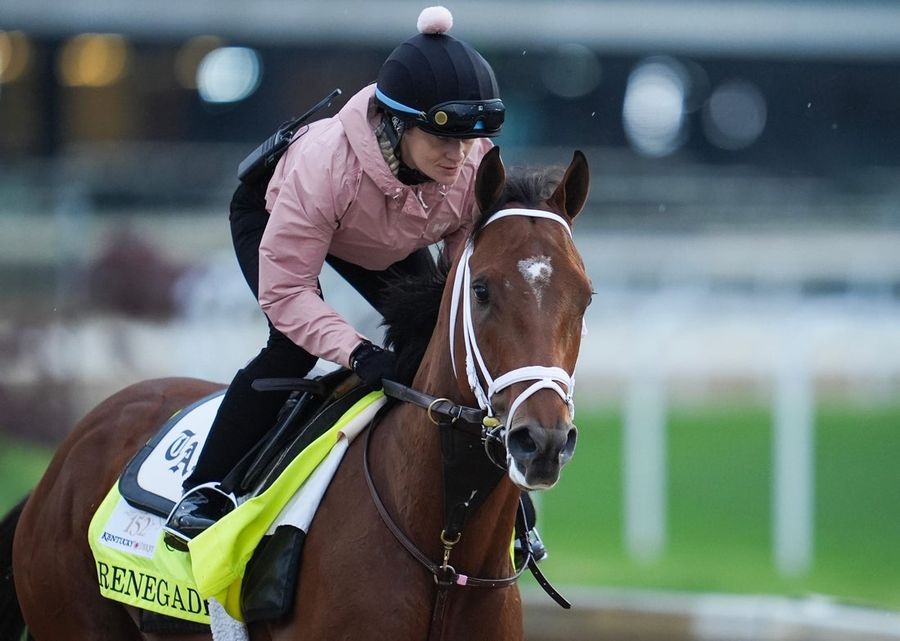
Deadspin | Goal No. 1 for Renegade: Overcome fabled Kentucky Derby jinx  2026 Kentucky Derby contender Renegade during a morning training session during Kentucky Derby week at Churchill Downs. The horse is trained by Todd Pletcher. April 29, 2026   LOUISVILLE, Ky. — The post-position draw for the Kentucky Derby is one of the few times in thoroughbred racing when getting first is not something to celebrate.  Last Saturday, during the draw for this Saturday’s 152nd running of the race at Churchill Downs, that distinction went to Renegade.  Despite the ominous spot for Renegade, Churchill Downs’ morning-line oddsmaker Nick Tammaro still set the 3-year-old colt as his early 4-1 favorite for the 1-1/4-mile race that serves as the start of racing’s Triple Crown.  Drawing the inside post means Renegade will be the horse closest to the rail. While he would have the shortest path to the finish line, he will also have to avoid getting pinched along the rail as up to 19 competitors try to move in at the start.  The last horse to win from the No. 1 post position was Ferdinand in 1986, the last Derby win for legendary jockey Bill Shoemaker.  As for Renegade, the horse trained by Todd Pletcher has never finished out of the money in five starts. After placing twice and showing once in his 2-year-old campaign, Renegade has won both starts this year, including the Arkansas Derby a month ago.  Another horse seeking to buck a trend is Emerging Market. Trainer Chad Brown’s horse, who has morning-line odds of 15-1, won the Louisiana Derby in just his second start. However, the last horse to win the Kentucky Derby in just a third start was Leonatus in 1883.  Brown, though, thinks his colt can end that 143-year streak.  “He has such a wonderful mind and is so calm and collected,” said Brown, whose entry got the 15th gate.   Based on Tammaro’s projected odds, Renegade is considered one of four horses that stand out in the field. The co-second choices are Further Ado and Commandment at 6-1. Both are trained by Brad Cox, a Louisville native. Commandment has won four straight, including the Florida Derby at Gulfstream Park on March 28, while Further Ado impressed many with his 11-length win in the Blue Grass Stakes a week later at Keeneland.  Commandment drew the sixth post, and Further Ado will break from the 17th. Further Ado moved into that spot after Silent Tactic was scratched on Wednesday.  The fourth choice at 8-1 is Chief Wallabee, who will break from the 12th gate. He finished second to Commandment in the Fountain of Youth Stakes in February and third in the Florida Derby. Trained by Bill Mott, who won the Kentucky Derby last year with Sovereignty, is adding blinkers to the colt in hopes it will improve his performance.  “He seemed to be maybe just a little more straight and maybe a little more true,” Mott said after the draw.  Another horse drawing interest is The Puma, who won the Tampa Bay Derby on March 7 and followed that up by finishing second in the Florida Derby three weeks later. Trained by Gustavo Delgado, the colt will break ninth and has odds of 10-1.  Trainer Bob Baffert has a pair of longshots in the field as he seeks a record seventh Derby win. Litmus Test is 30-1 coming off a seventh-place finish in the Arkansas Derby, while Potente, at 20-1, finished second in the Santa Anita Derby to So Happy (15-1). Litmus Test is starting fourth, Potente 14th.  There are currently 20 horses entered, with three also-eligibles. Great White joined the field Wednesday after Silent Tactic was scratched. An also-eligible can enter the race, based on the points they acquired in prep races, if another starter is scratched before 9 a.m. ET Friday.  –Steve Bittenbender, Field Level Media   #Deadspin #Goal #Renegade #Overcome #fabled #Kentucky #Derby #jinx2026 Kentucky Derby contender Renegade during a morning training session during Kentucky Derby week at Churchill Downs. The horse is trained by Todd Pletcher. April 29, 2026

LOUISVILLE, Ky. — The post-position draw for the Kentucky Derby is one of the few times in thoroughbred racing when getting first is not something to celebrate.

Last Saturday, during the draw for this Saturday’s 152nd running of the race at Churchill Downs, that distinction went to Renegade.

Despite the ominous spot for Renegade, Churchill Downs’ morning-line oddsmaker Nick Tammaro still set the 3-year-old colt as his early 4-1 favorite for the 1-1/4-mile race that serves as the start of racing’s Triple Crown.

Drawing the inside post means Renegade will be the horse closest to the rail. While he would have the shortest path to the finish line, he will also have to avoid getting pinched along the rail as up to 19 competitors try to move in at the start.

The last horse to win from the No. 1 post position was Ferdinand in 1986, the last Derby win for legendary jockey Bill Shoemaker.

As for Renegade, the horse trained by Todd Pletcher has never finished out of the money in five starts. After placing twice and showing once in his 2-year-old campaign, Renegade has won both starts this year, including the Arkansas Derby a month ago.

Another horse seeking to buck a trend is Emerging Market. Trainer Chad Brown’s horse, who has morning-line odds of 15-1, won the Louisiana Derby in just his second start. However, the last horse to win the Kentucky Derby in just a third start was Leonatus in 1883.

Brown, though, thinks his colt can end that 143-year streak.


“He has such a wonderful mind and is so calm and collected,” said Brown, whose entry got the 15th gate.

Based on Tammaro’s projected odds, Renegade is considered one of four horses that stand out in the field. The co-second choices are Further Ado and Commandment at 6-1. Both are trained by Brad Cox, a Louisville native. Commandment has won four straight, including the Florida Derby at Gulfstream Park on March 28, while Further Ado impressed many with his 11-length win in the Blue Grass Stakes a week later at Keeneland.

Commandment drew the sixth post, and Further Ado will break from the 17th. Further Ado moved into that spot after Silent Tactic was scratched on Wednesday.

The fourth choice at 8-1 is Chief Wallabee, who will break from the 12th gate. He finished second to Commandment in the Fountain of Youth Stakes in February and third in the Florida Derby. Trained by Bill Mott, who won the Kentucky Derby last year with Sovereignty, is adding blinkers to the colt in hopes it will improve his performance.

“He seemed to be maybe just a little more straight and maybe a little more true,” Mott said after the draw.

Another horse drawing interest is The Puma, who won the Tampa Bay Derby on March 7 and followed that up by finishing second in the Florida Derby three weeks later. Trained by Gustavo Delgado, the colt will break ninth and has odds of 10-1.

Trainer Bob Baffert has a pair of longshots in the field as he seeks a record seventh Derby win. Litmus Test is 30-1 coming off a seventh-place finish in the Arkansas Derby, while Potente, at 20-1, finished second in the Santa Anita Derby to So Happy (15-1). Litmus Test is starting fourth, Potente 14th.

There are currently 20 horses entered, with three also-eligibles. Great White joined the field Wednesday after Silent Tactic was scratched. An also-eligible can enter the race, based on the points they acquired in prep races, if another starter is scratched before 9 a.m. ET Friday.

–Steve Bittenbender, Field Level Media

#Deadspin #Goal #Renegade #Overcome #fabled #Kentucky #Derby #jinx

2026 Kentucky Derby contender Renegade during a morning training session during Kentucky Derby week at Churchill Downs. The horse is trained by Todd Pletcher. April 29, 2026

LOUISVILLE, Ky. — The post-position draw for the Kentucky Derby is one of the few times in thoroughbred racing when getting first is not something to celebrate.

Last Saturday, during the draw for this Saturday’s 152nd running of the race at Churchill Downs, that distinction went to Renegade.

Despite the ominous spot for Renegade, Churchill Downs’ morning-line oddsmaker Nick Tammaro still set the 3-year-old colt as his early 4-1 favorite for the 1-1/4-mile race that serves as the start of racing’s Triple Crown.

Drawing the inside post means Renegade will be the horse closest to the rail. While he would have the shortest path to the finish line, he will also have to avoid getting pinched along the rail as up to 19 competitors try to move in at the start.

The last horse to win from the No. 1 post position was Ferdinand in 1986, the last Derby win for legendary jockey Bill Shoemaker.

As for Renegade, the horse trained by Todd Pletcher has never finished out of the money in five starts. After placing twice and showing once in his 2-year-old campaign, Renegade has won both starts this year, including the Arkansas Derby a month ago.

Another horse seeking to buck a trend is Emerging Market. Trainer Chad Brown’s horse, who has morning-line odds of 15-1, won the Louisiana Derby in just his second start. However, the last horse to win the Kentucky Derby in just a third start was Leonatus in 1883.

Brown, though, thinks his colt can end that 143-year streak.

“He has such a wonderful mind and is so calm and collected,” said Brown, whose entry got the 15th gate.

Based on Tammaro’s projected odds, Renegade is considered one of four horses that stand out in the field. The co-second choices are Further Ado and Commandment at 6-1. Both are trained by Brad Cox, a Louisville native. Commandment has won four straight, including the Florida Derby at Gulfstream Park on March 28, while Further Ado impressed many with his 11-length win in the Blue Grass Stakes a week later at Keeneland.

Commandment drew the sixth post, and Further Ado will break from the 17th. Further Ado moved into that spot after Silent Tactic was scratched on Wednesday.

The fourth choice at 8-1 is Chief Wallabee, who will break from the 12th gate. He finished second to Commandment in the Fountain of Youth Stakes in February and third in the Florida Derby. Trained by Bill Mott, who won the Kentucky Derby last year with Sovereignty, is adding blinkers to the colt in hopes it will improve his performance.

“He seemed to be maybe just a little more straight and maybe a little more true,” Mott said after the draw.

Another horse drawing interest is The Puma, who won the Tampa Bay Derby on March 7 and followed that up by finishing second in the Florida Derby three weeks later. Trained by Gustavo Delgado, the colt will break ninth and has odds of 10-1.

Trainer Bob Baffert has a pair of longshots in the field as he seeks a record seventh Derby win. Litmus Test is 30-1 coming off a seventh-place finish in the Arkansas Derby, while Potente, at 20-1, finished second in the Santa Anita Derby to So Happy (15-1). Litmus Test is starting fourth, Potente 14th.

There are currently 20 horses entered, with three also-eligibles. Great White joined the field Wednesday after Silent Tactic was scratched. An also-eligible can enter the race, based on the points they acquired in prep races, if another starter is scratched before 9 a.m. ET Friday.

–Steve Bittenbender, Field Level Media

Source link
#Deadspin #Goal #Renegade #Overcome #fabled #Kentucky #Derby #jinx

Previous post

IPL 2026: ‘I won’t put ‌my bowlers under the bus,’ says Hardik Pandya after Mumbai Indians fails to defend 243 <div id="content-body-70923481" itemprop="articleBody"><p>Mumbai Indians’ bowlers are under scrutiny after failing to defend their highest first-innings ​total in the Indian Premier League (IPL) on Wednesday, but captain Hardik Pandya refused to single ​them out for blame and ⁠said the whole team was accountable.</p><p>Five-time champion Mumbai is enduring a wretched season and is ninth in the ‌10-team standings with just two wins from eight matches.</p><p>Its much-vaunted bowling unit, ‌spearheaded by India paceman Jasprit Bumrah, has ‌struggled ⁠mightily with conditions in the IPL ⁠heavily favouring batters.</p><p>Mumbai posted 243 for five against Sunrisers Hyderabad at the Wankhede Stadium on Wednesday, only for the visitor to ​chase it down ‌comfortably in a six-wicket win with eight balls to spare.</p><p>Bumrah, widely regarded as the world’s premier fast bowler, went wicketless once again ‌while conceding 54 runs in four overs. ​He remains stuck on two wickets in eight matches.</p><p>Speaking at the post-match ⁠presentation, Pandya said there was lots of blame to go around for the defeat.</p><p>“I won’t put ‌my bowlers under the bus. I think as an overall unit, we have not been able to do what exactly Mumbai Indians stands for,” he said.</p><p>Mumbai, which has used 22 players this season, more than any other ‌side, just needed a slice of luck to turn ​things around, Pandya added.</p><p>“It’s been that kind of season. When you get a ⁠couple of chances, you grab them, that’s when ⁠luck and momentum changes,” he said.</p><p>“If you don’t, it kind of hurts you, ‌but it’s still fine, all the boys tried really well.”</p><p>Mumbai next faces Chennai Super ​Kings on Saturday.</p><p class="publish-time" id="end-of-article">Published on Apr 30, 2026</p></div> #IPL #wont #put #bowlers #bus #Hardik #Pandya #Mumbai #Indians #fails #defend

Next post

IPL 2026: Riyan Parag fined 25 percent of match fees for vaping inside dressing room <div id="content-body-70923963" itemprop="articleBody"><p>Rajasthan Royals captain Riyan Parag has been fined 25 per cent of his match fees and has also accumulated one demerit point for breaching the Code of Conduct during an Indian Premier League (IPL) match against Punjab Kings (PBKS) in New Chandigarh on Tuesday.</p><p>The Royals skipper was seen using a vape inside the dressing room as the Royals chased down the target of 223 to hand PBKS its first defeat of the IPL 2026 season.</p><p>“Riyan was found to have breached Article 2.21 of the IPL’s Code of Conduct, which relates to ‘conduct that brings the game into disrepute’”, according to an IPL media advisory.</p><p><b>READ | <a href="https://sportstar.thehindu.com/cricket/ipl/ipl-news/mi-vs-srh-ipl-2026-hardik-pandya-refuses-to-blame-bowlers-bumrah-post-match-comments/article70923481.ece" target="_self">‘I won’t put ‌my bowlers under the bus,’ says Hardik Pandya after Mumbai Indians fails to defend 243</a></b></p><p>Riyan admitted to the offence and accepted the sanction imposed by the Match Referee, Amit Sharma.</p><p>The advisory further mentions that “The BCCI is also exploring other options to initiate proceedings for stringent action against the erring team, its officials and player/s to ensure that the reputation of IPL remains intact.”</p><p>The Royals will face Delhi Capitals in their next match in Jaipur on Friday.</p><p class="publish-time" id="end-of-article">Published on Apr 30, 2026</p></div> #IPL #Riyan #Parag #fined #percent #match #fees #vaping #dressing #room

Los Angeles Lakers v Golden State Warriors

SAN FRANCISCO, CALIFORNIA – OCTOBER 18: Anthony Davis #3 and LeBron James #23 of the Los Angeles Lakers sit on the bench during their preseason game against the Golden State Warriors at Chase Center on October 18, 2024 in San Francisco, California. NOTE TO USER: User expressly acknowledges and agrees that, by downloading and/or using this photograph, user is consenting to the terms and conditions of the Getty Images License Agreement. (Photo by Ezra Shaw/Getty Images)
Getty Images

#Warriors #LeBron #James #sweepstakes #bailing #Anthony #Davis #trade #report">Warriors out of LeBron James sweepstakes after bailing on Anthony Davis trade, per report  SAN FRANCISCO, CALIFORNIA – OCTOBER 18: Anthony Davis #3 and LeBron James #23 of the Los Angeles Lakers sit on the bench during their preseason game against the Golden State Warriors at Chase Center on October 18, 2024 in San Francisco, California. NOTE TO USER: User expressly acknowledges and agrees that, by downloading and/or using this photograph, user is consenting to the terms and conditions of the Getty Images License Agreement. (Photo by Ezra Shaw/Getty Images) Getty Images  #Warriors #LeBron #James #sweepstakes #bailing #Anthony #Davis #trade #report

There is a particular kind of grief in sport that has little to do with defeat. It arrives not when a team loses, but when time finally catches up with the players who once seemed beyond its reach.

This FIFA World Cup has felt full of those moments. Luka Modric leaving with Croatia gone. Cristiano Ronaldo, who for so long bent matches to his will, walking away from another one. Manuel Neuer, for years football’s last great illusionist in goal, no longer carrying the same aura of permanence.

These were not just elite footballers; they were part of the architecture of the sport, figures so omnipresent for so long that they came to feel less like athletes and more like fixed points in our own lives.

Every major tournament had them somewhere in the frame. Modric gliding through the midfield with that strange combination of delicacy and defiance, Ronaldo summoning goals and drama with the force of habit, Neuer redrawing what a sweeper-goalkeeper could be. Their brilliance stretched across so many summers that it began to feel normal, and that was perhaps the greatest trick of all. Greatness, repeated often enough, starts to masquerade as permanence.

But sport, with its occasional cruelty, has a way of reminding us that permanence was never part of the bargain. This World Cup has exposed the mortality of men who once seemed immune to it. The legs do not always obey. The recovery takes a little longer. The moments still come, but not always on command. The body, eventually, begins to negotiate with the mind. And so, one by one, the stars who seemed to live outside time have begun to look what they always were underneath the myth: mere mortals.

Perhaps that is why Lionel Messi’s presence in this tournament feels so affecting. He is still here, still resisting and still playing as if he has found a private loophole in the laws of ageing. Around him, Argentina carries the urgency of men who know exactly what this moment means.

In Messi’s defiance, a generation watches its heroes grow old – FIFA World Cup 2026  There is a particular kind of grief in sport that has little to do with defeat. It arrives not when a team loses, but when time finally catches up with the players who once seemed beyond its reach.This FIFA World Cup has felt full of those moments. Luka Modric leaving with Croatia gone. Cristiano Ronaldo, who for so long bent matches to his will, walking away from another one. Manuel Neuer, for years football’s last great illusionist in goal, no longer carrying the same aura of permanence.These were not just elite footballers; they were part of the architecture of the sport, figures so omnipresent for so long that they came to feel less like athletes and more like fixed points in our own lives.Every major tournament had them somewhere in the frame. Modric gliding through the midfield with that strange combination of delicacy and defiance, Ronaldo summoning goals and drama with the force of habit, Neuer redrawing what a sweeper-goalkeeper could be. Their brilliance stretched across so many summers that it began to feel normal, and that was perhaps the greatest trick of all. Greatness, repeated often enough, starts to masquerade as permanence.But sport, with its occasional cruelty, has a way of reminding us that permanence was never part of the bargain. This World Cup has exposed the mortality of men who once seemed immune to it. The legs do not always obey. The recovery takes a little longer. The moments still come, but not always on command. The body, eventually, begins to negotiate with the mind. And so, one by one, the stars who seemed to live outside time have begun to look what they always were underneath the myth: mere mortals.Perhaps that is why Lionel Messi’s presence in this tournament feels so affecting. He is still here, still resisting and still playing as if he has found a private loophole in the laws of ageing. Around him, Argentina carries the urgency of men who know exactly what this moment means.Against time: Lionel Messi remains the old giant still holding back the inevitable with that familiar left foot and stubborn shrug of genius.
                                                            | Photo Credit: 
                                AFP
                            Against time: Lionel Messi remains the old giant still holding back the inevitable with that familiar left foot and stubborn shrug of genius.
                                                            | Photo Credit: 
                                AFP
                                                    There is something faintly familiar in the way his teammates seem to be fighting not only for a trophy but for the dignity of a farewell, for the chance to make sure that when their great man finally walks away, he does so with his head held high. It recalls, in its own way, those late-career years of Sachin Tendulkar, when Indian cricket seemed to understand that every innings, every tour, every knock might be one of the last chances to honour a figure who had towered over its imagination for a generation.The runs still mattered, but so did the ceremony of care around him, the collective desire to protect the ending of someone who had given so much. Maybe that is why these exits land differently as we get older. When we were younger, sporting heroes felt eternal. Tendulkar seemed as though he had always existed and somehow always would.ALSO READ: Europe holds firm grip over World Cup destiny with Messi’s Argentina offering resistanceThen came Roger Federer, making tennis look too graceful to be real; Rafael Nadal, with his fury, faith and wounded endurance; Novak Djokovic, the last great disruptor who has also now reached the stage where each tournament is shadowed by the thought of how many more are left.In cricket, Virat Kohli has moved from prodigy to elder statesman, playing just one format. And now football’s old gods, too, are being claimed by time. Their ageing has a way of confronting us with our own. You notice the greying beard in the mirror. The stiffness in your back after a long flight. The niggling pain in the knee after a walk up to the stadium media centre.Passing seasons: Virat Kohli, Roger Federer, and Rafael Nadal, who once felt eternal, now stand as reminders that even the brightest eras must eventually yield to time.
                                                            | Photo Credit: 
                                AFP, GETTY IMAGES, AP
                            Passing seasons: Virat Kohli, Roger Federer, and Rafael Nadal, who once felt eternal, now stand as reminders that even the brightest eras must eventually yield to time.
                                                            | Photo Credit: 
                                AFP, GETTY IMAGES, AP
                                                    You tell yourself these are manageable, that life is carrying on, that the body can be bargained with. But then you watch Modric labour where once he floated, or Ronaldo rage against the limits of legs that no longer answer every call, and that illusion breaks a little. If they can fade, then what chance do the rest of us have? These men were supposed to outlast ordinary rules. We were the mortals.That, perhaps, is why sport’s greatest stars matter beyond medals and numbers. They do not simply entertain us; they become markers of our own passage through life. We remember where we were when Tendulkar made that hundred, when Federer glided through another Wimbledon fortnight, when Nadal clawed through another five-set war, when Ronaldo leapt above defenders as though gravity could be compromised, when Messi finally won a World Cup.They become companions to our years. Their careers are the thread that stitches together school and work, first love and heartbreak, new cities and old friendships, parents growing older and children growing up. And so, when they begin to disappear, it is never only their ending we are mourning. It is the passing of our own seasons too.Maybe that is the ache running through this World Cup. Beneath the tactics and scorelines, beneath the noise of a new generation arriving, there is the unmistakable sense of an era loosening its grip. The old giants are not all gone yet. Messi remains, still defiant, holding back the inevitable with that familiar left foot and that stubborn little shrug of genius. But even his survival sharpens the feeling rather than easing it. It reminds us that the ending is near.And perhaps that is enough for now. One last run. One last attempt to hold the darkness off a little longer. One last tournament in which the old gods can still be glimpsed in the light, even if the light is beginning to fade.Published on Jul 08, 2026  #Messis #defiance #generation #watches #heroes #grow #FIFA #World #Cup

Against time: Lionel Messi remains the old giant still holding back the inevitable with that familiar left foot and stubborn shrug of genius. | Photo Credit: AFP

lightbox-info

Against time: Lionel Messi remains the old giant still holding back the inevitable with that familiar left foot and stubborn shrug of genius. | Photo Credit: AFP

There is something faintly familiar in the way his teammates seem to be fighting not only for a trophy but for the dignity of a farewell, for the chance to make sure that when their great man finally walks away, he does so with his head held high. It recalls, in its own way, those late-career years of Sachin Tendulkar, when Indian cricket seemed to understand that every innings, every tour, every knock might be one of the last chances to honour a figure who had towered over its imagination for a generation.

The runs still mattered, but so did the ceremony of care around him, the collective desire to protect the ending of someone who had given so much. Maybe that is why these exits land differently as we get older. When we were younger, sporting heroes felt eternal. Tendulkar seemed as though he had always existed and somehow always would.

ALSO READ: Europe holds firm grip over World Cup destiny with Messi’s Argentina offering resistance

Then came Roger Federer, making tennis look too graceful to be real; Rafael Nadal, with his fury, faith and wounded endurance; Novak Djokovic, the last great disruptor who has also now reached the stage where each tournament is shadowed by the thought of how many more are left.

In cricket, Virat Kohli has moved from prodigy to elder statesman, playing just one format. And now football’s old gods, too, are being claimed by time. Their ageing has a way of confronting us with our own. You notice the greying beard in the mirror. The stiffness in your back after a long flight. The niggling pain in the knee after a walk up to the stadium media centre.

Passing seasons: Virat Kohli, Roger Federer, and Rafael Nadal, who once felt eternal, now stand as reminders that even the brightest eras must eventually yield to time.

Passing seasons: Virat Kohli, Roger Federer, and Rafael Nadal, who once felt eternal, now stand as reminders that even the brightest eras must eventually yield to time. | Photo Credit: AFP, GETTY IMAGES, AP

lightbox-info

Passing seasons: Virat Kohli, Roger Federer, and Rafael Nadal, who once felt eternal, now stand as reminders that even the brightest eras must eventually yield to time. | Photo Credit: AFP, GETTY IMAGES, AP

You tell yourself these are manageable, that life is carrying on, that the body can be bargained with. But then you watch Modric labour where once he floated, or Ronaldo rage against the limits of legs that no longer answer every call, and that illusion breaks a little. If they can fade, then what chance do the rest of us have? These men were supposed to outlast ordinary rules. We were the mortals.

That, perhaps, is why sport’s greatest stars matter beyond medals and numbers. They do not simply entertain us; they become markers of our own passage through life. We remember where we were when Tendulkar made that hundred, when Federer glided through another Wimbledon fortnight, when Nadal clawed through another five-set war, when Ronaldo leapt above defenders as though gravity could be compromised, when Messi finally won a World Cup.

They become companions to our years. Their careers are the thread that stitches together school and work, first love and heartbreak, new cities and old friendships, parents growing older and children growing up. And so, when they begin to disappear, it is never only their ending we are mourning. It is the passing of our own seasons too.

Maybe that is the ache running through this World Cup. Beneath the tactics and scorelines, beneath the noise of a new generation arriving, there is the unmistakable sense of an era loosening its grip. The old giants are not all gone yet. Messi remains, still defiant, holding back the inevitable with that familiar left foot and that stubborn little shrug of genius. But even his survival sharpens the feeling rather than easing it. It reminds us that the ending is near.

And perhaps that is enough for now. One last run. One last attempt to hold the darkness off a little longer. One last tournament in which the old gods can still be glimpsed in the light, even if the light is beginning to fade.

Published on Jul 08, 2026

#Messis #defiance #generation #watches #heroes #grow #FIFA #World #Cup">In Messi’s defiance, a generation watches its heroes grow old – FIFA World Cup 2026  There is a particular kind of grief in sport that has little to do with defeat. It arrives not when a team loses, but when time finally catches up with the players who once seemed beyond its reach.This FIFA World Cup has felt full of those moments. Luka Modric leaving with Croatia gone. Cristiano Ronaldo, who for so long bent matches to his will, walking away from another one. Manuel Neuer, for years football’s last great illusionist in goal, no longer carrying the same aura of permanence.These were not just elite footballers; they were part of the architecture of the sport, figures so omnipresent for so long that they came to feel less like athletes and more like fixed points in our own lives.Every major tournament had them somewhere in the frame. Modric gliding through the midfield with that strange combination of delicacy and defiance, Ronaldo summoning goals and drama with the force of habit, Neuer redrawing what a sweeper-goalkeeper could be. Their brilliance stretched across so many summers that it began to feel normal, and that was perhaps the greatest trick of all. Greatness, repeated often enough, starts to masquerade as permanence.But sport, with its occasional cruelty, has a way of reminding us that permanence was never part of the bargain. This World Cup has exposed the mortality of men who once seemed immune to it. The legs do not always obey. The recovery takes a little longer. The moments still come, but not always on command. The body, eventually, begins to negotiate with the mind. And so, one by one, the stars who seemed to live outside time have begun to look what they always were underneath the myth: mere mortals.Perhaps that is why Lionel Messi’s presence in this tournament feels so affecting. He is still here, still resisting and still playing as if he has found a private loophole in the laws of ageing. Around him, Argentina carries the urgency of men who know exactly what this moment means.Against time: Lionel Messi remains the old giant still holding back the inevitable with that familiar left foot and stubborn shrug of genius.
                                                            | Photo Credit: 
                                AFP
                            Against time: Lionel Messi remains the old giant still holding back the inevitable with that familiar left foot and stubborn shrug of genius.
                                                            | Photo Credit: 
                                AFP
                                                    There is something faintly familiar in the way his teammates seem to be fighting not only for a trophy but for the dignity of a farewell, for the chance to make sure that when their great man finally walks away, he does so with his head held high. It recalls, in its own way, those late-career years of Sachin Tendulkar, when Indian cricket seemed to understand that every innings, every tour, every knock might be one of the last chances to honour a figure who had towered over its imagination for a generation.The runs still mattered, but so did the ceremony of care around him, the collective desire to protect the ending of someone who had given so much. Maybe that is why these exits land differently as we get older. When we were younger, sporting heroes felt eternal. Tendulkar seemed as though he had always existed and somehow always would.ALSO READ: Europe holds firm grip over World Cup destiny with Messi’s Argentina offering resistanceThen came Roger Federer, making tennis look too graceful to be real; Rafael Nadal, with his fury, faith and wounded endurance; Novak Djokovic, the last great disruptor who has also now reached the stage where each tournament is shadowed by the thought of how many more are left.In cricket, Virat Kohli has moved from prodigy to elder statesman, playing just one format. And now football’s old gods, too, are being claimed by time. Their ageing has a way of confronting us with our own. You notice the greying beard in the mirror. The stiffness in your back after a long flight. The niggling pain in the knee after a walk up to the stadium media centre.Passing seasons: Virat Kohli, Roger Federer, and Rafael Nadal, who once felt eternal, now stand as reminders that even the brightest eras must eventually yield to time.
                                                            | Photo Credit: 
                                AFP, GETTY IMAGES, AP
                            Passing seasons: Virat Kohli, Roger Federer, and Rafael Nadal, who once felt eternal, now stand as reminders that even the brightest eras must eventually yield to time.
                                                            | Photo Credit: 
                                AFP, GETTY IMAGES, AP
                                                    You tell yourself these are manageable, that life is carrying on, that the body can be bargained with. But then you watch Modric labour where once he floated, or Ronaldo rage against the limits of legs that no longer answer every call, and that illusion breaks a little. If they can fade, then what chance do the rest of us have? These men were supposed to outlast ordinary rules. We were the mortals.That, perhaps, is why sport’s greatest stars matter beyond medals and numbers. They do not simply entertain us; they become markers of our own passage through life. We remember where we were when Tendulkar made that hundred, when Federer glided through another Wimbledon fortnight, when Nadal clawed through another five-set war, when Ronaldo leapt above defenders as though gravity could be compromised, when Messi finally won a World Cup.They become companions to our years. Their careers are the thread that stitches together school and work, first love and heartbreak, new cities and old friendships, parents growing older and children growing up. And so, when they begin to disappear, it is never only their ending we are mourning. It is the passing of our own seasons too.Maybe that is the ache running through this World Cup. Beneath the tactics and scorelines, beneath the noise of a new generation arriving, there is the unmistakable sense of an era loosening its grip. The old giants are not all gone yet. Messi remains, still defiant, holding back the inevitable with that familiar left foot and that stubborn little shrug of genius. But even his survival sharpens the feeling rather than easing it. It reminds us that the ending is near.And perhaps that is enough for now. One last run. One last attempt to hold the darkness off a little longer. One last tournament in which the old gods can still be glimpsed in the light, even if the light is beginning to fade.Published on Jul 08, 2026  #Messis #defiance #generation #watches #heroes #grow #FIFA #World #Cup

Europe holds firm grip over World Cup destiny with Messi’s Argentina offering resistance

Then came Roger Federer, making tennis look too graceful to be real; Rafael Nadal, with his fury, faith and wounded endurance; Novak Djokovic, the last great disruptor who has also now reached the stage where each tournament is shadowed by the thought of how many more are left.

In cricket, Virat Kohli has moved from prodigy to elder statesman, playing just one format. And now football’s old gods, too, are being claimed by time. Their ageing has a way of confronting us with our own. You notice the greying beard in the mirror. The stiffness in your back after a long flight. The niggling pain in the knee after a walk up to the stadium media centre.

Passing seasons: Virat Kohli, Roger Federer, and Rafael Nadal, who once felt eternal, now stand as reminders that even the brightest eras must eventually yield to time.

Passing seasons: Virat Kohli, Roger Federer, and Rafael Nadal, who once felt eternal, now stand as reminders that even the brightest eras must eventually yield to time. | Photo Credit: AFP, GETTY IMAGES, AP

lightbox-info

Passing seasons: Virat Kohli, Roger Federer, and Rafael Nadal, who once felt eternal, now stand as reminders that even the brightest eras must eventually yield to time. | Photo Credit: AFP, GETTY IMAGES, AP

You tell yourself these are manageable, that life is carrying on, that the body can be bargained with. But then you watch Modric labour where once he floated, or Ronaldo rage against the limits of legs that no longer answer every call, and that illusion breaks a little. If they can fade, then what chance do the rest of us have? These men were supposed to outlast ordinary rules. We were the mortals.

That, perhaps, is why sport’s greatest stars matter beyond medals and numbers. They do not simply entertain us; they become markers of our own passage through life. We remember where we were when Tendulkar made that hundred, when Federer glided through another Wimbledon fortnight, when Nadal clawed through another five-set war, when Ronaldo leapt above defenders as though gravity could be compromised, when Messi finally won a World Cup.

They become companions to our years. Their careers are the thread that stitches together school and work, first love and heartbreak, new cities and old friendships, parents growing older and children growing up. And so, when they begin to disappear, it is never only their ending we are mourning. It is the passing of our own seasons too.

Maybe that is the ache running through this World Cup. Beneath the tactics and scorelines, beneath the noise of a new generation arriving, there is the unmistakable sense of an era loosening its grip. The old giants are not all gone yet. Messi remains, still defiant, holding back the inevitable with that familiar left foot and that stubborn little shrug of genius. But even his survival sharpens the feeling rather than easing it. It reminds us that the ending is near.

And perhaps that is enough for now. One last run. One last attempt to hold the darkness off a little longer. One last tournament in which the old gods can still be glimpsed in the light, even if the light is beginning to fade.

Published on Jul 08, 2026

#Messis #defiance #generation #watches #heroes #grow #FIFA #World #Cup">In Messi’s defiance, a generation watches its heroes grow old – FIFA World Cup 2026

There is a particular kind of grief in sport that has little to do with defeat. It arrives not when a team loses, but when time finally catches up with the players who once seemed beyond its reach.

This FIFA World Cup has felt full of those moments. Luka Modric leaving with Croatia gone. Cristiano Ronaldo, who for so long bent matches to his will, walking away from another one. Manuel Neuer, for years football’s last great illusionist in goal, no longer carrying the same aura of permanence.

These were not just elite footballers; they were part of the architecture of the sport, figures so omnipresent for so long that they came to feel less like athletes and more like fixed points in our own lives.

Every major tournament had them somewhere in the frame. Modric gliding through the midfield with that strange combination of delicacy and defiance, Ronaldo summoning goals and drama with the force of habit, Neuer redrawing what a sweeper-goalkeeper could be. Their brilliance stretched across so many summers that it began to feel normal, and that was perhaps the greatest trick of all. Greatness, repeated often enough, starts to masquerade as permanence.

But sport, with its occasional cruelty, has a way of reminding us that permanence was never part of the bargain. This World Cup has exposed the mortality of men who once seemed immune to it. The legs do not always obey. The recovery takes a little longer. The moments still come, but not always on command. The body, eventually, begins to negotiate with the mind. And so, one by one, the stars who seemed to live outside time have begun to look what they always were underneath the myth: mere mortals.

Perhaps that is why Lionel Messi’s presence in this tournament feels so affecting. He is still here, still resisting and still playing as if he has found a private loophole in the laws of ageing. Around him, Argentina carries the urgency of men who know exactly what this moment means.

In Messi’s defiance, a generation watches its heroes grow old – FIFA World Cup 2026  There is a particular kind of grief in sport that has little to do with defeat. It arrives not when a team loses, but when time finally catches up with the players who once seemed beyond its reach.This FIFA World Cup has felt full of those moments. Luka Modric leaving with Croatia gone. Cristiano Ronaldo, who for so long bent matches to his will, walking away from another one. Manuel Neuer, for years football’s last great illusionist in goal, no longer carrying the same aura of permanence.These were not just elite footballers; they were part of the architecture of the sport, figures so omnipresent for so long that they came to feel less like athletes and more like fixed points in our own lives.Every major tournament had them somewhere in the frame. Modric gliding through the midfield with that strange combination of delicacy and defiance, Ronaldo summoning goals and drama with the force of habit, Neuer redrawing what a sweeper-goalkeeper could be. Their brilliance stretched across so many summers that it began to feel normal, and that was perhaps the greatest trick of all. Greatness, repeated often enough, starts to masquerade as permanence.But sport, with its occasional cruelty, has a way of reminding us that permanence was never part of the bargain. This World Cup has exposed the mortality of men who once seemed immune to it. The legs do not always obey. The recovery takes a little longer. The moments still come, but not always on command. The body, eventually, begins to negotiate with the mind. And so, one by one, the stars who seemed to live outside time have begun to look what they always were underneath the myth: mere mortals.Perhaps that is why Lionel Messi’s presence in this tournament feels so affecting. He is still here, still resisting and still playing as if he has found a private loophole in the laws of ageing. Around him, Argentina carries the urgency of men who know exactly what this moment means.Against time: Lionel Messi remains the old giant still holding back the inevitable with that familiar left foot and stubborn shrug of genius.
                                                            | Photo Credit: 
                                AFP
                            Against time: Lionel Messi remains the old giant still holding back the inevitable with that familiar left foot and stubborn shrug of genius.
                                                            | Photo Credit: 
                                AFP
                                                    There is something faintly familiar in the way his teammates seem to be fighting not only for a trophy but for the dignity of a farewell, for the chance to make sure that when their great man finally walks away, he does so with his head held high. It recalls, in its own way, those late-career years of Sachin Tendulkar, when Indian cricket seemed to understand that every innings, every tour, every knock might be one of the last chances to honour a figure who had towered over its imagination for a generation.The runs still mattered, but so did the ceremony of care around him, the collective desire to protect the ending of someone who had given so much. Maybe that is why these exits land differently as we get older. When we were younger, sporting heroes felt eternal. Tendulkar seemed as though he had always existed and somehow always would.ALSO READ: Europe holds firm grip over World Cup destiny with Messi’s Argentina offering resistanceThen came Roger Federer, making tennis look too graceful to be real; Rafael Nadal, with his fury, faith and wounded endurance; Novak Djokovic, the last great disruptor who has also now reached the stage where each tournament is shadowed by the thought of how many more are left.In cricket, Virat Kohli has moved from prodigy to elder statesman, playing just one format. And now football’s old gods, too, are being claimed by time. Their ageing has a way of confronting us with our own. You notice the greying beard in the mirror. The stiffness in your back after a long flight. The niggling pain in the knee after a walk up to the stadium media centre.Passing seasons: Virat Kohli, Roger Federer, and Rafael Nadal, who once felt eternal, now stand as reminders that even the brightest eras must eventually yield to time.
                                                            | Photo Credit: 
                                AFP, GETTY IMAGES, AP
                            Passing seasons: Virat Kohli, Roger Federer, and Rafael Nadal, who once felt eternal, now stand as reminders that even the brightest eras must eventually yield to time.
                                                            | Photo Credit: 
                                AFP, GETTY IMAGES, AP
                                                    You tell yourself these are manageable, that life is carrying on, that the body can be bargained with. But then you watch Modric labour where once he floated, or Ronaldo rage against the limits of legs that no longer answer every call, and that illusion breaks a little. If they can fade, then what chance do the rest of us have? These men were supposed to outlast ordinary rules. We were the mortals.That, perhaps, is why sport’s greatest stars matter beyond medals and numbers. They do not simply entertain us; they become markers of our own passage through life. We remember where we were when Tendulkar made that hundred, when Federer glided through another Wimbledon fortnight, when Nadal clawed through another five-set war, when Ronaldo leapt above defenders as though gravity could be compromised, when Messi finally won a World Cup.They become companions to our years. Their careers are the thread that stitches together school and work, first love and heartbreak, new cities and old friendships, parents growing older and children growing up. And so, when they begin to disappear, it is never only their ending we are mourning. It is the passing of our own seasons too.Maybe that is the ache running through this World Cup. Beneath the tactics and scorelines, beneath the noise of a new generation arriving, there is the unmistakable sense of an era loosening its grip. The old giants are not all gone yet. Messi remains, still defiant, holding back the inevitable with that familiar left foot and that stubborn little shrug of genius. But even his survival sharpens the feeling rather than easing it. It reminds us that the ending is near.And perhaps that is enough for now. One last run. One last attempt to hold the darkness off a little longer. One last tournament in which the old gods can still be glimpsed in the light, even if the light is beginning to fade.Published on Jul 08, 2026  #Messis #defiance #generation #watches #heroes #grow #FIFA #World #Cup

Against time: Lionel Messi remains the old giant still holding back the inevitable with that familiar left foot and stubborn shrug of genius. | Photo Credit: AFP

lightbox-info

Against time: Lionel Messi remains the old giant still holding back the inevitable with that familiar left foot and stubborn shrug of genius. | Photo Credit: AFP

There is something faintly familiar in the way his teammates seem to be fighting not only for a trophy but for the dignity of a farewell, for the chance to make sure that when their great man finally walks away, he does so with his head held high. It recalls, in its own way, those late-career years of Sachin Tendulkar, when Indian cricket seemed to understand that every innings, every tour, every knock might be one of the last chances to honour a figure who had towered over its imagination for a generation.

The runs still mattered, but so did the ceremony of care around him, the collective desire to protect the ending of someone who had given so much. Maybe that is why these exits land differently as we get older. When we were younger, sporting heroes felt eternal. Tendulkar seemed as though he had always existed and somehow always would.

ALSO READ: Europe holds firm grip over World Cup destiny with Messi’s Argentina offering resistance

Then came Roger Federer, making tennis look too graceful to be real; Rafael Nadal, with his fury, faith and wounded endurance; Novak Djokovic, the last great disruptor who has also now reached the stage where each tournament is shadowed by the thought of how many more are left.

In cricket, Virat Kohli has moved from prodigy to elder statesman, playing just one format. And now football’s old gods, too, are being claimed by time. Their ageing has a way of confronting us with our own. You notice the greying beard in the mirror. The stiffness in your back after a long flight. The niggling pain in the knee after a walk up to the stadium media centre.

Passing seasons: Virat Kohli, Roger Federer, and Rafael Nadal, who once felt eternal, now stand as reminders that even the brightest eras must eventually yield to time.

Passing seasons: Virat Kohli, Roger Federer, and Rafael Nadal, who once felt eternal, now stand as reminders that even the brightest eras must eventually yield to time. | Photo Credit: AFP, GETTY IMAGES, AP

lightbox-info

Passing seasons: Virat Kohli, Roger Federer, and Rafael Nadal, who once felt eternal, now stand as reminders that even the brightest eras must eventually yield to time. | Photo Credit: AFP, GETTY IMAGES, AP

You tell yourself these are manageable, that life is carrying on, that the body can be bargained with. But then you watch Modric labour where once he floated, or Ronaldo rage against the limits of legs that no longer answer every call, and that illusion breaks a little. If they can fade, then what chance do the rest of us have? These men were supposed to outlast ordinary rules. We were the mortals.

That, perhaps, is why sport’s greatest stars matter beyond medals and numbers. They do not simply entertain us; they become markers of our own passage through life. We remember where we were when Tendulkar made that hundred, when Federer glided through another Wimbledon fortnight, when Nadal clawed through another five-set war, when Ronaldo leapt above defenders as though gravity could be compromised, when Messi finally won a World Cup.

They become companions to our years. Their careers are the thread that stitches together school and work, first love and heartbreak, new cities and old friendships, parents growing older and children growing up. And so, when they begin to disappear, it is never only their ending we are mourning. It is the passing of our own seasons too.

Maybe that is the ache running through this World Cup. Beneath the tactics and scorelines, beneath the noise of a new generation arriving, there is the unmistakable sense of an era loosening its grip. The old giants are not all gone yet. Messi remains, still defiant, holding back the inevitable with that familiar left foot and that stubborn little shrug of genius. But even his survival sharpens the feeling rather than easing it. It reminds us that the ending is near.

And perhaps that is enough for now. One last run. One last attempt to hold the darkness off a little longer. One last tournament in which the old gods can still be glimpsed in the light, even if the light is beginning to fade.

Published on Jul 08, 2026

#Messis #defiance #generation #watches #heroes #grow #FIFA #World #Cup

Post Comment