×
Deadspin | Luka Doncic won’t play for Slovenian national team amid custody battle  Aug 7, 2021; Saitama, Japan; Team Slovenia point guard Luka Doncic (77) reacts on the court during the fourth quarter against Australia during the Tokyo 2020 Olympic Summer Games at Saitama Super Arena. Mandatory Credit: Geoff Burke-Imagn Images   Los Angeles Lakers star Luke Doncic will not play for the Slovenian national team this summer, instead prioritizing his daughters.  Doncic is the father of 3-year-old Gabriela and 5-month-old Olivia. Their mother is his ex-fiancee, Anamaria Goltes, with whom he is fighting over custody of the girls. Doncic announced their split in March.  He announced his summer plans via Instagram after the Lakers’ season ended Monday night with a playoff loss to the Oklahoma City Thunder.  “I love my daughters more than anything, and they will always come first in my life. As I continue working toward joint custody of my daughters, I have been forced to make a difficult decision between traveling and playing for the Slovenian national team and being with my daughters this summer.  “Unfortunately, it has been made extremely difficult for me to see them over the past eight months.”   Goltes lives in Europe. Still, she filed a petition for child support and attorney’s fees in Los Angeles, and Slovenian courts also are expected to be involved.  Now 27, Doncic has played for his national team since age 16. He led Slovenia in the 2020 Olympics with 28.3 points, 10.7 rebounds and 7.0 assists. The team did not advance out of pool play.  In the NBA, the Lakers were swept in the Western Conference semifinals by the Thunder. They defeated the Houston Rockets in the opening round.  Doncic missed both series after suffering a serious left-hamstring strain on April 2. He led the NBA in scoring this season with 33.5 points per game and shot 36.6% from long range. Injuries limited him to 64 games.  –Field Level Media    #Deadspin #Luka #Doncic #wont #play #Slovenian #national #team #custody #battle
Deadspin | Luka Doncic won’t play for Slovenian national team amid custody battle
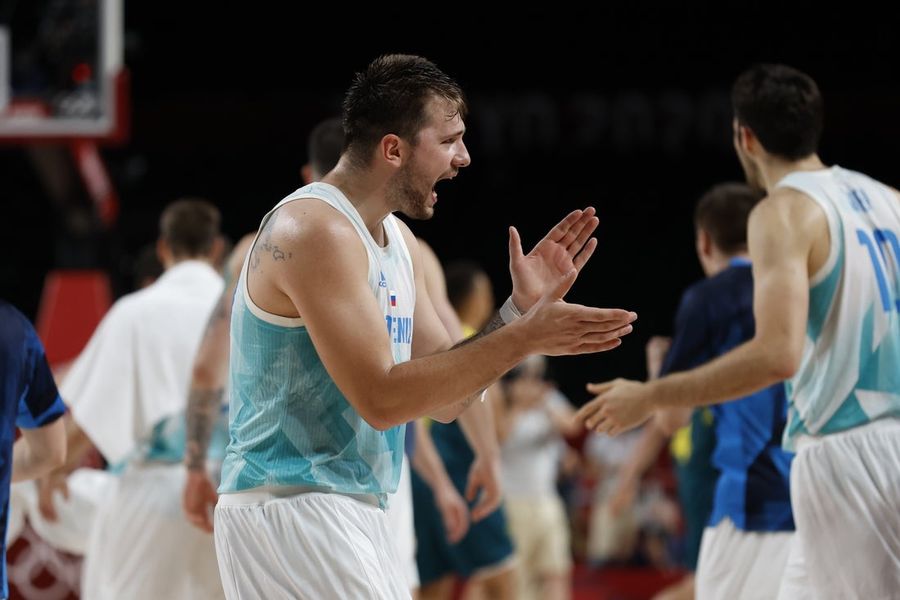
Deadspin | Luka Doncic won’t play for Slovenian national team amid custody battle  Aug 7, 2021; Saitama, Japan; Team Slovenia point guard Luka Doncic (77) reacts on the court during the fourth quarter against Australia during the Tokyo 2020 Olympic Summer Games at Saitama Super Arena. Mandatory Credit: Geoff Burke-Imagn Images   Los Angeles Lakers star Luke Doncic will not play for the Slovenian national team this summer, instead prioritizing his daughters.  Doncic is the father of 3-year-old Gabriela and 5-month-old Olivia. Their mother is his ex-fiancee, Anamaria Goltes, with whom he is fighting over custody of the girls. Doncic announced their split in March.  He announced his summer plans via Instagram after the Lakers’ season ended Monday night with a playoff loss to the Oklahoma City Thunder.  “I love my daughters more than anything, and they will always come first in my life. As I continue working toward joint custody of my daughters, I have been forced to make a difficult decision between traveling and playing for the Slovenian national team and being with my daughters this summer.  “Unfortunately, it has been made extremely difficult for me to see them over the past eight months.”   Goltes lives in Europe. Still, she filed a petition for child support and attorney’s fees in Los Angeles, and Slovenian courts also are expected to be involved.  Now 27, Doncic has played for his national team since age 16. He led Slovenia in the 2020 Olympics with 28.3 points, 10.7 rebounds and 7.0 assists. The team did not advance out of pool play.  In the NBA, the Lakers were swept in the Western Conference semifinals by the Thunder. They defeated the Houston Rockets in the opening round.  Doncic missed both series after suffering a serious left-hamstring strain on April 2. He led the NBA in scoring this season with 33.5 points per game and shot 36.6% from long range. Injuries limited him to 64 games.  –Field Level Media    #Deadspin #Luka #Doncic #wont #play #Slovenian #national #team #custody #battleAug 7, 2021; Saitama, Japan; Team Slovenia point guard Luka Doncic (77) reacts on the court during the fourth quarter against Australia during the Tokyo 2020 Olympic Summer Games at Saitama Super Arena. Mandatory Credit: Geoff Burke-Imagn Images

Los Angeles Lakers star Luke Doncic will not play for the Slovenian national team this summer, instead prioritizing his daughters.

Doncic is the father of 3-year-old Gabriela and 5-month-old Olivia. Their mother is his ex-fiancee, Anamaria Goltes, with whom he is fighting over custody of the girls. Doncic announced their split in March.

He announced his summer plans via Instagram after the Lakers’ season ended Monday night with a playoff loss to the Oklahoma City Thunder.

“I love my daughters more than anything, and they will always come first in my life. As I continue working toward joint custody of my daughters, I have been forced to make a difficult decision between traveling and playing for the Slovenian national team and being with my daughters this summer.


“Unfortunately, it has been made extremely difficult for me to see them over the past eight months.”

Goltes lives in Europe. Still, she filed a petition for child support and attorney’s fees in Los Angeles, and Slovenian courts also are expected to be involved.

Now 27, Doncic has played for his national team since age 16. He led Slovenia in the 2020 Olympics with 28.3 points, 10.7 rebounds and 7.0 assists. The team did not advance out of pool play.

In the NBA, the Lakers were swept in the Western Conference semifinals by the Thunder. They defeated the Houston Rockets in the opening round.

Doncic missed both series after suffering a serious left-hamstring strain on April 2. He led the NBA in scoring this season with 33.5 points per game and shot 36.6% from long range. Injuries limited him to 64 games.


–Field Level Media

#Deadspin #Luka #Doncic #wont #play #Slovenian #national #team #custody #battle

Aug 7, 2021; Saitama, Japan; Team Slovenia point guard Luka Doncic (77) reacts on the court during the fourth quarter against Australia during the Tokyo 2020 Olympic Summer Games at Saitama Super Arena. Mandatory Credit: Geoff Burke-Imagn Images

Los Angeles Lakers star Luke Doncic will not play for the Slovenian national team this summer, instead prioritizing his daughters.

Doncic is the father of 3-year-old Gabriela and 5-month-old Olivia. Their mother is his ex-fiancee, Anamaria Goltes, with whom he is fighting over custody of the girls. Doncic announced their split in March.

He announced his summer plans via Instagram after the Lakers’ season ended Monday night with a playoff loss to the Oklahoma City Thunder.

“I love my daughters more than anything, and they will always come first in my life. As I continue working toward joint custody of my daughters, I have been forced to make a difficult decision between traveling and playing for the Slovenian national team and being with my daughters this summer.

“Unfortunately, it has been made extremely difficult for me to see them over the past eight months.”

Goltes lives in Europe. Still, she filed a petition for child support and attorney’s fees in Los Angeles, and Slovenian courts also are expected to be involved.

Now 27, Doncic has played for his national team since age 16. He led Slovenia in the 2020 Olympics with 28.3 points, 10.7 rebounds and 7.0 assists. The team did not advance out of pool play.

In the NBA, the Lakers were swept in the Western Conference semifinals by the Thunder. They defeated the Houston Rockets in the opening round.

Doncic missed both series after suffering a serious left-hamstring strain on April 2. He led the NBA in scoring this season with 33.5 points per game and shot 36.6% from long range. Injuries limited him to 64 games.

–Field Level Media

Source link
#Deadspin #Luka #Doncic #wont #play #Slovenian #national #team #custody #battle

Scotland’s time in the 2026 World Cup may have been short-lived, but the fans’ effect on Boston will live on for a long, long time. Visitors took over the city, integrated themselves to their hosts, and had an absolute ball during the group stage of the tournament. Now some of them are back, for the best reason imaginable.

A handful of Scotland fans have returned, with a traffic cone adorned in designs that honor Boston. It was created by a fan/artist who fell in love with scenes of Scottish fans in Boston, with the traffic cone becoming synonymous with the fanbase due to their penchant for playfully putting them on the heads of statues, most notably the Duke of Wellington’s statue in Glasgow.

This new iteration of the cone is going to be touring the city to raise money and awareness for mental health charities. Seen as a symbol of friendship, it’s designed to foster friendship between the cities which will hopefully last long past the World Cup.

#Scotland #fans #returning #Boston #reason">Scotland fans are returning to Boston for the best reason  Scotland’s time in the 2026 World Cup may have been short-lived, but the fans’ effect on Boston will live on for a long, long time. Visitors took over the city, integrated themselves to their hosts, and had an absolute ball during the group stage of the tournament. Now some of them are back, for the best reason imaginable. 


        View this post on Instagram            


A handful of Scotland fans have returned, with a traffic cone adorned in designs that honor Boston. It was created by a fan/artist who fell in love with scenes of Scottish fans in Boston, with the traffic cone becoming synonymous with the fanbase due to their penchant for playfully putting them on the heads of statues, most notably the Duke of Wellington’s statue in Glasgow.

This new iteration of the cone is going to be touring the city to raise money and awareness for mental health charities. Seen as a symbol of friendship, it’s designed to foster friendship between the cities which will hopefully last long past the World Cup.  #Scotland #fans #returning #Boston #reason

Visitors took over the city, integrated themselves to their hosts, and had an absolute ball during the group stage of the tournament. Now some of them are back, for the best reason imaginable.

A handful of Scotland fans have returned, with a traffic cone adorned in designs that honor Boston. It was created by a fan/artist who fell in love with scenes of Scottish fans in Boston, with the traffic cone becoming synonymous with the fanbase due to their penchant for playfully putting them on the heads of statues, most notably the Duke of Wellington’s statue in Glasgow.

This new iteration of the cone is going to be touring the city to raise money and awareness for mental health charities. Seen as a symbol of friendship, it’s designed to foster friendship between the cities which will hopefully last long past the World Cup.

#Scotland #fans #returning #Boston #reason">Scotland fans are returning to Boston for the best reason

Scotland’s time in the 2026 World Cup may have been short-lived, but the fans’ effect on Boston will live on for a long, long time. Visitors took over the city, integrated themselves to their hosts, and had an absolute ball during the group stage of the tournament. Now some of them are back, for the best reason imaginable.

A handful of Scotland fans have returned, with a traffic cone adorned in designs that honor Boston. It was created by a fan/artist who fell in love with scenes of Scottish fans in Boston, with the traffic cone becoming synonymous with the fanbase due to their penchant for playfully putting them on the heads of statues, most notably the Duke of Wellington’s statue in Glasgow.

This new iteration of the cone is going to be touring the city to raise money and awareness for mental health charities. Seen as a symbol of friendship, it’s designed to foster friendship between the cities which will hopefully last long past the World Cup.

#Scotland #fans #returning #Boston #reason

Antonio Rattin’s red card (1966 World Cup quarterfinal)

The rivalry’s first great flashpoint came at Wembley when Argentina captain Antonio Rattin was sent off for “violence of the tongue”, despite no common language existing between him and German referee Rudolf Kreitlein. Rattin refused to leave for nearly eight minutes, sat on the royal carpet and had to be escorted off. England won 1-0, but the aftermath proved equally explosive as England manager Alf Ramsey prevented his players from exchanging shirts with Argentina, later branding the visitors “animals”.

Diego Maradona’s “Hand of God” (1986 World Cup quarterfinal)

5 World Cup Controversies That Made England vs Argentina Legendary  Antonio Rattin’s red card (1966 World Cup quarterfinal)The rivalry’s first great flashpoint came at Wembley when Argentina captain Antonio Rattin was sent off for “violence of the tongue”, despite no common language existing between him and German referee Rudolf Kreitlein. Rattin refused to leave for nearly eight minutes, sat on the royal carpet and had to be escorted off. England won 1-0, but the aftermath proved equally explosive as England manager Alf Ramsey prevented his players from exchanging shirts with Argentina, later branding the visitors “animals”.Diego Maradona’s “Hand of God” (1986 World Cup quarterfinal) Diego Maradona punches home the infamous “Hand of God” goal past England goalkeeper Peter Shilton during the 1986 World Cup quarterfinal in Mexico City.
                                                            | Photo Credit: 
                                Getty Images
                            

                            Diego Maradona punches home the infamous “Hand of God” goal past England goalkeeper Peter Shilton during the 1986 World Cup quarterfinal in Mexico City.
                                                            | Photo Credit: 
                                Getty Images
                                                    Six minutes into the second half in Mexico City, Diego Maradona leapt with England goalkeeper Peter Shilton and punched the ball into the net with his left fist. The Tunisian referee Ali Bin Nasser and his assistants missed the infringement, allowing the goal to stand. Maradona later described it as being scored “a little with the head of Maradona and a little with the hand of God”. Argentina won 2-1, with Maradona also scoring the celebrated “Goal of the Century” minutes later.David Beckham’s red card (1998 World Cup Round of 16) David Beckham was sent off for kicking out at Argentina’s Diego Simeone early in the second half of their 1998 World Cup Round of 16 match.
                                                            | Photo Credit: 
                                Getty Images
                            

                            David Beckham was sent off for kicking out at Argentina’s Diego Simeone early in the second half of their 1998 World Cup Round of 16 match.
                                                            | Photo Credit: 
                                Getty Images
                                                    With the score at 2-2 in Saint-Etienne, England midfielder David Beckham was sent off early in the second half after kicking out at Diego Simeone following a foul. Referee Kim Milton Nielsen judged the retaliation worthy of a red card. Reduced to 10 men, England held on until penalties before losing the shootout. Beckham became a national villain overnight, while many England supporters accused Simeone of exaggerating the contact.Sol Campbell’s disallowed extra-time goal (1998 World Cup Round of 16) Sol Campbell of England celebrates scoring a goal, which is later disallowed due to Alan Shearer of England infringing Argentina goalkeeper Carlos Roa.
                                                            | Photo Credit: 
                                Getty Images
                            

                            Sol Campbell of England celebrates scoring a goal, which is later disallowed due to Alan Shearer of England infringing Argentina goalkeeper Carlos Roa.
                                                            | Photo Credit: 
                                Getty Images
                                                    The same 1998 tie produced another controversy. In extra time, Sol Campbell headed England into what appeared to be a golden-goal winner. Referee Kim Milton Nielsen, however, ruled the goal out for a foul by Alan Shearer on Argentine goalkeeper Carlos Roa. The match remained level and Argentina eventually prevailed in the penalty shootout (4-3).Michael Owen’s controversial penalty against Mauricio Pochettino (2002 World Cup group stage) England’s Michael Owen is fouled by Argentina’s Mauricio Pochettino which resulted in a penalty kick and England’s winning goal 
                                                            | Photo Credit: 
                                Getty Images
                            

                            England’s Michael Owen is fouled by Argentina’s Mauricio Pochettino which resulted in a penalty kick and England’s winning goal 
                                                            | Photo Credit: 
                                Getty Images
                                                    England’s only goal in its 1-0 victory over Argentina came from a penalty that has remained fiercely debated. Just before half-time, Michael Owen burst into the penalty area and went down after contact from defender Mauricio Pochettino. Referee Pierluigi Collina pointed to the spot, and David Beckham converted. While England argued Pochettino had clipped Owen, Argentina insisted the striker had exaggerated the contact. Years later, Owen admitted he could have stayed on his feet, keeping alive one of the rivalry’s most disputed refereeing decisions.Published on Jul 15, 2026  #World #Cup #Controversies #England #Argentina #Legendary

Diego Maradona punches home the infamous “Hand of God” goal past England goalkeeper Peter Shilton during the 1986 World Cup quarterfinal in Mexico City. | Photo Credit: Getty Images

lightbox-info

Diego Maradona punches home the infamous “Hand of God” goal past England goalkeeper Peter Shilton during the 1986 World Cup quarterfinal in Mexico City. | Photo Credit: Getty Images

Six minutes into the second half in Mexico City, Diego Maradona leapt with England goalkeeper Peter Shilton and punched the ball into the net with his left fist. The Tunisian referee Ali Bin Nasser and his assistants missed the infringement, allowing the goal to stand. Maradona later described it as being scored “a little with the head of Maradona and a little with the hand of God”. Argentina won 2-1, with Maradona also scoring the celebrated “Goal of the Century” minutes later.

David Beckham’s red card (1998 World Cup Round of 16)

David Beckham was sent off for kicking out at Argentina’s Diego Simeone early in the second half of their 1998 World Cup Round of 16 match.

David Beckham was sent off for kicking out at Argentina’s Diego Simeone early in the second half of their 1998 World Cup Round of 16 match. | Photo Credit: Getty Images

lightbox-info

David Beckham was sent off for kicking out at Argentina’s Diego Simeone early in the second half of their 1998 World Cup Round of 16 match. | Photo Credit: Getty Images

With the score at 2-2 in Saint-Etienne, England midfielder David Beckham was sent off early in the second half after kicking out at Diego Simeone following a foul. Referee Kim Milton Nielsen judged the retaliation worthy of a red card. Reduced to 10 men, England held on until penalties before losing the shootout. Beckham became a national villain overnight, while many England supporters accused Simeone of exaggerating the contact.

Sol Campbell’s disallowed extra-time goal (1998 World Cup Round of 16)

Sol Campbell of England celebrates scoring a goal, which is later disallowed due to Alan Shearer of England infringing Argentina goalkeeper Carlos Roa.

Sol Campbell of England celebrates scoring a goal, which is later disallowed due to Alan Shearer of England infringing Argentina goalkeeper Carlos Roa. | Photo Credit: Getty Images

lightbox-info

Sol Campbell of England celebrates scoring a goal, which is later disallowed due to Alan Shearer of England infringing Argentina goalkeeper Carlos Roa. | Photo Credit: Getty Images

The same 1998 tie produced another controversy. In extra time, Sol Campbell headed England into what appeared to be a golden-goal winner. Referee Kim Milton Nielsen, however, ruled the goal out for a foul by Alan Shearer on Argentine goalkeeper Carlos Roa. The match remained level and Argentina eventually prevailed in the penalty shootout (4-3).

Michael Owen’s controversial penalty against Mauricio Pochettino (2002 World Cup group stage)

England’s Michael Owen is fouled by Argentina’s Mauricio Pochettino which resulted in a penalty kick and England’s winning goal 

England’s Michael Owen is fouled by Argentina’s Mauricio Pochettino which resulted in a penalty kick and England’s winning goal  | Photo Credit: Getty Images

lightbox-info

England’s Michael Owen is fouled by Argentina’s Mauricio Pochettino which resulted in a penalty kick and England’s winning goal  | Photo Credit: Getty Images

England’s only goal in its 1-0 victory over Argentina came from a penalty that has remained fiercely debated. Just before half-time, Michael Owen burst into the penalty area and went down after contact from defender Mauricio Pochettino. Referee Pierluigi Collina pointed to the spot, and David Beckham converted. While England argued Pochettino had clipped Owen, Argentina insisted the striker had exaggerated the contact. Years later, Owen admitted he could have stayed on his feet, keeping alive one of the rivalry’s most disputed refereeing decisions.

Published on Jul 15, 2026

#World #Cup #Controversies #England #Argentina #Legendary">5 World Cup Controversies That Made England vs Argentina Legendary  Antonio Rattin’s red card (1966 World Cup quarterfinal)The rivalry’s first great flashpoint came at Wembley when Argentina captain Antonio Rattin was sent off for “violence of the tongue”, despite no common language existing between him and German referee Rudolf Kreitlein. Rattin refused to leave for nearly eight minutes, sat on the royal carpet and had to be escorted off. England won 1-0, but the aftermath proved equally explosive as England manager Alf Ramsey prevented his players from exchanging shirts with Argentina, later branding the visitors “animals”.Diego Maradona’s “Hand of God” (1986 World Cup quarterfinal) Diego Maradona punches home the infamous “Hand of God” goal past England goalkeeper Peter Shilton during the 1986 World Cup quarterfinal in Mexico City.
                                                            | Photo Credit: 
                                Getty Images
                            

                            Diego Maradona punches home the infamous “Hand of God” goal past England goalkeeper Peter Shilton during the 1986 World Cup quarterfinal in Mexico City.
                                                            | Photo Credit: 
                                Getty Images
                                                    Six minutes into the second half in Mexico City, Diego Maradona leapt with England goalkeeper Peter Shilton and punched the ball into the net with his left fist. The Tunisian referee Ali Bin Nasser and his assistants missed the infringement, allowing the goal to stand. Maradona later described it as being scored “a little with the head of Maradona and a little with the hand of God”. Argentina won 2-1, with Maradona also scoring the celebrated “Goal of the Century” minutes later.David Beckham’s red card (1998 World Cup Round of 16) David Beckham was sent off for kicking out at Argentina’s Diego Simeone early in the second half of their 1998 World Cup Round of 16 match.
                                                            | Photo Credit: 
                                Getty Images
                            

                            David Beckham was sent off for kicking out at Argentina’s Diego Simeone early in the second half of their 1998 World Cup Round of 16 match.
                                                            | Photo Credit: 
                                Getty Images
                                                    With the score at 2-2 in Saint-Etienne, England midfielder David Beckham was sent off early in the second half after kicking out at Diego Simeone following a foul. Referee Kim Milton Nielsen judged the retaliation worthy of a red card. Reduced to 10 men, England held on until penalties before losing the shootout. Beckham became a national villain overnight, while many England supporters accused Simeone of exaggerating the contact.Sol Campbell’s disallowed extra-time goal (1998 World Cup Round of 16) Sol Campbell of England celebrates scoring a goal, which is later disallowed due to Alan Shearer of England infringing Argentina goalkeeper Carlos Roa.
                                                            | Photo Credit: 
                                Getty Images
                            

                            Sol Campbell of England celebrates scoring a goal, which is later disallowed due to Alan Shearer of England infringing Argentina goalkeeper Carlos Roa.
                                                            | Photo Credit: 
                                Getty Images
                                                    The same 1998 tie produced another controversy. In extra time, Sol Campbell headed England into what appeared to be a golden-goal winner. Referee Kim Milton Nielsen, however, ruled the goal out for a foul by Alan Shearer on Argentine goalkeeper Carlos Roa. The match remained level and Argentina eventually prevailed in the penalty shootout (4-3).Michael Owen’s controversial penalty against Mauricio Pochettino (2002 World Cup group stage) England’s Michael Owen is fouled by Argentina’s Mauricio Pochettino which resulted in a penalty kick and England’s winning goal 
                                                            | Photo Credit: 
                                Getty Images
                            

                            England’s Michael Owen is fouled by Argentina’s Mauricio Pochettino which resulted in a penalty kick and England’s winning goal 
                                                            | Photo Credit: 
                                Getty Images
                                                    England’s only goal in its 1-0 victory over Argentina came from a penalty that has remained fiercely debated. Just before half-time, Michael Owen burst into the penalty area and went down after contact from defender Mauricio Pochettino. Referee Pierluigi Collina pointed to the spot, and David Beckham converted. While England argued Pochettino had clipped Owen, Argentina insisted the striker had exaggerated the contact. Years later, Owen admitted he could have stayed on his feet, keeping alive one of the rivalry’s most disputed refereeing decisions.Published on Jul 15, 2026  #World #Cup #Controversies #England #Argentina #Legendary

Post Comment