×
THE HISTORY OF CHARGING THE MOUND, EPISODE 4: GEORGE BELL  In episode three of this series, I began a two-part exploration of the encounter between Toronto’s George Bell and Boston’s Bruce Kison on June 23rd, 1985. Having visited Kison side of things, we will now consider the life and times of George Bell.In the late 1970s scouts all around major league baseball began descending upon the Dominican Republic, which had suddenly been identified as highly lucrative territory. The DR was home to countless talented young ball players and those ball players due to the country’s dire economic conditions were highly exploitable.With the unemployment rate around 40% teams realized they could sign players for a lot less than American prospects asked for. And if those Dominican players did happen to get signed by a major league team, they were sent to the states socially isolated by the language barrier and dependent upon agents who were often crooked and looking to swindle ‘em all over again.A cruel irony recalled by George Bell, one of those young Dominican players, was that while navigating this labyrinth of shameless exploitation, he was the one looked at with suspicion. American players found any reason they could to dislike him. His English wasn’t polished enough, he was too this, not enough that, didn’t play the game the right way.In 1982, while playing for minor league Syracuse, Bell stepped in against Lynn McGlothen, an 11 year Major League vet pitching in AAA ball in the hopes of one last call up. In a game years earlier while pitching for the Cardinals, McGlothen beamed one New York Mets batter then brushed back another three innings later, then hit that batter too. The intent was so transparently clear that the Mets Dave Kingman charged the mound straight from the dugout.McGlothen did not hesitate to throw at a batter if he had the inclination and he seemed to resent George Bell for the same superficial reasons everybody else did. Bell was a hotdogger. It was decided. McGlothen drilled him in the face, fracturing his cheek and jawbones. While his teammates stormed the field to exact revenge, Bell arrived on the ground certain that his career in baseball, his one chance at a better life was over.“He’s dead,” Bell thought of McGlothen, not because Bell would kill him or because his teammates would, but because fate would one day catch up with him.Two years later, McGlothen lost his life in a fire. His friend was also killed with everyone else escaping the home. Bell who’d fully recovered and made his way to the majors, addressed the tragedy sometime after seemingly unprompted. He expressed his sympathies for the friends and loved ones of those who died then said in McGlothen’s fate, “People like that decide it. They have a bad heart. No way they can stay alive.”You might find those words to be callous, even cruel. I mean I do. Then again, I doubt either of us have persevered through the circumstances Bell did only for somebody to break his face and potentially ruin his life just for playing baseball with a little bit too much swagger.Baseball was George Bell’s one and only chance at a better life, the sort of life we’d wish for anybody, and he was fiercely, sometimes even violently protective of that chance.  #HISTORY #CHARGING #MOUND #EPISODE #GEORGE #BELL

THE HISTORY OF CHARGING THE MOUND, EPISODE 4: GEORGE BELL

In episode three of this series, I began a two-part exploration of the encounter between Toronto’s George Bell and Boston’s Bruce Kison on June 23rd, 1985. Having visited Kison side of things, we will now consider the life and times of George Bell.

In the late 1970s scouts all around major league baseball began descending upon the Dominican Republic, which had suddenly been identified as highly lucrative territory. The DR was home to countless talented young ball players and those ball players due to the country’s dire economic conditions were highly exploitable.

With the unemployment rate around 40% teams realized they could sign players for a lot less than American prospects asked for. And if those Dominican players did happen to get signed by a major league team, they were sent to the states socially isolated by the language barrier and dependent upon agents who were often crooked and looking to swindle ‘em all over again.

A cruel irony recalled by George Bell, one of those young Dominican players, was that while navigating this labyrinth of shameless exploitation, he was the one looked at with suspicion. American players found any reason they could to dislike him. His English wasn’t polished enough, he was too this, not enough that, didn’t play the game the right way.

In 1982, while playing for minor league Syracuse, Bell stepped in against Lynn McGlothen, an 11 year Major League vet pitching in AAA ball in the hopes of one last call up. In a game years earlier while pitching for the Cardinals, McGlothen beamed one New York Mets batter then brushed back another three innings later, then hit that batter too. The intent was so transparently clear that the Mets Dave Kingman charged the mound straight from the dugout.

McGlothen did not hesitate to throw at a batter if he had the inclination and he seemed to resent George Bell for the same superficial reasons everybody else did. Bell was a hotdogger. It was decided. McGlothen drilled him in the face, fracturing his cheek and jawbones. While his teammates stormed the field to exact revenge, Bell arrived on the ground certain that his career in baseball, his one chance at a better life was over.

“He’s dead,” Bell thought of McGlothen, not because Bell would kill him or because his teammates would, but because fate would one day catch up with him.

Two years later, McGlothen lost his life in a fire. His friend was also killed with everyone else escaping the home. Bell who’d fully recovered and made his way to the majors, addressed the tragedy sometime after seemingly unprompted. He expressed his sympathies for the friends and loved ones of those who died then said in McGlothen’s fate, “People like that decide it. They have a bad heart. No way they can stay alive.”

You might find those words to be callous, even cruel. I mean I do. Then again, I doubt either of us have persevered through the circumstances Bell did only for somebody to break his face and potentially ruin his life just for playing baseball with a little bit too much swagger.

Baseball was George Bell’s one and only chance at a better life, the sort of life we’d wish for anybody, and he was fiercely, sometimes even violently protective of that chance.
#HISTORY #CHARGING #MOUND #EPISODE #GEORGE #BELL

In episode three of this series, I began a two-part exploration of the encounter between Toronto’s George Bell and Boston’s Bruce Kison on June 23rd, 1985. Having visited Kison side of things, we will now consider the life and times of George Bell.

In the late 1970s scouts all around major league baseball began descending upon the Dominican Republic, which had suddenly been identified as highly lucrative territory. The DR was home to countless talented young ball players and those ball players due to the country’s dire economic conditions were highly exploitable.

With the unemployment rate around 40% teams realized they could sign players for a lot less than American prospects asked for. And if those Dominican players did happen to get signed by a major league team, they were sent to the states socially isolated by the language barrier and dependent upon agents who were often crooked and looking to swindle ‘em all over again.

A cruel irony recalled by George Bell, one of those young Dominican players, was that while navigating this labyrinth of shameless exploitation, he was the one looked at with suspicion. American players found any reason they could to dislike him. His English wasn’t polished enough, he was too this, not enough that, didn’t play the game the right way.

In 1982, while playing for minor league Syracuse, Bell stepped in against Lynn McGlothen, an 11 year Major League vet pitching in AAA ball in the hopes of one last call up. In a game years earlier while pitching for the Cardinals, McGlothen beamed one New York Mets batter then brushed back another three innings later, then hit that batter too. The intent was so transparently clear that the Mets Dave Kingman charged the mound straight from the dugout.

McGlothen did not hesitate to throw at a batter if he had the inclination and he seemed to resent George Bell for the same superficial reasons everybody else did. Bell was a hotdogger. It was decided. McGlothen drilled him in the face, fracturing his cheek and jawbones. While his teammates stormed the field to exact revenge, Bell arrived on the ground certain that his career in baseball, his one chance at a better life was over.

“He’s dead,” Bell thought of McGlothen, not because Bell would kill him or because his teammates would, but because fate would one day catch up with him.

Two years later, McGlothen lost his life in a fire. His friend was also killed with everyone else escaping the home. Bell who’d fully recovered and made his way to the majors, addressed the tragedy sometime after seemingly unprompted. He expressed his sympathies for the friends and loved ones of those who died then said in McGlothen’s fate, “People like that decide it. They have a bad heart. No way they can stay alive.”

You might find those words to be callous, even cruel. I mean I do. Then again, I doubt either of us have persevered through the circumstances Bell did only for somebody to break his face and potentially ruin his life just for playing baseball with a little bit too much swagger.

Baseball was George Bell’s one and only chance at a better life, the sort of life we’d wish for anybody, and he was fiercely, sometimes even violently protective of that chance.

Source link
#HISTORY #CHARGING #MOUND #EPISODE #GEORGE #BELL

Previous post

Indore News:अभ्यास मंडल की व्याख्यानमाला में वक्ता ने कहा -हमारी संस्कृति के साथ बने नई सोच का नया भारत

Next post

इंदौर में स्वच्छ परिवहन की दिशा में हो रहे बदलावों में इलेक्ट्रिक व्हीकल चार्जिंग इंफ्रास्ट्रक्चर

When I arrived to cover the Minnesota Vikings for the St. Paul Pioneer Press in 2000, it was clear I was dealing with a star-studded roster.

The team boasted future Pro Football Hall of Famers; wide receivers Cris Carter and Randy Moss and defensive tackle John Randle. Plus, there were a ton of other stars including quarterback Daunte Culpepper, center Matt Birk and running back Robert Smith. The Vikings were loaded with star power.

The talent around the team wasn’t relegated simply to the roster, however.

That summer I first laid my eyes on a 16-year-old high school junior named Larry Fitzgerald Jr. The son of a local media member and close friend of Vikings’ head coach Dennis Green, Little Fitzy was a ball boy during training camp and on game days. It turns out, Larry Fitzgerald Jr. is very likely the most famous former NFL ball boy in history.

On reporting date, fellow reporter Kevin Seifert pointed out Fitzgerald to me and said “that’s a bad man.” Seifert didn’t say that about any of the actual Vikings that day.

Fitzgerald was already known as the best Minnesota high school prospect in years and he was considered one of the best high school players in the country. Seifert told me the buzz was that the kid was, no doubt, headed to the NFL in a half decade or so. Seifert was on the money. I’m not sure the Hall of Fame was mentioned or not.

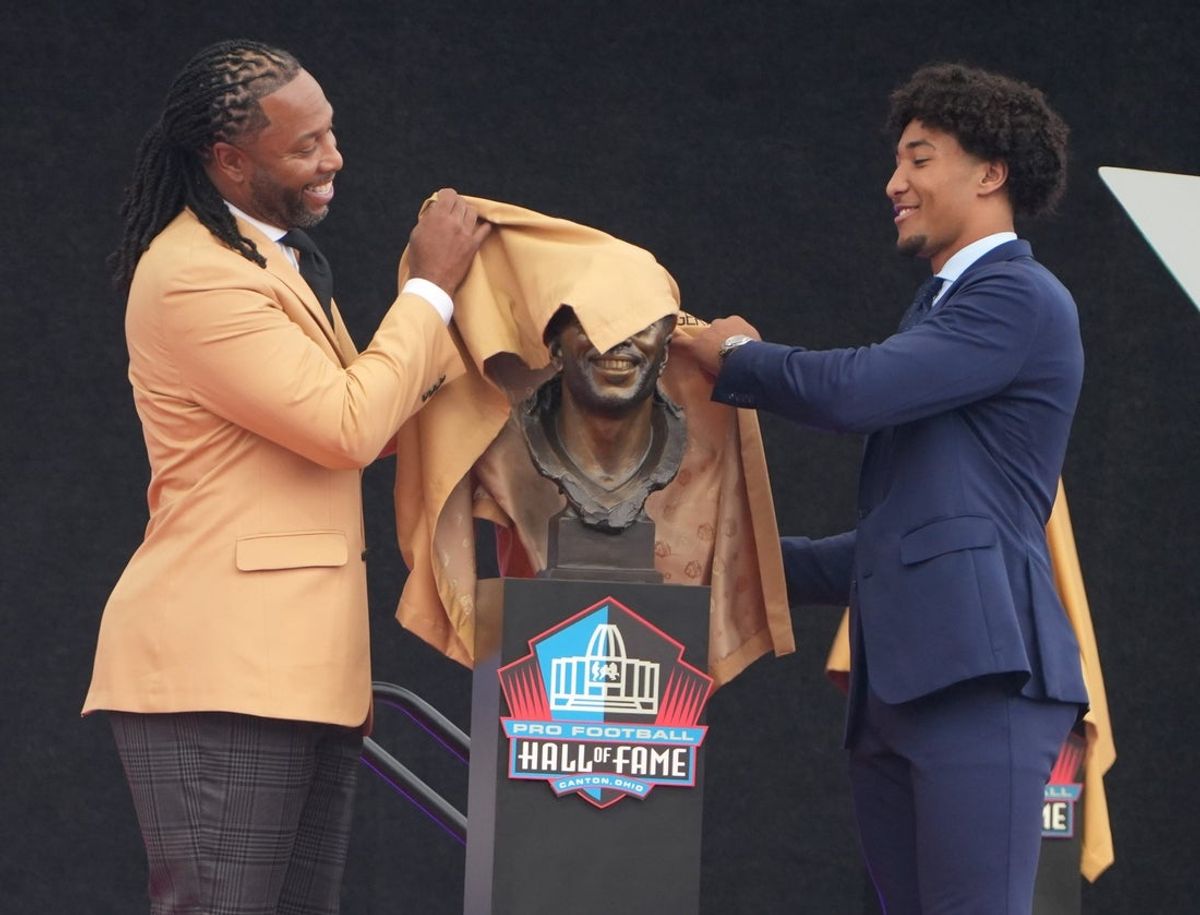
But this weekend of course, that’s exactly where Little Fitzy is headed. He will be enshrined into the Pro Football Hall of Fame in Canton, Ohio, on Saturday as a first-ballot Hall of Famer.

Fitzgerald will be remembered as one of the best and most productive wide receivers in league history after an incredible 17-season career with the Arizona Cardinals.

I have a ton of memories of being around Fitzgerald, but there’s one that stands out among them all.

One day after training camp, a nameless Vikings’ wide receiver camp body was getting extra work on a JUGS machine, catching balls. He was being tutored by Fitzgerald, who was showing this player how to properly approach the incoming ball. This was a child instructing a grown man an NFL team deemed good enough to attend training camp.

Larry Fitzgerald Jr. was special even back then.

In addition to his incredible natural football ability, Larry Fitzgerald Jr. stood out for his politeness and good nature. You could tell he was a good kid from the first time you met him.

There was no I’m-going-to-be-a-star attitude. He was genuine and he worked his tail off with the rest of the ball boys. There was no entitlement. It was as if he was using his time around an NFL camp as an internship for his future. He passed with flying colors.

I’ve always cherished following his career from his days at Pittsburgh in college to his days of dominating the NFL and I’ve enjoyed running into him over the years now and again.

Enjoy Canton, Little Fitzy, you’ve earned it.

#Larry #Fitzgeralds #Hall #Fame #induction #years #making">Larry Fitzgerald’s Hall of Fame induction is 25 years in the making  When I arrived to cover the Minnesota Vikings for the St. Paul Pioneer Press in 2000, it was clear I was dealing with a star-studded roster.The team boasted future Pro Football Hall of Famers; wide receivers Cris Carter and Randy Moss and defensive tackle John Randle. Plus, there were a ton of other stars including quarterback Daunte Culpepper, center Matt Birk and running back Robert Smith. The Vikings were loaded with star power.The talent around the team wasn’t relegated simply to the roster, however.That summer I first laid my eyes on a 16-year-old high school junior named Larry Fitzgerald Jr. The son of a local media member and close friend of Vikings’ head coach Dennis Green, Little Fitzy was a ball boy during training camp and on game days. It turns out, Larry Fitzgerald Jr. is very likely the most famous former NFL ball boy in history.On reporting date, fellow reporter Kevin Seifert pointed out Fitzgerald to me and said “that’s a bad man.” Seifert didn’t say that about any of the actual Vikings that day.Fitzgerald was already known as the best Minnesota high school prospect in years and he was considered one of the best high school players in the country. Seifert told me the buzz was that the kid was, no doubt, headed to the NFL in a half decade or so. Seifert was on the money. I’m not sure the Hall of Fame was mentioned or not.But this weekend of course, that’s exactly where Little Fitzy is headed. He will be enshrined into the Pro Football Hall of Fame in Canton, Ohio, on Saturday as a first-ballot Hall of Famer.Fitzgerald will be remembered as one of the best and most productive wide receivers in league history after an incredible 17-season career with the Arizona Cardinals.I have a ton of memories of being around Fitzgerald, but there’s one that stands out among them all.One day after training camp, a nameless Vikings’ wide receiver camp body was getting extra work on a JUGS machine, catching balls. He was being tutored by Fitzgerald, who was showing this player how to properly approach the incoming ball. This was a child instructing a grown man an NFL team deemed good enough to attend training camp.Larry Fitzgerald Jr. was special even back then.In addition to his incredible natural football ability, Larry Fitzgerald Jr. stood out for his politeness and good nature. You could tell he was a good kid from the first time you met him.There was no I’m-going-to-be-a-star attitude. He was genuine and he worked his tail off with the rest of the ball boys. There was no entitlement. It was as if he was using his time around an NFL camp as an internship for his future. He passed with flying colors.I’ve always cherished following his career from his days at Pittsburgh in college to his days of dominating the NFL and I’ve enjoyed running into him over the years now and again.Enjoy Canton, Little Fitzy, you’ve earned it.  #Larry #Fitzgeralds #Hall #Fame #induction #years #making

Follow Sportstar for extensive coverage of the tenth edition of the TNPL, from live scores and match reports to exclusive analysis and features.

TOSS

Tiruppur Tamizhans won the toss and chose to bowl first.

PLAYING XIs

Nellai Royal Kings: Athish SR(w), D Santhosh Kumar, Ajitesh Guruswamy, U Mukilesh, Rithik Easwaran, Sonu Yadav(c), Muhammed Adnan Khan, Ramalingam Rohit, Emmanuel Cherian, NS Harish, Rocky Bhasker

Tiruppur Tamizhans: Tushar Raheja(w), Amit Sathvik, Pradosh Ranjan Paul, Mohamed Ali, Uthirasamy Sasidev, Ravisrinivasan Sai Kishore(c), M Mathivannan, S Mohan Prasath, R Silambarasan, Esakkimuthu A, T Natarajan

Published on Aug 09, 2026

#TNPL #Live #Allround #batting #display #propels #Nellai #Royal #Kings">TNPL 2026 Live: All-round batting display propels Nellai Royal Kings to 206/8  Follow Sportstar for extensive coverage of the tenth edition of the TNPL, from live scores and match reports to exclusive analysis and features.TOSSTiruppur Tamizhans won the toss and chose to bowl first.PLAYING XIsNellai Royal Kings: Athish SR(w), D Santhosh Kumar, Ajitesh Guruswamy, U Mukilesh, Rithik Easwaran, Sonu Yadav(c), Muhammed Adnan Khan, Ramalingam Rohit, Emmanuel Cherian, NS Harish, Rocky BhaskerTiruppur Tamizhans: Tushar Raheja(w), Amit Sathvik, Pradosh Ranjan Paul, Mohamed Ali, Uthirasamy Sasidev, Ravisrinivasan Sai Kishore(c), M Mathivannan, S Mohan Prasath, R Silambarasan, Esakkimuthu A, T NatarajanPublished on Aug 09, 2026  #TNPL #Live #Allround #batting #display #propels #Nellai #Royal #Kings

Post Comment