
We may receive a commission on purchases made from links.
J.R.R. Tolkien first published his fantasy adventure novel “The Hobbit” in 1937. The book was set in a fantasy kingdom called Middle-earth, and followed a jolly homunculus named Bilbo Baggins. “The Hobbit,” as we all know, led to “The Lord of the Rings” book series, begun in 1954. Tolkien’s fantasy universe was unbearably complex, with its own history, languages, folk music, and myriad other cultural details that Tolkien painstakingly invented and catalogued. Its complexity has ensured that detail-obsessed nerds would fall in love with the books in perpetuity. “Lord of the Rings” movies and TV shows are still being made to this day.
Perhaps following Tolkien’s lead, about a decade later, author Frank Herbert published “Dune,” a sci-fi novel with as deep and complex and impenetrable a history as “Lord of the Rings.” It was set in the very distant future and concerned several political powers trying to gain control of a rare substance called the Spice, which was only found on one planet in the galaxy, and which was necessary for space travel. Like Tolkien, Herbert invented a whole glossary of terms and fantastical elements for his epic universe. Herbert ended up writing five additional “Dune” novels that followed the original book’s central canon.
For many years (at least in the literary circles in which I personally ran), fans of the two series would often compare them, saying that “Dune” was the sci-fi version of “Lord of the Rings.” Although they were massively different in tone and theme, they certainly matched in mythological complexity.
Tolkien, however, might have taken exception to such a comparison. It seems that, back in 1966, Tolkien authored a letter to his friend and fan, John Bush, published in the volume “Tolkien’s Library: An Annotated Checklist,” wherein the author expressed open distaste for “Dune.”
J.R.R. Tolkein wrote back in 1966 that he disliked Dune
The letter in question was included in a footnote in “Tolkien’s Library,” which was handily photographed by the @SecretsOfDune Twitter/X account. It seems that a lot of J.R.R. Tolkien’s contemporaries wanted him to read “Dune,” as he was seemingly sent multiple copies of it by multiple friends. Maybe even Tolkien’s literary peers saw the parallels between Frank Herbert’s new sprawling sci-fi epic and Tolkien’s own fantasy universe. Tolkien tried to be diplomatic about his response to Herbert’s tome, noting that his opinion was definitely not going to be a matter of public record. Uh… sorry, J.R.R.
But couldn’t hide his dislike. Tolkien wrote:
“Thank you for sending me a copy of ‘Dune.’ I received one last year from [Sterling] Lanier and so already know something about the book. It’s impossible for an author still writing to be fair to another author working along the same lines. At least I find so. In fact, I dislike ‘Dune’ with some intensity, and in that unfortunate case, it is much the best and fairest to another author to keep silent and refuse to comment. Would you like me to return the book as I already have one, or to hand it on?”
Tolkien doesn’t explain why he had such a dislike of “Dune,” only noting his intensity of hate. Tolkien continued to write until his death in 1973. By then, Frank Herbert had already written his first “Dune” sequel, “Dune Messiah.” It’s possible that Tolkien bristled at Herbert’s work because “Dune” is very cynical about the political dimension of religion and how faith can be manipulated by humans to serve corrupt ends. Tolkien was a devout Catholic who wrote about the positive power of faith as a means to fight evil.
Lord of the Rings vs. Dune! Fight!
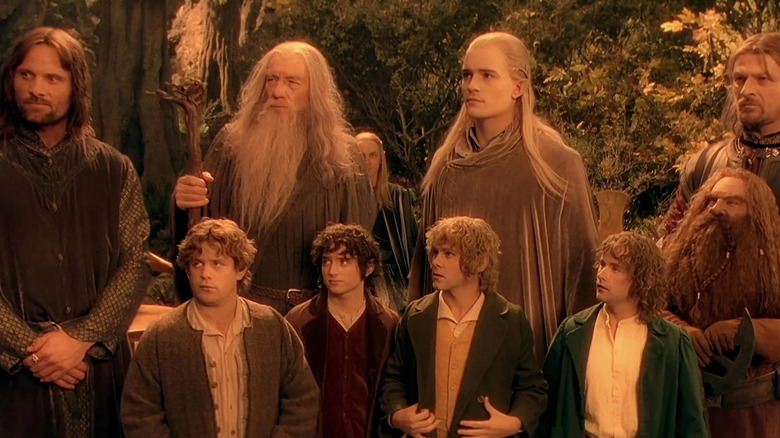
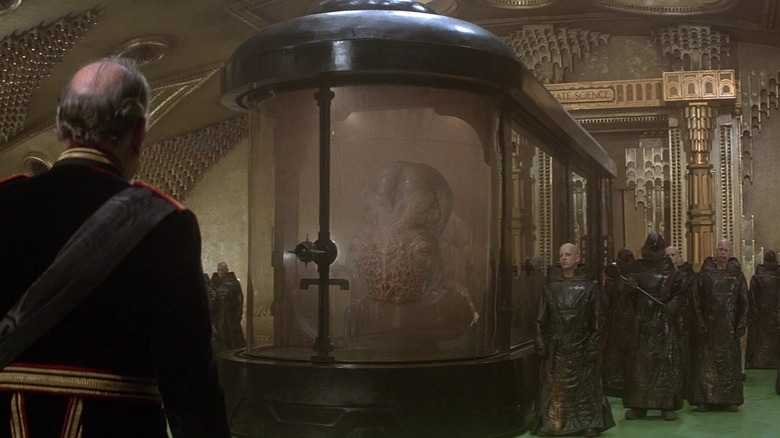
Of course, this sparks a fun pop culture debate akin to “Star Trek” vs. “Star Wars.” Which is the better complex fantasy universe? The one seen in “Lord of the Rings,” or in “Dune?” This debate can be sparked up again because Peter Jackson adapted the “The Hobbit” and “Lord of the Rings” into an ultra-successful sextet of feature films from 2001 through 2014. Meanwhile, Denis Villeneuve is poised to release his third “Dune” adaptation in 2026, wrapping up a series he began in 2021. Both film series have, in turn, inspired high-profile, big-budget TV shows. “The Lord of the Rings: The Rings of Power” debuted in 2022, and “Dune: Prophecy” in 2024. Both are prequels. The battle between the two has never been more alive.
But also, like the “Star Trek” vs. “Star Wars” debate, there will never be a clear “winner,” as it all boils down to taste. Fans of “Lord of the Rings” may like its complex history and mythology, but will find it to be quaint and gentle, especially when dealing with the hobbit characters. Tolkien was also a linguist and was interested in the culture, art, and songs of his fantasy characters. He wrote about legacy and honor and the wistful memories one gathers on the path to victory over evil.
Frank Herbert, meanwhile, had a harder-edged, drier, and more cerebral approach to his work, envisioning a distant future wracked by political turmoil and wars over limited resources. There was no honor on the planet of Arrakis that couldn’t be twisted into violence, and the sequels got into notions of genocide and jihad. There didn’t seem to be happy endings in “Dune.”
Which is better? You tell me.
Source link
#Lord #Rings #Author #J.R.R #Tolkien #Hatred #Dune #Books #SlashFilm


Post Comment