×
How Resale Culture Is Forcing Luxury Brands to Rethink Everything

How Resale Culture Is Forcing Luxury Brands to Rethink Everything

The luxury resale market is no longer a side conversation in the fashion industry. It grew from $37.95 billion in 2025 to $41.61 billion in 2026 at a compound annual growth rate of 9.6%, and is projected to reach $60.11 billion by 2030. Secondhand sales will grow two to three times faster than firsthand sales in the next two years, reaching $317 billion, according to the State of Fashion 2026 by Business of Fashion and McKinsey.

The global secondhand market sits at $393 billion and is growing faster than retail overall. Three forces are reshaping the market: technology reducing friction, consumers embedding resale into their financial lives, and brands playing a growing role. These are not just incremental numbers describing a niche, but also structural figures describing a fundamental shift in how people buy and value luxury goods, and the brands that have not yet built a coherent response to that shift are already behind.

Higher-spending luxury clients, not budget-conscious consumers, are the most engaged secondhand shoppers, according to BoF Insights and McKinsey. That finding is the one that most complicates the traditional luxury brand narrative. The assumption that secondhand shopping is primarily a price-sensitivity story is demonstrably wrong. A significant 58% of high-income shoppers now prefer authenticated secondhand goods over something off the rack.

More than 60% of luxury resale consumers cite affordability as the primary motivator, while 54% of buyers value sustainability, viewing resale as an ethical alternative to fast fashion. Both motivations are present simultaneously, and they serve different consumer segments, which means brands cannot address resale culture with a single strategy. They need one that speaks to the value-seeker and one that speaks to the values-seeker.

What the Numbers Are Telling Brands

Photo: Rodnae Productions/Pexels

Circular sales made up 27% of the luxury market last year, according to data from the Mastercard Economics Institute. Luxury reselling platform, Vinted, became France’s top retailer by volume this spring after growing net profit past 330% between 2023 and 2024. Mid-market brands have seen branded resale sales up by 300% between 2021 and 2025, according to State of Fashion 2026. These figures describe a category that has moved from alternative to essential within the luxury commercial landscape in a remarkably short period.

US online resale is forecast to grow 16% annually, reaching $34 billion by 2027. Online resale marketplaces account for 88% of resale spending in the US in 2024. The digital dimension of resale growth is particularly significant for luxury brands because it creates a parallel market that operates entirely outside their distribution control. 

A Hermès bag sold through the RealReal generates no revenue, no customer data, and no brand touchpoint managed by Hermès. The brand’s most coveted objects are circulating at significant volume through channels the brand does not control, at prices the brand does not set, reaching customers the brand may never otherwise reach.

Gen Z Is Driving the Shift From Both Sides
how-resale-culture-forcing-luxury-brands-rethink-style-rave
Photo: Ron Lach/Pexels

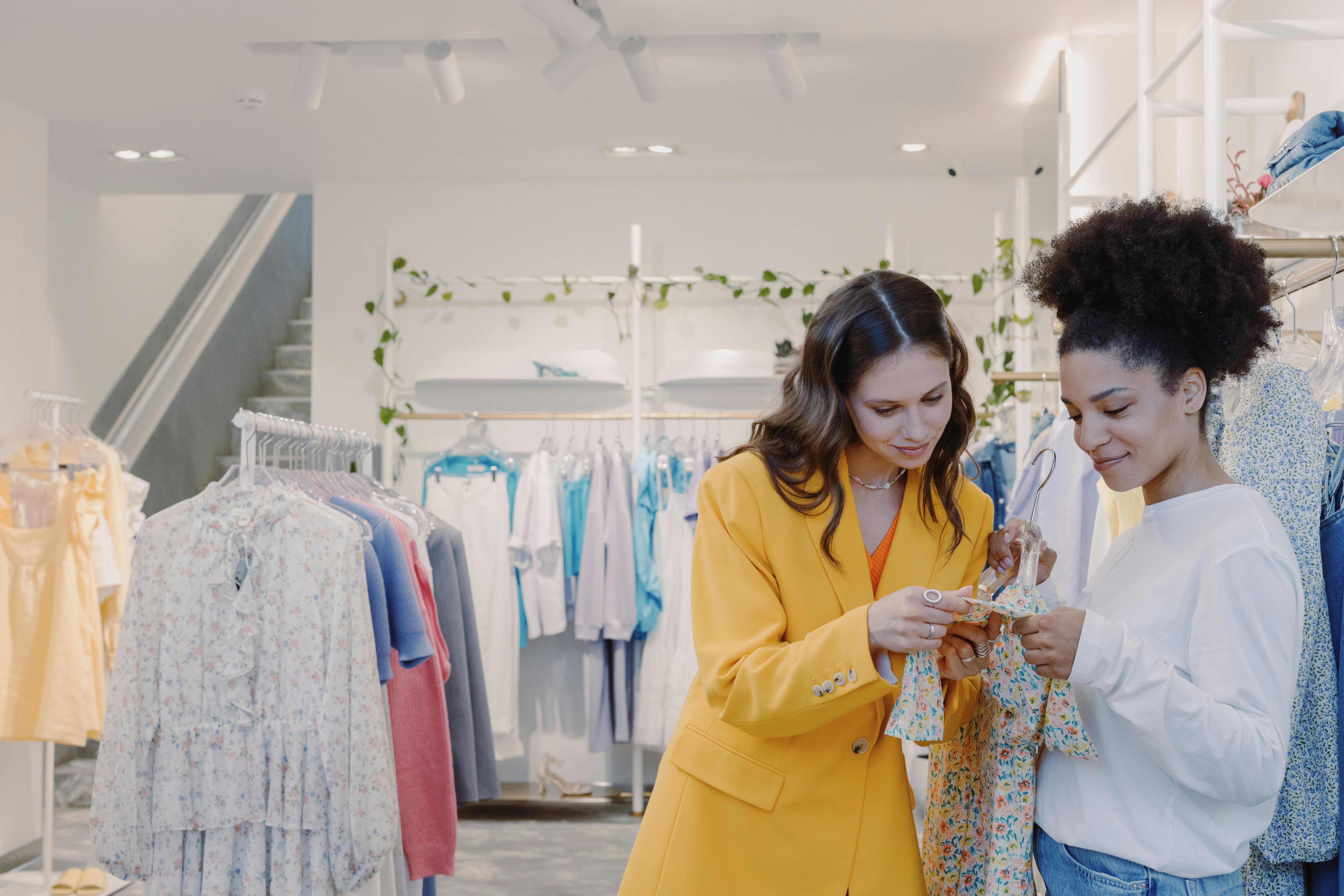
Nearly 32% of Gen Z’s closets are secondhand, rising to 45% for handbags. Gen Z shoppers are seven percentage points more likely to cite the excitement of finding a unique piece than the average consumer. For Gen Z, secondhand items are curated. A generation raised on climate data is now using their spending power as a form of activism. The focus of the luxury resale market has shifted from the visible brand name to the invisible impact of the purchase.

1 in 3 customers now considers the resale potential of fashion items, particularly in premium and luxury segments. Over 74% of consumers are willing to pay a premium for fully traceable and sustainability-verified fashion items, and 26% would pay up to 20% more for items with a digital product passport. This last data point carries significant commercial implications. 

A generation of buyers is now making primary purchase decisions based partly on secondary market value and partly on the product’s verifiable sustainability credentials. Brands that can provide those credentials, and that have built secondary market desirability into their products from the design stage, will attract and retain this cohort far more effectively than those who treat resale as a problem to be managed rather than an asset to be developed.

How Brands Are Responding and What Still Needs to Happen
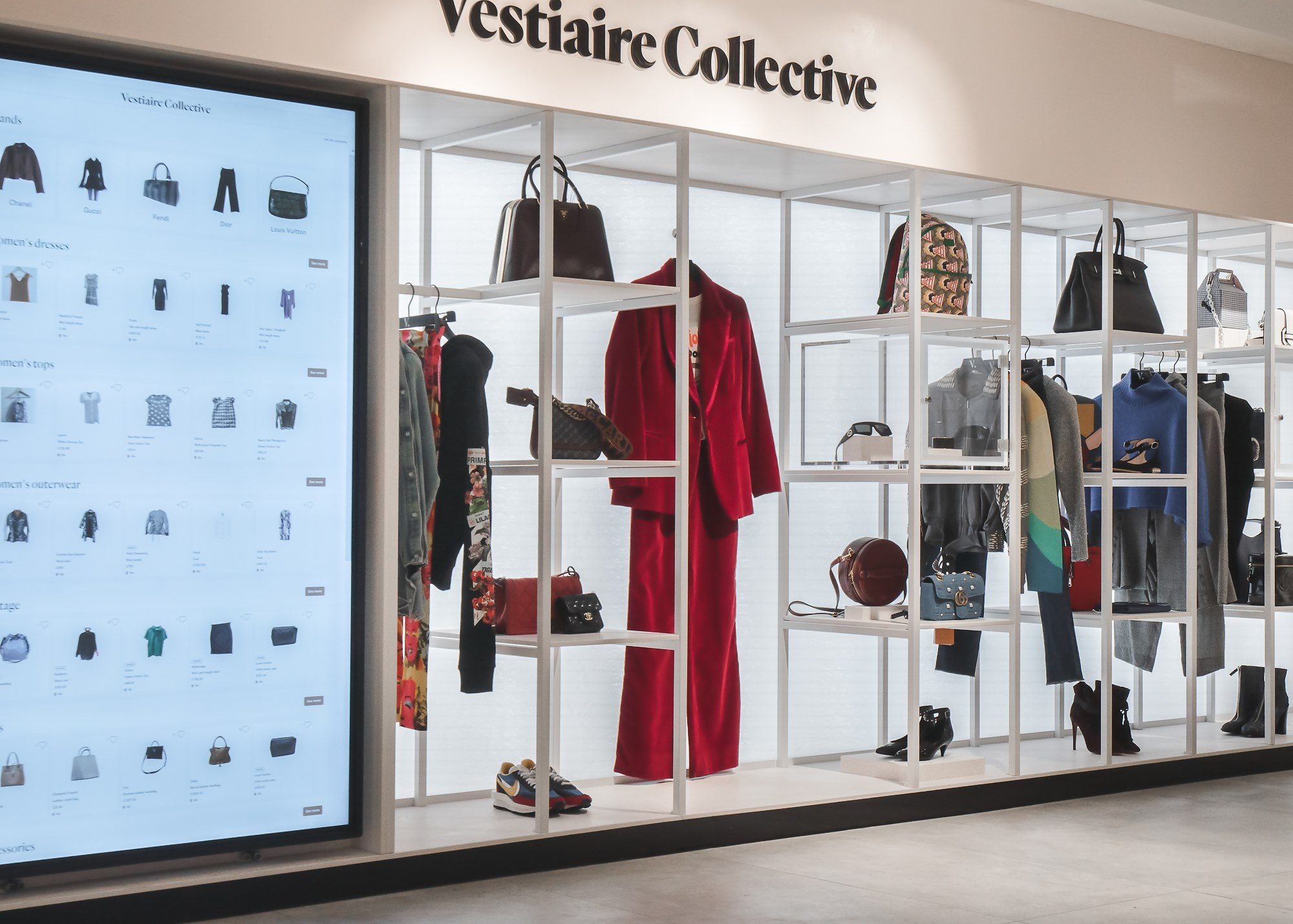
Photo: Vestiaire Collective

Brands are increasingly launching their own resale programs, often through partnerships with infrastructure providers like Trove and Archive, to control pricing, customer data, and promote sustainability. Innovations like Croissant for guaranteed buyback pricing are enhancing market liquidity and integrating resale into primary purchase decisions.

Resale also serves as a gateway: 43% of thrifty shoppers later buy firsthand products from the same brand, according to the State of Fashion. That gateway figure reframes the entire resale conversation for brand strategists. A buyer who enters a brand’s world through the secondary market and then converts to a primary market customer is a customer acquisition story, not a revenue leakage story.

Companies like The RealReal and Vestiaire Collective continue to leverage AI-driven tools and blockchain technology to enhance the accuracy and reliability of authenticating pre-owned luxury items. However, only 7% of industry executives plan to support circular business models, and less than one-third of industry executives called resale a priority for 2026, according to the State of Fashion.

That gap between the market’s growth rate and the industry’s response rate is where the opportunity and the risk both live. The brands that close it first will have built a competitive advantage in the fastest-growing segment of the luxury market. The ones that wait will find that the platform players have built the customer relationships instead.

Featured image: StyleRave Studio/AI-generated Visual

Victor Ahonsi

A culture and lifestyle enthusiast sharing stylish, human-centered stories at the intersection of fashion and entertainment. I once planned a whole week’s outfits around a single pair of sneakers–no regrets. At Style Rave, we aim to inspire our readers by providing engaging content to not just entertain but to inform and empower you as you ASPIRE to become more stylish, live smarter and be healthier.

Source link
#Resale #Culture #Forcing #Luxury #Brands #Rethink

Previous post

Victony’s Summer Banger “Slick” + More New and Trending Songs Across Africa

Next post

GPT-5.6 Sol, Terra, and Luna are here. See which one’s best for you.<div id="article"> <p>These days, new versions of AI chatbots don’t just launch; they’re unshackled and released to the public following government scrutiny. OpenAI’s new GPT-5.6 models were – like Anthropic’s Claude Mythos and <a href="https://mashable.com/tech/anthropic-fable-restore-access" target="_blank" data-ga-click="1" data-ga-label="$text" data-ga-item="text-link" data-ga-module="content_body">Fable</a> – apparently too powerful to just launch; but now, after some tinkering, they’re <a href="https://mashable.com/tech/openai-gpt-5-6-sol-public-release" target="_blank" data-ga-click="1" data-ga-label="$text" data-ga-item="text-link" data-ga-module="content_body">available to you</a>, dear customer.</p><p>In practice, it simply means that the new GPT-5.6 models are very powerful and smarter than before. In its <a href="https://openai.com/index/gpt-5-6/" target="_blank" data-ga-click="1" data-ga-label="$text" data-ga-item="text-link" data-ga-module="content_body" title="(opens in a new window)">introductory post</a>, OpenAI shared a bunch of graphs showing just how much better GPT-5.6 is than the competition, whilst using fewer tokens and generally costing less. </p> <p>OK, great. But GPT-5.6 is not just one model; it comes in three distinct flavors: Sol, Terra, and Luna. So what do different kinds of users get, what should they pay for, and which models should they (mostly) use? Let’s dive in. </p> <h2>Free users get (almost) nothing</h2><p>Sorry; if you’re not a paying customer, you’ll have to make do with OpenAI’s previous flagship model, GPT-5.5. Any sort of access to GPT-5.6 models requires a subscription of some sort. Fortunately, GPT-5.5 is still quite capable at most tasks, but if you want the best of the best, you’ll have to cough up the dough. </p><p>There’s an exception to this: Free and Go users can access GPT-5.6 through ChatGPT Work. More on that below. </p><p>If you’re a Plus or Business user, you can only get Sol (the most powerful model) at medium and higher effort settings. There’s another, higher level of performance called Sol Pro, but that’s only available for Pro and Enterprise users. </p><p>In terms of availability per one million tokens, <a href="https://chatgpt.com/pricing" target="_blank" data-ga-click="1" data-ga-label="$text" data-ga-item="text-link" data-ga-module="content_body" title="(opens in a new window)">the prices are</a>: $5 input and $30 output for Sol. $2.5 input and $15 output for Terra, and $1 input and $6 output for Luna. </p><div class="flex mx-auto mt-8 w-full max-w-3xl font-sans text-lg leading-normal md:text-xl md:leading-7"> <span class="font-bold text-primary-400">SEE ALSO:</span> <a href="https://mashable.com/tech/visa-chatgpt-agents-automatic-purchases" class="flex items-center text-secondary-300"> <span class="ml-1">Visa is connecting with ChatGPT to let AI agents automatically make purchases</span> <svg class="ml-1 w-4 h-4 font-normal fill-current"><use href="http://mashable.com/images/icons/spritemap.svg#sprite-arrow-right-thin"/></svg> </a> </div> <h2>Sol, Terra, or Luna?</h2><p>Why are there three models in the first place? Well, OpenAI always had a multi-tier model; for example, previously users were able to choose a “mini” version of the main model to get results done cheaper. Now, the model has been split into three tiers. </p><p>If you’re a paying customer, you’re free to use all three. But you know how it is in the world of LLMs: If you pick the smartest one, your usage limits will get hit faster (yes, there are <a href="https://help.openai.com/en/articles/20001354-gpt-56-in-chatgpt" target="_blank" data-ga-click="1" data-ga-label="$text" data-ga-item="text-link" data-ga-module="content_body" title="(opens in a new window)">always usage limits</a>, even if you throw a ton of money at OpenAI). </p><section x-data="window.newsletter({ isDeal: false })" x-init="init()" aria-label="Newsletter Sign-Up" class="relative invisible my-12 mx-auto w-full max-w-3xl md:my-16 ziff-component accent-cut-for-gradient-bg accent-cut-border-for-gradient-bg bg-gradient-fuchsia-secondary p-[2px]"> <p> <span class="text-gradient-fuchsia-secondary">Mashable Light Speed</span> </p> </section> <p>In the simplest sense, GPT-5.6 Sol is the smartest model, Terra is in between (with roughly GPT-5.5 level of performance), and Luna is the cheapest, fastest, but also least capable of the bunch. </p><p>The breakdown is as follows: Terra is a “balanced” model for everyday work. That’s the one you should be asking most of your questions. Don’t underestimate it, though, as OpenAI claims it performs better than Anthropic’s Fable 5 in some cases. </p><p>Luna is cost-efficient, and should be used for easy, non crucial everyday tasks; think recipes and movie recommendations. Again, OpenAI says it outperforms Anthropic’s Opus 4.8 in some cases, so it’s not a slouch, either.</p><p>Sol should be reserved for coding, deep research, planning, and cybersecurity: The most demanding tasks. Of course it comes at a (literal) cost: While OpenAI claims it spends less tokens than Anthropic’s Fable 5, Sol will still hit usage limits a lot faster than the other variants. </p><p><em>Fun fact: If you ask GPT-5.5 about any of this, right now, it’ll give you completely wrong answers. Hopefully OpenAI will fix this soon.</em></p><h2>Wait, what’s this ChatGPT Work thing, then?</h2><p>Oh yeah, OpenAI also launched <a href="https://openai.com/chatgpt-work/" target="_blank" data-ga-click="1" data-ga-label="$text" data-ga-item="text-link" data-ga-module="content_body" title="(opens in a new window)">ChatGPT Work</a>, which is a new agent in ChatGPT that can access and take actions on your apps and files, and work in the background until a task is finished. It’s powered by Codex (OpenAI’s software engineering agent) and GPT-5.6. Think about it as your buddy that will go through your emails and files, browse the web, fetch the relevant data, and create that presentation your boss wants before the day is done. </p> <p>ChatGPT Work is rolling out to Pro, Enterprise and Edu users first on web and mobile; this will be expanded to Plus and Business users “over the next few days.”</p><p>On the desktop, Work is available for everyone, including Free users. </p><p>Oh, and one more thing: The fact that ChatGPT Work has a built-in browser also means that OpenAI is sunsetting its standalone web browser, Atlas. Sorry. </p><h2>How about GPT Live?</h2><p>GPT Live is a new version of ChatGPT Voice and it will show up when you start talking to ChatGPT. </p> <p>We’ve covered this in <a href="https://mashable.com/tech/openai-gpt-live" target="_blank" data-ga-click="1" data-ga-label="$text" data-ga-item="text-link" data-ga-module="content_body">more depth here</a>, but the bottom line is that GPT Live can listen and speak at the same time, allowing it to keep up a more realistic conversation.</p><h2>Wrapping it all up</h2><p>The new GPT-5.6 model is smart. It comes in three flavors: Luna, Terra, and Sol, with Sol being the most capable variant, Luna the most affordable one, and Terra somewhere in the middle. You can currently only get them on paid tiers, unless you’re using ChatGPT Work on desktop. And ChatGPT Voice has also gotten smarter with GPT-Live underneath, a model that can listen and speak at the same time.</p> <section class="mx-auto max-w-7xl"> <div class="flex flex-wrap mt-8 w-full font-sans subtitle-2 editor-content"> <p> <span class="mr-1.5 font-sans font-bold">Topics</span> <a class="underline-link hover:no-underline text-secondary-300 mr-1.5" href="https://mashable.com/category/artificial-intelligence" aria-label="Navigate to the Artificial Intelligence tag" data-ga-click="" data-ga-label="$text">Artificial Intelligence</a> <a class="underline-link hover:no-underline text-secondary-300 " href="https://mashable.com/category/openai" aria-label="Navigate to the OpenAI tag" data-ga-click="" data-ga-label="$text">OpenAI</a> </p> </div> </section> </div>#GPT5.6 #Sol #Terra #Luna

Post Comment