×
Here Are the Winners of the 2025 Wildlife Photos of the Year Contest

Here Are the Winners of the 2025 Wildlife Photos of the Year Contest

Nature can be equal parts majestic, heartwarming, and terrifying. The winning entries of the 2025 BMC Ecology and Evolution and BMC Zoology image competition illustrate that complexity in spades.

Biologists, zoologists, and paleontologists from across the world sent in submissions to this year’s contest. The photos were sorted into four categories: “Collective Social Behavior,” “Life in Motion,” “Colorful Strategies,” and “Research in Action.” But the overall winner (seen in the headline image above) was a snapshot taken by Andrey Giljov, showing two male saiga antelopes in a sparring match as part of their preparation for the mating season; this naturally involves butting heads with potential rivals.

“Saiga fights in spring, outside of the tournament season, are quieter and more about training than determining status. However, the males take every opportunity to practice,” said Giljov, a vertebrate zoologist and senior lecturer at Saint Petersburg State University in Russia, in an editorial detailing the contest winners.

The annual photo competition, now in its second year, is a joint venture from the journals BMC Ecology and Evolution and BMC Zoology; it’s the successor to contests that were separately run by the two journals. The photos are judged by the journals’ editors and senior members of the editorial board. This year’s winning entries and close seconds featured some of the biggest creatures on Earth as well as its smallest.

Case in point, Alwin Hardenbol’s incredible photo of a breaching humpback whale that he captured from a rigid inflatable boat in Varanger, Norway.

“Jump!” © Alwin Hardenbol, CC BY 4.0

“Breaching is a fascinating behavior from a scientific perspective, as it is still inconclusive what purpose it serves,” said Hardenbol, a researcher at the Natural Resources Institute Finland whose photo was a runner-up in the Life in Motion category. “It’s unbelievable to imagine how such an animal can even jump out of the water like that.”

Nymphs
“Nymphs and Nature: A Close-Up Journey” © Sritam Kumar Sethy, CC BY 4.0

Sritam Kumar Sethy, a student at Berhampur University in India, won the Collective Social Behavior category for his photograph of newly hatched Acanthocoris scaber (a species of leaf-footed bug) nymphs gathering together on the underside of a leaf—a survival strategy of having strength in numbers. “By coming together, they enhance their protection against predators, reducing the chances of any individual becoming prey,” said Sethy.

The entries also captured the never-ending struggle for resources between animals, such as Delip K. Das’s photo of a Haliastur indus (a medium-sized bird of prey also called a Brahminy Kite) having to go the extra mile for its dinner.

Savingmycatch
“Saving my catch” © Delip K Das, CC BY 4.0

“A Brahminy Kite had just caught an eel—a large and still-struggling fish. As the Kite wrestled to secure its catch in flight, another challenger appeared, attempting to hijack the meal,” said Das, whose entry didn’t win but was singled out as highly commended. “The dramatic moment unfolded above the mangrove-fringed waters, reflecting the intensity and agility of raptors in the wild.”

Some images didn’t highlight the present state of the natural world but its distant past. Digital artist Natalia Jagielsk won the Life in Motion category for her illustration of pterosaurs flying over the Jurassic Hebridean Basin, covering what’s now called Scotland. Jagielsk, a postdoctoral fellow at the Chinese University of Hong Kong, based her work on the recent discovery of two pterosaur skeletons belonging to different species in the region.

Pterosaurs In Flight Over The Jurassic Hebridean Basin
“Pterosaurs In Flight Over The Jurassic Hebridean Basin” © Natalia Jagielska, CC BY 4.0

“Despite their differing cranial anatomies, teeth morphology, and wing shapes, these pterosaurs could interact and compete for food during periods of environmental stress,” said Jagielsk, who was part of a team that described one of these species, Dearc sgiathanach. “Set 170 million years ago in the Middle Jurassic, this image portrays these flying reptiles as they hunt along the shoreline.”

My personal favorite selection is either endearing, gross, or both, depending on your tolerance for bugs and regurgitating. Nick Royle, a runner-up in the Collective and Social Behavior category, took a photo of a mother Nicrophorus vespilloides (a species of burying beetle) feeding her young—by which I mean, spitting back up the remnants of a buried mouse carcass. In addition to this unique feeding strategy, burying beetles are also one of the few insects that often share custody of their offspring, with both parents helping out with the rearing.

“This behavior normally occurs underground, so is not usually visible to us, but is here pictured in the lab, where these burying beetles are used as a model to understand the evolution of social behaviors such as parental care,” said Royle, a behavioral ecologist and conservation biologist at the University of Exeter in the UK. “These beetles work together to bury carcasses to avoid competition from other users of carrion and, once safely underground, process the carcass, removing the fur, rolling it into a ball, and smearing it with antimicrobial secretions to combat the bacteria and fungi that would otherwise consume this precious resource.”

'attentive Parenting In Burying Beetles'
“Attentive Parenting In Burying Beetles” © Nick Royle, CC BY 4.0

Well, I’m certainly going to appreciate my parents’ home-cooked meals more from now on.

There are plenty more breathtaking images from this year’s contest that can be seen here.

Source link
#Winners #Wildlife #Photos #Year #Contest

published late last week in the journal Nature Microbiology.

Good guy prions?

Prions are some of the strangest things around. They’re the misfolded form of a protein naturally found in the body. When a prion comes across its “normal” counterpart, it can somehow induce the latter to turn into a prion itself, almost like a zombie infection.

Classic prion disorders like mad cow disease and Creutzfeldt-Jakob disease are caused by the steady accumulation of one particular type of protein, aptly named the prion protein; these disorders are universally fatal. Some scientists have also argued that other neurodegenerative conditions, such as Alzheimer’s disease, are caused by other kinds of misfolded proteins that act in a similar way to prions.

According to the study researchers, there’s growing evidence that prions and prion-like proteins are more than just harbingers of death. Studies have found that the normal prion protein and the prion-like amyloid beta (one of the drivers of Alzheimer’s) can have antimicrobial activity, for instance. So the team decided to conduct a sweeping analysis looking for antimicrobial peptide fragments within these proteins.

The researchers had previously built an AI model intended to predict the antimicrobial activity of any given peptide fragment, named APEX 1.1. Then they let APEX scan through 19.3 million short peptide fragments found in 2,897 prion and prion-like proteins. They initially uncovered 1,179 candidates, which the team narrowed down to 75 that showed the most potential. Of these, 59 were able to inhibit the growth of at least one bacterial germ in the lab, including 42 that did so at low levels (important for dosing considerations).

Finally, the researchers tested two of the strongest candidates on the skin of mice infected with Acinetobacter baumannii, a common source of drug-resistant infections in people. The candidates appeared to be roughly as effective as polymyxin B, an existing antibiotic often used as a last resort drug for certain drug-resistant infections.

The researchers have coined these antibacterial fragments collected from prions as “prionins.”

The future of prionins

More research is obviously needed to verify whether the team’s prionins can actually work as hoped—and safely—in people. The researchers also note their findings don’t settle the open question as to whether prions or prion-like proteins naturally tackle bacterial infections in our body.

At the same time, they do argue their work provides a strong proof of concept that prionins identified through AI can be viable antibiotic candidates for further testing.

“For a long time, drug discovery has been limited not only by what we can test, but by where we choose to look,” said senior study author César de la Fuente, director of the Machine Biology Group at the University of Pennsylvania Perelman School of Medicine, in a statement from the university. “AI is changing that. It gives us a way to search the hidden layers of biology and ask whether molecules associated with one story—in this case, disease—may also carry another story with therapeutic potential.”

With any luck, the proteins known for causing the scariest diseases around could someday turn into our antibacterial allies.

#Deadly #Proteins #Mad #Cow #Disease #Fight #Superbugsantibiotic resistance,experimental drugs,prions">Deadly Proteins Behind Mad Cow Disease Might Help Us Fight Superbugs
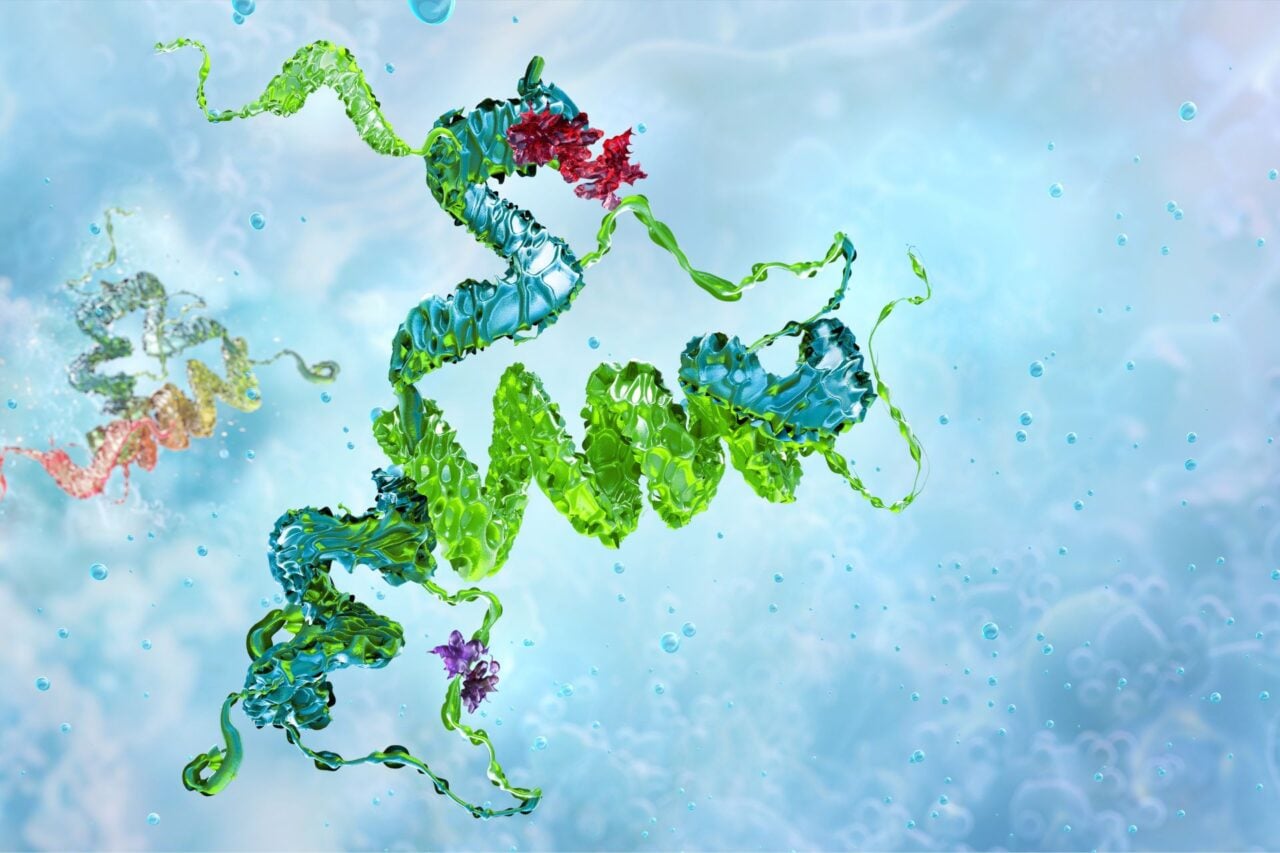
                The next frontier of antibiotics might come from an unexpected place. Recent research identifies potential antibiotic candidates from inside prions—proteins capable of causing some of the deadliest brain infections ever known, such as mad cow disease.

 Scientists at the University of Pennsylvania used artificial intelligence to rapidly search hundreds of prions and prion-like proteins for peptides with antibacterial activity. They found several dozen promising candidates, two of which have already shown results treating bacterial infections in mice. The team’s findings establish “prion-related proteins as a productive source space for antibiotic discovery,” the scientists wrote in their paper, published late last week in the journal Nature Microbiology.

 Good guy prions? Prions are some of the strangest things around. They’re the misfolded form of a protein naturally found in the body. When a prion comes across its “normal” counterpart, it can somehow induce the latter to turn into a prion itself, almost like a zombie infection.

 Classic prion disorders like mad cow disease and Creutzfeldt-Jakob disease are caused by the steady accumulation of one particular type of protein, aptly named the prion protein; these disorders are universally fatal. Some scientists have also argued that other neurodegenerative conditions, such as Alzheimer’s disease, are caused by other kinds of misfolded proteins that act in a similar way to prions.   According to the study researchers, there’s growing evidence that prions and prion-like proteins are more than just harbingers of death. Studies have found that the normal prion protein and the prion-like amyloid beta (one of the drivers of Alzheimer’s) can have antimicrobial activity, for instance. So the team decided to conduct a sweeping analysis looking for antimicrobial peptide fragments within these proteins.

 The researchers had previously built an AI model intended to predict the antimicrobial activity of any given peptide fragment, named APEX 1.1. Then they let APEX scan through 19.3 million short peptide fragments found in 2,897 prion and prion-like proteins. They initially uncovered 1,179 candidates, which the team narrowed down to 75 that showed the most potential. Of these, 59 were able to inhibit the growth of at least one bacterial germ in the lab, including 42 that did so at low levels (important for dosing considerations). Finally, the researchers tested two of the strongest candidates on the skin of mice infected with Acinetobacter baumannii, a common source of drug-resistant infections in people. The candidates appeared to be roughly as effective as polymyxin B, an existing antibiotic often used as a last resort drug for certain drug-resistant infections. The researchers have coined these antibacterial fragments collected from prions as “prionins.”

 The future of prionins More research is obviously needed to verify whether the team’s prionins can actually work as hoped—and safely—in people. The researchers also note their findings don’t settle the open question as to whether prions or prion-like proteins naturally tackle bacterial infections in our body. At the same time, they do argue their work provides a strong proof of concept that prionins identified through AI can be viable antibiotic candidates for further testing. “For a long time, drug discovery has been limited not only by what we can test, but by where we choose to look,” said senior study author César de la Fuente, director of the Machine Biology Group at the University of Pennsylvania Perelman School of Medicine, in a statement from the university. “AI is changing that. It gives us a way to search the hidden layers of biology and ask whether molecules associated with one story—in this case, disease—may also carry another story with therapeutic potential.”

 With any luck, the proteins known for causing the scariest diseases around could someday turn into our antibacterial allies.      #Deadly #Proteins #Mad #Cow #Disease #Fight #Superbugsantibiotic resistance,experimental drugs,prions

published late last week in the journal Nature Microbiology.

Good guy prions?

Prions are some of the strangest things around. They’re the misfolded form of a protein naturally found in the body. When a prion comes across its “normal” counterpart, it can somehow induce the latter to turn into a prion itself, almost like a zombie infection.

Classic prion disorders like mad cow disease and Creutzfeldt-Jakob disease are caused by the steady accumulation of one particular type of protein, aptly named the prion protein; these disorders are universally fatal. Some scientists have also argued that other neurodegenerative conditions, such as Alzheimer’s disease, are caused by other kinds of misfolded proteins that act in a similar way to prions.

According to the study researchers, there’s growing evidence that prions and prion-like proteins are more than just harbingers of death. Studies have found that the normal prion protein and the prion-like amyloid beta (one of the drivers of Alzheimer’s) can have antimicrobial activity, for instance. So the team decided to conduct a sweeping analysis looking for antimicrobial peptide fragments within these proteins.

The researchers had previously built an AI model intended to predict the antimicrobial activity of any given peptide fragment, named APEX 1.1. Then they let APEX scan through 19.3 million short peptide fragments found in 2,897 prion and prion-like proteins. They initially uncovered 1,179 candidates, which the team narrowed down to 75 that showed the most potential. Of these, 59 were able to inhibit the growth of at least one bacterial germ in the lab, including 42 that did so at low levels (important for dosing considerations).

Finally, the researchers tested two of the strongest candidates on the skin of mice infected with Acinetobacter baumannii, a common source of drug-resistant infections in people. The candidates appeared to be roughly as effective as polymyxin B, an existing antibiotic often used as a last resort drug for certain drug-resistant infections.

The researchers have coined these antibacterial fragments collected from prions as “prionins.”

The future of prionins

More research is obviously needed to verify whether the team’s prionins can actually work as hoped—and safely—in people. The researchers also note their findings don’t settle the open question as to whether prions or prion-like proteins naturally tackle bacterial infections in our body.

At the same time, they do argue their work provides a strong proof of concept that prionins identified through AI can be viable antibiotic candidates for further testing.

“For a long time, drug discovery has been limited not only by what we can test, but by where we choose to look,” said senior study author César de la Fuente, director of the Machine Biology Group at the University of Pennsylvania Perelman School of Medicine, in a statement from the university. “AI is changing that. It gives us a way to search the hidden layers of biology and ask whether molecules associated with one story—in this case, disease—may also carry another story with therapeutic potential.”

With any luck, the proteins known for causing the scariest diseases around could someday turn into our antibacterial allies.

#Deadly #Proteins #Mad #Cow #Disease #Fight #Superbugsantibiotic resistance,experimental drugs,prions">Deadly Proteins Behind Mad Cow Disease Might Help Us Fight SuperbugsDeadly Proteins Behind Mad Cow Disease Might Help Us Fight Superbugs
                The next frontier of antibiotics might come from an unexpected place. Recent research identifies potential antibiotic candidates from inside prions—proteins capable of causing some of the deadliest brain infections ever known, such as mad cow disease.

 Scientists at the University of Pennsylvania used artificial intelligence to rapidly search hundreds of prions and prion-like proteins for peptides with antibacterial activity. They found several dozen promising candidates, two of which have already shown results treating bacterial infections in mice. The team’s findings establish “prion-related proteins as a productive source space for antibiotic discovery,” the scientists wrote in their paper, published late last week in the journal Nature Microbiology.

 Good guy prions? Prions are some of the strangest things around. They’re the misfolded form of a protein naturally found in the body. When a prion comes across its “normal” counterpart, it can somehow induce the latter to turn into a prion itself, almost like a zombie infection.

 Classic prion disorders like mad cow disease and Creutzfeldt-Jakob disease are caused by the steady accumulation of one particular type of protein, aptly named the prion protein; these disorders are universally fatal. Some scientists have also argued that other neurodegenerative conditions, such as Alzheimer’s disease, are caused by other kinds of misfolded proteins that act in a similar way to prions.   According to the study researchers, there’s growing evidence that prions and prion-like proteins are more than just harbingers of death. Studies have found that the normal prion protein and the prion-like amyloid beta (one of the drivers of Alzheimer’s) can have antimicrobial activity, for instance. So the team decided to conduct a sweeping analysis looking for antimicrobial peptide fragments within these proteins.

 The researchers had previously built an AI model intended to predict the antimicrobial activity of any given peptide fragment, named APEX 1.1. Then they let APEX scan through 19.3 million short peptide fragments found in 2,897 prion and prion-like proteins. They initially uncovered 1,179 candidates, which the team narrowed down to 75 that showed the most potential. Of these, 59 were able to inhibit the growth of at least one bacterial germ in the lab, including 42 that did so at low levels (important for dosing considerations). Finally, the researchers tested two of the strongest candidates on the skin of mice infected with Acinetobacter baumannii, a common source of drug-resistant infections in people. The candidates appeared to be roughly as effective as polymyxin B, an existing antibiotic often used as a last resort drug for certain drug-resistant infections. The researchers have coined these antibacterial fragments collected from prions as “prionins.”

 The future of prionins More research is obviously needed to verify whether the team’s prionins can actually work as hoped—and safely—in people. The researchers also note their findings don’t settle the open question as to whether prions or prion-like proteins naturally tackle bacterial infections in our body. At the same time, they do argue their work provides a strong proof of concept that prionins identified through AI can be viable antibiotic candidates for further testing. “For a long time, drug discovery has been limited not only by what we can test, but by where we choose to look,” said senior study author César de la Fuente, director of the Machine Biology Group at the University of Pennsylvania Perelman School of Medicine, in a statement from the university. “AI is changing that. It gives us a way to search the hidden layers of biology and ask whether molecules associated with one story—in this case, disease—may also carry another story with therapeutic potential.”

 With any luck, the proteins known for causing the scariest diseases around could someday turn into our antibacterial allies.      #Deadly #Proteins #Mad #Cow #Disease #Fight #Superbugsantibiotic resistance,experimental drugs,prions

The next frontier of antibiotics might come from an unexpected place. Recent research identifies potential antibiotic candidates from inside prions—proteins capable of causing some of the deadliest brain infections ever known, such as mad cow disease.

Scientists at the University of Pennsylvania used artificial intelligence to rapidly search hundreds of prions and prion-like proteins for peptides with antibacterial activity. They found several dozen promising candidates, two of which have already shown results treating bacterial infections in mice.

The team’s findings establish “prion-related proteins as a productive source space for antibiotic discovery,” the scientists wrote in their paper, published late last week in the journal Nature Microbiology.

Good guy prions?

Prions are some of the strangest things around. They’re the misfolded form of a protein naturally found in the body. When a prion comes across its “normal” counterpart, it can somehow induce the latter to turn into a prion itself, almost like a zombie infection.

Classic prion disorders like mad cow disease and Creutzfeldt-Jakob disease are caused by the steady accumulation of one particular type of protein, aptly named the prion protein; these disorders are universally fatal. Some scientists have also argued that other neurodegenerative conditions, such as Alzheimer’s disease, are caused by other kinds of misfolded proteins that act in a similar way to prions.

According to the study researchers, there’s growing evidence that prions and prion-like proteins are more than just harbingers of death. Studies have found that the normal prion protein and the prion-like amyloid beta (one of the drivers of Alzheimer’s) can have antimicrobial activity, for instance. So the team decided to conduct a sweeping analysis looking for antimicrobial peptide fragments within these proteins.

The researchers had previously built an AI model intended to predict the antimicrobial activity of any given peptide fragment, named APEX 1.1. Then they let APEX scan through 19.3 million short peptide fragments found in 2,897 prion and prion-like proteins. They initially uncovered 1,179 candidates, which the team narrowed down to 75 that showed the most potential. Of these, 59 were able to inhibit the growth of at least one bacterial germ in the lab, including 42 that did so at low levels (important for dosing considerations).

Finally, the researchers tested two of the strongest candidates on the skin of mice infected with Acinetobacter baumannii, a common source of drug-resistant infections in people. The candidates appeared to be roughly as effective as polymyxin B, an existing antibiotic often used as a last resort drug for certain drug-resistant infections.

The researchers have coined these antibacterial fragments collected from prions as “prionins.”

The future of prionins

More research is obviously needed to verify whether the team’s prionins can actually work as hoped—and safely—in people. The researchers also note their findings don’t settle the open question as to whether prions or prion-like proteins naturally tackle bacterial infections in our body.

At the same time, they do argue their work provides a strong proof of concept that prionins identified through AI can be viable antibiotic candidates for further testing.

“For a long time, drug discovery has been limited not only by what we can test, but by where we choose to look,” said senior study author César de la Fuente, director of the Machine Biology Group at the University of Pennsylvania Perelman School of Medicine, in a statement from the university. “AI is changing that. It gives us a way to search the hidden layers of biology and ask whether molecules associated with one story—in this case, disease—may also carry another story with therapeutic potential.”

With any luck, the proteins known for causing the scariest diseases around could someday turn into our antibacterial allies.

#Deadly #Proteins #Mad #Cow #Disease #Fight #Superbugsantibiotic resistance,experimental drugs,prions

PS Svarva Floor Lamp

“Some stuff I did myself, like this one. The Svarva lamp we made with the design group Front for the PS 2009 collection. They were quite newly established and so we did an armchair and this lamp. The desire was to do a wooden turned lamp, but you should also be able to twist it, articulate it.”

“I felt that that would be very difficult to do. Along with a colleague in lighting at the time, I went to Hungary to this factory that was producing lamps for us. It was all metal tubes that they were doing, so we were a little bit hesitant whether they should be able to solve this. But they made some mock-ups based on the designer drawings. So we went there to have a look, and it was standing there. It was this floor lamp, and also a table lamp where the wooden beads were going in a circle and then up, like a snake.”

“What we didn’t know was that next to the lamp factory was this factory that was doing the turned wooden beads, the small individual pieces that we put together. None of us knew that. It was just pure serendipity. So they were turning these wooden beads, and the lamp factory was putting them on the metal tubes, just like on a necklace. They had very little to do, so they were happy to get the business.”

Image may contain Furniture Home Decor Rug Clothing Footwear Shoe and Chest Of Drawers

A Sinka Cabinet resides in Ejdemo’s hallway.

Courtesy of Johan Ejdemo

PS Sinka Cabinet

“I have another favorite from that PS 2009 collection, it’s in my hallway. The PS Sinka, with the small drawers with a wooden base. Sinka means “dovetail” in Swedish, so the name explaining that construction.”

“But the problem we had with this one was the packaging volume was too big. So what we did was each drawer is slightly shallower. So four drawers stack into each other. And four more drawers stack. There’s a little bit of a stopper in the back when you push them in, so they stop evenly at the front. There’s also a hidden compartment behind the smallest drawer. Really good drawers for all this stuff that is just lying around and getting in the way. In the top one I have all my keys that I no longer know where they go.”

PS Jonsberg Vases

“I have this vase from the PS collection to hold the cables [on my Samsung Serif TV]. It was a set, the Jonsberg vases by Hella Jongerius. There were four of them in different ceramic techniques. I had all four, but the terracotta one broke, which was a pity.” [It certainly is. These $39 vases now sell secondhand for $1,700 for a full set.]

“They’re inspired by different regions, and the different techniques are beautiful. I use the big black one for toilet paper in one bathroom. It’s not disrespect for the design. It’s just such a good design to stand there, and it makes the bathroom beautiful, and it can fit the toilet roll. So, why have something like an ugly stick? It’s nice for that.”

Pax Wardrobes

“Pax. We have to mention Pax. I have Pax wardrobes in a few rooms, but also I’m a little bit peculiar. Like in the kitchen, these veneer doors have been sanded and hand-painted by me, just to make them fit my house, in my space. I repaint them sometimes.”

Chipped Spraka pepper mills.

Chipped Spraka pepper mills.

Courtesy of Johan Ejdemo

Spraka Pepper Mills

“I have these pepper mills. One for white pepper, one for black pepper. That was also in a PS collection. We did these with Marcus Arvonen. These pepper mills are beautiful, and these have been around for, like, 20 years as well. They are pretty tall. A smaller version came later on, but I like these.”

“They have their chips, yes, but this just makes them nicer. It’s age. They’ve been around and are used every day. Everything has a little bit of imperfection. You can spend your whole life bothering about that, but there should be some imperfection in life. Fix it? Then something else needs fixing. It just moves. Leave it, be proud.”

Where’s the Billy Bookcase or Kallax?

“I don’t have a Billy in the house now. But there have been! Kallax? I have owned many. Brilliant piece. Really good for vinyl, because that’s the time they come from. I listen to a lot of vinyl.”

#Ikea #Products #Companys #Design #Chief #Personally #Ownsikea,design,home,furniture,household,interviews">These Are the 12 Ikea Products the Company’s Design Chief Personally OwnsThe Svarva lamp can be twisted into different shapes.
Courtesy of Johan EjdemoPS Svarva Floor Lamp“Some stuff I did myself, like this one. The Svarva lamp we made with the design group Front for the PS 2009 collection. They were quite newly established and so we did an armchair and this lamp. The desire was to do a wooden turned lamp, but you should also be able to twist it, articulate it.”“I felt that that would be very difficult to do. Along with a colleague in lighting at the time, I went to Hungary to this factory that was producing lamps for us. It was all metal tubes that they were doing, so we were a little bit hesitant whether they should be able to solve this. But they made some mock-ups based on the designer drawings. So we went there to have a look, and it was standing there. It was this floor lamp, and also a table lamp where the wooden beads were going in a circle and then up, like a snake.”“What we didn’t know was that next to the lamp factory was this factory that was doing the turned wooden beads, the small individual pieces that we put together. None of us knew that. It was just pure serendipity. So they were turning these wooden beads, and the lamp factory was putting them on the metal tubes, just like on a necklace. They had very little to do, so they were happy to get the business.”A Sinka Cabinet resides in Ejdemo’s hallway.
Courtesy of Johan EjdemoPS Sinka Cabinet“I have another favorite from that PS 2009 collection, it’s in my hallway. The PS Sinka, with the small drawers with a wooden base. Sinka means “dovetail” in Swedish, so the name explaining that construction.”“But the problem we had with this one was the packaging volume was too big. So what we did was each drawer is slightly shallower. So four drawers stack into each other. And four more drawers stack. There’s a little bit of a stopper in the back when you push them in, so they stop evenly at the front. There’s also a hidden compartment behind the smallest drawer. Really good drawers for all this stuff that is just lying around and getting in the way. In the top one I have all my keys that I no longer know where they go.”PS Jonsberg Vases“I have this vase from the PS collection to hold the cables [on my Samsung Serif TV]. It was a set, the Jonsberg vases by Hella Jongerius. There were four of them in different ceramic techniques. I had all four, but the terracotta one broke, which was a pity.” [It certainly is. These  vases now sell secondhand for ,700 for a full set.]“They’re inspired by different regions, and the different techniques are beautiful. I use the big black one for toilet paper in one bathroom. It’s not disrespect for the design. It’s just such a good design to stand there, and it makes the bathroom beautiful, and it can fit the toilet roll. So, why have something like an ugly stick? It’s nice for that.”Pax Wardrobes“Pax. We have to mention Pax. I have Pax wardrobes in a few rooms, but also I’m a little bit peculiar. Like in the kitchen, these veneer doors have been sanded and hand-painted by me, just to make them fit my house, in my space. I repaint them sometimes.”Chipped Spraka pepper mills.
Courtesy of Johan EjdemoSpraka Pepper Mills“I have these pepper mills. One for white pepper, one for black pepper. That was also in a PS collection. We did these with Marcus Arvonen. These pepper mills are beautiful, and these have been around for, like, 20 years as well. They are pretty tall. A smaller version came later on, but I like these.”“They have their chips, yes, but this just makes them nicer. It’s age. They’ve been around and are used every day. Everything has a little bit of imperfection. You can spend your whole life bothering about that, but there should be some imperfection in life. Fix it? Then something else needs fixing. It just moves. Leave it, be proud.”Where’s the Billy Bookcase or Kallax?“I don’t have a Billy in the house now. But there have been! Kallax? I have owned many. Brilliant piece. Really good for vinyl, because that’s the time they come from. I listen to a lot of vinyl.”#Ikea #Products #Companys #Design #Chief #Personally #Ownsikea,design,home,furniture,household,interviews

Svarva lamp we made with the design group Front for the PS 2009 collection. They were quite newly established and so we did an armchair and this lamp. The desire was to do a wooden turned lamp, but you should also be able to twist it, articulate it.”

“I felt that that would be very difficult to do. Along with a colleague in lighting at the time, I went to Hungary to this factory that was producing lamps for us. It was all metal tubes that they were doing, so we were a little bit hesitant whether they should be able to solve this. But they made some mock-ups based on the designer drawings. So we went there to have a look, and it was standing there. It was this floor lamp, and also a table lamp where the wooden beads were going in a circle and then up, like a snake.”

“What we didn’t know was that next to the lamp factory was this factory that was doing the turned wooden beads, the small individual pieces that we put together. None of us knew that. It was just pure serendipity. So they were turning these wooden beads, and the lamp factory was putting them on the metal tubes, just like on a necklace. They had very little to do, so they were happy to get the business.”

Image may contain Furniture Home Decor Rug Clothing Footwear Shoe and Chest Of Drawers

A Sinka Cabinet resides in Ejdemo’s hallway.

Courtesy of Johan Ejdemo

PS Sinka Cabinet

“I have another favorite from that PS 2009 collection, it’s in my hallway. The PS Sinka, with the small drawers with a wooden base. Sinka means “dovetail” in Swedish, so the name explaining that construction.”

“But the problem we had with this one was the packaging volume was too big. So what we did was each drawer is slightly shallower. So four drawers stack into each other. And four more drawers stack. There’s a little bit of a stopper in the back when you push them in, so they stop evenly at the front. There’s also a hidden compartment behind the smallest drawer. Really good drawers for all this stuff that is just lying around and getting in the way. In the top one I have all my keys that I no longer know where they go.”

PS Jonsberg Vases

“I have this vase from the PS collection to hold the cables [on my Samsung Serif TV]. It was a set, the Jonsberg vases by Hella Jongerius. There were four of them in different ceramic techniques. I had all four, but the terracotta one broke, which was a pity.” [It certainly is. These $39 vases now sell secondhand for $1,700 for a full set.]

“They’re inspired by different regions, and the different techniques are beautiful. I use the big black one for toilet paper in one bathroom. It’s not disrespect for the design. It’s just such a good design to stand there, and it makes the bathroom beautiful, and it can fit the toilet roll. So, why have something like an ugly stick? It’s nice for that.”

Pax Wardrobes

“Pax. We have to mention Pax. I have Pax wardrobes in a few rooms, but also I’m a little bit peculiar. Like in the kitchen, these veneer doors have been sanded and hand-painted by me, just to make them fit my house, in my space. I repaint them sometimes.”

Chipped Spraka pepper mills.

Chipped Spraka pepper mills.

Courtesy of Johan Ejdemo

Spraka Pepper Mills

“I have these pepper mills. One for white pepper, one for black pepper. That was also in a PS collection. We did these with Marcus Arvonen. These pepper mills are beautiful, and these have been around for, like, 20 years as well. They are pretty tall. A smaller version came later on, but I like these.”

“They have their chips, yes, but this just makes them nicer. It’s age. They’ve been around and are used every day. Everything has a little bit of imperfection. You can spend your whole life bothering about that, but there should be some imperfection in life. Fix it? Then something else needs fixing. It just moves. Leave it, be proud.”

Where’s the Billy Bookcase or Kallax?

“I don’t have a Billy in the house now. But there have been! Kallax? I have owned many. Brilliant piece. Really good for vinyl, because that’s the time they come from. I listen to a lot of vinyl.”

#Ikea #Products #Companys #Design #Chief #Personally #Ownsikea,design,home,furniture,household,interviews">These Are the 12 Ikea Products the Company’s Design Chief Personally Owns
Image may contain Lamp Chair Furniture Art Painting and Floor Lamp

The Svarva lamp can be twisted into different shapes.

Courtesy of Johan Ejdemo

PS Svarva Floor Lamp

“Some stuff I did myself, like this one. The Svarva lamp we made with the design group Front for the PS 2009 collection. They were quite newly established and so we did an armchair and this lamp. The desire was to do a wooden turned lamp, but you should also be able to twist it, articulate it.”

“I felt that that would be very difficult to do. Along with a colleague in lighting at the time, I went to Hungary to this factory that was producing lamps for us. It was all metal tubes that they were doing, so we were a little bit hesitant whether they should be able to solve this. But they made some mock-ups based on the designer drawings. So we went there to have a look, and it was standing there. It was this floor lamp, and also a table lamp where the wooden beads were going in a circle and then up, like a snake.”

“What we didn’t know was that next to the lamp factory was this factory that was doing the turned wooden beads, the small individual pieces that we put together. None of us knew that. It was just pure serendipity. So they were turning these wooden beads, and the lamp factory was putting them on the metal tubes, just like on a necklace. They had very little to do, so they were happy to get the business.”

Image may contain Furniture Home Decor Rug Clothing Footwear Shoe and Chest Of Drawers

A Sinka Cabinet resides in Ejdemo’s hallway.

Courtesy of Johan Ejdemo

PS Sinka Cabinet

“I have another favorite from that PS 2009 collection, it’s in my hallway. The PS Sinka, with the small drawers with a wooden base. Sinka means “dovetail” in Swedish, so the name explaining that construction.”

“But the problem we had with this one was the packaging volume was too big. So what we did was each drawer is slightly shallower. So four drawers stack into each other. And four more drawers stack. There’s a little bit of a stopper in the back when you push them in, so they stop evenly at the front. There’s also a hidden compartment behind the smallest drawer. Really good drawers for all this stuff that is just lying around and getting in the way. In the top one I have all my keys that I no longer know where they go.”

PS Jonsberg Vases

“I have this vase from the PS collection to hold the cables [on my Samsung Serif TV]. It was a set, the Jonsberg vases by Hella Jongerius. There were four of them in different ceramic techniques. I had all four, but the terracotta one broke, which was a pity.” [It certainly is. These $39 vases now sell secondhand for $1,700 for a full set.]

“They’re inspired by different regions, and the different techniques are beautiful. I use the big black one for toilet paper in one bathroom. It’s not disrespect for the design. It’s just such a good design to stand there, and it makes the bathroom beautiful, and it can fit the toilet roll. So, why have something like an ugly stick? It’s nice for that.”

Pax Wardrobes

“Pax. We have to mention Pax. I have Pax wardrobes in a few rooms, but also I’m a little bit peculiar. Like in the kitchen, these veneer doors have been sanded and hand-painted by me, just to make them fit my house, in my space. I repaint them sometimes.”

Chipped Spraka pepper mills.

Chipped Spraka pepper mills.

Courtesy of Johan Ejdemo

Spraka Pepper Mills

“I have these pepper mills. One for white pepper, one for black pepper. That was also in a PS collection. We did these with Marcus Arvonen. These pepper mills are beautiful, and these have been around for, like, 20 years as well. They are pretty tall. A smaller version came later on, but I like these.”

“They have their chips, yes, but this just makes them nicer. It’s age. They’ve been around and are used every day. Everything has a little bit of imperfection. You can spend your whole life bothering about that, but there should be some imperfection in life. Fix it? Then something else needs fixing. It just moves. Leave it, be proud.”

Where’s the Billy Bookcase or Kallax?

“I don’t have a Billy in the house now. But there have been! Kallax? I have owned many. Brilliant piece. Really good for vinyl, because that’s the time they come from. I listen to a lot of vinyl.”

#Ikea #Products #Companys #Design #Chief #Personally #Ownsikea,design,home,furniture,household,interviews

Post Comment