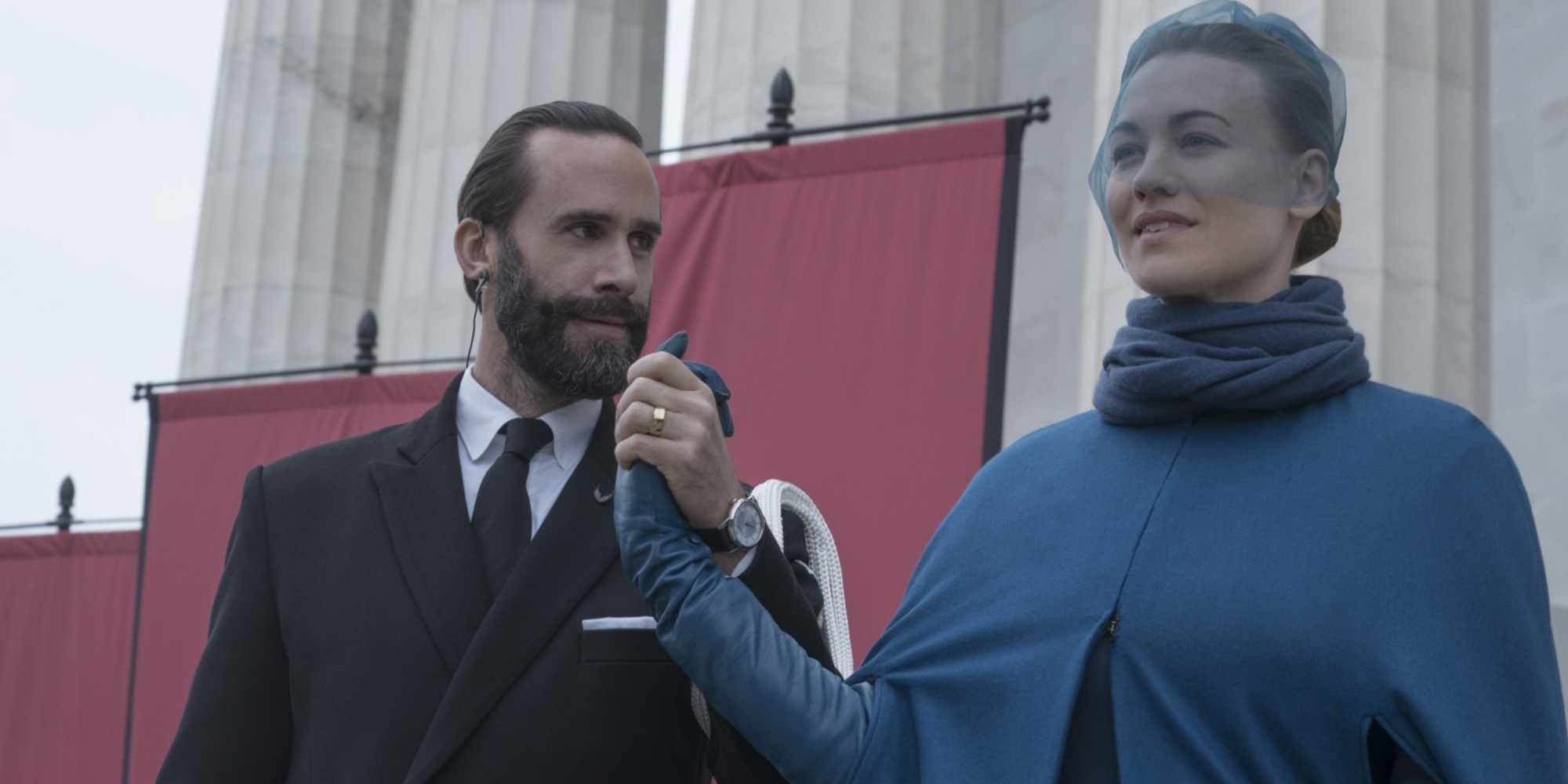
Hulu’s The Handmaid’s Tale has dominated drama television with its depiction of a fundamentalist theocracy in charge of women’s rights. Amassed through the retelling of Margret Atwood’s poignant 1985 novel of the same name, the series stars Elisabeth Moss, Yvonne Strahovski, Ann Dowd and Joseph Fiennes.
The series situates itself in a world where fertile women become a commodity through their use as surrogates to help repopulate a dying America, after years of environmental abuse and declining birthrates. The forced surrogacy, called ‘ceremonies’, are justified through a women’s duty of childbearing, as manipulated from biblical roots. At its center is June, who attempts to navigate the sliding-scale morality of an oppressive system.
The Handmaid’s Tale artfully takes the darkest parts of humanity and fictionalizes its social and political issues into a new America. Spanning across four seasons, with the fifth to be released on September 14, 2022, the Primetime Emmy-winning show serves as a cautionary tale as much as the original novel did during its release. With the biggest downfall being the show’s pacing and its cult status manifesting through brass and unapologetic violence, The Handmaid’s Tale shares its ups and downs across the series.
6
Season 3
Premiering in 2019, the third season of The Handmaid’s Tale encapsulated thirteen episodes, focusing on June’s plans to destroy Gilead and reunite with her daughters. In the season, June is relocated to the Lawrence household, under the ownership of Joseph Lawrence (Bradley Whitford), where she begins to plan the biggest transgression against Gilead – to smuggle children into the safety of Canada. Meanwhile, Serena (Yvonne Strahovski) and Fred (Joseph Fiennes) await trial for their war crimes, and Luke (O-T Fagbenle) and Moira (Samira Wiley) work behind the scenes to support refugees of Gilead. Season three has received complaints of its slow-burning plot, where the audience knows what is coming, but the show refuses to get to that point until the end of the series.
Out of the whole series, season three has been noted as filler in that it serves to set up the scene for the next season instead of developing on its own merits. The characters all seemed to engage in risky behavior without the consequences, which took away from the horrific tone that the show is notorious for, and chances for development in backstories were left short. Regardless, the season allowed viewers to finally see June make progress in her and the other handmaid’s resistance against Gilead.
5
Season 5

With The Handmaid’s Tale suffering from its glaring limitations, season five really needed to bring it up and expand the story, and it did, to an extent. Picking up after June and the former handmaids killed Fred Waterford, season five finds June facing a pressing question: What will her punishment be for killing Fred?
Viewers waited all season for the answer to this question, and we did find the answer in a somewhat underwhelming way. However, that wasn’t the central point to the season. What we, as the viewers, really wanted to know was how was June going to get Hannah out of Gilead? While this did drive the main plot and expanded the story somewhat, it was still quite clear that The Handmaid’s Tale was always going to be centered on June and Serena (who is locked up in a Canadian prison this season), which continued to constrain the story. Regardless, Season 5 was OK, but it was further indication that the show needed to wrap up soon, which it did in Season 6.
4
Season 4

The latest season of The Handmaid’s Tale ran through ten episodes in 2021. The season follows June’s escape from Gilead, her recapture, and eventual escape to Canada, where she is finally reunited with Luke and Moira. Season 4 engages in the abuse survivor narrative, which depicts the moral wavering of trauma and the response to violence in the long-term. June cannot return to normalcy until she seeks justice, but whether she’ll ever truly be satisfied is the question begging to be answered in the upcoming season 5.
While viewers were glad to see June finally out of Gilead, they were left frustrated by her leaving without Hannah (Jordana Blake), and even more annoyed by her dramatic character change in comparison to season one. Cruelty seems to be justified in the face of adversity in The Handmaid’s Tale, leaving fans to question how far June’s vengeful tactics will go (which seemed to be answered in the dramatic season final). Questioning whether the show’s protagonist is even a hero divided viewers, and left everyone with more queries about the future of the series.
3
Season 6

With the story seriously constrained, the sixth and final season needed to end with a bang, and it didn’t disappoint. Here, we see the final push to liberate Gilead. While the entire country didn’t get liberated, a good majority did, which returned women’s rights to a large portion of the country. Season six was a refreshing change from the previous three seasons, which got bogged down by the June-and-Serena-led plot.
While it was nice to see Gilead becoming free and the series wrapping up on a happy note (June and Hannah did reunite), it felt a little calculated. It would have been nice if the showrunners threw us a curveball and made the ending a little more bleak; but The Handmaid’s Tale didn’t deviate far from the novel, and it was always supposed to end with June returning to the Waterford house, where she was held captive earlier in the series.
2
Season 2

The second season of The Handmaid’s Tale is an intimate look into the brutality of Gilead, running through thirteen episodes in 2018. June relishes in a short moment of freedom with Nick as she hides in a warehouse, though she is quickly captured and punished in the Waterford house. The season also delves into Nick’s (Max Minghella) forced relationship with Eden (Sydney Sweeney), June’s visit with Hannah, Serena and the wives’ plan to overturn reading laws, and Nicole’s escape to Canada with the help of Emily (Alexis Bledel).
A sense of urgency threads together each episode, with viewers rooting for June’s escape. The opening episode was visually stunning, terrifying, and artful; proving that June can be a disposable character at any moment due to her actions. It is this thrill that teems throughout the season, providing on-the-edge viewing that makes The Handmaid’s Tale a series to keep watching. The follow-up from the original season proved successful, though one cannot look away from the unforgiving violence that the season endures. While season two received backlash for its brutality, the gore pushes through to create a meaningful discussion about a lack of autonomy – certainly a coincidental nod to the zeitgeist.
1
Season 1

Season 1 of The Handmaid’s Tale was a trailblazer for drama television, amassing a viewership with just ten episodes released in 2017. The season largely untangles the world of Gilead and the main cast’s past. Constructed through flashbacks and current violence, the season negotiates a murky setting where trust is hard to come by, and can be fatal to those who succumb to it. Oppressive in nature and engrossing in the story, the season adapts content from the original novel, seeking to tell the account of a woman who is captured and becomes a forced concubine under theocratic reign.
The Handmaid’s Tale creates a fictional world using historical horrors women have faced under the power of men, and justified by religious notions, to push boundaries in a story never seen before in drama series. Paving the way for fifteen Emmy Awards, season one of The Handmaid’s Tale made a lasting impression on viewers, circling around the idea of survival and flawed characters who navigate a dystopia never seen before.
Source link
#Seasons #039The #Handmaid039s #Tale039 #Ranked


Post Comment