
The New York Mets have made their loudest statement of the offseason yet. Late Wednesday, the club finalized a deal with the Milwaukee Brewers that sends All-Star right-hander Freddy Peralta and versatile arm Tobias Myers to Queens. In return, Milwaukee receives two of New York’s most valuable pitching prospects, Jett Williams and Brandon Sproat.
It is the kind of move that reshapes expectations. After missing out on Kyle Tucker earlier in the winter, the Mets pivoted aggressively, first landing Bo Bichette, then Luis Robert Jr., and now securing a frontline starter to anchor a rotation that needed certainty more than potential.
Why Freddy Peralta Changes the Mets’ Outlook
We have acquired RHP Freddy Peralta and RHP Tobias Myers from Milwaukee in exchange for RHP Brandon Sproat and minor league INF Jett Williams.
Welcome to New York, Freddy and Tobias! pic.twitter.com/2svOj1XtbY
— New York Mets (@Mets) January 22, 2026
Freddy Peralta arrives in New York at the peak of his value. Coming off the best season of his career, the 28-year-old finished fifth in National League Cy Young voting after posting a 2.70 ERA across 176⅔ innings. He struck out more than 28 percent of opposing hitters, limited hard contact, and carried the Brewers’ staff through long stretches of the season.
For the Mets, Peralta immediately becomes the most reliable arm on the roster. His fastball, which sits in the mid-90s with elite spin, plays well at the top of the zone. His changeup neutralizes hitters on both sides of the plate, while his breaking pitches give him multiple ways to finish at-bats. Over the last three seasons, opponents have managed just a .210 batting average against him.
Durability may be the most underrated part of his profile. Peralta has not spent a day on the injured list in three years, ranking among league leaders in starts and innings during that span. In a rotation that leaned heavily on upside and recovery projects, his presence offers stability.
The David Stearns Connection Matters
Mets president of baseball operations David Stearns knows Peralta well. The two crossed paths during Stearns’ tenure in Milwaukee, where the front office locked Peralta into one of baseball’s most team-friendly extensions before his breakout. That familiarity helped accelerate negotiations and made Peralta a natural target once the Brewers opened discussions.
Peralta enters the final year of that deal, earning $8 million in 2026. The Mets will absorb the salary and its luxury tax implications without hesitation. With a projected competitive balance tax payroll hovering near historic levels, this was a performance-driven decision, not a financial one.
Tobias Myers Adds Depth and Flexibility
Tobias Myers might be one of the sneakiest pickups of the offseason.
He’s got 4 different pitches that likely tunnel incredibly well given their velocity and movement. pic.twitter.com/5SThkWtqkG
— Pitch Profiler (@pitchprofiler) January 22, 2026
While Peralta headlines the deal, Tobias Myers should not be overlooked. The 27-year-old right-hander has quietly proven he can handle major league innings. As a rookie, he logged 138 frames with a 3.00 ERA, showing solid command and an ability to adapt when hitters adjusted.
Myers profiles as a swingman who can spot-start, long-relieve, or slide into the rotation when injuries arise. He remains under club control through 2030 and retains a minor-league option, giving the Mets flexibility as they manage a crowded pitching staff.
What Milwaukee Gains in the Trade
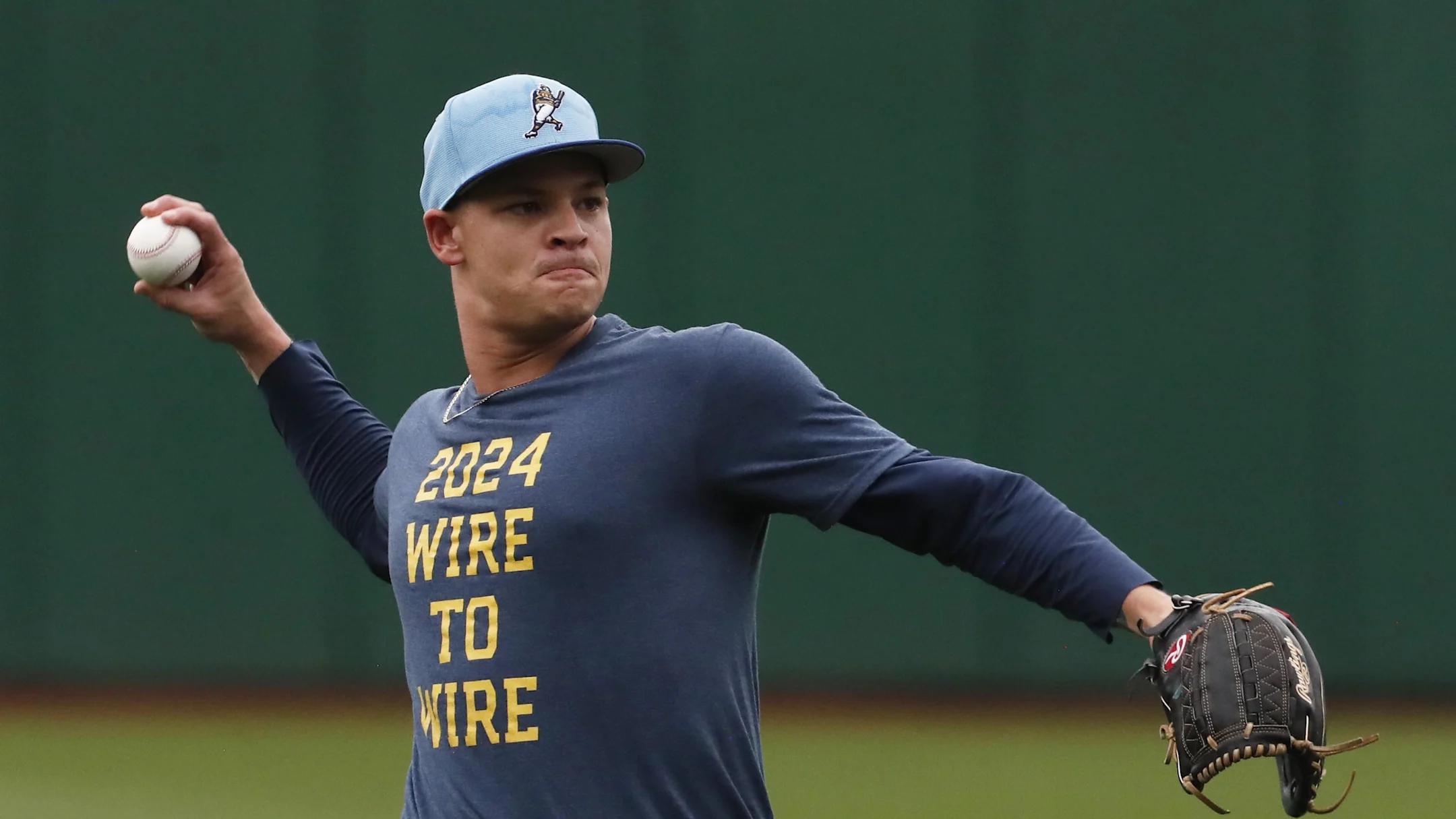
For the Brewers, the return reflects both value and timing. Jett Williams brings speed, patience, and defensive versatility. Though undersized, the 21-year-old has shown power growth in the upper minors and profiles as a top-of-the-order catalyst once he settles in.
Brandon Sproat, meanwhile, is closer to the majors. The former second-round pick features a deep pitch mix and premium velocity. While command remains a work in progress, evaluators see a starter with mid-rotation upside or a high-leverage bullpen future.
Milwaukee’s decision aligns with its long-standing approach. The organization rarely commits long-term money to pitchers nearing free agency. Peralta joins a list that includes Corbin Burnes and Josh Hader, stars who moved at peak value rather than lost for minimal return.
What Comes Next for the Mets
Tobias Myers’ Instagram story:
🗽🗽 pic.twitter.com/uAaZlaWUOp
— Mets Batflip (@metsbatflip1) January 22, 2026
For New York, the focus is immediate contention. Peralta slots ahead of Sean Manaea, Kodai Senga, and David Peterson, with Nolan McLean waiting in the wings. Whether the Mets pursue an extension remains unclear, but the message is obvious: 2026 is the priority.
This was not a deep move or a hedge. It was a declaration. By landing Freddy Peralta, the Mets have added legitimacy to their rotation and urgency to their window. The season may still be months away, but the tone has already been set.
Featured image: Getty Images
How The Motorsports World Is Honoring Greg Biffle Following His Death

Source link
#Brewers #Trade #Freddy #Peralta #Mets #Defining #Offseason #Move


Post Comment