
We may receive a commission on purchases made from links.
Universal Pictures had no faith in “Fast Times at Ridgemont High” when they held their nose and dumped it into theaters at the end of the 1982 summer movie season. The studio that had made a killing with the equally ribald “National Lampoon’s Animal House” five years earlier was embarrassed by the raunchiness of Amy Heckerling and Cameron Crowe’s depiction of high school life in the Reagan era — in part because it was much more grounded, but also, I think, because it presented audiences with three-dimensional female characters. For many male executives, girls existed only to be objectified in young-skewing sex comedies. They couldn’t stomach an abortion subplot in a film they considered a low-aiming programmer.
“Fast Times at Ridgemont High” was a surprise box office hit and became a Gen X phenomenon when it hit the home entertainment revenue window. Within a year of its release, its target audience could quote damn near the whole movie. And while there were breakout performances aplenty (Jennifer Jason Leigh, Phoebe Cates, Judge Reinhold), Sean Penn’s zonked-out surfer dude Jeff Spicoli was quickly considered a stoner icon on par with Cheech & Chong.
Suddenly, Universal’s aversion to teen comedies with nuanced characters (including young women who are so over their idiot boyfriends’ BS) vanished. They wanted Crowe to catch hormone-addled lightning in a bottle again, which led them to greenlight “The Wild Life.” This “spiritual sequel” to “Fast Times at Ridgemont High” would document the growing pains of aimless Los Angeles teenagers who’ve no idea what to do with their lives post-graduation. Though Crowe and director Art Linson secured the services of another talented Penn family member, the film didn’t quite work.
The Wild Life is too wild for its own good
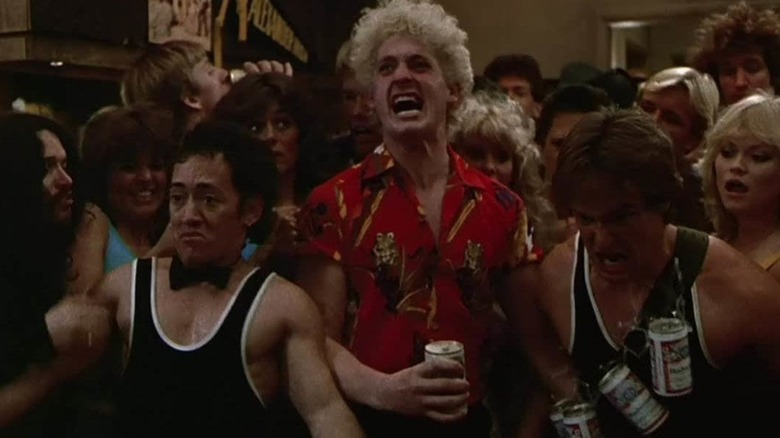
Crowe, an astute observer of youth culture (perhaps, because having been moved up three grades in high school, he had a lonely outsider’s view on his older classmates’ struggles), captures the swirl of hope and melancholy that sets in as teens, on the cusp of their 20s, try to find their way in the world. What’s interesting about “The Wild Life” is that Crowe is focused on a particular type of post-grad teen. None of these characters are going to college; they’re working at donut shops, a trendy clothing store, and, in the case of Christopher Penn’s Tom Drake, a bowling alley.
Crowe clearly wrote Tom to be the Spicoli of “The Wild Life” (especially with his “It’s casual” catchphrase), but he’s a different kind of party animal. He’s a heavy drinker with an intimidating physical frame; when the booze takes over, he’s a mindlessly destructive presence. He’s also the best friend of the much more sensible Bill Conrad (Eric Stoltz), and the moment the two become roommates in a boxy apartment, you know Tom is going to get them evicted. But Tom is not a dead-eyed agent of drunken chaos. He has a heart, and it gets broken by Jenny Wright’s Eileen. No one’s making great decisions in this movie, but that’s essentially what happens during this time of transition.
I think there was a great film to be made out of “The Wild Life,” but Linson, a fantastic producer who’s written a couple of must-read books on his adventures in the film industry (“A Pound of Flesh” and “What Just Happened”), lets the comedy get a little too broad. It’s an interesting failure made with the best of intentions. If you’re a Crowe fan, it’s essential viewing.
Source link
#Cameron #Crowes #Fast #Times #Ridgemont #High #Follow #Forgotten #StarPacked #Comedy #SlashFilm



Post Comment