×
Deadspin | Twins post 6-run 1st, then hold off late Tigers rally  Apr 8, 2026; Minneapolis, Minnesota, USA; Minnesota Twins second baseman Luke Keaschall (15) scores during the first inning against the Detroit Tigers at Target Field. Mandatory Credit: Jordan Johnson-Imagn Images   Royce Lewis went 2-for-3 with two RBIs and the Minnesota Twins held on for an 8-6 win over the Detroit Tigers on Wednesday night in Minneapolis.  Byron Buxton went 3-for-4 with a double and scored three runs for Minnesota, which won its third game in a row. Matt Wallner doubled and drove in a run.  Gleyber Torres went 2-for-5 with a double and two RBIs to lead Detroit, which lost its fourth in a row  Twins right-hander Bailey Ober (1-0) allowed two runs on five hits in 5 2/3 innings.  Tigers left-hander Framber Valdez (1-1) surrendered eight runs on 10 hits in five-plus innings after permitting only two runs (one earned) in his first two starts combined.  Twins southpaw Kody Funderburk recorded the final two outs for his first save of the season.  Minnesota pounced on Valdez for six runs in the bottom of the first.  Buxton hit a leadoff single and came around to score the game’s first run on a wild pitch. Ryan Jeffers followed with an RBI groundout to make it 2-0.    Josh Bell added an RBI single and Wallner ripped an RBI double to make it a four-run lead. Lewis capped the big inning with a two-run single to center that scored Bell and Wallner.  Valdez settled down until the fourth, when he gave up another run that put the Twins on top 7-0. Buxton got things going once again as he hit a one-out single, advanced to second on a groundout and scored on a single to center by Luke Keaschall.  The Tigers pulled within 7-2 in the sixth. Kerry Carpenter hit a one-out single to score Colt Keith and Dillon Dingler added a two-out single to score Gleyber Torres.  Buxton scored another run in the bottom of the sixth to make it 8-2. Martin got caught in a rundown between first and second and Buxton scampered home before the Tigers could react.  Detroit erupted for four runs in the seventh to cut the deficit to 8-6.   Torres started the comeback attempt with a two-run double to right. Riley Greene pulled the Tigers within three runs on a two-out RBI infield single, and he advanced to third on a single by Dingler and scored on a wild pitch by reliever Cole Sands.  –Field Level Media   #Deadspin #Twins #post #6run #1st #hold #late #Tigers #rally
Deadspin | Twins post 6-run 1st, then hold off late Tigers rally
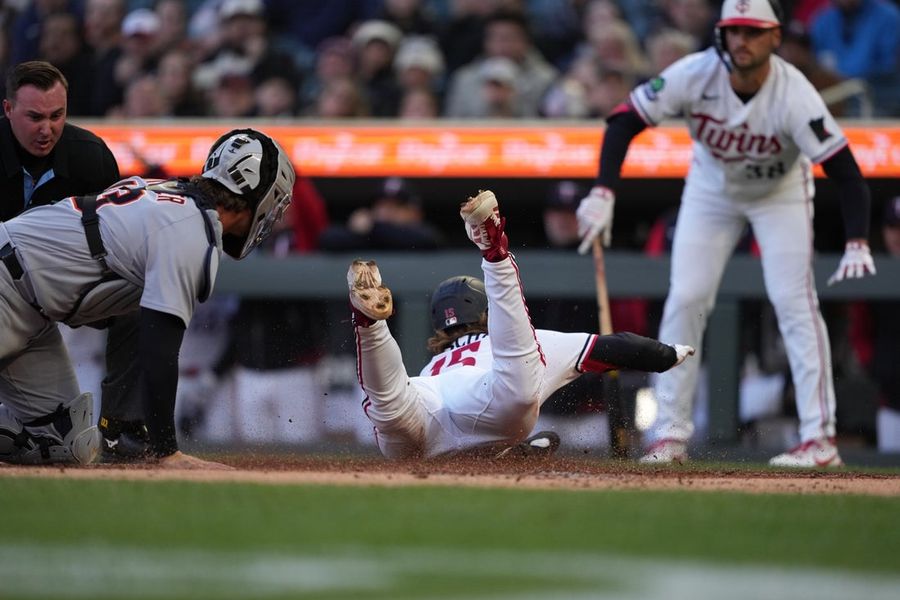
Deadspin | Twins post 6-run 1st, then hold off late Tigers rally  Apr 8, 2026; Minneapolis, Minnesota, USA; Minnesota Twins second baseman Luke Keaschall (15) scores during the first inning against the Detroit Tigers at Target Field. Mandatory Credit: Jordan Johnson-Imagn Images   Royce Lewis went 2-for-3 with two RBIs and the Minnesota Twins held on for an 8-6 win over the Detroit Tigers on Wednesday night in Minneapolis.  Byron Buxton went 3-for-4 with a double and scored three runs for Minnesota, which won its third game in a row. Matt Wallner doubled and drove in a run.  Gleyber Torres went 2-for-5 with a double and two RBIs to lead Detroit, which lost its fourth in a row  Twins right-hander Bailey Ober (1-0) allowed two runs on five hits in 5 2/3 innings.  Tigers left-hander Framber Valdez (1-1) surrendered eight runs on 10 hits in five-plus innings after permitting only two runs (one earned) in his first two starts combined.  Twins southpaw Kody Funderburk recorded the final two outs for his first save of the season.  Minnesota pounced on Valdez for six runs in the bottom of the first.  Buxton hit a leadoff single and came around to score the game’s first run on a wild pitch. Ryan Jeffers followed with an RBI groundout to make it 2-0.    Josh Bell added an RBI single and Wallner ripped an RBI double to make it a four-run lead. Lewis capped the big inning with a two-run single to center that scored Bell and Wallner.  Valdez settled down until the fourth, when he gave up another run that put the Twins on top 7-0. Buxton got things going once again as he hit a one-out single, advanced to second on a groundout and scored on a single to center by Luke Keaschall.  The Tigers pulled within 7-2 in the sixth. Kerry Carpenter hit a one-out single to score Colt Keith and Dillon Dingler added a two-out single to score Gleyber Torres.  Buxton scored another run in the bottom of the sixth to make it 8-2. Martin got caught in a rundown between first and second and Buxton scampered home before the Tigers could react.  Detroit erupted for four runs in the seventh to cut the deficit to 8-6.   Torres started the comeback attempt with a two-run double to right. Riley Greene pulled the Tigers within three runs on a two-out RBI infield single, and he advanced to third on a single by Dingler and scored on a wild pitch by reliever Cole Sands.  –Field Level Media   #Deadspin #Twins #post #6run #1st #hold #late #Tigers #rallyApr 8, 2026; Minneapolis, Minnesota, USA; Minnesota Twins second baseman Luke Keaschall (15) scores during the first inning against the Detroit Tigers at Target Field. Mandatory Credit: Jordan Johnson-Imagn Images

Royce Lewis went 2-for-3 with two RBIs and the Minnesota Twins held on for an 8-6 win over the Detroit Tigers on Wednesday night in Minneapolis.

Byron Buxton went 3-for-4 with a double and scored three runs for Minnesota, which won its third game in a row. Matt Wallner doubled and drove in a run.

Gleyber Torres went 2-for-5 with a double and two RBIs to lead Detroit, which lost its fourth in a row

Twins right-hander Bailey Ober (1-0) allowed two runs on five hits in 5 2/3 innings.

Tigers left-hander Framber Valdez (1-1) surrendered eight runs on 10 hits in five-plus innings after permitting only two runs (one earned) in his first two starts combined.

Twins southpaw Kody Funderburk recorded the final two outs for his first save of the season.

Minnesota pounced on Valdez for six runs in the bottom of the first.


Buxton hit a leadoff single and came around to score the game’s first run on a wild pitch. Ryan Jeffers followed with an RBI groundout to make it 2-0.

Josh Bell added an RBI single and Wallner ripped an RBI double to make it a four-run lead. Lewis capped the big inning with a two-run single to center that scored Bell and Wallner.

Valdez settled down until the fourth, when he gave up another run that put the Twins on top 7-0. Buxton got things going once again as he hit a one-out single, advanced to second on a groundout and scored on a single to center by Luke Keaschall.

The Tigers pulled within 7-2 in the sixth. Kerry Carpenter hit a one-out single to score Colt Keith and Dillon Dingler added a two-out single to score Gleyber Torres.

Buxton scored another run in the bottom of the sixth to make it 8-2. Martin got caught in a rundown between first and second and Buxton scampered home before the Tigers could react.

Detroit erupted for four runs in the seventh to cut the deficit to 8-6.

Torres started the comeback attempt with a two-run double to right. Riley Greene pulled the Tigers within three runs on a two-out RBI infield single, and he advanced to third on a single by Dingler and scored on a wild pitch by reliever Cole Sands.

–Field Level Media

#Deadspin #Twins #post #6run #1st #hold #late #Tigers #rally

Apr 8, 2026; Minneapolis, Minnesota, USA; Minnesota Twins second baseman Luke Keaschall (15) scores during the first inning against the Detroit Tigers at Target Field. Mandatory Credit: Jordan Johnson-Imagn Images

Royce Lewis went 2-for-3 with two RBIs and the Minnesota Twins held on for an 8-6 win over the Detroit Tigers on Wednesday night in Minneapolis.

Byron Buxton went 3-for-4 with a double and scored three runs for Minnesota, which won its third game in a row. Matt Wallner doubled and drove in a run.

Gleyber Torres went 2-for-5 with a double and two RBIs to lead Detroit, which lost its fourth in a row

Twins right-hander Bailey Ober (1-0) allowed two runs on five hits in 5 2/3 innings.

Tigers left-hander Framber Valdez (1-1) surrendered eight runs on 10 hits in five-plus innings after permitting only two runs (one earned) in his first two starts combined.

Twins southpaw Kody Funderburk recorded the final two outs for his first save of the season.

Minnesota pounced on Valdez for six runs in the bottom of the first.

Buxton hit a leadoff single and came around to score the game’s first run on a wild pitch. Ryan Jeffers followed with an RBI groundout to make it 2-0.

Josh Bell added an RBI single and Wallner ripped an RBI double to make it a four-run lead. Lewis capped the big inning with a two-run single to center that scored Bell and Wallner.

Valdez settled down until the fourth, when he gave up another run that put the Twins on top 7-0. Buxton got things going once again as he hit a one-out single, advanced to second on a groundout and scored on a single to center by Luke Keaschall.

The Tigers pulled within 7-2 in the sixth. Kerry Carpenter hit a one-out single to score Colt Keith and Dillon Dingler added a two-out single to score Gleyber Torres.

Buxton scored another run in the bottom of the sixth to make it 8-2. Martin got caught in a rundown between first and second and Buxton scampered home before the Tigers could react.

Detroit erupted for four runs in the seventh to cut the deficit to 8-6.

Torres started the comeback attempt with a two-run double to right. Riley Greene pulled the Tigers within three runs on a two-out RBI infield single, and he advanced to third on a single by Dingler and scored on a wild pitch by reliever Cole Sands.

–Field Level Media
Source link
#Deadspin #Twins #post #6run #1st #hold #late #Tigers #rally

Previous post

Gender-row boxer Lin targets Asian Games after bronze on comeback <div id="content-body-70841321" itemprop="articleBody"><p>Gender-row boxer Lin Yu-ting’s coach said the Taiwanese Olympic champion would target Asian Games gold after stepping up in weight and winning bronze in her first event since the Paris Olympics.</p><p>Lin, who won gold in 57kg at the 2024 Games, reached the semifinal of the 60kg class at the Asian Elite Championships in Ulaanbaatar, Mongolia, but lost to North Korea’s Won Un Gyong.</p><p>Her coach, Tseng Tzu-chiang, told <i>AFP</i> that Lin would aim for a second Asian Games gold in Japan later this year after her comeback “breakthrough” this week, having won the 57kg class in Hangzhou in 2023.</p><p>“Changing weight class is inherently a challenge. Having new competitors is a great way to challenge yourself,” Tseng told <i>AFP</i> in a phone interview from Ulaanbaatar.</p><p>“It’s definitely a fantastic opportunity because we’ve never encountered any opponents in this weight class before.</p><p>“It’s a breakthrough.”</p><p>The medical committee of World Boxing, the governing body recognised by the International Olympic Committee (IOC), last month finally cleared the 30-year-old Lin to return to the ring.</p><p>“It’s a new weight class, and she hasn’t been able to compete on the stage for a long time,” said Tseng.</p><p>“Of course, the gender test is also a challenge, and now that we’ve passed that hurdle, we’ll focus on doing our best in the Asian Games.”</p><p><b>READ: <a href="https://sportstar.thehindu.com/boxing/priya-ghanghas-asian-boxing-championships-60kg-final-feature-story-interview/article70837587.ece" target="_blank">After slow career start, Priya Ghanghas prepares for big step up in Asian Championships final</a></b></p><p>Lin and Algerian boxer Imane Khelif were embroiled in a gender-eligibility row at the 2024 Paris Olympic Games, where they won golds in separate weight classes.</p><p>Both had been barred from the International Boxing Association’s (IBA) 2023 world championships for failing eligibility tests.</p><p>The IOC allowed them to compete in Paris, saying they had been victims of “a sudden and arbitrary decision by the IBA”.</p><p>World Boxing subsequently introduced a policy that fighters who want to participate in the women’s category need to take a one-off genetic test.</p><p>Lin was tested last year, but World Boxing did not reveal the results. She missed the world championships in September after reportedly failing to get a response from World Boxing.</p><p><b>ALSO READ: <a href="https://sportstar.thehindu.com/boxing/asian-boxing-championships-2026-india-results-semifinals-highlights-womens-mens-competition/article70834795.ece" target="_blank">Asian Boxing Championships 2026: Eight Indians in gold-medal bouts</a></b></p><p>Taiwan’s boxing association began an appeal process, submitting medical documents to World Boxing that were analysed by its medical committee.</p><p>In March, she was finally cleared to compete “in the female category at World Boxing competitions,” said its secretary general, Tom Dielen in a statement.</p><p>Tseng said it had been a drawn-out process.</p><p>“We spent a lot of effort communicating and coordinating with World Boxing and the IOC to define the gender test policy, which took a lot of time,” he said.</p><p>“When we found out we could compete, there were less than two weeks left (before the tournament). We were prepared, but our overall condition wasn’t perfect.”</p><p>Lin will next compete at the World Boxing Cup in Guiyang, China, in June, Tseng added, before training in South Korea in preparation for September’s Asian Games.</p><p class="publish-time" id="end-of-article">Published on Apr 09, 2026</p></div> #Genderrow #boxer #Lin #targets #Asian #Games #bronze #comeback

Next post

Everything ‘Game of Thrones’ Actor Michael Patrick Said About Battling MND Before Death at 35

Deadspin | CONCACAF Champions Cup: Tigres, Toluca grab 2-goal advantages  Mar 12, 2026; Cincinnati, Ohio, USA; A general view of the official game ball during the first half in the match between Tigres UANL and FC Cincinnati at TQL Stadium. Mandatory Credit: Katie Stratman-Imagn Images   Ozziel Herrera capped an impressive team play by scoring the first goal and Tigres UANL earned a 2-0 win over the Seattle Sounders on Wednesday at San Nicolas de los Garza, Mexico, in the first leg of a CONCACAF Champions Cup quarterfinal series.  The two-game, total-goal matchup will conclude on April 15 in Seattle. The victorious team will oppose either Nashville SC or Club America in the semifinals.  With the game scoreless in the 51st minute, a long pass sent Tigres off on a counterattack. Tigres’ Fernando Gorriaran got under the ball, and his first touch was wayward, but a lucky bounce sent the ball off a defender and right back to him.  Gorriaran dribbled toward the center of the field, then dropped a back-heel pass to Herrera, who chipped a 12-yard shot over Sounders goalkeeper Stefan Frei and into the goal netting on the far side.  Tigres doubled the advantage on an own goal off a 76th-minute corner kick.  Toluca FC 4, Galaxy 2   Paulinho scored a hat trick as Toluca grabbed the first-leg advantage on Los Angeles in Toluca de Lerdo, Mexico.  The second leg is scheduled for April 15 in Carson, Calif., with the winning team drawing either Cruz Azul or Los Angeles FC in the semifinals.  Nicolas Castro opened the scoring for the hosts in the 12th minute, and Paulinho doubled the lead with a 43rd-minute volley from close range.  Gabriel Pec (66th minute from a sharp angle) and Marco Reus (77th) tallied for the Galaxy, but each time Paulinho responded for Toluca, scoring in the 73rd and 85th minutes. The final tally came when he hustled in front to block an L.A. clearance attempt, and Paulinho’s tackle sent the ball into the net.  –Field Level Media   #Deadspin #CONCACAF #Champions #Cup #Tigres #Toluca #grab #2goal #advantagesMar 12, 2026; Cincinnati, Ohio, USA; A general view of the official game ball during the first half in the match between Tigres UANL and FC Cincinnati at TQL Stadium. Mandatory Credit: Katie Stratman-Imagn Images

Ozziel Herrera capped an impressive team play by scoring the first goal and Tigres UANL earned a 2-0 win over the Seattle Sounders on Wednesday at San Nicolas de los Garza, Mexico, in the first leg of a CONCACAF Champions Cup quarterfinal series.

The two-game, total-goal matchup will conclude on April 15 in Seattle. The victorious team will oppose either Nashville SC or Club America in the semifinals.

With the game scoreless in the 51st minute, a long pass sent Tigres off on a counterattack. Tigres’ Fernando Gorriaran got under the ball, and his first touch was wayward, but a lucky bounce sent the ball off a defender and right back to him.

Gorriaran dribbled toward the center of the field, then dropped a back-heel pass to Herrera, who chipped a 12-yard shot over Sounders goalkeeper Stefan Frei and into the goal netting on the far side.

Tigres doubled the advantage on an own goal off a 76th-minute corner kick.


Toluca FC 4, Galaxy 2

Paulinho scored a hat trick as Toluca grabbed the first-leg advantage on Los Angeles in Toluca de Lerdo, Mexico.

The second leg is scheduled for April 15 in Carson, Calif., with the winning team drawing either Cruz Azul or Los Angeles FC in the semifinals.

Nicolas Castro opened the scoring for the hosts in the 12th minute, and Paulinho doubled the lead with a 43rd-minute volley from close range.

Gabriel Pec (66th minute from a sharp angle) and Marco Reus (77th) tallied for the Galaxy, but each time Paulinho responded for Toluca, scoring in the 73rd and 85th minutes. The final tally came when he hustled in front to block an L.A. clearance attempt, and Paulinho’s tackle sent the ball into the net.

–Field Level Media

#Deadspin #CONCACAF #Champions #Cup #Tigres #Toluca #grab #2goal #advantages">Deadspin | CONCACAF Champions Cup: Tigres, Toluca grab 2-goal advantages  Mar 12, 2026; Cincinnati, Ohio, USA; A general view of the official game ball during the first half in the match between Tigres UANL and FC Cincinnati at TQL Stadium. Mandatory Credit: Katie Stratman-Imagn Images   Ozziel Herrera capped an impressive team play by scoring the first goal and Tigres UANL earned a 2-0 win over the Seattle Sounders on Wednesday at San Nicolas de los Garza, Mexico, in the first leg of a CONCACAF Champions Cup quarterfinal series.  The two-game, total-goal matchup will conclude on April 15 in Seattle. The victorious team will oppose either Nashville SC or Club America in the semifinals.  With the game scoreless in the 51st minute, a long pass sent Tigres off on a counterattack. Tigres’ Fernando Gorriaran got under the ball, and his first touch was wayward, but a lucky bounce sent the ball off a defender and right back to him.  Gorriaran dribbled toward the center of the field, then dropped a back-heel pass to Herrera, who chipped a 12-yard shot over Sounders goalkeeper Stefan Frei and into the goal netting on the far side.  Tigres doubled the advantage on an own goal off a 76th-minute corner kick.  Toluca FC 4, Galaxy 2   Paulinho scored a hat trick as Toluca grabbed the first-leg advantage on Los Angeles in Toluca de Lerdo, Mexico.  The second leg is scheduled for April 15 in Carson, Calif., with the winning team drawing either Cruz Azul or Los Angeles FC in the semifinals.  Nicolas Castro opened the scoring for the hosts in the 12th minute, and Paulinho doubled the lead with a 43rd-minute volley from close range.  Gabriel Pec (66th minute from a sharp angle) and Marco Reus (77th) tallied for the Galaxy, but each time Paulinho responded for Toluca, scoring in the 73rd and 85th minutes. The final tally came when he hustled in front to block an L.A. clearance attempt, and Paulinho’s tackle sent the ball into the net.  –Field Level Media   #Deadspin #CONCACAF #Champions #Cup #Tigres #Toluca #grab #2goal #advantages

C. D. Gopinath, the last surviving member of India’s first Test-winning side, passed away on Thursday at the age of 96, closing a living link to a morning in 1952 when Indian cricket, after years of waiting, finally believed in itself.

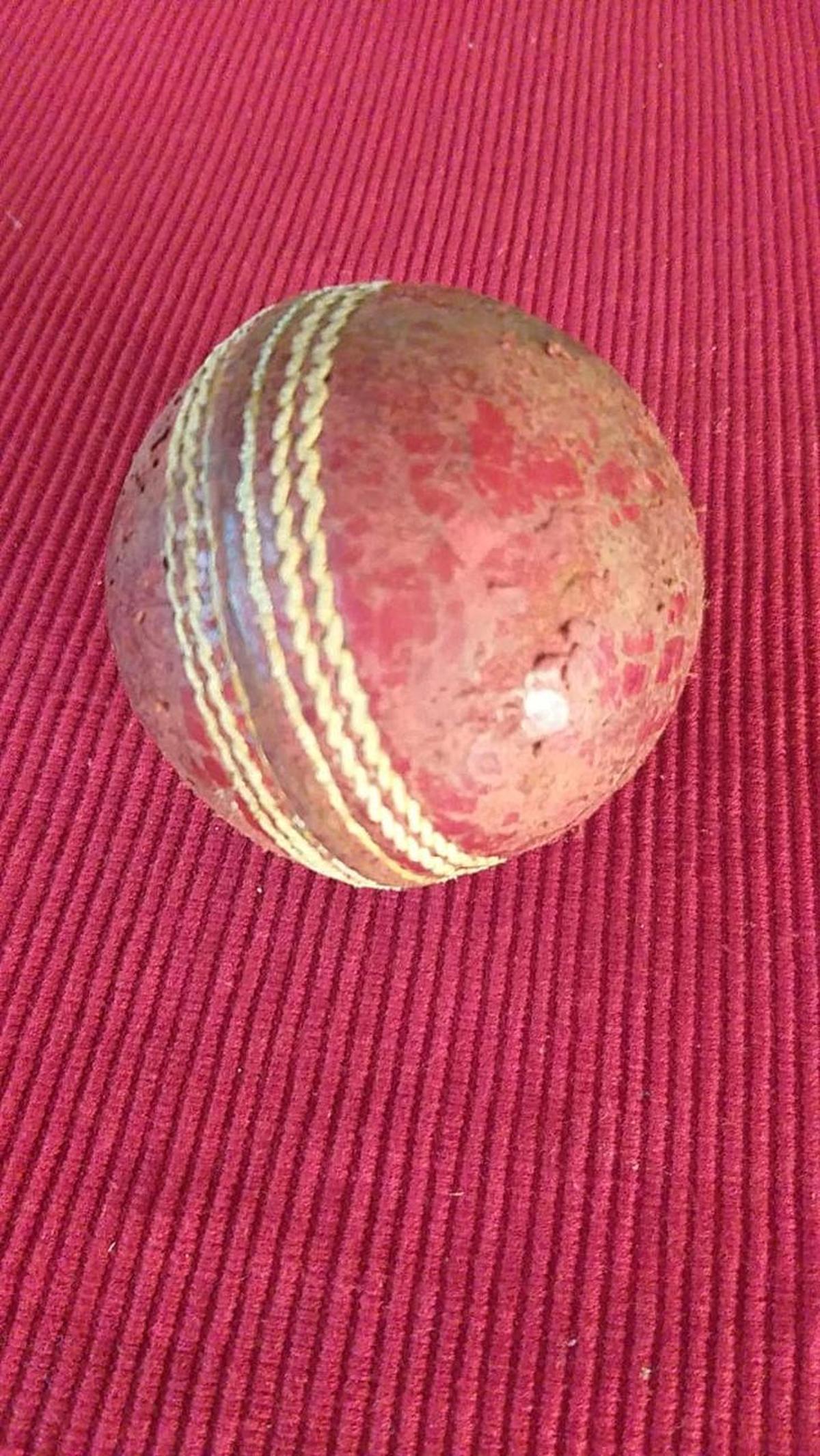
Against England, at the M. A. Chidambaram Stadium, then still Madras, Gopinath was the youngest member in a team led by Vijay Hazare. He made 35 runs in a brisk, obedient cameo, and, more enduringly, took the winning catch to seal India’s first ever Test victory. The ball, signed and now faded, sat in his Coonoor home for decades, a modest relic of a historic triumph.

The last witness to a first belief — Remembering C.D. Gopinath  C. D. Gopinath, the last surviving member of India’s first Test-winning side, passed away on Thursday at the age of 96, closing a living link to a morning in 1952 when Indian cricket, after years of waiting, finally believed in itself.Against England, at the M. A. Chidambaram Stadium, then still Madras, Gopinath was the youngest member in a team led by Vijay Hazare. He made 35 runs in a brisk, obedient cameo, and, more enduringly, took the winning catch to seal India’s first ever Test victory. The ball, signed and now faded, sat in his Coonoor home for decades, a modest relic of a historic triumph. C.D. Gopinath’s souvenir match ball from the 1952 Test win finds a place at his Coonoor residence.
                                                            | Photo Credit: 
                                Special arrangement
                            

                            C.D. Gopinath’s souvenir match ball from the 1952 Test win finds a place at his Coonoor residence.
                                                            | Photo Credit: 
                                Special arrangement
                                                    When I met him in 2021, in a sunlit garden in Adyar, he was 91 but alert, amused by memory, and generous with it. Time had softened neither his wit nor his clarity. Asked about a proposed documentary on that match, he laughed: with no teammates left to contradict him, he could “say anything I want.”His story resisted the tidy arc. He began cricket only at 17, almost by accident, handed keeping gloves because “nobody else could.” Soon, he was opening the batting and making 70. In First-Class cricket, he would compile 4,259 runs at an average of 42, with nine hundreds, before business interests drew him away after 1962-63. The numbers are solid; the life around them, richer.He spoke often about what that 1952 win meant and what it did not. There was no strategy, no huddles, no theatre. “We won, said ‘well done,’ and went home,” he recalled, half in wonder at modern celebrations. Yet beneath that restraint lay something more searching. Gopinath was clear-eyed about the limits of his era: a team that was not quite a team, a country still learning to think as one. Parochialism, he said, seeped into selection and dressing rooms alike. He had felt it, even as his runs against touring sides forced recognition.And still, he believed the game could do what politics struggled to: bring India together. He delighted in the modern side’s plurality, in captains from unexpected places, in the idea that talent could emerge from any corner. The 1952 victory, he felt, changed the internal grammar of Indian cricket. For the first time, it allowed a fragile thought to take hold: that India could beat those it had learned from.In person, he carried that history lightly. There was no bitterness, only perspective, and a storyteller’s instinct for the telling detail: the impatience of a declaration that never came, the regret of a dismissal taken on trust, the small, private satisfaction of a catch held in front of a pavilion.Gopinath’s passing leaves no eyewitness to that first triumph. But his voice, wry and lucid, endures in the stories he chose to tell, and in the way he told them: without fuss, without embellishment, and with an unwavering sense of proportion.Published on Apr 09, 2026  #witness #belief #Remembering #C.D #Gopinath

C.D. Gopinath’s souvenir match ball from the 1952 Test win finds a place at his Coonoor residence. | Photo Credit: Special arrangement

lightbox-info

C.D. Gopinath’s souvenir match ball from the 1952 Test win finds a place at his Coonoor residence. | Photo Credit: Special arrangement

When I met him in 2021, in a sunlit garden in Adyar, he was 91 but alert, amused by memory, and generous with it. Time had softened neither his wit nor his clarity. Asked about a proposed documentary on that match, he laughed: with no teammates left to contradict him, he could “say anything I want.”

His story resisted the tidy arc. He began cricket only at 17, almost by accident, handed keeping gloves because “nobody else could.” Soon, he was opening the batting and making 70. In First-Class cricket, he would compile 4,259 runs at an average of 42, with nine hundreds, before business interests drew him away after 1962-63. The numbers are solid; the life around them, richer.

He spoke often about what that 1952 win meant and what it did not. There was no strategy, no huddles, no theatre. “We won, said ‘well done,’ and went home,” he recalled, half in wonder at modern celebrations. Yet beneath that restraint lay something more searching. Gopinath was clear-eyed about the limits of his era: a team that was not quite a team, a country still learning to think as one. Parochialism, he said, seeped into selection and dressing rooms alike. He had felt it, even as his runs against touring sides forced recognition.

And still, he believed the game could do what politics struggled to: bring India together. He delighted in the modern side’s plurality, in captains from unexpected places, in the idea that talent could emerge from any corner. The 1952 victory, he felt, changed the internal grammar of Indian cricket. For the first time, it allowed a fragile thought to take hold: that India could beat those it had learned from.

In person, he carried that history lightly. There was no bitterness, only perspective, and a storyteller’s instinct for the telling detail: the impatience of a declaration that never came, the regret of a dismissal taken on trust, the small, private satisfaction of a catch held in front of a pavilion.

Gopinath’s passing leaves no eyewitness to that first triumph. But his voice, wry and lucid, endures in the stories he chose to tell, and in the way he told them: without fuss, without embellishment, and with an unwavering sense of proportion.

Published on Apr 09, 2026

#witness #belief #Remembering #C.D #Gopinath">The last witness to a first belief — Remembering C.D. Gopinath  C. D. Gopinath, the last surviving member of India’s first Test-winning side, passed away on Thursday at the age of 96, closing a living link to a morning in 1952 when Indian cricket, after years of waiting, finally believed in itself.Against England, at the M. A. Chidambaram Stadium, then still Madras, Gopinath was the youngest member in a team led by Vijay Hazare. He made 35 runs in a brisk, obedient cameo, and, more enduringly, took the winning catch to seal India’s first ever Test victory. The ball, signed and now faded, sat in his Coonoor home for decades, a modest relic of a historic triumph. C.D. Gopinath’s souvenir match ball from the 1952 Test win finds a place at his Coonoor residence.
                                                            | Photo Credit: 
                                Special arrangement
                            

                            C.D. Gopinath’s souvenir match ball from the 1952 Test win finds a place at his Coonoor residence.
                                                            | Photo Credit: 
                                Special arrangement
                                                    When I met him in 2021, in a sunlit garden in Adyar, he was 91 but alert, amused by memory, and generous with it. Time had softened neither his wit nor his clarity. Asked about a proposed documentary on that match, he laughed: with no teammates left to contradict him, he could “say anything I want.”His story resisted the tidy arc. He began cricket only at 17, almost by accident, handed keeping gloves because “nobody else could.” Soon, he was opening the batting and making 70. In First-Class cricket, he would compile 4,259 runs at an average of 42, with nine hundreds, before business interests drew him away after 1962-63. The numbers are solid; the life around them, richer.He spoke often about what that 1952 win meant and what it did not. There was no strategy, no huddles, no theatre. “We won, said ‘well done,’ and went home,” he recalled, half in wonder at modern celebrations. Yet beneath that restraint lay something more searching. Gopinath was clear-eyed about the limits of his era: a team that was not quite a team, a country still learning to think as one. Parochialism, he said, seeped into selection and dressing rooms alike. He had felt it, even as his runs against touring sides forced recognition.And still, he believed the game could do what politics struggled to: bring India together. He delighted in the modern side’s plurality, in captains from unexpected places, in the idea that talent could emerge from any corner. The 1952 victory, he felt, changed the internal grammar of Indian cricket. For the first time, it allowed a fragile thought to take hold: that India could beat those it had learned from.In person, he carried that history lightly. There was no bitterness, only perspective, and a storyteller’s instinct for the telling detail: the impatience of a declaration that never came, the regret of a dismissal taken on trust, the small, private satisfaction of a catch held in front of a pavilion.Gopinath’s passing leaves no eyewitness to that first triumph. But his voice, wry and lucid, endures in the stories he chose to tell, and in the way he told them: without fuss, without embellishment, and with an unwavering sense of proportion.Published on Apr 09, 2026  #witness #belief #Remembering #C.D #Gopinath

When I met him in 2021, in a sunlit garden in Adyar, he was 91 but alert, amused by memory, and generous with it. Time had softened neither his wit nor his clarity. Asked about a proposed documentary on that match, he laughed: with no teammates left to contradict him, he could “say anything I want.”

His story resisted the tidy arc. He began cricket only at 17, almost by accident, handed keeping gloves because “nobody else could.” Soon, he was opening the batting and making 70. In First-Class cricket, he would compile 4,259 runs at an average of 42, with nine hundreds, before business interests drew him away after 1962-63. The numbers are solid; the life around them, richer.

He spoke often about what that 1952 win meant and what it did not. There was no strategy, no huddles, no theatre. “We won, said ‘well done,’ and went home,” he recalled, half in wonder at modern celebrations. Yet beneath that restraint lay something more searching. Gopinath was clear-eyed about the limits of his era: a team that was not quite a team, a country still learning to think as one. Parochialism, he said, seeped into selection and dressing rooms alike. He had felt it, even as his runs against touring sides forced recognition.

And still, he believed the game could do what politics struggled to: bring India together. He delighted in the modern side’s plurality, in captains from unexpected places, in the idea that talent could emerge from any corner. The 1952 victory, he felt, changed the internal grammar of Indian cricket. For the first time, it allowed a fragile thought to take hold: that India could beat those it had learned from.

In person, he carried that history lightly. There was no bitterness, only perspective, and a storyteller’s instinct for the telling detail: the impatience of a declaration that never came, the regret of a dismissal taken on trust, the small, private satisfaction of a catch held in front of a pavilion.

Gopinath’s passing leaves no eyewitness to that first triumph. But his voice, wry and lucid, endures in the stories he chose to tell, and in the way he told them: without fuss, without embellishment, and with an unwavering sense of proportion.

Published on Apr 09, 2026

#witness #belief #Remembering #C.D #Gopinath">The last witness to a first belief — Remembering C.D. Gopinath

C. D. Gopinath, the last surviving member of India’s first Test-winning side, passed away on Thursday at the age of 96, closing a living link to a morning in 1952 when Indian cricket, after years of waiting, finally believed in itself.

Against England, at the M. A. Chidambaram Stadium, then still Madras, Gopinath was the youngest member in a team led by Vijay Hazare. He made 35 runs in a brisk, obedient cameo, and, more enduringly, took the winning catch to seal India’s first ever Test victory. The ball, signed and now faded, sat in his Coonoor home for decades, a modest relic of a historic triumph.

The last witness to a first belief — Remembering C.D. Gopinath  C. D. Gopinath, the last surviving member of India’s first Test-winning side, passed away on Thursday at the age of 96, closing a living link to a morning in 1952 when Indian cricket, after years of waiting, finally believed in itself.Against England, at the M. A. Chidambaram Stadium, then still Madras, Gopinath was the youngest member in a team led by Vijay Hazare. He made 35 runs in a brisk, obedient cameo, and, more enduringly, took the winning catch to seal India’s first ever Test victory. The ball, signed and now faded, sat in his Coonoor home for decades, a modest relic of a historic triumph. C.D. Gopinath’s souvenir match ball from the 1952 Test win finds a place at his Coonoor residence.
                                                            | Photo Credit: 
                                Special arrangement
                            

                            C.D. Gopinath’s souvenir match ball from the 1952 Test win finds a place at his Coonoor residence.
                                                            | Photo Credit: 
                                Special arrangement
                                                    When I met him in 2021, in a sunlit garden in Adyar, he was 91 but alert, amused by memory, and generous with it. Time had softened neither his wit nor his clarity. Asked about a proposed documentary on that match, he laughed: with no teammates left to contradict him, he could “say anything I want.”His story resisted the tidy arc. He began cricket only at 17, almost by accident, handed keeping gloves because “nobody else could.” Soon, he was opening the batting and making 70. In First-Class cricket, he would compile 4,259 runs at an average of 42, with nine hundreds, before business interests drew him away after 1962-63. The numbers are solid; the life around them, richer.He spoke often about what that 1952 win meant and what it did not. There was no strategy, no huddles, no theatre. “We won, said ‘well done,’ and went home,” he recalled, half in wonder at modern celebrations. Yet beneath that restraint lay something more searching. Gopinath was clear-eyed about the limits of his era: a team that was not quite a team, a country still learning to think as one. Parochialism, he said, seeped into selection and dressing rooms alike. He had felt it, even as his runs against touring sides forced recognition.And still, he believed the game could do what politics struggled to: bring India together. He delighted in the modern side’s plurality, in captains from unexpected places, in the idea that talent could emerge from any corner. The 1952 victory, he felt, changed the internal grammar of Indian cricket. For the first time, it allowed a fragile thought to take hold: that India could beat those it had learned from.In person, he carried that history lightly. There was no bitterness, only perspective, and a storyteller’s instinct for the telling detail: the impatience of a declaration that never came, the regret of a dismissal taken on trust, the small, private satisfaction of a catch held in front of a pavilion.Gopinath’s passing leaves no eyewitness to that first triumph. But his voice, wry and lucid, endures in the stories he chose to tell, and in the way he told them: without fuss, without embellishment, and with an unwavering sense of proportion.Published on Apr 09, 2026  #witness #belief #Remembering #C.D #Gopinath

C.D. Gopinath’s souvenir match ball from the 1952 Test win finds a place at his Coonoor residence. | Photo Credit: Special arrangement

lightbox-info

C.D. Gopinath’s souvenir match ball from the 1952 Test win finds a place at his Coonoor residence. | Photo Credit: Special arrangement

When I met him in 2021, in a sunlit garden in Adyar, he was 91 but alert, amused by memory, and generous with it. Time had softened neither his wit nor his clarity. Asked about a proposed documentary on that match, he laughed: with no teammates left to contradict him, he could “say anything I want.”

His story resisted the tidy arc. He began cricket only at 17, almost by accident, handed keeping gloves because “nobody else could.” Soon, he was opening the batting and making 70. In First-Class cricket, he would compile 4,259 runs at an average of 42, with nine hundreds, before business interests drew him away after 1962-63. The numbers are solid; the life around them, richer.

He spoke often about what that 1952 win meant and what it did not. There was no strategy, no huddles, no theatre. “We won, said ‘well done,’ and went home,” he recalled, half in wonder at modern celebrations. Yet beneath that restraint lay something more searching. Gopinath was clear-eyed about the limits of his era: a team that was not quite a team, a country still learning to think as one. Parochialism, he said, seeped into selection and dressing rooms alike. He had felt it, even as his runs against touring sides forced recognition.

And still, he believed the game could do what politics struggled to: bring India together. He delighted in the modern side’s plurality, in captains from unexpected places, in the idea that talent could emerge from any corner. The 1952 victory, he felt, changed the internal grammar of Indian cricket. For the first time, it allowed a fragile thought to take hold: that India could beat those it had learned from.

In person, he carried that history lightly. There was no bitterness, only perspective, and a storyteller’s instinct for the telling detail: the impatience of a declaration that never came, the regret of a dismissal taken on trust, the small, private satisfaction of a catch held in front of a pavilion.

Gopinath’s passing leaves no eyewitness to that first triumph. But his voice, wry and lucid, endures in the stories he chose to tell, and in the way he told them: without fuss, without embellishment, and with an unwavering sense of proportion.

Published on Apr 09, 2026

#witness #belief #Remembering #C.D #Gopinath

Post Comment