×
How can India qualify for AFC U-20 Women’s Asian Cup 2026 Quarterfinals — Scenarios explained  India will take on Chinese Taipei in its final Group C fixture of the AFC Under-20 Women’s Asian Cup 2026 on Wednesday.After defeats in their opening two matches against Japan and Australia, both India and Chinese Taipei find themselves in identical situations, chasing a result that could yet keep their tournament alive.How can India qualify for the quarterfinals in the AFC U-20 Women’s Asian Cup 2026?India’s goal difference of -11 makes things a bit more complicated than Chinese Taipei’s -7. The Young Tigresses’ hopes of reaching the knockout stage for the first time since 2004 rest on securing a place among the two best third-placed teams across all groups.Their task will be simplified if either the Group A match between Vietnam and Bangladesh on Tuesday or the Group B match between Uzbekistan and Jordan on Wednesday ends in a draw. In that case, the winner of India vs Chinese Taipei will qualify for the quarterfinals, regardless of goal difference.But if there is a winner in both those games, India would need to win by a handsome margin to avoid being the worst-ranked third-placed side in the three groups. At the moment, the goal differences of the other teams are – Bangladesh (-3), Vietnam (-6), Uzbekistan (-8) and Jordan (-9).Published on Apr 07, 2026  #India #qualify #AFC #U20 #Womens #Asian #Cup #Quarterfinals #Scenarios #explained

How can India qualify for AFC U-20 Women’s Asian Cup 2026 Quarterfinals — Scenarios explained

India will take on Chinese Taipei in its final Group C fixture of the AFC Under-20 Women’s Asian Cup 2026 on Wednesday.

After defeats in their opening two matches against Japan and Australia, both India and Chinese Taipei find themselves in identical situations, chasing a result that could yet keep their tournament alive.

How can India qualify for the quarterfinals in the AFC U-20 Women’s Asian Cup 2026?

India’s goal difference of -11 makes things a bit more complicated than Chinese Taipei’s -7. The Young Tigresses’ hopes of reaching the knockout stage for the first time since 2004 rest on securing a place among the two best third-placed teams across all groups.

Their task will be simplified if either the Group A match between Vietnam and Bangladesh on Tuesday or the Group B match between Uzbekistan and Jordan on Wednesday ends in a draw. In that case, the winner of India vs Chinese Taipei will qualify for the quarterfinals, regardless of goal difference.

But if there is a winner in both those games, India would need to win by a handsome margin to avoid being the worst-ranked third-placed side in the three groups. At the moment, the goal differences of the other teams are – Bangladesh (-3), Vietnam (-6), Uzbekistan (-8) and Jordan (-9).

Published on Apr 07, 2026
#India #qualify #AFC #U20 #Womens #Asian #Cup #Quarterfinals #Scenarios #explained

India will take on Chinese Taipei in its final Group C fixture of the AFC Under-20 Women’s Asian Cup 2026 on Wednesday.

After defeats in their opening two matches against Japan and Australia, both India and Chinese Taipei find themselves in identical situations, chasing a result that could yet keep their tournament alive.

How can India qualify for the quarterfinals in the AFC U-20 Women’s Asian Cup 2026?

India’s goal difference of -11 makes things a bit more complicated than Chinese Taipei’s -7. The Young Tigresses’ hopes of reaching the knockout stage for the first time since 2004 rest on securing a place among the two best third-placed teams across all groups.

Their task will be simplified if either the Group A match between Vietnam and Bangladesh on Tuesday or the Group B match between Uzbekistan and Jordan on Wednesday ends in a draw. In that case, the winner of India vs Chinese Taipei will qualify for the quarterfinals, regardless of goal difference.

But if there is a winner in both those games, India would need to win by a handsome margin to avoid being the worst-ranked third-placed side in the three groups. At the moment, the goal differences of the other teams are – Bangladesh (-3), Vietnam (-6), Uzbekistan (-8) and Jordan (-9).

Published on Apr 07, 2026

Source link
#India #qualify #AFC #U20 #Womens #Asian #Cup #Quarterfinals #Scenarios #explained

Previous post

Badminton Asia Championships 2026: Dhruv-Tanisha pair keeps Indian challenge alive in mixed doubles <div id="content-body-70834226" itemprop="articleBody"><p>The pair of Dhruv Kapila and Tanisha Crasto kept India’s mixed doubles challenge at the Badminton Asia Championships 2026 with two other duos from the country bowing out in the opening round in Ningbo, China on Tuesday.</p><p>Kapila and Crasto outlasted Thailand’s Phuwanat Horbanluekit and Benyapa Aimsaard, beating them 21-14, 11-21, 21-15 in a three-game thriller which lasted 51 minutes.</p><p>In another match, Rohan Kapoor and Gadde Ruthvika Shivani went down fighting against Malaysia’s eighth seeds Goh Soon Huat and Lai Shevon Jemie 13-21, 19-21 in a 34-minute contest at the Ningbo Olympic Centre.</p><p>The Indian duo struggled to find rhythm early on, conceding the first game comfortably, but showed signs of resistance in the second before the experienced Malaysian combination shut the door in straight games.</p><p>Meanwhile, Ashith Surya and Amrutha Pramuthesh also failed to cross the opening hurdle, losing 16-21, 15-21 to Malaysia’s Wong Tien Ci and Lim Chiew Sien in 31 minutes.</p><p>The Indian pair fought hard but was unable to sustain pressure at crucial junctures against their steady opponents.</p><p>The focus will shift to singles competition on Wednesday with India’s top stars, including P. V. Sindhu and Lakshya Sen, set to begin their campaigns.</p><p class="publish-time" id="end-of-article">Published on Apr 07, 2026</p></div> #Badminton #Asia #Championships #DhruvTanisha #pair #Indian #challenge #alive #mixed #doubles

Next post

Deadspin | Bulls prez sees Billy Donovan as integral to future — if coach wants to stay <div id=""><section id="0" class=" w-full"><div class="xl:container mx-0 !px-4 py-0 pb-4 !mx-0 !px-0"><img src="https://images.deadspin.com/tr:w-900/28666205.jpg" srcset="https://images.deadspin.com/tr:w-900/28666205.jpg" alt="NBA: Phoenix Suns at Chicago Bulls" class="w-full" fetchpriority="high" loading="eager"/><span class="text-0.8 leading-tight">Apr 5, 2026; Chicago, Illinois, USA; Chicago Bulls head coach Billy Donovan directs his team against the Phoenix Suns during the second half at United Center. Mandatory Credit: Kamil Krzaczynski-Imagn Images<!-- --> <!-- --> </span></div></section><section id="section-1"> <p>The Chicago Bulls aren’t looking to move on from Billy Donovan. Now it’s up for Donovan to decide what his future holds.</p> </section><section id="section-2"> <p>Bulls CEO and president Michael Reinsdorf held a video call with media Tuesday and said the team’s next front office hires must be “sold” on Donovan as their coach.</p> </section><section id="section-3"> <p>“If I interview someone and they’re not sold on Billy, they’re not sold on a Hall of Fame coach,” Reinsdorf said, “they’re not sold on a person who’s won championships in college, who’s gone deep in the playoffs with Oklahoma City. … If Billy wants to be our coach and someone’s not interested in that, then they’re probably not the right candidate for us.”</p> </section><section id="section-4"> <p>The “if” is the key. Reinsdorf said Donovan is scheduled to meet with ownership to discuss his future on Monday, the day after the team’s season finale against the Dallas Mavericks.</p> </section><section id="section-5"> <p>Donovan, a two-time NCAA champion at Florida (2006, 2007), had been linked to the opening at North Carolina, but ex-Denver Nuggets coach Michael Malone was officially hired there Tuesday.</p> </section><section id="section-6"> <p>The Bulls fired executive vice president of basketball operations Arturas Karnisovas and general manager Marc Eversley on Monday. Reinsdorf said he wanted Donovan to have a greater voice in team-building.</p> </section><br/><section id="section-7"> <p>“We’d be crazy not to want Billy’s input in player acquisition from players around the league,” Reinsdorf said. “He’s an NBA coach, he coaches against these guys. Some of these guys he’s already coached. Billy will be involved and will be encouraged … I’ll probably push Billy to be more involved.”</p> </section> <section id="section-8"> <p>In fact, Reinsdorf entertained the idea of Donovan moving into the front office himself, but clarified that Donovan had not raised that possibility.</p> </section><section id="section-9"> <p>“If he came to me and said, ‘Hey, I may want to do a Brad Stevens situation,’ I would sit down and listen to Billy,” Reinsdorf said, referencing the former coach of the Boston Celtics who moved into their president of basketball operations position. “I don’t think that’s where his head’s at. I don’t think Billy cares about titles. Billy cares about being a head coach, and he cares about the players and cares about the organization.”</p> </section><section id="section-10"> <p>Donovan, who turns 61 in May, has coached the Bulls since 2020-21 but guided them to just one playoff appearance. They lost to the Miami Heat in the play-in round in each of the past three years.</p> </section><section id="section-11"> <p>Chicago, long eliminated from playoff contention, entered Tuesday’s game at the Washington Wizards at 29-49 and on a seven-game slide. Donovan addressed reporters before the game and said he appreciated Reinsdorf’s belief in him.</p> </section><section id="section-12"> <p>“I’ve always believed this: The room is smarter than any individual and there are a lot of smart people in that room,” Donovan said. “I think if we can put our heads together and figure out how do we get to that? I don’t have all the answers to those things. I just know the last four years, we have not won at a high level. I want to win at a high level. I want to be a part of that. I think the organization deserves that, I think everyone in the organization wants that, and then everybody has got to put their heads together and figure out, ‘How do we go about doing that?'”</p> </section><section id="section-13"> <p>–Field Level Media</p> </section></div> #Deadspin #Bulls #prez #sees #Billy #Donovan #integral #future #coach #stay

There is a moment in every boom when the numbers stop feeling real.

When Royal Challengers Bengaluru commands a sale price of USD 1.78 billion and Rajasthan Royals follows at USD 1.63 billion, it is tempting to read this as the triumph of Indian sport. It is, in truth, the triumph of one sport and an indictment of the rest.

In India, cricket is no longer merely leading the pack; it has lapped every other sport in the country.

The Indian Premier League is not a league in the conventional sense. It is a tightly held, 74-match property, compressed into a two-and-a-half-month window to engineer maximum yield. Its economic engine is calibrated and controlled: centralised media rights, franchise permanence, revenue sharing, all designed to compound value, season after season.

But to credit the IPL alone is to mistake the fruit for the tree.

Its extraordinary valuation rests on foundations laid long before April 18, 2008, when Brendon McCullum unleashed bedlam in Bengaluru. Beneath the spectacle lies a domestic system that stages over 2,000 matches a year, giving the league the depth it leans on. Without it, the IPL would be hollow.

No other sport in India has built that base.

Football comes closest in ambition. The All India Football Federation conducts roughly 1,800 matches across 22 national tournaments. The Indian Super League arrived in 2014 with money, momentum and a touch of glamour, with names like Alessandro Del Piero, Roberto Carlos and David Trezeguet briefly turning Indian stadiums into something resembling a global stage. But without promotion, relegation or a coherent calendar, it drifted, uncertain of an identity to build or sustain.

The Hockey India League flickered. The Pro Kabaddi League, once a television disruptor, now carries the fatigue of repetition, its novelty worn thin without a deeper sporting ecosystem to support its growth.

While others chased the IPL’s visibility, they missed the harder, slower work that makes such visibility durable.

This is where a comparison with the United States sharpens the contrast. In the US, sporting success is diversified, with the NFL, NBA, MLB and NHL operating as self-sustaining, deeply rooted systems. Talent advances through collegiate pathways, revenues are equitably distributed, and calendars are respected, each league playing its part in a wider sporting economy.

India, for now, has built excellence in isolation. The spectacle has been replicated in parts, but not the system.

And so Indian sport sits at an inflection point. Cricket’s rise has not come at the cost of others, but its dominance has exposed their structural fragility.

The money has arrived. The system, beyond cricket, remains a work in progress.

Published on Apr 08, 2026

#IPL #Valuations #Surge #Reveals #Indian #Sports #Imbalance">IPL Valuations Surge: What It Reveals About Indian Sport’s Imbalance  There is a moment in every boom when the numbers stop feeling real.When Royal Challengers Bengaluru commands a sale price of USD 1.78 billion and Rajasthan Royals follows at USD 1.63 billion, it is tempting to read this as the triumph of Indian sport. It is, in truth, the triumph of one sport and an indictment of the rest.In India, cricket is no longer merely leading the pack; it has lapped every other sport in the country.The Indian Premier League is not a league in the conventional sense. It is a tightly held, 74-match property, compressed into a two-and-a-half-month window to engineer maximum yield. Its economic engine is calibrated and controlled: centralised media rights, franchise permanence, revenue sharing, all designed to compound value, season after season.But to credit the IPL alone is to mistake the fruit for the tree.Its extraordinary valuation rests on foundations laid long before April 18, 2008, when Brendon McCullum unleashed bedlam in Bengaluru. Beneath the spectacle lies a domestic system that stages over 2,000 matches a year, giving the league the depth it leans on. Without it, the IPL would be hollow.No other sport in India has built that base.Football comes closest in ambition. The All India Football Federation conducts roughly 1,800 matches across 22 national tournaments. The Indian Super League arrived in 2014 with money, momentum and a touch of glamour, with names like Alessandro Del Piero, Roberto Carlos and David Trezeguet briefly turning Indian stadiums into something resembling a global stage. But without promotion, relegation or a coherent calendar, it drifted, uncertain of an identity to build or sustain.The Hockey India League flickered. The Pro Kabaddi League, once a television disruptor, now carries the fatigue of repetition, its novelty worn thin without a deeper sporting ecosystem to support its growth.While others chased the IPL’s visibility, they missed the harder, slower work that makes such visibility durable.This is where a comparison with the United States sharpens the contrast. In the US, sporting success is diversified, with the NFL, NBA, MLB and NHL operating as self-sustaining, deeply rooted systems. Talent advances through collegiate pathways, revenues are equitably distributed, and calendars are respected, each league playing its part in a wider sporting economy.India, for now, has built excellence in isolation. The spectacle has been replicated in parts, but not the system.And so Indian sport sits at an inflection point. Cricket’s rise has not come at the cost of others, but its dominance has exposed their structural fragility.The money has arrived. The system, beyond cricket, remains a work in progress.Published on Apr 08, 2026  #IPL #Valuations #Surge #Reveals #Indian #Sports #Imbalance

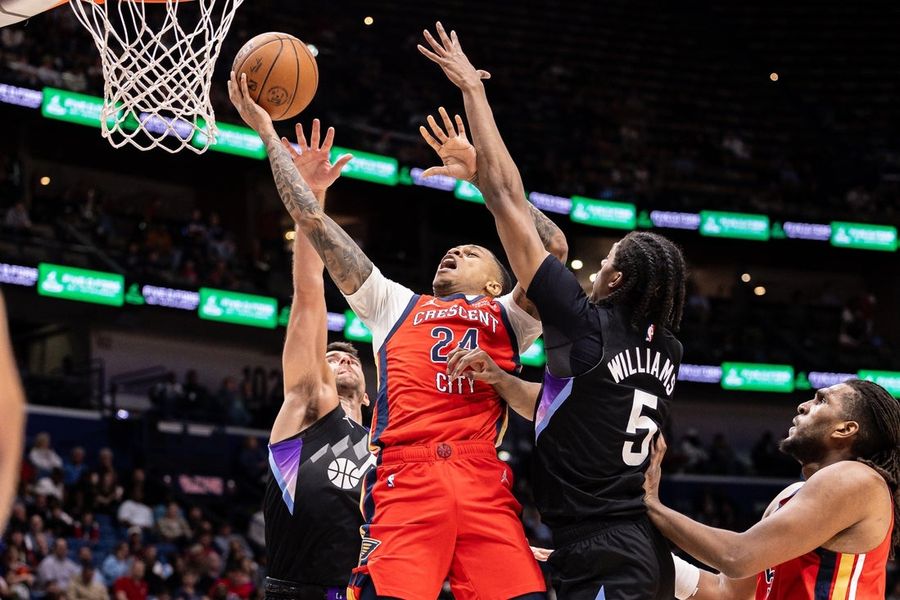
Deadspin | Jeremiah Fears’ career-high 40 points lead Pelicans past Jazz  Apr 7, 2026; New Orleans, Louisiana, USA; New Orleans Pelicans guard Jordan Hawkins (24) shoots the ball against Utah Jazz forward Cody Williams (5) during the first half at Smoothie King Center. Mandatory Credit: Stephen Lew-Imagn Images   Rookie Jeremiah Fears scored a career-high 40 points and Jordan Poole added 22 of his 34 points in a decisive third quarter as the New Orleans Pelicans closed out their home schedule with a 156-137 victory over the Utah Jazz.  Rookie Micah Peavy scored a career-high 20 points, Jordan Hawkins added a season-high 25 and rookie Derik Queen had 17 points with 12 rebounds as the Pelicans ended an eight-game losing streak. Kevon Looney also had 12 rebounds.  Fears set a Pelicans franchise record for rookie points in a game as the Pelicans set a team mark for total points in a game.  New Orleans (26-54), which has been eliminated from playoff consideration, finished with a 17-24 home record.  New Orleans went 3-0 against Utah this season and won while playing without their four leading scorers in Trey Murphy III (ankle), Zion Williamson, Saddiq Bey and Dejounte Murray (hand). Williamson and Bey dressed but remained on the bench, as did Herbert Jones.  Kennedy Chandler scored a career-high 31 points and rookie Bez Mbeng added a career-best 26 for the Jazz, who lost their 10th consecutive game with two games remaining. Cody Williams scored 19 points and Brice Sensabaugh added 18 as Utah dropped to 3-22 since Feb. 12.   The Jazz (21-59), who are at the bottom of the Western Conference standings, were without Lauri Markkanen (hip), Keyonte George (hamstring) and Jaren Jackson Jr. (knee).  The Jazz got off to a strong start, leading 34-24 after one quarter by making half of their 26 shots from the floor and their eight shots from 3-point range. Utah continued to hold a 69-61 lead at halftime.  Poole was the star of the third quarter by scoring his 22 points in the period on 8-of-12 shooting, including 5 of 8 from 3-point range. The Pelicans outscored the Jazz 50-27 in the quarter by shooting 72% while taking a 111-96 lead.  Fears was 17 of 29 (58.6%) from the floor in the game to better his previous season high of 28 points.  New Orleans shot 57.5% from the floor, tied for their second best in a game this season, while the Jazz shot 51%.  –Field Level Media    #Deadspin #Jeremiah #Fears #careerhigh #points #lead #Pelicans #JazzApr 7, 2026; New Orleans, Louisiana, USA; New Orleans Pelicans guard Jordan Hawkins (24) shoots the ball against Utah Jazz forward Cody Williams (5) during the first half at Smoothie King Center. Mandatory Credit: Stephen Lew-Imagn Images

Rookie Jeremiah Fears scored a career-high 40 points and Jordan Poole added 22 of his 34 points in a decisive third quarter as the New Orleans Pelicans closed out their home schedule with a 156-137 victory over the Utah Jazz.

Rookie Micah Peavy scored a career-high 20 points, Jordan Hawkins added a season-high 25 and rookie Derik Queen had 17 points with 12 rebounds as the Pelicans ended an eight-game losing streak. Kevon Looney also had 12 rebounds.

Fears set a Pelicans franchise record for rookie points in a game as the Pelicans set a team mark for total points in a game.

New Orleans (26-54), which has been eliminated from playoff consideration, finished with a 17-24 home record.

New Orleans went 3-0 against Utah this season and won while playing without their four leading scorers in Trey Murphy III (ankle), Zion Williamson, Saddiq Bey and Dejounte Murray (hand). Williamson and Bey dressed but remained on the bench, as did Herbert Jones.


Kennedy Chandler scored a career-high 31 points and rookie Bez Mbeng added a career-best 26 for the Jazz, who lost their 10th consecutive game with two games remaining. Cody Williams scored 19 points and Brice Sensabaugh added 18 as Utah dropped to 3-22 since Feb. 12.

The Jazz (21-59), who are at the bottom of the Western Conference standings, were without Lauri Markkanen (hip), Keyonte George (hamstring) and Jaren Jackson Jr. (knee).

The Jazz got off to a strong start, leading 34-24 after one quarter by making half of their 26 shots from the floor and their eight shots from 3-point range. Utah continued to hold a 69-61 lead at halftime.

Poole was the star of the third quarter by scoring his 22 points in the period on 8-of-12 shooting, including 5 of 8 from 3-point range. The Pelicans outscored the Jazz 50-27 in the quarter by shooting 72% while taking a 111-96 lead.

Fears was 17 of 29 (58.6%) from the floor in the game to better his previous season high of 28 points.

New Orleans shot 57.5% from the floor, tied for their second best in a game this season, while the Jazz shot 51%.


–Field Level Media

#Deadspin #Jeremiah #Fears #careerhigh #points #lead #Pelicans #Jazz">Deadspin | Jeremiah Fears’ career-high 40 points lead Pelicans past Jazz  Apr 7, 2026; New Orleans, Louisiana, USA; New Orleans Pelicans guard Jordan Hawkins (24) shoots the ball against Utah Jazz forward Cody Williams (5) during the first half at Smoothie King Center. Mandatory Credit: Stephen Lew-Imagn Images   Rookie Jeremiah Fears scored a career-high 40 points and Jordan Poole added 22 of his 34 points in a decisive third quarter as the New Orleans Pelicans closed out their home schedule with a 156-137 victory over the Utah Jazz.  Rookie Micah Peavy scored a career-high 20 points, Jordan Hawkins added a season-high 25 and rookie Derik Queen had 17 points with 12 rebounds as the Pelicans ended an eight-game losing streak. Kevon Looney also had 12 rebounds.  Fears set a Pelicans franchise record for rookie points in a game as the Pelicans set a team mark for total points in a game.  New Orleans (26-54), which has been eliminated from playoff consideration, finished with a 17-24 home record.  New Orleans went 3-0 against Utah this season and won while playing without their four leading scorers in Trey Murphy III (ankle), Zion Williamson, Saddiq Bey and Dejounte Murray (hand). Williamson and Bey dressed but remained on the bench, as did Herbert Jones.  Kennedy Chandler scored a career-high 31 points and rookie Bez Mbeng added a career-best 26 for the Jazz, who lost their 10th consecutive game with two games remaining. Cody Williams scored 19 points and Brice Sensabaugh added 18 as Utah dropped to 3-22 since Feb. 12.   The Jazz (21-59), who are at the bottom of the Western Conference standings, were without Lauri Markkanen (hip), Keyonte George (hamstring) and Jaren Jackson Jr. (knee).  The Jazz got off to a strong start, leading 34-24 after one quarter by making half of their 26 shots from the floor and their eight shots from 3-point range. Utah continued to hold a 69-61 lead at halftime.  Poole was the star of the third quarter by scoring his 22 points in the period on 8-of-12 shooting, including 5 of 8 from 3-point range. The Pelicans outscored the Jazz 50-27 in the quarter by shooting 72% while taking a 111-96 lead.  Fears was 17 of 29 (58.6%) from the floor in the game to better his previous season high of 28 points.  New Orleans shot 57.5% from the floor, tied for their second best in a game this season, while the Jazz shot 51%.  –Field Level Media    #Deadspin #Jeremiah #Fears #careerhigh #points #lead #Pelicans #Jazz

Post Comment