
For years, the rivalry between Omega and Rolex has defined modern Swiss watchmaking. More than a contest of revenue, it has been a battle for dominance at the very top of the luxury hierarchy, where prestige, scarcity, cultural symbolism, and generational loyalty matter as much as balance sheets. Each brand has long represented a different expression of success, yet both have competed for the same ultimate distinction: to be the standard by which all others are measured.
However, the latest Morgan Stanley and LuxeConsult report suggests that the balance of power is shifting more decisively than before. Omega has slipped to fifth place by turnover, while Rolex continues what can only be described as a decade-long surge. What once appeared to be a competitive pursuit now looks increasingly like separation.
Omega’s Ambition to Overtake
When Raynald Aeschlimann succeeded Stephen Urquhart as CEO of Omega in 2016, he inherited more than a title. He inherited ambition. With over two decades inside the company, Aeschlimann made it clear that Omega did not intend to merely compete with Rolex. The goal, he suggested, was to become “number one”—not just in sales, but in following and brand strength, all while preserving Omega’s DNA. At the time, the numbers did not make that aspiration seem unrealistic.
In 2017, Omega’s global sales were estimated at CHF 2.23 billion (USD 2.88 billion). Rolex, by comparison, stood at CHF 3.9 billion (USD 5 billion). The gap was significant, yet not insurmountable for a brand with Omega’s heritage.
Both maisons possessed cultural heavyweights. Omega’s Speedmaster, forever tied to the 1969 moon landing, and Rolex’s Daytona, synonymous with motorsport prestige, stood as modern icons. Across land, sea, and air categories, the battleground appeared evenly matched. Yet even then, Rolex was quietly accelerating.
Growth, Then Headwinds
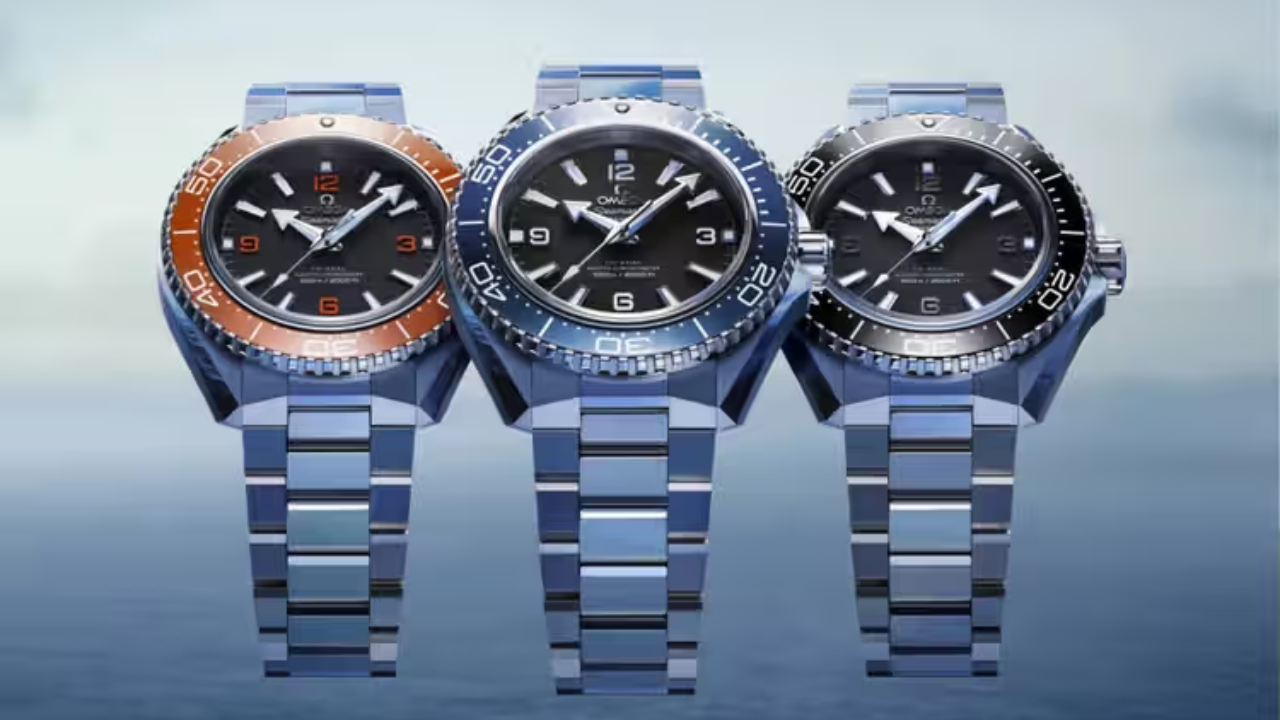
Initially, Aeschlimann leaned into expansion, particularly in mainland China, and strengthened Omega’s directly operated boutique network. By 2019, sales had edged up to CHF 2.26 billion (USD 2.9 billion), signaling incremental progress. Then came the pandemic.
China’s strict lockdowns disrupted retail traffic and halted international travel, both critical drivers of Swiss watch demand. Omega, with substantial exposure to the Chinese market, felt the impact acutely.
To its credit, the brand rebounded during the post-COVID surge, reaching CHF 2.6 billion (USD 3.7 billion) in 2023. Meanwhile, Western markets provided partial insulation. The United States, now the world’s largest Swiss watch market for five consecutive years, delivered record performance in 2024 and 2025, marking Omega’s strongest stretch in the region.
Still, the imbalance remains evident. As of January 2026, Omega operated 214 points of sale in mainland China compared to 119 in the U.S. Consequently, the brand remains heavily reliant on a market that has yet to fully regain pre-pandemic momentum.
Even if China rebounds, as Swatch Group CEO Nick Hayek has predicted, consumer behavior may not revert. Increasingly, buyers are turning to the secondary market, where Speedmasters and Seamasters often trade at discounts exceeding 30% below retail. That dynamic introduces pricing pressure that prestige brands traditionally seek to avoid.
Rolex’s Moonshot Decade
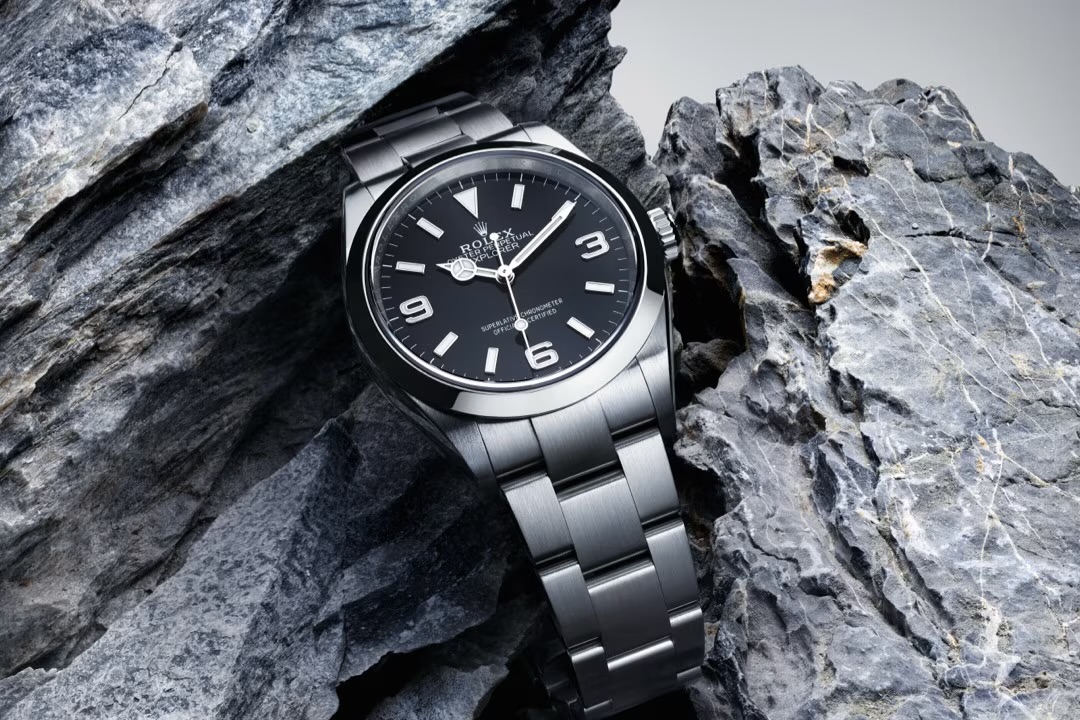
While Omega has navigated recalibration, Rolex has executed something closer to strategic dominance. Under CEO Jean-Frédéric Dufour, who took the helm in 2014, Rolex refined its distribution strategy, tightened supply, and amplified demand. The result has been extraordinary.
Estimated sales climbed from CHF 3.9 billion (USD 5 billion) in 2017 to over CHF 11 billion (USD 14.2 billion) in 2025, nearly tripling in less than a decade. Even in 2025, amid broader industry headwinds, Rolex advanced from CHF 10.6 billion to CHF 11 billion.
By contrast, Omega is estimated to have declined to CHF 2.2 billion (USD 2.8 billion) in 2025. Swatch Group leadership has frequently challenged Morgan Stanley’s methodology. Nevertheless, the group’s reported CHF 6.3 billion (USD 8.1 billion) in total sales suggests Omega still accounts for roughly a third of that performance.
Even so, the gap has widened dramatically.
A Shifting Industry Hierarchy

The broader Swiss watch sector has plateaued. The top 50 brands generated CHF 35.7 billion (USD 46.2 billion) in 2025, virtually flat year-over-year and slightly below the 2023 peak. Yet within that steady macro picture, the hierarchy has evolved.
Rolex remains the industry’s clear leader by turnover. Cartier holds second place, and Audemars Piguet has advanced into third with about CHF 2.6 billion (USD 2.8 billion). Patek Philippe follows in fourth with roughly CHF 2.5 billion (USD 2.7 billion) while Omega rounds out the top five at approximately CHF 2.2 billion (USD 2.4 billion) after slipping from third place.
Rolex, however, remains the dominant force.
Privately owned players such as Audemars Piguet, Patek Philippe, and Richard Mille continue to gain ground. Conversely, several group-owned brands, including Longines, Tissot, IWC, and TAG Heuer, have struggled to replicate that momentum. Within this reshuffle, Cartier and Vacheron Constantin stand out as rare group-owned brands climbing the ranks.
These Are The Top 10 Swiss Watch Brands, According to Morgan Stanley (2025):
- Rolex
- Cartier
- Audemars Piguet
- Patek Philippe
- Omega
- Richard Mille
- Longines
- Vacheron Constantin
- Breitling
- Tissot
Prestige vs. Power

To be clear, Omega’s slip to fifth does not signal collapse. The brand remains one of the most recognizable names in horology, supported by deep heritage and global retail presence. Nevertheless, the numbers tell a decisive story. Rolex has not simply defended its lead; it has expanded it at remarkable scale. What once resembled a competitive chase now appears to be a widening gulf.
Still, in luxury watchmaking, momentum is rarely permanent. Product cycles, regional rebounds, and strategic pivots can shift perception quickly. In an industry where narrative matters almost as much as performance, repositioning remains possible.
For now, however, Rolex powers ahead. And Omega faces a different kind of challenge, not overtaking its rival, but redefining what “number one” means in a changing luxury landscape.
Shop editor’s selection
Featured image: Omega
5 Best Affordable Swiss Watches That Deliver Luxury Without The Price Tag
Source link
#Omega #Slips #Rolex #Extends #Lead #Swiss #Watchmaking


Post Comment