×
Selection Sunday 2026: How to watch, what teams are in, and more

Selection Sunday 2026: How to watch, what teams are in, and more

In just a matter of time, we will know the full field for the 2026 men’s basketball NCAA tournament. While nearly half of this year’s field is set, given the results of conference tournaments, no one knows who each team will face on its own potential path to the Final Four.

And some teams are still hoping to get into the field?

Who are some teams that will be sweating the announcement? As always, there are several teams that will be worried until they hear their names called on Selection Sunday.

One such team might just be Miami of (Ohio).

Despite finishing the regular season with an unblemished 31-0 record, the RedHawks were bounced by eighth-seeded Massachusetts 87-83 in the MAC Conference Tournament quarterfinals, a loss that has shined a new spotlight on just who Miami played this year. Their nonconference schedule, according to Ken Pom, was ranked 361th in the nation (out of 365 Division I teams), their overall schedule is ranked 282nd according to Ken Pom, and the RedHawks played 15 Quad 4 games.

However, they did at least try to play a tougher schedule. According to reporting from Matt Brown of Extra Points, Miami tried to schedule games against teams like Pittsburgh, Wisconsin, and Marquette, and were turned away.

Still, despite finishing 31-1, they might be sweating things on Selection Sunday.

Several other teams that were already on the bubble endured early losses in their respective conference tournaments. Indiana lost to Northwestern, the 15 seed in the Big Ten tournament, and now the Hoosiers will be sweating on Sunday. They were not the only bubble team to lose to a 15 seed in a conference tournament, as Texas lost to 15 seed Mississippi in the SEC tournament. Other bubble teams that were already bounced out of their conference tournaments include Missouri and SMU.

Those teams, and more, will be tuning in on Selection Sunday.

While plenty of potential at-large teams can already confidently say they’re in the big dance, who they end up playing is a huge piece of the puzzle. We’ll see what the entire field looks like for the 2026 men’s NCAA tournament when the bracket is unveiled on Sunday night.

Here’s how you can watch the announcement.

How to watch Selection Sunday

What teams have an auto bid to the 2024 men’s NCAA tournament?

Going into Selection Sunday, these are the teams that already clinched their spot:

Source link
#Selection #Sunday #watch #teams
The most anticipated big man matchup in the recent history of men’s college basketball seemed like a novelty at first. On one side, there was UConn center Donovan Clingan, who measured at 7’1¾ barefoot with a 7’6¾ wingspan, a 9’7 standing reach, and a 282-pound frame. On the other side was Purdue’s Zach Edey, who was somehow even bigger at 7’3¾ barefoot with a 7’10¾ wingspan, a 9’7 standing reach, and a 306-pound frame.

Edey tipped the jump ball to teammate Braden Smith, and the 2024 men’s national championship game was underway. At the time, it felt like hardly anyone realized it was a matchup that would dictate the future of the sport.

Even NBA scouts were comparing college basketball’s two great centers to a dying breed along the lines of an elite NFL running back. Giants like Edey and Clingan would have been a focal point at the highest levels of the game years ago, but not anymore. Now, the plodding big man was said to be a complementary piece in a small ball world defined by spreading the floor, jacking up three-pointers, and cranking the pace.

NBA teams saw Edey and Clingan dominate college basketball, but they still decided to take a 3-and-D wing with the No. 1 overall pick in that year’s draft instead. Clingan fell to the seventh pick, where skeptics questioned his conditioning and his offensive impact. Edey was a surprise selection at No. 9 overall, and was criticized as “one of the worst picks in history” by respected outlets.

A couple years later, that 3-and-D wouldn’t go in the lottery of a redraft, while Edey and Clingan should both be locks for the top-5, and may even go No. 1 and No. 2. Their most immediate legacy, though, comes in how they’ve shaped college basketball in the short time since they’ve left.

All sports are copycat leagues, and college basketball is no exception. Top programs haven’t hid their desire to get bigger since Clingan and Edey ran roughshod over the sport, and their fingerprints are all over the 2026 Final Four.

The Michigan Wolverines targeted three players who played center for their previous teams, and put them all together in the starting lineup to form college basketball’s best front line. The Arizona Wildcats’ success starts with Lithuanian center Motiejus Krivas, who is listed at 7’2, 260-pounds, with a 7’5 wingspan. The Illinois Fighting Illini have the tallest team in the country according to KenPom with an average height of 80 inches, or 6’6.5. The UConn Huskies needed a miracle to knock out college basketball’s second tallest team, Duke, in the Elite Eight, but they wouldn’t be here without star center Tarris Reed and his reported 7’5 wingspan and 260-pound frame.

Point guard has long been considered the most important position in men’s college basketball. It sure doesn’t feel that way after watching this season.

BOULDER, COLORADO - MARCH 07: Motiejus Krivas #13 of the Arizona Wildcats dunks the ball during the second half against the Colorado Buffaloes at the CU Events Center on March 07, 2026 in Boulder, Colorado. (Photo by Andrew Wevers/Getty Images)

BOULDER, COLORADO – MARCH 07: Motiejus Krivas #13 of the Arizona Wildcats dunks the ball during the second half against the Colorado Buffaloes at the CU Events Center on March 07, 2026 in Boulder, Colorado. (Photo by Andrew Wevers/Getty Images)
Getty Images

How did giants take back college basketball? You first have to start with the idea of scarcity.

The average height in the United States is 5’9. Roughly one percent of the men on Earth are 6’4. At this point in basketball history, a player who is 6’4 is probably a point guard. Breakout freshman sensation Keaton Wagler will run the show for Illinois in the Final Four at 6’6. If the guards are getting bigger, it only makes sense the big men should be, too.

To find more modern centers, college basketball coaches had to start looking in different places. The international basketball boom is a direct result of the Dream Team from the 1992 Olympics, and only recently have foreign-born players started to take over college basketball. Some coaches were on it earlier than others.

“We scoured the earth for size,” Purdue coach Matt Painter said during the 2024 Final Four. “We try to go out there and get it because it’s proven, if you can work with it.”

Painter’s peers have started catching on. Michigan’s starting center Aday Mara was born in Zaragoza, Spain, and he stands 7’3 with a reported 7’7 wingspan. Illinois went to the Balkins to secure commitments from twins Tomislav and Zvonimir Ivisic, who are both listed at 7’2 but shoot three-pointers like wings. Arizona found Krivas in Lithuania, where he had already played Euroleague minutes for his club Zalgiris before coming to campus.

The next step ties into how analytics have changed the way coaches and evaluators view the game, and this time it’s a little more nuanced than three points being worth more than two. For years, NBA coaches bypassed attacking the offensive glass because they believed it hurt their teams’ transition defense. As recently as 2020-21 season, only one team posted an offensive rebound rate above 30 percent. This year, 16 teams are above 30 percent in offensive rebounding rate, with four more on the cusp. The reason is because the numbers showed that the death of transition defense was greatly exaggerated by crashing the glass.

These days, the possession game feels just as vital as three-point volume, if not more so. Want to increase your possessions? Hit the offensive glass. The best way to do it is by having bigs with a length and strength advantage over their opponents. Of course, having players who don’t turn the ball over and routinely get to the free throw line helps, too.

The final piece is the transfer portal. Coaches used to wait for years for big men to develop. Now, they can let or smaller or lesser program handle the growing pains of those early years before college basketball’s top dogs hand-pick the players they want in the transfer portal every offseason.

“We used to recruit guys for three years and spend 200 man hours away from our families begging these 15 to 18 year olds to come play at our university, and then they’d decide to go in another direction,” said May ahead of the Final Four. “Think about all the time and resources you wasted. Recruiting has definitely been streamlined and it is much more efficient than it’s ever been.”

May got Mara from UCLA after he languished on Mick Cronin’s bench for two years. Illinois got ‘Big Z’ Ivisic after stops at Kentucky and Arkansas under John Calipari. Texas made the Sweet 16 this season with breakout 7-footer Matas Vokietaitis as a driving force a year after he started his college career at Florida Atlantic. No. 1 seed Florida’s elite front court was bolstered by bringing in Rueben Chinyelu and his 7’8 wingspan from Washington State.

All these factors and more have led to the big man being back in vogue in college hoops. This may just be the start.

HOUSTON, TEXAS - MARCH 28: Tomislav Ivisic #13 of the Illinois Fighting Illini looks on during the Elite Eight round game of the 2026 NCAA Men’s Basketball Tournament held at Toyota Center on March 28, 2026 in Houston, Texas. (Photo by Logan Riely/NCAA Photos via Getty Images)

HOUSTON, TEXAS – MARCH 28: Tomislav Ivisic #13 of the Illinois Fighting Illini looks on during the Elite Eight round game of the 2026 NCAA Men’s Basketball Tournament held at Toyota Center on March 28, 2026 in Houston, Texas. (Photo by Logan Riely/NCAA Photos via Getty Images)
NCAA Photos via Getty Images

Kentucky coach Mark Pope might have accidentally coined a defining term of college basketball’s big man obsession back in December when asked about what he expected when his team matched up with Rick Pitino’s St. John’s squad.

“Smash. Mouth. Basketball,” Pope said. “I think it’s gonna be really fun and ugly and gruesome and brutal and violent. It’s awesome. It’s great. It won’t be (that style) forever; it’s just for now. Just for now.”

The biggest teams in college basketball thrived this year. The teams that weren’t quite big enough enter the offseason doing everything they can to get more size. Look at the Houston Cougars, whose 6’8 big men were overwhelmed by Illinois’ big men in the Sweet 16. Next season, Kelvin Sampson has five-star recruit Arafan Diane — listed at 7’1, 300 pounds, with a 7’4 wingspan — coming in to take over in the middle.

Arizona wouldn’t be in the Final Four without point guard Jaden Bradley, but he’s also only fourth on the team in BPM. If Michigan falls short of a national championship, it will probably be because their guard play can be a little shaky. UConn’s best player has been its center, and Illinois’ raw size feels every bit as important as Wagler’s rise to their success. The best teams in the country not to make the Final Four this season — Florida and Duke — also bludgeoned their opponents with size all season long.

Most of the best players in college basketball history are bigs. Start with George Mikan and Bill Russell, go to Lew Alcindor and Bill Walton, stop at Ralph Sampson and Hakeem Olajuwon, and continue with Patrick Ewing, Tim Duncan, Anthony Davis, and now Edey. Wanting size isn’t exactly a new trend, but it suddenly feels more important than ever as teams have learned about the limits of small ball and the thin margins of volume three-point shooting. Arizona ranks No. 362 out of 265 DI teams in three-point rate this year, but it hasn’t mattered because they run over everything in their path with size, strength, and athleticism.

It’s been said that wins are a point guard stat in college basketball. There’s certainly some truth to it — but after watching the sport this year, would anyone really take a star point guard ahead of a star big man?

#College #basketball #isnt #point #guards #game #anymore #Size #king #Final">College basketball isn’t a point guard’s game anymore. Size is king at Final Four once again  The most anticipated big man matchup in the recent history of men’s college basketball seemed like a novelty at first. On one side, there was UConn center Donovan Clingan, who measured at 7’1¾ barefoot with a 7’6¾ wingspan, a 9’7 standing reach, and a 282-pound frame. On the other side was Purdue’s Zach Edey, who was somehow even bigger at 7’3¾ barefoot with a 7’10¾ wingspan, a 9’7 standing reach, and a 306-pound frame.Edey tipped the jump ball to teammate Braden Smith, and the 2024 men’s national championship game was underway. At the time, it felt like hardly anyone realized it was a matchup that would dictate the future of the sport.Even NBA scouts were comparing college basketball’s two great centers to a dying breed along the lines of an elite NFL running back. Giants like Edey and Clingan would have been a focal point at the highest levels of the game years ago, but not anymore. Now, the plodding big man was said to be a complementary piece in a small ball world defined by spreading the floor, jacking up three-pointers, and cranking the pace.NBA teams saw Edey and Clingan dominate college basketball, but they still decided to take a 3-and-D wing with the No. 1 overall pick in that year’s draft instead. Clingan fell to the seventh pick, where skeptics questioned his conditioning and his offensive impact. Edey was a surprise selection at No. 9 overall, and was criticized as “one of the worst picks in history” by respected outlets.A couple years later, that 3-and-D wouldn’t go in the lottery of a redraft, while Edey and Clingan should both be locks for the top-5, and may even go No. 1 and No. 2. Their most immediate legacy, though, comes in how they’ve shaped college basketball in the short time since they’ve left.All sports are copycat leagues, and college basketball is no exception. Top programs haven’t hid their desire to get bigger since Clingan and Edey ran roughshod over the sport, and their fingerprints are all over the 2026 Final Four.The Michigan Wolverines targeted three players who played center for their previous teams, and put them all together in the starting lineup to form college basketball’s best front line. The Arizona Wildcats’ success starts with Lithuanian center Motiejus Krivas, who is listed at 7’2, 260-pounds, with a 7’5 wingspan. The Illinois Fighting Illini have the tallest team in the country according to KenPom with an average height of 80 inches, or 6’6.5. The UConn Huskies needed a miracle to knock out college basketball’s second tallest team, Duke, in the Elite Eight, but they wouldn’t be here without star center Tarris Reed and his reported 7’5 wingspan and 260-pound frame.Point guard has long been considered the most important position in men’s college basketball. It sure doesn’t feel that way after watching this season.BOULDER, COLORADO – MARCH 07: Motiejus Krivas #13 of the Arizona Wildcats dunks the ball during the second half against the Colorado Buffaloes at the CU Events Center on March 07, 2026 in Boulder, Colorado. (Photo by Andrew Wevers/Getty Images) Getty ImagesHow did giants take back college basketball? You first have to start with the idea of scarcity.The average height in the United States is 5’9. Roughly one percent of the men on Earth are 6’4. At this point in basketball history, a player who is 6’4 is probably a point guard. Breakout freshman sensation Keaton Wagler will run the show for Illinois in the Final Four at 6’6. If the guards are getting bigger, it only makes sense the big men should be, too.To find more modern centers, college basketball coaches had to start looking in different places. The international basketball boom is a direct result of the Dream Team from the 1992 Olympics, and only recently have foreign-born players started to take over college basketball. Some coaches were on it earlier than others.“We scoured the earth for size,” Purdue coach Matt Painter said during the 2024 Final Four. “We try to go out there and get it because it’s proven, if you can work with it.”Painter’s peers have started catching on. Michigan’s starting center Aday Mara was born in Zaragoza, Spain, and he stands 7’3 with a reported 7’7 wingspan. Illinois went to the Balkins to secure commitments from twins Tomislav and Zvonimir Ivisic, who are both listed at 7’2 but shoot three-pointers like wings. Arizona found Krivas in Lithuania, where he had already played Euroleague minutes for his club Zalgiris before coming to campus.The next step ties into how analytics have changed the way coaches and evaluators view the game, and this time it’s a little more nuanced than three points being worth more than two. For years, NBA coaches bypassed attacking the offensive glass because they believed it hurt their teams’ transition defense. As recently as 2020-21 season, only one team posted an offensive rebound rate above 30 percent. This year, 16 teams are above 30 percent in offensive rebounding rate, with four more on the cusp. The reason is because the numbers showed that the death of transition defense was greatly exaggerated by crashing the glass.These days, the possession game feels just as vital as three-point volume, if not more so. Want to increase your possessions? Hit the offensive glass. The best way to do it is by having bigs with a length and strength advantage over their opponents. Of course, having players who don’t turn the ball over and routinely get to the free throw line helps, too.The final piece is the transfer portal. Coaches used to wait for years for big men to develop. Now, they can let or smaller or lesser program handle the growing pains of those early years before college basketball’s top dogs hand-pick the players they want in the transfer portal every offseason.“We used to recruit guys for three years and spend 200 man hours away from our families begging these 15 to 18 year olds to come play at our university, and then they’d decide to go in another direction,” said May ahead of the Final Four. “Think about all the time and resources you wasted. Recruiting has definitely been streamlined and it is much more efficient than it’s ever been.”May got Mara from UCLA after he languished on Mick Cronin’s bench for two years. Illinois got ‘Big Z’ Ivisic after stops at Kentucky and Arkansas under John Calipari. Texas made the Sweet 16 this season with breakout 7-footer Matas Vokietaitis as a driving force a year after he started his college career at Florida Atlantic. No. 1 seed Florida’s elite front court was bolstered by bringing in Rueben Chinyelu and his 7’8 wingspan from Washington State.All these factors and more have led to the big man being back in vogue in college hoops. This may just be the start.HOUSTON, TEXAS – MARCH 28: Tomislav Ivisic #13 of the Illinois Fighting Illini looks on during the Elite Eight round game of the 2026 NCAA Men’s Basketball Tournament held at Toyota Center on March 28, 2026 in Houston, Texas. (Photo by Logan Riely/NCAA Photos via Getty Images) NCAA Photos via Getty ImagesKentucky coach Mark Pope might have accidentally coined a defining term of college basketball’s big man obsession back in December when asked about what he expected when his team matched up with Rick Pitino’s St. John’s squad.“Smash. Mouth. Basketball,” Pope said. “I think it’s gonna be really fun and ugly and gruesome and brutal and violent. It’s awesome. It’s great. It won’t be (that style) forever; it’s just for now. Just for now.”The biggest teams in college basketball thrived this year. The teams that weren’t quite big enough enter the offseason doing everything they can to get more size. Look at the Houston Cougars, whose 6’8 big men were overwhelmed by Illinois’ big men in the Sweet 16. Next season, Kelvin Sampson has five-star recruit Arafan Diane — listed at 7’1, 300 pounds, with a 7’4 wingspan — coming in to take over in the middle.Arizona wouldn’t be in the Final Four without point guard Jaden Bradley, but he’s also only fourth on the team in BPM. If Michigan falls short of a national championship, it will probably be because their guard play can be a little shaky. UConn’s best player has been its center, and Illinois’ raw size feels every bit as important as Wagler’s rise to their success. The best teams in the country not to make the Final Four this season — Florida and Duke — also bludgeoned their opponents with size all season long.Most of the best players in college basketball history are bigs. Start with George Mikan and Bill Russell, go to Lew Alcindor and Bill Walton, stop at Ralph Sampson and Hakeem Olajuwon, and continue with Patrick Ewing, Tim Duncan, Anthony Davis, and now Edey. Wanting size isn’t exactly a new trend, but it suddenly feels more important than ever as teams have learned about the limits of small ball and the thin margins of volume three-point shooting. Arizona ranks No. 362 out of 265 DI teams in three-point rate this year, but it hasn’t mattered because they run over everything in their path with size, strength, and athleticism.It’s been said that wins are a point guard stat in college basketball. There’s certainly some truth to it — but after watching the sport this year, would anyone really take a star point guard ahead of a star big man?  #College #basketball #isnt #point #guards #game #anymore #Size #king #Final

UConn center Donovan Clingan, who measured at 7’1¾ barefoot with a 7’6¾ wingspan, a 9’7 standing reach, and a 282-pound frame. On the other side was Purdue’s Zach Edey, who was somehow even bigger at 7’3¾ barefoot with a 7’10¾ wingspan, a 9’7 standing reach, and a 306-pound frame.

Edey tipped the jump ball to teammate Braden Smith, and the 2024 men’s national championship game was underway. At the time, it felt like hardly anyone realized it was a matchup that would dictate the future of the sport.

Even NBA scouts were comparing college basketball’s two great centers to a dying breed along the lines of an elite NFL running back. Giants like Edey and Clingan would have been a focal point at the highest levels of the game years ago, but not anymore. Now, the plodding big man was said to be a complementary piece in a small ball world defined by spreading the floor, jacking up three-pointers, and cranking the pace.

NBA teams saw Edey and Clingan dominate college basketball, but they still decided to take a 3-and-D wing with the No. 1 overall pick in that year’s draft instead. Clingan fell to the seventh pick, where skeptics questioned his conditioning and his offensive impact. Edey was a surprise selection at No. 9 overall, and was criticized as “one of the worst picks in history” by respected outlets.

A couple years later, that 3-and-D wouldn’t go in the lottery of a redraft, while Edey and Clingan should both be locks for the top-5, and may even go No. 1 and No. 2. Their most immediate legacy, though, comes in how they’ve shaped college basketball in the short time since they’ve left.

All sports are copycat leagues, and college basketball is no exception. Top programs haven’t hid their desire to get bigger since Clingan and Edey ran roughshod over the sport, and their fingerprints are all over the 2026 Final Four.

The Michigan Wolverines targeted three players who played center for their previous teams, and put them all together in the starting lineup to form college basketball’s best front line. The Arizona Wildcats’ success starts with Lithuanian center Motiejus Krivas, who is listed at 7’2, 260-pounds, with a 7’5 wingspan. The Illinois Fighting Illini have the tallest team in the country according to KenPom with an average height of 80 inches, or 6’6.5. The UConn Huskies needed a miracle to knock out college basketball’s second tallest team, Duke, in the Elite Eight, but they wouldn’t be here without star center Tarris Reed and his reported 7’5 wingspan and 260-pound frame.

Point guard has long been considered the most important position in men’s college basketball. It sure doesn’t feel that way after watching this season.

BOULDER, COLORADO - MARCH 07: Motiejus Krivas #13 of the Arizona Wildcats dunks the ball during the second half against the Colorado Buffaloes at the CU Events Center on March 07, 2026 in Boulder, Colorado. (Photo by Andrew Wevers/Getty Images)

BOULDER, COLORADO – MARCH 07: Motiejus Krivas #13 of the Arizona Wildcats dunks the ball during the second half against the Colorado Buffaloes at the CU Events Center on March 07, 2026 in Boulder, Colorado. (Photo by Andrew Wevers/Getty Images)
Getty Images

How did giants take back college basketball? You first have to start with the idea of scarcity.

The average height in the United States is 5’9. Roughly one percent of the men on Earth are 6’4. At this point in basketball history, a player who is 6’4 is probably a point guard. Breakout freshman sensation Keaton Wagler will run the show for Illinois in the Final Four at 6’6. If the guards are getting bigger, it only makes sense the big men should be, too.

To find more modern centers, college basketball coaches had to start looking in different places. The international basketball boom is a direct result of the Dream Team from the 1992 Olympics, and only recently have foreign-born players started to take over college basketball. Some coaches were on it earlier than others.

“We scoured the earth for size,” Purdue coach Matt Painter said during the 2024 Final Four. “We try to go out there and get it because it’s proven, if you can work with it.”

Painter’s peers have started catching on. Michigan’s starting center Aday Mara was born in Zaragoza, Spain, and he stands 7’3 with a reported 7’7 wingspan. Illinois went to the Balkins to secure commitments from twins Tomislav and Zvonimir Ivisic, who are both listed at 7’2 but shoot three-pointers like wings. Arizona found Krivas in Lithuania, where he had already played Euroleague minutes for his club Zalgiris before coming to campus.

The next step ties into how analytics have changed the way coaches and evaluators view the game, and this time it’s a little more nuanced than three points being worth more than two. For years, NBA coaches bypassed attacking the offensive glass because they believed it hurt their teams’ transition defense. As recently as 2020-21 season, only one team posted an offensive rebound rate above 30 percent. This year, 16 teams are above 30 percent in offensive rebounding rate, with four more on the cusp. The reason is because the numbers showed that the death of transition defense was greatly exaggerated by crashing the glass.

These days, the possession game feels just as vital as three-point volume, if not more so. Want to increase your possessions? Hit the offensive glass. The best way to do it is by having bigs with a length and strength advantage over their opponents. Of course, having players who don’t turn the ball over and routinely get to the free throw line helps, too.

The final piece is the transfer portal. Coaches used to wait for years for big men to develop. Now, they can let or smaller or lesser program handle the growing pains of those early years before college basketball’s top dogs hand-pick the players they want in the transfer portal every offseason.

“We used to recruit guys for three years and spend 200 man hours away from our families begging these 15 to 18 year olds to come play at our university, and then they’d decide to go in another direction,” said May ahead of the Final Four. “Think about all the time and resources you wasted. Recruiting has definitely been streamlined and it is much more efficient than it’s ever been.”

May got Mara from UCLA after he languished on Mick Cronin’s bench for two years. Illinois got ‘Big Z’ Ivisic after stops at Kentucky and Arkansas under John Calipari. Texas made the Sweet 16 this season with breakout 7-footer Matas Vokietaitis as a driving force a year after he started his college career at Florida Atlantic. No. 1 seed Florida’s elite front court was bolstered by bringing in Rueben Chinyelu and his 7’8 wingspan from Washington State.

All these factors and more have led to the big man being back in vogue in college hoops. This may just be the start.

HOUSTON, TEXAS - MARCH 28: Tomislav Ivisic #13 of the Illinois Fighting Illini looks on during the Elite Eight round game of the 2026 NCAA Men’s Basketball Tournament held at Toyota Center on March 28, 2026 in Houston, Texas. (Photo by Logan Riely/NCAA Photos via Getty Images)

HOUSTON, TEXAS – MARCH 28: Tomislav Ivisic #13 of the Illinois Fighting Illini looks on during the Elite Eight round game of the 2026 NCAA Men’s Basketball Tournament held at Toyota Center on March 28, 2026 in Houston, Texas. (Photo by Logan Riely/NCAA Photos via Getty Images)
NCAA Photos via Getty Images

Kentucky coach Mark Pope might have accidentally coined a defining term of college basketball’s big man obsession back in December when asked about what he expected when his team matched up with Rick Pitino’s St. John’s squad.

“Smash. Mouth. Basketball,” Pope said. “I think it’s gonna be really fun and ugly and gruesome and brutal and violent. It’s awesome. It’s great. It won’t be (that style) forever; it’s just for now. Just for now.”

The biggest teams in college basketball thrived this year. The teams that weren’t quite big enough enter the offseason doing everything they can to get more size. Look at the Houston Cougars, whose 6’8 big men were overwhelmed by Illinois’ big men in the Sweet 16. Next season, Kelvin Sampson has five-star recruit Arafan Diane — listed at 7’1, 300 pounds, with a 7’4 wingspan — coming in to take over in the middle.

Arizona wouldn’t be in the Final Four without point guard Jaden Bradley, but he’s also only fourth on the team in BPM. If Michigan falls short of a national championship, it will probably be because their guard play can be a little shaky. UConn’s best player has been its center, and Illinois’ raw size feels every bit as important as Wagler’s rise to their success. The best teams in the country not to make the Final Four this season — Florida and Duke — also bludgeoned their opponents with size all season long.

Most of the best players in college basketball history are bigs. Start with George Mikan and Bill Russell, go to Lew Alcindor and Bill Walton, stop at Ralph Sampson and Hakeem Olajuwon, and continue with Patrick Ewing, Tim Duncan, Anthony Davis, and now Edey. Wanting size isn’t exactly a new trend, but it suddenly feels more important than ever as teams have learned about the limits of small ball and the thin margins of volume three-point shooting. Arizona ranks No. 362 out of 265 DI teams in three-point rate this year, but it hasn’t mattered because they run over everything in their path with size, strength, and athleticism.

It’s been said that wins are a point guard stat in college basketball. There’s certainly some truth to it — but after watching the sport this year, would anyone really take a star point guard ahead of a star big man?

#College #basketball #isnt #point #guards #game #anymore #Size #king #Final">College basketball isn’t a point guard’s game anymore. Size is king at Final Four once again

The most anticipated big man matchup in the recent history of men’s college basketball seemed like a novelty at first. On one side, there was UConn center Donovan Clingan, who measured at 7’1¾ barefoot with a 7’6¾ wingspan, a 9’7 standing reach, and a 282-pound frame. On the other side was Purdue’s Zach Edey, who was somehow even bigger at 7’3¾ barefoot with a 7’10¾ wingspan, a 9’7 standing reach, and a 306-pound frame.

Edey tipped the jump ball to teammate Braden Smith, and the 2024 men’s national championship game was underway. At the time, it felt like hardly anyone realized it was a matchup that would dictate the future of the sport.

Even NBA scouts were comparing college basketball’s two great centers to a dying breed along the lines of an elite NFL running back. Giants like Edey and Clingan would have been a focal point at the highest levels of the game years ago, but not anymore. Now, the plodding big man was said to be a complementary piece in a small ball world defined by spreading the floor, jacking up three-pointers, and cranking the pace.

NBA teams saw Edey and Clingan dominate college basketball, but they still decided to take a 3-and-D wing with the No. 1 overall pick in that year’s draft instead. Clingan fell to the seventh pick, where skeptics questioned his conditioning and his offensive impact. Edey was a surprise selection at No. 9 overall, and was criticized as “one of the worst picks in history” by respected outlets.

A couple years later, that 3-and-D wouldn’t go in the lottery of a redraft, while Edey and Clingan should both be locks for the top-5, and may even go No. 1 and No. 2. Their most immediate legacy, though, comes in how they’ve shaped college basketball in the short time since they’ve left.

All sports are copycat leagues, and college basketball is no exception. Top programs haven’t hid their desire to get bigger since Clingan and Edey ran roughshod over the sport, and their fingerprints are all over the 2026 Final Four.

The Michigan Wolverines targeted three players who played center for their previous teams, and put them all together in the starting lineup to form college basketball’s best front line. The Arizona Wildcats’ success starts with Lithuanian center Motiejus Krivas, who is listed at 7’2, 260-pounds, with a 7’5 wingspan. The Illinois Fighting Illini have the tallest team in the country according to KenPom with an average height of 80 inches, or 6’6.5. The UConn Huskies needed a miracle to knock out college basketball’s second tallest team, Duke, in the Elite Eight, but they wouldn’t be here without star center Tarris Reed and his reported 7’5 wingspan and 260-pound frame.

Point guard has long been considered the most important position in men’s college basketball. It sure doesn’t feel that way after watching this season.

BOULDER, COLORADO - MARCH 07: Motiejus Krivas #13 of the Arizona Wildcats dunks the ball during the second half against the Colorado Buffaloes at the CU Events Center on March 07, 2026 in Boulder, Colorado. (Photo by Andrew Wevers/Getty Images)

BOULDER, COLORADO – MARCH 07: Motiejus Krivas #13 of the Arizona Wildcats dunks the ball during the second half against the Colorado Buffaloes at the CU Events Center on March 07, 2026 in Boulder, Colorado. (Photo by Andrew Wevers/Getty Images)
Getty Images

How did giants take back college basketball? You first have to start with the idea of scarcity.

The average height in the United States is 5’9. Roughly one percent of the men on Earth are 6’4. At this point in basketball history, a player who is 6’4 is probably a point guard. Breakout freshman sensation Keaton Wagler will run the show for Illinois in the Final Four at 6’6. If the guards are getting bigger, it only makes sense the big men should be, too.

To find more modern centers, college basketball coaches had to start looking in different places. The international basketball boom is a direct result of the Dream Team from the 1992 Olympics, and only recently have foreign-born players started to take over college basketball. Some coaches were on it earlier than others.

“We scoured the earth for size,” Purdue coach Matt Painter said during the 2024 Final Four. “We try to go out there and get it because it’s proven, if you can work with it.”

Painter’s peers have started catching on. Michigan’s starting center Aday Mara was born in Zaragoza, Spain, and he stands 7’3 with a reported 7’7 wingspan. Illinois went to the Balkins to secure commitments from twins Tomislav and Zvonimir Ivisic, who are both listed at 7’2 but shoot three-pointers like wings. Arizona found Krivas in Lithuania, where he had already played Euroleague minutes for his club Zalgiris before coming to campus.

The next step ties into how analytics have changed the way coaches and evaluators view the game, and this time it’s a little more nuanced than three points being worth more than two. For years, NBA coaches bypassed attacking the offensive glass because they believed it hurt their teams’ transition defense. As recently as 2020-21 season, only one team posted an offensive rebound rate above 30 percent. This year, 16 teams are above 30 percent in offensive rebounding rate, with four more on the cusp. The reason is because the numbers showed that the death of transition defense was greatly exaggerated by crashing the glass.

These days, the possession game feels just as vital as three-point volume, if not more so. Want to increase your possessions? Hit the offensive glass. The best way to do it is by having bigs with a length and strength advantage over their opponents. Of course, having players who don’t turn the ball over and routinely get to the free throw line helps, too.

The final piece is the transfer portal. Coaches used to wait for years for big men to develop. Now, they can let or smaller or lesser program handle the growing pains of those early years before college basketball’s top dogs hand-pick the players they want in the transfer portal every offseason.

“We used to recruit guys for three years and spend 200 man hours away from our families begging these 15 to 18 year olds to come play at our university, and then they’d decide to go in another direction,” said May ahead of the Final Four. “Think about all the time and resources you wasted. Recruiting has definitely been streamlined and it is much more efficient than it’s ever been.”

May got Mara from UCLA after he languished on Mick Cronin’s bench for two years. Illinois got ‘Big Z’ Ivisic after stops at Kentucky and Arkansas under John Calipari. Texas made the Sweet 16 this season with breakout 7-footer Matas Vokietaitis as a driving force a year after he started his college career at Florida Atlantic. No. 1 seed Florida’s elite front court was bolstered by bringing in Rueben Chinyelu and his 7’8 wingspan from Washington State.

All these factors and more have led to the big man being back in vogue in college hoops. This may just be the start.

HOUSTON, TEXAS - MARCH 28: Tomislav Ivisic #13 of the Illinois Fighting Illini looks on during the Elite Eight round game of the 2026 NCAA Men’s Basketball Tournament held at Toyota Center on March 28, 2026 in Houston, Texas. (Photo by Logan Riely/NCAA Photos via Getty Images)

HOUSTON, TEXAS – MARCH 28: Tomislav Ivisic #13 of the Illinois Fighting Illini looks on during the Elite Eight round game of the 2026 NCAA Men’s Basketball Tournament held at Toyota Center on March 28, 2026 in Houston, Texas. (Photo by Logan Riely/NCAA Photos via Getty Images)
NCAA Photos via Getty Images

Kentucky coach Mark Pope might have accidentally coined a defining term of college basketball’s big man obsession back in December when asked about what he expected when his team matched up with Rick Pitino’s St. John’s squad.

“Smash. Mouth. Basketball,” Pope said. “I think it’s gonna be really fun and ugly and gruesome and brutal and violent. It’s awesome. It’s great. It won’t be (that style) forever; it’s just for now. Just for now.”

The biggest teams in college basketball thrived this year. The teams that weren’t quite big enough enter the offseason doing everything they can to get more size. Look at the Houston Cougars, whose 6’8 big men were overwhelmed by Illinois’ big men in the Sweet 16. Next season, Kelvin Sampson has five-star recruit Arafan Diane — listed at 7’1, 300 pounds, with a 7’4 wingspan — coming in to take over in the middle.

Arizona wouldn’t be in the Final Four without point guard Jaden Bradley, but he’s also only fourth on the team in BPM. If Michigan falls short of a national championship, it will probably be because their guard play can be a little shaky. UConn’s best player has been its center, and Illinois’ raw size feels every bit as important as Wagler’s rise to their success. The best teams in the country not to make the Final Four this season — Florida and Duke — also bludgeoned their opponents with size all season long.

Most of the best players in college basketball history are bigs. Start with George Mikan and Bill Russell, go to Lew Alcindor and Bill Walton, stop at Ralph Sampson and Hakeem Olajuwon, and continue with Patrick Ewing, Tim Duncan, Anthony Davis, and now Edey. Wanting size isn’t exactly a new trend, but it suddenly feels more important than ever as teams have learned about the limits of small ball and the thin margins of volume three-point shooting. Arizona ranks No. 362 out of 265 DI teams in three-point rate this year, but it hasn’t mattered because they run over everything in their path with size, strength, and athleticism.

It’s been said that wins are a point guard stat in college basketball. There’s certainly some truth to it — but after watching the sport this year, would anyone really take a star point guard ahead of a star big man?

#College #basketball #isnt #point #guards #game #anymore #Size #king #Final

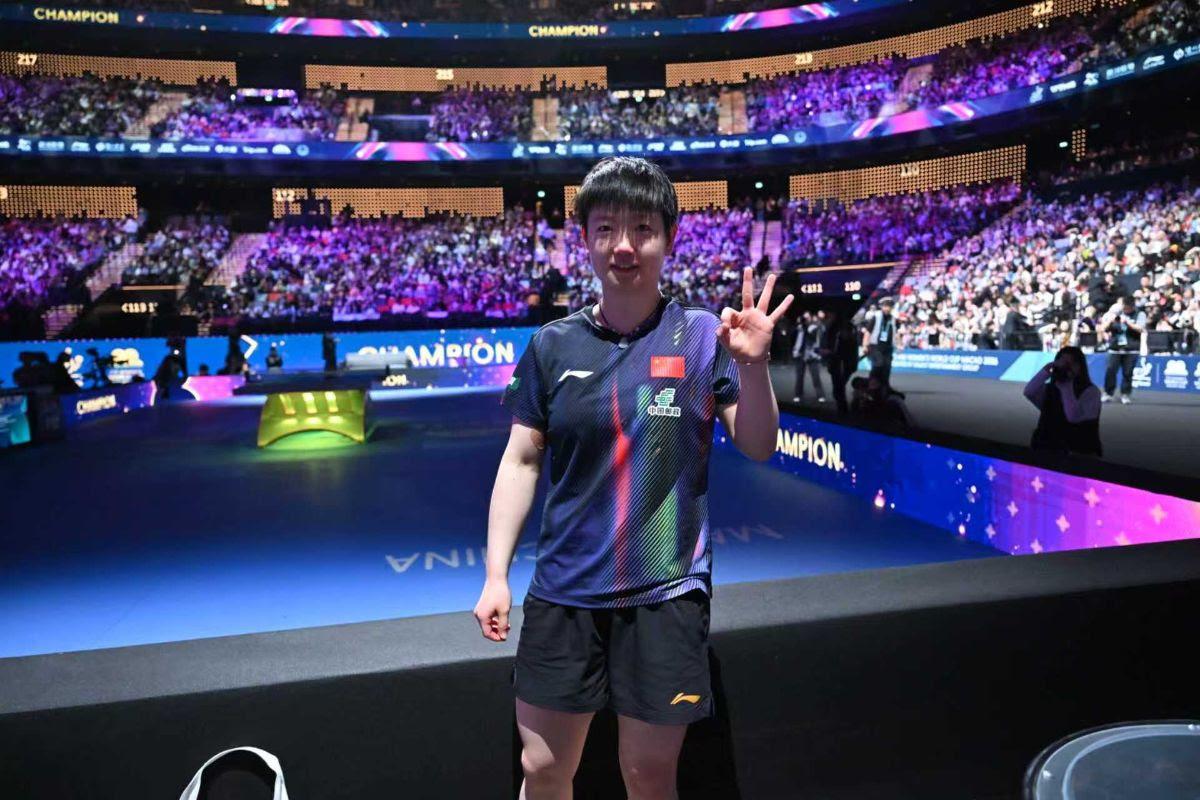
Chinese paddlers dominated the top prizes at the ITTF World Cup 2026 in Macau with Sun Yingsha and Wang Chuqin bagging the women’s and men’s titles respectively.

World No. 1 Sun defeated Wang Manyu 4-1 (11-9, 11-8, 13-11, 8-11, 11-7) in the women’s singles final to claim an unprecedented third consecutive World Cup title, joining Fan Zhendong as the only players in ITTF World Cup history to achieve three consecutive singles titles.

It was an intense, absorbing final between two of the finest players in the women’s game, with Manyu pushing Sun hard in every game and refusing to make anything straightforward. In the end, it was Sun’s experience, composure and sheer class that proved the difference.

The road to a third title was far from easy, highlighted by a seven-game quarterfinal against Hana Goda, the longest match of the entire tournament, in which Sun was forced to save two match points in the deciding game before prevailing.

China dominates Table Tennis World Cup 2026: Sun Yingsha clinches third consecutive title, Wang Chuqin wins maiden WC  Chinese paddlers dominated the top prizes at the ITTF World Cup 2026 in Macau with Sun Yingsha and Wang Chuqin bagging the women’s and men’s titles respectively.World No. 1 Sun defeated Wang Manyu 4-1 (11-9, 11-8, 13-11, 8-11, 11-7) in the women’s singles final to claim an unprecedented third consecutive World Cup title, joining Fan Zhendong as the only players in ITTF World Cup history to achieve three consecutive singles titles.It was an intense, absorbing final between two of the finest players in the women’s game, with Manyu pushing Sun hard in every game and refusing to make anything straightforward. In the end, it was Sun’s experience, composure and sheer class that proved the difference.The road to a third title was far from easy, highlighted by a seven-game quarterfinal against Hana Goda, the longest match of the entire tournament, in which Sun was forced to save two match points in the deciding game before prevailing. It was Sun’s experience, composure and sheer class that proved the difference in the women’s singles final.
                                                            | Photo Credit: 
                                ITTF Media
                            

                            It was Sun’s experience, composure and sheer class that proved the difference in the women’s singles final.
                                                            | Photo Credit: 
                                ITTF Media
                                                    Manyu took the silver medal, while Shin Yubin and Sabine Winter shared the bronze. Shin made history as the first woman from Korea Republic ever to win a medal at the tournament, while Winter became the first European woman to medal at the competition since Petrissa Solja in 2015. Goda, meanwhile, became the first African woman ever to reach the quarterfinals of the World Cup.Wang Chuqin claimed the trophy he had long been chasing. The World No. 1 defeated Sora Matsushima 4-3 (9-11, 18-16, 11-8, 11-13, 8-11, 11-4, 11-8) in a final of the highest order, played over one hour and thirteen minutes, to claim his first-ever World Cup title at his fourth appearance at this event.The match refused to follow a straight line. Matsushima took the opening game, Chuqin levelled in the second by battling all the way to 18-16, and the Japanese star continued to push, levelling again at 2-2 before Chuqin found another gear when it mattered most to close out the deciding game.The road to the title saw Chuqin come from 1-3 down against Darko Jorgic in the quarterfinals and defeat reigning champion Hugo Calderano 4-1 (11-7, 11-3, 11-7, 6-11, 12-10) in the semifinals. With the ITTF Men’s World Cup title now secured, Chuqin stands just one major title away from completing a career grand slam, with the Olympic men’s singles gold medal the remaining prize ahead of Los Angeles 2028.Matsushima took the silver medal, having become only the second Japanese player ever to reach the final of the World Cup, following Tomokazu Harimoto’s appearance in 2019. Calderano and Lin Yun-Ju shared the bronze medals.Published on Apr 05, 2026  #China #dominates #Table #Tennis #World #Cup #Sun #Yingsha #clinches #consecutive #title #Wang #Chuqin #wins #maiden

It was Sun’s experience, composure and sheer class that proved the difference in the women’s singles final. | Photo Credit: ITTF Media

lightbox-info

It was Sun’s experience, composure and sheer class that proved the difference in the women’s singles final. | Photo Credit: ITTF Media

Manyu took the silver medal, while Shin Yubin and Sabine Winter shared the bronze. Shin made history as the first woman from Korea Republic ever to win a medal at the tournament, while Winter became the first European woman to medal at the competition since Petrissa Solja in 2015. Goda, meanwhile, became the first African woman ever to reach the quarterfinals of the World Cup.

Wang Chuqin claimed the trophy he had long been chasing. The World No. 1 defeated Sora Matsushima 4-3 (9-11, 18-16, 11-8, 11-13, 8-11, 11-4, 11-8) in a final of the highest order, played over one hour and thirteen minutes, to claim his first-ever World Cup title at his fourth appearance at this event.

The match refused to follow a straight line. Matsushima took the opening game, Chuqin levelled in the second by battling all the way to 18-16, and the Japanese star continued to push, levelling again at 2-2 before Chuqin found another gear when it mattered most to close out the deciding game.

The road to the title saw Chuqin come from 1-3 down against Darko Jorgic in the quarterfinals and defeat reigning champion Hugo Calderano 4-1 (11-7, 11-3, 11-7, 6-11, 12-10) in the semifinals. With the ITTF Men’s World Cup title now secured, Chuqin stands just one major title away from completing a career grand slam, with the Olympic men’s singles gold medal the remaining prize ahead of Los Angeles 2028.

Matsushima took the silver medal, having become only the second Japanese player ever to reach the final of the World Cup, following Tomokazu Harimoto’s appearance in 2019. Calderano and Lin Yun-Ju shared the bronze medals.

Published on Apr 05, 2026

#China #dominates #Table #Tennis #World #Cup #Sun #Yingsha #clinches #consecutive #title #Wang #Chuqin #wins #maiden">China dominates Table Tennis World Cup 2026: Sun Yingsha clinches third consecutive title, Wang Chuqin wins maiden WC  Chinese paddlers dominated the top prizes at the ITTF World Cup 2026 in Macau with Sun Yingsha and Wang Chuqin bagging the women’s and men’s titles respectively.World No. 1 Sun defeated Wang Manyu 4-1 (11-9, 11-8, 13-11, 8-11, 11-7) in the women’s singles final to claim an unprecedented third consecutive World Cup title, joining Fan Zhendong as the only players in ITTF World Cup history to achieve three consecutive singles titles.It was an intense, absorbing final between two of the finest players in the women’s game, with Manyu pushing Sun hard in every game and refusing to make anything straightforward. In the end, it was Sun’s experience, composure and sheer class that proved the difference.The road to a third title was far from easy, highlighted by a seven-game quarterfinal against Hana Goda, the longest match of the entire tournament, in which Sun was forced to save two match points in the deciding game before prevailing. It was Sun’s experience, composure and sheer class that proved the difference in the women’s singles final.
                                                            | Photo Credit: 
                                ITTF Media
                            

                            It was Sun’s experience, composure and sheer class that proved the difference in the women’s singles final.
                                                            | Photo Credit: 
                                ITTF Media
                                                    Manyu took the silver medal, while Shin Yubin and Sabine Winter shared the bronze. Shin made history as the first woman from Korea Republic ever to win a medal at the tournament, while Winter became the first European woman to medal at the competition since Petrissa Solja in 2015. Goda, meanwhile, became the first African woman ever to reach the quarterfinals of the World Cup.Wang Chuqin claimed the trophy he had long been chasing. The World No. 1 defeated Sora Matsushima 4-3 (9-11, 18-16, 11-8, 11-13, 8-11, 11-4, 11-8) in a final of the highest order, played over one hour and thirteen minutes, to claim his first-ever World Cup title at his fourth appearance at this event.The match refused to follow a straight line. Matsushima took the opening game, Chuqin levelled in the second by battling all the way to 18-16, and the Japanese star continued to push, levelling again at 2-2 before Chuqin found another gear when it mattered most to close out the deciding game.The road to the title saw Chuqin come from 1-3 down against Darko Jorgic in the quarterfinals and defeat reigning champion Hugo Calderano 4-1 (11-7, 11-3, 11-7, 6-11, 12-10) in the semifinals. With the ITTF Men’s World Cup title now secured, Chuqin stands just one major title away from completing a career grand slam, with the Olympic men’s singles gold medal the remaining prize ahead of Los Angeles 2028.Matsushima took the silver medal, having become only the second Japanese player ever to reach the final of the World Cup, following Tomokazu Harimoto’s appearance in 2019. Calderano and Lin Yun-Ju shared the bronze medals.Published on Apr 05, 2026  #China #dominates #Table #Tennis #World #Cup #Sun #Yingsha #clinches #consecutive #title #Wang #Chuqin #wins #maiden

Post Comment