
Ali Khamenei Funeral: अली खामेनेई का ताबूत देख गालिबाफ-अराघची की आंखें नम, अंतिम विदाई में उमड़ेंगे लाखों लोग
ईरान की संसद के अध्यक्ष मोहम्मद बाकेर गालिबाफ और विदेश मंत्री अब्बास अराघची शुक्रवार को…
ईरान की संसद के अध्यक्ष मोहम्मद बाकेर गालिबाफ और विदेश मंत्री अब्बास अराघची शुक्रवार को…
अमेरिकी राष्ट्रपति डोनाल्ड ट्रंप की ओर से अब्राहम समझौते के जबरन विस्तार की कोशिशों को…
04:58 AM, 27-Apr-2026 मस्कट में ईरानी विदेश मंत्री और ओमान के सुल्तान ने सुरक्षित पारगमन…
Iranian foreign minister Abbas Araghchi returned to Islamabad on Sunday, a day after leaving the country as US President Donald Trump cancelled a planned trip to Islamabad by US negotiators.
 ADVERTISEMENT
ADVERTISEMENT
ADVERTISEMENT
Araghchi also visited Oman on Saturday, and is set to meet Russian President Vladimir Putin on Monday. There are no indications, however, that talks between Iran and the US are set to resume.
Still, Iran’s ISNA news agency reported that Tehran had transmitted “written messages” to the US via Pakistani mediators, which addressed “some of the red lines of the Islamic Republic of Iran, including nuclear issues and the Strait of Hormuz”. The messages were not part of any negotiations, the agency said.
Iranian media said that Araghchi’s second visit to Pakistan looked to share “Iran’s positions and views on the framework of any understanding to completely end the war”.
During his first visit to Islamabad on Friday and Saturday, he met with Pakistan’s military chief Asim Munir, a key mediator, Prime Minister Shehbaz Sharif and Foreign Minister Ishaq Dar. Other Iranian envoys then travelled back to Tehran to “to consult and obtain the necessary instructions on issues related to ending the war”, according to ISNA.
Araghchi described his Pakistan trip on Saturday as “very fruitful” but signalled scepticism over Washington’s intentions, insisting he had “yet to see if the US is truly serious about diplomacy.”
US special envoy Steve Witkoff and Trump’s son-in-law Jared Kushner were meant to head to Pakistan on Saturday for an “in-person conversation” with Iran, according to the White House.
But Trump later said that he had cancelled the trip, insisting that there was no point “sitting around talking about nothing”. Iranian state media, however, had earlier said that direct talks were never on the table to begin with.
“They gave us a paper that should have been better and – interestingly – immediately when I cancelled it, within 10 minutes, we got a new paper that was much better,” Trump told reporters.
Later that evening, a gunman was arrested at the White House correspondents’ dinner, however Trump said he did not think it was related to Iran.
Trump then said on Sunday that “we’re not doing this anymore. We have all the cards. If they want to talk, they can come to us, or they can call us, you know there is a telephone, we have nice secure lines.”
Meanwhile, the vital Hormuz oil and gas route continues to be blocked, with no sign of it opening any time soon.
Iran’s Revolutionary Guards posted a message on their Telegram channel saying that “controlling the Strait of Hormuz and maintaining the shadow of its deterrent effects over America and the White House’s supporters in the region is the definitive strategy of Islamic Iran.”
The US has blockaded Iran’s ports in retaliation, with Iranian state media then warning that “blockading, banditry and piracy” would result in a response.
On Sunday, Israeli Prime Minister Benjamin Netanyahu ordered strikes on Hezbollah in Lebanon, accusing the Iran-backed group of violating a ceasefire agreement between the two parties.
During a cabinet meeting, Netanyahu said “it must be understood that Hezbollah’s violations are, in practice, dismantling the ceasefire,”.
Hezbollah said in an announcement of its own that it would respond to Israel’s ceasefire violations and its “continued occupation of Lebanese territory”.
Official Lebanese media reported on Sunday that Israel ordered evacuations for seven locations in the country. Subsequent aerial attacks caused casualties, destroyed a mosque and another religious building, the country’s national news agency said.
Israel’s military said on Sunday evening that one of its was killed “during combat” in southern Lebanon and six others were wounder, four of them severely.
Lebanon’s health ministry has increased the death toll caused by Israeli attacks since the war erupted on 2 March to 2,509 dead and 7,755 injured.

Iranian foreign minister Abbas Araghchi returned to Islamabad on Sunday, a day after leaving the country as US President Donald Trump cancelled a planned trip to Islamabad by US negotiators.
ADVERTISEMENT
ADVERTISEMENT
Araghchi also visited Oman on Saturday, and is set to meet Russian President Vladimir Putin on Monday. There are no indications, however, that talks between Iran and the US are set to resume.
Still, Iran’s ISNA news agency reported that Tehran had transmitted “written messages” to the US via Pakistani mediators, which addressed “some of the red lines of the Islamic Republic of Iran, including nuclear issues and the Strait of Hormuz”. The messages were not part of any negotiations, the agency said.
Iranian media said that Araghchi’s second visit to Pakistan looked to share “Iran’s positions and views on the framework of any understanding to completely end the war”.
During his first visit to Islamabad on Friday and Saturday, he met with Pakistan’s military chief Asim Munir, a key mediator, Prime Minister Shehbaz Sharif and Foreign Minister Ishaq Dar. Other Iranian envoys then travelled back to Tehran to “to consult and obtain the necessary instructions on issues related to ending the war”, according to ISNA.
Araghchi described his Pakistan trip on Saturday as “very fruitful” but signalled scepticism over Washington’s intentions, insisting he had “yet to see if the US is truly serious about diplomacy.”
US special envoy Steve Witkoff and Trump’s son-in-law Jared Kushner were meant to head to Pakistan on Saturday for an “in-person conversation” with Iran, according to the White House.
But Trump later said that he had cancelled the trip, insisting that there was no point “sitting around talking about nothing”. Iranian state media, however, had earlier said that direct talks were never on the table to begin with.
“They gave us a paper that should have been better and – interestingly – immediately when I cancelled it, within 10 minutes, we got a new paper that was much better,” Trump told reporters.
Later that evening, a gunman was arrested at the White House correspondents’ dinner, however Trump said he did not think it was related to Iran.
Trump then said on Sunday that “we’re not doing this anymore. We have all the cards. If they want to talk, they can come to us, or they can call us, you know there is a telephone, we have nice secure lines.”
Meanwhile, the vital Hormuz oil and gas route continues to be blocked, with no sign of it opening any time soon.
Iran’s Revolutionary Guards posted a message on their Telegram channel saying that “controlling the Strait of Hormuz and maintaining the shadow of its deterrent effects over America and the White House’s supporters in the region is the definitive strategy of Islamic Iran.”
The US has blockaded Iran’s ports in retaliation, with Iranian state media then warning that “blockading, banditry and piracy” would result in a response.
On Sunday, Israeli Prime Minister Benjamin Netanyahu ordered strikes on Hezbollah in Lebanon, accusing the Iran-backed group of violating a ceasefire agreement between the two parties.
During a cabinet meeting, Netanyahu said “it must be understood that Hezbollah’s violations are, in practice, dismantling the ceasefire,”.
Hezbollah said in an announcement of its own that it would respond to Israel’s ceasefire violations and its “continued occupation of Lebanese territory”.
Official Lebanese media reported on Sunday that Israel ordered evacuations for seven locations in the country. Subsequent aerial attacks caused casualties, destroyed a mosque and another religious building, the country’s national news agency said.
Israel’s military said on Sunday evening that one of its was killed “during combat” in southern Lebanon and six others were wounder, four of them severely.
Lebanon’s health ministry has increased the death toll caused by Israeli attacks since the war erupted on 2 March to 2,509 dead and 7,755 injured.
Iranian foreign minister Abbas Araghchi returned to Islamabad on Sunday, a day after leaving the country as US President Donald Trump cancelled a planned trip to Islamabad by US negotiators.
ADVERTISEMENT
ADVERTISEMENT
Araghchi also visited Oman on Saturday, and is set to meet Russian President Vladimir Putin on Monday. There are no indications, however, that talks between Iran and the US are set to resume.
Still, Iran’s ISNA news agency reported that Tehran had transmitted “written messages” to the US via Pakistani mediators, which addressed “some of the red lines of the Islamic Republic of Iran, including nuclear issues and the Strait of Hormuz”. The messages were not part of any negotiations, the agency said.
Iranian media said that Araghchi’s second visit to Pakistan looked to share “Iran’s positions and views on the framework of any understanding to completely end the war”.
During his first visit to Islamabad on Friday and Saturday, he met with Pakistan’s military chief Asim Munir, a key mediator, Prime Minister Shehbaz Sharif and Foreign Minister Ishaq Dar. Other Iranian envoys then travelled back to Tehran to “to consult and obtain the necessary instructions on issues related to ending the war”, according to ISNA.
Araghchi described his Pakistan trip on Saturday as “very fruitful” but signalled scepticism over Washington’s intentions, insisting he had “yet to see if the US is truly serious about diplomacy.”
US special envoy Steve Witkoff and Trump’s son-in-law Jared Kushner were meant to head to Pakistan on Saturday for an “in-person conversation” with Iran, according to the White House.
But Trump later said that he had cancelled the trip, insisting that there was no point “sitting around talking about nothing”. Iranian state media, however, had earlier said that direct talks were never on the table to begin with.
“They gave us a paper that should have been better and – interestingly – immediately when I cancelled it, within 10 minutes, we got a new paper that was much better,” Trump told reporters.
Later that evening, a gunman was arrested at the White House correspondents’ dinner, however Trump said he did not think it was related to Iran.
Trump then said on Sunday that “we’re not doing this anymore. We have all the cards. If they want to talk, they can come to us, or they can call us, you know there is a telephone, we have nice secure lines.”
Meanwhile, the vital Hormuz oil and gas route continues to be blocked, with no sign of it opening any time soon.
Iran’s Revolutionary Guards posted a message on their Telegram channel saying that “controlling the Strait of Hormuz and maintaining the shadow of its deterrent effects over America and the White House’s supporters in the region is the definitive strategy of Islamic Iran.”
The US has blockaded Iran’s ports in retaliation, with Iranian state media then warning that “blockading, banditry and piracy” would result in a response.
On Sunday, Israeli Prime Minister Benjamin Netanyahu ordered strikes on Hezbollah in Lebanon, accusing the Iran-backed group of violating a ceasefire agreement between the two parties.
During a cabinet meeting, Netanyahu said “it must be understood that Hezbollah’s violations are, in practice, dismantling the ceasefire,”.
Hezbollah said in an announcement of its own that it would respond to Israel’s ceasefire violations and its “continued occupation of Lebanese territory”.
Official Lebanese media reported on Sunday that Israel ordered evacuations for seven locations in the country. Subsequent aerial attacks caused casualties, destroyed a mosque and another religious building, the country’s national news agency said.
Israel’s military said on Sunday evening that one of its was killed “during combat” in southern Lebanon and six others were wounder, four of them severely.
Lebanon’s health ministry has increased the death toll caused by Israeli attacks since the war erupted on 2 March to 2,509 dead and 7,755 injured.
Iranian foreign minister Abbas Araghchi returned to Islamabad on Sunday, a day after leaving the…
In addition, several vessels had been seized and detained in the region in recent days while thousands of seafarers remained trapped in the area, Dominguez said on Friday.
“My call is to release the seafarers because they are not at fault,” he said.
“The situation is not improving. I reiterate: there is no safe transit anywhere in the Strait of Hormuz.”
Dominguez added: “I spoke to a seafarer who had been trapped in the Persian Gulf for more than six weeks. Aside from the exhaustion and toll on mental health of the crews, they feel invisible, that they are not valued. There is much more we need to do.”

In addition, several vessels had been seized and detained in the region in recent days while thousands of seafarers remained trapped in the area, Dominguez said on Friday.
“My call is to release the seafarers because they are not at fault,” he said.
“The situation is not improving. I reiterate: there is no safe transit anywhere in the Strait of Hormuz.”
Dominguez added: “I spoke to a seafarer who had been trapped in the Persian Gulf for more than six weeks. Aside from the exhaustion and toll on mental health of the crews, they feel invisible, that they are not valued. There is much more we need to do.”
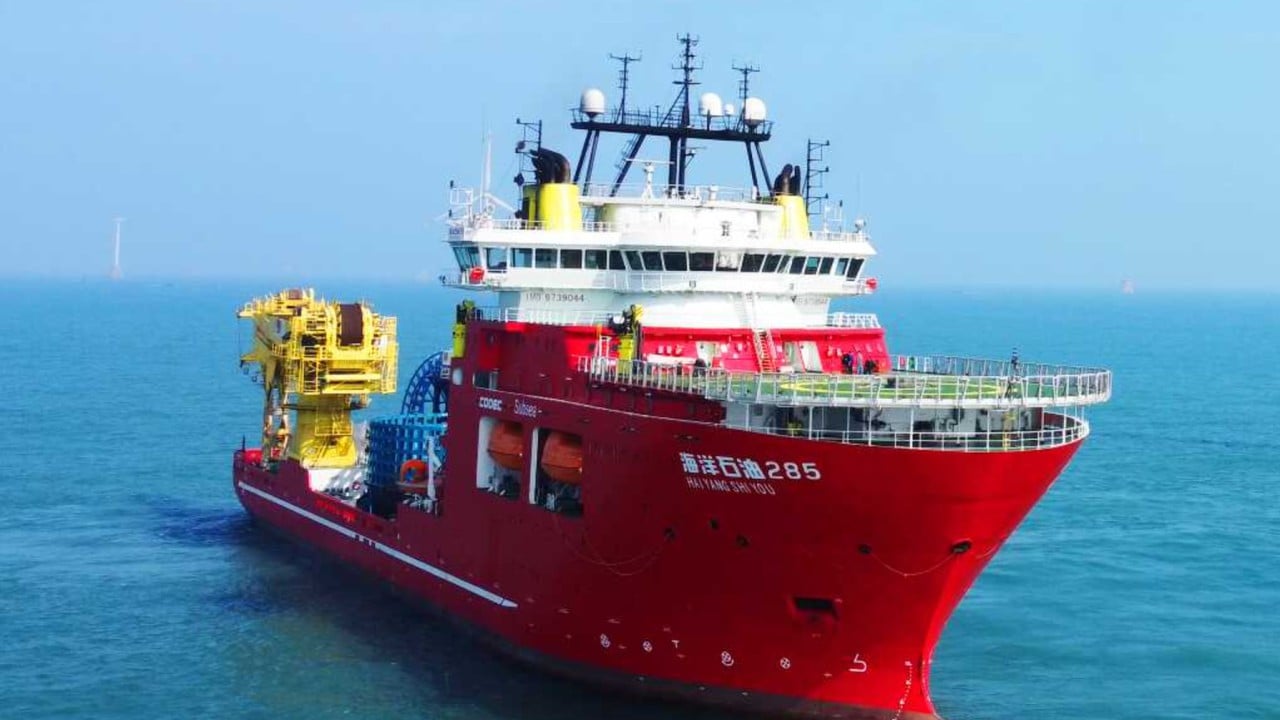
In addition, several vessels had been seized and detained in the region in recent days while thousands of seafarers remained trapped in the area, Dominguez said on Friday.
“My call is to release the seafarers because they are not at fault,” he said.
“The situation is not improving. I reiterate: there is no safe transit anywhere in the Strait of Hormuz.”
Dominguez added: “I spoke to a seafarer who had been trapped in the Persian Gulf for more than six weeks. Aside from the exhaustion and toll on mental health of the crews, they feel invisible, that they are not valued. There is much more we need to do.”
The United Nations’ maritime agency has highlighted the plight of seafarers trapped in the Persian…
Additional sources • AP

Iran’s Foreign Minister Abbas Araghchi arrived in Pakistan on Friday evening ahead of a second round of peace talks with the United States, in an effort to restore calm in the region.
ADVERTISEMENT
ADVERTISEMENT
Shortly after Araghchi’s arrival, his ministry clarified that any talks between Tehran and Washington would be indirect, with messages conveyed to Pakistani officials instead.
Araghchi wasted no time and met late Friday with Pakistan Foreign Minister Ishaq Dar and Army Chief Field Marshal Asim Munir.
On Saturday morning, he met with Munir and Pakistan’s Interior Minister Mohsin Naqvi, officials said.
US special envoy Steve Witkoff and Jared Kushner are also due to head to Pakistan on Saturday. Vice President JD Vance will not attend but will instead be on standby in case his presence is “necessary,” the White House said.
A first round of negotiations already took place in Pakistan earlier this month but both sides failed to reach a deal.
Pakistan has emerged as the leading mediator in efforts to end the war, with an initial round of negotiations already held in the capital earlier this month.
However, both sides failed to reach a deal, and as a result, Iran was initially reluctant to send another delegation to Islamabad for a second round.
Islamabad appeared to be under near-lockdown on Saturday morning, with soldiers and police stationed at key intersections, posted on rooftops overlooking major roads, and helicopters circling overhead. Checkpoints, road closures and diversions across the city, particularly near the so-called “red zone” surrounding the negotiation venue.
Meanwhile, Iran has resumed commercial flights at Tehran’s international airport on Saturday, the first time its done so since the conflict with the US and Israel broke out late February.
Flights bound for Istanbul, Oman’s capital of Muscat and the Saudi city of Medina departed from the Imam Khomeini International Airport, Iran’s state-run media reported.
Three Istanbul-bound flights were seen departing on Saturday morning on the Flightradar24 tracking platform.
Iran’s airspace has largely remained closed since 28 February, but partially reopened earlier this month when the first ceasefire was announced.
Additional sources • AP
Iran’s Foreign Minister Abbas Araghchi arrived in Pakistan on Friday evening ahead of a second round of peace talks with the United States, in an effort to restore calm in the region.
ADVERTISEMENT
ADVERTISEMENT
Shortly after Araghchi’s arrival, his ministry clarified that any talks between Tehran and Washington would be indirect, with messages conveyed to Pakistani officials instead.
Araghchi wasted no time and met late Friday with Pakistan Foreign Minister Ishaq Dar and Army Chief Field Marshal Asim Munir.
On Saturday morning, he met with Munir and Pakistan’s Interior Minister Mohsin Naqvi, officials said.
US special envoy Steve Witkoff and Jared Kushner are also due to head to Pakistan on Saturday. Vice President JD Vance will not attend but will instead be on standby in case his presence is “necessary,” the White House said.
A first round of negotiations already took place in Pakistan earlier this month but both sides failed to reach a deal.
Pakistan has emerged as the leading mediator in efforts to end the war, with an initial round of negotiations already held in the capital earlier this month.
However, both sides failed to reach a deal, and as a result, Iran was initially reluctant to send another delegation to Islamabad for a second round.
Islamabad appeared to be under near-lockdown on Saturday morning, with soldiers and police stationed at key intersections, posted on rooftops overlooking major roads, and helicopters circling overhead. Checkpoints, road closures and diversions across the city, particularly near the so-called “red zone” surrounding the negotiation venue.
Meanwhile, Iran has resumed commercial flights at Tehran’s international airport on Saturday, the first time its done so since the conflict with the US and Israel broke out late February.
Flights bound for Istanbul, Oman’s capital of Muscat and the Saudi city of Medina departed from the Imam Khomeini International Airport, Iran’s state-run media reported.
Three Istanbul-bound flights were seen departing on Saturday morning on the Flightradar24 tracking platform.
Iran’s airspace has largely remained closed since 28 February, but partially reopened earlier this month when the first ceasefire was announced.
Additional sources • AP
Iran's Foreign Minister Abbas Araghchi arrived in Pakistan on Friday evening ahead of a second…
US-Israeli strikes on Iran in late February prompted Tehran to respond by effectively closing the strait, a crucial artery for global oil supplies, and launching attacks on vessels.
The Thai-flagged Mayuree Naree was struck on March 11 while travelling through the Gulf waterway, after departing a port in the United Arab Emirates.
Twenty Thai crew members returned home in mid-March, while three others had been reported missing and presumed trapped in the damaged engine room of the vessel.

“Unfortunately, the three remaining crew members we found eventually, they lost their lives in the incident,” Thai Foreign Minister Sihasak Phuangketkeow told reporters on Wednesday.

US-Israeli strikes on Iran in late February prompted Tehran to respond by effectively closing the strait, a crucial artery for global oil supplies, and launching attacks on vessels.
The Thai-flagged Mayuree Naree was struck on March 11 while travelling through the Gulf waterway, after departing a port in the United Arab Emirates.
Twenty Thai crew members returned home in mid-March, while three others had been reported missing and presumed trapped in the damaged engine room of the vessel.
“Unfortunately, the three remaining crew members we found eventually, they lost their lives in the incident,” Thai Foreign Minister Sihasak Phuangketkeow told reporters on Wednesday.
US-Israeli strikes on Iran in late February prompted Tehran to respond by effectively closing the strait, a crucial artery for global oil supplies, and launching attacks on vessels.
The Thai-flagged Mayuree Naree was struck on March 11 while travelling through the Gulf waterway, after departing a port in the United Arab Emirates.
Twenty Thai crew members returned home in mid-March, while three others had been reported missing and presumed trapped in the damaged engine room of the vessel.
“Unfortunately, the three remaining crew members we found eventually, they lost their lives in the incident,” Thai Foreign Minister Sihasak Phuangketkeow told reporters on Wednesday.
Thailand’s foreign minister confirmed on Wednesday the deaths of three Thai crew members of a…
Iran will choose the country’s next leader – not Donald Trump – foreign minister Abbas…


