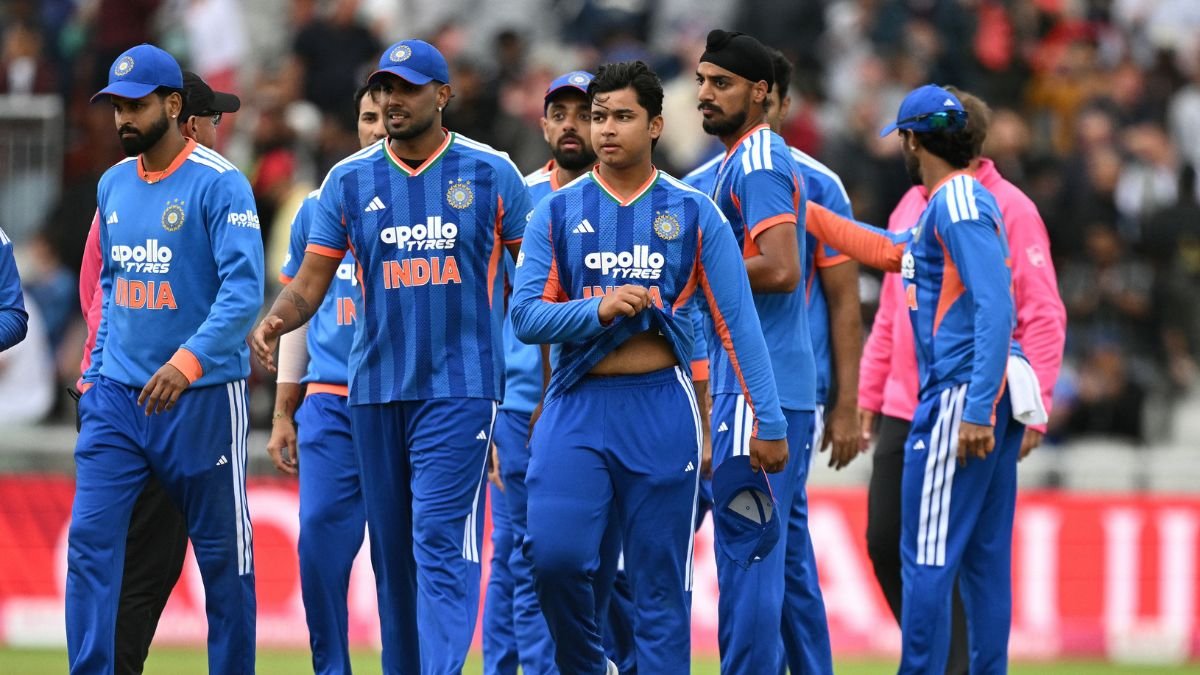
BCCI का बड़ा ऐलान, टीम इंडिया पहली बार जापान के खिलाफ खेलेगी T20I मैच
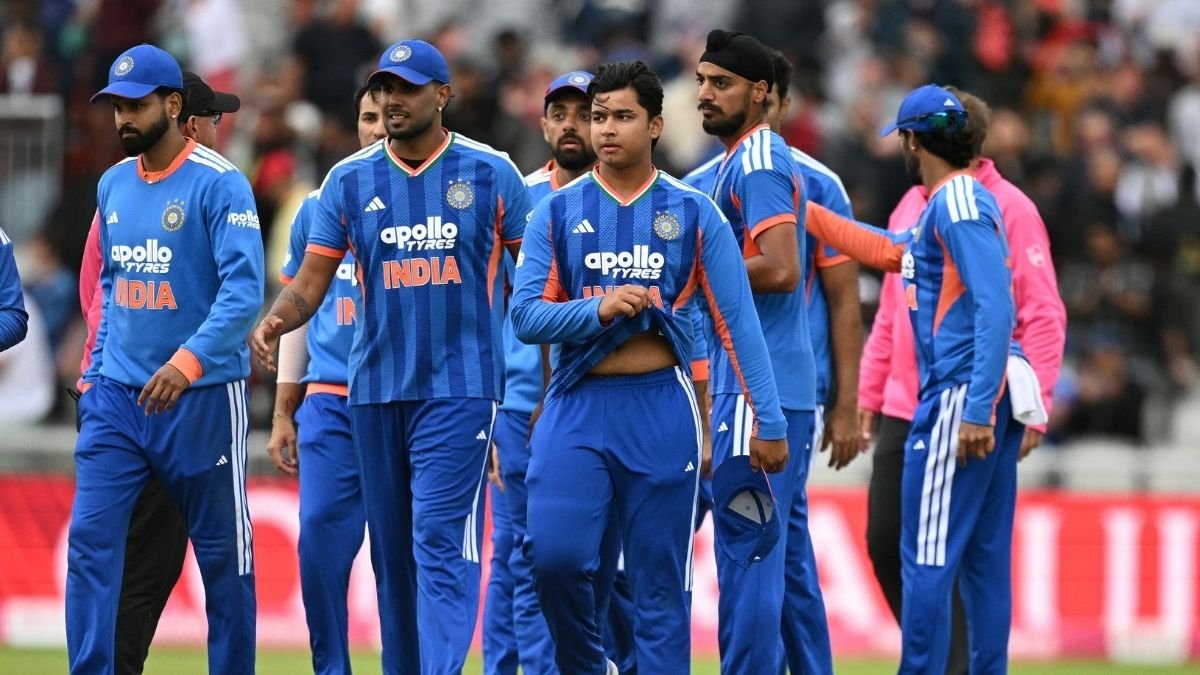
भारतीय क्रिकेट कंट्रोल बोर्ड (BCCI) ने शुक्रवार 4 सितंबर को एक बड़ा ऐलान किया है।…
भारतीय क्रिकेट कंट्रोल बोर्ड (BCCI) ने शुक्रवार 4 सितंबर को एक बड़ा ऐलान किया है।…
जापान में होने वाले एशियन गेम्स में खिलाड़ियों के रुकने और दूसरी सुविधाओं को लेकर…
24 मिनट पहलेकॉपी लिंकभारत जापान में होने वाले एशियन गेम्स में B क्रिकेट टीम भेज…
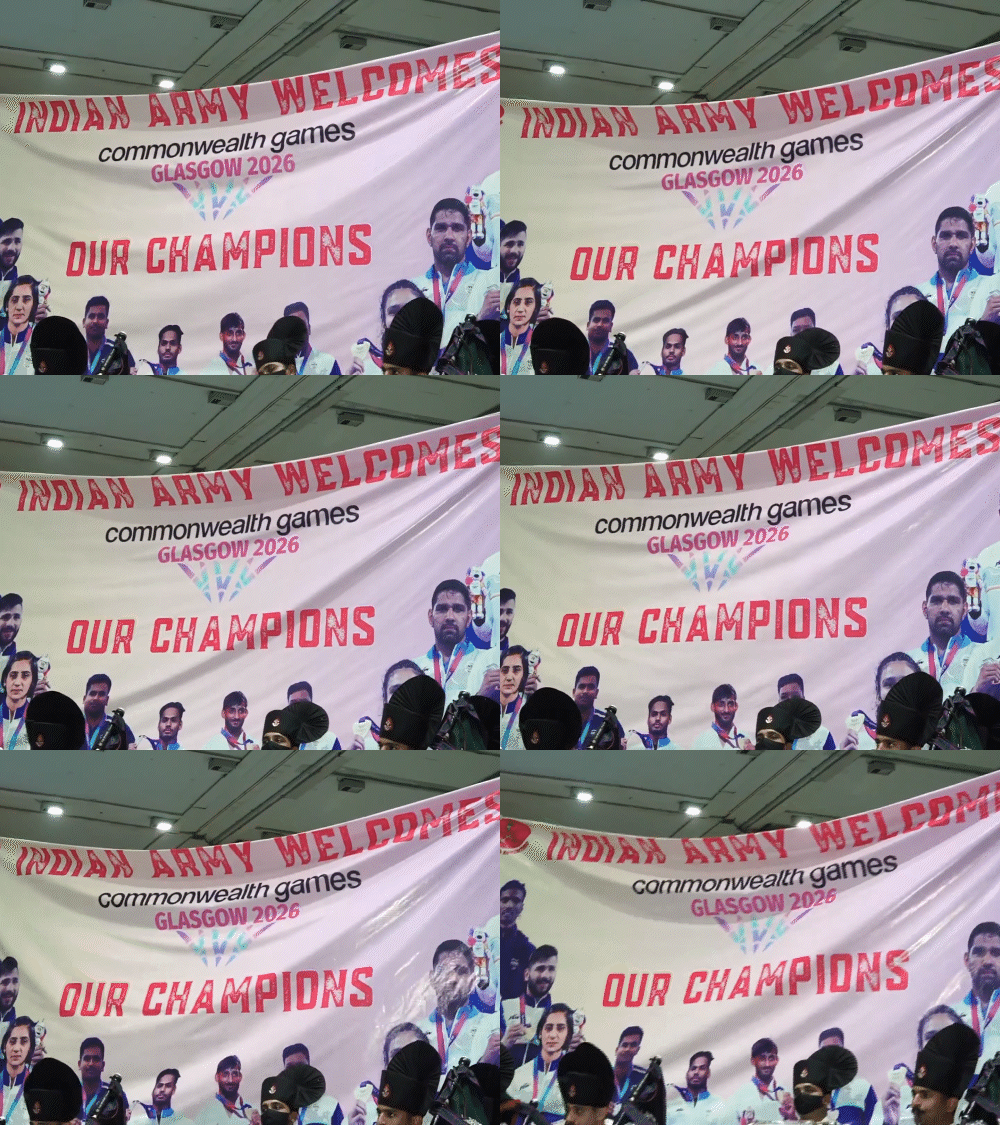
Hindi NewsSportsIndian Athletes Return To Delhi After Commonwealth Games | Asian Games Focus9 मिनट पहलेकॉपी…
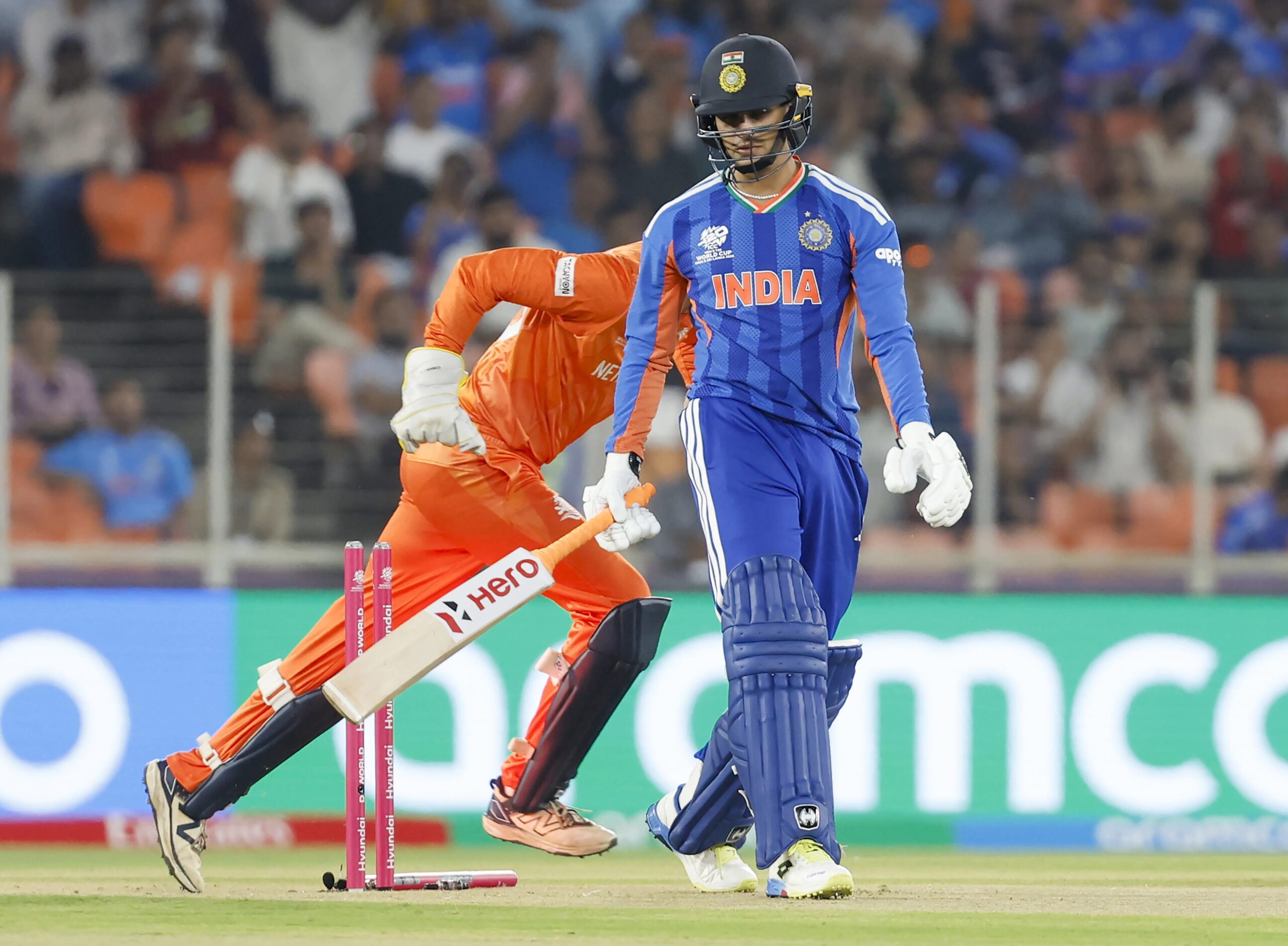
अभिषेक शर्मा का यह साल अंतरराष्ट्रीय क्रिकेट में खास नहीं रहा है। पिछली 5 पारियों…
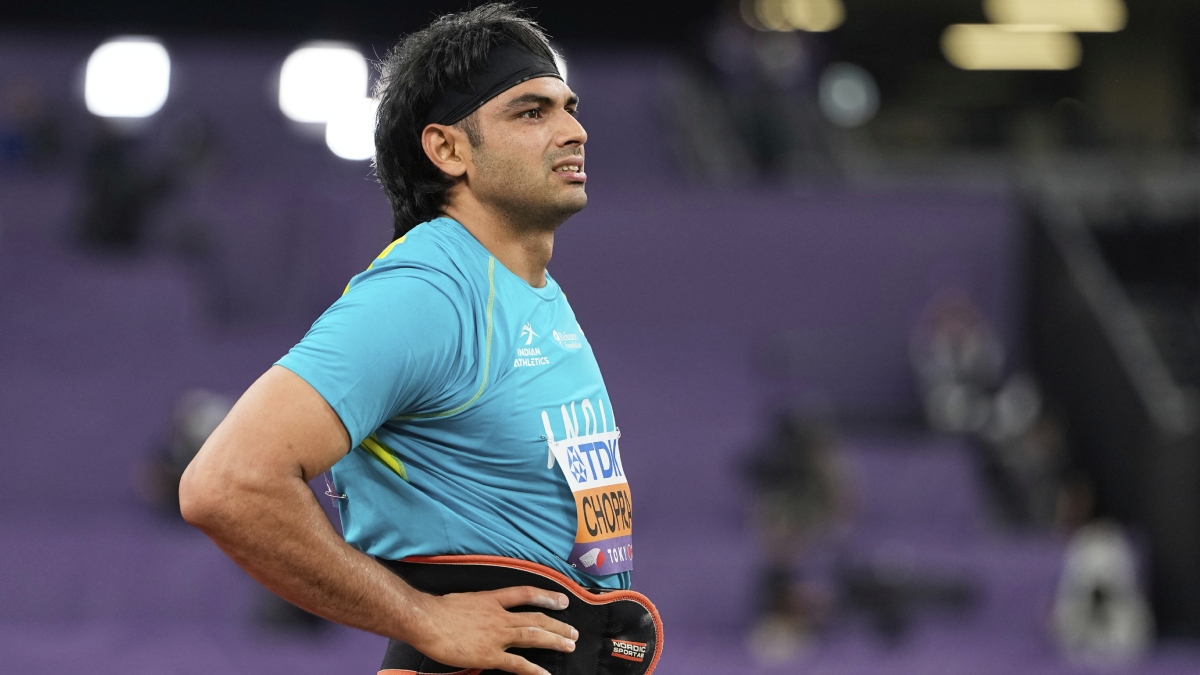
डायमंड लीग का अगला चरण 19 जून को दोहा में आयोजित किया जाएगा, जिसमें भारतीय…

National record holders Dev Kumar Meena of Madhya Pradesh and Baranica Elangovan of Tamil Nadu will be among the top draws in the inaugural Indian Indoor Open Combined Events and Pole Vault Competition, which begins in Bhubaneswar on Saturday.
The two-day meet will be held at the indoor facility at the Kalinga Stadium complex, which hosted the inaugural National Indoor Championships in March. The facility will also host the World Indoor Championships in 2028.
Meena has had an impressive season. In March, he equalled his national record of 5.40m during an invitational meet in Taiwan.
“My goal here in Bhubaneswar is to do my personal best. I enjoyed my practice sessions at the Kalinga Stadium indoor facility. I’m ready to do my best,” the 20-year-old said.
The men’s pole vault qualification mark set by the Athletics Federation of India for the 2026 Glasgow Commonwealth Games is 5.25m. The qualification mark for women is 4.45m.
The men’s qualification standard for the Asian Games in Japan later this year is 5.45m, while the corresponding mark for women is 4.10m.
Fourteen pole vaulters will compete in the men’s event, scheduled for the opening day on Saturday. Other prominent competitors in the fray include Kuldeep Kumar of Madhya Pradesh and Reegan G. of Tamil Nadu, who have cleared 5.30m and 5.35m, respectively, this season.
ALSO READ | Baranica Elangovan — I have been focusing on my technique rather than just performance
Seven athletes have confirmed their participation in the men’s U-20 pole vault event.
The women’s pole vault final will be held on Sunday. Eleven athletes have registered for the event, but the focus will be on Baranica, who set a national record of 4.22m during the inaugural National Indoor Championships at the same venue in March.
Overall, more than 80 athletes have confirmed their participation in the meet.
The heptathlon for men and pentathlon for women will be held in the senior and U-20 categories.
The heptathlon events are 60m, long jump, shot put, high jump, 60m hurdles, pole vault and 1000m. The pentathlon events are 60m hurdles, high jump, shot put, long jump and 800m.
Published on May 01, 2026
National record holders Dev Kumar Meena of Madhya Pradesh and Baranica Elangovan of Tamil Nadu will be among the top draws in the inaugural Indian Indoor Open Combined Events and Pole Vault Competition, which begins in Bhubaneswar on Saturday.
The two-day meet will be held at the indoor facility at the Kalinga Stadium complex, which hosted the inaugural National Indoor Championships in March. The facility will also host the World Indoor Championships in 2028.
Meena has had an impressive season. In March, he equalled his national record of 5.40m during an invitational meet in Taiwan.
“My goal here in Bhubaneswar is to do my personal best. I enjoyed my practice sessions at the Kalinga Stadium indoor facility. I’m ready to do my best,” the 20-year-old said.
The men’s pole vault qualification mark set by the Athletics Federation of India for the 2026 Glasgow Commonwealth Games is 5.25m. The qualification mark for women is 4.45m.
The men’s qualification standard for the Asian Games in Japan later this year is 5.45m, while the corresponding mark for women is 4.10m.
Fourteen pole vaulters will compete in the men’s event, scheduled for the opening day on Saturday. Other prominent competitors in the fray include Kuldeep Kumar of Madhya Pradesh and Reegan G. of Tamil Nadu, who have cleared 5.30m and 5.35m, respectively, this season.
ALSO READ | Baranica Elangovan — I have been focusing on my technique rather than just performance
Seven athletes have confirmed their participation in the men’s U-20 pole vault event.
The women’s pole vault final will be held on Sunday. Eleven athletes have registered for the event, but the focus will be on Baranica, who set a national record of 4.22m during the inaugural National Indoor Championships at the same venue in March.
Overall, more than 80 athletes have confirmed their participation in the meet.
The heptathlon for men and pentathlon for women will be held in the senior and U-20 categories.
The heptathlon events are 60m, long jump, shot put, high jump, 60m hurdles, pole vault and 1000m. The pentathlon events are 60m hurdles, high jump, shot put, long jump and 800m.
Published on May 01, 2026
National record holders Dev Kumar Meena of Madhya Pradesh and Baranica Elangovan of Tamil Nadu…
![Asian Boxing Championships: After historic haul, bigger tests await the Indian women’s team Not long after her return to India from the Asian Boxing Championships in Ulaanbaatar, Mongolia, where she won gold in the women’s 54kg category, Preeti Pawar told Sportstar how she was looking forward to spending time with her family in the boxing town of Bhiwani in Haryana.“For the last three months before the Asian Championships, I was in the national camp. All the girls were missing ghar ka khana (home-cooked meals). I’m looking forward to eating my mother’s roti, churma and halwa. I can enjoy that food a little bit now,” the 22-year-old said.The treats are well deserved. Preeti had a spectacular tournament in Ulaanbaatar, beating two Olympic medallists — Korea’s Im Aeji and Taiwan’s Huang Hsiao-wen — to win her first continental championship.But Preeti is clear that while she’ll savour, she won’t really indulge. Her mind is already preparing for the next national camp, which will begin in Patiala in the last week of April. “I know that I only have a few days at home. After that, I have to get into the same mindset of competition. I’ve done well at the Asian Championships, but now I will be preparing for the Commonwealth and Asian Games. There will be a lot of expectations on me there,” she says.Great expectationsIn Mongolia, every single member of the women’s team finished on the podium — 10 medals in all, including four gold, two silver and four bronze. The result was Indian women’s boxing’s best (in terms of medal count) at the Asian Championships in over two decades. The men settled for six overall, with one gold.Coach Santiago Nieva says the result was even better than what he had been hoping for. “We had pretty high expectations going in, considering we already had two boxers who had won world championship gold last year [Jaismine Lamboriya in the women’s 57kg category and Meenakshi Hooda in the women’s 48kg class]; but we exceeded them.“We wanted to position ourselves as one of the top teams, which we did by finishing on top of the medal tally. We knew we needed to get boxers into the final and convert those finals into gold medals. We had six boxers in the final and we won four of those bouts,” says Nieva. While India had also won four gold medals at the 2022 edition, just one medal came in an Olympic weight division — Lovlina Borgohain in the women’s 75kg category. This year, three of the four golds were in Olympic weight classes, where competition is the highest. More than the gold medals, it is the nature of the results that enthuses Nieva, who had previously been high-performance director with Indian boxing and later worked with the Australian national squad before joining the women’s team at the start of the year. Mission control: “Our goal is to create high-performance athletes who are also experts at boxing, rather than boxers with a poor physical base,” says Santiago Nieva, the coach of the Indian women’s boxing team.
| Photo Credit:
AFP
Mission control: “Our goal is to create high-performance athletes who are also experts at boxing, rather than boxers with a poor physical base,” says Santiago Nieva, the coach of the Indian women’s boxing team.
| Photo Credit:
AFP
Winning where it counts“I think when you look at results from earlier years, you’d notice that a lot of the gold medals came in non-Olympic categories, in which the top boxers often don’t take part. To win gold in Olympic weight classes is a very positive sign for us. We faced some of the top-level boxers from Asia, many of whom have won world titles. Not only did we beat them, we beat them convincingly. It shows we are on the right track,” says Nieva.With boxers from Asia winning 14 of the 24 medals in the women’s divisions at the 2024 Olympics and 21 of the 40 medals at last year’s world championships, Nieva believes the result from the Asian Championships is a statement of Indian women boxers’ potential beyond the continental level.“For the last 10 years or so, Asia has emerged as the strongest continent in women’s boxing. Earlier it was mostly China, North Korea, Taiwan and Thailand that were very strong, but in the last couple of years, Uzbekistan and Kazakhstan have produced some world-class talent. So if you are winning in Asia, it’s not too different from winning at the world level,” he says.While the medals are welcome, Nieva says it is important not to forget the work that made the result possible. “When I came to the national camp at the start of the year, I felt I already had a lot to build from. But I feel that our training discipline — the way we push ourselves in each session — has improved significantly,” he says.Over the past few months, Nieva says the team has been focusing on building what he considers high-performance athletes. “When we train, we have a purpose in mind. What our team believes in is the most important attribute of modern boxing — high-level aerobic endurance. We want that physical quality in our boxers because enduring hard training sessions is very tough on the body and can lead to injuries. Our goal is to create high-performance athletes who are also experts at boxing, rather than boxers with a poor physical base,” he says.Improving future chancesThe results from the Asian Championships will have more than just confidence-boosting benefits. “There are a lot of ranking points from this tournament. That will help me in the future because it will improve my seeding in important events,” says Priya Ganghas, who won gold on her international debut in the women’s 60kg category. “Even though I know I can take on any boxer, boxing is a game where one punch can change everything. It’s better to meet the top boxers in the medal rounds rather than in the opening rounds.”“If we are competing against a good opponent, then obviously we have to be sharp all the time. At an early stage in a new environment, this isn’t always easy because we aren’t always habituated that fast. So if you face the best boxers in the semifinals or finals, things become easier because you have time to get into your rhythm,” says the 20-year-old.While Nieva believes the team is on the right track, he says it is important not to get carried away. “I think we should see this as a great result, independent of how we do in the next competition. But of course, this year the main goals will be the Commonwealth Games and especially the Asian Games.“If we don’t achieve a similar result at the Asian Games, we will be disappointed. We know it will be tougher. Some of the opponents who lost will come back stronger, and some of us who won in Mongolia might get a tougher draw or have things not go perfectly,” he says. Although Preeti went on to beat two Olympic medallists, she had a tough opening round in her first bout against former U-22 Asian champion Elina Bazarova of Kazakhstan. And while she has an Asian title, her hunger remains.
| Photo Credit:
Special Arrangement
Although Preeti went on to beat two Olympic medallists, she had a tough opening round in her first bout against former U-22 Asian champion Elina Bazarova of Kazakhstan. And while she has an Asian title, her hunger remains.
| Photo Credit:
Special Arrangement
This is why, before the team left for a short break after the Asian Championships, Nieva reminded them that the job was not done. “According to the selection criteria of the Boxing Federation of India (BFI), only the boxers who won gold or silver are assured of a place in the Asian Games and Commonwealth Games teams. Everyone else, including the bronze medallists — and even two-time world champion Nikhat Zareen and Olympic medallist Lovlina Borgohain — will have to go through another assessment in May,” he says.Even the boxers who have cemented their places know there is work to do. “From a technical and tactical point of view, there are still many things to work on. There were bouts that became very messy, with holding, wrestling and boxers falling to the floor. We were not always able to solve those situations or come back from that.“We know we have to improve so that we don’t have to depend on luck to win close bouts. Right now, a lot of boxers had their best days in the final. But there were also bouts where our boxers had a bad day, and that wasn’t enough to win. We want to improve our baseline so that even on a bad day, it is still good enough to get the win,” he says.At least one boxer has the confidence that her bad day is still good enough at the continental level. Although she went on to beat two Olympic medallists, Preeti had a tough opening round in her first bout against former U-22 Asian champion Elina Bazarova of Kazakhstan.“I actually lost the first round on all five scorecards, but fought back to win the next two rounds 5-0 and take the bout. When you lose the first round so convincingly, it’s hard to come back, but I know now that I can change the bout situation anytime,” she says.But as she readies to return to the national camp, Preeti says she doesn’t want to be in a similar situation in the tournaments to come. And while she has an Asian title, her hunger remains.“I might have won gold at the Asian Championships, but right now the goal is to repeat my medal at the Asian Games. What I’ve done is not enough,” she says.Published on Apr 22, 2026 #Asian #Boxing #Championships #historic #haul #bigger #tests #await #Indian #womens #team](https://i3.wp.com/ss-i.thgim.com/public/incoming/1mvgkq/article70891477.ece/alternates/FREE_1200/AFP__20190430__1G1840__v2__MidRes__BoxIndAiba.jpg?ssl=1 "Asian Boxing Championships: After historic haul, bigger tests await the Indian women’s team Not long after her return to India from the Asian Boxing Championships in Ulaanbaatar, Mongolia, where she won gold in the women’s 54kg category, Preeti Pawar told Sportstar how she was looking forward to spending time with her family in the boxing town of Bhiwani in Haryana.“For the last three months before the Asian Championships, I was in the national camp. All the girls were missing ghar ka khana (home-cooked meals). I’m looking forward to eating my mother’s roti, churma and halwa. I can enjoy that food a little bit now,” the 22-year-old said.The treats are well deserved. Preeti had a spectacular tournament in Ulaanbaatar, beating two Olympic medallists — Korea’s Im Aeji and Taiwan’s Huang Hsiao-wen — to win her first continental championship.But Preeti is clear that while she’ll savour, she won’t really indulge. Her mind is already preparing for the next national camp, which will begin in Patiala in the last week of April. “I know that I only have a few days at home. After that, I have to get into the same mindset of competition. I’ve done well at the Asian Championships, but now I will be preparing for the Commonwealth and Asian Games. There will be a lot of expectations on me there,” she says.Great expectationsIn Mongolia, every single member of the women’s team finished on the podium — 10 medals in all, including four gold, two silver and four bronze. The result was Indian women’s boxing’s best (in terms of medal count) at the Asian Championships in over two decades. The men settled for six overall, with one gold.Coach Santiago Nieva says the result was even better than what he had been hoping for. “We had pretty high expectations going in, considering we already had two boxers who had won world championship gold last year [Jaismine Lamboriya in the women’s 57kg category and Meenakshi Hooda in the women’s 48kg class]; but we exceeded them.“We wanted to position ourselves as one of the top teams, which we did by finishing on top of the medal tally. We knew we needed to get boxers into the final and convert those finals into gold medals. We had six boxers in the final and we won four of those bouts,” says Nieva. While India had also won four gold medals at the 2022 edition, just one medal came in an Olympic weight division — Lovlina Borgohain in the women’s 75kg category. This year, three of the four golds were in Olympic weight classes, where competition is the highest. More than the gold medals, it is the nature of the results that enthuses Nieva, who had previously been high-performance director with Indian boxing and later worked with the Australian national squad before joining the women’s team at the start of the year. Mission control: “Our goal is to create high-performance athletes who are also experts at boxing, rather than boxers with a poor physical base,” says Santiago Nieva, the coach of the Indian women’s boxing team.
| Photo Credit:
AFP
Mission control: “Our goal is to create high-performance athletes who are also experts at boxing, rather than boxers with a poor physical base,” says Santiago Nieva, the coach of the Indian women’s boxing team.
| Photo Credit:
AFP
Winning where it counts“I think when you look at results from earlier years, you’d notice that a lot of the gold medals came in non-Olympic categories, in which the top boxers often don’t take part. To win gold in Olympic weight classes is a very positive sign for us. We faced some of the top-level boxers from Asia, many of whom have won world titles. Not only did we beat them, we beat them convincingly. It shows we are on the right track,” says Nieva.With boxers from Asia winning 14 of the 24 medals in the women’s divisions at the 2024 Olympics and 21 of the 40 medals at last year’s world championships, Nieva believes the result from the Asian Championships is a statement of Indian women boxers’ potential beyond the continental level.“For the last 10 years or so, Asia has emerged as the strongest continent in women’s boxing. Earlier it was mostly China, North Korea, Taiwan and Thailand that were very strong, but in the last couple of years, Uzbekistan and Kazakhstan have produced some world-class talent. So if you are winning in Asia, it’s not too different from winning at the world level,” he says.While the medals are welcome, Nieva says it is important not to forget the work that made the result possible. “When I came to the national camp at the start of the year, I felt I already had a lot to build from. But I feel that our training discipline — the way we push ourselves in each session — has improved significantly,” he says.Over the past few months, Nieva says the team has been focusing on building what he considers high-performance athletes. “When we train, we have a purpose in mind. What our team believes in is the most important attribute of modern boxing — high-level aerobic endurance. We want that physical quality in our boxers because enduring hard training sessions is very tough on the body and can lead to injuries. Our goal is to create high-performance athletes who are also experts at boxing, rather than boxers with a poor physical base,” he says.Improving future chancesThe results from the Asian Championships will have more than just confidence-boosting benefits. “There are a lot of ranking points from this tournament. That will help me in the future because it will improve my seeding in important events,” says Priya Ganghas, who won gold on her international debut in the women’s 60kg category. “Even though I know I can take on any boxer, boxing is a game where one punch can change everything. It’s better to meet the top boxers in the medal rounds rather than in the opening rounds.”“If we are competing against a good opponent, then obviously we have to be sharp all the time. At an early stage in a new environment, this isn’t always easy because we aren’t always habituated that fast. So if you face the best boxers in the semifinals or finals, things become easier because you have time to get into your rhythm,” says the 20-year-old.While Nieva believes the team is on the right track, he says it is important not to get carried away. “I think we should see this as a great result, independent of how we do in the next competition. But of course, this year the main goals will be the Commonwealth Games and especially the Asian Games.“If we don’t achieve a similar result at the Asian Games, we will be disappointed. We know it will be tougher. Some of the opponents who lost will come back stronger, and some of us who won in Mongolia might get a tougher draw or have things not go perfectly,” he says. Although Preeti went on to beat two Olympic medallists, she had a tough opening round in her first bout against former U-22 Asian champion Elina Bazarova of Kazakhstan. And while she has an Asian title, her hunger remains.
| Photo Credit:
Special Arrangement
Although Preeti went on to beat two Olympic medallists, she had a tough opening round in her first bout against former U-22 Asian champion Elina Bazarova of Kazakhstan. And while she has an Asian title, her hunger remains.
| Photo Credit:
Special Arrangement
This is why, before the team left for a short break after the Asian Championships, Nieva reminded them that the job was not done. “According to the selection criteria of the Boxing Federation of India (BFI), only the boxers who won gold or silver are assured of a place in the Asian Games and Commonwealth Games teams. Everyone else, including the bronze medallists — and even two-time world champion Nikhat Zareen and Olympic medallist Lovlina Borgohain — will have to go through another assessment in May,” he says.Even the boxers who have cemented their places know there is work to do. “From a technical and tactical point of view, there are still many things to work on. There were bouts that became very messy, with holding, wrestling and boxers falling to the floor. We were not always able to solve those situations or come back from that.“We know we have to improve so that we don’t have to depend on luck to win close bouts. Right now, a lot of boxers had their best days in the final. But there were also bouts where our boxers had a bad day, and that wasn’t enough to win. We want to improve our baseline so that even on a bad day, it is still good enough to get the win,” he says.At least one boxer has the confidence that her bad day is still good enough at the continental level. Although she went on to beat two Olympic medallists, Preeti had a tough opening round in her first bout against former U-22 Asian champion Elina Bazarova of Kazakhstan.“I actually lost the first round on all five scorecards, but fought back to win the next two rounds 5-0 and take the bout. When you lose the first round so convincingly, it’s hard to come back, but I know now that I can change the bout situation anytime,” she says.But as she readies to return to the national camp, Preeti says she doesn’t want to be in a similar situation in the tournaments to come. And while she has an Asian title, her hunger remains.“I might have won gold at the Asian Championships, but right now the goal is to repeat my medal at the Asian Games. What I’ve done is not enough,” she says.Published on Apr 22, 2026 #Asian #Boxing #Championships #historic #haul #bigger #tests #await #Indian #womens #team")
Not long after her return to India from the Asian Boxing Championships in Ulaanbaatar, Mongolia, where she won gold in the women’s 54kg category, Preeti Pawar told Sportstar how she was looking forward to spending time with her family in the boxing town of Bhiwani in Haryana.
“For the last three months before the Asian Championships, I was in the national camp. All the girls were missing ghar ka khana (home-cooked meals). I’m looking forward to eating my mother’s roti, churma and halwa. I can enjoy that food a little bit now,” the 22-year-old said.
The treats are well deserved. Preeti had a spectacular tournament in Ulaanbaatar, beating two Olympic medallists — Korea’s Im Aeji and Taiwan’s Huang Hsiao-wen — to win her first continental championship.
But Preeti is clear that while she’ll savour, she won’t really indulge. Her mind is already preparing for the next national camp, which will begin in Patiala in the last week of April. “I know that I only have a few days at home. After that, I have to get into the same mindset of competition. I’ve done well at the Asian Championships, but now I will be preparing for the Commonwealth and Asian Games. There will be a lot of expectations on me there,” she says.
Great expectations
In Mongolia, every single member of the women’s team finished on the podium — 10 medals in all, including four gold, two silver and four bronze. The result was Indian women’s boxing’s best (in terms of medal count) at the Asian Championships in over two decades. The men settled for six overall, with one gold.
Coach Santiago Nieva says the result was even better than what he had been hoping for. “We had pretty high expectations going in, considering we already had two boxers who had won world championship gold last year [Jaismine Lamboriya in the women’s 57kg category and Meenakshi Hooda in the women’s 48kg class]; but we exceeded them.
“We wanted to position ourselves as one of the top teams, which we did by finishing on top of the medal tally. We knew we needed to get boxers into the final and convert those finals into gold medals. We had six boxers in the final and we won four of those bouts,” says Nieva. While India had also won four gold medals at the 2022 edition, just one medal came in an Olympic weight division — Lovlina Borgohain in the women’s 75kg category. This year, three of the four golds were in Olympic weight classes, where competition is the highest. More than the gold medals, it is the nature of the results that enthuses Nieva, who had previously been high-performance director with Indian boxing and later worked with the Australian national squad before joining the women’s team at the start of the year.
![Asian Boxing Championships: After historic haul, bigger tests await the Indian women’s team Not long after her return to India from the Asian Boxing Championships in Ulaanbaatar, Mongolia, where she won gold in the women’s 54kg category, Preeti Pawar told Sportstar how she was looking forward to spending time with her family in the boxing town of Bhiwani in Haryana.“For the last three months before the Asian Championships, I was in the national camp. All the girls were missing ghar ka khana (home-cooked meals). I’m looking forward to eating my mother’s roti, churma and halwa. I can enjoy that food a little bit now,” the 22-year-old said.The treats are well deserved. Preeti had a spectacular tournament in Ulaanbaatar, beating two Olympic medallists — Korea’s Im Aeji and Taiwan’s Huang Hsiao-wen — to win her first continental championship.But Preeti is clear that while she’ll savour, she won’t really indulge. Her mind is already preparing for the next national camp, which will begin in Patiala in the last week of April. “I know that I only have a few days at home. After that, I have to get into the same mindset of competition. I’ve done well at the Asian Championships, but now I will be preparing for the Commonwealth and Asian Games. There will be a lot of expectations on me there,” she says.Great expectationsIn Mongolia, every single member of the women’s team finished on the podium — 10 medals in all, including four gold, two silver and four bronze. The result was Indian women’s boxing’s best (in terms of medal count) at the Asian Championships in over two decades. The men settled for six overall, with one gold.Coach Santiago Nieva says the result was even better than what he had been hoping for. “We had pretty high expectations going in, considering we already had two boxers who had won world championship gold last year [Jaismine Lamboriya in the women’s 57kg category and Meenakshi Hooda in the women’s 48kg class]; but we exceeded them.“We wanted to position ourselves as one of the top teams, which we did by finishing on top of the medal tally. We knew we needed to get boxers into the final and convert those finals into gold medals. We had six boxers in the final and we won four of those bouts,” says Nieva. While India had also won four gold medals at the 2022 edition, just one medal came in an Olympic weight division — Lovlina Borgohain in the women’s 75kg category. This year, three of the four golds were in Olympic weight classes, where competition is the highest. More than the gold medals, it is the nature of the results that enthuses Nieva, who had previously been high-performance director with Indian boxing and later worked with the Australian national squad before joining the women’s team at the start of the year. Mission control: “Our goal is to create high-performance athletes who are also experts at boxing, rather than boxers with a poor physical base,” says Santiago Nieva, the coach of the Indian women’s boxing team.
| Photo Credit:
AFP
Mission control: “Our goal is to create high-performance athletes who are also experts at boxing, rather than boxers with a poor physical base,” says Santiago Nieva, the coach of the Indian women’s boxing team.
| Photo Credit:
AFP
Winning where it counts“I think when you look at results from earlier years, you’d notice that a lot of the gold medals came in non-Olympic categories, in which the top boxers often don’t take part. To win gold in Olympic weight classes is a very positive sign for us. We faced some of the top-level boxers from Asia, many of whom have won world titles. Not only did we beat them, we beat them convincingly. It shows we are on the right track,” says Nieva.With boxers from Asia winning 14 of the 24 medals in the women’s divisions at the 2024 Olympics and 21 of the 40 medals at last year’s world championships, Nieva believes the result from the Asian Championships is a statement of Indian women boxers’ potential beyond the continental level.“For the last 10 years or so, Asia has emerged as the strongest continent in women’s boxing. Earlier it was mostly China, North Korea, Taiwan and Thailand that were very strong, but in the last couple of years, Uzbekistan and Kazakhstan have produced some world-class talent. So if you are winning in Asia, it’s not too different from winning at the world level,” he says.While the medals are welcome, Nieva says it is important not to forget the work that made the result possible. “When I came to the national camp at the start of the year, I felt I already had a lot to build from. But I feel that our training discipline — the way we push ourselves in each session — has improved significantly,” he says.Over the past few months, Nieva says the team has been focusing on building what he considers high-performance athletes. “When we train, we have a purpose in mind. What our team believes in is the most important attribute of modern boxing — high-level aerobic endurance. We want that physical quality in our boxers because enduring hard training sessions is very tough on the body and can lead to injuries. Our goal is to create high-performance athletes who are also experts at boxing, rather than boxers with a poor physical base,” he says.Improving future chancesThe results from the Asian Championships will have more than just confidence-boosting benefits. “There are a lot of ranking points from this tournament. That will help me in the future because it will improve my seeding in important events,” says Priya Ganghas, who won gold on her international debut in the women’s 60kg category. “Even though I know I can take on any boxer, boxing is a game where one punch can change everything. It’s better to meet the top boxers in the medal rounds rather than in the opening rounds.”“If we are competing against a good opponent, then obviously we have to be sharp all the time. At an early stage in a new environment, this isn’t always easy because we aren’t always habituated that fast. So if you face the best boxers in the semifinals or finals, things become easier because you have time to get into your rhythm,” says the 20-year-old.While Nieva believes the team is on the right track, he says it is important not to get carried away. “I think we should see this as a great result, independent of how we do in the next competition. But of course, this year the main goals will be the Commonwealth Games and especially the Asian Games.“If we don’t achieve a similar result at the Asian Games, we will be disappointed. We know it will be tougher. Some of the opponents who lost will come back stronger, and some of us who won in Mongolia might get a tougher draw or have things not go perfectly,” he says. Although Preeti went on to beat two Olympic medallists, she had a tough opening round in her first bout against former U-22 Asian champion Elina Bazarova of Kazakhstan. And while she has an Asian title, her hunger remains.
| Photo Credit:
Special Arrangement
Although Preeti went on to beat two Olympic medallists, she had a tough opening round in her first bout against former U-22 Asian champion Elina Bazarova of Kazakhstan. And while she has an Asian title, her hunger remains.
| Photo Credit:
Special Arrangement
This is why, before the team left for a short break after the Asian Championships, Nieva reminded them that the job was not done. “According to the selection criteria of the Boxing Federation of India (BFI), only the boxers who won gold or silver are assured of a place in the Asian Games and Commonwealth Games teams. Everyone else, including the bronze medallists — and even two-time world champion Nikhat Zareen and Olympic medallist Lovlina Borgohain — will have to go through another assessment in May,” he says.Even the boxers who have cemented their places know there is work to do. “From a technical and tactical point of view, there are still many things to work on. There were bouts that became very messy, with holding, wrestling and boxers falling to the floor. We were not always able to solve those situations or come back from that.“We know we have to improve so that we don’t have to depend on luck to win close bouts. Right now, a lot of boxers had their best days in the final. But there were also bouts where our boxers had a bad day, and that wasn’t enough to win. We want to improve our baseline so that even on a bad day, it is still good enough to get the win,” he says.At least one boxer has the confidence that her bad day is still good enough at the continental level. Although she went on to beat two Olympic medallists, Preeti had a tough opening round in her first bout against former U-22 Asian champion Elina Bazarova of Kazakhstan.“I actually lost the first round on all five scorecards, but fought back to win the next two rounds 5-0 and take the bout. When you lose the first round so convincingly, it’s hard to come back, but I know now that I can change the bout situation anytime,” she says.But as she readies to return to the national camp, Preeti says she doesn’t want to be in a similar situation in the tournaments to come. And while she has an Asian title, her hunger remains.“I might have won gold at the Asian Championships, but right now the goal is to repeat my medal at the Asian Games. What I’ve done is not enough,” she says.Published on Apr 22, 2026 #Asian #Boxing #Championships #historic #haul #bigger #tests #await #Indian #womens #team](https://ss-i.thgim.com/public/incoming/1mvgkq/article70891477.ece/alternates/FREE_1200/AFP__20190430__1G1840__v2__MidRes__BoxIndAiba.jpg "Asian Boxing Championships: After historic haul, bigger tests await the Indian women’s team Not long after her return to India from the Asian Boxing Championships in Ulaanbaatar, Mongolia, where she won gold in the women’s 54kg category, Preeti Pawar told Sportstar how she was looking forward to spending time with her family in the boxing town of Bhiwani in Haryana.“For the last three months before the Asian Championships, I was in the national camp. All the girls were missing ghar ka khana (home-cooked meals). I’m looking forward to eating my mother’s roti, churma and halwa. I can enjoy that food a little bit now,” the 22-year-old said.The treats are well deserved. Preeti had a spectacular tournament in Ulaanbaatar, beating two Olympic medallists — Korea’s Im Aeji and Taiwan’s Huang Hsiao-wen — to win her first continental championship.But Preeti is clear that while she’ll savour, she won’t really indulge. Her mind is already preparing for the next national camp, which will begin in Patiala in the last week of April. “I know that I only have a few days at home. After that, I have to get into the same mindset of competition. I’ve done well at the Asian Championships, but now I will be preparing for the Commonwealth and Asian Games. There will be a lot of expectations on me there,” she says.Great expectationsIn Mongolia, every single member of the women’s team finished on the podium — 10 medals in all, including four gold, two silver and four bronze. The result was Indian women’s boxing’s best (in terms of medal count) at the Asian Championships in over two decades. The men settled for six overall, with one gold.Coach Santiago Nieva says the result was even better than what he had been hoping for. “We had pretty high expectations going in, considering we already had two boxers who had won world championship gold last year [Jaismine Lamboriya in the women’s 57kg category and Meenakshi Hooda in the women’s 48kg class]; but we exceeded them.“We wanted to position ourselves as one of the top teams, which we did by finishing on top of the medal tally. We knew we needed to get boxers into the final and convert those finals into gold medals. We had six boxers in the final and we won four of those bouts,” says Nieva. While India had also won four gold medals at the 2022 edition, just one medal came in an Olympic weight division — Lovlina Borgohain in the women’s 75kg category. This year, three of the four golds were in Olympic weight classes, where competition is the highest. More than the gold medals, it is the nature of the results that enthuses Nieva, who had previously been high-performance director with Indian boxing and later worked with the Australian national squad before joining the women’s team at the start of the year. Mission control: “Our goal is to create high-performance athletes who are also experts at boxing, rather than boxers with a poor physical base,” says Santiago Nieva, the coach of the Indian women’s boxing team.
| Photo Credit:
AFP
Mission control: “Our goal is to create high-performance athletes who are also experts at boxing, rather than boxers with a poor physical base,” says Santiago Nieva, the coach of the Indian women’s boxing team.
| Photo Credit:
AFP
Winning where it counts“I think when you look at results from earlier years, you’d notice that a lot of the gold medals came in non-Olympic categories, in which the top boxers often don’t take part. To win gold in Olympic weight classes is a very positive sign for us. We faced some of the top-level boxers from Asia, many of whom have won world titles. Not only did we beat them, we beat them convincingly. It shows we are on the right track,” says Nieva.With boxers from Asia winning 14 of the 24 medals in the women’s divisions at the 2024 Olympics and 21 of the 40 medals at last year’s world championships, Nieva believes the result from the Asian Championships is a statement of Indian women boxers’ potential beyond the continental level.“For the last 10 years or so, Asia has emerged as the strongest continent in women’s boxing. Earlier it was mostly China, North Korea, Taiwan and Thailand that were very strong, but in the last couple of years, Uzbekistan and Kazakhstan have produced some world-class talent. So if you are winning in Asia, it’s not too different from winning at the world level,” he says.While the medals are welcome, Nieva says it is important not to forget the work that made the result possible. “When I came to the national camp at the start of the year, I felt I already had a lot to build from. But I feel that our training discipline — the way we push ourselves in each session — has improved significantly,” he says.Over the past few months, Nieva says the team has been focusing on building what he considers high-performance athletes. “When we train, we have a purpose in mind. What our team believes in is the most important attribute of modern boxing — high-level aerobic endurance. We want that physical quality in our boxers because enduring hard training sessions is very tough on the body and can lead to injuries. Our goal is to create high-performance athletes who are also experts at boxing, rather than boxers with a poor physical base,” he says.Improving future chancesThe results from the Asian Championships will have more than just confidence-boosting benefits. “There are a lot of ranking points from this tournament. That will help me in the future because it will improve my seeding in important events,” says Priya Ganghas, who won gold on her international debut in the women’s 60kg category. “Even though I know I can take on any boxer, boxing is a game where one punch can change everything. It’s better to meet the top boxers in the medal rounds rather than in the opening rounds.”“If we are competing against a good opponent, then obviously we have to be sharp all the time. At an early stage in a new environment, this isn’t always easy because we aren’t always habituated that fast. So if you face the best boxers in the semifinals or finals, things become easier because you have time to get into your rhythm,” says the 20-year-old.While Nieva believes the team is on the right track, he says it is important not to get carried away. “I think we should see this as a great result, independent of how we do in the next competition. But of course, this year the main goals will be the Commonwealth Games and especially the Asian Games.“If we don’t achieve a similar result at the Asian Games, we will be disappointed. We know it will be tougher. Some of the opponents who lost will come back stronger, and some of us who won in Mongolia might get a tougher draw or have things not go perfectly,” he says. Although Preeti went on to beat two Olympic medallists, she had a tough opening round in her first bout against former U-22 Asian champion Elina Bazarova of Kazakhstan. And while she has an Asian title, her hunger remains.
| Photo Credit:
Special Arrangement
Although Preeti went on to beat two Olympic medallists, she had a tough opening round in her first bout against former U-22 Asian champion Elina Bazarova of Kazakhstan. And while she has an Asian title, her hunger remains.
| Photo Credit:
Special Arrangement
This is why, before the team left for a short break after the Asian Championships, Nieva reminded them that the job was not done. “According to the selection criteria of the Boxing Federation of India (BFI), only the boxers who won gold or silver are assured of a place in the Asian Games and Commonwealth Games teams. Everyone else, including the bronze medallists — and even two-time world champion Nikhat Zareen and Olympic medallist Lovlina Borgohain — will have to go through another assessment in May,” he says.Even the boxers who have cemented their places know there is work to do. “From a technical and tactical point of view, there are still many things to work on. There were bouts that became very messy, with holding, wrestling and boxers falling to the floor. We were not always able to solve those situations or come back from that.“We know we have to improve so that we don’t have to depend on luck to win close bouts. Right now, a lot of boxers had their best days in the final. But there were also bouts where our boxers had a bad day, and that wasn’t enough to win. We want to improve our baseline so that even on a bad day, it is still good enough to get the win,” he says.At least one boxer has the confidence that her bad day is still good enough at the continental level. Although she went on to beat two Olympic medallists, Preeti had a tough opening round in her first bout against former U-22 Asian champion Elina Bazarova of Kazakhstan.“I actually lost the first round on all five scorecards, but fought back to win the next two rounds 5-0 and take the bout. When you lose the first round so convincingly, it’s hard to come back, but I know now that I can change the bout situation anytime,” she says.But as she readies to return to the national camp, Preeti says she doesn’t want to be in a similar situation in the tournaments to come. And while she has an Asian title, her hunger remains.“I might have won gold at the Asian Championships, but right now the goal is to repeat my medal at the Asian Games. What I’ve done is not enough,” she says.Published on Apr 22, 2026 #Asian #Boxing #Championships #historic #haul #bigger #tests #await #Indian #womens #team")
Mission control: “Our goal is to create high-performance athletes who are also experts at boxing, rather than boxers with a poor physical base,” says Santiago Nieva, the coach of the Indian women’s boxing team. | Photo Credit: AFP

Mission control: “Our goal is to create high-performance athletes who are also experts at boxing, rather than boxers with a poor physical base,” says Santiago Nieva, the coach of the Indian women’s boxing team. | Photo Credit: AFP
Winning where it counts
“I think when you look at results from earlier years, you’d notice that a lot of the gold medals came in non-Olympic categories, in which the top boxers often don’t take part. To win gold in Olympic weight classes is a very positive sign for us. We faced some of the top-level boxers from Asia, many of whom have won world titles. Not only did we beat them, we beat them convincingly. It shows we are on the right track,” says Nieva.
With boxers from Asia winning 14 of the 24 medals in the women’s divisions at the 2024 Olympics and 21 of the 40 medals at last year’s world championships, Nieva believes the result from the Asian Championships is a statement of Indian women boxers’ potential beyond the continental level.
“For the last 10 years or so, Asia has emerged as the strongest continent in women’s boxing. Earlier it was mostly China, North Korea, Taiwan and Thailand that were very strong, but in the last couple of years, Uzbekistan and Kazakhstan have produced some world-class talent. So if you are winning in Asia, it’s not too different from winning at the world level,” he says.
While the medals are welcome, Nieva says it is important not to forget the work that made the result possible. “When I came to the national camp at the start of the year, I felt I already had a lot to build from. But I feel that our training discipline — the way we push ourselves in each session — has improved significantly,” he says.
Over the past few months, Nieva says the team has been focusing on building what he considers high-performance athletes. “When we train, we have a purpose in mind. What our team believes in is the most important attribute of modern boxing — high-level aerobic endurance. We want that physical quality in our boxers because enduring hard training sessions is very tough on the body and can lead to injuries. Our goal is to create high-performance athletes who are also experts at boxing, rather than boxers with a poor physical base,” he says.
Improving future chances
The results from the Asian Championships will have more than just confidence-boosting benefits. “There are a lot of ranking points from this tournament. That will help me in the future because it will improve my seeding in important events,” says Priya Ganghas, who won gold on her international debut in the women’s 60kg category. “Even though I know I can take on any boxer, boxing is a game where one punch can change everything. It’s better to meet the top boxers in the medal rounds rather than in the opening rounds.”
“If we are competing against a good opponent, then obviously we have to be sharp all the time. At an early stage in a new environment, this isn’t always easy because we aren’t always habituated that fast. So if you face the best boxers in the semifinals or finals, things become easier because you have time to get into your rhythm,” says the 20-year-old.
While Nieva believes the team is on the right track, he says it is important not to get carried away. “I think we should see this as a great result, independent of how we do in the next competition. But of course, this year the main goals will be the Commonwealth Games and especially the Asian Games.
“If we don’t achieve a similar result at the Asian Games, we will be disappointed. We know it will be tougher. Some of the opponents who lost will come back stronger, and some of us who won in Mongolia might get a tougher draw or have things not go perfectly,” he says.
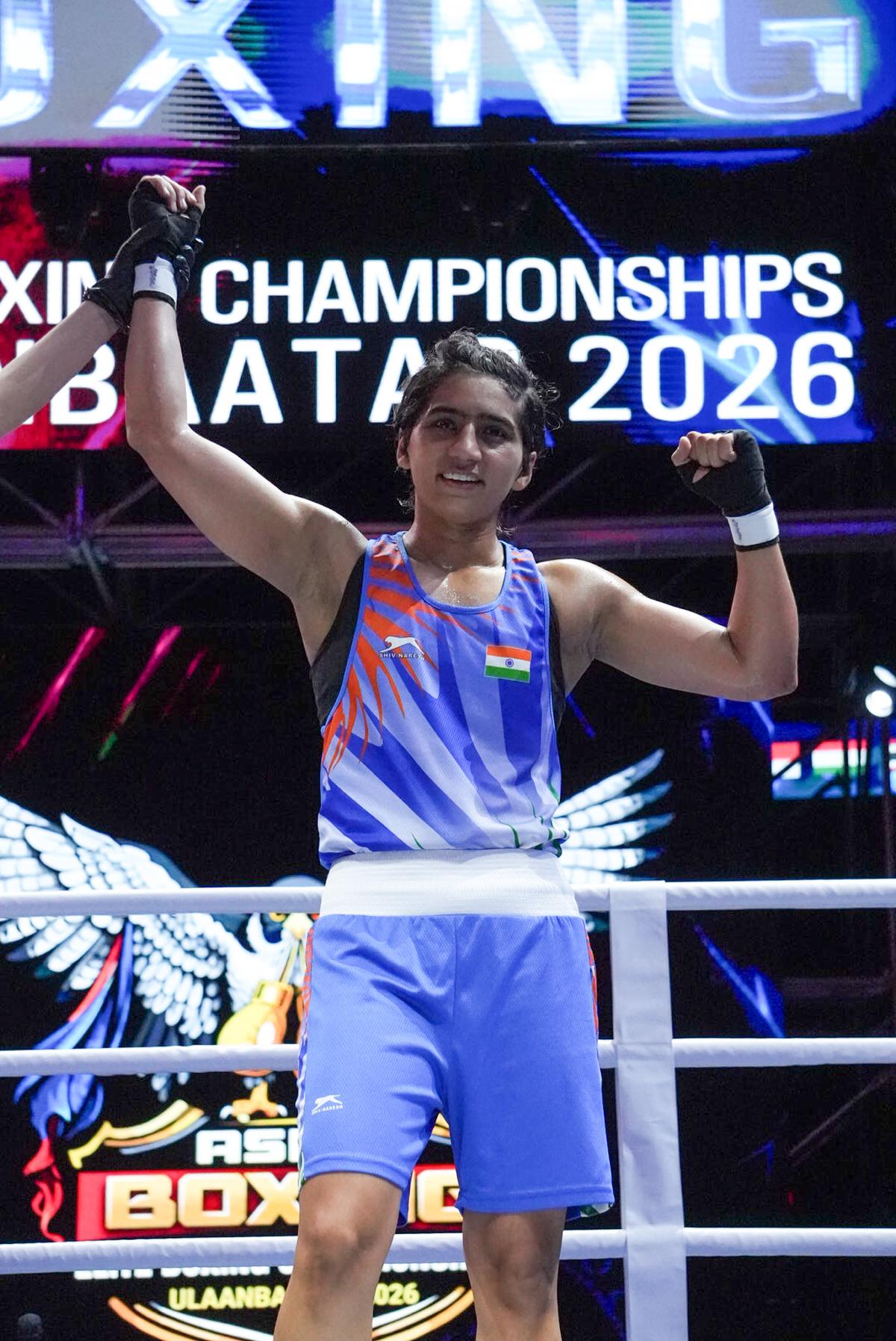
Although Preeti went on to beat two Olympic medallists, she had a tough opening round in her first bout against former U-22 Asian champion Elina Bazarova of Kazakhstan. And while she has an Asian title, her hunger remains. | Photo Credit: Special Arrangement
Although Preeti went on to beat two Olympic medallists, she had a tough opening round in her first bout against former U-22 Asian champion Elina Bazarova of Kazakhstan. And while she has an Asian title, her hunger remains. | Photo Credit: Special Arrangement
This is why, before the team left for a short break after the Asian Championships, Nieva reminded them that the job was not done. “According to the selection criteria of the Boxing Federation of India (BFI), only the boxers who won gold or silver are assured of a place in the Asian Games and Commonwealth Games teams. Everyone else, including the bronze medallists — and even two-time world champion Nikhat Zareen and Olympic medallist Lovlina Borgohain — will have to go through another assessment in May,” he says.
Even the boxers who have cemented their places know there is work to do. “From a technical and tactical point of view, there are still many things to work on. There were bouts that became very messy, with holding, wrestling and boxers falling to the floor. We were not always able to solve those situations or come back from that.
“We know we have to improve so that we don’t have to depend on luck to win close bouts. Right now, a lot of boxers had their best days in the final. But there were also bouts where our boxers had a bad day, and that wasn’t enough to win. We want to improve our baseline so that even on a bad day, it is still good enough to get the win,” he says.
At least one boxer has the confidence that her bad day is still good enough at the continental level. Although she went on to beat two Olympic medallists, Preeti had a tough opening round in her first bout against former U-22 Asian champion Elina Bazarova of Kazakhstan.
“I actually lost the first round on all five scorecards, but fought back to win the next two rounds 5-0 and take the bout. When you lose the first round so convincingly, it’s hard to come back, but I know now that I can change the bout situation anytime,” she says.
But as she readies to return to the national camp, Preeti says she doesn’t want to be in a similar situation in the tournaments to come. And while she has an Asian title, her hunger remains.
“I might have won gold at the Asian Championships, but right now the goal is to repeat my medal at the Asian Games. What I’ve done is not enough,” she says.
Published on Apr 22, 2026
Not long after her return to India from the Asian Boxing Championships in Ulaanbaatar, Mongolia, where she won gold in the women’s 54kg category, Preeti Pawar told Sportstar how she was looking forward to spending time with her family in the boxing town of Bhiwani in Haryana.
“For the last three months before the Asian Championships, I was in the national camp. All the girls were missing ghar ka khana (home-cooked meals). I’m looking forward to eating my mother’s roti, churma and halwa. I can enjoy that food a little bit now,” the 22-year-old said.
The treats are well deserved. Preeti had a spectacular tournament in Ulaanbaatar, beating two Olympic medallists — Korea’s Im Aeji and Taiwan’s Huang Hsiao-wen — to win her first continental championship.
But Preeti is clear that while she’ll savour, she won’t really indulge. Her mind is already preparing for the next national camp, which will begin in Patiala in the last week of April. “I know that I only have a few days at home. After that, I have to get into the same mindset of competition. I’ve done well at the Asian Championships, but now I will be preparing for the Commonwealth and Asian Games. There will be a lot of expectations on me there,” she says.
Great expectations
In Mongolia, every single member of the women’s team finished on the podium — 10 medals in all, including four gold, two silver and four bronze. The result was Indian women’s boxing’s best (in terms of medal count) at the Asian Championships in over two decades. The men settled for six overall, with one gold.
Coach Santiago Nieva says the result was even better than what he had been hoping for. “We had pretty high expectations going in, considering we already had two boxers who had won world championship gold last year [Jaismine Lamboriya in the women’s 57kg category and Meenakshi Hooda in the women’s 48kg class]; but we exceeded them.
“We wanted to position ourselves as one of the top teams, which we did by finishing on top of the medal tally. We knew we needed to get boxers into the final and convert those finals into gold medals. We had six boxers in the final and we won four of those bouts,” says Nieva. While India had also won four gold medals at the 2022 edition, just one medal came in an Olympic weight division — Lovlina Borgohain in the women’s 75kg category. This year, three of the four golds were in Olympic weight classes, where competition is the highest. More than the gold medals, it is the nature of the results that enthuses Nieva, who had previously been high-performance director with Indian boxing and later worked with the Australian national squad before joining the women’s team at the start of the year.
Mission control: “Our goal is to create high-performance athletes who are also experts at boxing, rather than boxers with a poor physical base,” says Santiago Nieva, the coach of the Indian women’s boxing team. | Photo Credit: AFP
Mission control: “Our goal is to create high-performance athletes who are also experts at boxing, rather than boxers with a poor physical base,” says Santiago Nieva, the coach of the Indian women’s boxing team. | Photo Credit: AFP
Winning where it counts
“I think when you look at results from earlier years, you’d notice that a lot of the gold medals came in non-Olympic categories, in which the top boxers often don’t take part. To win gold in Olympic weight classes is a very positive sign for us. We faced some of the top-level boxers from Asia, many of whom have won world titles. Not only did we beat them, we beat them convincingly. It shows we are on the right track,” says Nieva.
With boxers from Asia winning 14 of the 24 medals in the women’s divisions at the 2024 Olympics and 21 of the 40 medals at last year’s world championships, Nieva believes the result from the Asian Championships is a statement of Indian women boxers’ potential beyond the continental level.
“For the last 10 years or so, Asia has emerged as the strongest continent in women’s boxing. Earlier it was mostly China, North Korea, Taiwan and Thailand that were very strong, but in the last couple of years, Uzbekistan and Kazakhstan have produced some world-class talent. So if you are winning in Asia, it’s not too different from winning at the world level,” he says.
While the medals are welcome, Nieva says it is important not to forget the work that made the result possible. “When I came to the national camp at the start of the year, I felt I already had a lot to build from. But I feel that our training discipline — the way we push ourselves in each session — has improved significantly,” he says.
Over the past few months, Nieva says the team has been focusing on building what he considers high-performance athletes. “When we train, we have a purpose in mind. What our team believes in is the most important attribute of modern boxing — high-level aerobic endurance. We want that physical quality in our boxers because enduring hard training sessions is very tough on the body and can lead to injuries. Our goal is to create high-performance athletes who are also experts at boxing, rather than boxers with a poor physical base,” he says.
Improving future chances
The results from the Asian Championships will have more than just confidence-boosting benefits. “There are a lot of ranking points from this tournament. That will help me in the future because it will improve my seeding in important events,” says Priya Ganghas, who won gold on her international debut in the women’s 60kg category. “Even though I know I can take on any boxer, boxing is a game where one punch can change everything. It’s better to meet the top boxers in the medal rounds rather than in the opening rounds.”
“If we are competing against a good opponent, then obviously we have to be sharp all the time. At an early stage in a new environment, this isn’t always easy because we aren’t always habituated that fast. So if you face the best boxers in the semifinals or finals, things become easier because you have time to get into your rhythm,” says the 20-year-old.
While Nieva believes the team is on the right track, he says it is important not to get carried away. “I think we should see this as a great result, independent of how we do in the next competition. But of course, this year the main goals will be the Commonwealth Games and especially the Asian Games.
“If we don’t achieve a similar result at the Asian Games, we will be disappointed. We know it will be tougher. Some of the opponents who lost will come back stronger, and some of us who won in Mongolia might get a tougher draw or have things not go perfectly,” he says.
Although Preeti went on to beat two Olympic medallists, she had a tough opening round in her first bout against former U-22 Asian champion Elina Bazarova of Kazakhstan. And while she has an Asian title, her hunger remains. | Photo Credit: Special Arrangement
Although Preeti went on to beat two Olympic medallists, she had a tough opening round in her first bout against former U-22 Asian champion Elina Bazarova of Kazakhstan. And while she has an Asian title, her hunger remains. | Photo Credit: Special Arrangement
This is why, before the team left for a short break after the Asian Championships, Nieva reminded them that the job was not done. “According to the selection criteria of the Boxing Federation of India (BFI), only the boxers who won gold or silver are assured of a place in the Asian Games and Commonwealth Games teams. Everyone else, including the bronze medallists — and even two-time world champion Nikhat Zareen and Olympic medallist Lovlina Borgohain — will have to go through another assessment in May,” he says.
Even the boxers who have cemented their places know there is work to do. “From a technical and tactical point of view, there are still many things to work on. There were bouts that became very messy, with holding, wrestling and boxers falling to the floor. We were not always able to solve those situations or come back from that.
“We know we have to improve so that we don’t have to depend on luck to win close bouts. Right now, a lot of boxers had their best days in the final. But there were also bouts where our boxers had a bad day, and that wasn’t enough to win. We want to improve our baseline so that even on a bad day, it is still good enough to get the win,” he says.
At least one boxer has the confidence that her bad day is still good enough at the continental level. Although she went on to beat two Olympic medallists, Preeti had a tough opening round in her first bout against former U-22 Asian champion Elina Bazarova of Kazakhstan.
“I actually lost the first round on all five scorecards, but fought back to win the next two rounds 5-0 and take the bout. When you lose the first round so convincingly, it’s hard to come back, but I know now that I can change the bout situation anytime,” she says.
But as she readies to return to the national camp, Preeti says she doesn’t want to be in a similar situation in the tournaments to come. And while she has an Asian title, her hunger remains.
“I might have won gold at the Asian Championships, but right now the goal is to repeat my medal at the Asian Games. What I’ve done is not enough,” she says.
Published on Apr 22, 2026
Not long after her return to India from the Asian Boxing Championships in Ulaanbaatar, Mongolia,…

She might be India’s greatest-ever weightlifter, but Mirabai Chanu doesn’t demand any special favours at the end of a morning training session at the Weightlifting Warriors gym in Modinagar, just outside New Delhi. Having hoisted hundreds of kilos of iron weights, several tonnes in total, during an hour-and-a-half session, overhead, the Olympic medallist now pulls the same weights off her barbell and back onto the racks.
But where most of the other elite international weightlifters at this gym, operated by national coach Vijay Sharma, stop at this point, Mirabai isn’t done after the last plate is put away. She takes a cloth and wipes off the barbell, removing the white chalk deposited from her palms over the course of dozens of lifts in the training session.
She doesn’t think much of it.
“I’ve always done this,” she tells Sportstar later. “I consider the barbell nothing less than the weapon a soldier carries into battle. Just like he keeps his weapon clean, I also have to maintain my equipment. I also have to be an example to younger weightlifters,” she says.
Since beginning her international career in 2014, Mirabai has faced her share of challenges and built a record that will be hard to emulate.
Having already won titles at the World Championships, medals at the Asian Championships, Commonwealth Games and, of course, an Olympic silver, Mirabai has shown few signs of slowing down. Last year, she won another world medal, a silver in the women’s 48kg category. Then, at the National Championships in February this year, she lifted a Personal Best of 89kg in the snatch. She followed that with a 116kg lift in the clean and jerk to total 205kg, equalling her Personal Best recorded at the 2021 Asian Championships in the 49kg category.
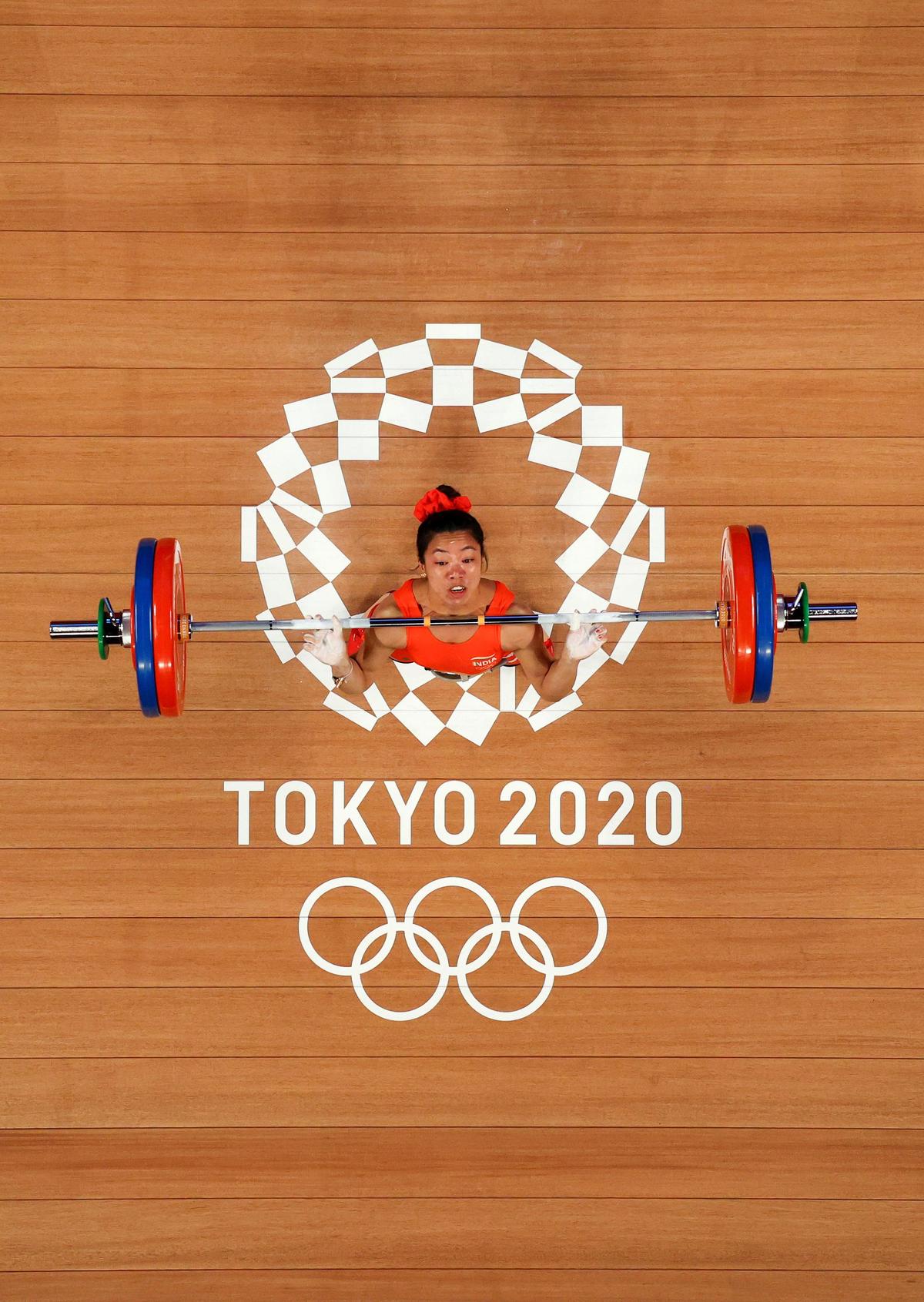
Mirabai Chanu created history by winning India’s first-ever weightlifting silver medal in the Olympics, after lifting a total of 202 kg in the women’s 49 kg event at the Tokyo 2020 Olympic Games | Photo Credit: Getty Images
Mirabai Chanu created history by winning India’s first-ever weightlifting silver medal in the Olympics, after lifting a total of 202 kg in the women’s 49 kg event at the Tokyo 2020 Olympic Games | Photo Credit: Getty Images
Tough phase
While she is in strong form, Mirabai knows this phase will be among her toughest. Last year, the International Weightlifting Federation announced that weight categories for the 2028 Los Angeles Olympics were being rejigged. The lightest women’s category, 49kg, in which Mirabai has competed for most of the last decade and won silver at the Tokyo Olympics, was dropped from the Olympic programme.
She will have no choice but to move up to the 53kg division. She plans to first compete in this higher category at the 2026 Asian Games in Tokyo. But she has unfinished business first. Mirabai will compete in the 48kg category at both the upcoming Asian Championships and Commonwealth Games. She has already won two gold medals in this category at the latter (2018, 2022) and wants to sign off with another.
“The Commonwealth Games will be my last competition in the 48kg category. I want to leave this category by doing something special. I think I am in good shape for this. Last year, after the Olympic weight categories were changed, I had to move down to the 48kg class. In the new IWF categories, the 48kg class is the lightest, although it is not an Olympic category. But even after I started competing in this class, my performance is the same as in the 49kg category, and in some ways even better,” she says.
“In my last competition, I want to do better than I’ve ever done at the Commonwealth Games. When I analyse my training, I think my performance is going really well. I already hold the Commonwealth record and will try to achieve even more.”
She has a number in mind: a 90kg snatch and a 120kg clean and jerk.
Increased confidence
“I got a lot of confidence from the National Championships. I lifted 89kg in the snatch on my second attempt. Then I attempted 91kg in my third. I’ve never attempted anything above 90kg in training. So even though I didn’t complete the lift, it gives me confidence to simply attempt that weight in competition. It’s the same with the clean and jerk. I’ve never touched 120kg in training before attempting it in competition. Now I know what that weight feels like.
“I keep a diary of my lifts where I write that I can cross 90kg in the snatch and 120kg in the clean and jerk. I know I am getting close,” she says.
At the 2025 World Championships DPR Korea’s Kang Hyon-gyong had won gold with a combined lift of 214kg.
Mirabai’s confidence, she says, comes not just from attempting the biggest weights of her career but also from staying injury-free for much of the past couple of years.
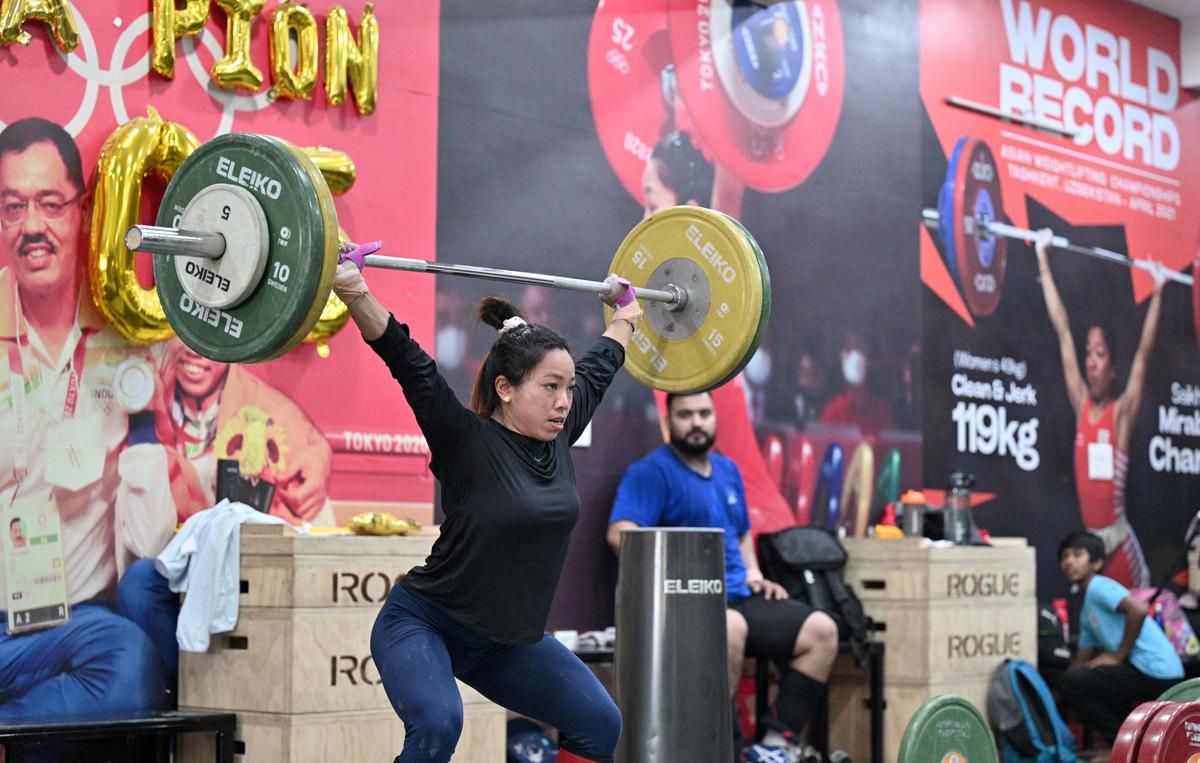
Mirabai began her 2026 season at the National Weightlifting Championships in February and set three new national records in the women’s 48kg category. | Photo Credit: SHASHI SHEKHAR KASHYAP
Mirabai began her 2026 season at the National Weightlifting Championships in February and set three new national records in the women’s 48kg category. | Photo Credit: SHASHI SHEKHAR KASHYAP
“In my career, I’ve suffered a lot of injuries to my joints, wrists and shoulders. But I’ve been working on my technique, especially in the first and second pull of the snatch and how I receive the bar overhead. All this has helped me avoid injuries,” she says.
Mirabai has another goal this year: a medal at the Asian Games. For all her accomplishments, she has never medalled at the continental event. Her closest finish was fourth at Hangzhou.
“I’ve never won a medal at the Asian Games. I’ve done everything else. This is the one medal I don’t have. More than anything, that’s my target this year,” she says.
While the Asian Games may be seen as a stepping stone to the 2028 Olympics, Mirabai isn’t looking that far ahead.
“As of now, I’m focused on the Asian Games. Only after that will I think about the Olympic weight category. Of course, I want to go to the Olympics, but I will see how my body responds at the Asian Games. If it adapts well to the new category, I will have more confidence,” she says.
Difficult shift
The move to the 53kg division will be challenging. At 4’11, Mirabai will not find it easy to add the additional 5kg of muscle mass, more than 10 per cent of her body weight, that she will need.
The level of competition will also be higher. At last year’s World Championships, the bronze-medal total was 200kg, compared to 198kg in the women’s 48kg category. The number could have been higher had China’s Du Meiyuan not withdrawn due to injury.
Additionally, many of her competitors have already been preparing for the 53kg category, while Mirabai will only transition after the Commonwealth Games.
Yet, she isn’t overly concerned. Lifting 205kg at her current body weight gives her confidence that she can lift more with additional muscle.
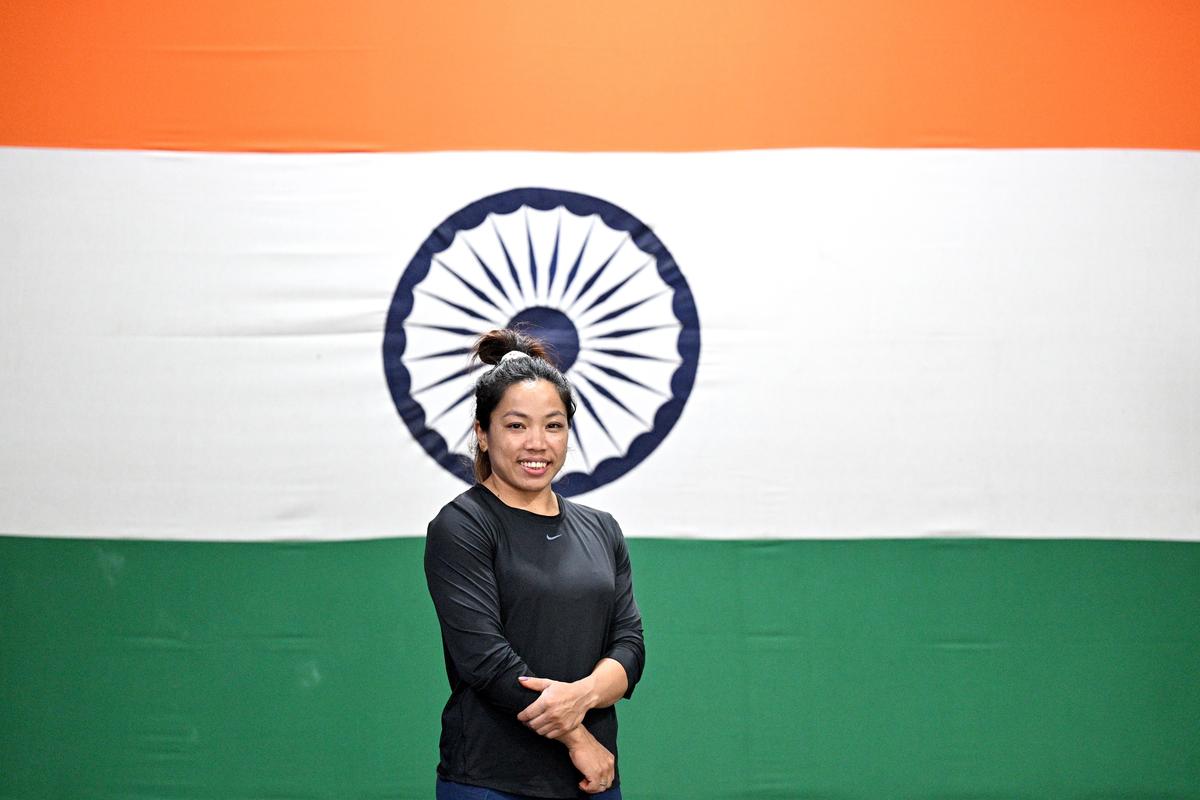
At 31, Mirabai knows she is in the latter stages of her career, but she is determined to push as long as she can. “As long as I have that motivation, I’ll keep fighting,” she says. | Photo Credit: SHASHI SHEKHAR KASHYAP
At 31, Mirabai knows she is in the latter stages of her career, but she is determined to push as long as she can. “As long as I have that motivation, I’ll keep fighting,” she says. | Photo Credit: SHASHI SHEKHAR KASHYAP
She is, in fact, looking forward to one aspect of the transition.
“I’ve been 48–49kg for many years. One of the hardest things was constantly controlling what I ate. It took a lot of motivation to remind myself why I was doing it.
“After the Tokyo Olympics, Domino’s gave me a free pizza-for-life deal, but I never really used it because I couldn’t eat it! So one thing I’m looking forward to is eating a bit more,” she says.
For now, she remains focused. At 31, she knows she is in the latter stages of her career, but she is determined to push as long as she can.
“People say that in sport you start deteriorating with age. That may be true. But I believe motivation matters just as much. Every competition motivates me. It shows me the way forward and reminds me of the work I’ve put in over the years.
“As long as I have that motivation, I’ll keep fighting,” she says.
Published on Apr 13, 2026
She might be India’s greatest-ever weightlifter, but Mirabai Chanu doesn’t demand any special favours at the end of a morning training session at the Weightlifting Warriors gym in Modinagar, just outside New Delhi. Having hoisted hundreds of kilos of iron weights, several tonnes in total, during an hour-and-a-half session, overhead, the Olympic medallist now pulls the same weights off her barbell and back onto the racks.
But where most of the other elite international weightlifters at this gym, operated by national coach Vijay Sharma, stop at this point, Mirabai isn’t done after the last plate is put away. She takes a cloth and wipes off the barbell, removing the white chalk deposited from her palms over the course of dozens of lifts in the training session.
She doesn’t think much of it.
“I’ve always done this,” she tells Sportstar later. “I consider the barbell nothing less than the weapon a soldier carries into battle. Just like he keeps his weapon clean, I also have to maintain my equipment. I also have to be an example to younger weightlifters,” she says.
Since beginning her international career in 2014, Mirabai has faced her share of challenges and built a record that will be hard to emulate.
Having already won titles at the World Championships, medals at the Asian Championships, Commonwealth Games and, of course, an Olympic silver, Mirabai has shown few signs of slowing down. Last year, she won another world medal, a silver in the women’s 48kg category. Then, at the National Championships in February this year, she lifted a Personal Best of 89kg in the snatch. She followed that with a 116kg lift in the clean and jerk to total 205kg, equalling her Personal Best recorded at the 2021 Asian Championships in the 49kg category.
Mirabai Chanu created history by winning India’s first-ever weightlifting silver medal in the Olympics, after lifting a total of 202 kg in the women’s 49 kg event at the Tokyo 2020 Olympic Games | Photo Credit: Getty Images
Mirabai Chanu created history by winning India’s first-ever weightlifting silver medal in the Olympics, after lifting a total of 202 kg in the women’s 49 kg event at the Tokyo 2020 Olympic Games | Photo Credit: Getty Images
Tough phase
While she is in strong form, Mirabai knows this phase will be among her toughest. Last year, the International Weightlifting Federation announced that weight categories for the 2028 Los Angeles Olympics were being rejigged. The lightest women’s category, 49kg, in which Mirabai has competed for most of the last decade and won silver at the Tokyo Olympics, was dropped from the Olympic programme.
She will have no choice but to move up to the 53kg division. She plans to first compete in this higher category at the 2026 Asian Games in Tokyo. But she has unfinished business first. Mirabai will compete in the 48kg category at both the upcoming Asian Championships and Commonwealth Games. She has already won two gold medals in this category at the latter (2018, 2022) and wants to sign off with another.
“The Commonwealth Games will be my last competition in the 48kg category. I want to leave this category by doing something special. I think I am in good shape for this. Last year, after the Olympic weight categories were changed, I had to move down to the 48kg class. In the new IWF categories, the 48kg class is the lightest, although it is not an Olympic category. But even after I started competing in this class, my performance is the same as in the 49kg category, and in some ways even better,” she says.
“In my last competition, I want to do better than I’ve ever done at the Commonwealth Games. When I analyse my training, I think my performance is going really well. I already hold the Commonwealth record and will try to achieve even more.”
She has a number in mind: a 90kg snatch and a 120kg clean and jerk.
Increased confidence
“I got a lot of confidence from the National Championships. I lifted 89kg in the snatch on my second attempt. Then I attempted 91kg in my third. I’ve never attempted anything above 90kg in training. So even though I didn’t complete the lift, it gives me confidence to simply attempt that weight in competition. It’s the same with the clean and jerk. I’ve never touched 120kg in training before attempting it in competition. Now I know what that weight feels like.
“I keep a diary of my lifts where I write that I can cross 90kg in the snatch and 120kg in the clean and jerk. I know I am getting close,” she says.
At the 2025 World Championships DPR Korea’s Kang Hyon-gyong had won gold with a combined lift of 214kg.
Mirabai’s confidence, she says, comes not just from attempting the biggest weights of her career but also from staying injury-free for much of the past couple of years.
Mirabai began her 2026 season at the National Weightlifting Championships in February and set three new national records in the women’s 48kg category. | Photo Credit: SHASHI SHEKHAR KASHYAP
Mirabai began her 2026 season at the National Weightlifting Championships in February and set three new national records in the women’s 48kg category. | Photo Credit: SHASHI SHEKHAR KASHYAP
“In my career, I’ve suffered a lot of injuries to my joints, wrists and shoulders. But I’ve been working on my technique, especially in the first and second pull of the snatch and how I receive the bar overhead. All this has helped me avoid injuries,” she says.
Mirabai has another goal this year: a medal at the Asian Games. For all her accomplishments, she has never medalled at the continental event. Her closest finish was fourth at Hangzhou.
“I’ve never won a medal at the Asian Games. I’ve done everything else. This is the one medal I don’t have. More than anything, that’s my target this year,” she says.
While the Asian Games may be seen as a stepping stone to the 2028 Olympics, Mirabai isn’t looking that far ahead.
“As of now, I’m focused on the Asian Games. Only after that will I think about the Olympic weight category. Of course, I want to go to the Olympics, but I will see how my body responds at the Asian Games. If it adapts well to the new category, I will have more confidence,” she says.
Difficult shift
The move to the 53kg division will be challenging. At 4’11, Mirabai will not find it easy to add the additional 5kg of muscle mass, more than 10 per cent of her body weight, that she will need.
The level of competition will also be higher. At last year’s World Championships, the bronze-medal total was 200kg, compared to 198kg in the women’s 48kg category. The number could have been higher had China’s Du Meiyuan not withdrawn due to injury.
Additionally, many of her competitors have already been preparing for the 53kg category, while Mirabai will only transition after the Commonwealth Games.
Yet, she isn’t overly concerned. Lifting 205kg at her current body weight gives her confidence that she can lift more with additional muscle.
At 31, Mirabai knows she is in the latter stages of her career, but she is determined to push as long as she can. “As long as I have that motivation, I’ll keep fighting,” she says. | Photo Credit: SHASHI SHEKHAR KASHYAP
At 31, Mirabai knows she is in the latter stages of her career, but she is determined to push as long as she can. “As long as I have that motivation, I’ll keep fighting,” she says. | Photo Credit: SHASHI SHEKHAR KASHYAP
She is, in fact, looking forward to one aspect of the transition.
“I’ve been 48–49kg for many years. One of the hardest things was constantly controlling what I ate. It took a lot of motivation to remind myself why I was doing it.
“After the Tokyo Olympics, Domino’s gave me a free pizza-for-life deal, but I never really used it because I couldn’t eat it! So one thing I’m looking forward to is eating a bit more,” she says.
For now, she remains focused. At 31, she knows she is in the latter stages of her career, but she is determined to push as long as she can.
“People say that in sport you start deteriorating with age. That may be true. But I believe motivation matters just as much. Every competition motivates me. It shows me the way forward and reminds me of the work I’ve put in over the years.
“As long as I have that motivation, I’ll keep fighting,” she says.
Published on Apr 13, 2026
She might be India’s greatest-ever weightlifter, but Mirabai Chanu doesn’t demand any special favours at…