×
Sports news

New marathon world record holder Sabastian Sawe brushed aside ​suggestions his Adidas “super shoes” amounted…

Sports news

Tigst ​Assefa of Ethiopia ‌broke her own ​women’s ⁠only world record in winning ‌the London…

Sports news

Kenya’s Sabastian Sawe broke the two-hour mark for the first time in history on Sunday…

IPL 2026 — Sooryavanshi scores hundred in 36 balls during RR vs SRH

But it was Kerala’s Ashfaq who grabbed the spotlight by breaking the national junior record. His winning time of 46.05 seconds was better than Amoj Jacob’s junior national record of 46.26 seconds set in 2017.

The field was strong in the women’s 400m. Seven of the eight finalists bettered the Asian junior qualification mark of 55.99 seconds. Neeru Pathak of NCOE Trivandrum won gold in 54.31 seconds.

Tamil Nadu pole vaulter Kavinraja S, who won gold, also improved his national mark to 5.12m. His previous junior national record was 5.11m.

At the end of the day, Shahnavaz produced a massive jump of 8.23m, improving the national junior record of 8.20m set by Murali Sreeshankar in 2018.

Published on Apr 25, 2026

#national #junior #records #light #day #National #Junior #Athletics #Federation #Competition"> Three national junior records light up day two of National Junior Athletics Federation Competition  Three national junior records highlighted the second day of the National Junior (U-20) Athletics Federation Competition here on Saturday.On a day when several athletes scaled new heights, Army’s Asian junior silver medallist Nitin Gupta set a new benchmark in the men’s U20 5,000m race walk.Gupta became the first Indian race walker to break the 19-minute barrier in the junior men’s 5,000m race walk. On his way to gold, he clocked 18:54.37, lowering his own national junior record of 19:24.48 set last year in Patna.His performance on Saturday was also better than the meet record at the Asian U-20 Athletics Championships.Uttar Pradesh long jumper Shahnavaz Khan also entered his name in the record books, while Kerala’s talented sprinter Mohammed Ashfaq hogged the limelight by breaking the national junior record in the men’s 400m.Ranjana Yadav of Madhya Pradesh also improved the national junior record in the women’s 5,000m race walk. Her gold-winning time was 23:22.12. The previous record of 23:43.58 had been set by Manisha last year in Bhubaneswar.Away from the distance events, the men’s 400m was the most exciting track race on day two of the competition. Of the eight finalists, six crossed the finish line inside the Asian junior qualification mark of 47.53 seconds.ALSO READ: IPL 2026 — Sooryavanshi scores hundred in 36 balls during RR vs SRHBut it was Kerala’s Ashfaq who grabbed the spotlight by breaking the national junior record. His winning time of 46.05 seconds was better than Amoj Jacob’s junior national record of 46.26 seconds set in 2017.The field was strong in the women’s 400m. Seven of the eight finalists bettered the Asian junior qualification mark of 55.99 seconds. Neeru Pathak of NCOE Trivandrum won gold in 54.31 seconds.Tamil Nadu pole vaulter Kavinraja S, who won gold, also improved his national mark to 5.12m. His previous junior national record was 5.11m.At the end of the day, Shahnavaz produced a massive jump of 8.23m, improving the national junior record of 8.20m set by Murali Sreeshankar in 2018.Published on Apr 25, 2026  #national #junior #records #light #day #National #Junior #Athletics #Federation #Competition
Sports news

IPL 2026 — Sooryavanshi scores hundred in 36 balls during RR vs SRH

But it was Kerala’s Ashfaq who grabbed the spotlight by breaking the national junior record. His winning time of 46.05 seconds was better than Amoj Jacob’s junior national record of 46.26 seconds set in 2017.

The field was strong in the women’s 400m. Seven of the eight finalists bettered the Asian junior qualification mark of 55.99 seconds. Neeru Pathak of NCOE Trivandrum won gold in 54.31 seconds.

Tamil Nadu pole vaulter Kavinraja S, who won gold, also improved his national mark to 5.12m. His previous junior national record was 5.11m.

At the end of the day, Shahnavaz produced a massive jump of 8.23m, improving the national junior record of 8.20m set by Murali Sreeshankar in 2018.

Published on Apr 25, 2026

#national #junior #records #light #day #National #Junior #Athletics #Federation #Competition">Three national junior records light up day two of National Junior Athletics Federation Competition

Three national junior records highlighted the second day of the National Junior (U-20) Athletics Federation Competition here on Saturday.

On a day when several athletes scaled new heights, Army’s Asian junior silver medallist Nitin Gupta set a new benchmark in the men’s U20 5,000m race walk.

Gupta became the first Indian race walker to break the 19-minute barrier in the junior men’s 5,000m race walk. On his way to gold, he clocked 18:54.37, lowering his own national junior record of 19:24.48 set last year in Patna.

His performance on Saturday was also better than the meet record at the Asian U-20 Athletics Championships.

Uttar Pradesh long jumper Shahnavaz Khan also entered his name in the record books, while Kerala’s talented sprinter Mohammed Ashfaq hogged the limelight by breaking the national junior record in the men’s 400m.

Ranjana Yadav of Madhya Pradesh also improved the national junior record in the women’s 5,000m race walk. Her gold-winning time was 23:22.12. The previous record of 23:43.58 had been set by Manisha last year in Bhubaneswar.

Away from the distance events, the men’s 400m was the most exciting track race on day two of the competition. Of the eight finalists, six crossed the finish line inside the Asian junior qualification mark of 47.53 seconds.

ALSO READ: IPL 2026 — Sooryavanshi scores hundred in 36 balls during RR vs SRH

But it was Kerala’s Ashfaq who grabbed the spotlight by breaking the national junior record. His winning time of 46.05 seconds was better than Amoj Jacob’s junior national record of 46.26 seconds set in 2017.

The field was strong in the women’s 400m. Seven of the eight finalists bettered the Asian junior qualification mark of 55.99 seconds. Neeru Pathak of NCOE Trivandrum won gold in 54.31 seconds.

Tamil Nadu pole vaulter Kavinraja S, who won gold, also improved his national mark to 5.12m. His previous junior national record was 5.11m.

At the end of the day, Shahnavaz produced a massive jump of 8.23m, improving the national junior record of 8.20m set by Murali Sreeshankar in 2018.

Published on Apr 25, 2026

#national #junior #records #light #day #National #Junior #Athletics #Federation #Competition

Three national junior records highlighted the second day of the National Junior (U-20) Athletics Federation…

Harbert Kibet leads impressive men’s field at TCS World 10K Bengaluru

This is an unusual position for Sable to be in. Before he limped off the track with a torn ACL (anterior cruciate ligament) at last year’s Diamond League in Monaco, Sable had felt he was one of the rarest things in elite sport—an athlete who’d never been injured.

“I had suffered one small injury at the start of my career, but I thought I’d never get seriously injured. I hadn’t even suffered any pain after training. I was in probably the best shape of my life before the Monaco Diamond League,” he says.

Suddenly, though, he was looking at undergoing a major surgery with the knowledge that not only was his season over, but he also would have to spend a long time away from the running track.

At 30, Sable wondered whether he was running out of time. The timing of his injury—last July—meant he was going to miss out on the World Championships and that it would take a lot of effort to recover for the 2026 Commonwealth and Asian Games.

Second thoughts about surgery

Initially Sable says he had even hoped to put off his surgery. “I thought that maybe I could run at the World Championships even with that torn ACL. The doctors I consulted told me that if I were running any other event like the 5000m or 10,000m, they might have even considered it, but the steeplechase is a very high-impact event because it has the steeple jump and the water hazard. The doctors told me that if I got injured again, then it would become really hard to recover for the Commonwealth and Asian Games. If I missed those events this year, I genuinely wasn’t sure whether I would be in a position to compete in the next edition of these Games. I didn’t even know if I was going to be an athlete then. Four years is a very long time in sport,” he says.

ALSO READ: ‘Women’s sports should be protected,’ two-time high jump world champion Blanka Vlasic on IOC’s gender policy

Sable eventually did get the surgery done, but he reckons the road to recovery was among the toughest things he’d had to face in his career. “My heart was saying I needed to run, but my body wasn’t supporting me. I first learned to walk with a brace. Even that was hard. It was all very new for me. I would try to test myself. But it would hurt every time I’d try to do something. This journey has been really hard,” he says.

Doubts often crept into his mind. When his steps hurt, he admitted being fearful about whether he would ever be able to move without pain. He also wondered whether he would ever be as good as he once was and whether he would ever rediscover the kind of form in the steeplechase that saw him compete at two separate Olympic finals and win Asian Games gold alongside his Birmingham heroics.
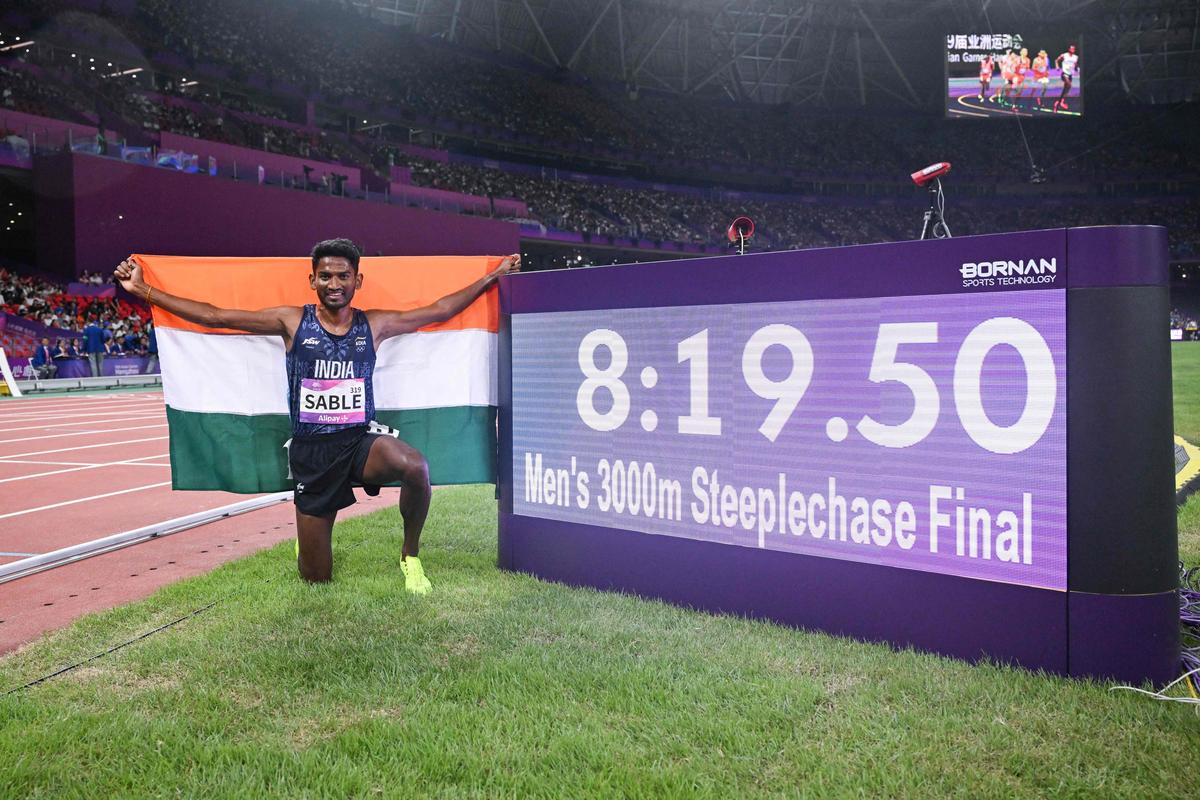
Avinash Sable: ‘Don’t want to go to CWG just to participate’  Four years ago, Avinash Sable produced one of the defining moments of India’s campaign at the 2022 Commonwealth Games.Although his powerful finishing kick fell just short, he smashed his own national record and nearly ran down future Olympic bronze medallist Abraham Kibiwot to win a silver medal in the 3000m steeplechase, ending in the process a 28-year Kenyan monopoly on the podium.But Sable, now 30, says he can’t guarantee that he’ll be in Glasgow for the 2026 Games. As he prepares to make his return from a knee injury that ruled him out for much of last year’s athletics season, Sable is still not sure if he’ll be able to match his form at the Birmingham Games.“If everything goes well, then I feel I can be in the shape I was in (four years ago). But if everything doesn’t go well, if I’m not fully fit, then even if I qualify for the Indian team, I’d rather skip the Commonwealth Games. I don’t want to go to the Commonwealth Games just to participate,” he tells        Sportstar.These days Sable is to be found in the Inspire Institute of India campus in Vijayanagar, as he looks to get himself in shape for next month’s Federation Cup in Ranchi, where he’ll be making his return. He admits his comeback is still a work in progress.“I returned to training in January this year. Earlier this month I went to Ooty for some high-altitude training, but I felt a lot of tightness in my body after. I felt I was lacking strength, so I came to IIS to improve. Right now I’m still not at 100 per cent. I think I’m at about 70-80 percent of where I was,” he says.READ: Harbert Kibet leads impressive men’s field at TCS World 10K BengaluruThis is an unusual position for Sable to be in. Before he limped off the track with a torn ACL (anterior cruciate ligament) at last year’s Diamond League in Monaco, Sable had felt he was one of the rarest things in elite sport—an athlete who’d never been injured.“I had suffered one small injury at the start of my career, but I thought I’d never get seriously injured. I hadn’t even suffered any pain after training. I was in probably the best shape of my life before the Monaco Diamond League,” he says.Suddenly, though, he was looking at undergoing a major surgery with the knowledge that not only was his season over, but he also would have to spend a long time away from the running track.At 30, Sable wondered whether he was running out of time. The timing of his injury—last July—meant he was going to miss out on the World Championships and that it would take a lot of effort to recover for the 2026 Commonwealth and Asian Games.Second thoughts about surgeryInitially Sable says he had even hoped to put off his surgery. “I thought that maybe I could run at the World Championships even with that torn ACL. The doctors I consulted told me that if I were running any other event like the 5000m or 10,000m, they might have even considered it, but the steeplechase is a very high-impact event because it has the steeple jump and the water hazard. The doctors told me that if I got injured again, then it would become really hard to recover for the Commonwealth and Asian Games. If I missed those events this year, I genuinely wasn’t sure whether I would be in a position to compete in the next edition of these Games. I didn’t even know if I was going to be an athlete then. Four years is a very long time in sport,” he says.ALSO READ: ‘Women’s sports should be protected,’ two-time high jump world champion Blanka Vlasic on IOC’s gender policySable eventually did get the surgery done, but he reckons the road to recovery was among the toughest things he’d had to face in his career. “My heart was saying I needed to run, but my body wasn’t supporting me. I first learned to walk with a brace. Even that was hard. It was all very new for me. I would try to test myself. But it would hurt every time I’d try to do something. This journey has been really hard,” he says.Doubts often crept into his mind. When his steps hurt, he admitted being fearful about whether he would ever be able to move without pain. He also wondered whether he would ever be as good as he once was and whether he would ever rediscover the kind of form in the steeplechase that saw him compete at two separate Olympic finals and win Asian Games gold alongside his Birmingham heroics. Avinash Sable celebrates after winning the 3,000m steeplechase final at the 2022 Asian Games in Hangzhou.
                                                            | Photo Credit: 
                                AFP
                            

                            Avinash Sable celebrates after winning the 3,000m steeplechase final at the 2022 Asian Games in Hangzhou.
                                                            | Photo Credit: 
                                AFP
                                                    “What finally helped me to overcome those fears was simply taking each day at a time and going through every individual stage of my recovery. First I thought I wouldn’t be able to walk. But then I was able to. I didn’t think I would be able to jog, but I did. If I got through all of that, then one day I can return to my best as well,” he says.Finding his bestHe’ll need to be. The Athletics Federation of India has set the qualification standard for the Commonwealth Games in the 3000m steeplechase at 8.30.26. Amongst active Indian athletes, only Sable, who currently holds the national mark of 8.09.91, has ever run faster than that.Sable, though, isn’t just looking to meet that qualification standard. “It’s not a big thing to qualify for the Commonwealth Games. I only want to take part in the Commonwealth Games if I’m fully fit. Otherwise I don’t see the point,” he says.For now Sable’s mind is focussed on getting back to form in the 3000m steeplechase and defending his CWG and Asiad medals. But he’s more open-minded about the future. “I think next year I want to try some other event. I have a lot of attachment to the steeplechase because it’s the event that gave me my recognition. I wonder if there’s another event that I might be good in that I haven’t tried because I’ve been so focussed on the steeplechase. At the world level, there’s no athlete who does both the steeplechase and something else. So maybe it’s time for me to give my priority to something else and see if it’s something I could do,” he says.But that’s for the future. For now Sable doesn’t want to do something new. He just wants to discover his old form. “I just want to run close to what I’ve done earlier. On the inside, I’m very motivated. But until I come on the track and actually run a time that is at least close to what I’ve done before, I don’t think I’ll have that confidence,” he says.  Published on Apr 24, 2026  #Avinash #Sable #Dont #CWG #participate

Avinash Sable celebrates after winning the 3,000m steeplechase final at the 2022 Asian Games in Hangzhou. | Photo Credit: AFP

lightbox-info

Avinash Sable celebrates after winning the 3,000m steeplechase final at the 2022 Asian Games in Hangzhou. | Photo Credit: AFP

“What finally helped me to overcome those fears was simply taking each day at a time and going through every individual stage of my recovery. First I thought I wouldn’t be able to walk. But then I was able to. I didn’t think I would be able to jog, but I did. If I got through all of that, then one day I can return to my best as well,” he says.

Finding his best

He’ll need to be. The Athletics Federation of India has set the qualification standard for the Commonwealth Games in the 3000m steeplechase at 8.30.26. Amongst active Indian athletes, only Sable, who currently holds the national mark of 8.09.91, has ever run faster than that.

Sable, though, isn’t just looking to meet that qualification standard. “It’s not a big thing to qualify for the Commonwealth Games. I only want to take part in the Commonwealth Games if I’m fully fit. Otherwise I don’t see the point,” he says.

For now Sable’s mind is focussed on getting back to form in the 3000m steeplechase and defending his CWG and Asiad medals. But he’s more open-minded about the future. “I think next year I want to try some other event. I have a lot of attachment to the steeplechase because it’s the event that gave me my recognition. I wonder if there’s another event that I might be good in that I haven’t tried because I’ve been so focussed on the steeplechase. At the world level, there’s no athlete who does both the steeplechase and something else. So maybe it’s time for me to give my priority to something else and see if it’s something I could do,” he says.

But that’s for the future. For now Sable doesn’t want to do something new. He just wants to discover his old form. “I just want to run close to what I’ve done earlier. On the inside, I’m very motivated. But until I come on the track and actually run a time that is at least close to what I’ve done before, I don’t think I’ll have that confidence,” he says.  

Published on Apr 24, 2026

#Avinash #Sable #Dont #CWG #participate"> Avinash Sable: ‘Don’t want to go to CWG just to participate’  Four years ago, Avinash Sable produced one of the defining moments of India’s campaign at the 2022 Commonwealth Games.Although his powerful finishing kick fell just short, he smashed his own national record and nearly ran down future Olympic bronze medallist Abraham Kibiwot to win a silver medal in the 3000m steeplechase, ending in the process a 28-year Kenyan monopoly on the podium.But Sable, now 30, says he can’t guarantee that he’ll be in Glasgow for the 2026 Games. As he prepares to make his return from a knee injury that ruled him out for much of last year’s athletics season, Sable is still not sure if he’ll be able to match his form at the Birmingham Games.“If everything goes well, then I feel I can be in the shape I was in (four years ago). But if everything doesn’t go well, if I’m not fully fit, then even if I qualify for the Indian team, I’d rather skip the Commonwealth Games. I don’t want to go to the Commonwealth Games just to participate,” he tells        Sportstar.These days Sable is to be found in the Inspire Institute of India campus in Vijayanagar, as he looks to get himself in shape for next month’s Federation Cup in Ranchi, where he’ll be making his return. He admits his comeback is still a work in progress.“I returned to training in January this year. Earlier this month I went to Ooty for some high-altitude training, but I felt a lot of tightness in my body after. I felt I was lacking strength, so I came to IIS to improve. Right now I’m still not at 100 per cent. I think I’m at about 70-80 percent of where I was,” he says.READ: Harbert Kibet leads impressive men’s field at TCS World 10K BengaluruThis is an unusual position for Sable to be in. Before he limped off the track with a torn ACL (anterior cruciate ligament) at last year’s Diamond League in Monaco, Sable had felt he was one of the rarest things in elite sport—an athlete who’d never been injured.“I had suffered one small injury at the start of my career, but I thought I’d never get seriously injured. I hadn’t even suffered any pain after training. I was in probably the best shape of my life before the Monaco Diamond League,” he says.Suddenly, though, he was looking at undergoing a major surgery with the knowledge that not only was his season over, but he also would have to spend a long time away from the running track.At 30, Sable wondered whether he was running out of time. The timing of his injury—last July—meant he was going to miss out on the World Championships and that it would take a lot of effort to recover for the 2026 Commonwealth and Asian Games.Second thoughts about surgeryInitially Sable says he had even hoped to put off his surgery. “I thought that maybe I could run at the World Championships even with that torn ACL. The doctors I consulted told me that if I were running any other event like the 5000m or 10,000m, they might have even considered it, but the steeplechase is a very high-impact event because it has the steeple jump and the water hazard. The doctors told me that if I got injured again, then it would become really hard to recover for the Commonwealth and Asian Games. If I missed those events this year, I genuinely wasn’t sure whether I would be in a position to compete in the next edition of these Games. I didn’t even know if I was going to be an athlete then. Four years is a very long time in sport,” he says.ALSO READ: ‘Women’s sports should be protected,’ two-time high jump world champion Blanka Vlasic on IOC’s gender policySable eventually did get the surgery done, but he reckons the road to recovery was among the toughest things he’d had to face in his career. “My heart was saying I needed to run, but my body wasn’t supporting me. I first learned to walk with a brace. Even that was hard. It was all very new for me. I would try to test myself. But it would hurt every time I’d try to do something. This journey has been really hard,” he says.Doubts often crept into his mind. When his steps hurt, he admitted being fearful about whether he would ever be able to move without pain. He also wondered whether he would ever be as good as he once was and whether he would ever rediscover the kind of form in the steeplechase that saw him compete at two separate Olympic finals and win Asian Games gold alongside his Birmingham heroics. Avinash Sable celebrates after winning the 3,000m steeplechase final at the 2022 Asian Games in Hangzhou.
                                                            | Photo Credit: 
                                AFP
                            

                            Avinash Sable celebrates after winning the 3,000m steeplechase final at the 2022 Asian Games in Hangzhou.
                                                            | Photo Credit: 
                                AFP
                                                    “What finally helped me to overcome those fears was simply taking each day at a time and going through every individual stage of my recovery. First I thought I wouldn’t be able to walk. But then I was able to. I didn’t think I would be able to jog, but I did. If I got through all of that, then one day I can return to my best as well,” he says.Finding his bestHe’ll need to be. The Athletics Federation of India has set the qualification standard for the Commonwealth Games in the 3000m steeplechase at 8.30.26. Amongst active Indian athletes, only Sable, who currently holds the national mark of 8.09.91, has ever run faster than that.Sable, though, isn’t just looking to meet that qualification standard. “It’s not a big thing to qualify for the Commonwealth Games. I only want to take part in the Commonwealth Games if I’m fully fit. Otherwise I don’t see the point,” he says.For now Sable’s mind is focussed on getting back to form in the 3000m steeplechase and defending his CWG and Asiad medals. But he’s more open-minded about the future. “I think next year I want to try some other event. I have a lot of attachment to the steeplechase because it’s the event that gave me my recognition. I wonder if there’s another event that I might be good in that I haven’t tried because I’ve been so focussed on the steeplechase. At the world level, there’s no athlete who does both the steeplechase and something else. So maybe it’s time for me to give my priority to something else and see if it’s something I could do,” he says.But that’s for the future. For now Sable doesn’t want to do something new. He just wants to discover his old form. “I just want to run close to what I’ve done earlier. On the inside, I’m very motivated. But until I come on the track and actually run a time that is at least close to what I’ve done before, I don’t think I’ll have that confidence,” he says.  Published on Apr 24, 2026  #Avinash #Sable #Dont #CWG #participate
Sports news

Harbert Kibet leads impressive men’s field at TCS World 10K Bengaluru

This is an unusual position for Sable to be in. Before he limped off the track with a torn ACL (anterior cruciate ligament) at last year’s Diamond League in Monaco, Sable had felt he was one of the rarest things in elite sport—an athlete who’d never been injured.

“I had suffered one small injury at the start of my career, but I thought I’d never get seriously injured. I hadn’t even suffered any pain after training. I was in probably the best shape of my life before the Monaco Diamond League,” he says.

Suddenly, though, he was looking at undergoing a major surgery with the knowledge that not only was his season over, but he also would have to spend a long time away from the running track.

At 30, Sable wondered whether he was running out of time. The timing of his injury—last July—meant he was going to miss out on the World Championships and that it would take a lot of effort to recover for the 2026 Commonwealth and Asian Games.

Second thoughts about surgery

Initially Sable says he had even hoped to put off his surgery. “I thought that maybe I could run at the World Championships even with that torn ACL. The doctors I consulted told me that if I were running any other event like the 5000m or 10,000m, they might have even considered it, but the steeplechase is a very high-impact event because it has the steeple jump and the water hazard. The doctors told me that if I got injured again, then it would become really hard to recover for the Commonwealth and Asian Games. If I missed those events this year, I genuinely wasn’t sure whether I would be in a position to compete in the next edition of these Games. I didn’t even know if I was going to be an athlete then. Four years is a very long time in sport,” he says.

ALSO READ: ‘Women’s sports should be protected,’ two-time high jump world champion Blanka Vlasic on IOC’s gender policy

Sable eventually did get the surgery done, but he reckons the road to recovery was among the toughest things he’d had to face in his career. “My heart was saying I needed to run, but my body wasn’t supporting me. I first learned to walk with a brace. Even that was hard. It was all very new for me. I would try to test myself. But it would hurt every time I’d try to do something. This journey has been really hard,” he says.

Doubts often crept into his mind. When his steps hurt, he admitted being fearful about whether he would ever be able to move without pain. He also wondered whether he would ever be as good as he once was and whether he would ever rediscover the kind of form in the steeplechase that saw him compete at two separate Olympic finals and win Asian Games gold alongside his Birmingham heroics.

Avinash Sable: ‘Don’t want to go to CWG just to participate’  Four years ago, Avinash Sable produced one of the defining moments of India’s campaign at the 2022 Commonwealth Games.Although his powerful finishing kick fell just short, he smashed his own national record and nearly ran down future Olympic bronze medallist Abraham Kibiwot to win a silver medal in the 3000m steeplechase, ending in the process a 28-year Kenyan monopoly on the podium.But Sable, now 30, says he can’t guarantee that he’ll be in Glasgow for the 2026 Games. As he prepares to make his return from a knee injury that ruled him out for much of last year’s athletics season, Sable is still not sure if he’ll be able to match his form at the Birmingham Games.“If everything goes well, then I feel I can be in the shape I was in (four years ago). But if everything doesn’t go well, if I’m not fully fit, then even if I qualify for the Indian team, I’d rather skip the Commonwealth Games. I don’t want to go to the Commonwealth Games just to participate,” he tells        Sportstar.These days Sable is to be found in the Inspire Institute of India campus in Vijayanagar, as he looks to get himself in shape for next month’s Federation Cup in Ranchi, where he’ll be making his return. He admits his comeback is still a work in progress.“I returned to training in January this year. Earlier this month I went to Ooty for some high-altitude training, but I felt a lot of tightness in my body after. I felt I was lacking strength, so I came to IIS to improve. Right now I’m still not at 100 per cent. I think I’m at about 70-80 percent of where I was,” he says.READ: Harbert Kibet leads impressive men’s field at TCS World 10K BengaluruThis is an unusual position for Sable to be in. Before he limped off the track with a torn ACL (anterior cruciate ligament) at last year’s Diamond League in Monaco, Sable had felt he was one of the rarest things in elite sport—an athlete who’d never been injured.“I had suffered one small injury at the start of my career, but I thought I’d never get seriously injured. I hadn’t even suffered any pain after training. I was in probably the best shape of my life before the Monaco Diamond League,” he says.Suddenly, though, he was looking at undergoing a major surgery with the knowledge that not only was his season over, but he also would have to spend a long time away from the running track.At 30, Sable wondered whether he was running out of time. The timing of his injury—last July—meant he was going to miss out on the World Championships and that it would take a lot of effort to recover for the 2026 Commonwealth and Asian Games.Second thoughts about surgeryInitially Sable says he had even hoped to put off his surgery. “I thought that maybe I could run at the World Championships even with that torn ACL. The doctors I consulted told me that if I were running any other event like the 5000m or 10,000m, they might have even considered it, but the steeplechase is a very high-impact event because it has the steeple jump and the water hazard. The doctors told me that if I got injured again, then it would become really hard to recover for the Commonwealth and Asian Games. If I missed those events this year, I genuinely wasn’t sure whether I would be in a position to compete in the next edition of these Games. I didn’t even know if I was going to be an athlete then. Four years is a very long time in sport,” he says.ALSO READ: ‘Women’s sports should be protected,’ two-time high jump world champion Blanka Vlasic on IOC’s gender policySable eventually did get the surgery done, but he reckons the road to recovery was among the toughest things he’d had to face in his career. “My heart was saying I needed to run, but my body wasn’t supporting me. I first learned to walk with a brace. Even that was hard. It was all very new for me. I would try to test myself. But it would hurt every time I’d try to do something. This journey has been really hard,” he says.Doubts often crept into his mind. When his steps hurt, he admitted being fearful about whether he would ever be able to move without pain. He also wondered whether he would ever be as good as he once was and whether he would ever rediscover the kind of form in the steeplechase that saw him compete at two separate Olympic finals and win Asian Games gold alongside his Birmingham heroics. Avinash Sable celebrates after winning the 3,000m steeplechase final at the 2022 Asian Games in Hangzhou.
                                                            | Photo Credit: 
                                AFP
                            

                            Avinash Sable celebrates after winning the 3,000m steeplechase final at the 2022 Asian Games in Hangzhou.
                                                            | Photo Credit: 
                                AFP
                                                    “What finally helped me to overcome those fears was simply taking each day at a time and going through every individual stage of my recovery. First I thought I wouldn’t be able to walk. But then I was able to. I didn’t think I would be able to jog, but I did. If I got through all of that, then one day I can return to my best as well,” he says.Finding his bestHe’ll need to be. The Athletics Federation of India has set the qualification standard for the Commonwealth Games in the 3000m steeplechase at 8.30.26. Amongst active Indian athletes, only Sable, who currently holds the national mark of 8.09.91, has ever run faster than that.Sable, though, isn’t just looking to meet that qualification standard. “It’s not a big thing to qualify for the Commonwealth Games. I only want to take part in the Commonwealth Games if I’m fully fit. Otherwise I don’t see the point,” he says.For now Sable’s mind is focussed on getting back to form in the 3000m steeplechase and defending his CWG and Asiad medals. But he’s more open-minded about the future. “I think next year I want to try some other event. I have a lot of attachment to the steeplechase because it’s the event that gave me my recognition. I wonder if there’s another event that I might be good in that I haven’t tried because I’ve been so focussed on the steeplechase. At the world level, there’s no athlete who does both the steeplechase and something else. So maybe it’s time for me to give my priority to something else and see if it’s something I could do,” he says.But that’s for the future. For now Sable doesn’t want to do something new. He just wants to discover his old form. “I just want to run close to what I’ve done earlier. On the inside, I’m very motivated. But until I come on the track and actually run a time that is at least close to what I’ve done before, I don’t think I’ll have that confidence,” he says.  Published on Apr 24, 2026  #Avinash #Sable #Dont #CWG #participate

Avinash Sable celebrates after winning the 3,000m steeplechase final at the 2022 Asian Games in Hangzhou. | Photo Credit: AFP

lightbox-info

Avinash Sable celebrates after winning the 3,000m steeplechase final at the 2022 Asian Games in Hangzhou. | Photo Credit: AFP

“What finally helped me to overcome those fears was simply taking each day at a time and going through every individual stage of my recovery. First I thought I wouldn’t be able to walk. But then I was able to. I didn’t think I would be able to jog, but I did. If I got through all of that, then one day I can return to my best as well,” he says.

Finding his best

He’ll need to be. The Athletics Federation of India has set the qualification standard for the Commonwealth Games in the 3000m steeplechase at 8.30.26. Amongst active Indian athletes, only Sable, who currently holds the national mark of 8.09.91, has ever run faster than that.

Sable, though, isn’t just looking to meet that qualification standard. “It’s not a big thing to qualify for the Commonwealth Games. I only want to take part in the Commonwealth Games if I’m fully fit. Otherwise I don’t see the point,” he says.

For now Sable’s mind is focussed on getting back to form in the 3000m steeplechase and defending his CWG and Asiad medals. But he’s more open-minded about the future. “I think next year I want to try some other event. I have a lot of attachment to the steeplechase because it’s the event that gave me my recognition. I wonder if there’s another event that I might be good in that I haven’t tried because I’ve been so focussed on the steeplechase. At the world level, there’s no athlete who does both the steeplechase and something else. So maybe it’s time for me to give my priority to something else and see if it’s something I could do,” he says.

But that’s for the future. For now Sable doesn’t want to do something new. He just wants to discover his old form. “I just want to run close to what I’ve done earlier. On the inside, I’m very motivated. But until I come on the track and actually run a time that is at least close to what I’ve done before, I don’t think I’ll have that confidence,” he says.  

Published on Apr 24, 2026

#Avinash #Sable #Dont #CWG #participate">Avinash Sable: ‘Don’t want to go to CWG just to participate’

Four years ago, Avinash Sable produced one of the defining moments of India’s campaign at the 2022 Commonwealth Games.

Although his powerful finishing kick fell just short, he smashed his own national record and nearly ran down future Olympic bronze medallist Abraham Kibiwot to win a silver medal in the 3000m steeplechase, ending in the process a 28-year Kenyan monopoly on the podium.

But Sable, now 30, says he can’t guarantee that he’ll be in Glasgow for the 2026 Games. As he prepares to make his return from a knee injury that ruled him out for much of last year’s athletics season, Sable is still not sure if he’ll be able to match his form at the Birmingham Games.

“If everything goes well, then I feel I can be in the shape I was in (four years ago). But if everything doesn’t go well, if I’m not fully fit, then even if I qualify for the Indian team, I’d rather skip the Commonwealth Games. I don’t want to go to the Commonwealth Games just to participate,” he tells Sportstar.

These days Sable is to be found in the Inspire Institute of India campus in Vijayanagar, as he looks to get himself in shape for next month’s Federation Cup in Ranchi, where he’ll be making his return. He admits his comeback is still a work in progress.

“I returned to training in January this year. Earlier this month I went to Ooty for some high-altitude training, but I felt a lot of tightness in my body after. I felt I was lacking strength, so I came to IIS to improve. Right now I’m still not at 100 per cent. I think I’m at about 70-80 percent of where I was,” he says.

READ: Harbert Kibet leads impressive men’s field at TCS World 10K Bengaluru

This is an unusual position for Sable to be in. Before he limped off the track with a torn ACL (anterior cruciate ligament) at last year’s Diamond League in Monaco, Sable had felt he was one of the rarest things in elite sport—an athlete who’d never been injured.

“I had suffered one small injury at the start of my career, but I thought I’d never get seriously injured. I hadn’t even suffered any pain after training. I was in probably the best shape of my life before the Monaco Diamond League,” he says.

Suddenly, though, he was looking at undergoing a major surgery with the knowledge that not only was his season over, but he also would have to spend a long time away from the running track.

At 30, Sable wondered whether he was running out of time. The timing of his injury—last July—meant he was going to miss out on the World Championships and that it would take a lot of effort to recover for the 2026 Commonwealth and Asian Games.

Second thoughts about surgery

Initially Sable says he had even hoped to put off his surgery. “I thought that maybe I could run at the World Championships even with that torn ACL. The doctors I consulted told me that if I were running any other event like the 5000m or 10,000m, they might have even considered it, but the steeplechase is a very high-impact event because it has the steeple jump and the water hazard. The doctors told me that if I got injured again, then it would become really hard to recover for the Commonwealth and Asian Games. If I missed those events this year, I genuinely wasn’t sure whether I would be in a position to compete in the next edition of these Games. I didn’t even know if I was going to be an athlete then. Four years is a very long time in sport,” he says.

ALSO READ: ‘Women’s sports should be protected,’ two-time high jump world champion Blanka Vlasic on IOC’s gender policy

Sable eventually did get the surgery done, but he reckons the road to recovery was among the toughest things he’d had to face in his career. “My heart was saying I needed to run, but my body wasn’t supporting me. I first learned to walk with a brace. Even that was hard. It was all very new for me. I would try to test myself. But it would hurt every time I’d try to do something. This journey has been really hard,” he says.

Doubts often crept into his mind. When his steps hurt, he admitted being fearful about whether he would ever be able to move without pain. He also wondered whether he would ever be as good as he once was and whether he would ever rediscover the kind of form in the steeplechase that saw him compete at two separate Olympic finals and win Asian Games gold alongside his Birmingham heroics.

Avinash Sable: ‘Don’t want to go to CWG just to participate’  Four years ago, Avinash Sable produced one of the defining moments of India’s campaign at the 2022 Commonwealth Games.Although his powerful finishing kick fell just short, he smashed his own national record and nearly ran down future Olympic bronze medallist Abraham Kibiwot to win a silver medal in the 3000m steeplechase, ending in the process a 28-year Kenyan monopoly on the podium.But Sable, now 30, says he can’t guarantee that he’ll be in Glasgow for the 2026 Games. As he prepares to make his return from a knee injury that ruled him out for much of last year’s athletics season, Sable is still not sure if he’ll be able to match his form at the Birmingham Games.“If everything goes well, then I feel I can be in the shape I was in (four years ago). But if everything doesn’t go well, if I’m not fully fit, then even if I qualify for the Indian team, I’d rather skip the Commonwealth Games. I don’t want to go to the Commonwealth Games just to participate,” he tells        Sportstar.These days Sable is to be found in the Inspire Institute of India campus in Vijayanagar, as he looks to get himself in shape for next month’s Federation Cup in Ranchi, where he’ll be making his return. He admits his comeback is still a work in progress.“I returned to training in January this year. Earlier this month I went to Ooty for some high-altitude training, but I felt a lot of tightness in my body after. I felt I was lacking strength, so I came to IIS to improve. Right now I’m still not at 100 per cent. I think I’m at about 70-80 percent of where I was,” he says.READ: Harbert Kibet leads impressive men’s field at TCS World 10K BengaluruThis is an unusual position for Sable to be in. Before he limped off the track with a torn ACL (anterior cruciate ligament) at last year’s Diamond League in Monaco, Sable had felt he was one of the rarest things in elite sport—an athlete who’d never been injured.“I had suffered one small injury at the start of my career, but I thought I’d never get seriously injured. I hadn’t even suffered any pain after training. I was in probably the best shape of my life before the Monaco Diamond League,” he says.Suddenly, though, he was looking at undergoing a major surgery with the knowledge that not only was his season over, but he also would have to spend a long time away from the running track.At 30, Sable wondered whether he was running out of time. The timing of his injury—last July—meant he was going to miss out on the World Championships and that it would take a lot of effort to recover for the 2026 Commonwealth and Asian Games.Second thoughts about surgeryInitially Sable says he had even hoped to put off his surgery. “I thought that maybe I could run at the World Championships even with that torn ACL. The doctors I consulted told me that if I were running any other event like the 5000m or 10,000m, they might have even considered it, but the steeplechase is a very high-impact event because it has the steeple jump and the water hazard. The doctors told me that if I got injured again, then it would become really hard to recover for the Commonwealth and Asian Games. If I missed those events this year, I genuinely wasn’t sure whether I would be in a position to compete in the next edition of these Games. I didn’t even know if I was going to be an athlete then. Four years is a very long time in sport,” he says.ALSO READ: ‘Women’s sports should be protected,’ two-time high jump world champion Blanka Vlasic on IOC’s gender policySable eventually did get the surgery done, but he reckons the road to recovery was among the toughest things he’d had to face in his career. “My heart was saying I needed to run, but my body wasn’t supporting me. I first learned to walk with a brace. Even that was hard. It was all very new for me. I would try to test myself. But it would hurt every time I’d try to do something. This journey has been really hard,” he says.Doubts often crept into his mind. When his steps hurt, he admitted being fearful about whether he would ever be able to move without pain. He also wondered whether he would ever be as good as he once was and whether he would ever rediscover the kind of form in the steeplechase that saw him compete at two separate Olympic finals and win Asian Games gold alongside his Birmingham heroics. Avinash Sable celebrates after winning the 3,000m steeplechase final at the 2022 Asian Games in Hangzhou.
                                                            | Photo Credit: 
                                AFP
                            

                            Avinash Sable celebrates after winning the 3,000m steeplechase final at the 2022 Asian Games in Hangzhou.
                                                            | Photo Credit: 
                                AFP
                                                    “What finally helped me to overcome those fears was simply taking each day at a time and going through every individual stage of my recovery. First I thought I wouldn’t be able to walk. But then I was able to. I didn’t think I would be able to jog, but I did. If I got through all of that, then one day I can return to my best as well,” he says.Finding his bestHe’ll need to be. The Athletics Federation of India has set the qualification standard for the Commonwealth Games in the 3000m steeplechase at 8.30.26. Amongst active Indian athletes, only Sable, who currently holds the national mark of 8.09.91, has ever run faster than that.Sable, though, isn’t just looking to meet that qualification standard. “It’s not a big thing to qualify for the Commonwealth Games. I only want to take part in the Commonwealth Games if I’m fully fit. Otherwise I don’t see the point,” he says.For now Sable’s mind is focussed on getting back to form in the 3000m steeplechase and defending his CWG and Asiad medals. But he’s more open-minded about the future. “I think next year I want to try some other event. I have a lot of attachment to the steeplechase because it’s the event that gave me my recognition. I wonder if there’s another event that I might be good in that I haven’t tried because I’ve been so focussed on the steeplechase. At the world level, there’s no athlete who does both the steeplechase and something else. So maybe it’s time for me to give my priority to something else and see if it’s something I could do,” he says.But that’s for the future. For now Sable doesn’t want to do something new. He just wants to discover his old form. “I just want to run close to what I’ve done earlier. On the inside, I’m very motivated. But until I come on the track and actually run a time that is at least close to what I’ve done before, I don’t think I’ll have that confidence,” he says.  Published on Apr 24, 2026  #Avinash #Sable #Dont #CWG #participate

Avinash Sable celebrates after winning the 3,000m steeplechase final at the 2022 Asian Games in Hangzhou. | Photo Credit: AFP

lightbox-info

Avinash Sable celebrates after winning the 3,000m steeplechase final at the 2022 Asian Games in Hangzhou. | Photo Credit: AFP

“What finally helped me to overcome those fears was simply taking each day at a time and going through every individual stage of my recovery. First I thought I wouldn’t be able to walk. But then I was able to. I didn’t think I would be able to jog, but I did. If I got through all of that, then one day I can return to my best as well,” he says.

Finding his best

He’ll need to be. The Athletics Federation of India has set the qualification standard for the Commonwealth Games in the 3000m steeplechase at 8.30.26. Amongst active Indian athletes, only Sable, who currently holds the national mark of 8.09.91, has ever run faster than that.

Sable, though, isn’t just looking to meet that qualification standard. “It’s not a big thing to qualify for the Commonwealth Games. I only want to take part in the Commonwealth Games if I’m fully fit. Otherwise I don’t see the point,” he says.

For now Sable’s mind is focussed on getting back to form in the 3000m steeplechase and defending his CWG and Asiad medals. But he’s more open-minded about the future. “I think next year I want to try some other event. I have a lot of attachment to the steeplechase because it’s the event that gave me my recognition. I wonder if there’s another event that I might be good in that I haven’t tried because I’ve been so focussed on the steeplechase. At the world level, there’s no athlete who does both the steeplechase and something else. So maybe it’s time for me to give my priority to something else and see if it’s something I could do,” he says.

But that’s for the future. For now Sable doesn’t want to do something new. He just wants to discover his old form. “I just want to run close to what I’ve done earlier. On the inside, I’m very motivated. But until I come on the track and actually run a time that is at least close to what I’ve done before, I don’t think I’ll have that confidence,” he says.  

Published on Apr 24, 2026

#Avinash #Sable #Dont #CWG #participate

Four years ago, Avinash Sable produced one of the defining moments of India’s campaign at…

‘Women’s sports should be protected,’ two-time high jump world champion Blanka Vlasic on IOC’s gender policy

Burundi’s Rodrigue Kwizera and Ethiopia’s Gemechu Dida—both boast an impressive personal best of 26:54—will give Kibet a run for his money.

Kwizera, who finished second in the 2023 TCS World 10K Bengaluru, hopes to erase his personal best on Sunday.

The World 10K women’s run features an upcoming talent in 20-year-old Brenda Jepchirchir. The Kenyan is on a hot streak, having won 10K titles in Valencia and Gqeberha this year.

Brenda will be joined by Sarah Chelangat, who dominated from start to finish in the previous edition of this run. This year, Sarah set a Ugandan half marathon national record at the HOKA Semi de Paris, clocking 1:06:31s.

Published on Apr 24, 2026

#Harbert #Kibet #leads #impressive #mens #field #TCS #World #10K #Bengaluru"> Harbert Kibet leads impressive men’s field at TCS World 10K Bengaluru  Uganda’s Harbert Kibet leads an impressive men’s field in the 18th edition of the TCS World 10K Bengaluru, which will be held in the city on Sunday.Kibet is among five runners with a personal best under 27 seconds. This puts the men’s course record—27:38s, set by Nicholas Kipkorir Kimeli—under threat.The 20-year-old Kibet claimed victory in his maiden 10K run at the 10K Facsa Castellon in February. His 26:39s timing made him the fifth fastest 10K runner in history.This sport comes naturally to Kibet. “When I was young, I ran 10 kilometers daily to school,” Kibet said on Friday.READ: ‘Women’s sports should be protected,’ two-time high jump world champion Blanka Vlasic on IOC’s gender policyBurundi’s Rodrigue Kwizera and Ethiopia’s Gemechu Dida—both boast an impressive personal best of 26:54—will give Kibet a run for his money.Kwizera, who finished second in the 2023 TCS World 10K Bengaluru, hopes to erase his personal best on Sunday.The World 10K women’s run features an upcoming talent in 20-year-old Brenda Jepchirchir. The Kenyan is on a hot streak, having won 10K titles in Valencia and Gqeberha this year.Brenda will be joined by Sarah Chelangat, who dominated from start to finish in the previous edition of this run. This year, Sarah set a Ugandan half marathon national record at the HOKA Semi de Paris, clocking 1:06:31s.Published on Apr 24, 2026  #Harbert #Kibet #leads #impressive #mens #field #TCS #World #10K #Bengaluru
Sports news

‘Women’s sports should be protected,’ two-time high jump world champion Blanka Vlasic on IOC’s gender policy

Burundi’s Rodrigue Kwizera and Ethiopia’s Gemechu Dida—both boast an impressive personal best of 26:54—will give Kibet a run for his money.

Kwizera, who finished second in the 2023 TCS World 10K Bengaluru, hopes to erase his personal best on Sunday.

The World 10K women’s run features an upcoming talent in 20-year-old Brenda Jepchirchir. The Kenyan is on a hot streak, having won 10K titles in Valencia and Gqeberha this year.

Brenda will be joined by Sarah Chelangat, who dominated from start to finish in the previous edition of this run. This year, Sarah set a Ugandan half marathon national record at the HOKA Semi de Paris, clocking 1:06:31s.

Published on Apr 24, 2026

#Harbert #Kibet #leads #impressive #mens #field #TCS #World #10K #Bengaluru">Harbert Kibet leads impressive men’s field at TCS World 10K Bengaluru

Uganda’s Harbert Kibet leads an impressive men’s field in the 18th edition of the TCS World 10K Bengaluru, which will be held in the city on Sunday.

Kibet is among five runners with a personal best under 27 seconds. This puts the men’s course record—27:38s, set by Nicholas Kipkorir Kimeli—under threat.

The 20-year-old Kibet claimed victory in his maiden 10K run at the 10K Facsa Castellon in February. His 26:39s timing made him the fifth fastest 10K runner in history.

This sport comes naturally to Kibet. “When I was young, I ran 10 kilometers daily to school,” Kibet said on Friday.

READ: ‘Women’s sports should be protected,’ two-time high jump world champion Blanka Vlasic on IOC’s gender policy

Burundi’s Rodrigue Kwizera and Ethiopia’s Gemechu Dida—both boast an impressive personal best of 26:54—will give Kibet a run for his money.

Kwizera, who finished second in the 2023 TCS World 10K Bengaluru, hopes to erase his personal best on Sunday.

The World 10K women’s run features an upcoming talent in 20-year-old Brenda Jepchirchir. The Kenyan is on a hot streak, having won 10K titles in Valencia and Gqeberha this year.

Brenda will be joined by Sarah Chelangat, who dominated from start to finish in the previous edition of this run. This year, Sarah set a Ugandan half marathon national record at the HOKA Semi de Paris, clocking 1:06:31s.

Published on Apr 24, 2026

#Harbert #Kibet #leads #impressive #mens #field #TCS #World #10K #Bengaluru

Uganda’s Harbert Kibet leads an impressive men’s field in the 18th edition of the TCS…

London Marathon in talks to stage 2027 race over two days

The 42-year-old takes pride in having a clean record, bereft of doping stains.

“I’m proud to have been part of the generation that jumped really, really high, and under the motto – ‘We jump clean’,” Blanka, who towers over the room at 6’4”, said.

To take unethical shortcuts to attain a one-off success never appealed to Blanka.

“If you achieve success with shortcuts, then your success will probably be just one spark. But in sports, do you remember someone who won just one time? Or do you remember a champion who was present for 10 years, with his or her ups and downs? I was consistent for so many years in a highly competitive sport – that was the goal,” she said.

“In track and field, it is very important to maintain your level for a long period of time. That is what is valued. Even if you are not Olympic gold medallist or world champion, if you are consistently in the top 10 in the world for more than 10 years, you could say that you had a great career,” Blanka said.

Published on Apr 23, 2026

#Womens #sports #protected #twotime #high #jump #world #champion #Blanka #Vlasic #IOCs #gender #policy"> ‘Women’s sports should be protected,’ two-time high jump world champion Blanka Vlasic on IOC’s gender policy  The International Olympic Committee’s new policy, which mandates that eligibility for any female category is limited to biological females, has sparked debate.Eligibility for the female category for all disciplines of an IOC event, including the Olympic Games, will be determined by SRY gene screening.Two-time high jump world championship gold medallist Blanka Vlasic sees the logic behind protecting women’s sport.“In sport, there should be strict policies. Things should be clear. Everybody competing should compete under the same standards, and have the same conditions. Women’s sport should be protected in that way,” Blanka said here on Thursday.A highly decorated athlete, Blanka is in the city as the international event ambassador of the TCS World 10K Bengaluru 2026.Apart from the world championships, the Croatian has two world indoor championship golds, three world athletics final titles and two Olympic medals (2008 Beijing silver and 2016 Rio bronze) to her name.Her personal best of 2.08m, set at the 2009 Zagreb Grand Prix, is third best in women’s high jump history.ALSO READ | London Marathon in talks to stage 2027 race over two daysThe 42-year-old takes pride in having a clean record, bereft of doping stains.“I’m proud to have been part of the generation that jumped really, really high, and under the motto – ‘We jump clean’,” Blanka, who towers over the room at 6’4”, said.To take unethical shortcuts to attain a one-off success never appealed to Blanka.“If you achieve success with shortcuts, then your success will probably be just one spark. But in sports, do you remember someone who won just one time? Or do you remember a champion who was present for 10 years, with his or her ups and downs? I was consistent for so many years in a highly competitive sport – that was the goal,” she said.“In track and field, it is very important to maintain your level for a long period of time. That is what is valued. Even if you are not Olympic gold medallist or world champion, if you are consistently in the top 10 in the world for more than 10 years, you could say that you had a great career,” Blanka said.Published on Apr 23, 2026  #Womens #sports #protected #twotime #high #jump #world #champion #Blanka #Vlasic #IOCs #gender #policy
Sports news

London Marathon in talks to stage 2027 race over two days

The 42-year-old takes pride in having a clean record, bereft of doping stains.

“I’m proud to have been part of the generation that jumped really, really high, and under the motto – ‘We jump clean’,” Blanka, who towers over the room at 6’4”, said.

To take unethical shortcuts to attain a one-off success never appealed to Blanka.

“If you achieve success with shortcuts, then your success will probably be just one spark. But in sports, do you remember someone who won just one time? Or do you remember a champion who was present for 10 years, with his or her ups and downs? I was consistent for so many years in a highly competitive sport – that was the goal,” she said.

“In track and field, it is very important to maintain your level for a long period of time. That is what is valued. Even if you are not Olympic gold medallist or world champion, if you are consistently in the top 10 in the world for more than 10 years, you could say that you had a great career,” Blanka said.

Published on Apr 23, 2026

#Womens #sports #protected #twotime #high #jump #world #champion #Blanka #Vlasic #IOCs #gender #policy">‘Women’s sports should be protected,’ two-time high jump world champion Blanka Vlasic on IOC’s gender policy

The International Olympic Committee’s new policy, which mandates that eligibility for any female category is limited to biological females, has sparked debate.

Eligibility for the female category for all disciplines of an IOC event, including the Olympic Games, will be determined by SRY gene screening.

Two-time high jump world championship gold medallist Blanka Vlasic sees the logic behind protecting women’s sport.

“In sport, there should be strict policies. Things should be clear. Everybody competing should compete under the same standards, and have the same conditions. Women’s sport should be protected in that way,” Blanka said here on Thursday.

A highly decorated athlete, Blanka is in the city as the international event ambassador of the TCS World 10K Bengaluru 2026.

Apart from the world championships, the Croatian has two world indoor championship golds, three world athletics final titles and two Olympic medals (2008 Beijing silver and 2016 Rio bronze) to her name.

Her personal best of 2.08m, set at the 2009 Zagreb Grand Prix, is third best in women’s high jump history.

ALSO READ | London Marathon in talks to stage 2027 race over two days

The 42-year-old takes pride in having a clean record, bereft of doping stains.

“I’m proud to have been part of the generation that jumped really, really high, and under the motto – ‘We jump clean’,” Blanka, who towers over the room at 6’4”, said.

To take unethical shortcuts to attain a one-off success never appealed to Blanka.

“If you achieve success with shortcuts, then your success will probably be just one spark. But in sports, do you remember someone who won just one time? Or do you remember a champion who was present for 10 years, with his or her ups and downs? I was consistent for so many years in a highly competitive sport – that was the goal,” she said.

“In track and field, it is very important to maintain your level for a long period of time. That is what is valued. Even if you are not Olympic gold medallist or world champion, if you are consistently in the top 10 in the world for more than 10 years, you could say that you had a great career,” Blanka said.

Published on Apr 23, 2026

#Womens #sports #protected #twotime #high #jump #world #champion #Blanka #Vlasic #IOCs #gender #policy

The International Olympic Committee’s new policy, which mandates that eligibility for any female category is…

Gout missed out on his goal of breaking the 10-second mark. He had earlier cruised into the final with a time of 10.44s in his semifinal, sprinting into a strong headwind at his home track in Brisbane.

On Friday, Gout qualified fastest for the 100m final. His weekend times were not quick enough to lower Patrick Johnson’s national open record for the 100m of 9.93s, set in Japan in 2003.

Gout said he enjoyed the big crowds over the past few days at the Queensland Sport and Athletics Centre.

“The more people there are, the more pressure,” he said after the final. “The more pressure, the faster you run, so putting on a show is definitely great. At the end of the day, I’m going to go out there and have a bit of fun.”

The win came less than a week after setting an under-20 world record time in the 200m that was faster than Usain Bolt’s best at that age. Last Sunday, Gout ran his 200m final at the open national titles in 19.67s, taking 0.02s off Erriyon Knighton’s world under-20 mark of 19.69s set at Eugene, Oregon in 2022.

Knighton also ran a 19.49s in 2022, which World Athletics says is the fastest time ever by an under-20 athlete despite it not being ratified as a world under-20 record.

It was the first time that Gout had gone under the 20-second mark officially, after a wind-assisted 19.84s last season, and is the leading time in the world this year. Gout previously had the quickest time by a 16-year-old, setting an Australian record of 20.06s in 2024.

Last Sunday’s mark in Sydney put him ahead of eight-time Olympic champion Bolt’s time of 19.93s in 2004. Bolt was 17 when setting what was then a world junior record and never bettered that time as a teenager.

“This is what I’ve been waiting for,” Gout, who was born in Queensland state to parents from South Sudan, said after his 200m win. “There’s a big weight off my shoulders knowing I ran it legally, and I have the speed and my body to run times like that. So, it definitely feels great, and ready for more.”

Gout’s 200m time in Sydney was met with skepticism from several sprinters, mostly in the U.S., who said the record was achieved under questionable wind conditions. Some said that up to seven runners achieved season-best times in the race — although that often happens in national championships.

“There are always going to be haters, if you’ve got haters it means you’re doing something right,” Gout told the Brisbane Times on Friday, referring to the critical comments. “It is what it is, I never take it (to heart), I just keep running, and obviously, it was pretty fast so that’s maybe why they were a bit mad. It motivates me to do it in even bigger races, for sure.”

Published on Apr 18, 2026

#Gout #Gout #wins #100m #final #Australian #Junior #Athletics #Championships #misses #National #Record"> Gout Gout wins 100m final at Australian Junior Athletics Championships, misses National Record  Talented sprinter Gout Gout waved to the crowd over the final few meters on Saturday while winning the Australian junior 100-meter race in 10.21 seconds.The 18-year-old Australian had to recover from a less than perfect start and he was second after 50m. But he forced his way through the field to beat Zavier Peacock (10.35s) and Uwezo Lubenda (10.37s).“Obviously, I didn’t have the best start, but I came out for the W (win) pretty much,” Gout said. “I was waving to my family, fans and a couple of friends … the more of a show, the more people who are going to come and watch.”With the win on Saturday, he qualified for the World Under-20 Championships in Eugene, Oregon, from August 5-9.GOUTRAGEOUS 🤯Gout Gout has done it again, claiming his second-straight Australian title in the U20 Men’s 100m, throwing down a time 10.21 of (+0.5) that featured a wave to the crowd with 10m to go. 👋Job done, title in hand. We’ll see you in Eugene for the World Athletics… pic.twitter.com/AURlwswrPT— Australian Athletics (@AustralianAths) April 18, 2026Gout missed out on his goal of breaking the 10-second mark. He had earlier cruised into the final with a time of 10.44s in his semifinal, sprinting into a strong headwind at his home track in Brisbane.On Friday, Gout qualified fastest for the 100m final. His weekend times were not quick enough to lower Patrick Johnson’s national open record for the 100m of 9.93s, set in Japan in 2003.Gout said he enjoyed the big crowds over the past few days at the Queensland Sport and Athletics Centre.“The more people there are, the more pressure,” he said after the final. “The more pressure, the faster you run, so putting on a show is definitely great. At the end of the day, I’m going to go out there and have a bit of fun.”The win came less than a week after setting an under-20 world record time in the 200m that was faster than Usain Bolt’s best at that age. Last Sunday, Gout ran his 200m final at the open national titles in 19.67s, taking 0.02s off Erriyon Knighton’s world under-20 mark of 19.69s set at Eugene, Oregon in 2022.Knighton also ran a 19.49s in 2022, which World Athletics says is the fastest time ever by an under-20 athlete despite it not being ratified as a world under-20 record.It was the first time that Gout had gone under the 20-second mark officially, after a wind-assisted 19.84s last season, and is the leading time in the world this year. Gout previously had the quickest time by a 16-year-old, setting an Australian record of 20.06s in 2024.Last Sunday’s mark in Sydney put him ahead of eight-time Olympic champion Bolt’s time of 19.93s in 2004. Bolt was 17 when setting what was then a world junior record and never bettered that time as a teenager.“This is what I’ve been waiting for,” Gout, who was born in Queensland state to parents from South Sudan, said after his 200m win. “There’s a big weight off my shoulders knowing I ran it legally, and I have the speed and my body to run times like that. So, it definitely feels great, and ready for more.”Gout’s 200m time in Sydney was met with skepticism from several sprinters, mostly in the U.S., who said the record was achieved under questionable wind conditions. Some said that up to seven runners achieved season-best times in the race — although that often happens in national championships.“There are always going to be haters, if you’ve got haters it means you’re doing something right,” Gout told the        Brisbane Times on Friday, referring to the critical comments. “It is what it is, I never take it (to heart), I just keep running, and obviously, it was pretty fast so that’s maybe why they were a bit mad. It motivates me to do it in even bigger races, for sure.”Published on Apr 18, 2026  #Gout #Gout #wins #100m #final #Australian #Junior #Athletics #Championships #misses #National #Record
Sports news

Gout missed out on his goal of breaking the 10-second mark. He had earlier cruised into the final with a time of 10.44s in his semifinal, sprinting into a strong headwind at his home track in Brisbane.

On Friday, Gout qualified fastest for the 100m final. His weekend times were not quick enough to lower Patrick Johnson’s national open record for the 100m of 9.93s, set in Japan in 2003.

Gout said he enjoyed the big crowds over the past few days at the Queensland Sport and Athletics Centre.

“The more people there are, the more pressure,” he said after the final. “The more pressure, the faster you run, so putting on a show is definitely great. At the end of the day, I’m going to go out there and have a bit of fun.”

The win came less than a week after setting an under-20 world record time in the 200m that was faster than Usain Bolt’s best at that age. Last Sunday, Gout ran his 200m final at the open national titles in 19.67s, taking 0.02s off Erriyon Knighton’s world under-20 mark of 19.69s set at Eugene, Oregon in 2022.

Knighton also ran a 19.49s in 2022, which World Athletics says is the fastest time ever by an under-20 athlete despite it not being ratified as a world under-20 record.

It was the first time that Gout had gone under the 20-second mark officially, after a wind-assisted 19.84s last season, and is the leading time in the world this year. Gout previously had the quickest time by a 16-year-old, setting an Australian record of 20.06s in 2024.

Last Sunday’s mark in Sydney put him ahead of eight-time Olympic champion Bolt’s time of 19.93s in 2004. Bolt was 17 when setting what was then a world junior record and never bettered that time as a teenager.

“This is what I’ve been waiting for,” Gout, who was born in Queensland state to parents from South Sudan, said after his 200m win. “There’s a big weight off my shoulders knowing I ran it legally, and I have the speed and my body to run times like that. So, it definitely feels great, and ready for more.”

Gout’s 200m time in Sydney was met with skepticism from several sprinters, mostly in the U.S., who said the record was achieved under questionable wind conditions. Some said that up to seven runners achieved season-best times in the race — although that often happens in national championships.

“There are always going to be haters, if you’ve got haters it means you’re doing something right,” Gout told the Brisbane Times on Friday, referring to the critical comments. “It is what it is, I never take it (to heart), I just keep running, and obviously, it was pretty fast so that’s maybe why they were a bit mad. It motivates me to do it in even bigger races, for sure.”

Published on Apr 18, 2026

#Gout #Gout #wins #100m #final #Australian #Junior #Athletics #Championships #misses #National #Record">Gout Gout wins 100m final at Australian Junior Athletics Championships, misses National Record

Talented sprinter Gout Gout waved to the crowd over the final few meters on Saturday while winning the Australian junior 100-meter race in 10.21 seconds.

The 18-year-old Australian had to recover from a less than perfect start and he was second after 50m. But he forced his way through the field to beat Zavier Peacock (10.35s) and Uwezo Lubenda (10.37s).

“Obviously, I didn’t have the best start, but I came out for the W (win) pretty much,” Gout said. “I was waving to my family, fans and a couple of friends … the more of a show, the more people who are going to come and watch.”

With the win on Saturday, he qualified for the World Under-20 Championships in Eugene, Oregon, from August 5-9.

Gout missed out on his goal of breaking the 10-second mark. He had earlier cruised into the final with a time of 10.44s in his semifinal, sprinting into a strong headwind at his home track in Brisbane.

On Friday, Gout qualified fastest for the 100m final. His weekend times were not quick enough to lower Patrick Johnson’s national open record for the 100m of 9.93s, set in Japan in 2003.

Gout said he enjoyed the big crowds over the past few days at the Queensland Sport and Athletics Centre.

“The more people there are, the more pressure,” he said after the final. “The more pressure, the faster you run, so putting on a show is definitely great. At the end of the day, I’m going to go out there and have a bit of fun.”

The win came less than a week after setting an under-20 world record time in the 200m that was faster than Usain Bolt’s best at that age. Last Sunday, Gout ran his 200m final at the open national titles in 19.67s, taking 0.02s off Erriyon Knighton’s world under-20 mark of 19.69s set at Eugene, Oregon in 2022.

Knighton also ran a 19.49s in 2022, which World Athletics says is the fastest time ever by an under-20 athlete despite it not being ratified as a world under-20 record.

It was the first time that Gout had gone under the 20-second mark officially, after a wind-assisted 19.84s last season, and is the leading time in the world this year. Gout previously had the quickest time by a 16-year-old, setting an Australian record of 20.06s in 2024.

Last Sunday’s mark in Sydney put him ahead of eight-time Olympic champion Bolt’s time of 19.93s in 2004. Bolt was 17 when setting what was then a world junior record and never bettered that time as a teenager.

“This is what I’ve been waiting for,” Gout, who was born in Queensland state to parents from South Sudan, said after his 200m win. “There’s a big weight off my shoulders knowing I ran it legally, and I have the speed and my body to run times like that. So, it definitely feels great, and ready for more.”

Gout’s 200m time in Sydney was met with skepticism from several sprinters, mostly in the U.S., who said the record was achieved under questionable wind conditions. Some said that up to seven runners achieved season-best times in the race — although that often happens in national championships.

“There are always going to be haters, if you’ve got haters it means you’re doing something right,” Gout told the Brisbane Times on Friday, referring to the critical comments. “It is what it is, I never take it (to heart), I just keep running, and obviously, it was pretty fast so that’s maybe why they were a bit mad. It motivates me to do it in even bigger races, for sure.”

Published on Apr 18, 2026

#Gout #Gout #wins #100m #final #Australian #Junior #Athletics #Championships #misses #National #Record

Talented sprinter Gout Gout waved to the crowd over the final few meters on Saturday…

Sports news

World Athletics on Thursday refused the applications of 11 elite athletes seeking to transfer their…

Sports news

World champion Peres Jepchirchir has ​withdrawn from this month’s ‌London Marathon because a ​stress fracture…