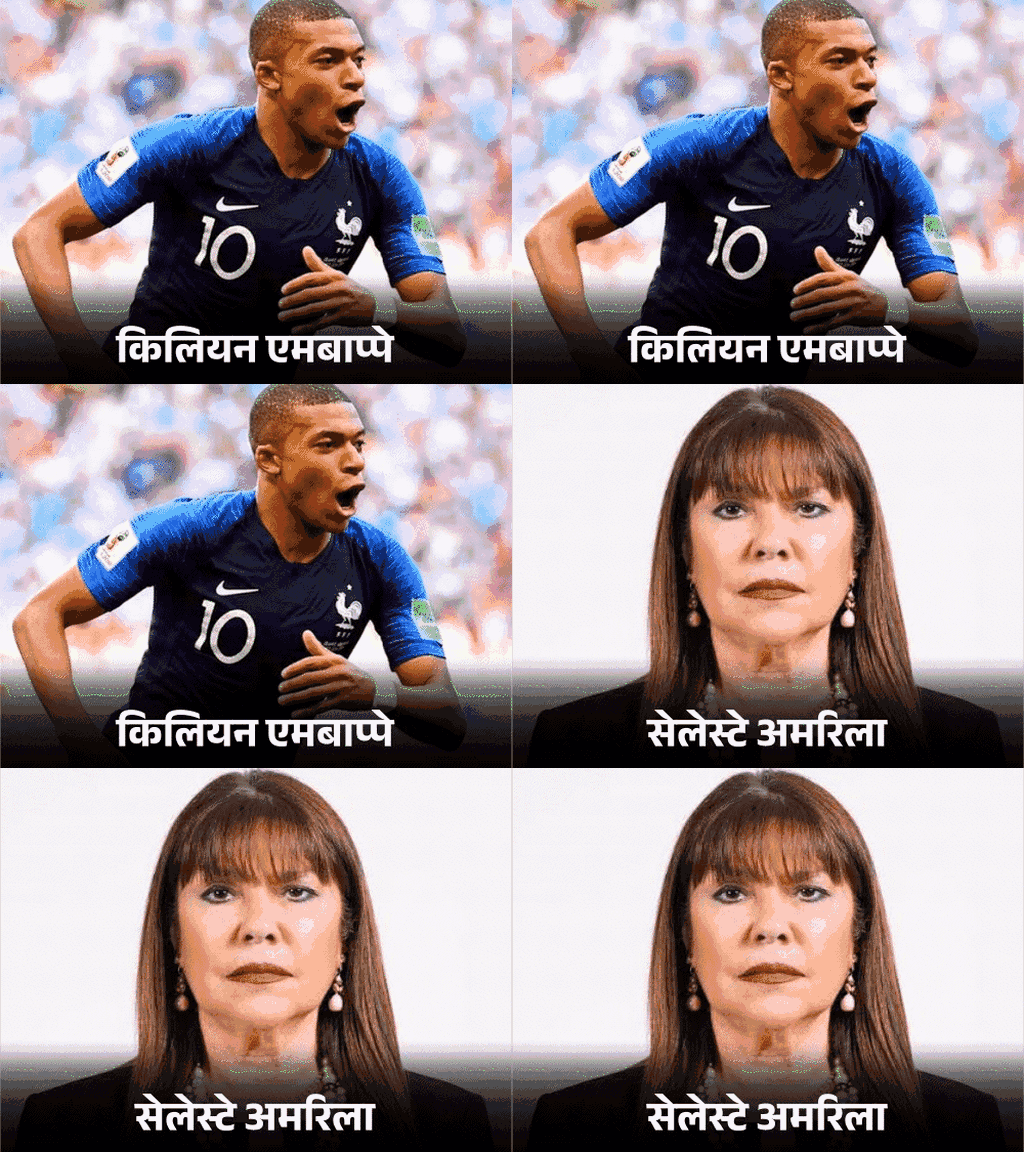
पैराग्वे की मंत्री ने फ्रांसीसी फुटबॉल कप्तान को गाली दी:इंटरव्यू में 'सन ऑफ बिच' कहा; फुटबॉल वर्ल्डकप की 3 कंट्रोवर्सी
Hindi NewsSportsFIFA World Cup 2026 Controversy; Donald Trump Balogun Red Card | Kylian Mbappe Paraguayan…
Hindi NewsSportsFIFA World Cup 2026 Controversy; Donald Trump Balogun Red Card | Kylian Mbappe Paraguayan…

Belgium goalkeeper Thibaut Courtois believes his country can create a surprise at the World Cup and upset Spain in Friday’s quarterfinal after finally beginning to show some form.
“Everyone on our team realises it’s possible. I think we have a strong squad with qualities that Spain will have to take into account,” he told reporters ahead of training on Wednesday.
“There are surprises in every tournament … the Champions League, the Europa League, the World Cup.
“There are always surprises, and I think we can be one of them. Eliminating the European champions would obviously be a huge upset. The confidence is there,” he said after a 4-1 victory over co-hosts the United States in Seattle on Monday.
Belgium bumbled through the group phase, eventually topping the standings after beating New Zealand 5-1 in its last fixture after being held by Egypt and Iran.
The Red Devils then scraped by Senegal, coming back from two goals down with five minutes left to take the game to extra time and then win 3-2 with a last-gasp penalty.
ALSO READ | France’s ambition faces biggest test yet from old rival Morocco
“People were a bit disappointed in us, but we’ve set that right. We’re getting better and better,” Courtois insisted.
“Spain is the favourite, of course. They are excellent in possession, and when they lose the ball, they press quickly. That’s where the key lies: knowing how to quickly exploit the space behind their defence.”
Spain substitute Mikel Merino earned his team a 1-0 last-16 win when he scored against Portugal in the 91st minute on Monday.
“I think the goal against Portugal highlights their strengths,” added Courtois. “We know Lamine Yamal is incredibly talented in one-on-one situations; he’s fast, agile, and can beat two players if necessary.”
Courtois, rated among the best keepers in world football, knows all about the Spanish threat having played at Atletico Madrid and Real Madrid.
“I’ve lived in Spain for 11 years, that’s a long time, of course. Life runs on a slightly later schedule there, and the weather is better. But ultimately, I remain Belgian.
“Spain is my second home, though, and I’ll probably keep living there after my career ends.
“I also have two children who are naturally more Spanish than Belgian, but at the end of the day, tomorrow’s match is all about Belgium,” he added.
Published on Jul 09, 2026
Belgium goalkeeper Thibaut Courtois believes his country can create a surprise at the World Cup and upset Spain in Friday’s quarterfinal after finally beginning to show some form.
“Everyone on our team realises it’s possible. I think we have a strong squad with qualities that Spain will have to take into account,” he told reporters ahead of training on Wednesday.
“There are surprises in every tournament … the Champions League, the Europa League, the World Cup.
“There are always surprises, and I think we can be one of them. Eliminating the European champions would obviously be a huge upset. The confidence is there,” he said after a 4-1 victory over co-hosts the United States in Seattle on Monday.
Belgium bumbled through the group phase, eventually topping the standings after beating New Zealand 5-1 in its last fixture after being held by Egypt and Iran.
The Red Devils then scraped by Senegal, coming back from two goals down with five minutes left to take the game to extra time and then win 3-2 with a last-gasp penalty.
ALSO READ | France’s ambition faces biggest test yet from old rival Morocco
“People were a bit disappointed in us, but we’ve set that right. We’re getting better and better,” Courtois insisted.
“Spain is the favourite, of course. They are excellent in possession, and when they lose the ball, they press quickly. That’s where the key lies: knowing how to quickly exploit the space behind their defence.”
Spain substitute Mikel Merino earned his team a 1-0 last-16 win when he scored against Portugal in the 91st minute on Monday.
“I think the goal against Portugal highlights their strengths,” added Courtois. “We know Lamine Yamal is incredibly talented in one-on-one situations; he’s fast, agile, and can beat two players if necessary.”
Courtois, rated among the best keepers in world football, knows all about the Spanish threat having played at Atletico Madrid and Real Madrid.
“I’ve lived in Spain for 11 years, that’s a long time, of course. Life runs on a slightly later schedule there, and the weather is better. But ultimately, I remain Belgian.
“Spain is my second home, though, and I’ll probably keep living there after my career ends.
“I also have two children who are naturally more Spanish than Belgian, but at the end of the day, tomorrow’s match is all about Belgium,” he added.
Published on Jul 09, 2026
Belgium goalkeeper Thibaut Courtois believes his country can create a surprise at the World Cup…
There is a particular kind of grief in sport that has little to do with defeat. It arrives not when a team loses, but when time finally catches up with the players who once seemed beyond its reach.
This FIFA World Cup has felt full of those moments. Luka Modric leaving with Croatia gone. Cristiano Ronaldo, who for so long bent matches to his will, walking away from another one. Manuel Neuer, for years football’s last great illusionist in goal, no longer carrying the same aura of permanence.
These were not just elite footballers; they were part of the architecture of the sport, figures so omnipresent for so long that they came to feel less like athletes and more like fixed points in our own lives.
Every major tournament had them somewhere in the frame. Modric gliding through the midfield with that strange combination of delicacy and defiance, Ronaldo summoning goals and drama with the force of habit, Neuer redrawing what a sweeper-goalkeeper could be. Their brilliance stretched across so many summers that it began to feel normal, and that was perhaps the greatest trick of all. Greatness, repeated often enough, starts to masquerade as permanence.
But sport, with its occasional cruelty, has a way of reminding us that permanence was never part of the bargain. This World Cup has exposed the mortality of men who once seemed immune to it. The legs do not always obey. The recovery takes a little longer. The moments still come, but not always on command. The body, eventually, begins to negotiate with the mind. And so, one by one, the stars who seemed to live outside time have begun to look what they always were underneath the myth: mere mortals.
Perhaps that is why Lionel Messi’s presence in this tournament feels so affecting. He is still here, still resisting and still playing as if he has found a private loophole in the laws of ageing. Around him, Argentina carries the urgency of men who know exactly what this moment means.

Against time: Lionel Messi remains the old giant still holding back the inevitable with that familiar left foot and stubborn shrug of genius. | Photo Credit: AFP

Against time: Lionel Messi remains the old giant still holding back the inevitable with that familiar left foot and stubborn shrug of genius. | Photo Credit: AFP
There is something faintly familiar in the way his teammates seem to be fighting not only for a trophy but for the dignity of a farewell, for the chance to make sure that when their great man finally walks away, he does so with his head held high. It recalls, in its own way, those late-career years of Sachin Tendulkar, when Indian cricket seemed to understand that every innings, every tour, every knock might be one of the last chances to honour a figure who had towered over its imagination for a generation.
The runs still mattered, but so did the ceremony of care around him, the collective desire to protect the ending of someone who had given so much. Maybe that is why these exits land differently as we get older. When we were younger, sporting heroes felt eternal. Tendulkar seemed as though he had always existed and somehow always would.
ALSO READ: Europe holds firm grip over World Cup destiny with Messi’s Argentina offering resistance
Then came Roger Federer, making tennis look too graceful to be real; Rafael Nadal, with his fury, faith and wounded endurance; Novak Djokovic, the last great disruptor who has also now reached the stage where each tournament is shadowed by the thought of how many more are left.
In cricket, Virat Kohli has moved from prodigy to elder statesman, playing just one format. And now football’s old gods, too, are being claimed by time. Their ageing has a way of confronting us with our own. You notice the greying beard in the mirror. The stiffness in your back after a long flight. The niggling pain in the knee after a walk up to the stadium media centre.

Passing seasons: Virat Kohli, Roger Federer, and Rafael Nadal, who once felt eternal, now stand as reminders that even the brightest eras must eventually yield to time. | Photo Credit: AFP, GETTY IMAGES, AP
Passing seasons: Virat Kohli, Roger Federer, and Rafael Nadal, who once felt eternal, now stand as reminders that even the brightest eras must eventually yield to time. | Photo Credit: AFP, GETTY IMAGES, AP
You tell yourself these are manageable, that life is carrying on, that the body can be bargained with. But then you watch Modric labour where once he floated, or Ronaldo rage against the limits of legs that no longer answer every call, and that illusion breaks a little. If they can fade, then what chance do the rest of us have? These men were supposed to outlast ordinary rules. We were the mortals.
That, perhaps, is why sport’s greatest stars matter beyond medals and numbers. They do not simply entertain us; they become markers of our own passage through life. We remember where we were when Tendulkar made that hundred, when Federer glided through another Wimbledon fortnight, when Nadal clawed through another five-set war, when Ronaldo leapt above defenders as though gravity could be compromised, when Messi finally won a World Cup.
They become companions to our years. Their careers are the thread that stitches together school and work, first love and heartbreak, new cities and old friendships, parents growing older and children growing up. And so, when they begin to disappear, it is never only their ending we are mourning. It is the passing of our own seasons too.
Maybe that is the ache running through this World Cup. Beneath the tactics and scorelines, beneath the noise of a new generation arriving, there is the unmistakable sense of an era loosening its grip. The old giants are not all gone yet. Messi remains, still defiant, holding back the inevitable with that familiar left foot and that stubborn little shrug of genius. But even his survival sharpens the feeling rather than easing it. It reminds us that the ending is near.
And perhaps that is enough for now. One last run. One last attempt to hold the darkness off a little longer. One last tournament in which the old gods can still be glimpsed in the light, even if the light is beginning to fade.
Published on Jul 08, 2026

There is a particular kind of grief in sport that has little to do with defeat. It arrives not when a team loses, but when time finally catches up with the players who once seemed beyond its reach.
This FIFA World Cup has felt full of those moments. Luka Modric leaving with Croatia gone. Cristiano Ronaldo, who for so long bent matches to his will, walking away from another one. Manuel Neuer, for years football’s last great illusionist in goal, no longer carrying the same aura of permanence.
These were not just elite footballers; they were part of the architecture of the sport, figures so omnipresent for so long that they came to feel less like athletes and more like fixed points in our own lives.
Every major tournament had them somewhere in the frame. Modric gliding through the midfield with that strange combination of delicacy and defiance, Ronaldo summoning goals and drama with the force of habit, Neuer redrawing what a sweeper-goalkeeper could be. Their brilliance stretched across so many summers that it began to feel normal, and that was perhaps the greatest trick of all. Greatness, repeated often enough, starts to masquerade as permanence.
But sport, with its occasional cruelty, has a way of reminding us that permanence was never part of the bargain. This World Cup has exposed the mortality of men who once seemed immune to it. The legs do not always obey. The recovery takes a little longer. The moments still come, but not always on command. The body, eventually, begins to negotiate with the mind. And so, one by one, the stars who seemed to live outside time have begun to look what they always were underneath the myth: mere mortals.
Perhaps that is why Lionel Messi’s presence in this tournament feels so affecting. He is still here, still resisting and still playing as if he has found a private loophole in the laws of ageing. Around him, Argentina carries the urgency of men who know exactly what this moment means.
Against time: Lionel Messi remains the old giant still holding back the inevitable with that familiar left foot and stubborn shrug of genius. | Photo Credit: AFP
Against time: Lionel Messi remains the old giant still holding back the inevitable with that familiar left foot and stubborn shrug of genius. | Photo Credit: AFP
There is something faintly familiar in the way his teammates seem to be fighting not only for a trophy but for the dignity of a farewell, for the chance to make sure that when their great man finally walks away, he does so with his head held high. It recalls, in its own way, those late-career years of Sachin Tendulkar, when Indian cricket seemed to understand that every innings, every tour, every knock might be one of the last chances to honour a figure who had towered over its imagination for a generation.
The runs still mattered, but so did the ceremony of care around him, the collective desire to protect the ending of someone who had given so much. Maybe that is why these exits land differently as we get older. When we were younger, sporting heroes felt eternal. Tendulkar seemed as though he had always existed and somehow always would.
ALSO READ: Europe holds firm grip over World Cup destiny with Messi’s Argentina offering resistance
Then came Roger Federer, making tennis look too graceful to be real; Rafael Nadal, with his fury, faith and wounded endurance; Novak Djokovic, the last great disruptor who has also now reached the stage where each tournament is shadowed by the thought of how many more are left.
In cricket, Virat Kohli has moved from prodigy to elder statesman, playing just one format. And now football’s old gods, too, are being claimed by time. Their ageing has a way of confronting us with our own. You notice the greying beard in the mirror. The stiffness in your back after a long flight. The niggling pain in the knee after a walk up to the stadium media centre.
Passing seasons: Virat Kohli, Roger Federer, and Rafael Nadal, who once felt eternal, now stand as reminders that even the brightest eras must eventually yield to time. | Photo Credit: AFP, GETTY IMAGES, AP
Passing seasons: Virat Kohli, Roger Federer, and Rafael Nadal, who once felt eternal, now stand as reminders that even the brightest eras must eventually yield to time. | Photo Credit: AFP, GETTY IMAGES, AP
You tell yourself these are manageable, that life is carrying on, that the body can be bargained with. But then you watch Modric labour where once he floated, or Ronaldo rage against the limits of legs that no longer answer every call, and that illusion breaks a little. If they can fade, then what chance do the rest of us have? These men were supposed to outlast ordinary rules. We were the mortals.
That, perhaps, is why sport’s greatest stars matter beyond medals and numbers. They do not simply entertain us; they become markers of our own passage through life. We remember where we were when Tendulkar made that hundred, when Federer glided through another Wimbledon fortnight, when Nadal clawed through another five-set war, when Ronaldo leapt above defenders as though gravity could be compromised, when Messi finally won a World Cup.
They become companions to our years. Their careers are the thread that stitches together school and work, first love and heartbreak, new cities and old friendships, parents growing older and children growing up. And so, when they begin to disappear, it is never only their ending we are mourning. It is the passing of our own seasons too.
Maybe that is the ache running through this World Cup. Beneath the tactics and scorelines, beneath the noise of a new generation arriving, there is the unmistakable sense of an era loosening its grip. The old giants are not all gone yet. Messi remains, still defiant, holding back the inevitable with that familiar left foot and that stubborn little shrug of genius. But even his survival sharpens the feeling rather than easing it. It reminds us that the ending is near.
And perhaps that is enough for now. One last run. One last attempt to hold the darkness off a little longer. One last tournament in which the old gods can still be glimpsed in the light, even if the light is beginning to fade.
Published on Jul 08, 2026
There is a particular kind of grief in sport that has little to do with defeat. It arrives not when a team loses, but when time finally catches up with the players who once seemed beyond its reach.
This FIFA World Cup has felt full of those moments. Luka Modric leaving with Croatia gone. Cristiano Ronaldo, who for so long bent matches to his will, walking away from another one. Manuel Neuer, for years football’s last great illusionist in goal, no longer carrying the same aura of permanence.
These were not just elite footballers; they were part of the architecture of the sport, figures so omnipresent for so long that they came to feel less like athletes and more like fixed points in our own lives.
Every major tournament had them somewhere in the frame. Modric gliding through the midfield with that strange combination of delicacy and defiance, Ronaldo summoning goals and drama with the force of habit, Neuer redrawing what a sweeper-goalkeeper could be. Their brilliance stretched across so many summers that it began to feel normal, and that was perhaps the greatest trick of all. Greatness, repeated often enough, starts to masquerade as permanence.
But sport, with its occasional cruelty, has a way of reminding us that permanence was never part of the bargain. This World Cup has exposed the mortality of men who once seemed immune to it. The legs do not always obey. The recovery takes a little longer. The moments still come, but not always on command. The body, eventually, begins to negotiate with the mind. And so, one by one, the stars who seemed to live outside time have begun to look what they always were underneath the myth: mere mortals.
Perhaps that is why Lionel Messi’s presence in this tournament feels so affecting. He is still here, still resisting and still playing as if he has found a private loophole in the laws of ageing. Around him, Argentina carries the urgency of men who know exactly what this moment means.
Against time: Lionel Messi remains the old giant still holding back the inevitable with that familiar left foot and stubborn shrug of genius. | Photo Credit: AFP
Against time: Lionel Messi remains the old giant still holding back the inevitable with that familiar left foot and stubborn shrug of genius. | Photo Credit: AFP
There is something faintly familiar in the way his teammates seem to be fighting not only for a trophy but for the dignity of a farewell, for the chance to make sure that when their great man finally walks away, he does so with his head held high. It recalls, in its own way, those late-career years of Sachin Tendulkar, when Indian cricket seemed to understand that every innings, every tour, every knock might be one of the last chances to honour a figure who had towered over its imagination for a generation.
The runs still mattered, but so did the ceremony of care around him, the collective desire to protect the ending of someone who had given so much. Maybe that is why these exits land differently as we get older. When we were younger, sporting heroes felt eternal. Tendulkar seemed as though he had always existed and somehow always would.
ALSO READ: Europe holds firm grip over World Cup destiny with Messi’s Argentina offering resistance
Then came Roger Federer, making tennis look too graceful to be real; Rafael Nadal, with his fury, faith and wounded endurance; Novak Djokovic, the last great disruptor who has also now reached the stage where each tournament is shadowed by the thought of how many more are left.
In cricket, Virat Kohli has moved from prodigy to elder statesman, playing just one format. And now football’s old gods, too, are being claimed by time. Their ageing has a way of confronting us with our own. You notice the greying beard in the mirror. The stiffness in your back after a long flight. The niggling pain in the knee after a walk up to the stadium media centre.
Passing seasons: Virat Kohli, Roger Federer, and Rafael Nadal, who once felt eternal, now stand as reminders that even the brightest eras must eventually yield to time. | Photo Credit: AFP, GETTY IMAGES, AP
Passing seasons: Virat Kohli, Roger Federer, and Rafael Nadal, who once felt eternal, now stand as reminders that even the brightest eras must eventually yield to time. | Photo Credit: AFP, GETTY IMAGES, AP
You tell yourself these are manageable, that life is carrying on, that the body can be bargained with. But then you watch Modric labour where once he floated, or Ronaldo rage against the limits of legs that no longer answer every call, and that illusion breaks a little. If they can fade, then what chance do the rest of us have? These men were supposed to outlast ordinary rules. We were the mortals.
That, perhaps, is why sport’s greatest stars matter beyond medals and numbers. They do not simply entertain us; they become markers of our own passage through life. We remember where we were when Tendulkar made that hundred, when Federer glided through another Wimbledon fortnight, when Nadal clawed through another five-set war, when Ronaldo leapt above defenders as though gravity could be compromised, when Messi finally won a World Cup.
They become companions to our years. Their careers are the thread that stitches together school and work, first love and heartbreak, new cities and old friendships, parents growing older and children growing up. And so, when they begin to disappear, it is never only their ending we are mourning. It is the passing of our own seasons too.
Maybe that is the ache running through this World Cup. Beneath the tactics and scorelines, beneath the noise of a new generation arriving, there is the unmistakable sense of an era loosening its grip. The old giants are not all gone yet. Messi remains, still defiant, holding back the inevitable with that familiar left foot and that stubborn little shrug of genius. But even his survival sharpens the feeling rather than easing it. It reminds us that the ending is near.
And perhaps that is enough for now. One last run. One last attempt to hold the darkness off a little longer. One last tournament in which the old gods can still be glimpsed in the light, even if the light is beginning to fade.
Published on Jul 08, 2026
There is a particular kind of grief in sport that has little to do with…

The Egyptian football federation on Wednesday said it had asked for the officiating team who handled the Pharoahs loss 3-2 last-16 to Argentina to be thrown out of the World Cup.
“Hany Aburida, President of the Egyptian Football Federation, filed a complaint with FIFA, demanding an investigation into the French referee Francois Letexier… after the serious refereeing mistakes committed by the team of referees and double standards, which caused the Egypt team to lose the match and leave the World Cup,” said a statement from the federation.
On Tuesday evening, Letexes ruled out a Mostafa Ziko goal ruled out when Egypt was leading 1-0 after VAR intervened to spot a foul on Lisandro Martinez much earlier in the move.
A few minutes later, Ziko did put Egyptian 2-0 up and on the brink of a place in the last eight for the first time but there was further controversy in added time, after Cristian Romero and Lionel Messi had brought the champion level.
In the build-up to Argentina’s winner scored by Enzo Fernandez, Egypt believes it should have instead been awarded a penalty for a pull by Alexis Mac Allister on Hamdy Fathy.
“Aburida demanded the investigation of the entire team of referees, including the video technology referees, because of the blatant errors and insisting on not reviewing some of the footage that we believe are in favour of the Egyptian national team, and we see in it the Pharaohs’ right to a correct goal and a penalty,” said the Egyptian statement.
It added that the president had also “demanded the exclusion of the referee and the entire crew from the World Cup after investigating these mistakes and proving the crime of discrimination against the Egyptian national team”.
The statement echoed remarks by Egypt coach Hossam Hassan immediately after the game.
“I do not want to put it nicely and talk about hard luck. We have been cheated unfairly today, we have suffered injustice,” Hassan told journalists.
“We haven’t seen respect or fair play. There has not been respect or fair play.”
Hassan told BeIN: “Perhaps they wanted to keep the world champions in the competition. Perhaps they wanted Messi to stay in the running.
“In football, there are sometimes external factors that go beyond the technical aspects. The world champions received support at every level.”
Published on Jul 08, 2026
The Egyptian football federation on Wednesday said it had asked for the officiating team who handled the Pharoahs loss 3-2 last-16 to Argentina to be thrown out of the World Cup.
“Hany Aburida, President of the Egyptian Football Federation, filed a complaint with FIFA, demanding an investigation into the French referee Francois Letexier… after the serious refereeing mistakes committed by the team of referees and double standards, which caused the Egypt team to lose the match and leave the World Cup,” said a statement from the federation.
On Tuesday evening, Letexes ruled out a Mostafa Ziko goal ruled out when Egypt was leading 1-0 after VAR intervened to spot a foul on Lisandro Martinez much earlier in the move.
A few minutes later, Ziko did put Egyptian 2-0 up and on the brink of a place in the last eight for the first time but there was further controversy in added time, after Cristian Romero and Lionel Messi had brought the champion level.
In the build-up to Argentina’s winner scored by Enzo Fernandez, Egypt believes it should have instead been awarded a penalty for a pull by Alexis Mac Allister on Hamdy Fathy.
“Aburida demanded the investigation of the entire team of referees, including the video technology referees, because of the blatant errors and insisting on not reviewing some of the footage that we believe are in favour of the Egyptian national team, and we see in it the Pharaohs’ right to a correct goal and a penalty,” said the Egyptian statement.
It added that the president had also “demanded the exclusion of the referee and the entire crew from the World Cup after investigating these mistakes and proving the crime of discrimination against the Egyptian national team”.
The statement echoed remarks by Egypt coach Hossam Hassan immediately after the game.
“I do not want to put it nicely and talk about hard luck. We have been cheated unfairly today, we have suffered injustice,” Hassan told journalists.
“We haven’t seen respect or fair play. There has not been respect or fair play.”
Hassan told BeIN: “Perhaps they wanted to keep the world champions in the competition. Perhaps they wanted Messi to stay in the running.
“In football, there are sometimes external factors that go beyond the technical aspects. The world champions received support at every level.”
Published on Jul 08, 2026
The Egyptian football federation on Wednesday said it had asked for the officiating team who…
11:21 PM, 07-Jul-2026 Argentina vs Egypt Live: 2-2 की बराबरी पर मैच फीफा विश्व कप…
मैच की शुरुआत में यूएसए का शोर पूरे स्टेडियम में गूंजता रहा। इस शोर में…

Belgium midfielder Amadou Onana is set for a lengthy spell on the sidelines after suffering a torn anterior cruciate ligament during his side’s 4-1 World Cup round-of-16 win over the United States on Monday, according to The Athletic.
The 24-year-old was forced off in the 21st minute and was later seen on crutches with a brace around his right knee. Romelu Lukaku paid tribute to his teammate after scoring Belgium’s fourth goal in second-half stoppage time, celebrating by holding up Onana’s No. 24 shirt.
The injury rules Onana out of Belgium’s World Cup quarterfinal against Spain on Friday and is also a major setback for Aston Villa.
Villa manager Unai Emery had planned to build his midfield around Onana, Boubacar Kamara and Youri Tielemans. The club had not been looking to strengthen in that area but is now expected to reassess its plans.
Onana joined Villa from Everton in 2024 and has made 72 appearances for the club. He featured 38 times in all competitions last season as Villa won the Europa League and qualified for the Champions League.
Published on Jul 07, 2026
Belgium midfielder Amadou Onana is set for a lengthy spell on the sidelines after suffering a torn anterior cruciate ligament during his side’s 4-1 World Cup round-of-16 win over the United States on Monday, according to The Athletic.
The 24-year-old was forced off in the 21st minute and was later seen on crutches with a brace around his right knee. Romelu Lukaku paid tribute to his teammate after scoring Belgium’s fourth goal in second-half stoppage time, celebrating by holding up Onana’s No. 24 shirt.
The injury rules Onana out of Belgium’s World Cup quarterfinal against Spain on Friday and is also a major setback for Aston Villa.
Villa manager Unai Emery had planned to build his midfield around Onana, Boubacar Kamara and Youri Tielemans. The club had not been looking to strengthen in that area but is now expected to reassess its plans.
Onana joined Villa from Everton in 2024 and has made 72 appearances for the club. He featured 38 times in all competitions last season as Villa won the Europa League and qualified for the Champions League.
Published on Jul 07, 2026
Belgium midfielder Amadou Onana is set for a lengthy spell on the sidelines after suffering…
फीफा विश्व कप 2026 के राउंड ऑफ-16 में स्पेन ने इंजरी टाइम में मिकेल मेरिनो…
12:54 AM, 07-Jul-2026 Portugal vs Spain Live: 22 मिनट बाद भी गोल का इंतजार फीफा…
पहले हाफ में मैथियस कुन्हा को क्रिस्टोफर एजर द्वारा किए गए फाउल की वीएआर समीक्षा…