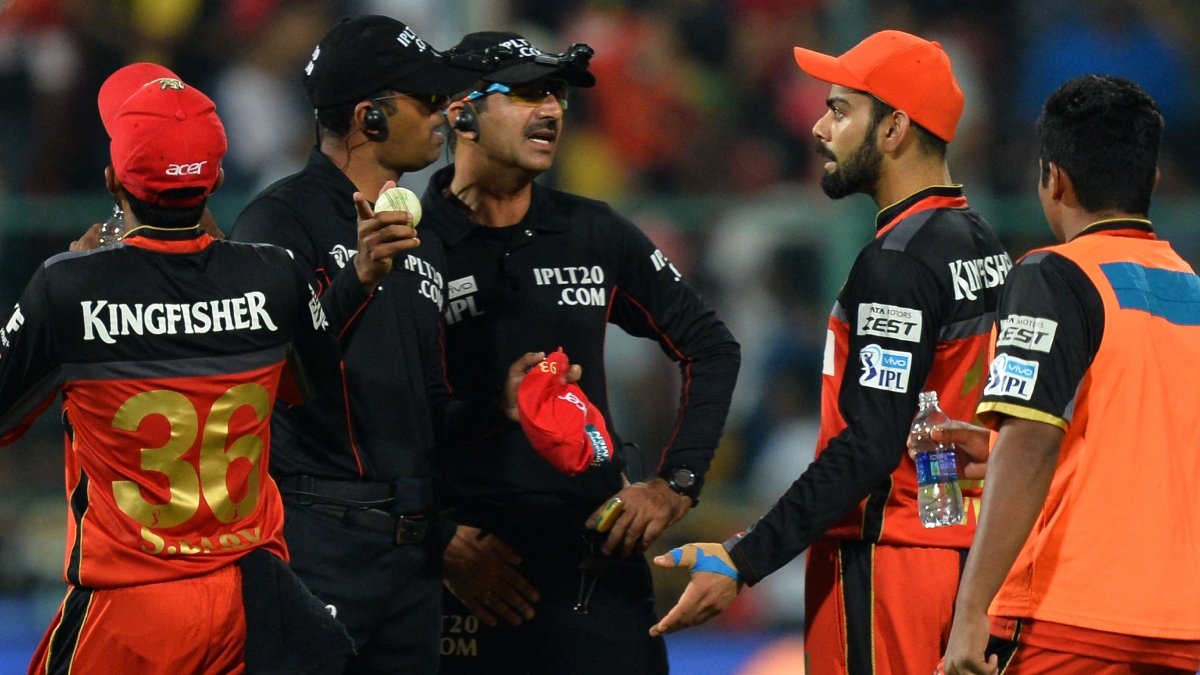
धोनी ने इम्पैक्ट प्लेयर बनने से इनकार किया:बद्रीनाथ बोले- फुलटाइम विकेटकीपर रहना चाहते हैं, 2027 IPL में खेलने पर फैसला बाकी
एमएस धोनी ने चेन्नई सुपर किंग्स के पूर्व बल्लेबाज सुब्रमण्यम बद्रीनाथ से कहा है कि…
एमएस धोनी ने चेन्नई सुपर किंग्स के पूर्व बल्लेबाज सुब्रमण्यम बद्रीनाथ से कहा है कि…
इंडियन प्रीमियर लीग यानी IPL में बल्लेबाजों के रिकॉर्डतोड़ स्कोर और गेंदबाजों की बढ़ती मुश्किलों…

In sport, memory lives in numbers and often dominates discussions across eras. Scorecards eventually become history, though for many fans, they are much more.
Ardent baseball fans treat scorecards as precious collectibles, while cricket enthusiasts can swear by a legendary “ton” or a definitive “five-fer” in a specific Test match. Yet, truth often slips through the gaps, much like a cover drive imperiously threaded between point and mid-off.
Baseball offers a clinical verdict: a batter is retired, and the scorecard records the outcome with total indifference. It matters little whether a fielder hauls in the ball at full stretch in right field or if it settles comfortably into a waiting glove in centre. The act is completed, the moment fades, and the numbers move on—offering no room for the artistry of the effort.
Basketball has always had an answer to this conundrum. For the Los Angeles Lakers, whenever Earvin “Magic” Johnson threaded a pass to Kareem Abdul-Jabbar, the finish was only half the act. The assist carried weight, etched into the record books as a vital statistic.
In basketball, the creator and the completer share the spotlight, ensuring that fans and history books alike acknowledge the setup as much as the score.

Brothers of destruction: Magic Johnson and Kareem Abdul-Jabbar formed one of the deadliest combinations in NBA, leading the attack for Los Angeles Lakers. | Photo Credit: The Hindu Photo Library

Brothers of destruction: Magic Johnson and Kareem Abdul-Jabbar formed one of the deadliest combinations in NBA, leading the attack for Los Angeles Lakers. | Photo Credit: The Hindu Photo Library
Statisticians in cricket seemingly had a different idea. Perhaps pioneers like Bill Frindall, B.B. Mama, Anandji Dossa, and Sudhir Vaidya never anticipated the acrobatic artistry of a Suryakumar Yadav at the Kensington Oval in 2024 or a Shreyas Iyer in 2026.
Cricket commentary celebrates the late swing and the diving stop; it applauds fielding brilliance with roars and endless replays. Yet, when the dust settles, the record often ignores this evolving dimension of the game. During a telecast, we are now accustomed to wagon wheels, Manhattan charts, and “the worm”—visual aids that add spice to an already well-made biryani—but the scorecard remains stubbornly static.
A recent night at the Wankhede Stadium during the 2026 Indian Premier League (IPL) season provided a jarring reminder of this oversight. In the 24th match between the Punjab Kings and Mumbai Indians, the ball sailed toward the boundary in the 18th over. Shreyas Iyer produced a moment of pure theatre.
Stationed at long-on, he sprinted to his left, launched himself into the air, and plucked the ball from the sky. Mid-flight, as gravity pulled him toward the rope, instinct took over. He flicked the ball back into play just as he crossed the boundary, where Xavier Bartlett completed the relay. Hardik Pandya was sent on his way, and the stadium erupted.
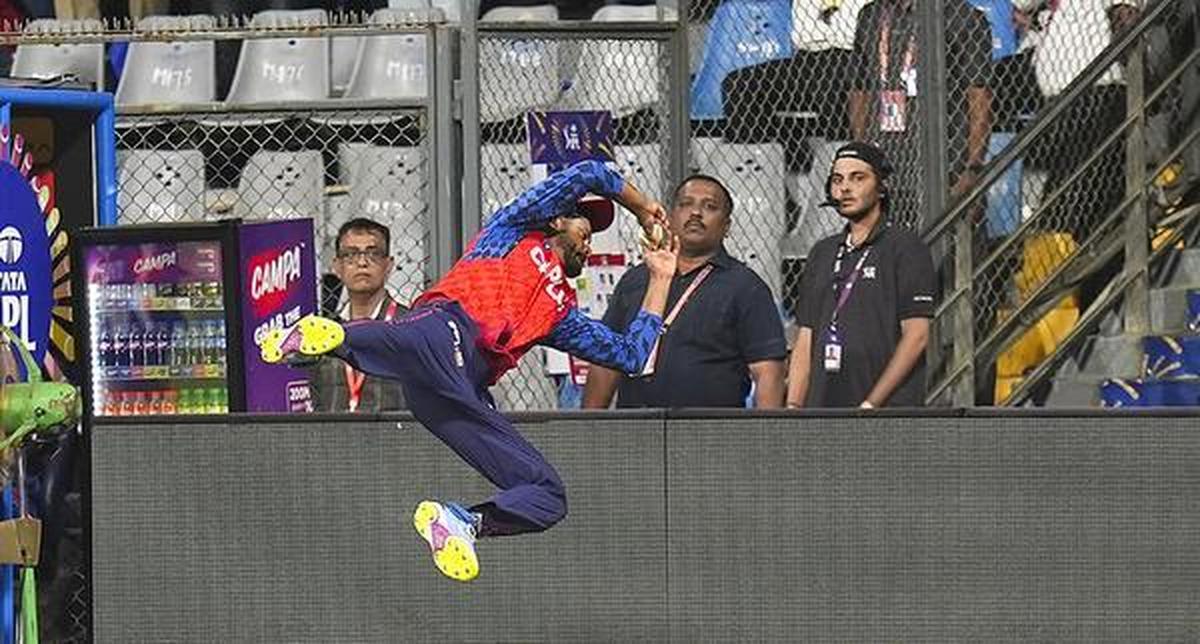
Key architect: Shreyas Iyer did not really take the catch of Hardik Pandya, but he played the most significant role in the dismissal. | Photo Credit: PTI
Key architect: Shreyas Iyer did not really take the catch of Hardik Pandya, but he played the most significant role in the dismissal. | Photo Credit: PTI
Ask anyone who “took” that catch, and the name they say will be Iyer. Yet, look at the scorecard, and Iyer’s name is nowhere to be found. In the history books, he doesn’t even receive an asterisk for this breathtaking fusion of athleticism, awareness, and timing.
Similarly, when a catch bursts from the grasp of a diving first-slip fielder and is safely completed by a teammate at second slip, the scorecard credits only the finisher, leaving the initial effort, often the defining act, without even a mention.
The typical line on a scorecard reads: “c Fielder b Bowler.” Even if a substitute or an “Impact Player” takes the catch, their name is recognised. But in a relay situation, the player who does the heavy lifting—the “creator”—is erased from the official narrative.
Cricket has evolved in almost every other dimension. Technology provides mountains of data for batters, bowlers, and coaches, yet we lack the statistical language to preserve teamwork in motion. The boundary relay catch is the purest example of a collaborative effort; without the first player, the second does not exist.
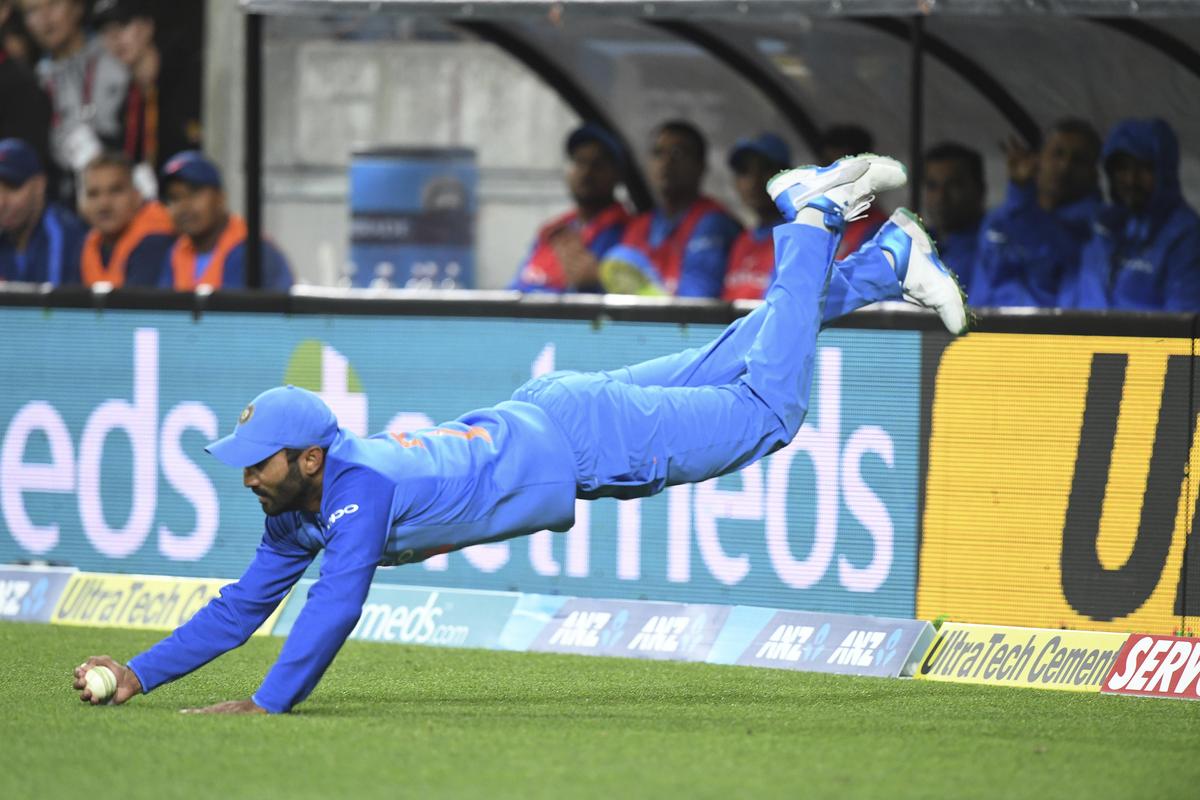
Cricket doesn’t lack appreciation for fielding; it lacks the language to preserve it. An assist column would change that. | Photo Credit: AP
Cricket doesn’t lack appreciation for fielding; it lacks the language to preserve it. An assist column would change that. | Photo Credit: AP
Imagine a child twenty years from now speaking about their father’s legendary catch. They pull up the scorecard to prove it, only to find a name that isn’t his. What do they point to? The video might survive in fragments, but the numbers—sport’s most trusted storytellers—will remain silent.
Cricket doesn’t lack appreciation for fielding; it lacks the language to preserve it. An assist column wouldn’t just change a statistic; it would honour the invisible hand that shapes the game’s most defining moments. In a sport that prides itself on detail, this is one detail that has waited long enough to be seen.
Published on May 12, 2026
In sport, memory lives in numbers and often dominates discussions across eras. Scorecards eventually become history, though for many fans, they are much more.
Ardent baseball fans treat scorecards as precious collectibles, while cricket enthusiasts can swear by a legendary “ton” or a definitive “five-fer” in a specific Test match. Yet, truth often slips through the gaps, much like a cover drive imperiously threaded between point and mid-off.
Baseball offers a clinical verdict: a batter is retired, and the scorecard records the outcome with total indifference. It matters little whether a fielder hauls in the ball at full stretch in right field or if it settles comfortably into a waiting glove in centre. The act is completed, the moment fades, and the numbers move on—offering no room for the artistry of the effort.
Basketball has always had an answer to this conundrum. For the Los Angeles Lakers, whenever Earvin “Magic” Johnson threaded a pass to Kareem Abdul-Jabbar, the finish was only half the act. The assist carried weight, etched into the record books as a vital statistic.
In basketball, the creator and the completer share the spotlight, ensuring that fans and history books alike acknowledge the setup as much as the score.
Brothers of destruction: Magic Johnson and Kareem Abdul-Jabbar formed one of the deadliest combinations in NBA, leading the attack for Los Angeles Lakers. | Photo Credit: The Hindu Photo Library
Brothers of destruction: Magic Johnson and Kareem Abdul-Jabbar formed one of the deadliest combinations in NBA, leading the attack for Los Angeles Lakers. | Photo Credit: The Hindu Photo Library
Statisticians in cricket seemingly had a different idea. Perhaps pioneers like Bill Frindall, B.B. Mama, Anandji Dossa, and Sudhir Vaidya never anticipated the acrobatic artistry of a Suryakumar Yadav at the Kensington Oval in 2024 or a Shreyas Iyer in 2026.
Cricket commentary celebrates the late swing and the diving stop; it applauds fielding brilliance with roars and endless replays. Yet, when the dust settles, the record often ignores this evolving dimension of the game. During a telecast, we are now accustomed to wagon wheels, Manhattan charts, and “the worm”—visual aids that add spice to an already well-made biryani—but the scorecard remains stubbornly static.
A recent night at the Wankhede Stadium during the 2026 Indian Premier League (IPL) season provided a jarring reminder of this oversight. In the 24th match between the Punjab Kings and Mumbai Indians, the ball sailed toward the boundary in the 18th over. Shreyas Iyer produced a moment of pure theatre.
Stationed at long-on, he sprinted to his left, launched himself into the air, and plucked the ball from the sky. Mid-flight, as gravity pulled him toward the rope, instinct took over. He flicked the ball back into play just as he crossed the boundary, where Xavier Bartlett completed the relay. Hardik Pandya was sent on his way, and the stadium erupted.
Key architect: Shreyas Iyer did not really take the catch of Hardik Pandya, but he played the most significant role in the dismissal. | Photo Credit: PTI
Key architect: Shreyas Iyer did not really take the catch of Hardik Pandya, but he played the most significant role in the dismissal. | Photo Credit: PTI
Ask anyone who “took” that catch, and the name they say will be Iyer. Yet, look at the scorecard, and Iyer’s name is nowhere to be found. In the history books, he doesn’t even receive an asterisk for this breathtaking fusion of athleticism, awareness, and timing.
Similarly, when a catch bursts from the grasp of a diving first-slip fielder and is safely completed by a teammate at second slip, the scorecard credits only the finisher, leaving the initial effort, often the defining act, without even a mention.
The typical line on a scorecard reads: “c Fielder b Bowler.” Even if a substitute or an “Impact Player” takes the catch, their name is recognised. But in a relay situation, the player who does the heavy lifting—the “creator”—is erased from the official narrative.
Cricket has evolved in almost every other dimension. Technology provides mountains of data for batters, bowlers, and coaches, yet we lack the statistical language to preserve teamwork in motion. The boundary relay catch is the purest example of a collaborative effort; without the first player, the second does not exist.
Cricket doesn’t lack appreciation for fielding; it lacks the language to preserve it. An assist column would change that. | Photo Credit: AP
Cricket doesn’t lack appreciation for fielding; it lacks the language to preserve it. An assist column would change that. | Photo Credit: AP
Imagine a child twenty years from now speaking about their father’s legendary catch. They pull up the scorecard to prove it, only to find a name that isn’t his. What do they point to? The video might survive in fragments, but the numbers—sport’s most trusted storytellers—will remain silent.
Cricket doesn’t lack appreciation for fielding; it lacks the language to preserve it. An assist column wouldn’t just change a statistic; it would honour the invisible hand that shapes the game’s most defining moments. In a sport that prides itself on detail, this is one detail that has waited long enough to be seen.
Published on May 12, 2026
In sport, memory lives in numbers and often dominates discussions across eras. Scorecards eventually become…
![Sanjay Manjrekar on why Impact Player rule, short boundaries are reducing venues to bowler graveyards The debate surrounding the Impact Player rule in Indian Premier League (IPL) isn’t new, but this season has once again pushed it into sharper focus.This is also the fourth year of the Impact Player rule. Despite strong calls from players to scrap it, the IPL has made it clear there will be no review before the 2027 season.The balance between bat and ball, always a delicate balance in T20 cricket, now appears to have tipped decisively in one direction.Former India cricketer Sanjay Manjrekar believes the shift is no longer subtle, but stark.“Yes, that’s the burning topic. Everyone’s talking about it. I can recall at least five batters [in IPL 2026] scoring not just hundreds, but hundreds off around 50 balls, striking at 200. I’ve felt strongly for a number of years about the balance between bat and ball, and I think we’ve now gone beyond a certain limit,” Manjrekar said on Sportstar’s Insight Edge podcast.For Manjrekar, the concern is not limited to purists longing for the past. Even the modern T20 audience, conditioned to expect high-scoring thrillers, is beginning to feel the excess.“Even T20 fans, not just traditional Test cricket followers, are starting to feel slightly disillusioned by the sheer dominance of bat over ball.”The pitch problemAt the heart of this imbalance, he argues, lies the nature of Indian pitches. “Let’s start with one fact: the IPL is played on Indian pitches. While not every ground is high-scoring, venues like Lucknow and occasionally Chennai have maintained some balance. But most grounds, including the new one in Chandigarh, are heavily skewed in favour of batters.”The issue is not just flatness, but predictability. “Why do I say that? Because on Indian pitches, once the ball lands, it does very little. It comes on straight, which makes batting much easier. Even on flat pitches in Australia, South Africa, or England, the ball still does something occasionally. That’s not the case here.”Unintended consequencesLayered onto these conditions is the Impact Player rule, which Manjrekar believes has amplified the imbalance. “Reason number two is the Impact Player rule. I think it has impacted bowlers far more negatively than it has benefited batters. Imagine this rule in New Zealand, where the ball swings. Bringing in a seam bowler could balance things. But in India, it hasn’t worked that way.”Interestingly, he admits he initially welcomed the rule. “When it was introduced, I was actually excited. I thought we’d see more specialist players, an extra pure batter or bowler, raising the overall quality. So the players who I used to call bits and pieces, I don’t do that anymore, because that term is misunderstood. So I would say, non-specialists.”The effect is visible in team composition and intent. “You now have pure batters like Ashutosh Sharma coming in at No. 8. When you have batting depth till No. 8, players at the top can go all out because they know there’s cover.”That safety net, he suggests, has fundamentally altered risk-taking. “Imagine a scenario where the overs were reduced to 20, you know, from 50 and teams could only use seven batters and the innings ended after five wickets. It would be a completely different game.”Grounds stuck in another eraThen comes a structural issue that often escapes scrutiny: ground dimensions. “Many were built decades ago, with dimensions suited to a different era of cricket. The game has evolved, but the grounds haven’t.”If anything, the problem has worsened. “Boundaries need to be longer. Instead, in some cases, like at Wankhede, they’re brought in further for advertising boards. It’s ridiculous. You see shots reaching the boundary in seconds, with no real fielding contest. You don’t see the chasing, you know, the old-fashioned somebody running after the ball and people going, ‘oh, is he going to stop it?’ It’s just four or six.”Is the middle order being exposed or protected?While some argue that the Impact Player rule masks weak middle orders, Manjrekar sees it differently. “Not necessarily. Teams with strong middle orders, like RCB, still see contributions from those players. The bigger issue is how conditions favour batters so heavily.”He even questions whether certain T20 staples remain relevant in current conditions. “In fact, someone suggested whether we even need the six-over PowerPlay in these conditions. With a hard new ball and only two fielders outside the circle, teams at the top are maximising this phase.”What can be fixed?If given the power to intervene, Manjrekar points to both ideal and practical solutions. “Two or three things come to mind. First, reconsider the six-over PowerPlay. It’s pragmatic.”Longer boundaries would help, but aren’t always feasible. “Ideally, I’d like longer boundaries, but not all grounds allow that. Some venues are simply too small. After watching recent games, especially at Wankhede Stadium in Mumbai, I feel some grounds just aren’t suited for T20 anymore… Same with [Chinnaswamy Stadium] in Bengaluru… They’ve become bowler graveyards.”He offers a telling example. “Take Vaibhav Sooryavanshi’s hundred [against Sunrisers Hyderabad], for instance. At least four sixes he hit would’ve been catches if the boundaries were even slightly longer. That would bring some sanity back to the game.”One unintended casualty of the current ecosystem is the genuine all-rounder.“Yes, it does,” Manjrekar says when asked if the Impact Player rule hurts them. “For example, Shivam Dube showed his value in the T20 World Cup and Asia Cup by contributing with both bat and ball. In the IPL, he barely bowls.”The broader issue, he feels, is the loss of in-game adaptability.“In hindsight, I’d like to see teams forced to adapt when bowlers struggle, instead of relying on substitutions. That unpredictability adds to the charm.”Published on Apr 27, 2026 #Sanjay #Manjrekar #Impact #Player #rule #short #boundaries #reducing #venues #bowler #graveyards](https://i0.wp.com/ss-i.thgim.com/public/incoming/yj32ws/article70911774.ece/alternates/LANDSCAPE_1200/IMG_WANKHEDE_CRICKET_STA_2_1_AC96HDHH.jpg?ssl=1 "Sanjay Manjrekar on why Impact Player rule, short boundaries are reducing venues to bowler graveyards The debate surrounding the Impact Player rule in Indian Premier League (IPL) isn’t new, but this season has once again pushed it into sharper focus.This is also the fourth year of the Impact Player rule. Despite strong calls from players to scrap it, the IPL has made it clear there will be no review before the 2027 season.The balance between bat and ball, always a delicate balance in T20 cricket, now appears to have tipped decisively in one direction.Former India cricketer Sanjay Manjrekar believes the shift is no longer subtle, but stark.“Yes, that’s the burning topic. Everyone’s talking about it. I can recall at least five batters [in IPL 2026] scoring not just hundreds, but hundreds off around 50 balls, striking at 200. I’ve felt strongly for a number of years about the balance between bat and ball, and I think we’ve now gone beyond a certain limit,” Manjrekar said on Sportstar’s Insight Edge podcast.For Manjrekar, the concern is not limited to purists longing for the past. Even the modern T20 audience, conditioned to expect high-scoring thrillers, is beginning to feel the excess.“Even T20 fans, not just traditional Test cricket followers, are starting to feel slightly disillusioned by the sheer dominance of bat over ball.”The pitch problemAt the heart of this imbalance, he argues, lies the nature of Indian pitches. “Let’s start with one fact: the IPL is played on Indian pitches. While not every ground is high-scoring, venues like Lucknow and occasionally Chennai have maintained some balance. But most grounds, including the new one in Chandigarh, are heavily skewed in favour of batters.”The issue is not just flatness, but predictability. “Why do I say that? Because on Indian pitches, once the ball lands, it does very little. It comes on straight, which makes batting much easier. Even on flat pitches in Australia, South Africa, or England, the ball still does something occasionally. That’s not the case here.”Unintended consequencesLayered onto these conditions is the Impact Player rule, which Manjrekar believes has amplified the imbalance. “Reason number two is the Impact Player rule. I think it has impacted bowlers far more negatively than it has benefited batters. Imagine this rule in New Zealand, where the ball swings. Bringing in a seam bowler could balance things. But in India, it hasn’t worked that way.”Interestingly, he admits he initially welcomed the rule. “When it was introduced, I was actually excited. I thought we’d see more specialist players, an extra pure batter or bowler, raising the overall quality. So the players who I used to call bits and pieces, I don’t do that anymore, because that term is misunderstood. So I would say, non-specialists.”The effect is visible in team composition and intent. “You now have pure batters like Ashutosh Sharma coming in at No. 8. When you have batting depth till No. 8, players at the top can go all out because they know there’s cover.”That safety net, he suggests, has fundamentally altered risk-taking. “Imagine a scenario where the overs were reduced to 20, you know, from 50 and teams could only use seven batters and the innings ended after five wickets. It would be a completely different game.”Grounds stuck in another eraThen comes a structural issue that often escapes scrutiny: ground dimensions. “Many were built decades ago, with dimensions suited to a different era of cricket. The game has evolved, but the grounds haven’t.”If anything, the problem has worsened. “Boundaries need to be longer. Instead, in some cases, like at Wankhede, they’re brought in further for advertising boards. It’s ridiculous. You see shots reaching the boundary in seconds, with no real fielding contest. You don’t see the chasing, you know, the old-fashioned somebody running after the ball and people going, ‘oh, is he going to stop it?’ It’s just four or six.”Is the middle order being exposed or protected?While some argue that the Impact Player rule masks weak middle orders, Manjrekar sees it differently. “Not necessarily. Teams with strong middle orders, like RCB, still see contributions from those players. The bigger issue is how conditions favour batters so heavily.”He even questions whether certain T20 staples remain relevant in current conditions. “In fact, someone suggested whether we even need the six-over PowerPlay in these conditions. With a hard new ball and only two fielders outside the circle, teams at the top are maximising this phase.”What can be fixed?If given the power to intervene, Manjrekar points to both ideal and practical solutions. “Two or three things come to mind. First, reconsider the six-over PowerPlay. It’s pragmatic.”Longer boundaries would help, but aren’t always feasible. “Ideally, I’d like longer boundaries, but not all grounds allow that. Some venues are simply too small. After watching recent games, especially at Wankhede Stadium in Mumbai, I feel some grounds just aren’t suited for T20 anymore… Same with [Chinnaswamy Stadium] in Bengaluru… They’ve become bowler graveyards.”He offers a telling example. “Take Vaibhav Sooryavanshi’s hundred [against Sunrisers Hyderabad], for instance. At least four sixes he hit would’ve been catches if the boundaries were even slightly longer. That would bring some sanity back to the game.”One unintended casualty of the current ecosystem is the genuine all-rounder.“Yes, it does,” Manjrekar says when asked if the Impact Player rule hurts them. “For example, Shivam Dube showed his value in the T20 World Cup and Asia Cup by contributing with both bat and ball. In the IPL, he barely bowls.”The broader issue, he feels, is the loss of in-game adaptability.“In hindsight, I’d like to see teams forced to adapt when bowlers struggle, instead of relying on substitutions. That unpredictability adds to the charm.”Published on Apr 27, 2026 #Sanjay #Manjrekar #Impact #Player #rule #short #boundaries #reducing #venues #bowler #graveyards")
The debate surrounding the Impact Player rule in Indian Premier League (IPL) isn’t new, but this season has once again pushed it into sharper focus.
This is also the fourth year of the Impact Player rule. Despite strong calls from players to scrap it, the IPL has made it clear there will be no review before the 2027 season.
The balance between bat and ball, always a delicate balance in T20 cricket, now appears to have tipped decisively in one direction.
Former India cricketer Sanjay Manjrekar believes the shift is no longer subtle, but stark.
“Yes, that’s the burning topic. Everyone’s talking about it. I can recall at least five batters [in IPL 2026] scoring not just hundreds, but hundreds off around 50 balls, striking at 200. I’ve felt strongly for a number of years about the balance between bat and ball, and I think we’ve now gone beyond a certain limit,” Manjrekar said on Sportstar’s Insight Edge podcast.
For Manjrekar, the concern is not limited to purists longing for the past. Even the modern T20 audience, conditioned to expect high-scoring thrillers, is beginning to feel the excess.
“Even T20 fans, not just traditional Test cricket followers, are starting to feel slightly disillusioned by the sheer dominance of bat over ball.”
The pitch problem
At the heart of this imbalance, he argues, lies the nature of Indian pitches. “Let’s start with one fact: the IPL is played on Indian pitches. While not every ground is high-scoring, venues like Lucknow and occasionally Chennai have maintained some balance. But most grounds, including the new one in Chandigarh, are heavily skewed in favour of batters.”
The issue is not just flatness, but predictability. “Why do I say that? Because on Indian pitches, once the ball lands, it does very little. It comes on straight, which makes batting much easier. Even on flat pitches in Australia, South Africa, or England, the ball still does something occasionally. That’s not the case here.”
Unintended consequences
Layered onto these conditions is the Impact Player rule, which Manjrekar believes has amplified the imbalance. “Reason number two is the Impact Player rule. I think it has impacted bowlers far more negatively than it has benefited batters. Imagine this rule in New Zealand, where the ball swings. Bringing in a seam bowler could balance things. But in India, it hasn’t worked that way.”
Interestingly, he admits he initially welcomed the rule. “When it was introduced, I was actually excited. I thought we’d see more specialist players, an extra pure batter or bowler, raising the overall quality. So the players who I used to call bits and pieces, I don’t do that anymore, because that term is misunderstood. So I would say, non-specialists.”
The effect is visible in team composition and intent. “You now have pure batters like Ashutosh Sharma coming in at No. 8. When you have batting depth till No. 8, players at the top can go all out because they know there’s cover.”
That safety net, he suggests, has fundamentally altered risk-taking. “Imagine a scenario where the overs were reduced to 20, you know, from 50 and teams could only use seven batters and the innings ended after five wickets. It would be a completely different game.”
Grounds stuck in another era
Then comes a structural issue that often escapes scrutiny: ground dimensions. “Many were built decades ago, with dimensions suited to a different era of cricket. The game has evolved, but the grounds haven’t.”
If anything, the problem has worsened. “Boundaries need to be longer. Instead, in some cases, like at Wankhede, they’re brought in further for advertising boards. It’s ridiculous. You see shots reaching the boundary in seconds, with no real fielding contest. You don’t see the chasing, you know, the old-fashioned somebody running after the ball and people going, ‘oh, is he going to stop it?’ It’s just four or six.”
Is the middle order being exposed or protected?
While some argue that the Impact Player rule masks weak middle orders, Manjrekar sees it differently. “Not necessarily. Teams with strong middle orders, like RCB, still see contributions from those players. The bigger issue is how conditions favour batters so heavily.”
He even questions whether certain T20 staples remain relevant in current conditions. “In fact, someone suggested whether we even need the six-over PowerPlay in these conditions. With a hard new ball and only two fielders outside the circle, teams at the top are maximising this phase.”
What can be fixed?
If given the power to intervene, Manjrekar points to both ideal and practical solutions. “Two or three things come to mind. First, reconsider the six-over PowerPlay. It’s pragmatic.”
Longer boundaries would help, but aren’t always feasible. “Ideally, I’d like longer boundaries, but not all grounds allow that. Some venues are simply too small. After watching recent games, especially at Wankhede Stadium in Mumbai, I feel some grounds just aren’t suited for T20 anymore… Same with [Chinnaswamy Stadium] in Bengaluru… They’ve become bowler graveyards.”
He offers a telling example. “Take Vaibhav Sooryavanshi’s hundred [against Sunrisers Hyderabad], for instance. At least four sixes he hit would’ve been catches if the boundaries were even slightly longer. That would bring some sanity back to the game.”
One unintended casualty of the current ecosystem is the genuine all-rounder.
“Yes, it does,” Manjrekar says when asked if the Impact Player rule hurts them. “For example, Shivam Dube showed his value in the T20 World Cup and Asia Cup by contributing with both bat and ball. In the IPL, he barely bowls.”
The broader issue, he feels, is the loss of in-game adaptability.
“In hindsight, I’d like to see teams forced to adapt when bowlers struggle, instead of relying on substitutions. That unpredictability adds to the charm.”
Published on Apr 27, 2026
The debate surrounding the Impact Player rule in Indian Premier League (IPL) isn’t new, but this season has once again pushed it into sharper focus.
This is also the fourth year of the Impact Player rule. Despite strong calls from players to scrap it, the IPL has made it clear there will be no review before the 2027 season.
The balance between bat and ball, always a delicate balance in T20 cricket, now appears to have tipped decisively in one direction.
Former India cricketer Sanjay Manjrekar believes the shift is no longer subtle, but stark.
“Yes, that’s the burning topic. Everyone’s talking about it. I can recall at least five batters [in IPL 2026] scoring not just hundreds, but hundreds off around 50 balls, striking at 200. I’ve felt strongly for a number of years about the balance between bat and ball, and I think we’ve now gone beyond a certain limit,” Manjrekar said on Sportstar’s Insight Edge podcast.
For Manjrekar, the concern is not limited to purists longing for the past. Even the modern T20 audience, conditioned to expect high-scoring thrillers, is beginning to feel the excess.
“Even T20 fans, not just traditional Test cricket followers, are starting to feel slightly disillusioned by the sheer dominance of bat over ball.”
The pitch problem
At the heart of this imbalance, he argues, lies the nature of Indian pitches. “Let’s start with one fact: the IPL is played on Indian pitches. While not every ground is high-scoring, venues like Lucknow and occasionally Chennai have maintained some balance. But most grounds, including the new one in Chandigarh, are heavily skewed in favour of batters.”
The issue is not just flatness, but predictability. “Why do I say that? Because on Indian pitches, once the ball lands, it does very little. It comes on straight, which makes batting much easier. Even on flat pitches in Australia, South Africa, or England, the ball still does something occasionally. That’s not the case here.”
Unintended consequences
Layered onto these conditions is the Impact Player rule, which Manjrekar believes has amplified the imbalance. “Reason number two is the Impact Player rule. I think it has impacted bowlers far more negatively than it has benefited batters. Imagine this rule in New Zealand, where the ball swings. Bringing in a seam bowler could balance things. But in India, it hasn’t worked that way.”
Interestingly, he admits he initially welcomed the rule. “When it was introduced, I was actually excited. I thought we’d see more specialist players, an extra pure batter or bowler, raising the overall quality. So the players who I used to call bits and pieces, I don’t do that anymore, because that term is misunderstood. So I would say, non-specialists.”
The effect is visible in team composition and intent. “You now have pure batters like Ashutosh Sharma coming in at No. 8. When you have batting depth till No. 8, players at the top can go all out because they know there’s cover.”
That safety net, he suggests, has fundamentally altered risk-taking. “Imagine a scenario where the overs were reduced to 20, you know, from 50 and teams could only use seven batters and the innings ended after five wickets. It would be a completely different game.”
Grounds stuck in another era
Then comes a structural issue that often escapes scrutiny: ground dimensions. “Many were built decades ago, with dimensions suited to a different era of cricket. The game has evolved, but the grounds haven’t.”
If anything, the problem has worsened. “Boundaries need to be longer. Instead, in some cases, like at Wankhede, they’re brought in further for advertising boards. It’s ridiculous. You see shots reaching the boundary in seconds, with no real fielding contest. You don’t see the chasing, you know, the old-fashioned somebody running after the ball and people going, ‘oh, is he going to stop it?’ It’s just four or six.”
Is the middle order being exposed or protected?
While some argue that the Impact Player rule masks weak middle orders, Manjrekar sees it differently. “Not necessarily. Teams with strong middle orders, like RCB, still see contributions from those players. The bigger issue is how conditions favour batters so heavily.”
He even questions whether certain T20 staples remain relevant in current conditions. “In fact, someone suggested whether we even need the six-over PowerPlay in these conditions. With a hard new ball and only two fielders outside the circle, teams at the top are maximising this phase.”
What can be fixed?
If given the power to intervene, Manjrekar points to both ideal and practical solutions. “Two or three things come to mind. First, reconsider the six-over PowerPlay. It’s pragmatic.”
Longer boundaries would help, but aren’t always feasible. “Ideally, I’d like longer boundaries, but not all grounds allow that. Some venues are simply too small. After watching recent games, especially at Wankhede Stadium in Mumbai, I feel some grounds just aren’t suited for T20 anymore… Same with [Chinnaswamy Stadium] in Bengaluru… They’ve become bowler graveyards.”
He offers a telling example. “Take Vaibhav Sooryavanshi’s hundred [against Sunrisers Hyderabad], for instance. At least four sixes he hit would’ve been catches if the boundaries were even slightly longer. That would bring some sanity back to the game.”
One unintended casualty of the current ecosystem is the genuine all-rounder.
“Yes, it does,” Manjrekar says when asked if the Impact Player rule hurts them. “For example, Shivam Dube showed his value in the T20 World Cup and Asia Cup by contributing with both bat and ball. In the IPL, he barely bowls.”
The broader issue, he feels, is the loss of in-game adaptability.
“In hindsight, I’d like to see teams forced to adapt when bowlers struggle, instead of relying on substitutions. That unpredictability adds to the charm.”
Published on Apr 27, 2026
The debate surrounding the Impact Player rule in Indian Premier League (IPL) isn’t new, but…
The IPL enters its 19th edition in the 2026 season with Royal Challengers Bengaluru (RCB)…