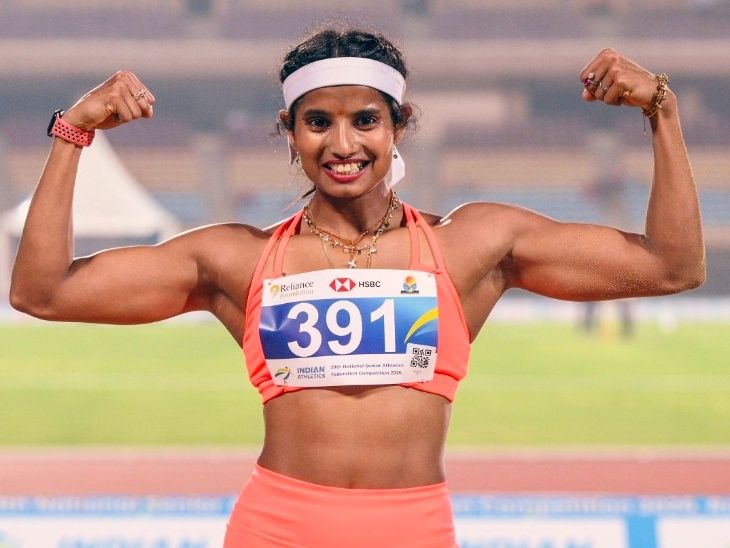
क्या गुलवीर एशियन गेम्स में मेडल की हैट्रिक लगा पाएंगे:5000 मीटर में साबले के साथ फाइनल में उतरेंगे, आज भारत के 9 मेडल मुकाबले
Hindi NewsSportsAsian Games 2026: Gulveer Singh & Avinash Sable Eye 5000m Medal | Indiaनगोया, जापान3…
Hindi NewsSportsAsian Games 2026: Gulveer Singh & Avinash Sable Eye 5000m Medal | Indiaनगोया, जापान3…
Hindi NewsSportsAnsy Sowjanya Shatters National Record In Long Jump; Joins Asias Top 8भुवनेश्वर4 घंटे पहलेकॉपी…
The World Athletics Championship in Tokyo in September 2025 was the last time we witnessed Indian javelin thrower Neeraj Chopra in action. And it was not a pretty sight. Neeraj, who was far from his best form, finished a lowly eighth and subsequently took an indefinite break to recover from the back injury he sustained during the competition.
However, he returns to a competition where he has enjoyed success in the past- Neeraj breached the 90 metre mark in the 2025 edition and won in the 2023 edition.
The World Athletics Championship in Tokyo in September 2025 was the last time we witnessed…

The Athletics Federation of India (AFI) has said female athletes shall be ineligible to compete in any of its competitions from 2027 without undergoing the SRY (Sex-Determining Region Y) gene test.
In order to ensure fairness, World Athletics (WA) introduced the once-in-a-lifetime test for athletes wishing to compete in the female category at the Tokyo World Championships last year.
Starting with the Federation meet in Ranchi last month, the AFI also began testing female athletes in domestic competitions. The cost is borne by the AFI, and the test is done by a recognised lab.
READ: Indian Athletics Series-11: Sanjivani Jadhav edges Harmilan Bains to win women’s 5,000m
Ahead of the 65th National Inter-State meet in Bhubaneswar later this month, the AFI, through its latest circular, has asked female athletes to carry requisite documents, their passport and AFI UID card, for the test.
The AFI alerted the athletes about the consequences of skipping the test this year. “With effect from next year, no athlete shall be eligible to participate in any competition organised by the AFI without undergoing the SRY gene test,” said the circular.
It said the SRY gene test must be conducted only by MedGenome Labs Ltd., the laboratory accredited and authorised by the AFI, and an athlete must seek a letter from the AFI prior to the test.
Published on Jun 16, 2026
The Athletics Federation of India (AFI) has said female athletes shall be ineligible to compete in any of its competitions from 2027 without undergoing the SRY (Sex-Determining Region Y) gene test.
In order to ensure fairness, World Athletics (WA) introduced the once-in-a-lifetime test for athletes wishing to compete in the female category at the Tokyo World Championships last year.
Starting with the Federation meet in Ranchi last month, the AFI also began testing female athletes in domestic competitions. The cost is borne by the AFI, and the test is done by a recognised lab.
READ: Indian Athletics Series-11: Sanjivani Jadhav edges Harmilan Bains to win women’s 5,000m
Ahead of the 65th National Inter-State meet in Bhubaneswar later this month, the AFI, through its latest circular, has asked female athletes to carry requisite documents, their passport and AFI UID card, for the test.
The AFI alerted the athletes about the consequences of skipping the test this year. “With effect from next year, no athlete shall be eligible to participate in any competition organised by the AFI without undergoing the SRY gene test,” said the circular.
It said the SRY gene test must be conducted only by MedGenome Labs Ltd., the laboratory accredited and authorised by the AFI, and an athlete must seek a letter from the AFI prior to the test.
Published on Jun 16, 2026
The Athletics Federation of India (AFI) has said female athletes shall be ineligible to compete…

Abhay Singh of Reliance won gold in the men’s 200m as national junior records continued to tumble on the final day of the 24th National U20 Athletics Federation Competition here on Sunday.
A majority of the medallists also achieved the Asian junior qualification mark in their respective events.
Sprinter Abhay continued his dominance in the 200m on the final day, setting a national junior record. His gold-winning time of 20.82 seconds was better than the previous record of 21.02 seconds set by N. Srinivas in 2021.
The meet record of 21.02 seconds also stands in the name of Srinivas.
ALSO READ: Ethiopia’s Assefa breaks own world record at London Marathon
Basant was outstanding in the men’s high jump (2.21m). On his way to gold, he improved the meet record of 2.19m set by Ajay Kumar in 2015.
Mogali Venkatram of Andhra Pradesh clocked 1:49.02 to win the 800m. His performance was better than the meet record of 1:49.59 set by Pradeep Senthil Kumar in 2022, but fell short of the national junior record of 1:46.92 set by Beant Singh in 2017.
Poonam also improved the meet record in the women’s javelin throw. Her gold-winning effort of 51.64m bettered the previous mark of 51.10m set by Sumar Devi in 2004.
Sadhana Ravi of Tamil Nadu won gold in the women’s triple jump with a meet record of 12.97m. The previous meet record was 12.87m, set by Gayathri Govindaraj in 2009.
Published on Apr 26, 2026
Abhay Singh of Reliance won gold in the men’s 200m as national junior records continued to tumble on the final day of the 24th National U20 Athletics Federation Competition here on Sunday.
A majority of the medallists also achieved the Asian junior qualification mark in their respective events.
Sprinter Abhay continued his dominance in the 200m on the final day, setting a national junior record. His gold-winning time of 20.82 seconds was better than the previous record of 21.02 seconds set by N. Srinivas in 2021.
The meet record of 21.02 seconds also stands in the name of Srinivas.
ALSO READ: Ethiopia’s Assefa breaks own world record at London Marathon
Basant was outstanding in the men’s high jump (2.21m). On his way to gold, he improved the meet record of 2.19m set by Ajay Kumar in 2015.
Mogali Venkatram of Andhra Pradesh clocked 1:49.02 to win the 800m. His performance was better than the meet record of 1:49.59 set by Pradeep Senthil Kumar in 2022, but fell short of the national junior record of 1:46.92 set by Beant Singh in 2017.
Poonam also improved the meet record in the women’s javelin throw. Her gold-winning effort of 51.64m bettered the previous mark of 51.10m set by Sumar Devi in 2004.
Sadhana Ravi of Tamil Nadu won gold in the women’s triple jump with a meet record of 12.97m. The previous meet record was 12.87m, set by Gayathri Govindaraj in 2009.
Published on Apr 26, 2026
Abhay Singh of Reliance won gold in the men’s 200m as national junior records continued…

Abhay Singh of Reliance won the men’s 100m dash with a meet record timing of 10.41 seconds at the National Junior U-20 Athletics as a host of athletes successfully breached the Asian Junior Qualification mark here on Friday.
His winning time was better than Asian junior qualification time of 10.46 seconds and meet record of 10.47 seconds set by Gurindervir Singh in 2018.
Nipam of Uttar Pradesh won the gold medal in the women’s 100m clocking 11.53 seconds, bettering the previous junior national record of 11.54 seconds set by Abhinaya Rajarajan during the Kochi edition in 2025.
On her way to gold, Nipam also improved the meet record of 11.63 seconds in the name of Dutee Chand set in 2014.
The Uttar Pradesh sprinter had clocked 11.60 seconds in the semis and has also achieved the Asian junior qualification time in women’s 100m of 11.79 seconds. She has a bright prospect of competing in the World Athletics U20 in Eugene, USA.
Punjab’s rising discus thrower, Amanat Kamboj, also achieved the Asian U20 qualification mark with a winning distance of 52.27m. The qualification mark was set at 50.13m.
Earlier in the morning session, Muskan from Haryana won women’s 5,000m gold with a time of 16:42.88 seconds which was better than the Asian junior qualification time of 16:52.54 seconds.
ALSO READ: Madrid Open — Rafael Nadal returns to court, plays against Jannik Sinner
Sonam Parmar, representing IOCL, won silver (16:47.89) in women’s 5,000m and was second athlete to better the Asian qualification time in the longer track race.
The winner of the women’s pole vault, B Sowndharya of Tamil Nadu also equalled the Asian junior qualification mark of 3.60m.
Kerala’s lanky Mohammed Ashfaq was the fastest runner in the men’s 400m qualification round. His time of 47.39 seconds in heats was better than the Asian junior qualification time 47.53 seconds.
Published on Apr 24, 2026
Abhay Singh of Reliance won the men’s 100m dash with a meet record timing of 10.41 seconds at the National Junior U-20 Athletics as a host of athletes successfully breached the Asian Junior Qualification mark here on Friday.
His winning time was better than Asian junior qualification time of 10.46 seconds and meet record of 10.47 seconds set by Gurindervir Singh in 2018.
Nipam of Uttar Pradesh won the gold medal in the women’s 100m clocking 11.53 seconds, bettering the previous junior national record of 11.54 seconds set by Abhinaya Rajarajan during the Kochi edition in 2025.
On her way to gold, Nipam also improved the meet record of 11.63 seconds in the name of Dutee Chand set in 2014.
The Uttar Pradesh sprinter had clocked 11.60 seconds in the semis and has also achieved the Asian junior qualification time in women’s 100m of 11.79 seconds. She has a bright prospect of competing in the World Athletics U20 in Eugene, USA.
Punjab’s rising discus thrower, Amanat Kamboj, also achieved the Asian U20 qualification mark with a winning distance of 52.27m. The qualification mark was set at 50.13m.
Earlier in the morning session, Muskan from Haryana won women’s 5,000m gold with a time of 16:42.88 seconds which was better than the Asian junior qualification time of 16:52.54 seconds.
ALSO READ: Madrid Open — Rafael Nadal returns to court, plays against Jannik Sinner
Sonam Parmar, representing IOCL, won silver (16:47.89) in women’s 5,000m and was second athlete to better the Asian qualification time in the longer track race.
The winner of the women’s pole vault, B Sowndharya of Tamil Nadu also equalled the Asian junior qualification mark of 3.60m.
Kerala’s lanky Mohammed Ashfaq was the fastest runner in the men’s 400m qualification round. His time of 47.39 seconds in heats was better than the Asian junior qualification time 47.53 seconds.
Published on Apr 24, 2026
Abhay Singh of Reliance won the men’s 100m dash with a meet record timing of…

KOLKATA: Indian athletes will have to go through stringent anti-doping stipulations, including minimum testing requirements, as the Athletics Integrity Unit (AIU) has moved the Athletics Federation of India (AFI) from Category ‘B’ to ‘A’ because of the “consistently extremely high risk of doping in India.”
The AIU, an independent body managing integrity related issues in international athletics, recently took the decision on the basis of Rule 15 of the World Anti-Doping Agency (WADA) on categorisation of federations according to their doping risk to the sport.
The AIU noted that India ranked in the top two for the most Anti-Doping Rule Violations (ADRVs) in athletics between 2022 and 2025. “In 2022, India recorded 48 ADRVs (2 nd); in 2023, 63 (2 nd); in 2024, 71 (1 st); and for 2025, India has recorded 30 ADRVs so far (1 st).”
AIU chair David Howman said, “The doping situation in India has been high-risk for a long time and, unfortunately, the quality of the domestic anti-doping programme is simply not proportionate to the doping risk.
“While the AFI has advocated for anti-doping reforms within India, not enough has changed. The AIU will now work with the AFI to achieve reforms to safeguard the integrity of athletics, as we have done with other ‘Category A’ member federations.”
Belarus, Bahrain, Ethiopia, Kenya, Nigeria, Russia and Ukraine are there in Category ‘A.’
“We will continue to work with the AIU and National Anti-Doping Agency (NADA) in the battle against doping in Indian athletics. The AFI has been advocating to criminalise the perpetrators of doping, especially at the grassroots level. It will deter coaches and parents from resorting to doping young athletes,” said an AFI release.
ALSO READ: World Athletics denies 11 athletes permission to change nationality to Turkiye
The AFI expressed confidence that sooner than later India would be taken off Category ‘A.’
The doping menace has seriously challenged India’s aspirations to host multi-sport events. The country – which will host the 2030 Commonwealth Games and is interested in bidding for the 2036 Olympics – has been the table topper in overall dope positive cases for three consecutive years.
During his recent visit to Delhi, WADA Director Witold Banka highlighted the issue of easy availability of performance enhancing drugs in India and sought Government agencies’ support to break supply lines.
Union Sports Minister Mansukh Mandaviya said the Government would introduce criminal provisions against those involved in administering or trafficking prohibited substances.
Published on Apr 20, 2026
KOLKATA: Indian athletes will have to go through stringent anti-doping stipulations, including minimum testing requirements, as the Athletics Integrity Unit (AIU) has moved the Athletics Federation of India (AFI) from Category ‘B’ to ‘A’ because of the “consistently extremely high risk of doping in India.”
The AIU, an independent body managing integrity related issues in international athletics, recently took the decision on the basis of Rule 15 of the World Anti-Doping Agency (WADA) on categorisation of federations according to their doping risk to the sport.
The AIU noted that India ranked in the top two for the most Anti-Doping Rule Violations (ADRVs) in athletics between 2022 and 2025. “In 2022, India recorded 48 ADRVs (2 nd); in 2023, 63 (2 nd); in 2024, 71 (1 st); and for 2025, India has recorded 30 ADRVs so far (1 st).”
AIU chair David Howman said, “The doping situation in India has been high-risk for a long time and, unfortunately, the quality of the domestic anti-doping programme is simply not proportionate to the doping risk.
“While the AFI has advocated for anti-doping reforms within India, not enough has changed. The AIU will now work with the AFI to achieve reforms to safeguard the integrity of athletics, as we have done with other ‘Category A’ member federations.”
Belarus, Bahrain, Ethiopia, Kenya, Nigeria, Russia and Ukraine are there in Category ‘A.’
“We will continue to work with the AIU and National Anti-Doping Agency (NADA) in the battle against doping in Indian athletics. The AFI has been advocating to criminalise the perpetrators of doping, especially at the grassroots level. It will deter coaches and parents from resorting to doping young athletes,” said an AFI release.
ALSO READ: World Athletics denies 11 athletes permission to change nationality to Turkiye
The AFI expressed confidence that sooner than later India would be taken off Category ‘A.’
The doping menace has seriously challenged India’s aspirations to host multi-sport events. The country – which will host the 2030 Commonwealth Games and is interested in bidding for the 2036 Olympics – has been the table topper in overall dope positive cases for three consecutive years.
During his recent visit to Delhi, WADA Director Witold Banka highlighted the issue of easy availability of performance enhancing drugs in India and sought Government agencies’ support to break supply lines.
Union Sports Minister Mansukh Mandaviya said the Government would introduce criminal provisions against those involved in administering or trafficking prohibited substances.
Published on Apr 20, 2026
KOLKATA: Indian athletes will have to go through stringent anti-doping stipulations, including minimum testing requirements,…

The Athletics Federation of India (AFI) has adopted the ‘Kohima Declaration’ for giving a major push to develop athletics in Nagaland and the Northeast through targeted interventions, infrastructure support and promotion of the region as a hub for national and international competitions.
Adopted at the conclusion of its two-day annual general meeting here, the declaration emphasises integrating the Northeast into the national sporting ecosystem while creating pathways for youth to excel at the highest levels.
It also underlined the role of athletics in nation-building and fostering unity across regions.
Briefing the media here on Wednesday, South Asian Athletics Federation president Lalit K. Bhanot said the meeting involved extensive deliberations and resulted in key decisions aimed at strengthening the sport.
Among them, the federation has made SRY gene testing mandatory for athletes participating in national competitions, with the cost to be borne by AFI in collaboration with the government.
The federation will also undertake DNA testing of athletes for research and performance mapping, beginning with around 100 athletes, said Bhanot.
In a move to expand grassroots participation, AFI has decided to restructure district-level bodies to ensure wider rural representation by limiting members from district headquarters and including those from villages and blocks.
To popularise athletics nationwide, the federation will organise an annual 2-kilometre race across about 700 districts on August 30 each year, Bhanot informed.
AFI vice-president and World Athletics president Adille J. Sumariwalla announced action against non-performing state units, stating that the existing bodies in Chhattisgarh and Arunachal Pradesh will be suspended and replaced by ad hoc committees.
According to Sumariwalla, Tripura and Manipur have been placed on a watch list and downgraded to associate members without voting rights, warning of further action if performance does not improve.
He also informed that foreign high-performance directors have been appointed for senior and junior athletes to enhance India’s competitive standards.
Published on Apr 15, 2026
The Athletics Federation of India (AFI) has adopted the ‘Kohima Declaration’ for giving a major push to develop athletics in Nagaland and the Northeast through targeted interventions, infrastructure support and promotion of the region as a hub for national and international competitions.
Adopted at the conclusion of its two-day annual general meeting here, the declaration emphasises integrating the Northeast into the national sporting ecosystem while creating pathways for youth to excel at the highest levels.
It also underlined the role of athletics in nation-building and fostering unity across regions.
Briefing the media here on Wednesday, South Asian Athletics Federation president Lalit K. Bhanot said the meeting involved extensive deliberations and resulted in key decisions aimed at strengthening the sport.
Among them, the federation has made SRY gene testing mandatory for athletes participating in national competitions, with the cost to be borne by AFI in collaboration with the government.
The federation will also undertake DNA testing of athletes for research and performance mapping, beginning with around 100 athletes, said Bhanot.
In a move to expand grassroots participation, AFI has decided to restructure district-level bodies to ensure wider rural representation by limiting members from district headquarters and including those from villages and blocks.
To popularise athletics nationwide, the federation will organise an annual 2-kilometre race across about 700 districts on August 30 each year, Bhanot informed.
AFI vice-president and World Athletics president Adille J. Sumariwalla announced action against non-performing state units, stating that the existing bodies in Chhattisgarh and Arunachal Pradesh will be suspended and replaced by ad hoc committees.
According to Sumariwalla, Tripura and Manipur have been placed on a watch list and downgraded to associate members without voting rights, warning of further action if performance does not improve.
He also informed that foreign high-performance directors have been appointed for senior and junior athletes to enhance India’s competitive standards.
Published on Apr 15, 2026
The Athletics Federation of India (AFI) has adopted the ‘Kohima Declaration’ for giving a major…

Learning from past mistakes but not dwelling too much on missed medals and focussing on the future is what an athlete’s life is all about.
Triple jumper Abdulla Aboobacker knows it all too well.
The 30-year-old Abdulla, a Junior Warrant Officer in the Indian Air Force, is ready for another crucial season in his career after a disappointing end to 2025. On the agenda this year are two mega events – Commonwealth Games (CWG), where he won silver in 2022, and the Asian Games.
In an exclusive interview with Sportstar, Abdulla reveals how he is approaching the 2026 season, his thoughts on the qualification criteria for CWG and Asian Games and more:-
When did you end your 2025 season and begin your off season?
I ended my season at the World Championship in Japan (where he failed to qualify for the final). Then, I started the off season at the Air Force base in Bengaluru. Even now, I have taken part in two competitions but it is still the off season. I haven’t started my season yet.
Did you take a break after the World Championships?
After the World Championships, I took a one-and-a-half-month break. Then, I went to Inspire Institute of Sport (IIS) for rehab and strength and conditioning before joining training at Air Force in December. Since then, I have been training there under coach Harikrishnan along with Karthik Unnikrishnan & long jumper Siddharth Mohan Naik.
Did you make any changes in your technique or strategy during the off season?
Last year, I hit my peak in the off season itself. I thought I’ll start with explosive speed and then, maintain stability. I jumped 17.19m in the first competition itself. I did so well in the off season but could not be consistent later. I could not do the off season properly.
This year, I thought that I’ll compete in two events in the off season itself but won’t hit my peak yet. If I peaked too soon, it will cause issues later in the year when there is Asian Games in September-October.
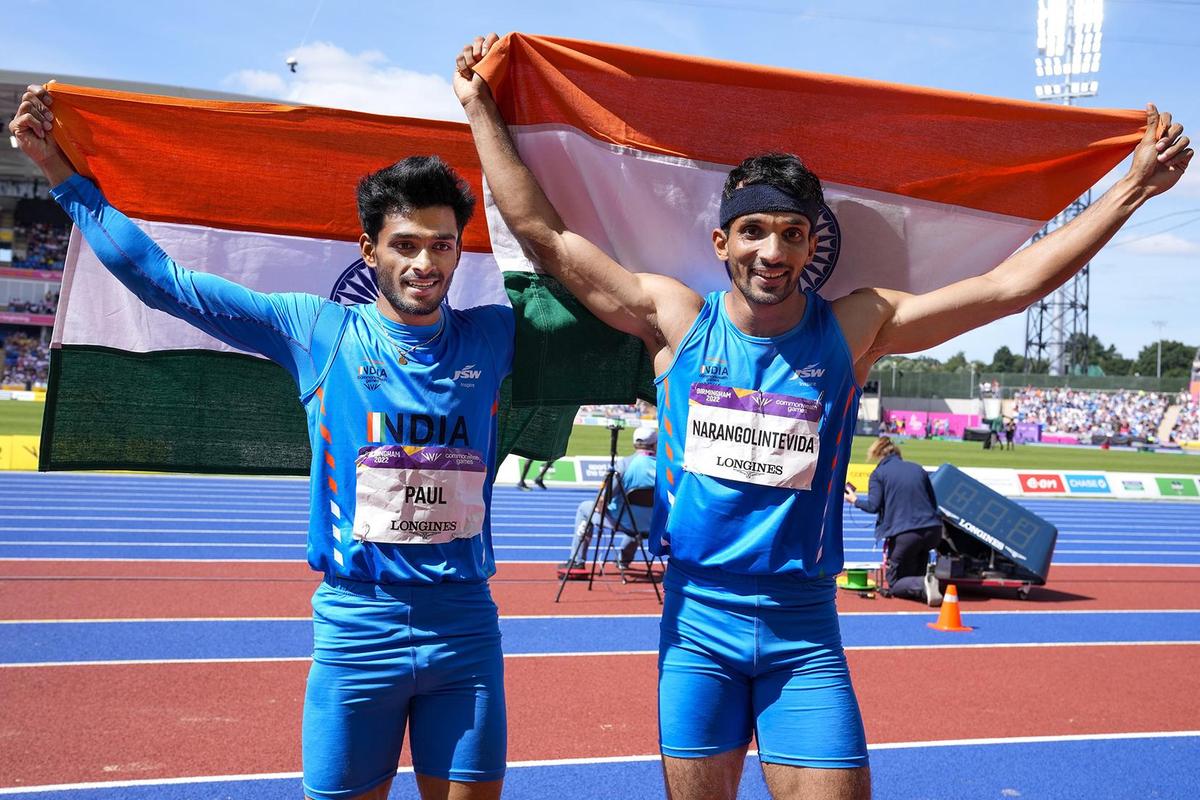
Gold medal winner Eldhose Paul, left, of India and compatriot and silver medal winner Abdulla Aboobacker celebrate after the men’s triple jump final at the 2022 Commonwealth Games in Birmingham. | Photo Credit: AP

Gold medal winner Eldhose Paul, left, of India and compatriot and silver medal winner Abdulla Aboobacker celebrate after the men’s triple jump final at the 2022 Commonwealth Games in Birmingham. | Photo Credit: AP
My target is to put in full effort during the Federation Cup now.
My coach told me to do only three jumps during the first two competitions. I did three jumps during the Indian Open Jumps Competition. In Indian Athletics Series 1, I did three. I felt I was jumping well and could potentially break the National Record (17.37m), so I attempted a fourth one but it was a foul.
Then I thought that it is okay. There is good competition this year with Praveen (Chithravel) and also, Selva Prabhu who cleared 17m (17.05 at the NCAA Indoor Championships). So, I feel we can break the NR at the Fed Cup.
How do you see the qualification criteria set by the Athletics Federation of India (AFI) for CWG and Asian Games? You can’t qualify by meeting the entry standard once. You have to take part in two meets, state championships, Fed Cup and then, at Inter-State, which will be the final selection trial, to achieve the entry standard again.
Our target is the Asian Games. Jumping at the state meet and nationals will provide experience and help our coordination. If this is my mentality, then I won’t feel any pressure or mental stress.
If we think about why AFI is doing this while our focus is just on one competition, then we won’t be able to concentrate. We have to be ready for anything. I feel the federation is right as they want consistent performances. If I do well in one event and I’m down in the next, even they’ll start doubting.
What is your main goal for this season? You have already achieved the qualifying mark for Asian Games (16.28m). And CWG shouldn’t be a problem either.
The qualification standard for CWG is 16.89m. In my first two events, I did 16.83m and 16.82m. So, it is manageable. What’s in my mind is that I won silver at last CWG while Eldhose Paul won gold. In that same competition, there was a Jamaican triple jumper, Jordan Scott, who is doing well globally now. He did 17.52m in 2025. Right now, he is close to 17.30-17.40. My mindset is to compete with him and beat him. He won silver in World Indoors and is a consistent jumper.
For Asian Games, the Chinese and the Korean teams are good competitors.
Triple jump is such an explosive and technical discipline. How do you manage injuries?
Injuries will come and go in sports. JSW supports so much that I just need to make one call and everything will be ready before I go to IIS for rehab. That’s why, I don’t feel any tension.
Right now, I’m training at the Air Force base but in case I need any help in terms of facilities or focussed rehab, I can put in a request here and go to IIS.
I had heel pain in 2022 and 2025. Back pain, ankle pain…. All this is normal since we are pushing our bodies a lot.
I notice the symptoms early and adjust my recovery accordingly. I am not alone. I have a big support system behind me.
At the last Asian Games, you finished fourth. Does it still bother you that you came so close to a medal?
Actually, even at CWG, the difference between Eldhose and me was one centimetre. Next year, at the Asian Games, the gap between me and Praveen, who finished third, was six centimetres.
This time, I don’t want it to be so close and therefore, I’m targeting bigger jumps.
The last Asian Games was three years ago and I can’t do anything about it. But it felt really bad to finish fourth because finishing fourth, 10th or 100th is all equal in terms of participation value. No one will even remember if I finished fourth or 10th.
Nevertheless, now it is about focussing on the future.
Published on Apr 14, 2026
Learning from past mistakes but not dwelling too much on missed medals and focussing on the future is what an athlete’s life is all about.
Triple jumper Abdulla Aboobacker knows it all too well.
The 30-year-old Abdulla, a Junior Warrant Officer in the Indian Air Force, is ready for another crucial season in his career after a disappointing end to 2025. On the agenda this year are two mega events – Commonwealth Games (CWG), where he won silver in 2022, and the Asian Games.
In an exclusive interview with Sportstar, Abdulla reveals how he is approaching the 2026 season, his thoughts on the qualification criteria for CWG and Asian Games and more:-
When did you end your 2025 season and begin your off season?
I ended my season at the World Championship in Japan (where he failed to qualify for the final). Then, I started the off season at the Air Force base in Bengaluru. Even now, I have taken part in two competitions but it is still the off season. I haven’t started my season yet.
Did you take a break after the World Championships?
After the World Championships, I took a one-and-a-half-month break. Then, I went to Inspire Institute of Sport (IIS) for rehab and strength and conditioning before joining training at Air Force in December. Since then, I have been training there under coach Harikrishnan along with Karthik Unnikrishnan & long jumper Siddharth Mohan Naik.
Did you make any changes in your technique or strategy during the off season?
Last year, I hit my peak in the off season itself. I thought I’ll start with explosive speed and then, maintain stability. I jumped 17.19m in the first competition itself. I did so well in the off season but could not be consistent later. I could not do the off season properly.
This year, I thought that I’ll compete in two events in the off season itself but won’t hit my peak yet. If I peaked too soon, it will cause issues later in the year when there is Asian Games in September-October.
Gold medal winner Eldhose Paul, left, of India and compatriot and silver medal winner Abdulla Aboobacker celebrate after the men’s triple jump final at the 2022 Commonwealth Games in Birmingham. | Photo Credit: AP
Gold medal winner Eldhose Paul, left, of India and compatriot and silver medal winner Abdulla Aboobacker celebrate after the men’s triple jump final at the 2022 Commonwealth Games in Birmingham. | Photo Credit: AP
My target is to put in full effort during the Federation Cup now.
My coach told me to do only three jumps during the first two competitions. I did three jumps during the Indian Open Jumps Competition. In Indian Athletics Series 1, I did three. I felt I was jumping well and could potentially break the National Record (17.37m), so I attempted a fourth one but it was a foul.
Then I thought that it is okay. There is good competition this year with Praveen (Chithravel) and also, Selva Prabhu who cleared 17m (17.05 at the NCAA Indoor Championships). So, I feel we can break the NR at the Fed Cup.
How do you see the qualification criteria set by the Athletics Federation of India (AFI) for CWG and Asian Games? You can’t qualify by meeting the entry standard once. You have to take part in two meets, state championships, Fed Cup and then, at Inter-State, which will be the final selection trial, to achieve the entry standard again.
Our target is the Asian Games. Jumping at the state meet and nationals will provide experience and help our coordination. If this is my mentality, then I won’t feel any pressure or mental stress.
If we think about why AFI is doing this while our focus is just on one competition, then we won’t be able to concentrate. We have to be ready for anything. I feel the federation is right as they want consistent performances. If I do well in one event and I’m down in the next, even they’ll start doubting.
What is your main goal for this season? You have already achieved the qualifying mark for Asian Games (16.28m). And CWG shouldn’t be a problem either.
The qualification standard for CWG is 16.89m. In my first two events, I did 16.83m and 16.82m. So, it is manageable. What’s in my mind is that I won silver at last CWG while Eldhose Paul won gold. In that same competition, there was a Jamaican triple jumper, Jordan Scott, who is doing well globally now. He did 17.52m in 2025. Right now, he is close to 17.30-17.40. My mindset is to compete with him and beat him. He won silver in World Indoors and is a consistent jumper.
For Asian Games, the Chinese and the Korean teams are good competitors.
Triple jump is such an explosive and technical discipline. How do you manage injuries?
Injuries will come and go in sports. JSW supports so much that I just need to make one call and everything will be ready before I go to IIS for rehab. That’s why, I don’t feel any tension.
Right now, I’m training at the Air Force base but in case I need any help in terms of facilities or focussed rehab, I can put in a request here and go to IIS.
I had heel pain in 2022 and 2025. Back pain, ankle pain…. All this is normal since we are pushing our bodies a lot.
I notice the symptoms early and adjust my recovery accordingly. I am not alone. I have a big support system behind me.
At the last Asian Games, you finished fourth. Does it still bother you that you came so close to a medal?
Actually, even at CWG, the difference between Eldhose and me was one centimetre. Next year, at the Asian Games, the gap between me and Praveen, who finished third, was six centimetres.
This time, I don’t want it to be so close and therefore, I’m targeting bigger jumps.
The last Asian Games was three years ago and I can’t do anything about it. But it felt really bad to finish fourth because finishing fourth, 10th or 100th is all equal in terms of participation value. No one will even remember if I finished fourth or 10th.
Nevertheless, now it is about focussing on the future.
Published on Apr 14, 2026
Learning from past mistakes but not dwelling too much on missed medals and focussing on…
A star-studded field will compete at the Indian Athletics Series 3 in New Delhi on Saturday with the added motivation of performing on the recently-laid Mondo track at the Jawaharlal Nehru Stadium.
Several national record holders including Animesh Kujur (men’s 100m and 200m), Vishal TK (men’s 400m), Tajinderpal Singh Toor (men’s shot put) and Hima Das (women’s 400m) are in the fray. Javelin thrower Sachin Yadav, who finished fourth in the 2025 World Championships in Tokyo, will also be in action.
Their names figured in the entry list issued by the Athletics Federation of India (AFI) though the final contestants will be known on Friday.
For 26-year-old Hima, this will be her return to the tracks after two years, her last competition being at the National Inter-State Championships in June 2024.
In the men’s 100m, Kujur will not find it easy as former national record holder Gurindervir Singh is in the fray. Gurindervir had won the 60m gold at the inaugural National Indoor Championships last month in Bhubaneswar where Kujur was disqualified for a false start in the final.
ALSO READ | Athletes now need mandatory federation approval before signing with sponsors, says AFI
Gurindervir has a 100m personal best of 10.20 seconds while Kujur’s national record stands at 10.18 seconds.
“I am competing at the Indian Athletics Series in New Delhi. There is the Mondo track there, and I want to run on the fast track,” Kujur had said during the National Indoor Championships.
The men’s 200m will see Kujur up against Vishal, whose pet event is though 400m.
Vishal will be running his first individual 400m race after smashing the national record by clocking 45.12 seconds at the National Inter-State Championships in August 2025 in Chennai.
The 31-year-old Toor is entering the shot put competition with a lot of confidence, having heaved the iron ball past the 20m mark on two occasions this season.
The men’s javelin throw will see almost all the top Indians, save for two-time Olympic medallist Neeraj Chopra who is currently training abroad.
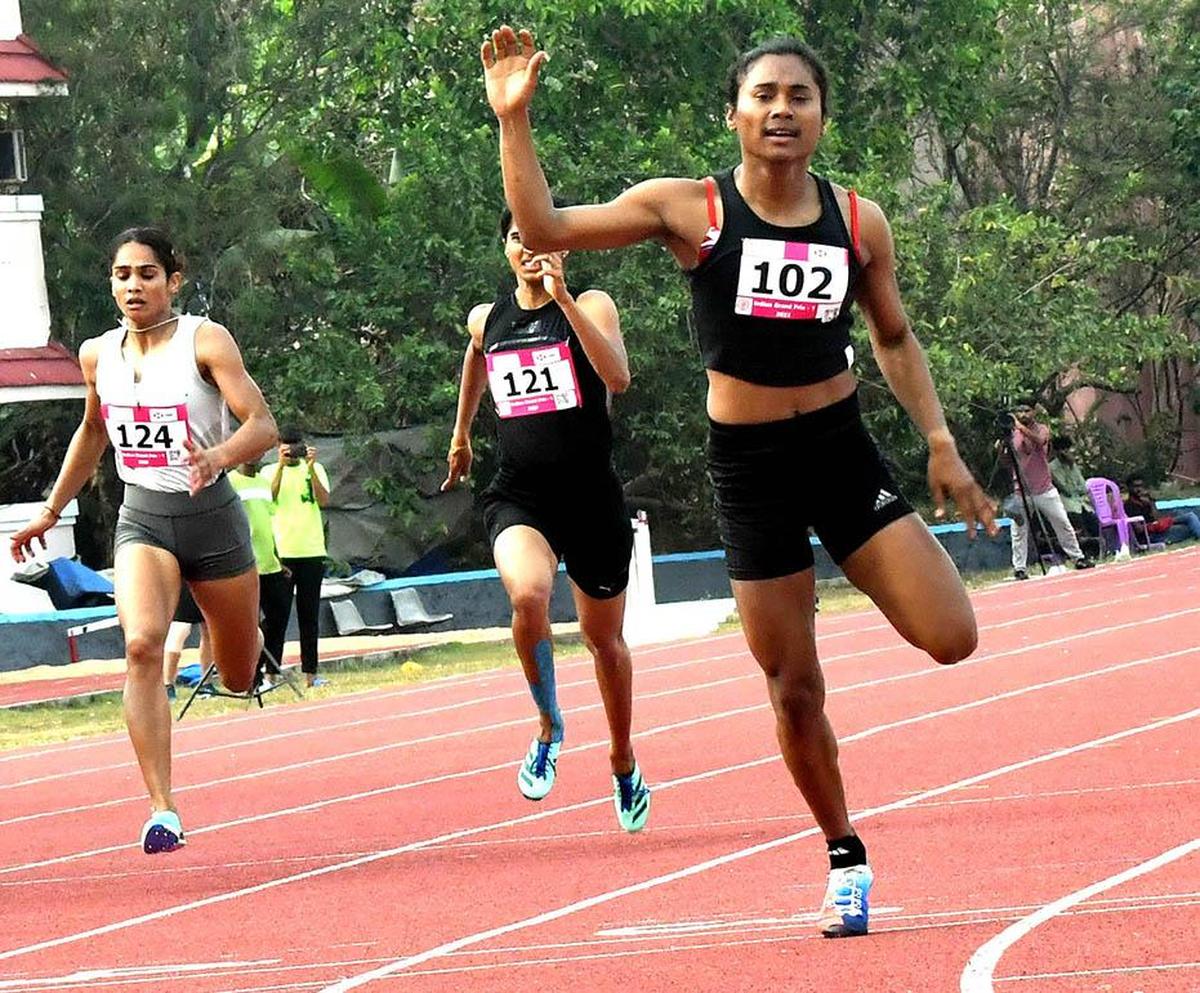
FILE PHOTO: Hima Das’ last competition was the National Inter-State Championships in June 2024. | Photo Credit: The Hindu Photo Library
FILE PHOTO: Hima Das’ last competition was the National Inter-State Championships in June 2024. | Photo Credit: The Hindu Photo Library
The 26-year-old Sachin Yadav, who performed beyond expectations and finished fourth in the 2025 World Championships with a throw of 86.27m, will be competing in his first event after the creditable feat.
The others in the entries list are the likes of Kishore Kumar Jena, Rohit Yadav, Yashvir Singh, Vikrant Malik and Shivam Lokhare.
Among women, Hima has entered in both the 200m and 400m where the likes of Sri Jyothika Dandi, Aishwarya Mishra and MR Poovamma are also in the fray.
The women’s high jump will see young Haryana athlete and Asian champion Pooja Singh competing. Shaili Singh will be competing against another promising athlete Mubassina Mohammed in the women’s long jump. Both train at the Anju Bobby George Foundation in Bengaluru.
The meet also has events in the Under-20 category.
Published on Apr 09, 2026

A star-studded field will compete at the Indian Athletics Series 3 in New Delhi on Saturday with the added motivation of performing on the recently-laid Mondo track at the Jawaharlal Nehru Stadium.
Several national record holders including Animesh Kujur (men’s 100m and 200m), Vishal TK (men’s 400m), Tajinderpal Singh Toor (men’s shot put) and Hima Das (women’s 400m) are in the fray. Javelin thrower Sachin Yadav, who finished fourth in the 2025 World Championships in Tokyo, will also be in action.
Their names figured in the entry list issued by the Athletics Federation of India (AFI) though the final contestants will be known on Friday.
For 26-year-old Hima, this will be her return to the tracks after two years, her last competition being at the National Inter-State Championships in June 2024.
In the men’s 100m, Kujur will not find it easy as former national record holder Gurindervir Singh is in the fray. Gurindervir had won the 60m gold at the inaugural National Indoor Championships last month in Bhubaneswar where Kujur was disqualified for a false start in the final.
ALSO READ | Athletes now need mandatory federation approval before signing with sponsors, says AFI
Gurindervir has a 100m personal best of 10.20 seconds while Kujur’s national record stands at 10.18 seconds.
“I am competing at the Indian Athletics Series in New Delhi. There is the Mondo track there, and I want to run on the fast track,” Kujur had said during the National Indoor Championships.
The men’s 200m will see Kujur up against Vishal, whose pet event is though 400m.
Vishal will be running his first individual 400m race after smashing the national record by clocking 45.12 seconds at the National Inter-State Championships in August 2025 in Chennai.
The 31-year-old Toor is entering the shot put competition with a lot of confidence, having heaved the iron ball past the 20m mark on two occasions this season.
The men’s javelin throw will see almost all the top Indians, save for two-time Olympic medallist Neeraj Chopra who is currently training abroad.
FILE PHOTO: Hima Das’ last competition was the National Inter-State Championships in June 2024. | Photo Credit: The Hindu Photo Library
FILE PHOTO: Hima Das’ last competition was the National Inter-State Championships in June 2024. | Photo Credit: The Hindu Photo Library
The 26-year-old Sachin Yadav, who performed beyond expectations and finished fourth in the 2025 World Championships with a throw of 86.27m, will be competing in his first event after the creditable feat.
The others in the entries list are the likes of Kishore Kumar Jena, Rohit Yadav, Yashvir Singh, Vikrant Malik and Shivam Lokhare.
Among women, Hima has entered in both the 200m and 400m where the likes of Sri Jyothika Dandi, Aishwarya Mishra and MR Poovamma are also in the fray.
The women’s high jump will see young Haryana athlete and Asian champion Pooja Singh competing. Shaili Singh will be competing against another promising athlete Mubassina Mohammed in the women’s long jump. Both train at the Anju Bobby George Foundation in Bengaluru.
The meet also has events in the Under-20 category.
Published on Apr 09, 2026
A star-studded field will compete at the Indian Athletics Series 3 in New Delhi on Saturday with the added motivation of performing on the recently-laid Mondo track at the Jawaharlal Nehru Stadium.
Several national record holders including Animesh Kujur (men’s 100m and 200m), Vishal TK (men’s 400m), Tajinderpal Singh Toor (men’s shot put) and Hima Das (women’s 400m) are in the fray. Javelin thrower Sachin Yadav, who finished fourth in the 2025 World Championships in Tokyo, will also be in action.
Their names figured in the entry list issued by the Athletics Federation of India (AFI) though the final contestants will be known on Friday.
For 26-year-old Hima, this will be her return to the tracks after two years, her last competition being at the National Inter-State Championships in June 2024.
In the men’s 100m, Kujur will not find it easy as former national record holder Gurindervir Singh is in the fray. Gurindervir had won the 60m gold at the inaugural National Indoor Championships last month in Bhubaneswar where Kujur was disqualified for a false start in the final.
ALSO READ | Athletes now need mandatory federation approval before signing with sponsors, says AFI
Gurindervir has a 100m personal best of 10.20 seconds while Kujur’s national record stands at 10.18 seconds.
“I am competing at the Indian Athletics Series in New Delhi. There is the Mondo track there, and I want to run on the fast track,” Kujur had said during the National Indoor Championships.
The men’s 200m will see Kujur up against Vishal, whose pet event is though 400m.
Vishal will be running his first individual 400m race after smashing the national record by clocking 45.12 seconds at the National Inter-State Championships in August 2025 in Chennai.
The 31-year-old Toor is entering the shot put competition with a lot of confidence, having heaved the iron ball past the 20m mark on two occasions this season.
The men’s javelin throw will see almost all the top Indians, save for two-time Olympic medallist Neeraj Chopra who is currently training abroad.
FILE PHOTO: Hima Das’ last competition was the National Inter-State Championships in June 2024. | Photo Credit: The Hindu Photo Library
FILE PHOTO: Hima Das’ last competition was the National Inter-State Championships in June 2024. | Photo Credit: The Hindu Photo Library
The 26-year-old Sachin Yadav, who performed beyond expectations and finished fourth in the 2025 World Championships with a throw of 86.27m, will be competing in his first event after the creditable feat.
The others in the entries list are the likes of Kishore Kumar Jena, Rohit Yadav, Yashvir Singh, Vikrant Malik and Shivam Lokhare.
Among women, Hima has entered in both the 200m and 400m where the likes of Sri Jyothika Dandi, Aishwarya Mishra and MR Poovamma are also in the fray.
The women’s high jump will see young Haryana athlete and Asian champion Pooja Singh competing. Shaili Singh will be competing against another promising athlete Mubassina Mohammed in the women’s long jump. Both train at the Anju Bobby George Foundation in Bengaluru.
The meet also has events in the Under-20 category.
Published on Apr 09, 2026
A star-studded field will compete at the Indian Athletics Series 3 in New Delhi on…