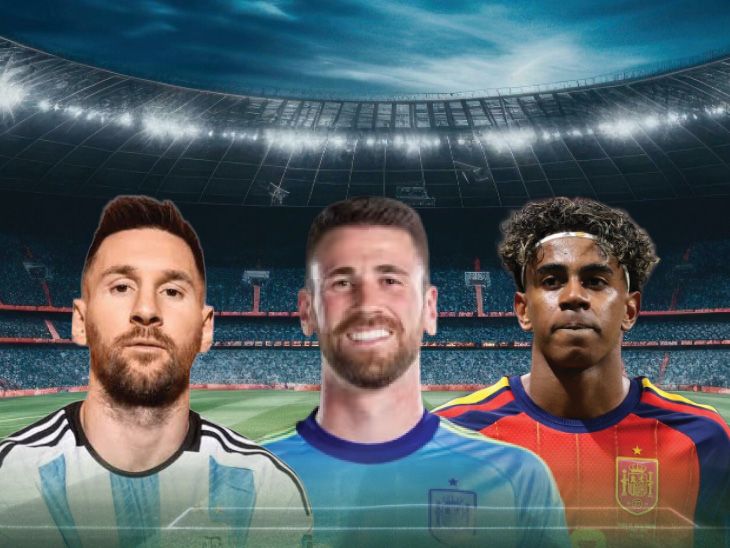
Spain and Argentina’s World Cup trophy count before 2026 final
Spain and Argentina faced off Sunday in the World Cup final at MetLife Stadium in…
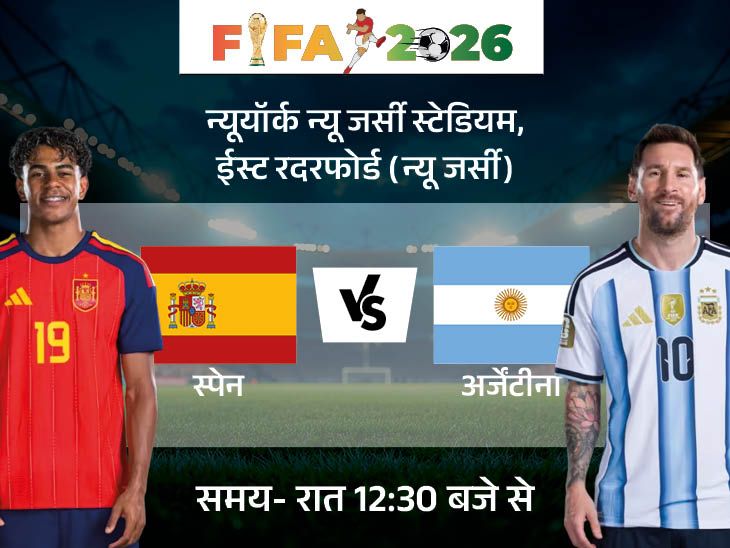
न्यूयॉर्क31 मिनट पहलेकॉपी लिंकफीफा वर्ल्ड कप का फाइनल मुकाबला आज स्पेन और अर्जेंटीना के बीच…
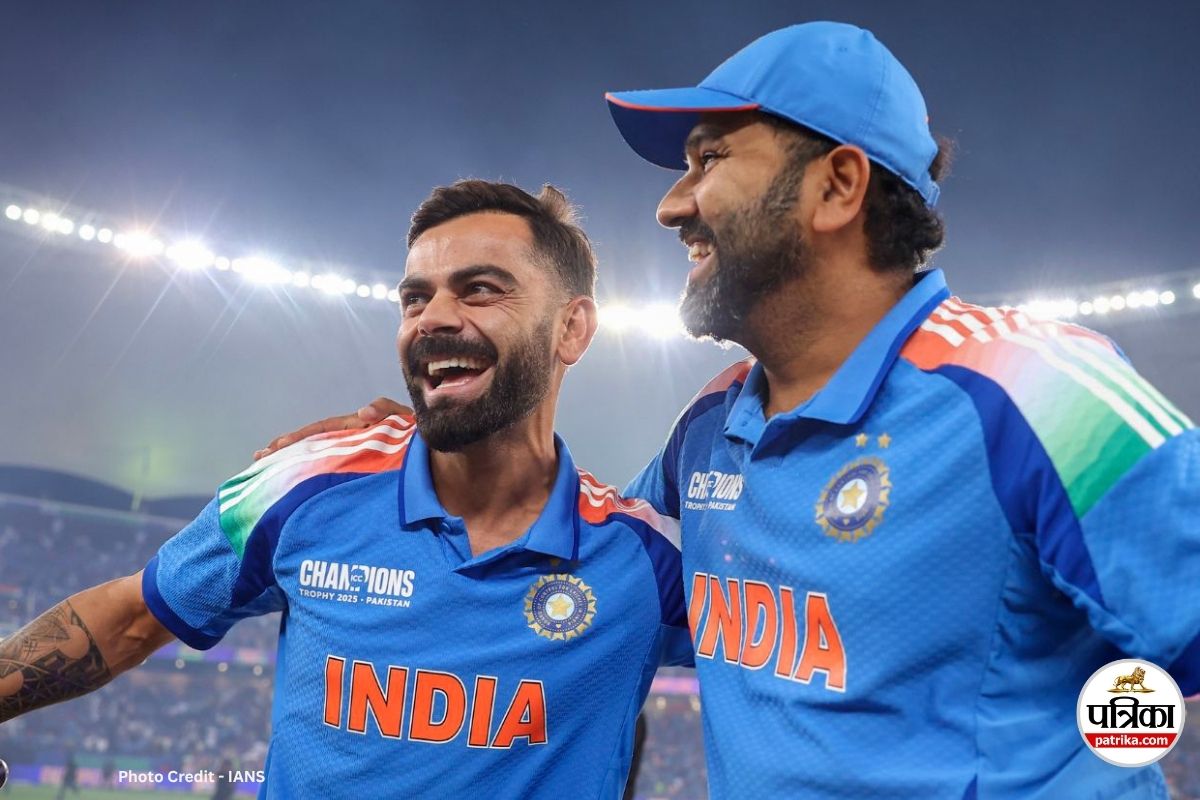
कैफ ने रोहित और विराट के महत्व को समझाने के लिए फुटबॉल के महान खिलाड़ी…
Hindi NewsSportsLionel Messi; Argentina Vs Spain FIFA World Cup 2026 Key Players Analysis | Lamine…
By breakfast, the World Cup semifinal had already begun. Hotel lobbies, elevators and street corners around downtown had become meeting points for two of football’s most passionate travelling nations. Argentinians, draped in sky blue and white, cradled their morning mate long before the first beer found its way into their hands. England supporters, wrapped in the white of the Three Lions, preferred to begin the day at the nearest pub, where breakfast arrived mostly in liquid form.
They exchanged smiles, songs and the occasional jab, but beneath the banter was the unmistakable tension that only England against Argentina can summon. This was never just another World Cup semifinal. It was a rivalry that had travelled from Antonio Rattín to Diego Maradona, from David Beckham to Lionel Messi, and was now in Atlanta for the latest battle.
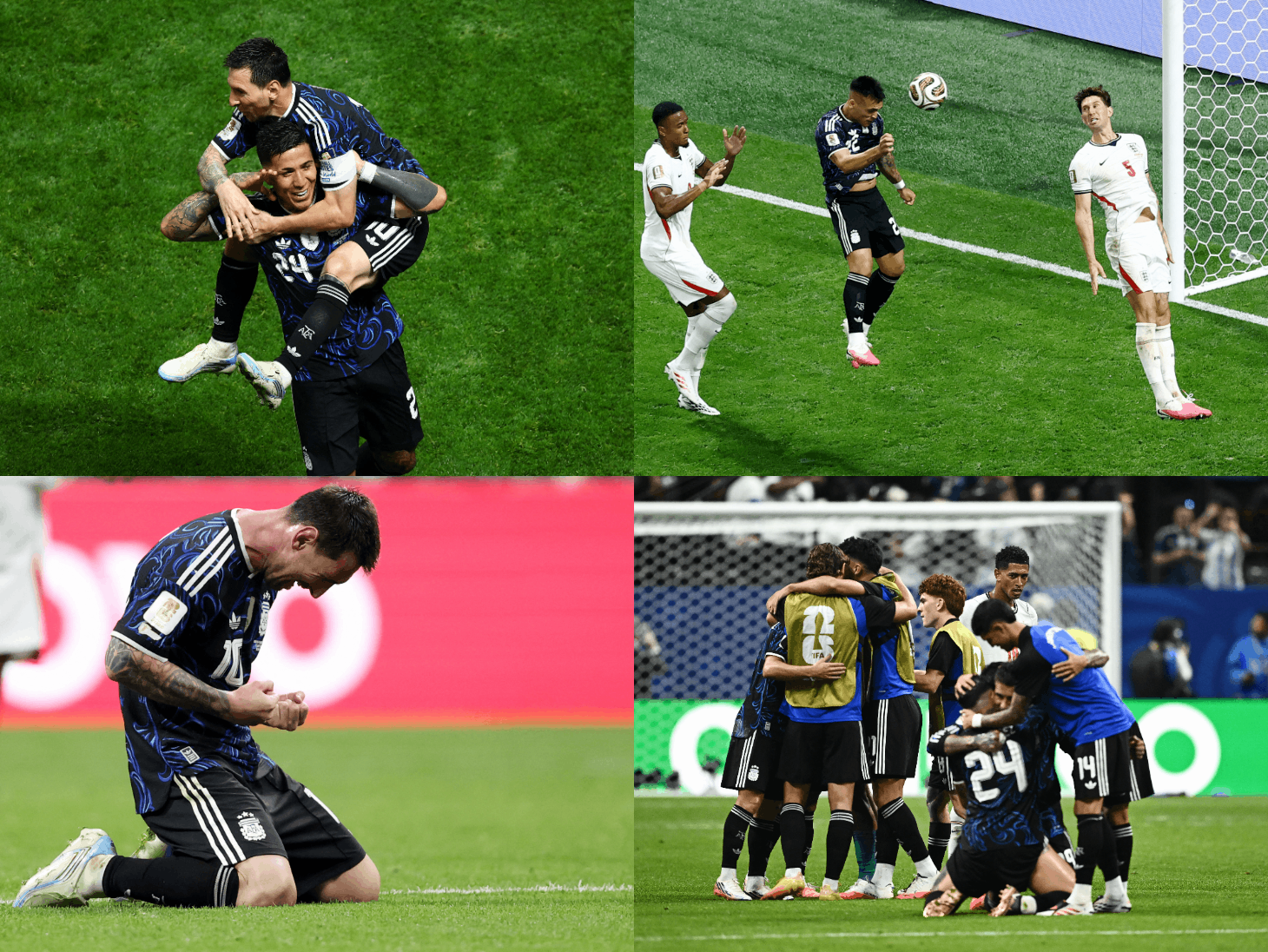
Match Report –Argentina beats England to reach final
Argentina appeared to understand the emotional assignment from the opening whistle. There was an extra spring in every stride and greater force in every collision. Its players clattered into challenges, chased lost causes and celebrated tackles.
More than four decades have passed since the Falklands War, but in Argentina, the islands remain Las Malvinas, part of a national wound that has never completely healed. The 1982 conflict lasted from April 2 to June 14 and ended with Argentina’s surrender. Six hundred and forty-nine Argentine servicemen, 255 British personnel and three civilians were killed.
The dispute has endured across politics, public memory and football. For many Argentinians, an encounter with England cannot be separated entirely from the young men who left for the South Atlantic and never returned.
Maradona understood that instinctively. Four years after the war, he scored twice against England at the Azteca, first with the Hand of God and then with perhaps the greatest goal the World Cup has ever witnessed. Maradona would later describe the victory as revenge. For Argentina, those four minutes in 1986 are more than sporting history. They became part of the country’s mythology.
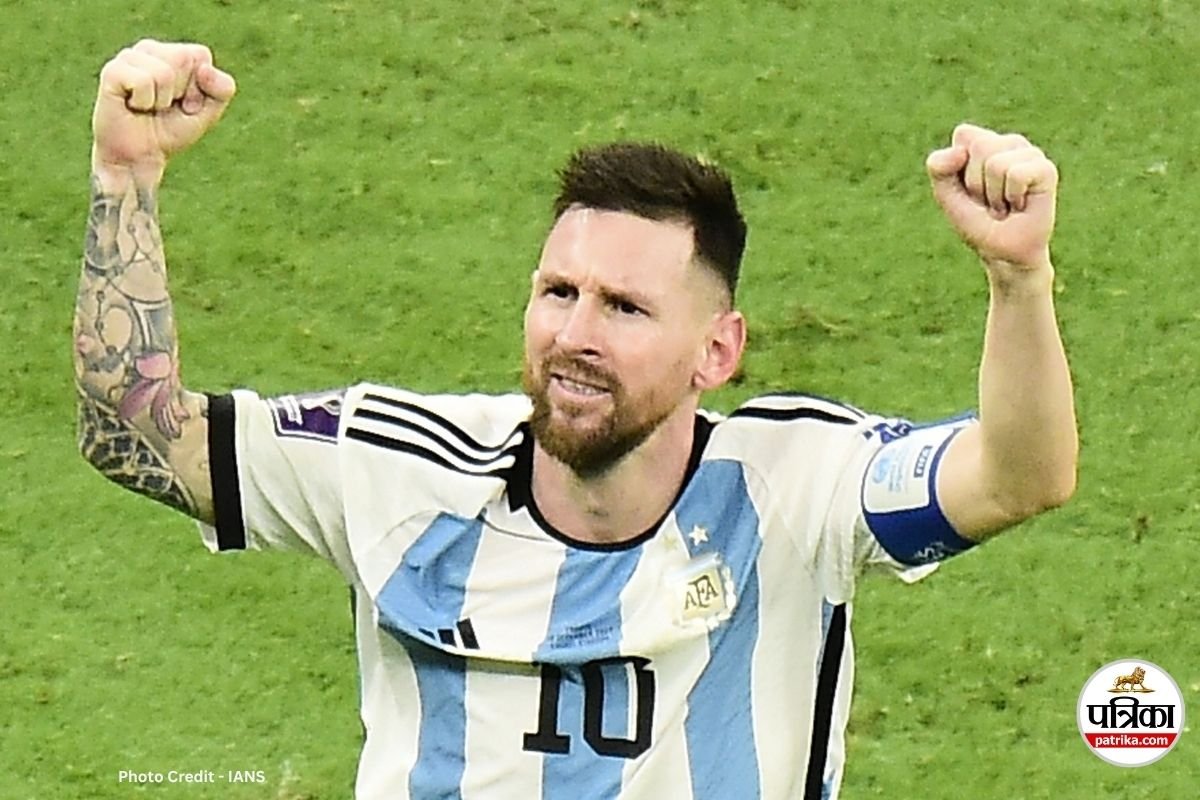
Maradona gave Argentina one of football’s defining moments. Messi ensured the story would continue, not as a replay but as another chapter. | Photo Credit: REUTERS
Maradona’s image has appeared across stadiums in the United States, along with those of Messi, the heir who eventually delivered the trophy Diego had once lifted. His name has been sung from Dallas to Atlanta, invoked not as a distant memory but as a continuing presence.
After Argentina’s dramatic victory over Egypt in the round of 16, the players sang and danced in their dressing room to La Cuarta Estrella (The Fourth Star), the anthem that has followed the team through its title defence.
“I’m Argentine from the cradle to the grave,
For Malvinas, for Diego, for Leo’s last one,
Argentina, I want to see you become champions again.”
The words place the Malvinas, Maradona and Messi within the same national story, where sacrifice, memory and football are intertwined.
On Wednesday, Argentina played as though it all still mattered.
And when the victory was finally secured, there was a connection between the past and present. Giovani Lo Celso and Nicolas Otamendi unfurled a banner reading: “ Las Malvinas son Argentinas”, or “The Malvinas (Falkland Islands) are Argentine.”
It was neither an incidental gesture nor an improvised celebration. It was a message delivered after England was defeated again.
Long after the final whistle, Argentina’s players and supporters remained united in celebration. The team stood facing the sky-blue-and-white end, singing and dancing with those who had followed it across cities, time zones and thousands of miles. Players drifted towards the tunnel only to return, lured back by another chorus from the stands.
For Argentina, England has never been just another opponent. Forty-four years after the Falklands War and four decades after Maradona transformed this rivalry forever, another generation had carried that history into another World Cup final.
Published on Jul 16, 2026
By breakfast, the World Cup semifinal had already begun. Hotel lobbies, elevators and street corners around downtown had become meeting points for two of football’s most passionate travelling nations. Argentinians, draped in sky blue and white, cradled their morning mate long before the first beer found its way into their hands. England supporters, wrapped in the white of the Three Lions, preferred to begin the day at the nearest pub, where breakfast arrived mostly in liquid form.
They exchanged smiles, songs and the occasional jab, but beneath the banter was the unmistakable tension that only England against Argentina can summon. This was never just another World Cup semifinal. It was a rivalry that had travelled from Antonio Rattín to Diego Maradona, from David Beckham to Lionel Messi, and was now in Atlanta for the latest battle.
Match Report –Argentina beats England to reach final
Argentina appeared to understand the emotional assignment from the opening whistle. There was an extra spring in every stride and greater force in every collision. Its players clattered into challenges, chased lost causes and celebrated tackles.
More than four decades have passed since the Falklands War, but in Argentina, the islands remain Las Malvinas, part of a national wound that has never completely healed. The 1982 conflict lasted from April 2 to June 14 and ended with Argentina’s surrender. Six hundred and forty-nine Argentine servicemen, 255 British personnel and three civilians were killed.
The dispute has endured across politics, public memory and football. For many Argentinians, an encounter with England cannot be separated entirely from the young men who left for the South Atlantic and never returned.
Maradona understood that instinctively. Four years after the war, he scored twice against England at the Azteca, first with the Hand of God and then with perhaps the greatest goal the World Cup has ever witnessed. Maradona would later describe the victory as revenge. For Argentina, those four minutes in 1986 are more than sporting history. They became part of the country’s mythology.
Maradona gave Argentina one of football’s defining moments. Messi ensured the story would continue, not as a replay but as another chapter. | Photo Credit: REUTERS
Maradona’s image has appeared across stadiums in the United States, along with those of Messi, the heir who eventually delivered the trophy Diego had once lifted. His name has been sung from Dallas to Atlanta, invoked not as a distant memory but as a continuing presence.
After Argentina’s dramatic victory over Egypt in the round of 16, the players sang and danced in their dressing room to La Cuarta Estrella (The Fourth Star), the anthem that has followed the team through its title defence.
“I’m Argentine from the cradle to the grave,
For Malvinas, for Diego, for Leo’s last one,
Argentina, I want to see you become champions again.”
The words place the Malvinas, Maradona and Messi within the same national story, where sacrifice, memory and football are intertwined.
On Wednesday, Argentina played as though it all still mattered.
And when the victory was finally secured, there was a connection between the past and present. Giovani Lo Celso and Nicolas Otamendi unfurled a banner reading: “ Las Malvinas son Argentinas”, or “The Malvinas (Falkland Islands) are Argentine.”
It was neither an incidental gesture nor an improvised celebration. It was a message delivered after England was defeated again.
Long after the final whistle, Argentina’s players and supporters remained united in celebration. The team stood facing the sky-blue-and-white end, singing and dancing with those who had followed it across cities, time zones and thousands of miles. Players drifted towards the tunnel only to return, lured back by another chorus from the stands.
For Argentina, England has never been just another opponent. Forty-four years after the Falklands War and four decades after Maradona transformed this rivalry forever, another generation had carried that history into another World Cup final.
Published on Jul 16, 2026
By breakfast, the World Cup semifinal had already begun. Hotel lobbies, elevators and street corners…
Hindi NewsSportsArgentina Vs England World Cup Semifinal | Messi Vs Kane Atlanta Matchअटलांटा14 मिनट पहलेकॉपी…
डिफेंडिंग चैंपियन उसी तरह इस मुकाबले में वापसी की, जैसे उसने राउंड ऑफ 16 में…
Lamine Yamal: jersey number 19, 18 years old, left-footed, with the world at his feet.
The first three descriptions could just as easily apply to a certain Argentine who arrived on the world’s biggest stage two decades ago.
But they arrived at vastly different points in their careers.
When Lionel Messi came off the bench against Serbia and Montenegro in the 2006 FIFA World Cup, sporting his shaggy, long-haired look, he had made just 34 senior appearances for Barcelona and scored nine goals. Those figures pale beside Yamal’s. By the time the Spanish youngster arrived at his first World Cup, he had already made more than four times as many senior club appearances as Messi had before his debut, scoring 49 goals along the way while providing 52 assists.
The tournament in North America, then, appeared perfectly set up for Yamal to begin building his legacy. Things, however, have not quite fallen into place. The guile, trickery and eagerness to take on his man at any given moment are still there. Just ask Austria’s Konrad Laimer, who was nutmegged thrice in the first half during the Round-of-32 clash.
But the “end product”, as pundits and their at-home imitators like to call it, has been lacking.
Injuries and the resulting reduction in minutes have had their effect, but even so, Spain has largely cruised through the tournament apart from that opening blip against a valiant Cape Verde. Despite his lack of cutting edge in this tournament, Yamal has managed to find ways to tilt games in Spain’s favour.
In the 352 minutes he has featured so far, Yamal has completed 23 take-ons, the joint-most in the tournament with Brazil’s Vinicius Jr. (23), who has played 154 more minutes. Moreover, his 6.4 ball progressions per 90 (total 25) put him inside the top four per cent of all players at the quadrennial tournament, with only Kylian Mbappe and Vinicius having more (26 each).
With each duel won, the pitch’s centre of gravity slowly shifts towards him, leaving Spain’s central attacking players, such as Dani Olmo and Pedri, more space to work with. First, one man tries his luck. Then there are two. Before long, an entire flank is occupied with trying to contain the teenager.
That, in turn, frees Spain’s left side to be more adventurous, from Marc Cucurella at the back to Alex Baena in the final third. With Yamal’s counterpart on that side, Nico Williams, still yet to fully recover from injury, Baena, who lacks the explosiveness of the youngster, manages to get enough breathing room to fashion chances.
Against Austria, all three goals scored by Spain were created from the left wing, with Cucurella providing two assists and Baena one. In fact, in both of La Roja’s knockout fixtures, the left side has produced a higher percentage of progressive passes.

Spain’s progressive passes against Austria and Portugal. | Photo Credit: FIFAPHY
On Yamal’s side of the pitch, containing him has proved difficult even for some of the world’s best defenders. Against Portugal, he came up against Nuno Mendes, arguably one of the finest left-backs at the tournament, and stretched him to his limits.
Mendes was eventually forced off early in the second half after picking up an injury during one final defensive effort that prevented Yamal’s cross from reaching a teammate.
After the game, Spain’s head coach, Luis de la Fuente, heaped praise on Yamal, asserting that he “generated a lot of fear” in the opponent.
“For me, Lamine has played one of the most important matches of his life. Beyond whether he was brilliant or not, for me, it has been one of the matches that will help him grow the most. When he had the ball, he always created doubt and uncertainty for the opponent,” de la Fuente said.
Nelson Semedo, who replaced Mendes, found Yamal harder to contain, forcing Portuguese left winger Joao Felix to contribute more defensively. Consequently, Portugal’s attack suffered, with Felix failing to register a single shot or cross in his 71 minutes on the pitch, most of which he spent away from the zone he was supposed to dominate.

Joao Felix’s heat map against Spain. | Photo Credit: FIFAPHY
Over the years, many have been touted as the next Messi, and perhaps none have had a start like Yamal’s. But for now, those comparisons can wait. Spain is all that matters to Yamal, and with his noodle hair and silky moves, he still has the world at his feet.
The “end product” may yet arrive at this World Cup. But even if it does not, Yamal has already shown why he remains fundamental to Spain’s pursuit of a second title.
Published on Jul 10, 2026
Lamine Yamal: jersey number 19, 18 years old, left-footed, with the world at his feet.
The first three descriptions could just as easily apply to a certain Argentine who arrived on the world’s biggest stage two decades ago.
But they arrived at vastly different points in their careers.
When Lionel Messi came off the bench against Serbia and Montenegro in the 2006 FIFA World Cup, sporting his shaggy, long-haired look, he had made just 34 senior appearances for Barcelona and scored nine goals. Those figures pale beside Yamal’s. By the time the Spanish youngster arrived at his first World Cup, he had already made more than four times as many senior club appearances as Messi had before his debut, scoring 49 goals along the way while providing 52 assists.
The tournament in North America, then, appeared perfectly set up for Yamal to begin building his legacy. Things, however, have not quite fallen into place. The guile, trickery and eagerness to take on his man at any given moment are still there. Just ask Austria’s Konrad Laimer, who was nutmegged thrice in the first half during the Round-of-32 clash.
But the “end product”, as pundits and their at-home imitators like to call it, has been lacking.
Injuries and the resulting reduction in minutes have had their effect, but even so, Spain has largely cruised through the tournament apart from that opening blip against a valiant Cape Verde. Despite his lack of cutting edge in this tournament, Yamal has managed to find ways to tilt games in Spain’s favour.
In the 352 minutes he has featured so far, Yamal has completed 23 take-ons, the joint-most in the tournament with Brazil’s Vinicius Jr. (23), who has played 154 more minutes. Moreover, his 6.4 ball progressions per 90 (total 25) put him inside the top four per cent of all players at the quadrennial tournament, with only Kylian Mbappe and Vinicius having more (26 each).
With each duel won, the pitch’s centre of gravity slowly shifts towards him, leaving Spain’s central attacking players, such as Dani Olmo and Pedri, more space to work with. First, one man tries his luck. Then there are two. Before long, an entire flank is occupied with trying to contain the teenager.
That, in turn, frees Spain’s left side to be more adventurous, from Marc Cucurella at the back to Alex Baena in the final third. With Yamal’s counterpart on that side, Nico Williams, still yet to fully recover from injury, Baena, who lacks the explosiveness of the youngster, manages to get enough breathing room to fashion chances.
Against Austria, all three goals scored by Spain were created from the left wing, with Cucurella providing two assists and Baena one. In fact, in both of La Roja’s knockout fixtures, the left side has produced a higher percentage of progressive passes.

Spain’s progressive passes against Austria and Portugal. | Photo Credit: FIFAPHY
On Yamal’s side of the pitch, containing him has proved difficult even for some of the world’s best defenders. Against Portugal, he came up against Nuno Mendes, arguably one of the finest left-backs at the tournament, and stretched him to his limits.
Mendes was eventually forced off early in the second half after picking up an injury during one final defensive effort that prevented Yamal’s cross from reaching a teammate.
After the game, Spain’s head coach, Luis de la Fuente, heaped praise on Yamal, asserting that he “generated a lot of fear” in the opponent.
“For me, Lamine has played one of the most important matches of his life. Beyond whether he was brilliant or not, for me, it has been one of the matches that will help him grow the most. When he had the ball, he always created doubt and uncertainty for the opponent,” de la Fuente said.
Nelson Semedo, who replaced Mendes, found Yamal harder to contain, forcing Portuguese left winger Joao Felix to contribute more defensively. Consequently, Portugal’s attack suffered, with Felix failing to register a single shot or cross in his 71 minutes on the pitch, most of which he spent away from the zone he was supposed to dominate.

Joao Felix’s heat map against Spain. | Photo Credit: FIFAPHY
Over the years, many have been touted as the next Messi, and perhaps none have had a start like Yamal’s. But for now, those comparisons can wait. Spain is all that matters to Yamal, and with his noodle hair and silky moves, he still has the world at his feet.
The “end product” may yet arrive at this World Cup. But even if it does not, Yamal has already shown why he remains fundamental to Spain’s pursuit of a second title.
Published on Jul 10, 2026
Lamine Yamal: jersey number 19, 18 years old, left-footed, with the world at his feet.The…
There is a particular kind of grief in sport that has little to do with defeat. It arrives not when a team loses, but when time finally catches up with the players who once seemed beyond its reach.
This FIFA World Cup has felt full of those moments. Luka Modric leaving with Croatia gone. Cristiano Ronaldo, who for so long bent matches to his will, walking away from another one. Manuel Neuer, for years football’s last great illusionist in goal, no longer carrying the same aura of permanence.
These were not just elite footballers; they were part of the architecture of the sport, figures so omnipresent for so long that they came to feel less like athletes and more like fixed points in our own lives.
Every major tournament had them somewhere in the frame. Modric gliding through the midfield with that strange combination of delicacy and defiance, Ronaldo summoning goals and drama with the force of habit, Neuer redrawing what a sweeper-goalkeeper could be. Their brilliance stretched across so many summers that it began to feel normal, and that was perhaps the greatest trick of all. Greatness, repeated often enough, starts to masquerade as permanence.
But sport, with its occasional cruelty, has a way of reminding us that permanence was never part of the bargain. This World Cup has exposed the mortality of men who once seemed immune to it. The legs do not always obey. The recovery takes a little longer. The moments still come, but not always on command. The body, eventually, begins to negotiate with the mind. And so, one by one, the stars who seemed to live outside time have begun to look what they always were underneath the myth: mere mortals.
Perhaps that is why Lionel Messi’s presence in this tournament feels so affecting. He is still here, still resisting and still playing as if he has found a private loophole in the laws of ageing. Around him, Argentina carries the urgency of men who know exactly what this moment means.

Against time: Lionel Messi remains the old giant still holding back the inevitable with that familiar left foot and stubborn shrug of genius. | Photo Credit: AFP
There is something faintly familiar in the way his teammates seem to be fighting not only for a trophy but for the dignity of a farewell, for the chance to make sure that when their great man finally walks away, he does so with his head held high. It recalls, in its own way, those late-career years of Sachin Tendulkar, when Indian cricket seemed to understand that every innings, every tour, every knock might be one of the last chances to honour a figure who had towered over its imagination for a generation.
The runs still mattered, but so did the ceremony of care around him, the collective desire to protect the ending of someone who had given so much. Maybe that is why these exits land differently as we get older. When we were younger, sporting heroes felt eternal. Tendulkar seemed as though he had always existed and somehow always would.
ALSO READ: Europe holds firm grip over World Cup destiny with Messi’s Argentina offering resistance
Then came Roger Federer, making tennis look too graceful to be real; Rafael Nadal, with his fury, faith and wounded endurance; Novak Djokovic, the last great disruptor who has also now reached the stage where each tournament is shadowed by the thought of how many more are left.
In cricket, Virat Kohli has moved from prodigy to elder statesman, playing just one format. And now football’s old gods, too, are being claimed by time. Their ageing has a way of confronting us with our own. You notice the greying beard in the mirror. The stiffness in your back after a long flight. The niggling pain in the knee after a walk up to the stadium media centre.

Passing seasons: Virat Kohli, Roger Federer, and Rafael Nadal, who once felt eternal, now stand as reminders that even the brightest eras must eventually yield to time. | Photo Credit: AFP, GETTY IMAGES, AP
You tell yourself these are manageable, that life is carrying on, that the body can be bargained with. But then you watch Modric labour where once he floated, or Ronaldo rage against the limits of legs that no longer answer every call, and that illusion breaks a little. If they can fade, then what chance do the rest of us have? These men were supposed to outlast ordinary rules. We were the mortals.
That, perhaps, is why sport’s greatest stars matter beyond medals and numbers. They do not simply entertain us; they become markers of our own passage through life. We remember where we were when Tendulkar made that hundred, when Federer glided through another Wimbledon fortnight, when Nadal clawed through another five-set war, when Ronaldo leapt above defenders as though gravity could be compromised, when Messi finally won a World Cup.
They become companions to our years. Their careers are the thread that stitches together school and work, first love and heartbreak, new cities and old friendships, parents growing older and children growing up. And so, when they begin to disappear, it is never only their ending we are mourning. It is the passing of our own seasons too.
Maybe that is the ache running through this World Cup. Beneath the tactics and scorelines, beneath the noise of a new generation arriving, there is the unmistakable sense of an era loosening its grip. The old giants are not all gone yet. Messi remains, still defiant, holding back the inevitable with that familiar left foot and that stubborn little shrug of genius. But even his survival sharpens the feeling rather than easing it. It reminds us that the ending is near.
And perhaps that is enough for now. One last run. One last attempt to hold the darkness off a little longer. One last tournament in which the old gods can still be glimpsed in the light, even if the light is beginning to fade.
Published on Jul 08, 2026
There is a particular kind of grief in sport that has little to do with defeat. It arrives not when a team loses, but when time finally catches up with the players who once seemed beyond its reach.
This FIFA World Cup has felt full of those moments. Luka Modric leaving with Croatia gone. Cristiano Ronaldo, who for so long bent matches to his will, walking away from another one. Manuel Neuer, for years football’s last great illusionist in goal, no longer carrying the same aura of permanence.
These were not just elite footballers; they were part of the architecture of the sport, figures so omnipresent for so long that they came to feel less like athletes and more like fixed points in our own lives.
Every major tournament had them somewhere in the frame. Modric gliding through the midfield with that strange combination of delicacy and defiance, Ronaldo summoning goals and drama with the force of habit, Neuer redrawing what a sweeper-goalkeeper could be. Their brilliance stretched across so many summers that it began to feel normal, and that was perhaps the greatest trick of all. Greatness, repeated often enough, starts to masquerade as permanence.
But sport, with its occasional cruelty, has a way of reminding us that permanence was never part of the bargain. This World Cup has exposed the mortality of men who once seemed immune to it. The legs do not always obey. The recovery takes a little longer. The moments still come, but not always on command. The body, eventually, begins to negotiate with the mind. And so, one by one, the stars who seemed to live outside time have begun to look what they always were underneath the myth: mere mortals.
Perhaps that is why Lionel Messi’s presence in this tournament feels so affecting. He is still here, still resisting and still playing as if he has found a private loophole in the laws of ageing. Around him, Argentina carries the urgency of men who know exactly what this moment means.

Against time: Lionel Messi remains the old giant still holding back the inevitable with that familiar left foot and stubborn shrug of genius. | Photo Credit: AFP
There is something faintly familiar in the way his teammates seem to be fighting not only for a trophy but for the dignity of a farewell, for the chance to make sure that when their great man finally walks away, he does so with his head held high. It recalls, in its own way, those late-career years of Sachin Tendulkar, when Indian cricket seemed to understand that every innings, every tour, every knock might be one of the last chances to honour a figure who had towered over its imagination for a generation.
The runs still mattered, but so did the ceremony of care around him, the collective desire to protect the ending of someone who had given so much. Maybe that is why these exits land differently as we get older. When we were younger, sporting heroes felt eternal. Tendulkar seemed as though he had always existed and somehow always would.
ALSO READ: Europe holds firm grip over World Cup destiny with Messi’s Argentina offering resistance
Then came Roger Federer, making tennis look too graceful to be real; Rafael Nadal, with his fury, faith and wounded endurance; Novak Djokovic, the last great disruptor who has also now reached the stage where each tournament is shadowed by the thought of how many more are left.
In cricket, Virat Kohli has moved from prodigy to elder statesman, playing just one format. And now football’s old gods, too, are being claimed by time. Their ageing has a way of confronting us with our own. You notice the greying beard in the mirror. The stiffness in your back after a long flight. The niggling pain in the knee after a walk up to the stadium media centre.

Passing seasons: Virat Kohli, Roger Federer, and Rafael Nadal, who once felt eternal, now stand as reminders that even the brightest eras must eventually yield to time. | Photo Credit: AFP, GETTY IMAGES, AP
You tell yourself these are manageable, that life is carrying on, that the body can be bargained with. But then you watch Modric labour where once he floated, or Ronaldo rage against the limits of legs that no longer answer every call, and that illusion breaks a little. If they can fade, then what chance do the rest of us have? These men were supposed to outlast ordinary rules. We were the mortals.
That, perhaps, is why sport’s greatest stars matter beyond medals and numbers. They do not simply entertain us; they become markers of our own passage through life. We remember where we were when Tendulkar made that hundred, when Federer glided through another Wimbledon fortnight, when Nadal clawed through another five-set war, when Ronaldo leapt above defenders as though gravity could be compromised, when Messi finally won a World Cup.
They become companions to our years. Their careers are the thread that stitches together school and work, first love and heartbreak, new cities and old friendships, parents growing older and children growing up. And so, when they begin to disappear, it is never only their ending we are mourning. It is the passing of our own seasons too.
Maybe that is the ache running through this World Cup. Beneath the tactics and scorelines, beneath the noise of a new generation arriving, there is the unmistakable sense of an era loosening its grip. The old giants are not all gone yet. Messi remains, still defiant, holding back the inevitable with that familiar left foot and that stubborn little shrug of genius. But even his survival sharpens the feeling rather than easing it. It reminds us that the ending is near.
And perhaps that is enough for now. One last run. One last attempt to hold the darkness off a little longer. One last tournament in which the old gods can still be glimpsed in the light, even if the light is beginning to fade.
Published on Jul 08, 2026
There is a particular kind of grief in sport that has little to do with…
डिफेंडिंग चैंपियन अर्जेंटीना ने मिस्र को 3-2 से हराकर फुटबॉल वर्ल्ड कप के क्वार्टर फाइनल…