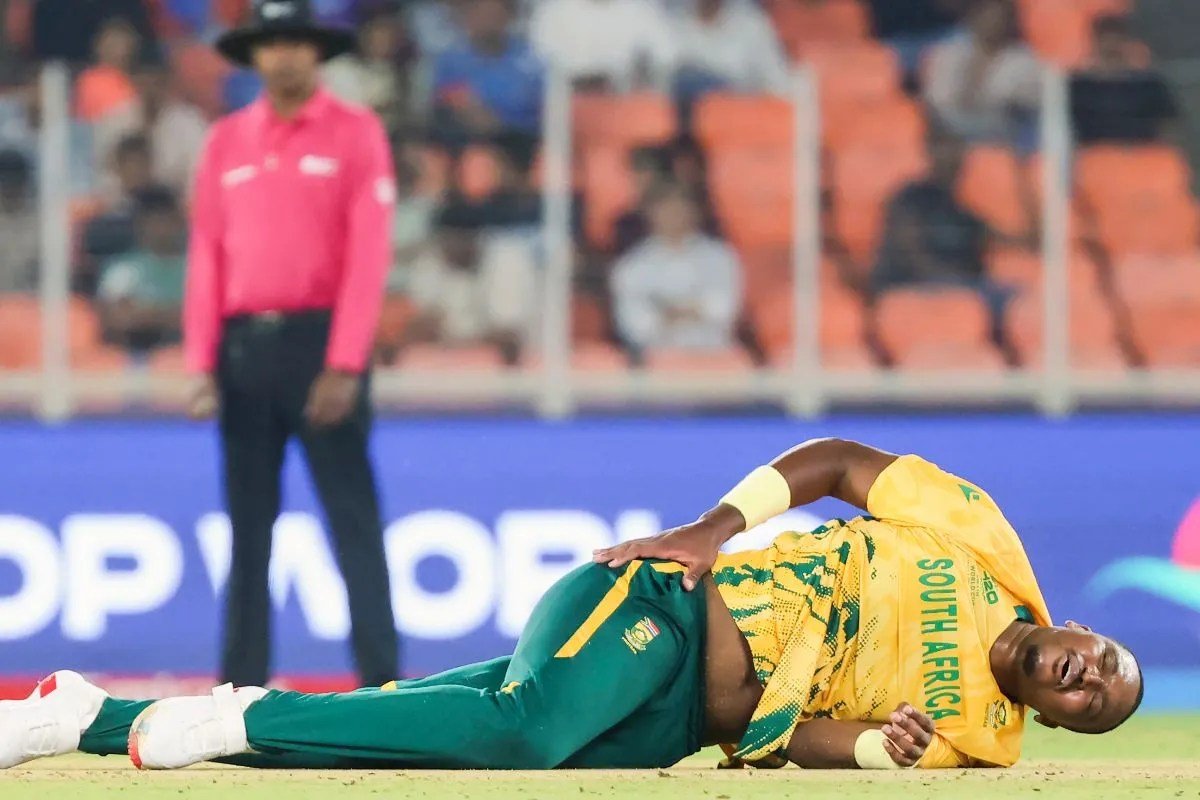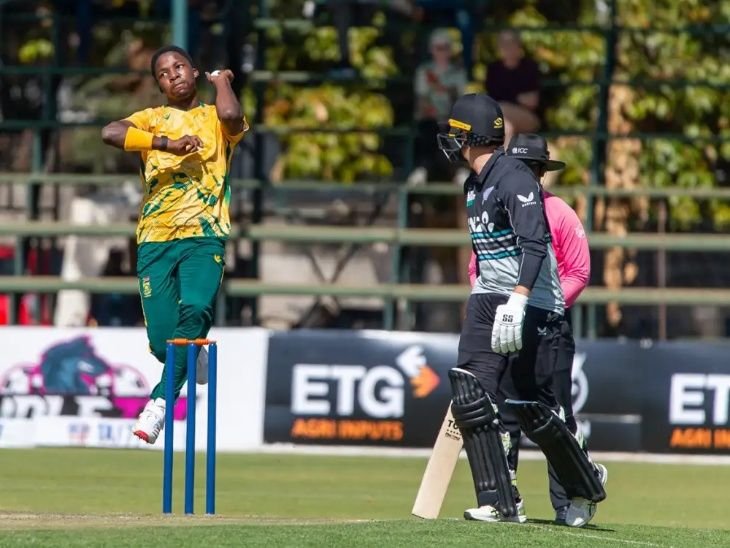
ऑस्ट्रेलिया सीरीज से पहले साउथ अफ्रीका के 4 पेसर बाहर:20 साल के मफाका को हैमस्ट्रिंग इंजरी; रबाडा, एनगिडी और बार्टमैन भी नहीं खेलेंगे
ऑस्ट्रेलिया के खिलाफ वनडे सीरीज से पहले साउथ अफ्रीका के 4 तेज गेंदबाज इंजर्ड होकर…
ऑस्ट्रेलिया के खिलाफ वनडे सीरीज से पहले साउथ अफ्रीका के 4 तेज गेंदबाज इंजर्ड होकर…
Lungi Ngidi Injury: दक्षिण अफ्रीका को घरेलू सरजमीं पर ऑस्ट्रेलिया के खिलाफ वनडे सीरीज खेलनी…

An ambulance was forced to enter the field to help Delhi Capitals fast bowler Lungi Ngidi as he was stretchered off the field after suffering a head injury in its IPL 2026 match against Punjab Kings at the Arun Jaitley Stadium in Delhi.
Ngidi suffered the injury while attempting a catch off Axar Patel’s bowling in the third over of Punjab Kings’ innings.
The South African fast bowler was tracking back from mid-off trying to dismiss PBKS opener Priyansh Arya. In attempting to reach the ball over his head, Ngidi lost balance and hit his head on the ground.
He was in immediate pain, holding his head in discomfort, and remained immobile on the ground for a lengthy period of time.
Sri Lankan pacer Dushmantha Chameera replaced Ngidi through the Concussion Substitution option.
Published on Apr 25, 2026
An ambulance was forced to enter the field to help Delhi Capitals fast bowler Lungi Ngidi as he was stretchered off the field after suffering a head injury in its IPL 2026 match against Punjab Kings at the Arun Jaitley Stadium in Delhi.
Ngidi suffered the injury while attempting a catch off Axar Patel’s bowling in the third over of Punjab Kings’ innings.
The South African fast bowler was tracking back from mid-off trying to dismiss PBKS opener Priyansh Arya. In attempting to reach the ball over his head, Ngidi lost balance and hit his head on the ground.
He was in immediate pain, holding his head in discomfort, and remained immobile on the ground for a lengthy period of time.
Sri Lankan pacer Dushmantha Chameera replaced Ngidi through the Concussion Substitution option.
Published on Apr 25, 2026
An ambulance was forced to enter the field to help Delhi Capitals fast bowler Lungi…

In Punjab Kings’ first match of the Indian Premier League (IPL) 2026 against Gujarat Titans, Arshdeep Singh was entrusted with the final over of the first innings. The left-arm pacer ended up bowling an 11-ball over—the joint-longest in IPL history. Across that over, Arshdeep largely tried to go short and wide to the left-handed Rahul Tewatia, which resulted in multiple wides; against Rashid Khan, he switched to yorkers, both at the stumps and outside off.
Twenty-four matches into the season, the PBKS bowler has delivered the most wides so far—18, four more than Mumbai Indians’ Shardul Thakur, who has 14. Of Shardul’s 14 wides, 13 have come while bowling wide outside off. In Arshdeep’s case, 11 of his 18 wides have come while operating around the tramline outside off.
What often shows up as poor execution is more often than not a calculated attempt to keep the ball away from the batter, with modern T20 batters favouring the leg side for their big shots. Even deliveries just outside off stump are now being whipped over the on-side with ease, thanks to the natural swing arc and high bat speeds.
In response, the bowlers have moved further away from the stumps, forcing batters to manufacture shots square of the wicket, particularly in the point and square regions, where power is harder to generate.
“If the batter is set and there’s a longer boundary on one side, you use that and keep the ball away from their strength. If the batter is new, you attack the stumps. When you feel the yorker is coming out well, you go for it. When the batter is set, you go wide. You just have to adapt before the batter knows what’s coming,” Arshdeep explained after the win over Mumbai Indians on Thursday, after picking three for 22, continuing to back his wide line tactic.
That constant adjustment, though, often pushes bowlers closer to the wide line, where the margin for error is smaller.
One such option is the wide yorker, aimed just inside the wide line outside off stump. It is one of the hardest deliveries to execute because of the precision required—more often than not, it ends up as a full toss or a slot ball. But when nailed, it is extremely difficult to put away.
“That’s probably one of the hardest balls to bowl,” Delhi Capitals pacer Lungi Ngidi said. “You’ve got to land it on a yorker length, just inside the wide line – everything has to be perfect. If you land that ball, it’s a huge advantage in an over.”
Since his IPL debut in 2019, Arshdeep has bowled 99 wide-line yorkers – joint second-most with Harshal Patel, with Avesh Khan leading the list with 104.
Despite the risk, the tactic remains popular. In the 2021 season, there was a more than 46 per cent increase in attempts to bowl around the tramline, resulting in 114 wides—an 87 per cent jump from the previous season’s 61.
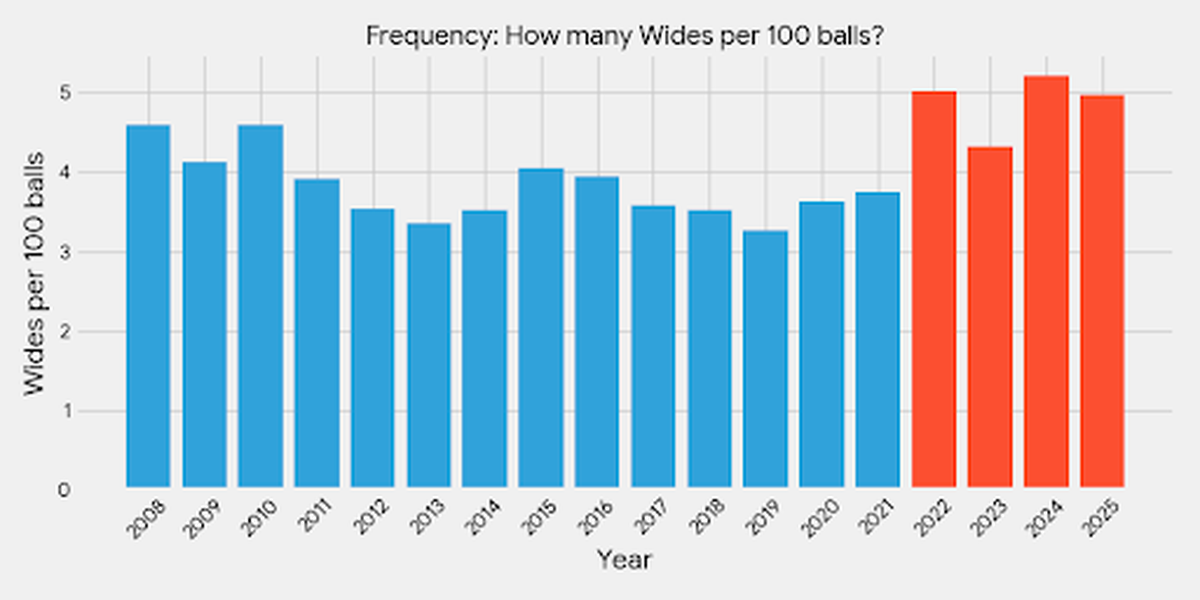
The shift became even more pronounced in 2022, when wides across the season rose from 521 to 861—jump of 340 (65.26 per cent). While part of that increase was due to the addition of two teams—Gujarat Titans and Lucknow Super Giants—and therefore more matches, venue conditions also played a major role.
That season was held across four venues in Maharashtra during the league stage—the Wankhede Stadium, DY Patil Stadium, Brabourne Stadium, and MCA International Stadium. Smaller boundaries, flatter pitches, and heavy dew made execution significantly harder for bowlers.
Since that spike, the increase from 2023 onwards has appeared more gradual. The average number of wides per season, which stood at around 530 until 2021, has now risen to roughly 810. The ongoing 2026 season is not included in that average, but it has already seen 289 wides in 24 matches and is projected to finish close to 900 at the current rate of six wides per innings.
That season introduced the option for teams to review wides and no-balls. With technology in play, the margin for error has reduced. As Ngidi pointed out: “The margins are very small. The review system helps now because earlier, you could bowl it correctly and still get called for a wide.”
Ahead of the 2025 season, another tweak followed—the introduction of the moving wide guideline, where the line shifts with the batter’s position. This has made adjudication clearer for umpires and players alike. It made an immediate impact last season as the wides bowled while attempting the wide yorker dropped from 182 to 101.
For bowlers like Arshdeep, operating around the wide tramline is a risky trade-off, where the margin for error is minimal. But in a format where batters dictate terms, it is a risk they are willing to take. Because on the days it comes off, the wide yorker can set up the game for the bowling side.
Published on Apr 17, 2026
In Punjab Kings’ first match of the Indian Premier League (IPL) 2026 against Gujarat Titans, Arshdeep Singh was entrusted with the final over of the first innings. The left-arm pacer ended up bowling an 11-ball over—the joint-longest in IPL history. Across that over, Arshdeep largely tried to go short and wide to the left-handed Rahul Tewatia, which resulted in multiple wides; against Rashid Khan, he switched to yorkers, both at the stumps and outside off.
Twenty-four matches into the season, the PBKS bowler has delivered the most wides so far—18, four more than Mumbai Indians’ Shardul Thakur, who has 14. Of Shardul’s 14 wides, 13 have come while bowling wide outside off. In Arshdeep’s case, 11 of his 18 wides have come while operating around the tramline outside off.
What often shows up as poor execution is more often than not a calculated attempt to keep the ball away from the batter, with modern T20 batters favouring the leg side for their big shots. Even deliveries just outside off stump are now being whipped over the on-side with ease, thanks to the natural swing arc and high bat speeds.
In response, the bowlers have moved further away from the stumps, forcing batters to manufacture shots square of the wicket, particularly in the point and square regions, where power is harder to generate.
“If the batter is set and there’s a longer boundary on one side, you use that and keep the ball away from their strength. If the batter is new, you attack the stumps. When you feel the yorker is coming out well, you go for it. When the batter is set, you go wide. You just have to adapt before the batter knows what’s coming,” Arshdeep explained after the win over Mumbai Indians on Thursday, after picking three for 22, continuing to back his wide line tactic.
That constant adjustment, though, often pushes bowlers closer to the wide line, where the margin for error is smaller.
One such option is the wide yorker, aimed just inside the wide line outside off stump. It is one of the hardest deliveries to execute because of the precision required—more often than not, it ends up as a full toss or a slot ball. But when nailed, it is extremely difficult to put away.
“That’s probably one of the hardest balls to bowl,” Delhi Capitals pacer Lungi Ngidi said. “You’ve got to land it on a yorker length, just inside the wide line – everything has to be perfect. If you land that ball, it’s a huge advantage in an over.”
Since his IPL debut in 2019, Arshdeep has bowled 99 wide-line yorkers – joint second-most with Harshal Patel, with Avesh Khan leading the list with 104.
Despite the risk, the tactic remains popular. In the 2021 season, there was a more than 46 per cent increase in attempts to bowl around the tramline, resulting in 114 wides—an 87 per cent jump from the previous season’s 61.
The shift became even more pronounced in 2022, when wides across the season rose from 521 to 861—jump of 340 (65.26 per cent). While part of that increase was due to the addition of two teams—Gujarat Titans and Lucknow Super Giants—and therefore more matches, venue conditions also played a major role.
That season was held across four venues in Maharashtra during the league stage—the Wankhede Stadium, DY Patil Stadium, Brabourne Stadium, and MCA International Stadium. Smaller boundaries, flatter pitches, and heavy dew made execution significantly harder for bowlers.
Since that spike, the increase from 2023 onwards has appeared more gradual. The average number of wides per season, which stood at around 530 until 2021, has now risen to roughly 810. The ongoing 2026 season is not included in that average, but it has already seen 289 wides in 24 matches and is projected to finish close to 900 at the current rate of six wides per innings.
That season introduced the option for teams to review wides and no-balls. With technology in play, the margin for error has reduced. As Ngidi pointed out: “The margins are very small. The review system helps now because earlier, you could bowl it correctly and still get called for a wide.”
Ahead of the 2025 season, another tweak followed—the introduction of the moving wide guideline, where the line shifts with the batter’s position. This has made adjudication clearer for umpires and players alike. It made an immediate impact last season as the wides bowled while attempting the wide yorker dropped from 182 to 101.
For bowlers like Arshdeep, operating around the wide tramline is a risky trade-off, where the margin for error is minimal. But in a format where batters dictate terms, it is a risk they are willing to take. Because on the days it comes off, the wide yorker can set up the game for the bowling side.
Published on Apr 17, 2026
In Punjab Kings’ first match of the Indian Premier League (IPL) 2026 against Gujarat Titans,…
When Lungisani Ngidi was picked for Delhi Capitals during the IPL 2026 mini-auction in December, the South African pacer immediately looked up Auqib Nabi – searching for and reading about the Jammu & Kashmir fast bowler.
“I started reading about him and his performances. He’s done very well recently, and I was excited to meet him,” Ngidi said in a select media roundtable on Thursday.
Nabi took 60 wickets in 10 matches at an average of 12.56 and was the highest wicket-taker in the recently concluded Ranji Trophy 2025-26 season, leading J&K to its maiden red-ball title.
“When I met him, I realised how skilful he is,” Ngidi said, adding that he found Nabi’s swing similar to that of Bhuvneshwar Kumar.
“He can swing the ball both ways, bowl yorkers, operate at a good pace, and also contribute with the bat. He’s a complete cricketer,” the South African added.
“I enjoy meeting players who are trying to come through the system and make a name for themselves. Those are the stories I really appreciate.”
The 30-year-old Ngidi has been part of nine IPL seasons since making his debut in 2018 for Chennai Super Kings, but has featured in only 20 matches so far.
“This is my ninth IPL season, and there were about three years where I didn’t play a game,” Ngidi said. “It’s frustrating, but you don’t select yourself. I focus on what I can control, which is performing when I get the opportunity.”
Ngidi used that time to train and develop his game, while preparing for national duty in Proteas colours.
He added that making his IPL debut under a calm captain like MS Dhoni helped him as a 21-year-old. “Having a captain who is calm and not emotional helps you stay composed. They backed me and trusted me. I opened the bowling in a final in my first season, so clearly they had confidence in me,” he said.
ALSO READ | From MRF Pace Foundation to IPL spotlight—Charting Praful Hinge and Sakib Hussain’s meteoric rise
It was during the same season that he learned the art of slower balls from Dwayne Bravo. “I asked him to teach me his variation, and he showed me a couple of things. It wasn’t perfect straight away, but over the years I developed it,” he recalled.
Eight years later, Ngidi has mastered that craft, using slower, dipping deliveries to trouble batters looking to swing big.
“Now it’s one of my weapons. It takes confidence to run in and bowl it, especially trying to make it dip on a yorker length. There are times I’ll get it wrong, and world-class batters will punish it. But when I get it right, it creates chances,” he said.
Delhi Capitals will next face Royal Challengers Bengaluru at the M. Chinnaswamy Stadium, an away fixture. For Ngidi, however, it’s a return to a venue that was his home in IPL 2025.
Asked if there would be any emotions playing against his former side, Ngidi made it clear that it’s strictly professional.
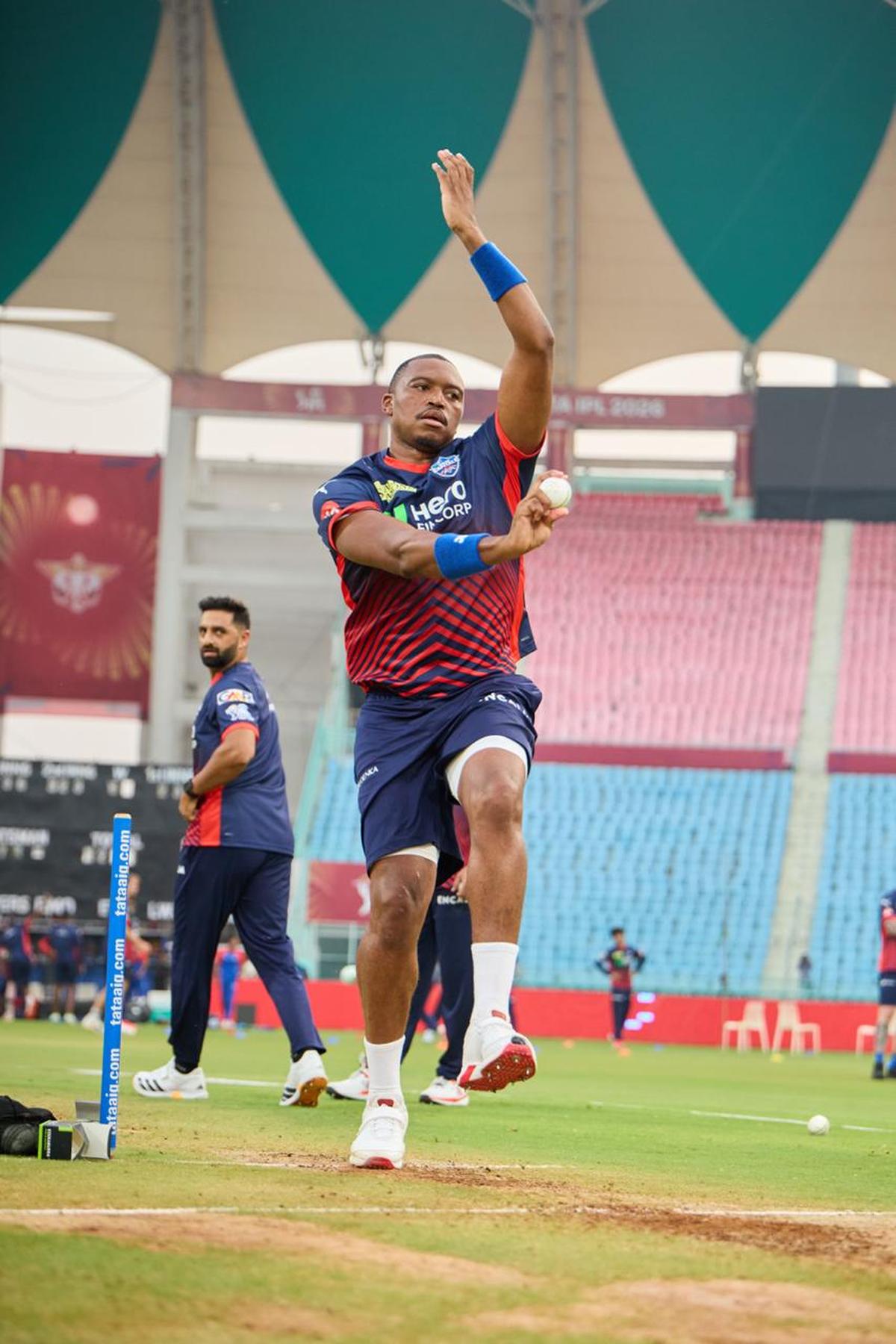
“This is my ninth IPL season, and there were about three years where I didn’t play a game,” Ngidi said. “It’s frustrating, but you don’t select yourself. I focus on what I can control, which is performing when I get the opportunity.” | Photo Credit: Special Arrangement

“This is my ninth IPL season, and there were about three years where I didn’t play a game,” Ngidi said. “It’s frustrating, but you don’t select yourself. I focus on what I can control, which is performing when I get the opportunity.” | Photo Credit: Special Arrangement
“I don’t take emotions into the game. When I play, it’s purely professional; strictly business. I’m representing Delhi Capitals now, and my responsibility is to perform for them, the team that has shown faith in me,” he said.
“I had a great time at RCB, and we won the title, but that chapter is over.”
Delhi Capitals has lost two of its four games so far and sits fifth on the points table. But Ngidi, while honest in his assessment, remains optimistic.
“The games we’ve lost have been close, and if we analyse them honestly, there were moments where we let ourselves down. That’s also the positive. If you can identify those mistakes and fix them, you have a good chance in the tournament,” he said.
“I can’t predict the future, but we definitely have the squad to go far.”
Published on Apr 16, 2026

When Lungisani Ngidi was picked for Delhi Capitals during the IPL 2026 mini-auction in December, the South African pacer immediately looked up Auqib Nabi – searching for and reading about the Jammu & Kashmir fast bowler.
“I started reading about him and his performances. He’s done very well recently, and I was excited to meet him,” Ngidi said in a select media roundtable on Thursday.
Nabi took 60 wickets in 10 matches at an average of 12.56 and was the highest wicket-taker in the recently concluded Ranji Trophy 2025-26 season, leading J&K to its maiden red-ball title.
“When I met him, I realised how skilful he is,” Ngidi said, adding that he found Nabi’s swing similar to that of Bhuvneshwar Kumar.
“He can swing the ball both ways, bowl yorkers, operate at a good pace, and also contribute with the bat. He’s a complete cricketer,” the South African added.
“I enjoy meeting players who are trying to come through the system and make a name for themselves. Those are the stories I really appreciate.”
The 30-year-old Ngidi has been part of nine IPL seasons since making his debut in 2018 for Chennai Super Kings, but has featured in only 20 matches so far.
“This is my ninth IPL season, and there were about three years where I didn’t play a game,” Ngidi said. “It’s frustrating, but you don’t select yourself. I focus on what I can control, which is performing when I get the opportunity.”
Ngidi used that time to train and develop his game, while preparing for national duty in Proteas colours.
He added that making his IPL debut under a calm captain like MS Dhoni helped him as a 21-year-old. “Having a captain who is calm and not emotional helps you stay composed. They backed me and trusted me. I opened the bowling in a final in my first season, so clearly they had confidence in me,” he said.
ALSO READ | From MRF Pace Foundation to IPL spotlight—Charting Praful Hinge and Sakib Hussain’s meteoric rise
It was during the same season that he learned the art of slower balls from Dwayne Bravo. “I asked him to teach me his variation, and he showed me a couple of things. It wasn’t perfect straight away, but over the years I developed it,” he recalled.
Eight years later, Ngidi has mastered that craft, using slower, dipping deliveries to trouble batters looking to swing big.
“Now it’s one of my weapons. It takes confidence to run in and bowl it, especially trying to make it dip on a yorker length. There are times I’ll get it wrong, and world-class batters will punish it. But when I get it right, it creates chances,” he said.
Delhi Capitals will next face Royal Challengers Bengaluru at the M. Chinnaswamy Stadium, an away fixture. For Ngidi, however, it’s a return to a venue that was his home in IPL 2025.
Asked if there would be any emotions playing against his former side, Ngidi made it clear that it’s strictly professional.
“This is my ninth IPL season, and there were about three years where I didn’t play a game,” Ngidi said. “It’s frustrating, but you don’t select yourself. I focus on what I can control, which is performing when I get the opportunity.” | Photo Credit: Special Arrangement
“This is my ninth IPL season, and there were about three years where I didn’t play a game,” Ngidi said. “It’s frustrating, but you don’t select yourself. I focus on what I can control, which is performing when I get the opportunity.” | Photo Credit: Special Arrangement
“I don’t take emotions into the game. When I play, it’s purely professional; strictly business. I’m representing Delhi Capitals now, and my responsibility is to perform for them, the team that has shown faith in me,” he said.
“I had a great time at RCB, and we won the title, but that chapter is over.”
Delhi Capitals has lost two of its four games so far and sits fifth on the points table. But Ngidi, while honest in his assessment, remains optimistic.
“The games we’ve lost have been close, and if we analyse them honestly, there were moments where we let ourselves down. That’s also the positive. If you can identify those mistakes and fix them, you have a good chance in the tournament,” he said.
“I can’t predict the future, but we definitely have the squad to go far.”
Published on Apr 16, 2026
When Lungisani Ngidi was picked for Delhi Capitals during the IPL 2026 mini-auction in December, the South African pacer immediately looked up Auqib Nabi – searching for and reading about the Jammu & Kashmir fast bowler.
“I started reading about him and his performances. He’s done very well recently, and I was excited to meet him,” Ngidi said in a select media roundtable on Thursday.
Nabi took 60 wickets in 10 matches at an average of 12.56 and was the highest wicket-taker in the recently concluded Ranji Trophy 2025-26 season, leading J&K to its maiden red-ball title.
“When I met him, I realised how skilful he is,” Ngidi said, adding that he found Nabi’s swing similar to that of Bhuvneshwar Kumar.
“He can swing the ball both ways, bowl yorkers, operate at a good pace, and also contribute with the bat. He’s a complete cricketer,” the South African added.
“I enjoy meeting players who are trying to come through the system and make a name for themselves. Those are the stories I really appreciate.”
The 30-year-old Ngidi has been part of nine IPL seasons since making his debut in 2018 for Chennai Super Kings, but has featured in only 20 matches so far.
“This is my ninth IPL season, and there were about three years where I didn’t play a game,” Ngidi said. “It’s frustrating, but you don’t select yourself. I focus on what I can control, which is performing when I get the opportunity.”
Ngidi used that time to train and develop his game, while preparing for national duty in Proteas colours.
He added that making his IPL debut under a calm captain like MS Dhoni helped him as a 21-year-old. “Having a captain who is calm and not emotional helps you stay composed. They backed me and trusted me. I opened the bowling in a final in my first season, so clearly they had confidence in me,” he said.
ALSO READ | From MRF Pace Foundation to IPL spotlight—Charting Praful Hinge and Sakib Hussain’s meteoric rise
It was during the same season that he learned the art of slower balls from Dwayne Bravo. “I asked him to teach me his variation, and he showed me a couple of things. It wasn’t perfect straight away, but over the years I developed it,” he recalled.
Eight years later, Ngidi has mastered that craft, using slower, dipping deliveries to trouble batters looking to swing big.
“Now it’s one of my weapons. It takes confidence to run in and bowl it, especially trying to make it dip on a yorker length. There are times I’ll get it wrong, and world-class batters will punish it. But when I get it right, it creates chances,” he said.
Delhi Capitals will next face Royal Challengers Bengaluru at the M. Chinnaswamy Stadium, an away fixture. For Ngidi, however, it’s a return to a venue that was his home in IPL 2025.
Asked if there would be any emotions playing against his former side, Ngidi made it clear that it’s strictly professional.
“This is my ninth IPL season, and there were about three years where I didn’t play a game,” Ngidi said. “It’s frustrating, but you don’t select yourself. I focus on what I can control, which is performing when I get the opportunity.” | Photo Credit: Special Arrangement
“This is my ninth IPL season, and there were about three years where I didn’t play a game,” Ngidi said. “It’s frustrating, but you don’t select yourself. I focus on what I can control, which is performing when I get the opportunity.” | Photo Credit: Special Arrangement
“I don’t take emotions into the game. When I play, it’s purely professional; strictly business. I’m representing Delhi Capitals now, and my responsibility is to perform for them, the team that has shown faith in me,” he said.
“I had a great time at RCB, and we won the title, but that chapter is over.”
Delhi Capitals has lost two of its four games so far and sits fifth on the points table. But Ngidi, while honest in his assessment, remains optimistic.
“The games we’ve lost have been close, and if we analyse them honestly, there were moments where we let ourselves down. That’s also the positive. If you can identify those mistakes and fix them, you have a good chance in the tournament,” he said.
“I can’t predict the future, but we definitely have the squad to go far.”
Published on Apr 16, 2026
When Lungisani Ngidi was picked for Delhi Capitals during the IPL 2026 mini-auction in December,…