×

returning to Earth in a historic 10-day journey? Easy-peasy for NASA’s Artemis 2 astronauts. Now the really hard part that everybody on Earth can relate to begins: sorting out their phone’s camera roll.

Mission specialist Christina Koch and Commander Reid Wiseman had already stunned the public with their epic Earth photos taken from the Orion spacecraft’s main hatch. While they shared a gallery of shots taken with a Nikon DSLR and GoPro action camera, it was their “selfies,” shot with the iPhone 17 Pro Max’s front-facing camera, that captured everyone’s imagination.

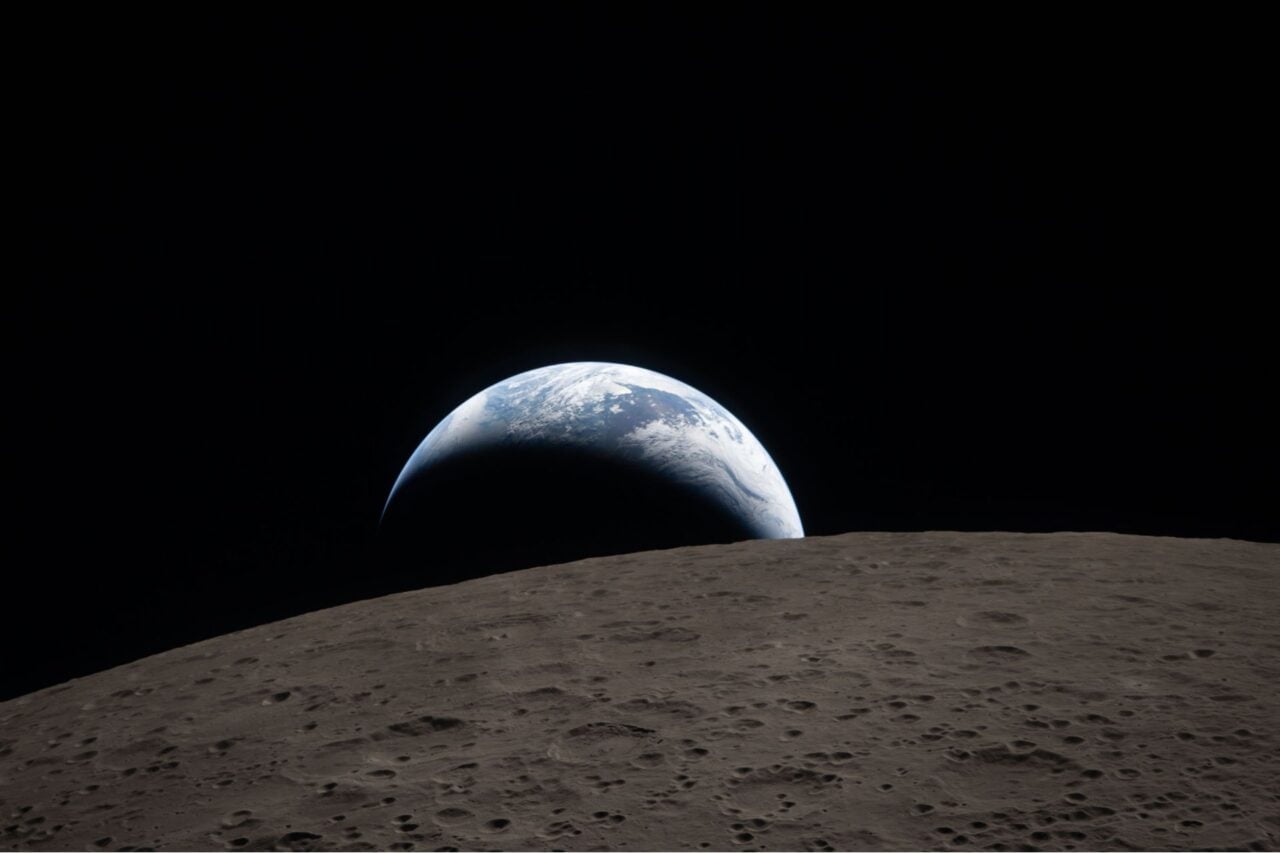
How do you top that? On Sunday, Wiseman shared a video of a view that no human has ever shared before. No big deal, it’s just a “cell phone video of Earthset,” showing our humble Blue Planet setting behind the Moon.

See iPhone 17 Pro Max at Apple.com


“I could barely see the Moon through the docking hatch window but the iPhone was the perfect size to catch the view…this is uncropped, uncut with 8x zoom which is quite comparable to the view of the human eye,” Wiseman said in a post on X. “Enjoy.”

The footage immediately started going viral as jaws dropped to the floor, and likes, reposts, and comments poured in from around the world.

The video is breaking the internet for good reason—it’s as authentic as it gets. The footage isn’t edited and there’s no music. There’s zero polish to it. Just an astronaut zooming in on the Moon through Orion’s window, blurry autofocusing and all, as the iPhone 17 Pro Max’s 8x optical-quality telephoto locks onto the celestial bodies. 

Wiseman’s honest reaction only added to the moment. “Would you look at that, man? Wowww. Dude… No wayy. Fin,” he said before the view of Earth disappeared behind the lunar surface.

Dude, we would have reacted in the same exact way.

See iPhone 17 Pro Max at Apple.com

#JawDropping #iPhone #Video #Earth #Setting #Moon #Rightfully #Breaking #InternetApple,Artemis 2,iPhone,moon,NASA,Space"> Jaw-Dropping iPhone Video of Earth Setting Behind the Moon Is Rightfully Breaking the Internet
                Successfully flying around the Moon and returning to Earth in a historic 10-day journey? Easy-peasy for NASA’s Artemis 2 astronauts. Now the really hard part that everybody on Earth can relate to begins: sorting out their phone’s camera roll.
Mission specialist Christina Koch and Commander Reid Wiseman had already stunned the public with their epic Earth photos taken from the Orion spacecraft’s main hatch. While they shared a gallery of shots taken with a Nikon DSLR and GoPro action camera, it was their “selfies,” shot with the iPhone 17 Pro Max’s front-facing camera, that captured everyone’s imagination.
How do you top that? On Sunday, Wiseman shared a video of a view that no human has ever shared before. No big deal, it’s just a “cell phone video of Earthset,” showing our humble Blue Planet setting behind the Moon.
See iPhone 17 Pro Max at Apple.com


Only one chance in this lifetime…
Like watching sunset at the beach from the most foreign seat in the cosmos, I couldn’t resist a cell phone video of Earthset. You can hear the shutter on the Nikon as @Astro_Christina is hammering away on 3-shot brackets and capturing those… pic.twitter.com/8aWnaFJ69c
— Reid Wiseman (@astro_reid) April 19, 2026

 
“I could barely see the Moon through the docking hatch window but the iPhone was the perfect size to catch the view…this is uncropped, uncut with 8x zoom which is quite comparable to the view of the human eye,” Wiseman said in a post on X. “Enjoy.”

The footage immediately started going viral as jaws dropped to the floor, and likes, reposts, and comments poured in from around the world.
The video is breaking the internet for good reason—it’s as authentic as it gets. The footage isn’t edited and there’s no music. There’s zero polish to it. Just an astronaut zooming in on the Moon through Orion’s window, blurry autofocusing and all, as the iPhone 17 Pro Max’s 8x optical-quality telephoto locks onto the celestial bodies. 
Wiseman’s honest reaction only added to the moment. “Would you look at that, man? Wowww. Dude… No wayy. Fin,” he said before the view of Earth disappeared behind the lunar surface. 
Dude, we would have reacted in the same exact way.
See iPhone 17 Pro Max at Apple.com
      #JawDropping #iPhone #Video #Earth #Setting #Moon #Rightfully #Breaking #InternetApple,Artemis 2,iPhone,moon,NASA,Space
Tech-news

returning to Earth in a historic 10-day journey? Easy-peasy for NASA’s Artemis 2 astronauts. Now the really hard part that everybody on Earth can relate to begins: sorting out their phone’s camera roll.

Mission specialist Christina Koch and Commander Reid Wiseman had already stunned the public with their epic Earth photos taken from the Orion spacecraft’s main hatch. While they shared a gallery of shots taken with a Nikon DSLR and GoPro action camera, it was their “selfies,” shot with the iPhone 17 Pro Max’s front-facing camera, that captured everyone’s imagination.

How do you top that? On Sunday, Wiseman shared a video of a view that no human has ever shared before. No big deal, it’s just a “cell phone video of Earthset,” showing our humble Blue Planet setting behind the Moon.

See iPhone 17 Pro Max at Apple.com


“I could barely see the Moon through the docking hatch window but the iPhone was the perfect size to catch the view…this is uncropped, uncut with 8x zoom which is quite comparable to the view of the human eye,” Wiseman said in a post on X. “Enjoy.”

The footage immediately started going viral as jaws dropped to the floor, and likes, reposts, and comments poured in from around the world.

The video is breaking the internet for good reason—it’s as authentic as it gets. The footage isn’t edited and there’s no music. There’s zero polish to it. Just an astronaut zooming in on the Moon through Orion’s window, blurry autofocusing and all, as the iPhone 17 Pro Max’s 8x optical-quality telephoto locks onto the celestial bodies. 

Wiseman’s honest reaction only added to the moment. “Would you look at that, man? Wowww. Dude… No wayy. Fin,” he said before the view of Earth disappeared behind the lunar surface.

Dude, we would have reacted in the same exact way.

See iPhone 17 Pro Max at Apple.com

#JawDropping #iPhone #Video #Earth #Setting #Moon #Rightfully #Breaking #InternetApple,Artemis 2,iPhone,moon,NASA,Space">Jaw-Dropping iPhone Video of Earth Setting Behind the Moon Is Rightfully Breaking the InternetJaw-Dropping iPhone Video of Earth Setting Behind the Moon Is Rightfully Breaking the Internet
                Successfully flying around the Moon and returning to Earth in a historic 10-day journey? Easy-peasy for NASA’s Artemis 2 astronauts. Now the really hard part that everybody on Earth can relate to begins: sorting out their phone’s camera roll.
Mission specialist Christina Koch and Commander Reid Wiseman had already stunned the public with their epic Earth photos taken from the Orion spacecraft’s main hatch. While they shared a gallery of shots taken with a Nikon DSLR and GoPro action camera, it was their “selfies,” shot with the iPhone 17 Pro Max’s front-facing camera, that captured everyone’s imagination.
How do you top that? On Sunday, Wiseman shared a video of a view that no human has ever shared before. No big deal, it’s just a “cell phone video of Earthset,” showing our humble Blue Planet setting behind the Moon.
See iPhone 17 Pro Max at Apple.com


Only one chance in this lifetime…
Like watching sunset at the beach from the most foreign seat in the cosmos, I couldn’t resist a cell phone video of Earthset. You can hear the shutter on the Nikon as @Astro_Christina is hammering away on 3-shot brackets and capturing those… pic.twitter.com/8aWnaFJ69c
— Reid Wiseman (@astro_reid) April 19, 2026

 
“I could barely see the Moon through the docking hatch window but the iPhone was the perfect size to catch the view…this is uncropped, uncut with 8x zoom which is quite comparable to the view of the human eye,” Wiseman said in a post on X. “Enjoy.”

The footage immediately started going viral as jaws dropped to the floor, and likes, reposts, and comments poured in from around the world.
The video is breaking the internet for good reason—it’s as authentic as it gets. The footage isn’t edited and there’s no music. There’s zero polish to it. Just an astronaut zooming in on the Moon through Orion’s window, blurry autofocusing and all, as the iPhone 17 Pro Max’s 8x optical-quality telephoto locks onto the celestial bodies. 
Wiseman’s honest reaction only added to the moment. “Would you look at that, man? Wowww. Dude… No wayy. Fin,” he said before the view of Earth disappeared behind the lunar surface. 
Dude, we would have reacted in the same exact way.
See iPhone 17 Pro Max at Apple.com
      #JawDropping #iPhone #Video #Earth #Setting #Moon #Rightfully #Breaking #InternetApple,Artemis 2,iPhone,moon,NASA,Space

Successfully flying around the Moon and returning to Earth in a historic 10-day journey? Easy-peasy for NASA’s Artemis 2 astronauts. Now the really hard part that everybody on Earth can relate to begins: sorting out their phone’s camera roll.

Mission specialist Christina Koch and Commander Reid Wiseman had already stunned the public with their epic Earth photos taken from the Orion spacecraft’s main hatch. While they shared a gallery of shots taken with a Nikon DSLR and GoPro action camera, it was their “selfies,” shot with the iPhone 17 Pro Max’s front-facing camera, that captured everyone’s imagination.

How do you top that? On Sunday, Wiseman shared a video of a view that no human has ever shared before. No big deal, it’s just a “cell phone video of Earthset,” showing our humble Blue Planet setting behind the Moon.

See iPhone 17 Pro Max at Apple.com


“I could barely see the Moon through the docking hatch window but the iPhone was the perfect size to catch the view…this is uncropped, uncut with 8x zoom which is quite comparable to the view of the human eye,” Wiseman said in a post on X. “Enjoy.”

The footage immediately started going viral as jaws dropped to the floor, and likes, reposts, and comments poured in from around the world.

The video is breaking the internet for good reason—it’s as authentic as it gets. The footage isn’t edited and there’s no music. There’s zero polish to it. Just an astronaut zooming in on the Moon through Orion’s window, blurry autofocusing and all, as the iPhone 17 Pro Max’s 8x optical-quality telephoto locks onto the celestial bodies. 

Wiseman’s honest reaction only added to the moment. “Would you look at that, man? Wowww. Dude… No wayy. Fin,” he said before the view of Earth disappeared behind the lunar surface.

Dude, we would have reacted in the same exact way.

See iPhone 17 Pro Max at Apple.com

#JawDropping #iPhone #Video #Earth #Setting #Moon #Rightfully #Breaking #InternetApple,Artemis 2,iPhone,moon,NASA,Space

Successfully flying around the Moon and returning to Earth in a historic 10-day journey? Easy-peasy…

Artemis II astronauts aboard the Orion spacecraft saw as many as six flashes emerging from the lunar surface. Surprisingly, they were witnessing small meteorites impacting the ground and producing brief flashes of light.

NASA’s control room recorded the team’s surprise during the mission livestream, although the cameras did not pick up the flashes. According to the astronauts, the flashes were white or blue-white and lasted less than a second. The cameras they were using to document the moon weren’t fast enough to record them.

Foto del polo sur de la luna

Lunar surface replete with craters generated by meteorite collisions.

Photograph: NASA

The crew was flying between 6,000 and 7,000 kilometers away. Under normal conditions, these impacts would have gone unnoticed. However, at the time they were studying the solar eclipse, which left the far side of the moon completely dark. That extreme contrast allowed them to distinguish the brief flashes that emerged from the surface.

Before the trip, the Artemis II team trained to identify possible meteorite impacts on the moon. They immediately recognized what they were seeing and reported it according to their protocols. NASA later confirmed that these were natural collisions on the satellite, a scenario they have been monitoring for years. The agency has not yet released a statement, but the conversation was recorded on the YouTube livestream.

Solar eclipse as seen by the Artemis II mission. Photographs like this will help researchers study the behavior of the...

It was during this solar eclipse that the astronauts saw most of the impact flashes.

Photograph: NASA

The Problem of Meteorites on the Moon

Since the idea of building permanent lunar bases first arose, different teams have assessed the risks to future inhabitants. Today, the two major challenges are “moonquakes” and meteorite impacts. For the former, there are plans to install seismographs to help understand the phenomenon. For the meteorites, astronomers already know the approximate frequency, and observations such as the six recent flashes help to refine existing models.

On Earth, the atmosphere destroys most meteorites before they reach the ground. Only the larger ones make it through, and it’s a rare scenario. The moon lacks that protective layer, which means any fragment of space rock ends up impacting the surface. The hundreds of millions of lunar craters prove it.

In space exploration, even small objects can pose a risk. For example, a micrometeorite traveling at tens of kilometers per second can puncture thin materials or damage essential equipment. Fragments whose surface area exceed centimeters act as high-energy projectiles, similar to bullets, and could compromise a habitat. Objects larger than 1 meter across generate craters; while they’re extremely rare, they pose a real risk.

#Artemis #Astronauts #Witnessed #Meteorites #Colliding #Moonspace,nasa,moon,spacecraft,artemis,asteroids,astronauts"> Artemis II Astronauts Witnessed 6 Meteorites Colliding With the MoonDuring their flyby of the far side of the moon, the Artemis II astronauts aboard the Orion spacecraft saw as many as six flashes emerging from the lunar surface. Surprisingly, they were witnessing small meteorites impacting the ground and producing brief flashes of light.NASA’s control room recorded the team’s surprise during the mission livestream, although the cameras did not pick up the flashes. According to the astronauts, the flashes were white or blue-white and lasted less than a second. The cameras they were using to document the moon weren’t fast enough to record them.Lunar surface replete with craters generated by meteorite collisions.
Photograph: NASAThe crew was flying between 6,000 and 7,000 kilometers away. Under normal conditions, these impacts would have gone unnoticed. However, at the time they were studying the solar eclipse, which left the far side of the moon completely dark. That extreme contrast allowed them to distinguish the brief flashes that emerged from the surface.Before the trip, the Artemis II team trained to identify possible meteorite impacts on the moon. They immediately recognized what they were seeing and reported it according to their protocols. NASA later confirmed that these were natural collisions on the satellite, a scenario they have been monitoring for years. The agency has not yet released a statement, but the conversation was recorded on the YouTube livestream.It was during this solar eclipse that the astronauts saw most of the impact flashes.
Photograph: NASAThe Problem of Meteorites on the MoonSince the idea of building permanent lunar bases first arose, different teams have assessed the risks to future inhabitants. Today, the two major challenges are “moonquakes” and meteorite impacts. For the former, there are plans to install seismographs to help understand the phenomenon. For the meteorites, astronomers already know the approximate frequency, and observations such as the six recent flashes help to refine existing models.On Earth, the atmosphere destroys most meteorites before they reach the ground. Only the larger ones make it through, and it’s a rare scenario. The moon lacks that protective layer, which means any fragment of space rock ends up impacting the surface. The hundreds of millions of lunar craters prove it.In space exploration, even small objects can pose a risk. For example, a micrometeorite traveling at tens of kilometers per second can puncture thin materials or damage essential equipment. Fragments whose surface area exceed centimeters act as high-energy projectiles, similar to bullets, and could compromise a habitat. Objects larger than 1 meter across generate craters; while they’re extremely rare, they pose a real risk.#Artemis #Astronauts #Witnessed #Meteorites #Colliding #Moonspace,nasa,moon,spacecraft,artemis,asteroids,astronauts
Tech-news

Artemis II astronauts aboard the Orion spacecraft saw as many as six flashes emerging from the lunar surface. Surprisingly, they were witnessing small meteorites impacting the ground and producing brief flashes of light.

NASA’s control room recorded the team’s surprise during the mission livestream, although the cameras did not pick up the flashes. According to the astronauts, the flashes were white or blue-white and lasted less than a second. The cameras they were using to document the moon weren’t fast enough to record them.

Foto del polo sur de la luna

Lunar surface replete with craters generated by meteorite collisions.

Photograph: NASA

The crew was flying between 6,000 and 7,000 kilometers away. Under normal conditions, these impacts would have gone unnoticed. However, at the time they were studying the solar eclipse, which left the far side of the moon completely dark. That extreme contrast allowed them to distinguish the brief flashes that emerged from the surface.

Before the trip, the Artemis II team trained to identify possible meteorite impacts on the moon. They immediately recognized what they were seeing and reported it according to their protocols. NASA later confirmed that these were natural collisions on the satellite, a scenario they have been monitoring for years. The agency has not yet released a statement, but the conversation was recorded on the YouTube livestream.

Solar eclipse as seen by the Artemis II mission. Photographs like this will help researchers study the behavior of the...

It was during this solar eclipse that the astronauts saw most of the impact flashes.

Photograph: NASA

The Problem of Meteorites on the Moon

Since the idea of building permanent lunar bases first arose, different teams have assessed the risks to future inhabitants. Today, the two major challenges are “moonquakes” and meteorite impacts. For the former, there are plans to install seismographs to help understand the phenomenon. For the meteorites, astronomers already know the approximate frequency, and observations such as the six recent flashes help to refine existing models.

On Earth, the atmosphere destroys most meteorites before they reach the ground. Only the larger ones make it through, and it’s a rare scenario. The moon lacks that protective layer, which means any fragment of space rock ends up impacting the surface. The hundreds of millions of lunar craters prove it.

In space exploration, even small objects can pose a risk. For example, a micrometeorite traveling at tens of kilometers per second can puncture thin materials or damage essential equipment. Fragments whose surface area exceed centimeters act as high-energy projectiles, similar to bullets, and could compromise a habitat. Objects larger than 1 meter across generate craters; while they’re extremely rare, they pose a real risk.

#Artemis #Astronauts #Witnessed #Meteorites #Colliding #Moonspace,nasa,moon,spacecraft,artemis,asteroids,astronauts">Artemis II Astronauts Witnessed 6 Meteorites Colliding With the Moon

During their flyby of the far side of the moon, the Artemis II astronauts aboard the Orion spacecraft saw as many as six flashes emerging from the lunar surface. Surprisingly, they were witnessing small meteorites impacting the ground and producing brief flashes of light.

NASA’s control room recorded the team’s surprise during the mission livestream, although the cameras did not pick up the flashes. According to the astronauts, the flashes were white or blue-white and lasted less than a second. The cameras they were using to document the moon weren’t fast enough to record them.

Foto del polo sur de la luna

Lunar surface replete with craters generated by meteorite collisions.

Photograph: NASA

The crew was flying between 6,000 and 7,000 kilometers away. Under normal conditions, these impacts would have gone unnoticed. However, at the time they were studying the solar eclipse, which left the far side of the moon completely dark. That extreme contrast allowed them to distinguish the brief flashes that emerged from the surface.

Before the trip, the Artemis II team trained to identify possible meteorite impacts on the moon. They immediately recognized what they were seeing and reported it according to their protocols. NASA later confirmed that these were natural collisions on the satellite, a scenario they have been monitoring for years. The agency has not yet released a statement, but the conversation was recorded on the YouTube livestream.

Solar eclipse as seen by the Artemis II mission. Photographs like this will help researchers study the behavior of the...

It was during this solar eclipse that the astronauts saw most of the impact flashes.

Photograph: NASA

The Problem of Meteorites on the Moon

Since the idea of building permanent lunar bases first arose, different teams have assessed the risks to future inhabitants. Today, the two major challenges are “moonquakes” and meteorite impacts. For the former, there are plans to install seismographs to help understand the phenomenon. For the meteorites, astronomers already know the approximate frequency, and observations such as the six recent flashes help to refine existing models.

On Earth, the atmosphere destroys most meteorites before they reach the ground. Only the larger ones make it through, and it’s a rare scenario. The moon lacks that protective layer, which means any fragment of space rock ends up impacting the surface. The hundreds of millions of lunar craters prove it.

In space exploration, even small objects can pose a risk. For example, a micrometeorite traveling at tens of kilometers per second can puncture thin materials or damage essential equipment. Fragments whose surface area exceed centimeters act as high-energy projectiles, similar to bullets, and could compromise a habitat. Objects larger than 1 meter across generate craters; while they’re extremely rare, they pose a real risk.

#Artemis #Astronauts #Witnessed #Meteorites #Colliding #Moonspace,nasa,moon,spacecraft,artemis,asteroids,astronauts

During their flyby of the far side of the moon, the Artemis II astronauts aboard…