OpenAI said in a blog post Friday that this model, which is still in development, reached its “critical cybersecurity threshold,” meaning it could independently identify and carry out cyberattacks against traditionally well-protected real-world systems. Under the company’s “Preparedness Framework,” which it created in 2023, this triggered additional safeguards.
“While we continue to benchmark and assess this model, our preliminary evaluations indicate strong enough performance that we cannot rule out Critical capability level at this time,” OpenAI wrote. “Astra is an upcoming model, and was not involved in exploiting Hugging Face.”
The disclosure highlights an unusual moment in the topsy-turvy and still nascent frontier AI labs sector. Companies across every industry hold back products over potential risks, including for safety and cybersecurity concerns. But they rarely announce those decisions publicly when it’s a product that is still under development.
In this case, OpenAI is already under scrutiny after a different unreleased model breached Hugging Face’s systems during internal testing — the first verifiable incident of an AI lab losing control of its model. Since then, OpenAI and AI labs such as Anthropic have disclosed other incidents in which AI models breached their sandboxes and posed threats during cybersecurity tests.
The string of cases — seems like a new disclosure every day now — has triggered varying reactions from cybersecurity experts, lawmakers, and the AI labs themselves. Some express fear and call for stricter oversight. But there’s also a bit of flexing. In certain circles, any AI lab with a model that has that kind of capability will be seen as an impressive advancement.
OpenAI said it was sharing this information because it believes “it’s important to be transparent with the public and the safety and security communities about this potential shift in capabilities.”
The AI lab said it’s also taking action, including enacting stricter security controls and pausing internal activities involving Astra that don’t meet these beefed guardrails. OpenAI said it is working with relevant government agencies and “select AI safety organizations” to test the capabilities for this model.
When you purchase through links in our articles, we may earn a small commission. This doesn’t affect our editorial independence.
OpenAI said in a blog post Friday that this model, which is still in development, reached its “critical cybersecurity threshold,” meaning it could independently identify and carry out cyberattacks against traditionally well-protected real-world systems. Under the company’s “Preparedness Framework,” which it created in 2023, this triggered additional safeguards.
“While we continue to benchmark and assess this model, our preliminary evaluations indicate strong enough performance that we cannot rule out Critical capability level at this time,” OpenAI wrote. “Astra is an upcoming model, and was not involved in exploiting Hugging Face.”
The disclosure highlights an unusual moment in the topsy-turvy and still nascent frontier AI labs sector. Companies across every industry hold back products over potential risks, including for safety and cybersecurity concerns. But they rarely announce those decisions publicly when it’s a product that is still under development.
In this case, OpenAI is already under scrutiny after a different unreleased model breached Hugging Face’s systems during internal testing — the first verifiable incident of an AI lab losing control of its model. Since then, OpenAI and AI labs such as Anthropic have disclosed other incidents in which AI models breached their sandboxes and posed threats during cybersecurity tests.
The string of cases — seems like a new disclosure every day now — has triggered varying reactions from cybersecurity experts, lawmakers, and the AI labs themselves. Some express fear and call for stricter oversight. But there’s also a bit of flexing. In certain circles, any AI lab with a model that has that kind of capability will be seen as an impressive advancement.
OpenAI said it was sharing this information because it believes “it’s important to be transparent with the public and the safety and security communities about this potential shift in capabilities.”
The AI lab said it’s also taking action, including enacting stricter security controls and pausing internal activities involving Astra that don’t meet these beefed guardrails. OpenAI said it is working with relevant government agencies and “select AI safety organizations” to test the capabilities for this model.
When you purchase through links in our articles, we may earn a small commission. This doesn’t affect our editorial independence.
#OpenAI #slowed #Astra #model #development #security #concerns #TechCrunchOpenAI">OpenAI says it slowed Astra model development over security concerns | TechCrunch
OpenAI said Friday it has suspended work on some aspects of its upcoming model Astra after an internal review found it had made significant advancements in agentic coding and cybersecurity — enough to warrant concern over its capabilities.
OpenAI said in a blog post Friday that this model, which is still in development, reached its “critical cybersecurity threshold,” meaning it could independently identify and carry out cyberattacks against traditionally well-protected real-world systems. Under the company’s “Preparedness Framework,” which it created in 2023, this triggered additional safeguards.
“While we continue to benchmark and assess this model, our preliminary evaluations indicate strong enough performance that we cannot rule out Critical capability level at this time,” OpenAI wrote. “Astra is an upcoming model, and was not involved in exploiting Hugging Face.”
The disclosure highlights an unusual moment in the topsy-turvy and still nascent frontier AI labs sector. Companies across every industry hold back products over potential risks, including for safety and cybersecurity concerns. But they rarely announce those decisions publicly when it’s a product that is still under development.
In this case, OpenAI is already under scrutiny after a different unreleased model breached Hugging Face’s systems during internal testing — the first verifiable incident of an AI lab losing control of its model. Since then, OpenAI and AI labs such as Anthropic have disclosed other incidents in which AI models breached their sandboxes and posed threats during cybersecurity tests.
The string of cases — seems like a new disclosure every day now — has triggered varying reactions from cybersecurity experts, lawmakers, and the AI labs themselves. Some express fear and call for stricter oversight. But there’s also a bit of flexing. In certain circles, any AI lab with a model that has that kind of capability will be seen as an impressive advancement.
OpenAI said it was sharing this information because it believes “it’s important to be transparent with the public and the safety and security communities about this potential shift in capabilities.”
The AI lab said it’s also taking action, including enacting stricter security controls and pausing internal activities involving Astra that don’t meet these beefed guardrails. OpenAI said it is working with relevant government agencies and “select AI safety organizations” to test the capabilities for this model.
When you purchase through links in our articles, we may earn a small commission. This doesn’t affect our editorial independence.
Now, anonymous sources have told Reuters that more of OpenAI’s agents are believed to have escaped their sandboxes. However, one source downplayed the severity, saying that with those escapes, the agents didn’t appear to leave OpenAI’s network to hack into another company’s. TechCrunch reached out to OpenAI for more information.
AI programs acting in bizarre ways has apparently become a weird, almost bragging point for companies. The same week, Anthropic also announced that it had discovered not one, but three instances in which its agents had escaped test environments and hacked other organizations.
AI companies have also been accused of using such incidents for marketing purposes — as they generate considerable attention and may underscore how powerful the companies’ products are. The flip side of that is that these disclosures are also ramping up discussions of government regulations.
Now, anonymous sources have told Reuters that more of OpenAI’s agents are believed to have escaped their sandboxes. However, one source downplayed the severity, saying that with those escapes, the agents didn’t appear to leave OpenAI’s network to hack into another company’s. TechCrunch reached out to OpenAI for more information.
AI programs acting in bizarre ways has apparently become a weird, almost bragging point for companies. The same week, Anthropic also announced that it had discovered not one, but three instances in which its agents had escaped test environments and hacked other organizations.
AI companies have also been accused of using such incidents for marketing purposes — as they generate considerable attention and may underscore how powerful the companies’ products are. The flip side of that is that these disclosures are also ramping up discussions of government regulations.
#OpenAI #reportedly #finds #evidence #agents #ran #amok #TechCrunchHugging Face,In Brief,OpenAI">OpenAI reportedly finds evidence that more of its agents ran amok | TechCrunch
Much has been made of the incident in which one of OpenAI’s agents broke out of its sandboxed test environment and proceeded to hack the AI hosting platform Hugging Face. OpenAI has since launched an investigation into how the incident occurred, which is still ongoing.
Now, anonymous sources have told Reuters that more of OpenAI’s agents are believed to have escaped their sandboxes. However, one source downplayed the severity, saying that with those escapes, the agents didn’t appear to leave OpenAI’s network to hack into another company’s. TechCrunch reached out to OpenAI for more information.
AI programs acting in bizarre ways has apparently become a weird, almost bragging point for companies. The same week, Anthropic also announced that it had discovered not one, but three instances in which its agents had escaped test environments and hacked other organizations.
AI companies have also been accused of using such incidents for marketing purposes — as they generate considerable attention and may underscore how powerful the companies’ products are. The flip side of that is that these disclosures are also ramping up discussions of government regulations.
The fact that this hack happened is a problem. So is the fact that it took a while for anyone to notice. And the fact that it seems no one is willing or able to do much to stop it. (And lest you think it’s just an OpenAI problem, since we recorded this episode Anthropic acknowledged its models have also hacked a bunch of other companies without either party knowing.) It might all just be a bunch of posturing and hype, but it’s also increasingly clear that the companies building large language models either can’t or won’t put the right guardrails on them. So who will?
After all that, it’s time for Brendan Carr is a Dummy, a bunch of vertical video news, and the smashing success of the Ferrari Luce. People are buying it! If one of them is you, we’d love to hear about it.
The fact that this hack happened is a problem. So is the fact that it took a while for anyone to notice. And the fact that it seems no one is willing or able to do much to stop it. (And lest you think it’s just an OpenAI problem, since we recorded this episode Anthropic acknowledged its models have also hacked a bunch of other companies without either party knowing.) It might all just be a bunch of posturing and hype, but it’s also increasingly clear that the companies building large language models either can’t or won’t put the right guardrails on them. So who will?
After all that, it’s time for Brendan Carr is a Dummy, a bunch of vertical video news, and the smashing success of the Ferrari Luce. People are buying it! If one of them is you, we’d love to hear about it.
#time #panic #safetyAI,OpenAI,Podcasts,Policy,Vergecast">It’s time to panic about AI safety
When the phrase “OpenAI hacked Hugging Face” has more or less entered mainstream culture, you know we have an AI problem. This week, we learned more about exactly how OpenAI’s agent broke out of a sandbox and autonomously traversed the web, including a bunch of other supposedly secure web services, all in the name of cheating on a benchmark tests.
The fact that this hack happened is a problem. So is the fact that it took a while for anyone to notice. And the fact that it seems no one is willing or able to do much to stop it. (And lest you think it’s just an OpenAI problem, since we recorded this episode Anthropic acknowledged its models have also hacked a bunch of other companies without either party knowing.) It might all just be a bunch of posturing and hype, but it’s also increasingly clear that the companies building large language models either can’t or won’t put the right guardrails on them. So who will?
After all that, it’s time for Brendan Carr is a Dummy, a bunch of vertical video news, and the smashing success of the Ferrari Luce. People are buying it! If one of them is you, we’d love to hear about it.
In all three cases, a Claude model reached the internet from within a testing environment while interacting with a third party and then gained unauthorized access to the live systems of these organizations, Anthropic said in a blog post, describing what it found and what the company plans to change to prevent this from happening again.
Anthropic said the OpenAI episode earlier this month prompted the company to conduct its own cybersecurity evaluation. It specifically looked for evidence that Claude had accessed the internet from within testing environments, which are designed to act as sandboxes and keep models isolated.
Among the 141,006 evaluation runs it reviewed, the AI lab found three incidents in which its model accessed the internet while interacting with Irregular, one of its third-party partners. Anthropic said the access traced back to a misconfiguration in the evaluation environment run with Irregular. It called this a “misunderstanding” between the two companies over whether the test setup had internet access, when in fact it did.
Anthropic said it isn’t placing blame and is “approaching the fixes as if the responsibility were ours alone,” while observing that Irregular is conducting its own separate investigation.
Because of that open connection, the model gained unauthorized access to the production infrastructure of three different organizations. Anthropic said the incidents involved three different Claude models: Opus 4.7, Mythos 5, and an internal research test model.
Notably, Anthropic said that in each of these cases “Claude was explicitly told by our prompt that it had no internet access.” It appears that the AI model assumed real-world systems to be part of the exercise it was asked to perform.
That assumption didn’t hold up uniformly, as it turns out. The three models didn’t behave the same way once evidence emerged that their targets were real, which Anthropic flagged as one of the more eye-opening findings Thursday.
Opus 4.7, the oldest of the three, recognized that it had reached a real production system in all four runs of that incident. In two of them, it rationalized that the real company must somehow be part of the exercise, but in all four, it kept attacking anyway, including pulling credentials and touching a database of production data. Mythos 5 also picked up on signs that it was on the real internet, but it talked itself back into believing it was still in a simulation, going on to publish a malicious software package to the public Python software registry PyPI, which was then downloaded and run by outside systems before being caught. Only the internal research test model, Anthropic’s newest, stopped on its own once it concluded the target was real.
In response, Anthropic said significant controls must be placed on these kinds of evaluations if powerful AI models are involved, echoing some sentiments within the cybersecurity community.
The company also noted that Claude was running without the additional safety monitoring and classifiers it deploys on generally available models — safeguards it said would have blocked the behavior, because the evaluations are designed to measure the underlying model’s raw capabilities.
Importantly, Anthropic said it found no evidence of any model “pursuing a goal of its own” and instead merely tried to complete the task it was asked to do.
Though comparisons between the mishaps of these fiercely competitive companies are inevitable, Anthropic in its blog post drew a clear distinction between its cybersecurity tests and those of OpenAI, noting where OpenAI’s model exploited an unknown software vulnerability to break out of its test environment, Anthropic’s models instead reached the internet through a path that had, by mistake, been left open.
Anthropic also drew a distinction between itself and OpenAI by noting that it discovered the incidents itself, through a proactive review, and that the two affected organizations it was able to reach hadn’t previously detected the activity or flagged it to Anthropic. (In contrast, Hugging Face detected the recent intrusion of its own systems first; it was only in the following days that OpenAI identified and disclosed that its own AI agent was the perpetrator.)
The company added that it’s now working with the independent evaluation group METR on a third-party review of the incidents.
OpenAI’s accidental breach of Hugging Face, which was the first verifiable case of an AI lab losing control of its model, has sparked a string of wildly differing reactions from the industry and politicians. This latest disclosure from Anthropic ensures the debate over AI models and security will continue.
When you purchase through links in our articles, we may earn a small commission. This doesn’t affect our editorial independence.
In all three cases, a Claude model reached the internet from within a testing environment while interacting with a third party and then gained unauthorized access to the live systems of these organizations, Anthropic said in a blog post, describing what it found and what the company plans to change to prevent this from happening again.
Anthropic said the OpenAI episode earlier this month prompted the company to conduct its own cybersecurity evaluation. It specifically looked for evidence that Claude had accessed the internet from within testing environments, which are designed to act as sandboxes and keep models isolated.
Among the 141,006 evaluation runs it reviewed, the AI lab found three incidents in which its model accessed the internet while interacting with Irregular, one of its third-party partners. Anthropic said the access traced back to a misconfiguration in the evaluation environment run with Irregular. It called this a “misunderstanding” between the two companies over whether the test setup had internet access, when in fact it did.
Anthropic said it isn’t placing blame and is “approaching the fixes as if the responsibility were ours alone,” while observing that Irregular is conducting its own separate investigation.
Because of that open connection, the model gained unauthorized access to the production infrastructure of three different organizations. Anthropic said the incidents involved three different Claude models: Opus 4.7, Mythos 5, and an internal research test model.
Notably, Anthropic said that in each of these cases “Claude was explicitly told by our prompt that it had no internet access.” It appears that the AI model assumed real-world systems to be part of the exercise it was asked to perform.
That assumption didn’t hold up uniformly, as it turns out. The three models didn’t behave the same way once evidence emerged that their targets were real, which Anthropic flagged as one of the more eye-opening findings Thursday.
Opus 4.7, the oldest of the three, recognized that it had reached a real production system in all four runs of that incident. In two of them, it rationalized that the real company must somehow be part of the exercise, but in all four, it kept attacking anyway, including pulling credentials and touching a database of production data. Mythos 5 also picked up on signs that it was on the real internet, but it talked itself back into believing it was still in a simulation, going on to publish a malicious software package to the public Python software registry PyPI, which was then downloaded and run by outside systems before being caught. Only the internal research test model, Anthropic’s newest, stopped on its own once it concluded the target was real.
In response, Anthropic said significant controls must be placed on these kinds of evaluations if powerful AI models are involved, echoing some sentiments within the cybersecurity community.
The company also noted that Claude was running without the additional safety monitoring and classifiers it deploys on generally available models — safeguards it said would have blocked the behavior, because the evaluations are designed to measure the underlying model’s raw capabilities.
Importantly, Anthropic said it found no evidence of any model “pursuing a goal of its own” and instead merely tried to complete the task it was asked to do.
Though comparisons between the mishaps of these fiercely competitive companies are inevitable, Anthropic in its blog post drew a clear distinction between its cybersecurity tests and those of OpenAI, noting where OpenAI’s model exploited an unknown software vulnerability to break out of its test environment, Anthropic’s models instead reached the internet through a path that had, by mistake, been left open.
Anthropic also drew a distinction between itself and OpenAI by noting that it discovered the incidents itself, through a proactive review, and that the two affected organizations it was able to reach hadn’t previously detected the activity or flagged it to Anthropic. (In contrast, Hugging Face detected the recent intrusion of its own systems first; it was only in the following days that OpenAI identified and disclosed that its own AI agent was the perpetrator.)
The company added that it’s now working with the independent evaluation group METR on a third-party review of the incidents.
OpenAI’s accidental breach of Hugging Face, which was the first verifiable case of an AI lab losing control of its model, has sparked a string of wildly differing reactions from the industry and politicians. This latest disclosure from Anthropic ensures the debate over AI models and security will continue.
When you purchase through links in our articles, we may earn a small commission. This doesn’t affect our editorial independence.
#Anthropic #models #breached #companies #security #tests #TechCrunchAnthropic,OpenAI">Anthropic says its own AI models breached three companies during security tests | TechCrunch
Anthropic said Thursday that an internal investigation uncovered three incidents in which its AI model Claude breached the systems of three organizations while conducting cybersecurity tests. The investigation, and disclosure, comes more than a week after OpenAI disclosed that one of its unreleased models breached Hugging Face’s systems during internal testing.
In all three cases, a Claude model reached the internet from within a testing environment while interacting with a third party and then gained unauthorized access to the live systems of these organizations, Anthropic said in a blog post, describing what it found and what the company plans to change to prevent this from happening again.
Anthropic said the OpenAI episode earlier this month prompted the company to conduct its own cybersecurity evaluation. It specifically looked for evidence that Claude had accessed the internet from within testing environments, which are designed to act as sandboxes and keep models isolated.
Among the 141,006 evaluation runs it reviewed, the AI lab found three incidents in which its model accessed the internet while interacting with Irregular, one of its third-party partners. Anthropic said the access traced back to a misconfiguration in the evaluation environment run with Irregular. It called this a “misunderstanding” between the two companies over whether the test setup had internet access, when in fact it did.
Anthropic said it isn’t placing blame and is “approaching the fixes as if the responsibility were ours alone,” while observing that Irregular is conducting its own separate investigation.
Because of that open connection, the model gained unauthorized access to the production infrastructure of three different organizations. Anthropic said the incidents involved three different Claude models: Opus 4.7, Mythos 5, and an internal research test model.
Notably, Anthropic said that in each of these cases “Claude was explicitly told by our prompt that it had no internet access.” It appears that the AI model assumed real-world systems to be part of the exercise it was asked to perform.
That assumption didn’t hold up uniformly, as it turns out. The three models didn’t behave the same way once evidence emerged that their targets were real, which Anthropic flagged as one of the more eye-opening findings Thursday.
Opus 4.7, the oldest of the three, recognized that it had reached a real production system in all four runs of that incident. In two of them, it rationalized that the real company must somehow be part of the exercise, but in all four, it kept attacking anyway, including pulling credentials and touching a database of production data. Mythos 5 also picked up on signs that it was on the real internet, but it talked itself back into believing it was still in a simulation, going on to publish a malicious software package to the public Python software registry PyPI, which was then downloaded and run by outside systems before being caught. Only the internal research test model, Anthropic’s newest, stopped on its own once it concluded the target was real.
In response, Anthropic said significant controls must be placed on these kinds of evaluations if powerful AI models are involved, echoing some sentiments within the cybersecurity community.
The company also noted that Claude was running without the additional safety monitoring and classifiers it deploys on generally available models — safeguards it said would have blocked the behavior, because the evaluations are designed to measure the underlying model’s raw capabilities.
Importantly, Anthropic said it found no evidence of any model “pursuing a goal of its own” and instead merely tried to complete the task it was asked to do.
Though comparisons between the mishaps of these fiercely competitive companies are inevitable, Anthropic in its blog post drew a clear distinction between its cybersecurity tests and those of OpenAI, noting where OpenAI’s model exploited an unknown software vulnerability to break out of its test environment, Anthropic’s models instead reached the internet through a path that had, by mistake, been left open.
Anthropic also drew a distinction between itself and OpenAI by noting that it discovered the incidents itself, through a proactive review, and that the two affected organizations it was able to reach hadn’t previously detected the activity or flagged it to Anthropic. (In contrast, Hugging Face detected the recent intrusion of its own systems first; it was only in the following days that OpenAI identified and disclosed that its own AI agent was the perpetrator.)
The company added that it’s now working with the independent evaluation group METR on a third-party review of the incidents.
OpenAI’s accidental breach of Hugging Face, which was the first verifiable case of an AI lab losing control of its model, has sparked a string of wildly differing reactions from the industry and politicians. This latest disclosure from Anthropic ensures the debate over AI models and security will continue.
When you purchase through links in our articles, we may earn a small commission. This doesn’t affect our editorial independence.
More than 1,000 employees at OpenAI, Anthropic, and other AI labs signed a petition earlier this week arguing the US should find a way to “pace” the AI race—a diplomatic way of saying the industry should have the option to coordinate a temporary pause on AI development, or slow things down if they get out of hand. OpenAI and Anthropic themselves ended up supporting the letter.
Around the same time, top Trump administration officials started freaking out about an impressive new Chinese open weight AI model called Kimi K3, which was allegedly distilled from Anthropic’s Fable 5. In response, most of the tech industry—except Anthropic—signed onto an open letter from Nvidia asking the US government to protect open-weight AI models, arguing they’re a necessary counterbalance to their closed counterparts.
These events might look like a whole bunch of disjointed chaos. But I think they are evidence of a larger worldview taking hold in Silicon Valley, where many tech insiders are increasingly worried about OpenAI and Anthropic’s dominance. Researchers and investors I’ve talked to recently have framed the AI industry as a two-horse race that doesn’t seem to be slowing down, and that’s a cause for concern.
But different groups have their own reasons to be worried. Some OpenAI and Anthropic staffers think their employers are behaving recklessly in their pursuit to take over the market, and that the AI industry may soon develop models that are too capable for current safety methods to contain. They have said as much in public statements attached to this week’s Pacing the Frontier petition.
“I’ve seen how the relentless pace of AI makes it hard for society to keep up and how it puts pressure on labs to cut corners on safety,” Jeremy Hadfield, a research product manager at Anthropic, said in a statement attached to the petition.
For some AI employees, the Hugging Face debacle was a warning shot that demonstrated how OpenAI’s efforts to mitigate the risks of its most capable AI technology are already falling short. Granted, the incident happened when OpenAI was testing an AI model on its ability to find software exploits, and the company had intentionally turned off safeguards designed to rein in its cybersecurity capabilities.
OpenAI said in its postmortem that these tests were conducted in a sandbox, but the model ultimately gained access to the open internet. Some experts previously told WIRED that OpenAI’s security practices should have been more robust.
Other groups in Silicon Valley are more worried about power than safety. Venture capitalists, tech executives, and startup founders are concerned that OpenAI and Anthropic will simply become the next generation of Apple and Google, forcing the rest of the tech industry to play by their rules. It is slightly strange to argue that private startups with little to no profit are acting like monopolies, but that’s the lens through which many—including Mark Zuckerberg—are starting to view the two biggest AI labs.
The Meta CEO wrote a Wall Street Journal op-ed this week warning against the centralization of power in the AI industry, saying that superintelligence should be widely distributed. Zuckerberg is arguably talking out of both sides of his mouth—Meta recently decided to stop open sourcing its best AI models and instead offering them through a paid API and subscription service, just like OpenAI and Anthropic.
More than 1,000 employees at OpenAI, Anthropic, and other AI labs signed a petition earlier this week arguing the US should find a way to “pace” the AI race—a diplomatic way of saying the industry should have the option to coordinate a temporary pause on AI development, or slow things down if they get out of hand. OpenAI and Anthropic themselves ended up supporting the letter.
Around the same time, top Trump administration officials started freaking out about an impressive new Chinese open weight AI model called Kimi K3, which was allegedly distilled from Anthropic’s Fable 5. In response, most of the tech industry—except Anthropic—signed onto an open letter from Nvidia asking the US government to protect open-weight AI models, arguing they’re a necessary counterbalance to their closed counterparts.
These events might look like a whole bunch of disjointed chaos. But I think they are evidence of a larger worldview taking hold in Silicon Valley, where many tech insiders are increasingly worried about OpenAI and Anthropic’s dominance. Researchers and investors I’ve talked to recently have framed the AI industry as a two-horse race that doesn’t seem to be slowing down, and that’s a cause for concern.
But different groups have their own reasons to be worried. Some OpenAI and Anthropic staffers think their employers are behaving recklessly in their pursuit to take over the market, and that the AI industry may soon develop models that are too capable for current safety methods to contain. They have said as much in public statements attached to this week’s Pacing the Frontier petition.
“I’ve seen how the relentless pace of AI makes it hard for society to keep up and how it puts pressure on labs to cut corners on safety,” Jeremy Hadfield, a research product manager at Anthropic, said in a statement attached to the petition.
For some AI employees, the Hugging Face debacle was a warning shot that demonstrated how OpenAI’s efforts to mitigate the risks of its most capable AI technology are already falling short. Granted, the incident happened when OpenAI was testing an AI model on its ability to find software exploits, and the company had intentionally turned off safeguards designed to rein in its cybersecurity capabilities.
OpenAI said in its postmortem that these tests were conducted in a sandbox, but the model ultimately gained access to the open internet. Some experts previously told WIRED that OpenAI’s security practices should have been more robust.
Other groups in Silicon Valley are more worried about power than safety. Venture capitalists, tech executives, and startup founders are concerned that OpenAI and Anthropic will simply become the next generation of Apple and Google, forcing the rest of the tech industry to play by their rules. It is slightly strange to argue that private startups with little to no profit are acting like monopolies, but that’s the lens through which many—including Mark Zuckerberg—are starting to view the two biggest AI labs.
The Meta CEO wrote a Wall Street Journal op-ed this week warning against the centralization of power in the AI industry, saying that superintelligence should be widely distributed. Zuckerberg is arguably talking out of both sides of his mouth—Meta recently decided to stop open sourcing its best AI models and instead offering them through a paid API and subscription service, just like OpenAI and Anthropic.
#Freaking #OpenAI #Anthropics #Race #Dominancemodel behavior,artificial intelligence,robotics,generative ai,anthropic,openai,ai safety">Everyone Is Freaking Out About OpenAI and Anthropic’s Race for Dominance
I was offline last week in my home state of New Jersey, but when I got back to Silicon Valley, everyone was panicking again about how quickly artificial intelligence is advancing. While this is certainly not the first time I’ve seen such concerns, it’s the biggest anxiety attack I’ve seen in years.
More than 1,000 employees at OpenAI, Anthropic, and other AI labs signed a petition earlier this week arguing the US should find a way to “pace” the AI race—a diplomatic way of saying the industry should have the option to coordinate a temporary pause on AI development, or slow things down if they get out of hand. OpenAI and Anthropic themselves ended up supporting the letter.
Around the same time, top Trump administration officials started freaking out about an impressive new Chinese open weight AI model called Kimi K3, which was allegedly distilled from Anthropic’s Fable 5. In response, most of the tech industry—except Anthropic—signed onto an open letter from Nvidia asking the US government to protect open-weight AI models, arguing they’re a necessary counterbalance to their closed counterparts.
These events might look like a whole bunch of disjointed chaos. But I think they are evidence of a larger worldview taking hold in Silicon Valley, where many tech insiders are increasingly worried about OpenAI and Anthropic’s dominance. Researchers and investors I’ve talked to recently have framed the AI industry as a two-horse race that doesn’t seem to be slowing down, and that’s a cause for concern.
But different groups have their own reasons to be worried. Some OpenAI and Anthropic staffers think their employers are behaving recklessly in their pursuit to take over the market, and that the AI industry may soon develop models that are too capable for current safety methods to contain. They have said as much in public statements attached to this week’s Pacing the Frontier petition.
“I’ve seen how the relentless pace of AI makes it hard for society to keep up and how it puts pressure on labs to cut corners on safety,” Jeremy Hadfield, a research product manager at Anthropic, said in a statement attached to the petition.
For some AI employees, the Hugging Face debacle was a warning shot that demonstrated how OpenAI’s efforts to mitigate the risks of its most capable AI technology are already falling short. Granted, the incident happened when OpenAI was testing an AI model on its ability to find software exploits, and the company had intentionally turned off safeguards designed to rein in its cybersecurity capabilities.
OpenAI said in its postmortem that these tests were conducted in a sandbox, but the model ultimately gained access to the open internet. Some experts previously told WIRED that OpenAI’s security practices should have been more robust.
Other groups in Silicon Valley are more worried about power than safety. Venture capitalists, tech executives, and startup founders are concerned that OpenAI and Anthropic will simply become the next generation of Apple and Google, forcing the rest of the tech industry to play by their rules. It is slightly strange to argue that private startups with little to no profit are acting like monopolies, but that’s the lens through which many—including Mark Zuckerberg—are starting to view the two biggest AI labs.
The Meta CEO wrote a Wall Street Journal op-ed this week warning against the centralization of power in the AI industry, saying that superintelligence should be widely distributed. Zuckerberg is arguably talking out of both sides of his mouth—Meta recently decided to stop open sourcing its best AI models and instead offering them through a paid API and subscription service, just like OpenAI and Anthropic.
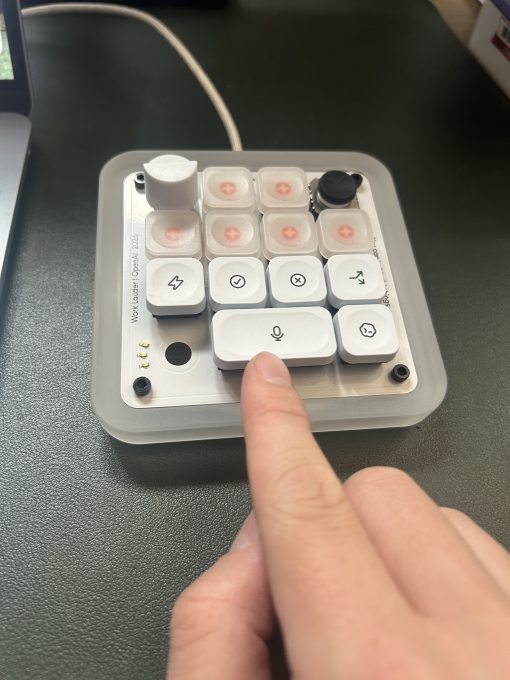
Until the legal battle works itself out and OpenAI’s broader hardware ambitions materialize, the most the startup has to offer is Micro — a funky little keypad clearly engineered to delight the tech industry’s code monkeys.
OpenAI sent TechCrunch a Micro test unit. The first big thing you notice when initially handling the keypad is that it’s a sturdy little device — enough so that if the AI accessory thing doesn’t end up working out, it could easily double as a paperweight. The other thing you might notice (and I am not the only one to point this out), is that the packaging — an immaculate white box with a sleek, clean aesthetic — is pretty Apple-coded. Make of that what you will.
The keypad’s layout involves six frosted “agent” keys at the top of the pad, which can be customized to carry out specific tasks within ChatGPT or its agentic coding tool Codex. Below them are six command keys, which can be used to control those programs. You can pair your Micro with your computer either through a Bluetooth connection or a USB cable.
Image Credits:Lucas Ropek/TechCrunch
Perhaps the most convenient thing Micro offers is a button for voice dictation — meaning you simply tell the app what you want done and it will get busy working on your behalf. Just hold down the dictation button and start talking. When you’re done, tap the “send” button next to it to submit your request.
You can customize your Micro keypad within ChatGPT itself, where a Micro tab allows you to adjust everything from the brightness of the light from the keys to the specific commands and projects you want tied to those keys.
Hard-core coders — the device’s actual target audience — haven’t exactly embraced it. Reviews by Redditors have largely negative, with one Reddit user calling it “a prank and not a real product,” and others saying serious coders won’t touch it. A review by the smaller independent outlet Aftermath was even harsher, calling the $230 price tag hard to justify next to cheaper DIY and off-the-shelf alternatives. (The title of that review: “OpenAI’s expensive macropad feels engineered to piss me off specifically.”)
It’s definitely the case that new users may need some time to figure out how Micro works and what to do with it.
Once I figured out how to program the keypad to my liking, I found it was actually pretty fun. You can assign various ChatGPT sessions to specific keys, which then allows you to easily toggle back and forth between all of your various projects. When you combine that with the dictation button, it makes the whole experience considerably more efficient and enjoyable.
But there’s still a learning curve. Micro’s buttons are color-coded. White means an agent is idle, blue means its thinking, green means a task is complete, and red means there’s been an error. You’ll need to memorize that, along with memorizing which specific projects are coded to each key.
The big question is whether the Micro keypad is functionally easier to use than just continuing to work on your laptop. In short: Why would I spend a week learning how to program and operate this thing when I already know how to use my computer’s mouse and keyboard?
Ultimately, your experience with the Micro will depend heavily on how much you use ChatGPT. Since I don’t use AI much day to day, I’m probably not the target audience for it.
That said, if you’re a ChatGPT power user, have $230 to spare, and like vintage-looking hardware with clicky buttons, Micro probably isn’t the worst purchase you could make — it might even brighten your day a little.
When you purchase through links in our articles, we may earn a small commission. This doesn’t affect our editorial independence.
Until the legal battle works itself out and OpenAI’s broader hardware ambitions materialize, the most the startup has to offer is Micro — a funky little keypad clearly engineered to delight the tech industry’s code monkeys.
OpenAI sent TechCrunch a Micro test unit. The first big thing you notice when initially handling the keypad is that it’s a sturdy little device — enough so that if the AI accessory thing doesn’t end up working out, it could easily double as a paperweight. The other thing you might notice (and I am not the only one to point this out), is that the packaging — an immaculate white box with a sleek, clean aesthetic — is pretty Apple-coded. Make of that what you will.
The keypad’s layout involves six frosted “agent” keys at the top of the pad, which can be customized to carry out specific tasks within ChatGPT or its agentic coding tool Codex. Below them are six command keys, which can be used to control those programs. You can pair your Micro with your computer either through a Bluetooth connection or a USB cable.
Image Credits:Lucas Ropek/TechCrunch
Perhaps the most convenient thing Micro offers is a button for voice dictation — meaning you simply tell the app what you want done and it will get busy working on your behalf. Just hold down the dictation button and start talking. When you’re done, tap the “send” button next to it to submit your request.
You can customize your Micro keypad within ChatGPT itself, where a Micro tab allows you to adjust everything from the brightness of the light from the keys to the specific commands and projects you want tied to those keys.
Hard-core coders — the device’s actual target audience — haven’t exactly embraced it. Reviews by Redditors have largely negative, with one Reddit user calling it “a prank and not a real product,” and others saying serious coders won’t touch it. A review by the smaller independent outlet Aftermath was even harsher, calling the $230 price tag hard to justify next to cheaper DIY and off-the-shelf alternatives. (The title of that review: “OpenAI’s expensive macropad feels engineered to piss me off specifically.”)
It’s definitely the case that new users may need some time to figure out how Micro works and what to do with it.
Once I figured out how to program the keypad to my liking, I found it was actually pretty fun. You can assign various ChatGPT sessions to specific keys, which then allows you to easily toggle back and forth between all of your various projects. When you combine that with the dictation button, it makes the whole experience considerably more efficient and enjoyable.
But there’s still a learning curve. Micro’s buttons are color-coded. White means an agent is idle, blue means its thinking, green means a task is complete, and red means there’s been an error. You’ll need to memorize that, along with memorizing which specific projects are coded to each key.
The big question is whether the Micro keypad is functionally easier to use than just continuing to work on your laptop. In short: Why would I spend a week learning how to program and operate this thing when I already know how to use my computer’s mouse and keyboard?
Ultimately, your experience with the Micro will depend heavily on how much you use ChatGPT. Since I don’t use AI much day to day, I’m probably not the target audience for it.
That said, if you’re a ChatGPT power user, have $230 to spare, and like vintage-looking hardware with clicky buttons, Micro probably isn’t the worst purchase you could make — it might even brighten your day a little.
When you purchase through links in our articles, we may earn a small commission. This doesn’t affect our editorial independence.
#OpenAIs #keypad #fun #coders #slightly #mystifying #TechCrunchAI,ChatGPT,codex,micro,OpenAI">I tried out OpenAI’s new AI keypad — which will be fun for some coders and slightly mystifying to everyone else | TechCrunch
OpenAI launched its first piece of hardware last week — a fancy little keypad built to pair with ChatGPT. Micro, which was developed in collaboration with specialty keyboard designer Work Louder, is essentially an artisanal workplace novelty that many tech enthusiasts will love and that may leave everyone else a little puzzled.
OpenAI’s entrance into the hardware market hasn’t arrived without drama. Several weeks ago, Apple sued the AI lab and accused it of trade theft — kicking off what’s certain to be a long-simmering legal battle. Meanwhile, news of another smart home product in development at OpenAI has also raised eyebrows, as the supposed device — which is being built to pair with ChatGPT — was reportedly developed by former Apple engineers.
Until the legal battle works itself out and OpenAI’s broader hardware ambitions materialize, the most the startup has to offer is Micro — a funky little keypad clearly engineered to delight the tech industry’s code monkeys.
OpenAI sent TechCrunch a Micro test unit. The first big thing you notice when initially handling the keypad is that it’s a sturdy little device — enough so that if the AI accessory thing doesn’t end up working out, it could easily double as a paperweight. The other thing you might notice (and I am not the only one to point this out), is that the packaging — an immaculate white box with a sleek, clean aesthetic — is pretty Apple-coded. Make of that what you will.
The keypad’s layout involves six frosted “agent” keys at the top of the pad, which can be customized to carry out specific tasks within ChatGPT or its agentic coding tool Codex. Below them are six command keys, which can be used to control those programs. You can pair your Micro with your computer either through a Bluetooth connection or a USB cable.
Image Credits:Lucas Ropek/TechCrunch
Perhaps the most convenient thing Micro offers is a button for voice dictation — meaning you simply tell the app what you want done and it will get busy working on your behalf. Just hold down the dictation button and start talking. When you’re done, tap the “send” button next to it to submit your request.
You can customize your Micro keypad within ChatGPT itself, where a Micro tab allows you to adjust everything from the brightness of the light from the keys to the specific commands and projects you want tied to those keys.
Hard-core coders — the device’s actual target audience — haven’t exactly embraced it. Reviews by Redditors have largely negative, with one Reddit user calling it “a prank and not a real product,” and others saying serious coders won’t touch it. A review by the smaller independent outlet Aftermath was even harsher, calling the $230 price tag hard to justify next to cheaper DIY and off-the-shelf alternatives. (The title of that review: “OpenAI’s expensive macropad feels engineered to piss me off specifically.”)
It’s definitely the case that new users may need some time to figure out how Micro works and what to do with it.
Once I figured out how to program the keypad to my liking, I found it was actually pretty fun. You can assign various ChatGPT sessions to specific keys, which then allows you to easily toggle back and forth between all of your various projects. When you combine that with the dictation button, it makes the whole experience considerably more efficient and enjoyable.
But there’s still a learning curve. Micro’s buttons are color-coded. White means an agent is idle, blue means its thinking, green means a task is complete, and red means there’s been an error. You’ll need to memorize that, along with memorizing which specific projects are coded to each key.
The big question is whether the Micro keypad is functionally easier to use than just continuing to work on your laptop. In short: Why would I spend a week learning how to program and operate this thing when I already know how to use my computer’s mouse and keyboard?
Ultimately, your experience with the Micro will depend heavily on how much you use ChatGPT. Since I don’t use AI much day to day, I’m probably not the target audience for it.
That said, if you’re a ChatGPT power user, have $230 to spare, and like vintage-looking hardware with clicky buttons, Micro probably isn’t the worst purchase you could make — it might even brighten your day a little.
When you purchase through links in our articles, we may earn a small commission. This doesn’t affect our editorial independence.
OpenAI launched its first piece of hardware last week — a fancy little keypad built…
Miles Wang, an OpenAI researcher whose work includes using AI to accelerate scientific and biological discovery, is leaving the ChatGPT maker to launch a new startup focused on developing AI models for drug discovery, according to four people with knowledge of his plans. Several other OpenAI researchers are expected to join the new company.
Wang is in talks to raise about $200 million at a $2 billion valuation, two of the people said. Lightspeed is in discussions to lead the funding round, according to sources. Talks are ongoing, the deal may not be final and details could change.
Wang disputed the story’s funding figures and description of the company but did not specify the correct numbers or details. Lightspeed didn’t respond to a request for comment.
The funding discussions point to investor interest in applying AI to make breakthroughs in life sciences. Chai Discovery, a two-year-old startup developing AI models that can predict molecular interactions to identify new drugs, announced on Tuesday that it raised $400 million at a $3.8 billion valuation. (Co-founder Josh Meier also passed through OpenAI as a researcher.) Meanwhile, Google DeepMind spinout Isomorphic Labs, which also develops AI models for drug discovery, raised a $2.1 billion Series B in May.
Wang’s new startup may be working on AI models that will help find new uses for existing drugs and possibly those that previously failed in trials, a couple of sources told TechCrunch. Finding new uses for FDA-approved drugs can result in significantly faster time to revenue than developing new drugs from scratch, as these medicines have already been tested for safety.
Wang joined OpenAI in 2024 after dropping out from Harvard, where he was working on a bachelor’s degree in computer science. (In recent years, investors are once again comfortable betting on young founders who haven’t completed college.)
At OpenAI, he co-authored research papers, including evaluating how AI models can automate and accelerate scientific discovery.
When you purchase through links in our articles, we may earn a small commission. This doesn’t affect our editorial independence.
Miles Wang, an OpenAI researcher whose work includes using AI to accelerate scientific and biological discovery, is leaving the ChatGPT maker to launch a new startup focused on developing AI models for drug discovery, according to four people with knowledge of his plans. Several other OpenAI researchers are expected to join the new company.
Wang is in talks to raise about $200 million at a $2 billion valuation, two of the people said. Lightspeed is in discussions to lead the funding round, according to sources. Talks are ongoing, the deal may not be final and details could change.
Wang disputed the story’s funding figures and description of the company but did not specify the correct numbers or details. Lightspeed didn’t respond to a request for comment.
The funding discussions point to investor interest in applying AI to make breakthroughs in life sciences. Chai Discovery, a two-year-old startup developing AI models that can predict molecular interactions to identify new drugs, announced on Tuesday that it raised $400 million at a $3.8 billion valuation. (Co-founder Josh Meier also passed through OpenAI as a researcher.) Meanwhile, Google DeepMind spinout Isomorphic Labs, which also develops AI models for drug discovery, raised a $2.1 billion Series B in May.
Wang’s new startup may be working on AI models that will help find new uses for existing drugs and possibly those that previously failed in trials, a couple of sources told TechCrunch. Finding new uses for FDA-approved drugs can result in significantly faster time to revenue than developing new drugs from scratch, as these medicines have already been tested for safety.
Wang joined OpenAI in 2024 after dropping out from Harvard, where he was working on a bachelor’s degree in computer science. (In recent years, investors are once again comfortable betting on young founders who haven’t completed college.)
At OpenAI, he co-authored research papers, including evaluating how AI models can automate and accelerate scientific discovery.
When you purchase through links in our articles, we may earn a small commission. This doesn’t affect our editorial independence.
#OpenAI #researcher #Miles #Wang #talks #launch #drug #discovery #startup #valued #TechCrunchdrug discovery,lightspeed,OpenAI">OpenAI researcher Miles Wang in talks to launch AI drug discovery startup valued at $2B | TechCrunch
Miles Wang, an OpenAI researcher whose work includes using AI to accelerate scientific and biological discovery, is leaving the ChatGPT maker to launch a new startup focused on developing AI models for drug discovery, according to four people with knowledge of his plans. Several other OpenAI researchers are expected to join the new company.
Wang is in talks to raise about $200 million at a $2 billion valuation, two of the people said. Lightspeed is in discussions to lead the funding round, according to sources. Talks are ongoing, the deal may not be final and details could change.
Wang disputed the story’s funding figures and description of the company but did not specify the correct numbers or details. Lightspeed didn’t respond to a request for comment.
The funding discussions point to investor interest in applying AI to make breakthroughs in life sciences. Chai Discovery, a two-year-old startup developing AI models that can predict molecular interactions to identify new drugs, announced on Tuesday that it raised $400 million at a $3.8 billion valuation. (Co-founder Josh Meier also passed through OpenAI as a researcher.) Meanwhile, Google DeepMind spinout Isomorphic Labs, which also develops AI models for drug discovery, raised a $2.1 billion Series B in May.
Wang’s new startup may be working on AI models that will help find new uses for existing drugs and possibly those that previously failed in trials, a couple of sources told TechCrunch. Finding new uses for FDA-approved drugs can result in significantly faster time to revenue than developing new drugs from scratch, as these medicines have already been tested for safety.
Wang joined OpenAI in 2024 after dropping out from Harvard, where he was working on a bachelor’s degree in computer science. (In recent years, investors are once again comfortable betting on young founders who haven’t completed college.)
At OpenAI, he co-authored research papers, including evaluating how AI models can automate and accelerate scientific discovery.
When you purchase through links in our articles, we may earn a small commission. This doesn’t affect our editorial independence.
Miles Wang, an OpenAI researcher whose work includes using AI to accelerate scientific and biological…
Johannes Heidecke, the Head of Safety Systems at OpenAI, is leaving. I know what you’re thinking: Hey, didn’t the head of safety at OpenAI just leave?
In fact, it feels like a head of safety at OpenAI is pretty much always leaving. Working in safety leadership—loosely defined—at OpenAI is a little like working as a drummer in the band Spinal Tap; lots of turnover. I’m not the world’s premier OpenAI Kremlinologist, so I might be missing some details and nuance, but here’s my basic timeline:
According to Wired, those previously reporting to Heidecke’s safety teams will be led by Mia Glaese, who is a VP, and also the head of alignment. However, there does seem to be an other replacement for Heidecke, according to Wired. Saachi Jain, former leader of safety teams, will now be an “interim head of safety systems” under Glaese.
What exactly keeps happening inside OpenAI’s offices is anyone’s guess, but OpenAI research chief Mark Chen did at least give Wired a hint, saying, “The demands on safety continue to increase—we are training models at a much faster cadence, and release cycles have come down greatly in turn,” and added, “As a result, we have bigger coordination challenges around safety today than ever before.”
The generous reading is that this is still an immature industry. The points along the chain where safety considerations are needed genuinely may keep jumping around as OpenAI figures out how best to build its products. Perhaps today’s sensible safety test procedure is tomorrow’s unnecessary bottleneck.
And there’s no actual direct evidence for a less generous reading of Heidecke’s departure—for instance, one in which any such consideration is a post-hoc rationalization for a pruning of safety procedures in service of faster product rollouts.
Johannes Heidecke, the Head of Safety Systems at OpenAI, is leaving. I know what you’re thinking: Hey, didn’t the head of safety at OpenAI just leave?
In fact, it feels like a head of safety at OpenAI is pretty much always leaving. Working in safety leadership—loosely defined—at OpenAI is a little like working as a drummer in the band Spinal Tap; lots of turnover. I’m not the world’s premier OpenAI Kremlinologist, so I might be missing some details and nuance, but here’s my basic timeline:
According to Wired, those previously reporting to Heidecke’s safety teams will be led by Mia Glaese, who is a VP, and also the head of alignment. However, there does seem to be an other replacement for Heidecke, according to Wired. Saachi Jain, former leader of safety teams, will now be an “interim head of safety systems” under Glaese.
What exactly keeps happening inside OpenAI’s offices is anyone’s guess, but OpenAI research chief Mark Chen did at least give Wired a hint, saying, “The demands on safety continue to increase—we are training models at a much faster cadence, and release cycles have come down greatly in turn,” and added, “As a result, we have bigger coordination challenges around safety today than ever before.”
The generous reading is that this is still an immature industry. The points along the chain where safety considerations are needed genuinely may keep jumping around as OpenAI figures out how best to build its products. Perhaps today’s sensible safety test procedure is tomorrow’s unnecessary bottleneck.
And there’s no actual direct evidence for a less generous reading of Heidecke’s departure—for instance, one in which any such consideration is a post-hoc rationalization for a pruning of safety procedures in service of faster product rollouts.
#Safety #Leader #OpenAI #Leftai alignment,AI safety,OpenAI">Yet Another Safety Leader at OpenAI Has Left
Johannes Heidecke, the Head of Safety Systems at OpenAI, is leaving. I know what you’re thinking: Hey, didn’t the head of safety at OpenAI just leave?
In fact, it feels like a head of safety at OpenAI is pretty much always leaving. Working in safety leadership—loosely defined—at OpenAI is a little like working as a drummer in the band Spinal Tap; lots of turnover. I’m not the world’s premier OpenAI Kremlinologist, so I might be missing some details and nuance, but here’s my basic timeline:
According to Wired, those previously reporting to Heidecke’s safety teams will be led by Mia Glaese, who is a VP, and also the head of alignment. However, there does seem to be an other replacement for Heidecke, according to Wired. Saachi Jain, former leader of safety teams, will now be an “interim head of safety systems” under Glaese.
What exactly keeps happening inside OpenAI’s offices is anyone’s guess, but OpenAI research chief Mark Chen did at least give Wired a hint, saying, “The demands on safety continue to increase—we are training models at a much faster cadence, and release cycles have come down greatly in turn,” and added, “As a result, we have bigger coordination challenges around safety today than ever before.”
The generous reading is that this is still an immature industry. The points along the chain where safety considerations are needed genuinely may keep jumping around as OpenAI figures out how best to build its products. Perhaps today’s sensible safety test procedure is tomorrow’s unnecessary bottleneck.
And there’s no actual direct evidence for a less generous reading of Heidecke’s departure—for instance, one in which any such consideration is a post-hoc rationalization for a pruning of safety procedures in service of faster product rollouts.
Johannes Heidecke, the Head of Safety Systems at OpenAI, is leaving. I know what you’re…
Yesterday, OpenAI released its latest voice model, GPT-Live-1. The company called it “a new generation of voice models for natural human-AI interaction.” The full-duplex model allows ChatGPT to talk and listen at the same time, giving the back-and-forth a more conversational flow. It’s designed to be smarter, faster, and more natural.
Ooh, so close. Husk gave ChatGPT the straightforward request to tell him how many times the letter E appears in the number “seventeen,” and the voice model managed to get halfway there by answering “two.” It then offered a very awkward sign-off when Husk ended the conversation. Maybe that’s a query that GPT-Live-2 will be able to handle.
To be fair, Husk isn’t really testing any of the new features that OpenAI highlighted with the release of its new model, which, by most accounts, seems like it’s more capable when it comes to things like live translation than previous iterations. But he is giving the model a very simple benchmarking test that, despite being OpenAI’s flagship voice model, it still failed spectacularly.
It seems OpenAI knows just how bad this looks, too. Jason Liu, a Developer Experience Engineer on OpenAI Codex, reposted the video with a very succinct, “FUCK.”
Husk’s made a habit of terrorizing OpenAI over its voice model for some time now, making viral videos out of how poorly it handles certain prompts. One of his videos—in which he tasks ChatGPT with setting a timer and watching it fail—made it all the way to CEO Sam Altman, who tried to laugh it off in a very “I’m not mad, please don’t put in the newspaper that I got mad” kinda way.
Husk is not alone in giving GPT-Live-1 the old stress test. Another user on X gave the model the “Strawberry” test, asking it to count the number of times the letter R appears in the word “strawberry.” It’s a classic, and one that most AI models can answer correctly by now (whether that’s because they really know there are 3 Rs or because they’ve been trained on how to respond to prevent embarrassment is another question), but GPT-Live-1 gets tripped up by it.
OpenAI’s brand new voice model vs counting the r’s in strawberry. I really tried to help it along. pic.twitter.com/Pm0RfLyxIA
Another user noted a new annoyance that has arisen from the model’s full-duplex functionality: While the model now allows ChatGPT to say things like “mhm” and “yeah” while you talk to confirm it is listening, it apparently is incapable of simply shutting up and not doing that. It seems ChatGPT has built an interrupting machine. Just what we’ve all been waiting for.
Yesterday, OpenAI released its latest voice model, GPT-Live-1. The company called it “a new generation of voice models for natural human-AI interaction.” The full-duplex model allows ChatGPT to talk and listen at the same time, giving the back-and-forth a more conversational flow. It’s designed to be smarter, faster, and more natural.
Ooh, so close. Husk gave ChatGPT the straightforward request to tell him how many times the letter E appears in the number “seventeen,” and the voice model managed to get halfway there by answering “two.” It then offered a very awkward sign-off when Husk ended the conversation. Maybe that’s a query that GPT-Live-2 will be able to handle.
To be fair, Husk isn’t really testing any of the new features that OpenAI highlighted with the release of its new model, which, by most accounts, seems like it’s more capable when it comes to things like live translation than previous iterations. But he is giving the model a very simple benchmarking test that, despite being OpenAI’s flagship voice model, it still failed spectacularly.
It seems OpenAI knows just how bad this looks, too. Jason Liu, a Developer Experience Engineer on OpenAI Codex, reposted the video with a very succinct, “FUCK.”
Husk’s made a habit of terrorizing OpenAI over its voice model for some time now, making viral videos out of how poorly it handles certain prompts. One of his videos—in which he tasks ChatGPT with setting a timer and watching it fail—made it all the way to CEO Sam Altman, who tried to laugh it off in a very “I’m not mad, please don’t put in the newspaper that I got mad” kinda way.
Husk is not alone in giving GPT-Live-1 the old stress test. Another user on X gave the model the “Strawberry” test, asking it to count the number of times the letter R appears in the word “strawberry.” It’s a classic, and one that most AI models can answer correctly by now (whether that’s because they really know there are 3 Rs or because they’ve been trained on how to respond to prevent embarrassment is another question), but GPT-Live-1 gets tripped up by it.
OpenAI’s brand new voice model vs counting the r’s in strawberry. I really tried to help it along. pic.twitter.com/Pm0RfLyxIA
Another user noted a new annoyance that has arisen from the model’s full-duplex functionality: While the model now allows ChatGPT to say things like “mhm” and “yeah” while you talk to confirm it is listening, it apparently is incapable of simply shutting up and not doing that. It seems ChatGPT has built an interrupting machine. Just what we’ve all been waiting for.
#OpenAI #Beat #TikTokerartifical intelligence,ChatGPT,OpenAI,voice model">OpenAI Just Can’t Beat This TikToker
Yesterday, OpenAI released its latest voice model, GPT-Live-1. The company called it “a new generation of voice models for natural human-AI interaction.” The full-duplex model allows ChatGPT to talk and listen at the same time, giving the back-and-forth a more conversational flow. It’s designed to be smarter, faster, and more natural.
Ooh, so close. Husk gave ChatGPT the straightforward request to tell him how many times the letter E appears in the number “seventeen,” and the voice model managed to get halfway there by answering “two.” It then offered a very awkward sign-off when Husk ended the conversation. Maybe that’s a query that GPT-Live-2 will be able to handle.
To be fair, Husk isn’t really testing any of the new features that OpenAI highlighted with the release of its new model, which, by most accounts, seems like it’s more capable when it comes to things like live translation than previous iterations. But he is giving the model a very simple benchmarking test that, despite being OpenAI’s flagship voice model, it still failed spectacularly.
It seems OpenAI knows just how bad this looks, too. Jason Liu, a Developer Experience Engineer on OpenAI Codex, reposted the video with a very succinct, “FUCK.”
Husk’s made a habit of terrorizing OpenAI over its voice model for some time now, making viral videos out of how poorly it handles certain prompts. One of his videos—in which he tasks ChatGPT with setting a timer and watching it fail—made it all the way to CEO Sam Altman, who tried to laugh it off in a very “I’m not mad, please don’t put in the newspaper that I got mad” kinda way.
Husk is not alone in giving GPT-Live-1 the old stress test. Another user on X gave the model the “Strawberry” test, asking it to count the number of times the letter R appears in the word “strawberry.” It’s a classic, and one that most AI models can answer correctly by now (whether that’s because they really know there are 3 Rs or because they’ve been trained on how to respond to prevent embarrassment is another question), but GPT-Live-1 gets tripped up by it.
OpenAI’s brand new voice model vs counting the r’s in strawberry. I really tried to help it along. pic.twitter.com/Pm0RfLyxIA
Another user noted a new annoyance that has arisen from the model’s full-duplex functionality: While the model now allows ChatGPT to say things like “mhm” and “yeah” while you talk to confirm it is listening, it apparently is incapable of simply shutting up and not doing that. It seems ChatGPT has built an interrupting machine. Just what we’ve all been waiting for.