Import records show that Valve’s distribution partner Ceva offloaded nearly 32 metric tons of “Virtual Reality Devices” on Valve’s behalf — or roughly 13 tons of actual product, after you subtract the roughly 3,700 kilogram weight of five 40-foot shipping containers.
Speaking of the Steam Machine, Valve’s stockpile may now have grown to 141 metric tons, as that’s roughly how much “Game Consoles” product has arrived in 12,600kg containers since April 23rd.
And it looks like Valve probably received three shipments of Steam Deck handhelds in May, two on May 18th and one on May 30th, judging by how those containers had the higher gross weight of 14,500kg. That’s generally how heavy Valve’s “Game Console” containers were before the Steam Machine was announced.
13 tons isn’t actually a lot of VR headsets, of course, but perhaps more of them fit into a container than the Steam Machine console. They each weigh 654g (roughly 1.44lb) with a pair of wand controllers; back-of-the-napkin math suggests we’re probably talking about fewer than 20,000 units right now.
There might not be that many Steam Machines in the US yet, either: 141 metric tons could easily be fewer than 50,000 units at their higher 2.6kg weight per console, not counting any controllers or cables.
Valve confirmed days ago that both the Steam Machine and Steam Frame will launch this summer, and has signaled that it had to rethink prices because of RAMageddon. Even if they’re pricey, though, they may sell out quickly.
Import records show that Valve’s distribution partner Ceva offloaded nearly 32 metric tons of “Virtual Reality Devices” on Valve’s behalf — or roughly 13 tons of actual product, after you subtract the roughly 3,700 kilogram weight of five 40-foot shipping containers.
Speaking of the Steam Machine, Valve’s stockpile may now have grown to 141 metric tons, as that’s roughly how much “Game Consoles” product has arrived in 12,600kg containers since April 23rd.
And it looks like Valve probably received three shipments of Steam Deck handhelds in May, two on May 18th and one on May 30th, judging by how those containers had the higher gross weight of 14,500kg. That’s generally how heavy Valve’s “Game Console” containers were before the Steam Machine was announced.
13 tons isn’t actually a lot of VR headsets, of course, but perhaps more of them fit into a container than the Steam Machine console. They each weigh 654g (roughly 1.44lb) with a pair of wand controllers; back-of-the-napkin math suggests we’re probably talking about fewer than 20,000 units right now.
There might not be that many Steam Machines in the US yet, either: 141 metric tons could easily be fewer than 50,000 units at their higher 2.6kg weight per console, not counting any controllers or cables.
Valve confirmed days ago that both the Steam Machine and Steam Frame will launch this summer, and has signaled that it had to rethink prices because of RAMageddon. Even if they’re pricey, though, they may sell out quickly.
#Valve #imported #tons #headsets #dayGaming,News,PC Gaming">Valve just imported 13 tons of VR headsets in one day
On June 10th, the German container ship Posen docked in Los Angeles after a two-week voyage from Shanghai. As Valve watcher Brad Lynch notes, it was almost certainly carrying the first mass production shipments of the Steam Frame, Valve’s new gaming headset.
Import records show that Valve’s distribution partner Ceva offloaded nearly 32 metric tons of “Virtual Reality Devices” on Valve’s behalf — or roughly 13 tons of actual product, after you subtract the roughly 3,700 kilogram weight of five 40-foot shipping containers.
Speaking of the Steam Machine, Valve’s stockpile may now have grown to 141 metric tons, as that’s roughly how much “Game Consoles” product has arrived in 12,600kg containers since April 23rd.
And it looks like Valve probably received three shipments of Steam Deck handhelds in May, two on May 18th and one on May 30th, judging by how those containers had the higher gross weight of 14,500kg. That’s generally how heavy Valve’s “Game Console” containers were before the Steam Machine was announced.
13 tons isn’t actually a lot of VR headsets, of course, but perhaps more of them fit into a container than the Steam Machine console. They each weigh 654g (roughly 1.44lb) with a pair of wand controllers; back-of-the-napkin math suggests we’re probably talking about fewer than 20,000 units right now.
There might not be that many Steam Machines in the US yet, either: 141 metric tons could easily be fewer than 50,000 units at their higher 2.6kg weight per console, not counting any controllers or cables.
Valve confirmed days ago that both the Steam Machine and Steam Frame will launch this summer, and has signaled that it had to rethink prices because of RAMageddon. Even if they’re pricey, though, they may sell out quickly.
When the company originally announced the Machine and Frame alongside its new Steam Controller late last year, it said that it would start shipping the new gadgets in early 2026. But in February, the company announced that the ongoing memory and storage crunch had forced it to revisit its pricing and shipping plans. And in March, Valve said in a blog post that it would be “shipping all three products this year” — though that was after the company initially said in the post that “we hope to ship in 2026,” which it removed in an update.
Valve opted to release the Steam Controller on its own, putting it up for sale in early May. For the Machine and Frame, while “summer” isn’t exactly a specific date, it narrows the window for when the products might finally come out.
Ahead of actually launching the devices, Valve is redesigning the Steam store and sharing information about the Verified programs for the hardware so that developers can prepare their games. Like with the Steam Deck, if a game is verified for the Machine or the Frame, the badge signals that the game should work well without any tweaks from the user.
For the Machine, the requirements for a game to be verified are “nearly identical” to what they are for the Steam Deck. With the Machine being “roughly six times as powerful” as the Deck, in theory, many more games will be verified for it. Valve also says that it’s testing “every title on Machine that fell below our performance requirements on Deck.”
For the Frame, Valve’s verified badge will signify games that run well while being played natively on the headset — as opposed to games that work well streamed to the headset, which the Frame is also capable of. “Like Steam Deck Verified, the Steam Frame Standalone Verified program focuses on the experience customers will have with the device out-of-the-box in standalone mode,” Valve says.
Now, we just need Valve to share exactly when the Steam Machine and Steam Frame will be released and how much they might cost. After last week’s price hikes for the Steam Deck, I’m gearing up for sticker shock.
When the company originally announced the Machine and Frame alongside its new Steam Controller late last year, it said that it would start shipping the new gadgets in early 2026. But in February, the company announced that the ongoing memory and storage crunch had forced it to revisit its pricing and shipping plans. And in March, Valve said in a blog post that it would be “shipping all three products this year” — though that was after the company initially said in the post that “we hope to ship in 2026,” which it removed in an update.
Valve opted to release the Steam Controller on its own, putting it up for sale in early May. For the Machine and Frame, while “summer” isn’t exactly a specific date, it narrows the window for when the products might finally come out.
Ahead of actually launching the devices, Valve is redesigning the Steam store and sharing information about the Verified programs for the hardware so that developers can prepare their games. Like with the Steam Deck, if a game is verified for the Machine or the Frame, the badge signals that the game should work well without any tweaks from the user.
For the Machine, the requirements for a game to be verified are “nearly identical” to what they are for the Steam Deck. With the Machine being “roughly six times as powerful” as the Deck, in theory, many more games will be verified for it. Valve also says that it’s testing “every title on Machine that fell below our performance requirements on Deck.”
For the Frame, Valve’s verified badge will signify games that run well while being played natively on the headset — as opposed to games that work well streamed to the headset, which the Frame is also capable of. “Like Steam Deck Verified, the Steam Frame Standalone Verified program focuses on the experience customers will have with the device out-of-the-box in standalone mode,” Valve says.
Now, we just need Valve to share exactly when the Steam Machine and Steam Frame will be released and how much they might cost. After last week’s price hikes for the Steam Deck, I’m gearing up for sticker shock.
#Valve #ready #launch #Steam #Machine #summerEntertainment,Gaming,News,PC Gaming">Valve says it’s ready to launch the Steam Machine this summer
Valve now says that the delayed Steam Machine PC and Steam Frame VR headset are set to launch sometime this summer. In a Thursday blog post detailing its Verified programs for both pieces of hardware, Valve concludes by saying that “We’re excited for players to try your titles on the new Steam hardware once they launch this summer.”
When the company originally announced the Machine and Frame alongside its new Steam Controller late last year, it said that it would start shipping the new gadgets in early 2026. But in February, the company announced that the ongoing memory and storage crunch had forced it to revisit its pricing and shipping plans. And in March, Valve said in a blog post that it would be “shipping all three products this year” — though that was after the company initially said in the post that “we hope to ship in 2026,” which it removed in an update.
Valve opted to release the Steam Controller on its own, putting it up for sale in early May. For the Machine and Frame, while “summer” isn’t exactly a specific date, it narrows the window for when the products might finally come out.
Ahead of actually launching the devices, Valve is redesigning the Steam store and sharing information about the Verified programs for the hardware so that developers can prepare their games. Like with the Steam Deck, if a game is verified for the Machine or the Frame, the badge signals that the game should work well without any tweaks from the user.
For the Machine, the requirements for a game to be verified are “nearly identical” to what they are for the Steam Deck. With the Machine being “roughly six times as powerful” as the Deck, in theory, many more games will be verified for it. Valve also says that it’s testing “every title on Machine that fell below our performance requirements on Deck.”
For the Frame, Valve’s verified badge will signify games that run well while being played natively on the headset — as opposed to games that work well streamed to the headset, which the Frame is also capable of. “Like Steam Deck Verified, the Steam Frame Standalone Verified program focuses on the experience customers will have with the device out-of-the-box in standalone mode,” Valve says.
Now, we just need Valve to share exactly when the Steam Machine and Steam Frame will be released and how much they might cost. After last week’s price hikes for the Steam Deck, I’m gearing up for sticker shock.
Today, AMD is promising it will keep supporting its AM5 desktop motherboard socket with new Ryzen processors through 2029, which likely means you can keep upgrading to newer CPUs till the end of the decade without changing your board.
Even if you’re still on the older AM4 socket, you may have one last upgrade left: it’s relaunching a “10th Anniversary” edition of the Ryzen 7 5800X3D to celebrate the 10th anniversary of that AM4 platform. That’ll be $349 on June 25th.
And if you decide now’s the time to switch to AMD or the AM5 socket, the company’s got a new old chip for that too: a $330 Ryzen 7 7700X3D, likely a binned version of the existing 7800X3D. The beefier chip costs $380 to $450, though can occasionally be found at $320. On paper, the 7700X3D looks only slightly slower:
Meanwhile in the GPU realm, AMD’s finally bringing its formerly China-exclusive Radeon RX 9070 GRE to other countries including the US, starting June 1st for $549.
That’s not quite as friendly for PC gamers to hear, as $549 was supposed to be the starting price for the notably more powerful RX 9070, not the cut-down GRE version which trails the RTX 5070.
AMD’s making an interesting pitch at a time that everything, especially gaming, is beginning to feel too expensive. Does it convince you?
Today, AMD is promising it will keep supporting its AM5 desktop motherboard socket with new Ryzen processors through 2029, which likely means you can keep upgrading to newer CPUs till the end of the decade without changing your board.
Even if you’re still on the older AM4 socket, you may have one last upgrade left: it’s relaunching a “10th Anniversary” edition of the Ryzen 7 5800X3D to celebrate the 10th anniversary of that AM4 platform. That’ll be $349 on June 25th.
And if you decide now’s the time to switch to AMD or the AM5 socket, the company’s got a new old chip for that too: a $330 Ryzen 7 7700X3D, likely a binned version of the existing 7800X3D. The beefier chip costs $380 to $450, though can occasionally be found at $320. On paper, the 7700X3D looks only slightly slower:
Meanwhile in the GPU realm, AMD’s finally bringing its formerly China-exclusive Radeon RX 9070 GRE to other countries including the US, starting June 1st for $549.
That’s not quite as friendly for PC gamers to hear, as $549 was supposed to be the starting price for the notably more powerful RX 9070, not the cut-down GRE version which trails the RTX 5070.
AMD’s making an interesting pitch at a time that everything, especially gaming, is beginning to feel too expensive. Does it convince you?
#AMDs #pitch #tech #goodDesktops,Gaming,PC Gaming,Tech">AMD’s new pitch: our old tech is so good you should just keep using it
But for desktop PC gamers, AMD has a different pitch. It’s relaunching three old components alongside a big new promise: you won’t need to buy a new motherboard until 2030.
Today, AMD is promising it will keep supporting its AM5 desktop motherboard socket with new Ryzen processors through 2029, which likely means you can keep upgrading to newer CPUs till the end of the decade without changing your board.
Even if you’re still on the older AM4 socket, you may have one last upgrade left: it’s relaunching a “10th Anniversary” edition of the Ryzen 7 5800X3D to celebrate the 10th anniversary of that AM4 platform. That’ll be $349 on June 25th.
And if you decide now’s the time to switch to AMD or the AM5 socket, the company’s got a new old chip for that too: a $330 Ryzen 7 7700X3D, likely a binned version of the existing 7800X3D. The beefier chip costs $380 to $450, though can occasionally be found at $320. On paper, the 7700X3D looks only slightly slower:
Meanwhile in the GPU realm, AMD’s finally bringing its formerly China-exclusive Radeon RX 9070 GRE to other countries including the US, starting June 1st for $549.
That’s not quite as friendly for PC gamers to hear, as $549 was supposed to be the starting price for the notably more powerful RX 9070, not the cut-down GRE version which trails the RTX 5070.
AMD’s making an interesting pitch at a time that everything, especially gaming, is beginning to feel too expensive. Does it convince you?
But for desktop PC gamers, AMD has a different pitch. It’s relaunching three old components…
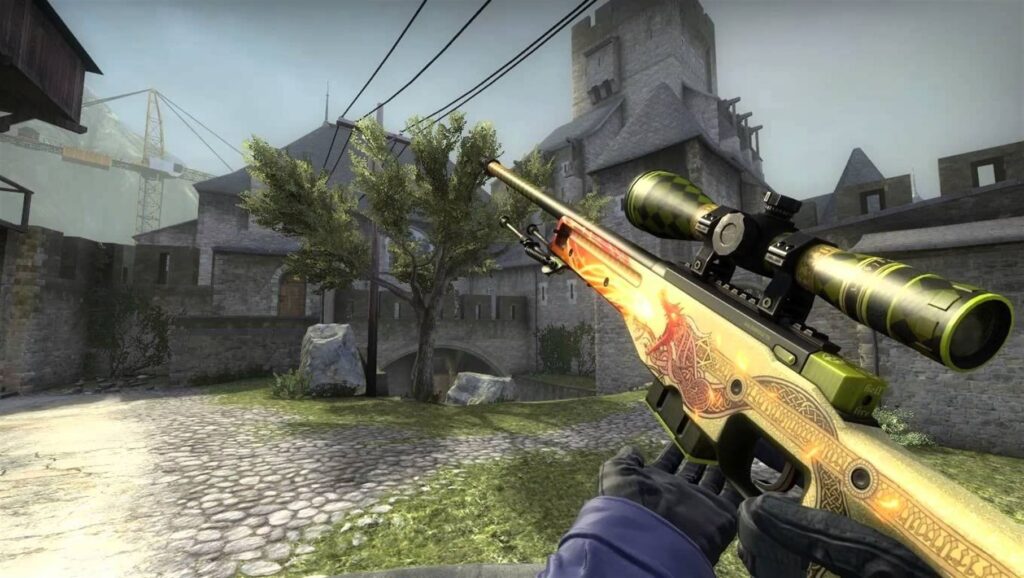
Counter-Strike 2 is a great demonstration of the finest economic systems of games created so far. In particular, such an economic system is represented by virtual trading of items worth more than $8 billion. Indeed, one should bear in mind that this is not a typo – this figure really represents the cost of items worth $8 billion. It may be added that this amount is larger than GDP in many countries, despite not having any effect on the gameplay. So, how did some in-game items attain such a multi-billion dollar economy and what fuels it? We will explain.
How a Digital Skin Gets Its Price Tag
Every skin in CS2 has a set of properties that determine its value, and understanding them is the first step to making sense of this economy.
Rarity tier is the most obvious one. Skins are categorized from Consumer Grade (white, the most common) all the way up to Covert (red, the rarest non-knife items) and Contraband (the ultra-rare category with only one item — the M4A4 Howl). Knives and gloves sit in their own Extraordinary tier, which is part of why they command such premium prices.
Then there’s float value — a number between 0.00 and 1.00 that determines a skin’s visual condition. A float of 0.01 means the skin looks virtually brand new (Factory New), while 0.85 means it’s scratched up and Battle-Scarred. Two AK-47 Redlines might look similar at a glance, but a 0.01 float Factory New will sell for significantly more than a 0.15 Minimal Wear.
And finally, there are pattern-based factors. Certain skins like Case Hardened and Fade have pattern indexes that produce unique visual results. A Case Hardened AK-47 with a full blue gem pattern can sell for tens of thousands of dollars, while the same skin with a standard pattern might go for $40. Doppler knives have distinct phases, each with its own pricing tier. Even sticker placements matter — a skin with rare Katowice 2014 stickers in the right positions can multiply the base price several times over.
The Marketplace Ecosystem
Here’s where things get interesting from a tech perspective. Unlike most games where you buy skins from a single in-game store, CS2 has an entire ecosystem of competing marketplaces.
Steam Community Market is Valve’s own platform and the default option for most players. It’s integrated directly into the Steam client, making it convenient, but it comes with a 15% transaction fee and locks your earnings in Steam Wallet — you can’t cash out to real money.
It resulted in the creation of an extensive array of third-party marketplaces, which include websites like Skinport, DMarket, CSFloat, Buff163, and countless other options. These websites allow users to exchange skins for real money, using various means of payment, such as PayPal payments, bank transfers, and cryptocurrency transactions. The fee structures on these websites vary considerably, ranging from zero percent up to 10 percent and beyond.
This price fragmentation is exactly why analytics and comparison tools have become essential for anyone who takes CS2 trading seriously. Experienced traders routinely check CS2 prices across multiple platforms before making a move, because the price gap between the cheapest listing and the most expensive one for the same skin can easily be 15-30%.
Market Cap Tracking — Like Crypto, But For Skins
One of the more fascinating developments in the CS2 economy has been the adoption of financial tracking concepts borrowed from traditional and crypto markets.
The total CS2 market capitalization — the combined estimated value of every tradeable item in the ecosystem — is tracked in real time, much like how CoinMarketCap tracks cryptocurrency values.At the end of 2025, the peak market capitalization of CS2 was more than $6 billion; however, the market capitalization dropped by roughly 30% in a single move when Valve made an update (to be discussed later).
Such advanced monitoring is essential for the user to see whether the general market is expanding or contracting. If there is an increase in the market cap, then demand and investments are likely increasing; otherwise, a sharp drop may indicate a Valve update, season, or a major event in the global gaming economy.
The data-driven platform collects information from over 20 marketplaces and provides dashboards that contain trend analysis, volumes, and price movements that could have been taken directly from a professional stock trading platform. The economy of CS2 has reached such a degree of development that the very concept of “gaming” becomes irrelevant.
Trade-Up Contracts: The Economy’s Built-In Upgrade Path
Valve didn’t just build a marketplace — they built game mechanics directly into the economic system. However, the most crucial part is the Trade-Up Contracts where the user gets a skin from the next level collection using ten skins from the current level collection.
Even though this concept seems quite simple, it requires rather complex mathematical calculations. Namely, the output skin’s type is dependent on the input collections’ types, whereas its float is calculated according to the average float of all input skins scaled to the output collection’s range. Thus, an advanced player may affect the probability of getting a certain skin via inputs manipulation.
To explain, if seven skins belong to one collection while three skins are from another, the output skin will most probably originate from the first collection. If the first collection contains a $500 skin at the next tier and the second contains a $30 skin, you can engineer a heavily weighted gamble in your favor.
But here’s the catch — the math only works if you actually run the numbers. The inputs might cost $80 in total, but if the expected value of the output is only $60, you’re making a bad bet regardless of the potential upside. That’s why experienced traders simulate their contracts using a CS2 trade-up calculator before committing any skins. These tools predict every possible outcome with exact probabilities, float projections, and expected profit or loss.
The trade-up system was further shaken in October 2025 when Valve added the ability to trade up Covert skins into knives and gloves — something that was previously impossible. Players could suddenly turn five Covert skins worth roughly $5-10 each into knives that were previously selling for $1,000+. The result? Knife prices crashed overnight, the total market cap dropped by hundreds of millions, and the entire pricing hierarchy had to readjust.
The Tech Infrastructure Behind It All
All that lies beneath all these graphs and calculations is quite a bit of technology. Real-time data feeds, APIs, and aggregators pull pricing information from several different marketplaces simultaneously.
Automated trading, monitoring services, portfolio management tools, and other such applications are developed by third parties using the marketplace APIs. Some platforms offer their own developer APIs with endpoints for price recommendations, market analytics, and cross-platform price comparison — essentially creating the financial infrastructure layer that the CS2 economy needed to operate at scale.
Steam itself provides API access for inventory data, market listings, and transaction history, which third-party services use to power everything from inventory valuation tools to automated trading systems.
The sophistication has reached a point where the CS2 economy has its own version of Bloomberg terminals — dashboards that track market-wide trends, individual item price histories, trading volumes, liquidity scores, and even volatility metrics. Professional traders monitor these tools the same way a Wall Street analyst watches stock tickers.
Why It Matters Beyond Gaming
The CS2 skin economy isn’t just a curiosity — it’s a case study in how digital ownership, market dynamics, and community-driven value creation work at scale.
This is what some of the main points which can be derived from this are. Firstly, scarcity defines value in all instances. It has been illustrated in the CS2 skins case study, in which it is clear that it does not matter whether items are tangible or useful in order for them to have economic value.
Second, platform decisions have outsized economic impact. Valve’s single update in October 2025 erased over a billion dollars in virtual item value. No other company has that kind of direct influence over a player-driven economy of this scale.
And third, the line between gaming economies and financial markets is dissolving. When your hobby comes with real-time price tracking, market cap analytics, trade-up calculators, and cross-platform arbitrage opportunities, you’re not just playing a game anymore. You’re participating in a micro-economy that happens to live inside one.
Whether you’re a casual CS2 player who’s never sold a skin or a veteran trader running profit calculations on every drop, the scale and sophistication of what’s been built here is worth paying attention to. An $8 billion economy that runs on cosmetic pixels, community trust, and a few really good APIs — that’s the kind of thing you only find in gaming.
Counter-Strike 2 is a great demonstration of the finest economic systems of games created so far. In particular, such an economic system is represented by virtual trading of items worth more than $8 billion. Indeed, one should bear in mind that this is not a typo – this figure really represents the cost of items worth $8 billion. It may be added that this amount is larger than GDP in many countries, despite not having any effect on the gameplay. So, how did some in-game items attain such a multi-billion dollar economy and what fuels it? We will explain.
How a Digital Skin Gets Its Price Tag
Every skin in CS2 has a set of properties that determine its value, and understanding them is the first step to making sense of this economy.
Rarity tier is the most obvious one. Skins are categorized from Consumer Grade (white, the most common) all the way up to Covert (red, the rarest non-knife items) and Contraband (the ultra-rare category with only one item — the M4A4 Howl). Knives and gloves sit in their own Extraordinary tier, which is part of why they command such premium prices.
Then there’s float value — a number between 0.00 and 1.00 that determines a skin’s visual condition. A float of 0.01 means the skin looks virtually brand new (Factory New), while 0.85 means it’s scratched up and Battle-Scarred. Two AK-47 Redlines might look similar at a glance, but a 0.01 float Factory New will sell for significantly more than a 0.15 Minimal Wear.
And finally, there are pattern-based factors. Certain skins like Case Hardened and Fade have pattern indexes that produce unique visual results. A Case Hardened AK-47 with a full blue gem pattern can sell for tens of thousands of dollars, while the same skin with a standard pattern might go for $40. Doppler knives have distinct phases, each with its own pricing tier. Even sticker placements matter — a skin with rare Katowice 2014 stickers in the right positions can multiply the base price several times over.
The Marketplace Ecosystem
Here’s where things get interesting from a tech perspective. Unlike most games where you buy skins from a single in-game store, CS2 has an entire ecosystem of competing marketplaces.
Steam Community Market is Valve’s own platform and the default option for most players. It’s integrated directly into the Steam client, making it convenient, but it comes with a 15% transaction fee and locks your earnings in Steam Wallet — you can’t cash out to real money.
It resulted in the creation of an extensive array of third-party marketplaces, which include websites like Skinport, DMarket, CSFloat, Buff163, and countless other options. These websites allow users to exchange skins for real money, using various means of payment, such as PayPal payments, bank transfers, and cryptocurrency transactions. The fee structures on these websites vary considerably, ranging from zero percent up to 10 percent and beyond.
This price fragmentation is exactly why analytics and comparison tools have become essential for anyone who takes CS2 trading seriously. Experienced traders routinely check CS2 prices across multiple platforms before making a move, because the price gap between the cheapest listing and the most expensive one for the same skin can easily be 15-30%.
Market Cap Tracking — Like Crypto, But For Skins
One of the more fascinating developments in the CS2 economy has been the adoption of financial tracking concepts borrowed from traditional and crypto markets.
The total CS2 market capitalization — the combined estimated value of every tradeable item in the ecosystem — is tracked in real time, much like how CoinMarketCap tracks cryptocurrency values.At the end of 2025, the peak market capitalization of CS2 was more than $6 billion; however, the market capitalization dropped by roughly 30% in a single move when Valve made an update (to be discussed later).
Such advanced monitoring is essential for the user to see whether the general market is expanding or contracting. If there is an increase in the market cap, then demand and investments are likely increasing; otherwise, a sharp drop may indicate a Valve update, season, or a major event in the global gaming economy.
The data-driven platform collects information from over 20 marketplaces and provides dashboards that contain trend analysis, volumes, and price movements that could have been taken directly from a professional stock trading platform. The economy of CS2 has reached such a degree of development that the very concept of “gaming” becomes irrelevant.
Trade-Up Contracts: The Economy’s Built-In Upgrade Path
Valve didn’t just build a marketplace — they built game mechanics directly into the economic system. However, the most crucial part is the Trade-Up Contracts where the user gets a skin from the next level collection using ten skins from the current level collection.
Even though this concept seems quite simple, it requires rather complex mathematical calculations. Namely, the output skin’s type is dependent on the input collections’ types, whereas its float is calculated according to the average float of all input skins scaled to the output collection’s range. Thus, an advanced player may affect the probability of getting a certain skin via inputs manipulation.
To explain, if seven skins belong to one collection while three skins are from another, the output skin will most probably originate from the first collection. If the first collection contains a $500 skin at the next tier and the second contains a $30 skin, you can engineer a heavily weighted gamble in your favor.
But here’s the catch — the math only works if you actually run the numbers. The inputs might cost $80 in total, but if the expected value of the output is only $60, you’re making a bad bet regardless of the potential upside. That’s why experienced traders simulate their contracts using a CS2 trade-up calculator before committing any skins. These tools predict every possible outcome with exact probabilities, float projections, and expected profit or loss.
The trade-up system was further shaken in October 2025 when Valve added the ability to trade up Covert skins into knives and gloves — something that was previously impossible. Players could suddenly turn five Covert skins worth roughly $5-10 each into knives that were previously selling for $1,000+. The result? Knife prices crashed overnight, the total market cap dropped by hundreds of millions, and the entire pricing hierarchy had to readjust.
The Tech Infrastructure Behind It All
All that lies beneath all these graphs and calculations is quite a bit of technology. Real-time data feeds, APIs, and aggregators pull pricing information from several different marketplaces simultaneously.
Automated trading, monitoring services, portfolio management tools, and other such applications are developed by third parties using the marketplace APIs. Some platforms offer their own developer APIs with endpoints for price recommendations, market analytics, and cross-platform price comparison — essentially creating the financial infrastructure layer that the CS2 economy needed to operate at scale.
Steam itself provides API access for inventory data, market listings, and transaction history, which third-party services use to power everything from inventory valuation tools to automated trading systems.
The sophistication has reached a point where the CS2 economy has its own version of Bloomberg terminals — dashboards that track market-wide trends, individual item price histories, trading volumes, liquidity scores, and even volatility metrics. Professional traders monitor these tools the same way a Wall Street analyst watches stock tickers.
Why It Matters Beyond Gaming
The CS2 skin economy isn’t just a curiosity — it’s a case study in how digital ownership, market dynamics, and community-driven value creation work at scale.
This is what some of the main points which can be derived from this are. Firstly, scarcity defines value in all instances. It has been illustrated in the CS2 skins case study, in which it is clear that it does not matter whether items are tangible or useful in order for them to have economic value.
Second, platform decisions have outsized economic impact. Valve’s single update in October 2025 erased over a billion dollars in virtual item value. No other company has that kind of direct influence over a player-driven economy of this scale.
And third, the line between gaming economies and financial markets is dissolving. When your hobby comes with real-time price tracking, market cap analytics, trade-up calculators, and cross-platform arbitrage opportunities, you’re not just playing a game anymore. You’re participating in a micro-economy that happens to live inside one.
Whether you’re a casual CS2 player who’s never sold a skin or a veteran trader running profit calculations on every drop, the scale and sophistication of what’s been built here is worth paying attention to. An $8 billion economy that runs on cosmetic pixels, community trust, and a few really good APIs — that’s the kind of thing you only find in gaming.
In addition to being a very popular first-person shooter game, Counter-Strike 2 is a great demonstration of the finest economic systems of games created so far. In particular, such an economic system is represented by virtual trading of items worth more than $8 billion. Indeed, one should bear in mind that this is not a typo – this figure really represents the cost of items worth $8 billion. It may be added that this amount is larger than GDP in many countries, despite not having any effect on the gameplay. So, how did some in-game items attain such a multi-billion dollar economy and what fuels it? We will explain.
How a Digital Skin Gets Its Price Tag
Every skin in CS2 has a set of properties that determine its value, and understanding them is the first step to making sense of this economy.
Rarity tier is the most obvious one. Skins are categorized from Consumer Grade (white, the most common) all the way up to Covert (red, the rarest non-knife items) and Contraband (the ultra-rare category with only one item — the M4A4 Howl). Knives and gloves sit in their own Extraordinary tier, which is part of why they command such premium prices.
Then there’s float value — a number between 0.00 and 1.00 that determines a skin’s visual condition. A float of 0.01 means the skin looks virtually brand new (Factory New), while 0.85 means it’s scratched up and Battle-Scarred. Two AK-47 Redlines might look similar at a glance, but a 0.01 float Factory New will sell for significantly more than a 0.15 Minimal Wear.
And finally, there are pattern-based factors. Certain skins like Case Hardened and Fade have pattern indexes that produce unique visual results. A Case Hardened AK-47 with a full blue gem pattern can sell for tens of thousands of dollars, while the same skin with a standard pattern might go for $40. Doppler knives have distinct phases, each with its own pricing tier. Even sticker placements matter — a skin with rare Katowice 2014 stickers in the right positions can multiply the base price several times over.
The Marketplace Ecosystem
Here’s where things get interesting from a tech perspective. Unlike most games where you buy skins from a single in-game store, CS2 has an entire ecosystem of competing marketplaces.
Steam Community Market is Valve’s own platform and the default option for most players. It’s integrated directly into the Steam client, making it convenient, but it comes with a 15% transaction fee and locks your earnings in Steam Wallet — you can’t cash out to real money.
It resulted in the creation of an extensive array of third-party marketplaces, which include websites like Skinport, DMarket, CSFloat, Buff163, and countless other options. These websites allow users to exchange skins for real money, using various means of payment, such as PayPal payments, bank transfers, and cryptocurrency transactions. The fee structures on these websites vary considerably, ranging from zero percent up to 10 percent and beyond.
This price fragmentation is exactly why analytics and comparison tools have become essential for anyone who takes CS2 trading seriously. Experienced traders routinely check CS2 prices across multiple platforms before making a move, because the price gap between the cheapest listing and the most expensive one for the same skin can easily be 15-30%.
Market Cap Tracking — Like Crypto, But For Skins
One of the more fascinating developments in the CS2 economy has been the adoption of financial tracking concepts borrowed from traditional and crypto markets.
The total CS2 market capitalization — the combined estimated value of every tradeable item in the ecosystem — is tracked in real time, much like how CoinMarketCap tracks cryptocurrency values.At the end of 2025, the peak market capitalization of CS2 was more than $6 billion; however, the market capitalization dropped by roughly 30% in a single move when Valve made an update (to be discussed later).
Such advanced monitoring is essential for the user to see whether the general market is expanding or contracting. If there is an increase in the market cap, then demand and investments are likely increasing; otherwise, a sharp drop may indicate a Valve update, season, or a major event in the global gaming economy.
The data-driven platform collects information from over 20 marketplaces and provides dashboards that contain trend analysis, volumes, and price movements that could have been taken directly from a professional stock trading platform. The economy of CS2 has reached such a degree of development that the very concept of “gaming” becomes irrelevant.
Trade-Up Contracts: The Economy’s Built-In Upgrade Path
Valve didn’t just build a marketplace — they built game mechanics directly into the economic system. However, the most crucial part is the Trade-Up Contracts where the user gets a skin from the next level collection using ten skins from the current level collection.
Even though this concept seems quite simple, it requires rather complex mathematical calculations. Namely, the output skin’s type is dependent on the input collections’ types, whereas its float is calculated according to the average float of all input skins scaled to the output collection’s range. Thus, an advanced player may affect the probability of getting a certain skin via inputs manipulation.
To explain, if seven skins belong to one collection while three skins are from another, the output skin will most probably originate from the first collection. If the first collection contains a $500 skin at the next tier and the second contains a $30 skin, you can engineer a heavily weighted gamble in your favor.
But here’s the catch — the math only works if you actually run the numbers. The inputs might cost $80 in total, but if the expected value of the output is only $60, you’re making a bad bet regardless of the potential upside. That’s why experienced traders simulate their contracts using a CS2 trade-up calculator before committing any skins. These tools predict every possible outcome with exact probabilities, float projections, and expected profit or loss.
The trade-up system was further shaken in October 2025 when Valve added the ability to trade up Covert skins into knives and gloves — something that was previously impossible. Players could suddenly turn five Covert skins worth roughly $5-10 each into knives that were previously selling for $1,000+. The result? Knife prices crashed overnight, the total market cap dropped by hundreds of millions, and the entire pricing hierarchy had to readjust.
The Tech Infrastructure Behind It All
All that lies beneath all these graphs and calculations is quite a bit of technology. Real-time data feeds, APIs, and aggregators pull pricing information from several different marketplaces simultaneously.
Automated trading, monitoring services, portfolio management tools, and other such applications are developed by third parties using the marketplace APIs. Some platforms offer their own developer APIs with endpoints for price recommendations, market analytics, and cross-platform price comparison — essentially creating the financial infrastructure layer that the CS2 economy needed to operate at scale.
Steam itself provides API access for inventory data, market listings, and transaction history, which third-party services use to power everything from inventory valuation tools to automated trading systems.
The sophistication has reached a point where the CS2 economy has its own version of Bloomberg terminals — dashboards that track market-wide trends, individual item price histories, trading volumes, liquidity scores, and even volatility metrics. Professional traders monitor these tools the same way a Wall Street analyst watches stock tickers.
Why It Matters Beyond Gaming
The CS2 skin economy isn’t just a curiosity — it’s a case study in how digital ownership, market dynamics, and community-driven value creation work at scale.
This is what some of the main points which can be derived from this are. Firstly, scarcity defines value in all instances. It has been illustrated in the CS2 skins case study, in which it is clear that it does not matter whether items are tangible or useful in order for them to have economic value.
Second, platform decisions have outsized economic impact. Valve’s single update in October 2025 erased over a billion dollars in virtual item value. No other company has that kind of direct influence over a player-driven economy of this scale.
And third, the line between gaming economies and financial markets is dissolving. When your hobby comes with real-time price tracking, market cap analytics, trade-up calculators, and cross-platform arbitrage opportunities, you’re not just playing a game anymore. You’re participating in a micro-economy that happens to live inside one.
Whether you’re a casual CS2 player who’s never sold a skin or a veteran trader running profit calculations on every drop, the scale and sophistication of what’s been built here is worth paying attention to. An $8 billion economy that runs on cosmetic pixels, community trust, and a few really good APIs — that’s the kind of thing you only find in gaming.
Asus says the XG129C covers 125 percent of the sRGB color gamut and 90 percent of the DCI-P3 color gamut. It also comes with a one-year subscription for the hardware monitoring tool AIDA64 Extreme, which would usually cost $65. Besides acting as a performance monitor for your PC, sidekick displays like this can also be handy as an extension for streaming or editing setups, much like Elgato’s Stream Deck.
Along with the little XG129C, Asus also announced the ROG Strix OLED XG34WCDMS, a 34-inch RGB Tandem QD-OLED gaming monitor. It features a 280Hz refresh rate and a 3440 x 1440p resolution, and, according to Asus, covers 99 percent of the DCI-P3 color gamut. Asus has not yet officially announced pricing for either display.
Asus says the XG129C covers 125 percent of the sRGB color gamut and 90 percent of the DCI-P3 color gamut. It also comes with a one-year subscription for the hardware monitoring tool AIDA64 Extreme, which would usually cost $65. Besides acting as a performance monitor for your PC, sidekick displays like this can also be handy as an extension for streaming or editing setups, much like Elgato’s Stream Deck.
Along with the little XG129C, Asus also announced the ROG Strix OLED XG34WCDMS, a 34-inch RGB Tandem QD-OLED gaming monitor. It features a 280Hz refresh rate and a 3440 x 1440p resolution, and, according to Asus, covers 99 percent of the DCI-P3 color gamut. Asus has not yet officially announced pricing for either display.
#Asus #chases #Elgato #secondary #touchscreen #displayGaming,News,PC Gaming,Tech">Asus chases Elgato with its own secondary touchscreen display
Asus’s latest gaming monitor is a little smaller than usual. The ROG Strix XG129C, announced on Friday, is a 12.3-inch touchscreen IPS display that’s intended to be a sidekick for a larger main monitor, similar to the 14.1-inch secondary display in the 2020 Asus ROG Zephyrus Duo 15. It’s a slightly smaller competitor to Corsair’s Xeneon Edge, which has a 14.5-inch display, but the same 720p resolution.
Asus says the XG129C covers 125 percent of the sRGB color gamut and 90 percent of the DCI-P3 color gamut. It also comes with a one-year subscription for the hardware monitoring tool AIDA64 Extreme, which would usually cost $65. Besides acting as a performance monitor for your PC, sidekick displays like this can also be handy as an extension for streaming or editing setups, much like Elgato’s Stream Deck.
Along with the little XG129C, Asus also announced the ROG Strix OLED XG34WCDMS, a 34-inch RGB Tandem QD-OLED gaming monitor. It features a 280Hz refresh rate and a 3440 x 1440p resolution, and, according to Asus, covers 99 percent of the DCI-P3 color gamut. Asus has not yet officially announced pricing for either display.
Roblox says Q1 growth was “tempered by greater-than-expected headwinds” due to the rollout of its age-check features, which “slowed new user acquisition.” Russia’s December 2025 ban on Roblox also helped drive the number of daily active users down.
Earlier this month, Roblox expanded its age restrictions to include the types of games users in different age brackets can access, and the company will “implement additional improvements designed to facilitate age-appropriate access to content and product features” over the next few quarters. The company says its safety push will lower Roblox’s “expectations for topline growth in 2026.”
Thursday’s earnings report says 51 percent of global daily active users have gotten their age checked through the end of the first quarter. In the US specifically, 65 percent of active users have age-checked.
Roblox has also recently pushed to increase the number of games on its platform targeted at users who are older than 18. On Thursday, the company announced that it’s increasing its Developer Exchange rate by 42 percent for in-game spending from age-checked users over 18.
Roblox says Q1 growth was “tempered by greater-than-expected headwinds” due to the rollout of its age-check features, which “slowed new user acquisition.” Russia’s December 2025 ban on Roblox also helped drive the number of daily active users down.
Earlier this month, Roblox expanded its age restrictions to include the types of games users in different age brackets can access, and the company will “implement additional improvements designed to facilitate age-appropriate access to content and product features” over the next few quarters. The company says its safety push will lower Roblox’s “expectations for topline growth in 2026.”
Thursday’s earnings report says 51 percent of global daily active users have gotten their age checked through the end of the first quarter. In the US specifically, 65 percent of active users have age-checked.
Roblox has also recently pushed to increase the number of games on its platform targeted at users who are older than 18. On Thursday, the company announced that it’s increasing its Developer Exchange rate by 42 percent for in-game spending from age-checked users over 18.
#Robloxs #daily #users #continue #drop #agechecks #slow #growthGaming,News,PC Gaming,Tech">Roblox’s daily users continue to drop as age-checks slow growth
Roblox’s daily active users continued to slip last quarter due in part to its rollout of age checks on its platform. According to its latest earnings report, Roblox currently has 132 million daily active users globally, down from 144 million at the end of last year, which was a drop from 152 million in Q3 2025. In the US and Canada, the number of active users dropped by one million from the previous quarter, while Roblox’s revenue still grew to $1.4 billion.
Roblox says Q1 growth was “tempered by greater-than-expected headwinds” due to the rollout of its age-check features, which “slowed new user acquisition.” Russia’s December 2025 ban on Roblox also helped drive the number of daily active users down.
Earlier this month, Roblox expanded its age restrictions to include the types of games users in different age brackets can access, and the company will “implement additional improvements designed to facilitate age-appropriate access to content and product features” over the next few quarters. The company says its safety push will lower Roblox’s “expectations for topline growth in 2026.”
Thursday’s earnings report says 51 percent of global daily active users have gotten their age checked through the end of the first quarter. In the US specifically, 65 percent of active users have age-checked.
Roblox has also recently pushed to increase the number of games on its platform targeted at users who are older than 18. On Thursday, the company announced that it’s increasing its Developer Exchange rate by 42 percent for in-game spending from age-checked users over 18.