At a meeting this week, CEO Sam Altman reportedly told staff that the government would be “approving access customer by customer” during a preview period. Altman reportedly added that if the limited release goes well, OpenAI hopes to follow with a general, broader release a “couple of weeks later.”
In other words, the Trump administration appears to be pressuring OpenAI to do what Anthropic is already voluntarily doing: keeping its most powerful AI models under wraps.
According to The Information, OpenAI’s new model is not only being reviewed by the administration, but its staffers also “worked closely” with the government on the upcoming release. The agencies that reportedly asked for a limited release were the Office of the National Cyber Director and the Office of Science and Technology Policy.
The Trump administration — which originally positioned itself as taking a “hands off” approach to AI — has in recent months pushed for federal oversight of new models. Earlier this month, Trump signed an executive order directing certain AI companies to voluntarily submit new models to the government for testing and evaluation before releasing them publicly.
Earlier this year, Anthropic sparked no small amount of controversy when it announced that its new frontier cyber model, Claude Mythos, would only be released to a small coterie of partners through a program called Project Glasswing. Anthropic argued that its model was simply too powerful and could, in the wrong hands, cause more harm than good. Observers have since debated whether Anthropic’s rhetoric is a mere marketing gimmick or a legitimate attempt to keep a powerful model from being misused. The answer may be somewhere in between.
Cybercriminals have used automated tools for a very long time, but in the age of generative AI, they now have more digital ammunition than ever before. LLMs have proven adept at writing malware, and some can even execute entire ransomware attacks autonomously.
The specific concern with frontier cyber tools like Mythos is that they are ostensibly capable of both identifying and exploiting software vulnerabilities at speeds that no human analyst could match. Since many software systems contain hidden bugs that act as entry points into enterprise networks, this obviously poses an obvious and significant problem for any organization running complex software infrastructure. That said, since these models remain closed to the public, it’s difficult to tell just how much of a threat they really are.
When you purchase through links in our articles, we may earn a small commission. This doesn’t affect our editorial independence.
At a meeting this week, CEO Sam Altman reportedly told staff that the government would be “approving access customer by customer” during a preview period. Altman reportedly added that if the limited release goes well, OpenAI hopes to follow with a general, broader release a “couple of weeks later.”
In other words, the Trump administration appears to be pressuring OpenAI to do what Anthropic is already voluntarily doing: keeping its most powerful AI models under wraps.
According to The Information, OpenAI’s new model is not only being reviewed by the administration, but its staffers also “worked closely” with the government on the upcoming release. The agencies that reportedly asked for a limited release were the Office of the National Cyber Director and the Office of Science and Technology Policy.
The Trump administration — which originally positioned itself as taking a “hands off” approach to AI — has in recent months pushed for federal oversight of new models. Earlier this month, Trump signed an executive order directing certain AI companies to voluntarily submit new models to the government for testing and evaluation before releasing them publicly.
Earlier this year, Anthropic sparked no small amount of controversy when it announced that its new frontier cyber model, Claude Mythos, would only be released to a small coterie of partners through a program called Project Glasswing. Anthropic argued that its model was simply too powerful and could, in the wrong hands, cause more harm than good. Observers have since debated whether Anthropic’s rhetoric is a mere marketing gimmick or a legitimate attempt to keep a powerful model from being misused. The answer may be somewhere in between.
Cybercriminals have used automated tools for a very long time, but in the age of generative AI, they now have more digital ammunition than ever before. LLMs have proven adept at writing malware, and some can even execute entire ransomware attacks autonomously.
The specific concern with frontier cyber tools like Mythos is that they are ostensibly capable of both identifying and exploiting software vulnerabilities at speeds that no human analyst could match. Since many software systems contain hidden bugs that act as entry points into enterprise networks, this obviously poses an obvious and significant problem for any organization running complex software infrastructure. That said, since these models remain closed to the public, it’s difficult to tell just how much of a threat they really are.
When you purchase through links in our articles, we may earn a small commission. This doesn’t affect our editorial independence.
#White #House #OpenAI #slow #roll #release #model #safety #concerns #TechCrunchAnthropic,Mythos,OpenAI,sam altman,Trump">The White House is asking OpenAI to slow roll the release of its new model over safety concerns | TechCrunch
OpenAI’s release of its newest model, GPT 5.6, reportedly won’t be like its previous releases. Instead of distributing it to the public, the company plans to share it only with a select group of close partners because the Trump administration told it to, reports The Information.
At a meeting this week, CEO Sam Altman reportedly told staff that the government would be “approving access customer by customer” during a preview period. Altman reportedly added that if the limited release goes well, OpenAI hopes to follow with a general, broader release a “couple of weeks later.”
In other words, the Trump administration appears to be pressuring OpenAI to do what Anthropic is already voluntarily doing: keeping its most powerful AI models under wraps.
According to The Information, OpenAI’s new model is not only being reviewed by the administration, but its staffers also “worked closely” with the government on the upcoming release. The agencies that reportedly asked for a limited release were the Office of the National Cyber Director and the Office of Science and Technology Policy.
The Trump administration — which originally positioned itself as taking a “hands off” approach to AI — has in recent months pushed for federal oversight of new models. Earlier this month, Trump signed an executive order directing certain AI companies to voluntarily submit new models to the government for testing and evaluation before releasing them publicly.
Earlier this year, Anthropic sparked no small amount of controversy when it announced that its new frontier cyber model, Claude Mythos, would only be released to a small coterie of partners through a program called Project Glasswing. Anthropic argued that its model was simply too powerful and could, in the wrong hands, cause more harm than good. Observers have since debated whether Anthropic’s rhetoric is a mere marketing gimmick or a legitimate attempt to keep a powerful model from being misused. The answer may be somewhere in between.
Cybercriminals have used automated tools for a very long time, but in the age of generative AI, they now have more digital ammunition than ever before. LLMs have proven adept at writing malware, and some can even execute entire ransomware attacks autonomously.
The specific concern with frontier cyber tools like Mythos is that they are ostensibly capable of both identifying and exploiting software vulnerabilities at speeds that no human analyst could match. Since many software systems contain hidden bugs that act as entry points into enterprise networks, this obviously poses an obvious and significant problem for any organization running complex software infrastructure. That said, since these models remain closed to the public, it’s difficult to tell just how much of a threat they really are.
When you purchase through links in our articles, we may earn a small commission. This doesn’t affect our editorial independence.
MAFIA the GAME, will apparently be an ongoing thing, where prominent tech luminaries get together and face off over a game of cards (the show is named after the party-game favorite).
The spectacle is moderated by Pirate Wires editor Mike Solana (who is also the chief marketing officer at Founders Fund). The debut episode includes a who’s who of players, Altman, Luckey, Bryan Johnson, the famed biohacker who will (according to him) live forever, and Moxie Marlinspike, the founder of encrypted chat app Signal.
“I’m so f*cking bored with VC content,” Solana told Newcomer, which originally reported the show’s existence. “There has to be a more interesting way to get to know someone, and I think that this is a way more interesting way to get to know someone.”
TechCrunch reached out to Founders Fund for more information on the program.
In many ways, having a reality-TV-esque platform is just good business these days. The internet has turned the world into a population of chronic media consumers, and the average American spends around 2.5 hours on social media per day. Much of that time is spent scrolling through an endless flood of advertising-laced memes and videos.
In the modern era, the road to power and influence is paved by infotainment.
Companies and executives have sought to take advantage of this new reality in different ways. OpenAI recently raised some eyebrows when it procured TBPN, the buzzy founder-led podcast. Meanwhile, a number of tech’s most prominent players have leveraged virality to their advantage. Johnson, for instance, has managed to grow his following through a very active (and quite bizarre) social media presence. Elon Musk, meanwhile, has also managed to leverage his public persona to go viral (although arguments could be made that his online presence has sometimes hurt rather than helped his businesses).
MAFIA the GAME, will apparently be an ongoing thing, where prominent tech luminaries get together and face off over a game of cards (the show is named after the party-game favorite).
The spectacle is moderated by Pirate Wires editor Mike Solana (who is also the chief marketing officer at Founders Fund). The debut episode includes a who’s who of players, Altman, Luckey, Bryan Johnson, the famed biohacker who will (according to him) live forever, and Moxie Marlinspike, the founder of encrypted chat app Signal.
“I’m so f*cking bored with VC content,” Solana told Newcomer, which originally reported the show’s existence. “There has to be a more interesting way to get to know someone, and I think that this is a way more interesting way to get to know someone.”
TechCrunch reached out to Founders Fund for more information on the program.
In many ways, having a reality-TV-esque platform is just good business these days. The internet has turned the world into a population of chronic media consumers, and the average American spends around 2.5 hours on social media per day. Much of that time is spent scrolling through an endless flood of advertising-laced memes and videos.
In the modern era, the road to power and influence is paved by infotainment.
Companies and executives have sought to take advantage of this new reality in different ways. OpenAI recently raised some eyebrows when it procured TBPN, the buzzy founder-led podcast. Meanwhile, a number of tech’s most prominent players have leveraged virality to their advantage. Johnson, for instance, has managed to grow his following through a very active (and quite bizarre) social media presence. Elon Musk, meanwhile, has also managed to leverage his public persona to go viral (although arguments could be made that his online presence has sometimes hurt rather than helped his businesses).
When you purchase through links in our articles, we may earn a small commission. This doesn’t affect our editorial independence.
#Founders #Fund #launches #game #show #starring #Sam #Altman #Palmer #Luckey #tech #elites #TechCrunchbryan johnson,Founders Fund,media,Palmer Luckey,sam altman">Founders Fund launches game show starring Sam Altman, Palmer Luckey, and other tech elites | TechCrunch
Have you ever had the desire to see Sam Altman and Palmer Luckey square off over a moderately suspenseful card game? If so, you are in luck.
Silicon Valley’s leaders are rushing to embrace the power of media for the purposes of marketing and political capital. Now, in a sign of the times, Founders Fund, the venture capital firm co-founded by Peter Thiel, has launched its own game show.
MAFIA the GAME, will apparently be an ongoing thing, where prominent tech luminaries get together and face off over a game of cards (the show is named after the party-game favorite).
The spectacle is moderated by Pirate Wires editor Mike Solana (who is also the chief marketing officer at Founders Fund). The debut episode includes a who’s who of players, Altman, Luckey, Bryan Johnson, the famed biohacker who will (according to him) live forever, and Moxie Marlinspike, the founder of encrypted chat app Signal.
“I’m so f*cking bored with VC content,” Solana told Newcomer, which originally reported the show’s existence. “There has to be a more interesting way to get to know someone, and I think that this is a way more interesting way to get to know someone.”
TechCrunch reached out to Founders Fund for more information on the program.
In many ways, having a reality-TV-esque platform is just good business these days. The internet has turned the world into a population of chronic media consumers, and the average American spends around 2.5 hours on social media per day. Much of that time is spent scrolling through an endless flood of advertising-laced memes and videos.
In the modern era, the road to power and influence is paved by infotainment.
Companies and executives have sought to take advantage of this new reality in different ways. OpenAI recently raised some eyebrows when it procured TBPN, the buzzy founder-led podcast. Meanwhile, a number of tech’s most prominent players have leveraged virality to their advantage. Johnson, for instance, has managed to grow his following through a very active (and quite bizarre) social media presence. Elon Musk, meanwhile, has also managed to leverage his public persona to go viral (although arguments could be made that his online presence has sometimes hurt rather than helped his businesses).
Have you ever had the desire to see Sam Altman and Palmer Luckey square off…
The jury’s speedy decision to reject Elon Musk’s lawsuit against the other founders of OpenAI and Microsoft confirmed what we saw in the courtroom: Musk’s case was a weak one, in part because he waited so long to file it.
Watching the closing arguments last week, OpenAI’s attorneys detailed point-by-point how the law was on their client’s side, while the plaintiffs team focused on Sam Altman’s apparent lack of credibility and expressed disbelief that anyone would disagree with Musk’s accusations.
The final effect was that, after the verdict, some found it hard to believe Musk had lost — including the man himself. In a post he later deleted, Musk called Judge Yvonne Gonzalez Rogers a “terrible activist Oakland judge,” then announced his plans to appeal, declaring “there is no question to anyone following the case in detail that Altman & Brockman did in fact enrich themselves by stealing a charity.”
But Altman and Brockman weren’t the only figures who benefitted from OpenAI’s non-profit investments. As much as Musk and his legal team tried to make the trial about Altman, the proceedings revealed just as much about Musk himself.
One incident that came out in court showed Musk benefiting from OpenAI in an uncomfortably familiar way. Greg Brockman testified that in 2017, Musk asked him to bring a team of OpenAI researchers down to Tesla’s headquarters to help with the autopilot team for a few weeks. “It was pretty clear that was not something we could say no to,” Brockman said.
Brockman described taking a team of leading scientists, including Andrej Karpathy, Ilya Sutskever, and Scott Grey, to consult with the “demoralized” Tesla workers. They helped come up with ideas to improve the vehicle’s self-driving technology, with Sutskever telling the team that if they could find 10,000 images of a tricky corner case, they would be able to fix their software. Musk even asked Brockman to recommend employees to fire, which he declined to do.
Another person familiar with the episode confirmed Brockman’s account, and said Tesla did not reimburse OpenAI for the time and effort of its employees. Musk’s family office, Excession, didn’t reply to a request for comment.
The heart of Musk’s case is that Altman, Brockman and OpenAI committed a “breach of charitable trust” — that Musk donated funds for a specific charitable purpose, and his cofounders instead used them for something else. He also accuses them of “unjust enrichment” due stock and other benefits from OpenAI’s for-profit.
In the case of the OpenAI scientists parachuting into Tesla, Musk’s charitable donations were intended to hire scientists focused on securing the benefits of AGI. Instead, he had them work for free at his for-profit company.
Dorothy Lund, a Columbia Law School professor and the co-host of the Beyond Unprecedented podcast, told TechCrunch that this arrangement wouldn’t be legal, calling it “a bit rich for Musk to be suing for breach of a charitable trust, when he appears to have been redirecting assets in a way that was inconsistent with that mission.”
It’s true that the self-driving work involved artificial intelligence, but witnesses for Musk emphasized that Tesla’s self-driving project was very different from OpenAI’s research agenda. That’s in part because Karpathy left OpenAI for Tesla shortly after this incident. OpenAI’s attorneys portrayed the departure as Musk violating his duty to the lab, where he was co-chair of the board, by recruiting one of its key researchers to his own company.
The other fact that no doubt influenced the jury was the amount of time Musk spent trying to gain sole control of a potential OpenAI for-profit affiliate in 2017. Musk deployed good cop, bad cop tactics in an attempt to convince his cofounders to let him have total control of OpenAI’s for-profit affiliate — giving them free Teslas, and threatening to withhold his donations.
His efforts put his attorneys in a tricky spot, facing a need to convince the jury there was a significant difference between what Musk envisioned, and the for-profit that was ultimately created. They suggested a “small adjunct” for-profit would be permissible, though OpenAI’s witnesses showed non-profits with large commercial arms are common.
Indeed, there’s a very plausible counter-factual where Musk took one of the offers his cofounders made to split their equity more evenly, and finds himself today as one of OpenAI’s largest shareholders — just not the controlling one. But several times during the trial, Musk’s associates testified that he refuses to invest in any business he could have sole control over.
The failure of Musk’s claims because he filed them too late has been cited as a technicality, but the statute of limitations has substance behind it: People and businesses make important decisions and spend resources based on their understanding that what they are doing is permissible. If someone like Musk waits too long to sue, then the cost of unravelling all those decisions can outweigh a just reimbursement.
No members of the jury have spoken about how they arrived at their verdict. However, they were asked to consider if, before Aug. 5, 2021, Musk should have known that OpenAI was spending resources outside its mission or launching for-profit affiliate. The answer to that is clear: Musk himself was doing those things.
When you purchase through links in our articles, we may earn a small commission. This doesn’t affect our editorial independence.
The jury’s speedy decision to reject Elon Musk’s lawsuit against the other founders of OpenAI and Microsoft confirmed what we saw in the courtroom: Musk’s case was a weak one, in part because he waited so long to file it.
Watching the closing arguments last week, OpenAI’s attorneys detailed point-by-point how the law was on their client’s side, while the plaintiffs team focused on Sam Altman’s apparent lack of credibility and expressed disbelief that anyone would disagree with Musk’s accusations.
The final effect was that, after the verdict, some found it hard to believe Musk had lost — including the man himself. In a post he later deleted, Musk called Judge Yvonne Gonzalez Rogers a “terrible activist Oakland judge,” then announced his plans to appeal, declaring “there is no question to anyone following the case in detail that Altman & Brockman did in fact enrich themselves by stealing a charity.”
But Altman and Brockman weren’t the only figures who benefitted from OpenAI’s non-profit investments. As much as Musk and his legal team tried to make the trial about Altman, the proceedings revealed just as much about Musk himself.
One incident that came out in court showed Musk benefiting from OpenAI in an uncomfortably familiar way. Greg Brockman testified that in 2017, Musk asked him to bring a team of OpenAI researchers down to Tesla’s headquarters to help with the autopilot team for a few weeks. “It was pretty clear that was not something we could say no to,” Brockman said.
Brockman described taking a team of leading scientists, including Andrej Karpathy, Ilya Sutskever, and Scott Grey, to consult with the “demoralized” Tesla workers. They helped come up with ideas to improve the vehicle’s self-driving technology, with Sutskever telling the team that if they could find 10,000 images of a tricky corner case, they would be able to fix their software. Musk even asked Brockman to recommend employees to fire, which he declined to do.
Another person familiar with the episode confirmed Brockman’s account, and said Tesla did not reimburse OpenAI for the time and effort of its employees. Musk’s family office, Excession, didn’t reply to a request for comment.
The heart of Musk’s case is that Altman, Brockman and OpenAI committed a “breach of charitable trust” — that Musk donated funds for a specific charitable purpose, and his cofounders instead used them for something else. He also accuses them of “unjust enrichment” due stock and other benefits from OpenAI’s for-profit.
In the case of the OpenAI scientists parachuting into Tesla, Musk’s charitable donations were intended to hire scientists focused on securing the benefits of AGI. Instead, he had them work for free at his for-profit company.
Dorothy Lund, a Columbia Law School professor and the co-host of the Beyond Unprecedented podcast, told TechCrunch that this arrangement wouldn’t be legal, calling it “a bit rich for Musk to be suing for breach of a charitable trust, when he appears to have been redirecting assets in a way that was inconsistent with that mission.”
It’s true that the self-driving work involved artificial intelligence, but witnesses for Musk emphasized that Tesla’s self-driving project was very different from OpenAI’s research agenda. That’s in part because Karpathy left OpenAI for Tesla shortly after this incident. OpenAI’s attorneys portrayed the departure as Musk violating his duty to the lab, where he was co-chair of the board, by recruiting one of its key researchers to his own company.
The other fact that no doubt influenced the jury was the amount of time Musk spent trying to gain sole control of a potential OpenAI for-profit affiliate in 2017. Musk deployed good cop, bad cop tactics in an attempt to convince his cofounders to let him have total control of OpenAI’s for-profit affiliate — giving them free Teslas, and threatening to withhold his donations.
His efforts put his attorneys in a tricky spot, facing a need to convince the jury there was a significant difference between what Musk envisioned, and the for-profit that was ultimately created. They suggested a “small adjunct” for-profit would be permissible, though OpenAI’s witnesses showed non-profits with large commercial arms are common.
Indeed, there’s a very plausible counter-factual where Musk took one of the offers his cofounders made to split their equity more evenly, and finds himself today as one of OpenAI’s largest shareholders — just not the controlling one. But several times during the trial, Musk’s associates testified that he refuses to invest in any business he could have sole control over.
The failure of Musk’s claims because he filed them too late has been cited as a technicality, but the statute of limitations has substance behind it: People and businesses make important decisions and spend resources based on their understanding that what they are doing is permissible. If someone like Musk waits too long to sue, then the cost of unravelling all those decisions can outweigh a just reimbursement.
No members of the jury have spoken about how they arrived at their verdict. However, they were asked to consider if, before Aug. 5, 2021, Musk should have known that OpenAI was spending resources outside its mission or launching for-profit affiliate. The answer to that is clear: Musk himself was doing those things.
When you purchase through links in our articles, we may earn a small commission. This doesn’t affect our editorial independence.
#Elon #Musk #Sam #Altman #stole #nonprofit #trial #showed #similar #aims #TechCrunchElon Musk,OpenAI,sam altman,Tesla">Elon Musk said Sam Altman “stole” a non-profit — but the trial showed he had similar aims | TechCrunch
The jury’s speedy decision to reject Elon Musk’s lawsuit against the other founders of OpenAI and Microsoft confirmed what we saw in the courtroom: Musk’s case was a weak one, in part because he waited so long to file it.
Watching the closing arguments last week, OpenAI’s attorneys detailed point-by-point how the law was on their client’s side, while the plaintiffs team focused on Sam Altman’s apparent lack of credibility and expressed disbelief that anyone would disagree with Musk’s accusations.
The final effect was that, after the verdict, some found it hard to believe Musk had lost — including the man himself. In a post he later deleted, Musk called Judge Yvonne Gonzalez Rogers a “terrible activist Oakland judge,” then announced his plans to appeal, declaring “there is no question to anyone following the case in detail that Altman & Brockman did in fact enrich themselves by stealing a charity.”
But Altman and Brockman weren’t the only figures who benefitted from OpenAI’s non-profit investments. As much as Musk and his legal team tried to make the trial about Altman, the proceedings revealed just as much about Musk himself.
One incident that came out in court showed Musk benefiting from OpenAI in an uncomfortably familiar way. Greg Brockman testified that in 2017, Musk asked him to bring a team of OpenAI researchers down to Tesla’s headquarters to help with the autopilot team for a few weeks. “It was pretty clear that was not something we could say no to,” Brockman said.
Brockman described taking a team of leading scientists, including Andrej Karpathy, Ilya Sutskever, and Scott Grey, to consult with the “demoralized” Tesla workers. They helped come up with ideas to improve the vehicle’s self-driving technology, with Sutskever telling the team that if they could find 10,000 images of a tricky corner case, they would be able to fix their software. Musk even asked Brockman to recommend employees to fire, which he declined to do.
Another person familiar with the episode confirmed Brockman’s account, and said Tesla did not reimburse OpenAI for the time and effort of its employees. Musk’s family office, Excession, didn’t reply to a request for comment.
The heart of Musk’s case is that Altman, Brockman and OpenAI committed a “breach of charitable trust” — that Musk donated funds for a specific charitable purpose, and his cofounders instead used them for something else. He also accuses them of “unjust enrichment” due stock and other benefits from OpenAI’s for-profit.
In the case of the OpenAI scientists parachuting into Tesla, Musk’s charitable donations were intended to hire scientists focused on securing the benefits of AGI. Instead, he had them work for free at his for-profit company.
Dorothy Lund, a Columbia Law School professor and the co-host of the Beyond Unprecedented podcast, told TechCrunch that this arrangement wouldn’t be legal, calling it “a bit rich for Musk to be suing for breach of a charitable trust, when he appears to have been redirecting assets in a way that was inconsistent with that mission.”
It’s true that the self-driving work involved artificial intelligence, but witnesses for Musk emphasized that Tesla’s self-driving project was very different from OpenAI’s research agenda. That’s in part because Karpathy left OpenAI for Tesla shortly after this incident. OpenAI’s attorneys portrayed the departure as Musk violating his duty to the lab, where he was co-chair of the board, by recruiting one of its key researchers to his own company.
The other fact that no doubt influenced the jury was the amount of time Musk spent trying to gain sole control of a potential OpenAI for-profit affiliate in 2017. Musk deployed good cop, bad cop tactics in an attempt to convince his cofounders to let him have total control of OpenAI’s for-profit affiliate — giving them free Teslas, and threatening to withhold his donations.
His efforts put his attorneys in a tricky spot, facing a need to convince the jury there was a significant difference between what Musk envisioned, and the for-profit that was ultimately created. They suggested a “small adjunct” for-profit would be permissible, though OpenAI’s witnesses showed non-profits with large commercial arms are common.
Indeed, there’s a very plausible counter-factual where Musk took one of the offers his cofounders made to split their equity more evenly, and finds himself today as one of OpenAI’s largest shareholders — just not the controlling one. But several times during the trial, Musk’s associates testified that he refuses to invest in any business he could have sole control over.
The failure of Musk’s claims because he filed them too late has been cited as a technicality, but the statute of limitations has substance behind it: People and businesses make important decisions and spend resources based on their understanding that what they are doing is permissible. If someone like Musk waits too long to sue, then the cost of unravelling all those decisions can outweigh a just reimbursement.
No members of the jury have spoken about how they arrived at their verdict. However, they were asked to consider if, before Aug. 5, 2021, Musk should have known that OpenAI was spending resources outside its mission or launching for-profit affiliate. The answer to that is clear: Musk himself was doing those things.
When you purchase through links in our articles, we may earn a small commission. This doesn’t affect our editorial independence.
The jury’s speedy decision to reject Elon Musk’s lawsuit against the other founders of OpenAI…
OpenAI’s former CTO Mira Murati just testified under oath that CEO Sam Altman didn’t tell the truth to her, and that his habits interfered with her ability to do her job. The allegation in question, that Altman lied about safety practices, was already public, having featured heavily in a recent New Yorker feature about Altman. Now it’s court testimony.
For a few weird days in 2023, Murati was an interim CEO of OpenAI after Altman was briefly fired (And then OpenAI very briefly picked another CEO, Emmett Shear). Reports from this chaotic time paint a picture of a working relationship between Altman and Murati that came under strain when Murati lost Altman’s trust. Behind-the-scenes accounts say she sent memos to the company’s board of directors and Altman himself, questioning Altman’s managerial abilities, and that his termination soon followed.
On Wednesday, a video deposition from Murati was shown to the court during the Musk v. Altman court proceedings, in which she testified to the truth of this story. A new model was being prepared for release—which the New Yorker says was GPT-4 Turbo—and in her testimony, as described by the Verge, she said Altman told her OpenAI’s legal department, headed at the time by Jason Kwon, said it wasn’t necessary for the OpenAI safety board to review the model.
The person asking questions in the deposition asked, “As you understand it, was Mr. Altman telling the truth when he made that statement to you?”
To which Murati said, “No.” She later explained in her testimony, according to the Verge, “I confirmed that what Jason was saying and what Sam was saying were not the same thing.” She characterized this as a “misalignment” between Altman and Kwon. Kwon is now OpenAI’s chief strategy officer.
According to Reuters, Murati said in her testimony, “My concern was about Sam saying one thing to one person and completely the opposite to another person.” She also reportedly testified that Altman had been “creating chaos.” She described OpenAI at this time as “at catastrophic risk of falling apart,” and said she was “concerned about the company completely blowing up,” according to Reuters.
According to the New Yorker, Murati’s memos to Altman and the board came soon after this interaction, and “Soon afterward, the board made its decision to fire Altman.” Murati was interim CEO for a handful of days, then Shear stepped in for a few days, and then Altman was reinstated, a move Murati publicly supported.
According to Forbes, Murati testified Wednesday that after his return to OpenAI, Altman continued with behaviors that had worried her, including delays around important decisions, and giving inconsistent messages to different coworkers, which she reportedly said created a “very difficult and chaotic environment.”
About ten months after Sam Altman was reinstated as CEO, Murati left, and a few month later, founded her own AI company.
OpenAI’s former CTO Mira Murati just testified under oath that CEO Sam Altman didn’t tell the truth to her, and that his habits interfered with her ability to do her job. The allegation in question, that Altman lied about safety practices, was already public, having featured heavily in a recent New Yorker feature about Altman. Now it’s court testimony.
For a few weird days in 2023, Murati was an interim CEO of OpenAI after Altman was briefly fired (And then OpenAI very briefly picked another CEO, Emmett Shear). Reports from this chaotic time paint a picture of a working relationship between Altman and Murati that came under strain when Murati lost Altman’s trust. Behind-the-scenes accounts say she sent memos to the company’s board of directors and Altman himself, questioning Altman’s managerial abilities, and that his termination soon followed.
On Wednesday, a video deposition from Murati was shown to the court during the Musk v. Altman court proceedings, in which she testified to the truth of this story. A new model was being prepared for release—which the New Yorker says was GPT-4 Turbo—and in her testimony, as described by the Verge, she said Altman told her OpenAI’s legal department, headed at the time by Jason Kwon, said it wasn’t necessary for the OpenAI safety board to review the model.
The person asking questions in the deposition asked, “As you understand it, was Mr. Altman telling the truth when he made that statement to you?”
To which Murati said, “No.” She later explained in her testimony, according to the Verge, “I confirmed that what Jason was saying and what Sam was saying were not the same thing.” She characterized this as a “misalignment” between Altman and Kwon. Kwon is now OpenAI’s chief strategy officer.
According to Reuters, Murati said in her testimony, “My concern was about Sam saying one thing to one person and completely the opposite to another person.” She also reportedly testified that Altman had been “creating chaos.” She described OpenAI at this time as “at catastrophic risk of falling apart,” and said she was “concerned about the company completely blowing up,” according to Reuters.
According to the New Yorker, Murati’s memos to Altman and the board came soon after this interaction, and “Soon afterward, the board made its decision to fire Altman.” Murati was interim CEO for a handful of days, then Shear stepped in for a few days, and then Altman was reinstated, a move Murati publicly supported.
According to Forbes, Murati testified Wednesday that after his return to OpenAI, Altman continued with behaviors that had worried her, including delays around important decisions, and giving inconsistent messages to different coworkers, which she reportedly said created a “very difficult and chaotic environment.”
About ten months after Sam Altman was reinstated as CEO, Murati left, and a few month later, founded her own AI company.
#ExOpenAI #CTO #Mira #Murati #Testifies #Sam #Altman #Allegedly #LyingElon Musk,OpenAI,Sam Altman,Trials">Ex-OpenAI CTO Mira Murati Testifies About Sam Altman Allegedly Lying to Her
OpenAI’s former CTO Mira Murati just testified under oath that CEO Sam Altman didn’t tell the truth to her, and that his habits interfered with her ability to do her job. The allegation in question, that Altman lied about safety practices, was already public, having featured heavily in a recent New Yorker feature about Altman. Now it’s court testimony.
For a few weird days in 2023, Murati was an interim CEO of OpenAI after Altman was briefly fired (And then OpenAI very briefly picked another CEO, Emmett Shear). Reports from this chaotic time paint a picture of a working relationship between Altman and Murati that came under strain when Murati lost Altman’s trust. Behind-the-scenes accounts say she sent memos to the company’s board of directors and Altman himself, questioning Altman’s managerial abilities, and that his termination soon followed.
On Wednesday, a video deposition from Murati was shown to the court during the Musk v. Altman court proceedings, in which she testified to the truth of this story. A new model was being prepared for release—which the New Yorker says was GPT-4 Turbo—and in her testimony, as described by the Verge, she said Altman told her OpenAI’s legal department, headed at the time by Jason Kwon, said it wasn’t necessary for the OpenAI safety board to review the model.
The person asking questions in the deposition asked, “As you understand it, was Mr. Altman telling the truth when he made that statement to you?”
To which Murati said, “No.” She later explained in her testimony, according to the Verge, “I confirmed that what Jason was saying and what Sam was saying were not the same thing.” She characterized this as a “misalignment” between Altman and Kwon. Kwon is now OpenAI’s chief strategy officer.
According to Reuters, Murati said in her testimony, “My concern was about Sam saying one thing to one person and completely the opposite to another person.” She also reportedly testified that Altman had been “creating chaos.” She described OpenAI at this time as “at catastrophic risk of falling apart,” and said she was “concerned about the company completely blowing up,” according to Reuters.
According to the New Yorker, Murati’s memos to Altman and the board came soon after this interaction, and “Soon afterward, the board made its decision to fire Altman.” Murati was interim CEO for a handful of days, then Shear stepped in for a few days, and then Altman was reinstated, a move Murati publicly supported.
According to Forbes, Murati testified Wednesday that after his return to OpenAI, Altman continued with behaviors that had worried her, including delays around important decisions, and giving inconsistent messages to different coworkers, which she reportedly said created a “very difficult and chaotic environment.”
About ten months after Sam Altman was reinstated as CEO, Murati left, and a few month later, founded her own AI company.
OpenAI’s former CTO Mira Murati just testified under oath that CEO Sam Altman didn’t tell…
As the first week of trial in Musk v. Altman comes to a close, one person has emerged as a critical behind-the-scenes manager of communications and egos in OpenAI’s early years: Shivon Zilis.
A longtime employee of Musk and the mother to four of his children, Zilis joined OpenAI as an adviser in 2016. She later served as a director of its nonprofit board from 2020 until 2023 and has worked as an executive at Musk’s other companies, Neuralink and Tesla.
When asked about the nature of his relationship with Zilis in court, Musk offered several answers. At one point, he called her a “chief of staff.” Later, a “close adviser.” At another point, he said “we live together, and she’s the mother of four of my children,” though Zilis said in a deposition that Musk is more of a regular guest and maintains his own residence. Last September, Zilis told OpenAI’s attorneys that she became romantic with Musk around 2016 after she had become an informal adviser to OpenAI. They had their first two children in 2021, she said.
But OpenAI’s lawyers have made the case in witness testimonies and evidence that her most important role, as it pertains to this lawsuit, is being a covert liaison between OpenAI and Musk, even years after he left the nonprofit’s board in February 2018.
“Do you prefer I stay close and friendly to OpenAI to keep info flowing or begin to disassociate? Trust game is about to get tricky so any guidance for how to do right by you is appreciated,” Zilis wrote in a text message to Musk on February 16, 2018, days before OpenAI announced he was leaving the board. Musk responded, “Close and friendly, but we are going to actively try to move three or four people from OpenAI to Tesla. More than that will join over time, but we won’t actively recruit them.”
When asked about this exchange on the witness stand, Musk said he “wanted to know what’s going on.”
In the same text thread, Musk wrote, “There is little chance of OpenAI being a serious force if I focus on Tesla AI.” Zilis reaffirmed him, saying: “There is very low probability of a good future if someone doesn’t slow Demis down,” referring to Demis Hassabis, the leader of Google DeepMind, who Musk has said he didn’t trust to control a superintelligent AI system. “You don’t realize how much you have an ability to influence him directly or otherwise slow him down. I think you know I’m not a malicious person, but in this case it feels fundamentally irresponsible to not find a way to slow or alter his path.”
Roughly two months later, in an email from April 23, 2018, Zilis updated Musk on OpenAI’s fundraising efforts and progress on a project to develop an AI that could play video games. In the same message, she said she had reallocated most of her time away from OpenAI to his other companies, Neuralink and Tesla, but told him, “If you’d prefer I pull more hours back to OpenAI oversight please let me know.”
Almost a year earlier, in the summer of 2017, OpenAI’s cofounders had started negotiating changes to the organization’s corporate structure—Musk wanted control of the company to start out. In an email from August 28, 2017, Zilis wrote to Musk that she had met with OpenAI president Greg Brockman and cofounder Ilya Sutskever to discuss how equity would be divided up in the new company. She summarized points from the meeting, including that Brockman and Sutskever thought one person shouldn’t have unilateral power over AGI, should they develop it. Musk wrote back to Zilis, “This is very annoying. Please encourage them to go start a company. I’ve had enough.”
As the first week of trial in Musk v. Altman comes to a close, one person has emerged as a critical behind-the-scenes manager of communications and egos in OpenAI’s early years: Shivon Zilis.
A longtime employee of Musk and the mother to four of his children, Zilis joined OpenAI as an adviser in 2016. She later served as a director of its nonprofit board from 2020 until 2023 and has worked as an executive at Musk’s other companies, Neuralink and Tesla.
When asked about the nature of his relationship with Zilis in court, Musk offered several answers. At one point, he called her a “chief of staff.” Later, a “close adviser.” At another point, he said “we live together, and she’s the mother of four of my children,” though Zilis said in a deposition that Musk is more of a regular guest and maintains his own residence. Last September, Zilis told OpenAI’s attorneys that she became romantic with Musk around 2016 after she had become an informal adviser to OpenAI. They had their first two children in 2021, she said.
But OpenAI’s lawyers have made the case in witness testimonies and evidence that her most important role, as it pertains to this lawsuit, is being a covert liaison between OpenAI and Musk, even years after he left the nonprofit’s board in February 2018.
“Do you prefer I stay close and friendly to OpenAI to keep info flowing or begin to disassociate? Trust game is about to get tricky so any guidance for how to do right by you is appreciated,” Zilis wrote in a text message to Musk on February 16, 2018, days before OpenAI announced he was leaving the board. Musk responded, “Close and friendly, but we are going to actively try to move three or four people from OpenAI to Tesla. More than that will join over time, but we won’t actively recruit them.”
When asked about this exchange on the witness stand, Musk said he “wanted to know what’s going on.”
In the same text thread, Musk wrote, “There is little chance of OpenAI being a serious force if I focus on Tesla AI.” Zilis reaffirmed him, saying: “There is very low probability of a good future if someone doesn’t slow Demis down,” referring to Demis Hassabis, the leader of Google DeepMind, who Musk has said he didn’t trust to control a superintelligent AI system. “You don’t realize how much you have an ability to influence him directly or otherwise slow him down. I think you know I’m not a malicious person, but in this case it feels fundamentally irresponsible to not find a way to slow or alter his path.”
Roughly two months later, in an email from April 23, 2018, Zilis updated Musk on OpenAI’s fundraising efforts and progress on a project to develop an AI that could play video games. In the same message, she said she had reallocated most of her time away from OpenAI to his other companies, Neuralink and Tesla, but told him, “If you’d prefer I pull more hours back to OpenAI oversight please let me know.”
Almost a year earlier, in the summer of 2017, OpenAI’s cofounders had started negotiating changes to the organization’s corporate structure—Musk wanted control of the company to start out. In an email from August 28, 2017, Zilis wrote to Musk that she had met with OpenAI president Greg Brockman and cofounder Ilya Sutskever to discuss how equity would be divided up in the new company. She summarized points from the meeting, including that Brockman and Sutskever thought one person shouldn’t have unilateral power over AGI, should they develop it. Musk wrote back to Zilis, “This is very annoying. Please encourage them to go start a company. I’ve had enough.”
As the first week of trial in Musk v. Altman comes to a close, one person has emerged as a critical behind-the-scenes manager of communications and egos in OpenAI’s early years: Shivon Zilis.
A longtime employee of Musk and the mother to four of his children, Zilis joined OpenAI as an adviser in 2016. She later served as a director of its nonprofit board from 2020 until 2023 and has worked as an executive at Musk’s other companies, Neuralink and Tesla.
When asked about the nature of his relationship with Zilis in court, Musk offered several answers. At one point, he called her a “chief of staff.” Later, a “close adviser.” At another point, he said “we live together, and she’s the mother of four of my children,” though Zilis said in a deposition that Musk is more of a regular guest and maintains his own residence. Last September, Zilis told OpenAI’s attorneys that she became romantic with Musk around 2016 after she had become an informal adviser to OpenAI. They had their first two children in 2021, she said.
But OpenAI’s lawyers have made the case in witness testimonies and evidence that her most important role, as it pertains to this lawsuit, is being a covert liaison between OpenAI and Musk, even years after he left the nonprofit’s board in February 2018.
“Do you prefer I stay close and friendly to OpenAI to keep info flowing or begin to disassociate? Trust game is about to get tricky so any guidance for how to do right by you is appreciated,” Zilis wrote in a text message to Musk on February 16, 2018, days before OpenAI announced he was leaving the board. Musk responded, “Close and friendly, but we are going to actively try to move three or four people from OpenAI to Tesla. More than that will join over time, but we won’t actively recruit them.”
When asked about this exchange on the witness stand, Musk said he “wanted to know what’s going on.”
In the same text thread, Musk wrote, “There is little chance of OpenAI being a serious force if I focus on Tesla AI.” Zilis reaffirmed him, saying: “There is very low probability of a good future if someone doesn’t slow Demis down,” referring to Demis Hassabis, the leader of Google DeepMind, who Musk has said he didn’t trust to control a superintelligent AI system. “You don’t realize how much you have an ability to influence him directly or otherwise slow him down. I think you know I’m not a malicious person, but in this case it feels fundamentally irresponsible to not find a way to slow or alter his path.”
Roughly two months later, in an email from April 23, 2018, Zilis updated Musk on OpenAI’s fundraising efforts and progress on a project to develop an AI that could play video games. In the same message, she said she had reallocated most of her time away from OpenAI to his other companies, Neuralink and Tesla, but told him, “If you’d prefer I pull more hours back to OpenAI oversight please let me know.”
Almost a year earlier, in the summer of 2017, OpenAI’s cofounders had started negotiating changes to the organization’s corporate structure—Musk wanted control of the company to start out. In an email from August 28, 2017, Zilis wrote to Musk that she had met with OpenAI president Greg Brockman and cofounder Ilya Sutskever to discuss how equity would be divided up in the new company. She summarized points from the meeting, including that Brockman and Sutskever thought one person shouldn’t have unilateral power over AGI, should they develop it. Musk wrote back to Zilis, “This is very annoying. Please encourage them to go start a company. I’ve had enough.”
As the first week of trial in Musk v. Altman comes to a close, one…
Elon Musk returned to the witness stand on Wednesday to continue telling his side of the story in his legal battle against OpenAI and its CEO Sam Altman. Under cross-examination from OpenAI’s lawyers, Musk was pressed on all the ways he tried to squeeze the organization over a 2017 power struggle that he ultimately lost. Around this time, Musk tried to hire away OpenAI researchers and stopped sending it funding he had previously promised, according to emails presented as evidence in the case.
As the cross-examination began, tension rippled through the courtroom. Judge Yvonne Gonzalez Rogers started the day by reprimanding someone in the gallery for taking a picture of Musk. OpenAI president and cofounder Greg Brockman sat behind his lawyers with a yellow legal pad in his lap, giving Musk a cold stare as he testified. Musk grew visibly frustrated on the witness stand, pausing frequently to tell OpenAI’s lawyer, William Savitt, that he saw his questions as misleading. Meanwhile, Savitt’s cross-examination was derailed by objections, technical issues, and Musk continuously claiming he doesn’t recall key details of OpenAI’s history.
Savitt showed the courtroom emails from September 2017 between Musk, Brockman, and researcher Ilya Sutskever discussing the formation of what would become OpenAI’s for-profit arm. In the thread, Musk demanded the right to choose four members of its board of directors, giving him more voting power than his cofounders, who would be left with three in total. “I would unequivocally have initial control of the company, but this will change quickly,” said Musk in one message. Sutskever wrote back rejecting the idea because he said he feared it would give Musk too much power.
Months before these negotiations started, Musk had halted payments to OpenAI, which was particularly difficult for the organization because he was then its main source of funding. Since 2016, Musk had been sending $5 million payments to OpenAI quarterly as part of a broader $1 billion pledge he made at the organization’s launch. But in the spring of 2017, he stopped sending the money. In another email from August 2017, the head of Musk’s family office, Jared Birchall, asked Musk if he should continue withholding it. Musk responded simply, “Yes.”
Around the time Musk lost the power struggle, emails show that he held discussions with executives at Tesla and Neuralink, his brain-computer interface company, about hiring OpenAI employees. At the time, Musk was still a board member of OpenAI.
Musk sent an email to a Tesla vice president in June 2017 about hiring an early OpenAI researcher, Andrej Karpathy. “Just talked to Andrej and he accepted as joining as director of Tesla Vision,” Musk wrote. “Andrej is arguably the #2 guy in the world in computer vision … The openai guys are gonna want to kill me, but it had to be done.”
On the stand, Musk argued that Karpathy was already interested in leaving OpenAI when he tried to recruit him to Tesla. “Andrej had made his decision. If he’s going to leave OpenAI, he might as well work at Tesla,” Musk said.
In October 2017, Musk also wrote to Ben Rapoport, a cofounder of Neuralink. “Hire independently or directly from OpenAI,” said Musk. “I have no problem if you pitch people at OpenAI to work at Neuralink.”
When pressed about this by Savitt, Musk argued that it would have been illegal for him not to allow Tesla and Neuralink to hire from OpenAI. “It’s illegal to restrict employment. It would be illegal to say you can’t employ people from OpenAI. You can’t have some cabal that stops people from working at the company they want to work at,” Musk said.
Elon Musk returned to the witness stand on Wednesday to continue telling his side of the story in his legal battle against OpenAI and its CEO Sam Altman. Under cross-examination from OpenAI’s lawyers, Musk was pressed on all the ways he tried to squeeze the organization over a 2017 power struggle that he ultimately lost. Around this time, Musk tried to hire away OpenAI researchers and stopped sending it funding he had previously promised, according to emails presented as evidence in the case.
As the cross-examination began, tension rippled through the courtroom. Judge Yvonne Gonzalez Rogers started the day by reprimanding someone in the gallery for taking a picture of Musk. OpenAI president and cofounder Greg Brockman sat behind his lawyers with a yellow legal pad in his lap, giving Musk a cold stare as he testified. Musk grew visibly frustrated on the witness stand, pausing frequently to tell OpenAI’s lawyer, William Savitt, that he saw his questions as misleading. Meanwhile, Savitt’s cross-examination was derailed by objections, technical issues, and Musk continuously claiming he doesn’t recall key details of OpenAI’s history.
Savitt showed the courtroom emails from September 2017 between Musk, Brockman, and researcher Ilya Sutskever discussing the formation of what would become OpenAI’s for-profit arm. In the thread, Musk demanded the right to choose four members of its board of directors, giving him more voting power than his cofounders, who would be left with three in total. “I would unequivocally have initial control of the company, but this will change quickly,” said Musk in one message. Sutskever wrote back rejecting the idea because he said he feared it would give Musk too much power.
Months before these negotiations started, Musk had halted payments to OpenAI, which was particularly difficult for the organization because he was then its main source of funding. Since 2016, Musk had been sending $5 million payments to OpenAI quarterly as part of a broader $1 billion pledge he made at the organization’s launch. But in the spring of 2017, he stopped sending the money. In another email from August 2017, the head of Musk’s family office, Jared Birchall, asked Musk if he should continue withholding it. Musk responded simply, “Yes.”
Around the time Musk lost the power struggle, emails show that he held discussions with executives at Tesla and Neuralink, his brain-computer interface company, about hiring OpenAI employees. At the time, Musk was still a board member of OpenAI.
Musk sent an email to a Tesla vice president in June 2017 about hiring an early OpenAI researcher, Andrej Karpathy. “Just talked to Andrej and he accepted as joining as director of Tesla Vision,” Musk wrote. “Andrej is arguably the #2 guy in the world in computer vision … The openai guys are gonna want to kill me, but it had to be done.”
On the stand, Musk argued that Karpathy was already interested in leaving OpenAI when he tried to recruit him to Tesla. “Andrej had made his decision. If he’s going to leave OpenAI, he might as well work at Tesla,” Musk said.
In October 2017, Musk also wrote to Ben Rapoport, a cofounder of Neuralink. “Hire independently or directly from OpenAI,” said Musk. “I have no problem if you pitch people at OpenAI to work at Neuralink.”
When pressed about this by Savitt, Musk argued that it would have been illegal for him not to allow Tesla and Neuralink to hire from OpenAI. “It’s illegal to restrict employment. It would be illegal to say you can’t employ people from OpenAI. You can’t have some cabal that stops people from working at the company they want to work at,” Musk said.
Elon Musk returned to the witness stand on Wednesday to continue telling his side of the story in his legal battle against OpenAI and its CEO Sam Altman. Under cross-examination from OpenAI’s lawyers, Musk was pressed on all the ways he tried to squeeze the organization over a 2017 power struggle that he ultimately lost. Around this time, Musk tried to hire away OpenAI researchers and stopped sending it funding he had previously promised, according to emails presented as evidence in the case.
As the cross-examination began, tension rippled through the courtroom. Judge Yvonne Gonzalez Rogers started the day by reprimanding someone in the gallery for taking a picture of Musk. OpenAI president and cofounder Greg Brockman sat behind his lawyers with a yellow legal pad in his lap, giving Musk a cold stare as he testified. Musk grew visibly frustrated on the witness stand, pausing frequently to tell OpenAI’s lawyer, William Savitt, that he saw his questions as misleading. Meanwhile, Savitt’s cross-examination was derailed by objections, technical issues, and Musk continuously claiming he doesn’t recall key details of OpenAI’s history.
Savitt showed the courtroom emails from September 2017 between Musk, Brockman, and researcher Ilya Sutskever discussing the formation of what would become OpenAI’s for-profit arm. In the thread, Musk demanded the right to choose four members of its board of directors, giving him more voting power than his cofounders, who would be left with three in total. “I would unequivocally have initial control of the company, but this will change quickly,” said Musk in one message. Sutskever wrote back rejecting the idea because he said he feared it would give Musk too much power.
Months before these negotiations started, Musk had halted payments to OpenAI, which was particularly difficult for the organization because he was then its main source of funding. Since 2016, Musk had been sending $5 million payments to OpenAI quarterly as part of a broader $1 billion pledge he made at the organization’s launch. But in the spring of 2017, he stopped sending the money. In another email from August 2017, the head of Musk’s family office, Jared Birchall, asked Musk if he should continue withholding it. Musk responded simply, “Yes.”
Around the time Musk lost the power struggle, emails show that he held discussions with executives at Tesla and Neuralink, his brain-computer interface company, about hiring OpenAI employees. At the time, Musk was still a board member of OpenAI.
Musk sent an email to a Tesla vice president in June 2017 about hiring an early OpenAI researcher, Andrej Karpathy. “Just talked to Andrej and he accepted as joining as director of Tesla Vision,” Musk wrote. “Andrej is arguably the #2 guy in the world in computer vision … The openai guys are gonna want to kill me, but it had to be done.”
On the stand, Musk argued that Karpathy was already interested in leaving OpenAI when he tried to recruit him to Tesla. “Andrej had made his decision. If he’s going to leave OpenAI, he might as well work at Tesla,” Musk said.
In October 2017, Musk also wrote to Ben Rapoport, a cofounder of Neuralink. “Hire independently or directly from OpenAI,” said Musk. “I have no problem if you pitch people at OpenAI to work at Neuralink.”
When pressed about this by Savitt, Musk argued that it would have been illegal for him not to allow Tesla and Neuralink to hire from OpenAI. “It’s illegal to restrict employment. It would be illegal to say you can’t employ people from OpenAI. You can’t have some cabal that stops people from working at the company they want to work at,” Musk said.
Tools for Humanity (TFH), the company behind the World project, announced Friday plans to integrate its verification tech into dating apps, event and concert ticketing systems, business organizations, email, and other arenas of public life.
“The world is getting close to very powerful AI, and this is doing a lot of wonderful things,” said Altman, speaking before a packed crowd at The Midway. “We are also heading to a world now where there’s going to be more stuff generated by AI than by humans,” he added. “I’m sure many of you [have had moments] where you’re like, ‘Am I interacting with an AI or a person, or how much of each, and how do I know?”
World (formerly Worldcoin) distinguishes itself from many of its ID verification peers by offering the ability to verify that a real, living human is using a digital service while still protecting that person’s anonymity. There is some complex cryptographic alchemy behind this (something called “zero-knowledge proof-based authentication”). The upshot: The company is creating what it calls “proof of human” tools, which are mechanisms that can verify human activity in a world rife with AI agents and bots.
Its chief tool for verification is a spherical digital reader called the Orb that scans a user’s eyes, converting their iris into a unique and anonymous cryptographic identifier (known as a verified World ID). This can then be used to access World’s services, although users can also access World’s app without one.
Altman kept his remarks brief on Friday (TFH’s co-founder and CEO, Alex Blania, was absent due to a last-minute hand surgery, Altman said). He then turned much of the presentation over to World’s chief product officer, Tiago Sada, and his team.
Sada explained that World was launching the newest version of its app (the last version was launched at an event in December), along with a plethora of new integrations for its technology.
World has been preparing, for some time, to deploy a verification service for dating apps — most notably, Tinder. Last year, Tinder launched a World ID pilot program in Japan. That pilot was apparently a success because World announced that Tinder would be launching its verification integration in global markets —including the U.S. The program integrates a World ID emblem into the profiles of users who have gone through its verification processes, thus authenticating them as a real person.
Image Credits:World
World is also courting the entertainment industry by launching a new feature called Concert Kit, where musical artists can reserve a certain number of concert tickets for World ID-verified humans. This is designed to ensure that fans are safe from scalpers who often use automated ticket-buying bots to scarf up seats. Concert Kit is compatible with major ticketing systems, including Ticketmaster and Eventbrite, and the company is promoting it via partnerships with 30 Seconds to Mars and Bruno Mars — both of whom plan to use it for their upcoming tours.
The event was full of many other announcements, including some aimed at businesses. A Zoom/World ID verification integration seeks to battle a supposed deepfake threat to business calls, and a Docusign partnership is designed to ensure signatures come from authentic users.
The company is also working on a number of features in anticipation of the Wild West of the agentic web, including one called “agent delegation,” in which a person can delegate their World ID to an agent to carry out online activities on their behalf. A partnership with authentication firm Okta has also created a system (currently in beta) that verifies that an agent is acting on behalf of a human. The system is set up so that a World ID can be tied to a specific agent and then, when the agent goes out into the web to operate on that person’s behalf, websites will know a verified person is behind the behavior, said Okta’s chief product officer, Gareth Davies, at the event.
So far, it’s been difficult for World to scale, due largely to the verification process itself. For much of the company’s history, to get its gold standard, you had to travel to one of its offices and have your eyeballs scanned by an Orb — a fairly inconvenient (not to mention weird) experience.
Image Credits:World
However, World has continually made moves to increase the ease and incentive structure for verification. In the past, it offered its crypto asset, Worldcoin, to some members who signed up and has distributed its Orbs into big retail chains so that users can verify themselves while they’re out shopping or getting a coffee. Now the company is announcing that it is significantly expanding its Orb saturation in New York, Los Angeles, and San Francisco. The company also promoted a service where interested users could have World bring an Orb to their location for remote verification.
In a conversation with TechCrunch, Sada also shared that World has attempted to solve the scaling problem by creating different tiers of verification. The highest tier is Orb verification, but below that, World has previously offered a mid-level tier, which uses an anonymized scan of an official government ID via the card’s NFC chip.
The company also introduced a low-level tier, or what Sada called “low friction”— meaning low effort, I guess, but also “low security” — which involves merely taking a selfie.
Selfie Check, which Sada’s team presented during the event, is designed to maintain user privacy.
“Selfie is private by design,” said Daniel Shorr, one of TFH’s executives, during the presentation. “That means that we maximize the local processing that’s happening on your device, on your phone, which means that your images are yours.”
Selfie verification obviously isn’t new, and fraudsters have long managed to spoof it. “Obviously, we do our best, and it’s like one of the best systems that you’ll see for this. But it has limits,” Sada told TechCrunch. Developers looking to integrate World’s services can choose from the three different verification tiers depending on the level of security that’s important to them, he noted.
Tools for Humanity (TFH), the company behind the World project, announced Friday plans to integrate its verification tech into dating apps, event and concert ticketing systems, business organizations, email, and other arenas of public life.
“The world is getting close to very powerful AI, and this is doing a lot of wonderful things,” said Altman, speaking before a packed crowd at The Midway. “We are also heading to a world now where there’s going to be more stuff generated by AI than by humans,” he added. “I’m sure many of you [have had moments] where you’re like, ‘Am I interacting with an AI or a person, or how much of each, and how do I know?”
World (formerly Worldcoin) distinguishes itself from many of its ID verification peers by offering the ability to verify that a real, living human is using a digital service while still protecting that person’s anonymity. There is some complex cryptographic alchemy behind this (something called “zero-knowledge proof-based authentication”). The upshot: The company is creating what it calls “proof of human” tools, which are mechanisms that can verify human activity in a world rife with AI agents and bots.
Its chief tool for verification is a spherical digital reader called the Orb that scans a user’s eyes, converting their iris into a unique and anonymous cryptographic identifier (known as a verified World ID). This can then be used to access World’s services, although users can also access World’s app without one.
Altman kept his remarks brief on Friday (TFH’s co-founder and CEO, Alex Blania, was absent due to a last-minute hand surgery, Altman said). He then turned much of the presentation over to World’s chief product officer, Tiago Sada, and his team.
Sada explained that World was launching the newest version of its app (the last version was launched at an event in December), along with a plethora of new integrations for its technology.
World has been preparing, for some time, to deploy a verification service for dating apps — most notably, Tinder. Last year, Tinder launched a World ID pilot program in Japan. That pilot was apparently a success because World announced that Tinder would be launching its verification integration in global markets —including the U.S. The program integrates a World ID emblem into the profiles of users who have gone through its verification processes, thus authenticating them as a real person.
Image Credits:World
World is also courting the entertainment industry by launching a new feature called Concert Kit, where musical artists can reserve a certain number of concert tickets for World ID-verified humans. This is designed to ensure that fans are safe from scalpers who often use automated ticket-buying bots to scarf up seats. Concert Kit is compatible with major ticketing systems, including Ticketmaster and Eventbrite, and the company is promoting it via partnerships with 30 Seconds to Mars and Bruno Mars — both of whom plan to use it for their upcoming tours.
The event was full of many other announcements, including some aimed at businesses. A Zoom/World ID verification integration seeks to battle a supposed deepfake threat to business calls, and a Docusign partnership is designed to ensure signatures come from authentic users.
The company is also working on a number of features in anticipation of the Wild West of the agentic web, including one called “agent delegation,” in which a person can delegate their World ID to an agent to carry out online activities on their behalf. A partnership with authentication firm Okta has also created a system (currently in beta) that verifies that an agent is acting on behalf of a human. The system is set up so that a World ID can be tied to a specific agent and then, when the agent goes out into the web to operate on that person’s behalf, websites will know a verified person is behind the behavior, said Okta’s chief product officer, Gareth Davies, at the event.
So far, it’s been difficult for World to scale, due largely to the verification process itself. For much of the company’s history, to get its gold standard, you had to travel to one of its offices and have your eyeballs scanned by an Orb — a fairly inconvenient (not to mention weird) experience.
Image Credits:World
However, World has continually made moves to increase the ease and incentive structure for verification. In the past, it offered its crypto asset, Worldcoin, to some members who signed up and has distributed its Orbs into big retail chains so that users can verify themselves while they’re out shopping or getting a coffee. Now the company is announcing that it is significantly expanding its Orb saturation in New York, Los Angeles, and San Francisco. The company also promoted a service where interested users could have World bring an Orb to their location for remote verification.
In a conversation with TechCrunch, Sada also shared that World has attempted to solve the scaling problem by creating different tiers of verification. The highest tier is Orb verification, but below that, World has previously offered a mid-level tier, which uses an anonymized scan of an official government ID via the card’s NFC chip.
The company also introduced a low-level tier, or what Sada called “low friction”— meaning low effort, I guess, but also “low security” — which involves merely taking a selfie.
Selfie Check, which Sada’s team presented during the event, is designed to maintain user privacy.
“Selfie is private by design,” said Daniel Shorr, one of TFH’s executives, during the presentation. “That means that we maximize the local processing that’s happening on your device, on your phone, which means that your images are yours.”
Selfie verification obviously isn’t new, and fraudsters have long managed to spoof it. “Obviously, we do our best, and it’s like one of the best systems that you’ll see for this. But it has limits,” Sada told TechCrunch. Developers looking to integrate World’s services can choose from the three different verification tiers depending on the level of security that’s important to them, he noted.
#Sam #Altmans #project #World #scale #human #verification #empire #stop #Tinder #TechCrunchDocuSign,sam altman,Tinder,World,Worldcoin,zoom">Sam Altman’s project World looks to scale its human verification empire. First stop: Tinder. | TechCrunch
At a trendy venue near the San Francisco pier, Sam Altman’s verification projectWorld celebrated its next evolution and rapid expansion of its ambitions. And it’s starting with Tinder.
Tools for Humanity (TFH), the company behind the World project, announced Friday plans to integrate its verification tech into dating apps, event and concert ticketing systems, business organizations, email, and other arenas of public life.
“The world is getting close to very powerful AI, and this is doing a lot of wonderful things,” said Altman, speaking before a packed crowd at The Midway. “We are also heading to a world now where there’s going to be more stuff generated by AI than by humans,” he added. “I’m sure many of you [have had moments] where you’re like, ‘Am I interacting with an AI or a person, or how much of each, and how do I know?”
World (formerly Worldcoin) distinguishes itself from many of its ID verification peers by offering the ability to verify that a real, living human is using a digital service while still protecting that person’s anonymity. There is some complex cryptographic alchemy behind this (something called “zero-knowledge proof-based authentication”). The upshot: The company is creating what it calls “proof of human” tools, which are mechanisms that can verify human activity in a world rife with AI agents and bots.
Its chief tool for verification is a spherical digital reader called the Orb that scans a user’s eyes, converting their iris into a unique and anonymous cryptographic identifier (known as a verified World ID). This can then be used to access World’s services, although users can also access World’s app without one.
Altman kept his remarks brief on Friday (TFH’s co-founder and CEO, Alex Blania, was absent due to a last-minute hand surgery, Altman said). He then turned much of the presentation over to World’s chief product officer, Tiago Sada, and his team.
Sada explained that World was launching the newest version of its app (the last version was launched at an event in December), along with a plethora of new integrations for its technology.
World has been preparing, for some time, to deploy a verification service for dating apps — most notably, Tinder. Last year, Tinder launched a World ID pilot program in Japan. That pilot was apparently a success because World announced that Tinder would be launching its verification integration in global markets —including the U.S. The program integrates a World ID emblem into the profiles of users who have gone through its verification processes, thus authenticating them as a real person.
Image Credits:World
World is also courting the entertainment industry by launching a new feature called Concert Kit, where musical artists can reserve a certain number of concert tickets for World ID-verified humans. This is designed to ensure that fans are safe from scalpers who often use automated ticket-buying bots to scarf up seats. Concert Kit is compatible with major ticketing systems, including Ticketmaster and Eventbrite, and the company is promoting it via partnerships with 30 Seconds to Mars and Bruno Mars — both of whom plan to use it for their upcoming tours.
The event was full of many other announcements, including some aimed at businesses. A Zoom/World ID verification integration seeks to battle a supposed deepfake threat to business calls, and a Docusign partnership is designed to ensure signatures come from authentic users.
The company is also working on a number of features in anticipation of the Wild West of the agentic web, including one called “agent delegation,” in which a person can delegate their World ID to an agent to carry out online activities on their behalf. A partnership with authentication firm Okta has also created a system (currently in beta) that verifies that an agent is acting on behalf of a human. The system is set up so that a World ID can be tied to a specific agent and then, when the agent goes out into the web to operate on that person’s behalf, websites will know a verified person is behind the behavior, said Okta’s chief product officer, Gareth Davies, at the event.
So far, it’s been difficult for World to scale, due largely to the verification process itself. For much of the company’s history, to get its gold standard, you had to travel to one of its offices and have your eyeballs scanned by an Orb — a fairly inconvenient (not to mention weird) experience.
Image Credits:World
However, World has continually made moves to increase the ease and incentive structure for verification. In the past, it offered its crypto asset, Worldcoin, to some members who signed up and has distributed its Orbs into big retail chains so that users can verify themselves while they’re out shopping or getting a coffee. Now the company is announcing that it is significantly expanding its Orb saturation in New York, Los Angeles, and San Francisco. The company also promoted a service where interested users could have World bring an Orb to their location for remote verification.
In a conversation with TechCrunch, Sada also shared that World has attempted to solve the scaling problem by creating different tiers of verification. The highest tier is Orb verification, but below that, World has previously offered a mid-level tier, which uses an anonymized scan of an official government ID via the card’s NFC chip.
The company also introduced a low-level tier, or what Sada called “low friction”— meaning low effort, I guess, but also “low security” — which involves merely taking a selfie.
Selfie Check, which Sada’s team presented during the event, is designed to maintain user privacy.
“Selfie is private by design,” said Daniel Shorr, one of TFH’s executives, during the presentation. “That means that we maximize the local processing that’s happening on your device, on your phone, which means that your images are yours.”
Selfie verification obviously isn’t new, and fraudsters have long managed to spoof it. “Obviously, we do our best, and it’s like one of the best systems that you’ll see for this. But it has limits,” Sada told TechCrunch. Developers looking to integrate World’s services can choose from the three different verification tiers depending on the level of security that’s important to them, he noted.

![Founders Fund launches game show starring Sam Altman, Palmer Luckey, and other tech elites | TechCrunch
Have you ever had the desire to see Sam Altman and Palmer Luckey square off over a moderately suspenseful card game? If so, you are in luck.
Silicon Valley’s leaders are rushing to embrace the power of media for the purposes of marketing and political capital. Now, in a sign of the times, Founders Fund, the venture capital firm co-founded by Peter Thiel, has launched its own game show.
MAFIA the GAME, will apparently be an ongoing thing, where prominent tech luminaries get together and face off over a game of cards (the show is named after the party-game favorite).
The spectacle is moderated by Pirate Wires editor Mike Solana (who is also the chief marketing officer at Founders Fund). The debut episode includes a who’s who of players, Altman, Luckey, Bryan Johnson, the famed biohacker who will (according to him) live forever, and Moxie Marlinspike, the founder of encrypted chat app Signal.
[embed]https://www.youtube.com/watch?v=EDCwQe7P8T0[/embed]
“I’m so f*cking bored with VC content,” Solana told Newcomer, which originally reported the show’s existence. “There has to be a more interesting way to get to know someone, and I think that this is a way more interesting way to get to know someone.”
TechCrunch reached out to Founders Fund for more information on the program.
In many ways, having a reality-TV-esque platform is just good business these days. The internet has turned the world into a population of chronic media consumers, and the average American spends around 2.5 hours on social media per day. Much of that time is spent scrolling through an endless flood of advertising-laced memes and videos.
In the modern era, the road to power and influence is paved by infotainment.
Companies and executives have sought to take advantage of this new reality in different ways. OpenAI recently raised some eyebrows when it procured TBPN, the buzzy founder-led podcast. Meanwhile, a number of tech’s most prominent players have leveraged virality to their advantage. Johnson, for instance, has managed to grow his following through a very active (and quite bizarre) social media presence. Elon Musk, meanwhile, has also managed to leverage his public persona to go viral (although arguments could be made that his online presence has sometimes hurt rather than helped his businesses).
This trend has also spread to the startup space, where people like Cluely CEO Chungin “Roy” Lee have demonstrated the power of being a one-man viral hype machine.
When you purchase through links in our articles, we may earn a small commission. This doesn’t affect our editorial independence.#Founders #Fund #launches #game #show #starring #Sam #Altman #Palmer #Luckey #tech #elites #TechCrunchbryan johnson,Founders Fund,media,Palmer Luckey,sam altman](https://i0.wp.com/techcrunch.com/wp-content/uploads/2026/05/GettyImages-2271655123.jpg?resize=1200%2C787&ssl=1 "Founders Fund launches game show starring Sam Altman, Palmer Luckey, and other tech elites | TechCrunch
Have you ever had the desire to see Sam Altman and Palmer Luckey square off over a moderately suspenseful card game? If so, you are in luck.
Silicon Valley’s leaders are rushing to embrace the power of media for the purposes of marketing and political capital. Now, in a sign of the times, Founders Fund, the venture capital firm co-founded by Peter Thiel, has launched its own game show.
MAFIA the GAME, will apparently be an ongoing thing, where prominent tech luminaries get together and face off over a game of cards (the show is named after the party-game favorite).
The spectacle is moderated by Pirate Wires editor Mike Solana (who is also the chief marketing officer at Founders Fund). The debut episode includes a who’s who of players, Altman, Luckey, Bryan Johnson, the famed biohacker who will (according to him) live forever, and Moxie Marlinspike, the founder of encrypted chat app Signal.
[embed]https://www.youtube.com/watch?v=EDCwQe7P8T0[/embed]
“I’m so f*cking bored with VC content,” Solana told Newcomer, which originally reported the show’s existence. “There has to be a more interesting way to get to know someone, and I think that this is a way more interesting way to get to know someone.”
TechCrunch reached out to Founders Fund for more information on the program.
In many ways, having a reality-TV-esque platform is just good business these days. The internet has turned the world into a population of chronic media consumers, and the average American spends around 2.5 hours on social media per day. Much of that time is spent scrolling through an endless flood of advertising-laced memes and videos.
In the modern era, the road to power and influence is paved by infotainment.
Companies and executives have sought to take advantage of this new reality in different ways. OpenAI recently raised some eyebrows when it procured TBPN, the buzzy founder-led podcast. Meanwhile, a number of tech’s most prominent players have leveraged virality to their advantage. Johnson, for instance, has managed to grow his following through a very active (and quite bizarre) social media presence. Elon Musk, meanwhile, has also managed to leverage his public persona to go viral (although arguments could be made that his online presence has sometimes hurt rather than helped his businesses).
This trend has also spread to the startup space, where people like Cluely CEO Chungin “Roy” Lee have demonstrated the power of being a one-man viral hype machine.
When you purchase through links in our articles, we may earn a small commission. This doesn’t affect our editorial independence.#Founders #Fund #launches #game #show #starring #Sam #Altman #Palmer #Luckey #tech #elites #TechCrunchbryan johnson,Founders Fund,media,Palmer Luckey,sam altman")


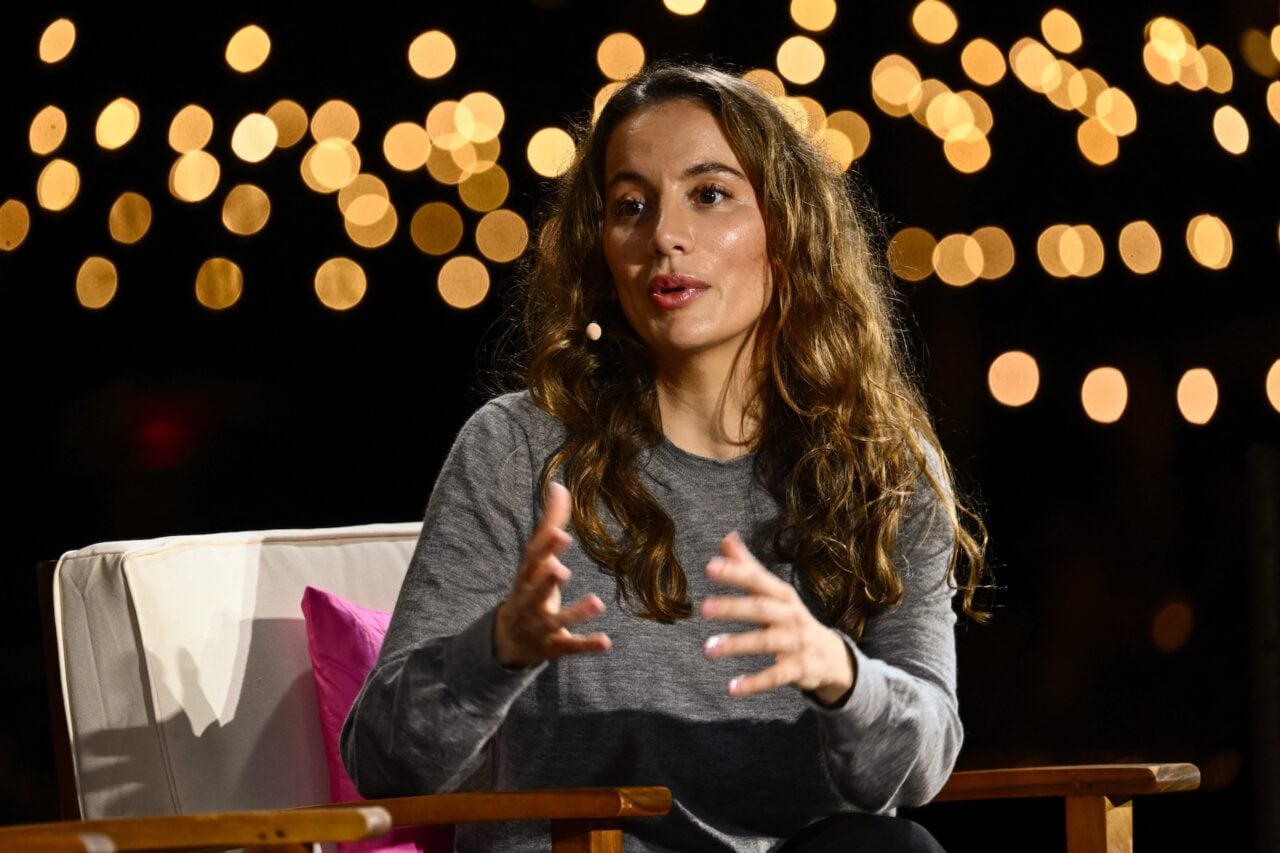


![Sam Altman’s project World looks to scale its human verification empire. First stop: Tinder. | TechCrunch
At a trendy venue near the San Francisco pier, Sam Altman’s verification project World celebrated its next evolution and rapid expansion of its ambitions. And it’s starting with Tinder.
Tools for Humanity (TFH), the company behind the World project, announced Friday plans to integrate its verification tech into dating apps, event and concert ticketing systems, business organizations, email, and other arenas of public life.
“The world is getting close to very powerful AI, and this is doing a lot of wonderful things,” said Altman, speaking before a packed crowd at The Midway. “We are also heading to a world now where there’s going to be more stuff generated by AI than by humans,” he added. “I’m sure many of you [have had moments] where you’re like, ‘Am I interacting with an AI or a person, or how much of each, and how do I know?”
World (formerly Worldcoin) distinguishes itself from many of its ID verification peers by offering the ability to verify that a real, living human is using a digital service while still protecting that person’s anonymity. There is some complex cryptographic alchemy behind this (something called “zero-knowledge proof-based authentication”). The upshot: The company is creating what it calls “proof of human” tools, which are mechanisms that can verify human activity in a world rife with AI agents and bots.
Its chief tool for verification is a spherical digital reader called the Orb that scans a user’s eyes, converting their iris into a unique and anonymous cryptographic identifier (known as a verified World ID). This can then be used to access World’s services, although users can also access World’s app without one.
Altman kept his remarks brief on Friday (TFH’s co-founder and CEO, Alex Blania, was absent due to a last-minute hand surgery, Altman said). He then turned much of the presentation over to World’s chief product officer, Tiago Sada, and his team.
Sada explained that World was launching the newest version of its app (the last version was launched at an event in December), along with a plethora of new integrations for its technology.
World has been preparing, for some time, to deploy a verification service for dating apps — most notably, Tinder. Last year, Tinder launched a World ID pilot program in Japan. That pilot was apparently a success because World announced that Tinder would be launching its verification integration in global markets —including the U.S. The program integrates a World ID emblem into the profiles of users who have gone through its verification processes, thus authenticating them as a real person.
Image Credits:World
World is also courting the entertainment industry by launching a new feature called Concert Kit, where musical artists can reserve a certain number of concert tickets for World ID-verified humans. This is designed to ensure that fans are safe from scalpers who often use automated ticket-buying bots to scarf up seats. Concert Kit is compatible with major ticketing systems, including Ticketmaster and Eventbrite, and the company is promoting it via partnerships with 30 Seconds to Mars and Bruno Mars — both of whom plan to use it for their upcoming tours.
The event was full of many other announcements, including some aimed at businesses. A Zoom/World ID verification integration seeks to battle a supposed deepfake threat to business calls, and a Docusign partnership is designed to ensure signatures come from authentic users.
The company is also working on a number of features in anticipation of the Wild West of the agentic web, including one called “agent delegation,” in which a person can delegate their World ID to an agent to carry out online activities on their behalf. A partnership with authentication firm Okta has also created a system (currently in beta) that verifies that an agent is acting on behalf of a human. The system is set up so that a World ID can be tied to a specific agent and then, when the agent goes out into the web to operate on that person’s behalf, websites will know a verified person is behind the behavior, said Okta’s chief product officer, Gareth Davies, at the event.
So far, it’s been difficult for World to scale, due largely to the verification process itself. For much of the company’s history, to get its gold standard, you had to travel to one of its offices and have your eyeballs scanned by an Orb — a fairly inconvenient (not to mention weird) experience.
Image Credits:World
However, World has continually made moves to increase the ease and incentive structure for verification. In the past, it offered its crypto asset, Worldcoin, to some members who signed up and has distributed its Orbs into big retail chains so that users can verify themselves while they’re out shopping or getting a coffee. Now the company is announcing that it is significantly expanding its Orb saturation in New York, Los Angeles, and San Francisco. The company also promoted a service where interested users could have World bring an Orb to their location for remote verification.
In a conversation with TechCrunch, Sada also shared that World has attempted to solve the scaling problem by creating different tiers of verification. The highest tier is Orb verification, but below that, World has previously offered a mid-level tier, which uses an anonymized scan of an official government ID via the card’s NFC chip.
The company also introduced a low-level tier, or what Sada called “low friction”— meaning low effort, I guess, but also “low security” — which involves merely taking a selfie.
Selfie Check, which Sada’s team presented during the event, is designed to maintain user privacy.
“Selfie is private by design,” said Daniel Shorr, one of TFH’s executives, during the presentation. “That means that we maximize the local processing that’s happening on your device, on your phone, which means that your images are yours.”
Selfie verification obviously isn’t new, and fraudsters have long managed to spoof it. “Obviously, we do our best, and it’s like one of the best systems that you’ll see for this. But it has limits,” Sada told TechCrunch. Developers looking to integrate World’s services can choose from the three different verification tiers depending on the level of security that’s important to them, he noted.
#Sam #Altmans #project #World #scale #human #verification #empire #stop #Tinder #TechCrunchDocuSign,sam altman,Tinder,World,Worldcoin,zoom](https://techcrunch.com/wp-content/uploads/2026/04/Screenshot-2026-04-17-at-1.55.00-PM.png?w=680 "Sam Altman’s project World looks to scale its human verification empire. First stop: Tinder. | TechCrunch
At a trendy venue near the San Francisco pier, Sam Altman’s verification project World celebrated its next evolution and rapid expansion of its ambitions. And it’s starting with Tinder.
Tools for Humanity (TFH), the company behind the World project, announced Friday plans to integrate its verification tech into dating apps, event and concert ticketing systems, business organizations, email, and other arenas of public life.
“The world is getting close to very powerful AI, and this is doing a lot of wonderful things,” said Altman, speaking before a packed crowd at The Midway. “We are also heading to a world now where there’s going to be more stuff generated by AI than by humans,” he added. “I’m sure many of you [have had moments] where you’re like, ‘Am I interacting with an AI or a person, or how much of each, and how do I know?”
World (formerly Worldcoin) distinguishes itself from many of its ID verification peers by offering the ability to verify that a real, living human is using a digital service while still protecting that person’s anonymity. There is some complex cryptographic alchemy behind this (something called “zero-knowledge proof-based authentication”). The upshot: The company is creating what it calls “proof of human” tools, which are mechanisms that can verify human activity in a world rife with AI agents and bots.
Its chief tool for verification is a spherical digital reader called the Orb that scans a user’s eyes, converting their iris into a unique and anonymous cryptographic identifier (known as a verified World ID). This can then be used to access World’s services, although users can also access World’s app without one.
Altman kept his remarks brief on Friday (TFH’s co-founder and CEO, Alex Blania, was absent due to a last-minute hand surgery, Altman said). He then turned much of the presentation over to World’s chief product officer, Tiago Sada, and his team.
Sada explained that World was launching the newest version of its app (the last version was launched at an event in December), along with a plethora of new integrations for its technology.
World has been preparing, for some time, to deploy a verification service for dating apps — most notably, Tinder. Last year, Tinder launched a World ID pilot program in Japan. That pilot was apparently a success because World announced that Tinder would be launching its verification integration in global markets —including the U.S. The program integrates a World ID emblem into the profiles of users who have gone through its verification processes, thus authenticating them as a real person.
Image Credits:World
World is also courting the entertainment industry by launching a new feature called Concert Kit, where musical artists can reserve a certain number of concert tickets for World ID-verified humans. This is designed to ensure that fans are safe from scalpers who often use automated ticket-buying bots to scarf up seats. Concert Kit is compatible with major ticketing systems, including Ticketmaster and Eventbrite, and the company is promoting it via partnerships with 30 Seconds to Mars and Bruno Mars — both of whom plan to use it for their upcoming tours.
The event was full of many other announcements, including some aimed at businesses. A Zoom/World ID verification integration seeks to battle a supposed deepfake threat to business calls, and a Docusign partnership is designed to ensure signatures come from authentic users.
The company is also working on a number of features in anticipation of the Wild West of the agentic web, including one called “agent delegation,” in which a person can delegate their World ID to an agent to carry out online activities on their behalf. A partnership with authentication firm Okta has also created a system (currently in beta) that verifies that an agent is acting on behalf of a human. The system is set up so that a World ID can be tied to a specific agent and then, when the agent goes out into the web to operate on that person’s behalf, websites will know a verified person is behind the behavior, said Okta’s chief product officer, Gareth Davies, at the event.
So far, it’s been difficult for World to scale, due largely to the verification process itself. For much of the company’s history, to get its gold standard, you had to travel to one of its offices and have your eyeballs scanned by an Orb — a fairly inconvenient (not to mention weird) experience.
Image Credits:World
However, World has continually made moves to increase the ease and incentive structure for verification. In the past, it offered its crypto asset, Worldcoin, to some members who signed up and has distributed its Orbs into big retail chains so that users can verify themselves while they’re out shopping or getting a coffee. Now the company is announcing that it is significantly expanding its Orb saturation in New York, Los Angeles, and San Francisco. The company also promoted a service where interested users could have World bring an Orb to their location for remote verification.
In a conversation with TechCrunch, Sada also shared that World has attempted to solve the scaling problem by creating different tiers of verification. The highest tier is Orb verification, but below that, World has previously offered a mid-level tier, which uses an anonymized scan of an official government ID via the card’s NFC chip.
The company also introduced a low-level tier, or what Sada called “low friction”— meaning low effort, I guess, but also “low security” — which involves merely taking a selfie.
Selfie Check, which Sada’s team presented during the event, is designed to maintain user privacy.
“Selfie is private by design,” said Daniel Shorr, one of TFH’s executives, during the presentation. “That means that we maximize the local processing that’s happening on your device, on your phone, which means that your images are yours.”
Selfie verification obviously isn’t new, and fraudsters have long managed to spoof it. “Obviously, we do our best, and it’s like one of the best systems that you’ll see for this. But it has limits,” Sada told TechCrunch. Developers looking to integrate World’s services can choose from the three different verification tiers depending on the level of security that’s important to them, he noted.
#Sam #Altmans #project #World #scale #human #verification #empire #stop #Tinder #TechCrunchDocuSign,sam altman,Tinder,World,Worldcoin,zoom")

![Sam Altman’s project World looks to scale its human verification empire. First stop: Tinder. | TechCrunch
At a trendy venue near the San Francisco pier, Sam Altman’s verification project World celebrated its next evolution and rapid expansion of its ambitions. And it’s starting with Tinder.
Tools for Humanity (TFH), the company behind the World project, announced Friday plans to integrate its verification tech into dating apps, event and concert ticketing systems, business organizations, email, and other arenas of public life.
“The world is getting close to very powerful AI, and this is doing a lot of wonderful things,” said Altman, speaking before a packed crowd at The Midway. “We are also heading to a world now where there’s going to be more stuff generated by AI than by humans,” he added. “I’m sure many of you [have had moments] where you’re like, ‘Am I interacting with an AI or a person, or how much of each, and how do I know?”
World (formerly Worldcoin) distinguishes itself from many of its ID verification peers by offering the ability to verify that a real, living human is using a digital service while still protecting that person’s anonymity. There is some complex cryptographic alchemy behind this (something called “zero-knowledge proof-based authentication”). The upshot: The company is creating what it calls “proof of human” tools, which are mechanisms that can verify human activity in a world rife with AI agents and bots.
Its chief tool for verification is a spherical digital reader called the Orb that scans a user’s eyes, converting their iris into a unique and anonymous cryptographic identifier (known as a verified World ID). This can then be used to access World’s services, although users can also access World’s app without one.
Altman kept his remarks brief on Friday (TFH’s co-founder and CEO, Alex Blania, was absent due to a last-minute hand surgery, Altman said). He then turned much of the presentation over to World’s chief product officer, Tiago Sada, and his team.
Sada explained that World was launching the newest version of its app (the last version was launched at an event in December), along with a plethora of new integrations for its technology.
World has been preparing, for some time, to deploy a verification service for dating apps — most notably, Tinder. Last year, Tinder launched a World ID pilot program in Japan. That pilot was apparently a success because World announced that Tinder would be launching its verification integration in global markets —including the U.S. The program integrates a World ID emblem into the profiles of users who have gone through its verification processes, thus authenticating them as a real person.
Image Credits:World
World is also courting the entertainment industry by launching a new feature called Concert Kit, where musical artists can reserve a certain number of concert tickets for World ID-verified humans. This is designed to ensure that fans are safe from scalpers who often use automated ticket-buying bots to scarf up seats. Concert Kit is compatible with major ticketing systems, including Ticketmaster and Eventbrite, and the company is promoting it via partnerships with 30 Seconds to Mars and Bruno Mars — both of whom plan to use it for their upcoming tours.
The event was full of many other announcements, including some aimed at businesses. A Zoom/World ID verification integration seeks to battle a supposed deepfake threat to business calls, and a Docusign partnership is designed to ensure signatures come from authentic users.
The company is also working on a number of features in anticipation of the Wild West of the agentic web, including one called “agent delegation,” in which a person can delegate their World ID to an agent to carry out online activities on their behalf. A partnership with authentication firm Okta has also created a system (currently in beta) that verifies that an agent is acting on behalf of a human. The system is set up so that a World ID can be tied to a specific agent and then, when the agent goes out into the web to operate on that person’s behalf, websites will know a verified person is behind the behavior, said Okta’s chief product officer, Gareth Davies, at the event.
So far, it’s been difficult for World to scale, due largely to the verification process itself. For much of the company’s history, to get its gold standard, you had to travel to one of its offices and have your eyeballs scanned by an Orb — a fairly inconvenient (not to mention weird) experience.
Image Credits:World
However, World has continually made moves to increase the ease and incentive structure for verification. In the past, it offered its crypto asset, Worldcoin, to some members who signed up and has distributed its Orbs into big retail chains so that users can verify themselves while they’re out shopping or getting a coffee. Now the company is announcing that it is significantly expanding its Orb saturation in New York, Los Angeles, and San Francisco. The company also promoted a service where interested users could have World bring an Orb to their location for remote verification.
In a conversation with TechCrunch, Sada also shared that World has attempted to solve the scaling problem by creating different tiers of verification. The highest tier is Orb verification, but below that, World has previously offered a mid-level tier, which uses an anonymized scan of an official government ID via the card’s NFC chip.
The company also introduced a low-level tier, or what Sada called “low friction”— meaning low effort, I guess, but also “low security” — which involves merely taking a selfie.
Selfie Check, which Sada’s team presented during the event, is designed to maintain user privacy.
“Selfie is private by design,” said Daniel Shorr, one of TFH’s executives, during the presentation. “That means that we maximize the local processing that’s happening on your device, on your phone, which means that your images are yours.”
Selfie verification obviously isn’t new, and fraudsters have long managed to spoof it. “Obviously, we do our best, and it’s like one of the best systems that you’ll see for this. But it has limits,” Sada told TechCrunch. Developers looking to integrate World’s services can choose from the three different verification tiers depending on the level of security that’s important to them, he noted.
#Sam #Altmans #project #World #scale #human #verification #empire #stop #Tinder #TechCrunchDocuSign,sam altman,Tinder,World,Worldcoin,zoom](https://i2.wp.com/techcrunch.com/wp-content/uploads/2026/04/Screenshot-2026-04-17-at-1.55.00-PM.png?w=680&ssl=1 "Sam Altman’s project World looks to scale its human verification empire. First stop: Tinder. | TechCrunch
At a trendy venue near the San Francisco pier, Sam Altman’s verification project World celebrated its next evolution and rapid expansion of its ambitions. And it’s starting with Tinder.
Tools for Humanity (TFH), the company behind the World project, announced Friday plans to integrate its verification tech into dating apps, event and concert ticketing systems, business organizations, email, and other arenas of public life.
“The world is getting close to very powerful AI, and this is doing a lot of wonderful things,” said Altman, speaking before a packed crowd at The Midway. “We are also heading to a world now where there’s going to be more stuff generated by AI than by humans,” he added. “I’m sure many of you [have had moments] where you’re like, ‘Am I interacting with an AI or a person, or how much of each, and how do I know?”
World (formerly Worldcoin) distinguishes itself from many of its ID verification peers by offering the ability to verify that a real, living human is using a digital service while still protecting that person’s anonymity. There is some complex cryptographic alchemy behind this (something called “zero-knowledge proof-based authentication”). The upshot: The company is creating what it calls “proof of human” tools, which are mechanisms that can verify human activity in a world rife with AI agents and bots.
Its chief tool for verification is a spherical digital reader called the Orb that scans a user’s eyes, converting their iris into a unique and anonymous cryptographic identifier (known as a verified World ID). This can then be used to access World’s services, although users can also access World’s app without one.
Altman kept his remarks brief on Friday (TFH’s co-founder and CEO, Alex Blania, was absent due to a last-minute hand surgery, Altman said). He then turned much of the presentation over to World’s chief product officer, Tiago Sada, and his team.
Sada explained that World was launching the newest version of its app (the last version was launched at an event in December), along with a plethora of new integrations for its technology.
World has been preparing, for some time, to deploy a verification service for dating apps — most notably, Tinder. Last year, Tinder launched a World ID pilot program in Japan. That pilot was apparently a success because World announced that Tinder would be launching its verification integration in global markets —including the U.S. The program integrates a World ID emblem into the profiles of users who have gone through its verification processes, thus authenticating them as a real person.
Image Credits:World
World is also courting the entertainment industry by launching a new feature called Concert Kit, where musical artists can reserve a certain number of concert tickets for World ID-verified humans. This is designed to ensure that fans are safe from scalpers who often use automated ticket-buying bots to scarf up seats. Concert Kit is compatible with major ticketing systems, including Ticketmaster and Eventbrite, and the company is promoting it via partnerships with 30 Seconds to Mars and Bruno Mars — both of whom plan to use it for their upcoming tours.
The event was full of many other announcements, including some aimed at businesses. A Zoom/World ID verification integration seeks to battle a supposed deepfake threat to business calls, and a Docusign partnership is designed to ensure signatures come from authentic users.
The company is also working on a number of features in anticipation of the Wild West of the agentic web, including one called “agent delegation,” in which a person can delegate their World ID to an agent to carry out online activities on their behalf. A partnership with authentication firm Okta has also created a system (currently in beta) that verifies that an agent is acting on behalf of a human. The system is set up so that a World ID can be tied to a specific agent and then, when the agent goes out into the web to operate on that person’s behalf, websites will know a verified person is behind the behavior, said Okta’s chief product officer, Gareth Davies, at the event.
So far, it’s been difficult for World to scale, due largely to the verification process itself. For much of the company’s history, to get its gold standard, you had to travel to one of its offices and have your eyeballs scanned by an Orb — a fairly inconvenient (not to mention weird) experience.
Image Credits:World
However, World has continually made moves to increase the ease and incentive structure for verification. In the past, it offered its crypto asset, Worldcoin, to some members who signed up and has distributed its Orbs into big retail chains so that users can verify themselves while they’re out shopping or getting a coffee. Now the company is announcing that it is significantly expanding its Orb saturation in New York, Los Angeles, and San Francisco. The company also promoted a service where interested users could have World bring an Orb to their location for remote verification.
In a conversation with TechCrunch, Sada also shared that World has attempted to solve the scaling problem by creating different tiers of verification. The highest tier is Orb verification, but below that, World has previously offered a mid-level tier, which uses an anonymized scan of an official government ID via the card’s NFC chip.
The company also introduced a low-level tier, or what Sada called “low friction”— meaning low effort, I guess, but also “low security” — which involves merely taking a selfie.
Selfie Check, which Sada’s team presented during the event, is designed to maintain user privacy.
“Selfie is private by design,” said Daniel Shorr, one of TFH’s executives, during the presentation. “That means that we maximize the local processing that’s happening on your device, on your phone, which means that your images are yours.”
Selfie verification obviously isn’t new, and fraudsters have long managed to spoof it. “Obviously, we do our best, and it’s like one of the best systems that you’ll see for this. But it has limits,” Sada told TechCrunch. Developers looking to integrate World’s services can choose from the three different verification tiers depending on the level of security that’s important to them, he noted.
#Sam #Altmans #project #World #scale #human #verification #empire #stop #Tinder #TechCrunchDocuSign,sam altman,Tinder,World,Worldcoin,zoom")


