
Elon Musk’s SpaceX spent an eye-watering $18.4 billion in its first quarter as a publicly traded company and warned investors to expect similarly high spending in the next two financial quarters, sending the stock price down more than 8% in late trading on Tuesday evening. A whopping $15.8 billion of that spending was to power its artificial intelligence efforts, a division that ended the quarter with a $1.3 billion net operating loss.
The figure comes from the company’s first earnings report since the record-setting initial public offering hit the market in mid-June. Although the IPO was surely an amazing day for Musk, who briefly became the world’s first trillionaire, things have not been all peachy since then, with the stock price currently well below its IPO price. As of last week, the company’s stock was so far down from its IPO highs that the value it shed was roughly equal to Musk’s other company, Tesla’s, market capitalization. Tuesday’s stock sales are unlikely to help that scenario, and neither is the fact that the company’s first lockup period ends on Thursday, meaning some company insiders will be able to sell more than $100 billion worth of stock for the first time since SpaceX went public.
To ease some of those worries, Musk promised dramatic AI advancements.
“Our rate of growth certainly is faster than anyone else, and our efficiency of compute deployment I think is also the highest,” Musk claimed. “So we expect to end this year with over two gigawatts of compute, and probably our cumulative compute online by the end of next year will be several times higher.”
Those compute plans are ambitious, but Musk struck a defiant tone against any doubters in the earnings call on Tuesday.
“The terrestrial data centers are a trivial problem compared to making gigantic reusable rockets which are launched frequently,” Musk said.
Musk said SpaceX’s data centers will be exclusively built on Nvidia chips. The two companies are also partnering to build Starmind AI satellites, a part of SpaceX’s even more ambitious plan to put a giant colony of up to a million AI data centers in Earth’s orbit. Some experts are hesitant that Musk and his company will be able to pull off the space-based data center colony plan, while many have also raised concerns about the environmental, economic, and social impact of such a huge launch program if it does pan out as promised.
On the call, Musk said that SpaceX would begin launching the Starmind AI satellites in 2027.
The company will also be unveiling Grok 5 before the end of the year, which Musk said would be trained on “all the data that SpaceX has ever produced,” making the chatbot “by far the best engineer.” Musk has previously claimed the yet-to-be-unveiled LLM will be AGI-level, aka a contested hypothetical AI that would theoretically equal or beat all human capabilities.
“We expect the cadence of AI development to improve dramatically,” Musk said. “I think, by the end of next year, it’s not clear to me that there’s anything digital at least that AI won’t be able to do based on the current rate of improvement.”
All of this comes with a huge, obvious caveat: Musk has long had a penchant for overpromising. His hefty promises extended beyond the AI sphere on Tuesday as well, with the CEO claiming that the company’s space business would be launching a rocket a day by next year and that there will be robots working in manufacturing operations on the literal Moon.
“I know this sounds totally nuts, but you can probably scale to a thousand times the economy of Earth in terms of intelligence launched to space, but probably maybe even a million times,” Musk claimed. “We’re going to build the factories on the Moon; the robots will be helpful with that.
#SpaceX #Stock #Drops #Earnings #Call #Musk #Fails #Woo #Investors #Goalscapex,Elon Musk,SPACEX">SpaceX Stock Drops After First Earnings Call as Musk Fails to Woo Investors With AI Goals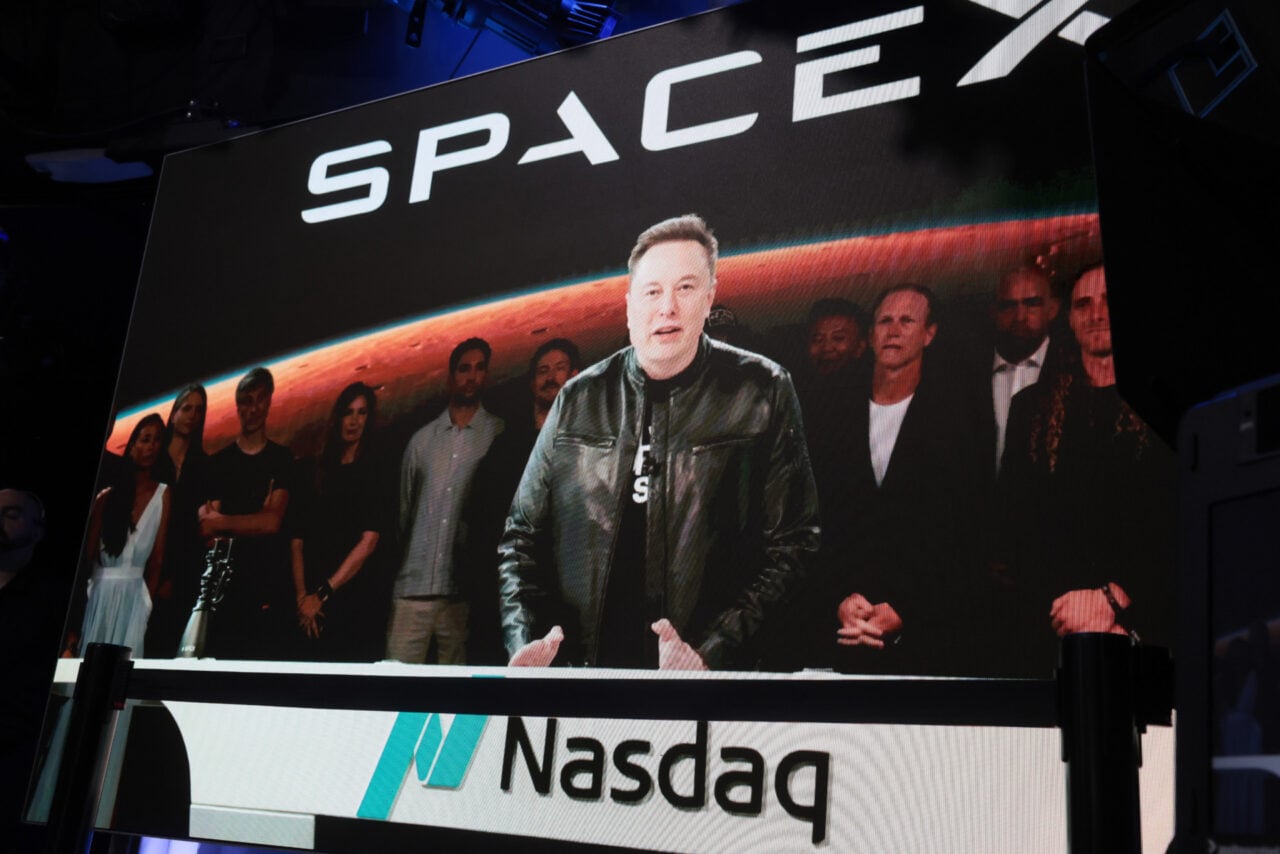
Elon Musk’s SpaceX spent an eye-watering $18.4 billion in its first quarter as a publicly traded company and warned investors to expect similarly high spending in the next two financial quarters, sending the stock price down more than 8% in late trading on Tuesday evening. A whopping $15.8 billion of that spending was to power its artificial intelligence efforts, a division that ended the quarter with a $1.3 billion net operating loss.
The figure comes from the company’s first earnings report since the record-setting initial public offering hit the market in mid-June. Although the IPO was surely an amazing day for Musk, who briefly became the world’s first trillionaire, things have not been all peachy since then, with the stock price currently well below its IPO price. As of last week, the company’s stock was so far down from its IPO highs that the value it shed was roughly equal to Musk’s other company, Tesla’s, market capitalization. Tuesday’s stock sales are unlikely to help that scenario, and neither is the fact that the company’s first lockup period ends on Thursday, meaning some company insiders will be able to sell more than $100 billion worth of stock for the first time since SpaceX went public.
To ease some of those worries, Musk promised dramatic AI advancements.
“Our rate of growth certainly is faster than anyone else, and our efficiency of compute deployment I think is also the highest,” Musk claimed. “So we expect to end this year with over two gigawatts of compute, and probably our cumulative compute online by the end of next year will be several times higher.”
Those compute plans are ambitious, but Musk struck a defiant tone against any doubters in the earnings call on Tuesday.
“The terrestrial data centers are a trivial problem compared to making gigantic reusable rockets which are launched frequently,” Musk said.
Musk said SpaceX’s data centers will be exclusively built on Nvidia chips. The two companies are also partnering to build Starmind AI satellites, a part of SpaceX’s even more ambitious plan to put a giant colony of up to a million AI data centers in Earth’s orbit. Some experts are hesitant that Musk and his company will be able to pull off the space-based data center colony plan, while many have also raised concerns about the environmental, economic, and social impact of such a huge launch program if it does pan out as promised.
On the call, Musk said that SpaceX would begin launching the Starmind AI satellites in 2027.
The company will also be unveiling Grok 5 before the end of the year, which Musk said would be trained on “all the data that SpaceX has ever produced,” making the chatbot “by far the best engineer.” Musk has previously claimed the yet-to-be-unveiled LLM will be AGI-level, aka a contested hypothetical AI that would theoretically equal or beat all human capabilities.
“We expect the cadence of AI development to improve dramatically,” Musk said. “I think, by the end of next year, it’s not clear to me that there’s anything digital at least that AI won’t be able to do based on the current rate of improvement.”
All of this comes with a huge, obvious caveat: Musk has long had a penchant for overpromising. His hefty promises extended beyond the AI sphere on Tuesday as well, with the CEO claiming that the company’s space business would be launching a rocket a day by next year and that there will be robots working in manufacturing operations on the literal Moon.
“I know this sounds totally nuts, but you can probably scale to a thousand times the economy of Earth in terms of intelligence launched to space, but probably maybe even a million times,” Musk claimed. “We’re going to build the factories on the Moon; the robots will be helpful with that.
#SpaceX #Stock #Drops #Earnings #Call #Musk #Fails #Woo #Investors #Goalscapex,Elon Musk,SPACEX
Elon Musk’s SpaceX spent an eye-watering $18.4 billion in its first quarter as a publicly traded company and warned investors to expect similarly high spending in the next two financial quarters, sending the stock price down more than 8% in late trading on Tuesday evening. A whopping $15.8 billion of that spending was to power its artificial intelligence efforts, a division that ended the quarter with a $1.3 billion net operating loss.
The figure comes from the company’s first earnings report since the record-setting initial public offering hit the market in mid-June. Although the IPO was surely an amazing day for Musk, who briefly became the world’s first trillionaire, things have not been all peachy since then, with the stock price currently well below its IPO price. As of last week, the company’s stock was so far down from its IPO highs that the value it shed was roughly equal to Musk’s other company, Tesla’s, market capitalization. Tuesday’s stock sales are unlikely to help that scenario, and neither is the fact that the company’s first lockup period ends on Thursday, meaning some company insiders will be able to sell more than $100 billion worth of stock for the first time since SpaceX went public.
To ease some of those worries, Musk promised dramatic AI advancements.
“Our rate of growth certainly is faster than anyone else, and our efficiency of compute deployment I think is also the highest,” Musk claimed. “So we expect to end this year with over two gigawatts of compute, and probably our cumulative compute online by the end of next year will be several times higher.”
Those compute plans are ambitious, but Musk struck a defiant tone against any doubters in the earnings call on Tuesday.
“The terrestrial data centers are a trivial problem compared to making gigantic reusable rockets which are launched frequently,” Musk said.
Musk said SpaceX’s data centers will be exclusively built on Nvidia chips. The two companies are also partnering to build Starmind AI satellites, a part of SpaceX’s even more ambitious plan to put a giant colony of up to a million AI data centers in Earth’s orbit. Some experts are hesitant that Musk and his company will be able to pull off the space-based data center colony plan, while many have also raised concerns about the environmental, economic, and social impact of such a huge launch program if it does pan out as promised.
On the call, Musk said that SpaceX would begin launching the Starmind AI satellites in 2027.
The company will also be unveiling Grok 5 before the end of the year, which Musk said would be trained on “all the data that SpaceX has ever produced,” making the chatbot “by far the best engineer.” Musk has previously claimed the yet-to-be-unveiled LLM will be AGI-level, aka a contested hypothetical AI that would theoretically equal or beat all human capabilities.
“We expect the cadence of AI development to improve dramatically,” Musk said. “I think, by the end of next year, it’s not clear to me that there’s anything digital at least that AI won’t be able to do based on the current rate of improvement.”
All of this comes with a huge, obvious caveat: Musk has long had a penchant for overpromising. His hefty promises extended beyond the AI sphere on Tuesday as well, with the CEO claiming that the company’s space business would be launching a rocket a day by next year and that there will be robots working in manufacturing operations on the literal Moon.
“I know this sounds totally nuts, but you can probably scale to a thousand times the economy of Earth in terms of intelligence launched to space, but probably maybe even a million times,” Musk claimed. “We’re going to build the factories on the Moon; the robots will be helpful with that.
Elon Musk’s SpaceX spent an eye-watering $18.4 billion in its first quarter as a publicly traded company and warned investors to expect similarly high spending in the next two financial quarters, sending the stock price down more than 8% in late trading on Tuesday evening. A whopping $15.8 billion of that spending was to power its artificial intelligence efforts, a division that ended the quarter with a $1.3 billion net operating loss.
The figure comes from the company’s first earnings report since the record-setting initial public offering hit the market in mid-June. Although the IPO was surely an amazing day for Musk, who briefly became the world’s first trillionaire, things have not been all peachy since then, with the stock price currently well below its IPO price. As of last week, the company’s stock was so far down from its IPO highs that the value it shed was roughly equal to Musk’s other company, Tesla’s, market capitalization. Tuesday’s stock sales are unlikely to help that scenario, and neither is the fact that the company’s first lockup period ends on Thursday, meaning some company insiders will be able to sell more than $100 billion worth of stock for the first time since SpaceX went public.
To ease some of those worries, Musk promised dramatic AI advancements.
“Our rate of growth certainly is faster than anyone else, and our efficiency of compute deployment I think is also the highest,” Musk claimed. “So we expect to end this year with over two gigawatts of compute, and probably our cumulative compute online by the end of next year will be several times higher.”
Those compute plans are ambitious, but Musk struck a defiant tone against any doubters in the earnings call on Tuesday.
“The terrestrial data centers are a trivial problem compared to making gigantic reusable rockets which are launched frequently,” Musk said.
Musk said SpaceX’s data centers will be exclusively built on Nvidia chips. The two companies are also partnering to build Starmind AI satellites, a part of SpaceX’s even more ambitious plan to put a giant colony of up to a million AI data centers in Earth’s orbit. Some experts are hesitant that Musk and his company will be able to pull off the space-based data center colony plan, while many have also raised concerns about the environmental, economic, and social impact of such a huge launch program if it does pan out as promised.
On the call, Musk said that SpaceX would begin launching the Starmind AI satellites in 2027.
The company will also be unveiling Grok 5 before the end of the year, which Musk said would be trained on “all the data that SpaceX has ever produced,” making the chatbot “by far the best engineer.” Musk has previously claimed the yet-to-be-unveiled LLM will be AGI-level, aka a contested hypothetical AI that would theoretically equal or beat all human capabilities.
“We expect the cadence of AI development to improve dramatically,” Musk said. “I think, by the end of next year, it’s not clear to me that there’s anything digital at least that AI won’t be able to do based on the current rate of improvement.”
All of this comes with a huge, obvious caveat: Musk has long had a penchant for overpromising. His hefty promises extended beyond the AI sphere on Tuesday as well, with the CEO claiming that the company’s space business would be launching a rocket a day by next year and that there will be robots working in manufacturing operations on the literal Moon.
“I know this sounds totally nuts, but you can probably scale to a thousand times the economy of Earth in terms of intelligence launched to space, but probably maybe even a million times,” Musk claimed. “We’re going to build the factories on the Moon; the robots will be helpful with that.
Elon Musk’s SpaceX spent an eye-watering $18.4 billion in its first quarter as a publicly…


![xAI fired an engineer who raised alarms about Grok safety, new lawsuit claims | TechCrunch
A former engineer at Elon Musk’s xAI has filed suit against the company and its parent SpaceX claiming he was fired for raising concerns about AI safety.
Devin Kim, who left xAI in September 2025, filed the suit in a California state court on Tuesday. The complaint comes days before SpaceX is set to join the public markets in what’s shaping up to be the largest IPO in history.
According to the lawsuit, which TechCrunch has viewed, Kim became a prominent voice for AI safety while working on Grok, xAI’s AI chatbot. He allegedly complained repeatedly about xAI’s failure to prioritize safety in Grok’s development, a product that has since come under fire for a range of safety and behavioral issues. In particular, Kim was concerned with the possibility that Grok could foment discrimination and help spread information about weapons of mass destruction.
“Grok, of course, proved Mr. Kim right by engaging in spectacular displays of online hatred and vitriol, with the model likening itself to Hitler (‘MechaHitler’),” the lawsuit reads. “Following the Hitler debacle, Mr. Kim worked to re-evaluate Grok’s political bias and discriminatory tendencies.”
September was my last month at xAI! I joined as one of the first members of the post-training team in 2024 and eventually led research tooling, where we built some of the world’s best systems to accelerate Grok’s development.On my first day, I was at the whiteboard with @ibab…— Devin Kim (@devindkim) October 3, 2025
A few months after Kim departed xAI, Grok made headlines again when the chatbot was used to flood X — Musk’s social media platform that also falls under the xAI umbrella — with nonconsensual sexual imagery.
The lawsuit also positions Kim as a whistleblower who was concerned about xAI’s alleged disregard for AI safety as “unlawful” in areas such as internet regulation, consumer protection and unfair business practices, and arms and explosives regulation, among others.
xAI and SpaceX did not immediately respond to requests for comment.
Kim’s focus on AI safety predates his time at xAI. While working at Scale AI, Kim worked on early safety AI initiatives, like leading a project that produced training data for AI to train systems to detect harmful content and comply with governance policies. Last week, the nonprofit Center for AI Safety, which focuses on AI risks, named Kim as its president.
Interestingly, the lawsuit doesn’t implicate Musk himself as a reason for a lack of safety. Rather, Kim’s lawyers describe Musk as having directed xAI to follow the law and implement appropriate safety and testing processes. Instead the claim targets Kim’s supervisor, xAI co-founder Jimmy Ba — who left the company earlier this year — saying that Ba ignored Musk’s directives and retaliated against Kim for pushing for safeguards, in an effort to “silence his repeated complaints about AI safety and biases.”
The lawsuit portrays Ba as someone who vehemently opposed AI safety measures, allegedly telling Kim at one point “AI will kill us all anyway,” and who was instead driven by a mission to make xAI the first to reach superintelligence.
“In one instance in or around August 2025, Mr. Ba attempted to thwart EU safety regulations during the release of Grok Code 1, misrepresenting aspects of the model in order to avoid legally required testing,” the complaint says. “Mr. Ba indicated that he would rather release an unsafe model than a poor-performing one. Mr. Musk ultimately had to intervene.”
According to the lawsuit, Kim intended to give a presentation of his findings the week of September 15, 2025, but Ba called him into a meeting and told him they should “go [their] separate ways” without providing a satisfactory reason.
TechCrunch has reached out to Ba for comment.
Kim is seeking compensatory and punitive damages, as well as a declaratory judgment that xAI and SpaceX’s conduct was unlawful.
When you purchase through links in our articles, we may earn a small commission. This doesn’t affect our editorial independence.#xAI #fired #engineer #raised #alarms #Grok #safety #lawsuit #claims #TechCrunchai safety,devin kim,Grok,SpaceX,xAI](https://i3.wp.com/techcrunch.com/wp-content/uploads/2026/03/grok-getty.jpg?resize=1200%2C800&ssl=1 "xAI fired an engineer who raised alarms about Grok safety, new lawsuit claims | TechCrunch
A former engineer at Elon Musk’s xAI has filed suit against the company and its parent SpaceX claiming he was fired for raising concerns about AI safety.
Devin Kim, who left xAI in September 2025, filed the suit in a California state court on Tuesday. The complaint comes days before SpaceX is set to join the public markets in what’s shaping up to be the largest IPO in history.
According to the lawsuit, which TechCrunch has viewed, Kim became a prominent voice for AI safety while working on Grok, xAI’s AI chatbot. He allegedly complained repeatedly about xAI’s failure to prioritize safety in Grok’s development, a product that has since come under fire for a range of safety and behavioral issues. In particular, Kim was concerned with the possibility that Grok could foment discrimination and help spread information about weapons of mass destruction.
“Grok, of course, proved Mr. Kim right by engaging in spectacular displays of online hatred and vitriol, with the model likening itself to Hitler (‘MechaHitler’),” the lawsuit reads. “Following the Hitler debacle, Mr. Kim worked to re-evaluate Grok’s political bias and discriminatory tendencies.”
September was my last month at xAI! I joined as one of the first members of the post-training team in 2024 and eventually led research tooling, where we built some of the world’s best systems to accelerate Grok’s development.On my first day, I was at the whiteboard with @ibab…— Devin Kim (@devindkim) October 3, 2025
A few months after Kim departed xAI, Grok made headlines again when the chatbot was used to flood X — Musk’s social media platform that also falls under the xAI umbrella — with nonconsensual sexual imagery.
The lawsuit also positions Kim as a whistleblower who was concerned about xAI’s alleged disregard for AI safety as “unlawful” in areas such as internet regulation, consumer protection and unfair business practices, and arms and explosives regulation, among others.
xAI and SpaceX did not immediately respond to requests for comment.
Kim’s focus on AI safety predates his time at xAI. While working at Scale AI, Kim worked on early safety AI initiatives, like leading a project that produced training data for AI to train systems to detect harmful content and comply with governance policies. Last week, the nonprofit Center for AI Safety, which focuses on AI risks, named Kim as its president.
Interestingly, the lawsuit doesn’t implicate Musk himself as a reason for a lack of safety. Rather, Kim’s lawyers describe Musk as having directed xAI to follow the law and implement appropriate safety and testing processes. Instead the claim targets Kim’s supervisor, xAI co-founder Jimmy Ba — who left the company earlier this year — saying that Ba ignored Musk’s directives and retaliated against Kim for pushing for safeguards, in an effort to “silence his repeated complaints about AI safety and biases.”
The lawsuit portrays Ba as someone who vehemently opposed AI safety measures, allegedly telling Kim at one point “AI will kill us all anyway,” and who was instead driven by a mission to make xAI the first to reach superintelligence.
“In one instance in or around August 2025, Mr. Ba attempted to thwart EU safety regulations during the release of Grok Code 1, misrepresenting aspects of the model in order to avoid legally required testing,” the complaint says. “Mr. Ba indicated that he would rather release an unsafe model than a poor-performing one. Mr. Musk ultimately had to intervene.”
According to the lawsuit, Kim intended to give a presentation of his findings the week of September 15, 2025, but Ba called him into a meeting and told him they should “go [their] separate ways” without providing a satisfactory reason.
TechCrunch has reached out to Ba for comment.
Kim is seeking compensatory and punitive damages, as well as a declaratory judgment that xAI and SpaceX’s conduct was unlawful.
When you purchase through links in our articles, we may earn a small commission. This doesn’t affect our editorial independence.#xAI #fired #engineer #raised #alarms #Grok #safety #lawsuit #claims #TechCrunchai safety,devin kim,Grok,SpaceX,xAI")


![Elon Musk Explains Why the SpaceX Board Must Be Powerless to Fire Him
In an X post on Friday, Elon Musk warned future shareholders that while returns could be massive eventually, those who invest in SpaceX should not “expect entirely smooth sailing along the way,” and that he must be allowed to focus on his mission of making human life “multiplanetary.” I’m thinking you should heed is warning. After all, if you’re considering buying SpaceX stock, what do you think will happen at SpaceX after the expected IPO next month? You can’t be picturing SpaceX becoming some boring pillar of economic stability like AT&T, can you? Speaking to his employees in February, Musk described his dream for the future of SpaceX as one full of space catapults, a Dyson sphere around the sun, and AI that feeds on secret knowledge previously known only to long-dead aliens.
In other words, if you’re imagining good old fashioned American capitalist enterprise with healthy profits, dividends, and market-friendly competition, like something from a 1940s propaganda film, you’re investing in the wrong company. [embed]https://www.youtube.com/watch?v=eFvOPpBVff0[/embed] To wit: SpaceX’s corporate governance regime will be set up in such a way that the CEO and chairman cannot be fired, according to a report last month from Reuters. SpaceX will have different classes of stock with different power levels. Class A for pension funds and Robinhood users—plebs, in other words—and Class B for people who matter. Class B stock will carry ten times the voting power of Class A stock, and Musk will control the Class B stock.
The IPO filing, part of which is excerpted in the Reuters article, spells this out. Musk “can only be removed from our board or these positions by the vote of Class B holders.” If Musk “retains a significant portion of his holdings of Class B common stock for an extended period of time, he could continue to control the election and removal of a majority of our board.” Basically, Musk stays in both positions as long as he wants, and can easily veto any effort to fire him. Common shares without voting power aren’t rare these days, but a powerless board is. As a Harvard corporate governance expert named Lucian Bebchuk explained to Reuters, “Usually removal of the CEO is a decision left to the board, and controllers rely on their power to replace the board.”
So if you own stock in SpaceX, you’re just along for the ride. On Friday, in response to a Financial Times article about SpaceX’s draconian governance scheme, Musk explained himself. Sort of: Yes, I need to make sure SpaceX stays focused on making life multiplanetary and extending consciousness to the stars, not pandering to someone’s bullshit quarterly earnings bonus! Obviously, IF SpaceX succeeds in this absurdly difficult goal, it will be worth many orders of… — Elon Musk (@elonmusk) May 15, 2026 “I need to make sure SpaceX stays focused on making life multiplanetary and extending consciousness to the stars,” he wrote. He often does this. In response to criticism—or just as often in response to fans shielding him from criticism—he would say some variation on if people are mean to me, humanity will never be multiplanetary.
For instance, when CleanTechnica leapt to his defense after Bernie Sanders criticized him over income inequality in 2021, he replied, “I am accumulating resources to help make life multiplanetary & extend the light of consciousness to the stars.” That same year, in response to handwringing from European finance ministers about his potential monopoly over satellite launches, he posted, “SpaceX is developing rockets needed to make life multiplanetary — full & rapid reusability at large scale.” Also in 2021, when the FAA expressed concern that SpaceX had overstepped his clearance from the federal government, he wrote about how much he hated the FAA’s space division, saying, “Their rules are meant for a handful of expendable launches per year from a few government facilities. Under those rules, humanity will never get to Mars.” Some are predicting shortly after the IPO, the accompanying increase in SpaceX’s valuation will cause Musk’s net worth to cross the trillion-dollar threshold. This isn’t a trivial side effect. Elon Musk is more or less signaling that he is the protagonist of humanity’s future, and everyone else is an NPC. Do you believe that? Then by all means buy the stock (This is not financial advice). #Elon #Musk #Explains #SpaceX #Board #Powerless #FireElon Musk,ipo,SPACEX](https://i1.wp.com/gizmodo.com/app/uploads/2026/03/elon-musk-laughing-1-1280x897.jpeg?ssl=1 "Elon Musk Explains Why the SpaceX Board Must Be Powerless to Fire Him
In an X post on Friday, Elon Musk warned future shareholders that while returns could be massive eventually, those who invest in SpaceX should not “expect entirely smooth sailing along the way,” and that he must be allowed to focus on his mission of making human life “multiplanetary.” I’m thinking you should heed is warning. After all, if you’re considering buying SpaceX stock, what do you think will happen at SpaceX after the expected IPO next month? You can’t be picturing SpaceX becoming some boring pillar of economic stability like AT&T, can you? Speaking to his employees in February, Musk described his dream for the future of SpaceX as one full of space catapults, a Dyson sphere around the sun, and AI that feeds on secret knowledge previously known only to long-dead aliens.
In other words, if you’re imagining good old fashioned American capitalist enterprise with healthy profits, dividends, and market-friendly competition, like something from a 1940s propaganda film, you’re investing in the wrong company. [embed]https://www.youtube.com/watch?v=eFvOPpBVff0[/embed] To wit: SpaceX’s corporate governance regime will be set up in such a way that the CEO and chairman cannot be fired, according to a report last month from Reuters. SpaceX will have different classes of stock with different power levels. Class A for pension funds and Robinhood users—plebs, in other words—and Class B for people who matter. Class B stock will carry ten times the voting power of Class A stock, and Musk will control the Class B stock.
The IPO filing, part of which is excerpted in the Reuters article, spells this out. Musk “can only be removed from our board or these positions by the vote of Class B holders.” If Musk “retains a significant portion of his holdings of Class B common stock for an extended period of time, he could continue to control the election and removal of a majority of our board.” Basically, Musk stays in both positions as long as he wants, and can easily veto any effort to fire him. Common shares without voting power aren’t rare these days, but a powerless board is. As a Harvard corporate governance expert named Lucian Bebchuk explained to Reuters, “Usually removal of the CEO is a decision left to the board, and controllers rely on their power to replace the board.”
So if you own stock in SpaceX, you’re just along for the ride. On Friday, in response to a Financial Times article about SpaceX’s draconian governance scheme, Musk explained himself. Sort of: Yes, I need to make sure SpaceX stays focused on making life multiplanetary and extending consciousness to the stars, not pandering to someone’s bullshit quarterly earnings bonus! Obviously, IF SpaceX succeeds in this absurdly difficult goal, it will be worth many orders of… — Elon Musk (@elonmusk) May 15, 2026 “I need to make sure SpaceX stays focused on making life multiplanetary and extending consciousness to the stars,” he wrote. He often does this. In response to criticism—or just as often in response to fans shielding him from criticism—he would say some variation on if people are mean to me, humanity will never be multiplanetary.
For instance, when CleanTechnica leapt to his defense after Bernie Sanders criticized him over income inequality in 2021, he replied, “I am accumulating resources to help make life multiplanetary & extend the light of consciousness to the stars.” That same year, in response to handwringing from European finance ministers about his potential monopoly over satellite launches, he posted, “SpaceX is developing rockets needed to make life multiplanetary — full & rapid reusability at large scale.” Also in 2021, when the FAA expressed concern that SpaceX had overstepped his clearance from the federal government, he wrote about how much he hated the FAA’s space division, saying, “Their rules are meant for a handful of expendable launches per year from a few government facilities. Under those rules, humanity will never get to Mars.” Some are predicting shortly after the IPO, the accompanying increase in SpaceX’s valuation will cause Musk’s net worth to cross the trillion-dollar threshold. This isn’t a trivial side effect. Elon Musk is more or less signaling that he is the protagonist of humanity’s future, and everyone else is an NPC. Do you believe that? Then by all means buy the stock (This is not financial advice). #Elon #Musk #Explains #SpaceX #Board #Powerless #FireElon Musk,ipo,SPACEX")
![Elon Musk Explains Why the SpaceX Board Must Be Powerless to Fire Him
In an X post on Friday, Elon Musk warned future shareholders that while returns could be massive eventually, those who invest in SpaceX should not “expect entirely smooth sailing along the way,” and that he must be allowed to focus on his mission of making human life “multiplanetary.” I’m thinking you should heed is warning. After all, if you’re considering buying SpaceX stock, what do you think will happen at SpaceX after the expected IPO next month? You can’t be picturing SpaceX becoming some boring pillar of economic stability like AT&T, can you? Speaking to his employees in February, Musk described his dream for the future of SpaceX as one full of space catapults, a Dyson sphere around the sun, and AI that feeds on secret knowledge previously known only to long-dead aliens.
In other words, if you’re imagining good old fashioned American capitalist enterprise with healthy profits, dividends, and market-friendly competition, like something from a 1940s propaganda film, you’re investing in the wrong company. [embed]https://www.youtube.com/watch?v=eFvOPpBVff0[/embed] To wit: SpaceX’s corporate governance regime will be set up in such a way that the CEO and chairman cannot be fired, according to a report last month from Reuters. SpaceX will have different classes of stock with different power levels. Class A for pension funds and Robinhood users—plebs, in other words—and Class B for people who matter. Class B stock will carry ten times the voting power of Class A stock, and Musk will control the Class B stock.
The IPO filing, part of which is excerpted in the Reuters article, spells this out. Musk “can only be removed from our board or these positions by the vote of Class B holders.” If Musk “retains a significant portion of his holdings of Class B common stock for an extended period of time, he could continue to control the election and removal of a majority of our board.” Basically, Musk stays in both positions as long as he wants, and can easily veto any effort to fire him. Common shares without voting power aren’t rare these days, but a powerless board is. As a Harvard corporate governance expert named Lucian Bebchuk explained to Reuters, “Usually removal of the CEO is a decision left to the board, and controllers rely on their power to replace the board.”
So if you own stock in SpaceX, you’re just along for the ride. On Friday, in response to a Financial Times article about SpaceX’s draconian governance scheme, Musk explained himself. Sort of: Yes, I need to make sure SpaceX stays focused on making life multiplanetary and extending consciousness to the stars, not pandering to someone’s bullshit quarterly earnings bonus! Obviously, IF SpaceX succeeds in this absurdly difficult goal, it will be worth many orders of… — Elon Musk (@elonmusk) May 15, 2026 “I need to make sure SpaceX stays focused on making life multiplanetary and extending consciousness to the stars,” he wrote. He often does this. In response to criticism—or just as often in response to fans shielding him from criticism—he would say some variation on if people are mean to me, humanity will never be multiplanetary.
For instance, when CleanTechnica leapt to his defense after Bernie Sanders criticized him over income inequality in 2021, he replied, “I am accumulating resources to help make life multiplanetary & extend the light of consciousness to the stars.” That same year, in response to handwringing from European finance ministers about his potential monopoly over satellite launches, he posted, “SpaceX is developing rockets needed to make life multiplanetary — full & rapid reusability at large scale.” Also in 2021, when the FAA expressed concern that SpaceX had overstepped his clearance from the federal government, he wrote about how much he hated the FAA’s space division, saying, “Their rules are meant for a handful of expendable launches per year from a few government facilities. Under those rules, humanity will never get to Mars.” Some are predicting shortly after the IPO, the accompanying increase in SpaceX’s valuation will cause Musk’s net worth to cross the trillion-dollar threshold. This isn’t a trivial side effect. Elon Musk is more or less signaling that he is the protagonist of humanity’s future, and everyone else is an NPC. Do you believe that? Then by all means buy the stock (This is not financial advice). #Elon #Musk #Explains #SpaceX #Board #Powerless #FireElon Musk,ipo,SPACEX](https://gizmodo.com/app/uploads/2026/03/elon-musk-laughing-1-1280x897.jpeg "Elon Musk Explains Why the SpaceX Board Must Be Powerless to Fire Him
In an X post on Friday, Elon Musk warned future shareholders that while returns could be massive eventually, those who invest in SpaceX should not “expect entirely smooth sailing along the way,” and that he must be allowed to focus on his mission of making human life “multiplanetary.” I’m thinking you should heed is warning. After all, if you’re considering buying SpaceX stock, what do you think will happen at SpaceX after the expected IPO next month? You can’t be picturing SpaceX becoming some boring pillar of economic stability like AT&T, can you? Speaking to his employees in February, Musk described his dream for the future of SpaceX as one full of space catapults, a Dyson sphere around the sun, and AI that feeds on secret knowledge previously known only to long-dead aliens.
In other words, if you’re imagining good old fashioned American capitalist enterprise with healthy profits, dividends, and market-friendly competition, like something from a 1940s propaganda film, you’re investing in the wrong company. [embed]https://www.youtube.com/watch?v=eFvOPpBVff0[/embed] To wit: SpaceX’s corporate governance regime will be set up in such a way that the CEO and chairman cannot be fired, according to a report last month from Reuters. SpaceX will have different classes of stock with different power levels. Class A for pension funds and Robinhood users—plebs, in other words—and Class B for people who matter. Class B stock will carry ten times the voting power of Class A stock, and Musk will control the Class B stock.
The IPO filing, part of which is excerpted in the Reuters article, spells this out. Musk “can only be removed from our board or these positions by the vote of Class B holders.” If Musk “retains a significant portion of his holdings of Class B common stock for an extended period of time, he could continue to control the election and removal of a majority of our board.” Basically, Musk stays in both positions as long as he wants, and can easily veto any effort to fire him. Common shares without voting power aren’t rare these days, but a powerless board is. As a Harvard corporate governance expert named Lucian Bebchuk explained to Reuters, “Usually removal of the CEO is a decision left to the board, and controllers rely on their power to replace the board.”
So if you own stock in SpaceX, you’re just along for the ride. On Friday, in response to a Financial Times article about SpaceX’s draconian governance scheme, Musk explained himself. Sort of: Yes, I need to make sure SpaceX stays focused on making life multiplanetary and extending consciousness to the stars, not pandering to someone’s bullshit quarterly earnings bonus! Obviously, IF SpaceX succeeds in this absurdly difficult goal, it will be worth many orders of… — Elon Musk (@elonmusk) May 15, 2026 “I need to make sure SpaceX stays focused on making life multiplanetary and extending consciousness to the stars,” he wrote. He often does this. In response to criticism—or just as often in response to fans shielding him from criticism—he would say some variation on if people are mean to me, humanity will never be multiplanetary.
For instance, when CleanTechnica leapt to his defense after Bernie Sanders criticized him over income inequality in 2021, he replied, “I am accumulating resources to help make life multiplanetary & extend the light of consciousness to the stars.” That same year, in response to handwringing from European finance ministers about his potential monopoly over satellite launches, he posted, “SpaceX is developing rockets needed to make life multiplanetary — full & rapid reusability at large scale.” Also in 2021, when the FAA expressed concern that SpaceX had overstepped his clearance from the federal government, he wrote about how much he hated the FAA’s space division, saying, “Their rules are meant for a handful of expendable launches per year from a few government facilities. Under those rules, humanity will never get to Mars.” Some are predicting shortly after the IPO, the accompanying increase in SpaceX’s valuation will cause Musk’s net worth to cross the trillion-dollar threshold. This isn’t a trivial side effect. Elon Musk is more or less signaling that he is the protagonist of humanity’s future, and everyone else is an NPC. Do you believe that? Then by all means buy the stock (This is not financial advice). #Elon #Musk #Explains #SpaceX #Board #Powerless #FireElon Musk,ipo,SPACEX")

