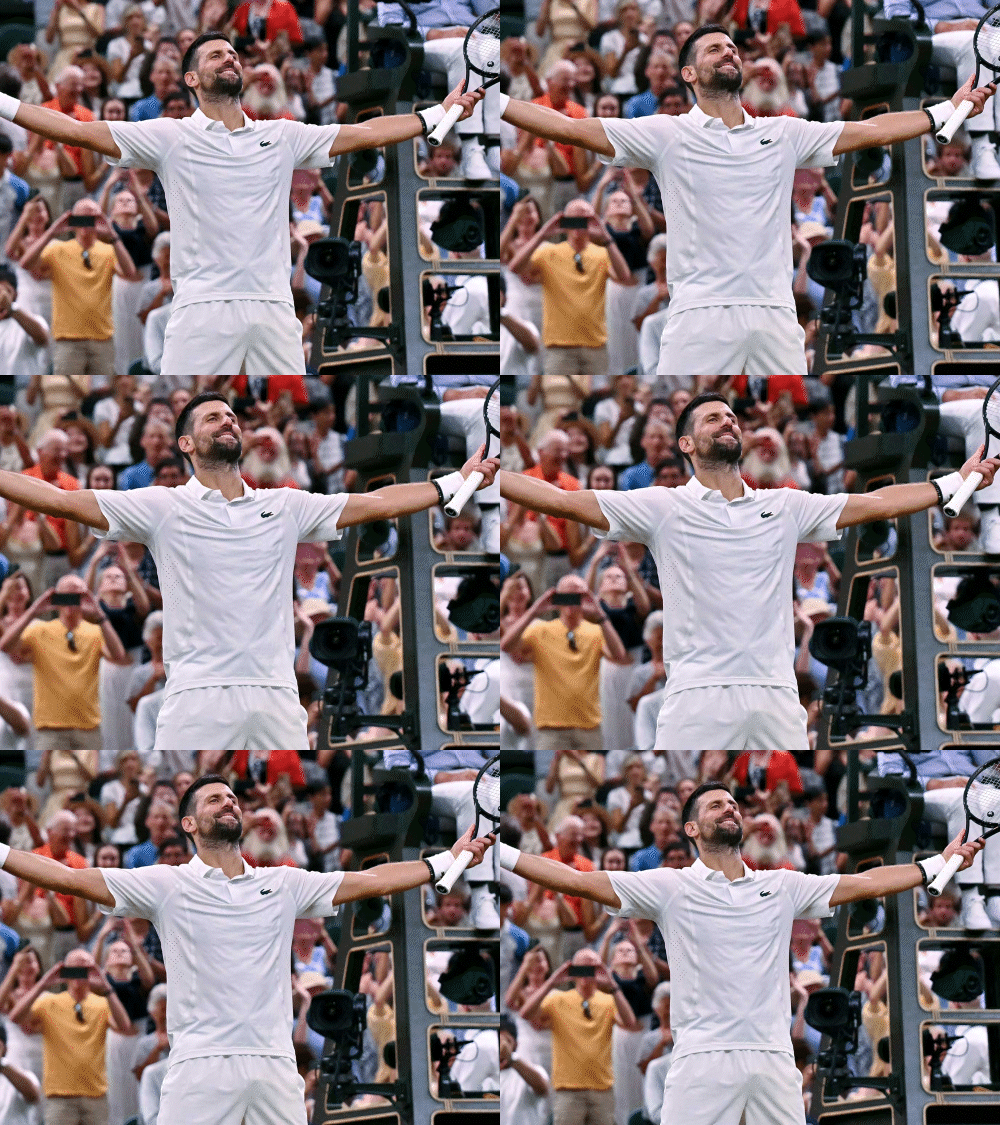
Linda Nosková Wins Wimbledon Women’s Final in This Unexpected Brand
In a battle of the Czechs, Linda Nosková emerged as the winner at the Wimbledon…
In a battle of the Czechs, Linda Nosková emerged as the winner at the Wimbledon…
A single-minded focus despite prior injuries allowed Czechia’s Karolina Muchova to end Coco Gauff’s incredible…

Coco Gauff is a tremendously accomplished young tennis professional. Having defeated Venus Williams when she was just 15 years old in 2019, she has gone on to win two grand slam championships in the subsequent years, and become the 10th-highest earning women’s player of all time. Now 22, she is currently ranked No. 7 in the world, having ranked as high as No. 2 before, with a 308-126 career record on the tour. Most people a decade older than her in the sport would kill for her resumé.
And yet, it always feels like Coco is still a good distance away from what everyone believes she can be. For all of the deep tournament runs she’s made, most of them have felt fraught—fans of Gauff are unaccustomed to dominant, clinical performances. What they’re used to are long sequences of small, escalating heart attacks. Coco does not impose herself in matches so much as let her opponents impose themselves; with her sport-leading defense—powered by speed, athleticism, an unfailing backhand, and mega-deep wells of willpower—she traps them into winding mirror funhouses of themselves. She is the ultimate backstop, fireproof and ever-moving.
It’s worked quite well, obviously, but at the same time, anyone can see that life could be easier for her on the court. If she fully weaponized her physicality, she could take more time away from opponents, and get the ball to more unhittable spots. There is a clear pathway for at least some of her many frantic three-setters to become calm, calculated two-set victories. Like so many players who have captured the tennis world’s imagination, she makes you wonder if that kind of winning will ever be in the cards for her, or if she requires cinematic drama to find her best self.
Coming into this year’s Wimbledon, Gauff hadn’t won a match on grass in two years. Since the tournament started, she’s won five, landing her in a semifinal this Thursday against Czech striker Karolina Muchova. Though—in classic Gauff form—four of those wins have gone the distance, she has gotten here by playing her most confident and assertive tennis ever. She’s displayed real signs of evolution and maturity in her game, potentially giving us a preview of the player she’ll become as her twenties stretch on into her thirties.
In wins against Belinda Bencic and her former doubles partner Jessica Pegula, No. 11 and No. 4 in the world respectively, Coco found a needed new ingredient to success. In the tight spot both players put her in, release was at the net. Gauff has always been good at punishing players who move up too eagerly. Dating all the way back to her scene-exploding win against Venus, she’s known how to lob the ball artfully over a bully. What she’s only starting to do, now, is become the bully herself. Up closer to the dividing line, her quick reflexes, touch, explosive jumping, and ability to back-pedal allow her to press advantages she has historically been content to milk over long rallies. As she realized this late in her match against Bencic, she pulled away; winning, ultimately, just minutes before the 11:00 P.M. London curfew took effect. She tapped her wrist when the match ended, smiling in reference to the timely conclusion.
Years from now, we might look back at the memeable moment as when Coco announced that it’s time for her to play more boldly. In her quarterfinal match against Pegula, the net play came sooner than it did against Bencic, and her serve—a source of great double-fault consternation just a year ago—was a consistent well of power and edge after some first-set nerves. She also took gambles, enough of which paid off, with slicing drop shots. It still required a long, grueling while to beat the always poised and clinical Pegula (who maintains a 5-4 upperhand in the head-to-head matchup), but we saw a fresh new vision of Coco along the way: that of women’s tennis’ best athlete maximizing her risk margins, and becoming more than just a winner. She’s beginning to look unbeatable.
Her next opponent is no joke. Muchova found the limits of Naomi Osaka’s inspiring comeback in her own quarterfinal match, and is ranked just one slot behind Gauff at No. 8 globally. Muchova is both powerful and versatile, and will seize on any lack of strategy or poise that Coco brings to the match. Gauff leads their lifetime matchup, 6-to-1, but they’ve never played each other on grass. While that’s a major variable, Gauff has thus far played the surface at a level that makes her capable of taking down both Muchova and the remaining field (though FanDuel has her as a slight underdog in the semifinal at +100). There’s no question that Coco, further into this tourney than she’s ever been, can grab her first Wimbledon title this weekend. Her biggest remaining battle in pursuit of that goal is with herself, and with the game that she’s still mastering. Time to see who wins.
Coco Gauff is a tremendously accomplished young tennis professional. Having defeated Venus Williams when she was just 15 years old in 2019, she has gone on to win two grand slam championships in the subsequent years, and become the 10th-highest earning women’s player of all time. Now 22, she is currently ranked No. 7 in the world, having ranked as high as No. 2 before, with a 308-126 career record on the tour. Most people a decade older than her in the sport would kill for her resumé.
And yet, it always feels like Coco is still a good distance away from what everyone believes she can be. For all of the deep tournament runs she’s made, most of them have felt fraught—fans of Gauff are unaccustomed to dominant, clinical performances. What they’re used to are long sequences of small, escalating heart attacks. Coco does not impose herself in matches so much as let her opponents impose themselves; with her sport-leading defense—powered by speed, athleticism, an unfailing backhand, and mega-deep wells of willpower—she traps them into winding mirror funhouses of themselves. She is the ultimate backstop, fireproof and ever-moving.
It’s worked quite well, obviously, but at the same time, anyone can see that life could be easier for her on the court. If she fully weaponized her physicality, she could take more time away from opponents, and get the ball to more unhittable spots. There is a clear pathway for at least some of her many frantic three-setters to become calm, calculated two-set victories. Like so many players who have captured the tennis world’s imagination, she makes you wonder if that kind of winning will ever be in the cards for her, or if she requires cinematic drama to find her best self.
Coming into this year’s Wimbledon, Gauff hadn’t won a match on grass in two years. Since the tournament started, she’s won five, landing her in a semifinal this Thursday against Czech striker Karolina Muchova. Though—in classic Gauff form—four of those wins have gone the distance, she has gotten here by playing her most confident and assertive tennis ever. She’s displayed real signs of evolution and maturity in her game, potentially giving us a preview of the player she’ll become as her twenties stretch on into her thirties.
In wins against Belinda Bencic and her former doubles partner Jessica Pegula, No. 11 and No. 4 in the world respectively, Coco found a needed new ingredient to success. In the tight spot both players put her in, release was at the net. Gauff has always been good at punishing players who move up too eagerly. Dating all the way back to her scene-exploding win against Venus, she’s known how to lob the ball artfully over a bully. What she’s only starting to do, now, is become the bully herself. Up closer to the dividing line, her quick reflexes, touch, explosive jumping, and ability to back-pedal allow her to press advantages she has historically been content to milk over long rallies. As she realized this late in her match against Bencic, she pulled away; winning, ultimately, just minutes before the 11:00 P.M. London curfew took effect. She tapped her wrist when the match ended, smiling in reference to the timely conclusion.
Years from now, we might look back at the memeable moment as when Coco announced that it’s time for her to play more boldly. In her quarterfinal match against Pegula, the net play came sooner than it did against Bencic, and her serve—a source of great double-fault consternation just a year ago—was a consistent well of power and edge after some first-set nerves. She also took gambles, enough of which paid off, with slicing drop shots. It still required a long, grueling while to beat the always poised and clinical Pegula (who maintains a 5-4 upperhand in the head-to-head matchup), but we saw a fresh new vision of Coco along the way: that of women’s tennis’ best athlete maximizing her risk margins, and becoming more than just a winner. She’s beginning to look unbeatable.
Her next opponent is no joke. Muchova found the limits of Naomi Osaka’s inspiring comeback in her own quarterfinal match, and is ranked just one slot behind Gauff at No. 8 globally. Muchova is both powerful and versatile, and will seize on any lack of strategy or poise that Coco brings to the match. Gauff leads their lifetime matchup, 6-to-1, but they’ve never played each other on grass. While that’s a major variable, Gauff has thus far played the surface at a level that makes her capable of taking down both Muchova and the remaining field (though FanDuel has her as a slight underdog in the semifinal at +100). There’s no question that Coco, further into this tourney than she’s ever been, can grab her first Wimbledon title this weekend. Her biggest remaining battle in pursuit of that goal is with herself, and with the game that she’s still mastering. Time to see who wins.
Coco Gauff is a tremendously accomplished young tennis professional. Having defeated Venus Williams when she…
Hindi NewsSportsNovak Djokovic Wimbledon Quarter Final 2026; Auger Aliassime | Tennis Newsलंदन2 घंटे पहलेकॉपी लिंक39…

Jannik Sinner suggested the Madrid Open organisers should reconsider their tournament scheduling to avoid late-night finishes like the one Rafael Jodar experienced in the third round on Sunday.
In a rare 11:00 am start on Tuesday, Sinner moved past British 19th seed Cameron Norrie 6-2, 7-5 to reach the quarterfinals.
He explained he was put on first on Manolo Santana Stadium so that Jodar, his potential next opponent, would be scheduled in the afternoon to give the Spaniard time to recover from his three-set win over Joao Fonseca that ended at 1:00 am on Monday morning.
“It’s quite unusual for me,” Sinner told Tennis TV about his early kick-off.
“I don’t know the last time I played at 11. But for me it doesn’t matter what time. I try to do my best. For me, there was a question if it would be me or Jodar to play at 4. But I think it’s right he plays at 4, because he finished very, very late.
“But at the same time, I feel like we need to make some adjustments to the scheduling of the day. Two matches (starting) from 8pm is very late. Even though you have one day in between. But still it’s very, very late. You finish at 1:30am, and you need to eat, you need to have treatment, so it’s very late. But we try to adapt ourselves, our bodies, our minds, so from my side it was a good performance today.”
In his first-ever meeting with Norrie, Sinner won 81 percent of his first-serve points, and 63 percent of the points behind his second delivery on his way to notching a 25th consecutive victory at the Masters 1000 level.
“We know each other quite well. We practised a lot in the last tournaments, also. So, we both knew what to expect. I was serving well today in the important moments,” said Sinner, who awaits Jodar of Vit Kopriva in the last-eight stage.
The Italian World No. 1 is just the second man in series history to win his first 20 Masters 1000 matches of the season, joining Novak Djokovic, who achieved that feat twice, in 2011 and 2015.
Sinner is competing in Madrid for just the fourth time in his career and is bidding to reach the semifinals for the first time in the Spanish capital.
“This surface is very, very different than all the other surfaces, so it’s very tough to get the right feedback,” Sinner said after his win over Norrie.
“Sometimes you feel like you’re not playing your best but from the outside it seems that you are, and sometimes it’s also the opposite. But I’m very happy to be in the quarters again. It’s a tournament I haven’t played a lot, so it means a lot to me and I’m happy to be through in two sets.”
Meanwhile, last week’s Barcelona champion Arthur Fils advanced to the quarterfinals at the Caja Magica with a 6-3, 6-4 win over Argentine 25th seed Tomas Martin Etcheverry.
Fils, seeded 21 in Madrid, has made the quarter-finals in six of the seven tournaments he has contested so far in 2026 .The Frenchman will take on Lorenzo Musetti or Jiri Lehecka for a place in the final four.
Published on Apr 28, 2026
Jannik Sinner suggested the Madrid Open organisers should reconsider their tournament scheduling to avoid late-night finishes like the one Rafael Jodar experienced in the third round on Sunday.
In a rare 11:00 am start on Tuesday, Sinner moved past British 19th seed Cameron Norrie 6-2, 7-5 to reach the quarterfinals.
He explained he was put on first on Manolo Santana Stadium so that Jodar, his potential next opponent, would be scheduled in the afternoon to give the Spaniard time to recover from his three-set win over Joao Fonseca that ended at 1:00 am on Monday morning.
“It’s quite unusual for me,” Sinner told Tennis TV about his early kick-off.
“I don’t know the last time I played at 11. But for me it doesn’t matter what time. I try to do my best. For me, there was a question if it would be me or Jodar to play at 4. But I think it’s right he plays at 4, because he finished very, very late.
“But at the same time, I feel like we need to make some adjustments to the scheduling of the day. Two matches (starting) from 8pm is very late. Even though you have one day in between. But still it’s very, very late. You finish at 1:30am, and you need to eat, you need to have treatment, so it’s very late. But we try to adapt ourselves, our bodies, our minds, so from my side it was a good performance today.”
In his first-ever meeting with Norrie, Sinner won 81 percent of his first-serve points, and 63 percent of the points behind his second delivery on his way to notching a 25th consecutive victory at the Masters 1000 level.
“We know each other quite well. We practised a lot in the last tournaments, also. So, we both knew what to expect. I was serving well today in the important moments,” said Sinner, who awaits Jodar of Vit Kopriva in the last-eight stage.
The Italian World No. 1 is just the second man in series history to win his first 20 Masters 1000 matches of the season, joining Novak Djokovic, who achieved that feat twice, in 2011 and 2015.
Sinner is competing in Madrid for just the fourth time in his career and is bidding to reach the semifinals for the first time in the Spanish capital.
“This surface is very, very different than all the other surfaces, so it’s very tough to get the right feedback,” Sinner said after his win over Norrie.
“Sometimes you feel like you’re not playing your best but from the outside it seems that you are, and sometimes it’s also the opposite. But I’m very happy to be in the quarters again. It’s a tournament I haven’t played a lot, so it means a lot to me and I’m happy to be through in two sets.”
Meanwhile, last week’s Barcelona champion Arthur Fils advanced to the quarterfinals at the Caja Magica with a 6-3, 6-4 win over Argentine 25th seed Tomas Martin Etcheverry.
Fils, seeded 21 in Madrid, has made the quarter-finals in six of the seven tournaments he has contested so far in 2026 .The Frenchman will take on Lorenzo Musetti or Jiri Lehecka for a place in the final four.
Published on Apr 28, 2026
Jannik Sinner suggested the Madrid Open organisers should reconsider their tournament scheduling to avoid late-night…

Stan Wawrinka bid farewell to the Monte Carlo Masters as the 2014 champion fell 7-5, 7-5 to Sebastian Baez in the first round on Monday.
The 41-year-old three-time Grand Slam winner will retire from tennis at the end of the season and entered the main draw in Monaco as a wildcard 20 years on from his debut at the tournament.
The Swiss won his sole 1000-level title 12 years ago in the principality when he defeated his compatriot Roger Federer.
“It was a long time ago, but of course I remember it, it was exceptional,” Wawrinka said on-court of his 2014 victory after tournament organisers showed a video homage to him.
“To have the chance to play this final here, with this exceptional tournament, and to win it in addition, will always be one of my best memories of my career.”
Heading into his round of 64 meeting with 65th-ranked Argentinian Baez, Wawrinka’s only match since losing to eventual winner Daniil Medvedev in the last 16 at February’s Dubai Open was a three-set defeat to then-World No. 348 Matteo Martineau at a challenger event on clay in Naples late last month.
Despite that, Wawrinka raced out of the blocks on Court Rainier III as he took a 4-1 lead in the opening set. Baez hit back to level scores at 5-5 before pouncing on Wawrinka’s serve in the 11th game to get ahead.
Wawrinka then lost his opening service game of the second frame as Baez took control of the match, eventually closing out victory in one hour and 47 minutes after weathering a stirring late comeback by the former World No. 3.
As reward for his win, Baez will next face World No. 1 and reigning Monte Carlo champion Carlos Alcaraz in the second round.
Elsewhere, Andrey Rublev navigated his way through a topsy-turvy opener as the 13th seed beat Nuno Borges 6-4, 1-6, 6-1 to set up a round of 32 meeting with Zizou Bergs.
World No. 47 Bergs booked his spot thanks to a 6-4, 6-3 victory against 37-year-old Adrian Mannarino. Arthur Rinderknech eased past 12th seed Karen Khachanov 7-5, 6-2 and will next play the winner of the meeting between Joao Fonseca and Gabriel Diallo.
Published on Apr 06, 2026
Stan Wawrinka bid farewell to the Monte Carlo Masters as the 2014 champion fell 7-5, 7-5 to Sebastian Baez in the first round on Monday.
The 41-year-old three-time Grand Slam winner will retire from tennis at the end of the season and entered the main draw in Monaco as a wildcard 20 years on from his debut at the tournament.
The Swiss won his sole 1000-level title 12 years ago in the principality when he defeated his compatriot Roger Federer.
“It was a long time ago, but of course I remember it, it was exceptional,” Wawrinka said on-court of his 2014 victory after tournament organisers showed a video homage to him.
“To have the chance to play this final here, with this exceptional tournament, and to win it in addition, will always be one of my best memories of my career.”
Heading into his round of 64 meeting with 65th-ranked Argentinian Baez, Wawrinka’s only match since losing to eventual winner Daniil Medvedev in the last 16 at February’s Dubai Open was a three-set defeat to then-World No. 348 Matteo Martineau at a challenger event on clay in Naples late last month.
Despite that, Wawrinka raced out of the blocks on Court Rainier III as he took a 4-1 lead in the opening set. Baez hit back to level scores at 5-5 before pouncing on Wawrinka’s serve in the 11th game to get ahead.
Wawrinka then lost his opening service game of the second frame as Baez took control of the match, eventually closing out victory in one hour and 47 minutes after weathering a stirring late comeback by the former World No. 3.
As reward for his win, Baez will next face World No. 1 and reigning Monte Carlo champion Carlos Alcaraz in the second round.
Elsewhere, Andrey Rublev navigated his way through a topsy-turvy opener as the 13th seed beat Nuno Borges 6-4, 1-6, 6-1 to set up a round of 32 meeting with Zizou Bergs.
World No. 47 Bergs booked his spot thanks to a 6-4, 6-3 victory against 37-year-old Adrian Mannarino. Arthur Rinderknech eased past 12th seed Karen Khachanov 7-5, 6-2 and will next play the winner of the meeting between Joao Fonseca and Gabriel Diallo.
Published on Apr 06, 2026
Stan Wawrinka bid farewell to the Monte Carlo Masters as the 2014 champion fell 7-5,…
Sabalenka seeks tennis’s ‘Sunshine Double’, while Florida’s own Gauff has reached the final for the…
British tennis player Jack Draper is the campaign star for Vuori‘s new Hardkore Short, spotlighting…
Following back-to-back Australian Open wins, Aryna Sabalenka has now lost two consecutive finals with Elena…
Sundance 2026: Billie Jean King vs the World in 'Give Me the Ball!' Doc by…