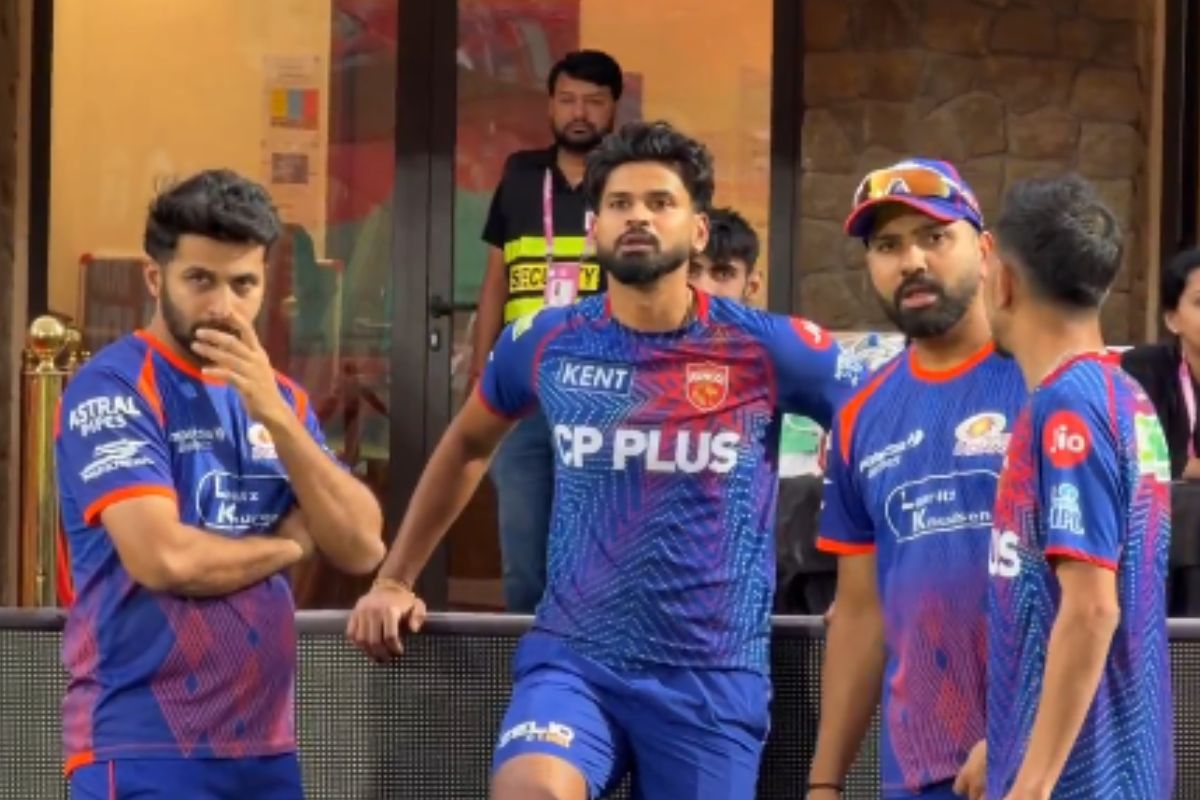
Mumbai Indians के खिलाफ गलत फैसले का शिकार हुई Punjab Kings? R Ashwin ने की नियम को तुंरत बदलने की मांग
हालांकि पंजाब किंग्स को लेग बाय का रन नहीं मिल सका, क्योंकि अंपायर के पास…
हालांकि पंजाब किंग्स को लेग बाय का रन नहीं मिल सका, क्योंकि अंपायर के पास…

In sport, memory lives in numbers and often dominates discussions across eras. Scorecards eventually become history, though for many fans, they are much more.
Ardent baseball fans treat scorecards as precious collectibles, while cricket enthusiasts can swear by a legendary “ton” or a definitive “five-fer” in a specific Test match. Yet, truth often slips through the gaps, much like a cover drive imperiously threaded between point and mid-off.
Baseball offers a clinical verdict: a batter is retired, and the scorecard records the outcome with total indifference. It matters little whether a fielder hauls in the ball at full stretch in right field or if it settles comfortably into a waiting glove in centre. The act is completed, the moment fades, and the numbers move on—offering no room for the artistry of the effort.
Basketball has always had an answer to this conundrum. For the Los Angeles Lakers, whenever Earvin “Magic” Johnson threaded a pass to Kareem Abdul-Jabbar, the finish was only half the act. The assist carried weight, etched into the record books as a vital statistic.
In basketball, the creator and the completer share the spotlight, ensuring that fans and history books alike acknowledge the setup as much as the score.
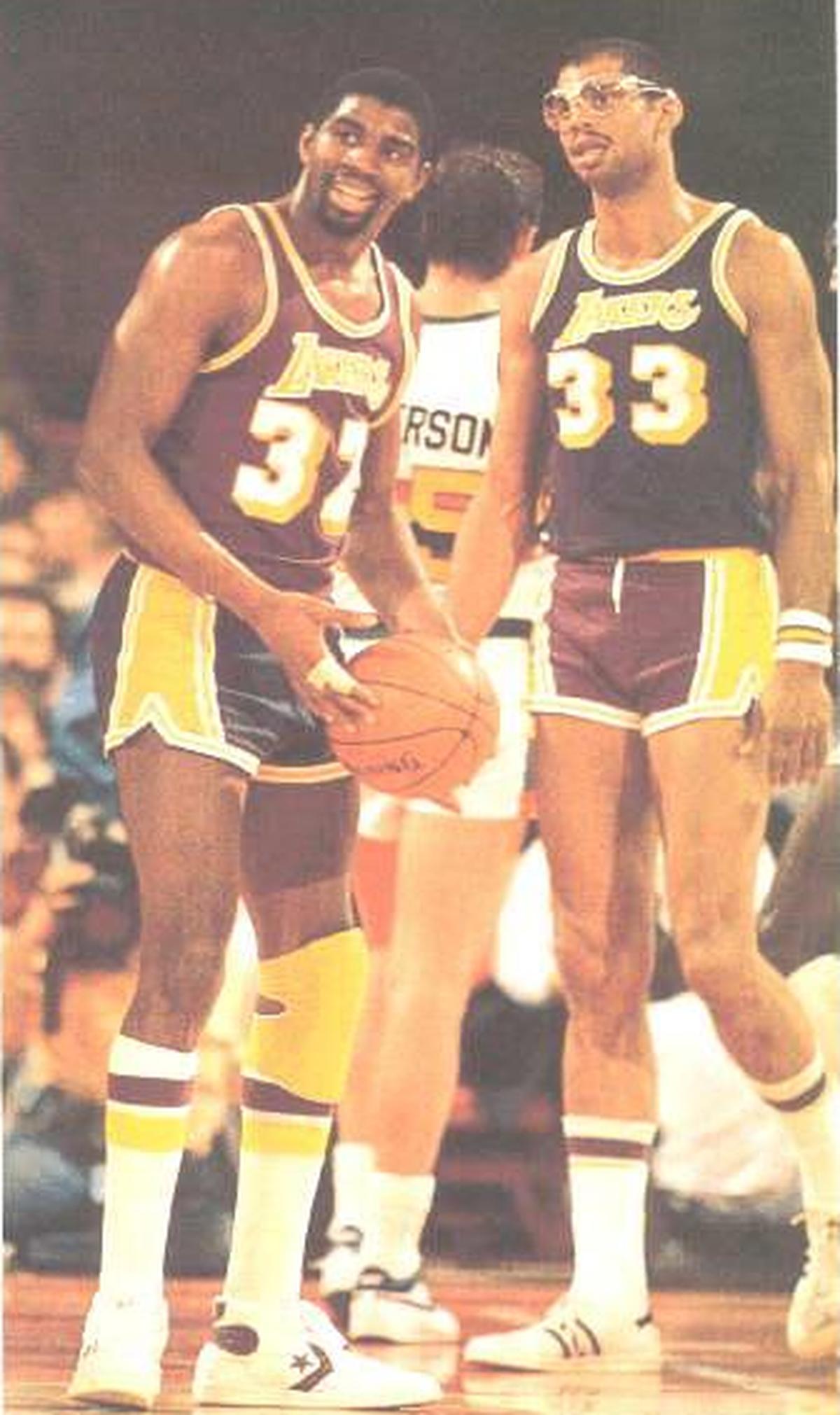
Brothers of destruction: Magic Johnson and Kareem Abdul-Jabbar formed one of the deadliest combinations in NBA, leading the attack for Los Angeles Lakers. | Photo Credit: The Hindu Photo Library

Brothers of destruction: Magic Johnson and Kareem Abdul-Jabbar formed one of the deadliest combinations in NBA, leading the attack for Los Angeles Lakers. | Photo Credit: The Hindu Photo Library
Statisticians in cricket seemingly had a different idea. Perhaps pioneers like Bill Frindall, B.B. Mama, Anandji Dossa, and Sudhir Vaidya never anticipated the acrobatic artistry of a Suryakumar Yadav at the Kensington Oval in 2024 or a Shreyas Iyer in 2026.
Cricket commentary celebrates the late swing and the diving stop; it applauds fielding brilliance with roars and endless replays. Yet, when the dust settles, the record often ignores this evolving dimension of the game. During a telecast, we are now accustomed to wagon wheels, Manhattan charts, and “the worm”—visual aids that add spice to an already well-made biryani—but the scorecard remains stubbornly static.
A recent night at the Wankhede Stadium during the 2026 Indian Premier League (IPL) season provided a jarring reminder of this oversight. In the 24th match between the Punjab Kings and Mumbai Indians, the ball sailed toward the boundary in the 18th over. Shreyas Iyer produced a moment of pure theatre.
Stationed at long-on, he sprinted to his left, launched himself into the air, and plucked the ball from the sky. Mid-flight, as gravity pulled him toward the rope, instinct took over. He flicked the ball back into play just as he crossed the boundary, where Xavier Bartlett completed the relay. Hardik Pandya was sent on his way, and the stadium erupted.
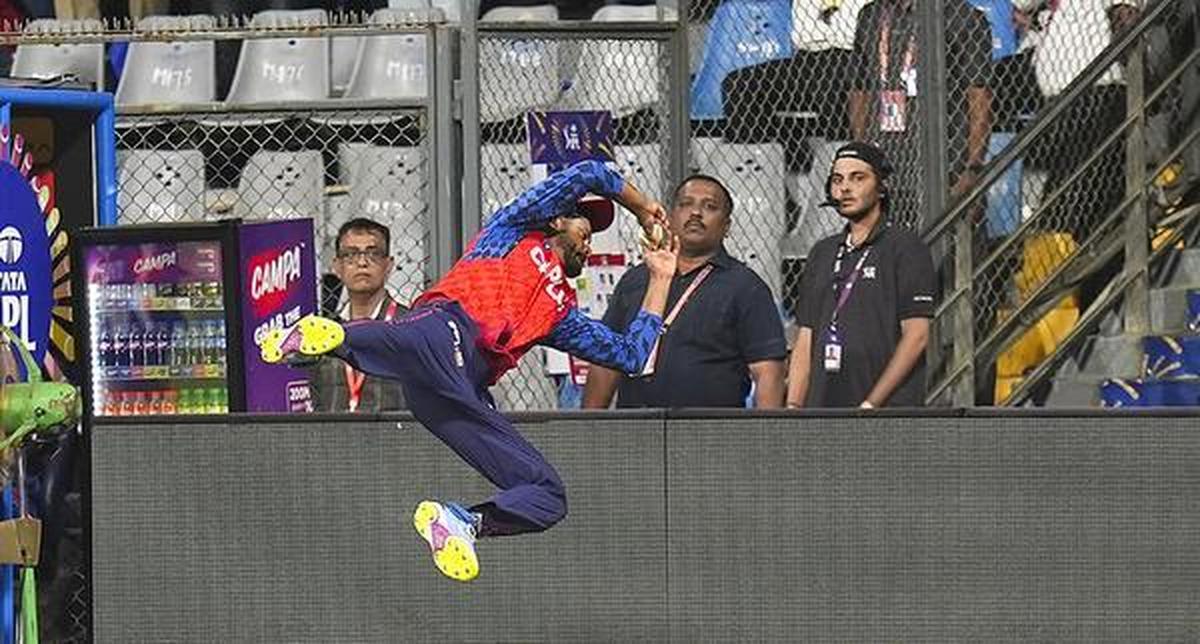
Key architect: Shreyas Iyer did not really take the catch of Hardik Pandya, but he played the most significant role in the dismissal. | Photo Credit: PTI
Key architect: Shreyas Iyer did not really take the catch of Hardik Pandya, but he played the most significant role in the dismissal. | Photo Credit: PTI
Ask anyone who “took” that catch, and the name they say will be Iyer. Yet, look at the scorecard, and Iyer’s name is nowhere to be found. In the history books, he doesn’t even receive an asterisk for this breathtaking fusion of athleticism, awareness, and timing.
Similarly, when a catch bursts from the grasp of a diving first-slip fielder and is safely completed by a teammate at second slip, the scorecard credits only the finisher, leaving the initial effort, often the defining act, without even a mention.
The typical line on a scorecard reads: “c Fielder b Bowler.” Even if a substitute or an “Impact Player” takes the catch, their name is recognised. But in a relay situation, the player who does the heavy lifting—the “creator”—is erased from the official narrative.
Cricket has evolved in almost every other dimension. Technology provides mountains of data for batters, bowlers, and coaches, yet we lack the statistical language to preserve teamwork in motion. The boundary relay catch is the purest example of a collaborative effort; without the first player, the second does not exist.
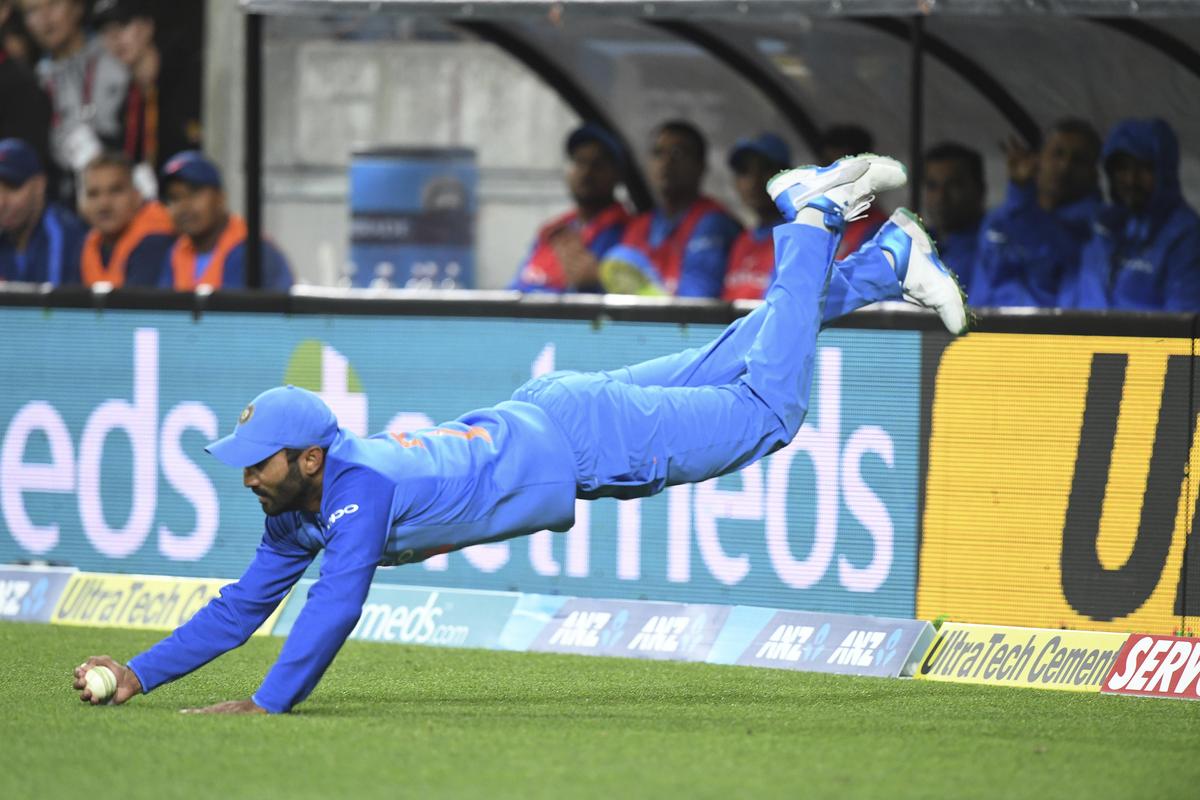
Cricket doesn’t lack appreciation for fielding; it lacks the language to preserve it. An assist column would change that. | Photo Credit: AP
Cricket doesn’t lack appreciation for fielding; it lacks the language to preserve it. An assist column would change that. | Photo Credit: AP
Imagine a child twenty years from now speaking about their father’s legendary catch. They pull up the scorecard to prove it, only to find a name that isn’t his. What do they point to? The video might survive in fragments, but the numbers—sport’s most trusted storytellers—will remain silent.
Cricket doesn’t lack appreciation for fielding; it lacks the language to preserve it. An assist column wouldn’t just change a statistic; it would honour the invisible hand that shapes the game’s most defining moments. In a sport that prides itself on detail, this is one detail that has waited long enough to be seen.
Published on May 12, 2026
In sport, memory lives in numbers and often dominates discussions across eras. Scorecards eventually become history, though for many fans, they are much more.
Ardent baseball fans treat scorecards as precious collectibles, while cricket enthusiasts can swear by a legendary “ton” or a definitive “five-fer” in a specific Test match. Yet, truth often slips through the gaps, much like a cover drive imperiously threaded between point and mid-off.
Baseball offers a clinical verdict: a batter is retired, and the scorecard records the outcome with total indifference. It matters little whether a fielder hauls in the ball at full stretch in right field or if it settles comfortably into a waiting glove in centre. The act is completed, the moment fades, and the numbers move on—offering no room for the artistry of the effort.
Basketball has always had an answer to this conundrum. For the Los Angeles Lakers, whenever Earvin “Magic” Johnson threaded a pass to Kareem Abdul-Jabbar, the finish was only half the act. The assist carried weight, etched into the record books as a vital statistic.
In basketball, the creator and the completer share the spotlight, ensuring that fans and history books alike acknowledge the setup as much as the score.
Brothers of destruction: Magic Johnson and Kareem Abdul-Jabbar formed one of the deadliest combinations in NBA, leading the attack for Los Angeles Lakers. | Photo Credit: The Hindu Photo Library
Brothers of destruction: Magic Johnson and Kareem Abdul-Jabbar formed one of the deadliest combinations in NBA, leading the attack for Los Angeles Lakers. | Photo Credit: The Hindu Photo Library
Statisticians in cricket seemingly had a different idea. Perhaps pioneers like Bill Frindall, B.B. Mama, Anandji Dossa, and Sudhir Vaidya never anticipated the acrobatic artistry of a Suryakumar Yadav at the Kensington Oval in 2024 or a Shreyas Iyer in 2026.
Cricket commentary celebrates the late swing and the diving stop; it applauds fielding brilliance with roars and endless replays. Yet, when the dust settles, the record often ignores this evolving dimension of the game. During a telecast, we are now accustomed to wagon wheels, Manhattan charts, and “the worm”—visual aids that add spice to an already well-made biryani—but the scorecard remains stubbornly static.
A recent night at the Wankhede Stadium during the 2026 Indian Premier League (IPL) season provided a jarring reminder of this oversight. In the 24th match between the Punjab Kings and Mumbai Indians, the ball sailed toward the boundary in the 18th over. Shreyas Iyer produced a moment of pure theatre.
Stationed at long-on, he sprinted to his left, launched himself into the air, and plucked the ball from the sky. Mid-flight, as gravity pulled him toward the rope, instinct took over. He flicked the ball back into play just as he crossed the boundary, where Xavier Bartlett completed the relay. Hardik Pandya was sent on his way, and the stadium erupted.
Key architect: Shreyas Iyer did not really take the catch of Hardik Pandya, but he played the most significant role in the dismissal. | Photo Credit: PTI
Key architect: Shreyas Iyer did not really take the catch of Hardik Pandya, but he played the most significant role in the dismissal. | Photo Credit: PTI
Ask anyone who “took” that catch, and the name they say will be Iyer. Yet, look at the scorecard, and Iyer’s name is nowhere to be found. In the history books, he doesn’t even receive an asterisk for this breathtaking fusion of athleticism, awareness, and timing.
Similarly, when a catch bursts from the grasp of a diving first-slip fielder and is safely completed by a teammate at second slip, the scorecard credits only the finisher, leaving the initial effort, often the defining act, without even a mention.
The typical line on a scorecard reads: “c Fielder b Bowler.” Even if a substitute or an “Impact Player” takes the catch, their name is recognised. But in a relay situation, the player who does the heavy lifting—the “creator”—is erased from the official narrative.
Cricket has evolved in almost every other dimension. Technology provides mountains of data for batters, bowlers, and coaches, yet we lack the statistical language to preserve teamwork in motion. The boundary relay catch is the purest example of a collaborative effort; without the first player, the second does not exist.
Cricket doesn’t lack appreciation for fielding; it lacks the language to preserve it. An assist column would change that. | Photo Credit: AP
Cricket doesn’t lack appreciation for fielding; it lacks the language to preserve it. An assist column would change that. | Photo Credit: AP
Imagine a child twenty years from now speaking about their father’s legendary catch. They pull up the scorecard to prove it, only to find a name that isn’t his. What do they point to? The video might survive in fragments, but the numbers—sport’s most trusted storytellers—will remain silent.
Cricket doesn’t lack appreciation for fielding; it lacks the language to preserve it. An assist column wouldn’t just change a statistic; it would honour the invisible hand that shapes the game’s most defining moments. In a sport that prides itself on detail, this is one detail that has waited long enough to be seen.
Published on May 12, 2026
In sport, memory lives in numbers and often dominates discussions across eras. Scorecards eventually become…

Australia has left fast bowlers Pat Cummins, Mitchell Starc and Josh Hazlewood out of its limited overs squads for upcoming tours of Pakistan and Bangladesh later this month.
The trio will miss the three-match series against Pakistan starting May 30, with uncapped all-rounder Liam Scott and Australia Under-19 World Cup captain Ollie Peake earning their first senior international call-ups in a new-look Australian squad.
Young batter Joel Davies is another new face after he was selected for the T20 series against Bangladesh in June.
Travis Head, Cooper Connolly, Ben Dwarshuis and Xavier Bartlett will travel to Bangladesh once their Indian Premier League (IPL) commitments are completed, while veteran all-rounder Glenn Maxwell was omitted altogether.
Mitchell Marsh will be the captain across both tours as Australia begins its preparations for the ICC ODI World Cup to be held in South Africa, Namibia and Zimbabwe in October next year.
Selection chairman George Bailey said the tours presented opportunities for emerging players.
“It’s always exciting to see new players get an opportunity to play international cricket and be a part of the national team,” Bailey said. “The blend of experienced players coupled with new or returning players will provide a nice mix for these subcontinent tours.
“Continuing to provide opportunities for players to develop across a broad range of conditions and experiences is important and will continue to be a focus over the next 18 months to two years.”
Cummins, Starc and Hazlewood are expected to use the break to prepare for Australia’s World Test Championship campaign, which resumes in August in a two-Test home series against Bangladesh.
Australia plays Pakistan in three ODIs in Rawalpindi (May 30) and Lahore (June 2 and 4) before traveling to Bangladesh for three ODI games in Dhaka (June 9, 11 and 14) and three T20 Internationals in Chattogram (June 17, 19 and 21).
Australia ODI squad for Pakistan: Mitchell Marsh (captain), Alex Carey, Nathan Ellis, Cameron Green, Josh Inglis, Matthew Kuhnemann, Marnus Labuschagne, Riley Meredith, Ollie Peake, Matthew Renshaw, Tanveer Sangha, Liam Scott, Matthew Short, Billy Stanlake, Adam Zampa.
Australia ODI squad for Bangladesh: Mitchell Marsh (captain), Xavier Bartlett, Alex Carey, Cooper Connolly, Ben Dwarshuis, Nathan Ellis, Cameron Green, Travis Head, Josh Inglis, Matthew Kuhnemann, Marnus Labuschagne, Matthew Renshaw, Tanveer Sangha, Liam Scott, Adam Zampa
Australia T20 squad for Bangladesh: Mitchell Marsh (captain), Xavier Bartlett, Cooper Connolly, Tim David, Joel Davies, Nathan Ellis, Cameron Green, Aaron Hardie, Travis Head, Josh Inglis, Spencer Johnson, Matthew Kuhnemann, Riley Meredith, Josh Philippe, Matthew Renshaw, Adam Zampa
Published on May 11, 2026
Australia has left fast bowlers Pat Cummins, Mitchell Starc and Josh Hazlewood out of its limited overs squads for upcoming tours of Pakistan and Bangladesh later this month.
The trio will miss the three-match series against Pakistan starting May 30, with uncapped all-rounder Liam Scott and Australia Under-19 World Cup captain Ollie Peake earning their first senior international call-ups in a new-look Australian squad.
Young batter Joel Davies is another new face after he was selected for the T20 series against Bangladesh in June.
Travis Head, Cooper Connolly, Ben Dwarshuis and Xavier Bartlett will travel to Bangladesh once their Indian Premier League (IPL) commitments are completed, while veteran all-rounder Glenn Maxwell was omitted altogether.
Mitchell Marsh will be the captain across both tours as Australia begins its preparations for the ICC ODI World Cup to be held in South Africa, Namibia and Zimbabwe in October next year.
Selection chairman George Bailey said the tours presented opportunities for emerging players.
“It’s always exciting to see new players get an opportunity to play international cricket and be a part of the national team,” Bailey said. “The blend of experienced players coupled with new or returning players will provide a nice mix for these subcontinent tours.
“Continuing to provide opportunities for players to develop across a broad range of conditions and experiences is important and will continue to be a focus over the next 18 months to two years.”
Cummins, Starc and Hazlewood are expected to use the break to prepare for Australia’s World Test Championship campaign, which resumes in August in a two-Test home series against Bangladesh.
Australia plays Pakistan in three ODIs in Rawalpindi (May 30) and Lahore (June 2 and 4) before traveling to Bangladesh for three ODI games in Dhaka (June 9, 11 and 14) and three T20 Internationals in Chattogram (June 17, 19 and 21).
Australia ODI squad for Pakistan: Mitchell Marsh (captain), Alex Carey, Nathan Ellis, Cameron Green, Josh Inglis, Matthew Kuhnemann, Marnus Labuschagne, Riley Meredith, Ollie Peake, Matthew Renshaw, Tanveer Sangha, Liam Scott, Matthew Short, Billy Stanlake, Adam Zampa.
Australia ODI squad for Bangladesh: Mitchell Marsh (captain), Xavier Bartlett, Alex Carey, Cooper Connolly, Ben Dwarshuis, Nathan Ellis, Cameron Green, Travis Head, Josh Inglis, Matthew Kuhnemann, Marnus Labuschagne, Matthew Renshaw, Tanveer Sangha, Liam Scott, Adam Zampa
Australia T20 squad for Bangladesh: Mitchell Marsh (captain), Xavier Bartlett, Cooper Connolly, Tim David, Joel Davies, Nathan Ellis, Cameron Green, Aaron Hardie, Travis Head, Josh Inglis, Spencer Johnson, Matthew Kuhnemann, Riley Meredith, Josh Philippe, Matthew Renshaw, Adam Zampa
Published on May 11, 2026
Australia has left fast bowlers Pat Cummins, Mitchell Starc and Josh Hazlewood out of its…

South Africa great Jonty Rhodes has seen fielding evolve from instinct to innovation, from sharp reflexes in the ring to choreographed brilliance at the boundary. And yet, even he found himself in awe.
During Punjab Kings’ IPL 2026 clash against Mumbai Indians, PBKS skipper Shreyas Iyer produced a moment that felt both modern and inevitable. In the 18th over, with MI captain Hardik Pandya looking to launch Marco Jansen into the stands, the ball soared towards long-on. Iyer sprinted across, judged the trajectory, and completed a juggling act at the rope, catching the ball, tossing it back mid-air as he lost balance, and relaying it to Xavier Bartlett to complete a “team catch”.
Watching it unfold, Rhodes could not help but reflect. “Watching Shreyas Iyer perform that acrobatic fielding to assist in taking the ‘team catch’ made me appreciate how fielding has evolved since my retirement,” he wrote on X. For a man long dubbed the gold standard, the shift is personal. “For a long time, I felt like the ‘father of fielding’… but watching these modern athletes… makes me feel like the ‘grandfather of fielding’.”
Rhodes’ own career was defined by inner-circle brilliance, but he admits the boundary was once an afterthought. “There was no focus on the modern day ‘hotspots’ on the boundaries,” he said, before tracing the change to his coaching days with Mumbai Indians. Encounters with players like Kieron Pollard and Glenn Maxwell reshaped the approach, introducing the now-familiar art of airborne saves and relay catches.
In an era of relentless hitting and Impact Players, Rhodes sees fielding as cricket’s last line of resistance. Iyer’s effort, he believes, was not just spectacular but necessary. And perhaps, fittingly, it came under the watch of Ricky Ponting, “one of the greatest fielders in the game.”
Published on Apr 18, 2026
South Africa great Jonty Rhodes has seen fielding evolve from instinct to innovation, from sharp reflexes in the ring to choreographed brilliance at the boundary. And yet, even he found himself in awe.
During Punjab Kings’ IPL 2026 clash against Mumbai Indians, PBKS skipper Shreyas Iyer produced a moment that felt both modern and inevitable. In the 18th over, with MI captain Hardik Pandya looking to launch Marco Jansen into the stands, the ball soared towards long-on. Iyer sprinted across, judged the trajectory, and completed a juggling act at the rope, catching the ball, tossing it back mid-air as he lost balance, and relaying it to Xavier Bartlett to complete a “team catch”.
Watching it unfold, Rhodes could not help but reflect. “Watching Shreyas Iyer perform that acrobatic fielding to assist in taking the ‘team catch’ made me appreciate how fielding has evolved since my retirement,” he wrote on X. For a man long dubbed the gold standard, the shift is personal. “For a long time, I felt like the ‘father of fielding’… but watching these modern athletes… makes me feel like the ‘grandfather of fielding’.”
Rhodes’ own career was defined by inner-circle brilliance, but he admits the boundary was once an afterthought. “There was no focus on the modern day ‘hotspots’ on the boundaries,” he said, before tracing the change to his coaching days with Mumbai Indians. Encounters with players like Kieron Pollard and Glenn Maxwell reshaped the approach, introducing the now-familiar art of airborne saves and relay catches.
In an era of relentless hitting and Impact Players, Rhodes sees fielding as cricket’s last line of resistance. Iyer’s effort, he believes, was not just spectacular but necessary. And perhaps, fittingly, it came under the watch of Ricky Ponting, “one of the greatest fielders in the game.”
Published on Apr 18, 2026
South Africa great Jonty Rhodes has seen fielding evolve from instinct to innovation, from sharp…

The build-up was perfect. Shah Rukh Khan attended his first match of the season, while fans turned up in decent numbers to cheer for Kolkata Knight Riders despite the team’s recent struggles.
But in the end, strong winds and torrential rain had the final say as the Indian Premier League 2026 fixture between Kolkata Knight Riders and Punjab Kings was washed out on Monday.
Despite predictions of rain, KKR opted to bat and was reeling at 25 for two in 3.4 overs when the showers arrived, halting play barely 17 minutes into the game at Eden Gardens.
Coming off two consecutive defeats, KKR took the field without the injured Varun Chakravarthy and Sunil Narine. In a bid to strengthen the batting, Rovman Powell and Navdeep Saini were drafted into the XI.
However, it was another disappointing start for KKR as neither Finn Allen nor Cameron Green managed to settle, both caught behind off a probing spell from Xavier Bartlett. With Ajinkya Rahane and Angkrish Raghuvanshi attempting to rebuild, rain forced the players off the field.
There was initial hope of a restart as the groundstaff swiftly covered the square and outfield. But as the evening wore on, the rain intensified and powerful gusts of wind swept across the ground.
ALSO READ: RR vs MI, IPL 2026: Fast-starting Rajasthan Royals takes on Mumbai Indians’ might
Sheets of rain lashed the square, the stands gradually emptied as spectators sought shelter, and puddles began forming despite the covers remaining firmly in place.
With no improvement in conditions, match referee Javagal Srinath eventually called off the contest, with both teams sharing a point.
Coincidentally, when the two sides met at the same venue last year, that match too had been washed out, earning both teams a point each.
A year later, it was a similar story, with the unpredictable April weather once again having the final word.
Published on Apr 06, 2026
The build-up was perfect. Shah Rukh Khan attended his first match of the season, while fans turned up in decent numbers to cheer for Kolkata Knight Riders despite the team’s recent struggles.
But in the end, strong winds and torrential rain had the final say as the Indian Premier League 2026 fixture between Kolkata Knight Riders and Punjab Kings was washed out on Monday.
Despite predictions of rain, KKR opted to bat and was reeling at 25 for two in 3.4 overs when the showers arrived, halting play barely 17 minutes into the game at Eden Gardens.
Coming off two consecutive defeats, KKR took the field without the injured Varun Chakravarthy and Sunil Narine. In a bid to strengthen the batting, Rovman Powell and Navdeep Saini were drafted into the XI.
However, it was another disappointing start for KKR as neither Finn Allen nor Cameron Green managed to settle, both caught behind off a probing spell from Xavier Bartlett. With Ajinkya Rahane and Angkrish Raghuvanshi attempting to rebuild, rain forced the players off the field.
There was initial hope of a restart as the groundstaff swiftly covered the square and outfield. But as the evening wore on, the rain intensified and powerful gusts of wind swept across the ground.
ALSO READ: RR vs MI, IPL 2026: Fast-starting Rajasthan Royals takes on Mumbai Indians’ might
Sheets of rain lashed the square, the stands gradually emptied as spectators sought shelter, and puddles began forming despite the covers remaining firmly in place.
With no improvement in conditions, match referee Javagal Srinath eventually called off the contest, with both teams sharing a point.
Coincidentally, when the two sides met at the same venue last year, that match too had been washed out, earning both teams a point each.
A year later, it was a similar story, with the unpredictable April weather once again having the final word.
Published on Apr 06, 2026
The build-up was perfect. Shah Rukh Khan attended his first match of the season, while…