×
The last witness to a first belief — Remembering C.D. Gopinath  C. D. Gopinath, the last surviving member of India’s first Test-winning side, passed away on Thursday at the age of 96, closing a living link to a morning in 1952 when Indian cricket, after years of waiting, finally believed in itself.Against England, at the M. A. Chidambaram Stadium, then still Madras, Gopinath was the youngest member in a team led by Vijay Hazare. He made 35 runs in a brisk, obedient cameo, and, more enduringly, took the winning catch to seal India’s first ever Test victory. The ball, signed and now faded, sat in his Coonoor home for decades, a modest relic of a historic triumph. C.D. Gopinath’s souvenir match ball from the 1952 Test win finds a place at his Coonoor residence.
                                                            | Photo Credit: 
                                Special arrangement
                            

                            C.D. Gopinath’s souvenir match ball from the 1952 Test win finds a place at his Coonoor residence.
                                                            | Photo Credit: 
                                Special arrangement
                                                    When I met him in 2021, in a sunlit garden in Adyar, he was 91 but alert, amused by memory, and generous with it. Time had softened neither his wit nor his clarity. Asked about a proposed documentary on that match, he laughed: with no teammates left to contradict him, he could “say anything I want.”His story resisted the tidy arc. He began cricket only at 17, almost by accident, handed keeping gloves because “nobody else could.” Soon, he was opening the batting and making 70. In First-Class cricket, he would compile 4,259 runs at an average of 42, with nine hundreds, before business interests drew him away after 1962-63. The numbers are solid; the life around them, richer.He spoke often about what that 1952 win meant and what it did not. There was no strategy, no huddles, no theatre. “We won, said ‘well done,’ and went home,” he recalled, half in wonder at modern celebrations. Yet beneath that restraint lay something more searching. Gopinath was clear-eyed about the limits of his era: a team that was not quite a team, a country still learning to think as one. Parochialism, he said, seeped into selection and dressing rooms alike. He had felt it, even as his runs against touring sides forced recognition.And still, he believed the game could do what politics struggled to: bring India together. He delighted in the modern side’s plurality, in captains from unexpected places, in the idea that talent could emerge from any corner. The 1952 victory, he felt, changed the internal grammar of Indian cricket. For the first time, it allowed a fragile thought to take hold: that India could beat those it had learned from.In person, he carried that history lightly. There was no bitterness, only perspective, and a storyteller’s instinct for the telling detail: the impatience of a declaration that never came, the regret of a dismissal taken on trust, the small, private satisfaction of a catch held in front of a pavilion.Gopinath’s passing leaves no eyewitness to that first triumph. But his voice, wry and lucid, endures in the stories he chose to tell, and in the way he told them: without fuss, without embellishment, and with an unwavering sense of proportion.Published on Apr 09, 2026  #witness #belief #Remembering #C.D #Gopinath

The last witness to a first belief — Remembering C.D. Gopinath

C. D. Gopinath, the last surviving member of India’s first Test-winning side, passed away on Thursday at the age of 96, closing a living link to a morning in 1952 when Indian cricket, after years of waiting, finally believed in itself.

Against England, at the M. A. Chidambaram Stadium, then still Madras, Gopinath was the youngest member in a team led by Vijay Hazare. He made 35 runs in a brisk, obedient cameo, and, more enduringly, took the winning catch to seal India’s first ever Test victory. The ball, signed and now faded, sat in his Coonoor home for decades, a modest relic of a historic triumph.

The last witness to a first belief — Remembering C.D. Gopinath  C. D. Gopinath, the last surviving member of India’s first Test-winning side, passed away on Thursday at the age of 96, closing a living link to a morning in 1952 when Indian cricket, after years of waiting, finally believed in itself.Against England, at the M. A. Chidambaram Stadium, then still Madras, Gopinath was the youngest member in a team led by Vijay Hazare. He made 35 runs in a brisk, obedient cameo, and, more enduringly, took the winning catch to seal India’s first ever Test victory. The ball, signed and now faded, sat in his Coonoor home for decades, a modest relic of a historic triumph. C.D. Gopinath’s souvenir match ball from the 1952 Test win finds a place at his Coonoor residence.
                                                            | Photo Credit: 
                                Special arrangement
                            

                            C.D. Gopinath’s souvenir match ball from the 1952 Test win finds a place at his Coonoor residence.
                                                            | Photo Credit: 
                                Special arrangement
                                                    When I met him in 2021, in a sunlit garden in Adyar, he was 91 but alert, amused by memory, and generous with it. Time had softened neither his wit nor his clarity. Asked about a proposed documentary on that match, he laughed: with no teammates left to contradict him, he could “say anything I want.”His story resisted the tidy arc. He began cricket only at 17, almost by accident, handed keeping gloves because “nobody else could.” Soon, he was opening the batting and making 70. In First-Class cricket, he would compile 4,259 runs at an average of 42, with nine hundreds, before business interests drew him away after 1962-63. The numbers are solid; the life around them, richer.He spoke often about what that 1952 win meant and what it did not. There was no strategy, no huddles, no theatre. “We won, said ‘well done,’ and went home,” he recalled, half in wonder at modern celebrations. Yet beneath that restraint lay something more searching. Gopinath was clear-eyed about the limits of his era: a team that was not quite a team, a country still learning to think as one. Parochialism, he said, seeped into selection and dressing rooms alike. He had felt it, even as his runs against touring sides forced recognition.And still, he believed the game could do what politics struggled to: bring India together. He delighted in the modern side’s plurality, in captains from unexpected places, in the idea that talent could emerge from any corner. The 1952 victory, he felt, changed the internal grammar of Indian cricket. For the first time, it allowed a fragile thought to take hold: that India could beat those it had learned from.In person, he carried that history lightly. There was no bitterness, only perspective, and a storyteller’s instinct for the telling detail: the impatience of a declaration that never came, the regret of a dismissal taken on trust, the small, private satisfaction of a catch held in front of a pavilion.Gopinath’s passing leaves no eyewitness to that first triumph. But his voice, wry and lucid, endures in the stories he chose to tell, and in the way he told them: without fuss, without embellishment, and with an unwavering sense of proportion.Published on Apr 09, 2026  #witness #belief #Remembering #C.D #Gopinath

C.D. Gopinath’s souvenir match ball from the 1952 Test win finds a place at his Coonoor residence. | Photo Credit: Special arrangement

lightbox-info

C.D. Gopinath’s souvenir match ball from the 1952 Test win finds a place at his Coonoor residence. | Photo Credit: Special arrangement

When I met him in 2021, in a sunlit garden in Adyar, he was 91 but alert, amused by memory, and generous with it. Time had softened neither his wit nor his clarity. Asked about a proposed documentary on that match, he laughed: with no teammates left to contradict him, he could “say anything I want.”

His story resisted the tidy arc. He began cricket only at 17, almost by accident, handed keeping gloves because “nobody else could.” Soon, he was opening the batting and making 70. In First-Class cricket, he would compile 4,259 runs at an average of 42, with nine hundreds, before business interests drew him away after 1962-63. The numbers are solid; the life around them, richer.

He spoke often about what that 1952 win meant and what it did not. There was no strategy, no huddles, no theatre. “We won, said ‘well done,’ and went home,” he recalled, half in wonder at modern celebrations. Yet beneath that restraint lay something more searching. Gopinath was clear-eyed about the limits of his era: a team that was not quite a team, a country still learning to think as one. Parochialism, he said, seeped into selection and dressing rooms alike. He had felt it, even as his runs against touring sides forced recognition.

And still, he believed the game could do what politics struggled to: bring India together. He delighted in the modern side’s plurality, in captains from unexpected places, in the idea that talent could emerge from any corner. The 1952 victory, he felt, changed the internal grammar of Indian cricket. For the first time, it allowed a fragile thought to take hold: that India could beat those it had learned from.

In person, he carried that history lightly. There was no bitterness, only perspective, and a storyteller’s instinct for the telling detail: the impatience of a declaration that never came, the regret of a dismissal taken on trust, the small, private satisfaction of a catch held in front of a pavilion.

Gopinath’s passing leaves no eyewitness to that first triumph. But his voice, wry and lucid, endures in the stories he chose to tell, and in the way he told them: without fuss, without embellishment, and with an unwavering sense of proportion.

Published on Apr 09, 2026

#witness #belief #Remembering #C.D #Gopinath

C. D. Gopinath, the last surviving member of India’s first Test-winning side, passed away on Thursday at the age of 96, closing a living link to a morning in 1952 when Indian cricket, after years of waiting, finally believed in itself.

Against England, at the M. A. Chidambaram Stadium, then still Madras, Gopinath was the youngest member in a team led by Vijay Hazare. He made 35 runs in a brisk, obedient cameo, and, more enduringly, took the winning catch to seal India’s first ever Test victory. The ball, signed and now faded, sat in his Coonoor home for decades, a modest relic of a historic triumph.

C.D. Gopinath’s souvenir match ball from the 1952 Test win finds a place at his Coonoor residence.
| Photo Credit:
Special arrangement

lightbox-info

C.D. Gopinath’s souvenir match ball from the 1952 Test win finds a place at his Coonoor residence.
| Photo Credit:
Special arrangement

When I met him in 2021, in a sunlit garden in Adyar, he was 91 but alert, amused by memory, and generous with it. Time had softened neither his wit nor his clarity. Asked about a proposed documentary on that match, he laughed: with no teammates left to contradict him, he could “say anything I want.”

His story resisted the tidy arc. He began cricket only at 17, almost by accident, handed keeping gloves because “nobody else could.” Soon, he was opening the batting and making 70. In First-Class cricket, he would compile 4,259 runs at an average of 42, with nine hundreds, before business interests drew him away after 1962-63. The numbers are solid; the life around them, richer.

He spoke often about what that 1952 win meant and what it did not. There was no strategy, no huddles, no theatre. “We won, said ‘well done,’ and went home,” he recalled, half in wonder at modern celebrations. Yet beneath that restraint lay something more searching. Gopinath was clear-eyed about the limits of his era: a team that was not quite a team, a country still learning to think as one. Parochialism, he said, seeped into selection and dressing rooms alike. He had felt it, even as his runs against touring sides forced recognition.

And still, he believed the game could do what politics struggled to: bring India together. He delighted in the modern side’s plurality, in captains from unexpected places, in the idea that talent could emerge from any corner. The 1952 victory, he felt, changed the internal grammar of Indian cricket. For the first time, it allowed a fragile thought to take hold: that India could beat those it had learned from.

In person, he carried that history lightly. There was no bitterness, only perspective, and a storyteller’s instinct for the telling detail: the impatience of a declaration that never came, the regret of a dismissal taken on trust, the small, private satisfaction of a catch held in front of a pavilion.

Gopinath’s passing leaves no eyewitness to that first triumph. But his voice, wry and lucid, endures in the stories he chose to tell, and in the way he told them: without fuss, without embellishment, and with an unwavering sense of proportion.

Published on Apr 09, 2026

Source link
#witness #belief #Remembering #C.D #Gopinath

Previous post

Deadspin | MLB roundup: Jays salvage finale of World Series rematch with Dodgers <div id=""><section id="0" class=" w-full"><div class="xl:container mx-0 !px-4 py-0 pb-4 !mx-0 !px-0"><img src="https://images.deadspin.com/tr:w-900/28686212.jpg" srcset="https://images.deadspin.com/tr:w-900/28686212.jpg" alt="MLB: Los Angeles Dodgers at Toronto Blue Jays" class="w-full" fetchpriority="high" loading="eager"/><span class="text-0.8 leading-tight">Apr 8, 2026; Toronto, Ontario, CAN; Toronto Blue Jays left fielder Davis Schneider (center) gets doused with ice water by center fielder Myles Straw (3) and first baseman Vladimir Guerrero Jr. (27) after a win over the Los Angeles Dodgers at Rogers Centre. Mandatory Credit: John E. Sokolowski-Imagn Images<!-- --> <!-- --> </span></div></section><section id="section-1"> <p>The Toronto Blue Jays scored the go-ahead run in the eighth inning on an error Wednesday afternoon and went on to defeat the visiting Los Angeles Dodgers 4-3.</p> </section><section id="section-2"> <p>The Blue Jays salvaged the finale of the three-game series, a rematch of the 2025 World Series won by Los Angeles, to end a six-game skid and end the Dodgers’ five-game winning streak. Jeff Hoffman pitched around a single and a walk in the ninth to earn his second save. Tyler Rogers (1-0) pitched 1 2/3 innings for the win.</p> </section><section id="section-3"> <p>Davis Schneider walked with one out in the eighth against Ben Casparius (0-1) and took third on Andres Gimenez’s single. Schneider scored on catcher Will Smith’s throwing error when Gimenez stole second. George Springer and Jesus Sanchez each hit an RBI double and Daulton Varsho added an RBI single.</p> </section><section id="section-4"> <p>Shohei Ohtani’s leadoff walk in the first extended his on-base streak to 43 games dating to August. That ties Ichiro Suzuki (2009) for the longest such streak by a Japanese-born player. Ohtani pitched six innings, allowing one unearned run, four hits and one walk with two strikeouts. Freddie Freeman and Will Smith delivered RBI singles and Teoscar Hernandez lifted a sacrifice fly.</p> </section><section id="section-5"> <p>Guardians 10, Royals 2</p> </section><section id="section-6"> <p>Angel Martinez had four hits, including a grand slam, and Cleveland rolled past visiting Kansas City in the rubber game of their three-game series.</p> </section><section id="section-7"> <p>Rhys Hoskins had three doubles, an RBI and run scored, and Jose Ramirez and Juan Brito each had two hits, an RBI and run scored for Cleveland, which has won three of four. Guardians left-hander Joey Cantillo (1-0) allowed two runs (one earned) and three hits over 5 2/3 innings. He struck out nine and walked two.</p> </section><section id="section-8"> <p>Bobby Witt Jr. produced two hits and an RBI for Kansas City, which has lost three of four. Royals starter Cole Ragans (0-3) lasted just five batters after he sustained a thumb contusion on his throwing hand when was hit by a comebacker by Ramirez.</p> </section><section id="section-9"> <p>Padres 8, Pirates 2</p> </section><section id="section-10"> <p>Nick Castellanos drove in two runs and Jake Cronenworth hit his first homer of the season to lead San Diego to a victory over host Pittsburgh.</p> </section><section id="section-11"> <p>It was more tough luck for Pirates starter Mitch Keller, who tossed six scoreless innings. Through his first three starts, Keller has a 1.00 ERA and has allowed only two runs in 18 innings but has just one win to show for it. Rookie Konnor Griffin and Joey Bart had RBIs for Pittsburgh.</p> </section><section id="section-12"> <p>San Diego starter Michael King (1-1) pitched six innings and allowed two runs on four hits and three walks. King struck out four and threw 95 pitches. Mason Miller worked a scoreless ninth, but had a streak of 11 consecutive strikeouts snapped when Mangum grounded out to end the game. Luis Campusano and Fernando Tatis Jr. each had an RBI.</p> </section><section id="section-13"> <p>Red Sox 5, Brewers 0</p> </section><section id="section-14"> <p>Sonny Gray tossed 6 1/3 scoreless innings and Trevor Story drove in two runs to help Boston defeat visiting Milwaukee.</p> </section><section id="section-15"> <p>Gray (2-0) limited Milwaukee to three hits, walked two and struck out two. The victory gave Boston back-to-back wins for the first time this season. The Red Sox beat the Brewers 3-2 in the second game of the series Tuesday. The victory in the finale also handed Boston its first series win.</p> </section><section id="section-16"> <p>Milwaukee starting pitcher Shane Drohan (0-1) made his MLB debut, but was pulled with two outs in the third. He gave up three runs on three hits, walked four and struck out two. Three of the four walks he issued came in Boston’s three-run third inning.</p> </section><section id="section-17"> <p>Rangers 3, Mariners 0</p> </section><section id="section-18"> <p>A three-run inning was all Texas needed to defeat Seattle in Arlington, Texas, giving the Rangers a three-game series sweep over the slumping Mariners.</p> </section><section id="section-19"> <p>A bases-loaded throwing error by Mariners first baseman Connor Joe allowed two runs to score, and Texas added another in the bottom of the fifth against Seattle starter Bryan Woo (0-1). The Rangers got five scoreless innings from starter MacKenzie Gore (2-0), who allowed one hit and struck out nine with two walks. Then, their bullpen finished off the Mariners with four scoreless innings.</p> </section><section id="section-20"> <p>The Mariners managed just three runs total in the series despite good pitching. Seattle lost its fifth straight game and seventh in its last eight. Seattle has been shut out three times in that eight-game stretch and has not scored more than three runs in any of those games.</p> </section><section id="section-21"> <p>Rockies 9, Astros 1</p> </section><section id="section-22"> <p>Hunter Goodman homered, Ezequiel Tovar, Troy Johnston and Edouard Julien had two hits apiece, and Colorado beat Houston in Denver.</p> </section><section id="section-23"> <p>Michael Lorenzen bounced back from his last start to get his first win with Colorado. Lorenzen (1-1) allowed one run on seven hits in 5 2/3 innings to help the Rockies sweep the three-game series from Houston at home for the first time since 2012. Right-hander Zach Agnos tossed 3 1/3 innings of relief to earn his first save for Colorado, which has won four in a row.</p> </section><section id="section-24"> <p>Christian Walker had two hits for the Astros, who lost outfielder Jake Meyers to an injury in the second inning. Houston has dropped its last four games.</p> </section><section id="section-25"> <p>Orioles 5, White Sox 3</p> </section><section id="section-26"> <p>Taylor Ward went 4-for-5 with three doubles and two RBIs as Baltimore completed a three-game series sweep of host Chicago.</p> </section><section id="section-27"> <p>Baltimore right-hander Kyle Bradish (1-2) earned his first victory of the season. Bradish spaced three runs (two earned) and six hits over five innings. He had three walks against seven strikeouts. Rico Garcia worked around a pair of walks in the bottom half to pick up his first career save.</p> </section><section id="section-28"> <p>Down 3-2 with one out in the top of the sixth, the Orioles loaded the bases against reliever Lucas Sims (0-1). Bryan Hudson replaced Sims, but a passed ball by catcher Reese McGuire allowed the tying run to score. Dylan Beavers then hit a sacrifice fly for a 4-3 Orioles lead.</p> </section><section id="section-29"> <p>Marlins 7, Reds 4</p> </section><section id="section-30"> <p>Griffin Conine slugged a two-run homer and Connor Norby hit a solo shot as host Miami ended Cincinnati’s five-game win streak.</p> </section><br/><section id="section-31"> <p>Michael Petersen pitched a scoreless ninth for his first career save as the Marlins halted a two-game skid. Reds rookie first baseman Sal Stewart, a Miami native who had several family members and friends in the stands displaying posters with his likeness, went 2-for-4 with a two-run homer, two runs and a stolen base. Eury Perez (1-1) earned the win, allowing six hits, two walks and four runs (two earned) in five innings.</p> </section> <section id="section-32"> <p>Native Floridian Brady Singer (0-1) took the loss, allowing 10 hits and six runs (five earned) in 2 2/3 innings. He was also charged with two errors on failed pickoff plays. Cincinnati’s Elly De La Cruz scored a run for the eighth straight game after drawing a walk and stealing second base in the first inning. Julien drove in two with a single, Mickey Moniak hit a sacrifice fly and Julien scored on a wild pitch.</p> </section><section id="section-33"> <p>Cubs 6, Rays 2</p> </section><section id="section-34"> <p>Nico Hoerner homered to highlight his three-hit performance and Michael Conforto drove in a pair, fueling Chicago past host Tampa Bay for the Cubs’ first back-to-back wins and first series victory of the season.</p> </section><section id="section-35"> <p>Hoerner led the game off with a homer and added an RBI double during a five-run fifth inning for the Cubs. Colin Rea (1-0) allowed one run on two hits in five innings while taking the spot in the rotation of Cade Horton, who is out for the season with an elbow injury.</p> </section><section id="section-36"> <p>Tampa Bay starter Joe Boyle (0-1) was charged with six runs (five earned) on four hits in 4 1/3 innings and took the loss. The Rays committed three errors en route to losing for the fifth time in their last eight games.</p> </section><section id="section-37"> <p>Cardinals 6, Nationals 1</p> </section><section id="section-38"> <p>Jordan Walker homered again, Alec Burleson drove in three runs and notched three hits and St. Louis won the decisive game of a three-game series at Washington.</p> </section><section id="section-39"> <p>Walker hit his fifth home run of the season and three St. Louis relievers completed what became a combined four-hitter. Michael McGreevy (1-1) worked six innings, yielding one run.</p> </section><section id="section-40"> <p>Nationals starter Miles Mikolas (0-3) allowed two runs on five hits in three innings. James Wood went 2-for-4.</p> </section><section id="section-41"> <p>Athletics 3, Yankees 2</p> </section><section id="section-42"> <p>Brent Rooker lifted a tiebreaking sacrifice fly in the ninth inning, and the Athletics earned a victory at New York.</p> </section><section id="section-43"> <p>A’s reliever Elvis Alvarado (2-0) got two outs in the eighth, and Joel Kuhnel retired the side in the ninth for his second career save and first since 2022. Nick Kurtz, Shea Langeliers and Jeff McNeil had multi-hit games for the A’s.</p> </section><section id="section-44"> <p>The Yankees managed just four hits, three in the first inning, when Cody Bellinger had an RBI single. David Bednar (0-1) took the loss.</p> </section><section id="section-45"> <p>Giants 5, Phillies 0</p> </section><section id="section-46"> <p>Tyler Mahle combined with four relievers on a four-hitter, Rafael Devers broke a sixth-inning tie with a three-run home run and San Francisco made it two of three from visiting Philadelphia.</p> </section><section id="section-47"> <p>Making his third start as a Giant, Mahle matched zeroes with Phillies starter Aaron Nola for five innings before getting pulled with two outs in the sixth. Nola completed six innings, allowing three runs and five hits. He walked one and struck out three.</p> </section><section id="section-48"> <p>Willy Adames doubled with one out in the bottom of the sixth, and Luis Arraez followed with a walk. After Nola struck out Matt Chapman, Devers launched the first pitch he saw over the fence in center field for a 3-0 lead. Devers added his fourth RBI on a single. Mahle yielded four hits and struck out six in 5 2/3 innings.</p> </section><section id="section-49"> <p>Braves 8, Angels 2</p> </section><section id="section-50"> <p>Matt Olson hit a home run and Ronald Acuna Jr. doubled twice and scored a run to lead Atlanta past Los Angeles in the rubber game of their three-game series in Anaheim, Calif.</p> </section><section id="section-51"> <p>Austin Riley doubled, stole a base and scored three runs, and Mauricio Dubon had a two-run double for Atlanta, which finished a seven-game western road trip with a 4-3 record. Atlanta starter Grant Holmes (1-1) picked up the win, allowing two runs on five hits in 6 2/3 innings. The right-hander walked three and struck out six.</p> </section><section id="section-52"> <p>Jorge Soler, appealing a seven-game suspension for his role in a benches-emptying brawl with Braves pitcher Reynaldo Lopez on Tuesday night, homered for the second straight game, and Jo Adell had three hits for Los Angeles. Reid Detmers (0-1) suffered the loss, allowing six runs (five earned) on five hits in 4 1/3 innings. The left-hander walked two and struck out four.</p> </section><section id="section-53"> <p>Diamondbacks 7, Mets 2</p> </section><section id="section-54"> <p>Ryne Nelson tossed 5 2/3 solid innings and earned the win for visiting Arizona, which cooled off surging New York.</p> </section><section id="section-55"> <p>Corbin Carroll and Ildemaro Vargas had three hits apiece for the Diamondbacks, who have won six of nine. Carroll and Jorge Barrosa each had two-run doubles, while Gabriel Moreno, Ketel Marte and Geraldo Perdomo had an RBI apiece. Jose Fernandez added two hits.</p> </section><section id="section-56"> <p>Brett Baty had an RBI single, and Mark Vientos lofted a sacrifice fly for the Mets, who won their previous four games by a combined score of 28-8. Baty, Luis Robert Jr. and Bo Bichette had two hits each.</p> </section><section id="section-57"> <p>Twins 8, Tigers 6</p> </section><section id="section-58"> <p>Royce Lewis went 2-for-3 with two RBIs and Minnesota won its third straight with a win over Detroit in Minneapolis.</p> </section><section id="section-59"> <p>Byron Buxton went 3-for-4 with a double and scored three runs for Minnesota while Matt Wallner doubled and drove in a run. Twins right-hander Bailey Ober (1-0) allowed two runs on five hits in 5 2/3 innings.</p> </section><section id="section-60"> <p>Gleyber Torres went 2-for-5 with a double and two RBIs to lead Detroit, which lost its fourth in a row. Tigers left-hander Framber Valdez (1-1) surrendered eight runs on 10 hits in five-plus innings after permitting only two runs (one earned) in his first two starts combined.</p> </section><section id="section-61"> <p>–Field Level Media</p> </section></div> #Deadspin #MLB #roundup #Jays #salvage #finale #World #Series #rematch #Dodgers

Next post

Deadspin | CONCACAF Champions Cup: Tigres, Toluca grab 2-goal advantages <div id=""><section id="0" class=" w-full"><div class="xl:container mx-0 !px-4 py-0 pb-4 !mx-0 !px-0"><img src="https://images.deadspin.com/tr:w-900/28479031.jpg" srcset="https://images.deadspin.com/tr:w-900/28479031.jpg" alt="Soccer: Concacaf Champions Cup-Round of 16-Tigres UANL at FC Cincinnati" class="w-full" fetchpriority="high" loading="eager"/><span class="text-0.8 leading-tight">Mar 12, 2026; Cincinnati, Ohio, USA; A general view of the official game ball during the first half in the match between Tigres UANL and FC Cincinnati at TQL Stadium. Mandatory Credit: Katie Stratman-Imagn Images<!-- --> <!-- --> </span></div></section><section id="section-1"> <p>Ozziel Herrera capped an impressive team play by scoring the first goal and Tigres UANL earned a 2-0 win over the Seattle Sounders on Wednesday at San Nicolas de los Garza, Mexico, in the first leg of a CONCACAF Champions Cup quarterfinal series.</p> </section><section id="section-2"> <p>The two-game, total-goal matchup will conclude on April 15 in Seattle. The victorious team will oppose either Nashville SC or Club America in the semifinals.</p> </section><section id="section-3"> <p>With the game scoreless in the 51st minute, a long pass sent Tigres off on a counterattack. Tigres’ Fernando Gorriaran got under the ball, and his first touch was wayward, but a lucky bounce sent the ball off a defender and right back to him.</p> </section><section id="section-4"> <p>Gorriaran dribbled toward the center of the field, then dropped a back-heel pass to Herrera, who chipped a 12-yard shot over Sounders goalkeeper Stefan Frei and into the goal netting on the far side.</p> </section><section id="section-5"> <p>Tigres doubled the advantage on an own goal off a 76th-minute corner kick.</p> </section><br/><section id="section-6"> <p>Toluca FC 4, Galaxy 2</p> </section> <section id="section-7"> <p>Paulinho scored a hat trick as Toluca grabbed the first-leg advantage on Los Angeles in Toluca de Lerdo, Mexico.</p> </section><section id="section-8"> <p>The second leg is scheduled for April 15 in Carson, Calif., with the winning team drawing either Cruz Azul or Los Angeles FC in the semifinals.</p> </section><section id="section-9"> <p>Nicolas Castro opened the scoring for the hosts in the 12th minute, and Paulinho doubled the lead with a 43rd-minute volley from close range.</p> </section><section id="section-10"> <p>Gabriel Pec (66th minute from a sharp angle) and Marco Reus (77th) tallied for the Galaxy, but each time Paulinho responded for Toluca, scoring in the 73rd and 85th minutes. The final tally came when he hustled in front to block an L.A. clearance attempt, and Paulinho’s tackle sent the ball into the net.</p> </section><section id="section-11"> <p>–Field Level Media</p> </section></div> #Deadspin #CONCACAF #Champions #Cup #Tigres #Toluca #grab #2goal #advantages

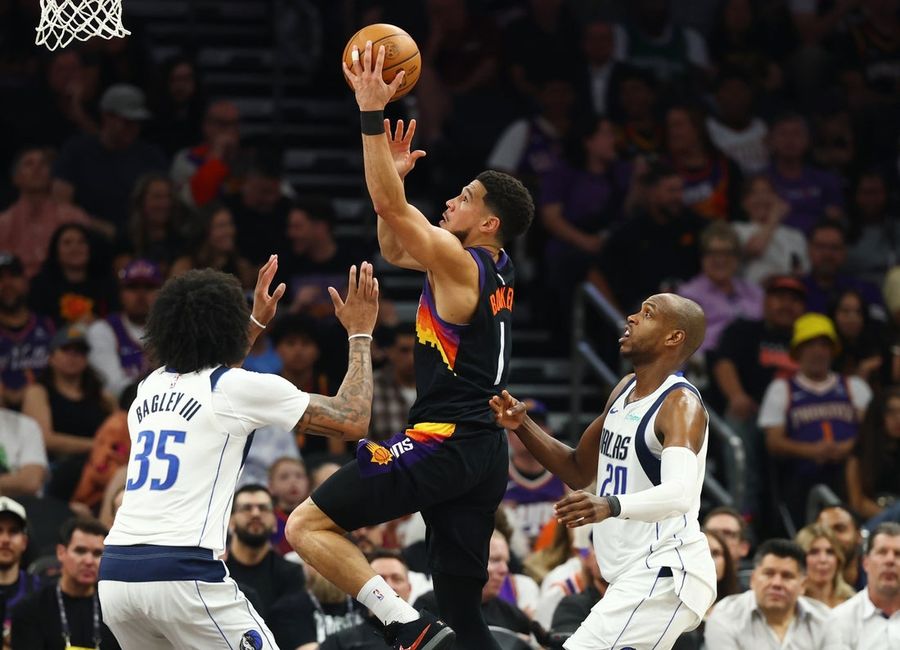
Deadspin | Suns secure No. 7 seed in West with win over Mavs  Apr 8, 2026; Phoenix, Arizona, USA; Phoenix Suns guard Devin Booker (1) drives to the basket against the Dallas Mavericks in the first half at Mortgage Matchup Center. Mandatory Credit: Mark J. Rebilas-Imagn Images   Devin Booker had 37 points and nine assists, Dillon Brooks scored 28 points and made a late layup and the host Phoenix Suns held off the Dallas Mavericks 112-107 on Wednesday to clinch the seventh seed in the West playoffs.  Royce O’Neale scored 14 points and fellow reserve Collin Gillespie had 13 for the Suns (44-36), who lost an 18-point lead and fell behind in the fourth quarter in their final regular-season home game.  The Suns will open the play-in round Tuesday at home against the Los Angeles Clippers or Portland Trail Blazers. The Clippers (41-38) are 1 1/2 games ahead of Portland (40-40) for the eighth seed in the West with two games to play.  John Poulakidas had a career-high 23 points and made five 3-pointers and Marvin Bagley III had 20 points for the Mavericks (25-55), who have lost 10 of 12.  Cooper Flagg had 11 points, 13 rebounds and six assists, strengthening his Rookie of the Year case. Flagg and his former Duke teammate Kon Knueppel of the Charlotte Hornets are in a two-man race.  The Suns had an 18-point lead early in the second half but the Mavericks used a 16-0 burst to close before taking a 95-93 lead on Max Christie’s 3-pointer with eight minutes remaining. Christie had 18 points and four threes.  Booker’s 3-pointer gave the Suns a 110-104 lead with 1:13 remaining before  Poulakidas answered with a three moments later, but Oso Ighodaro blocked Moussa Cisse’s layup and Brooks made a layup for a 112-107 lead with 13.7 seconds left.   Suns rookie center Khaman Maluach had a career-high 14 rebounds and blocked a Flagg dunk in the fourth quarter in his first start.  O’Neale and Brooks made four 3-pointers, Jordan Goodwin had three and the Suns went 14 of 35 from distance.   The Suns lost starters Jalen Green (right knee) and Goodwin (left ankle) to left injuries in the first half and neither returned.  Green left the game and limped to the locker room with 8:10 remaining in the first quarter after missing his first two field goal attempts. He missed 41 of the first 43 games with a right hamstring injury and started the last 24.  Goodwin, who had nine points on three 3-pointers, left in the second quarter.  –Field Level Media   #Deadspin #Suns #secure #seed #West #win #MavsApr 8, 2026; Phoenix, Arizona, USA; Phoenix Suns guard Devin Booker (1) drives to the basket against the Dallas Mavericks in the first half at Mortgage Matchup Center. Mandatory Credit: Mark J. Rebilas-Imagn Images

Devin Booker had 37 points and nine assists, Dillon Brooks scored 28 points and made a late layup and the host Phoenix Suns held off the Dallas Mavericks 112-107 on Wednesday to clinch the seventh seed in the West playoffs.

Royce O’Neale scored 14 points and fellow reserve Collin Gillespie had 13 for the Suns (44-36), who lost an 18-point lead and fell behind in the fourth quarter in their final regular-season home game.

The Suns will open the play-in round Tuesday at home against the Los Angeles Clippers or Portland Trail Blazers. The Clippers (41-38) are 1 1/2 games ahead of Portland (40-40) for the eighth seed in the West with two games to play.

John Poulakidas had a career-high 23 points and made five 3-pointers and Marvin Bagley III had 20 points for the Mavericks (25-55), who have lost 10 of 12.

Cooper Flagg had 11 points, 13 rebounds and six assists, strengthening his Rookie of the Year case. Flagg and his former Duke teammate Kon Knueppel of the Charlotte Hornets are in a two-man race.

The Suns had an 18-point lead early in the second half but the Mavericks used a 16-0 burst to close before taking a 95-93 lead on Max Christie’s 3-pointer with eight minutes remaining. Christie had 18 points and four threes.


Booker’s 3-pointer gave the Suns a 110-104 lead with 1:13 remaining before Poulakidas answered with a three moments later, but Oso Ighodaro blocked Moussa Cisse’s layup and Brooks made a layup for a 112-107 lead with 13.7 seconds left.

Suns rookie center Khaman Maluach had a career-high 14 rebounds and blocked a Flagg dunk in the fourth quarter in his first start.

O’Neale and Brooks made four 3-pointers, Jordan Goodwin had three and the Suns went 14 of 35 from distance.

The Suns lost starters Jalen Green (right knee) and Goodwin (left ankle) to left injuries in the first half and neither returned.

Green left the game and limped to the locker room with 8:10 remaining in the first quarter after missing his first two field goal attempts. He missed 41 of the first 43 games with a right hamstring injury and started the last 24.

Goodwin, who had nine points on three 3-pointers, left in the second quarter.

–Field Level Media

#Deadspin #Suns #secure #seed #West #win #Mavs">Deadspin | Suns secure No. 7 seed in West with win over Mavs  Apr 8, 2026; Phoenix, Arizona, USA; Phoenix Suns guard Devin Booker (1) drives to the basket against the Dallas Mavericks in the first half at Mortgage Matchup Center. Mandatory Credit: Mark J. Rebilas-Imagn Images   Devin Booker had 37 points and nine assists, Dillon Brooks scored 28 points and made a late layup and the host Phoenix Suns held off the Dallas Mavericks 112-107 on Wednesday to clinch the seventh seed in the West playoffs.  Royce O’Neale scored 14 points and fellow reserve Collin Gillespie had 13 for the Suns (44-36), who lost an 18-point lead and fell behind in the fourth quarter in their final regular-season home game.  The Suns will open the play-in round Tuesday at home against the Los Angeles Clippers or Portland Trail Blazers. The Clippers (41-38) are 1 1/2 games ahead of Portland (40-40) for the eighth seed in the West with two games to play.  John Poulakidas had a career-high 23 points and made five 3-pointers and Marvin Bagley III had 20 points for the Mavericks (25-55), who have lost 10 of 12.  Cooper Flagg had 11 points, 13 rebounds and six assists, strengthening his Rookie of the Year case. Flagg and his former Duke teammate Kon Knueppel of the Charlotte Hornets are in a two-man race.  The Suns had an 18-point lead early in the second half but the Mavericks used a 16-0 burst to close before taking a 95-93 lead on Max Christie’s 3-pointer with eight minutes remaining. Christie had 18 points and four threes.  Booker’s 3-pointer gave the Suns a 110-104 lead with 1:13 remaining before  Poulakidas answered with a three moments later, but Oso Ighodaro blocked Moussa Cisse’s layup and Brooks made a layup for a 112-107 lead with 13.7 seconds left.   Suns rookie center Khaman Maluach had a career-high 14 rebounds and blocked a Flagg dunk in the fourth quarter in his first start.  O’Neale and Brooks made four 3-pointers, Jordan Goodwin had three and the Suns went 14 of 35 from distance.   The Suns lost starters Jalen Green (right knee) and Goodwin (left ankle) to left injuries in the first half and neither returned.  Green left the game and limped to the locker room with 8:10 remaining in the first quarter after missing his first two field goal attempts. He missed 41 of the first 43 games with a right hamstring injury and started the last 24.  Goodwin, who had nine points on three 3-pointers, left in the second quarter.  –Field Level Media   #Deadspin #Suns #secure #seed #West #win #Mavs

The 2025 NBA Draft always had more to offer than just the grand prize at the top of the class in Cooper Flagg. Flagg was the runaway No. 1 pick throughout his one-and-done season at Duke, but a strong group of prospects emerged behind him led by college teammate Kon Knueppel, Baylor guard VJ Edgecombe, and Rutgers star Dylan Harper.

This year’s rookie class didn’t just live up to the hype, it exceeded it. There were impact first-year players all over the league, and while Flagg was spectacular for the Dallas Mavericks, he may not even win NBA Rookie of the Year.

Another talented NBA Draft class is coming down the pipe right now, and the success of the current rookie class should only make teams more desperate for lottery luck. Remember: a lot can change in a year. My rookie rankings from last season would look completely different now if I re-ranked the 2024 class. Let’s rank the NBA’s best rookies for the 2025-26 season based on their first-year impact.

12. Hugo Gonzalez, F, Boston Celtics

Gonzalez wasn’t expected to be an immediate contributor after barely playing at Real Madrid when the Celtics took him with the No. 28 overall pick. Instead, he looks like another hidden gem for Brad Stevens. Gonzalez has the potential to become one of the best wing defenders in the league with a strong 225-pound frame and 6’11 wingspan, and he’s already graded out in the 91st percentile of defensive EPM in his rookie year. The Celtics outscored teams by nearly 14 points per 100 possessions when he was on the floor, good for a monstrous +7.2 net-rating. There could be some noise in the plus/minus stats, but Gonzalez’s physical tools, motor, and high-IQ gives him a strong defensive floor while his offense continues to develop.

11. Collin Murray-Boyles, F, Toronto Raptors

Murray-Boyles had the traits of a future All-Defensive team selection entering the draft, and he already made a big impact on that end for a winning team in his rookie year. CMB racked up deflections, steals, and blocks for the Raptors this year, and showed his sharp instincts as a help defender who consistently knew how to plug a leak in the team structure. His three-point shot looked better than expected in a small sample at 34 percent, but significantly increasing his volume from deep is the next step. Even if Murray-Boyles never becomes a plus shooter, he still adds offensive value with his playmaking in the middle of the floor and his offensive rebounding. Finishing with a +3.1% rTS (true shooting relative to league average) is an encouraging sign not just for his scoring efficiency, but also for his overall feel. Toronto found a keeper with the No. 9 overall pick.

10. Jeremiah Fears, G, New Orleans Pelicans

Fears graded out poorly in the impact stats with a -4 net-rating dragging him down. That shouldn’t surprise anyone for one of the youngest rookies in the class, and it shouldn’t be too discouraging yet either. Fears’ blend of speed and elite ball handling ability is what future stars are made of, and hex put it on display with a few 20+ point scoring outbursts every month. He’s not yet an efficient scorer with -5.4 rTS% and still struggles with his turnovers, but the flashes of star-level guard production were there in spurts. He finished in the 100th percentile of rim attempts league-wide, burning defenders to the cup even if he couldn’t always finish. Adding more strength and gaining more experience will help Fears learn how to harvest all of his gifts. He won’t turn 20 years old until the start of next season, and there’s on reason to rush his development just yet. If Fears can keep improving from the baseline he established this year, New Orleans should have its point guard of the future.

PORTLAND, OREGON - APRIL 02: Derik Queen #22 of the New Orleans Pelicans drives to the basket against Toumani Camara #33 of the Portland Trail Blazers during the second half at Moda Center on April 02, 2026 in Portland, Oregon. NOTE TO USER: User expressly acknowledges and agrees that, by downloading and or using this photograph, User is consenting to the terms and conditions of the Getty Images License Agreement. (Photo by Soobum Im/Getty Images)

PORTLAND, OREGON – APRIL 02: Derik Queen #22 of the New Orleans Pelicans drives to the basket against Toumani Camara #33 of the Portland Trail Blazers during the second half at Moda Center on April 02, 2026 in Portland, Oregon. NOTE TO USER: User expressly acknowledges and agrees that, by downloading and or using this photograph, User is consenting to the terms and conditions of the Getty Images License Agreement. (Photo by Soobum Im/Getty Images)
Getty Images

9. Derik Queen, F, New Orleans Pelicans

Queen was a divisive prospect coming out of Maryland because his elite strengths also came with some alarming weaknesses, and both were on display during an up-and-down rookie year with New Orleans. Let’s focus on the positives first: Queen’s jumbo creation looked fantastic at times in creating scoring chances for himself and his teammates. His handle and footwork are both impressive for his size, and he showed an ability to both get to the free throw line and make his foul shots. Defenders bounce off Queen on his drives to the rim, and he’s at his best when he’s diming up teammates with rim assists or kick outs to three. The other side of the floor is more of an issue. New Orleans allowed a 121.6 defensive rating with Queen on the floor, and a 115.5 defensive rating with him on the bench, which is the difference between No. 30 and No. 20 in the league. That’s not all Queen’s fault, of course, and the Pelicans’ context didn’t exactly set him up for success. Still, improving as a shooter and defender would go a long way to making Queen more of an impactful player in the long run.

8. Ryan Kalkbrenner, C, Charlotte Hornets

Kalkbrenner has been an instant contributor for a winning team as a rookie, which is a big success for any second-round pick. The Hornets knew they were getting a stout defensive big man after he won four Big East Defensive Player of the Year awards in college, and the 7’1 center has indeed been able to provide quality rim protection in drop coverage all season. Would you believe that he also finished second in the entire league in field goal percentage among players who played at least 500 minutes? Kalkbrenner shot nearly 75 percent, which is impressive even if almost every shot was assisted. His upside is more limited than many of his peers, but he knows his role and executes it well. That’s solid for the No. 34 overall pick.

7. Maxime Raynaud, C, Sacramento Kings

Raynaud immediately looks like a steal for the Kings with the No. 42 overall pick. After a four-year career at Stanford, the 7’1 big man has been a productive scorer from day one whose offensive value should only continue to climb as his playmaking and outside shooting develops with better team context and more experience. Raynaud put up 22.5 points per 100 possessions by finishing well at the rim (73.4 percent) and being one of the league’s most effective players from the short mid-range area, which shows his touch on floaters. He only shot 28 percent from three after being much better than that in college, and I’d expect him to be a better outside shooter going forward as he adjusts to the NBA line. His 7.5 percent assist rate undersells his passing ability, too, and that should also pop going forward when he gets some better teammates. Defense is a big issue for Raynaud and certainly undercuts his overall value, but his offensive skill is worth celebrating, especially for a mid-second round pick.

6. Ace Bailey, F, Utah Jazz

Bailey did exactly what any team would want out of their 19-year-old rookie by continuing to look more comfortable as his minutes increased throughout the season. He’s had some huge scoring games in the second half of the season by stressing opposing defenses as an off-ball gunner with the size and touch to splash shots all over the floor. Bailey’s three-point volume was encouraging by taking 45 percent of his field goal attempts from deep, and his touch (35 percent three-point percentage) should only improve in time. His physical tools as a bouncy 6’9 wing allow him to add an element of shot-blocking and offensive rebounding from the perimeter, too. His passing is still pretty minimal and his scoring efficiency fell 4.2 points below league average, but the outline of a deadly off-ball scorer has been there, and that’s an encouraging sign for year two.

5. Cedric Coward, F, Memphis Grizzlies

Coward was close to playing for Duke this season before getting strong intel back at the combine and eventually turning into a lottery pick. His rise from D3 Willamette to an instant impact rookie is one of the most inspiring stories in basketball. The 6’7 wing immediately showed he could be a plus defensively and on the glass, gobbling up boards and contesting shots with his ridiculous 7’2 wingspan. His length and strength were always a good bet to translate, but his scoring punch (24.5 points per 100 possessions) and connective passing both exceeded expectations. His rim finishing is already super impressive, and his outside shooting will only get better over time. He looks like a long-term starter on the wing for Memphis.

SAN ANTONIO, TX -MARCH 21: Dylan Harper #2 of the San Antonio Spurs reacts with Keldon Johnson #3 after scoring against the Indiana Pacers in the second half at Frost Bank Center on March 21, 2026 in San Antonio, Texas. NOTE TO USER: User expressly acknowledges and agrees that, by downloading and or using this photograph, User is consenting to terms and conditions of the Getty Images License Agreement. (Photo by Ronald Cortes/Getty Images)

SAN ANTONIO, TX -MARCH 21: Dylan Harper #2 of the San Antonio Spurs reacts with Keldon Johnson #3 after scoring against the Indiana Pacers in the second half at Frost Bank Center on March 21, 2026 in San Antonio, Texas. NOTE TO USER: User expressly acknowledges and agrees that, by downloading and or using this photograph, User is consenting to terms and conditions of the Getty Images License Agreement. (Photo by Ronald Cortes/Getty Images)
Getty Images

4. Dylan Harper, G, San Antonio Spurs

Harper is the rare No. 2 overall pick to land on a legitimate championship contender, and he’s found ways to contribute off the bench during San Antonio’s rise around Victor Wembanyama. He’s a demon going to the rim and already has a lot of finishing craft when he gets in close. He’s a good facilitator too who ranks in the 96th percentile of potential assists (15.3 per 100 possessions) while also doing a great job limiting live-ball turnovers. Harper is going to be a good defender in time too as a big guard who hustles for loose balls, hits the glass, and uses his size to overwhelm smaller ball handlers. He’s in a perfect position to thrive next to Wembanyama long-term even if he does feel a little redundant on the current roster. Harper will slowly grow into Wemby’s top sidekick, and they’re going to be a brilliant pairing for years to come.

3. VJ Edgecombe, G, Philadelphia 76ers

Edgecombe’s athleticism, motor, and willingness to get up threes has made him a staple in Philly’s lineups since opening night. The 6’4 guard leverages his top-tier explosiveness on both ends. Defensively, Edgecombe has been stockpiling steals and blocks all year, and he also hits the defensive glass well for a guard while flying in for loose balls whenever he gets a chance. His open court scoring has already been excellent with 67.6 percent true shooting in transition, and his three ball is already at a respectable 35.7 percent. The rim finishing woes Edgecombe showed in college have stuck with him into the NBA, but he has the tools to get better there once he learns more craft. There are plenty of different outcomes for him from here, but it’s fantastic that he can already play a winning role for a solid playoff team.

2. Cooper Flagg, F, Dallas Mavericks

Flagg lived up to the hype in his rookie year and continued to affirm that he’ll become a superstar eventually. As the youngest player in the NBA this season, Flagg took on point guard duties early in the season and still acquitted himself well despite a heavy creation burden. He’s going to be a phenomenal scorer in time, and putting up 29.8 points per 100 possessions as a super young rookie proves that even if he was slightly below league average in his scoring efficiency. His playmaking is going to be one of his strongest skills, and his ability to avoid live ball turnovers is proof that he’s cut out for the point-forward role. Flagg’s shooting will be better than his 29 percent three-point stroke in time. He also has way more upside defensively than he showed this year, where he looked solid but not spectacular while handling a huge offensive load. I’d like to see the Mavs get more ball handling around Flagg and allow him to use more of his energy on the defensive end, where he once looked elite. He’s still going No. 1 in any redraft, but an incredible year from his college teammates means he shouldn’t win Rookie of the Year.

1. Kon Knueppel, G, Charlotte Hornets

Kon Knueppel has been the best rookie in the NBA this season, and he deserves to win the 2026 NBA Rookie of the Year award. The No. 4 overall pick has been a deadly offensive weapon, and it has fueled Charlotte’s rise into becoming the Eastern Conference’s team of the future. Knueppel leads the NBA in three-point makes this season while knocking down 43 percent of his looks from behind the arc. He’s already one of the most dangerous screeners in the game, using his big body to free up ball handlers, then darting behind the line for quick pick-and-pop jumpers. Knueppel is more than just a shooter: he’s a smart ball mover, an active participant on the glass, and a smart team defender who knows where to be. Posting +6 rTS% and being a key part of the NBA’s best five-man lineup is almost unthinkable for a rookie. It was going to take a historic season to keep Flagg away from the Rookie of the Year award, and Knueppel delivered it.

#NBAs #rookies #season #ranked #including #Rookie #Year #pick">The NBA’s 12 best rookies this season, ranked, including 2026 Rookie of the Year pick  The 2025 NBA Draft always had more to offer than just the grand prize at the top of the class in Cooper Flagg. Flagg was the runaway No. 1 pick throughout his one-and-done season at Duke, but a strong group of prospects emerged behind him led by college teammate Kon Knueppel, Baylor guard VJ Edgecombe, and Rutgers star Dylan Harper.This year’s rookie class didn’t just live up to the hype, it exceeded it. There were impact first-year players all over the league, and while Flagg was spectacular for the Dallas Mavericks, he may not even win NBA Rookie of the Year.Another talented NBA Draft class is coming down the pipe right now, and the success of the current rookie class should only make teams more desperate for lottery luck. Remember: a lot can change in a year. My rookie rankings from last season would look completely different now if I re-ranked the 2024 class. Let’s rank the NBA’s best rookies for the 2025-26 season based on their first-year impact.12. Hugo Gonzalez, F, Boston CelticsGonzalez wasn’t expected to be an immediate contributor after barely playing at Real Madrid when the Celtics took him with the No. 28 overall pick. Instead, he looks like another hidden gem for Brad Stevens. Gonzalez has the potential to become one of the best wing defenders in the league with a strong 225-pound frame and 6’11 wingspan, and he’s already graded out in the 91st percentile of defensive EPM in his rookie year. The Celtics outscored teams by nearly 14 points per 100 possessions when he was on the floor, good for a monstrous +7.2 net-rating. There could be some noise in the plus/minus stats, but Gonzalez’s physical tools, motor, and high-IQ gives him a strong defensive floor while his offense continues to develop.11. Collin Murray-Boyles, F, Toronto RaptorsMurray-Boyles had the traits of a future All-Defensive team selection entering the draft, and he already made a big impact on that end for a winning team in his rookie year. CMB racked up deflections, steals, and blocks for the Raptors this year, and showed his sharp instincts as a help defender who consistently knew how to plug a leak in the team structure. His three-point shot looked better than expected in a small sample at 34 percent, but significantly increasing his volume from deep is the next step. Even if Murray-Boyles never becomes a plus shooter, he still adds offensive value with his playmaking in the middle of the floor and his offensive rebounding. Finishing with a +3.1% rTS (true shooting relative to league average) is an encouraging sign not just for his scoring efficiency, but also for his overall feel. Toronto found a keeper with the No. 9 overall pick.10. Jeremiah Fears, G, New Orleans PelicansFears graded out poorly in the impact stats with a -4 net-rating dragging him down. That shouldn’t surprise anyone for one of the youngest rookies in the class, and it shouldn’t be too discouraging yet either. Fears’ blend of speed and elite ball handling ability is what future stars are made of, and hex put it on display with a few 20+ point scoring outbursts every month. He’s not yet an efficient scorer with -5.4 rTS% and still struggles with his turnovers, but the flashes of star-level guard production were there in spurts. He finished in the 100th percentile of rim attempts league-wide, burning defenders to the cup even if he couldn’t always finish. Adding more strength and gaining more experience will help Fears learn how to harvest all of his gifts. He won’t turn 20 years old until the start of next season, and there’s on reason to rush his development just yet. If Fears can keep improving from the baseline he established this year, New Orleans should have its point guard of the future.PORTLAND, OREGON – APRIL 02: Derik Queen #22 of the New Orleans Pelicans drives to the basket against Toumani Camara #33 of the Portland Trail Blazers during the second half at Moda Center on April 02, 2026 in Portland, Oregon. NOTE TO USER: User expressly acknowledges and agrees that, by downloading and or using this photograph, User is consenting to the terms and conditions of the Getty Images License Agreement. (Photo by Soobum Im/Getty Images) Getty Images9. Derik Queen, F, New Orleans PelicansQueen was a divisive prospect coming out of Maryland because his elite strengths also came with some alarming weaknesses, and both were on display during an up-and-down rookie year with New Orleans. Let’s focus on the positives first: Queen’s jumbo creation looked fantastic at times in creating scoring chances for himself and his teammates. His handle and footwork are both impressive for his size, and he showed an ability to both get to the free throw line and make his foul shots. Defenders bounce off Queen on his drives to the rim, and he’s at his best when he’s diming up teammates with rim assists or kick outs to three. The other side of the floor is more of an issue. New Orleans allowed a 121.6 defensive rating with Queen on the floor, and a 115.5 defensive rating with him on the bench, which is the difference between No. 30 and No. 20 in the league. That’s not all Queen’s fault, of course, and the Pelicans’ context didn’t exactly set him up for success. Still, improving as a shooter and defender would go a long way to making Queen more of an impactful player in the long run.8. Ryan Kalkbrenner, C, Charlotte HornetsKalkbrenner has been an instant contributor for a winning team as a rookie, which is a big success for any second-round pick. The Hornets knew they were getting a stout defensive big man after he won four Big East Defensive Player of the Year awards in college, and the 7’1 center has indeed been able to provide quality rim protection in drop coverage all season. Would you believe that he also finished second in the entire league in field goal percentage among players who played at least 500 minutes? Kalkbrenner shot nearly 75 percent, which is impressive even if almost every shot was assisted. His upside is more limited than many of his peers, but he knows his role and executes it well. That’s solid for the No. 34 overall pick.7. Maxime Raynaud, C, Sacramento KingsRaynaud immediately looks like a steal for the Kings with the No. 42 overall pick. After a four-year career at Stanford, the 7’1 big man has been a productive scorer from day one whose offensive value should only continue to climb as his playmaking and outside shooting develops with better team context and more experience. Raynaud put up 22.5 points per 100 possessions by finishing well at the rim (73.4 percent) and being one of the league’s most effective players from the short mid-range area, which shows his touch on floaters. He only shot 28 percent from three after being much better than that in college, and I’d expect him to be a better outside shooter going forward as he adjusts to the NBA line. His 7.5 percent assist rate undersells his passing ability, too, and that should also pop going forward when he gets some better teammates. Defense is a big issue for Raynaud and certainly undercuts his overall value, but his offensive skill is worth celebrating, especially for a mid-second round pick.6. Ace Bailey, F, Utah JazzBailey did exactly what any team would want out of their 19-year-old rookie by continuing to look more comfortable as his minutes increased throughout the season. He’s had some huge scoring games in the second half of the season by stressing opposing defenses as an off-ball gunner with the size and touch to splash shots all over the floor. Bailey’s three-point volume was encouraging by taking 45 percent of his field goal attempts from deep, and his touch (35 percent three-point percentage) should only improve in time. His physical tools as a bouncy 6’9 wing allow him to add an element of shot-blocking and offensive rebounding from the perimeter, too. His passing is still pretty minimal and his scoring efficiency fell 4.2 points below league average, but the outline of a deadly off-ball scorer has been there, and that’s an encouraging sign for year two.5. Cedric Coward, F, Memphis GrizzliesCoward was close to playing for Duke this season before getting strong intel back at the combine and eventually turning into a lottery pick. His rise from D3 Willamette to an instant impact rookie is one of the most inspiring stories in basketball. The 6’7 wing immediately showed he could be a plus defensively and on the glass, gobbling up boards and contesting shots with his ridiculous 7’2 wingspan. His length and strength were always a good bet to translate, but his scoring punch (24.5 points per 100 possessions) and connective passing both exceeded expectations. His rim finishing is already super impressive, and his outside shooting will only get better over time. He looks like a long-term starter on the wing for Memphis.SAN ANTONIO, TX -MARCH 21: Dylan Harper #2 of the San Antonio Spurs reacts with Keldon Johnson #3 after scoring against the Indiana Pacers in the second half at Frost Bank Center on March 21, 2026 in San Antonio, Texas. NOTE TO USER: User expressly acknowledges and agrees that, by downloading and or using this photograph, User is consenting to terms and conditions of the Getty Images License Agreement. (Photo by Ronald Cortes/Getty Images) Getty Images4. Dylan Harper, G, San Antonio SpursHarper is the rare No. 2 overall pick to land on a legitimate championship contender, and he’s found ways to contribute off the bench during San Antonio’s rise around Victor Wembanyama. He’s a demon going to the rim and already has a lot of finishing craft when he gets in close. He’s a good facilitator too who ranks in the 96th percentile of potential assists (15.3 per 100 possessions) while also doing a great job limiting live-ball turnovers. Harper is going to be a good defender in time too as a big guard who hustles for loose balls, hits the glass, and uses his size to overwhelm smaller ball handlers. He’s in a perfect position to thrive next to Wembanyama long-term even if he does feel a little redundant on the current roster. Harper will slowly grow into Wemby’s top sidekick, and they’re going to be a brilliant pairing for years to come.3. VJ Edgecombe, G, Philadelphia 76ersEdgecombe’s athleticism, motor, and willingness to get up threes has made him a staple in Philly’s lineups since opening night. The 6’4 guard leverages his top-tier explosiveness on both ends. Defensively, Edgecombe has been stockpiling steals and blocks all year, and he also hits the defensive glass well for a guard while flying in for loose balls whenever he gets a chance. His open court scoring has already been excellent with 67.6 percent true shooting in transition, and his three ball is already at a respectable 35.7 percent. The rim finishing woes Edgecombe showed in college have stuck with him into the NBA, but he has the tools to get better there once he learns more craft. There are plenty of different outcomes for him from here, but it’s fantastic that he can already play a winning role for a solid playoff team.2. Cooper Flagg, F, Dallas MavericksFlagg lived up to the hype in his rookie year and continued to affirm that he’ll become a superstar eventually. As the youngest player in the NBA this season, Flagg took on point guard duties early in the season and still acquitted himself well despite a heavy creation burden. He’s going to be a phenomenal scorer in time, and putting up 29.8 points per 100 possessions as a super young rookie proves that even if he was slightly below league average in his scoring efficiency. His playmaking is going to be one of his strongest skills, and his ability to avoid live ball turnovers is proof that he’s cut out for the point-forward role. Flagg’s shooting will be better than his 29 percent three-point stroke in time. He also has way more upside defensively than he showed this year, where he looked solid but not spectacular while handling a huge offensive load. I’d like to see the Mavs get more ball handling around Flagg and allow him to use more of his energy on the defensive end, where he once looked elite. He’s still going No. 1 in any redraft, but an incredible year from his college teammates means he shouldn’t win Rookie of the Year.1. Kon Knueppel, G, Charlotte HornetsKon Knueppel has been the best rookie in the NBA this season, and he deserves to win the 2026 NBA Rookie of the Year award. The No. 4 overall pick has been a deadly offensive weapon, and it has fueled Charlotte’s rise into becoming the Eastern Conference’s team of the future. Knueppel leads the NBA in three-point makes this season while knocking down 43 percent of his looks from behind the arc. He’s already one of the most dangerous screeners in the game, using his big body to free up ball handlers, then darting behind the line for quick pick-and-pop jumpers. Knueppel is more than just a shooter: he’s a smart ball mover, an active participant on the glass, and a smart team defender who knows where to be. Posting +6 rTS% and being a key part of the NBA’s best five-man lineup is almost unthinkable for a rookie. It was going to take a historic season to keep Flagg away from the Rookie of the Year award, and Knueppel delivered it.  #NBAs #rookies #season #ranked #including #Rookie #Year #pick

My rookie rankings from last season would look completely different now if I re-ranked the 2024 class. Let’s rank the NBA’s best rookies for the 2025-26 season based on their first-year impact.

12. Hugo Gonzalez, F, Boston Celtics

Gonzalez wasn’t expected to be an immediate contributor after barely playing at Real Madrid when the Celtics took him with the No. 28 overall pick. Instead, he looks like another hidden gem for Brad Stevens. Gonzalez has the potential to become one of the best wing defenders in the league with a strong 225-pound frame and 6’11 wingspan, and he’s already graded out in the 91st percentile of defensive EPM in his rookie year. The Celtics outscored teams by nearly 14 points per 100 possessions when he was on the floor, good for a monstrous +7.2 net-rating. There could be some noise in the plus/minus stats, but Gonzalez’s physical tools, motor, and high-IQ gives him a strong defensive floor while his offense continues to develop.

11. Collin Murray-Boyles, F, Toronto Raptors

Murray-Boyles had the traits of a future All-Defensive team selection entering the draft, and he already made a big impact on that end for a winning team in his rookie year. CMB racked up deflections, steals, and blocks for the Raptors this year, and showed his sharp instincts as a help defender who consistently knew how to plug a leak in the team structure. His three-point shot looked better than expected in a small sample at 34 percent, but significantly increasing his volume from deep is the next step. Even if Murray-Boyles never becomes a plus shooter, he still adds offensive value with his playmaking in the middle of the floor and his offensive rebounding. Finishing with a +3.1% rTS (true shooting relative to league average) is an encouraging sign not just for his scoring efficiency, but also for his overall feel. Toronto found a keeper with the No. 9 overall pick.

10. Jeremiah Fears, G, New Orleans Pelicans

Fears graded out poorly in the impact stats with a -4 net-rating dragging him down. That shouldn’t surprise anyone for one of the youngest rookies in the class, and it shouldn’t be too discouraging yet either. Fears’ blend of speed and elite ball handling ability is what future stars are made of, and hex put it on display with a few 20+ point scoring outbursts every month. He’s not yet an efficient scorer with -5.4 rTS% and still struggles with his turnovers, but the flashes of star-level guard production were there in spurts. He finished in the 100th percentile of rim attempts league-wide, burning defenders to the cup even if he couldn’t always finish. Adding more strength and gaining more experience will help Fears learn how to harvest all of his gifts. He won’t turn 20 years old until the start of next season, and there’s on reason to rush his development just yet. If Fears can keep improving from the baseline he established this year, New Orleans should have its point guard of the future.

PORTLAND, OREGON - APRIL 02: Derik Queen #22 of the New Orleans Pelicans drives to the basket against Toumani Camara #33 of the Portland Trail Blazers during the second half at Moda Center on April 02, 2026 in Portland, Oregon. NOTE TO USER: User expressly acknowledges and agrees that, by downloading and or using this photograph, User is consenting to the terms and conditions of the Getty Images License Agreement. (Photo by Soobum Im/Getty Images)

PORTLAND, OREGON – APRIL 02: Derik Queen #22 of the New Orleans Pelicans drives to the basket against Toumani Camara #33 of the Portland Trail Blazers during the second half at Moda Center on April 02, 2026 in Portland, Oregon. NOTE TO USER: User expressly acknowledges and agrees that, by downloading and or using this photograph, User is consenting to the terms and conditions of the Getty Images License Agreement. (Photo by Soobum Im/Getty Images)
Getty Images

9. Derik Queen, F, New Orleans Pelicans

Queen was a divisive prospect coming out of Maryland because his elite strengths also came with some alarming weaknesses, and both were on display during an up-and-down rookie year with New Orleans. Let’s focus on the positives first: Queen’s jumbo creation looked fantastic at times in creating scoring chances for himself and his teammates. His handle and footwork are both impressive for his size, and he showed an ability to both get to the free throw line and make his foul shots. Defenders bounce off Queen on his drives to the rim, and he’s at his best when he’s diming up teammates with rim assists or kick outs to three. The other side of the floor is more of an issue. New Orleans allowed a 121.6 defensive rating with Queen on the floor, and a 115.5 defensive rating with him on the bench, which is the difference between No. 30 and No. 20 in the league. That’s not all Queen’s fault, of course, and the Pelicans’ context didn’t exactly set him up for success. Still, improving as a shooter and defender would go a long way to making Queen more of an impactful player in the long run.

8. Ryan Kalkbrenner, C, Charlotte Hornets

Kalkbrenner has been an instant contributor for a winning team as a rookie, which is a big success for any second-round pick. The Hornets knew they were getting a stout defensive big man after he won four Big East Defensive Player of the Year awards in college, and the 7’1 center has indeed been able to provide quality rim protection in drop coverage all season. Would you believe that he also finished second in the entire league in field goal percentage among players who played at least 500 minutes? Kalkbrenner shot nearly 75 percent, which is impressive even if almost every shot was assisted. His upside is more limited than many of his peers, but he knows his role and executes it well. That’s solid for the No. 34 overall pick.

7. Maxime Raynaud, C, Sacramento Kings

Raynaud immediately looks like a steal for the Kings with the No. 42 overall pick. After a four-year career at Stanford, the 7’1 big man has been a productive scorer from day one whose offensive value should only continue to climb as his playmaking and outside shooting develops with better team context and more experience. Raynaud put up 22.5 points per 100 possessions by finishing well at the rim (73.4 percent) and being one of the league’s most effective players from the short mid-range area, which shows his touch on floaters. He only shot 28 percent from three after being much better than that in college, and I’d expect him to be a better outside shooter going forward as he adjusts to the NBA line. His 7.5 percent assist rate undersells his passing ability, too, and that should also pop going forward when he gets some better teammates. Defense is a big issue for Raynaud and certainly undercuts his overall value, but his offensive skill is worth celebrating, especially for a mid-second round pick.

6. Ace Bailey, F, Utah Jazz

Bailey did exactly what any team would want out of their 19-year-old rookie by continuing to look more comfortable as his minutes increased throughout the season. He’s had some huge scoring games in the second half of the season by stressing opposing defenses as an off-ball gunner with the size and touch to splash shots all over the floor. Bailey’s three-point volume was encouraging by taking 45 percent of his field goal attempts from deep, and his touch (35 percent three-point percentage) should only improve in time. His physical tools as a bouncy 6’9 wing allow him to add an element of shot-blocking and offensive rebounding from the perimeter, too. His passing is still pretty minimal and his scoring efficiency fell 4.2 points below league average, but the outline of a deadly off-ball scorer has been there, and that’s an encouraging sign for year two.

5. Cedric Coward, F, Memphis Grizzlies

Coward was close to playing for Duke this season before getting strong intel back at the combine and eventually turning into a lottery pick. His rise from D3 Willamette to an instant impact rookie is one of the most inspiring stories in basketball. The 6’7 wing immediately showed he could be a plus defensively and on the glass, gobbling up boards and contesting shots with his ridiculous 7’2 wingspan. His length and strength were always a good bet to translate, but his scoring punch (24.5 points per 100 possessions) and connective passing both exceeded expectations. His rim finishing is already super impressive, and his outside shooting will only get better over time. He looks like a long-term starter on the wing for Memphis.

SAN ANTONIO, TX -MARCH 21: Dylan Harper #2 of the San Antonio Spurs reacts with Keldon Johnson #3 after scoring against the Indiana Pacers in the second half at Frost Bank Center on March 21, 2026 in San Antonio, Texas. NOTE TO USER: User expressly acknowledges and agrees that, by downloading and or using this photograph, User is consenting to terms and conditions of the Getty Images License Agreement. (Photo by Ronald Cortes/Getty Images)

SAN ANTONIO, TX -MARCH 21: Dylan Harper #2 of the San Antonio Spurs reacts with Keldon Johnson #3 after scoring against the Indiana Pacers in the second half at Frost Bank Center on March 21, 2026 in San Antonio, Texas. NOTE TO USER: User expressly acknowledges and agrees that, by downloading and or using this photograph, User is consenting to terms and conditions of the Getty Images License Agreement. (Photo by Ronald Cortes/Getty Images)
Getty Images

4. Dylan Harper, G, San Antonio Spurs

Harper is the rare No. 2 overall pick to land on a legitimate championship contender, and he’s found ways to contribute off the bench during San Antonio’s rise around Victor Wembanyama. He’s a demon going to the rim and already has a lot of finishing craft when he gets in close. He’s a good facilitator too who ranks in the 96th percentile of potential assists (15.3 per 100 possessions) while also doing a great job limiting live-ball turnovers. Harper is going to be a good defender in time too as a big guard who hustles for loose balls, hits the glass, and uses his size to overwhelm smaller ball handlers. He’s in a perfect position to thrive next to Wembanyama long-term even if he does feel a little redundant on the current roster. Harper will slowly grow into Wemby’s top sidekick, and they’re going to be a brilliant pairing for years to come.

3. VJ Edgecombe, G, Philadelphia 76ers

Edgecombe’s athleticism, motor, and willingness to get up threes has made him a staple in Philly’s lineups since opening night. The 6’4 guard leverages his top-tier explosiveness on both ends. Defensively, Edgecombe has been stockpiling steals and blocks all year, and he also hits the defensive glass well for a guard while flying in for loose balls whenever he gets a chance. His open court scoring has already been excellent with 67.6 percent true shooting in transition, and his three ball is already at a respectable 35.7 percent. The rim finishing woes Edgecombe showed in college have stuck with him into the NBA, but he has the tools to get better there once he learns more craft. There are plenty of different outcomes for him from here, but it’s fantastic that he can already play a winning role for a solid playoff team.

2. Cooper Flagg, F, Dallas Mavericks

Flagg lived up to the hype in his rookie year and continued to affirm that he’ll become a superstar eventually. As the youngest player in the NBA this season, Flagg took on point guard duties early in the season and still acquitted himself well despite a heavy creation burden. He’s going to be a phenomenal scorer in time, and putting up 29.8 points per 100 possessions as a super young rookie proves that even if he was slightly below league average in his scoring efficiency. His playmaking is going to be one of his strongest skills, and his ability to avoid live ball turnovers is proof that he’s cut out for the point-forward role. Flagg’s shooting will be better than his 29 percent three-point stroke in time. He also has way more upside defensively than he showed this year, where he looked solid but not spectacular while handling a huge offensive load. I’d like to see the Mavs get more ball handling around Flagg and allow him to use more of his energy on the defensive end, where he once looked elite. He’s still going No. 1 in any redraft, but an incredible year from his college teammates means he shouldn’t win Rookie of the Year.

1. Kon Knueppel, G, Charlotte Hornets

Kon Knueppel has been the best rookie in the NBA this season, and he deserves to win the 2026 NBA Rookie of the Year award. The No. 4 overall pick has been a deadly offensive weapon, and it has fueled Charlotte’s rise into becoming the Eastern Conference’s team of the future. Knueppel leads the NBA in three-point makes this season while knocking down 43 percent of his looks from behind the arc. He’s already one of the most dangerous screeners in the game, using his big body to free up ball handlers, then darting behind the line for quick pick-and-pop jumpers. Knueppel is more than just a shooter: he’s a smart ball mover, an active participant on the glass, and a smart team defender who knows where to be. Posting +6 rTS% and being a key part of the NBA’s best five-man lineup is almost unthinkable for a rookie. It was going to take a historic season to keep Flagg away from the Rookie of the Year award, and Knueppel delivered it.

#NBAs #rookies #season #ranked #including #Rookie #Year #pick">The NBA’s 12 best rookies this season, ranked, including 2026 Rookie of the Year pick

The 2025 NBA Draft always had more to offer than just the grand prize at the top of the class in Cooper Flagg. Flagg was the runaway No. 1 pick throughout his one-and-done season at Duke, but a strong group of prospects emerged behind him led by college teammate Kon Knueppel, Baylor guard VJ Edgecombe, and Rutgers star Dylan Harper.

This year’s rookie class didn’t just live up to the hype, it exceeded it. There were impact first-year players all over the league, and while Flagg was spectacular for the Dallas Mavericks, he may not even win NBA Rookie of the Year.

Another talented NBA Draft class is coming down the pipe right now, and the success of the current rookie class should only make teams more desperate for lottery luck. Remember: a lot can change in a year. My rookie rankings from last season would look completely different now if I re-ranked the 2024 class. Let’s rank the NBA’s best rookies for the 2025-26 season based on their first-year impact.

12. Hugo Gonzalez, F, Boston Celtics

Gonzalez wasn’t expected to be an immediate contributor after barely playing at Real Madrid when the Celtics took him with the No. 28 overall pick. Instead, he looks like another hidden gem for Brad Stevens. Gonzalez has the potential to become one of the best wing defenders in the league with a strong 225-pound frame and 6’11 wingspan, and he’s already graded out in the 91st percentile of defensive EPM in his rookie year. The Celtics outscored teams by nearly 14 points per 100 possessions when he was on the floor, good for a monstrous +7.2 net-rating. There could be some noise in the plus/minus stats, but Gonzalez’s physical tools, motor, and high-IQ gives him a strong defensive floor while his offense continues to develop.

11. Collin Murray-Boyles, F, Toronto Raptors

Murray-Boyles had the traits of a future All-Defensive team selection entering the draft, and he already made a big impact on that end for a winning team in his rookie year. CMB racked up deflections, steals, and blocks for the Raptors this year, and showed his sharp instincts as a help defender who consistently knew how to plug a leak in the team structure. His three-point shot looked better than expected in a small sample at 34 percent, but significantly increasing his volume from deep is the next step. Even if Murray-Boyles never becomes a plus shooter, he still adds offensive value with his playmaking in the middle of the floor and his offensive rebounding. Finishing with a +3.1% rTS (true shooting relative to league average) is an encouraging sign not just for his scoring efficiency, but also for his overall feel. Toronto found a keeper with the No. 9 overall pick.

10. Jeremiah Fears, G, New Orleans Pelicans

Fears graded out poorly in the impact stats with a -4 net-rating dragging him down. That shouldn’t surprise anyone for one of the youngest rookies in the class, and it shouldn’t be too discouraging yet either. Fears’ blend of speed and elite ball handling ability is what future stars are made of, and hex put it on display with a few 20+ point scoring outbursts every month. He’s not yet an efficient scorer with -5.4 rTS% and still struggles with his turnovers, but the flashes of star-level guard production were there in spurts. He finished in the 100th percentile of rim attempts league-wide, burning defenders to the cup even if he couldn’t always finish. Adding more strength and gaining more experience will help Fears learn how to harvest all of his gifts. He won’t turn 20 years old until the start of next season, and there’s on reason to rush his development just yet. If Fears can keep improving from the baseline he established this year, New Orleans should have its point guard of the future.

PORTLAND, OREGON - APRIL 02: Derik Queen #22 of the New Orleans Pelicans drives to the basket against Toumani Camara #33 of the Portland Trail Blazers during the second half at Moda Center on April 02, 2026 in Portland, Oregon. NOTE TO USER: User expressly acknowledges and agrees that, by downloading and or using this photograph, User is consenting to the terms and conditions of the Getty Images License Agreement. (Photo by Soobum Im/Getty Images)

PORTLAND, OREGON – APRIL 02: Derik Queen #22 of the New Orleans Pelicans drives to the basket against Toumani Camara #33 of the Portland Trail Blazers during the second half at Moda Center on April 02, 2026 in Portland, Oregon. NOTE TO USER: User expressly acknowledges and agrees that, by downloading and or using this photograph, User is consenting to the terms and conditions of the Getty Images License Agreement. (Photo by Soobum Im/Getty Images)
Getty Images

9. Derik Queen, F, New Orleans Pelicans

Queen was a divisive prospect coming out of Maryland because his elite strengths also came with some alarming weaknesses, and both were on display during an up-and-down rookie year with New Orleans. Let’s focus on the positives first: Queen’s jumbo creation looked fantastic at times in creating scoring chances for himself and his teammates. His handle and footwork are both impressive for his size, and he showed an ability to both get to the free throw line and make his foul shots. Defenders bounce off Queen on his drives to the rim, and he’s at his best when he’s diming up teammates with rim assists or kick outs to three. The other side of the floor is more of an issue. New Orleans allowed a 121.6 defensive rating with Queen on the floor, and a 115.5 defensive rating with him on the bench, which is the difference between No. 30 and No. 20 in the league. That’s not all Queen’s fault, of course, and the Pelicans’ context didn’t exactly set him up for success. Still, improving as a shooter and defender would go a long way to making Queen more of an impactful player in the long run.

8. Ryan Kalkbrenner, C, Charlotte Hornets

Kalkbrenner has been an instant contributor for a winning team as a rookie, which is a big success for any second-round pick. The Hornets knew they were getting a stout defensive big man after he won four Big East Defensive Player of the Year awards in college, and the 7’1 center has indeed been able to provide quality rim protection in drop coverage all season. Would you believe that he also finished second in the entire league in field goal percentage among players who played at least 500 minutes? Kalkbrenner shot nearly 75 percent, which is impressive even if almost every shot was assisted. His upside is more limited than many of his peers, but he knows his role and executes it well. That’s solid for the No. 34 overall pick.

7. Maxime Raynaud, C, Sacramento Kings

Raynaud immediately looks like a steal for the Kings with the No. 42 overall pick. After a four-year career at Stanford, the 7’1 big man has been a productive scorer from day one whose offensive value should only continue to climb as his playmaking and outside shooting develops with better team context and more experience. Raynaud put up 22.5 points per 100 possessions by finishing well at the rim (73.4 percent) and being one of the league’s most effective players from the short mid-range area, which shows his touch on floaters. He only shot 28 percent from three after being much better than that in college, and I’d expect him to be a better outside shooter going forward as he adjusts to the NBA line. His 7.5 percent assist rate undersells his passing ability, too, and that should also pop going forward when he gets some better teammates. Defense is a big issue for Raynaud and certainly undercuts his overall value, but his offensive skill is worth celebrating, especially for a mid-second round pick.

6. Ace Bailey, F, Utah Jazz

Bailey did exactly what any team would want out of their 19-year-old rookie by continuing to look more comfortable as his minutes increased throughout the season. He’s had some huge scoring games in the second half of the season by stressing opposing defenses as an off-ball gunner with the size and touch to splash shots all over the floor. Bailey’s three-point volume was encouraging by taking 45 percent of his field goal attempts from deep, and his touch (35 percent three-point percentage) should only improve in time. His physical tools as a bouncy 6’9 wing allow him to add an element of shot-blocking and offensive rebounding from the perimeter, too. His passing is still pretty minimal and his scoring efficiency fell 4.2 points below league average, but the outline of a deadly off-ball scorer has been there, and that’s an encouraging sign for year two.

5. Cedric Coward, F, Memphis Grizzlies

Coward was close to playing for Duke this season before getting strong intel back at the combine and eventually turning into a lottery pick. His rise from D3 Willamette to an instant impact rookie is one of the most inspiring stories in basketball. The 6’7 wing immediately showed he could be a plus defensively and on the glass, gobbling up boards and contesting shots with his ridiculous 7’2 wingspan. His length and strength were always a good bet to translate, but his scoring punch (24.5 points per 100 possessions) and connective passing both exceeded expectations. His rim finishing is already super impressive, and his outside shooting will only get better over time. He looks like a long-term starter on the wing for Memphis.

SAN ANTONIO, TX -MARCH 21: Dylan Harper #2 of the San Antonio Spurs reacts with Keldon Johnson #3 after scoring against the Indiana Pacers in the second half at Frost Bank Center on March 21, 2026 in San Antonio, Texas. NOTE TO USER: User expressly acknowledges and agrees that, by downloading and or using this photograph, User is consenting to terms and conditions of the Getty Images License Agreement. (Photo by Ronald Cortes/Getty Images)

SAN ANTONIO, TX -MARCH 21: Dylan Harper #2 of the San Antonio Spurs reacts with Keldon Johnson #3 after scoring against the Indiana Pacers in the second half at Frost Bank Center on March 21, 2026 in San Antonio, Texas. NOTE TO USER: User expressly acknowledges and agrees that, by downloading and or using this photograph, User is consenting to terms and conditions of the Getty Images License Agreement. (Photo by Ronald Cortes/Getty Images)
Getty Images

4. Dylan Harper, G, San Antonio Spurs

Harper is the rare No. 2 overall pick to land on a legitimate championship contender, and he’s found ways to contribute off the bench during San Antonio’s rise around Victor Wembanyama. He’s a demon going to the rim and already has a lot of finishing craft when he gets in close. He’s a good facilitator too who ranks in the 96th percentile of potential assists (15.3 per 100 possessions) while also doing a great job limiting live-ball turnovers. Harper is going to be a good defender in time too as a big guard who hustles for loose balls, hits the glass, and uses his size to overwhelm smaller ball handlers. He’s in a perfect position to thrive next to Wembanyama long-term even if he does feel a little redundant on the current roster. Harper will slowly grow into Wemby’s top sidekick, and they’re going to be a brilliant pairing for years to come.

3. VJ Edgecombe, G, Philadelphia 76ers

Edgecombe’s athleticism, motor, and willingness to get up threes has made him a staple in Philly’s lineups since opening night. The 6’4 guard leverages his top-tier explosiveness on both ends. Defensively, Edgecombe has been stockpiling steals and blocks all year, and he also hits the defensive glass well for a guard while flying in for loose balls whenever he gets a chance. His open court scoring has already been excellent with 67.6 percent true shooting in transition, and his three ball is already at a respectable 35.7 percent. The rim finishing woes Edgecombe showed in college have stuck with him into the NBA, but he has the tools to get better there once he learns more craft. There are plenty of different outcomes for him from here, but it’s fantastic that he can already play a winning role for a solid playoff team.

2. Cooper Flagg, F, Dallas Mavericks

Flagg lived up to the hype in his rookie year and continued to affirm that he’ll become a superstar eventually. As the youngest player in the NBA this season, Flagg took on point guard duties early in the season and still acquitted himself well despite a heavy creation burden. He’s going to be a phenomenal scorer in time, and putting up 29.8 points per 100 possessions as a super young rookie proves that even if he was slightly below league average in his scoring efficiency. His playmaking is going to be one of his strongest skills, and his ability to avoid live ball turnovers is proof that he’s cut out for the point-forward role. Flagg’s shooting will be better than his 29 percent three-point stroke in time. He also has way more upside defensively than he showed this year, where he looked solid but not spectacular while handling a huge offensive load. I’d like to see the Mavs get more ball handling around Flagg and allow him to use more of his energy on the defensive end, where he once looked elite. He’s still going No. 1 in any redraft, but an incredible year from his college teammates means he shouldn’t win Rookie of the Year.

1. Kon Knueppel, G, Charlotte Hornets

Kon Knueppel has been the best rookie in the NBA this season, and he deserves to win the 2026 NBA Rookie of the Year award. The No. 4 overall pick has been a deadly offensive weapon, and it has fueled Charlotte’s rise into becoming the Eastern Conference’s team of the future. Knueppel leads the NBA in three-point makes this season while knocking down 43 percent of his looks from behind the arc. He’s already one of the most dangerous screeners in the game, using his big body to free up ball handlers, then darting behind the line for quick pick-and-pop jumpers. Knueppel is more than just a shooter: he’s a smart ball mover, an active participant on the glass, and a smart team defender who knows where to be. Posting +6 rTS% and being a key part of the NBA’s best five-man lineup is almost unthinkable for a rookie. It was going to take a historic season to keep Flagg away from the Rookie of the Year award, and Knueppel delivered it.

#NBAs #rookies #season #ranked #including #Rookie #Year #pick
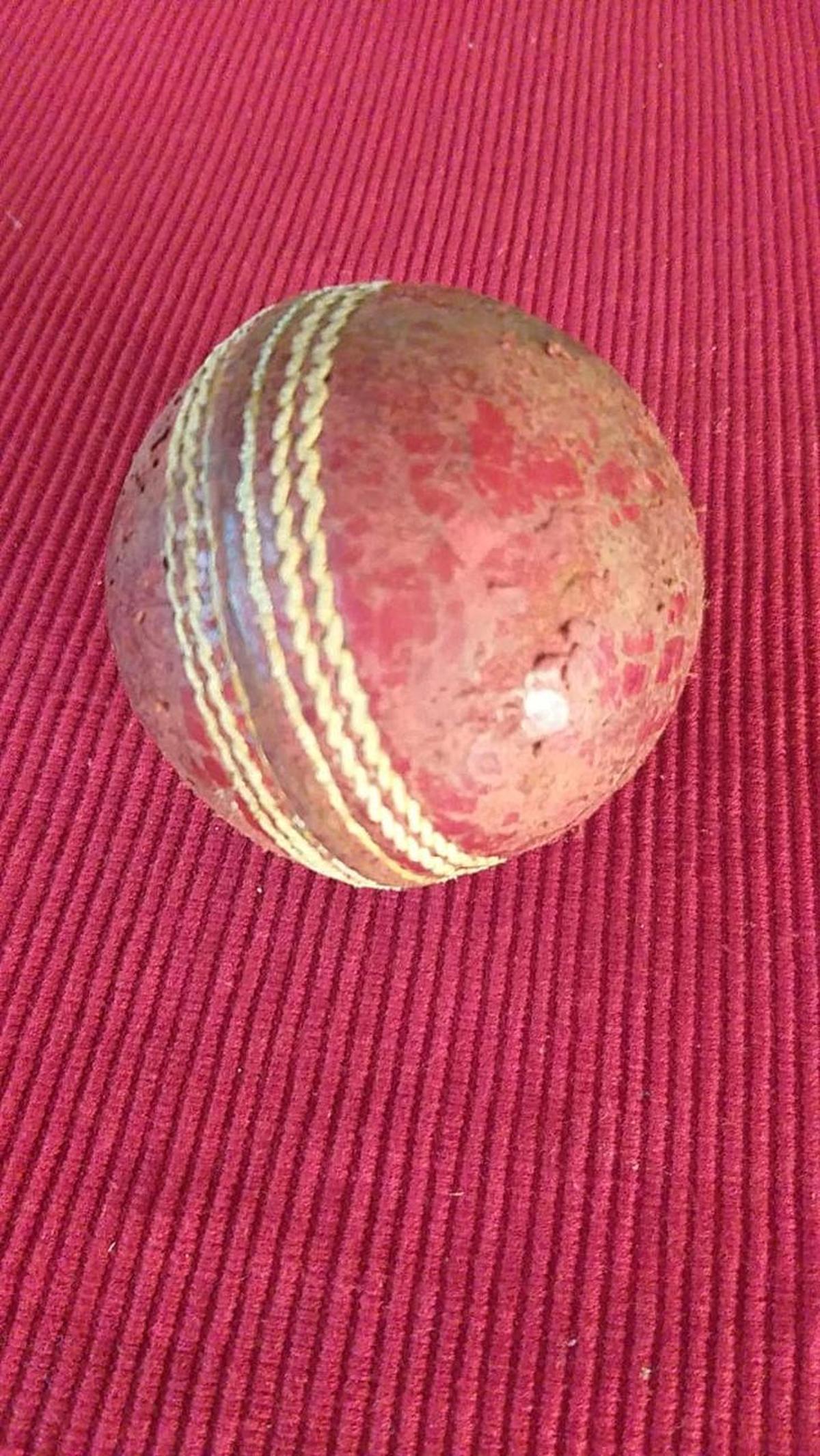
Post Comment