×
The Masters 2026: McIlroy chases repeat; Scheffler and DeChambeau among as challengers in Augusta  Rory McIlroy seeks a historic repeat victory starting Thursday at the 90th Masters, while World No. 1 Scottie Scheffler and Bryson DeChambeau lead a host of challengers in firm and fast conditions.Second-ranked McIlroy completed a career Grand Slam by capturing the green jacket at Augusta National last year, but only Jack Nicklaus, Nick Faldo and Tiger Woods have won back-to-back green jackets, Woods the most recent in 2001-2002.“Maybe not the largest field in golf but it’s the strongest,” McIlroy said. “I know that I can do it now, so that should make it a little easier for me to go out and play the golf I want to play.”McIlroy suffered an injury scare last month when back pain prompted his withdrawal at Bay Hill. But he competed the following week and has rested since.“I’ve taken the last three weeks to make sure I’m 100 percent coming in here, which I am,” McIlroy said.“I feel comfortable on the golf course, feel comfortable with my game. It has been a good three weeks at home getting ready physically and mentally and just trying to prepare for everything this week is going to throw at me.”Scheffler, last year’s British Open and PGA Championship winner, has failed in two Masters repeat bids.“Defending can always be difficult, but I think that’s mostly just the odds of winning a tournament in back-to-back years,” Scheffler said. “That’s just extremely challenging, especially when you look at these major championships.”Scheffler, the 2022 and 2024 Masters winner, has been off for three weeks as wife Meredith gave birth to son Remy on March 27.“Game feels like it’s in a good spot,” Scheffler said. “I feel rested and ready to go this week.”DeChambeau, who edged McIlroy for the 2024 US Open title, was in the final Sunday group last year at the Masters when the Northern Ireland star made history.“It’s great if we can continue to have a rivalry,” DeChambeau said. “It kind of helps create more buzz around the game of golf.“It’s one of those things like I got him at Pinehurst, he got me here, and I hope there’s more of those to come because it’s great for the game.”DeChambeau, ranked 24th, won LIV Golf titles in Singapore and South Africa last month and likes speed at Augusta.“If it’s firm and fast, the greens are going to be even more difficult to hit than they already are,” DeChambeau said. “I feel really good. It’s just about going out and executing.”‘Be more precise’Precision will be at a premium with no rain in the forecast to soften the course.“You have to be more precise when it’s firm,” American Kurt Kitayama said. “Whenever it’s firm and fast makes any course difficult, and especially with how sloped the greens are, it’s going to be even more penalizing missing your spots.”Dustin Johnson, the 2020 Masters champion who holds the 72-hole Masters record score of 20-under par 268, is already seeing strong bounces on the course.“Makes it a little bit more difficult,” Johnson said. “You have to be spot on with pretty much all your clubs and where they’re going, especially if it gets firm. The landing areas get really small.”Other contenders include World No. 3 Cameron Young, who won The Players Championship last month; England’s fourth-ranked Tommy Fleetwood, last year’s Tour Championship winner, and England’s ninth-ranked Justin Rose, last year’s Masters runner-up.Published on Apr 08, 2026  #Masters #McIlroy #chases #repeat #Scheffler #DeChambeau #among #challengers #Augusta

The Masters 2026: McIlroy chases repeat; Scheffler and DeChambeau among as challengers in Augusta

Rory McIlroy seeks a historic repeat victory starting Thursday at the 90th Masters, while World No. 1 Scottie Scheffler and Bryson DeChambeau lead a host of challengers in firm and fast conditions.

Second-ranked McIlroy completed a career Grand Slam by capturing the green jacket at Augusta National last year, but only Jack Nicklaus, Nick Faldo and Tiger Woods have won back-to-back green jackets, Woods the most recent in 2001-2002.

“Maybe not the largest field in golf but it’s the strongest,” McIlroy said. “I know that I can do it now, so that should make it a little easier for me to go out and play the golf I want to play.”

McIlroy suffered an injury scare last month when back pain prompted his withdrawal at Bay Hill. But he competed the following week and has rested since.

“I’ve taken the last three weeks to make sure I’m 100 percent coming in here, which I am,” McIlroy said.

“I feel comfortable on the golf course, feel comfortable with my game. It has been a good three weeks at home getting ready physically and mentally and just trying to prepare for everything this week is going to throw at me.”

Scheffler, last year’s British Open and PGA Championship winner, has failed in two Masters repeat bids.

“Defending can always be difficult, but I think that’s mostly just the odds of winning a tournament in back-to-back years,” Scheffler said. “That’s just extremely challenging, especially when you look at these major championships.”

Scheffler, the 2022 and 2024 Masters winner, has been off for three weeks as wife Meredith gave birth to son Remy on March 27.

“Game feels like it’s in a good spot,” Scheffler said. “I feel rested and ready to go this week.”

DeChambeau, who edged McIlroy for the 2024 US Open title, was in the final Sunday group last year at the Masters when the Northern Ireland star made history.

“It’s great if we can continue to have a rivalry,” DeChambeau said. “It kind of helps create more buzz around the game of golf.

“It’s one of those things like I got him at Pinehurst, he got me here, and I hope there’s more of those to come because it’s great for the game.”

DeChambeau, ranked 24th, won LIV Golf titles in Singapore and South Africa last month and likes speed at Augusta.

“If it’s firm and fast, the greens are going to be even more difficult to hit than they already are,” DeChambeau said. “I feel really good. It’s just about going out and executing.”

‘Be more precise’

Precision will be at a premium with no rain in the forecast to soften the course.

“You have to be more precise when it’s firm,” American Kurt Kitayama said. “Whenever it’s firm and fast makes any course difficult, and especially with how sloped the greens are, it’s going to be even more penalizing missing your spots.”

Dustin Johnson, the 2020 Masters champion who holds the 72-hole Masters record score of 20-under par 268, is already seeing strong bounces on the course.

“Makes it a little bit more difficult,” Johnson said. “You have to be spot on with pretty much all your clubs and where they’re going, especially if it gets firm. The landing areas get really small.”

Other contenders include World No. 3 Cameron Young, who won The Players Championship last month; England’s fourth-ranked Tommy Fleetwood, last year’s Tour Championship winner, and England’s ninth-ranked Justin Rose, last year’s Masters runner-up.

Published on Apr 08, 2026

#Masters #McIlroy #chases #repeat #Scheffler #DeChambeau #among #challengers #Augusta

Rory McIlroy seeks a historic repeat victory starting Thursday at the 90th Masters, while World No. 1 Scottie Scheffler and Bryson DeChambeau lead a host of challengers in firm and fast conditions.

Second-ranked McIlroy completed a career Grand Slam by capturing the green jacket at Augusta National last year, but only Jack Nicklaus, Nick Faldo and Tiger Woods have won back-to-back green jackets, Woods the most recent in 2001-2002.

“Maybe not the largest field in golf but it’s the strongest,” McIlroy said. “I know that I can do it now, so that should make it a little easier for me to go out and play the golf I want to play.”

McIlroy suffered an injury scare last month when back pain prompted his withdrawal at Bay Hill. But he competed the following week and has rested since.

“I’ve taken the last three weeks to make sure I’m 100 percent coming in here, which I am,” McIlroy said.

“I feel comfortable on the golf course, feel comfortable with my game. It has been a good three weeks at home getting ready physically and mentally and just trying to prepare for everything this week is going to throw at me.”

Scheffler, last year’s British Open and PGA Championship winner, has failed in two Masters repeat bids.

“Defending can always be difficult, but I think that’s mostly just the odds of winning a tournament in back-to-back years,” Scheffler said. “That’s just extremely challenging, especially when you look at these major championships.”

Scheffler, the 2022 and 2024 Masters winner, has been off for three weeks as wife Meredith gave birth to son Remy on March 27.

“Game feels like it’s in a good spot,” Scheffler said. “I feel rested and ready to go this week.”

DeChambeau, who edged McIlroy for the 2024 US Open title, was in the final Sunday group last year at the Masters when the Northern Ireland star made history.

“It’s great if we can continue to have a rivalry,” DeChambeau said. “It kind of helps create more buzz around the game of golf.

“It’s one of those things like I got him at Pinehurst, he got me here, and I hope there’s more of those to come because it’s great for the game.”

DeChambeau, ranked 24th, won LIV Golf titles in Singapore and South Africa last month and likes speed at Augusta.

“If it’s firm and fast, the greens are going to be even more difficult to hit than they already are,” DeChambeau said. “I feel really good. It’s just about going out and executing.”

‘Be more precise’

Precision will be at a premium with no rain in the forecast to soften the course.

“You have to be more precise when it’s firm,” American Kurt Kitayama said. “Whenever it’s firm and fast makes any course difficult, and especially with how sloped the greens are, it’s going to be even more penalizing missing your spots.”

Dustin Johnson, the 2020 Masters champion who holds the 72-hole Masters record score of 20-under par 268, is already seeing strong bounces on the course.

“Makes it a little bit more difficult,” Johnson said. “You have to be spot on with pretty much all your clubs and where they’re going, especially if it gets firm. The landing areas get really small.”

Other contenders include World No. 3 Cameron Young, who won The Players Championship last month; England’s fourth-ranked Tommy Fleetwood, last year’s Tour Championship winner, and England’s ninth-ranked Justin Rose, last year’s Masters runner-up.

Published on Apr 08, 2026

Source link
#Masters #McIlroy #chases #repeat #Scheffler #DeChambeau #among #challengers #Augusta

Previous post

Deadspin | Rockets escape 21-point hole, down Suns to tie for 4th in West <div id=""><section id="0" class=" w-full"><div class="xl:container mx-0 !px-4 py-0 pb-4 !mx-0 !px-0"><img src="https://images.deadspin.com/tr:w-900/28682086.jpg" srcset="https://images.deadspin.com/tr:w-900/28682086.jpg" alt="NBA: Houston Rockets at Phoenix Suns" class="w-full" fetchpriority="high" loading="eager"/><span class="text-0.8 leading-tight">Apr 7, 2026; Phoenix, Arizona, USA; Phoenix Suns guard Devin Booker (1) controls the ball against Houston Rockets forward Jae’Sean Tate (8) in the first half at Mortgage Matchup Center. Mandatory Credit: Mark J. Rebilas-Imagn Images<!-- --> <!-- --> </span></div></section><section id="section-1"> <p>Kevin Durant had 24 points and five 3-pointers in his return to Phoenix and the Houston Rockets overcame a 21-point deficit for their largest comeback of the season, producing a 119-105 victory over the host Suns on Tuesday.</p> </section><section id="section-2"> <p>Amen Thompson logged 22 points, 11 rebounds and eight assists and Jabari Smith Jr. had 20 points and five 3-pointers for the Rockets, who have won seven in a row and nine of 11.</p> </section><section id="section-3"> <p>The Rockets (50-29) are tied with the Los Angeles Lakers (50-29) for fourth place in the West and are one game behind the Denver Nuggets (51-28) with three to play. The Lakers own the tiebreaker over both.</p> </section><section id="section-4"> <p>Devin Booker had 31 points and eight assists and Mark Williams contributed 19 points and eight rebounds for the Suns (43-36), who had a 24-0 run in the first quarter to build a 26-5 lead before fading.</p> </section><section id="section-5"> <p>With the Suns’ loss and the Timberwolves’ Tuesday win, Minnesota clinched the sixth and final guaranteed Western Conference playoff berth. Phoenix will have to compete in the play-in tournament.</p> </section><section id="section-6"> <p>The Rockets opened the fourth quarter with a 30-12 run to take a 111-96 lead, and the Suns never drew closer than 10 the rest of the way.</p> </section><br/><section id="section-7"> <p>Houston swept the four-game season series and has won eight in a row against Phoenix.</p> </section> <section id="section-8"> <p>The Rockets shot 45% from the field and had a 55-34 rebounding edge, turning 24 offensive rebounds into 37 second-chance points.</p> </section><section id="section-9"> <p>The Suns made 34 free throws on 39 attempts, both season highs, but shot only 42.7% from the field. Booker was 15 of 16 from the line and Williams was 5 of 6.</p> </section><section id="section-10"> <p>Houston’s Alperen Sengun, bothered by foul trouble, had 12 points, 14 rebounds and six assists in 28 minutes. He picked up his fourth foul 48 seconds into the third quarter and returned with four minutes left in the period.</p> </section><section id="section-11"> <p>Williams had 10 points in the Suns’ 24-0 run, their longest run since play-by-play has been recorded starting in 1997-98.</p> </section><section id="section-12"> <p>Durant, who played for the Suns the previous 2 1/2 seasons, and Phoenix’s Dillon Brooks engaged in a running dialogue in a chippy second quarter. Booker and Houston’s Jae’Sean Tate received technical fouls a minute apart midway through the period. Durant had 11 points in the quarter as the Rockets pulled within 57-54 entering halftime.</p> </section><section id="section-13"> <p>Brooks made two free throws for a 75-70 lead after Reed Sheppard was called for a flagrant-1 foul for grabbing Brooks around the neck on a third-quarter drive. The Suns led 84-81 after three.</p> </section><br/><section id="section-14"> <p>–Field Level Media</p> </section> </div> #Deadspin #Rockets #escape #21point #hole #Suns #tie #4th #West

Next post

Deadspin | Timberwolves end skid with win over Pacers, clinch playoff berth <div id=""><section id="0" class=" w-full"><div class="xl:container mx-0 !px-4 py-0 pb-4 !mx-0 !px-0"><img src="https://images.deadspin.com/tr:w-900/28679633.jpg" srcset="https://images.deadspin.com/tr:w-900/28679633.jpg" alt="NBA: Minnesota Timberwolves at Indiana Pacers" class="w-full" fetchpriority="high" loading="eager"/><span class="text-0.8 leading-tight">Apr 7, 2026; Indianapolis, Indiana, USA; Minnesota Timberwolves guard Donte DiVincenzo (0) passes the ball while Indiana Pacers forward Obi Toppin (1) defends in the first half at Gainbridge Fieldhouse. Mandatory Credit: Trevor Ruszkowski-Imagn Images<!-- --> <!-- --> </span></div></section><section id="section-1"> <p>Ayo Dosunmu scored 24 points as the Minnesota Timberwolves snapped a three-game losing streak with a 124-104 win over the Indiana Pacers on Tuesday in Indianapolis.</p> </section><section id="section-2"> <p>Julius Randle and Bones Hyland added 19 apiece and Naz Reid contributed 17 for Minnesota (47-32), which strengthened its hold on sixth place in the Western Conference. The Timberwolves finished the night clinching a playoff spot and avoiding the play-in after the Phoenix Suns fell to the Houston Rockets 119-105 later Tuesday.</p> </section><section id="section-3"> <p>Rookie Ethan Thompson posted 17 points for the Pacers (18-61), who suffered their third straight defeat. Obi Toppin and Jalen Slawson both had 14 points.</p> </section><section id="section-4"> <p>Indiana’s season-long injury crisis continued when forward Kobe Brown, who was in the starting five, was unable to play after halftime with lower back soreness.</p> </section><section id="section-5"> <p>The Pacers jumped ahead 7-3 before the Timberwolves turned the tables with a 26-7 tear to take control of the contest for good.</p> </section><br/><section id="section-6"> <p>Minnesota instigated its fightback from the perimeter, going 6 of 9 from deep for the quarter — led by Randle and Donte DiVincenzo — to lead 35-27 after one.</p> </section> <section id="section-7"> <p>Toppin helped Indiana close the gap to 58-53, but turnovers continued to be a big problem.</p> </section><section id="section-8"> <p>The Pacers coughed up the ball 10 times in the second period, and 16 for the first half for 21 points conceded, to trail 63-53 at the break.</p> </section><section id="section-9"> <p>Veteran Mike Conley was active as the Wolves pressed home their advantage with a 15-3 run either side of the halftime interval. Conley finished the game with eight points, three assists and three steals.</p> </section><section id="section-10"> <p>Dosunmu had 11 points in the third period, during which Minnesota shot 15 of 23 for a 39-24 quarter to lead 102-77 with one to play.</p> </section><section id="section-11"> <p>The Timberwolves’ advantage grew to 116-85 when DiVincenzo buried his third three, capitalizing on another Indiana turnover. DiVincenzo and Jaylen Clark each posted 11 points for Minnesota.</p> </section><br/><section id="section-12"> <p>–Field Level Media</p> </section> </div> #Deadspin #Timberwolves #skid #win #Pacers #clinch #playoff #berth

Few people had their eye on Lokesh Sathyanathan when he first arrived in Fayetteville, Arkansas, to take part in the men’s long jump competition at the NCAA Indoor Championships in March. The 26-year-old wasn’t expecting them to. The NCAA Indoor Championships are the highest level of competition in the indoor track and field calendar — considered the most prestigious form of collegiate sport in the world.

The standard of competition is nothing less than that of a world-level meet. Lokesh, competing for Tarleton State University — a relatively small college that had never won an individual track and field title at this competition — was, to put it mildly, not a favourite.

“One day before the competition, the only people who recognised me were the ones who already knew me — probably just my coach and teammates,” he recalls.

That’s not the case any longer. On March 13, Lokesh leapt a career-best 8.21m to win gold. The jump set a new Indian indoor national record and moved him to third on the all-time list of Indian long jumpers across all competitions. It also made him only the fourth Indian to win gold at the NCAA Championships — joining triple jumper M.S. Gill, discus thrower Vikas Gowda, and decathlete and high jumper Tejaswin Shankar.

Lokesh is unrecognised no more.

“The NCAA level is nothing short of the Olympic level. You are competing with Olympic champions, World Record holders, National Record holders of different countries, world medallists. To win gold at this level is special. After the competition, I’ve done multiple interviews, but even regular people want to speak to me. Wherever you walk, people know who you are. They compliment and congratulate you. There are people who follow you on social media. People are watching my jumps. They just want to start a conversation. It’s completely different from the day before your race to the day after,” he says.

Every conversation goes the same way. “People want to know where I’m from. They want to know how it feels to be an NCAA champion. They want to know how I motivate and hype myself and how I go for bigger jumps,” he says.

Motivation, Lokesh says, is easy. He thinks about the hard work his parents put in to start his journey in collegiate sport in the USA. He can’t help but think about how close a freak injury, a couple of years ago, came to ending that journey, and how hard he had to work just to get another chance to compete at this level. “When I’m jumping, I always think of where I came from. Before every competition, I look back at the challenges I’ve faced in my life and think about how lucky I am to get an opportunity to show my talent once again,” he says.

Journey begins

The idea of competing in the collegiate system first came to Lokesh about eight years ago. Back in 2018, he was considered one of India’s most promising junior long jumpers, with a personal best of 7.74m that had won him gold at the Junior South Asian Championships in Colombo, Sri Lanka. After competing at the U-20 World Championships in Tampere, Finland, he attracted the attention of several coaches scouting for track and field programmes in the USA.

Born and raised in Bengaluru in a sports-mad family — his father John played football for the Bengaluru Police while his sister Monica was a national-level 400-metre runner — Lokesh wasn’t certain whether he wanted to leave familiar surroundings. Any plans to shift base were further pushed back after he suffered a serious road accident while travelling to a training session.

The physical and mental toll caused him to pull out of the qualifiers for the 2019 World Championships in Doha. “I would have panic attacks. I would stay by myself in a room, and eventually, my friends didn’t know what to do. I couldn’t even sleep. It was just me and my parents at that time. I had a lot of mental health issues that I was dealing with. I was on a lot of anxiety medication as a result,” he recalls.

After he recovered, others nudged him to consider college offers from the USA once again. He was still uncertain. “At that time, I felt if I did go, I’d just be seen as an average athlete who hadn’t accomplished anything. I didn’t think I was good enough,” he says.

As time passed, Lokesh’s enthusiasm to train abroad waned, even as he continued to improve. He won gold at the South Asian Games in Kathmandu and recorded a personal best of 7.93m at the selection trials for the World University Games in early 2021.

The Lokesh Sathyanathan story: How the long jumper from Bangalore leapt into history with his maiden NCAA title  Few people had their eye on Lokesh Sathyanathan when he first arrived in Fayetteville, Arkansas, to take part in the men’s long jump competition at the NCAA Indoor Championships in March. The 26-year-old wasn’t expecting them to. The NCAA Indoor Championships are the highest level of competition in the indoor track and field calendar — considered the most prestigious form of collegiate sport in the world.The standard of competition is nothing less than that of a world-level meet. Lokesh, competing for Tarleton State University — a relatively small college that had never won an individual track and field title at this competition — was, to put it mildly, not a favourite.“One day before the competition, the only people who recognised me were the ones who already knew me — probably just my coach and teammates,” he recalls.That’s not the case any longer. On March 13, Lokesh leapt a career-best 8.21m to win gold. The jump set a new Indian indoor national record and moved him to third on the all-time list of Indian long jumpers across all competitions. It also made him only the fourth Indian to win gold at the NCAA Championships — joining triple jumper M.S. Gill, discus thrower Vikas Gowda, and decathlete and high jumper Tejaswin Shankar.Lokesh is unrecognised no more.“The NCAA level is nothing short of the Olympic level. You are competing with Olympic champions, World Record holders, National Record holders of different countries, world medallists. To win gold at this level is special. After the competition, I’ve done multiple interviews, but even regular people want to speak to me. Wherever you walk, people know who you are. They compliment and congratulate you. There are people who follow you on social media. People are watching my jumps. They just want to start a conversation. It’s completely different from the day before your race to the day after,” he says.Every conversation goes the same way. “People want to know where I’m from. They want to know how it feels to be an NCAA champion. They want to know how I motivate and hype myself and how I go for bigger jumps,” he says.Motivation, Lokesh says, is easy. He thinks about the hard work his parents put in to start his journey in collegiate sport in the USA. He can’t help but think about how close a freak injury, a couple of years ago, came to ending that journey, and how hard he had to work just to get another chance to compete at this level. “When I’m jumping, I always think of where I came from. Before every competition, I look back at the challenges I’ve faced in my life and think about how lucky I am to get an opportunity to show my talent once again,” he says.Journey beginsThe idea of competing in the collegiate system first came to Lokesh about eight years ago. Back in 2018, he was considered one of India’s most promising junior long jumpers, with a personal best of 7.74m that had won him gold at the Junior South Asian Championships in Colombo, Sri Lanka. After competing at the U-20 World Championships in Tampere, Finland, he attracted the attention of several coaches scouting for track and field programmes in the USA.Born and raised in Bengaluru in a sports-mad family — his father John played football for the Bengaluru Police while his sister Monica was a national-level 400-metre runner — Lokesh wasn’t certain whether he wanted to leave familiar surroundings. Any plans to shift base were further pushed back after he suffered a serious road accident while travelling to a training session.The physical and mental toll caused him to pull out of the qualifiers for the 2019 World Championships in Doha. “I would have panic attacks. I would stay by myself in a room, and eventually, my friends didn’t know what to do. I couldn’t even sleep. It was just me and my parents at that time. I had a lot of mental health issues that I was dealing with. I was on a lot of anxiety medication as a result,” he recalls.After he recovered, others nudged him to consider college offers from the USA once again. He was still uncertain. “At that time, I felt if I did go, I’d just be seen as an average athlete who hadn’t accomplished anything. I didn’t think I was good enough,” he says.As time passed, Lokesh’s enthusiasm to train abroad waned, even as he continued to improve. He won gold at the South Asian Games in Kathmandu and recorded a personal best of 7.93m at the selection trials for the World University Games in early 2021. At 35, Bobby Carter (left) is one of the youngest head coaches in Division I — the highest level of the NCAA system. He grew up in a family of high-level athletes, with his cousin Michelle Carter having won Olympic gold in shot put in 2016. In Lokesh (right), he saw something special — not just his build and physicality, but also the mindset.
                                                            | Photo Credit: 
                                Special Arrangement
                            

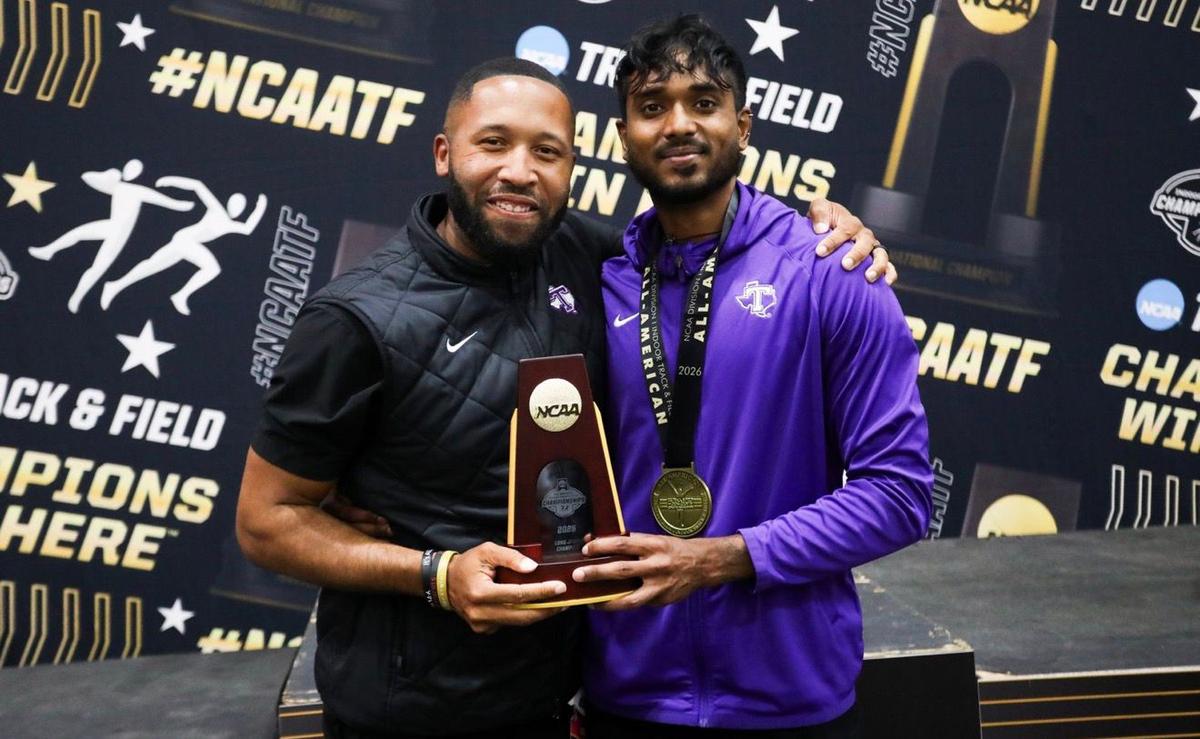
                            At 35, Bobby Carter (left) is one of the youngest head coaches in Division I — the highest level of the NCAA system. He grew up in a family of high-level athletes, with his cousin Michelle Carter having won Olympic gold in shot put in 2016. In Lokesh (right), he saw something special — not just his build and physicality, but also the mindset.
                                                            | Photo Credit: 
                                Special Arrangement
                                                    It was only rekindled in the most painful of circumstances during the second wave of the COVID-19 pandemic in India. When Lokesh’s mother fell ill, the family didn’t worry at first — until her condition deteriorated suddenly. With doctors preparing the family for the inevitable, Lokesh was permitted to visit her.“When she was in the last stages of her life, she held my hand, kissed it, and started crying. She just said I had to make the most of whatever opportunity I had. That was the last thing she spoke to me,” he says.Until then, Mary had never tried to influence her son in any way. “In my entire athletic career, she had been nothing but supportive. She was my biggest motivation. If I had a bad day or if I lost, she would tell me she was there for me, and then she would cook my favourite food so that I would feel better. When I lost her, it was as if I lost everything,” he says.The shock sent him into a cycle of despair once again. “I was unable to come out of my room. I wasn’t meeting any of my friends. I was once again taking medication for my mental health issues,” he says.But a conversation with his father changed things. “He told me how, without any warning, my mom was no longer with me. You never know when we won’t have time to fulfil our desires. Whatever time and opportunity we get, we have to grab it and work for what we want. I had to get up, start crawling, run, and move. I can’t be still in one place,” he says.Two months after his mother passed away, Lokesh once again started applying to colleges in the USA. “I was essentially just sending cold emails to whoever I could. I asked coaches and athletes I had met to recommend me to others. I became very serious about it. I’d stay up late so I could reply to emails immediately,” he says.As it turned out, coaches were still interested. Eventually, he was offered a full scholarship by the University of New Mexico.Struggles and second chancesAt first, the move seemed to work out for him. In May 2023, Lokesh made his first jump over 8m — with a leap of 8.02m at the Mountain West Outdoor Track & Field Championships in Clovis. In his first year in the collegiate circuit, he even made it to the NCAA outdoor track and field finals.Later that year, when his coach moved to the University of Louisville, Lokesh followed. He had built a base for his collegiate career. Now it was time for him to take off.That didn’t happen.Lokesh says he was taking part in an off-season gym session when a teammate dropped a weight on his right toe, fracturing it. “It came at the worst possible time. I was about six months away from the Olympic selection trials in India. I was really confident I would do well, but I ended up having to get surgery instead,” he recalls.Things only got worse. One month after surgery, as he began rehabilitation, Lokesh realised something was very wrong. “One of the screws the doctors had placed inside my bone popped out the other side and started piercing through the flesh and bleeding,” he says.His coaches didn’t take his concern seriously. “They felt it was an infection and I could treat it with antibiotics. Of course, it didn’t work. It only got worse. For 14 days, I couldn’t sleep because of the pain, but all the while people kept telling me these things were normal,” he recalls.Eventually, Lokesh says he could take it no more. He left his college and flew back to India for a second opinion — and got one just in time. “The doctor told me I needed surgery immediately because the infection was about to reach the bone. They had to take out the screw. It was a very critical situation,” he says.As he began rehabilitation in India, Lokesh wondered how he can return to jumping. “I never thought I would give up athletics because of what it meant to my parents and what my mother had told me before she passed away. But I was also uncertain about going back to the USA because of the experience I had there. I reached out to every possible person in India who I thought could help me — the state government, private institutes, even different states. I told them I just needed some support. But all I heard was ‘we can’t help you’. Everyone said they’d help only if I started jumping again,” he recalls.Finally, Lokesh realised he had to give college in the USA another try. “I didn’t have any support in India, and at least in the USA I’d have support to continue my academics and training. In the collegiate system, at least my training would be taken care of by my school. That’s when I reached out to coach Bobby Carter and that’s when things started falling into place,” he says. A 7.92m jump early in the 2025 season qualified Lokesh for his first NCAA indoor championships. Later, he jumped a personal best of 8.14m at the Michael Johnson Invitational, which qualified him for the NCAA outdoor final, where he finished fifth. It was the high point of a solid, if not spectacular, comeback season.
                                                            | Photo Credit: 
                                Getty Images
                            

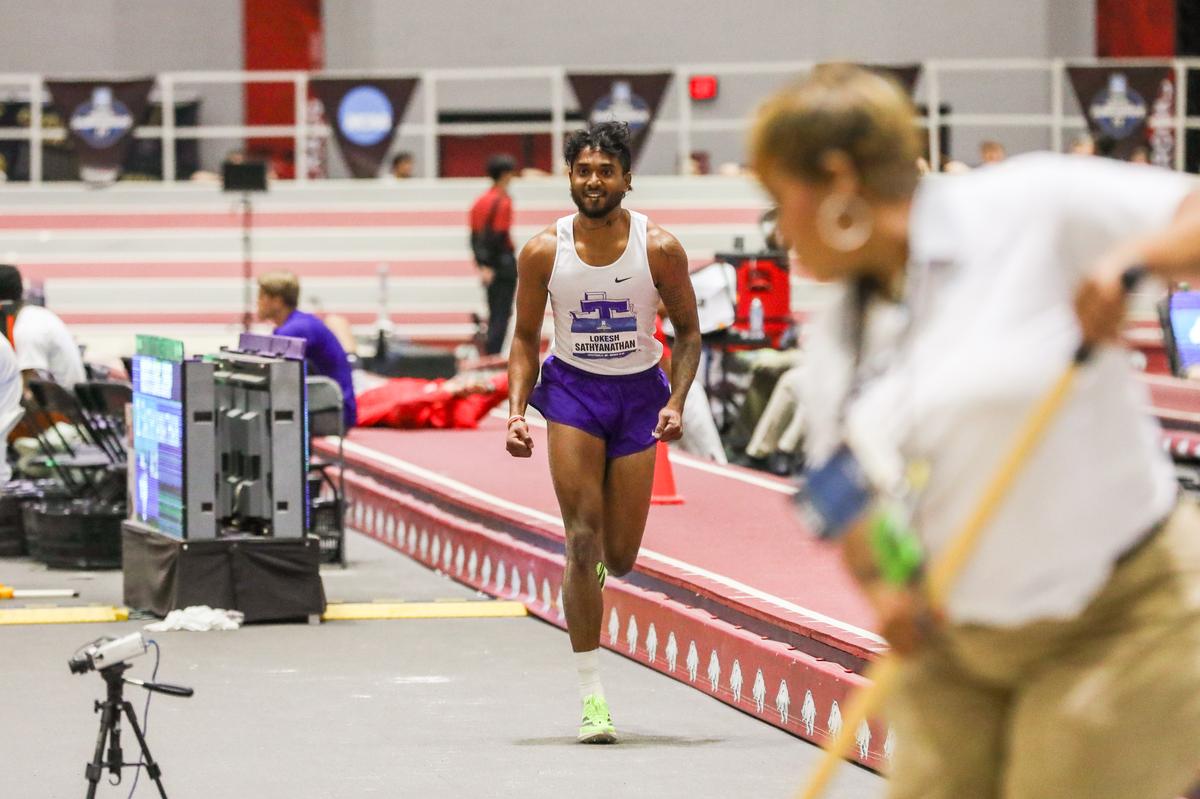
                            A 7.92m jump early in the 2025 season qualified Lokesh for his first NCAA indoor championships. Later, he jumped a personal best of 8.14m at the Michael Johnson Invitational, which qualified him for the NCAA outdoor final, where he finished fifth. It was the high point of a solid, if not spectacular, comeback season.
                                                            | Photo Credit: 
                                Getty Images
                                                    Before joining the University of New Mexico, Lokesh had got to know Carter while exploring different schools. The two had stayed in touch, and in 2024 Lokesh reached out again after Carter had taken over the track and field programme at Tarleton University. “I was a little nervous because I hadn’t competed for a year, but coach Carter simply said, ‘I’d love to have you over,’” he says.At 35, Carter is one of the youngest head coaches in Division I — the highest level of the NCAA system. He grew up in a family of high-level athletes, with his cousin Michelle Carter having won Olympic gold in shot put in 2016. In Lokesh, he saw something special — not just his build and physicality, but also the mindset.“I saw in his eyes all the things he had been through. But I also saw someone who didn’t want to give up. You can’t help but want to go out to bat for someone like that. From an athletics standpoint, I could tell he had the qualities of an athlete. But I could also tell this was a kid with a dream who just needed some help along the way. In my first conversation with him, he said, ‘Coach, I want to be the best.’ That’s all I needed. I took that and ran with it,” Carter says.Lokesh is grateful for the support he got. “I consider myself really lucky that I could connect with coach Carter. He’s one of my biggest supporters. He’s my cheerleader, mentor, coach, best friend, and a father figure rolled into one. He never made me feel like a stranger or incapable. He always believed in me and told me I can achieve anything,” he says.Although Tarleton didn’t have a particularly renowned track and field programme unlike the colleges Lokesh had previously trained at, he says the move suited him. “It’s a smaller school, about two hours from Dallas. But that was fine. There are fewer distractions. There’s nothing much to do but train. It has a track, it has a gym. Being smaller meant more focus on me and stronger support systems. It was the perfect place to recover,” he says.Slowly, things fell into place.A 7.92m jump early in the 2025 season qualified him for his first NCAA indoor championships. Later, he jumped a personal best of 8.14m at the Michael Johnson Invitational, which qualified him for the NCAA outdoor final, where he finished fifth. It was the high point of a solid, if not spectacular, comeback season.At the start of 2026, however, Carter sensed that Lokesh was building towards something much more significant. “Early in the season, Lokesh competed in Oklahoma at the JD Martin Invitational. He won with 7.85m, but he also had a foul jump by a very narrow margin that I estimated was at least 8.20m. That gave him confidence that he had a really big jump in him,” says Carter. That would come at the biggest stage possible — at the NCAA Indoor Championships final.Before the competition, Lokesh wasn’t thinking about his competitors. “I just thanked God that I had another opportunity to compete at this level,” he says.In second place after three attempts, everything came together in his fourth jump. Running in hard, he hit the board square. Using the double hitch kick, he cycled his legs twice as he took off before landing near the far edge of the pit. The jump put him into the lead, which he never gave up.When it ended, Lokesh leapt into his coach’s arms. He pointed to the sky in tribute to his mother, whose picture he carries everywhere. When he called his father, who had been following updates from India, both were in tears. “We were both crying but they were happy tears,” he says.Coach Carter admitted he too was crying when he went home that day. “It was just a really emotional moment,” he says.Bigger goalsHowever, despite the magnitude of the win, neither has formally celebrated it. That’s because, as big as becoming NCAA champion feels, both believe Lokesh could have done even more. In his final attempt of the day, Lokesh had made another huge jump of 8.17m. When he came off the sand though he grimaced. “Everything was so good in the take-off that I got overexcited and dropped my hips on landing. It cost me 20–30 cm. It could have been 8.40m,” he says. Lokesh and Carter now aims for the Indian record currently standing at 8.42m (Jeswin Aldrin). But it won’t be easy.
                                                            | Photo Credit: 
                                Special Arrangement
                            

                            Lokesh and Carter now aims for the Indian record currently standing at 8.42m (Jeswin Aldrin). But it won’t be easy.
                                                            | Photo Credit: 
                                Special Arrangement
                                                    Carter hopes that the miss acts as a motivation. “Both of us have bigger goals that we want to accomplish. Lokesh’s goal is to jump over 8.50m outdoors,” he says.With the Indian record currently standing at 8.42m (Jeswin Aldrin), that won’t be easy, but Carter is optimistic. “It’s very possible. He has the ability to be one of the best Indian jumpers of all time. Right now, our challenge is to stay consistent with technique. I know he has the technical ability to get to the 8.50m mark. It’s just about the little things — eating right and competing in the right events,” he says. There are also Lokesh’s own ambitions. “I want to compete on the biggest stages and win a major medal for India at the Commonwealth and Asian Games,” he says.This, though, won’t be entirely up to him. To represent India, he will have to take part in selection tournaments in the country. That, in turn, means frequent travel between his base at Tarleton and India — adding up to a significant expense. Indeed, even competing in the USA will be challenging in the months to come. Having already competed in university-level competitions in India, he is no longer eligible for outdoor NCAA events and has only one year of eligibility left for indoor competitions. While he can still take part in them as a representative of Tarleton, it will be as an unattached athlete, meaning he would have to cover his own expenses. “So far, I don’t have a sponsor. If I get one, it would make my journey much easier,” he says.Even so, Lokesh remains undeterred. “I think I’m meant to do something special. I’ve already come such a long way. I’ll keep pushing,” he says.Published on Apr 08, 2026  #Lokesh #Sathyanathan #story #long #jumper #Bangalore #leapt #history #maiden #NCAA #title

At 35, Bobby Carter (left) is one of the youngest head coaches in Division I — the highest level of the NCAA system. He grew up in a family of high-level athletes, with his cousin Michelle Carter having won Olympic gold in shot put in 2016. In Lokesh (right), he saw something special — not just his build and physicality, but also the mindset. | Photo Credit: Special Arrangement

lightbox-info

At 35, Bobby Carter (left) is one of the youngest head coaches in Division I — the highest level of the NCAA system. He grew up in a family of high-level athletes, with his cousin Michelle Carter having won Olympic gold in shot put in 2016. In Lokesh (right), he saw something special — not just his build and physicality, but also the mindset. | Photo Credit: Special Arrangement

It was only rekindled in the most painful of circumstances during the second wave of the COVID-19 pandemic in India. When Lokesh’s mother fell ill, the family didn’t worry at first — until her condition deteriorated suddenly. With doctors preparing the family for the inevitable, Lokesh was permitted to visit her.

“When she was in the last stages of her life, she held my hand, kissed it, and started crying. She just said I had to make the most of whatever opportunity I had. That was the last thing she spoke to me,” he says.

Until then, Mary had never tried to influence her son in any way. “In my entire athletic career, she had been nothing but supportive. She was my biggest motivation. If I had a bad day or if I lost, she would tell me she was there for me, and then she would cook my favourite food so that I would feel better. When I lost her, it was as if I lost everything,” he says.

The shock sent him into a cycle of despair once again. “I was unable to come out of my room. I wasn’t meeting any of my friends. I was once again taking medication for my mental health issues,” he says.

But a conversation with his father changed things. “He told me how, without any warning, my mom was no longer with me. You never know when we won’t have time to fulfil our desires. Whatever time and opportunity we get, we have to grab it and work for what we want. I had to get up, start crawling, run, and move. I can’t be still in one place,” he says.

Two months after his mother passed away, Lokesh once again started applying to colleges in the USA. “I was essentially just sending cold emails to whoever I could. I asked coaches and athletes I had met to recommend me to others. I became very serious about it. I’d stay up late so I could reply to emails immediately,” he says.

As it turned out, coaches were still interested. Eventually, he was offered a full scholarship by the University of New Mexico.

Struggles and second chances

At first, the move seemed to work out for him. In May 2023, Lokesh made his first jump over 8m — with a leap of 8.02m at the Mountain West Outdoor Track & Field Championships in Clovis. In his first year in the collegiate circuit, he even made it to the NCAA outdoor track and field finals.

Later that year, when his coach moved to the University of Louisville, Lokesh followed. He had built a base for his collegiate career. Now it was time for him to take off.

That didn’t happen.

Lokesh says he was taking part in an off-season gym session when a teammate dropped a weight on his right toe, fracturing it. “It came at the worst possible time. I was about six months away from the Olympic selection trials in India. I was really confident I would do well, but I ended up having to get surgery instead,” he recalls.

Things only got worse. One month after surgery, as he began rehabilitation, Lokesh realised something was very wrong. “One of the screws the doctors had placed inside my bone popped out the other side and started piercing through the flesh and bleeding,” he says.

His coaches didn’t take his concern seriously. “They felt it was an infection and I could treat it with antibiotics. Of course, it didn’t work. It only got worse. For 14 days, I couldn’t sleep because of the pain, but all the while people kept telling me these things were normal,” he recalls.

Eventually, Lokesh says he could take it no more. He left his college and flew back to India for a second opinion — and got one just in time. “The doctor told me I needed surgery immediately because the infection was about to reach the bone. They had to take out the screw. It was a very critical situation,” he says.

As he began rehabilitation in India, Lokesh wondered how he can return to jumping. “I never thought I would give up athletics because of what it meant to my parents and what my mother had told me before she passed away. But I was also uncertain about going back to the USA because of the experience I had there. I reached out to every possible person in India who I thought could help me — the state government, private institutes, even different states. I told them I just needed some support. But all I heard was ‘we can’t help you’. Everyone said they’d help only if I started jumping again,” he recalls.

Finally, Lokesh realised he had to give college in the USA another try. “I didn’t have any support in India, and at least in the USA I’d have support to continue my academics and training. In the collegiate system, at least my training would be taken care of by my school. That’s when I reached out to coach Bobby Carter and that’s when things started falling into place,” he says.

A 7.92m jump early in the 2025 season qualified Lokesh for his first NCAA indoor championships. Later, he jumped a personal best of 8.14m at the Michael Johnson Invitational, which qualified him for the NCAA outdoor final, where he finished fifth. It was the high point of a solid, if not spectacular, comeback season.

A 7.92m jump early in the 2025 season qualified Lokesh for his first NCAA indoor championships. Later, he jumped a personal best of 8.14m at the Michael Johnson Invitational, which qualified him for the NCAA outdoor final, where he finished fifth. It was the high point of a solid, if not spectacular, comeback season. | Photo Credit: Getty Images

lightbox-info

A 7.92m jump early in the 2025 season qualified Lokesh for his first NCAA indoor championships. Later, he jumped a personal best of 8.14m at the Michael Johnson Invitational, which qualified him for the NCAA outdoor final, where he finished fifth. It was the high point of a solid, if not spectacular, comeback season. | Photo Credit: Getty Images

Before joining the University of New Mexico, Lokesh had got to know Carter while exploring different schools. The two had stayed in touch, and in 2024 Lokesh reached out again after Carter had taken over the track and field programme at Tarleton University. “I was a little nervous because I hadn’t competed for a year, but coach Carter simply said, ‘I’d love to have you over,’” he says.

At 35, Carter is one of the youngest head coaches in Division I — the highest level of the NCAA system. He grew up in a family of high-level athletes, with his cousin Michelle Carter having won Olympic gold in shot put in 2016. In Lokesh, he saw something special — not just his build and physicality, but also the mindset.

“I saw in his eyes all the things he had been through. But I also saw someone who didn’t want to give up. You can’t help but want to go out to bat for someone like that. From an athletics standpoint, I could tell he had the qualities of an athlete. But I could also tell this was a kid with a dream who just needed some help along the way. In my first conversation with him, he said, ‘Coach, I want to be the best.’ That’s all I needed. I took that and ran with it,” Carter says.

Lokesh is grateful for the support he got. “I consider myself really lucky that I could connect with coach Carter. He’s one of my biggest supporters. He’s my cheerleader, mentor, coach, best friend, and a father figure rolled into one. He never made me feel like a stranger or incapable. He always believed in me and told me I can achieve anything,” he says.

Although Tarleton didn’t have a particularly renowned track and field programme unlike the colleges Lokesh had previously trained at, he says the move suited him. “It’s a smaller school, about two hours from Dallas. But that was fine. There are fewer distractions. There’s nothing much to do but train. It has a track, it has a gym. Being smaller meant more focus on me and stronger support systems. It was the perfect place to recover,” he says.

Slowly, things fell into place.

A 7.92m jump early in the 2025 season qualified him for his first NCAA indoor championships. Later, he jumped a personal best of 8.14m at the Michael Johnson Invitational, which qualified him for the NCAA outdoor final, where he finished fifth. It was the high point of a solid, if not spectacular, comeback season.

At the start of 2026, however, Carter sensed that Lokesh was building towards something much more significant. “Early in the season, Lokesh competed in Oklahoma at the JD Martin Invitational. He won with 7.85m, but he also had a foul jump by a very narrow margin that I estimated was at least 8.20m. That gave him confidence that he had a really big jump in him,” says Carter. That would come at the biggest stage possible — at the NCAA Indoor Championships final.

Before the competition, Lokesh wasn’t thinking about his competitors. “I just thanked God that I had another opportunity to compete at this level,” he says.

In second place after three attempts, everything came together in his fourth jump. Running in hard, he hit the board square. Using the double hitch kick, he cycled his legs twice as he took off before landing near the far edge of the pit. The jump put him into the lead, which he never gave up.

When it ended, Lokesh leapt into his coach’s arms. He pointed to the sky in tribute to his mother, whose picture he carries everywhere. When he called his father, who had been following updates from India, both were in tears. “We were both crying but they were happy tears,” he says.

Coach Carter admitted he too was crying when he went home that day. “It was just a really emotional moment,” he says.

Bigger goals

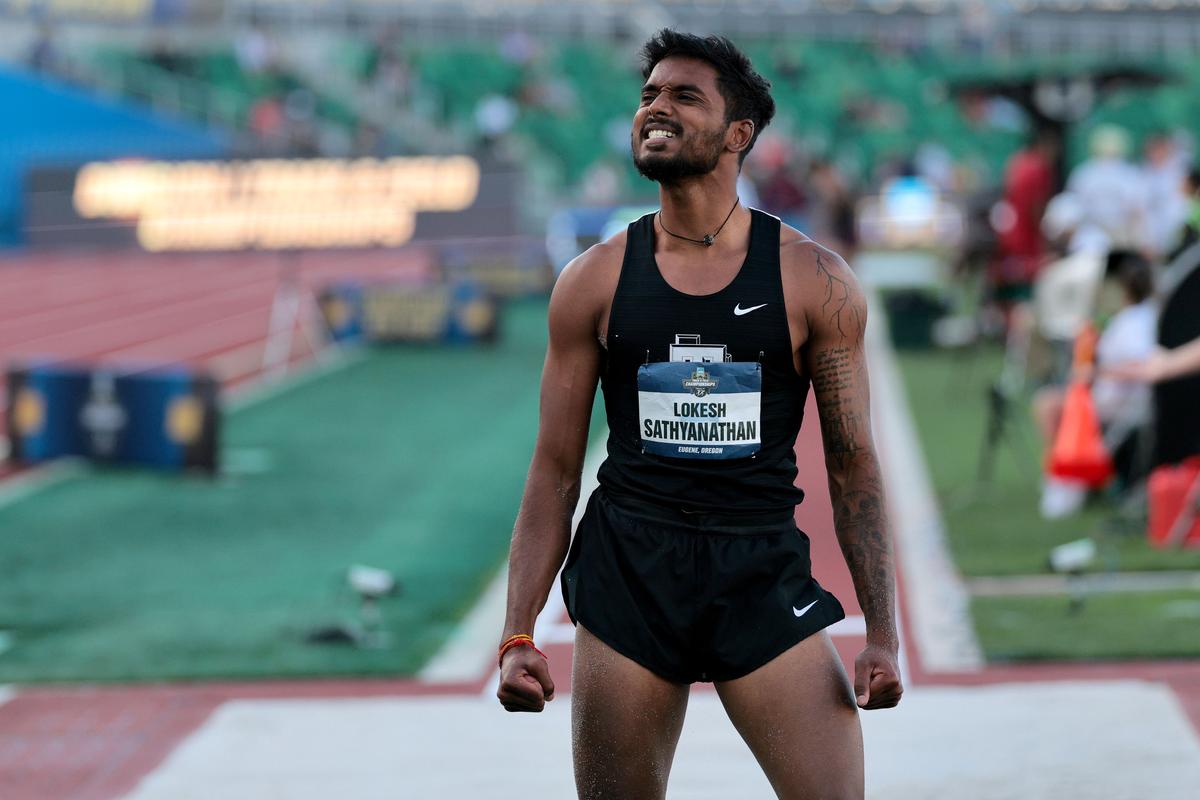
However, despite the magnitude of the win, neither has formally celebrated it. That’s because, as big as becoming NCAA champion feels, both believe Lokesh could have done even more. In his final attempt of the day, Lokesh had made another huge jump of 8.17m. When he came off the sand though he grimaced. “Everything was so good in the take-off that I got overexcited and dropped my hips on landing. It cost me 20–30 cm. It could have been 8.40m,” he says.

Lokesh and Carter now aims for the Indian record currently standing at 8.42m (Jeswin Aldrin). But it won’t be easy.

Lokesh and Carter now aims for the Indian record currently standing at 8.42m (Jeswin Aldrin). But it won’t be easy. | Photo Credit: Special Arrangement

lightbox-info

Lokesh and Carter now aims for the Indian record currently standing at 8.42m (Jeswin Aldrin). But it won’t be easy. | Photo Credit: Special Arrangement

Carter hopes that the miss acts as a motivation. “Both of us have bigger goals that we want to accomplish. Lokesh’s goal is to jump over 8.50m outdoors,” he says.

With the Indian record currently standing at 8.42m (Jeswin Aldrin), that won’t be easy, but Carter is optimistic. “It’s very possible. He has the ability to be one of the best Indian jumpers of all time. Right now, our challenge is to stay consistent with technique. I know he has the technical ability to get to the 8.50m mark. It’s just about the little things — eating right and competing in the right events,” he says. There are also Lokesh’s own ambitions. “I want to compete on the biggest stages and win a major medal for India at the Commonwealth and Asian Games,” he says.

This, though, won’t be entirely up to him. To represent India, he will have to take part in selection tournaments in the country. That, in turn, means frequent travel between his base at Tarleton and India — adding up to a significant expense. Indeed, even competing in the USA will be challenging in the months to come. Having already competed in university-level competitions in India, he is no longer eligible for outdoor NCAA events and has only one year of eligibility left for indoor competitions. While he can still take part in them as a representative of Tarleton, it will be as an unattached athlete, meaning he would have to cover his own expenses. “So far, I don’t have a sponsor. If I get one, it would make my journey much easier,” he says.

Even so, Lokesh remains undeterred. “I think I’m meant to do something special. I’ve already come such a long way. I’ll keep pushing,” he says.

Published on Apr 08, 2026

#Lokesh #Sathyanathan #story #long #jumper #Bangalore #leapt #history #maiden #NCAA #title">The Lokesh Sathyanathan story: How the long jumper from Bangalore leapt into history with his maiden NCAA title  Few people had their eye on Lokesh Sathyanathan when he first arrived in Fayetteville, Arkansas, to take part in the men’s long jump competition at the NCAA Indoor Championships in March. The 26-year-old wasn’t expecting them to. The NCAA Indoor Championships are the highest level of competition in the indoor track and field calendar — considered the most prestigious form of collegiate sport in the world.The standard of competition is nothing less than that of a world-level meet. Lokesh, competing for Tarleton State University — a relatively small college that had never won an individual track and field title at this competition — was, to put it mildly, not a favourite.“One day before the competition, the only people who recognised me were the ones who already knew me — probably just my coach and teammates,” he recalls.That’s not the case any longer. On March 13, Lokesh leapt a career-best 8.21m to win gold. The jump set a new Indian indoor national record and moved him to third on the all-time list of Indian long jumpers across all competitions. It also made him only the fourth Indian to win gold at the NCAA Championships — joining triple jumper M.S. Gill, discus thrower Vikas Gowda, and decathlete and high jumper Tejaswin Shankar.Lokesh is unrecognised no more.“The NCAA level is nothing short of the Olympic level. You are competing with Olympic champions, World Record holders, National Record holders of different countries, world medallists. To win gold at this level is special. After the competition, I’ve done multiple interviews, but even regular people want to speak to me. Wherever you walk, people know who you are. They compliment and congratulate you. There are people who follow you on social media. People are watching my jumps. They just want to start a conversation. It’s completely different from the day before your race to the day after,” he says.Every conversation goes the same way. “People want to know where I’m from. They want to know how it feels to be an NCAA champion. They want to know how I motivate and hype myself and how I go for bigger jumps,” he says.Motivation, Lokesh says, is easy. He thinks about the hard work his parents put in to start his journey in collegiate sport in the USA. He can’t help but think about how close a freak injury, a couple of years ago, came to ending that journey, and how hard he had to work just to get another chance to compete at this level. “When I’m jumping, I always think of where I came from. Before every competition, I look back at the challenges I’ve faced in my life and think about how lucky I am to get an opportunity to show my talent once again,” he says.Journey beginsThe idea of competing in the collegiate system first came to Lokesh about eight years ago. Back in 2018, he was considered one of India’s most promising junior long jumpers, with a personal best of 7.74m that had won him gold at the Junior South Asian Championships in Colombo, Sri Lanka. After competing at the U-20 World Championships in Tampere, Finland, he attracted the attention of several coaches scouting for track and field programmes in the USA.Born and raised in Bengaluru in a sports-mad family — his father John played football for the Bengaluru Police while his sister Monica was a national-level 400-metre runner — Lokesh wasn’t certain whether he wanted to leave familiar surroundings. Any plans to shift base were further pushed back after he suffered a serious road accident while travelling to a training session.The physical and mental toll caused him to pull out of the qualifiers for the 2019 World Championships in Doha. “I would have panic attacks. I would stay by myself in a room, and eventually, my friends didn’t know what to do. I couldn’t even sleep. It was just me and my parents at that time. I had a lot of mental health issues that I was dealing with. I was on a lot of anxiety medication as a result,” he recalls.After he recovered, others nudged him to consider college offers from the USA once again. He was still uncertain. “At that time, I felt if I did go, I’d just be seen as an average athlete who hadn’t accomplished anything. I didn’t think I was good enough,” he says.As time passed, Lokesh’s enthusiasm to train abroad waned, even as he continued to improve. He won gold at the South Asian Games in Kathmandu and recorded a personal best of 7.93m at the selection trials for the World University Games in early 2021. At 35, Bobby Carter (left) is one of the youngest head coaches in Division I — the highest level of the NCAA system. He grew up in a family of high-level athletes, with his cousin Michelle Carter having won Olympic gold in shot put in 2016. In Lokesh (right), he saw something special — not just his build and physicality, but also the mindset.
                                                            | Photo Credit: 
                                Special Arrangement
                            

                            At 35, Bobby Carter (left) is one of the youngest head coaches in Division I — the highest level of the NCAA system. He grew up in a family of high-level athletes, with his cousin Michelle Carter having won Olympic gold in shot put in 2016. In Lokesh (right), he saw something special — not just his build and physicality, but also the mindset.
                                                            | Photo Credit: 
                                Special Arrangement
                                                    It was only rekindled in the most painful of circumstances during the second wave of the COVID-19 pandemic in India. When Lokesh’s mother fell ill, the family didn’t worry at first — until her condition deteriorated suddenly. With doctors preparing the family for the inevitable, Lokesh was permitted to visit her.“When she was in the last stages of her life, she held my hand, kissed it, and started crying. She just said I had to make the most of whatever opportunity I had. That was the last thing she spoke to me,” he says.Until then, Mary had never tried to influence her son in any way. “In my entire athletic career, she had been nothing but supportive. She was my biggest motivation. If I had a bad day or if I lost, she would tell me she was there for me, and then she would cook my favourite food so that I would feel better. When I lost her, it was as if I lost everything,” he says.The shock sent him into a cycle of despair once again. “I was unable to come out of my room. I wasn’t meeting any of my friends. I was once again taking medication for my mental health issues,” he says.But a conversation with his father changed things. “He told me how, without any warning, my mom was no longer with me. You never know when we won’t have time to fulfil our desires. Whatever time and opportunity we get, we have to grab it and work for what we want. I had to get up, start crawling, run, and move. I can’t be still in one place,” he says.Two months after his mother passed away, Lokesh once again started applying to colleges in the USA. “I was essentially just sending cold emails to whoever I could. I asked coaches and athletes I had met to recommend me to others. I became very serious about it. I’d stay up late so I could reply to emails immediately,” he says.As it turned out, coaches were still interested. Eventually, he was offered a full scholarship by the University of New Mexico.Struggles and second chancesAt first, the move seemed to work out for him. In May 2023, Lokesh made his first jump over 8m — with a leap of 8.02m at the Mountain West Outdoor Track & Field Championships in Clovis. In his first year in the collegiate circuit, he even made it to the NCAA outdoor track and field finals.Later that year, when his coach moved to the University of Louisville, Lokesh followed. He had built a base for his collegiate career. Now it was time for him to take off.That didn’t happen.Lokesh says he was taking part in an off-season gym session when a teammate dropped a weight on his right toe, fracturing it. “It came at the worst possible time. I was about six months away from the Olympic selection trials in India. I was really confident I would do well, but I ended up having to get surgery instead,” he recalls.Things only got worse. One month after surgery, as he began rehabilitation, Lokesh realised something was very wrong. “One of the screws the doctors had placed inside my bone popped out the other side and started piercing through the flesh and bleeding,” he says.His coaches didn’t take his concern seriously. “They felt it was an infection and I could treat it with antibiotics. Of course, it didn’t work. It only got worse. For 14 days, I couldn’t sleep because of the pain, but all the while people kept telling me these things were normal,” he recalls.Eventually, Lokesh says he could take it no more. He left his college and flew back to India for a second opinion — and got one just in time. “The doctor told me I needed surgery immediately because the infection was about to reach the bone. They had to take out the screw. It was a very critical situation,” he says.As he began rehabilitation in India, Lokesh wondered how he can return to jumping. “I never thought I would give up athletics because of what it meant to my parents and what my mother had told me before she passed away. But I was also uncertain about going back to the USA because of the experience I had there. I reached out to every possible person in India who I thought could help me — the state government, private institutes, even different states. I told them I just needed some support. But all I heard was ‘we can’t help you’. Everyone said they’d help only if I started jumping again,” he recalls.Finally, Lokesh realised he had to give college in the USA another try. “I didn’t have any support in India, and at least in the USA I’d have support to continue my academics and training. In the collegiate system, at least my training would be taken care of by my school. That’s when I reached out to coach Bobby Carter and that’s when things started falling into place,” he says. A 7.92m jump early in the 2025 season qualified Lokesh for his first NCAA indoor championships. Later, he jumped a personal best of 8.14m at the Michael Johnson Invitational, which qualified him for the NCAA outdoor final, where he finished fifth. It was the high point of a solid, if not spectacular, comeback season.
                                                            | Photo Credit: 
                                Getty Images
                            

                            A 7.92m jump early in the 2025 season qualified Lokesh for his first NCAA indoor championships. Later, he jumped a personal best of 8.14m at the Michael Johnson Invitational, which qualified him for the NCAA outdoor final, where he finished fifth. It was the high point of a solid, if not spectacular, comeback season.
                                                            | Photo Credit: 
                                Getty Images
                                                    Before joining the University of New Mexico, Lokesh had got to know Carter while exploring different schools. The two had stayed in touch, and in 2024 Lokesh reached out again after Carter had taken over the track and field programme at Tarleton University. “I was a little nervous because I hadn’t competed for a year, but coach Carter simply said, ‘I’d love to have you over,’” he says.At 35, Carter is one of the youngest head coaches in Division I — the highest level of the NCAA system. He grew up in a family of high-level athletes, with his cousin Michelle Carter having won Olympic gold in shot put in 2016. In Lokesh, he saw something special — not just his build and physicality, but also the mindset.“I saw in his eyes all the things he had been through. But I also saw someone who didn’t want to give up. You can’t help but want to go out to bat for someone like that. From an athletics standpoint, I could tell he had the qualities of an athlete. But I could also tell this was a kid with a dream who just needed some help along the way. In my first conversation with him, he said, ‘Coach, I want to be the best.’ That’s all I needed. I took that and ran with it,” Carter says.Lokesh is grateful for the support he got. “I consider myself really lucky that I could connect with coach Carter. He’s one of my biggest supporters. He’s my cheerleader, mentor, coach, best friend, and a father figure rolled into one. He never made me feel like a stranger or incapable. He always believed in me and told me I can achieve anything,” he says.Although Tarleton didn’t have a particularly renowned track and field programme unlike the colleges Lokesh had previously trained at, he says the move suited him. “It’s a smaller school, about two hours from Dallas. But that was fine. There are fewer distractions. There’s nothing much to do but train. It has a track, it has a gym. Being smaller meant more focus on me and stronger support systems. It was the perfect place to recover,” he says.Slowly, things fell into place.A 7.92m jump early in the 2025 season qualified him for his first NCAA indoor championships. Later, he jumped a personal best of 8.14m at the Michael Johnson Invitational, which qualified him for the NCAA outdoor final, where he finished fifth. It was the high point of a solid, if not spectacular, comeback season.At the start of 2026, however, Carter sensed that Lokesh was building towards something much more significant. “Early in the season, Lokesh competed in Oklahoma at the JD Martin Invitational. He won with 7.85m, but he also had a foul jump by a very narrow margin that I estimated was at least 8.20m. That gave him confidence that he had a really big jump in him,” says Carter. That would come at the biggest stage possible — at the NCAA Indoor Championships final.Before the competition, Lokesh wasn’t thinking about his competitors. “I just thanked God that I had another opportunity to compete at this level,” he says.In second place after three attempts, everything came together in his fourth jump. Running in hard, he hit the board square. Using the double hitch kick, he cycled his legs twice as he took off before landing near the far edge of the pit. The jump put him into the lead, which he never gave up.When it ended, Lokesh leapt into his coach’s arms. He pointed to the sky in tribute to his mother, whose picture he carries everywhere. When he called his father, who had been following updates from India, both were in tears. “We were both crying but they were happy tears,” he says.Coach Carter admitted he too was crying when he went home that day. “It was just a really emotional moment,” he says.Bigger goalsHowever, despite the magnitude of the win, neither has formally celebrated it. That’s because, as big as becoming NCAA champion feels, both believe Lokesh could have done even more. In his final attempt of the day, Lokesh had made another huge jump of 8.17m. When he came off the sand though he grimaced. “Everything was so good in the take-off that I got overexcited and dropped my hips on landing. It cost me 20–30 cm. It could have been 8.40m,” he says. Lokesh and Carter now aims for the Indian record currently standing at 8.42m (Jeswin Aldrin). But it won’t be easy.
                                                            | Photo Credit: 
                                Special Arrangement
                            

                            Lokesh and Carter now aims for the Indian record currently standing at 8.42m (Jeswin Aldrin). But it won’t be easy.
                                                            | Photo Credit: 
                                Special Arrangement
                                                    Carter hopes that the miss acts as a motivation. “Both of us have bigger goals that we want to accomplish. Lokesh’s goal is to jump over 8.50m outdoors,” he says.With the Indian record currently standing at 8.42m (Jeswin Aldrin), that won’t be easy, but Carter is optimistic. “It’s very possible. He has the ability to be one of the best Indian jumpers of all time. Right now, our challenge is to stay consistent with technique. I know he has the technical ability to get to the 8.50m mark. It’s just about the little things — eating right and competing in the right events,” he says. There are also Lokesh’s own ambitions. “I want to compete on the biggest stages and win a major medal for India at the Commonwealth and Asian Games,” he says.This, though, won’t be entirely up to him. To represent India, he will have to take part in selection tournaments in the country. That, in turn, means frequent travel between his base at Tarleton and India — adding up to a significant expense. Indeed, even competing in the USA will be challenging in the months to come. Having already competed in university-level competitions in India, he is no longer eligible for outdoor NCAA events and has only one year of eligibility left for indoor competitions. While he can still take part in them as a representative of Tarleton, it will be as an unattached athlete, meaning he would have to cover his own expenses. “So far, I don’t have a sponsor. If I get one, it would make my journey much easier,” he says.Even so, Lokesh remains undeterred. “I think I’m meant to do something special. I’ve already come such a long way. I’ll keep pushing,” he says.Published on Apr 08, 2026  #Lokesh #Sathyanathan #story #long #jumper #Bangalore #leapt #history #maiden #NCAA #title

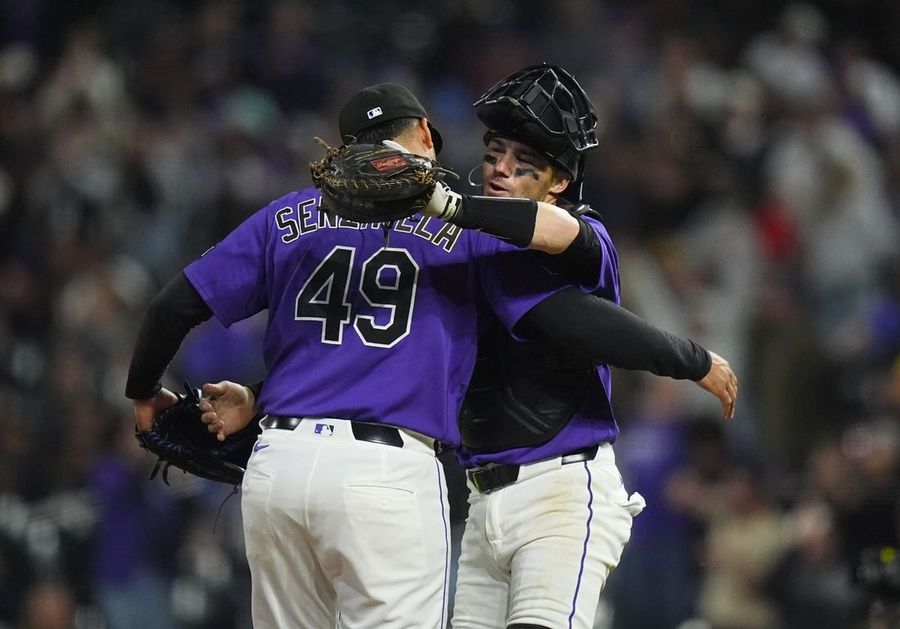
Deadspin | After winning first series against Astros since 2021, Rockies go for sweep   Apr 7, 2026; Denver, Colorado, USA; Colorado Rockies relief pitcher Antonio Senzatela (49) and catcher Brett Sullivan (26) celebrate defeating the Houston Astros in the inning at Coors Field. Mandatory Credit: Ron Chenoy-Imagn Images   Kyle Freeland became the first Rockies starter to pitch into the seventh inning this season in Colorado’s 5-1 win over Houston on Tuesday night.  Michael Lorenzen has a chance to make it two straight when he takes the mound against the Astros on Wednesday afternoon in Denver.   The improved Rockies already have guaranteed a series win, having beaten the Astros 9-7 on Monday in the series opener and then again on Tuesday.  It marks Colorado’s first series win against Houston since 2021.  Lorenzen (0-1, 14.73 ERA) is looking for a bounce-back start after he gave up nine runs over three innings on Friday in a 10-1 home loss to the Philadelphia Phillies. The veteran right-hander allowed seven runs in the first inning but stuck around to give Colorado some much-needed innings.  Lorenzen, 34, who signed a free-agent contract with the Rockies in the offseason, said he is not panicking after his bad outing.  “Three years ago, even two years ago, I’d have been super frustrated,” he said. “It’s not like I welcome losing and failing, but over my career it has been better for me, because you have to learn, grind it out and figure a way to get better. That’s how you improve.  “That gives me the ability to come to Colorado, knowing that I’m going to get my teeth kicked in every once in a while but be like, ‘I’m going to learn more about who I am and how to handle it.'”   Lorenzen has faced Houston six times — four of them starts — and is 0-3 with a 6.86 ERA in those outings. He started one game against the Astros last season as a member of the Kansas City Royals, allowing four runs on seven hits and struck out five over 7 1/3 innings. He was charged with the 4-3 loss.  Houston has lost three games in a row after winning six of the seven previous games, and the normally potent offense went silent in hitter-friendly Coors Field on Tuesday night. The Astros managed just three hits in the loss after scoring 28 runs in its previous three games — two of them losses.  Cristian Javier (0-1, 12.96 ERA) will try to salvage the last game of the series for Houston.  With the rotation already suffering key injuries, the Astros hope Javier can pitch deep into the game. The right-hander has faced the Rockies twice in his career (one start) and has a 4.76 ERA over 5 2/3 innings. He did not record a decision in either outing.  Houston was dealt a blow when ace Hunter Brown was diagnosed with a Grade 2 right shoulder strain and will be out for several weeks. Manager Joe Espada is piecing together his staff, relying on some relievers to give him extended innings.  The Astros could bring up pitchers from Triple-A Sugar Land to fill the void.  “I think there’ll be guys that can fill in for the amount of weeks that (Hunter Brown is) going to be out, whether it’s six or eight total when it’s all said and done,” general manager Dana Brown said. “We’ll have guys that can step up. Maybe this is a blessing in disguise where he gets a little bit of rest, we build him back up, and we get him for the rest of the season. So this break could be what he needs.”  –Field Level Media    #Deadspin #winning #series #Astros #Rockies #sweepApr 7, 2026; Denver, Colorado, USA; Colorado Rockies relief pitcher Antonio Senzatela (49) and catcher Brett Sullivan (26) celebrate defeating the Houston Astros in the inning at Coors Field. Mandatory Credit: Ron Chenoy-Imagn Images

Kyle Freeland became the first Rockies starter to pitch into the seventh inning this season in Colorado’s 5-1 win over Houston on Tuesday night.

Michael Lorenzen has a chance to make it two straight when he takes the mound against the Astros on Wednesday afternoon in Denver.

The improved Rockies already have guaranteed a series win, having beaten the Astros 9-7 on Monday in the series opener and then again on Tuesday.

It marks Colorado’s first series win against Houston since 2021.

Lorenzen (0-1, 14.73 ERA) is looking for a bounce-back start after he gave up nine runs over three innings on Friday in a 10-1 home loss to the Philadelphia Phillies. The veteran right-hander allowed seven runs in the first inning but stuck around to give Colorado some much-needed innings.

Lorenzen, 34, who signed a free-agent contract with the Rockies in the offseason, said he is not panicking after his bad outing.

“Three years ago, even two years ago, I’d have been super frustrated,” he said. “It’s not like I welcome losing and failing, but over my career it has been better for me, because you have to learn, grind it out and figure a way to get better. That’s how you improve.


“That gives me the ability to come to Colorado, knowing that I’m going to get my teeth kicked in every once in a while but be like, ‘I’m going to learn more about who I am and how to handle it.'”

Lorenzen has faced Houston six times — four of them starts — and is 0-3 with a 6.86 ERA in those outings. He started one game against the Astros last season as a member of the Kansas City Royals, allowing four runs on seven hits and struck out five over 7 1/3 innings. He was charged with the 4-3 loss.

Houston has lost three games in a row after winning six of the seven previous games, and the normally potent offense went silent in hitter-friendly Coors Field on Tuesday night. The Astros managed just three hits in the loss after scoring 28 runs in its previous three games — two of them losses.

Cristian Javier (0-1, 12.96 ERA) will try to salvage the last game of the series for Houston.

With the rotation already suffering key injuries, the Astros hope Javier can pitch deep into the game. The right-hander has faced the Rockies twice in his career (one start) and has a 4.76 ERA over 5 2/3 innings. He did not record a decision in either outing.

Houston was dealt a blow when ace Hunter Brown was diagnosed with a Grade 2 right shoulder strain and will be out for several weeks. Manager Joe Espada is piecing together his staff, relying on some relievers to give him extended innings.

The Astros could bring up pitchers from Triple-A Sugar Land to fill the void.

“I think there’ll be guys that can fill in for the amount of weeks that (Hunter Brown is) going to be out, whether it’s six or eight total when it’s all said and done,” general manager Dana Brown said. “We’ll have guys that can step up. Maybe this is a blessing in disguise where he gets a little bit of rest, we build him back up, and we get him for the rest of the season. So this break could be what he needs.”


–Field Level Media

#Deadspin #winning #series #Astros #Rockies #sweep">Deadspin | After winning first series against Astros since 2021, Rockies go for sweep   Apr 7, 2026; Denver, Colorado, USA; Colorado Rockies relief pitcher Antonio Senzatela (49) and catcher Brett Sullivan (26) celebrate defeating the Houston Astros in the inning at Coors Field. Mandatory Credit: Ron Chenoy-Imagn Images   Kyle Freeland became the first Rockies starter to pitch into the seventh inning this season in Colorado’s 5-1 win over Houston on Tuesday night.  Michael Lorenzen has a chance to make it two straight when he takes the mound against the Astros on Wednesday afternoon in Denver.   The improved Rockies already have guaranteed a series win, having beaten the Astros 9-7 on Monday in the series opener and then again on Tuesday.  It marks Colorado’s first series win against Houston since 2021.  Lorenzen (0-1, 14.73 ERA) is looking for a bounce-back start after he gave up nine runs over three innings on Friday in a 10-1 home loss to the Philadelphia Phillies. The veteran right-hander allowed seven runs in the first inning but stuck around to give Colorado some much-needed innings.  Lorenzen, 34, who signed a free-agent contract with the Rockies in the offseason, said he is not panicking after his bad outing.  “Three years ago, even two years ago, I’d have been super frustrated,” he said. “It’s not like I welcome losing and failing, but over my career it has been better for me, because you have to learn, grind it out and figure a way to get better. That’s how you improve.  “That gives me the ability to come to Colorado, knowing that I’m going to get my teeth kicked in every once in a while but be like, ‘I’m going to learn more about who I am and how to handle it.'”   Lorenzen has faced Houston six times — four of them starts — and is 0-3 with a 6.86 ERA in those outings. He started one game against the Astros last season as a member of the Kansas City Royals, allowing four runs on seven hits and struck out five over 7 1/3 innings. He was charged with the 4-3 loss.  Houston has lost three games in a row after winning six of the seven previous games, and the normally potent offense went silent in hitter-friendly Coors Field on Tuesday night. The Astros managed just three hits in the loss after scoring 28 runs in its previous three games — two of them losses.  Cristian Javier (0-1, 12.96 ERA) will try to salvage the last game of the series for Houston.  With the rotation already suffering key injuries, the Astros hope Javier can pitch deep into the game. The right-hander has faced the Rockies twice in his career (one start) and has a 4.76 ERA over 5 2/3 innings. He did not record a decision in either outing.  Houston was dealt a blow when ace Hunter Brown was diagnosed with a Grade 2 right shoulder strain and will be out for several weeks. Manager Joe Espada is piecing together his staff, relying on some relievers to give him extended innings.  The Astros could bring up pitchers from Triple-A Sugar Land to fill the void.  “I think there’ll be guys that can fill in for the amount of weeks that (Hunter Brown is) going to be out, whether it’s six or eight total when it’s all said and done,” general manager Dana Brown said. “We’ll have guys that can step up. Maybe this is a blessing in disguise where he gets a little bit of rest, we build him back up, and we get him for the rest of the season. So this break could be what he needs.”  –Field Level Media    #Deadspin #winning #series #Astros #Rockies #sweep

Post Comment