
Ten unforgettable films about veterans returning home from war, capturing the trauma, hard transitions, and quiet heroism behind these homecoming stories.
War movies often end when the soldier comes home. The films on this list start there. They sit in the awkward silences at the dinner table, the doctor’s waiting rooms, the VFW barstools, and the empty driveways at 3 a.m. They’re about the part nobody trains you for, which is what to do once the uniform comes off, and the country expects you to pick up where you left off. The films span seven decades, from 1946 to 2017, and the same questions keep showing up in every one of them.
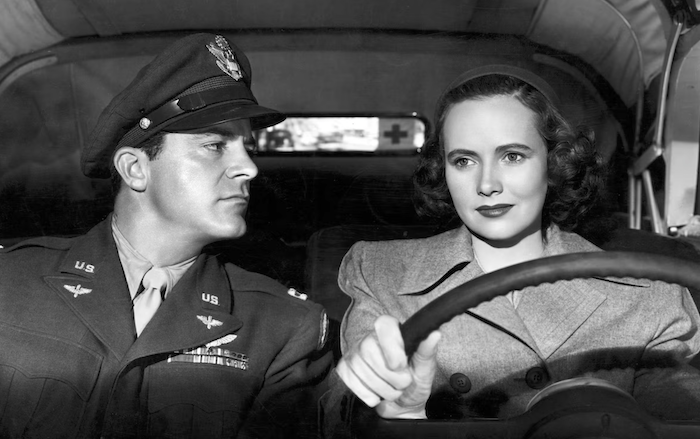
#1: The Best Years of Our Lives (1946)
William Wyler’s film follows three servicemen returning from World War II, and it remains the standard against which every other homecoming movie gets measured. The most famous casting decision in the picture, real-life Navy veteran and double amputee Harold Russell as Homer Parrish, gave audiences something they had never seen before: an actual disabled veteran navigating a postwar America that didn’t quite know what to do with him.
It came out the year after the war ended, when post-traumatic symptoms still went by names like “shell shock” or “combat fatigue” and public understanding was minimal. Today, the VA’s National Center for PTSD reports that roughly 7% of veterans will experience PTSD at some point in their lifetime, and watching Wyler’s film now, you realize the symptoms on screen had names long before psychiatry caught up. The film’s quiet greatness is that it lets the silence do most of the talking, and it ends not with a parade but with a wedding that feels earned only because the characters stopped pretending they were fine.
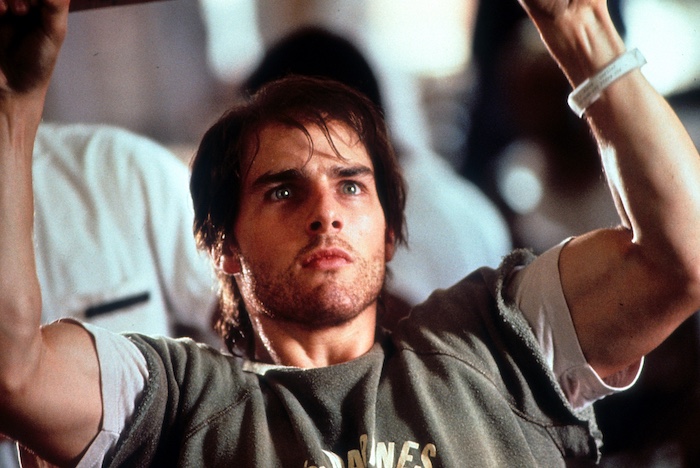 #2: Born on the Fourth of July (1989)
Oliver Stone’s adaptation of Ron Kovic’s memoir is unsparing. Tom Cruise plays Kovic, a Marine who returns from Vietnam paralyzed from the chest down, and the film charts his slide into alcoholism and his eventual emergence as an antiwar activist. The VA hospital sequence is still hard to watch decades later, with rats in the wards and patients left to fend for themselves. What makes the film matter for a modern audience is how directly it shows veterans self-medicating in the absence of real care.
The science has come a long way since the 1970s, and the conversation around chronic pain and trauma now includes options that weren’t available to Kovic, including medical cannabis for veterans as a clinical avenue for managing PTSD-related symptoms and chronic pain. Researchers reviewing PTSD treatment in veterans have noted that comorbid post-traumatic stress and substance use disorders are common and notoriously difficult to treat together, which is the exact territory Stone’s film maps so painfully through Kovic’s slow disintegration in a wheelchair.
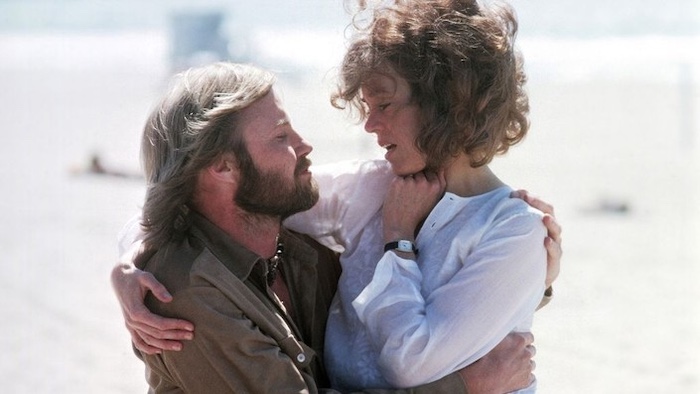
#3: Coming Home (1978)
Hal Ashby directed this film during the long hangover after Vietnam, and it captures the moment when American culture started admitting that soldiers came back changed, not just delayed. Jon Voight plays a paraplegic Marine, Jane Fonda plays the wife of a deployed officer, and the relationship that develops between them is treated with a seriousness that was rare for the period.
The film took home both Best Actor and Best Actress at the 1979 Oscars, and it’s a useful counterweight to the more action-heavy Vietnam films of the same era. If you want to see how Film Threat has covered this terrain elsewhere, the round-up of the best movies for Veterans Day is worth a look. Coming Home pairs well with that list because it understands that the war doesn’t end at the airport and that the people waiting back home are part of the story too.
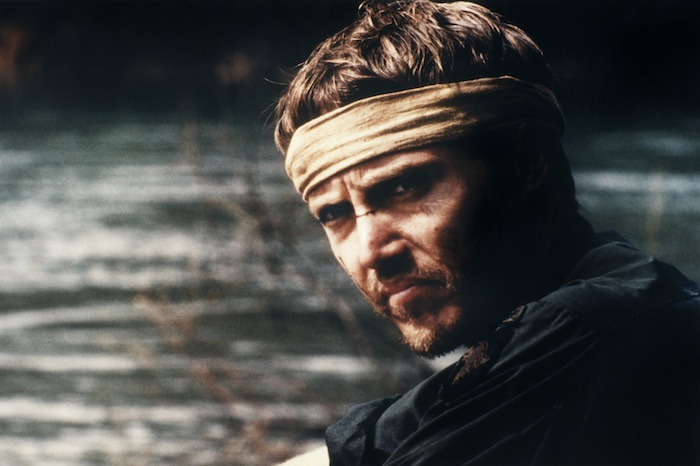
#4: The Deer Hunter (1978)
Michael Cimino’s three-hour epic isn’t really about Vietnam, even though that’s what people remember. It’s about a steel town in Pennsylvania and what happens to the men who came back when Mike, Nick, and Steven walked off to war as a unit and came home as fragments.
Christopher Walken’s character never finishes coming home, and the film’s final scenes, set against a slow rendition of “God Bless America,” refuse to give anyone in the audience the closure they wanted. It’s a difficult sit, and that’s the point. Cimino was making the case that homecoming is a process some veterans never complete and that the people waiting for them have to learn to live with that.
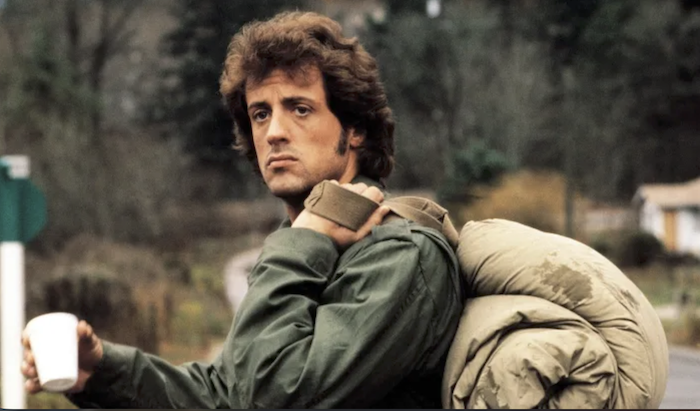
#5: First Blood (1982)
People remember the sequels and forget that the original Rambo is one of the saddest films of the 1980s. John Rambo is a Special Forces vet drifting through small-town America, hassled by a sheriff who treats him like a vagrant, and the violence that follows is the film’s argument that his country had not given him anywhere else to go.
Pew Research has found that around 27% of all veterans, and 44% of post-9/11 veterans, describe their transition to civilian life as difficult, and First Blood feels like a story written for that 27%. Stallone’s monologue at the end, where Rambo breaks down talking about his dead friend in Saigon, is one of the most disarming moments in 80s action cinema, precisely because it isn’t action at all. It’s a man finally saying out loud what nobody back home wanted to hear.
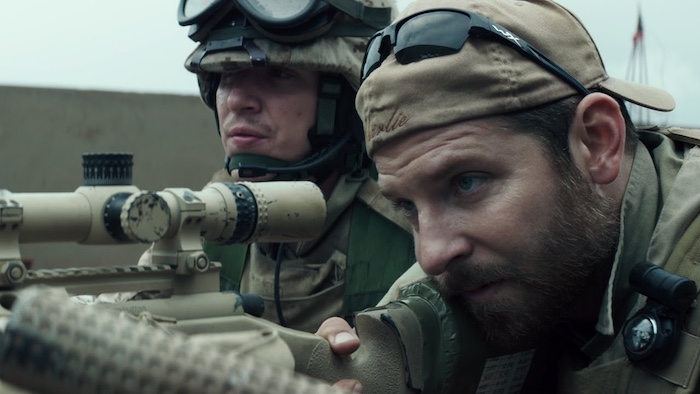
#6: American Sniper (2014)
Clint Eastwood’s adaptation of Chris Kyle’s memoir was a phenomenon and remains divisive, which is the right reaction to a film about a divisive man. Bradley Cooper’s transformation is total, and the homecoming scenes, in which Kyle stares at a blank television set with the volume up high or sits in a bar instead of going home to his family, communicate his condition without dialogue.
The film’s depiction of post-deployment dissociation rings true to anyone who has read the literature on the subject. Film Threat’s review of The Veteran (2026) covers similar territory in a much smaller indie register, and the two films make a useful pairing if you want to see the mainstream and indie treatments of the same wounds back to back.
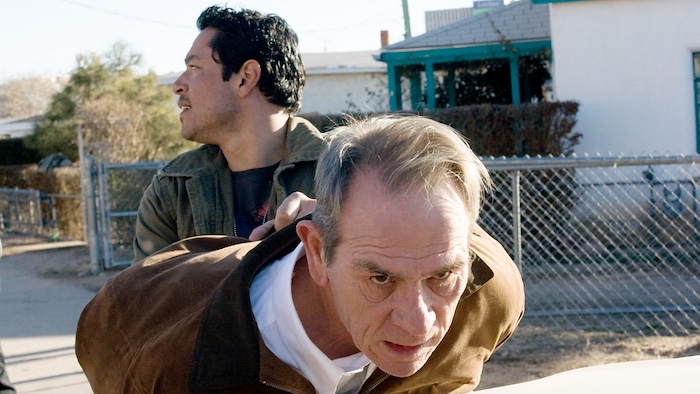
#7: In the Valley of Elah (2007)
Paul Haggis directed this one, and it’s been somewhat lost in the shuffle, which is a shame. Tommy Lee Jones plays a former military police officer searching for his son, who has gone missing after returning from Iraq. The film unfolds like a procedural but turns into a meditation on what war does to young men long after they’re physically safe.
Jones’s performance is among the best of his career, and the film’s final image, involving an upside-down American flag, lands as both protest and prayer. It’s a film that asks what we owe the people we send overseas and doesn’t pretend the answer is simple. Of all the post-9/11 films on this list, this is the one that hurts the most quietly.
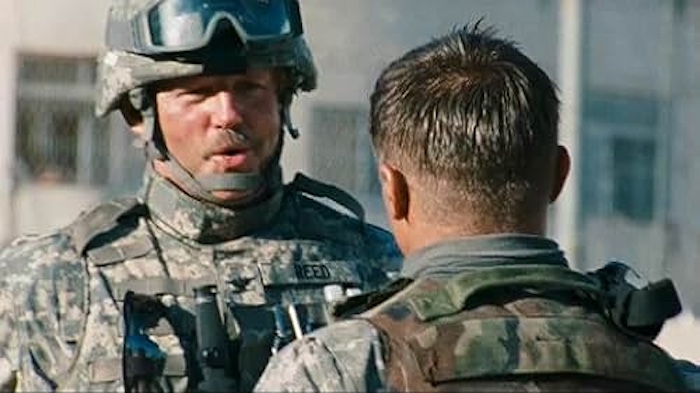
#8: The Hurt Locker (2008)
Kathryn Bigelow’s Best Picture winner is mostly remembered as a wartime film, but its most quietly devastating sequence is at home. Sergeant William James, played by Jeremy Renner, walks through a grocery store in suburban America and freezes in the cereal aisle, and you can see in his face that the thing he was good at, the thing that made him feel alive, is sitting in a war zone half a world away.
The film argues that for some soldiers, the addiction isn’t to substances but to the war itself, and the part of the movie that takes place at home is the part that haunts you afterward. Bigelow is too smart a filmmaker to spell it out, but the message lands anyway: not every veteran wants to come home, and not every homecoming is a happy ending.
#9: The Messenger (2009)
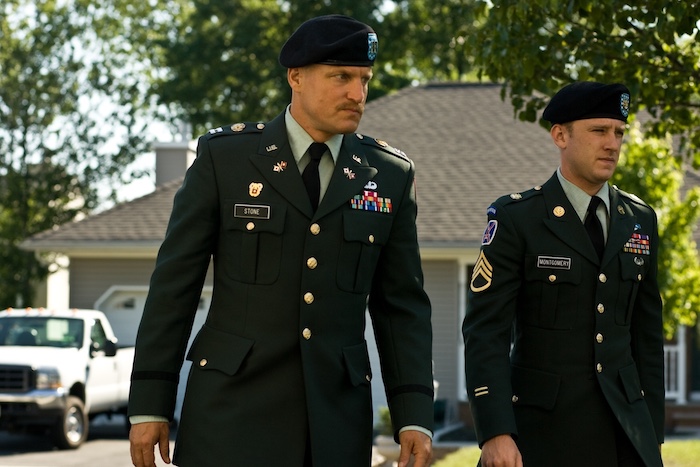
Oren Moverman’s underseen drama puts Ben Foster and Woody Harrelson in the Casualty Notification Office, the unit that knocks on doors to tell families their loved ones have been killed. The performances are extraordinary, with Harrelson earning a deserved Oscar nomination, and the film occupies an angle on the war effort that no other film has quite captured.
The men aren’t combat veterans in the conventional sense, but they are veterans of grief on an industrial scale, and the way the movie handles their slow unraveling is both careful and unflinching. It also features one of the better depictions of survivor’s guilt I’ve seen on film and a scene at a wedding that you’ll remember years later.
#10: Thank You for Your Service (2017)
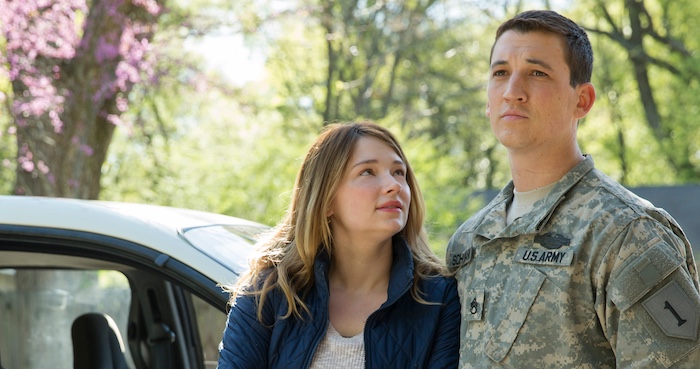
Jason Hall’s directorial debut is the most explicit film on this list about the homecoming itself. Miles Teller plays Adam Schumann, a sergeant returning from Iraq with a brain injury and severe PTSD, and the film documents in close to real time his attempts to get help from a VA system that is overwhelmed and undermanned. It’s not a pleasant film, and it isn’t trying to be. What it is is honest. The closing scenes, where Schumann sits in a group therapy session and finally lets himself say out loud what he survived, are the kind of thing the genre exists to do. Most movies about war are about the spectacle. This one is about the cost.
These ten films don’t share a politics, a country, or even a war. What they share is the willingness to keep filming after the parade is over and after the welcome-home banners have come down. That’s where the harder stories are, and that’s where the best directors keep going back. Watch them in order, and you can see seventy years of American filmmaking trying to figure out how to tell a story that doesn’t quite end.
Source link
#Powerful #Films #Veterans #Returning #Home #War #Film #Threat


Post Comment