#Deadspin #Dodgers #Yoshinobu #Yamamoto #deals #return #Toronto #Blue #Jays">Deadspin | Dodgers’ Yoshinobu Yamamoto deals in return to Toronto vs. Blue Jays
Apr 7, 2026; Toronto, Ontario, CAN; Los Angeles Dodgers starting pitcher Yoshinobu Yamamoto (18) delivers a pitch against the Toronto Blue Jays in the first inning at Rogers Centre. Mandatory Credit: Dan Hamilton-Imagn Images
Yoshinobu Yamamoto pitched an effective six-plus innings Tuesday night and the visiting Los Angeles Dodgers defeated the Toronto Blue Jays 4-1.
Yamamoto (2-1) allowed one run, five hits and one walk with six strikeouts in his first appearance back in the stadium where he was named World Series MVP last year after closing out Game 7.
Edwin Diaz pitched around a single and a walk in the ninth to earn his fourth save.
Alex Freeland had three hits for the Dodgers, who have won five in a row while the Blue Jays have lost six straight.
Los Angeles took a 2-0 lead in the third against Kevin Gausman (0-1), who opposed Yamamoto in Games 2 and 6 of the World Series.
Hyeseong Kim, starting at shortstop after Miguel Rojas was a late scratch because of a family matter, opened with a double to right center. He took third when Freeland reached first on a sacrifice bunt. Gausman’s throw to first hit Freeland. Shohei Ohtani lined an RBI single high off the right field wall, and Freeland scored from third on Will Smith’s fielder’s choice.
Toronto manager John Schneider was ejected in the fifth for arguing a balk call on Gausman. That moved Kim, who led off the inning with a walk, to second. He scored on Freeland‘s single.
Mason Fluharty replaced Gausman with one out and two on in the sixth.
Gausman allowed three runs, five hits and two walks with five strikeouts in 5 1/3 innings.
Yamamoto retired 12 in a row before Andres Gimenez singled to right to lead off the home sixth. George Springer lashed an RBI double to right center with one out.
Freeland led off the seventh with a double, but Fluharty retired the next two hitters before Louis Varland replaced him to get the final out.
Kazuma Okamoto led off the Toronto seventh with a double to center. He took third on Ernie Clement’s bunt single to third. Alex Vesia replaced Yamamoto and walked pinch hitter Davis Schneider to load the bases. Vesia worked out of the jam with two shallow flyouts and a strikeout.
Los Angeles added a run in the ninth against Jeff Hoffman when Freeland reached second on a two-out infield hit and an error by catcher Brandon Valenzuela. Kyle Tucker brought him home with an RBI single.
#IPL #Difference #sixes #couldnt #find #laments #coach #Jayawardene #loss">IPL 2026: ‘Difference was four sixes … we couldn’t find that,’ laments MI coach Jayawardene after loss
Mumbai Indians (MI) head coach Mahela Jayawardene conceded that his team’s bowling plans failed, particularly early on, in its Indian Premier League (IPL) 2026 defeat to Rajasthan Royals in Guwahati.
Royals’ openers Yashasvi Jaiswal and Vaibhav Suryavanshi blazed their way to 80 runs from just five overs in the rain-shortened game. The away team never recovered from the early burst and later slid to a 27-run defeat.
“We had some plans [for Jaiswal and Suryavanshi], but I don’t think we executed those,” admitted Jayawardene at the post-match press conference on Wednesday.
“The margins are very small. These guys are practising really well. We knew the danger, especially when it is rain-curtailed, and they have the license to go up front. I think we missed our line and lengths, and they played really well,” said Jayawardene.
The former Sri Lankan captain also pointed out that his side could have dragged the game closer with a better performance with the bat.
“We just needed a couple of partnerships. We lost a few early wickets and lost the momentum. If you look at the end, the difference was four sixes. It was four hits for us, [but] we just couldn’t find that.
“And that without us getting into a rhythm or someone getting a quick 30 or 40 up top. We never thought that it was out of our reach. So, those were the margins. I think they played a really good game today. We were not good enough, and that’s what we have to work on,” said Jayawardene.
The MI coach also added that left-arm spinner Mitchell Santner was rested on Tuesday as a precaution. “Mitch had a little niggle when he came off during the last game. So, it was a precaution that he wasn’t 100 per cent for him to play this game. But hopefully, he’ll be fit for our next game.”
#Deadspin #Late #rallies #lift #Cardinals #10inning #win #Nationals">Deadspin | Late rallies lift Cardinals to 10-inning win over Nationals
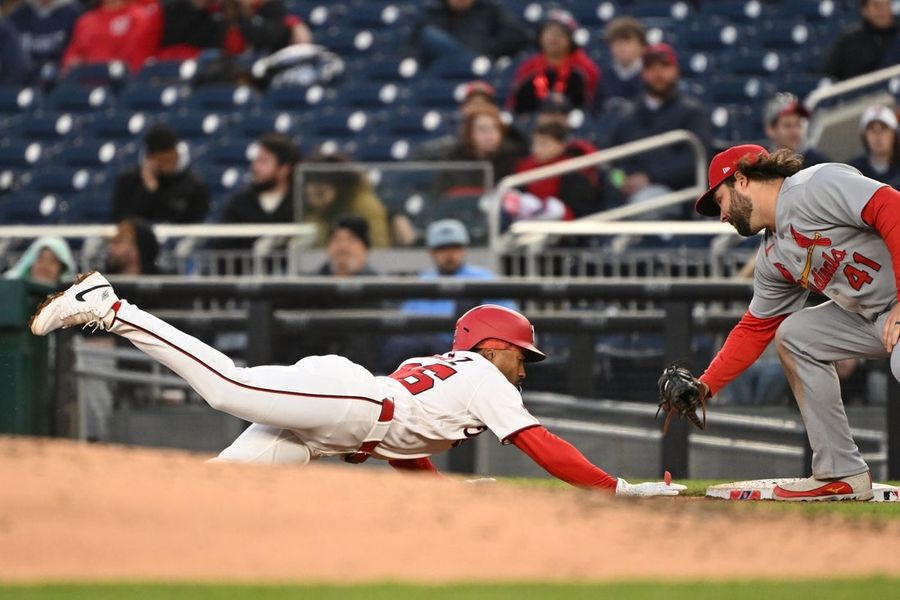
Apr 7, 2026; Washington, District of Columbia, USA; Washington Nationals shortstop Nasim Nunez (26) dives back to first base in front of St. Louis Cardinals first baseman Alec Burleson (41) during a pick off attempt during the second inning at Nationals Park. Mandatory Credit: Rafael Suanes-Imagn Images
Thomas Saggese and JJ Wetherholt hit run-scoring doubles in the 10th inning and the visiting St. Louis Cardinals beat the Washington Nationals 7-6 on Tuesday night.
Saggese led off with a double off Cole Henry (0-2) to score automatic runner Masyn Winn with the go-ahead run. Saggese went to third on a groundout, and after Nathan Church struck out, Wetherholt doubled to right, scoring Saggese to make it 7-5.
Jorbit Vivas was hit by a pitch leading off the bottom of the 10th, and Washington later scored a run on a wild pitch, but Riley O’Brien struck out Nasim Nunez to end it for his third save.
Jordan Walker homered for the second straight night and Church also went deep for the Cardinals. Nolan Gorman had three hits.
George Soriano (1-0) fanned three in two perfect innings for the win.
James Wood homered for the third straight game for Washington, and Curtis Mead had three hits, including a home run.
St. Louis has won two of the past three games while Washington took its sixth loss in the past seven contests.
With St. Louis trailing 5-3, Winn led off the eighth with a walk against Gus Varland. Two outs later, Church snapped an 0-for-22 skid with a game-tying home run.
Wetherholt walked against Cade Cavalli leading off the game, then stole second and went to third on a single by Alec Burleson. Walker hit a potential inning-ending double-play grounder, but shortstop CJ Abrams misplayed it and a run scored. Gorman singled home Burleson to make it 2-0.
Wood opened the Washington first with a single, and with one out, Brady House and Daylin Lile hit back-to-back singles to score him.
Wood led off the third with a homer to left-center to tie it 2-2.
Mead went deep with one out in the fifth to give Washington the lead. With two outs, Lile walked, went to third on Joey Wiemer’s single and scored when Abrams singled to right.
Wood walked with two outs in the sixth, stole second and scored on a Mead single to make it 5-2.
Walker homered in the seventh to pull St. Louis within 5-3.
Cavalli gave up two runs, one earned, on four hits in 4 2/3 innings. He walked four and struck out three. St. Louis starter Matthew Liberatore allowed four runs on nine hits over four innings. He fanned six and walked two.
#Apollo #Tyres #Neeraj #Kanwar #Har #Safar #Mein #Dum #Hai #campaign #struggle #famous #cricketer">Apollo Tyres VC and MD Neeraj Kanwar on the ‘Har Safar Mein Dum Hai’ campaign: It’s about the struggle to become a famous cricketer
Earlier this year, Apollo Tyres — the new lead sponsor for Indian cricket — signalled a clear shift in tone with its ‘Har Safar Mein Dum Hai’ campaign, moving away from light-hearted advertising to a more reflective, story-driven narrative. Anchored by Sachin Tendulkar and the journeys of India’s leading cricketers, the campaign draws a parallel between sporting perseverance and the company’s own evolution, striking a chord with audiences through its emphasis on resilience, family support, and long-term ambition. In this conversation, Vice Chairman and Managing Director Neeraj Kanwar unpacks the thinking behind the campaign, its timing, and how Apollo views its growing association with Indian sport.
Could you walk us through the thought process behind the advertisement? Was releasing it close to the World Cup a strategic decision?
Firstly, thank you. The idea was to release it before the World Cup, but as you can see, this is not a World Cup-specific ad. It’s something that will play out over the next two to three years. From my side, I can say that my wife actually wrote the entire story. She is the creative mind behind it.
The ad is about the struggle one goes through to become one of the most famous cricketers. It captures resilience, commitment, passion, and also the struggles of parents.
In that journey, you have to keep excelling. That’s where Apollo comes in. Apollo has had a similar journey. In 1976, the company was bankrupt, and today we are number one in India. That has come from resilience, excellence, continuous effort, discovering ourselves, and investing in technology to become leaders.
Sachin [Tendulkar] comes in as the god of cricket, a mentor figure guiding these kids. In the same way, my father, the chairman, has been a mentor to our 20,000 employees. Even today, as mobility evolves, he continues to guide us. That’s the correlation between Sachin and the chairman.
You mentioned Sachin. What also stood out was the choice of players — Virat Kohli, Rohit Sharma, and Shubman Gill. Given that Virat and Rohit have retired from T20s and Gill isn’t part of the current World Cup setup, what was the thinking behind this selection?
You said it yourself. They are currently the top players.
Apollo is also a top company. So why would I go for second-best when I have access to the best?
These players have strong journeys. A lot of research has gone into the casting. Virat’s younger version looks identical, but the same effort has gone into the others too, including parents and costumes.
Their journeys are all different but equally difficult. Take Rohit, for instance. He grew up in a chawl in Mumbai, and his journey from there to here is significant.
Is there a possibility of doing something similar with the women’s team, given their recent success?
We are looking into it. I’m very excited because, since Apollo tied up on the jersey, we’ve already had two World Cups — one with the women’s team and one at the Under-19 level.
We have now added a T20 title as well. So yes, the women’s team is very much on my mind. Right now, we are just on the jersey, but discussions are ongoing internally.
Cricket guarantees visibility in India. But as a brand, how do you ensure that this translates into actual value and not just visibility?
We have done this with ROI in mind. ₹580 crore is not a small investment. Since tying up on the jersey in September, we have seen sales increase, better distribution, new dealers, and higher throughput at dealer counters.
This is especially visible in car tyres, scooter tyres, and tractor tyres. The biggest advantage is rural reach. Cricket allows us to reach all of India instantly. People in villages are watching on phones and TVs. That awareness is driving growth in rural markets.
Apollo has also invested in football, both in India and Europe. Given the uncertainty around Indian football, do you still see it as a viable space?
Football is growing in India. India needs to become a sporting nation. Investment should go into multiple sports, not just cricket. The government needs to replicate cricket’s success across other sports.
We are seeing progress. With increased focus, India is winning more medals at the Asian Games and Olympics. A strong public-private partnership can help identify and nurture talent.
Football is becoming popular, especially with global influences like Lionel Messi. European clubs are also looking at India for academies and talent. There is recognition that India has potential.
Have your European partnerships offered insights into how similar models could work in India?
The key issue in India is infrastructure. In cricket, we have built world-class stadiums. Ahmedabad, for example, is phenomenal. Compared to Old Trafford, it stands out.
So we have the capability. The question is why we are not doing this across all sports. We were dominant in hockey once but have slipped.
If we invest in infrastructure and training across sports, India can succeed. We have proven ourselves in business, technology, and science. The issue is focus.
Right now, 90 per cent of attention goes to cricket. If leadership sets a clear target, like 100 Olympic medals, I’m confident it can happen.
Infrastructure and funding would follow. Without direction, efforts get fragmented.
This also discourages private investment. For example, we partnered with Mahesh Bhupathi to produce a Grand Slam singles champion.
But due to interference from governing bodies, we had to withdraw. If such issues are resolved, any sport can grow. Also, cricket is overcrowded. Talent needs to move into other sports.
Which sports vertical does Apollo see itself investing in over the next five years?
We were not in cricket earlier. My vision was to enter only when we became a brand leader. I didn’t want smaller branding opportunities.
When the right opportunity came, we committed — and this is a long-term commitment.
When I spoke to the BCCI, I made it clear this is not a short-term deal. I believe in long-term partnerships. We’ve been with Manchester United for 12 years.
Even during their downturn, we stayed committed. Similarly, we will continue investing in cricket in India. India accounts for 65 per cent of our business. Cricket is also growing globally, so focusing on it will help build the brand.
With cricket set to feature in the 2028 Los Angeles Olympics, will popularity drive future investment decisions? And would you consider other sports?
Yes, popularity will be a key factor. For Apollo, cricket will remain the focus. However, with our Vredestein brand in Europe, we invest in football, skiing, and marathons. In India, we are involved in golf as well.
#Deadspin #Canadiens #pull #comeback #shootout #victory #Panthers">Deadspin | Canadiens pull off comeback, shootout victory over Panthers
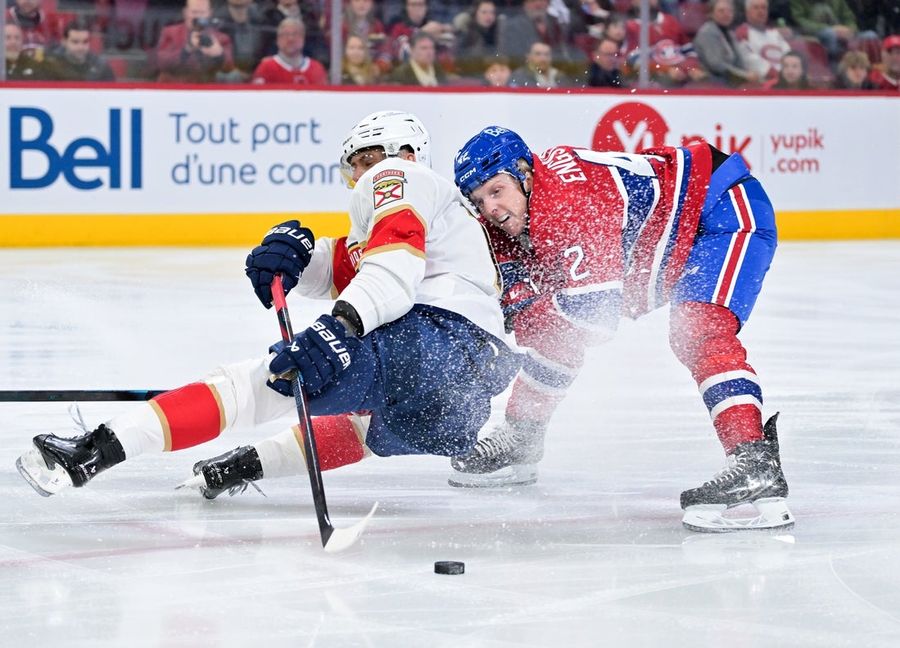
Apr 7, 2026; Montreal, Quebec, CAN; Montreal Canadiens defenseman Adam Engstrom (42) gets a penalty for holding a Florida Panthers player during the first period at the Bell Centre. Mandatory Credit: Eric Bolte-Imagn Images
Cole Caufield and Alexandre Texier scored in the shootout to complete the host Montreal Canadiens’ 4-3 comeback win over the Florida Panthers on Tuesday night.
Ivan Demidov, Phillip Danault and Nick Suzuki scored for the Canadiens (46-22-10, 102 points) in regulation. Montreal has won nine of its last 10. Juraj Slafkovsky had two assists and Jakub Dobes stopped 30 shots.
Carter Verhaeghe, Cole Reinhart and Eetu Luostarinen got the goals for the Panthers (37-37-4, 78 points), who have lost six of eight. Danill Tarasov made 29 saves.
Suzuki tied the game 3-3 with 21 seconds left in regulation. He put the puck into an empty net after taking a pass from defenseman Lane Hutson from behind the net.
Danault tied it 2-2, 6:22 into the third period with a snap shot from the slot. It came with a penalty being called against Florida and the Canadiens playing 6-on-5 on the ice with Dobes pulled.
But Luostarinen restored the lead just 1:27 later when he tipped in defenseman Gustav Forsling’s shot.
Reinhart gave the Panthers a 2-1 lead with 6:17 left in the second period. He won a foot race for the puck from the neutral zone to create a short semi-breakaway for himself and, from almost along the goal line, poked the puck just inside the left goal post.
Demidov’s power-play goal 54 seconds into the middle period had tied the game 1-1 for the Canadiens. It came on a one-time slap shot from the top of the right circle off a pass from Caufield. Florida defenseman Tobias Bjornfot slashed Demidov and had been penalized for it 22 seconds earlier.
Verhaeghe opened the scoring 9:23 into the first period when the rebound of a shot by defenseman Donovan Sebrango caromed out to Verhaeghe in the left circle. He then drilled it past Dobes for Verhaeghe’s 25th goal and his third in the last four games.
Montreal’s Kirby Dach and Texier returned from injuries. Dach missed 11 games with an upper-body injury and Texier seven games with a lower-body injury.
#age #hurry #Sai #Sudharsan #time">In an age of hurry, Sai Sudharsan keeps his own time
Unlike most of his contemporaries, B. Sai Sudharsan employs a bat-down technique. He awaits the bowler in his crease with the bottom edge of the bat resting on the ground.
He raises his bat to load his shot only when the bowler reaches the popping crease, adjusting the extent of his backswing based on his reading of length and shot choice.
It is a batting style from a bygone era, one that makes the process seem tougher than it should be. For Sai Sudharsan, it is a habit born of childhood frailty, one he has considered changing but ultimately retained.
“I started playing by keeping my bat down when I was young,” explains Sai Sudharsan in an interview with Sportstar.
“The main reason at the time was that I was not very strong. My coaches would say, ‘You’re not so strong. So, don’t lift your bat. Otherwise, you’ll get tired soon. Just keep your bat down.’ That’s how I started.”
“But it is helping me. Yes, I had some temptations in between to change it. But I think I had more trust in this. The way I batted, the set-up I have, I trusted this more,” he added.
The 24-year-old’s faith in his natural style has brought rich rewards, most notably the Orange Cap in IPL 2025, when he accumulated 759 runs at an impressive strike rate of 156.17 for Gujarat Titans.
That massive haul was the punctuation mark on an upward trajectory that has defined his IPL career: 145 runs in 2022, 362 in 2023, and 527 in 2024.
At the heart of his progression has been a willingness to adapt by adding new shots to his repertoire, particularly behind square. The southpaw has integrated a variety of ramps and scoops into his strokeplay as he has expanded his run-scoring methods.
This evolution has been the result of conscious planning and focused off-season training, driven by a desire to add new tools without unsettling his batting foundation.
“I definitely do it [prepare for such shots] beforehand. The way the sport is going, we need multiple options against the bowler. Without disturbing my strengths, how can I still improve my range? That is the thought process. It takes time to develop a new shot, but I think I’ve done a very good job.”
While Sai Sudharsan has impressed individually, it is his opening partnership with skipper Shubman Gill that has underpinned Gujarat Titans’ team plan.
Over the last two seasons, the pair has aggregated a league-leading 1453 runs at an average of 63.17. With an emphasis on accumulation and risk minimisation, the two are expected to provide a stable base for the middle order to capitalise on.
Sai Sudharsan believes this is a perfect alignment of team strategy and individual strengths.
“I think it was in unison, where our strengths aligned with what the team required. The team requirement was also very similar. We focus more on taking the game deeper and winning it from there,” he says.
In addition to his appetite for runs, the Tamil Nadu batter is known for his quirky preparation routines. During the England Test series in 2025, he was spotted jotting in his journal before walking out to bat and engaging in visualisation exercises. This is in addition to his habit of not batting on the eve of a game and assessing the pitch by walking on it barefoot.
It would be easy to label these as superstitions and dismiss them. But in a high-pressure environment like competitive sport, such forms of pattern-building are essential for performance, he believes.
“Most sportsmen do it. It’s a feel-good thing. Whatever you do, even practice, it’s about making you feel good and confident. So, whatever helps us feel that way is good. There is a reason for me to do these things — to be in a good headspace and be expressive and natural when I step onto the ground.”
Sai Sudharsan also admits that he has toned down his routines, sticking only to pragmatic ones.
“I used to have a lot of superstitions, but over time I have reduced them and made everything more practical and logical. Sometimes I would eat the same food — it could be ice cream or biryani. If the game went well, I would repeat it for 14 games. I have done that before, but now I have taken it out of my system. It’s just an example,” he says.
The left-hander was last in action in national colours against South Africa in a home Test series, where India suffered a 2-0 defeat.
Sai Sudharsan featured only in the second Test in Guwahati and managed just 29 runs across both innings. It was a failure that prompted serious introspection.
“I had so much anger towards myself that I was not able to execute when the team needed it. But once the series finished, I understood that I need to work more, be better prepared, and be ready when the situation comes again. That was the biggest thing on my mind.”
Published on Apr 08, 2026
#age #hurry #Sai #Sudharsan #time
Unlike most of his contemporaries, B. Sai Sudharsan employs a bat-down technique. He awaits the…
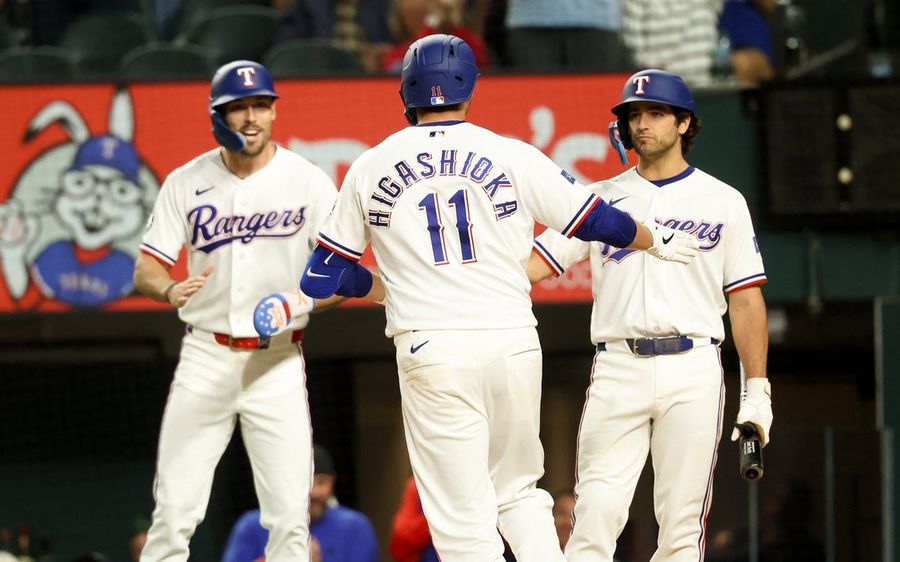
Apr 7, 2026; Arlington, Texas, USA; Texas Rangers catcher Kyle Higashioka (11) celebrates with teammates after hitting a two-run home run during the fifth inning against the Seattle Mariners at Globe Life Field. Mandatory Credit: Kevin Jairaj-Imagn Images
Nathan Eovaldi pitched six quality innings and Kyle Higashioka hit a go-ahead home run, rallying the Texas Rangers to a 3-2 win over the struggling Seattle Mariners on Tuesday night in Arlington, Texas.
Eovaldi, making his 300th career major league start, picked up his first win of the season after two losses, allowing two runs on six hits with seven strikeouts and a pair of walks.
George Kirby (1-2) threw an eight-inning complete game for Seattle, which lost its fourth straight and its sixth in the last seven games.
The Mariners took a quick lead against Eovaldi, who was seeking his first win and first effective start of the season as he entered with an 11.42 ERA.
Eovaldi reached 1,500 career strikeouts when he got Josh Naylor swinging to end the top of the first inning but not before serving up a first-pitch leadoff home run to Seattle’s Brendan Donovan to begin the game.
The Mariners went up 2-0 in the top of the fifth inning on a two-out rally. A Cole Young single, Eovaldi wild pitch and Cal Raleigh’s RBI single had the Mariners up two with Kirby and his 8-0 career record against the Rangers on the mound.
But the Rangers were able to get to Kirby in the bottom of the fifth. Back-to-back singles for Joc Pederson and Evan Carter — with a throwing error from Donovan on the first — made it 2-1. Higashioka drilled a Kirby fastball into the seats in left field to give Texas the lead for good with a two-run homer.
Kirby (1-2) needed just 90 pitches to get through eight innings, allowing three runs on six hits with four strikeouts.
The Rangers got two scoreless innings of relief from left-hander Jacob Latz, who has not given up a run in five appearances this season.
Jakob Junis allowed back-to-back singles to open the ninth inning, but got the next three hitters in order for his second save in as many nights.
#IPL #Valuations #Surge #Reveals #Indian #Sports #Imbalance">IPL Valuations Surge: What It Reveals About Indian Sport’s Imbalance
There is a moment in every boom when the numbers stop feeling real.
When Royal Challengers Bengaluru commands a sale price of USD 1.78 billion and Rajasthan Royals follows at USD 1.63 billion, it is tempting to read this as the triumph of Indian sport. It is, in truth, the triumph of one sport and an indictment of the rest.
In India, cricket is no longer merely leading the pack; it has lapped every other sport in the country.
The Indian Premier League is not a league in the conventional sense. It is a tightly held, 74-match property, compressed into a two-and-a-half-month window to engineer maximum yield. Its economic engine is calibrated and controlled: centralised media rights, franchise permanence, revenue sharing, all designed to compound value, season after season.
But to credit the IPL alone is to mistake the fruit for the tree.
Its extraordinary valuation rests on foundations laid long before April 18, 2008, when Brendon McCullum unleashed bedlam in Bengaluru. Beneath the spectacle lies a domestic system that stages over 2,000 matches a year, giving the league the depth it leans on. Without it, the IPL would be hollow.
No other sport in India has built that base.
Football comes closest in ambition. The All India Football Federation conducts roughly 1,800 matches across 22 national tournaments. The Indian Super League arrived in 2014 with money, momentum and a touch of glamour, with names like Alessandro Del Piero, Roberto Carlos and David Trezeguet briefly turning Indian stadiums into something resembling a global stage. But without promotion, relegation or a coherent calendar, it drifted, uncertain of an identity to build or sustain.
The Hockey India League flickered. The Pro Kabaddi League, once a television disruptor, now carries the fatigue of repetition, its novelty worn thin without a deeper sporting ecosystem to support its growth.
While others chased the IPL’s visibility, they missed the harder, slower work that makes such visibility durable.
This is where a comparison with the United States sharpens the contrast. In the US, sporting success is diversified, with the NFL, NBA, MLB and NHL operating as self-sustaining, deeply rooted systems. Talent advances through collegiate pathways, revenues are equitably distributed, and calendars are respected, each league playing its part in a wider sporting economy.
India, for now, has built excellence in isolation. The spectacle has been replicated in parts, but not the system.
And so Indian sport sits at an inflection point. Cricket’s rise has not come at the cost of others, but its dominance has exposed their structural fragility.
The money has arrived. The system, beyond cricket, remains a work in progress.

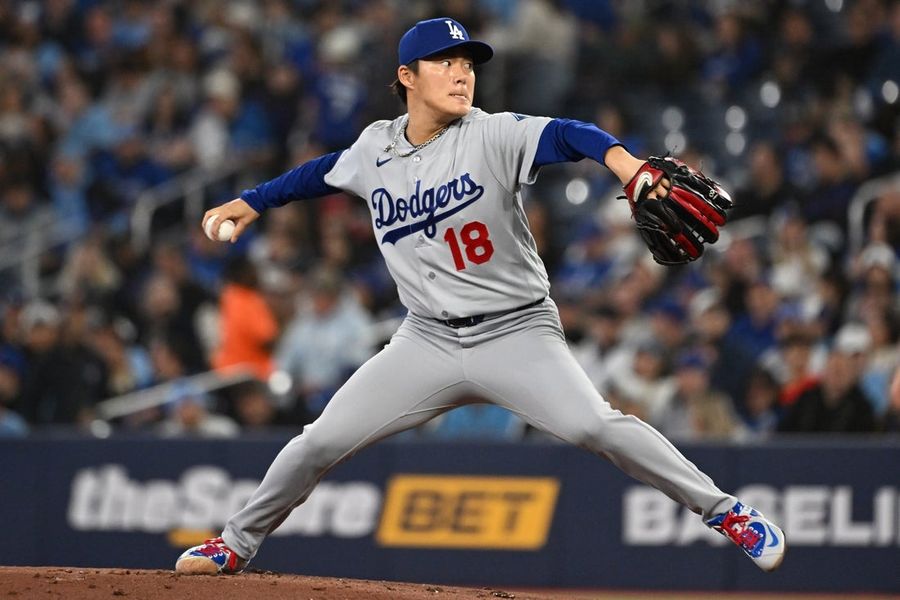 Apr 7, 2026; Toronto, Ontario, CAN; Los Angeles Dodgers starting pitcher Yoshinobu Yamamoto (18) delivers a pitch against the Toronto Blue Jays in the first inning at Rogers Centre. Mandatory Credit: Dan Hamilton-Imagn Images
 ![IPL 2026: ‘Difference was four sixes … we couldn’t find that,’ laments MI coach Jayawardene after loss Mumbai Indians (MI) head coach Mahela Jayawardene conceded that his team’s bowling plans failed, particularly early on, in its Indian Premier League (IPL) 2026 defeat to Rajasthan Royals in Guwahati.Royals’ openers Yashasvi Jaiswal and Vaibhav Suryavanshi blazed their way to 80 runs from just five overs in the rain-shortened game. The away team never recovered from the early burst and later slid to a 27-run defeat.“We had some plans [for Jaiswal and Suryavanshi], but I don’t think we executed those,” admitted Jayawardene at the post-match press conference on Wednesday.“The margins are very small. These guys are practising really well. We knew the danger, especially when it is rain-curtailed, and they have the license to go up front. I think we missed our line and lengths, and they played really well,” said Jayawardene.The former Sri Lankan captain also pointed out that his side could have dragged the game closer with a better performance with the bat.“We just needed a couple of partnerships. We lost a few early wickets and lost the momentum. If you look at the end, the difference was four sixes. It was four hits for us, [but] we just couldn’t find that.“And that without us getting into a rhythm or someone getting a quick 30 or 40 up top. We never thought that it was out of our reach. So, those were the margins. I think they played a really good game today. We were not good enough, and that’s what we have to work on,” said Jayawardene.The MI coach also added that left-arm spinner Mitchell Santner was rested on Tuesday as a precaution. “Mitch had a little niggle when he came off during the last game. So, it was a precaution that he wasn’t 100 per cent for him to play this game. But hopefully, he’ll be fit for our next game.”Published on Apr 08, 2026 #IPL #Difference #sixes #couldnt #find #laments #coach #Jayawardene #loss](https://i2.wp.com/ss-i.thgim.com/public/incoming/lvaphi/article70837008.ece/alternates/LANDSCAPE_1200/19_IPL%202025.jpg?ssl=1 "IPL 2026: ‘Difference was four sixes … we couldn’t find that,’ laments MI coach Jayawardene after loss Mumbai Indians (MI) head coach Mahela Jayawardene conceded that his team’s bowling plans failed, particularly early on, in its Indian Premier League (IPL) 2026 defeat to Rajasthan Royals in Guwahati.Royals’ openers Yashasvi Jaiswal and Vaibhav Suryavanshi blazed their way to 80 runs from just five overs in the rain-shortened game. The away team never recovered from the early burst and later slid to a 27-run defeat.“We had some plans [for Jaiswal and Suryavanshi], but I don’t think we executed those,” admitted Jayawardene at the post-match press conference on Wednesday.“The margins are very small. These guys are practising really well. We knew the danger, especially when it is rain-curtailed, and they have the license to go up front. I think we missed our line and lengths, and they played really well,” said Jayawardene.The former Sri Lankan captain also pointed out that his side could have dragged the game closer with a better performance with the bat.“We just needed a couple of partnerships. We lost a few early wickets and lost the momentum. If you look at the end, the difference was four sixes. It was four hits for us, [but] we just couldn’t find that.“And that without us getting into a rhythm or someone getting a quick 30 or 40 up top. We never thought that it was out of our reach. So, those were the margins. I think they played a really good game today. We were not good enough, and that’s what we have to work on,” said Jayawardene.The MI coach also added that left-arm spinner Mitchell Santner was rested on Tuesday as a precaution. “Mitch had a little niggle when he came off during the last game. So, it was a precaution that he wasn’t 100 per cent for him to play this game. But hopefully, he’ll be fit for our next game.”Published on Apr 08, 2026 #IPL #Difference #sixes #couldnt #find #laments #coach #Jayawardene #loss")


![Apollo Tyres VC and MD Neeraj Kanwar on the ‘Har Safar Mein Dum Hai’ campaign: It’s about the struggle to become a famous cricketer Earlier this year, Apollo Tyres — the new lead sponsor for Indian cricket — signalled a clear shift in tone with its ‘Har Safar Mein Dum Hai’ campaign, moving away from light-hearted advertising to a more reflective, story-driven narrative. Anchored by Sachin Tendulkar and the journeys of India’s leading cricketers, the campaign draws a parallel between sporting perseverance and the company’s own evolution, striking a chord with audiences through its emphasis on resilience, family support, and long-term ambition. In this conversation, Vice Chairman and Managing Director Neeraj Kanwar unpacks the thinking behind the campaign, its timing, and how Apollo views its growing association with Indian sport.[embed]https://www.youtube.com/watch?v=D_RJhCZNNT8[/embed]Could you walk us through the thought process behind the advertisement? Was releasing it close to the World Cup a strategic decision?Firstly, thank you. The idea was to release it before the World Cup, but as you can see, this is not a World Cup-specific ad. It’s something that will play out over the next two to three years. From my side, I can say that my wife actually wrote the entire story. She is the creative mind behind it.The ad is about the struggle one goes through to become one of the most famous cricketers. It captures resilience, commitment, passion, and also the struggles of parents.In that journey, you have to keep excelling. That’s where Apollo comes in. Apollo has had a similar journey. In 1976, the company was bankrupt, and today we are number one in India. That has come from resilience, excellence, continuous effort, discovering ourselves, and investing in technology to become leaders.Sachin [Tendulkar] comes in as the god of cricket, a mentor figure guiding these kids. In the same way, my father, the chairman, has been a mentor to our 20,000 employees. Even today, as mobility evolves, he continues to guide us. That’s the correlation between Sachin and the chairman.You mentioned Sachin. What also stood out was the choice of players — Virat Kohli, Rohit Sharma, and Shubman Gill. Given that Virat and Rohit have retired from T20s and Gill isn’t part of the current World Cup setup, what was the thinking behind this selection?You said it yourself. They are currently the top players.Apollo is also a top company. So why would I go for second-best when I have access to the best?These players have strong journeys. A lot of research has gone into the casting. Virat’s younger version looks identical, but the same effort has gone into the others too, including parents and costumes.Their journeys are all different but equally difficult. Take Rohit, for instance. He grew up in a chawl in Mumbai, and his journey from there to here is significant.Is there a possibility of doing something similar with the women’s team, given their recent success?We are looking into it. I’m very excited because, since Apollo tied up on the jersey, we’ve already had two World Cups — one with the women’s team and one at the Under-19 level.We have now added a T20 title as well. So yes, the women’s team is very much on my mind. Right now, we are just on the jersey, but discussions are ongoing internally.Cricket guarantees visibility in India. But as a brand, how do you ensure that this translates into actual value and not just visibility?We have done this with ROI in mind. ₹580 crore is not a small investment. Since tying up on the jersey in September, we have seen sales increase, better distribution, new dealers, and higher throughput at dealer counters.This is especially visible in car tyres, scooter tyres, and tractor tyres. The biggest advantage is rural reach. Cricket allows us to reach all of India instantly. People in villages are watching on phones and TVs. That awareness is driving growth in rural markets.Apollo has also invested in football, both in India and Europe. Given the uncertainty around Indian football, do you still see it as a viable space?Football is growing in India. India needs to become a sporting nation. Investment should go into multiple sports, not just cricket. The government needs to replicate cricket’s success across other sports.We are seeing progress. With increased focus, India is winning more medals at the Asian Games and Olympics. A strong public-private partnership can help identify and nurture talent.Football is becoming popular, especially with global influences like Lionel Messi. European clubs are also looking at India for academies and talent. There is recognition that India has potential.Have your European partnerships offered insights into how similar models could work in India?The key issue in India is infrastructure. In cricket, we have built world-class stadiums. Ahmedabad, for example, is phenomenal. Compared to Old Trafford, it stands out.So we have the capability. The question is why we are not doing this across all sports. We were dominant in hockey once but have slipped.If we invest in infrastructure and training across sports, India can succeed. We have proven ourselves in business, technology, and science. The issue is focus.Right now, 90 per cent of attention goes to cricket. If leadership sets a clear target, like 100 Olympic medals, I’m confident it can happen.Infrastructure and funding would follow. Without direction, efforts get fragmented.This also discourages private investment. For example, we partnered with Mahesh Bhupathi to produce a Grand Slam singles champion.But due to interference from governing bodies, we had to withdraw. If such issues are resolved, any sport can grow. Also, cricket is overcrowded. Talent needs to move into other sports.Which sports vertical does Apollo see itself investing in over the next five years?We were not in cricket earlier. My vision was to enter only when we became a brand leader. I didn’t want smaller branding opportunities.When the right opportunity came, we committed — and this is a long-term commitment.When I spoke to the BCCI, I made it clear this is not a short-term deal. I believe in long-term partnerships. We’ve been with Manchester United for 12 years.Even during their downturn, we stayed committed. Similarly, we will continue investing in cricket in India. India accounts for 65 per cent of our business. Cricket is also growing globally, so focusing on it will help build the brand.With cricket set to feature in the 2028 Los Angeles Olympics, will popularity drive future investment decisions? And would you consider other sports?Yes, popularity will be a key factor. For Apollo, cricket will remain the focus. However, with our Vredestein brand in Europe, we invest in football, skiing, and marathons. In India, we are involved in golf as well.Published on Apr 08, 2026 #Apollo #Tyres #Neeraj #Kanwar #Har #Safar #Mein #Dum #Hai #campaign #struggle #famous #cricketer](https://i3.wp.com/ss-i.thgim.com/public/cricket/ipl/interviews/gythzi/article70836973.ece/alternates/LANDSCAPE_1200/Neeraj%20Kanwar%20VC%20%20MD%20Apollo%20Tyres%20Ltd.jpg%201.jpeg?ssl=1 "Apollo Tyres VC and MD Neeraj Kanwar on the ‘Har Safar Mein Dum Hai’ campaign: It’s about the struggle to become a famous cricketer Earlier this year, Apollo Tyres — the new lead sponsor for Indian cricket — signalled a clear shift in tone with its ‘Har Safar Mein Dum Hai’ campaign, moving away from light-hearted advertising to a more reflective, story-driven narrative. Anchored by Sachin Tendulkar and the journeys of India’s leading cricketers, the campaign draws a parallel between sporting perseverance and the company’s own evolution, striking a chord with audiences through its emphasis on resilience, family support, and long-term ambition. In this conversation, Vice Chairman and Managing Director Neeraj Kanwar unpacks the thinking behind the campaign, its timing, and how Apollo views its growing association with Indian sport.[embed]https://www.youtube.com/watch?v=D_RJhCZNNT8[/embed]Could you walk us through the thought process behind the advertisement? Was releasing it close to the World Cup a strategic decision?Firstly, thank you. The idea was to release it before the World Cup, but as you can see, this is not a World Cup-specific ad. It’s something that will play out over the next two to three years. From my side, I can say that my wife actually wrote the entire story. She is the creative mind behind it.The ad is about the struggle one goes through to become one of the most famous cricketers. It captures resilience, commitment, passion, and also the struggles of parents.In that journey, you have to keep excelling. That’s where Apollo comes in. Apollo has had a similar journey. In 1976, the company was bankrupt, and today we are number one in India. That has come from resilience, excellence, continuous effort, discovering ourselves, and investing in technology to become leaders.Sachin [Tendulkar] comes in as the god of cricket, a mentor figure guiding these kids. In the same way, my father, the chairman, has been a mentor to our 20,000 employees. Even today, as mobility evolves, he continues to guide us. That’s the correlation between Sachin and the chairman.You mentioned Sachin. What also stood out was the choice of players — Virat Kohli, Rohit Sharma, and Shubman Gill. Given that Virat and Rohit have retired from T20s and Gill isn’t part of the current World Cup setup, what was the thinking behind this selection?You said it yourself. They are currently the top players.Apollo is also a top company. So why would I go for second-best when I have access to the best?These players have strong journeys. A lot of research has gone into the casting. Virat’s younger version looks identical, but the same effort has gone into the others too, including parents and costumes.Their journeys are all different but equally difficult. Take Rohit, for instance. He grew up in a chawl in Mumbai, and his journey from there to here is significant.Is there a possibility of doing something similar with the women’s team, given their recent success?We are looking into it. I’m very excited because, since Apollo tied up on the jersey, we’ve already had two World Cups — one with the women’s team and one at the Under-19 level.We have now added a T20 title as well. So yes, the women’s team is very much on my mind. Right now, we are just on the jersey, but discussions are ongoing internally.Cricket guarantees visibility in India. But as a brand, how do you ensure that this translates into actual value and not just visibility?We have done this with ROI in mind. ₹580 crore is not a small investment. Since tying up on the jersey in September, we have seen sales increase, better distribution, new dealers, and higher throughput at dealer counters.This is especially visible in car tyres, scooter tyres, and tractor tyres. The biggest advantage is rural reach. Cricket allows us to reach all of India instantly. People in villages are watching on phones and TVs. That awareness is driving growth in rural markets.Apollo has also invested in football, both in India and Europe. Given the uncertainty around Indian football, do you still see it as a viable space?Football is growing in India. India needs to become a sporting nation. Investment should go into multiple sports, not just cricket. The government needs to replicate cricket’s success across other sports.We are seeing progress. With increased focus, India is winning more medals at the Asian Games and Olympics. A strong public-private partnership can help identify and nurture talent.Football is becoming popular, especially with global influences like Lionel Messi. European clubs are also looking at India for academies and talent. There is recognition that India has potential.Have your European partnerships offered insights into how similar models could work in India?The key issue in India is infrastructure. In cricket, we have built world-class stadiums. Ahmedabad, for example, is phenomenal. Compared to Old Trafford, it stands out.So we have the capability. The question is why we are not doing this across all sports. We were dominant in hockey once but have slipped.If we invest in infrastructure and training across sports, India can succeed. We have proven ourselves in business, technology, and science. The issue is focus.Right now, 90 per cent of attention goes to cricket. If leadership sets a clear target, like 100 Olympic medals, I’m confident it can happen.Infrastructure and funding would follow. Without direction, efforts get fragmented.This also discourages private investment. For example, we partnered with Mahesh Bhupathi to produce a Grand Slam singles champion.But due to interference from governing bodies, we had to withdraw. If such issues are resolved, any sport can grow. Also, cricket is overcrowded. Talent needs to move into other sports.Which sports vertical does Apollo see itself investing in over the next five years?We were not in cricket earlier. My vision was to enter only when we became a brand leader. I didn’t want smaller branding opportunities.When the right opportunity came, we committed — and this is a long-term commitment.When I spoke to the BCCI, I made it clear this is not a short-term deal. I believe in long-term partnerships. We’ve been with Manchester United for 12 years.Even during their downturn, we stayed committed. Similarly, we will continue investing in cricket in India. India accounts for 65 per cent of our business. Cricket is also growing globally, so focusing on it will help build the brand.With cricket set to feature in the 2028 Los Angeles Olympics, will popularity drive future investment decisions? And would you consider other sports?Yes, popularity will be a key factor. For Apollo, cricket will remain the focus. However, with our Vredestein brand in Europe, we invest in football, skiing, and marathons. In India, we are involved in golf as well.Published on Apr 08, 2026 #Apollo #Tyres #Neeraj #Kanwar #Har #Safar #Mein #Dum #Hai #campaign #struggle #famous #cricketer")

![In an age of hurry, Sai Sudharsan keeps his own time Unlike most of his contemporaries, B. Sai Sudharsan employs a bat-down technique. He awaits the bowler in his crease with the bottom edge of the bat resting on the ground.He raises his bat to load his shot only when the bowler reaches the popping crease, adjusting the extent of his backswing based on his reading of length and shot choice.It is a batting style from a bygone era, one that makes the process seem tougher than it should be. For Sai Sudharsan, it is a habit born of childhood frailty, one he has considered changing but ultimately retained.“I started playing by keeping my bat down when I was young,” explains Sai Sudharsan in an interview with Sportstar.“The main reason at the time was that I was not very strong. My coaches would say, ‘You’re not so strong. So, don’t lift your bat. Otherwise, you’ll get tired soon. Just keep your bat down.’ That’s how I started.”“But it is helping me. Yes, I had some temptations in between to change it. But I think I had more trust in this. The way I batted, the set-up I have, I trusted this more,” he added.The 24-year-old’s faith in his natural style has brought rich rewards, most notably the Orange Cap in IPL 2025, when he accumulated 759 runs at an impressive strike rate of 156.17 for Gujarat Titans.That massive haul was the punctuation mark on an upward trajectory that has defined his IPL career: 145 runs in 2022, 362 in 2023, and 527 in 2024.At the heart of his progression has been a willingness to adapt by adding new shots to his repertoire, particularly behind square. The southpaw has integrated a variety of ramps and scoops into his strokeplay as he has expanded his run-scoring methods.This evolution has been the result of conscious planning and focused off-season training, driven by a desire to add new tools without unsettling his batting foundation.“I definitely do it [prepare for such shots] beforehand. The way the sport is going, we need multiple options against the bowler. Without disturbing my strengths, how can I still improve my range? That is the thought process. It takes time to develop a new shot, but I think I’ve done a very good job.”While Sai Sudharsan has impressed individually, it is his opening partnership with skipper Shubman Gill that has underpinned Gujarat Titans’ team plan.Over the last two seasons, the pair has aggregated a league-leading 1453 runs at an average of 63.17. With an emphasis on accumulation and risk minimisation, the two are expected to provide a stable base for the middle order to capitalise on.Sai Sudharsan believes this is a perfect alignment of team strategy and individual strengths.“I think it was in unison, where our strengths aligned with what the team required. The team requirement was also very similar. We focus more on taking the game deeper and winning it from there,” he says.In addition to his appetite for runs, the Tamil Nadu batter is known for his quirky preparation routines. During the England Test series in 2025, he was spotted jotting in his journal before walking out to bat and engaging in visualisation exercises. This is in addition to his habit of not batting on the eve of a game and assessing the pitch by walking on it barefoot.It would be easy to label these as superstitions and dismiss them. But in a high-pressure environment like competitive sport, such forms of pattern-building are essential for performance, he believes.“Most sportsmen do it. It’s a feel-good thing. Whatever you do, even practice, it’s about making you feel good and confident. So, whatever helps us feel that way is good. There is a reason for me to do these things — to be in a good headspace and be expressive and natural when I step onto the ground.”Sai Sudharsan also admits that he has toned down his routines, sticking only to pragmatic ones.“I used to have a lot of superstitions, but over time I have reduced them and made everything more practical and logical. Sometimes I would eat the same food — it could be ice cream or biryani. If the game went well, I would repeat it for 14 games. I have done that before, but now I have taken it out of my system. It’s just an example,” he says.The left-hander was last in action in national colours against South Africa in a home Test series, where India suffered a 2-0 defeat.Sai Sudharsan featured only in the second Test in Guwahati and managed just 29 runs across both innings. It was a failure that prompted serious introspection.“I had so much anger towards myself that I was not able to execute when the team needed it. But once the series finished, I understood that I need to work more, be better prepared, and be ready when the situation comes again. That was the biggest thing on my mind.”Published on Apr 08, 2026 #age #hurry #Sai #Sudharsan #time](https://i2.wp.com/ss-i.thgim.com/public/incoming/xz4tpc/article70836964.ece/alternates/LANDSCAPE_1200/India_IPL_Cricket_9653_.jpg?ssl=1 "In an age of hurry, Sai Sudharsan keeps his own time Unlike most of his contemporaries, B. Sai Sudharsan employs a bat-down technique. He awaits the bowler in his crease with the bottom edge of the bat resting on the ground.He raises his bat to load his shot only when the bowler reaches the popping crease, adjusting the extent of his backswing based on his reading of length and shot choice.It is a batting style from a bygone era, one that makes the process seem tougher than it should be. For Sai Sudharsan, it is a habit born of childhood frailty, one he has considered changing but ultimately retained.“I started playing by keeping my bat down when I was young,” explains Sai Sudharsan in an interview with Sportstar.“The main reason at the time was that I was not very strong. My coaches would say, ‘You’re not so strong. So, don’t lift your bat. Otherwise, you’ll get tired soon. Just keep your bat down.’ That’s how I started.”“But it is helping me. Yes, I had some temptations in between to change it. But I think I had more trust in this. The way I batted, the set-up I have, I trusted this more,” he added.The 24-year-old’s faith in his natural style has brought rich rewards, most notably the Orange Cap in IPL 2025, when he accumulated 759 runs at an impressive strike rate of 156.17 for Gujarat Titans.That massive haul was the punctuation mark on an upward trajectory that has defined his IPL career: 145 runs in 2022, 362 in 2023, and 527 in 2024.At the heart of his progression has been a willingness to adapt by adding new shots to his repertoire, particularly behind square. The southpaw has integrated a variety of ramps and scoops into his strokeplay as he has expanded his run-scoring methods.This evolution has been the result of conscious planning and focused off-season training, driven by a desire to add new tools without unsettling his batting foundation.“I definitely do it [prepare for such shots] beforehand. The way the sport is going, we need multiple options against the bowler. Without disturbing my strengths, how can I still improve my range? That is the thought process. It takes time to develop a new shot, but I think I’ve done a very good job.”While Sai Sudharsan has impressed individually, it is his opening partnership with skipper Shubman Gill that has underpinned Gujarat Titans’ team plan.Over the last two seasons, the pair has aggregated a league-leading 1453 runs at an average of 63.17. With an emphasis on accumulation and risk minimisation, the two are expected to provide a stable base for the middle order to capitalise on.Sai Sudharsan believes this is a perfect alignment of team strategy and individual strengths.“I think it was in unison, where our strengths aligned with what the team required. The team requirement was also very similar. We focus more on taking the game deeper and winning it from there,” he says.In addition to his appetite for runs, the Tamil Nadu batter is known for his quirky preparation routines. During the England Test series in 2025, he was spotted jotting in his journal before walking out to bat and engaging in visualisation exercises. This is in addition to his habit of not batting on the eve of a game and assessing the pitch by walking on it barefoot.It would be easy to label these as superstitions and dismiss them. But in a high-pressure environment like competitive sport, such forms of pattern-building are essential for performance, he believes.“Most sportsmen do it. It’s a feel-good thing. Whatever you do, even practice, it’s about making you feel good and confident. So, whatever helps us feel that way is good. There is a reason for me to do these things — to be in a good headspace and be expressive and natural when I step onto the ground.”Sai Sudharsan also admits that he has toned down his routines, sticking only to pragmatic ones.“I used to have a lot of superstitions, but over time I have reduced them and made everything more practical and logical. Sometimes I would eat the same food — it could be ice cream or biryani. If the game went well, I would repeat it for 14 games. I have done that before, but now I have taken it out of my system. It’s just an example,” he says.The left-hander was last in action in national colours against South Africa in a home Test series, where India suffered a 2-0 defeat.Sai Sudharsan featured only in the second Test in Guwahati and managed just 29 runs across both innings. It was a failure that prompted serious introspection.“I had so much anger towards myself that I was not able to execute when the team needed it. But once the series finished, I understood that I need to work more, be better prepared, and be ready when the situation comes again. That was the biggest thing on my mind.”Published on Apr 08, 2026 #age #hurry #Sai #Sudharsan #time")