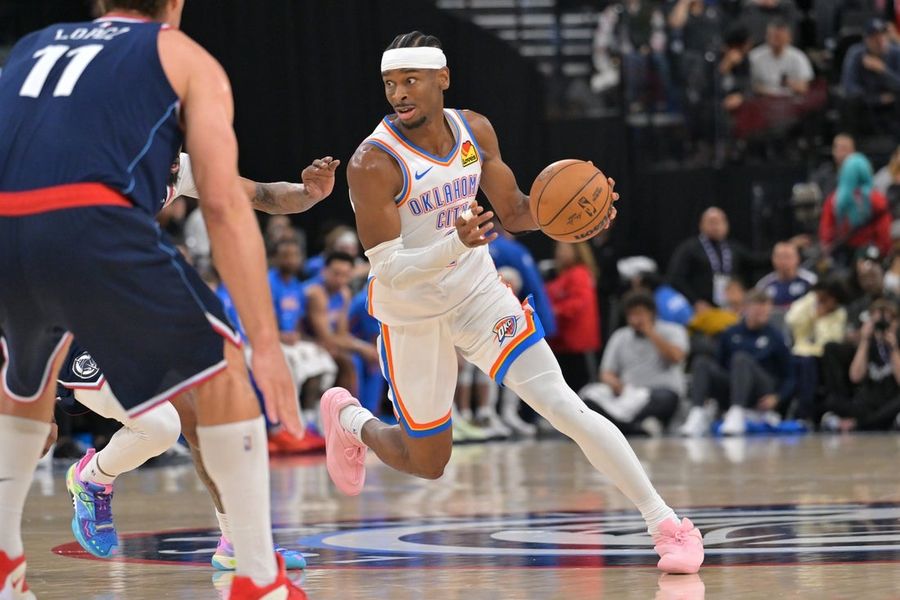
 Apr 8, 2026; Inglewood, California, USA; Oklahoma City Thunder guard Shai Gilgeous-Alexander (2) is defended by Los Angeles Clippers center Brook Lopez (11) in the second half at Intuit Dome. Mandatory Credit: Jayne Kamin-Oncea-Imagn Images
 Chet Holmgren scored 30 points and grabbed 14 rebounds while Shai Gilgeous-Alexander added 20 points with 11 assists as the Oklahoma City Thunder clinched the best record in the NBA with a 128-110 victory Wednesday over the Los Angeles Clippers in Inglewood, Calif.
Isaiah Joe scored 21 points off the bench and Jalen Williams added 18 as the Thunder grabbed the Western Conference’s No. 1 playoff seed for the third consecutive season with their seven straight victory. Oklahoma City, which won the franchise’s first NBA title last season, will have home-court advantage through the NBA Finals.
Kawhi Leonard scored 20 points and Kobe Sanders added 17 off the bench for the Clippers, who have already clinched a spot in the play-in tournament following a 6-21 start to the season. Los Angeles played without Darius Garland (toe).
Brook Lopez and Jordan Miller each scored 16 points as the Clippers remained in eighth place in the Western Conference. The eighth and ninth seeds in the West will be decided Friday when the Clippers visit the Portland Trail Blazers.
Suns 112, Mavericks 107
Devin Booker had 37 points and nine assists, Dillon Brooks scored 28 points and made a late layup to seal the outcome, and host Phoenix held off Dallas to clinch the seventh seed in the Western Conference playoffs.
Royce O’Neale scored 14 points and fellow reserve Collin Gillespie had 13 for the Suns (44-36), who lost an 18-point lead and fell behind in the fourth quarter in their final regular-season home game. The Suns will open the play-in round Tuesday at home against the Los Angeles Clippers or Portland Trail Blazers, who still must decide the Nos. 8 and 9 seeds.
John Poulakidas had a career-high 23 points and made five 3-pointers, and Marvin Bagley III had 20 points for the Mavericks (25-55), who have lost 10 of 12. Cooper Flagg had 11 points, 13 rebounds and six assists, strengthening his Rookie of the Year case. Flagg and his former Duke teammate Kon Knueppel of the Charlotte Hornets are in a two-man race.
Cavaliers 122, Hawks 116
Donovan Mitchell scored 31 points and Evan Mobley had 22 points and a career-high-tying 19 rebounds, powering Cleveland to a win over visiting Atlanta in a potential Eastern Conference playoff preview.
James Harden put up 21 points and Jarrett Allen netted 16 for Cleveland, which is assured of finishing no lower than fourth in the East. The Cavaliers, who have won four straight and six of their past seven, moved within one-half game of the third-place New York Knicks.
Nickeil Alexander-Walker scored 25 points and Jonathan Kuminga added 24 off the bench for the fifth-place Hawks, who failed to clinch a playoff berth. All-Star forward Jalen Johnson had 12 points, 11 rebounds and six assists before fouling out. Atlanta is one-half game ahead of the Toronto Raptors, but both teams could fall out of the top six and into the play-in tournament.
Pistons 137, Bucks 111
Jalen Duren scored 21 points with nine rebounds to lead Detroit to a win over visiting Milwaukee.
Detroit, already the owner of the top seed in the Eastern Conference, won its fourth game in its last five contests. Duncan Robinson added 20 points while superstar Cade Cunningham made his return from an 11-game absence for a collapsed lung. He contributed 13 points with 10 assists.
The Bucks fell for the second game in a row and eighth time in their last 10 games. Michigan native Ryan Rollins led Milwaukee with 23 points while Jericho Sims put up a triple-double with 11 points, 11 rebounds and 10 assists.
Magic 132, Timberwolves 120
Paolo Banchero had 20 points, eight rebounds and six assists as Orlando beat visiting Minnesota for its fourth consecutive victory.
Desmond Bane scored 18 points and Franz Wagner added 17 for Orlando, which moved into seventh place in the tight Eastern Conference standings, one-half game ahead of the Philadelphia 76ers with two games remaining. Goga Bitadze had 14 points and a season-high 15 rebounds, Tristan da Silva added 12 points, and Jalen Suggs and Jevon Carter finished with 11 apiece.
Terrence Shannon Jr. set career highs with five 3-pointers and 33 points for short-handed Minnesota, which clinched the sixth position in the Western Conference on Tuesday. Jaden McDaniels returned after missing six games with a knee injury and scored 18 points in 19 minutes. Naz Reid had 15 points and Donte DiVincenzo added 12.
Nuggets 136, Grizzlies 119
Jamal Murray scored 26 points, Nikola Jokic finished with 14 points, 16 rebounds and 10 assists for his 34th triple-double of the season, and host Denver beat Memphis for its 10th win in a row.
Cameron Johnson posted 18 points as the Nuggets moved 1 1/2 games ahead of the Los Angeles Lakers and the Houston Rockets for the No. 3 seed in the Western Conference.
Cedric Coward finished with 27 points for the Grizzlies, who have lost six in a row and 19 of their past 21.
Spurs 112, Trail Blazers 101
De’Aaron Fox poured in 25 points and San Antonio’s reserves contributed 48 points as the host Spurs defeated Portland.
San Antonio played without Victor Wembanyama (rib) and Stephon Castle (knee) but still had enough to log their 13th win in 14 games. The Spurs became locked into the No. 2 spot in the Western Conference when the Oklahoma City Thunder won their game.
Deni Avdija paced Portland with 29 points, with Scoot Henderson scoring 20. The Trail Blazers remain ninth in the West, a game back of the Los Angeles Clippers ahead of the teams’ Friday meeting in Portland.
–Field Level Media
Apr 8, 2026; Inglewood, California, USA; Oklahoma City Thunder guard Shai Gilgeous-Alexander (2) is defended by Los Angeles Clippers center Brook Lopez (11) in the second half at Intuit Dome. Mandatory Credit: Jayne Kamin-Oncea-Imagn Images Chet Holmgren scored 30 points and grabbed 14 rebounds while Shai Gilgeous-Alexander added 20 points with 11 assists as the Oklahoma City Thunder clinched the best record in the NBA with a 128-110 victory Wednesday over the Los Angeles Clippers in Inglewood, Calif.
Isaiah Joe scored 21 points off the bench and Jalen Williams added 18 as the Thunder grabbed the Western Conference’s No. 1 playoff seed for the third consecutive season with their seven straight victory. Oklahoma City, which won the franchise’s first NBA title last season, will have home-court advantage through the NBA Finals.
Kawhi Leonard scored 20 points and Kobe Sanders added 17 off the bench for the Clippers, who have already clinched a spot in the play-in tournament following a 6-21 start to the season. Los Angeles played without Darius Garland (toe).
Brook Lopez and Jordan Miller each scored 16 points as the Clippers remained in eighth place in the Western Conference. The eighth and ninth seeds in the West will be decided Friday when the Clippers visit the Portland Trail Blazers.
Suns 112, Mavericks 107
Devin Booker had 37 points and nine assists, Dillon Brooks scored 28 points and made a late layup to seal the outcome, and host Phoenix held off Dallas to clinch the seventh seed in the Western Conference playoffs.
Royce O’Neale scored 14 points and fellow reserve Collin Gillespie had 13 for the Suns (44-36), who lost an 18-point lead and fell behind in the fourth quarter in their final regular-season home game. The Suns will open the play-in round Tuesday at home against the Los Angeles Clippers or Portland Trail Blazers, who still must decide the Nos. 8 and 9 seeds.
John Poulakidas had a career-high 23 points and made five 3-pointers, and Marvin Bagley III had 20 points for the Mavericks (25-55), who have lost 10 of 12. Cooper Flagg had 11 points, 13 rebounds and six assists, strengthening his Rookie of the Year case. Flagg and his former Duke teammate Kon Knueppel of the Charlotte Hornets are in a two-man race.
Cavaliers 122, Hawks 116
Donovan Mitchell scored 31 points and Evan Mobley had 22 points and a career-high-tying 19 rebounds, powering Cleveland to a win over visiting Atlanta in a potential Eastern Conference playoff preview.
James Harden put up 21 points and Jarrett Allen netted 16 for Cleveland, which is assured of finishing no lower than fourth in the East. The Cavaliers, who have won four straight and six of their past seven, moved within one-half game of the third-place New York Knicks.
Nickeil Alexander-Walker scored 25 points and Jonathan Kuminga added 24 off the bench for the fifth-place Hawks, who failed to clinch a playoff berth. All-Star forward Jalen Johnson had 12 points, 11 rebounds and six assists before fouling out. Atlanta is one-half game ahead of the Toronto Raptors, but both teams could fall out of the top six and into the play-in tournament.
Pistons 137, Bucks 111
Jalen Duren scored 21 points with nine rebounds to lead Detroit to a win over visiting Milwaukee.
Detroit, already the owner of the top seed in the Eastern Conference, won its fourth game in its last five contests. Duncan Robinson added 20 points while superstar Cade Cunningham made his return from an 11-game absence for a collapsed lung. He contributed 13 points with 10 assists.
The Bucks fell for the second game in a row and eighth time in their last 10 games. Michigan native Ryan Rollins led Milwaukee with 23 points while Jericho Sims put up a triple-double with 11 points, 11 rebounds and 10 assists.
Magic 132, Timberwolves 120
Paolo Banchero had 20 points, eight rebounds and six assists as Orlando beat visiting Minnesota for its fourth consecutive victory.
Desmond Bane scored 18 points and Franz Wagner added 17 for Orlando, which moved into seventh place in the tight Eastern Conference standings, one-half game ahead of the Philadelphia 76ers with two games remaining. Goga Bitadze had 14 points and a season-high 15 rebounds, Tristan da Silva added 12 points, and Jalen Suggs and Jevon Carter finished with 11 apiece.
Terrence Shannon Jr. set career highs with five 3-pointers and 33 points for short-handed Minnesota, which clinched the sixth position in the Western Conference on Tuesday. Jaden McDaniels returned after missing six games with a knee injury and scored 18 points in 19 minutes. Naz Reid had 15 points and Donte DiVincenzo added 12.
Nuggets 136, Grizzlies 119
Jamal Murray scored 26 points, Nikola Jokic finished with 14 points, 16 rebounds and 10 assists for his 34th triple-double of the season, and host Denver beat Memphis for its 10th win in a row.
Cameron Johnson posted 18 points as the Nuggets moved 1 1/2 games ahead of the Los Angeles Lakers and the Houston Rockets for the No. 3 seed in the Western Conference.
Cedric Coward finished with 27 points for the Grizzlies, who have lost six in a row and 19 of their past 21.
Spurs 112, Trail Blazers 101
De’Aaron Fox poured in 25 points and San Antonio’s reserves contributed 48 points as the host Spurs defeated Portland.
San Antonio played without Victor Wembanyama (rib) and Stephon Castle (knee) but still had enough to log their 13th win in 14 games. The Spurs became locked into the No. 2 spot in the Western Conference when the Oklahoma City Thunder won their game.
Deni Avdija paced Portland with 29 points, with Scoot Henderson scoring 20. The Trail Blazers remain ninth in the West, a game back of the Los Angeles Clippers ahead of the teams’ Friday meeting in Portland.
–Field Level Media