Green’s much-awaited return as a bowler in the ninth over was successful as LSG skipper Rishabh Pant miscued a pull to be caught at short fine-leg.
Other KKR bowlers chipped in to sustain the pressure. LSG lost wickets regularly even as a focused Ayush Badoni (54) scored a fine half-century. Mukul’s amazing show down the order kept KKR winless after four matches.
Earlier, Rahane and Raghuvanshi batted with composure and punished loose deliveries to help KKR log a decent 56 for one in the PowerPlay before forming an 84-run partnership.
Besides showcasing lovely straight drives, Rahane (41) improvised to pick his areas for big hits.
Promoted, the in-form Raghuvanshi (45) took his time before smartly hammering two fours and a six in consecutive deliveries on the off-side in Avesh Khan’s first over. He also exhibited his range by sweeping M.Siddharth and flicking Avesh over deep fine-leg.
The ploy to send Rinku Singh up did not succeed but Green (32) and Powell (39) added 70 crucial runs. While Green displayed patience, Powell presented glimpses of Andre Russell as he flexed his muscles in his cameo.
Mohammed Shami, who impressed with his accuracy, pace and movement, stood out with his class as LSG bowled plenty of dot balls.
Green’s much-awaited return as a bowler in the ninth over was successful as LSG skipper Rishabh Pant miscued a pull to be caught at short fine-leg.
Other KKR bowlers chipped in to sustain the pressure. LSG lost wickets regularly even as a focused Ayush Badoni (54) scored a fine half-century. Mukul’s amazing show down the order kept KKR winless after four matches.
Earlier, Rahane and Raghuvanshi batted with composure and punished loose deliveries to help KKR log a decent 56 for one in the PowerPlay before forming an 84-run partnership.
Besides showcasing lovely straight drives, Rahane (41) improvised to pick his areas for big hits.
Promoted, the in-form Raghuvanshi (45) took his time before smartly hammering two fours and a six in consecutive deliveries on the off-side in Avesh Khan’s first over. He also exhibited his range by sweeping M.Siddharth and flicking Avesh over deep fine-leg.
The ploy to send Rinku Singh up did not succeed but Green (32) and Powell (39) added 70 crucial runs. While Green displayed patience, Powell presented glimpses of Andre Russell as he flexed his muscles in his cameo.
Mohammed Shami, who impressed with his accuracy, pace and movement, stood out with his class as LSG bowled plenty of dot balls.
Published on Apr 09, 2026
#KKR #LSG #IPL #Mukuls #blinder #helps #Super #Giants #edge #Knight #Riders #ball #thriller">KKR vs LSG IPL 2026: Mukul’s blinder helps Super Giants edge Knight Riders in last ball thriller
A lesser-known Mukul Choudhary’s late blitzkrieg, an unbeaten 27-ball 54, earned Lucknow Super Giants (LSG) an unbelievable three-wicket win over Kolkata Knight Riders (KKR) in the Indian Premier League (IPL) at the Eden Gardens here on Thursday.
After KKR rode on skipper Ajinkya Rahane, Angkrish Raghuvanshi, Cameron Green and Rovman Powell’s contributions to set a challenging 182, LSG rallied from a desperate situation to snatch a win from the jaws of defeat.
The 21-year-old braveheart from Rajasthan displayed his audacious strokeplay on both sides to help LSG score 30 in the last two overs and secure its second win in a thrilling last-ball finish.
LSG began its chase well before Vaibhav Arora removed Aiden Markram and Mitchell Marsh in the fifth over.
A master of these conditions, with the ball holding a bit on a spread of dew, Sunil Narine came back stronger to bowl cleverly and keep the batters quiet.
Green’s much-awaited return as a bowler in the ninth over was successful as LSG skipper Rishabh Pant miscued a pull to be caught at short fine-leg.
Other KKR bowlers chipped in to sustain the pressure. LSG lost wickets regularly even as a focused Ayush Badoni (54) scored a fine half-century. Mukul’s amazing show down the order kept KKR winless after four matches.
Earlier, Rahane and Raghuvanshi batted with composure and punished loose deliveries to help KKR log a decent 56 for one in the PowerPlay before forming an 84-run partnership.
Besides showcasing lovely straight drives, Rahane (41) improvised to pick his areas for big hits.
Promoted, the in-form Raghuvanshi (45) took his time before smartly hammering two fours and a six in consecutive deliveries on the off-side in Avesh Khan’s first over. He also exhibited his range by sweeping M.Siddharth and flicking Avesh over deep fine-leg.
The ploy to send Rinku Singh up did not succeed but Green (32) and Powell (39) added 70 crucial runs. While Green displayed patience, Powell presented glimpses of Andre Russell as he flexed his muscles in his cameo.
Mohammed Shami, who impressed with his accuracy, pace and movement, stood out with his class as LSG bowled plenty of dot balls.
The first thing I noticed when I started using the HyperX Pulsefire Saga was how light it felt in my hand. At just 69 grams, it felt easy to control without feeling too fragile. While gaming, this made tracking and quick reactions feel smoother. What really makes this mouse different is its modular build. I was able to change the top shell, button covers, and side buttons within seconds. The magnetic system works well, and everything clicks into place securely. Even after changing configurations multiple times, the build stayed consistent.
In terms of comfort, I used it for long sessions, sometimes up to a few hours at a stretch. The weight, or lack thereof, helps a lot with comfort, and I didn’t experience the strain that I normally get with a heavier mouse. There are a couple of things that didn’t quite work for me, though. The side buttons don’t really feel as high-quality as the rest of the mouse, and there’s a little wobble if you look up close. The scroll wheel is also a bit smaller, but these are just nitpicks.
Overall, the module design is more about function than style, especially if you like to have control over mouse comfort.
Performance
In terms of performance, this mouse does not disappoint. The 26K DPI sensor shines for tracking, and the ability to reach an 8K polling rate is a clear indicator that this mouse is intended for precision use. I tested it with games like Valorant and GTA V, and the performance was pretty stellar. The movements felt smooth, and I did not feel jitters or unusual behavior.
Whether I was making small aim corrections or fast flicks, it reacted instantly. This made it easier to stay consistent during matches. The clicks have a fast and responsive feel, particularly when you’re firing weapons in FPS games.
With a wired mouse, I found that the cable didn’t interfere with my gaming experience because it was flexible enough to allow natural movement. Overall, performance is accurate, fast, and reliable, which is particularly important for a competitive gamer.
Software and Battery
Since this is a wired mouse, battery life isn’t something you need to worry about. I could just plug it in and start playing without worrying about charging or interruptions, which I found really convenient.
For software, HyperX provides NGENUITY. I used it to customize DPI settings, adjust the polling rate, and play around with RGB lighting. The controls are easy to understand, so setting things up didn’t take much effort. There are also options to remap buttons and fine-tune performance settings. It gives enough control for most users without feeling overwhelming.
That said, once I finished setting things up, I didn’t really need to open the software again. It works well, but it’s more of a one-time setup tool rather than something you’ll use regularly.
Verdict
After using the HyperX Pulsefire Saga for a while, it’s clear that it’s more than just a gaming mouse. You can currently buy this mouse from Amazon for Rs. 3,990. I played around with a few settings before finding one that felt comfortable to use, and once I got into the swing of things, it was much more comfortable. From a functionality standpoint, I can say it’s held up incredibly well. The sensor is fast and reliable, and the lightweight design is a big plus for long-term use.
One or two things could be improved, particularly the side buttons and the wheel, but they didn’t really affect my overall experience. If you’re like me and want a slightly more personalized, comfortable experience, this mouse makes a lot of sense.
The first thing I noticed when I started using the HyperX Pulsefire Saga was how light it felt in my hand. At just 69 grams, it felt easy to control without feeling too fragile. While gaming, this made tracking and quick reactions feel smoother. What really makes this mouse different is its modular build. I was able to change the top shell, button covers, and side buttons within seconds. The magnetic system works well, and everything clicks into place securely. Even after changing configurations multiple times, the build stayed consistent.
In terms of comfort, I used it for long sessions, sometimes up to a few hours at a stretch. The weight, or lack thereof, helps a lot with comfort, and I didn’t experience the strain that I normally get with a heavier mouse. There are a couple of things that didn’t quite work for me, though. The side buttons don’t really feel as high-quality as the rest of the mouse, and there’s a little wobble if you look up close. The scroll wheel is also a bit smaller, but these are just nitpicks.
Overall, the module design is more about function than style, especially if you like to have control over mouse comfort.
Performance
In terms of performance, this mouse does not disappoint. The 26K DPI sensor shines for tracking, and the ability to reach an 8K polling rate is a clear indicator that this mouse is intended for precision use. I tested it with games like Valorant and GTA V, and the performance was pretty stellar. The movements felt smooth, and I did not feel jitters or unusual behavior.
Whether I was making small aim corrections or fast flicks, it reacted instantly. This made it easier to stay consistent during matches. The clicks have a fast and responsive feel, particularly when you’re firing weapons in FPS games.
With a wired mouse, I found that the cable didn’t interfere with my gaming experience because it was flexible enough to allow natural movement. Overall, performance is accurate, fast, and reliable, which is particularly important for a competitive gamer.
Software and Battery
Since this is a wired mouse, battery life isn’t something you need to worry about. I could just plug it in and start playing without worrying about charging or interruptions, which I found really convenient.
For software, HyperX provides NGENUITY. I used it to customize DPI settings, adjust the polling rate, and play around with RGB lighting. The controls are easy to understand, so setting things up didn’t take much effort. There are also options to remap buttons and fine-tune performance settings. It gives enough control for most users without feeling overwhelming.
That said, once I finished setting things up, I didn’t really need to open the software again. It works well, but it’s more of a one-time setup tool rather than something you’ll use regularly.
Verdict
After using the HyperX Pulsefire Saga for a while, it’s clear that it’s more than just a gaming mouse. You can currently buy this mouse from Amazon for Rs. 3,990. I played around with a few settings before finding one that felt comfortable to use, and once I got into the swing of things, it was much more comfortable. From a functionality standpoint, I can say it’s held up incredibly well. The sensor is fast and reliable, and the lightweight design is a big plus for long-term use.
One or two things could be improved, particularly the side buttons and the wheel, but they didn’t really affect my overall experience. If you’re like me and want a slightly more personalized, comfortable experience, this mouse makes a lot of sense.
If you’re someone who spends hours gaming, you already know how important a good mouse is. The problem? Most gaming mice look different on paper but feel almost identical in hand. With so many options out there, it’s getting harder to find something that actually stands out. The HyperX Pulsefire Saga tries to flip that idea on its head with a modular design. Instead of adjusting your grip to the mouse, you can tweak the mouse itself to match your comfort. It also promises strong performance, with features such as a 26K DPI sensor and an 8K polling rate. But beyond the specs, I wanted to see if the modular design makes it better to use in real gameplay.
HyperX Pulsefire Saga
Deepti Pathak
Summary
After using the HyperX Pulsefire Saga for a while, it’s clear that it’s more than just a gaming mouse. From a functionality standpoint, I can say it’s held up incredibly well. The sensor is fast and reliable, and the lightweight design is a big plus for long-term use.
Design and Build
The first thing I noticed when I started using the HyperX Pulsefire Saga was how light it felt in my hand. At just 69 grams, it felt easy to control without feeling too fragile. While gaming, this made tracking and quick reactions feel smoother. What really makes this mouse different is its modular build. I was able to change the top shell, button covers, and side buttons within seconds. The magnetic system works well, and everything clicks into place securely. Even after changing configurations multiple times, the build stayed consistent.
In terms of comfort, I used it for long sessions, sometimes up to a few hours at a stretch. The weight, or lack thereof, helps a lot with comfort, and I didn’t experience the strain that I normally get with a heavier mouse. There are a couple of things that didn’t quite work for me, though. The side buttons don’t really feel as high-quality as the rest of the mouse, and there’s a little wobble if you look up close. The scroll wheel is also a bit smaller, but these are just nitpicks.
Overall, the module design is more about function than style, especially if you like to have control over mouse comfort.
Performance
In terms of performance, this mouse does not disappoint. The 26K DPI sensor shines for tracking, and the ability to reach an 8K polling rate is a clear indicator that this mouse is intended for precision use. I tested it with games like Valorant and GTA V, and the performance was pretty stellar. The movements felt smooth, and I did not feel jitters or unusual behavior.
Whether I was making small aim corrections or fast flicks, it reacted instantly. This made it easier to stay consistent during matches. The clicks have a fast and responsive feel, particularly when you’re firing weapons in FPS games.
With a wired mouse, I found that the cable didn’t interfere with my gaming experience because it was flexible enough to allow natural movement. Overall, performance is accurate, fast, and reliable, which is particularly important for a competitive gamer.
Software and Battery
Since this is a wired mouse, battery life isn’t something you need to worry about. I could just plug it in and start playing without worrying about charging or interruptions, which I found really convenient.
For software, HyperX provides NGENUITY. I used it to customize DPI settings, adjust the polling rate, and play around with RGB lighting. The controls are easy to understand, so setting things up didn’t take much effort. There are also options to remap buttons and fine-tune performance settings. It gives enough control for most users without feeling overwhelming.
That said, once I finished setting things up, I didn’t really need to open the software again. It works well, but it’s more of a one-time setup tool rather than something you’ll use regularly.
Verdict
After using the HyperX Pulsefire Saga for a while, it’s clear that it’s more than just a gaming mouse. You can currently buy this mouse from Amazon for Rs. 3,990. I played around with a few settings before finding one that felt comfortable to use, and once I got into the swing of things, it was much more comfortable. From a functionality standpoint, I can say it’s held up incredibly well. The sensor is fast and reliable, and the lightweight design is a big plus for long-term use.
One or two things could be improved, particularly the side buttons and the wheel, but they didn’t really affect my overall experience. If you’re like me and want a slightly more personalized, comfortable experience, this mouse makes a lot of sense.
#Deadspin #Sens #Thomas #Chabot #days #breaking #arm">Deadspin | Sens’ Thomas Chabot back 17 days after breaking arm
Feb 28, 2026; Toronto, Ontario, CAN; Ottawa Senators defenseman Thomas Chabot (72) warms up before playing the Toronto Maple Leafs at Scotiabank Arena. Mandatory Credit: Dan Hamilton-Imagn Images
Senators defenseman Thomas Chabot will return to the ice Thursday, just 17 days after breaking his right arm.
He sustained the injury in Ottawa’s March 23 win against the New York Rangers and had surgery on March 26.
The team’s original injury timeline suggested Chabot would be sidelined for four to eight weeks.
Instead, he returns two weeks after the procedure and looks to help Ottawa (41-27-10, 92 points) lock down a playoff spot.
The Senators currently hold the No. 2 wild-card spot in the Eastern Conference with four games to play, including a game on Thursday against the visiting Florida Panthers.
Chabot, 29, missed only eight games after getting cross-checked by Rangers captain J.T. Miller. He has 31 points (seven goals, 24 assists) in 55 games this season.
A first-round pick (18th overall) by the Senators in 2015, Chabot has recorded 335 points (78 goals, 257 assists) in 567 games with the franchise. He was an All-Star in the 2018-19 season.
#David #Bailey #Cards #pick #Revenge #Birds #Seth #Cox #Nations #community #mock #draft">David Bailey goes to Cards at pick No. 3 thanks to Revenge of the Birds’ Seth Cox in SB Nation’s community mock draft
Texas Texh Edge Davis Bailey
The Arizona Cardinals wanted to try and make a move down the draft board and make the value fit at offensive tackle, but there were no takers, so instead they sit and pick the dynamic pass rusher from Texas Tech. Bailey will help a porous Cardinals pass rush that only saw Josh Sweat really create any type of pressures/sacks and give the Cardinals a young protégé at the position to learn from Sweat and eventually take over as the alpha rusher on the team.
Chasing 184, LSG’s batters could not build any momentum and lost wickets on regular occasions. The core of LSG’s batting were dismissed while trying to attack the bouncer, and spinners Anukul Roy and Sunil Narine.
But enter Mukul Choudhary, just when it looked like the match was beyond LSG’s reach. Coming into bat when his team was reeling at 128/7 in 16 overs, Mukul smashed the KKR bowlers to all parts of the ground to take down the equation to one from one.
In the last ball, Vaibhav Arora nailed his slower bouncer to perfection and Mukul failed to hit it, but Avesh Khan managed to reach the striker’s end safely to seal a memorable victory for the visitor.
Chasing 184, LSG’s batters could not build any momentum and lost wickets on regular occasions. The core of LSG’s batting were dismissed while trying to attack the bouncer, and spinners Anukul Roy and Sunil Narine.
But enter Mukul Choudhary, just when it looked like the match was beyond LSG’s reach. Coming into bat when his team was reeling at 128/7 in 16 overs, Mukul smashed the KKR bowlers to all parts of the ground to take down the equation to one from one.
In the last ball, Vaibhav Arora nailed his slower bouncer to perfection and Mukul failed to hit it, but Avesh Khan managed to reach the striker’s end safely to seal a memorable victory for the visitor.
Published on Apr 09, 2026
#KKR #LSG #IPL #Mukul #plays #blinder #Super #Giants #edge #Knight #Riders #thriller">KKR vs LSG IPL 2026: Mukul plays a blinder to help Super Giants edge Knight Riders in last over thriller
Kolkata Knight Riders were firm favourites to win the game until Mukul Choudary’s sensational unbeaten 54 off 27 balls helped Lucknow Super Giants snatch victory against the host from the jaws of defeat.
Mukul hit two fours and seven sixes in his innings to help his side to a three wicket victory on the last ball of the over.
Earlier in the evening, LSG captain Pant won the toss and elected to bowl first. LSG were unchanged, while Sunil Narine returned in place of Blessing Muzarabani for KKR.
Batting first, KKR lost Finn Allen early but captain Ajinkya Rahane and Angkrish Raghuvanshi stitched together a 50 run partnership to bring up the 100 by the 10th over.
KKR were looking set for a 200 plus total given the start but LSG’s bowlers nailed their yorkers to perfection to restrict the host to 184 from its 20 overs.
Chasing 184, LSG’s batters could not build any momentum and lost wickets on regular occasions. The core of LSG’s batting were dismissed while trying to attack the bouncer, and spinners Anukul Roy and Sunil Narine.
But enter Mukul Choudhary, just when it looked like the match was beyond LSG’s reach. Coming into bat when his team was reeling at 128/7 in 16 overs, Mukul smashed the KKR bowlers to all parts of the ground to take down the equation to one from one.
In the last ball, Vaibhav Arora nailed his slower bouncer to perfection and Mukul failed to hit it, but Avesh Khan managed to reach the striker’s end safely to seal a memorable victory for the visitor.
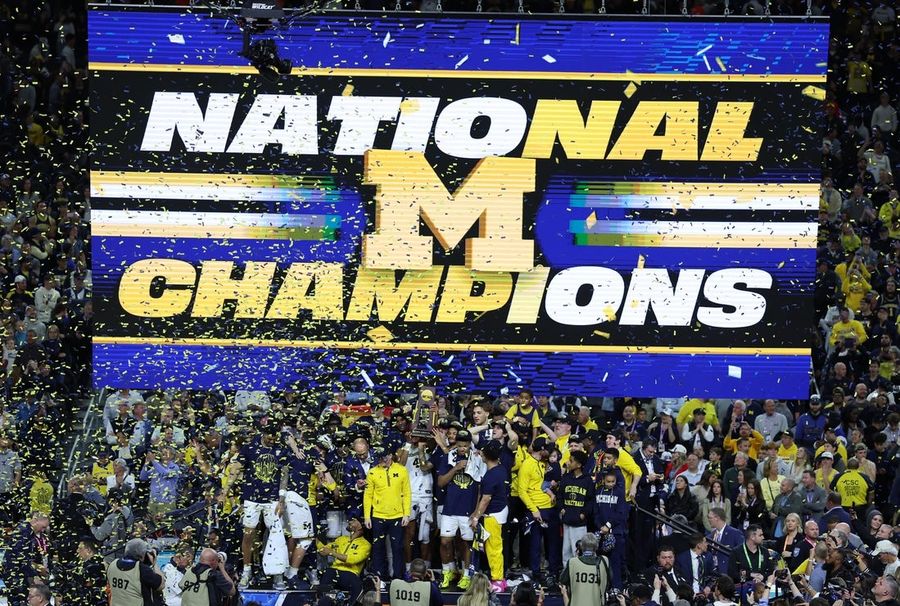
#Deadspin #Mens #NCAA #title #game #mostwatched">Deadspin | Men’s NCAA title game most-watched since 2019
Apr 6, 2026; Indianapolis, IN, USA; Michigan Wolverines head coach Dusty May celebrates with the trophy after defeating the UConn Huskies in the national championship of the Final Four of the men’s 2026 NCAA Tournament at Lucas Oil Stadium. Mandatory Credit: Trevor Ruszkowski-Imagn Images
Michigan’s victory against Connecticut on Monday night drew an average audience of 18.3 million viewers, making it the most-watched NCAA Tournament final in seven years.
The audience across TBS, TNT, truTV and HBO Max marked a 23% increase over the broadcast on those same outlets in 2024.
The Wolverines’ 69-63 win in Indianapolis, their first national championship since 1989, peaked at 20.4 million for the conclusion between 11 and 11:15 p.m. ET.
The numbers were the highest for the NCAA Tournament final since Virginia defeated Texas Tech in Minneapolis in 2019.
The Final Four, which also featured Arizona and Illinois, averaged 14.2 million viewers, an 11% bump from 2024. The entire tournament, which also aired games on CBS, averaged 10.9 million, up 7% from last year and making it the second-most-watched tourney since 1994.
TBS Sports and CBS Sports share coverage of March Madness, with the championship game alternating between the two each year.
–Field Level Media
#Deadspin #Mens #NCAA #title #game #mostwatched
Apr 6, 2026; Indianapolis, IN, USA; Michigan Wolverines head coach Dusty May celebrates with the…





![Live Updates: Trump threatens Iran as dispute over Israel’s war in Lebanon casts doubt on ceasefire
Iran’s deputy foreign minister Saeed Khatibzadeh told CBS News partner network BBC that Israel’s attacks on Lebanon Wednesday were “a grave violation” of the ceasefire agreement, adding that the U.S. must choose “between war and ceasefire – you cannot have it both at the same time.”“You cannot ask for a ceasefire and then accept terms and conditions, accept areas the ceasefire is applied to, and name Lebanon, exactly Lebanon in that, and then your ally just start a massacre,” Khatibzadeh said. When asked if Iran would tell Hezbollah, its proxy group in Lebanon, to stop firing rockets into Israel, Khatibzadeh said “it is quite clear that Hezbollah is [a] pure Lebanese freedom movement.”He did not deny that Iranian Revolutionary Guard officers help train and arm Hezbollah fighters, but said “it is not true that they are acting on behalf of us.” He said the agreement between the U.S. and Iran applied to each country and its allies.Despite Israel’s attacks in Lebanon, Khatibzadeh said Iran remained “very much focused on getting [an agreement] done.”On the Strait of Hormuz, Khatibzadeh said: “Definitely, we are going to provide security for safe passage and it is going to happen after the United States actually withdraws this aggression.”He said Iran would determine a “protocol which is going to run from now on on safe passage in the Strait of Hormuz” with Oman “and, of course, with [the] international community.” “I think that we have shown to everybody that energy security is important for Iran, it’s important for this body of water in the Persian Gulf, and we are going to abide by the international norms and international law … If safe passage mean[s] that a new protocol that ensure[s] forever that this body of water will be peaceful, then that’s okay” but that safety should be two-sided, Khatibzadeh said.The diplomat said Iran had “many doubts” about the prospects for a final peace agreement with the U.S., suggesting Tehran believed Washington could just be exhausting diplomatic channels but planning to revert to military force, or “dictating and not compromising.”
#Live #Updates #Trump #threatens #Iran #dispute #Israels #war #Lebanon #casts #doubt #ceasefireWar, Iran, Israel, Ceasefire, Donald Trump, Hezbollah, Lebanon, Oil and Gas, Benjamin Netanyahu, Strait of Hormuz](https://i2.wp.com/assets1.cbsnewsstatic.com/hub/i/r/2026/04/09/35ce3c67-6e46-4b95-8460-e28d6ef8572f/thumbnail/1200x630/fabcdfd319ad950c1dab58c6c2a2d7b4/lebanon-israel-war-2269923715.jpg?ssl=1 "Live Updates: Trump threatens Iran as dispute over Israel’s war in Lebanon casts doubt on ceasefire
Iran’s deputy foreign minister Saeed Khatibzadeh told CBS News partner network BBC that Israel’s attacks on Lebanon Wednesday were “a grave violation” of the ceasefire agreement, adding that the U.S. must choose “between war and ceasefire – you cannot have it both at the same time.”“You cannot ask for a ceasefire and then accept terms and conditions, accept areas the ceasefire is applied to, and name Lebanon, exactly Lebanon in that, and then your ally just start a massacre,” Khatibzadeh said. When asked if Iran would tell Hezbollah, its proxy group in Lebanon, to stop firing rockets into Israel, Khatibzadeh said “it is quite clear that Hezbollah is [a] pure Lebanese freedom movement.”He did not deny that Iranian Revolutionary Guard officers help train and arm Hezbollah fighters, but said “it is not true that they are acting on behalf of us.” He said the agreement between the U.S. and Iran applied to each country and its allies.Despite Israel’s attacks in Lebanon, Khatibzadeh said Iran remained “very much focused on getting [an agreement] done.”On the Strait of Hormuz, Khatibzadeh said: “Definitely, we are going to provide security for safe passage and it is going to happen after the United States actually withdraws this aggression.”He said Iran would determine a “protocol which is going to run from now on on safe passage in the Strait of Hormuz” with Oman “and, of course, with [the] international community.” “I think that we have shown to everybody that energy security is important for Iran, it’s important for this body of water in the Persian Gulf, and we are going to abide by the international norms and international law … If safe passage mean[s] that a new protocol that ensure[s] forever that this body of water will be peaceful, then that’s okay” but that safety should be two-sided, Khatibzadeh said.The diplomat said Iran had “many doubts” about the prospects for a final peace agreement with the U.S., suggesting Tehran believed Washington could just be exhausting diplomatic channels but planning to revert to military force, or “dictating and not compromising.”
#Live #Updates #Trump #threatens #Iran #dispute #Israels #war #Lebanon #casts #doubt #ceasefireWar, Iran, Israel, Ceasefire, Donald Trump, Hezbollah, Lebanon, Oil and Gas, Benjamin Netanyahu, Strait of Hormuz")