But Salt truly came into his elements against the spin duo of Mitchell Santner and Mayank Markande. Salt welcomed Santner in the fourth over with three clean hits over the fence followed by a boundary. Once the PowerPlay ended, Markande, the leg-spinner, was taken to task with three crisp fours and a towering six, as Salt’s assault gathered pace.
Shardul Thakur’s golden arm broke the 120-run partnership in the 11th over, but captain Patidar arrived with purpose. From the moment he tonked his first ball over mid-off for four, Patidar was precise and powerful, keeping the momentum intact.
Jasprit Bumrah’s probing spell — despite going wicketless for the fourth consecutive game — applied the brakes as RCB had to settle for 53 runs in the last five overs. The damage up front, however, was enough for RCB to return to winning ways.
But Salt truly came into his elements against the spin duo of Mitchell Santner and Mayank Markande. Salt welcomed Santner in the fourth over with three clean hits over the fence followed by a boundary. Once the PowerPlay ended, Markande, the leg-spinner, was taken to task with three crisp fours and a towering six, as Salt’s assault gathered pace.
Shardul Thakur’s golden arm broke the 120-run partnership in the 11th over, but captain Patidar arrived with purpose. From the moment he tonked his first ball over mid-off for four, Patidar was precise and powerful, keeping the momentum intact.
Jasprit Bumrah’s probing spell — despite going wicketless for the fourth consecutive game — applied the brakes as RCB had to settle for 53 runs in the last five overs. The damage up front, however, was enough for RCB to return to winning ways.
Published on Apr 12, 2026
#RCB #IPL #Batters #fire #Royal #Challengers #Bengaluru #Mumbai #Indians #highscoring #contest">MI vs RCB IPL 2026: Batters fire Royal Challengers Bengaluru past Mumbai Indians in high-scoring contest
Phil Salt was sensational in the first half — and not just in the PowerPlay. Rajat Patidar was potent with his power-hitting in the middle overs. And Tim David was devastating at the death.
The trio’s exploits not only helped Royal Challengers Bengaluru pile on a gargantuan total but also take the chase out of the equation against the five-time champion Mumbai Indians’s reach to marquee Indian Premier League clash at the Wankhede Stadium.
Riding on a whirlwind batting display through the innings — despite Virat Kohli’s relatively measured 38-ball 50 — RCB lived up to its billing as defending champion to post 240 for four, the second-highest total of the season.
Once veteran Rohit Sharma had to retire hurt due to a hamstring issue after five overs into the chase, MI wilted under pressure against an accurate bowling attack. Krunal Pandya’s uncanny left-arm spin stifled the MI.
Had it not been for Sherfane Rutherford’s impact as a sub in a lost cause, the margin of defeat – and the net run rate damage as a result – would have been much higher than 18 runs.
While Rohit didn’t return to bat, Kohli also remained off the field for the second half after hurting his ankle during an anchor-like innings.
Despite Kohli’s knock, RCB was too hot to handle in the first innings. While David finished with a towering six off Trent Boult over deep midwicket, Salt had begun in similar fashion against the Kiwi pacer.
But Salt truly came into his elements against the spin duo of Mitchell Santner and Mayank Markande. Salt welcomed Santner in the fourth over with three clean hits over the fence followed by a boundary. Once the PowerPlay ended, Markande, the leg-spinner, was taken to task with three crisp fours and a towering six, as Salt’s assault gathered pace.
Shardul Thakur’s golden arm broke the 120-run partnership in the 11th over, but captain Patidar arrived with purpose. From the moment he tonked his first ball over mid-off for four, Patidar was precise and powerful, keeping the momentum intact.
Jasprit Bumrah’s probing spell — despite going wicketless for the fourth consecutive game — applied the brakes as RCB had to settle for 53 runs in the last five overs. The damage up front, however, was enough for RCB to return to winning ways.
The US president also threatened to bomb Iran’s water treatment facilities as well as its power plants and bridges, repeating an earlier threat, if Tehran did not agree to abandon its nuclear weapons programme – the key sticking point between the two sides.
Trump’s surprise announcement of a blockade came after 21 hours of face-to-face peace negotiations between the US and Iran in Islamabad collapsed on Sunday morning.
JD Vance, the vice-president and head of the US team, said Iran had refused to give up the possibility of developing nuclear weapons, while the Iranian delegates said Washington needed to do more to win their trust.
Risking another increase in oil prices, Trump said he had instructed the US navy to begin “blockading any and all ships trying to enter, or leave, the strait of Hormuz” – and accused Iran of extortion with its own scheme of charging tolls to tankers.
Iran’s Revolutionary Guards responded by declaring that if any warships approached the strait to enforce a blockade – usually considered an act of war – it would be considered a breach of the current ceasefire and would be strongly dealt with. They insisted the strait remained under Iranian control.
Two US destroyers nevertheless crossed and recrossed the strait without incident on Saturday, although Iranian media said they had been threatened as they left. It was the start of a broader mine clearance mission, the US military said.
JD Vance (right) led the US delegation that also included the US special envoy to the Middle East, Steve Witkoff (centre), and Jared Kushner, Trump’s son-in-law. Photograph: Jacquelyn Martin/AP
The president added that US warships would “seek and interdict every vessel” that had paid Iran since the start of the conflict and begin de-mining the central section of the strait, previously declared a “hazardous area” by Tehran, although it is unclear how many mines have actually been laid.
About 100 tankers have transited the strait since the US and Israel started bombing Iran, paying up to $2m each time for passage. Many were bound for China and India, carrying Iranian oil products, and chasing them down could complicate relations between the US and the importing.
The US and Iranian delegations left Pakistan soon after the talks ended. Vance said he had spoken with Donald Trump at least half a dozen times during the talks, held during a 14-day ceasefire announced by the US, Israel and Iran overnight on 7 and 8 April.
“We need to see an affirmative commitment that [Iran] will not seek a nuclear weapon, and they will not seek the tools that would enable them to quickly achieve a nuclear weapon,” Vance said. “That is the core goal of the president of the United States, and that’s what we’ve tried to achieve through these negotiations.”
Mohammad Bagher Ghalibaf, the speaker of the Iranian parliament, who had led Tehran’s negotiators, said that, although he and his colleagues had offered “constructive initiatives”, the US had been “unable to gain the trust of the Iranian delegation in this round of negotiations”.
Iran’s semi-official Tasnim news agency said “excessive” US demands had hindered reaching an agreement, but the foreign ministry said more time was needed. “Naturally, from the beginning we should not have expected to reach an agreement in a single session,” the ministry’s spokesperson, Esmail Baghaei said, according to the state broadcaster IRIB.
Pakistani mediators called on the US and Iran to refrain from renewing hostilities and said they would try to arrange a fresh round of talks. “It is imperative that the parties continue to uphold their commitment to the ceasefire,” said Pakistan’s foreign minister, Ishaq Dar.
Iran’s parliament speaker, Mohammad Bagher Ghalibaf (centre, left) met Pakistan’s prime minister, Shehbaz Sharif (centre, right), in Islamabad before the talks. Photograph: Iranian Foreign Ministry/EPA
Vance was accompanied by US special envoy Steve Witkoff and Trump’s son-in-law Jared Kushner. They met Ghalibaf and the foreign minister, Abbas Araghchi, for several negotiating sessions at the Serena hotel in Islamabad, with Pakistan’s powerful army chief, Asim Munir, also present.
Iran’s delegation arrived on Friday dressed in black in mourning for the late supreme leader Ayatollah Ali Khamenei and others killed in the war. They carried shoes and bags of children killed during the bombing of a school next to a military compound, the Iranian government said.
A Pakistani source said the discussions, the highest level direct contact between the US and Iran since 1979, were unpredictable in tone. “There were mood swings from the two sides, and the temperature went up and down during the meeting,” a Pakistani source said after the first round.
In a subsequent Fox News interview, Trump threatened to restart the bombing of Iran if a deal could not be agreed, and threatened to target the country’s water supply as well as its bridges and power generation.
Trump said: “The only thing left, really, is their water, which would be very devastating to hit. I would hate to do it, but it’s their water, their desalinisation plans, their electric generating plants, which are very easy to hit.”
The president was also asked if gas and oil prices might be lower by the US midterms in November, an indication that attacking Iran was not an economic mistake. Prices “could be the same or maybe a little bit higher,” a non-committal Trump replied.
At least 11 were also reported killed in southern Lebanon by the country’s state news service, after at least 30 Israeli strikes in the region. Pope Leo XIV called for a ceasefire after his Sunday prayers, and said he felt “closer than ever” to the country’s people.
The war, which began with US and Israeli strikes on Iran six weeks ago, has killed at least 3,000 people in Iran, 2,020 in Lebanon, 23 in Israel and more than a dozen in Gulf Arab states. It has caused lasting damage to infrastructure in half a dozen Middle Eastern countries.
The US president also threatened to bomb Iran’s water treatment facilities as well as its power plants and bridges, repeating an earlier threat, if Tehran did not agree to abandon its nuclear weapons programme – the key sticking point between the two sides.
Trump’s surprise announcement of a blockade came after 21 hours of face-to-face peace negotiations between the US and Iran in Islamabad collapsed on Sunday morning.
JD Vance, the vice-president and head of the US team, said Iran had refused to give up the possibility of developing nuclear weapons, while the Iranian delegates said Washington needed to do more to win their trust.
Risking another increase in oil prices, Trump said he had instructed the US navy to begin “blockading any and all ships trying to enter, or leave, the strait of Hormuz” – and accused Iran of extortion with its own scheme of charging tolls to tankers.
Iran’s Revolutionary Guards responded by declaring that if any warships approached the strait to enforce a blockade – usually considered an act of war – it would be considered a breach of the current ceasefire and would be strongly dealt with. They insisted the strait remained under Iranian control.
Two US destroyers nevertheless crossed and recrossed the strait without incident on Saturday, although Iranian media said they had been threatened as they left. It was the start of a broader mine clearance mission, the US military said.
JD Vance (right) led the US delegation that also included the US special envoy to the Middle East, Steve Witkoff (centre), and Jared Kushner, Trump’s son-in-law. Photograph: Jacquelyn Martin/AP
The president added that US warships would “seek and interdict every vessel” that had paid Iran since the start of the conflict and begin de-mining the central section of the strait, previously declared a “hazardous area” by Tehran, although it is unclear how many mines have actually been laid.
About 100 tankers have transited the strait since the US and Israel started bombing Iran, paying up to $2m each time for passage. Many were bound for China and India, carrying Iranian oil products, and chasing them down could complicate relations between the US and the importing.
The US and Iranian delegations left Pakistan soon after the talks ended. Vance said he had spoken with Donald Trump at least half a dozen times during the talks, held during a 14-day ceasefire announced by the US, Israel and Iran overnight on 7 and 8 April.
“We need to see an affirmative commitment that [Iran] will not seek a nuclear weapon, and they will not seek the tools that would enable them to quickly achieve a nuclear weapon,” Vance said. “That is the core goal of the president of the United States, and that’s what we’ve tried to achieve through these negotiations.”
Mohammad Bagher Ghalibaf, the speaker of the Iranian parliament, who had led Tehran’s negotiators, said that, although he and his colleagues had offered “constructive initiatives”, the US had been “unable to gain the trust of the Iranian delegation in this round of negotiations”.
Iran’s semi-official Tasnim news agency said “excessive” US demands had hindered reaching an agreement, but the foreign ministry said more time was needed. “Naturally, from the beginning we should not have expected to reach an agreement in a single session,” the ministry’s spokesperson, Esmail Baghaei said, according to the state broadcaster IRIB.
Pakistani mediators called on the US and Iran to refrain from renewing hostilities and said they would try to arrange a fresh round of talks. “It is imperative that the parties continue to uphold their commitment to the ceasefire,” said Pakistan’s foreign minister, Ishaq Dar.
Iran’s parliament speaker, Mohammad Bagher Ghalibaf (centre, left) met Pakistan’s prime minister, Shehbaz Sharif (centre, right), in Islamabad before the talks. Photograph: Iranian Foreign Ministry/EPA
Vance was accompanied by US special envoy Steve Witkoff and Trump’s son-in-law Jared Kushner. They met Ghalibaf and the foreign minister, Abbas Araghchi, for several negotiating sessions at the Serena hotel in Islamabad, with Pakistan’s powerful army chief, Asim Munir, also present.
Iran’s delegation arrived on Friday dressed in black in mourning for the late supreme leader Ayatollah Ali Khamenei and others killed in the war. They carried shoes and bags of children killed during the bombing of a school next to a military compound, the Iranian government said.
A Pakistani source said the discussions, the highest level direct contact between the US and Iran since 1979, were unpredictable in tone. “There were mood swings from the two sides, and the temperature went up and down during the meeting,” a Pakistani source said after the first round.
In a subsequent Fox News interview, Trump threatened to restart the bombing of Iran if a deal could not be agreed, and threatened to target the country’s water supply as well as its bridges and power generation.
Trump said: “The only thing left, really, is their water, which would be very devastating to hit. I would hate to do it, but it’s their water, their desalinisation plans, their electric generating plants, which are very easy to hit.”
The president was also asked if gas and oil prices might be lower by the US midterms in November, an indication that attacking Iran was not an economic mistake. Prices “could be the same or maybe a little bit higher,” a non-committal Trump replied.
At least 11 were also reported killed in southern Lebanon by the country’s state news service, after at least 30 Israeli strikes in the region. Pope Leo XIV called for a ceasefire after his Sunday prayers, and said he felt “closer than ever” to the country’s people.
The war, which began with US and Israeli strikes on Iran six weeks ago, has killed at least 3,000 people in Iran, 2,020 in Lebanon, 23 in Israel and more than a dozen in Gulf Arab states. It has caused lasting damage to infrastructure in half a dozen Middle Eastern countries.
#Trump #blockade #strait #Hormuz #Iran #peace #talks #fail">Trump says US will blockade strait of Hormuz as Iran peace talks fail
Donald Trump has said the US will begin blockading the strait of Hormuz in an attempt to take control of the strategic waterway from Iran in the aftermath of failed peace negotiations between the countries in Pakistan.
The US president also threatened to bomb Iran’s water treatment facilities as well as its power plants and bridges, repeating an earlier threat, if Tehran did not agree to abandon its nuclear weapons programme – the key sticking point between the two sides.
Trump’s surprise announcement of a blockade came after 21 hours of face-to-face peace negotiations between the US and Iran in Islamabad collapsed on Sunday morning.
JD Vance, the vice-president and head of the US team, said Iran had refused to give up the possibility of developing nuclear weapons, while the Iranian delegates said Washington needed to do more to win their trust.
Risking another increase in oil prices, Trump said he had instructed the US navy to begin “blockading any and all ships trying to enter, or leave, the strait of Hormuz” – and accused Iran of extortion with its own scheme of charging tolls to tankers.
Iran’s Revolutionary Guards responded by declaring that if any warships approached the strait to enforce a blockade – usually considered an act of war – it would be considered a breach of the current ceasefire and would be strongly dealt with. They insisted the strait remained under Iranian control.
Two US destroyers nevertheless crossed and recrossed the strait without incident on Saturday, although Iranian media said they had been threatened as they left. It was the start of a broader mine clearance mission, the US military said.
JD Vance (right) led the US delegation that also included the US special envoy to the Middle East, Steve Witkoff (centre), and Jared Kushner, Trump’s son-in-law. Photograph: Jacquelyn Martin/AP
The president added that US warships would “seek and interdict every vessel” that had paid Iran since the start of the conflict and begin de-mining the central section of the strait, previously declared a “hazardous area” by Tehran, although it is unclear how many mines have actually been laid.
About 100 tankers have transited the strait since the US and Israel started bombing Iran, paying up to $2m each time for passage. Many were bound for China and India, carrying Iranian oil products, and chasing them down could complicate relations between the US and the importing.
The US and Iranian delegations left Pakistan soon after the talks ended. Vance said he had spoken with Donald Trump at least half a dozen times during the talks, held during a 14-day ceasefire announced by the US, Israel and Iran overnight on 7 and 8 April.
“We need to see an affirmative commitment that [Iran] will not seek a nuclear weapon, and they will not seek the tools that would enable them to quickly achieve a nuclear weapon,” Vance said. “That is the core goal of the president of the United States, and that’s what we’ve tried to achieve through these negotiations.”
Mohammad Bagher Ghalibaf, the speaker of the Iranian parliament, who had led Tehran’s negotiators, said that, although he and his colleagues had offered “constructive initiatives”, the US had been “unable to gain the trust of the Iranian delegation in this round of negotiations”.
Iran’s semi-official Tasnim news agency said “excessive” US demands had hindered reaching an agreement, but the foreign ministry said more time was needed. “Naturally, from the beginning we should not have expected to reach an agreement in a single session,” the ministry’s spokesperson, Esmail Baghaei said, according to the state broadcaster IRIB.
Pakistani mediators called on the US and Iran to refrain from renewing hostilities and said they would try to arrange a fresh round of talks. “It is imperative that the parties continue to uphold their commitment to the ceasefire,” said Pakistan’s foreign minister, Ishaq Dar.
Iran’s parliament speaker, Mohammad Bagher Ghalibaf (centre, left) met Pakistan’s prime minister, Shehbaz Sharif (centre, right), in Islamabad before the talks. Photograph: Iranian Foreign Ministry/EPA
Vance was accompanied by US special envoy Steve Witkoff and Trump’s son-in-law Jared Kushner. They met Ghalibaf and the foreign minister, Abbas Araghchi, for several negotiating sessions at the Serena hotel in Islamabad, with Pakistan’s powerful army chief, Asim Munir, also present.
Iran’s delegation arrived on Friday dressed in black in mourning for the late supreme leader Ayatollah Ali Khamenei and others killed in the war. They carried shoes and bags of children killed during the bombing of a school next to a military compound, the Iranian government said.
A Pakistani source said the discussions, the highest level direct contact between the US and Iran since 1979, were unpredictable in tone. “There were mood swings from the two sides, and the temperature went up and down during the meeting,” a Pakistani source said after the first round.
In a subsequent Fox News interview, Trump threatened to restart the bombing of Iran if a deal could not be agreed, and threatened to target the country’s water supply as well as its bridges and power generation.
Trump said: “The only thing left, really, is their water, which would be very devastating to hit. I would hate to do it, but it’s their water, their desalinisation plans, their electric generating plants, which are very easy to hit.”
The president was also asked if gas and oil prices might be lower by the US midterms in November, an indication that attacking Iran was not an economic mistake. Prices “could be the same or maybe a little bit higher,” a non-committal Trump replied.
At least 11 were also reported killed in southern Lebanon by the country’s state news service, after at least 30 Israeli strikes in the region. Pope Leo XIV called for a ceasefire after his Sunday prayers, and said he felt “closer than ever” to the country’s people.
The war, which began with US and Israeli strikes on Iran six weeks ago, has killed at least 3,000 people in Iran, 2,020 in Lebanon, 23 in Israel and more than a dozen in Gulf Arab states. It has caused lasting damage to infrastructure in half a dozen Middle Eastern countries.
#Deadspin #Michael #Wacha #stellar #innings #Royals #blank #White #Sox">Deadspin | Michael Wacha goes stellar 8 innings as Royals blank White Sox
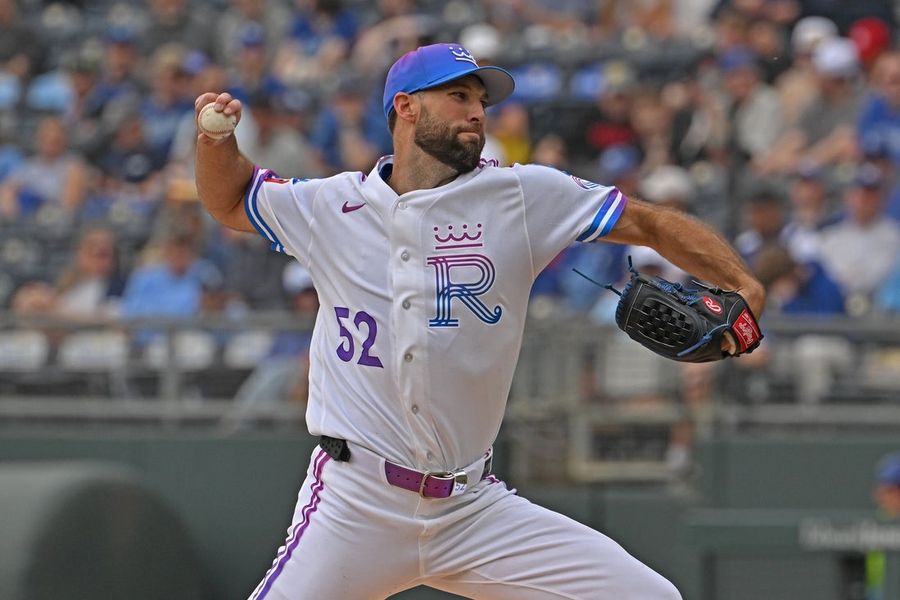
Apr 11, 2026; Kansas City, Missouri, USA; Kansas City Royals starting pitcher Michael Wacha (52) throws a pitch in the first inning against the Chicago White Sox at Kauffman Stadium. Mandatory Credit: Peter Aiken-Imagn Images
Michael Wacha struck out seven over eight stellar innings and Maikel Garcia clubbed a leadoff home run, as the Kansas City Royals continued their strong pitching in this series with Saturday’s 2-0 victory over the visiting Chicago White Sox.
Wacha (2-0), who turns 35 in July, allowed just four hits and a walk while throwing 88 pitches to help the Royals post a second straight victory by the same score after losing Thursday’s opener 2-0.
Lucas Erceg completed a perfect ninth to earn his fifth save for the Royals, who managed just four hits but beat the White Sox for the 24th time in the last 27 games at Kauffman Stadium.
Wacha, who started the game with 17 consecutive strikes, has allowed one run and 10 hits over 21 innings (0.43 ERA) across his first three 2026 starts.
Kansas City starters Seth Lugo, Kris Bubic and Wacha have combined to yield one earned run and 10 hits over 21 1/3 innings over the first three games in the series.
On Saturday, Chicago got doubles from Andrew Benintendi (first inning) and Lenyn Sosa (seventh) but no runners past second base.
The Royals wasted no time getting to White Sox starter Erick Fedde (0-3). Garcia sent the first pitch of the bottom of the first into the left-center field seats.
Kansas City loaded the bases with two outs in the second against Fedde, but Garcia grounded back to the right-hander for the final out of the inning. Fedde threw 45 pitches through the first two innings but settled down to last five frames, yielding just the one run, three hits and a walk while striking out four.
Garcia then ignited the Royals’ path to an insurance run in the eighth. He opened the frame by doubling down the left-field line against Jordan Hicks, went to third base on Bobby Witt Jr.’s fly ball to right field and came home when Vinnie Pasquantino flew out to left.
Although Kansas City has won two straight after losing three in a row, the Royals are now hitless in their last 33 at-bats with runners in scoring position over the last five contests.
The start of Saturday’s game was delayed 25 minutes due to rain.
For years, spring tailoring has occupied an awkward middle ground. Too heavy, and you’re uncomfortable…
TEMPE, AZ – MARCH 3: Kansas Jayhawks forward Flory Bidunga (40) looks on during the college basketball game between the Kansas Jayhawks and the Arizona State Sun Devils on March 3, 2026 at Desert Financial Arena in Tempe, Arizona. (Photo by Kevin Abele/Icon Sportswire via Getty Images) | Icon Sportswire via Getty Images
The Louisville Cardinals became the biggest winner of the transfer portal in men’s college basketball with a 1-2 punch that could immediate vault them into position as one of the top teams in the country for the 2026-2027 season.
Flory Bidunga was by far the top player available in the transfer portal, and he chose Louisville over Duke, Michigan, and St. John’s on Sunday. Bidunga also declared for the 2026 NBA Draft, so it’s possible he never steps foot on campus, but it feels more likely than not that he ends up with the Cardinals. The bouncy 6’10 big man is coming off a terrific sophomore year at Kansas where he emerged as one of the country’s best rim protectors as well a terrifying lob threat and dominant presence on the offensive glass. Bidunga is considered a fringe first-round pick in the 2026 NBA Draft, but he would likely get significantly more money from Louisville than at his draft slot.
Louisville also landed a commitment from former Oregon point guard Jackson Shelstad on Sunday. Shelstad only played 12 games last season with a hand injury, but he looked like one of the better lead guards in the country last time he played a full season as a sophomore. The 6-foot guard ripped 38 percent of his threes in his last full season in 2024-25, and he seemed to be making a big leap as a playmaker before the injury. Shelstad is reportedly applying for a medical redshirt, so it’s possible he’ll have two years of college elibility left.
Bidunga and Shelstad’s commitments were framed as a packaged deal by ESPN. The Cardinals were also one of the biggest winners of last year’s transfer portal, but still couldn’t win a game in the NCAA tournament as star freshman point guard Mikel Brown Jr. was limited with a back injury. Louisville is expected to return Adrian Wooley, who could also be in for a breakout junior season.
Cards head coach Pat Kelsey hit a grand slam in the transfer portal. With Duke lacking a star on the level of Cooper Flagg or Cameron Boozer next season, and North Carolina just starting to rebuild with new coach Mike Malone, it’s possible Louisville just became the preseason favorites in the ACC as long as Bidunga doesn’t jump to the draft.
TEMPE, AZ – MARCH 3: Kansas Jayhawks forward Flory Bidunga (40) looks on during the college basketball game between the Kansas Jayhawks and the Arizona State Sun Devils on March 3, 2026 at Desert Financial Arena in Tempe, Arizona. (Photo by Kevin Abele/Icon Sportswire via Getty Images) | Icon Sportswire via Getty Images
The Louisville Cardinals became the biggest winner of the transfer portal in men’s college basketball with a 1-2 punch that could immediate vault them into position as one of the top teams in the country for the 2026-2027 season.
Flory Bidunga was by far the top player available in the transfer portal, and he chose Louisville over Duke, Michigan, and St. John’s on Sunday. Bidunga also declared for the 2026 NBA Draft, so it’s possible he never steps foot on campus, but it feels more likely than not that he ends up with the Cardinals. The bouncy 6’10 big man is coming off a terrific sophomore year at Kansas where he emerged as one of the country’s best rim protectors as well a terrifying lob threat and dominant presence on the offensive glass. Bidunga is considered a fringe first-round pick in the 2026 NBA Draft, but he would likely get significantly more money from Louisville than at his draft slot.
Louisville also landed a commitment from former Oregon point guard Jackson Shelstad on Sunday. Shelstad only played 12 games last season with a hand injury, but he looked like one of the better lead guards in the country last time he played a full season as a sophomore. The 6-foot guard ripped 38 percent of his threes in his last full season in 2024-25, and he seemed to be making a big leap as a playmaker before the injury. Shelstad is reportedly applying for a medical redshirt, so it’s possible he’ll have two years of college elibility left.
Bidunga and Shelstad’s commitments were framed as a packaged deal by ESPN. The Cardinals were also one of the biggest winners of last year’s transfer portal, but still couldn’t win a game in the NCAA tournament as star freshman point guard Mikel Brown Jr. was limited with a back injury. Louisville is expected to return Adrian Wooley, who could also be in for a breakout junior season.
Cards head coach Pat Kelsey hit a grand slam in the transfer portal. With Duke lacking a star on the level of Cooper Flagg or Cameron Boozer next season, and North Carolina just starting to rebuild with new coach Mike Malone, it’s possible Louisville just became the preseason favorites in the ACC as long as Bidunga doesn’t jump to the draft.
#Louisville #lands #transfer #portals #top #player #elite #point #guard #massive #haul">Louisville lands transfer portal’s top overall player and elite point guard in massive haul
TEMPE, AZ – MARCH 3: Kansas Jayhawks forward Flory Bidunga (40) looks on during the college basketball game between the Kansas Jayhawks and the Arizona State Sun Devils on March 3, 2026 at Desert Financial Arena in Tempe, Arizona. (Photo by Kevin Abele/Icon Sportswire via Getty Images) | Icon Sportswire via Getty Images
The Louisville Cardinals became the biggest winner of the transfer portal in men’s college basketball with a 1-2 punch that could immediate vault them into position as one of the top teams in the country for the 2026-2027 season.
Flory Bidunga was by far the top player available in the transfer portal, and he chose Louisville over Duke, Michigan, and St. John’s on Sunday. Bidunga also declared for the 2026 NBA Draft, so it’s possible he never steps foot on campus, but it feels more likely than not that he ends up with the Cardinals. The bouncy 6’10 big man is coming off a terrific sophomore year at Kansas where he emerged as one of the country’s best rim protectors as well a terrifying lob threat and dominant presence on the offensive glass. Bidunga is considered a fringe first-round pick in the 2026 NBA Draft, but he would likely get significantly more money from Louisville than at his draft slot.
Louisville also landed a commitment from former Oregon point guard Jackson Shelstad on Sunday. Shelstad only played 12 games last season with a hand injury, but he looked like one of the better lead guards in the country last time he played a full season as a sophomore. The 6-foot guard ripped 38 percent of his threes in his last full season in 2024-25, and he seemed to be making a big leap as a playmaker before the injury. Shelstad is reportedly applying for a medical redshirt, so it’s possible he’ll have two years of college elibility left.
Bidunga and Shelstad’s commitments were framed as a packaged deal by ESPN. The Cardinals were also one of the biggest winners of last year’s transfer portal, but still couldn’t win a game in the NCAA tournament as star freshman point guard Mikel Brown Jr. was limited with a back injury. Louisville is expected to return Adrian Wooley, who could also be in for a breakout junior season.
Cards head coach Pat Kelsey hit a grand slam in the transfer portal. With Duke lacking a star on the level of Cooper Flagg or Cameron Boozer next season, and North Carolina just starting to rebuild with new coach Mike Malone, it’s possible Louisville just became the preseason favorites in the ACC as long as Bidunga doesn’t jump to the draft.
#RCB #IPL #Virat #Kohli #field #innings #Mumbai #Indians">MI vs RCB IPL 2026: Why is Virat Kohli not on the field in the second innings vs Mumbai Indians?
Virat Kohli was not seen on the field during the second innings of the match between Royal Challengers Bengaluru and Mumbai Indians at the Wankhede Stadium on Sunday night.
Kohli had played a big role with the bat in the first innings by scoring a 38-ball 59 to help RCB post a mammoth 240 on the total. But Kohli, who is one of the best fielders in the RCB outfit, was notably absent when the visiting side took the field at the start of the second innings.
While there is no official confirmation as to what prompted the RCB management to take the decision, commentator Simon Doull was heard saying that Kohli is facing an ankle issue and was being rested as a precautionary measure.
It remains to be seen if that was in fact the reason why Kohli was not seen on the field in the second innings, and if that’s the case, to what extent the injury might affect his fitness.
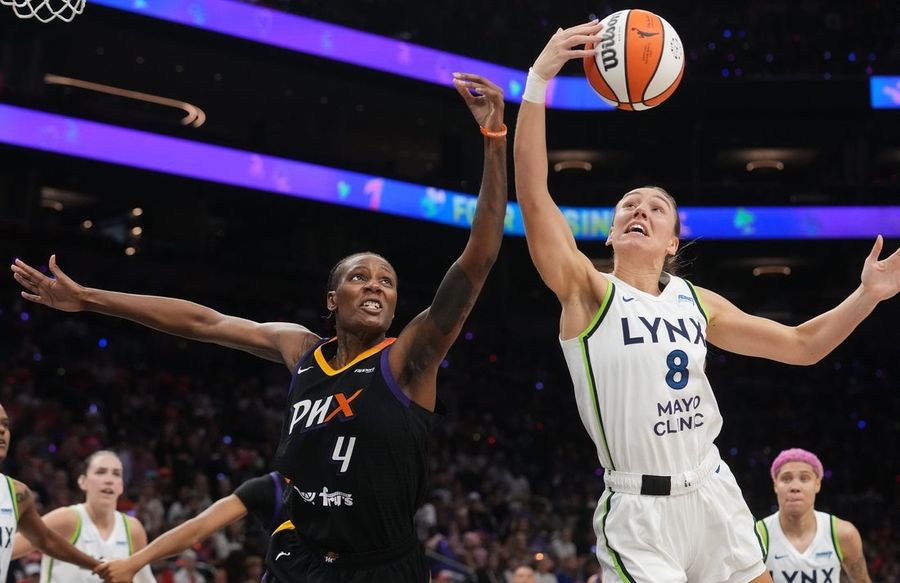
Phoenix Mercury forward Natasha Mack (4) fights for a rebound with Minnesota Lynx forward Alanna Smith (8) during their WNBA semifinal playoff game at PHX Arena on Sept. 28, 2025.
The Dallas Wings have signed free agent forward Alanna Smith, the WNBA’s co-Defensive Player of the Year in 2025, the team announced on Saturday night.
ESPN reported that Smith, who spent the past two seasons with the Minnesota Lynx, has agreed to a three-year max contract, per her agent Sammy Wloszczowski of the Sports International Group agency.
Smith, 29, shared honors with Las Vegas Aces center A’ja Wilson for the individual award and also was selected to the All-Defensive first team in 2025. She was named to the second team in 2024.
The 6-foot-4 Smith ranked third in blocked shots (80) and tied for 10th in steals (55) last season while helping Minnesota rack up the league’s best regular-season record (34-10) and rank second in scoring defense (76.7).
“As the reigning Co-Defensive Player of the Year, she is one of the top two-way players in the WNBA who consistently impacts both sides of the ball,” Wings general manager Curt Miller said in a statement. “From a defensive standpoint, Alanna gives our coaching staff unbelievable versatility — she can play multiple coverages and drastically affect shots around the paint. Offensively — we are excited to pair her with our outstanding guards, showcasing her ability to play inside or outside.”
Smith averaged 9.6 points, 5.1 rebounds, 1.3 steals, 1.9 blocks and 26.5 minutes in 42 regular-season games (all starts) for the Lynx last season. She also averaged 6.0 points, 5.2 rebounds, 2.0 assists, 1.0 steals, 1.5 blocks and 23.5 minutes in six playoff games (all starts).
For her career, the Australian is averaging 7.3 points, 4.6 rebounds, 1.9 assists, 1.0 steals, 1.2 blocks and 20.9 minutes in 183 regular-season games (117 starts) for the Phoenix Mercury (2019-21), Indiana Fever (2022), Chicago Sky (2023) and Lynx (2024-25).
“It’s hard to put into words what my time in Minnesota has meant to me,” Smith wrote in an Instagram post. “This team and this city embraced me and I am so grateful for all the love and support and how this Aussie girl was welcomed with open arms. Forever will hold a special place in my heart.”
Phoenix selected Smith with the eighth overall pick of the 2019 WNBA Draft out of Stanford.


![Trump says US will blockade strait of Hormuz as Iran peace talks failDonald Trump has said the US will begin blockading the strait of Hormuz in an attempt to take control of the strategic waterway from Iran in the aftermath of failed peace negotiations between the countries in Pakistan.The US president also threatened to bomb Iran’s water treatment facilities as well as its power plants and bridges, repeating an earlier threat, if Tehran did not agree to abandon its nuclear weapons programme – the key sticking point between the two sides.Trump’s surprise announcement of a blockade came after 21 hours of face-to-face peace negotiations between the US and Iran in Islamabad collapsed on Sunday morning.JD Vance, the vice-president and head of the US team, said Iran had refused to give up the possibility of developing nuclear weapons, while the Iranian delegates said Washington needed to do more to win their trust.Risking another increase in oil prices, Trump said he had instructed the US navy to begin “blockading any and all ships trying to enter, or leave, the strait of Hormuz” – and accused Iran of extortion with its own scheme of charging tolls to tankers.Iran’s Revolutionary Guards responded by declaring that if any warships approached the strait to enforce a blockade – usually considered an act of war – it would be considered a breach of the current ceasefire and would be strongly dealt with. They insisted the strait remained under Iranian control.Two US destroyers nevertheless crossed and recrossed the strait without incident on Saturday, although Iranian media said they had been threatened as they left. It was the start of a broader mine clearance mission, the US military said.JD Vance (right) led the US delegation that also included the US special envoy to the Middle East, Steve Witkoff (centre), and Jared Kushner, Trump’s son-in-law. Photograph: Jacquelyn Martin/APThe president added that US warships would “seek and interdict every vessel” that had paid Iran since the start of the conflict and begin de-mining the central section of the strait, previously declared a “hazardous area” by Tehran, although it is unclear how many mines have actually been laid.About 100 tankers have transited the strait since the US and Israel started bombing Iran, paying up to $2m each time for passage. Many were bound for China and India, carrying Iranian oil products, and chasing them down could complicate relations between the US and the importing.The US and Iranian delegations left Pakistan soon after the talks ended. Vance said he had spoken with Donald Trump at least half a dozen times during the talks, held during a 14-day ceasefire announced by the US, Israel and Iran overnight on 7 and 8 April.“We need to see an affirmative commitment that [Iran] will not seek a nuclear weapon, and they will not seek the tools that would enable them to quickly achieve a nuclear weapon,” Vance said. “That is the core goal of the president of the United States, and that’s what we’ve tried to achieve through these negotiations.”Mohammad Bagher Ghalibaf, the speaker of the Iranian parliament, who had led Tehran’s negotiators, said that, although he and his colleagues had offered “constructive initiatives”, the US had been “unable to gain the trust of the Iranian delegation in this round of negotiations”.Iran’s semi-official Tasnim news agency said “excessive” US demands had hindered reaching an agreement, but the foreign ministry said more time was needed. “Naturally, from the beginning we should not have expected to reach an agreement in a single session,” the ministry’s spokesperson, Esmail Baghaei said, according to the state broadcaster IRIB.Pakistani mediators called on the US and Iran to refrain from renewing hostilities and said they would try to arrange a fresh round of talks. “It is imperative that the parties continue to uphold their commitment to the ceasefire,” said Pakistan’s foreign minister, Ishaq Dar.Iran’s parliament speaker, Mohammad Bagher Ghalibaf (centre, left) met Pakistan’s prime minister, Shehbaz Sharif (centre, right), in Islamabad before the talks. Photograph: Iranian Foreign Ministry/EPAVance was accompanied by US special envoy Steve Witkoff and Trump’s son-in-law Jared Kushner. They met Ghalibaf and the foreign minister, Abbas Araghchi, for several negotiating sessions at the Serena hotel in Islamabad, with Pakistan’s powerful army chief, Asim Munir, also present.Iran’s delegation arrived on Friday dressed in black in mourning for the late supreme leader Ayatollah Ali Khamenei and others killed in the war. They carried shoes and bags of children killed during the bombing of a school next to a military compound, the Iranian government said.A Pakistani source said the discussions, the highest level direct contact between the US and Iran since 1979, were unpredictable in tone. “There were mood swings from the two sides, and the temperature went up and down during the meeting,” a Pakistani source said after the first round.In a subsequent Fox News interview, Trump threatened to restart the bombing of Iran if a deal could not be agreed, and threatened to target the country’s water supply as well as its bridges and power generation.Trump said: “The only thing left, really, is their water, which would be very devastating to hit. I would hate to do it, but it’s their water, their desalinisation plans, their electric generating plants, which are very easy to hit.”The president was also asked if gas and oil prices might be lower by the US midterms in November, an indication that attacking Iran was not an economic mistake. Prices “could be the same or maybe a little bit higher,” a non-committal Trump replied.At least 11 were also reported killed in southern Lebanon by the country’s state news service, after at least 30 Israeli strikes in the region. Pope Leo XIV called for a ceasefire after his Sunday prayers, and said he felt “closer than ever” to the country’s people.The war, which began with US and Israeli strikes on Iran six weeks ago, has killed at least 3,000 people in Iran, 2,020 in Lebanon, 23 in Israel and more than a dozen in Gulf Arab states. It has caused lasting damage to infrastructure in half a dozen Middle Eastern countries.#Trump #blockade #strait #Hormuz #Iran #peace #talks #fail](https://wp.fifu.app/wolfnewss.com/aHR0cHM6Ly9pLmd1aW0uY28udWsvaW1nL21lZGlhLzkxOTk4MDYwMDRiMzY2MjU4MjdhNDg1MmU2N2M3MzIxMjM2YmU2MjQvNjc1XzBfNjc0OF81Mzk5L21hc3Rlci82NzQ4LmpwZz93aWR0aD0xMjAwJmhlaWdodD02MzAmcXVhbGl0eT04NSZhdXRvPWZvcm1hdCZmaXQ9Y3JvcCZwcmVjcm9wPTQwOjIxLG9mZnNldC14NTAsb2Zmc2V0LXkwJm92ZXJsYXktYWxpZ249Ym90dG9tJTJDbGVmdCZvdmVybGF5LXdpZHRoPTEwMHAmb3ZlcmxheS1iYXNlNjQ9TDJsdFp5OXpkR0YwYVdNdmIzWmxjbXhoZVhNdmRHY3RaR1ZtWVhWc2RDNXdibWMmZW5hYmxlPXVwc2NhbGUmcz0yMjUyY2Q5OGYwZjFhNjEzZjk0NzExMmRiMjZmOTEwNw/c0caa5b41387/trump-says-us-will-blockade-strait-of-hormuz-as-iran-peace-talks-faildonald-trump-has-said-the-us-will-begin-blockading-the-strait-of-hormuz-in-an-attempt-to-take-control-of-the-strategic-waterway-fro.webp?w=0&h=0&c=0&p=127485 "Trump says US will blockade strait of Hormuz as Iran peace talks failDonald Trump has said the US will begin blockading the strait of Hormuz in an attempt to take control of the strategic waterway from Iran in the aftermath of failed peace negotiations between the countries in Pakistan.The US president also threatened to bomb Iran’s water treatment facilities as well as its power plants and bridges, repeating an earlier threat, if Tehran did not agree to abandon its nuclear weapons programme – the key sticking point between the two sides.Trump’s surprise announcement of a blockade came after 21 hours of face-to-face peace negotiations between the US and Iran in Islamabad collapsed on Sunday morning.JD Vance, the vice-president and head of the US team, said Iran had refused to give up the possibility of developing nuclear weapons, while the Iranian delegates said Washington needed to do more to win their trust.Risking another increase in oil prices, Trump said he had instructed the US navy to begin “blockading any and all ships trying to enter, or leave, the strait of Hormuz” – and accused Iran of extortion with its own scheme of charging tolls to tankers.Iran’s Revolutionary Guards responded by declaring that if any warships approached the strait to enforce a blockade – usually considered an act of war – it would be considered a breach of the current ceasefire and would be strongly dealt with. They insisted the strait remained under Iranian control.Two US destroyers nevertheless crossed and recrossed the strait without incident on Saturday, although Iranian media said they had been threatened as they left. It was the start of a broader mine clearance mission, the US military said.JD Vance (right) led the US delegation that also included the US special envoy to the Middle East, Steve Witkoff (centre), and Jared Kushner, Trump’s son-in-law. Photograph: Jacquelyn Martin/APThe president added that US warships would “seek and interdict every vessel” that had paid Iran since the start of the conflict and begin de-mining the central section of the strait, previously declared a “hazardous area” by Tehran, although it is unclear how many mines have actually been laid.About 100 tankers have transited the strait since the US and Israel started bombing Iran, paying up to $2m each time for passage. Many were bound for China and India, carrying Iranian oil products, and chasing them down could complicate relations between the US and the importing.The US and Iranian delegations left Pakistan soon after the talks ended. Vance said he had spoken with Donald Trump at least half a dozen times during the talks, held during a 14-day ceasefire announced by the US, Israel and Iran overnight on 7 and 8 April.“We need to see an affirmative commitment that [Iran] will not seek a nuclear weapon, and they will not seek the tools that would enable them to quickly achieve a nuclear weapon,” Vance said. “That is the core goal of the president of the United States, and that’s what we’ve tried to achieve through these negotiations.”Mohammad Bagher Ghalibaf, the speaker of the Iranian parliament, who had led Tehran’s negotiators, said that, although he and his colleagues had offered “constructive initiatives”, the US had been “unable to gain the trust of the Iranian delegation in this round of negotiations”.Iran’s semi-official Tasnim news agency said “excessive” US demands had hindered reaching an agreement, but the foreign ministry said more time was needed. “Naturally, from the beginning we should not have expected to reach an agreement in a single session,” the ministry’s spokesperson, Esmail Baghaei said, according to the state broadcaster IRIB.Pakistani mediators called on the US and Iran to refrain from renewing hostilities and said they would try to arrange a fresh round of talks. “It is imperative that the parties continue to uphold their commitment to the ceasefire,” said Pakistan’s foreign minister, Ishaq Dar.Iran’s parliament speaker, Mohammad Bagher Ghalibaf (centre, left) met Pakistan’s prime minister, Shehbaz Sharif (centre, right), in Islamabad before the talks. Photograph: Iranian Foreign Ministry/EPAVance was accompanied by US special envoy Steve Witkoff and Trump’s son-in-law Jared Kushner. They met Ghalibaf and the foreign minister, Abbas Araghchi, for several negotiating sessions at the Serena hotel in Islamabad, with Pakistan’s powerful army chief, Asim Munir, also present.Iran’s delegation arrived on Friday dressed in black in mourning for the late supreme leader Ayatollah Ali Khamenei and others killed in the war. They carried shoes and bags of children killed during the bombing of a school next to a military compound, the Iranian government said.A Pakistani source said the discussions, the highest level direct contact between the US and Iran since 1979, were unpredictable in tone. “There were mood swings from the two sides, and the temperature went up and down during the meeting,” a Pakistani source said after the first round.In a subsequent Fox News interview, Trump threatened to restart the bombing of Iran if a deal could not be agreed, and threatened to target the country’s water supply as well as its bridges and power generation.Trump said: “The only thing left, really, is their water, which would be very devastating to hit. I would hate to do it, but it’s their water, their desalinisation plans, their electric generating plants, which are very easy to hit.”The president was also asked if gas and oil prices might be lower by the US midterms in November, an indication that attacking Iran was not an economic mistake. Prices “could be the same or maybe a little bit higher,” a non-committal Trump replied.At least 11 were also reported killed in southern Lebanon by the country’s state news service, after at least 30 Israeli strikes in the region. Pope Leo XIV called for a ceasefire after his Sunday prayers, and said he felt “closer than ever” to the country’s people.The war, which began with US and Israeli strikes on Iran six weeks ago, has killed at least 3,000 people in Iran, 2,020 in Lebanon, 23 in Israel and more than a dozen in Gulf Arab states. It has caused lasting damage to infrastructure in half a dozen Middle Eastern countries.#Trump #blockade #strait #Hormuz #Iran #peace #talks #fail")