#Deadspin #Rockies #RHP #Ryan #Feltner #Willi #Castro #injured #Padres">Deadspin | Rockies RHP Ryan Feltner, 2B Willi Castro injured vs. Padres
Apr 23, 2026; Denver, Colorado, USA; Colorado Rockies starting pitcher Ryan Feltner (18) pitches in the first inning against the San Diego Padres at Coors Field. Mandatory Credit: Isaiah J. Downing-Imagn Images
The Colorado Rockies lost their starting pitcher and second baseman to injures in the first three innings of Thursday’s home game with the San Diego Padres in Denver.
Right-hander Ryan Feltner departed after two innings with right triceps tightness. Feltner, 29, worked a 1-2-3 first inning before allowing two runs on two hits and a walk in the second. He is 1-1 in five starts with a 6.30 ERA and was replaced by right-hander Zach Agnos.
Willi Castro went 0-for-1 with a walk in the second inning before being replaced by Tyler Freeman before the top of the fourth inning. Castro, who turns 29 on Friday, was diagnosed with right knee soreness. He is batting .246 with a homer and nine RBI this season.
At the time of both players’ departures, Colorado owned a 5-2 lead in the rubber game of the three-game series.
“All present got a sneak preview of some of the technological and AI-driven aspects that can enhance the league experience for fans and also diversify monetisation opportunities for all stakeholders. It’s really exciting for the future of Indian football.”
Genius, a sports data and technology company based in the United Kingdom, made headlines in Indian football when its mammoth bid of Rs. 2129 Cr. for a 20-year-deal was revealed last month. Founded in 2016, the firm provides technology for the National Football League (NFL), Premier League, FIBA and the Japan B. League.
It is also the official data partner for NASCAR.
“It was a good first meeting. At the end of the day, they are a big global player, and they are experienced in almost every vertical of sports and I think they gave a pretty good presentation,” Mandar Tamhane, the CEO of NorthEast United, told Sportstar.
“From a fan’s perspective also, it could mean a good technology-driven, richer matchday sort of an experience our Indian football deserves and we can be ambitious with that.”
One of Genius Sports’ main products have been the semi-automated off-side technology – a service that it delivers to the Premier League, Belgian Pro League and Brazil’s Serie A.
“What Genius Sports brings to the table goes far beyond money. They’ve built the data and broadcast infrastructure for some of the most valuable sports leagues on the planet,” Mukul Chaudhari, Jamshedpur FC’s CEO, said.
Genius also underlined a ‘sustainable’ model going forward, where there will be something for every stakeholder, including the sponsors and investors, using personalised advertisements across digital platforms.
For fans, it offers FANHub, which Genius Sports claims is ‘world’s first sport-focused media activation platform’, and technologies like Dynamic creative optimisation (DCO).
“(They are) a company that is listed in the New York Stock Exchange, so they know why they are in it (ISL). They have not given a sort of a projected P&L because at the end of the day, unless and until they have been awarded the thing, I think no company will share the numbers,” Tamhane added.
“Once they are in it, then obviously they will share the numbers, which I feel is the right way forward. But it’s something positive in my opinion to look at things.”
It is understood that Genius Sports has a meeting planned with the AIFF Executive Committee in the upcoming week(s).
“All present got a sneak preview of some of the technological and AI-driven aspects that can enhance the league experience for fans and also diversify monetisation opportunities for all stakeholders. It’s really exciting for the future of Indian football.”
Genius, a sports data and technology company based in the United Kingdom, made headlines in Indian football when its mammoth bid of Rs. 2129 Cr. for a 20-year-deal was revealed last month. Founded in 2016, the firm provides technology for the National Football League (NFL), Premier League, FIBA and the Japan B. League.
It is also the official data partner for NASCAR.
“It was a good first meeting. At the end of the day, they are a big global player, and they are experienced in almost every vertical of sports and I think they gave a pretty good presentation,” Mandar Tamhane, the CEO of NorthEast United, told Sportstar.
“From a fan’s perspective also, it could mean a good technology-driven, richer matchday sort of an experience our Indian football deserves and we can be ambitious with that.”
One of Genius Sports’ main products have been the semi-automated off-side technology – a service that it delivers to the Premier League, Belgian Pro League and Brazil’s Serie A.
“What Genius Sports brings to the table goes far beyond money. They’ve built the data and broadcast infrastructure for some of the most valuable sports leagues on the planet,” Mukul Chaudhari, Jamshedpur FC’s CEO, said.
Genius also underlined a ‘sustainable’ model going forward, where there will be something for every stakeholder, including the sponsors and investors, using personalised advertisements across digital platforms.
For fans, it offers FANHub, which Genius Sports claims is ‘world’s first sport-focused media activation platform’, and technologies like Dynamic creative optimisation (DCO).
“(They are) a company that is listed in the New York Stock Exchange, so they know why they are in it (ISL). They have not given a sort of a projected P&L because at the end of the day, unless and until they have been awarded the thing, I think no company will share the numbers,” Tamhane added.
“Once they are in it, then obviously they will share the numbers, which I feel is the right way forward. But it’s something positive in my opinion to look at things.”
It is understood that Genius Sports has a meeting planned with the AIFF Executive Committee in the upcoming week(s).
Genius Sports gave a presentation to the Indian Super League (ISL) clubs, elaborating what it would bring to the table if it were awarded the commercial rights for the men’s top flight, in a virtual meeting on Thursday.
Goal-line technology, better fan experience and a prominent commercial presence were some of the highlights of the meeting, which was attended by all but one ISL club — defending champion Mohun Bagan Super Giant — as well as M. Satyanarayan, the Deputy Secretary General of the All India Football Federation (AIFF).
Bagan is yet to respond to Sportstar’s query for a response.
“Genius Sports have put forward their plans on how to take ISL to the next level and transform the league into a global product,” Satyanarayan said.
“All present got a sneak preview of some of the technological and AI-driven aspects that can enhance the league experience for fans and also diversify monetisation opportunities for all stakeholders. It’s really exciting for the future of Indian football.”
Genius, a sports data and technology company based in the United Kingdom, made headlines in Indian football when its mammoth bid of Rs. 2129 Cr. for a 20-year-deal was revealed last month. Founded in 2016, the firm provides technology for the National Football League (NFL), Premier League, FIBA and the Japan B. League.
It is also the official data partner for NASCAR.
“It was a good first meeting. At the end of the day, they are a big global player, and they are experienced in almost every vertical of sports and I think they gave a pretty good presentation,” Mandar Tamhane, the CEO of NorthEast United, told Sportstar.
“From a fan’s perspective also, it could mean a good technology-driven, richer matchday sort of an experience our Indian football deserves and we can be ambitious with that.”
One of Genius Sports’ main products have been the semi-automated off-side technology – a service that it delivers to the Premier League, Belgian Pro League and Brazil’s Serie A.
“What Genius Sports brings to the table goes far beyond money. They’ve built the data and broadcast infrastructure for some of the most valuable sports leagues on the planet,” Mukul Chaudhari, Jamshedpur FC’s CEO, said.
Genius also underlined a ‘sustainable’ model going forward, where there will be something for every stakeholder, including the sponsors and investors, using personalised advertisements across digital platforms.
For fans, it offers FANHub, which Genius Sports claims is ‘world’s first sport-focused media activation platform’, and technologies like Dynamic creative optimisation (DCO).
“(They are) a company that is listed in the New York Stock Exchange, so they know why they are in it (ISL). They have not given a sort of a projected P&L because at the end of the day, unless and until they have been awarded the thing, I think no company will share the numbers,” Tamhane added.
“Once they are in it, then obviously they will share the numbers, which I feel is the right way forward. But it’s something positive in my opinion to look at things.”
It is understood that Genius Sports has a meeting planned with the AIFF Executive Committee in the upcoming week(s).
#Deadspin #Report #PGA #Tour #cutting #workforce">Deadspin | Report: PGA Tour cutting 4% of workforce
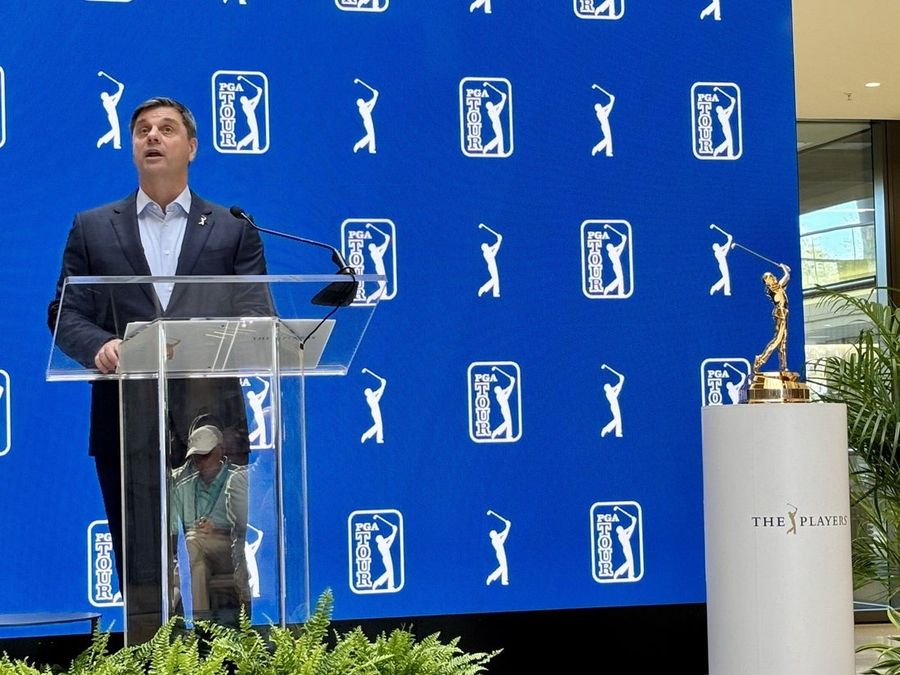
PGA Tour CEO Brian Rolapp addresses a the media, tournament sponsors and Tour employees during a news conference on March 11 at the PGA Tour Global Home in Ponte Vedra Beach, Fla.
The PGA Tour laid off 56 full-time employees, or about 4% of its total workforce, Sports Business Journal reported Thursday.
An additional 73 vacant roles would not be filled, but the tour plans to reinvest in 30 or more new full-time positions, the report said.
The moves come as the PGA Tour continues to adjust to a for-profit business model, after private equity partner Strategic Sports Group (SSG) invested $1.5 billion into the top golf circuit in 2024.
According to Sports Business Journal, new CEO Brian Rolapp described the job cuts as a “difficult — but important — step” in an email to employees. Rolapp joined the PGA Tour last June, in effect taking over from commissioner Jay Monahan, who is staying on as a member of the PGA Tour Policy Board and PGA Tour Enterprises Board through 2026.
The tour is “right-sizing” not only its staff but its tournament schedule. In an effort to ensure the best players are participating in the same events more consistently, Rolapp has proposed a new structure with a top tier of 21-26 tournaments (which would include the four majors, The Players Championship and the FedEx Cup playoffs) and a second track for players to earn opportunities for promotion.
Earlier this week, the PGA Tour confirmed it would not return to Hawaii in 2027. The tour traditionally opened its season with a two-week Hawaiian swing, with events on Maui and in Honolulu.
–Field Level Media
#Deadspin #Report #PGA #Tour #cutting #workforce
PGA Tour CEO Brian Rolapp addresses a the media, tournament sponsors and Tour employees during…
#India #cements #top #spot #Prachi #Vanshika #win #gold #ISSF #Junior #World #Cup">India cements top spot as Prachi, Vanshika win gold at ISSF Junior World Cup
Prachi Gaikwad struck gold on Thursday, winning the junior women’s 50m rifle 3 positions (3P) event at the ongoing ISSF shooting Junior World Cup Rifle/Pistol/Shotgun in Cairo, Egypt, firing 354.6 in the final to overcome Individual Neutral Athlete (AIN) Darya Chuprys who shot 354.4.
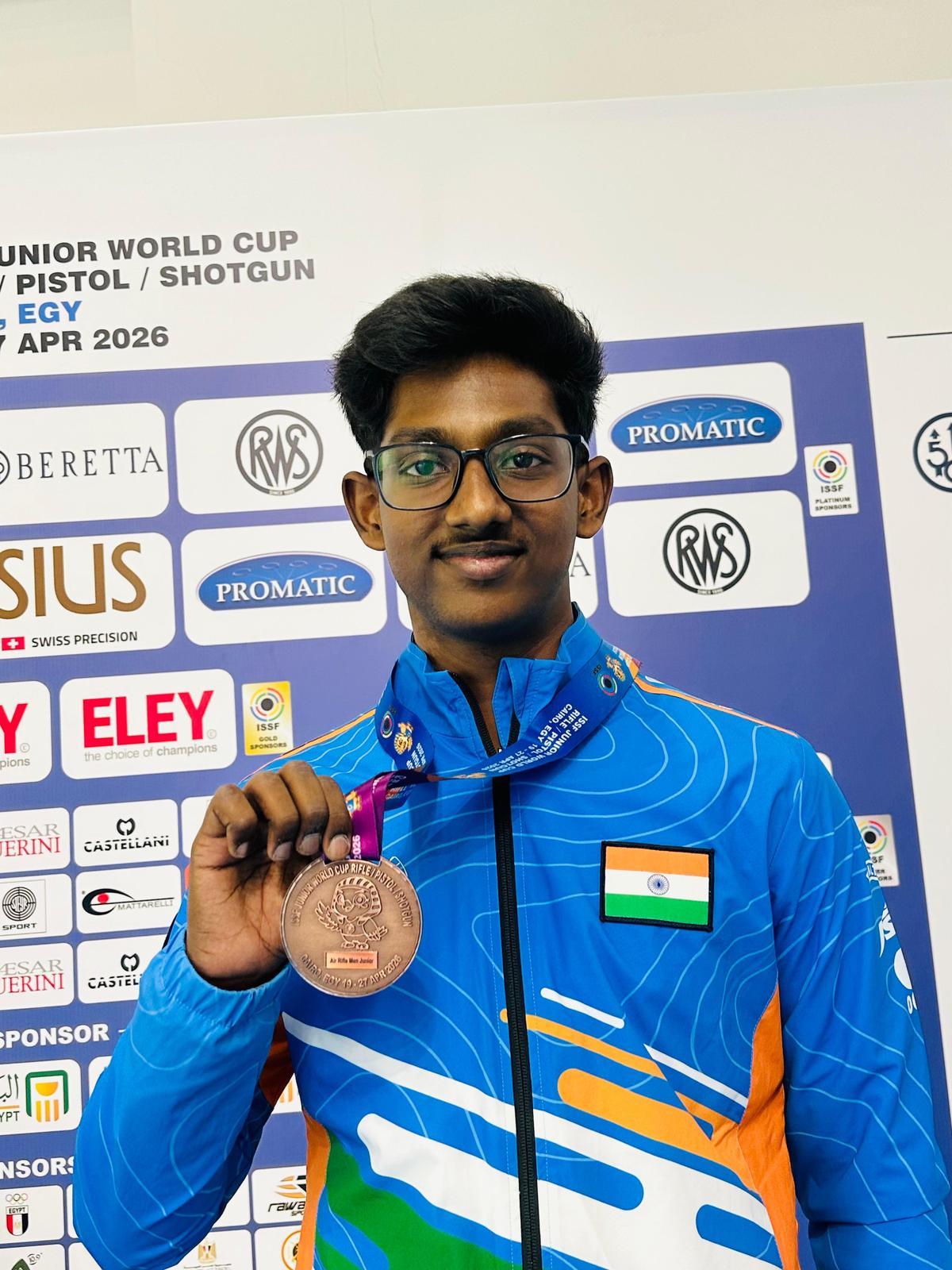
Another AIN shooter Elena Kretinina, won bronze with a score of 343.3, exiting the 35-shot final after the 34th shot. Naraen Pranav also won bronze in the junior men’s 10m air rifle with a score of 229.5 in the final.
India won a second gold on the day, its third of the campaign so far, when Vanshika Chaudhary and Sejal Kamble finished 1-2 in the junior women’s 10m air pistol final, delivering a third double podium finish for the squad.
Vanshika shot 241.3, while Sejal ended with 239.6 after the 24-shot final, cementing India’s position at the top of the medal tally with a haul of three gold, four silver and three bronze medals as competition day three drew to a close. Liao Ke Rong of Chinese Taipei won bronze with a tally of 218.3 after 22 shots.
Vanshika, who had won a silver in the Asian Championships at home earlier in the year, struck a first junior world cup gold. It was also Sejal’s second silver of competition, having finished second in the women’s 25m pistol a couple of days back.
Prachi was the only Indian to qualify for the junior women’s 3P final at the Olympic International City Shooting range. She took sixth spot with a score of 578 and then began the final placing fifth after the first 10 shots in the Kneeling position.
Naraen Pranav also won bronze in the junior men’s 10m air rifle with a score of 229.5 in the final.
| Photo Credit:
Special Arrangement
Naraen Pranav also won bronze in the junior men’s 10m air rifle with a score of 229.5 in the final.
| Photo Credit:
Special Arrangement
Thereafter she surged to second after the Prone round and was just 0.6 behind Darya, who was leading at that stage. With a 50+ return on the first five shots of the final Standing position, she shot into the lead for the first time in the match.
But Darya found a second wind and fired a 51.0 over the next five, as Prachi missed the 10-ring four times, going down to third momentarily with the last five shots remaining.
The minor setback did not deter the Indian as she delivered when it mattered most, hitting the 10-ring four times, including two high 10s, to clinch it from Darya by a margin of 0.2.
#Deadspin #Ritchie #Ozzie #Albies #power #Braves #Nationals">Deadspin | JR Ritchie, Ozzie Albies power Braves past Nationals
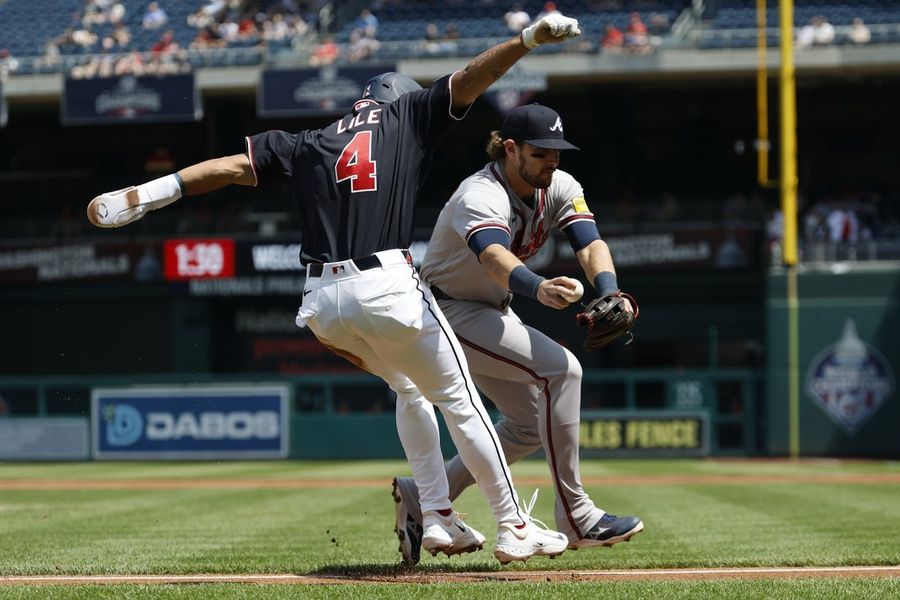
Apr 23, 2026; Washington, District of Columbia, USA; Washington Nationals right fielder Daylen Lile (4) is called out during a rundown off of third base by Atlanta Braves third baseman Austin Riley (27) during the second inning at Nationals Park. Mandatory Credit: Geoff Burke-Imagn Images
JR Ritchie threw seven strong innings in his major-league debut and Ozzie Albies collected three hits and four RBIs, fueling the visiting Atlanta Braves to a 7-2 victory over the Washington Nationals on Thursday afternoon.
Aside from his very first pitch, which James Wood sent 387 feet to right field for his 10th home run, little went wrong for Ritchie (1-0). He allowed two runs on five hits and struck out seven batters.
Albies belted his fifth homer of the season in the ninth inning off Julian Fernandez.
Michael Harris II went 3-for-4 and plated two runs before leaving the game after the top of the seventh inning in what the Braves called a precautionary move due to tightness in his left quad.
Matt Olson also had three hits and scored twice for the Braves, who finished with 14 hits on Thursday to win three of the four games in the series.
The Braves snapped a 2-2 tie in the sixth inning against the Washington bullpen.
After getting the first out, Cionel Perez (1-3) walked Drake Baldwin, allowed a single to Olson and loaded the bases by walking Austin Riley.
Gus Varland relieved Perez and threw a wild pitch that scored Baldwin and moved the other runners up a base. Albies ripped a two-run single and scored on Harris’ RBI double.
Perez yielded three runs on one hit and two walks in one-third of an inning.
CJ Abrams homer belted a solo homer off Ritchie in the fourth inning.
That blast tied the game at 2-2 after Albies and Harris gave Atlanta the lead in the top of the frame. Albies’ sacrifice fly scored Olson, who doubled to start the inning. Harris followed with a run-scoring single that brought Riley home.
Dylan Lee pitched a perfect eighth and Carlos Carrasco followed in the ninth to secure the win.
Cade Cavalli struck out a career-high 10 batters for the Nationals. He went five innings, allowing two runs on seven hits.
Daylen Lile went 2-for-2 with a walk for the Nationals, who ended the seven-game homestand with just two wins.
#Madrid #Open #Sabalenka #Swiatek #enter">Madrid Open 2026: Sabalenka, Swiatek enter third round
Aryna Sabalenka shook off some rust to post her first victory of the season on clay and extend her winning streak to 13 matches on Thursday at the Madrid Open.
The world number one, who was playing her first match since she completed the Sunshine Double by winning Indian Wells and Miami last month, committed 26 unforced errors in her 7-5, 6-3 win over American Peyton Stearns in the second round in the Spanish capital.
The defending champion, in search of a fourth career title at the Caja Magica, converted four of 12 break points against Stearns, double-faulted five times, and dropped serve twice, before she made it over the finish line to set up a third-round meeting with Romanian Jaqueline Cristian.
Belarus’ Aryna Sabalenka in action during her round of 64 match against Peyton Stearns of the United States of America.
| Photo Credit:
REUTERS
Belarus’ Aryna Sabalenka in action during her round of 64 match against Peyton Stearns of the United States of America.
| Photo Credit:
REUTERS
“I’m super happy to start with a win, even though maybe the tennis wasn’t that good, but I felt like with every game I was playing, the better I was playing, so I really hope in the next one I bring a better performance,” said Sabalenka, who has won a remarkable 24 of her 25 matches so far in 2026.
Earlier, Iga Swiatek made quick work of her opening test in Madrid, breezing past Daria Snigur 6-1, 6-2 at the Caja Magica.
The Polish fourth seed needed just 61 minutes to move past Snigur, who was coming off the first tour-level main draw victory of her career on clay over Daria Kasatkina.
The Ukrainian qualifier saved four match points against Kasatkina on Wednesday, and secured the win by clinching the longest first-to-seven tiebreak at tour-level in eight years with a 15-13 scoreline.
Snigur had little fight left in her for her clash with Swiatek, who barring a brief blip early in the second set was in fierce form as she continues her quest for a first clay-court title since she claimed a fourth Roland Garros crown nearly two years ago.
“I’m very happy. Madrid is a special place to play, because of how special the tournament is, but also because of the conditions, so I’m happy that I adjusted well to them and was solid and just playing my game,” said Swiatek, who is contesting her second tournament under the guidance of her new coach Francis Roig.
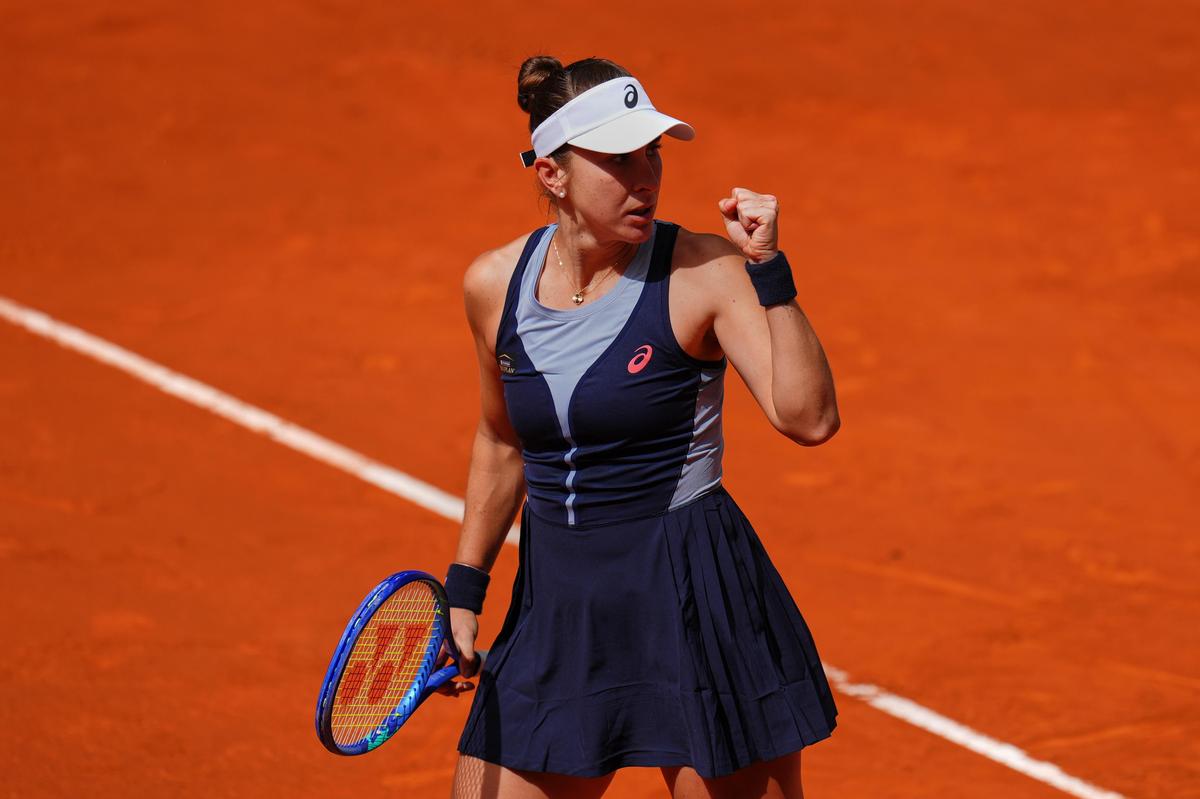
Swiss 11th seed Belinda Bencic eased past Petra Marcinko 6-4, 6-2 and will next take on Russian 18th seed Diana Shnaider in round three.
| Photo Credit:
AP
Swiss 11th seed Belinda Bencic eased past Petra Marcinko 6-4, 6-2 and will next take on Russian 18th seed Diana Shnaider in round three.
| Photo Credit:
AP
Swiatek, a champion in Madrid in 2024, swatted away three break points to open up a 5-0 lead inside 23 minutes and closed out the set eight minutes later after Snigur finally got on the board.
Snigur enjoyed a much stronger start to the second set, finding the rhythm on her backhand to put pressure on Swiatek, who got broken for the first time in the contest to fall behind 0-2.
The Ukrainian’s advantage was short-lived though as Swiatek struck right back and swept the next six games to book a third-round meeting with Ann Li.
Meanwhile, Hungarian world number 63 Anna Bondar upset seventh-seeded Elina Svitolina 6-3, 6-4 to claim the first top-10 victory of her career.
Swiss 11th seed Belinda Bencic eased past Petra Marcinko 6-4, 6-2 and will next take on Russian 18th seed Diana Shnaider in round three.
Ex-world number one Naomi Osaka began her clay-court campaign with a 6-2, 7-5 win over Colombia’s Camila Osorio. She’ll play Ukrainian qualifier Anhelina Kalinina for a spot in the last 16.
Unheralded Paraguayan stars
In men’s action, Paraguayan qualifier Adolfo Daniel Vallejo said he felt like he was living “a movie” after he dispatched former world number three Grigor Dimitrov 6-4, 6-4.
The 21-year-old cracked the top 100 for the first time last month – following a 14-1 start to the season at the Challenger level – and is making his Masters 1000 debut this week. He is the first Paraguayan to compete in Madrid Open history and will next take on American 17th seed Learner Tien.
“For me this is unbelievable. It looks like a movie, I don’t know what’s happening,” Vallejo told Tennis TV. “The other day I played on Manolo Santana centre court. Today I played here. I used to watch him (Dimitrov), all the highlights. The points that he did against me today, I used to watch it on TV and to play against him… wow, I can’t understand what’s happening. I’m just trying to enjoy all this.”
Former world number three and 2019 Madrid runner-up Stefanos Tsitsipas eked out a 3-6, 7-6[6], 7-6[4] win against American lucky loser Patrick Kypson.
Currently ranked 80 in the world, the two-time Grand Slam finalist will square off with eighth-seeded Alexander Bublik in round two.
The soon-to-be-retiring Gael Monfils lost his opener 6-3, 6-4 to Camilo Ugo Carabelli, marking his last time competing at the Madrid Open.
Published on Apr 23, 2026
#Madrid #Open #Sabalenka #Swiatek #enter
Aryna Sabalenka shook off some rust to post her first victory of the season on…
F31 Pro+ implemented this formula pretty well, and the Chinese smartphone maker is back at it again, with the F33 Pro.
It’s an interesting phone with a design that turns heads, a new processor family, and camera sensors. Sadly, without beloved AI companions jacking up RAM prices and ruining value smartphones, I wondered: how does the F33 Pro justify its price tag? To find out, I called OPPO, got the F33 Pro two weeks back, and made it my daily driver, using it to take hundreds of photos, play BGMI, and scroll through reels. Here’s my experience.
OPPO F33 Pro Review
Hisan Kidwai
Summary
The OPPO F33 Pro has the same ingredients as its predecessor, including a stellar battery, protection that’ll withstand the end of the world, and a beautiful design. Sadly, it’s not perfect. The cameras aren’t as versatile, and the performance is only good enough for everyday tasks. The F33 Pro is for people who value design, protection, and battery over anything else. And if you’re that person, then the F33 Pro makes a ton of sense.
Design & Hardware
OPPO is known for making gorgeous phones, and if I just had to use one word for the F33 Pro’s design, it would be, drum roll please, gorgeous. I’ve yet to see such an exquisite-looking midranger, and don’t even bother with the white; the red is the way to go. It looks super sophisticated, with a matte texture that picks up 0 fingerprints.
The camera plateau does resemble the iPhone in shape, but that’s not a complaint. OPPO has added a halo ring around it, creating a floating effect and making it look super premium. While the inside of the plateau is the same color, OPPO has made it shiny and added sparkles for some flair. It’s not something I can easily describe with words, but if you see it, you’ll know what I’m talking about. Everyone I gave the phone to thought it cost much more than it actually does, and some, including my mum, wanted to switch over to it.
The sides are, of course, made of plastic, and the same color as the back. In my clumsy day-to-day use, the phone held up decently well. I dropped it a couple of times, including once from head height, and it escaped with little more than a dent. The F33 Pro earns some brownie points in the comfort department, too. It’s not an overly large phone, similar in size to the OPPO Find X9, and you can reach the top corners of the screen with average-sized hands.
As expected, the F33 Pro packs all the IP ratings available on the market. These include IP66, IP68, IP69, and IP69K ratings, which mean your phone should stay just fine under high-pressure jets and full immersion for up to 12 hours. While I didn’t leave it submerged, I did wash it once after dropping my protein mix on it. It handled it pretty well, but I do recommend not submerging your phone under water since water damage isn’t covered under warranty.
Display
The OPPO F33 Pro features a 6.57-inch flat FHD+ AMOLED display with a 120Hz refresh rate. There’s not much to say about the panel, except that it is plenty good. Text and messages appear super sharp, and the AMOLED panel keeps colors popping with deep blacks. I took the F33 Pro outside on a hot summer day, and the 1400-nit peak brightness kept everything legible without me having to squint. As a result, the colors and HDR performance during the latest episode of The Pitt were amazing.
I had no problems throughout my testing. OPPO has also done a good job with the bezels on three sides, except for the chin, which is ever so slightly bigger, but still not by much. In terms of protection, OPPO has installed AGC DT-STAR D+ glass. While I haven’t heard of this protection before, it fared pretty well against drops and my usage, with no major scratches. On a positive note, OPPO pre-installs a screen protector, so I’d recommend keeping it on.
Performance
Performance is what makes or breaks a phone. Last year’s F31 Pro+ was decent in terms of performance. I didn’t describe it as blazing fast, but good enough for everyday tasks. And the same can be said for the F33 Pro. At the beating heart of the F33 Pro lies the MediaTek Dimensity 6360 MAX (6nm) processor, essentially a bumped-up version of the 6300 we saw on the K14. ColorOS, being the best Android skin, keeps everything running super smooth without hiccups. The 8GB of RAM was enough to keep most of my apps in memory, and it was nice to see a mid-range phone with premium ColorOS features, including full lock-screen customizations and dark-mode icons. It’s a capable phone that can handle every daily task, be it scrolling through reels, watching Netflix, or reading a book.
The OPPO F33 Pro gets a dose of my favorite AI features, such as AI Recompose, which looks at the photo you captured and improves it. The object eraser works exceptionally well, and the portrait glow is decent for when you need to relight the subject.
That all being said, there’s plenty of bloatware. Even though I said no to installing the recommended apps, the phone did install about 20 of them. After which, I had to sit and manually delete them one by one.
Since this is a review, I also put the MediaTek Dimensity 6360 MAX (6nm) through its paces by running some benchmarks. The results? About what you’d expect for this segment. The F33 Pro scored 1,039 on Geekbench’s single-core test and 2,833 on the multi-core test. On the flip side, in AnTuTu, the device scored 1,189,871 points. As benchmarks never tell the full story, I also played a few games on the F33 Pro, namely BGMI, since that’s the only game I’m actually good at. The experience was pretty decent; there’s no high-frame-rate support, but 60fps was maintained throughout the session without overheating.
Battery Life & Charging
Probably the biggest reason to consider the F33 Pro, aside from the design, will be its massive 7,000 mAh battery. I consider myself a heavy user, but even with my usage, I couldn’t kill the phone in a day. For context, I started my day with the excellent activity of scrolling reels, then replying to texts, capturing camera samples, taking the phone with me to struggle at the gym, and ending the day with BGMI sessions.
When it was eventually time to recharge, the 80W fast charging came in handy. It brought the battery back from zero to full in just over an hour.
Cameras
Optics on the OPPO F33 Pro are headlined by a 50MP OmniVision 50D40 sensor, and that’s essentially it. Like last year, you don’t get any UltraWide or telephoto sensor, except for a 2MP depth lens. Despite my reservations, the F33 Pro’s cameras aren’t that bad. Give the sensor enough light, and the photos it produces are detailed, with slightly boosted colors, without blowing out the highlights. Sure, there’s some struggle with harsh sunlight, but it’s occasional, not a consistent issue.
Similarly, low-light performance, when you use night mode, is decent. While you’ll find some noise creeping in, the results still retain decent sharpness, and colors weren’t washed out at all. Since there’s no telephoto lens, the main sensor doubles as the portrait sensor, and it works pretty well. Skin tones are true to life, and OPPO’s processing effectively separates the subject from the background.
OPPO, when launching the F33 Pro, talked heavily about the 50MP Ultra-Wide GC50F6 selfie shooter, and I’m happy to report it works like a charm. You don’t have to worry about playing hand gymnastics to fit multiple people in the shot, as the 100-degree FoV does the job for you. The shots are detailed enough, and colors do tend to be accurate. That said, there’s quite a lot of over-sharpening action when taking a selfie at night. Another big complaint is the lack of any 4K video recording support, which in 2026 should be a no-brainer.
Verdict
Like many other smartphones this year, the F-series has received a price bump, with the F33 Pro now starting at ₹37,999. It has the same ingredients as its predecessor, including a stellar battery, protection that’ll withstand the end of the world, and a beautiful design. Sadly, it’s not perfect. The cameras aren’t as versatile, and the performance is only good enough for everyday tasks. The F33 Pro is for people who value design, protection, and battery over anything else. And if you’re that person, then the F33 Pro makes a ton of sense.
F31 Pro+ implemented this formula pretty well, and the Chinese smartphone maker is back at it again, with the F33 Pro.
It’s an interesting phone with a design that turns heads, a new processor family, and camera sensors. Sadly, without beloved AI companions jacking up RAM prices and ruining value smartphones, I wondered: how does the F33 Pro justify its price tag? To find out, I called OPPO, got the F33 Pro two weeks back, and made it my daily driver, using it to take hundreds of photos, play BGMI, and scroll through reels. Here’s my experience.
OPPO F33 Pro Review
Hisan Kidwai
Summary
The OPPO F33 Pro has the same ingredients as its predecessor, including a stellar battery, protection that’ll withstand the end of the world, and a beautiful design. Sadly, it’s not perfect. The cameras aren’t as versatile, and the performance is only good enough for everyday tasks. The F33 Pro is for people who value design, protection, and battery over anything else. And if you’re that person, then the F33 Pro makes a ton of sense.
Design & Hardware
OPPO is known for making gorgeous phones, and if I just had to use one word for the F33 Pro’s design, it would be, drum roll please, gorgeous. I’ve yet to see such an exquisite-looking midranger, and don’t even bother with the white; the red is the way to go. It looks super sophisticated, with a matte texture that picks up 0 fingerprints.
The camera plateau does resemble the iPhone in shape, but that’s not a complaint. OPPO has added a halo ring around it, creating a floating effect and making it look super premium. While the inside of the plateau is the same color, OPPO has made it shiny and added sparkles for some flair. It’s not something I can easily describe with words, but if you see it, you’ll know what I’m talking about. Everyone I gave the phone to thought it cost much more than it actually does, and some, including my mum, wanted to switch over to it.
The sides are, of course, made of plastic, and the same color as the back. In my clumsy day-to-day use, the phone held up decently well. I dropped it a couple of times, including once from head height, and it escaped with little more than a dent. The F33 Pro earns some brownie points in the comfort department, too. It’s not an overly large phone, similar in size to the OPPO Find X9, and you can reach the top corners of the screen with average-sized hands.
As expected, the F33 Pro packs all the IP ratings available on the market. These include IP66, IP68, IP69, and IP69K ratings, which mean your phone should stay just fine under high-pressure jets and full immersion for up to 12 hours. While I didn’t leave it submerged, I did wash it once after dropping my protein mix on it. It handled it pretty well, but I do recommend not submerging your phone under water since water damage isn’t covered under warranty.
Display
The OPPO F33 Pro features a 6.57-inch flat FHD+ AMOLED display with a 120Hz refresh rate. There’s not much to say about the panel, except that it is plenty good. Text and messages appear super sharp, and the AMOLED panel keeps colors popping with deep blacks. I took the F33 Pro outside on a hot summer day, and the 1400-nit peak brightness kept everything legible without me having to squint. As a result, the colors and HDR performance during the latest episode of The Pitt were amazing.
I had no problems throughout my testing. OPPO has also done a good job with the bezels on three sides, except for the chin, which is ever so slightly bigger, but still not by much. In terms of protection, OPPO has installed AGC DT-STAR D+ glass. While I haven’t heard of this protection before, it fared pretty well against drops and my usage, with no major scratches. On a positive note, OPPO pre-installs a screen protector, so I’d recommend keeping it on.
Performance
Performance is what makes or breaks a phone. Last year’s F31 Pro+ was decent in terms of performance. I didn’t describe it as blazing fast, but good enough for everyday tasks. And the same can be said for the F33 Pro. At the beating heart of the F33 Pro lies the MediaTek Dimensity 6360 MAX (6nm) processor, essentially a bumped-up version of the 6300 we saw on the K14. ColorOS, being the best Android skin, keeps everything running super smooth without hiccups. The 8GB of RAM was enough to keep most of my apps in memory, and it was nice to see a mid-range phone with premium ColorOS features, including full lock-screen customizations and dark-mode icons. It’s a capable phone that can handle every daily task, be it scrolling through reels, watching Netflix, or reading a book.
The OPPO F33 Pro gets a dose of my favorite AI features, such as AI Recompose, which looks at the photo you captured and improves it. The object eraser works exceptionally well, and the portrait glow is decent for when you need to relight the subject.
That all being said, there’s plenty of bloatware. Even though I said no to installing the recommended apps, the phone did install about 20 of them. After which, I had to sit and manually delete them one by one.
Since this is a review, I also put the MediaTek Dimensity 6360 MAX (6nm) through its paces by running some benchmarks. The results? About what you’d expect for this segment. The F33 Pro scored 1,039 on Geekbench’s single-core test and 2,833 on the multi-core test. On the flip side, in AnTuTu, the device scored 1,189,871 points. As benchmarks never tell the full story, I also played a few games on the F33 Pro, namely BGMI, since that’s the only game I’m actually good at. The experience was pretty decent; there’s no high-frame-rate support, but 60fps was maintained throughout the session without overheating.
Battery Life & Charging
Probably the biggest reason to consider the F33 Pro, aside from the design, will be its massive 7,000 mAh battery. I consider myself a heavy user, but even with my usage, I couldn’t kill the phone in a day. For context, I started my day with the excellent activity of scrolling reels, then replying to texts, capturing camera samples, taking the phone with me to struggle at the gym, and ending the day with BGMI sessions.
When it was eventually time to recharge, the 80W fast charging came in handy. It brought the battery back from zero to full in just over an hour.
Cameras
Optics on the OPPO F33 Pro are headlined by a 50MP OmniVision 50D40 sensor, and that’s essentially it. Like last year, you don’t get any UltraWide or telephoto sensor, except for a 2MP depth lens. Despite my reservations, the F33 Pro’s cameras aren’t that bad. Give the sensor enough light, and the photos it produces are detailed, with slightly boosted colors, without blowing out the highlights. Sure, there’s some struggle with harsh sunlight, but it’s occasional, not a consistent issue.
Similarly, low-light performance, when you use night mode, is decent. While you’ll find some noise creeping in, the results still retain decent sharpness, and colors weren’t washed out at all. Since there’s no telephoto lens, the main sensor doubles as the portrait sensor, and it works pretty well. Skin tones are true to life, and OPPO’s processing effectively separates the subject from the background.
OPPO, when launching the F33 Pro, talked heavily about the 50MP Ultra-Wide GC50F6 selfie shooter, and I’m happy to report it works like a charm. You don’t have to worry about playing hand gymnastics to fit multiple people in the shot, as the 100-degree FoV does the job for you. The shots are detailed enough, and colors do tend to be accurate. That said, there’s quite a lot of over-sharpening action when taking a selfie at night. Another big complaint is the lack of any 4K video recording support, which in 2026 should be a no-brainer.
Verdict
Like many other smartphones this year, the F-series has received a price bump, with the F33 Pro now starting at ₹37,999. It has the same ingredients as its predecessor, including a stellar battery, protection that’ll withstand the end of the world, and a beautiful design. Sadly, it’s not perfect. The cameras aren’t as versatile, and the performance is only good enough for everyday tasks. The F33 Pro is for people who value design, protection, and battery over anything else. And if you’re that person, then the F33 Pro makes a ton of sense.
#OPPO #F33 #Pro #Review #Premium #Survives #Drops #WorthOppo">OPPO F33 Pro Review: Looks Premium, Survives Drops, But Is It Worth ₹37,999?
When smartphones first became mainstream, durability took a back seat. We were expected to take care of our precious electronics and protect them from the elements. Somewhere along this journey, though, durability changed course and phones became resilient. OPPO’s F-series is a prime example, with a reputation for being the toughest phones money can buy. Last year’s F31 Pro+ implemented this formula pretty well, and the Chinese smartphone maker is back at it again, with the F33 Pro.
It’s an interesting phone with a design that turns heads, a new processor family, and camera sensors. Sadly, without beloved AI companions jacking up RAM prices and ruining value smartphones, I wondered: how does the F33 Pro justify its price tag? To find out, I called OPPO, got the F33 Pro two weeks back, and made it my daily driver, using it to take hundreds of photos, play BGMI, and scroll through reels. Here’s my experience.
OPPO F33 Pro Review
Hisan Kidwai
Summary
The OPPO F33 Pro has the same ingredients as its predecessor, including a stellar battery, protection that’ll withstand the end of the world, and a beautiful design. Sadly, it’s not perfect. The cameras aren’t as versatile, and the performance is only good enough for everyday tasks. The F33 Pro is for people who value design, protection, and battery over anything else. And if you’re that person, then the F33 Pro makes a ton of sense.
Design & Hardware
OPPO is known for making gorgeous phones, and if I just had to use one word for the F33 Pro’s design, it would be, drum roll please, gorgeous. I’ve yet to see such an exquisite-looking midranger, and don’t even bother with the white; the red is the way to go. It looks super sophisticated, with a matte texture that picks up 0 fingerprints.
The camera plateau does resemble the iPhone in shape, but that’s not a complaint. OPPO has added a halo ring around it, creating a floating effect and making it look super premium. While the inside of the plateau is the same color, OPPO has made it shiny and added sparkles for some flair. It’s not something I can easily describe with words, but if you see it, you’ll know what I’m talking about. Everyone I gave the phone to thought it cost much more than it actually does, and some, including my mum, wanted to switch over to it.
The sides are, of course, made of plastic, and the same color as the back. In my clumsy day-to-day use, the phone held up decently well. I dropped it a couple of times, including once from head height, and it escaped with little more than a dent. The F33 Pro earns some brownie points in the comfort department, too. It’s not an overly large phone, similar in size to the OPPO Find X9, and you can reach the top corners of the screen with average-sized hands.
As expected, the F33 Pro packs all the IP ratings available on the market. These include IP66, IP68, IP69, and IP69K ratings, which mean your phone should stay just fine under high-pressure jets and full immersion for up to 12 hours. While I didn’t leave it submerged, I did wash it once after dropping my protein mix on it. It handled it pretty well, but I do recommend not submerging your phone under water since water damage isn’t covered under warranty.
Display
The OPPO F33 Pro features a 6.57-inch flat FHD+ AMOLED display with a 120Hz refresh rate. There’s not much to say about the panel, except that it is plenty good. Text and messages appear super sharp, and the AMOLED panel keeps colors popping with deep blacks. I took the F33 Pro outside on a hot summer day, and the 1400-nit peak brightness kept everything legible without me having to squint. As a result, the colors and HDR performance during the latest episode of The Pitt were amazing.
I had no problems throughout my testing. OPPO has also done a good job with the bezels on three sides, except for the chin, which is ever so slightly bigger, but still not by much. In terms of protection, OPPO has installed AGC DT-STAR D+ glass. While I haven’t heard of this protection before, it fared pretty well against drops and my usage, with no major scratches. On a positive note, OPPO pre-installs a screen protector, so I’d recommend keeping it on.
Performance
Performance is what makes or breaks a phone. Last year’s F31 Pro+ was decent in terms of performance. I didn’t describe it as blazing fast, but good enough for everyday tasks. And the same can be said for the F33 Pro. At the beating heart of the F33 Pro lies the MediaTek Dimensity 6360 MAX (6nm) processor, essentially a bumped-up version of the 6300 we saw on the K14. ColorOS, being the best Android skin, keeps everything running super smooth without hiccups. The 8GB of RAM was enough to keep most of my apps in memory, and it was nice to see a mid-range phone with premium ColorOS features, including full lock-screen customizations and dark-mode icons. It’s a capable phone that can handle every daily task, be it scrolling through reels, watching Netflix, or reading a book.
The OPPO F33 Pro gets a dose of my favorite AI features, such as AI Recompose, which looks at the photo you captured and improves it. The object eraser works exceptionally well, and the portrait glow is decent for when you need to relight the subject.
That all being said, there’s plenty of bloatware. Even though I said no to installing the recommended apps, the phone did install about 20 of them. After which, I had to sit and manually delete them one by one.
Since this is a review, I also put the MediaTek Dimensity 6360 MAX (6nm) through its paces by running some benchmarks. The results? About what you’d expect for this segment. The F33 Pro scored 1,039 on Geekbench’s single-core test and 2,833 on the multi-core test. On the flip side, in AnTuTu, the device scored 1,189,871 points. As benchmarks never tell the full story, I also played a few games on the F33 Pro, namely BGMI, since that’s the only game I’m actually good at. The experience was pretty decent; there’s no high-frame-rate support, but 60fps was maintained throughout the session without overheating.
Battery Life & Charging
Probably the biggest reason to consider the F33 Pro, aside from the design, will be its massive 7,000 mAh battery. I consider myself a heavy user, but even with my usage, I couldn’t kill the phone in a day. For context, I started my day with the excellent activity of scrolling reels, then replying to texts, capturing camera samples, taking the phone with me to struggle at the gym, and ending the day with BGMI sessions.
When it was eventually time to recharge, the 80W fast charging came in handy. It brought the battery back from zero to full in just over an hour.
Cameras
Optics on the OPPO F33 Pro are headlined by a 50MP OmniVision 50D40 sensor, and that’s essentially it. Like last year, you don’t get any UltraWide or telephoto sensor, except for a 2MP depth lens. Despite my reservations, the F33 Pro’s cameras aren’t that bad. Give the sensor enough light, and the photos it produces are detailed, with slightly boosted colors, without blowing out the highlights. Sure, there’s some struggle with harsh sunlight, but it’s occasional, not a consistent issue.
Similarly, low-light performance, when you use night mode, is decent. While you’ll find some noise creeping in, the results still retain decent sharpness, and colors weren’t washed out at all. Since there’s no telephoto lens, the main sensor doubles as the portrait sensor, and it works pretty well. Skin tones are true to life, and OPPO’s processing effectively separates the subject from the background.
OPPO, when launching the F33 Pro, talked heavily about the 50MP Ultra-Wide GC50F6 selfie shooter, and I’m happy to report it works like a charm. You don’t have to worry about playing hand gymnastics to fit multiple people in the shot, as the 100-degree FoV does the job for you. The shots are detailed enough, and colors do tend to be accurate. That said, there’s quite a lot of over-sharpening action when taking a selfie at night. Another big complaint is the lack of any 4K video recording support, which in 2026 should be a no-brainer.
Verdict
Like many other smartphones this year, the F-series has received a price bump, with the F33 Pro now starting at ₹37,999. It has the same ingredients as its predecessor, including a stellar battery, protection that’ll withstand the end of the world, and a beautiful design. Sadly, it’s not perfect. The cameras aren’t as versatile, and the performance is only good enough for everyday tasks. The F33 Pro is for people who value design, protection, and battery over anything else. And if you’re that person, then the F33 Pro makes a ton of sense.

 Apr 23, 2026; Denver, Colorado, USA; Colorado Rockies starting pitcher Ryan Feltner (18) pitches in the first inning against the San Diego Padres at Coors Field. Mandatory Credit: Isaiah J. Downing-Imagn Images





![Madrid Open 2026: Sabalenka, Swiatek enter third round Aryna Sabalenka shook off some rust to post her first victory of the season on clay and extend her winning streak to 13 matches on Thursday at the Madrid Open.The world number one, who was playing her first match since she completed the Sunshine Double by winning Indian Wells and Miami last month, committed 26 unforced errors in her 7-5, 6-3 win over American Peyton Stearns in the second round in the Spanish capital.The defending champion, in search of a fourth career title at the Caja Magica, converted four of 12 break points against Stearns, double-faulted five times, and dropped serve twice, before she made it over the finish line to set up a third-round meeting with Romanian Jaqueline Cristian. Belarus’ Aryna Sabalenka in action during her round of 64 match against Peyton Stearns of the United States of America.
| Photo Credit:
REUTERS
Belarus’ Aryna Sabalenka in action during her round of 64 match against Peyton Stearns of the United States of America.
| Photo Credit:
REUTERS
“I’m super happy to start with a win, even though maybe the tennis wasn’t that good, but I felt like with every game I was playing, the better I was playing, so I really hope in the next one I bring a better performance,” said Sabalenka, who has won a remarkable 24 of her 25 matches so far in 2026.Earlier, Iga Swiatek made quick work of her opening test in Madrid, breezing past Daria Snigur 6-1, 6-2 at the Caja Magica.The Polish fourth seed needed just 61 minutes to move past Snigur, who was coming off the first tour-level main draw victory of her career on clay over Daria Kasatkina.The Ukrainian qualifier saved four match points against Kasatkina on Wednesday, and secured the win by clinching the longest first-to-seven tiebreak at tour-level in eight years with a 15-13 scoreline.Snigur had little fight left in her for her clash with Swiatek, who barring a brief blip early in the second set was in fierce form as she continues her quest for a first clay-court title since she claimed a fourth Roland Garros crown nearly two years ago.“I’m very happy. Madrid is a special place to play, because of how special the tournament is, but also because of the conditions, so I’m happy that I adjusted well to them and was solid and just playing my game,” said Swiatek, who is contesting her second tournament under the guidance of her new coach Francis Roig. Swiss 11th seed Belinda Bencic eased past Petra Marcinko 6-4, 6-2 and will next take on Russian 18th seed Diana Shnaider in round three.
| Photo Credit:
AP
Swiss 11th seed Belinda Bencic eased past Petra Marcinko 6-4, 6-2 and will next take on Russian 18th seed Diana Shnaider in round three.
| Photo Credit:
AP
Swiatek, a champion in Madrid in 2024, swatted away three break points to open up a 5-0 lead inside 23 minutes and closed out the set eight minutes later after Snigur finally got on the board.Snigur enjoyed a much stronger start to the second set, finding the rhythm on her backhand to put pressure on Swiatek, who got broken for the first time in the contest to fall behind 0-2.The Ukrainian’s advantage was short-lived though as Swiatek struck right back and swept the next six games to book a third-round meeting with Ann Li.Meanwhile, Hungarian world number 63 Anna Bondar upset seventh-seeded Elina Svitolina 6-3, 6-4 to claim the first top-10 victory of her career.Swiss 11th seed Belinda Bencic eased past Petra Marcinko 6-4, 6-2 and will next take on Russian 18th seed Diana Shnaider in round three.Ex-world number one Naomi Osaka began her clay-court campaign with a 6-2, 7-5 win over Colombia’s Camila Osorio. She’ll play Ukrainian qualifier Anhelina Kalinina for a spot in the last 16.Unheralded Paraguayan starsIn men’s action, Paraguayan qualifier Adolfo Daniel Vallejo said he felt like he was living “a movie” after he dispatched former world number three Grigor Dimitrov 6-4, 6-4.The 21-year-old cracked the top 100 for the first time last month – following a 14-1 start to the season at the Challenger level – and is making his Masters 1000 debut this week. He is the first Paraguayan to compete in Madrid Open history and will next take on American 17th seed Learner Tien.“For me this is unbelievable. It looks like a movie, I don’t know what’s happening,” Vallejo told Tennis TV. “The other day I played on Manolo Santana centre court. Today I played here. I used to watch him (Dimitrov), all the highlights. The points that he did against me today, I used to watch it on TV and to play against him… wow, I can’t understand what’s happening. I’m just trying to enjoy all this.”Former world number three and 2019 Madrid runner-up Stefanos Tsitsipas eked out a 3-6, 7-6[6], 7-6[4] win against American lucky loser Patrick Kypson.Currently ranked 80 in the world, the two-time Grand Slam finalist will square off with eighth-seeded Alexander Bublik in round two.The soon-to-be-retiring Gael Monfils lost his opener 6-3, 6-4 to Camilo Ugo Carabelli, marking his last time competing at the Madrid Open.Published on Apr 23, 2026 #Madrid #Open #Sabalenka #Swiatek #enter](https://ss-i.thgim.com/public/incoming/u1bgih/article70898865.ece/alternates/FREE_1200/2026-04-23T150504Z_1589292658_UP1EM4N15WEVX_RTRMADP_3_TENNIS-MADRID.JPG "Madrid Open 2026: Sabalenka, Swiatek enter third round Aryna Sabalenka shook off some rust to post her first victory of the season on clay and extend her winning streak to 13 matches on Thursday at the Madrid Open.The world number one, who was playing her first match since she completed the Sunshine Double by winning Indian Wells and Miami last month, committed 26 unforced errors in her 7-5, 6-3 win over American Peyton Stearns in the second round in the Spanish capital.The defending champion, in search of a fourth career title at the Caja Magica, converted four of 12 break points against Stearns, double-faulted five times, and dropped serve twice, before she made it over the finish line to set up a third-round meeting with Romanian Jaqueline Cristian. Belarus’ Aryna Sabalenka in action during her round of 64 match against Peyton Stearns of the United States of America.
| Photo Credit:
REUTERS
Belarus’ Aryna Sabalenka in action during her round of 64 match against Peyton Stearns of the United States of America.
| Photo Credit:
REUTERS
“I’m super happy to start with a win, even though maybe the tennis wasn’t that good, but I felt like with every game I was playing, the better I was playing, so I really hope in the next one I bring a better performance,” said Sabalenka, who has won a remarkable 24 of her 25 matches so far in 2026.Earlier, Iga Swiatek made quick work of her opening test in Madrid, breezing past Daria Snigur 6-1, 6-2 at the Caja Magica.The Polish fourth seed needed just 61 minutes to move past Snigur, who was coming off the first tour-level main draw victory of her career on clay over Daria Kasatkina.The Ukrainian qualifier saved four match points against Kasatkina on Wednesday, and secured the win by clinching the longest first-to-seven tiebreak at tour-level in eight years with a 15-13 scoreline.Snigur had little fight left in her for her clash with Swiatek, who barring a brief blip early in the second set was in fierce form as she continues her quest for a first clay-court title since she claimed a fourth Roland Garros crown nearly two years ago.“I’m very happy. Madrid is a special place to play, because of how special the tournament is, but also because of the conditions, so I’m happy that I adjusted well to them and was solid and just playing my game,” said Swiatek, who is contesting her second tournament under the guidance of her new coach Francis Roig. Swiss 11th seed Belinda Bencic eased past Petra Marcinko 6-4, 6-2 and will next take on Russian 18th seed Diana Shnaider in round three.
| Photo Credit:
AP
Swiss 11th seed Belinda Bencic eased past Petra Marcinko 6-4, 6-2 and will next take on Russian 18th seed Diana Shnaider in round three.
| Photo Credit:
AP
Swiatek, a champion in Madrid in 2024, swatted away three break points to open up a 5-0 lead inside 23 minutes and closed out the set eight minutes later after Snigur finally got on the board.Snigur enjoyed a much stronger start to the second set, finding the rhythm on her backhand to put pressure on Swiatek, who got broken for the first time in the contest to fall behind 0-2.The Ukrainian’s advantage was short-lived though as Swiatek struck right back and swept the next six games to book a third-round meeting with Ann Li.Meanwhile, Hungarian world number 63 Anna Bondar upset seventh-seeded Elina Svitolina 6-3, 6-4 to claim the first top-10 victory of her career.Swiss 11th seed Belinda Bencic eased past Petra Marcinko 6-4, 6-2 and will next take on Russian 18th seed Diana Shnaider in round three.Ex-world number one Naomi Osaka began her clay-court campaign with a 6-2, 7-5 win over Colombia’s Camila Osorio. She’ll play Ukrainian qualifier Anhelina Kalinina for a spot in the last 16.Unheralded Paraguayan starsIn men’s action, Paraguayan qualifier Adolfo Daniel Vallejo said he felt like he was living “a movie” after he dispatched former world number three Grigor Dimitrov 6-4, 6-4.The 21-year-old cracked the top 100 for the first time last month – following a 14-1 start to the season at the Challenger level – and is making his Masters 1000 debut this week. He is the first Paraguayan to compete in Madrid Open history and will next take on American 17th seed Learner Tien.“For me this is unbelievable. It looks like a movie, I don’t know what’s happening,” Vallejo told Tennis TV. “The other day I played on Manolo Santana centre court. Today I played here. I used to watch him (Dimitrov), all the highlights. The points that he did against me today, I used to watch it on TV and to play against him… wow, I can’t understand what’s happening. I’m just trying to enjoy all this.”Former world number three and 2019 Madrid runner-up Stefanos Tsitsipas eked out a 3-6, 7-6[6], 7-6[4] win against American lucky loser Patrick Kypson.Currently ranked 80 in the world, the two-time Grand Slam finalist will square off with eighth-seeded Alexander Bublik in round two.The soon-to-be-retiring Gael Monfils lost his opener 6-3, 6-4 to Camilo Ugo Carabelli, marking his last time competing at the Madrid Open.Published on Apr 23, 2026 #Madrid #Open #Sabalenka #Swiatek #enter")
![Madrid Open 2026: Sabalenka, Swiatek enter third round Aryna Sabalenka shook off some rust to post her first victory of the season on clay and extend her winning streak to 13 matches on Thursday at the Madrid Open.The world number one, who was playing her first match since she completed the Sunshine Double by winning Indian Wells and Miami last month, committed 26 unforced errors in her 7-5, 6-3 win over American Peyton Stearns in the second round in the Spanish capital.The defending champion, in search of a fourth career title at the Caja Magica, converted four of 12 break points against Stearns, double-faulted five times, and dropped serve twice, before she made it over the finish line to set up a third-round meeting with Romanian Jaqueline Cristian. Belarus’ Aryna Sabalenka in action during her round of 64 match against Peyton Stearns of the United States of America.
| Photo Credit:
REUTERS
Belarus’ Aryna Sabalenka in action during her round of 64 match against Peyton Stearns of the United States of America.
| Photo Credit:
REUTERS
“I’m super happy to start with a win, even though maybe the tennis wasn’t that good, but I felt like with every game I was playing, the better I was playing, so I really hope in the next one I bring a better performance,” said Sabalenka, who has won a remarkable 24 of her 25 matches so far in 2026.Earlier, Iga Swiatek made quick work of her opening test in Madrid, breezing past Daria Snigur 6-1, 6-2 at the Caja Magica.The Polish fourth seed needed just 61 minutes to move past Snigur, who was coming off the first tour-level main draw victory of her career on clay over Daria Kasatkina.The Ukrainian qualifier saved four match points against Kasatkina on Wednesday, and secured the win by clinching the longest first-to-seven tiebreak at tour-level in eight years with a 15-13 scoreline.Snigur had little fight left in her for her clash with Swiatek, who barring a brief blip early in the second set was in fierce form as she continues her quest for a first clay-court title since she claimed a fourth Roland Garros crown nearly two years ago.“I’m very happy. Madrid is a special place to play, because of how special the tournament is, but also because of the conditions, so I’m happy that I adjusted well to them and was solid and just playing my game,” said Swiatek, who is contesting her second tournament under the guidance of her new coach Francis Roig. Swiss 11th seed Belinda Bencic eased past Petra Marcinko 6-4, 6-2 and will next take on Russian 18th seed Diana Shnaider in round three.
| Photo Credit:
AP
Swiss 11th seed Belinda Bencic eased past Petra Marcinko 6-4, 6-2 and will next take on Russian 18th seed Diana Shnaider in round three.
| Photo Credit:
AP
Swiatek, a champion in Madrid in 2024, swatted away three break points to open up a 5-0 lead inside 23 minutes and closed out the set eight minutes later after Snigur finally got on the board.Snigur enjoyed a much stronger start to the second set, finding the rhythm on her backhand to put pressure on Swiatek, who got broken for the first time in the contest to fall behind 0-2.The Ukrainian’s advantage was short-lived though as Swiatek struck right back and swept the next six games to book a third-round meeting with Ann Li.Meanwhile, Hungarian world number 63 Anna Bondar upset seventh-seeded Elina Svitolina 6-3, 6-4 to claim the first top-10 victory of her career.Swiss 11th seed Belinda Bencic eased past Petra Marcinko 6-4, 6-2 and will next take on Russian 18th seed Diana Shnaider in round three.Ex-world number one Naomi Osaka began her clay-court campaign with a 6-2, 7-5 win over Colombia’s Camila Osorio. She’ll play Ukrainian qualifier Anhelina Kalinina for a spot in the last 16.Unheralded Paraguayan starsIn men’s action, Paraguayan qualifier Adolfo Daniel Vallejo said he felt like he was living “a movie” after he dispatched former world number three Grigor Dimitrov 6-4, 6-4.The 21-year-old cracked the top 100 for the first time last month – following a 14-1 start to the season at the Challenger level – and is making his Masters 1000 debut this week. He is the first Paraguayan to compete in Madrid Open history and will next take on American 17th seed Learner Tien.“For me this is unbelievable. It looks like a movie, I don’t know what’s happening,” Vallejo told Tennis TV. “The other day I played on Manolo Santana centre court. Today I played here. I used to watch him (Dimitrov), all the highlights. The points that he did against me today, I used to watch it on TV and to play against him… wow, I can’t understand what’s happening. I’m just trying to enjoy all this.”Former world number three and 2019 Madrid runner-up Stefanos Tsitsipas eked out a 3-6, 7-6[6], 7-6[4] win against American lucky loser Patrick Kypson.Currently ranked 80 in the world, the two-time Grand Slam finalist will square off with eighth-seeded Alexander Bublik in round two.The soon-to-be-retiring Gael Monfils lost his opener 6-3, 6-4 to Camilo Ugo Carabelli, marking his last time competing at the Madrid Open.Published on Apr 23, 2026 #Madrid #Open #Sabalenka #Swiatek #enter](https://i3.wp.com/ss-i.thgim.com/public/incoming/u1bgih/article70898865.ece/alternates/FREE_1200/2026-04-23T150504Z_1589292658_UP1EM4N15WEVX_RTRMADP_3_TENNIS-MADRID.JPG?ssl=1 "Madrid Open 2026: Sabalenka, Swiatek enter third round Aryna Sabalenka shook off some rust to post her first victory of the season on clay and extend her winning streak to 13 matches on Thursday at the Madrid Open.The world number one, who was playing her first match since she completed the Sunshine Double by winning Indian Wells and Miami last month, committed 26 unforced errors in her 7-5, 6-3 win over American Peyton Stearns in the second round in the Spanish capital.The defending champion, in search of a fourth career title at the Caja Magica, converted four of 12 break points against Stearns, double-faulted five times, and dropped serve twice, before she made it over the finish line to set up a third-round meeting with Romanian Jaqueline Cristian. Belarus’ Aryna Sabalenka in action during her round of 64 match against Peyton Stearns of the United States of America.
| Photo Credit:
REUTERS
Belarus’ Aryna Sabalenka in action during her round of 64 match against Peyton Stearns of the United States of America.
| Photo Credit:
REUTERS
“I’m super happy to start with a win, even though maybe the tennis wasn’t that good, but I felt like with every game I was playing, the better I was playing, so I really hope in the next one I bring a better performance,” said Sabalenka, who has won a remarkable 24 of her 25 matches so far in 2026.Earlier, Iga Swiatek made quick work of her opening test in Madrid, breezing past Daria Snigur 6-1, 6-2 at the Caja Magica.The Polish fourth seed needed just 61 minutes to move past Snigur, who was coming off the first tour-level main draw victory of her career on clay over Daria Kasatkina.The Ukrainian qualifier saved four match points against Kasatkina on Wednesday, and secured the win by clinching the longest first-to-seven tiebreak at tour-level in eight years with a 15-13 scoreline.Snigur had little fight left in her for her clash with Swiatek, who barring a brief blip early in the second set was in fierce form as she continues her quest for a first clay-court title since she claimed a fourth Roland Garros crown nearly two years ago.“I’m very happy. Madrid is a special place to play, because of how special the tournament is, but also because of the conditions, so I’m happy that I adjusted well to them and was solid and just playing my game,” said Swiatek, who is contesting her second tournament under the guidance of her new coach Francis Roig. Swiss 11th seed Belinda Bencic eased past Petra Marcinko 6-4, 6-2 and will next take on Russian 18th seed Diana Shnaider in round three.
| Photo Credit:
AP
Swiss 11th seed Belinda Bencic eased past Petra Marcinko 6-4, 6-2 and will next take on Russian 18th seed Diana Shnaider in round three.
| Photo Credit:
AP
Swiatek, a champion in Madrid in 2024, swatted away three break points to open up a 5-0 lead inside 23 minutes and closed out the set eight minutes later after Snigur finally got on the board.Snigur enjoyed a much stronger start to the second set, finding the rhythm on her backhand to put pressure on Swiatek, who got broken for the first time in the contest to fall behind 0-2.The Ukrainian’s advantage was short-lived though as Swiatek struck right back and swept the next six games to book a third-round meeting with Ann Li.Meanwhile, Hungarian world number 63 Anna Bondar upset seventh-seeded Elina Svitolina 6-3, 6-4 to claim the first top-10 victory of her career.Swiss 11th seed Belinda Bencic eased past Petra Marcinko 6-4, 6-2 and will next take on Russian 18th seed Diana Shnaider in round three.Ex-world number one Naomi Osaka began her clay-court campaign with a 6-2, 7-5 win over Colombia’s Camila Osorio. She’ll play Ukrainian qualifier Anhelina Kalinina for a spot in the last 16.Unheralded Paraguayan starsIn men’s action, Paraguayan qualifier Adolfo Daniel Vallejo said he felt like he was living “a movie” after he dispatched former world number three Grigor Dimitrov 6-4, 6-4.The 21-year-old cracked the top 100 for the first time last month – following a 14-1 start to the season at the Challenger level – and is making his Masters 1000 debut this week. He is the first Paraguayan to compete in Madrid Open history and will next take on American 17th seed Learner Tien.“For me this is unbelievable. It looks like a movie, I don’t know what’s happening,” Vallejo told Tennis TV. “The other day I played on Manolo Santana centre court. Today I played here. I used to watch him (Dimitrov), all the highlights. The points that he did against me today, I used to watch it on TV and to play against him… wow, I can’t understand what’s happening. I’m just trying to enjoy all this.”Former world number three and 2019 Madrid runner-up Stefanos Tsitsipas eked out a 3-6, 7-6[6], 7-6[4] win against American lucky loser Patrick Kypson.Currently ranked 80 in the world, the two-time Grand Slam finalist will square off with eighth-seeded Alexander Bublik in round two.The soon-to-be-retiring Gael Monfils lost his opener 6-3, 6-4 to Camilo Ugo Carabelli, marking his last time competing at the Madrid Open.Published on Apr 23, 2026 #Madrid #Open #Sabalenka #Swiatek #enter")


