×

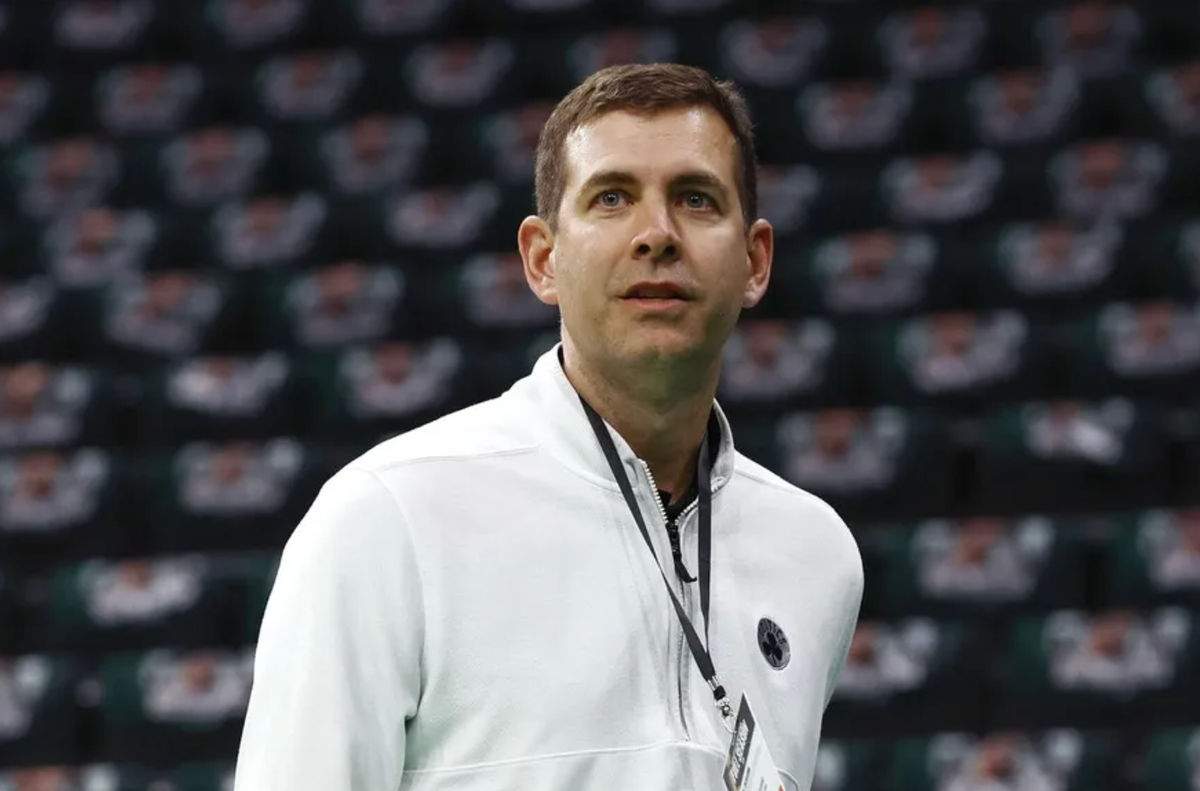
NBA Executive of the Year this year for a reason. He did the seemingly impossible (or so Golden State tells us) … He got rid of a bunch of overpaid veterans, remained competitive even without Jayson Tatum for the most part, and restructured a roster that should be able to compete for Eastern titles for most of the next decade.

Fire him? I say: Reward him.

Fire Joe Mazzulla.

He did such a great job during the regular season, he set himself up for a hard fall in the playoffs. And even at that, you have to wonder what might have happened had Tatum not contracted a case of Embiid-itis.

Did he mismanage the Philadelphia series? Sure. The Pistons would have fired their coach if he’d done that. Maybe even the Knicks and Cavaliers. But they haven’t won a title, made the Finals twice and been a perennial contender for the better part of a decade.

Based on the improbable regular season alone, Mazz deserves the benefit of the doubt. But don’t let it happen again.

Trade Derrick White.

On the surface, this one makes sense. As the 76ers series demonstrated, the Celtics could use a Robert Williams III type more than a White type. But that’s what Stevens, in a rare blunder, thought when he exchanged Anfernee Simons for Nikola Vucevic.

Look at the Eastern Conference. When Joel Embiid isn’t playing – which is most of the time – the top players are almost all guards: Cade Cunningham, Jalen Brunson, Donovan Mitchell, James Harden, Tyrese Haliburton … You need somebody to slow them down.

Yeah, the Celtics could move Jaylen Brown fulltime to the backcourt, but that likely would force Tatum to actually have to guard somebody. Giving Brown the tough frontcourt assignments allows Tatum to freelance, grab cheap rebounds and stay fresh for his late barrage of missed 3-pointers. Wait, that was supposed to be a positive.

Trading White maybe gets you Wendell Carter Jr., but does that make you better? I say: Just bigger.

Trade Jaylen Brown.
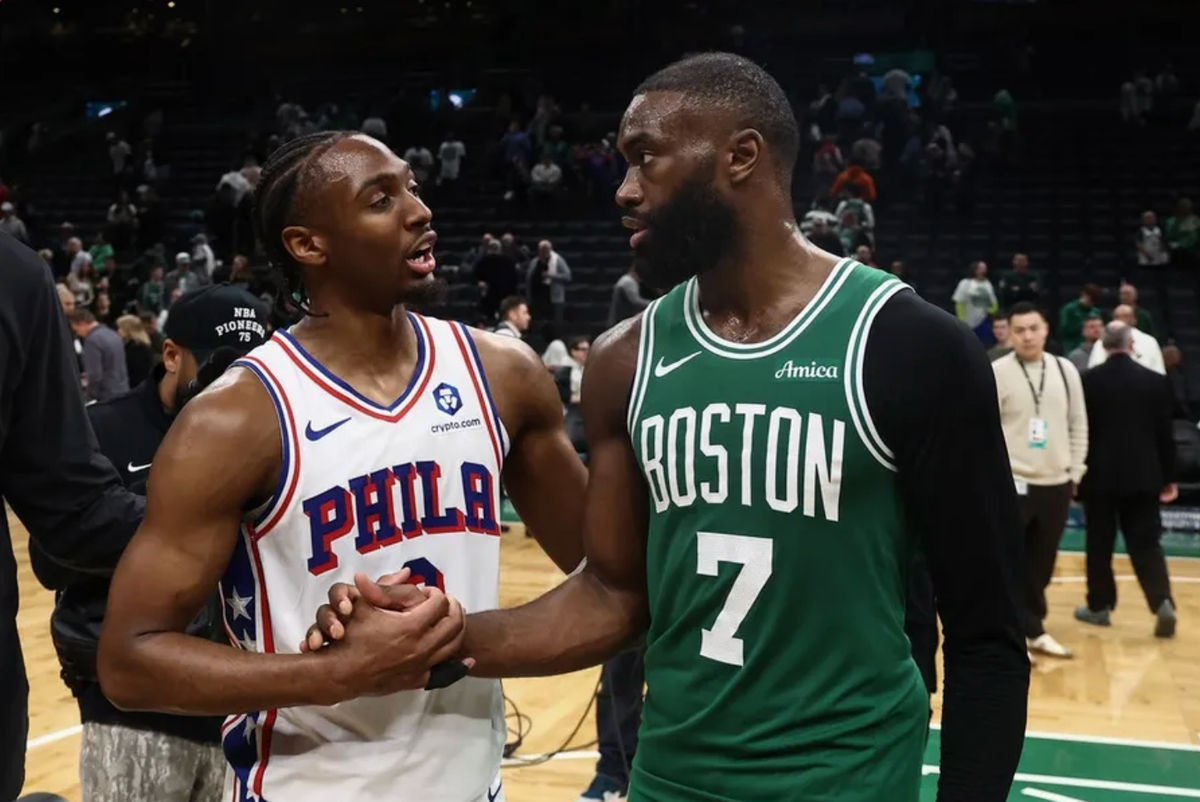

May 2, 2026; Boston, Massachusetts, USA; Philadelphia 76ers guard Tyrese Maxey (0) talks with Boston Celtics guard Jaylen Brown (7)after Philadephia’s win in game seven of the first round of the 2026 NBA Playoffs at TD Garden. Mandatory Credit: Winslow Townson-Imagn ImagesMay 2, 2026; Boston, Massachusetts, USA; Philadelphia 76ers guard Tyrese Maxey (0) talks with Boston Celtics guard Jaylen Brown (7)after Philadephia’s win in game seven of the first round of the 2026 NBA Playoffs at TD Garden. Mandatory Credit: Winslow Townson-Imagn Images

Let’s be honest: Breaking up the Brown/Tatum tandem would take a lot of guts. But after watching the Celtics play without Tatum for two-thirds of last season, it’s at least worth considering.

So which one gets shopped? That depends what type of team you want.

We’ve seen what the Celtics look like without Tatum – energetic, defensive-minded and all-inclusive on offense. And that’s without whatever high-level player or players you would get by trading Tatum.

You turn Brown into, say, Naz Reid and Terrence Shannon Jr., and you improve defensively on the interior and offensively on the perimeter. But you lose what made the Celtics so fun to watch this season – the team’s best defender and emotional leader.

I’d keep Brown.

Trade Jayson Tatum.

It might take just one call to turn the Celtics into the Eastern frontrunner again …

Stevens: If we give you Tatum for Giannis, how many first-round picks would you want?

Bucks GM Jon Horst: Let me get back to you on that.

If the response is anything you can count on one hand, the Celtics’ off-season is complete.

Tatum has done a lot of good things for this team, but he’s not in Giannis’ league. Few players are.

The Celtics would get their interior force, a runner who would allow the team to pick up the pace and another elite shot-blocker who would make Boston the most well-rounded defensive force in the league, with White shadowing star little guys, Brown locked onto mid-sized scorers and Giannis pitching a tent in the middle.

Stop dreaming? OK, then I’d settle for Domantas Sabonis and De’Andre Hunter.

Stand pat.

Stevens earned a nice, long vacation. Maybe he should take one.

No phones. See you in October with the same pieces that made the Celtics the favorite in the Eastern playoffs. Even with Tatum at less than 100 percent.

After all, it ain’t broke.

Unless, of course: Brad, this is Horstie getting back to you …

#Celtics #Blow #Analyzing #Major #Option #Deadspin.com"> Should the Celtics Blow It Up? Analyzing Every Major Option | Deadspin.com  Feb 28, 2025; Boston, Massachusetts, USA; Boston Celtics president of basketball operations Brad Stevens before their game against the Cleveland Cavaliers at TD Garden. Mandatory Credit: Winslow Townson-Imagn Images   Everyone seems to have an opinion on how to “fix” the Celtics.You’ll probably not be surprised to hear I have a few myself. OK, more than just a few.Raising a 7-foot bar on a bunch of wishful thinking among Celtics fans and senseless knee-jerk reactions among the unfaithful, here’s where I stand on some of the more popular suggestions:Fire Brad Stevens.Let’s get the most ridiculous one out of the way.Stevens was NBA Executive of the Year this year for a reason. He did the seemingly impossible (or so Golden State tells us) … He got rid of a bunch of overpaid veterans, remained competitive even without Jayson Tatum for the most part, and restructured a roster that should be able to compete for Eastern titles for most of the next decade.Fire him? I say: Reward him.Fire Joe Mazzulla.He did such a great job during the regular season, he set himself up for a hard fall in the playoffs. And even at that, you have to wonder what might have happened had Tatum not contracted a case of Embiid-itis.Did he mismanage the Philadelphia series? Sure. The Pistons would have fired their coach if he’d done that. Maybe even the Knicks and Cavaliers. But they haven’t won a title, made the Finals twice and been a perennial contender for the better part of a decade.Based on the improbable regular season alone, Mazz deserves the benefit of the doubt. But don’t let it happen again.Trade Derrick White.On the surface, this one makes sense. As the 76ers series demonstrated, the Celtics could use a Robert Williams III type more than a White type. But that’s what Stevens, in a rare blunder, thought when he exchanged Anfernee Simons for Nikola Vucevic.Look at the Eastern Conference. When Joel Embiid isn’t playing – which is most of the time – the top players are almost all guards: Cade Cunningham, Jalen Brunson, Donovan Mitchell, James Harden, Tyrese Haliburton … You need somebody to slow them down.Yeah, the Celtics could move Jaylen Brown fulltime to the backcourt, but that likely would force Tatum to actually have to guard somebody. Giving Brown the tough frontcourt assignments allows Tatum to freelance, grab cheap rebounds and stay fresh for his late barrage of missed 3-pointers. Wait, that was supposed to be a positive.Trading White maybe gets you Wendell Carter Jr., but does that make you better? I say: Just bigger.Trade Jaylen Brown. May 2, 2026; Boston, Massachusetts, USA; Philadelphia 76ers guard Tyrese Maxey (0) talks with Boston Celtics guard Jaylen Brown (7)after Philadephia’s win in game seven of the first round of the 2026 NBA Playoffs at TD Garden. Mandatory Credit: Winslow Townson-Imagn Images    Let’s be honest: Breaking up the Brown/Tatum tandem would take a lot of guts. But after watching the Celtics play without Tatum for two-thirds of last season, it’s at least worth considering.So which one gets shopped? That depends what type of team you want.We’ve seen what the Celtics look like without Tatum – energetic, defensive-minded and all-inclusive on offense. And that’s without whatever high-level player or players you would get by trading Tatum.You turn Brown into, say, Naz Reid and Terrence Shannon Jr., and you improve defensively on the interior and offensively on the perimeter. But you lose what made the Celtics so fun to watch this season – the team’s best defender and emotional leader.I’d keep Brown.Trade Jayson Tatum.It might take just one call to turn the Celtics into the Eastern frontrunner again …Stevens: If we give you Tatum for Giannis, how many first-round picks would you want?Bucks GM Jon Horst: Let me get back to you on that.If the response is anything you can count on one hand, the Celtics’ off-season is complete.Tatum has done a lot of good things for this team, but he’s not in Giannis’ league. Few players are.The Celtics would get their interior force, a runner who would allow the team to pick up the pace and another elite shot-blocker who would make Boston the most well-rounded defensive force in the league, with White shadowing star little guys, Brown locked onto mid-sized scorers and Giannis pitching a tent in the middle.Stop dreaming? OK, then I’d settle for Domantas Sabonis and De’Andre Hunter.Stand pat.Stevens earned a nice, long vacation. Maybe he should take one.No phones. See you in October with the same pieces that made the Celtics the favorite in the Eastern playoffs. Even with Tatum at less than 100 percent.After all, it ain’t broke.Unless, of course: Brad, this is Horstie getting back to you …   #Celtics #Blow #Analyzing #Major #Option #Deadspin.com
Sports news

NBA Executive of the Year this year for a reason. He did the seemingly impossible (or so Golden State tells us) … He got rid of a bunch of overpaid veterans, remained competitive even without Jayson Tatum for the most part, and restructured a roster that should be able to compete for Eastern titles for most of the next decade.

Fire him? I say: Reward him.

Fire Joe Mazzulla.

He did such a great job during the regular season, he set himself up for a hard fall in the playoffs. And even at that, you have to wonder what might have happened had Tatum not contracted a case of Embiid-itis.

Did he mismanage the Philadelphia series? Sure. The Pistons would have fired their coach if he’d done that. Maybe even the Knicks and Cavaliers. But they haven’t won a title, made the Finals twice and been a perennial contender for the better part of a decade.

Based on the improbable regular season alone, Mazz deserves the benefit of the doubt. But don’t let it happen again.

Trade Derrick White.

On the surface, this one makes sense. As the 76ers series demonstrated, the Celtics could use a Robert Williams III type more than a White type. But that’s what Stevens, in a rare blunder, thought when he exchanged Anfernee Simons for Nikola Vucevic.

Look at the Eastern Conference. When Joel Embiid isn’t playing – which is most of the time – the top players are almost all guards: Cade Cunningham, Jalen Brunson, Donovan Mitchell, James Harden, Tyrese Haliburton … You need somebody to slow them down.

Yeah, the Celtics could move Jaylen Brown fulltime to the backcourt, but that likely would force Tatum to actually have to guard somebody. Giving Brown the tough frontcourt assignments allows Tatum to freelance, grab cheap rebounds and stay fresh for his late barrage of missed 3-pointers. Wait, that was supposed to be a positive.

Trading White maybe gets you Wendell Carter Jr., but does that make you better? I say: Just bigger.

Trade Jaylen Brown.


May 2, 2026; Boston, Massachusetts, USA; Philadelphia 76ers guard Tyrese Maxey (0) talks with Boston Celtics guard Jaylen Brown (7)after Philadephia’s win in game seven of the first round of the 2026 NBA Playoffs at TD Garden. Mandatory Credit: Winslow Townson-Imagn ImagesMay 2, 2026; Boston, Massachusetts, USA; Philadelphia 76ers guard Tyrese Maxey (0) talks with Boston Celtics guard Jaylen Brown (7)after Philadephia’s win in game seven of the first round of the 2026 NBA Playoffs at TD Garden. Mandatory Credit: Winslow Townson-Imagn Images

Let’s be honest: Breaking up the Brown/Tatum tandem would take a lot of guts. But after watching the Celtics play without Tatum for two-thirds of last season, it’s at least worth considering.

So which one gets shopped? That depends what type of team you want.

We’ve seen what the Celtics look like without Tatum – energetic, defensive-minded and all-inclusive on offense. And that’s without whatever high-level player or players you would get by trading Tatum.

You turn Brown into, say, Naz Reid and Terrence Shannon Jr., and you improve defensively on the interior and offensively on the perimeter. But you lose what made the Celtics so fun to watch this season – the team’s best defender and emotional leader.

I’d keep Brown.

Trade Jayson Tatum.

It might take just one call to turn the Celtics into the Eastern frontrunner again …

Stevens: If we give you Tatum for Giannis, how many first-round picks would you want?

Bucks GM Jon Horst: Let me get back to you on that.

If the response is anything you can count on one hand, the Celtics’ off-season is complete.

Tatum has done a lot of good things for this team, but he’s not in Giannis’ league. Few players are.

The Celtics would get their interior force, a runner who would allow the team to pick up the pace and another elite shot-blocker who would make Boston the most well-rounded defensive force in the league, with White shadowing star little guys, Brown locked onto mid-sized scorers and Giannis pitching a tent in the middle.

Stop dreaming? OK, then I’d settle for Domantas Sabonis and De’Andre Hunter.

Stand pat.

Stevens earned a nice, long vacation. Maybe he should take one.

No phones. See you in October with the same pieces that made the Celtics the favorite in the Eastern playoffs. Even with Tatum at less than 100 percent.

After all, it ain’t broke.

Unless, of course: Brad, this is Horstie getting back to you …

#Celtics #Blow #Analyzing #Major #Option #Deadspin.com">Should the Celtics Blow It Up? Analyzing Every Major Option | Deadspin.com
Should the Celtics Blow It Up? Analyzing Every Major Option | Deadspin.com  Feb 28, 2025; Boston, Massachusetts, USA; Boston Celtics president of basketball operations Brad Stevens before their game against the Cleveland Cavaliers at TD Garden. Mandatory Credit: Winslow Townson-Imagn Images   Everyone seems to have an opinion on how to “fix” the Celtics.You’ll probably not be surprised to hear I have a few myself. OK, more than just a few.Raising a 7-foot bar on a bunch of wishful thinking among Celtics fans and senseless knee-jerk reactions among the unfaithful, here’s where I stand on some of the more popular suggestions:Fire Brad Stevens.Let’s get the most ridiculous one out of the way.Stevens was NBA Executive of the Year this year for a reason. He did the seemingly impossible (or so Golden State tells us) … He got rid of a bunch of overpaid veterans, remained competitive even without Jayson Tatum for the most part, and restructured a roster that should be able to compete for Eastern titles for most of the next decade.Fire him? I say: Reward him.Fire Joe Mazzulla.He did such a great job during the regular season, he set himself up for a hard fall in the playoffs. And even at that, you have to wonder what might have happened had Tatum not contracted a case of Embiid-itis.Did he mismanage the Philadelphia series? Sure. The Pistons would have fired their coach if he’d done that. Maybe even the Knicks and Cavaliers. But they haven’t won a title, made the Finals twice and been a perennial contender for the better part of a decade.Based on the improbable regular season alone, Mazz deserves the benefit of the doubt. But don’t let it happen again.Trade Derrick White.On the surface, this one makes sense. As the 76ers series demonstrated, the Celtics could use a Robert Williams III type more than a White type. But that’s what Stevens, in a rare blunder, thought when he exchanged Anfernee Simons for Nikola Vucevic.Look at the Eastern Conference. When Joel Embiid isn’t playing – which is most of the time – the top players are almost all guards: Cade Cunningham, Jalen Brunson, Donovan Mitchell, James Harden, Tyrese Haliburton … You need somebody to slow them down.Yeah, the Celtics could move Jaylen Brown fulltime to the backcourt, but that likely would force Tatum to actually have to guard somebody. Giving Brown the tough frontcourt assignments allows Tatum to freelance, grab cheap rebounds and stay fresh for his late barrage of missed 3-pointers. Wait, that was supposed to be a positive.Trading White maybe gets you Wendell Carter Jr., but does that make you better? I say: Just bigger.Trade Jaylen Brown. May 2, 2026; Boston, Massachusetts, USA; Philadelphia 76ers guard Tyrese Maxey (0) talks with Boston Celtics guard Jaylen Brown (7)after Philadephia’s win in game seven of the first round of the 2026 NBA Playoffs at TD Garden. Mandatory Credit: Winslow Townson-Imagn Images    Let’s be honest: Breaking up the Brown/Tatum tandem would take a lot of guts. But after watching the Celtics play without Tatum for two-thirds of last season, it’s at least worth considering.So which one gets shopped? That depends what type of team you want.We’ve seen what the Celtics look like without Tatum – energetic, defensive-minded and all-inclusive on offense. And that’s without whatever high-level player or players you would get by trading Tatum.You turn Brown into, say, Naz Reid and Terrence Shannon Jr., and you improve defensively on the interior and offensively on the perimeter. But you lose what made the Celtics so fun to watch this season – the team’s best defender and emotional leader.I’d keep Brown.Trade Jayson Tatum.It might take just one call to turn the Celtics into the Eastern frontrunner again …Stevens: If we give you Tatum for Giannis, how many first-round picks would you want?Bucks GM Jon Horst: Let me get back to you on that.If the response is anything you can count on one hand, the Celtics’ off-season is complete.Tatum has done a lot of good things for this team, but he’s not in Giannis’ league. Few players are.The Celtics would get their interior force, a runner who would allow the team to pick up the pace and another elite shot-blocker who would make Boston the most well-rounded defensive force in the league, with White shadowing star little guys, Brown locked onto mid-sized scorers and Giannis pitching a tent in the middle.Stop dreaming? OK, then I’d settle for Domantas Sabonis and De’Andre Hunter.Stand pat.Stevens earned a nice, long vacation. Maybe he should take one.No phones. See you in October with the same pieces that made the Celtics the favorite in the Eastern playoffs. Even with Tatum at less than 100 percent.After all, it ain’t broke.Unless, of course: Brad, this is Horstie getting back to you …   #Celtics #Blow #Analyzing #Major #Option #Deadspin.comFeb 28, 2025; Boston, Massachusetts, USA; Boston Celtics president of basketball operations Brad Stevens before their game against the Cleveland Cavaliers at TD Garden. Mandatory Credit: Winslow Townson-Imagn Images

Everyone seems to have an opinion on how to “fix” the Celtics.

You’ll probably not be surprised to hear I have a few myself. OK, more than just a few.

Raising a 7-foot bar on a bunch of wishful thinking among Celtics fans and senseless knee-jerk reactions among the unfaithful, here’s where I stand on some of the more popular suggestions:

Fire Brad Stevens.

Let’s get the most ridiculous one out of the way.

Stevens was NBA Executive of the Year this year for a reason. He did the seemingly impossible (or so Golden State tells us) … He got rid of a bunch of overpaid veterans, remained competitive even without Jayson Tatum for the most part, and restructured a roster that should be able to compete for Eastern titles for most of the next decade.

Fire him? I say: Reward him.

Fire Joe Mazzulla.

He did such a great job during the regular season, he set himself up for a hard fall in the playoffs. And even at that, you have to wonder what might have happened had Tatum not contracted a case of Embiid-itis.

Did he mismanage the Philadelphia series? Sure. The Pistons would have fired their coach if he’d done that. Maybe even the Knicks and Cavaliers. But they haven’t won a title, made the Finals twice and been a perennial contender for the better part of a decade.

Based on the improbable regular season alone, Mazz deserves the benefit of the doubt. But don’t let it happen again.

Trade Derrick White.

On the surface, this one makes sense. As the 76ers series demonstrated, the Celtics could use a Robert Williams III type more than a White type. But that’s what Stevens, in a rare blunder, thought when he exchanged Anfernee Simons for Nikola Vucevic.

Look at the Eastern Conference. When Joel Embiid isn’t playing – which is most of the time – the top players are almost all guards: Cade Cunningham, Jalen Brunson, Donovan Mitchell, James Harden, Tyrese Haliburton … You need somebody to slow them down.

Yeah, the Celtics could move Jaylen Brown fulltime to the backcourt, but that likely would force Tatum to actually have to guard somebody. Giving Brown the tough frontcourt assignments allows Tatum to freelance, grab cheap rebounds and stay fresh for his late barrage of missed 3-pointers. Wait, that was supposed to be a positive.

Trading White maybe gets you Wendell Carter Jr., but does that make you better? I say: Just bigger.

Trade Jaylen Brown.


May 2, 2026; Boston, Massachusetts, USA; Philadelphia 76ers guard Tyrese Maxey (0) talks with Boston Celtics guard Jaylen Brown (7)after Philadephia’s win in game seven of the first round of the 2026 NBA Playoffs at TD Garden. Mandatory Credit: Winslow Townson-Imagn ImagesMay 2, 2026; Boston, Massachusetts, USA; Philadelphia 76ers guard Tyrese Maxey (0) talks with Boston Celtics guard Jaylen Brown (7)after Philadephia’s win in game seven of the first round of the 2026 NBA Playoffs at TD Garden. Mandatory Credit: Winslow Townson-Imagn Images

Let’s be honest: Breaking up the Brown/Tatum tandem would take a lot of guts. But after watching the Celtics play without Tatum for two-thirds of last season, it’s at least worth considering.

So which one gets shopped? That depends what type of team you want.

We’ve seen what the Celtics look like without Tatum – energetic, defensive-minded and all-inclusive on offense. And that’s without whatever high-level player or players you would get by trading Tatum.

You turn Brown into, say, Naz Reid and Terrence Shannon Jr., and you improve defensively on the interior and offensively on the perimeter. But you lose what made the Celtics so fun to watch this season – the team’s best defender and emotional leader.

I’d keep Brown.

Trade Jayson Tatum.

It might take just one call to turn the Celtics into the Eastern frontrunner again …

Stevens: If we give you Tatum for Giannis, how many first-round picks would you want?

Bucks GM Jon Horst: Let me get back to you on that.

If the response is anything you can count on one hand, the Celtics’ off-season is complete.

Tatum has done a lot of good things for this team, but he’s not in Giannis’ league. Few players are.

The Celtics would get their interior force, a runner who would allow the team to pick up the pace and another elite shot-blocker who would make Boston the most well-rounded defensive force in the league, with White shadowing star little guys, Brown locked onto mid-sized scorers and Giannis pitching a tent in the middle.

Stop dreaming? OK, then I’d settle for Domantas Sabonis and De’Andre Hunter.

Stand pat.

Stevens earned a nice, long vacation. Maybe he should take one.

No phones. See you in October with the same pieces that made the Celtics the favorite in the Eastern playoffs. Even with Tatum at less than 100 percent.

After all, it ain’t broke.

Unless, of course: Brad, this is Horstie getting back to you …

#Celtics #Blow #Analyzing #Major #Option #Deadspin.com

Feb 28, 2025; Boston, Massachusetts, USA; Boston Celtics president of basketball operations Brad Stevens before…

World news

Access Denied You don't have permission to access "http://news.sky.com/story/iran-football-chief-wants-no-insults-guarantee-for-irgc-ahead-of-world-cup-13540695" on this server. Reference #18.3109c617.1778078904.46b0deb https://errors.edgesuite.net/18.3109c617.1778078904.46b0deb…

Madhyapradesh news

शहर के तरहटी, निपनिया, संजय नगर, नेहरु नगर, विवेकानंद नगर सहित अन्य कुछ निचले इलाकों…

Samsung S90F OLED TV is one of the top recommendations right now. It doesn’t just rely on standard OLED strengths; it pushes things further with its QD-OLED panel. That means brighter highlights and more saturated colors, especially noticeable in HDR content. Instead of the usual “good OLED picture,” this one actually stands out when you’re watching high-quality movies or shows. Bright scenes look punchier, and darker scenes still keep their depth without losing detail.

Where this TV really stands out is in gaming. First, it supports up to a 144Hz refresh rate, and the low input lag helps keep gameplay smooth and responsive. Secondly, the presence of features like VRR can eliminate issues such as screen tearing. If gaming is even a low priority, this is one of the best options.

Another advantage is viewing angles. Even if you’re not sitting directly in front, colors and contrast stay consistent. Compared to something like the S85F, if you watch in a bright room, this makes a noticeable difference over cheaper OLEDs, which makes a real difference in well-lit rooms.

2. LG B5 Series OLED TV

LG B5 OLED TV

The LG B5 is one of those TVs that doesn’t try to impress with flashy upgrades but gets the basics right. It delivers what most people expect from OLED: deep blacks, strong contrast, and natural-looking colors, but the key difference is how balanced everything feels. Nothing looks overprocessed or exaggerated, making it a safe choice if you watch a mix of content, including movies, sports, and regular TV.

LG’s processing also plays a big role here. Lower-resolution content doesn’t look stretched or blurry, which is useful if you’re not always watching 4K content. It quietly improves the overall viewing experience without making it obvious. That’s something LG has been consistently good at, and this model continues that trend.

For gaming, it covers all the important features without going overboard. You get a 120Hz refresh rate, HDMI 2.1 support, VRR, and low input lag. It’s not as aggressive as Samsung’s 144Hz setup, but for console gaming, it’s more than enough and feels smooth in real use.

3. Sony Bravia XR8B OLED TV

OLED TVs

Sony takes a different approach compared to Samsung and LG. If you watch a lot of movies or shows, this TV is best for you. Instead of focusing on brightness or gaming specs, it puts more effort into how the picture actually looks. The XR8B reflects that. Colors feel more accurate, especially skin tones, and motion looks smoother in fast scenes.

One of its biggest strengths is upscaling. Not everything you watch will be in 4K, and this is where Sony usually performs better than others. Lower-resolution content looks cleaner and more detailed, rather than just being stretched to fit the screen. That alone makes it a good option for people who still watch HD channels or older content.

Furthermore, the Google TV interface enhances the experience. It’s easy to navigate, and most apps are readily available, so there’s no learning curve. Everything feels straightforward, which matters for daily use.

That said, it’s not the strongest performer in every area. Brightness is lower than that of Samsung’s QD-OLED models, so HDR doesn’t feel as impactful. It’s also priced a bit higher than it should be for what it offers, especially if gaming is important to you. But if your focus is on accurate visuals and overall picture quality, this TV still holds its place.

4. Samsung S85F OLED TV

Samsung OLED TVs

The Samsung S85F OLED TV is meant for people who want better color accuracy from an OLED display but are not looking to purchase a premium OLED TV. The advanced QD-OLED screen technology boosts color vibrancy and brightness compared to an ordinary OLED display. Colors look richer, and contrast remains strong, so the overall image quality is still impressive for the price.

In terms of features, the S85F supports the full suite of HDMI 2.1 functionality, including 120Hz refresh rate and VRR. As a result, it is well-suited for gaming, as it ensures smoother gameplay without screen tearing during fast-action sequences. For console users especially, this setup works well and doesn’t feel limited in everyday use.

The main reason to consider this model is price. If you want QD-OLED without stretching your budget too much, this is worth considering.

5. Panasonic Z85 OLED TV

Panasonic

The Panasonic Z85 focuses on a slightly different audience. Instead of pushing picture performance to the limit, it tries to offer a more complete experience out of the box. The display still delivers solid OLED-level contrast and black levels, so you won’t feel like you’re missing out on the core benefits.

One of the main highlights of this TV is the high-quality sound. Unlike most TVs in this range, the built-in speakers are actually good enough for regular use. You don’t immediately feel the need to add a soundbar, which can save extra cost and setup effort. For many users, that makes a practical difference.

It also supports both Dolby Vision and HDR10+, which gives you more flexibility depending on what you watch. That’s something not all TVs offer, and it helps ensure compatibility across different platforms.

Compared to Samsung and LG models, it feels a bit less dynamic, especially in bright scenes. It’s also not as widely recommended in top-tier rankings, which affects its positioning here. Still, if you want a simple setup with good sound and reliable picture quality, this TV does its job well without overcomplicating things.

#Budget #OLED #TVs #Worth #BuyingOLED TV"> 5 Budget OLED TVs Worth Buying in 2026
	
If you’re planning to upgrade your TV, OLED is one of the best technologies you can choose today. They offer deeper blacks, better contrast, and more accurate colors because each pixel works independently. This creates a more immersive experience, whether you’re watching movies, sports, or playing games. It’s one of the main reasons why OLED TVs are often recommended by experts.


The only issue has always been the price. However, the situation is different today, as technology allows users to choose models that deliver equal performance but are cheaper. For your convenience, we looked at expert reviews and real-world performance experts and have selected the best budget OLED TV models.


1. Samsung S90F OLED TV


In terms of price-to-performance, the Samsung S90F OLED TV is one of the top recommendations right now. It doesn’t just rely on standard OLED strengths; it pushes things further with its QD-OLED panel. That means brighter highlights and more saturated colors, especially noticeable in HDR content. Instead of the usual “good OLED picture,” this one actually stands out when you’re watching high-quality movies or shows. Bright scenes look punchier, and darker scenes still keep their depth without losing detail.


Where this TV really stands out is in gaming. First, it supports up to a 144Hz refresh rate, and the low input lag helps keep gameplay smooth and responsive. Secondly, the presence of features like VRR can eliminate issues such as screen tearing. If gaming is even a low priority, this is one of the best options.


Another advantage is viewing angles. Even if you’re not sitting directly in front, colors and contrast stay consistent. Compared to something like the S85F, if you watch in a bright room, this makes a noticeable difference over cheaper OLEDs, which makes a real difference in well-lit rooms.


2. LG B5 Series OLED TV


The LG B5 is one of those TVs that doesn’t try to impress with flashy upgrades but gets the basics right. It delivers what most people expect from OLED: deep blacks, strong contrast, and natural-looking colors, but the key difference is how balanced everything feels. Nothing looks overprocessed or exaggerated, making it a safe choice if you watch a mix of content, including movies, sports, and regular TV.


LG’s processing also plays a big role here. Lower-resolution content doesn’t look stretched or blurry, which is useful if you’re not always watching 4K content. It quietly improves the overall viewing experience without making it obvious. That’s something LG has been consistently good at, and this model continues that trend.


For gaming, it covers all the important features without going overboard. You get a 120Hz refresh rate, HDMI 2.1 support, VRR, and low input lag. It’s not as aggressive as Samsung’s 144Hz setup, but for console gaming, it’s more than enough and feels smooth in real use.


3. Sony Bravia XR8B OLED TV


Sony takes a different approach compared to Samsung and LG. If you watch a lot of movies or shows, this TV is best for you. Instead of focusing on brightness or gaming specs, it puts more effort into how the picture actually looks. The XR8B reflects that. Colors feel more accurate, especially skin tones, and motion looks smoother in fast scenes.


One of its biggest strengths is upscaling. Not everything you watch will be in 4K, and this is where Sony usually performs better than others. Lower-resolution content looks cleaner and more detailed, rather than just being stretched to fit the screen. That alone makes it a good option for people who still watch HD channels or older content.


Furthermore, the Google TV interface enhances the experience. It’s easy to navigate, and most apps are readily available, so there’s no learning curve. Everything feels straightforward, which matters for daily use.


That said, it’s not the strongest performer in every area. Brightness is lower than that of Samsung’s QD-OLED models, so HDR doesn’t feel as impactful. It’s also priced a bit higher than it should be for what it offers, especially if gaming is important to you. But if your focus is on accurate visuals and overall picture quality, this TV still holds its place.


4. Samsung S85F OLED TV


The Samsung S85F OLED TV is meant for people who want better color accuracy from an OLED display but are not looking to purchase a premium OLED TV. The advanced QD-OLED screen technology boosts color vibrancy and brightness compared to an ordinary OLED display. Colors look richer, and contrast remains strong, so the overall image quality is still impressive for the price.


In terms of features, the S85F supports the full suite of HDMI 2.1 functionality, including 120Hz refresh rate and VRR. As a result, it is well-suited for gaming, as it ensures smoother gameplay without screen tearing during fast-action sequences. For console users especially, this setup works well and doesn’t feel limited in everyday use.


The main reason to consider this model is price. If you want QD-OLED without stretching your budget too much, this is worth considering.


5. Panasonic Z85 OLED TV


The Panasonic Z85 focuses on a slightly different audience. Instead of pushing picture performance to the limit, it tries to offer a more complete experience out of the box. The display still delivers solid OLED-level contrast and black levels, so you won’t feel like you’re missing out on the core benefits.


One of the main highlights of this TV is the high-quality sound. Unlike most TVs in this range, the built-in speakers are actually good enough for regular use. You don’t immediately feel the need to add a soundbar, which can save extra cost and setup effort. For many users, that makes a practical difference.


It also supports both Dolby Vision and HDR10+, which gives you more flexibility depending on what you watch. That’s something not all TVs offer, and it helps ensure compatibility across different platforms.


Compared to Samsung and LG models, it feels a bit less dynamic, especially in bright scenes. It’s also not as widely recommended in top-tier rankings, which affects its positioning here. Still, if you want a simple setup with good sound and reliable picture quality, this TV does its job well without overcomplicating things.


#Budget #OLED #TVs #Worth #BuyingOLED TV
Tech-news

Samsung S90F OLED TV is one of the top recommendations right now. It doesn’t just rely on standard OLED strengths; it pushes things further with its QD-OLED panel. That means brighter highlights and more saturated colors, especially noticeable in HDR content. Instead of the usual “good OLED picture,” this one actually stands out when you’re watching high-quality movies or shows. Bright scenes look punchier, and darker scenes still keep their depth without losing detail.

Where this TV really stands out is in gaming. First, it supports up to a 144Hz refresh rate, and the low input lag helps keep gameplay smooth and responsive. Secondly, the presence of features like VRR can eliminate issues such as screen tearing. If gaming is even a low priority, this is one of the best options.

Another advantage is viewing angles. Even if you’re not sitting directly in front, colors and contrast stay consistent. Compared to something like the S85F, if you watch in a bright room, this makes a noticeable difference over cheaper OLEDs, which makes a real difference in well-lit rooms.

2. LG B5 Series OLED TV

LG B5 OLED TV

The LG B5 is one of those TVs that doesn’t try to impress with flashy upgrades but gets the basics right. It delivers what most people expect from OLED: deep blacks, strong contrast, and natural-looking colors, but the key difference is how balanced everything feels. Nothing looks overprocessed or exaggerated, making it a safe choice if you watch a mix of content, including movies, sports, and regular TV.

LG’s processing also plays a big role here. Lower-resolution content doesn’t look stretched or blurry, which is useful if you’re not always watching 4K content. It quietly improves the overall viewing experience without making it obvious. That’s something LG has been consistently good at, and this model continues that trend.

For gaming, it covers all the important features without going overboard. You get a 120Hz refresh rate, HDMI 2.1 support, VRR, and low input lag. It’s not as aggressive as Samsung’s 144Hz setup, but for console gaming, it’s more than enough and feels smooth in real use.

3. Sony Bravia XR8B OLED TV

OLED TVs

Sony takes a different approach compared to Samsung and LG. If you watch a lot of movies or shows, this TV is best for you. Instead of focusing on brightness or gaming specs, it puts more effort into how the picture actually looks. The XR8B reflects that. Colors feel more accurate, especially skin tones, and motion looks smoother in fast scenes.

One of its biggest strengths is upscaling. Not everything you watch will be in 4K, and this is where Sony usually performs better than others. Lower-resolution content looks cleaner and more detailed, rather than just being stretched to fit the screen. That alone makes it a good option for people who still watch HD channels or older content.

Furthermore, the Google TV interface enhances the experience. It’s easy to navigate, and most apps are readily available, so there’s no learning curve. Everything feels straightforward, which matters for daily use.

That said, it’s not the strongest performer in every area. Brightness is lower than that of Samsung’s QD-OLED models, so HDR doesn’t feel as impactful. It’s also priced a bit higher than it should be for what it offers, especially if gaming is important to you. But if your focus is on accurate visuals and overall picture quality, this TV still holds its place.

4. Samsung S85F OLED TV

Samsung OLED TVs

The Samsung S85F OLED TV is meant for people who want better color accuracy from an OLED display but are not looking to purchase a premium OLED TV. The advanced QD-OLED screen technology boosts color vibrancy and brightness compared to an ordinary OLED display. Colors look richer, and contrast remains strong, so the overall image quality is still impressive for the price.

In terms of features, the S85F supports the full suite of HDMI 2.1 functionality, including 120Hz refresh rate and VRR. As a result, it is well-suited for gaming, as it ensures smoother gameplay without screen tearing during fast-action sequences. For console users especially, this setup works well and doesn’t feel limited in everyday use.

The main reason to consider this model is price. If you want QD-OLED without stretching your budget too much, this is worth considering.

5. Panasonic Z85 OLED TV

Panasonic

The Panasonic Z85 focuses on a slightly different audience. Instead of pushing picture performance to the limit, it tries to offer a more complete experience out of the box. The display still delivers solid OLED-level contrast and black levels, so you won’t feel like you’re missing out on the core benefits.

One of the main highlights of this TV is the high-quality sound. Unlike most TVs in this range, the built-in speakers are actually good enough for regular use. You don’t immediately feel the need to add a soundbar, which can save extra cost and setup effort. For many users, that makes a practical difference.

It also supports both Dolby Vision and HDR10+, which gives you more flexibility depending on what you watch. That’s something not all TVs offer, and it helps ensure compatibility across different platforms.

Compared to Samsung and LG models, it feels a bit less dynamic, especially in bright scenes. It’s also not as widely recommended in top-tier rankings, which affects its positioning here. Still, if you want a simple setup with good sound and reliable picture quality, this TV does its job well without overcomplicating things.

#Budget #OLED #TVs #Worth #BuyingOLED TV">5 Budget OLED TVs Worth Buying in 2026

If you’re planning to upgrade your TV, OLED is one of the best technologies you can choose today. They offer deeper blacks, better contrast, and more accurate colors because each pixel works independently. This creates a more immersive experience, whether you’re watching movies, sports, or playing games. It’s one of the main reasons why OLED TVs are often recommended by experts.

The only issue has always been the price. However, the situation is different today, as technology allows users to choose models that deliver equal performance but are cheaper. For your convenience, we looked at expert reviews and real-world performance experts and have selected the best budget OLED TV models.

1. Samsung S90F OLED TV

5 Budget OLED TVs Worth Buying in 2026
	
If you’re planning to upgrade your TV, OLED is one of the best technologies you can choose today. They offer deeper blacks, better contrast, and more accurate colors because each pixel works independently. This creates a more immersive experience, whether you’re watching movies, sports, or playing games. It’s one of the main reasons why OLED TVs are often recommended by experts.


The only issue has always been the price. However, the situation is different today, as technology allows users to choose models that deliver equal performance but are cheaper. For your convenience, we looked at expert reviews and real-world performance experts and have selected the best budget OLED TV models.


1. Samsung S90F OLED TV


In terms of price-to-performance, the Samsung S90F OLED TV is one of the top recommendations right now. It doesn’t just rely on standard OLED strengths; it pushes things further with its QD-OLED panel. That means brighter highlights and more saturated colors, especially noticeable in HDR content. Instead of the usual “good OLED picture,” this one actually stands out when you’re watching high-quality movies or shows. Bright scenes look punchier, and darker scenes still keep their depth without losing detail.


Where this TV really stands out is in gaming. First, it supports up to a 144Hz refresh rate, and the low input lag helps keep gameplay smooth and responsive. Secondly, the presence of features like VRR can eliminate issues such as screen tearing. If gaming is even a low priority, this is one of the best options.


Another advantage is viewing angles. Even if you’re not sitting directly in front, colors and contrast stay consistent. Compared to something like the S85F, if you watch in a bright room, this makes a noticeable difference over cheaper OLEDs, which makes a real difference in well-lit rooms.


2. LG B5 Series OLED TV


The LG B5 is one of those TVs that doesn’t try to impress with flashy upgrades but gets the basics right. It delivers what most people expect from OLED: deep blacks, strong contrast, and natural-looking colors, but the key difference is how balanced everything feels. Nothing looks overprocessed or exaggerated, making it a safe choice if you watch a mix of content, including movies, sports, and regular TV.


LG’s processing also plays a big role here. Lower-resolution content doesn’t look stretched or blurry, which is useful if you’re not always watching 4K content. It quietly improves the overall viewing experience without making it obvious. That’s something LG has been consistently good at, and this model continues that trend.


For gaming, it covers all the important features without going overboard. You get a 120Hz refresh rate, HDMI 2.1 support, VRR, and low input lag. It’s not as aggressive as Samsung’s 144Hz setup, but for console gaming, it’s more than enough and feels smooth in real use.


3. Sony Bravia XR8B OLED TV


Sony takes a different approach compared to Samsung and LG. If you watch a lot of movies or shows, this TV is best for you. Instead of focusing on brightness or gaming specs, it puts more effort into how the picture actually looks. The XR8B reflects that. Colors feel more accurate, especially skin tones, and motion looks smoother in fast scenes.


One of its biggest strengths is upscaling. Not everything you watch will be in 4K, and this is where Sony usually performs better than others. Lower-resolution content looks cleaner and more detailed, rather than just being stretched to fit the screen. That alone makes it a good option for people who still watch HD channels or older content.


Furthermore, the Google TV interface enhances the experience. It’s easy to navigate, and most apps are readily available, so there’s no learning curve. Everything feels straightforward, which matters for daily use.


That said, it’s not the strongest performer in every area. Brightness is lower than that of Samsung’s QD-OLED models, so HDR doesn’t feel as impactful. It’s also priced a bit higher than it should be for what it offers, especially if gaming is important to you. But if your focus is on accurate visuals and overall picture quality, this TV still holds its place.


4. Samsung S85F OLED TV


The Samsung S85F OLED TV is meant for people who want better color accuracy from an OLED display but are not looking to purchase a premium OLED TV. The advanced QD-OLED screen technology boosts color vibrancy and brightness compared to an ordinary OLED display. Colors look richer, and contrast remains strong, so the overall image quality is still impressive for the price.


In terms of features, the S85F supports the full suite of HDMI 2.1 functionality, including 120Hz refresh rate and VRR. As a result, it is well-suited for gaming, as it ensures smoother gameplay without screen tearing during fast-action sequences. For console users especially, this setup works well and doesn’t feel limited in everyday use.


The main reason to consider this model is price. If you want QD-OLED without stretching your budget too much, this is worth considering.


5. Panasonic Z85 OLED TV


The Panasonic Z85 focuses on a slightly different audience. Instead of pushing picture performance to the limit, it tries to offer a more complete experience out of the box. The display still delivers solid OLED-level contrast and black levels, so you won’t feel like you’re missing out on the core benefits.


One of the main highlights of this TV is the high-quality sound. Unlike most TVs in this range, the built-in speakers are actually good enough for regular use. You don’t immediately feel the need to add a soundbar, which can save extra cost and setup effort. For many users, that makes a practical difference.


It also supports both Dolby Vision and HDR10+, which gives you more flexibility depending on what you watch. That’s something not all TVs offer, and it helps ensure compatibility across different platforms.


Compared to Samsung and LG models, it feels a bit less dynamic, especially in bright scenes. It’s also not as widely recommended in top-tier rankings, which affects its positioning here. Still, if you want a simple setup with good sound and reliable picture quality, this TV does its job well without overcomplicating things.


#Budget #OLED #TVs #Worth #BuyingOLED TV

In terms of price-to-performance, the Samsung S90F OLED TV is one of the top recommendations right now. It doesn’t just rely on standard OLED strengths; it pushes things further with its QD-OLED panel. That means brighter highlights and more saturated colors, especially noticeable in HDR content. Instead of the usual “good OLED picture,” this one actually stands out when you’re watching high-quality movies or shows. Bright scenes look punchier, and darker scenes still keep their depth without losing detail.

Where this TV really stands out is in gaming. First, it supports up to a 144Hz refresh rate, and the low input lag helps keep gameplay smooth and responsive. Secondly, the presence of features like VRR can eliminate issues such as screen tearing. If gaming is even a low priority, this is one of the best options.

Another advantage is viewing angles. Even if you’re not sitting directly in front, colors and contrast stay consistent. Compared to something like the S85F, if you watch in a bright room, this makes a noticeable difference over cheaper OLEDs, which makes a real difference in well-lit rooms.

2. LG B5 Series OLED TV

LG B5 OLED TV

The LG B5 is one of those TVs that doesn’t try to impress with flashy upgrades but gets the basics right. It delivers what most people expect from OLED: deep blacks, strong contrast, and natural-looking colors, but the key difference is how balanced everything feels. Nothing looks overprocessed or exaggerated, making it a safe choice if you watch a mix of content, including movies, sports, and regular TV.

LG’s processing also plays a big role here. Lower-resolution content doesn’t look stretched or blurry, which is useful if you’re not always watching 4K content. It quietly improves the overall viewing experience without making it obvious. That’s something LG has been consistently good at, and this model continues that trend.

For gaming, it covers all the important features without going overboard. You get a 120Hz refresh rate, HDMI 2.1 support, VRR, and low input lag. It’s not as aggressive as Samsung’s 144Hz setup, but for console gaming, it’s more than enough and feels smooth in real use.

3. Sony Bravia XR8B OLED TV

OLED TVs

Sony takes a different approach compared to Samsung and LG. If you watch a lot of movies or shows, this TV is best for you. Instead of focusing on brightness or gaming specs, it puts more effort into how the picture actually looks. The XR8B reflects that. Colors feel more accurate, especially skin tones, and motion looks smoother in fast scenes.

One of its biggest strengths is upscaling. Not everything you watch will be in 4K, and this is where Sony usually performs better than others. Lower-resolution content looks cleaner and more detailed, rather than just being stretched to fit the screen. That alone makes it a good option for people who still watch HD channels or older content.

Furthermore, the Google TV interface enhances the experience. It’s easy to navigate, and most apps are readily available, so there’s no learning curve. Everything feels straightforward, which matters for daily use.

That said, it’s not the strongest performer in every area. Brightness is lower than that of Samsung’s QD-OLED models, so HDR doesn’t feel as impactful. It’s also priced a bit higher than it should be for what it offers, especially if gaming is important to you. But if your focus is on accurate visuals and overall picture quality, this TV still holds its place.

4. Samsung S85F OLED TV

Samsung OLED TVs

The Samsung S85F OLED TV is meant for people who want better color accuracy from an OLED display but are not looking to purchase a premium OLED TV. The advanced QD-OLED screen technology boosts color vibrancy and brightness compared to an ordinary OLED display. Colors look richer, and contrast remains strong, so the overall image quality is still impressive for the price.

In terms of features, the S85F supports the full suite of HDMI 2.1 functionality, including 120Hz refresh rate and VRR. As a result, it is well-suited for gaming, as it ensures smoother gameplay without screen tearing during fast-action sequences. For console users especially, this setup works well and doesn’t feel limited in everyday use.

The main reason to consider this model is price. If you want QD-OLED without stretching your budget too much, this is worth considering.

5. Panasonic Z85 OLED TV

Panasonic

The Panasonic Z85 focuses on a slightly different audience. Instead of pushing picture performance to the limit, it tries to offer a more complete experience out of the box. The display still delivers solid OLED-level contrast and black levels, so you won’t feel like you’re missing out on the core benefits.

One of the main highlights of this TV is the high-quality sound. Unlike most TVs in this range, the built-in speakers are actually good enough for regular use. You don’t immediately feel the need to add a soundbar, which can save extra cost and setup effort. For many users, that makes a practical difference.

It also supports both Dolby Vision and HDR10+, which gives you more flexibility depending on what you watch. That’s something not all TVs offer, and it helps ensure compatibility across different platforms.

Compared to Samsung and LG models, it feels a bit less dynamic, especially in bright scenes. It’s also not as widely recommended in top-tier rankings, which affects its positioning here. Still, if you want a simple setup with good sound and reliable picture quality, this TV does its job well without overcomplicating things.

#Budget #OLED #TVs #Worth #BuyingOLED TV

If you’re planning to upgrade your TV, OLED is one of the best technologies you…

Sports

पूर्व इंडियन क्रिकेटर शिखर धवन ने बुधवार को गुरुग्राम पहुंचकर अपनी मैरिज रजिस्टर्ड करा ली।…